In the fast-growing nicotine pouch and snus market, manufacturers need reliable filling machinery that matches product consistency, throughput, and regulatory requirements. This comprehensive guide explains how nicotine pouch filling machines work, what features to compare when buying, estimated cost drivers, and practical tips for selecting a supplier and planning installation. Whether you are an established tobacco manufacturer expanding production or a new entrant launching a pouch product, this article will help you decide the right equipment and investment strategy.
Why Nicotine Pouch Filling Machines Matter
Modern nicotine pouch filling machines deliver accurate dosing, consistent pouch formation, and high-speed output with minimal waste. For manufacturers, the machine is not just a piece of equipment but a key factor affecting product quality, regulatory compliance, and production cost per unit. Choosing the right system improves yield, reduces labor, and supports scalable product lines.
🔧 Key benefit:
consistent pouch weight and hermetic sealing directly reduce customer complaints and returns.
Types & Configurations of Filling Machines
Nicotine pouch filling lines come in several mechanical and configuration variations. Understanding these helps align machine selection with product format and production goals.
Single-lane vs. Multi-lane Systems
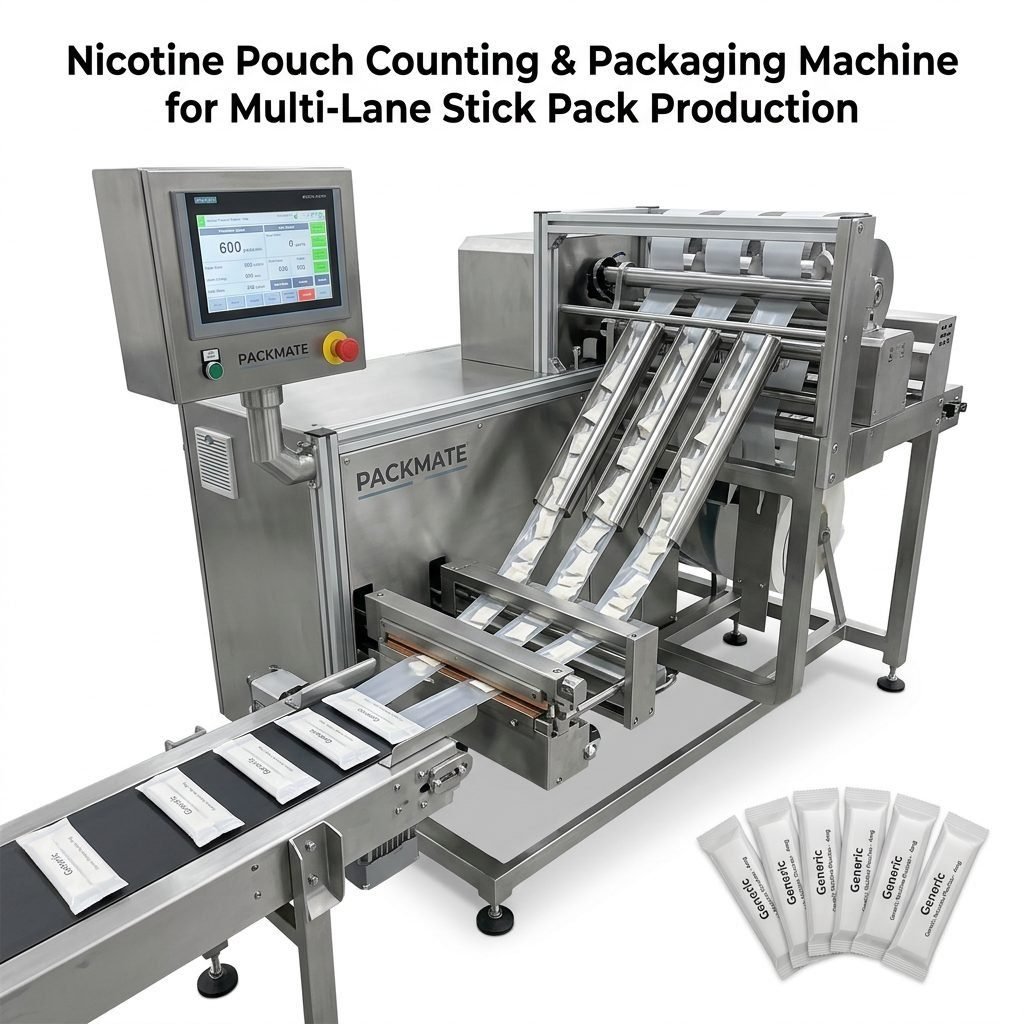
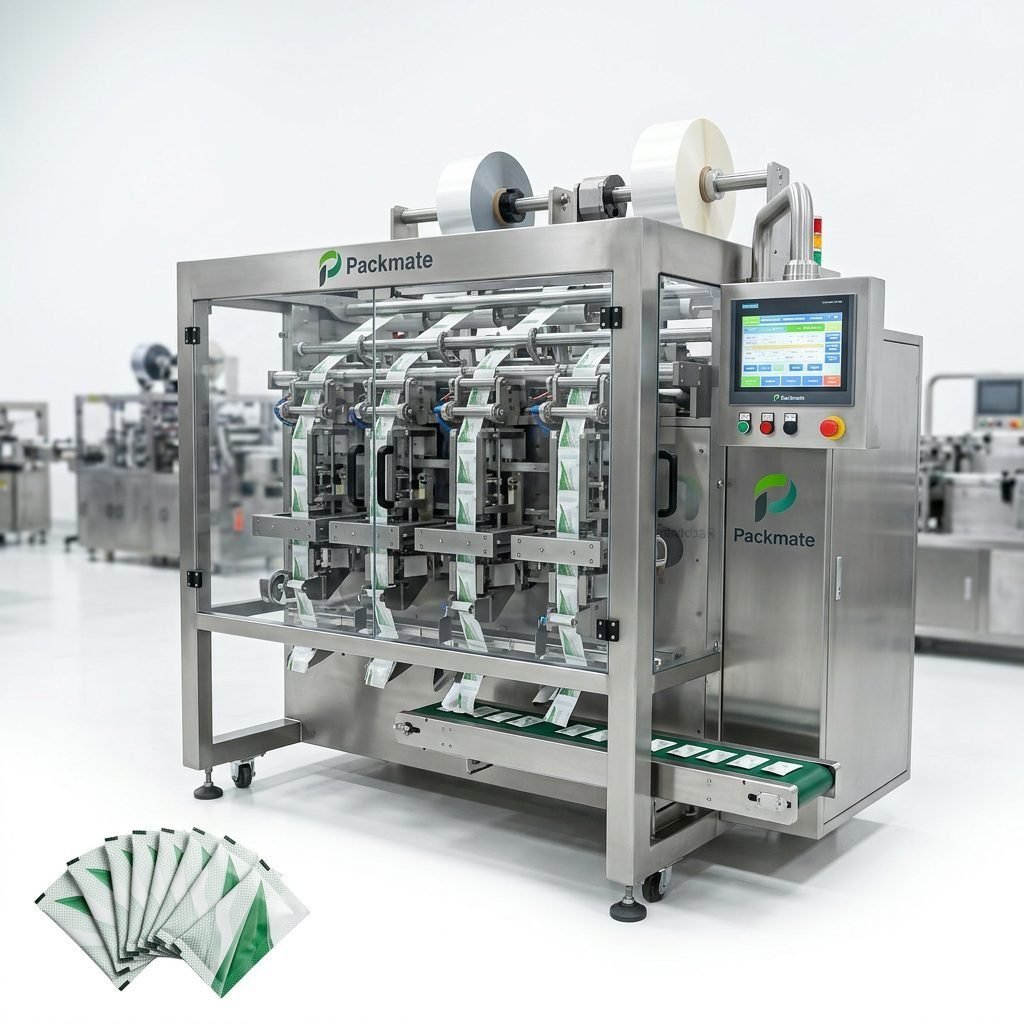
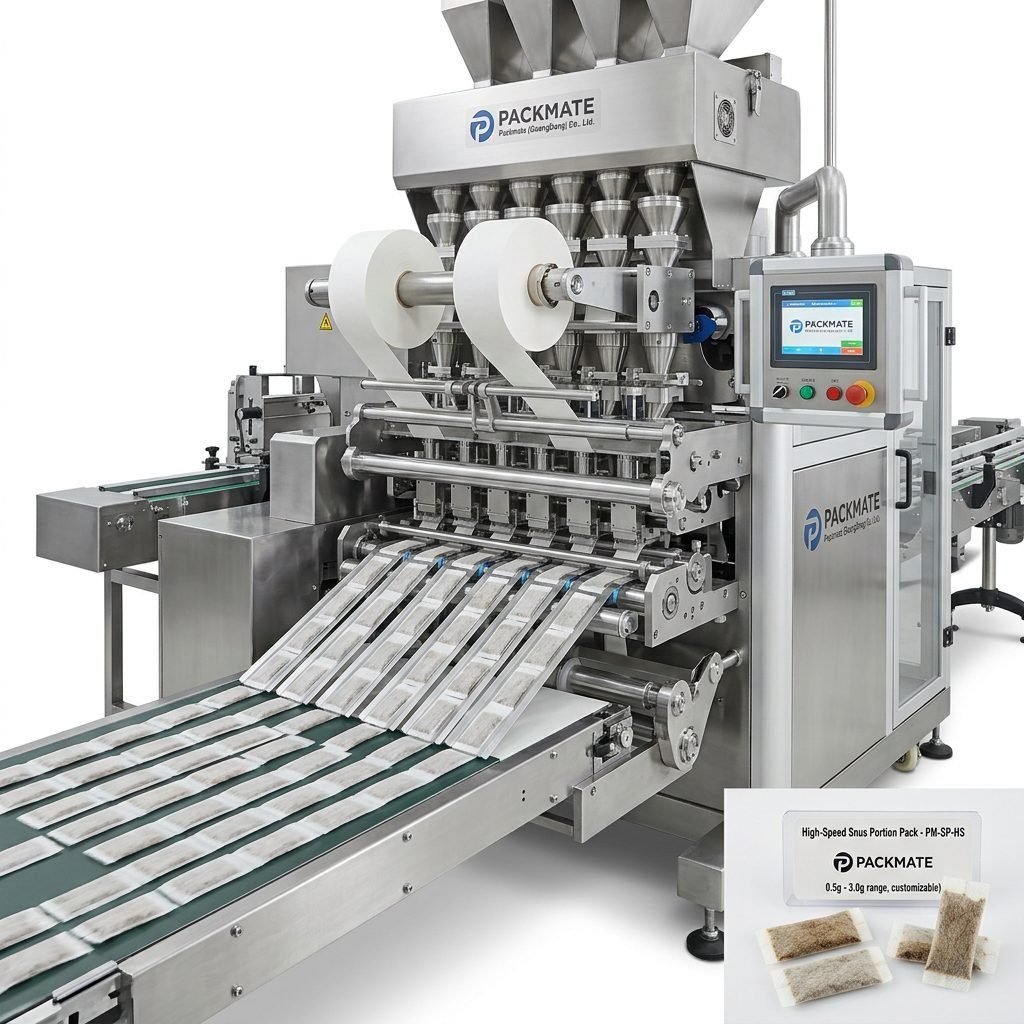
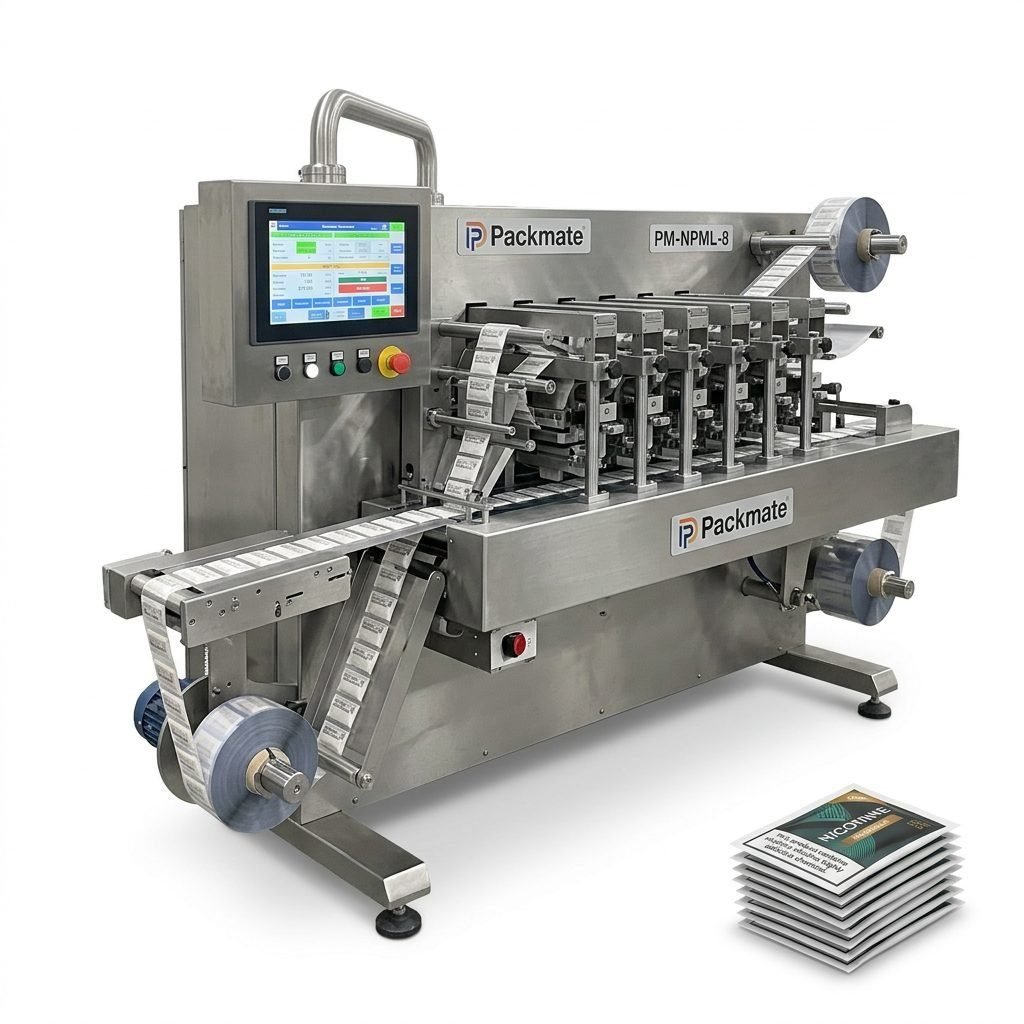
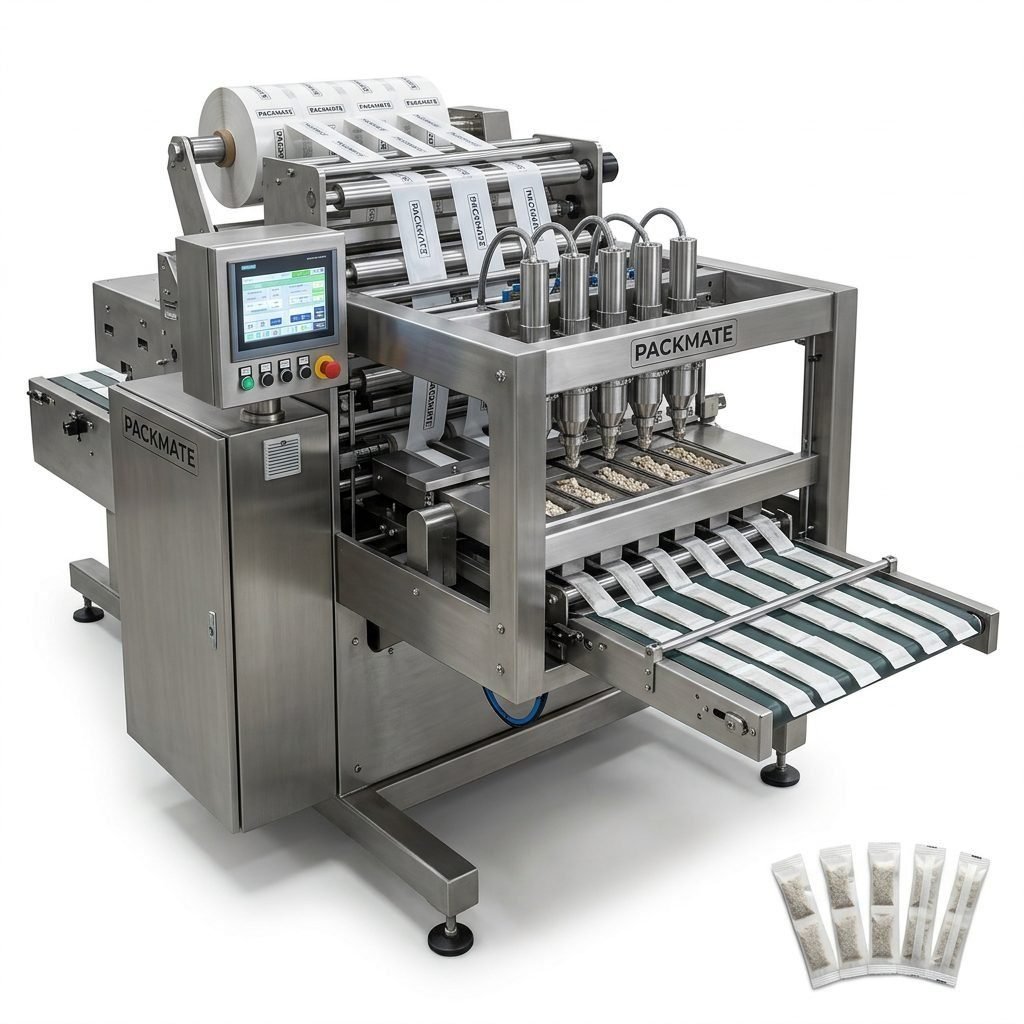
Single-lane machines are suitable for lower volumes or frequent format changeovers. Multi-lane machines (2, 4, 6 lanes or more) dramatically increase throughput for mass production but require more precise synchronization and higher initial investment. Multi-lane solutions are ideal for manufacturers who expect large batch sizes and want to maximize output per floor space.
Pouch formats: Discrete, Sachet, Stick-pack and Pre-formed
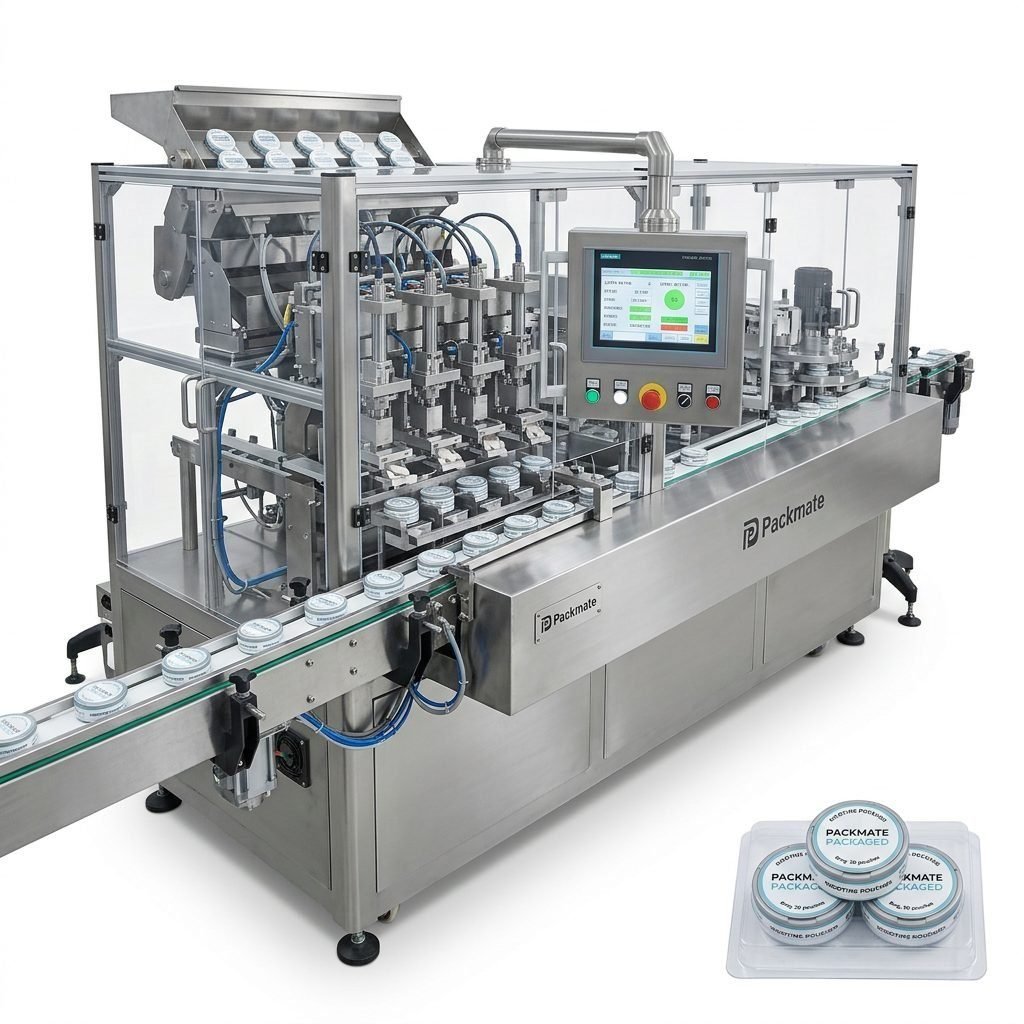
Machines can be designed for round/flat nicotine pouches, sachets, or stick packs. Pre-formed pouch feeders and tray-based packing can be integrated for downstream packaging. Select machines that support your targeted pouch geometry and material types (paper, non-woven, composite films).
Key Specifications to Compare Before Buying
When comparing vendors and models, focus on specifications that influence throughput, accuracy, and run-time stability.
Top specs to evaluate:
filling accuracy (± mg), pouches/minute per lane, lane count, material compatibility, changeover time, and CIP compatibility for wet lines.
Filling accuracy & metering
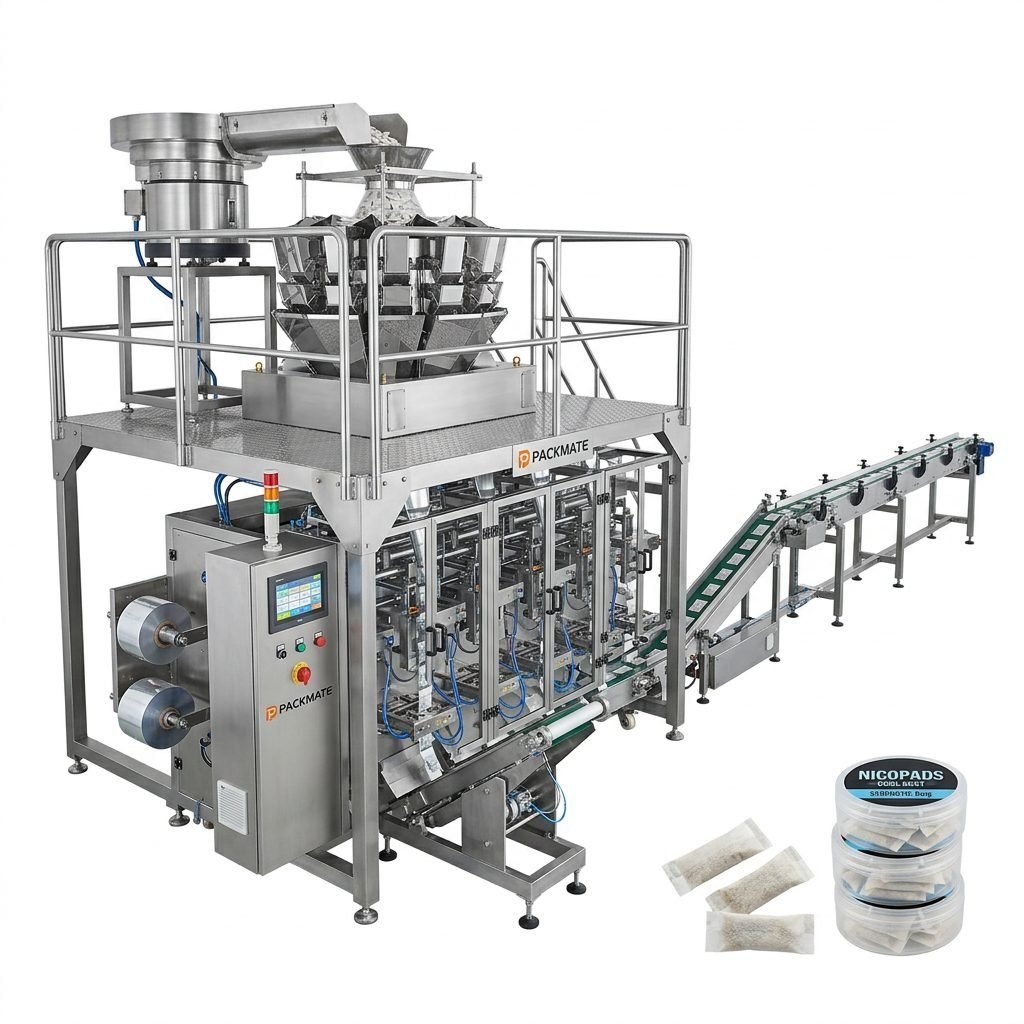
Choose dosing systems — auger, volumetric, multi-head weighers, or piston fillers — according to product characteristics. Fine powders and moist blends often need precision auger or vacuum-assisted dosing, while granular blends may suit multi-head weighers for ultra-high accuracy.
Throughput & Scalability
Match machine capacity with your peak production plan. Machines rated for high throughput may operate below maximum capacity for longer service life; balance speed with reliability.
Production Line Components & Typical Working Process
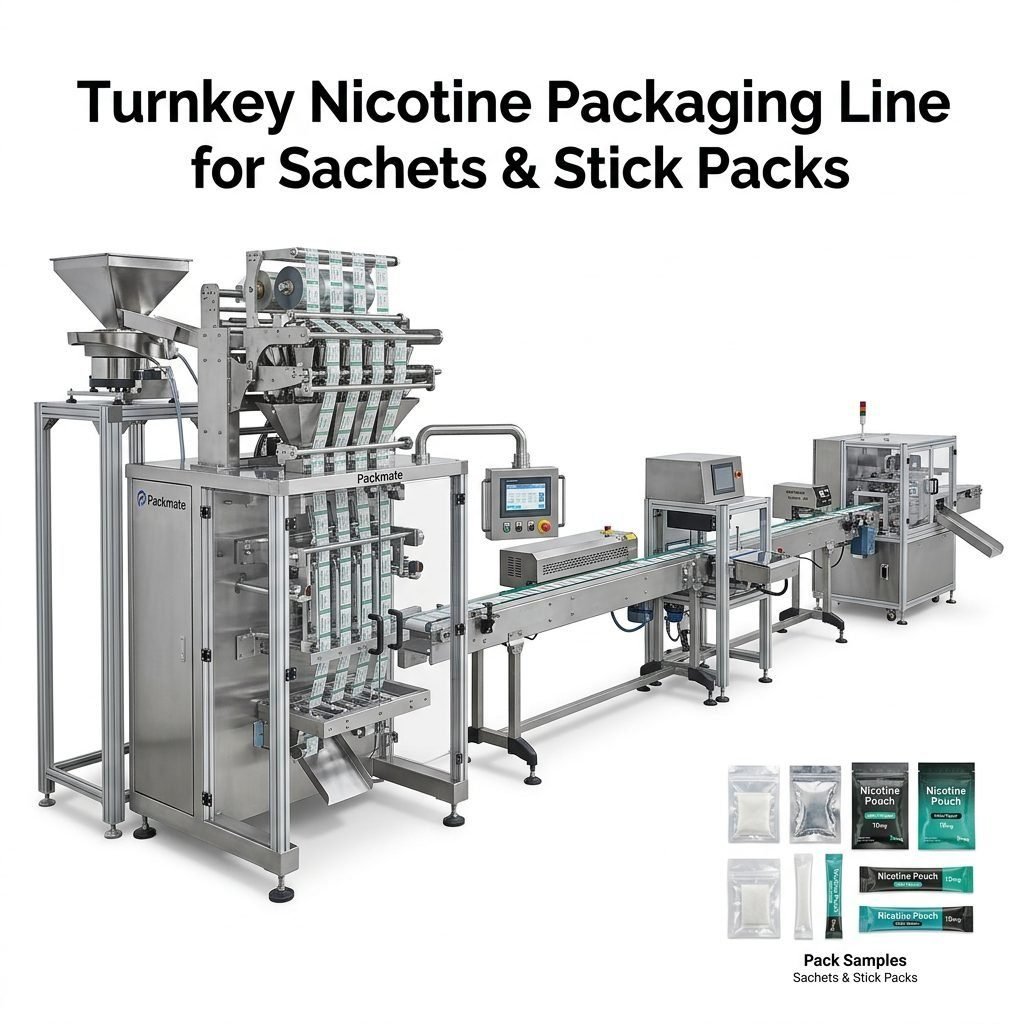
A nicotine pouch production line is a sequence of integrated modules that together form a turnkey solution. Understanding the workflow helps when specifying automation and auxiliary equipment.
Typical modules in a complete line
Raw material feeding → Dosing & filling → Pouch forming / positioning → Sealing & cutting → Quality inspection → Counting & packing → Secondary packaging.
Example working process:
1. Controlled bulk feeding with hopper and agitator ensures consistent material flow. 2. Dosing unit meters the exact weight for each pouch. 3. Pouch handling system positions lids and sachet material, then the sealing jaws close. 4. Servo-driven cutters separate pouches and an in-line vision system inspects seal integrity and dosage. 5. Good pouches are counted and routed to primary cartons or trays.
Tip:
integrate vision inspection and metal detection early to avoid waste downstream.
Automation, Controls & Integration
Modern lines use PLC controllers with HMI for recipe management, servo motors for motion control, and Ethernet networks for data logging. Look for machines that support OEE monitoring, remote diagnostics, and industry-standard protocols for ERP integration.
Operator safety & ergonomics
Safety interlocks, guarded access points, and ergonomic loading heights reduce operator fatigue and risk. Also consider easy access for cleaning and maintenance to keep downtime low.
Cost Factors & Budgeting for Manufacturers
The purchase price is only the start. Total cost of ownership includes installation, commissioning, tooling, spare parts, training, and ongoing service. Below are the main drivers that determine capex and opex.
Primary cost drivers
Machine complexity (multi-lane > single-lane), dosing system type (multi-head weighers cost more than volumetric fillers), level of automation, custom material handling, and compliance features (explosion-proof electricals, pharmaceutical-grade finishes).
Estimated ranges (indicative)
Entry-level single-lane pouch fillers for small manufacturers may start at modest budgets, while high-speed multi-lane integrated lines with automatic feeding, weighing, and cartoning can run significantly higher. Request detailed quotes with line break-downs and consider leasing or phased expansion if upfront capital is constrained.
Finance note:
factor in 10%–20% for installation & commissioning, and yearly ~5%–10% for maintenance and spare parts depending on usage intensity.
Factory Requirements & Customization Options
Floor loading, utilities, and cleanability are important. Multi-lane high-speed systems require stable foundations, clean compressed air, stable power supply, and enough ceiling height for material hoppers and conveyors.
Customization to suit product and market
Suppliers can adapt pouch shape, dosing heads, and in-line sterilization or sealing parameters. For markets with strict labelling rules, add label applicators and serialization modules.
Choosing a Supplier: What to Expect
Evaluate suppliers on engineering experience, proven installations, after-sales service, spare-parts availability, and compliance. Look for documented case studies and factory acceptance tests (FAT).
Packmate Snus Machine, for example, offers end-to-end solutions built on 30+ years of engineering experience across snus and nicotine pouch packaging. Their modular product range includes single-lane and multi-lane lines and complete Filling & Packaging Lines. Learn more about their product range at
Snus & Nicotine Packaging Machines and view turnkey options at
Filling & Packaging Lines.
Vendor checklist:
FAT, SAT (site acceptance test), spare parts lead-time, training packages, warranty terms, and local service presence.
Installation, Commissioning & After-sales
Professional installation and commissioning shorten the ramp-up period. Ensure the supplier provides training for operators and maintenance staff, documented SOPs, and remote diagnostics. Consider long-term service agreements for preventive maintenance and priority spare parts.
Spare parts & lifecycle support
Ask for recommended spare parts kits and lead times. Reliable suppliers keep critical components in stock and provide clear BOMs to facilitate planning.
Compliance & Certifications
Machines used for nicotine products should comply with international safety and quality standards. Packmate’s equipment is CE and ISO compliant, and suppliers should document machine safety, electrical certifications, and materials compatibility for contact surfaces.
Case Studies & Global Adoption
Leading packaging machine suppliers demonstrate success across Europe, Asia, and the Americas, adapting machines to local preferences and regulatory norms. Manufacturers expand capacity using proven multi-lane snus packaging systems to meet demand in markets where nicotine pouch consumption is rising. For real-world examples, review supplier case references and exhibition showcases to see machines in operation:
Case and
Our Exhibition.
Local market note:
in many European markets, consumers prefer discreet white pouches with robust sealing — tailor machine settings accordingly.
Final Checklist Before Purchase
Confirm the following items before signing a contract:
- Detailed technical specifications and acceptance criteria.
- Installation and commissioning schedule including site readiness list.
- Warranty, spare parts list, and optional service agreement.
- Training plan for operators and maintenance personnel.
- References for similar installations and FAT reports.
Need hands-on support?
For direct inquiries and personalized solutions, contact the manufacturer’s sales and service team through their contact page:
Contact Us.
Explore the full product catalog to match machine types to your production needs:
Catalog.
Summary & Next Steps
Investing in the right nicotine pouch filling machine requires balancing throughput, accuracy, automation level, and lifecycle costs. Prioritize vendors with proven experience, factory acceptance testing, and strong after-sales support. Start with a clear product specification, benchmark supplier case studies, and request site-ready quotes including installation and spare parts.
Common Questions
Q1: What is the expected lead time for a multi-lane nicotine pouch line?
A1: Lead times vary by customization and current factory schedule; typical delivery ranges from 12 to 30 weeks including FAT. Ask the supplier for a firm schedule and critical path.
Q2: How do I determine the right dosing method for my formulation?
A2: Provide material samples for a technical trial. Suppliers will recommend auger, piston, or multi-head weighing based on particle size, moisture, and required accuracy.
Q3: What are typical operating costs beyond the purchase price?
A3: Consider electricity, compressed air, wear parts, spare parts consumption, labor, and scheduled preventive maintenance. Budget 5%–10% of capex annually as a rule of thumb.
Q4: Can machines be upgraded from single-lane to multi-lane later?
A4: Some platforms are modular and support lane expansion; confirm modularity during specification and ensure foundation and utility allowances for future upgrades.
Q5: Where can I see machines running before purchase?
A5: Visit supplier exhibition events or request factory demonstrations and FAT reports. Packmate exhibits solutions globally — check their exhibition schedule online for live demos.