Choosing the right nicotine packaging machinery for your operation in Guinea is a business-critical decision that affects production speed, product consistency, regulatory compliance, and long-term costs. This guide walks through the technical, operational, and commercial factors to consider, with practical steps and checklists to help you select a solution that fits your capacity, budget, and growth plans.
Why the Right Machine Matters for Nicotine Pouch Production
Nicotine pouch and snus packaging require precision dosing, hygienic handling, and flexible packaging formats. A poorly chosen machine can lead to inconsistent dosing, frequent downtime, high maintenance costs, and compliance risks. Investing in a proven machine reduces waste, improves yield, and allows you to scale as market demand grows in Guinea and surrounding markets.
Key Performance Indicators to Evaluate
When comparing models, focus on measurable KPIs:
- Throughput (pouches per minute) — matches your daily production targets.
- Accuracy of dosing — critical for nicotine content consistency.
- Changeover time — how fast you can switch SKUs or pouch sizes.
- Uptime & MTBF (Mean Time Between Failures) — determines real-world productivity.
- Ease of cleaning & maintenance — affects hygiene and regulatory compliance.
Quick Checklist (Start Here) 🔎
Capacity target: __ pouches/day •
Formats required: sachet / stick / multi-lane •
Budget range: $____ – $____ •
Regulatory needs: CE / ISO / local approvals
Types of Nicotine Packaging Machines and When to Choose Them
Different packaging technologies suit different business models. Understanding the pros and cons helps you align machinery to your product line and market.
Stick Pack Machines
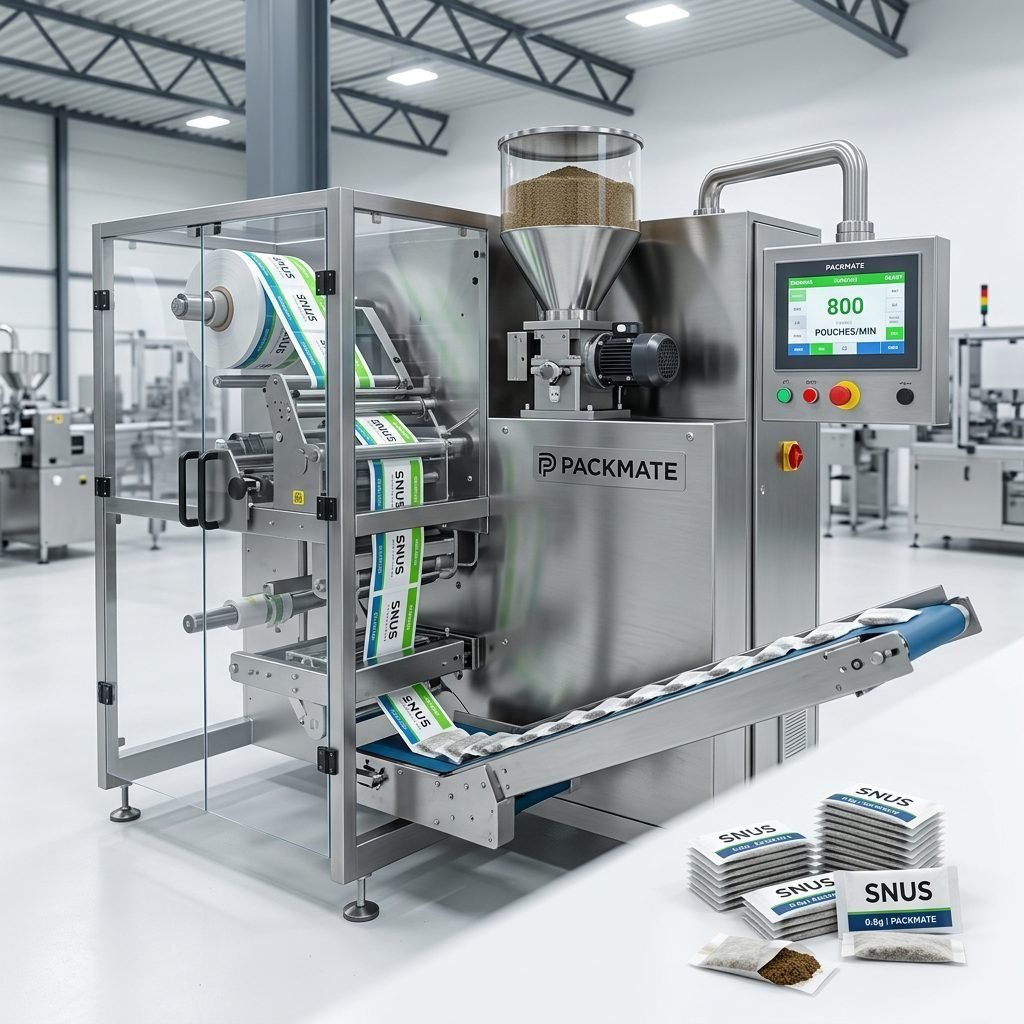
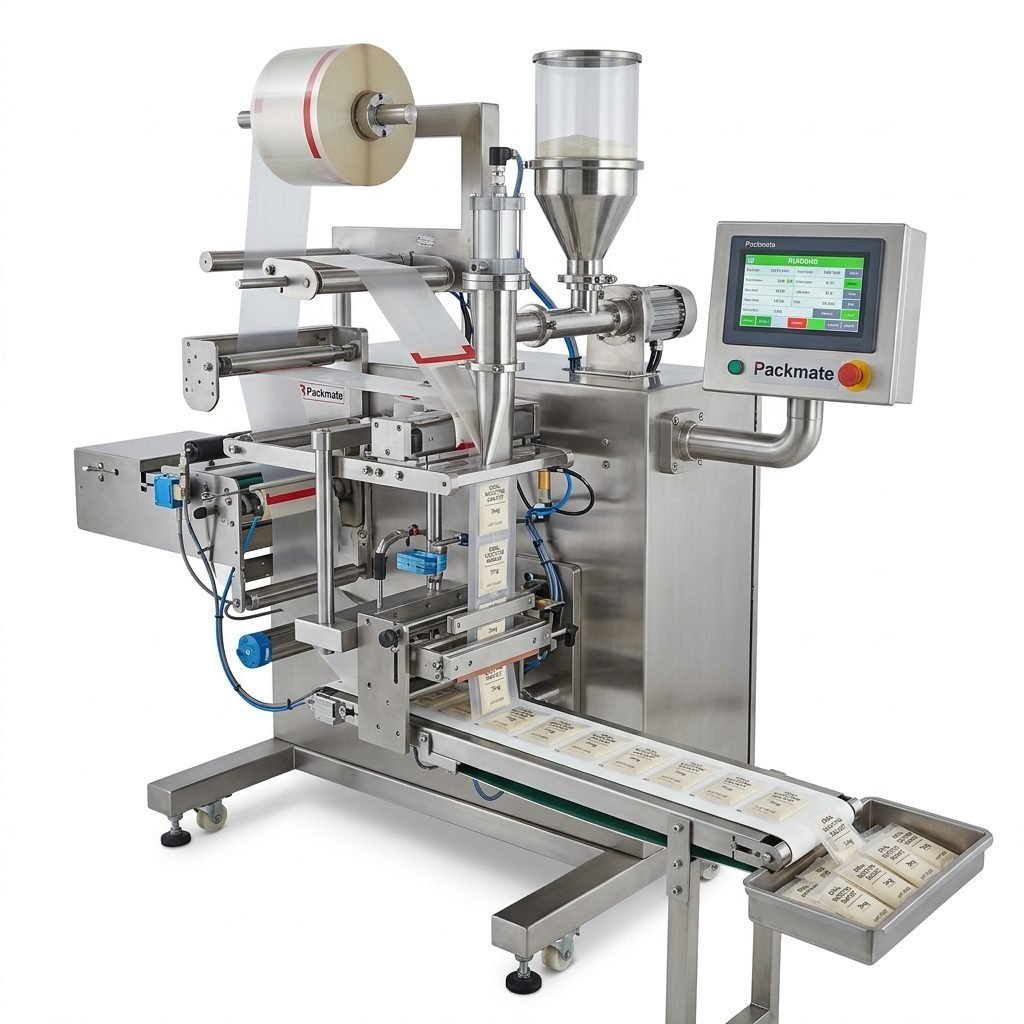
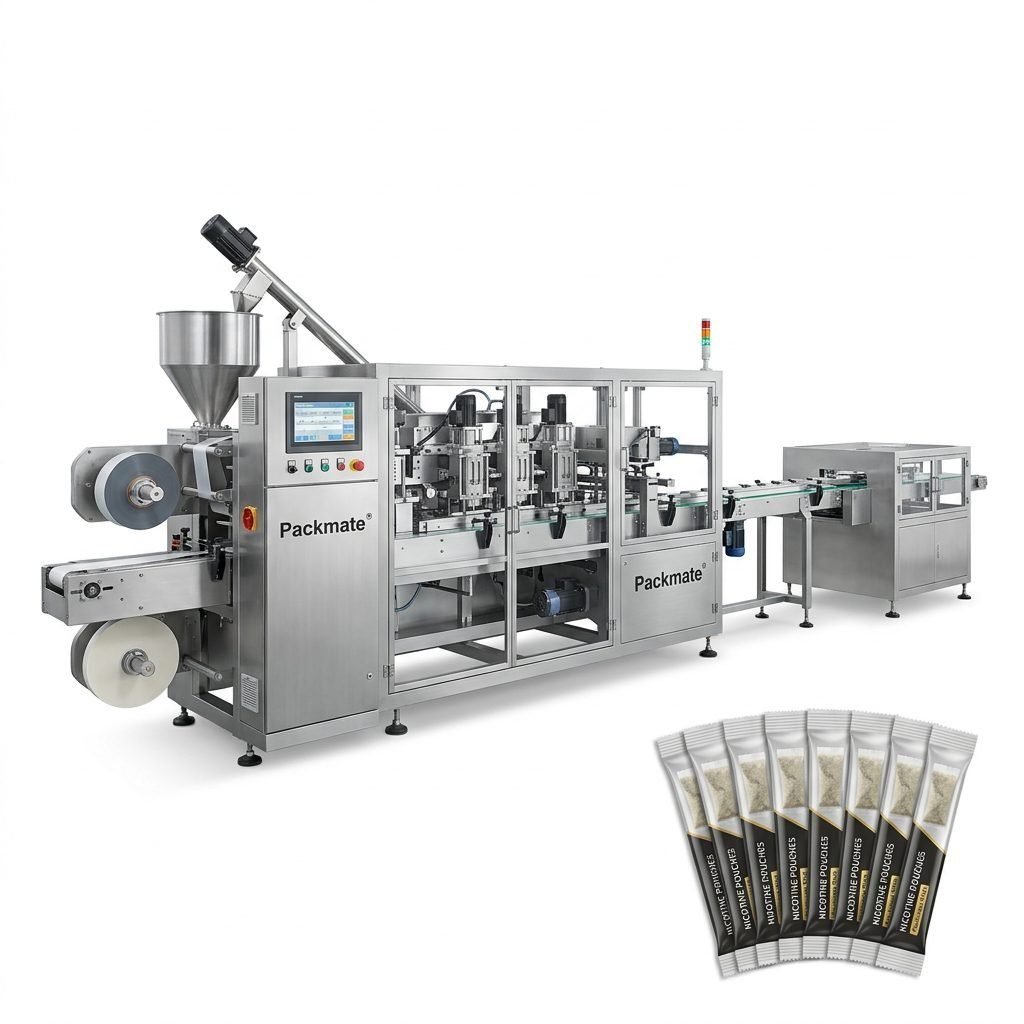
Stick pack machines are ideal for single-serve pouches and can be configured for powders, granules, or paste. They offer flexible length control and are often compact, making them suitable for startups or limited factory space.
Sachet & Pouch Machines
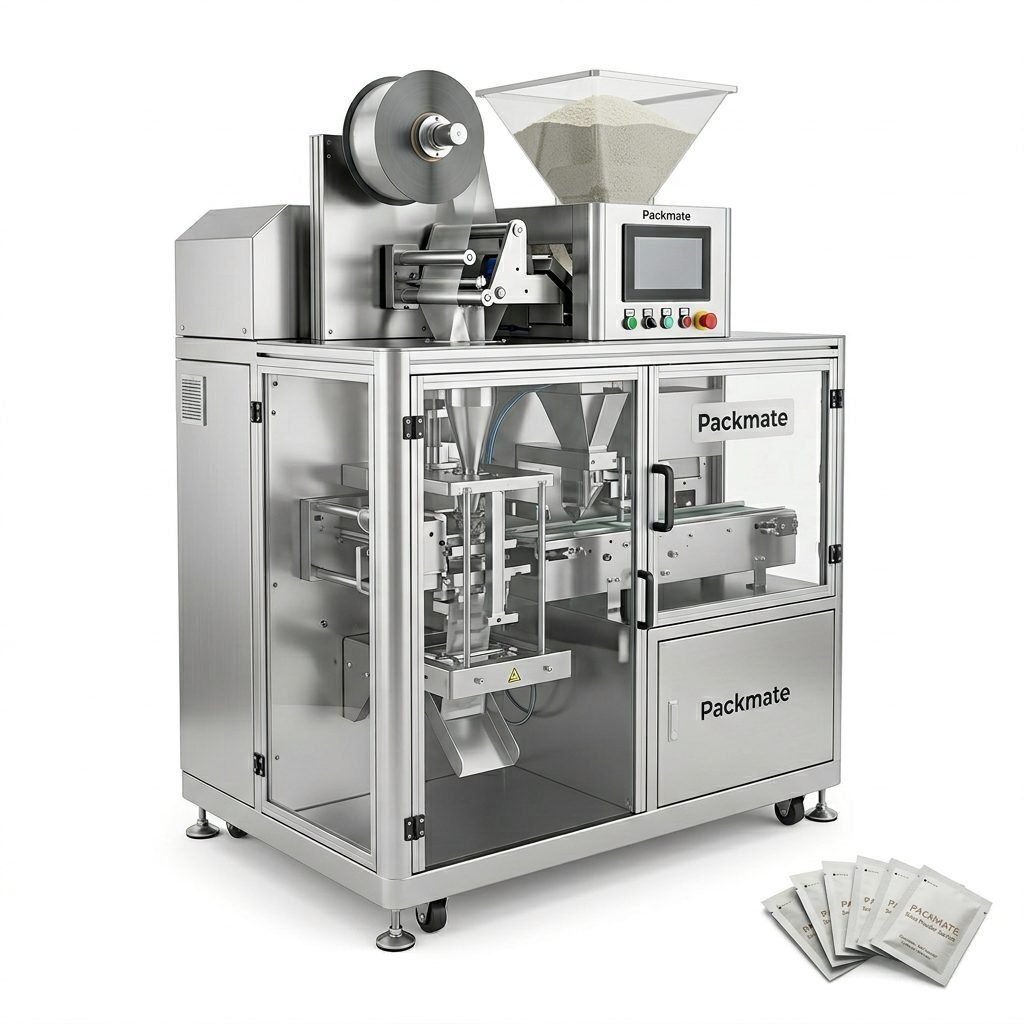
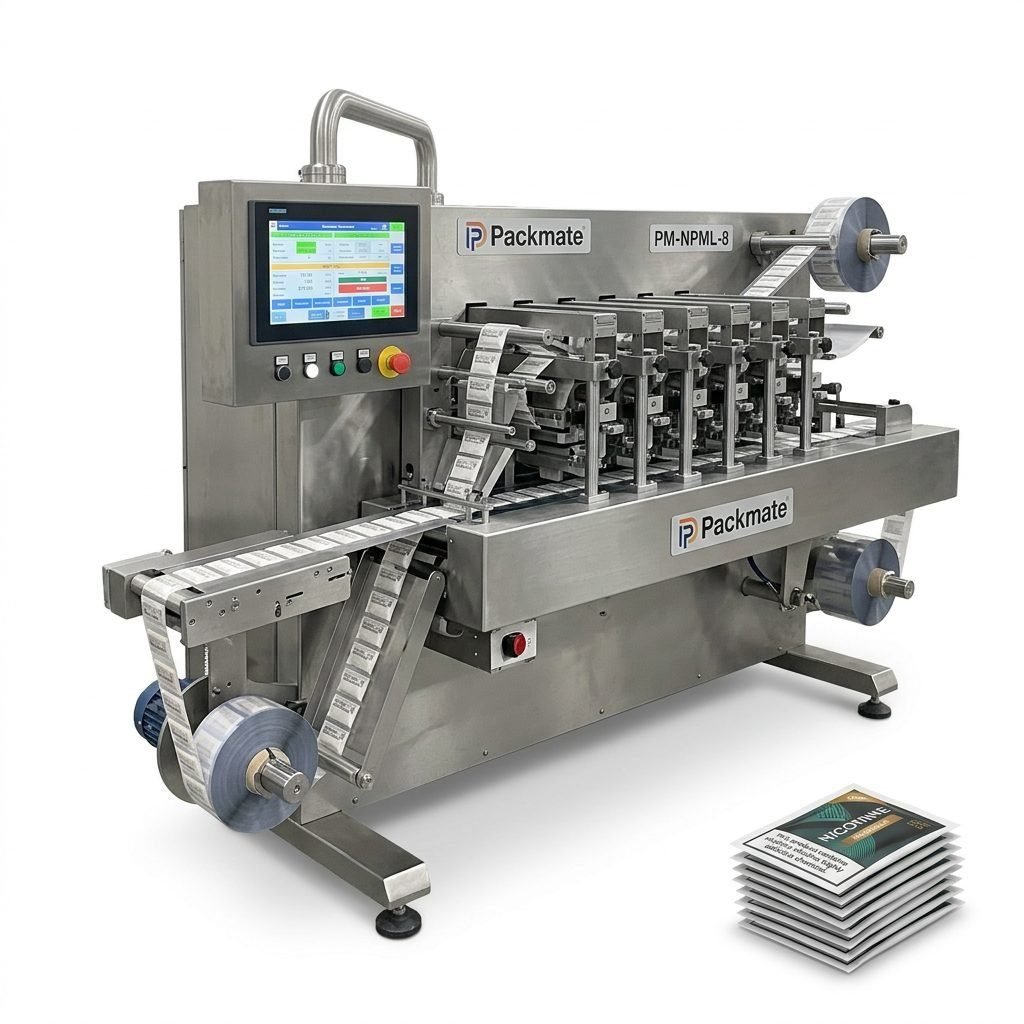
Sachet and pouch machines can produce a range of formats from single-dose sachets to multipouch lay-flat formats. They are a popular choice for nicotine pouch brands that need branded, retail-ready packaging. For manufacturers seeking established models, explore Sachet & Stick Pack Machines.
Multi-Lane Systems for High Volume
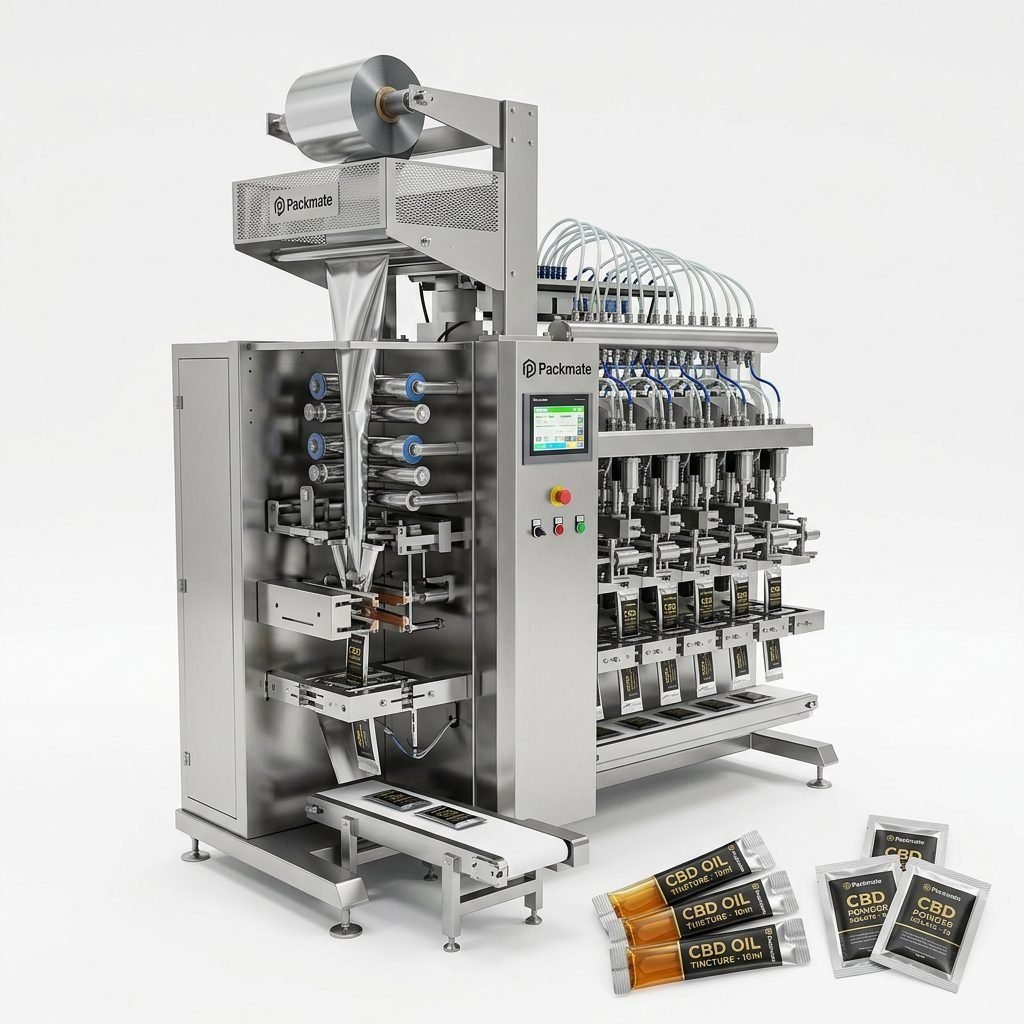
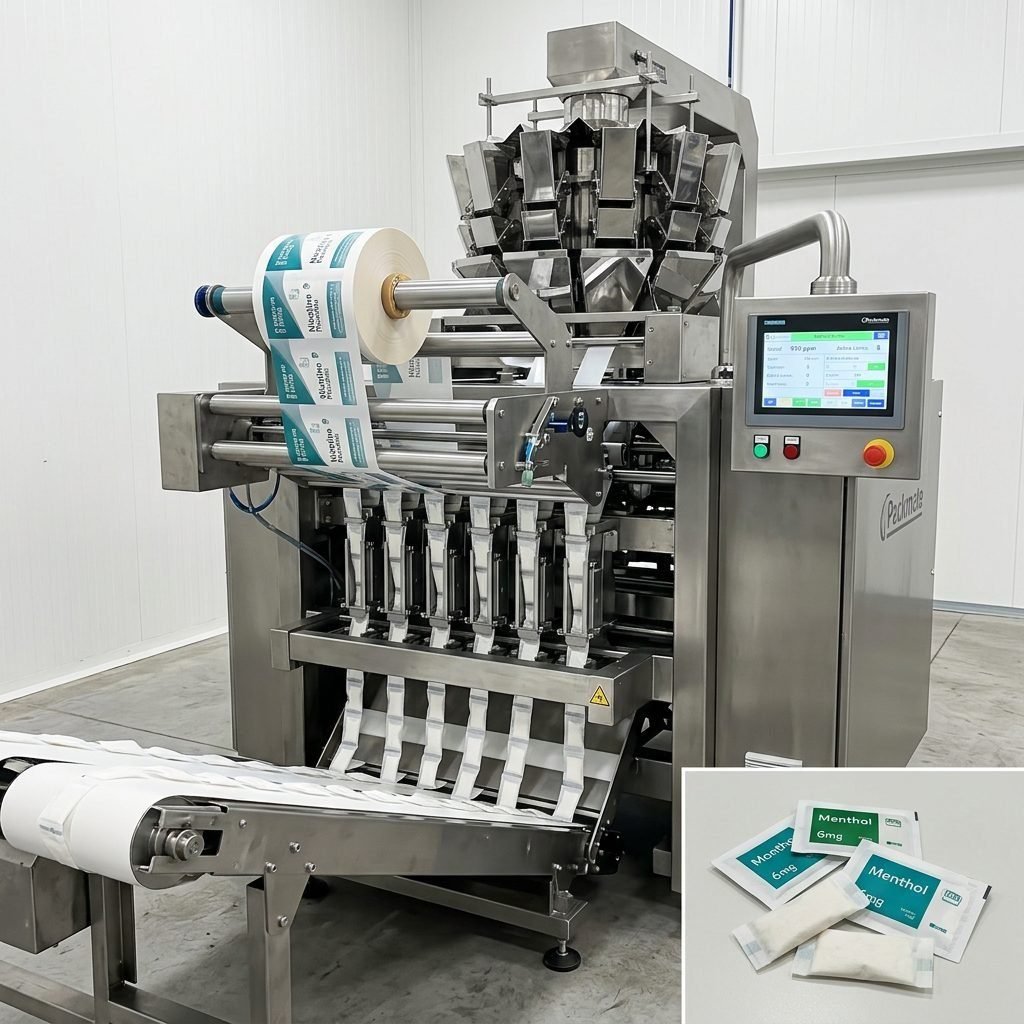
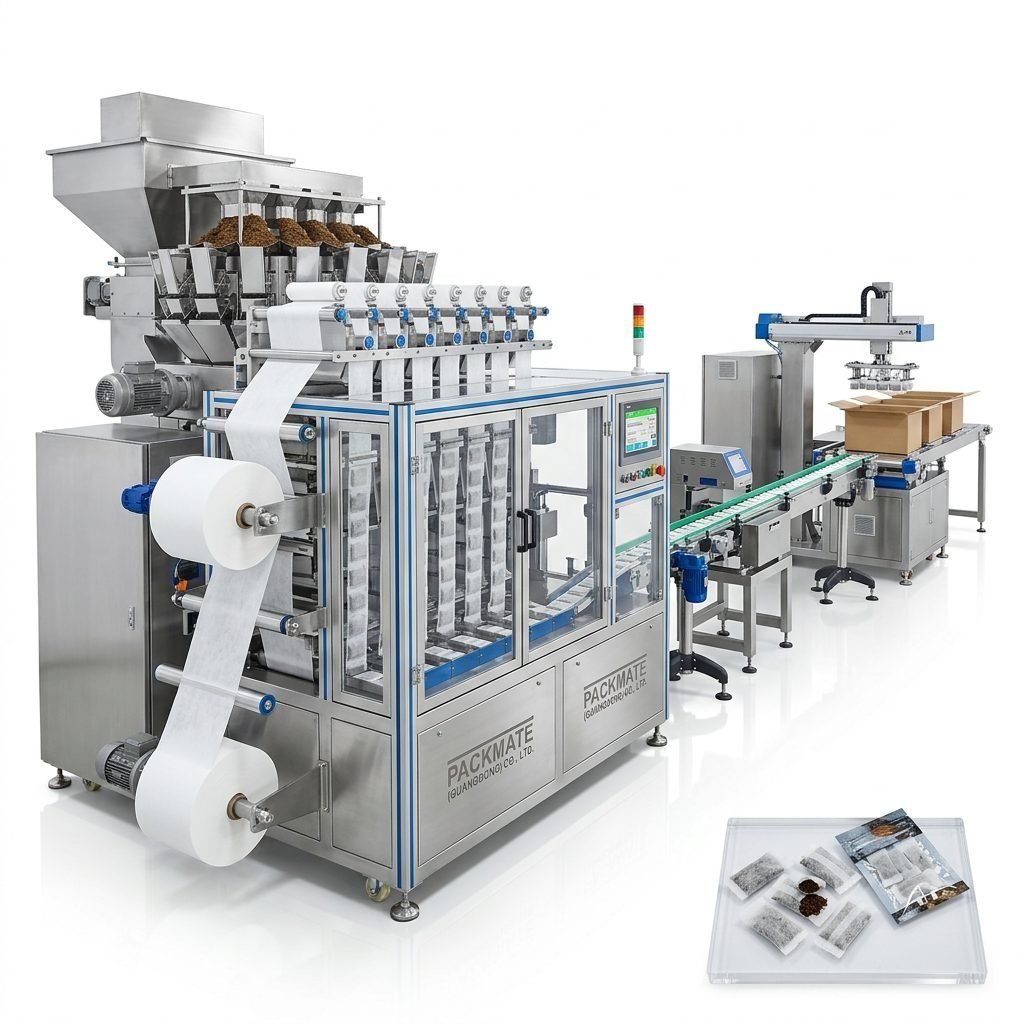
Multi-lane machines dramatically increase throughput by producing several pouches across parallel lanes. Choose multi-lane systems when you demand high capacity and consistent dosing across lanes. This option suits established producers and contract manufacturers expanding capacity quickly.
Technical Specifications to Verify
Don’t buy on appearance or price alone. Verify technical specifications and request performance data under real-world product conditions.
Mechanical & Electrical Design
Check for robust construction materials (stainless steel contact parts), modular design for easy upgrades, and compatible PLC/HMI systems. Machines with standardized electrical components simplify maintenance and local sourcing of spares.
Dosing System
Dosing methods vary: auger for powders, volumetric cups for granules, liquid pumps for fluids. For nicotine pouches, precise metering is essential — look for dosing accuracy specifications and ask for sample reports.
Hygiene, Cleaning & Validation
Machines should support fast cleaning and CIP where applicable. Ask for design features that reduce crevices and allow quick disassembly.
Operational Considerations for Guinean Facilities
Operating in Guinea has unique logistical and environmental factors. Plan for electricity variability, spare parts logistics, training needs, and local regulatory pathways.
Power & Environmental Controls
Ensure machines tolerate power fluctuations or include stabilizers. Humidity and dust control matter for powder handling — invest in proper HVAC and dust extraction to prolong equipment life and ensure product quality.
Spare Parts & Local Support
Availability of parts and fast technical support determines uptime. Consider suppliers with global support networks and clear spare parts catalogs. Packmate Snus Machine provides global turnkey solutions and can assist with spare parts and training — learn more About Packmate for manufacturer background and capabilities.
Commercial & Contractual Clauses to Negotiate
Purchase price is only part of the total cost of ownership. Negotiate terms that protect your investment and ensure predictable running costs.
Warranty & Service Level Agreements (SLAs)
Secure a clear warranty period, defined response times for service calls, and options for preventive maintenance contracts. A strong SLA reduces lost production costs.
Training & Documentation
Ensure operator, maintenance, and safety training are included. Ask for comprehensive manuals and schematics, and request digital backups for quick reference.
Total Cost of Ownership (TCO) Snapshot
Purchase price + spare parts + energy consumption + labor + downtime = TCO. Ask vendors for references and real-world running costs from existing customers in similar climates and markets.
Factory Acceptance Test (FAT) & Site Acceptance Test (SAT)
A robust FAT and SAT process reduces installation surprises. Insist on FAT with your actual product or a validated equivalent and detailed acceptance criteria.
What to Include in FAT
Production rate test, dosing accuracy verification, changeover demonstration, cleaning/disassembly time measurement, and safety checks. Request video documentation of FAT and raw data logs.
On-Site Commissioning & Training
Plan for at least one week of on-site commissioning and operator training per machine. For complex multi-lane lines, extend commissioning time and schedule follow-up visits for optimization.
Selecting a Manufacturer: What to Look For
Choose a partner with sector experience, clear quality systems, and real global references. Look for certifications, a modern factory setup, and case studies that demonstrate long-term reliability.
Why a Specialized Snus Machine Supplier Helps
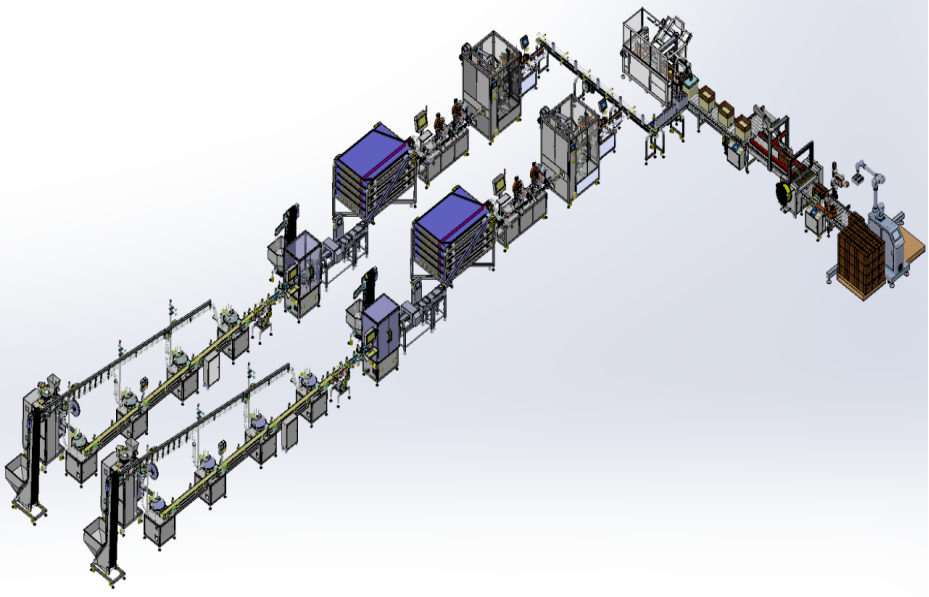
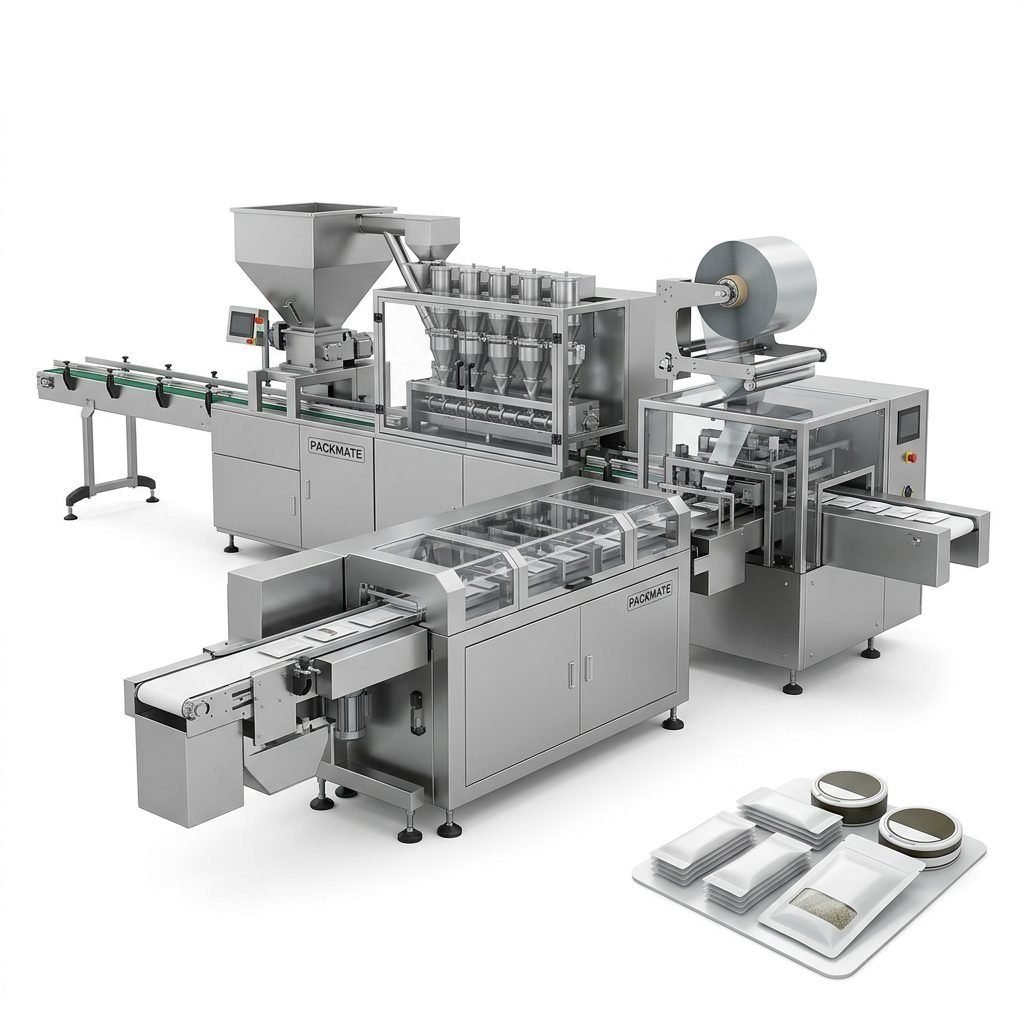
Suppliers focused on snus and nicotine packaging understand dosing nuances and packaging formats. For example, Packmate offers a wide portfolio including Snus & Nicotine Packaging Machines and integrated Filling & Packaging Lines to support turnkey production.
Factory & Quality Credentials
Verify factory size, CNC capabilities, assembly lines, and quality control systems. A manufacturer with a 20,000㎡ facility and strict QC is better positioned to deliver consistent machines and spare parts at scale.
Practical Steps to Make a Confident Purchase
Follow a structured procurement process to reduce risk and select the optimal machine.
1. Define Requirements
Document SKUs, target throughput, footprint constraints, budget, and regulatory requirements. Share these with vendors for accurate quotations.
2. Shortlist Vendors & Request Proposals
Evaluate proposals on technical fit, support network, references, and total cost of ownership. Ask for sample pouches made during FAT and request a demonstration.
3. Validate Through References & Case Studies
Speak with existing customers in similar climates or markets. Review case studies or site visits. See examples of Bag & Pouch Packaging Machines and Weighing & Packaging Systems in operation.
Common Add-Ons and Upgrades to Consider
Future-proof your investment by considering optional extras now rather than retrofitting later.
- Automated feeding & conveying systems to reduce manual handling.
- Automatic inspection and rejection systems (vision systems) for defective or underfilled pouches.
- Secondary packaging modules (cartoning, case packing) for finished goods logistics.
- Spare parts kits and extended warranty packages.
Where to See Machines in Action
Attend relevant trade shows or request video demos. Visit the manufacturer’s exhibition page to confirm upcoming demonstrations and events: Our Exhibition.
Useful Resources & Next Steps
Start by gathering robust technical specifications and ask shortlisted vendors for FAT schedules, spare parts lists, and customer references. For a curated selection of machines, consider exploring:
- Snus & Nicotine Packaging Machines
- Sachet & Stick Pack Machines
- Filling & Packaging Lines
- About Packmate — factory capabilities and credentials
Final Recommendations for Buyers in Guinea
1) Prioritize machines with proven dosing accuracy and hygiene design. 2) Factor in local serviceability and spare parts lead times. 3) Insist on FAT with your product and clear acceptance criteria. 4) Negotiate SLAs and training as part of the deal. Working with an experienced supplier that provides turnkey solutions and global support reduces procurement risk and accelerates production ramp-up.
If you want direct help
Contact the manufacturer or request detailed proposals and FAT schedules. For support, use the manufacturer’s contact page: Contact Us.
Frequently Asked Questions
Q: How do I determine the right throughput for my initial investment?
A: Start with your target monthly sales volume, estimate working days and shifts, then convert to pouches per minute. Add a buffer for growth and downtime — vendors can help simulate production runs.
Q: What certifications should I require from a packaging machine supplier?
A: Look for CE and ISO compliance as baseline quality and safety credentials. Also verify material traceability, and ensure the supplier can support local regulatory requirements for nicotine products.
Q: How important is a FAT and can it be done remotely?
A: FAT is crucial. It can be performed remotely with live video and data streams, but ensure recorded evidence of performance tests and sample pouches are available before shipment.
Q: Are multi-lane machines always the best choice for high output?
A: Multi-lane systems offer high throughput but require higher upfront investment and more advanced maintenance. For rapidly growing producers or contract manufacturers, they are often the most cost-effective long-term choice.