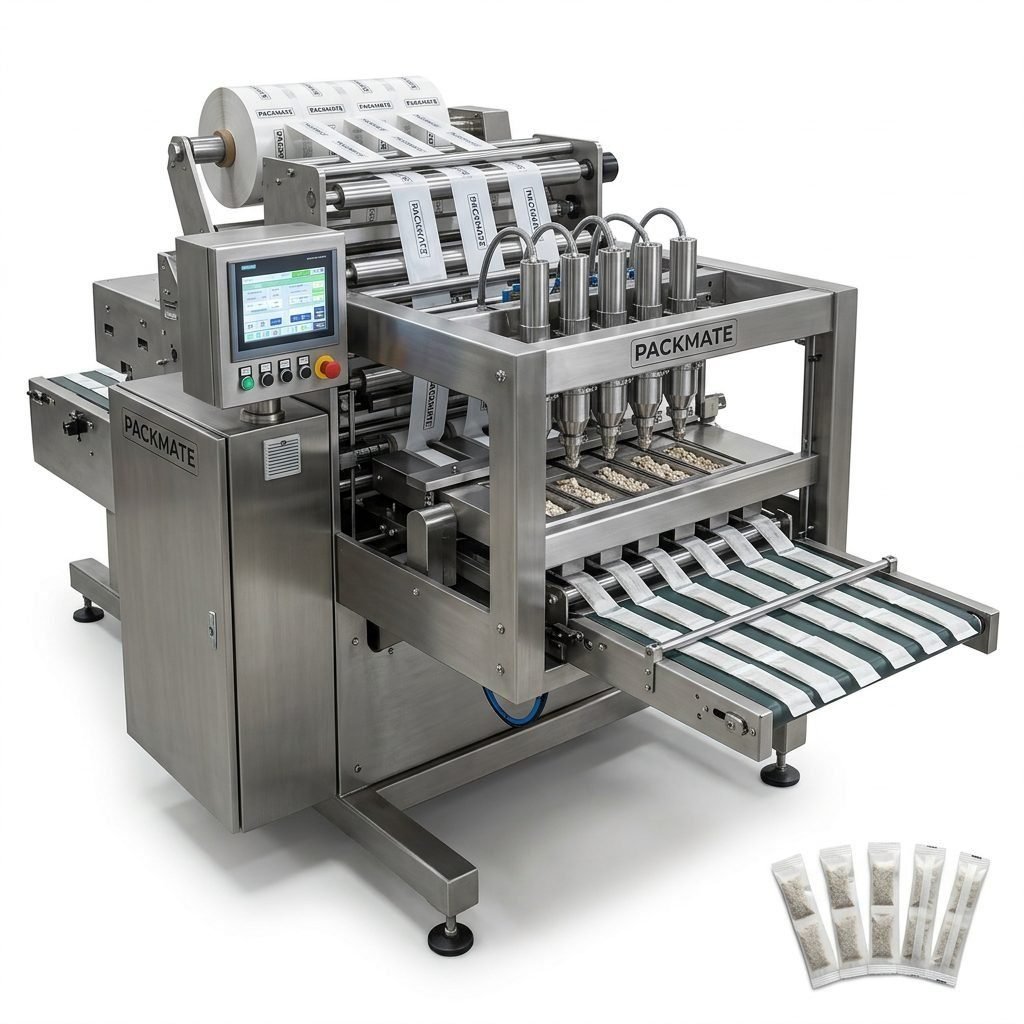
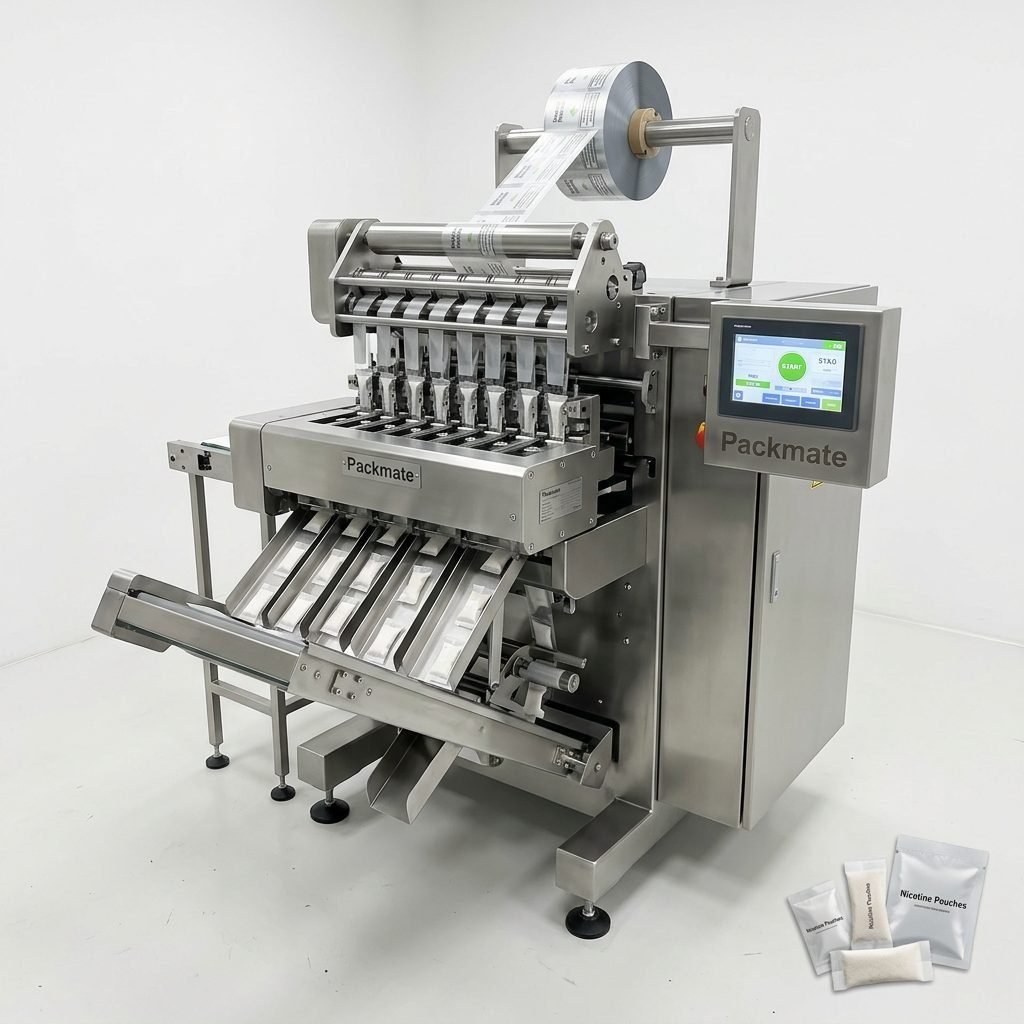
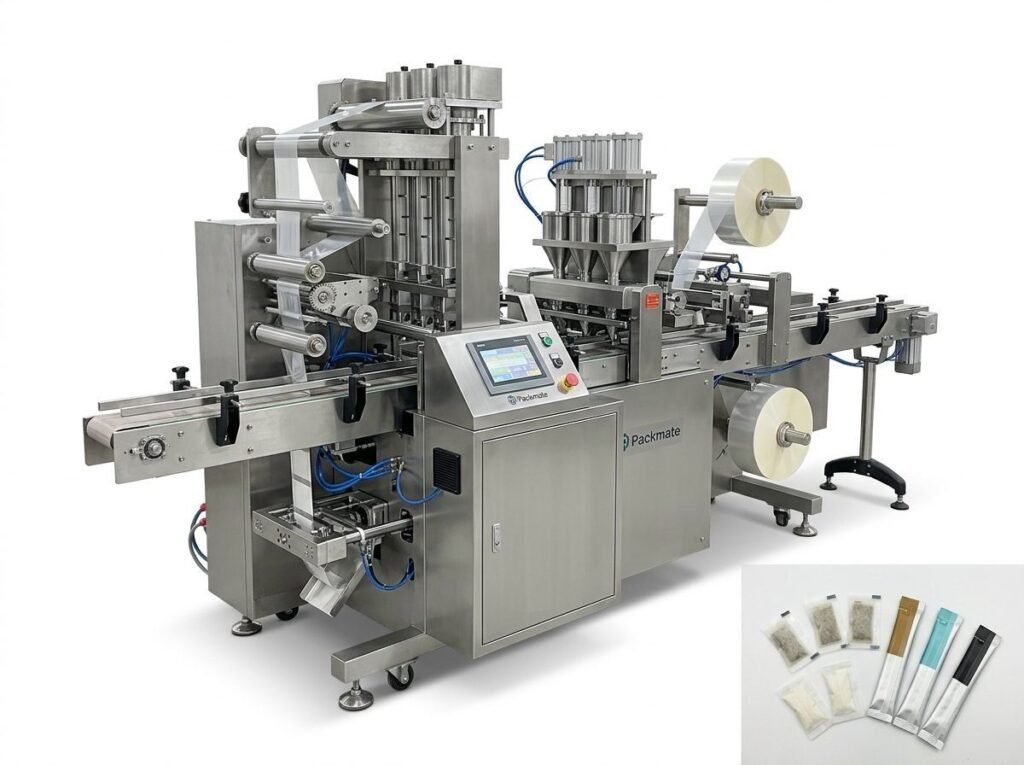
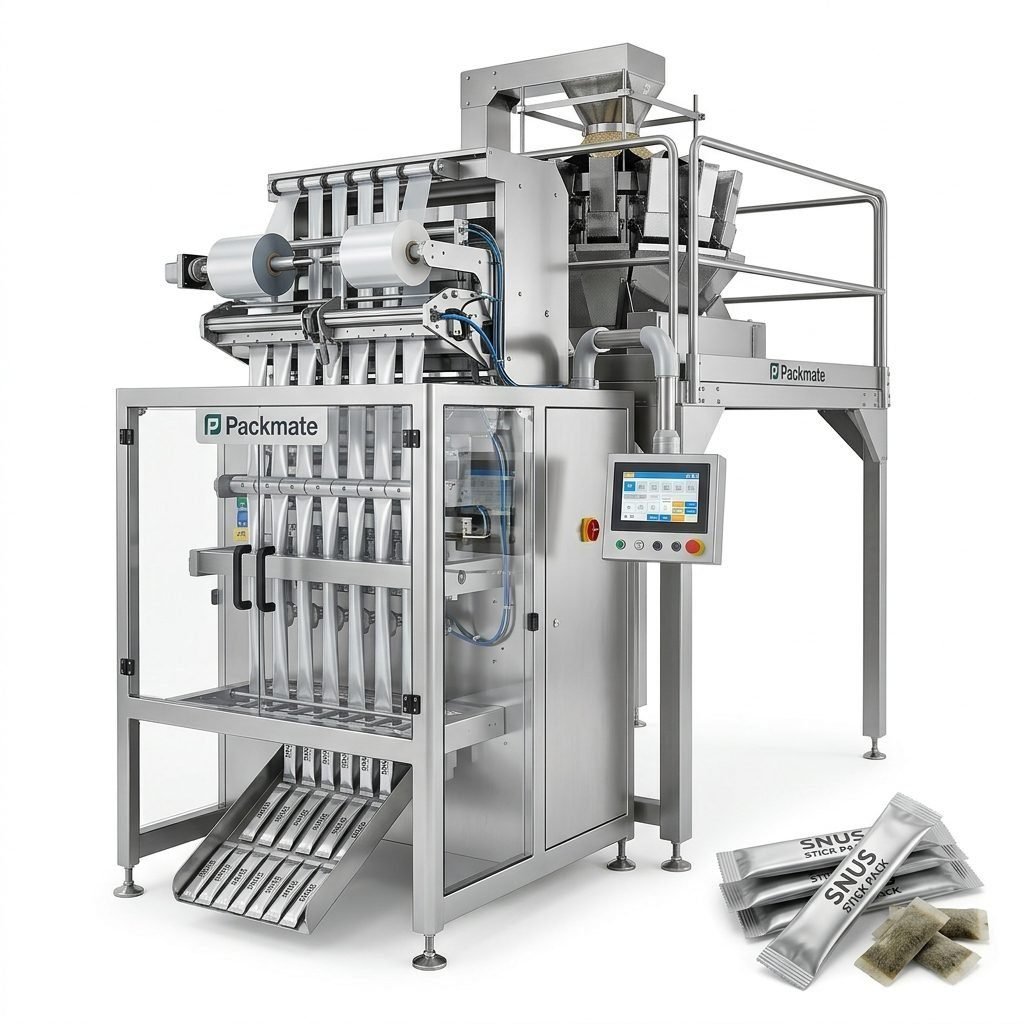
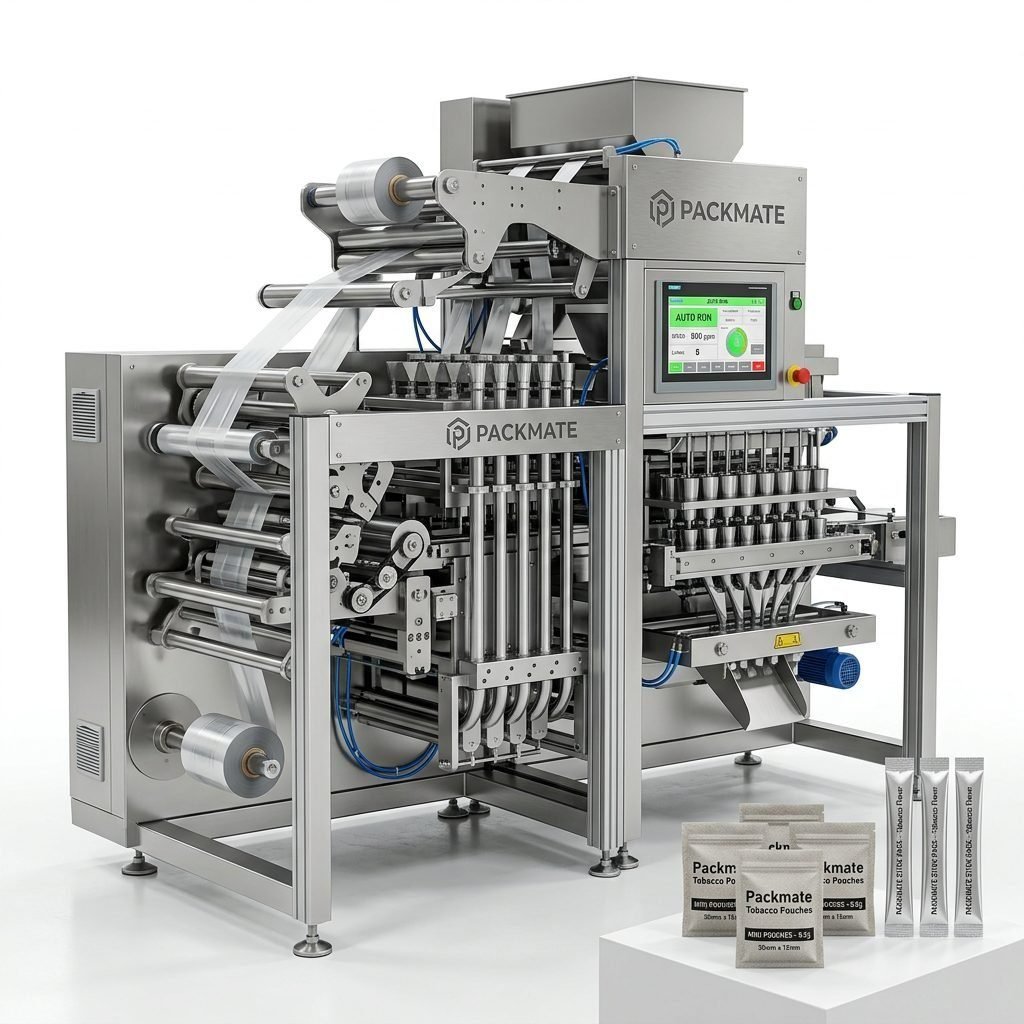
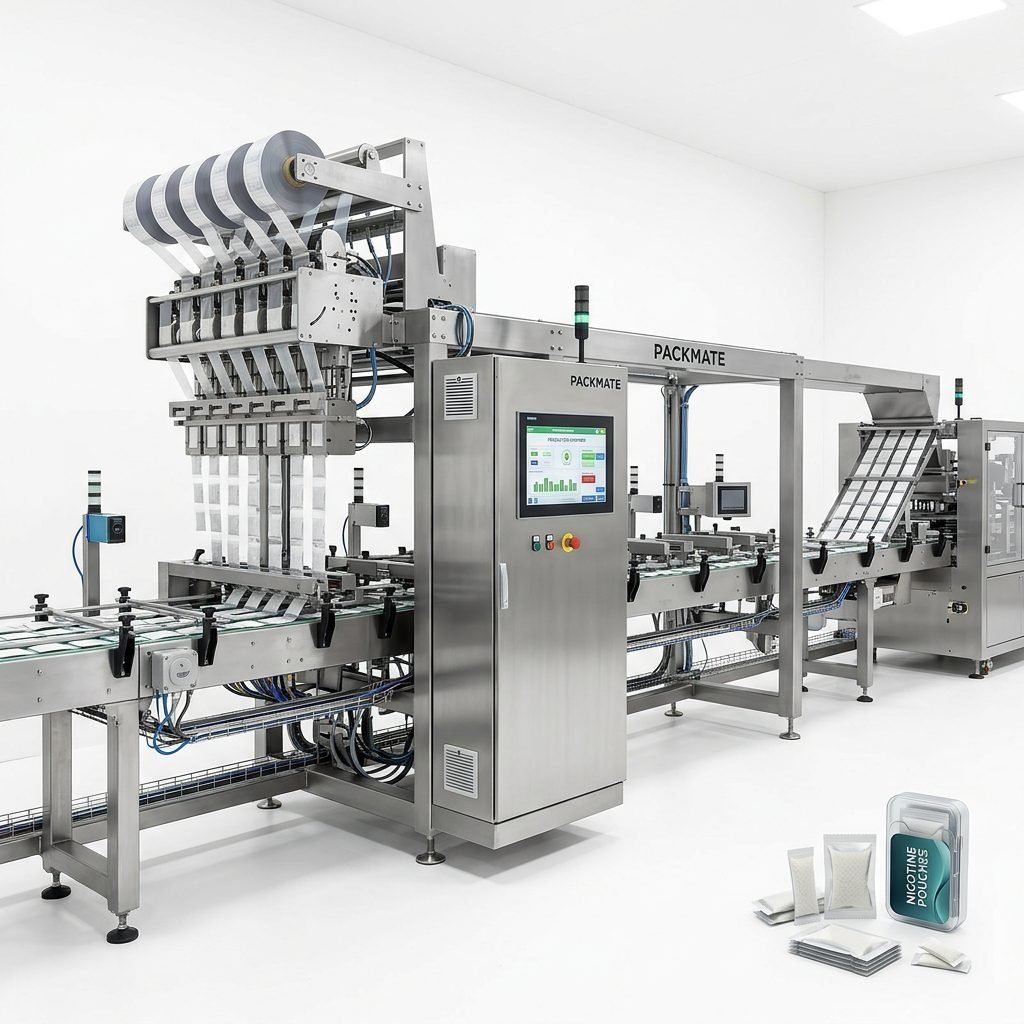
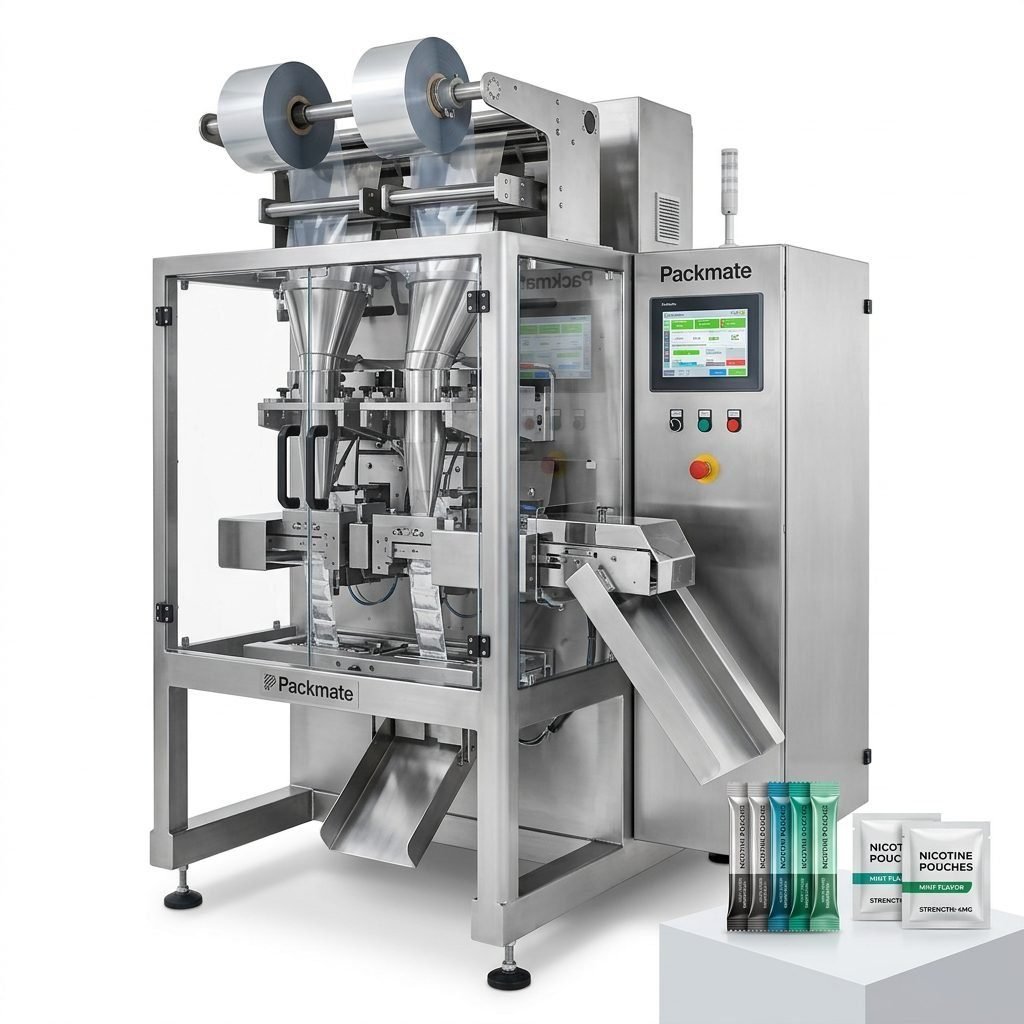
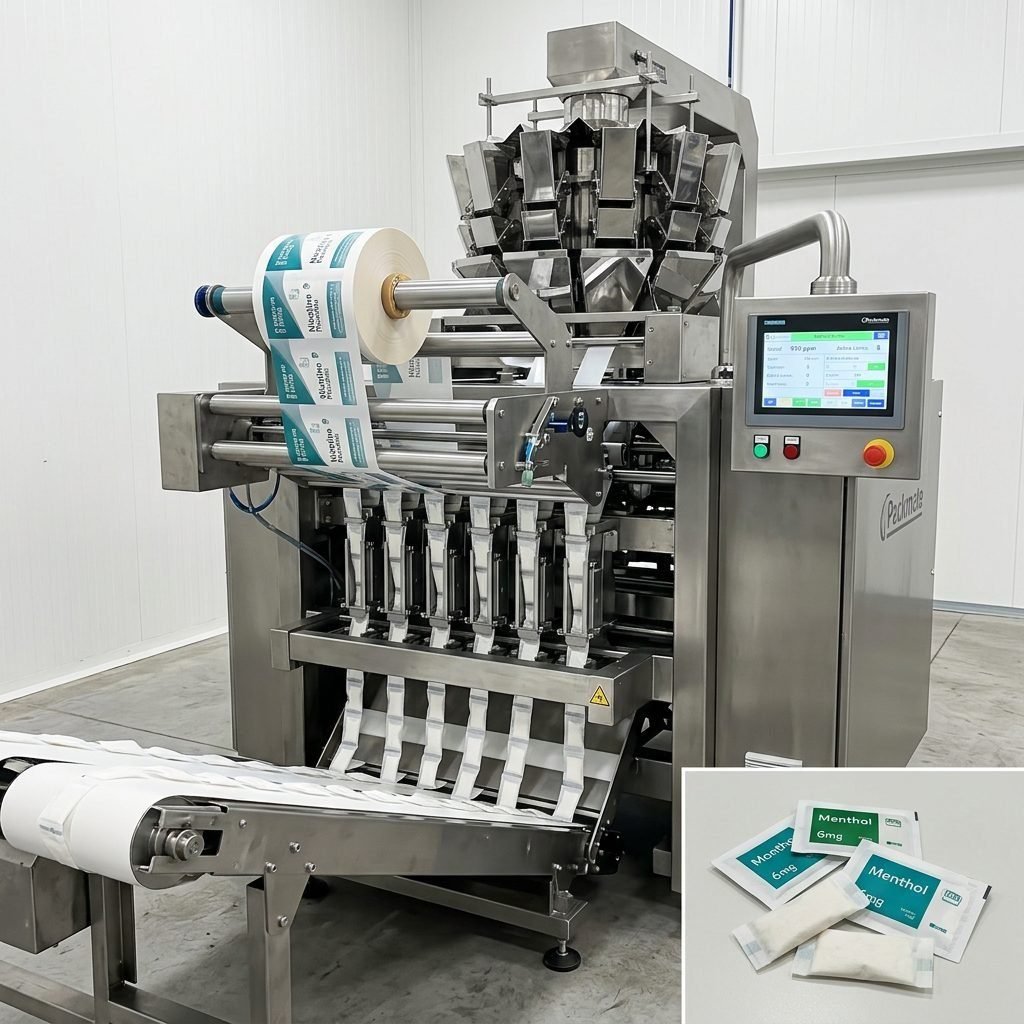
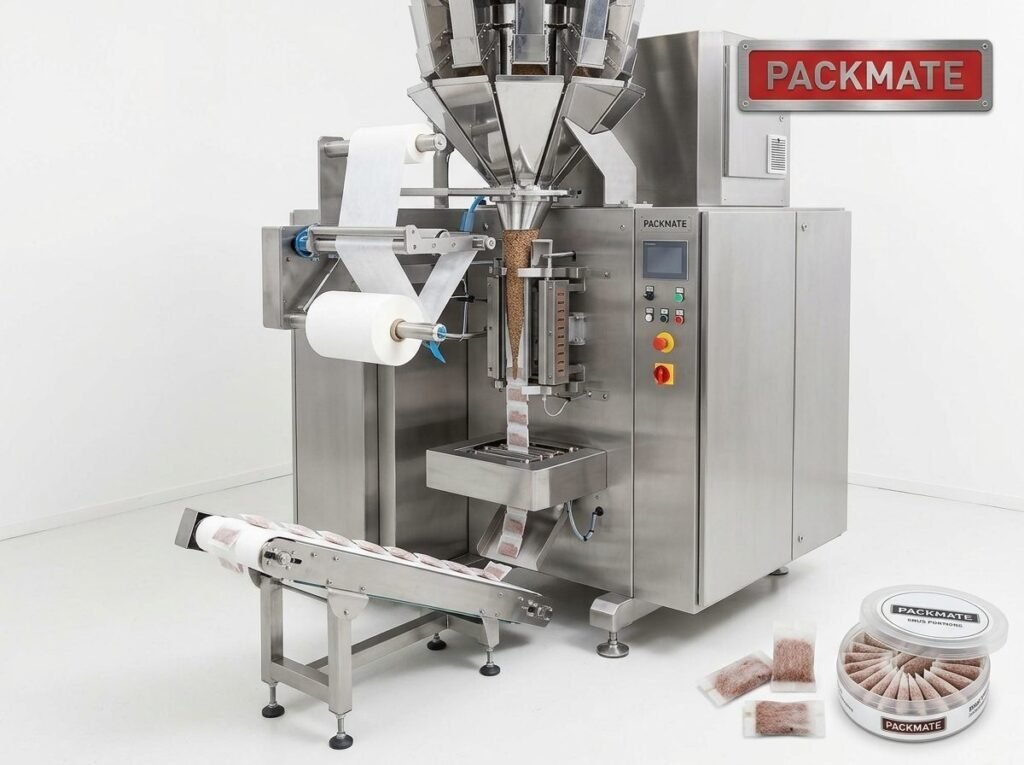
Packaging issues on a snus or nicotine pouch line can bring production to a halt and erode product quality in minutes. This troubleshooting guide covers the most common problems encountered on snus packaging machines — from stick pack and sachet systems to multi-lane nicotine pouch lines — and offers clear, practical fixes you can apply on the shop floor. Use this as a quick reference to identify causes, implement easy repairs, and prevent downtime with effective adjustments and routine checks.
Quick pre-shift checklist
✓ Mechanical inspection: Check film reels, cutting knives, sealing jaws, and guide rails for wear or debris. ✓ Pneumatics: Verify air pressure is stable and no leaks exist. ✓ Sensors & alignment: Confirm optical and photoelectric sensors are clean and properly aligned.
Common problem 1: Poor pouch forming and misfeeds
Symptoms: film wrinkles, irregular pouch shape, inconsistent pouch fill, repeated misfeeds at the forming station. These symptoms are typical on stick pack and sachet machines when web tension, forming box geometry, or feed timing is incorrect.
Likely causes
⚠️ Incorrect web tension: Loose or overly tight film will wrinkle or stretch during forming.
⚠️ Forming box wear or misalignment: Damaged forming profiles cause asymmetrical pouches.
⚠️ Timing and drive synchronization: If feeder, doser and sealing conveyors are out of sync, the pouch will be malformed.
Easy fixes
🔧 Adjust tension: Use the film brake and dancer arm to achieve stable tension. A properly tuned dancer arm should absorb short disturbances and keep web straight.
🔧 Inspect forming box: Replace worn edges and ensure the forming box fits square to the web path. Even small nicks create folds.
🔧 Resynchronize drives: Use the machine HMI to perform a drive homing routine and verify encoder feedback values. Recalibrate feeding cams if applicable.
Common problem 2: Inadequate or inconsistent sealing
Symptoms: weak seals, seal lines that peel, leaking pouches, or burnt-looking seals. Sealing issues reduce shelf life and cause product contamination risk.
Likely causes
⚠️ Incorrect temperature: Heater setpoints too low or too high.
⚠️ Worn sealing jaws or Teflon covers: Uneven pressure distribution.
⚠️ Contaminated sealing surfaces: Residue prevents consistent heat transfer.
Easy fixes
🔧 Check and set correct temperature: Refer to film supplier recommendations and use the machine’s temperature ramp procedure. Allow stabilization time before production.
🔧 Replace or service sealing jaws: Clean Teflon and replace when scoring or deformation is present.
🔧 Adjust sealing pressure: Use the pneumatic regulator to achieve even compression; inspect mounting bolts and jaw parallelism.
Common problem 3: Weight variation and dosing errors
Symptoms: underweight or overweight pouches, frequent reject rate, fluctuating fill amounts especially on multi-lane systems.
Likely causes
⚠️ Weigher calibration drift: Load cells and weighers slowly drift with contamination or wear.
⚠️ Feeder inconsistency: Vibratory feeders and augers can clog or vary with product properties.
⚠️ Product flow issues: Hygroscopic powders or sticky granules cause bridging.
Easy fixes
🔧 Recalibrate scales: Run a calibration routine and use certified test weights. Clean load cells before calibration.
🔧 Tune feeders: Adjust vibrator amplitude, change auger pitch, or add agitators to maintain consistent flow.
🔧 Condition product: Control ambient humidity and use anti-bridging inserts if necessary.
Common problem 4: Film tearing or premature film break
Symptoms: sudden film breaks, frequent web faults, jagged tears that damage product feed.
Likely causes
⚠️ Sharp edges on rollers or film path: Nip rollers, guide edges or bolts can cut film.
⚠️ Over-tensioning: Excess braking force or failed dancer.
⚠️ Film quality: Thin gauge or poor film formulation for speed and sealing conditions.
Easy fixes
🔧 Inspect and deburr film path: Smooth all edges, replace worn rollers, and check web guide bearings.
🔧 Adjust brake and dancer: Reduce brake tension and verify dancer arm motion.
🔧 Test alternate film: Try a higher gauge or different supplier film and document changes.
Common problem 5: Machine jams and product backups
Symptoms: machine stalls, conveyors overloaded, back pressure on dosing systems, frequent emergency stops.
Likely causes
⚠️ Incorrect conveyor speed or indexing.
⚠️ Chute or hopper blockages caused by lumps or foreign material.
⚠️ Sensor faults that fail to detect product or misinterpret presence signals.
Easy fixes
🔧 Slow down and clear: Stop the line, clear the choke point, inspect for foreign objects.
🔧 Verify sensor alignment: Clean sensor lenses, confirm sensing range, and test with manual product triggers.
🔧 Optimize conveyor timing: Adjust PLC indexing parameters and conveyor frequency in the HMI.
Common problem 6: Pneumatic failures and air leaks
Symptoms: erratic actuator movement, slow cycle times, dropped jaws, or pressure loss alarms.
Likely causes
⚠️ Leaky fittings or hoses.
⚠️ Worn seals in cylinders.
⚠️ Regulator failure or dryer/filter saturation.
Easy fixes
🔧 Perform soap-bubble leak test or use an ultrasonic leak detector. Tighten or replace fittings.
🔧 Service cylinders: Replace worn seals and check rod surfaces.
🔧 Maintain air treatment: Drain and service filters, change desiccant or dryers regularly.
Common problem 7: Electrical and PLC errors
Symptoms: unexplained alarms, intermittent stops, incorrect recipe selection, and communication failures with HMI, servos, or weighers.
Likely causes
⚠️ Loose connectors or damaged cables.
⚠️ PLC program drift after updates or power interruptions.
⚠️ Servo tuning issues that produce jitter or position errors.
Easy fixes
🔧 Inspect wiring harnesses: Secure loose connectors and replace damaged cables.
🔧 Check PLC logs and reset: Reboot HMI and PLC according to SOP; reload stable recipe if needed.
🔧 Re-tune servos: Use the drive tool to run an auto-tune or roll back to previously working parameters.
Changeover tips: minimize downtime during format changes
Fast and accurate changeovers rely on documented setup procedures and a prepared parts kit. Keep a changeover checklist and labelled components for each product, including knives, mandrels, jaws, and recipe names in the HMI.
Pro tip: Use the HMI’s recipe management to store all drive, temperature, and dosing parameters per SKU. This reduces human error and ensures consistent restarts.
Spare parts, service and upgrades
Keeping the right spare parts on hand is essential: cutter blades, Teflon covers, forming box inserts, heater cartridges, sensors, and pneumatic seals. If you operate multi-lane or high-speed snus lines, consider scheduled upgrades for vision systems and weight-check stations to improve quality control.
For expert technical support, parts and retrofit solutions, visit the manufacturer’s product pages and service resources:
Snus & Nicotine Packaging Machines,
Sachet & Stick Pack Machines,
Service,
Contact Us.
Safety and regulatory reminders
Always lock out power and secure pneumatics before performing maintenance. Ensure guards and interlocks are properly functioning after repairs. For compliance with CE and ISO requirements, maintain traceable maintenance logs and calibration records for weighers, temperature controllers, and safety devices.
Preventive maintenance checklist
Daily: Clean sensors, clear debris from sealing jaws, confirm air pressure.
Weekly: Inspect cutting knives, check film brake and dancer movement, test emergency stops.
Monthly: Calibrate scales, inspect motor couplings, check for software or firmware updates.
When to call for technical support
If after on-site checks the machine still shows persistent alarms, unexplained electrical faults, or mechanical breakage that requires part replacement, contact the manufacturer’s technical team. Keep serial numbers and a clear description of the fault ready to speed up the remote diagnostic process.
What to provide to support
🔧 Machine model and serial number.
🔧 Recent alarm log from HMI.
🔧 Short video or sequence describing the fault and where it appears.
🔧 Any recent changeovers or new material batches used prior to the fault.
Upgrade options to reduce future problems
Consider investing in higher-spec components for high-speed production: advanced servo drives, more responsive PLCs, an integrated vision inspection system, or multi-channel weigh-checkers for each lane. These upgrades minimize human adjustments and improve first-pass yield on nicotine pouch and snus lines. For product lines and turnkey solutions, review the manufacturer’s catalog and product suites.
For broader packaging line needs including weighing and filling integration, see Weighing & Packaging Systems and Filling & Packaging Lines.
Final checklist before restarting production
⚠️ Verify all guards in place and interlocks reset.
⚠️ Confirm recipe loaded and test-run at slow speed for 2–3 minutes.
⚠️ Monitor first 50 pouches for weight, seal integrity and film appearance, and adjust as required.
Regular training for operators on routine adjustments, safe changeovers, and early fault detection is one of the most cost-effective ways to reduce downtime and ensure consistent snus pouch quality.
Common questions (FAQs)
Q1: What is the most frequent cause of seal failure on a snus pouch machine? — A: Incorrect sealing temperature or worn Teflon/pressure jaws. Start by verifying heater setpoints and cleaning the sealing surface.
Q2: How often should we calibrate weighers on multi-lane lines? — A: At minimum monthly, and whenever product properties or ambient conditions change significantly.
Q3: Can changing film supplier reduce my downtime? — A: Yes. A more robust film with the right sealant layer and thickness for your speed and temperature profile often reduces tearing and sealing problems.
Q4: Who do I contact for authorized parts and upgrades? — A: Use the official Service and Contact pages to order certified parts and schedule upgrades: Service, Contact Us.
Q5: What preventative measures most improve long-term performance? — A: Implement a documented PM schedule, keep critical spares on hand, and train operators on standard changeover recipes and basic troubleshooting.