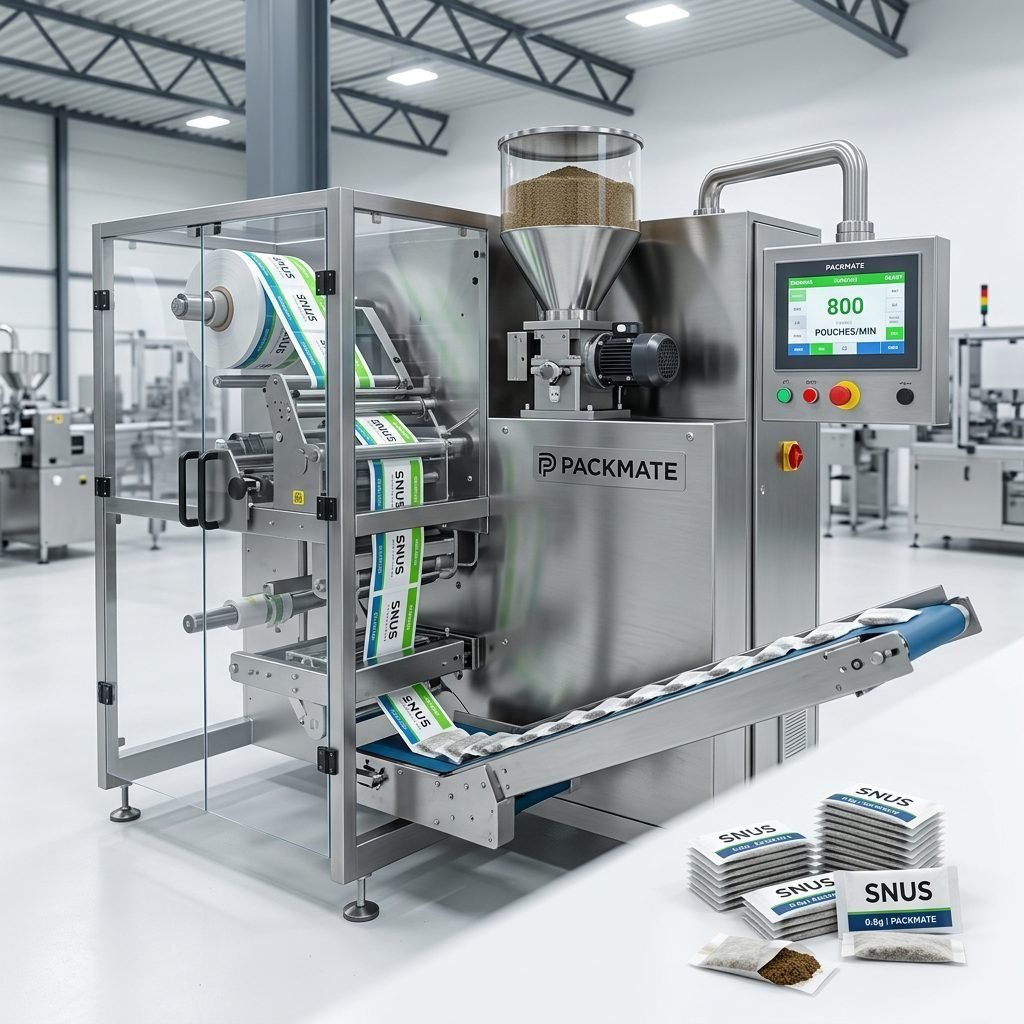
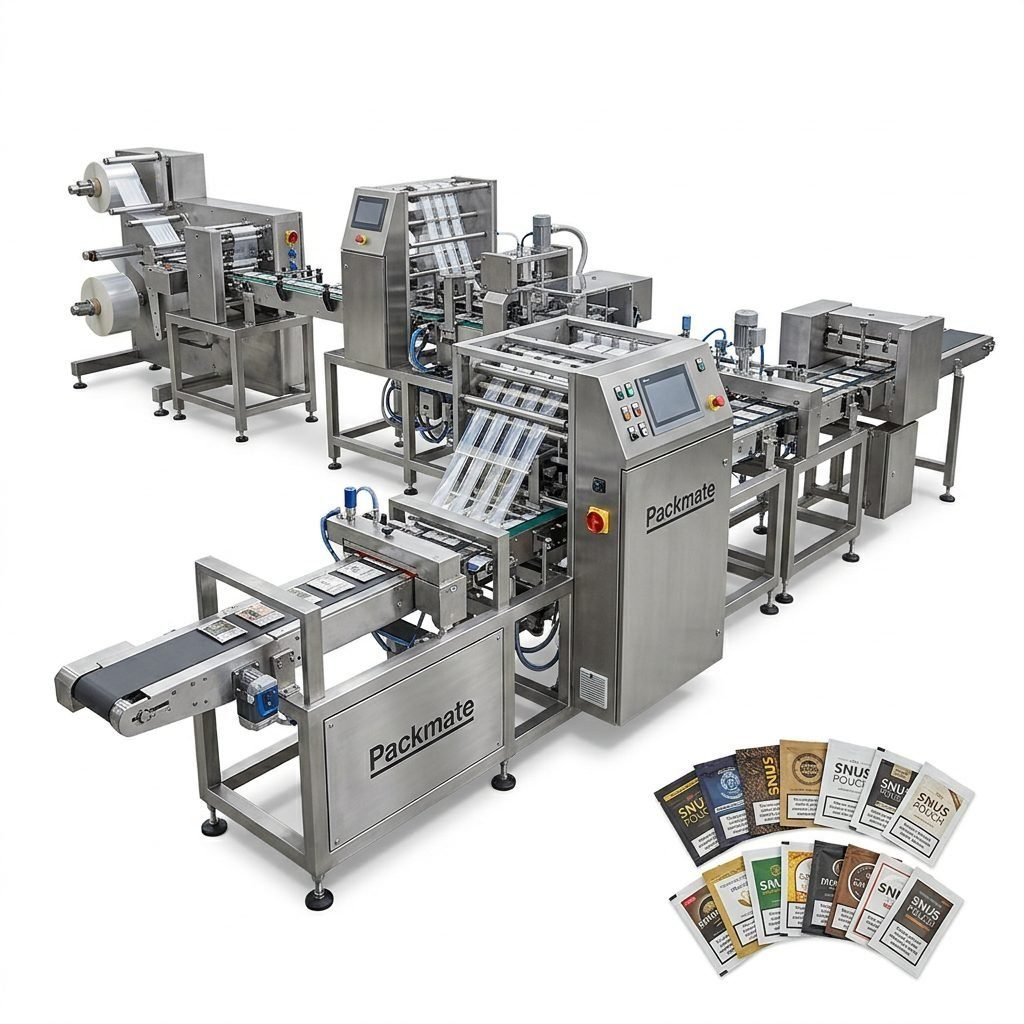
Choosing the right nicotine packaging machinery for operations in Venezuela requires more than comparing prices. You must match machine capabilities to your product format, regulatory requirements, production targets, and long-term service expectations. This guide walks you through each decision point—from machine types and technical specs to supplier selection and acceptance testing—so your investment delivers consistent output, regulatory compliance, and maximum uptime.
Understand Your Production Needs
Before evaluating models, define your core production parameters. These will drive what machine architecture and level of automation you need. Key dimensions include:
🔍 Daily and peak outputs — target pouches per minute and expected monthly throughput.
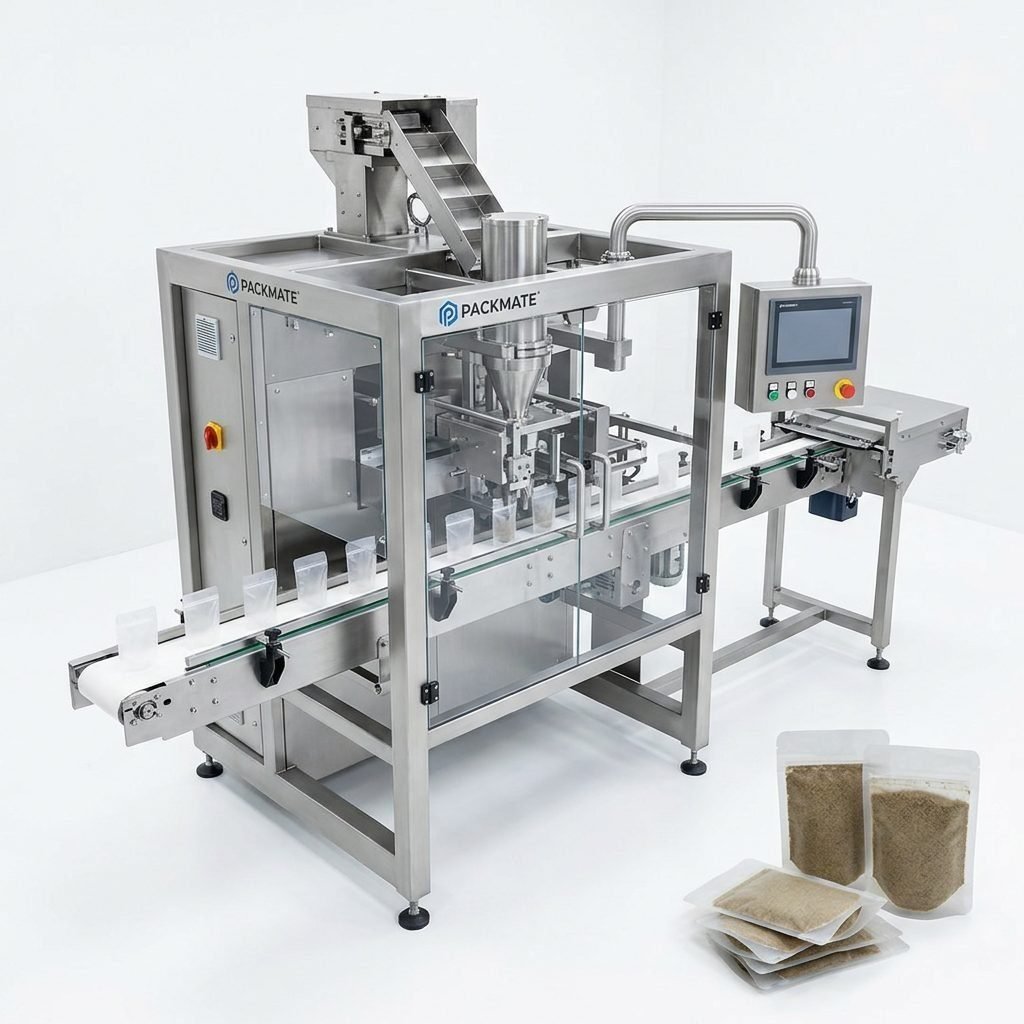
📦 Pack formats — nicotine pouch, snus pouch, stick packs, sachets, or flow-wrapped pouches, and whether multi-lane production is needed.
⚖️ Filling accuracy — dose tolerances for powders, granules, or liquid components.
🏭 Factory footprint & utilities — available floor space, power, compressed air, and HR for operation and maintenance.
Types of Nicotine Packaging Machinery
Packaging solutions vary by format and complexity. Match the machine family to your product and business goals:
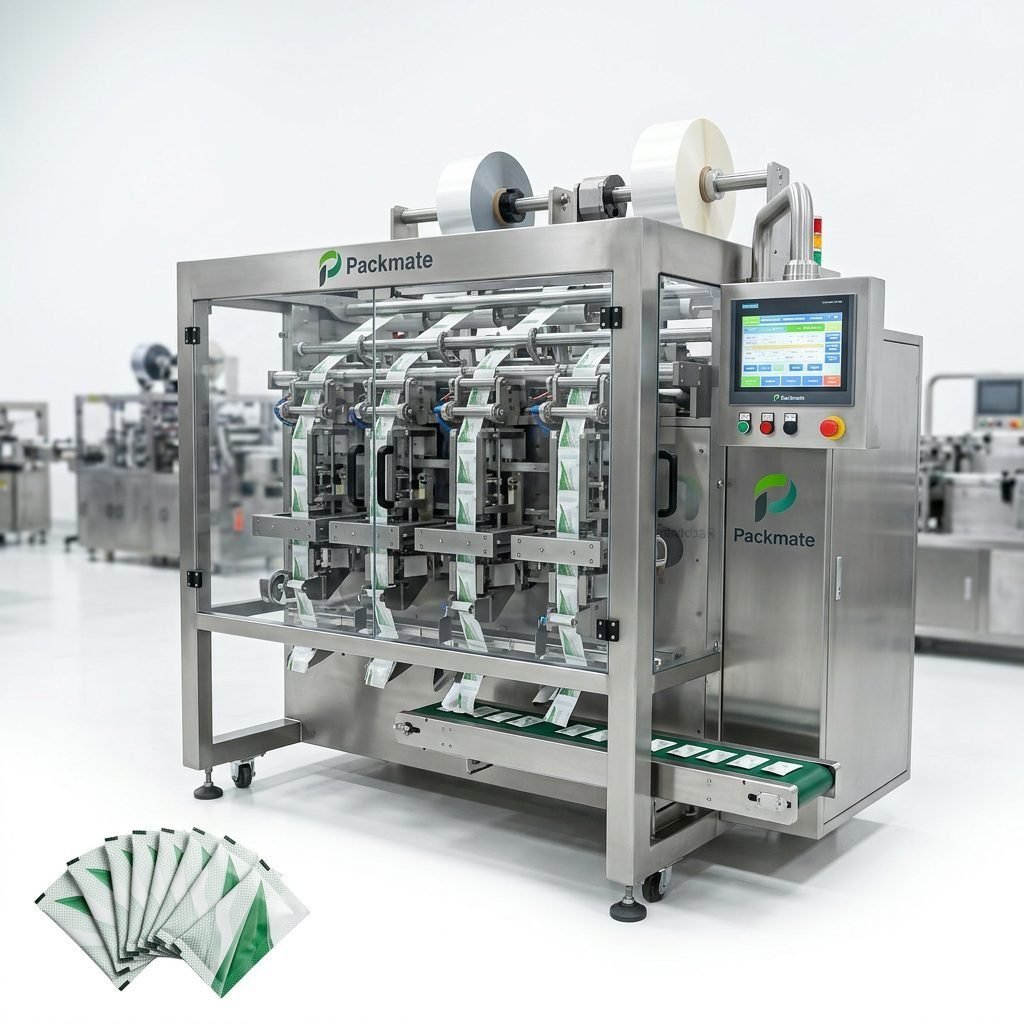
✅ Stick pack and sachet machines: high-speed single-dose formats, ideal when compact, tamper-evident servings are required. Good for dry nicotine granules or pouches.
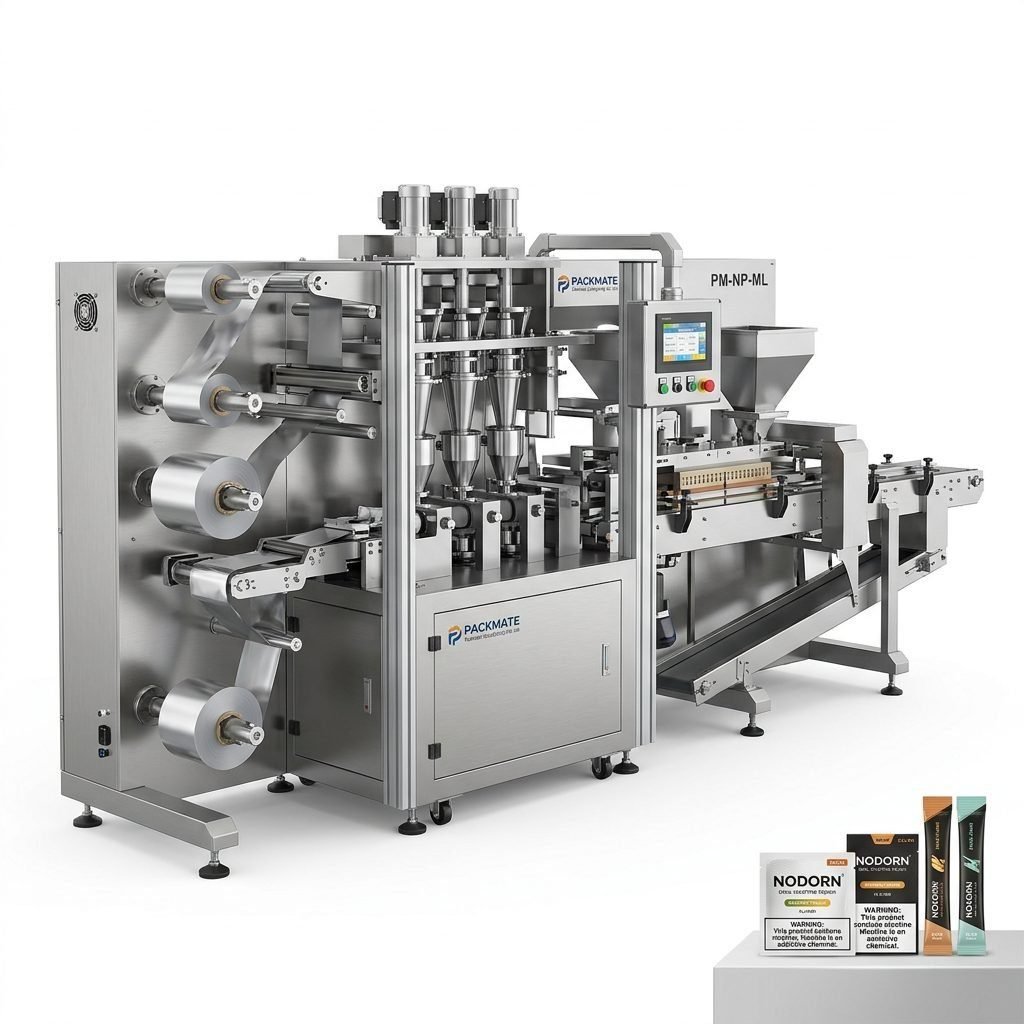
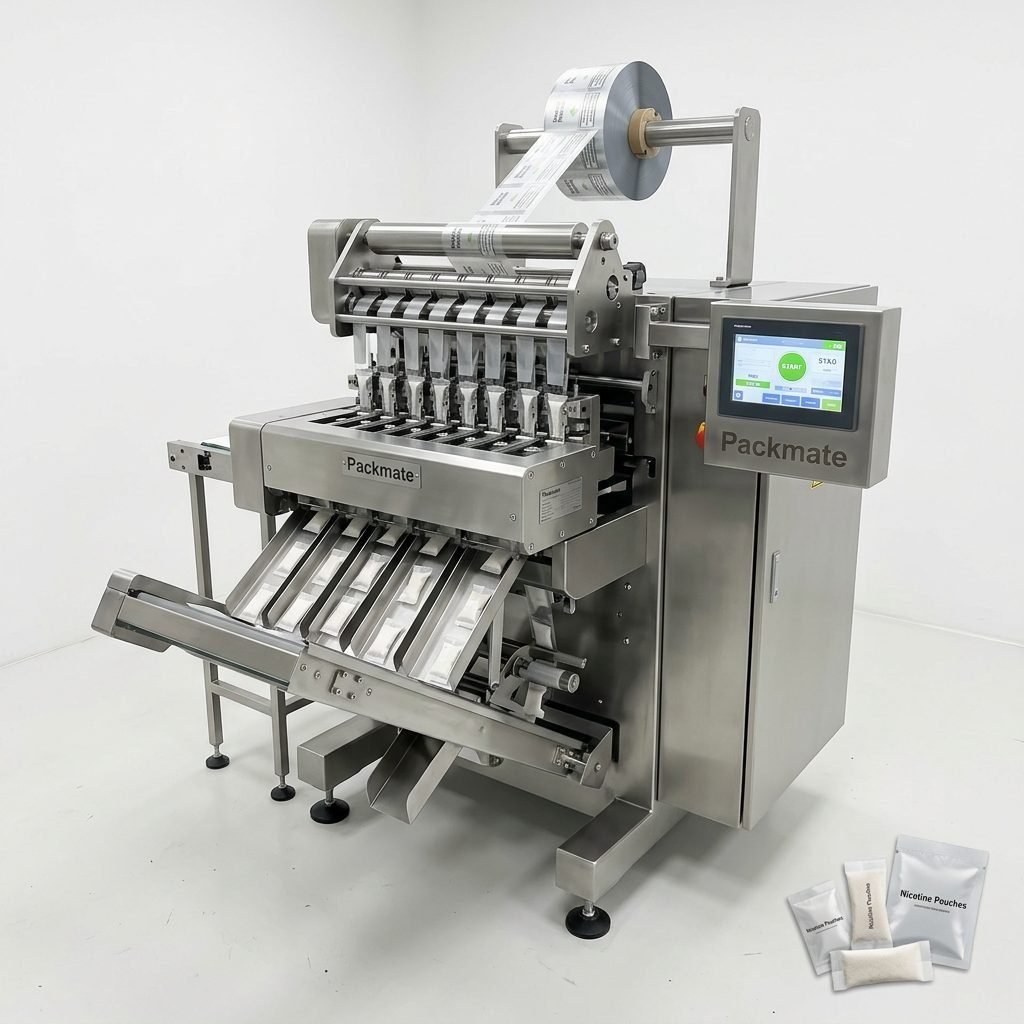
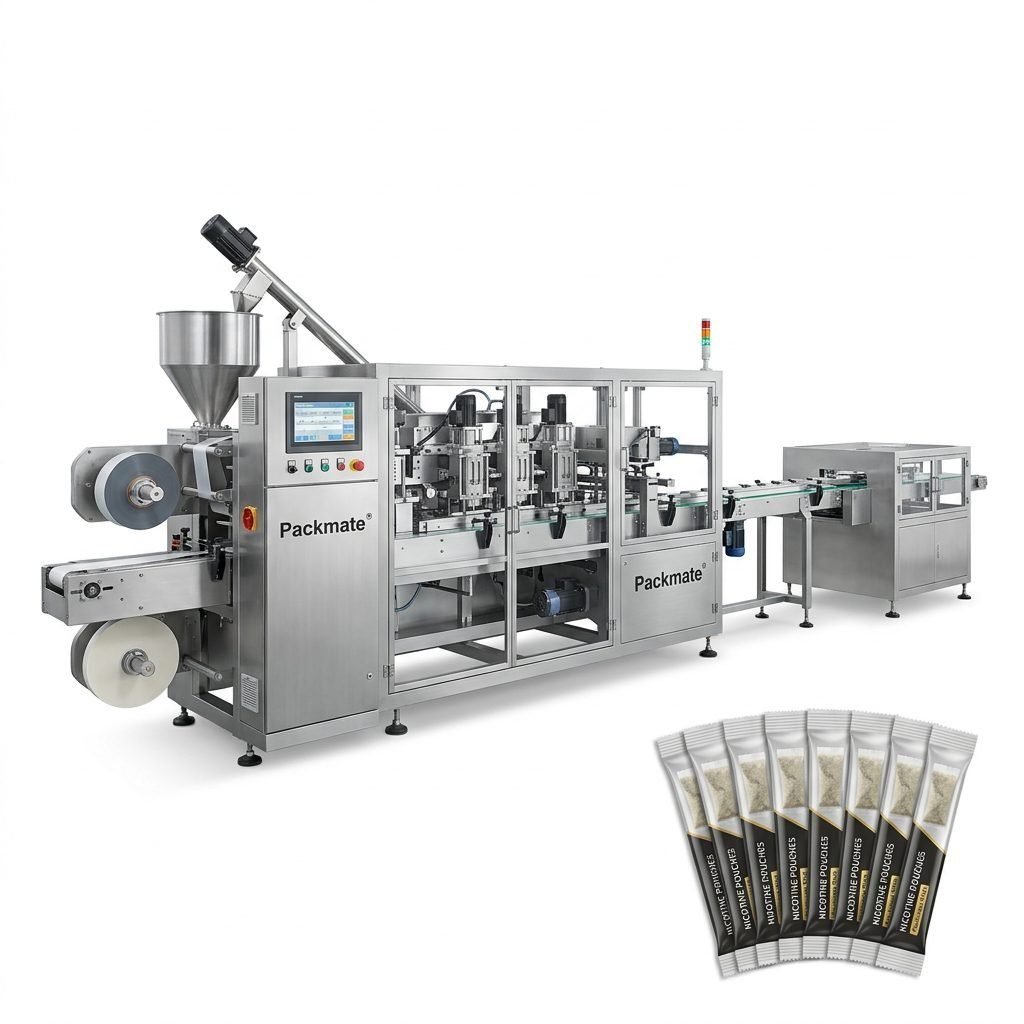
✅ Multi-lane snus and nicotine pouch systems: designed for very small doses with precise filling and sealing across multiple lanes to multiply throughput in a compact footprint.
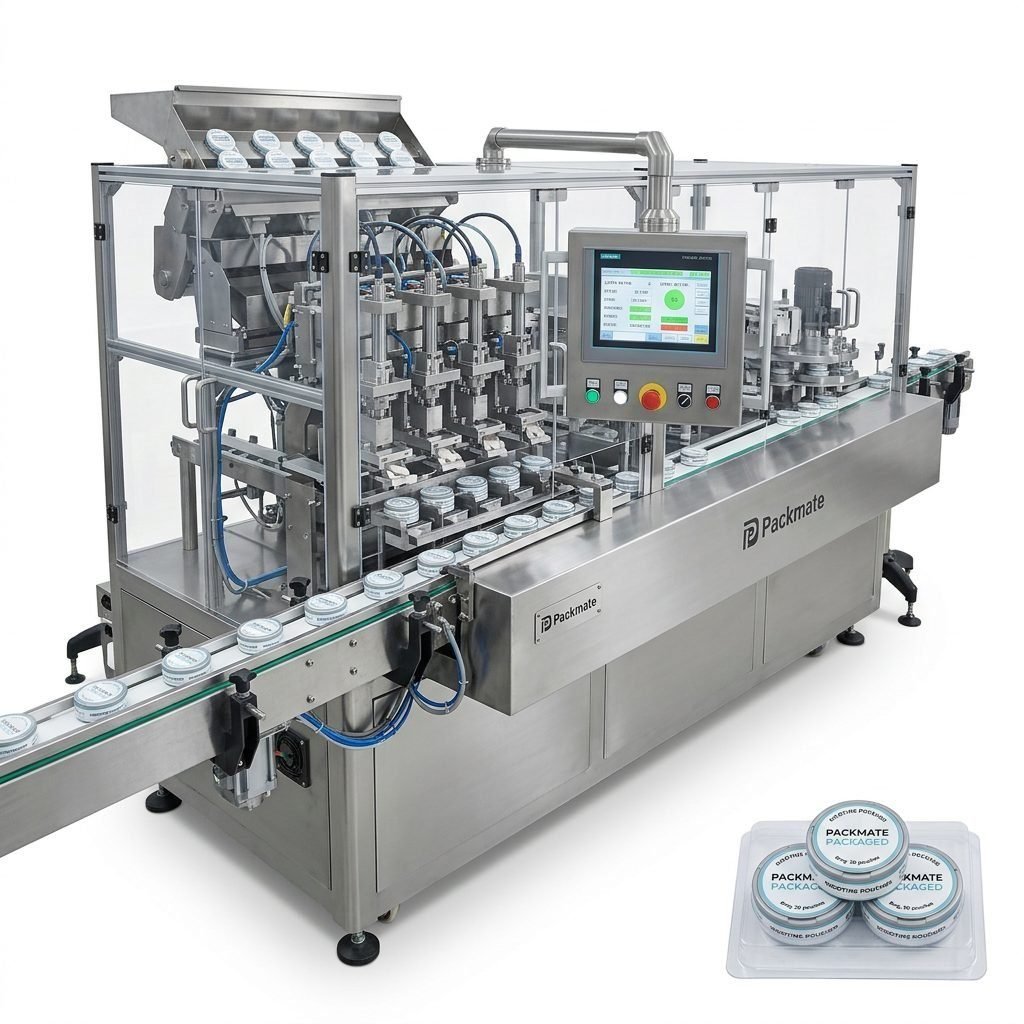
✅ Bag & pouch packaging machines: flexible formats for boxed consumer packs, display cartons, or blister-like outer packaging. Useful for final retail-ready presentation. Learn more about bag and pouch lines here.
For manufacturers seeking dedicated snus and nicotine pouch equipment, specialized suppliers provide optimized dosing, sealing and multi-lane synchronization—see dedicated solutions for snus & nicotine packaging here.
Critical Technical Considerations
When comparing models, weigh these technical factors carefully. They determine product quality, speed, and long-term cost.
Production Speed & Throughput
Speed is often advertised as pouches per minute. Validate those figures under your actual product weight and format; many machines reach rated speeds only under ideal conditions. If you need steady continuous operation, prioritize machines with proven multi-lane setups that increase throughput without requiring a larger footprint.
Filling Accuracy & Weight Control
Nicotine products often demand strict dose tolerances. Ask about integrated weighing systems or gravimetric fillers and the machine’s capability to stabilize weights across shifts. Inconsistent dosing leads to compliance issues and consumer complaints.
Materials Compatibility & Seal Integrity
Packaging films, pouch materials, and sealing technologies must match. Check whether the machine supports heat-seal, ultrasonic, or cold-seal processes for your chosen films. Confirm test data for seal strength at production speeds and under expected storage conditions.
Automation, Controls & HMI
Modern machines include PLC controls, touch-screen HMIs, recipe management, and remote diagnostics. Remote support and predictive maintenance features reduce downtime—ask prospective suppliers about their remote service capabilities and real-world case studies.
Regulatory Compliance & Traceability
Ensure the equipment supports traceability functions (batch coding, serialization) and meets local regulatory requirements. Machines certified to international standards (CE, ISO) offer a baseline for safety and quality—review the supplier’s certifications and request documentation.
Why Choose a Proven Supplier: Packmate as an Example
Selecting a supplier with deep experience in snus and nicotine pouch equipment reduces risk. Packmate, for example, brings decades of focused engineering to snus machinery and turnkey lines—key benefits you should look for in any supplier.
🏭 30+ years industry experience — long-term R&D in packaging automation.
⚙️ 50+ machine models & turnkey solutions — from single machines to complete production lines.
🧾 Advanced manufacturing & certifications — CNC machining, precision assembly, CE/ISO compliance.
Read more about the company’s background and capabilities on the About page here, and review real-world implementations in their Case studies here.
Factory Layout, Integration & Turnkey Options
A machine does not operate in isolation. Consider integration with upstream dosing and downstream packaging, and the space required for conveyors, inspection, and secondary packaging.
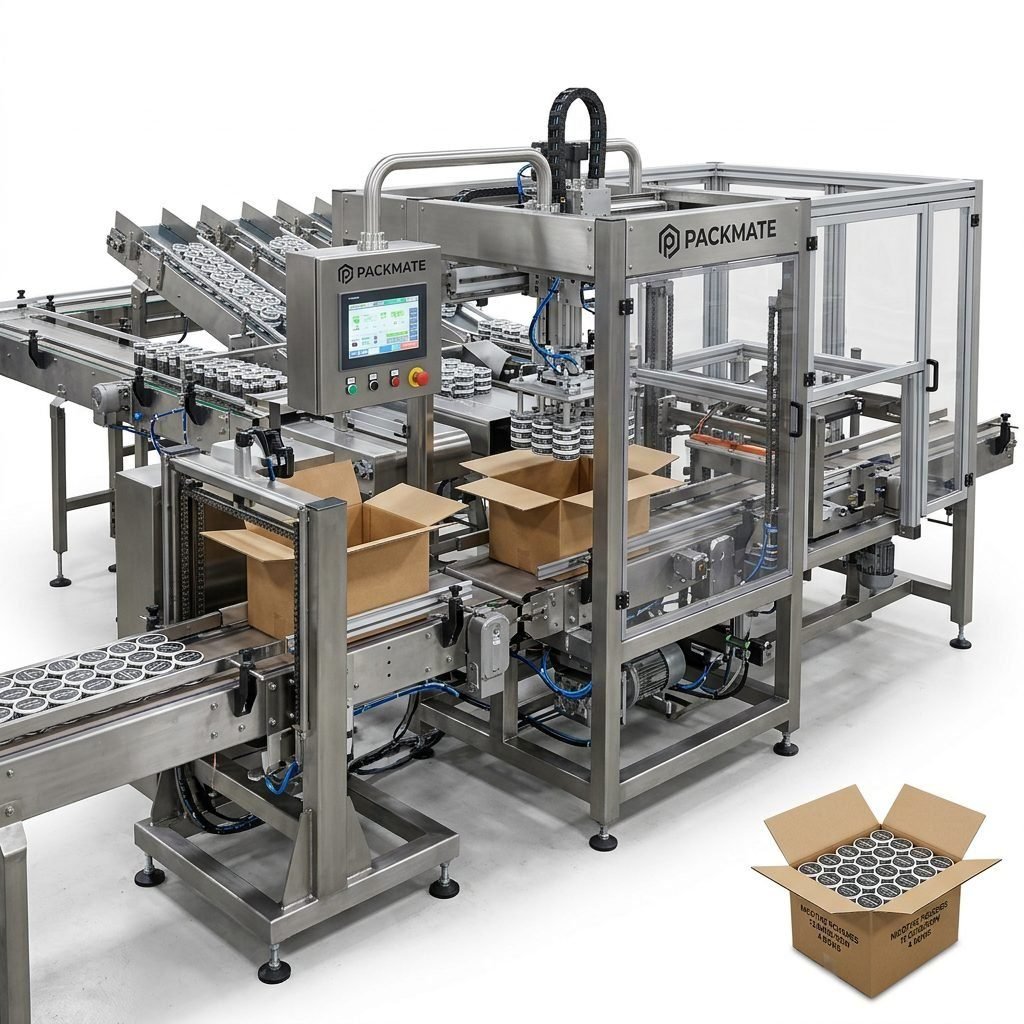
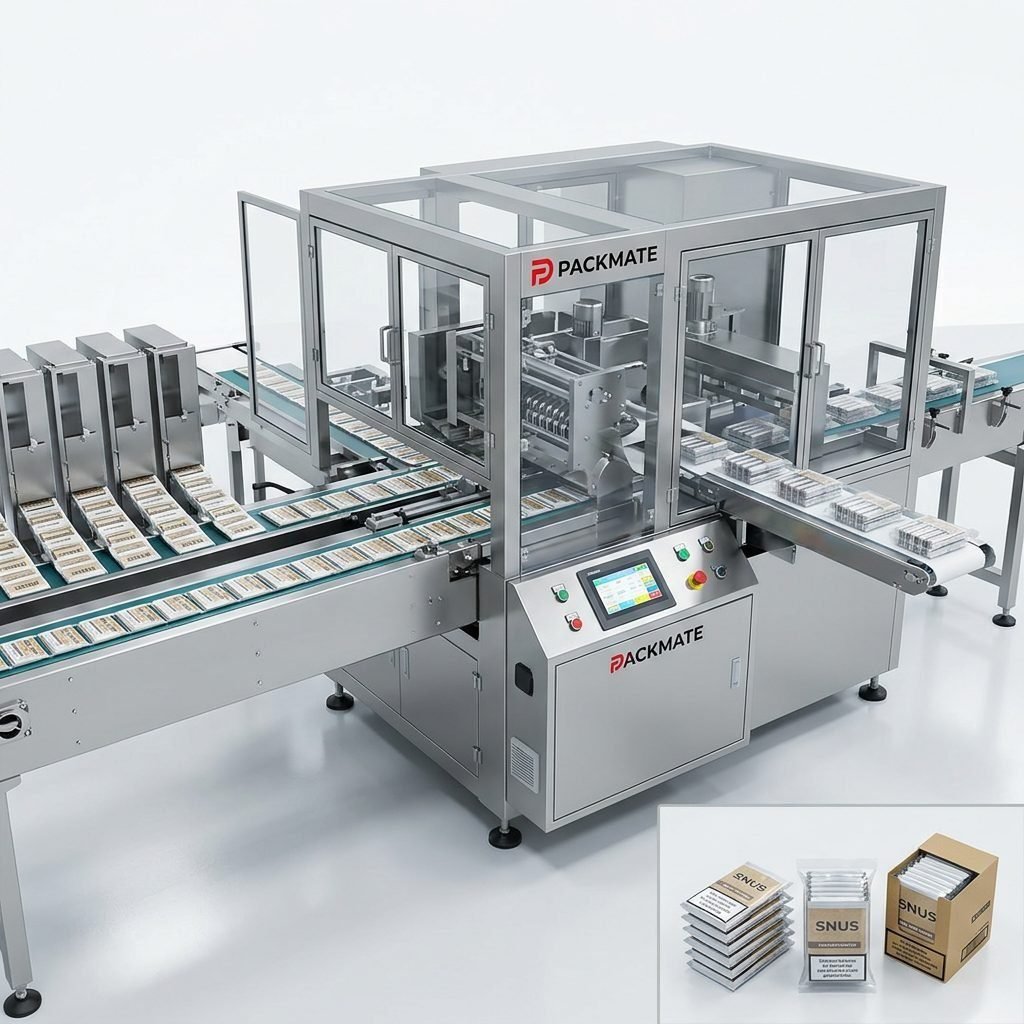
If you need full automation, ask suppliers for turnkey solutions that include filling systems, weighing & packaging interfaces, and final case packing. Turnkey providers can supply matched systems for weighing, filling, and auxiliary equipment to ensure a smooth handover. Explore weighing and packaging systems here.
Total Cost of Ownership & ROI
Upfront price is only the beginning. Evaluate lifecycle costs including spare parts, consumables, energy, operator training, and expected maintenance intervals. A well-built machine with reliable service often delivers a faster ROI due to fewer unplanned stops and lower waste.
💡 Ask for a modeled ROI — include downtime scenarios, consumables, and labor in your calculations.
🔧 Check spare-parts availability — fast access to critical parts shortens MTTR.
Procurement Checklist & Factory Acceptance Testing (FAT)
A structured procurement checklist and FAT protocol protect your investment. Insist on documented tests at the supplier’s facility before shipment.
✅ Verify production speed with your product — run real product through the machine for representative durations.
✅ Seal integrity & leak tests — validate sealing under weight and environmental stress.
✅ Weighing & dosing checks — record weight distribution data and reject rates.
✅ HMI & recipe verification — confirm recipe changeovers, remote access, and alarms.
✅ Noise, dust and safety checks — ensure operator safety and compliance with local standards.
Installation, Training & After-sales Support
Clear agreements on installation, operator training, and ongoing service are essential for long-term success. Request a service package that includes commissioning, preventive maintenance schedules, and remote troubleshooting options. If local service partners are required, confirm certified technicians are available in Venezuela or nearby regions.
For dedicated service offerings, warranty terms and support options, review the supplier’s service page and contact channels here and Contact Us if you need direct engagement.
Practical Tips for Buyers in Venezuela
– Plan for customs and import procedures; ensure the supplier provides clear shipping documentation and ISPM/packaging declarations where required.
– Confirm electrical specifications and whether transformers or local adaptations are necessary.
– Build spare-parts kits for belts, seals, and sensors to minimize downtime.
– Consider phased investments: start with a core line and scale up with additional lanes or auxiliary machines as demand grows.
Final Checklist Before You Sign
Before finalizing any purchase, verify the following in writing:
• Delivery timelines, installation scope and FAT results.
• Spare-parts list and lead times for critical components.
• Warranty coverage, service SLAs, and remote support options.
• Compliance certificates and documentation required for Venezuelan market approvals.
Conclusion
Selecting the best nicotine packaging machinery in Venezuela comes down to aligning technical capabilities with production goals, ensuring regulatory compliance, and partnering with a supplier who can deliver robust engineering, timely service, and clear documentation. By prioritizing dosing accuracy, sealing performance, multi-lane throughput, and after-sales support, your packaging line will be positioned to deliver consistent quality and predictable economics.
Common Questions
Q1: What machine type is best for small-dose nicotine pouches?
A: Multi-lane snus/nicotine pouch systems are typically best for small-dose pouches because they combine precision dosing with high throughput in a compact footprint. Seek machines with gravimetric fillers and precise pouch forming/sealing mechanisms.
Q2: How do I ensure compliance with local Venezuelan regulations?
A: Confirm the supplier provides CE/ISO documentation as a baseline, then consult local regulatory bodies for specific labeling, ingredient, and manufacturing requirements. Ask the supplier for documentation and certificates during procurement.
Q3: Is remote support available for troubleshooting and maintenance?
A: Many modern suppliers offer remote diagnostics, software updates, and troubleshooting. Confirm the extent of remote service, response times, and whether local technicians can be dispatched for hands-on repairs.
Q4: What are the typical lead times and installation requirements?
A: Lead times vary by customization, capacity, and factory schedules. Standard models may ship sooner; turnkey or heavily customized lines take longer. Ensure you have a clear installation plan including utilities, foundations, and training time.
Q5: Where can I see examples of installed lines and references?
A: Request case studies and reference contacts from the supplier. Packmate publishes case examples and exhibition demos—see real-world implementations here and exhibition highlights here.