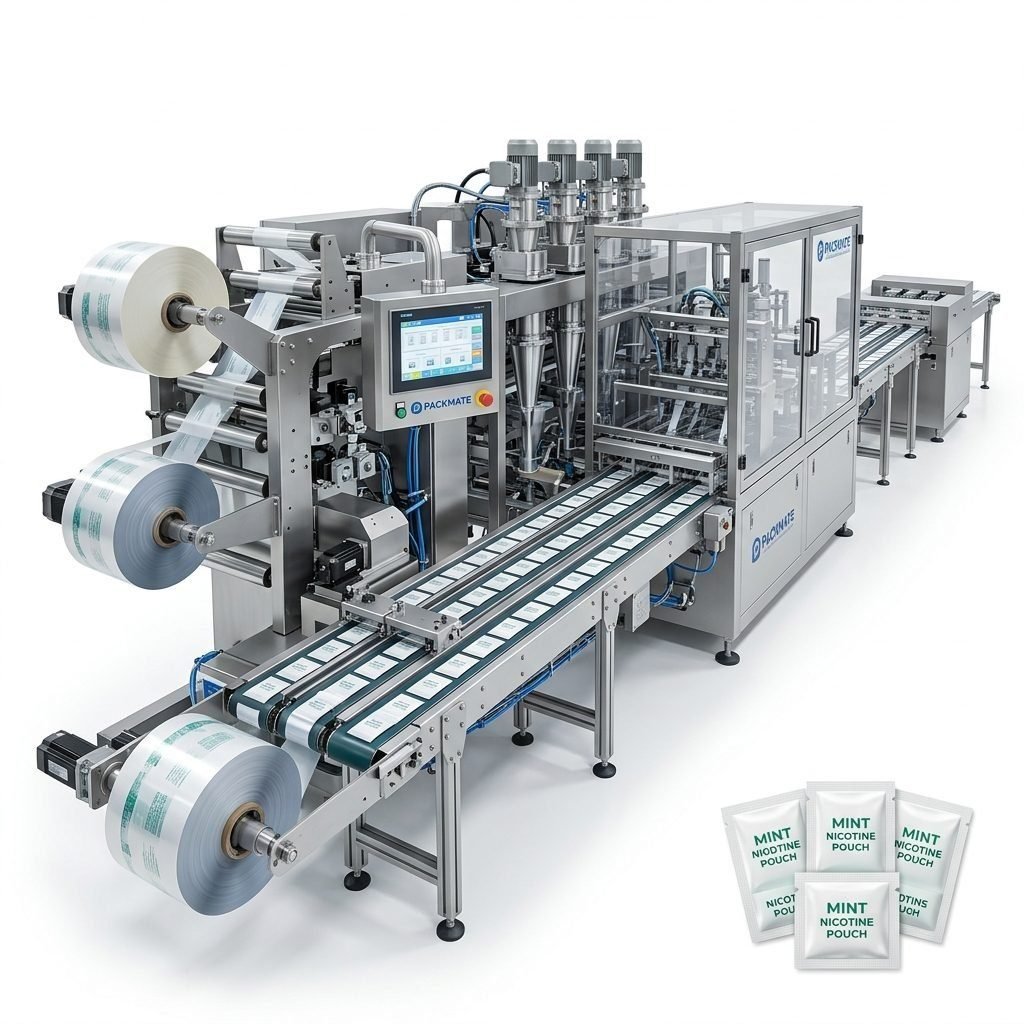
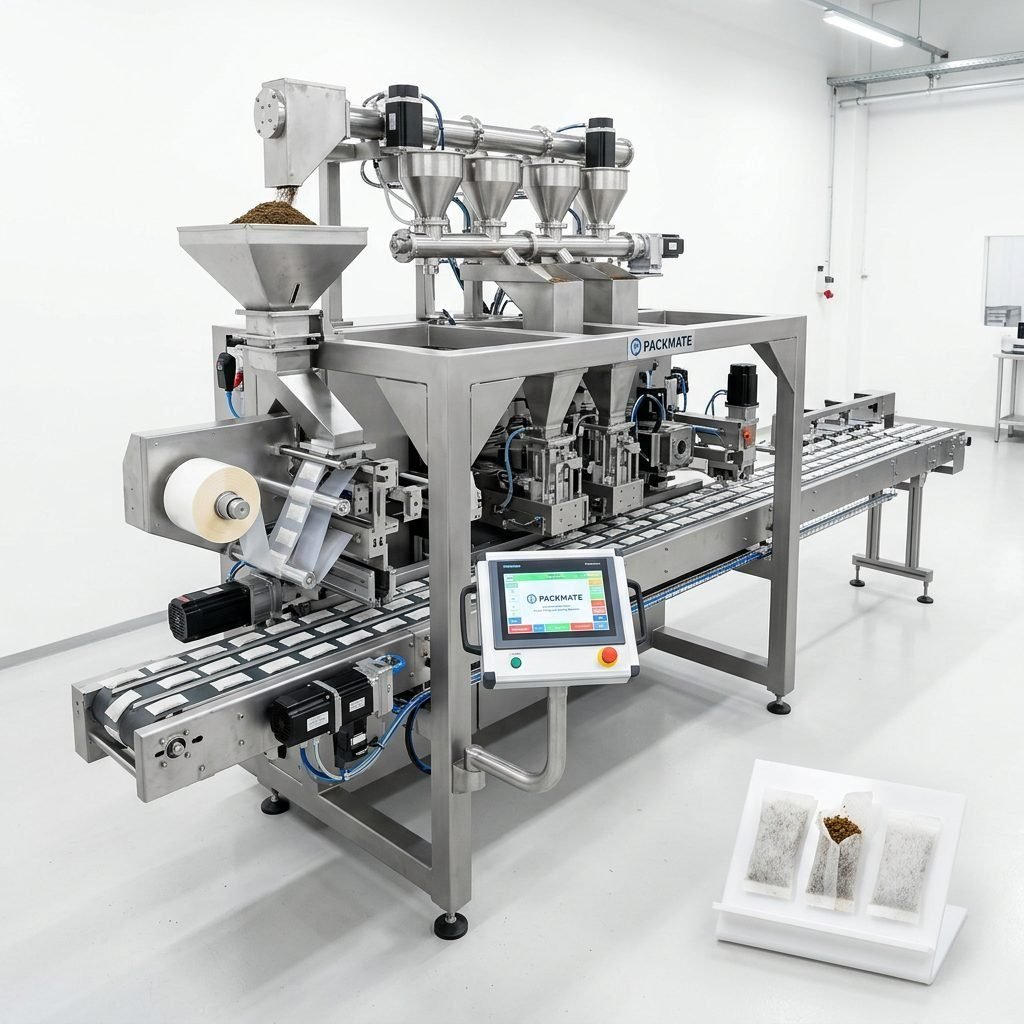
Breaking into the United States snus and nicotine pouch market means more than selecting high-speed equipment — it requires understanding American consumers, regulatory expectations, packaging preferences, and production scalability. This guide walks through everything U.S. buyers need to know when choosing snus packing equipment that will run reliably, meet local market needs, and scale with demand.
🔎 USA Market Overview for Snus & Nicotine Pouches
The U.S. market for nicotine pouches and alternative oral nicotine products has expanded rapidly over the last decade. While traditional Scandinavian snus has limited penetration, nicotine pouches — often tobacco-free and offered in discrete dosing — have found a growing audience among adult consumers seeking convenience and flavor variety. Distribution channels include specialized vape/tobacco shops, cross-category convenience stores, online retail, and direct-to-consumer subscriptions.
✅ Key American consumer trends
• Preference for single-dose, low-moisture pouches for portability and minimal odor.
• Increasing demand for multiple flavor profiles and nicotine strengths.
• Growing interest in child-safe and tamper-evident packaging features.
• Retail-ready formats: flow-wrapped multipacks, shelf-ready boxes, and retail display compatibility.
⚖️ Regulatory & Compliance Considerations in the United States
U.S. regulation of nicotine products can be complex and varies by product formulation and state laws. Many producers should plan for federal oversight, state-level rules, and platform-specific e-commerce requirements.
What to consider before you buy
• FDA & state compliance: Consult legal counsel to confirm how your specific product (tobacco-based snus vs. tobacco-free nicotine pouches) is regulated. Most manufacturers prepare labeling and traceability systems to support compliance reviews.
• Child-resistant packaging: Many U.S. retailers and states expect child-resistant closures or outer cartons for nicotine products — factor machine capability for CR components.
• Lot tracing & serialization: Machines that integrate serialization printers and batch coding help with recalls and audit trails.
⚙️ Choosing the Right Type of Snus Packing Machine
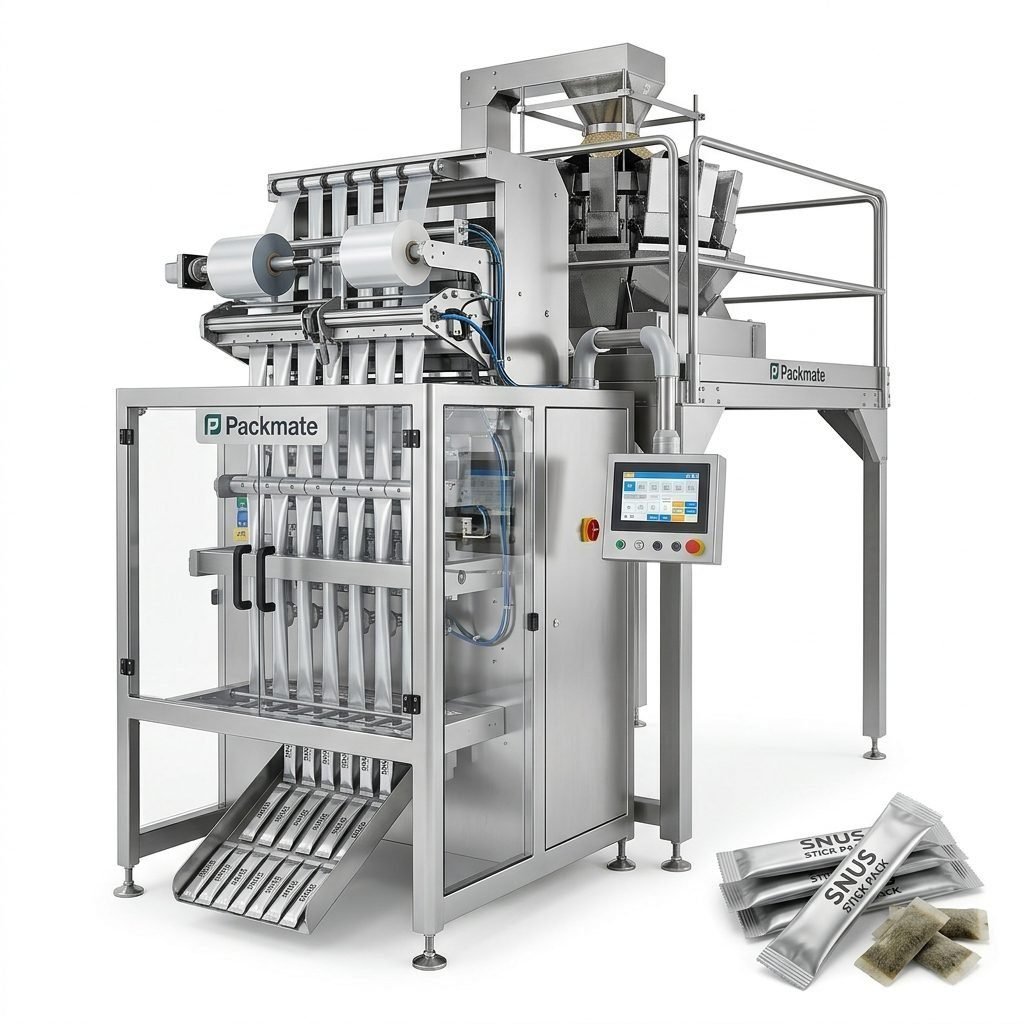
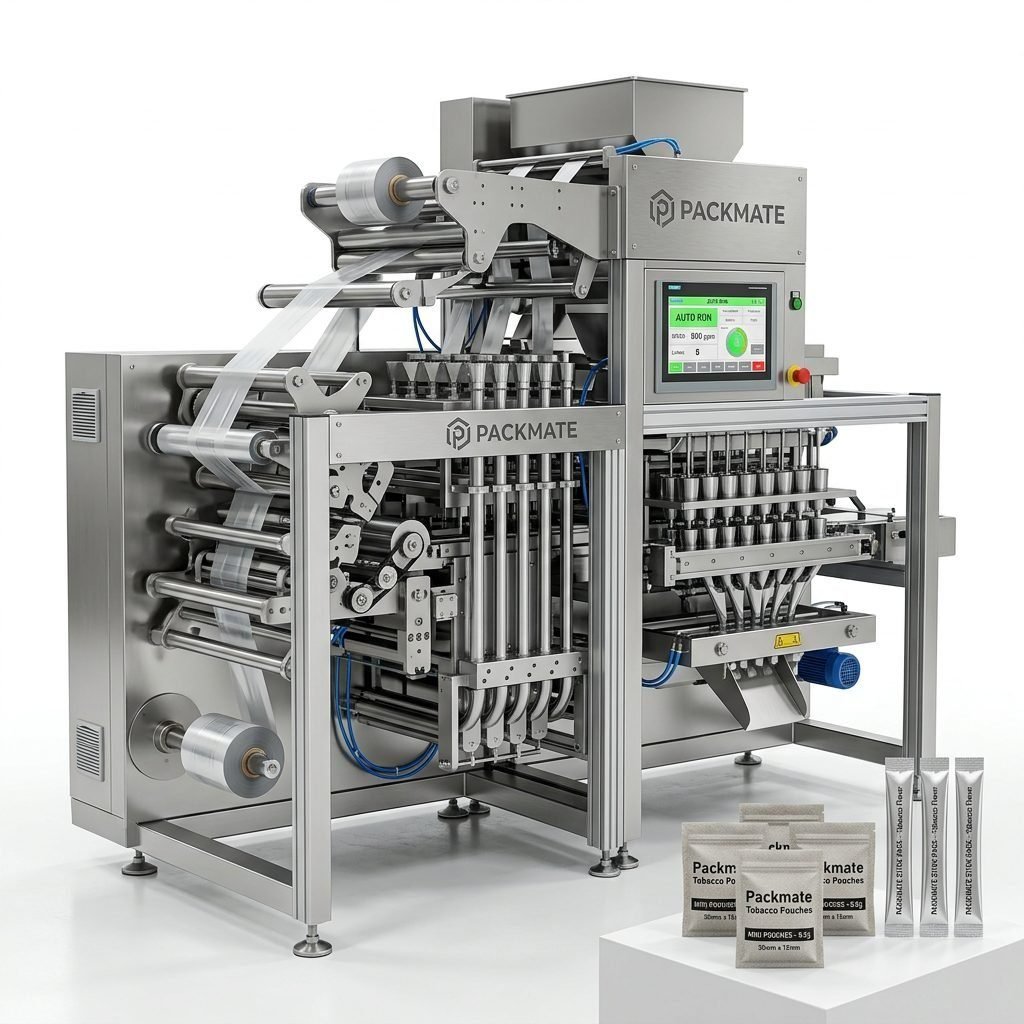
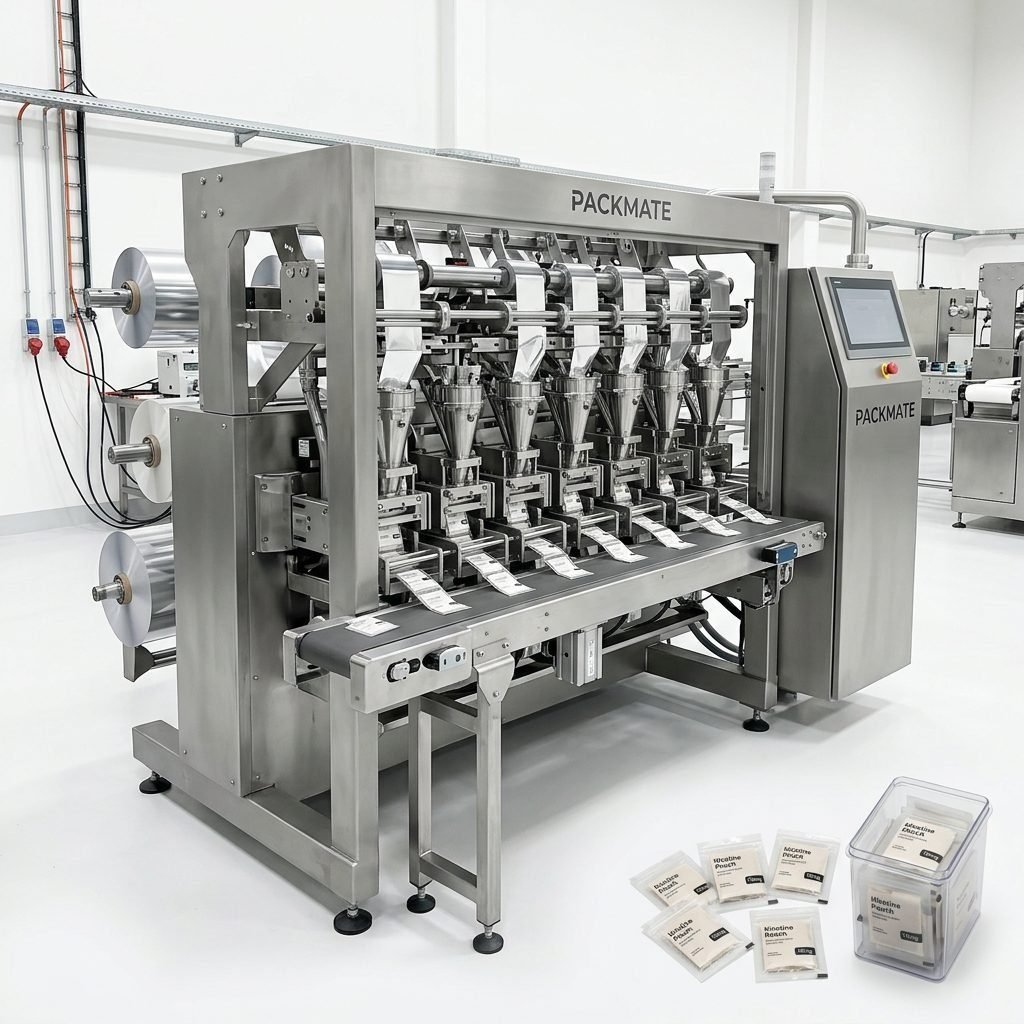
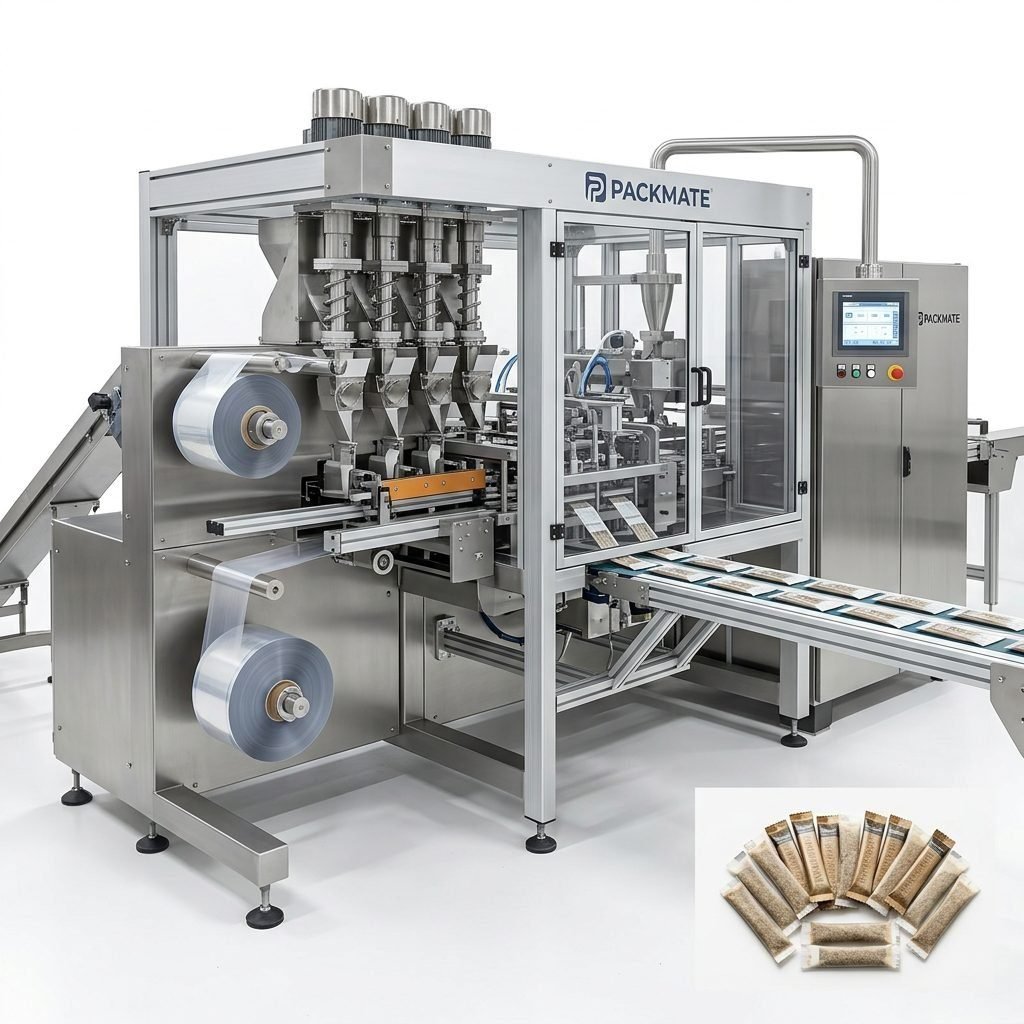
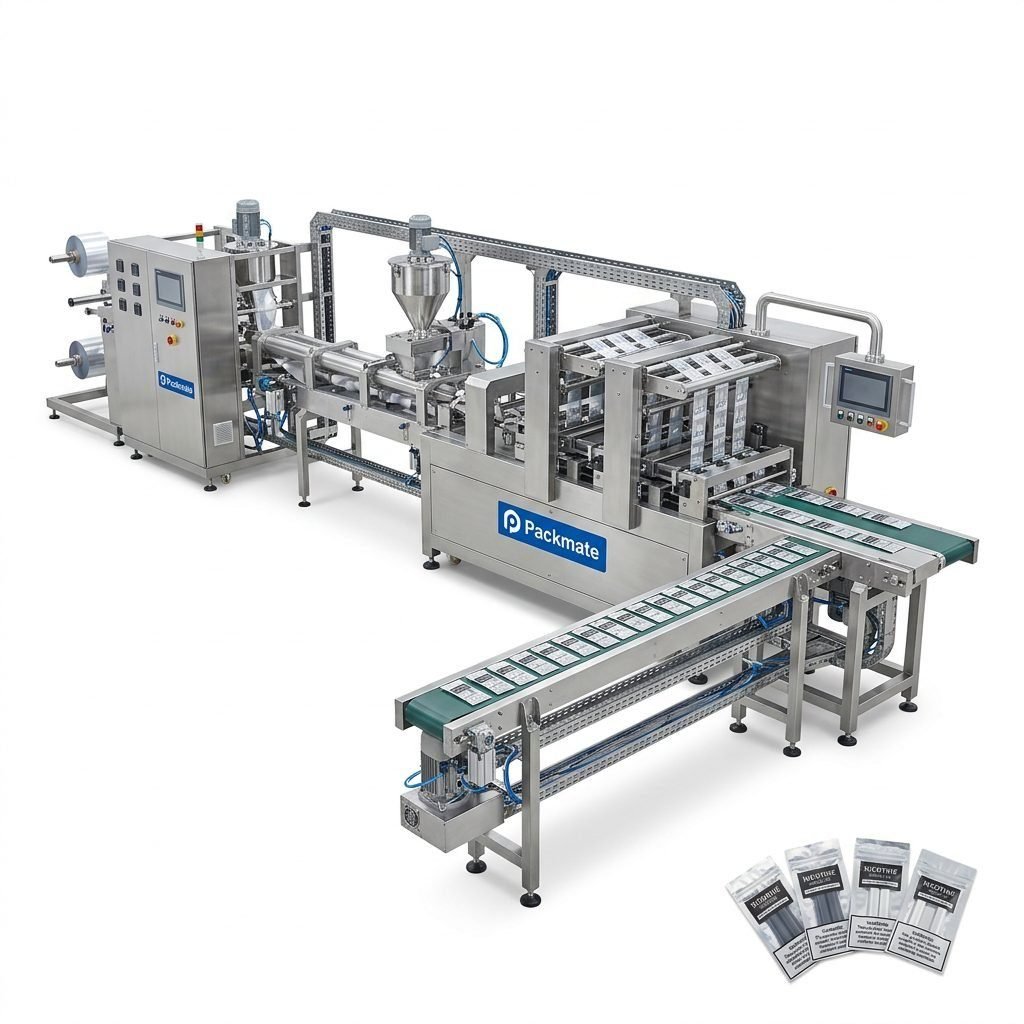
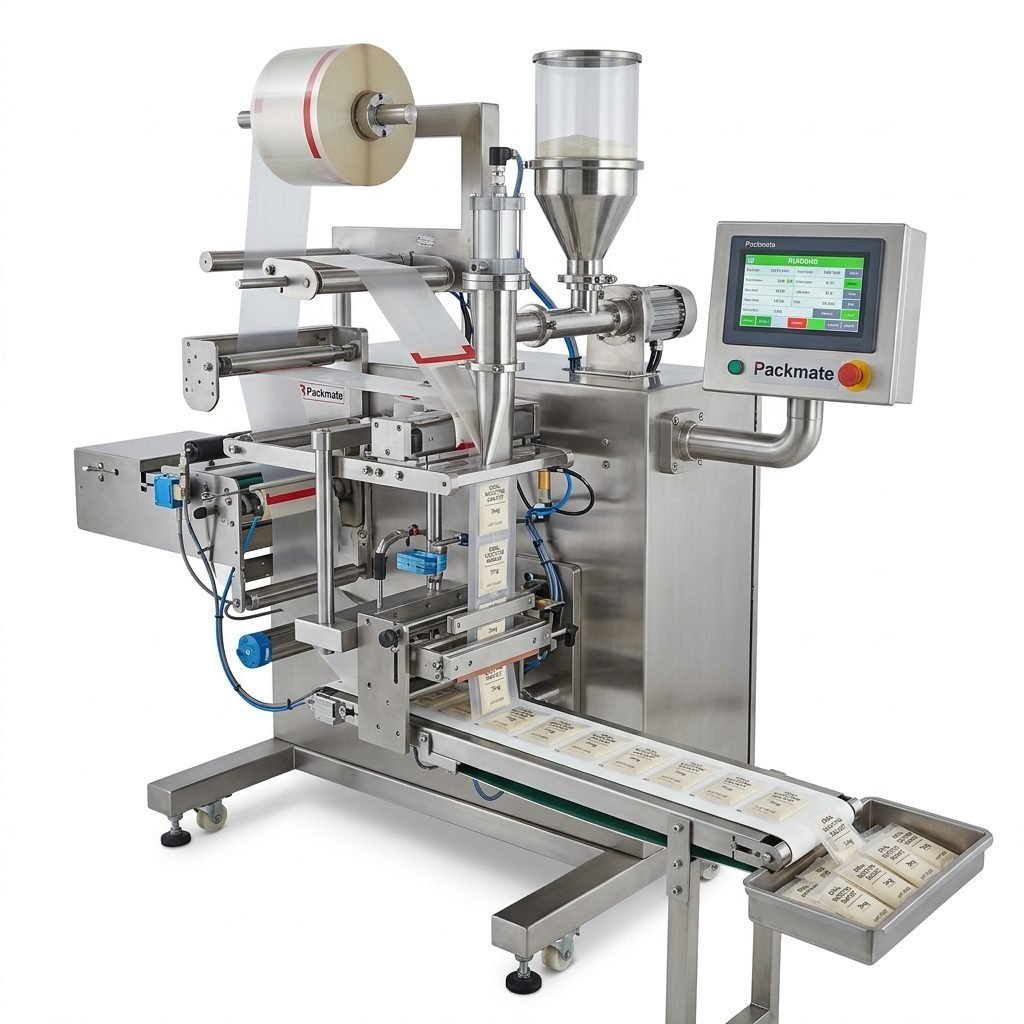
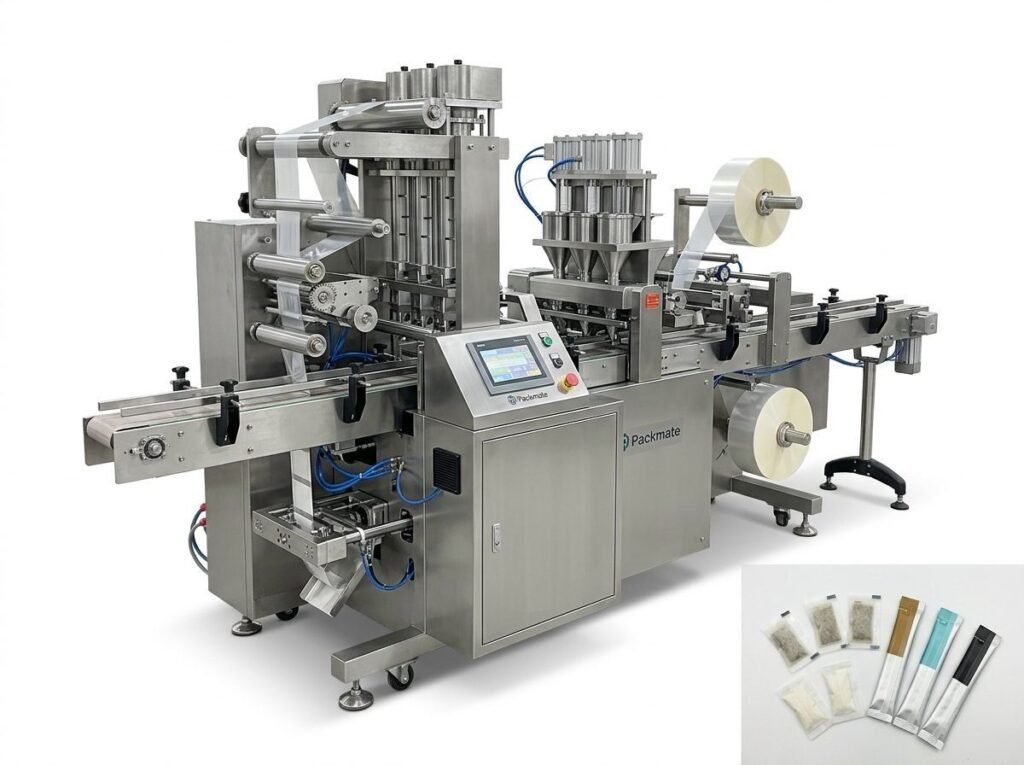
The right equipment depends on pouch style, production speed, product dose, and packaging format. Typical machine types for snus/nicotine pouches include multi-lane stick-pack/flat pouch machines, sachet machines, and tray or can filling systems for tins and canisters.
Popular machine types
• Multi-lane stick pack machines — high throughput for small-dose pouches across multiple lanes.
• Sachet & pillow pack machines — flexible for different pouch sizes and ease of flavor segmentation.
• Can/tin filling lines — for traditional snus tins or modern re-sealable canisters.
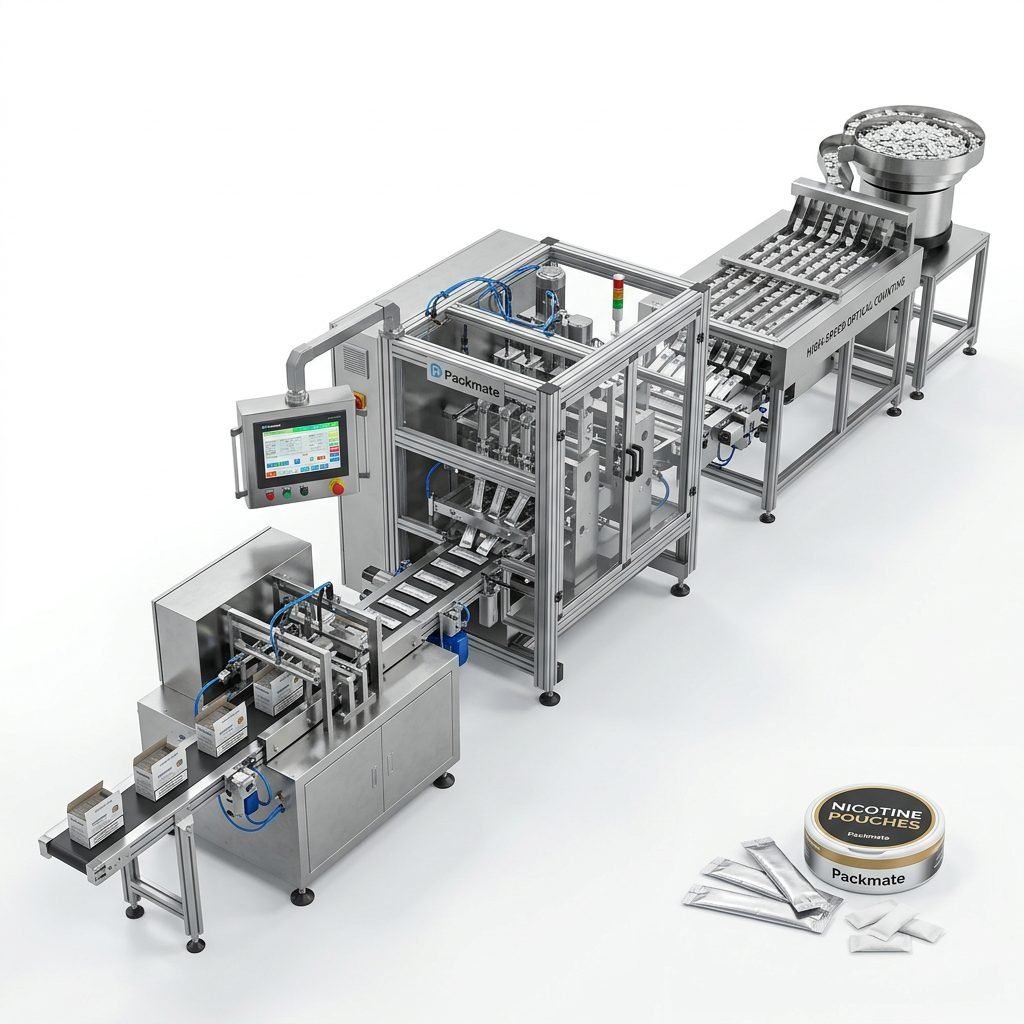
• Complete turnkey lines — integrated weighers, pouch makers, metal detection, and case packers.
📐 Technical Specifications to Compare
When comparing suppliers, focus on specs that directly affect uptime, yield, and product quality:
Core specification checklist
• Throughput (pouches per minute and lanes scalable to your volumes).
• Dose accuracy and filling technology (volumetric vs. auger vs. multi-head weighers).
• Material compatibility — ability to seal common U.S. film laminates and foils.
• Print & coding integration (date codes, batch, QR/UPC printing).
• Ease of changeover and tool-less format parts for small-batch flavor runs.
• CIP/cleaning accessibility and GMP-friendly design.
Machines from reputable manufacturers typically publish detailed spec sheets — request test runs with your product and film to validate weight accuracy and seal integrity before purchase.
📦 Packaging Formats & Materials for the U.S. Retail Shelf
U.S. retail expects a mix of single-dose retail pouches, multipacks, and shelf-ready cartons. Consider the following formats and how your line must adapt:
• Primary pouch materials: barrier laminates for moisture control and long shelf life.
• Secondary packaging: flow-wrapping, tuck-top cartons, and display-ready trays.
• Point-of-sale requirements: SKUs with UPCs and clear label panels for compliance.
🔗 Integration, Automation & Traceability
U.S. customers often require automated lines that integrate upstream and downstream elements: feeders, weighers, in-line printers, metal detectors, and case packers. Seamless communication between modules simplifies batch control and improves compliance reporting.
Consider machines with open communication protocols (Ethernet/IP, Profinet) and HMI setups that allow remote diagnostics. Remote service capabilities reduce downtime for U.S.-based operations with customers across multiple time zones.
🔧 Customization & Auxiliary Equipment
The right snus line often includes auxiliary devices:
• Multi-head weighers for consistent dosing across variable fill weights.
• Nitrogen flushing and modified atmosphere packaging for extended shelf life.
• Automatic lid/can feeders and torque-controlled lid applicators for tins.
• Vision systems for print verification and foreign object detection.
💰 Budgeting & Total Cost Considerations
Purchase price is one factor — total cost of ownership includes installation, training, spare parts, maintenance, and potential line upgrades. High-efficiency multi-lane equipment often has a higher initial cost but delivers much lower cost per pouch at volume.
🛠️ Installation, Training & After-Sales Service
Choose vendors who provide comprehensive installation support, operator training, and local spare parts stocking where possible. For U.S. customers, reduced lead times on parts and responsive remote diagnostics are essential.
When evaluating suppliers, request:
• A clear commissioning plan and timeline.
• Training syllabus for operators and maintenance staff.
• Spare parts lists and recommended service schedules.
• Remote support options and service-level agreements.
📈 Scaling & Future-Proofing Your Line
Many U.S. brands start with a single-line pilot and expand to multiple lanes or parallel lines as demand grows. Modular machine design and standardized interfaces make scaling faster and more cost-effective.
Consider purchasing machines with upgrade paths (e.g., add lanes, higher-speed servo systems, or automated case packing) rather than buying bespoke single-purpose equipment.
🏭 Why Choose Packmate Snus Machine for U.S. Operations
Packmate has over 30 years of experience in packaging equipment manufacturing and specific focus on snus and nicotine pouch lines. Our factory capabilities include advanced CNC machining and precision assembly, supporting both standard models and custom turnkey solutions tailored to the U.S. market.
Explore product lines and machine case studies to see proven systems in operation: Snus & Nicotine Packaging Machines, Bag & Pouch Packaging Machines, and real-world Case Studies.
📬 Next Steps to Buying & Working with a Manufacturer
1) Prepare a product specification: pouch size, weight, materials, and target throughput.
2) Request performance testing with your actual product and film to verify accuracy and seal integrity.
3) Compare proposals including installation, spare parts, and training.
4) Confirm lead times and shipping logistics to your U.S. facility.
5) Establish a service and parts agreement to minimize downtime.
For direct inquiries and to arrange demos or factory visits, contact the sales team: Contact Us. View complementary systems such as weighing and packaging integration at Weighing & Packaging Systems.
📌 Final Checklist Before Purchase
⚙️ Machine capability: Verify lanes, throughput, and dose accuracy.
🧾 Compliance: Confirm labeling and traceability features.
🔩 Service: Check spare parts availability and remote support.
📦 Format tests: Require validation runs with your actual pouch film and formula.
📅 Timeline: Align delivery, installation, and regulatory readiness.
❓ Frequently Asked Questions (FAQs)
Q1: How do I know which machine speed I need for U.S. distribution?
A1: Start from your projected SKU demand and retail cadence. Calculate monthly pouch volumes, factor in downtime, and choose a machine or multi-lane configuration that meets peak production with headroom for growth.
Q2: Are nicotine pouches treated differently than tobacco snus for packaging compliance?
A2: Regulatory treatment varies by formulation and state; nicotine-only pouches may face different labeling and age-restriction requirements. Always confirm with regulatory counsel and design your packaging to support traceability and age-gating.
Q3: Can Packmate machines handle small-batch flavor changes quickly?
A3: Yes — many multi-lane and sachet systems are designed for rapid changeover with modular tooling and accessible cleaning features. Request a demonstration using your specific product to validate changeover time.
Q4: What after-sales support should I expect for U.S.-based operations?
A4: Look for vendors offering remote diagnostics, expedited spare parts shipping, on-site commissioning, and operator training. Service contracts are recommended to maintain uptime as volumes grow.
Q5: Where can I see real-world examples of snus lines?
A5: Review manufacturer case studies and exhibition presentations to see live demos and reference installations. Visit Our Exhibition and the Case pages for examples.