Designing a nicotine pouch packaging line requires a blend of production efficiency, regulatory compliance, and flexible scalability. Whether you are launching a small-batch brand or upgrading to multi-lane high-speed production, the right line architecture can reduce scrap, improve yield, and ensure consistent product quality. This guide walks through practical design principles, core equipment choices, material handling, quality control, and commissioning strategies to build an efficient, compliant, and scalable nicotine pouch production line.
📦 Core Design Principles for Nicotine Pouch Lines
Start with three non-negotiable principles: product integrity, regulatory compliance, and operational scalability. These principles guide layout, equipment selection, material flow, and control strategies. A line optimized for product integrity minimizes contamination and ensures consistent pouch weight and seal quality. Regulatory compliance affects hygienic design, traceability, and testing capabilities. Scalability ensures you can increase throughput with modular additions rather than full redesigns.
⚙️ Modular vs. Integrated Line Architectures
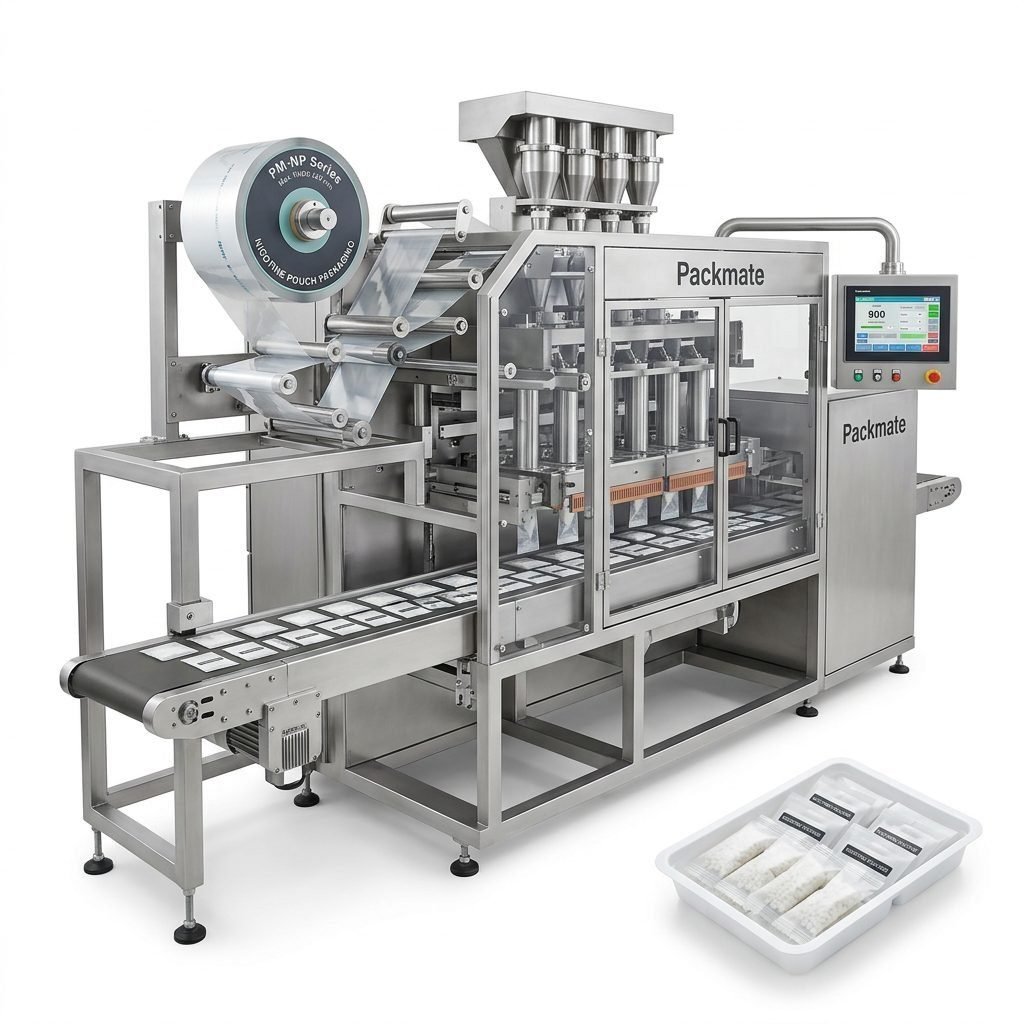
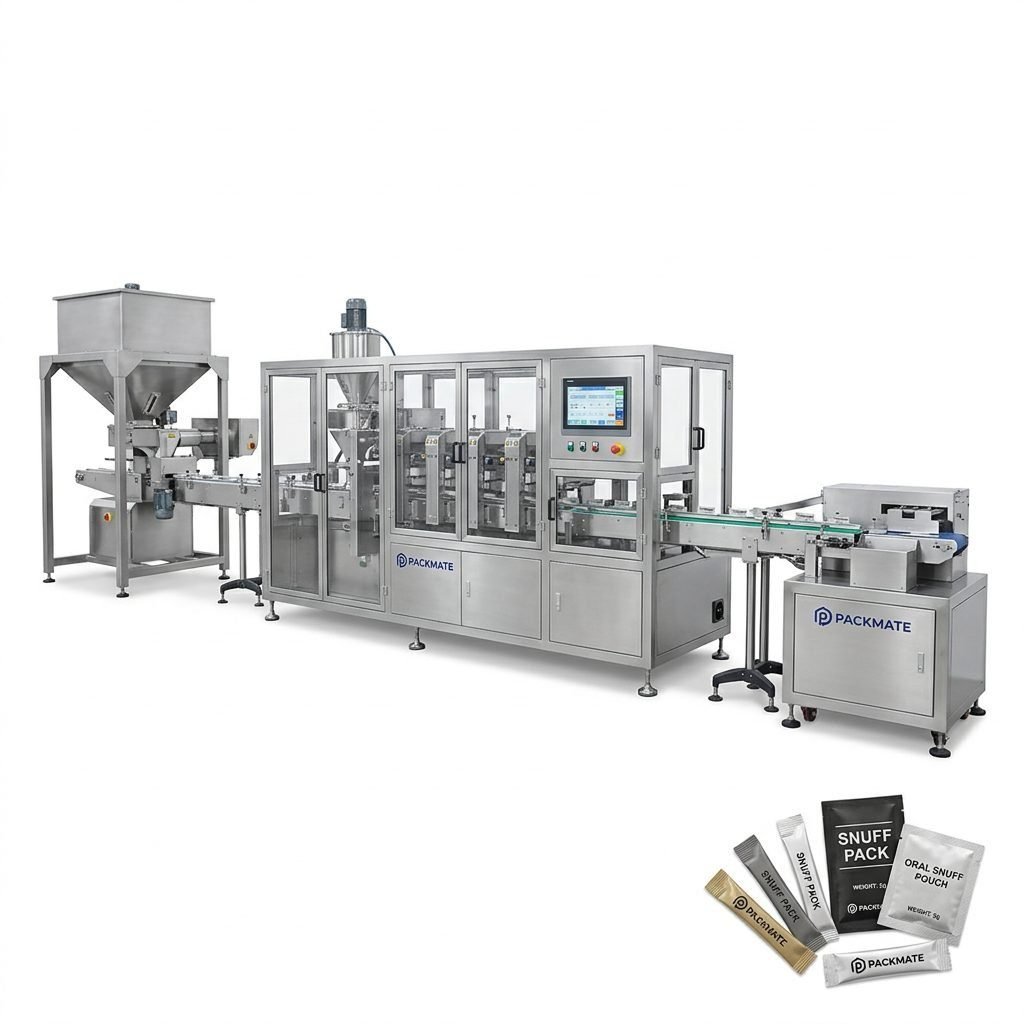
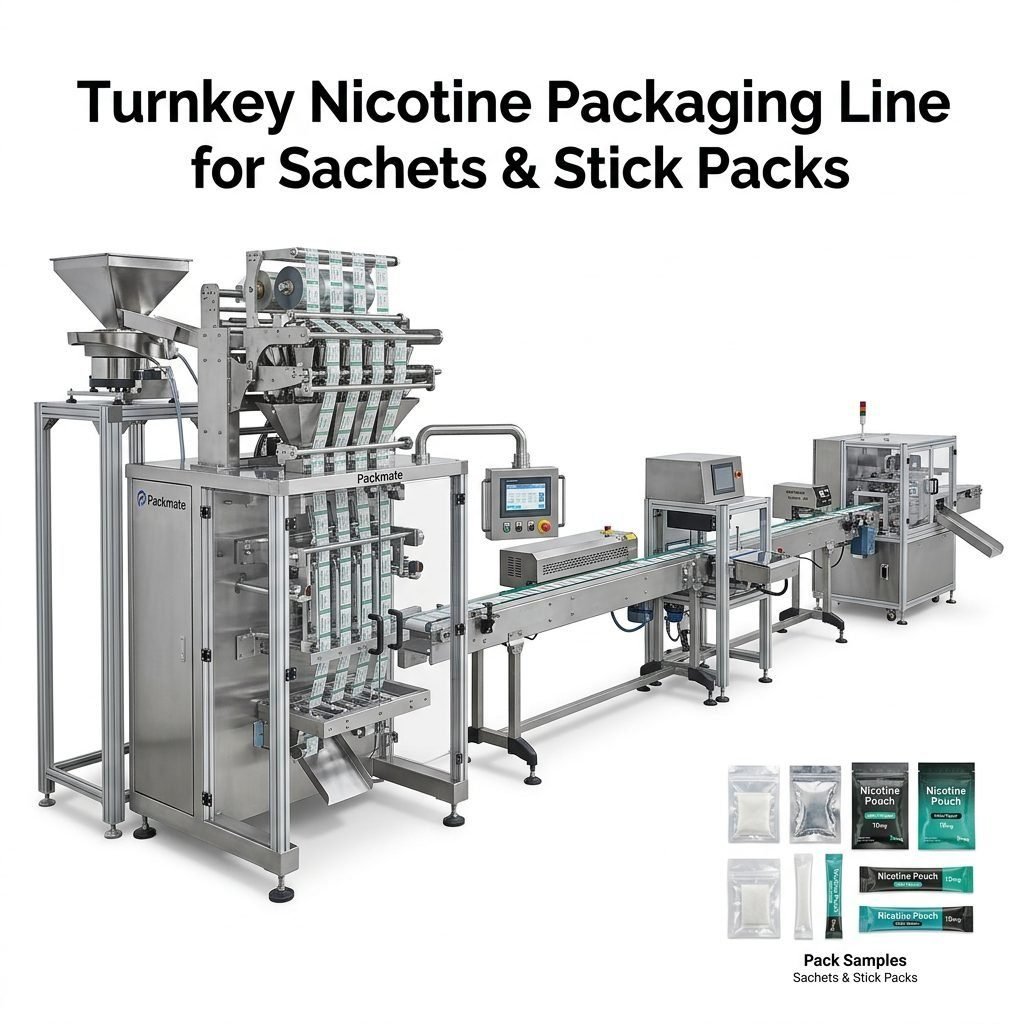
Choose between modular systems (individual machines linked by conveyors) and integrated multi-functional lines (single OEM-supplied turnkey). Modular systems offer flexibility and phased investment; integrated lines typically deliver better synchronization and smaller footprints for high-speed multi-lane operations. Evaluate your forecasted throughput, footprint constraints, and maintenance capabilities before deciding.
Quick Recommendation: For start-ups or niche SKUs, begin with a single-lane modular sachet/stick pack + auxiliary dosing and then scale to a 4–8 lane integrated line as demand rises.
📐 Line Components and Their Functions
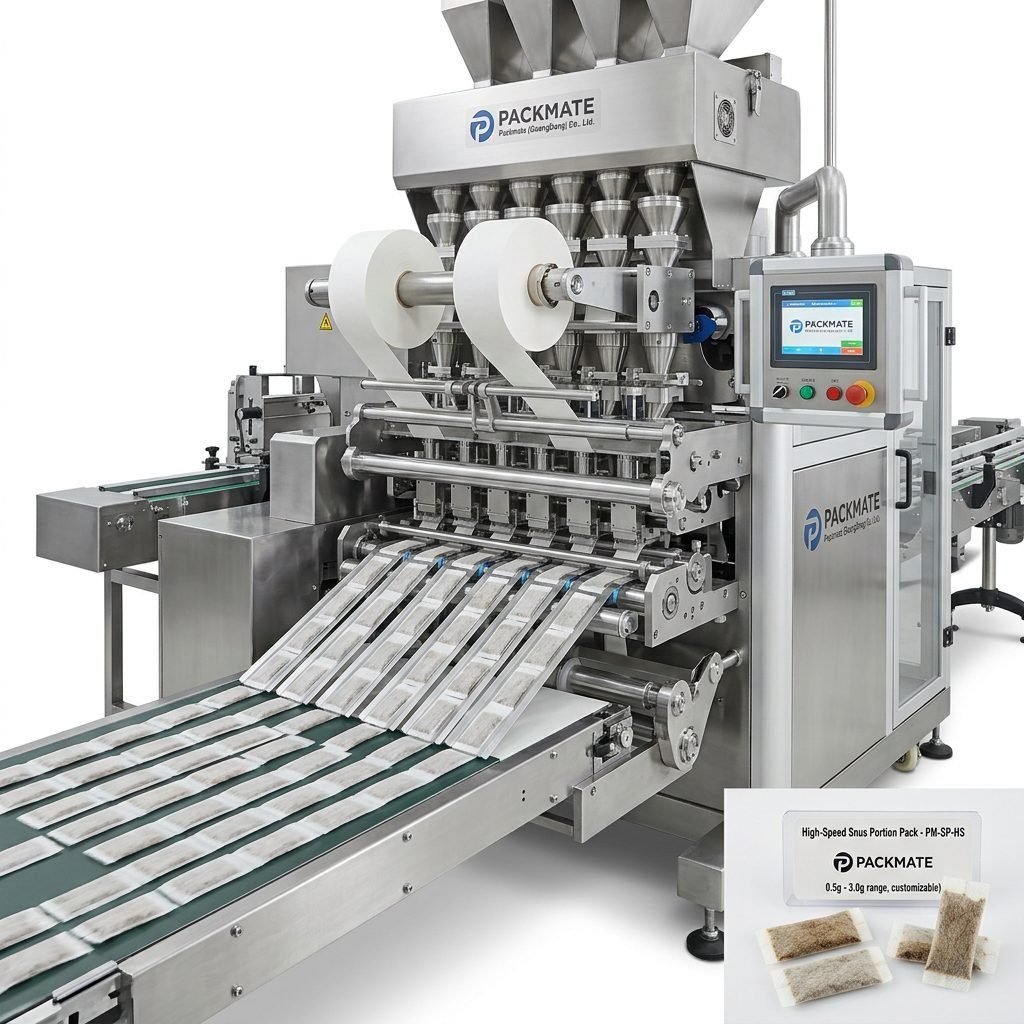
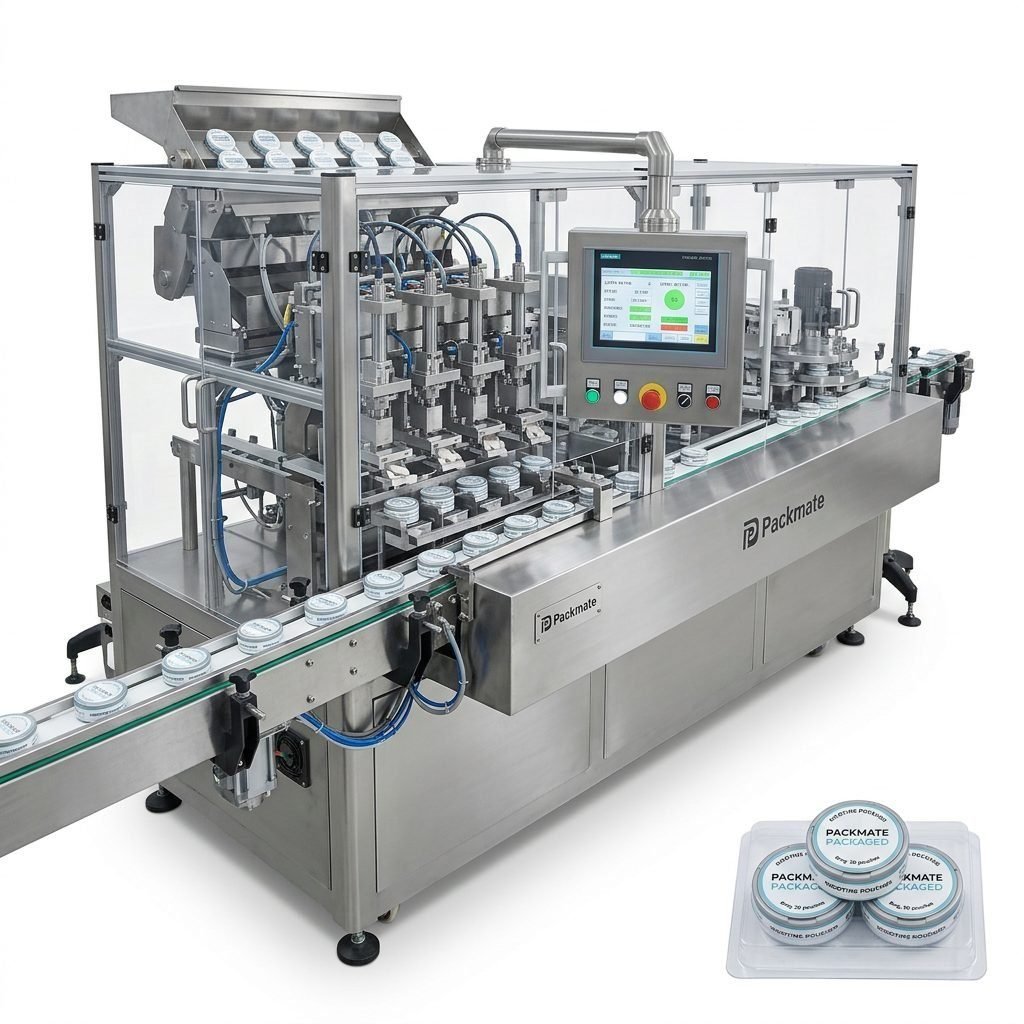
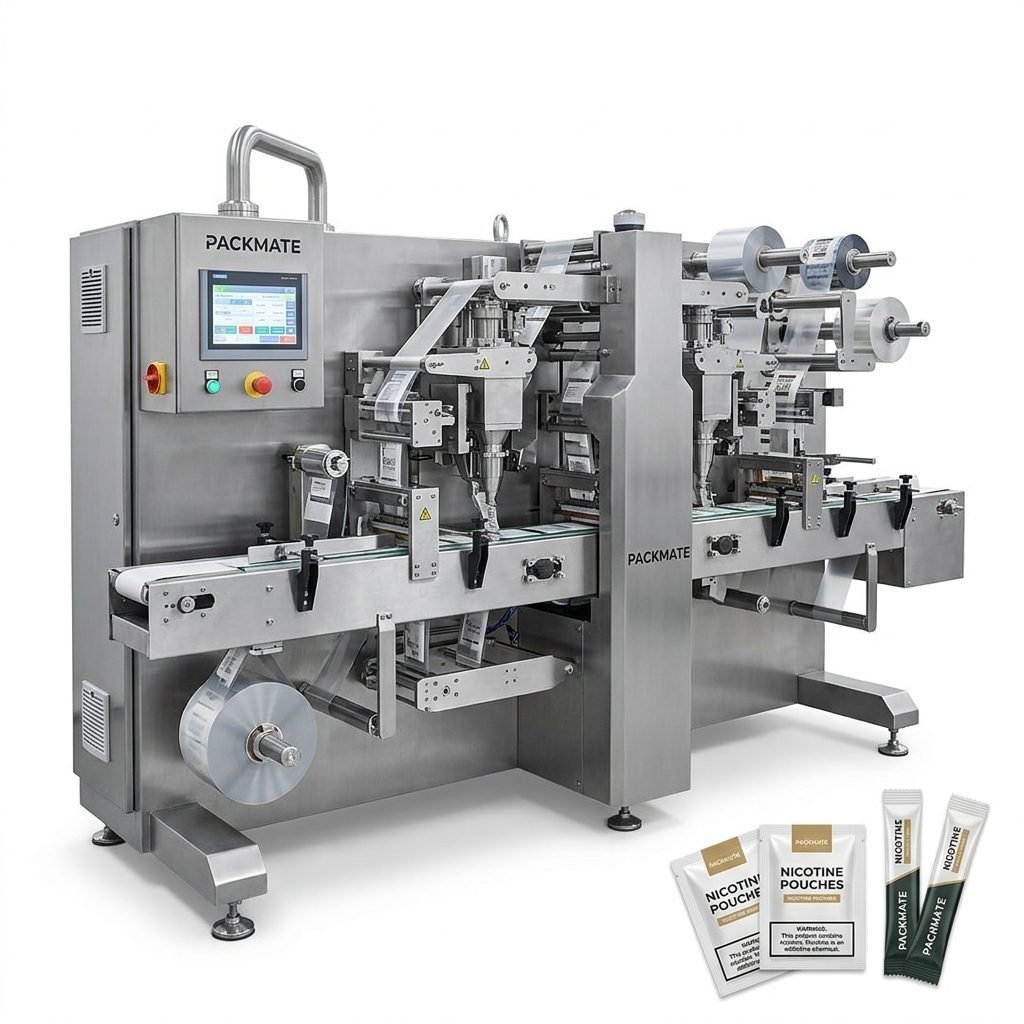
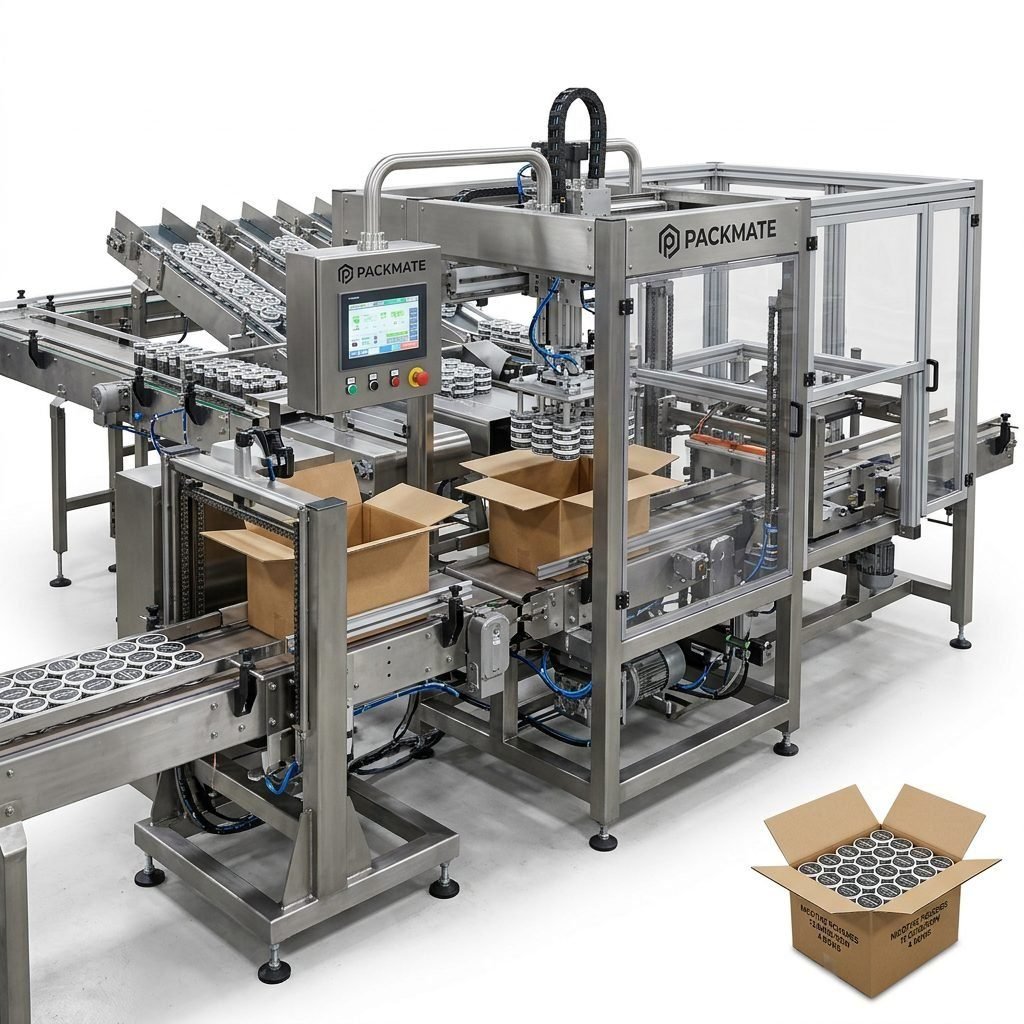
A nicotine pouch packaging line typically includes upstream material handling, dosing and filling systems, primary packaging machines (stick pack, sachet, or multi-lane pouch formers), secondary packaging (cartoning and case packing), and quality inspection systems. Each component must be selected to handle the physical properties of nicotine pouches: small volume, low dust migration, uniform fill weight, and delicate pouch construction.
Key equipment elements
– Feeding & bulk material hoppers with controlled agitation for consistent feed.
– High-precision vibratory or auger dosing systems for consistent pouch weight.
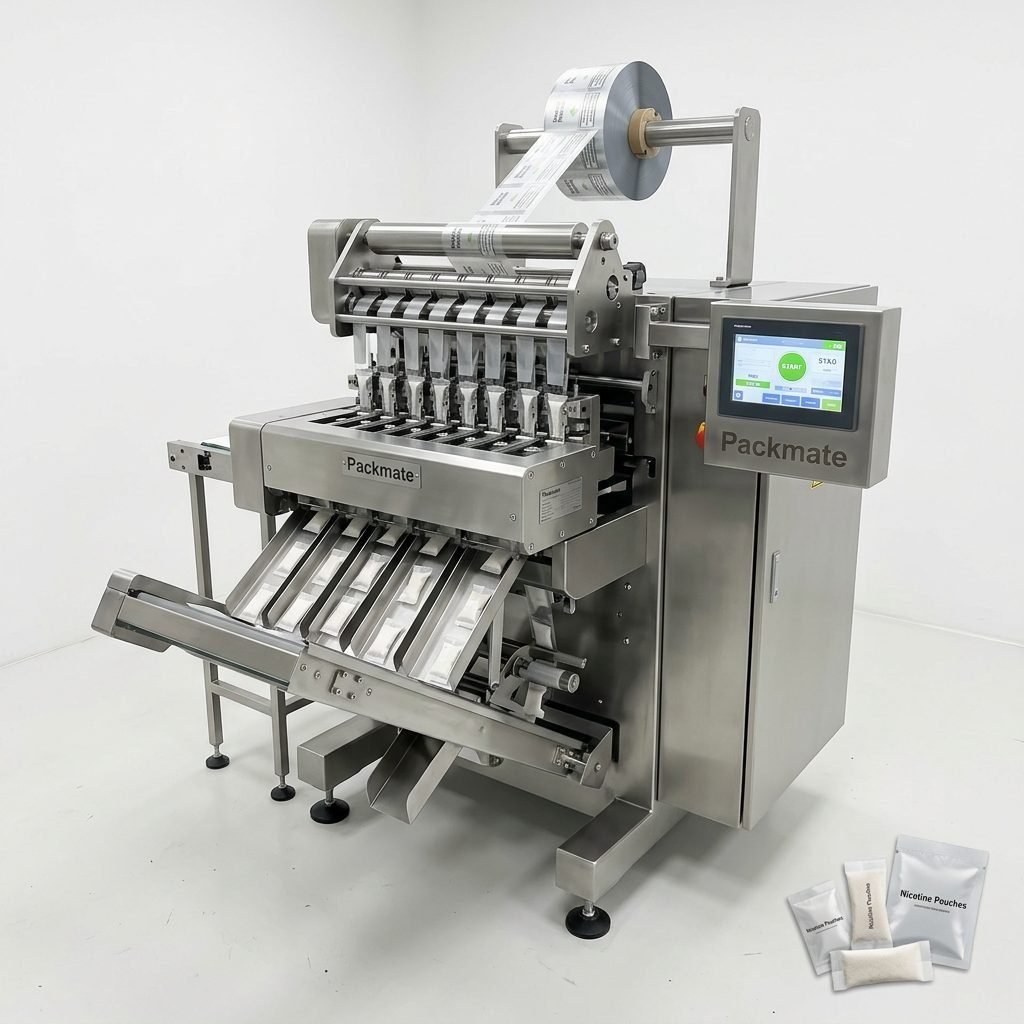
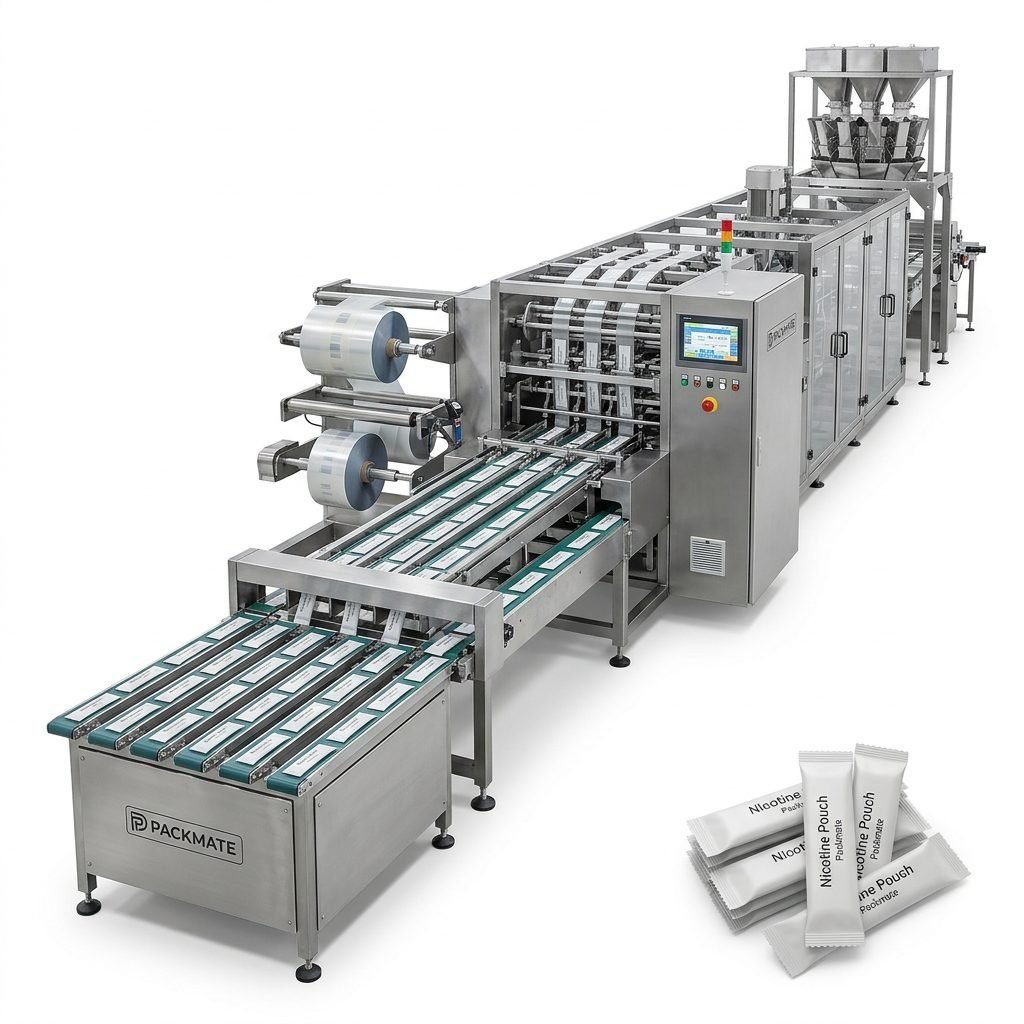
– Multi-lane pouch formers or stick pack heads for small-dose pouches.
– Heat-sealers, ultrasonic or fin-seal technology depending on film and product.
– Checkweighers and vision inspection for seal integrity, weight, and print quality.
– Cartoning and case packing modules for downstream packaging.
🔍 Material Handling & Dosing: Achieving Accurate Fill
Accurate dosing is central to compliance and product consistency. For nicotine pouches, dosing tolerances are tight due to small target weights and regulatory labeling requirements. Choose dosing systems based on product form:
– Powders and blends: precision auger or vibratory dosing with feedback control.
– Granules: rail-guided vibratory feeders or volumetric cup systems.
– Wet or sticky mixes: dosing systems with anti-bridging features and hygienic surfaces.
Design tip: Integrate real-time weight feedback from online checkweighers to adjust dosing setpoints automatically — this reduces variability and rejects.
🧩 Sealing, Materials & Packaging Formats
Packaging film selection and sealing technology determine shelf life and user experience. Common formats include reclosable pouches, sachets, and stick packs. Film barrier properties (moisture and oxygen) must match product hygroscopicity and targeted shelf life.
Seal integrity is key: heat-seal for thermoplastic laminates, ultrasonics for sensitive laminates, and fin-seal for some stick pack formats. Ensure the sealing system provides consistent temperature control and dwell time to avoid cold seals or film degradation.
📦 Multi-lane vs Single-lane Sealing
Multi-lane systems drastically increase throughput but require balanced dosing across lanes and synchronized film transport to prevent cross-lane defects. Single-lane machines are simpler to validate and maintain, ideal for smaller volumes or niche SKUs.
🧪 Quality Control, Inspection & Traceability
Inline inspection systems reduce recalls and assure compliance: high-speed vision systems for print and seal inspection, metal detectors for foreign bodies, and checkweighers for fill verification. Traceability requires batch coding and loggers that link production runs to raw material lots and operator actions.
Ensure your line includes an MES or at least machine-level data logging for OEE and traceability. This simplifies audits and supports CAPA processes in regulated markets.
🏭 Factory Layout, Utilities & Cleanability
A successful line design begins with the factory environment. Plan for dedicated raw material intake, dust control zones, and isolation of nicotine handling areas to prevent cross-contamination. Provide adequate space for maintenance, access around all machines, and safe operator walkways.
Utilities: compressed air with filtration, stable electrical supply with isolation transformers, and appropriate HVAC to control humidity are essential. Hygienic design with stainless-steel contact surfaces and easy-to-remove guards accelerates cleaning and reduces downtime.
Safety note: Nicotine handling requires strict PPE protocols, spill containment, and controlled access. Design the line with operator safety interlocks and emergency stops within reach.
🔧 Maintenance, Spare Parts & After-Sales Support
Minimizing downtime demands a clear spare parts strategy and responsive technical support. When evaluating suppliers, prioritize those offering:
– Spare parts kits for wear items (seals, belts, cutters).
– Remote diagnostics capability for PLC and HMI alarms.
– Training for operators and maintenance teams.
– Documented maintenance schedules and service-level agreements.
📞 Supplier selection checklist
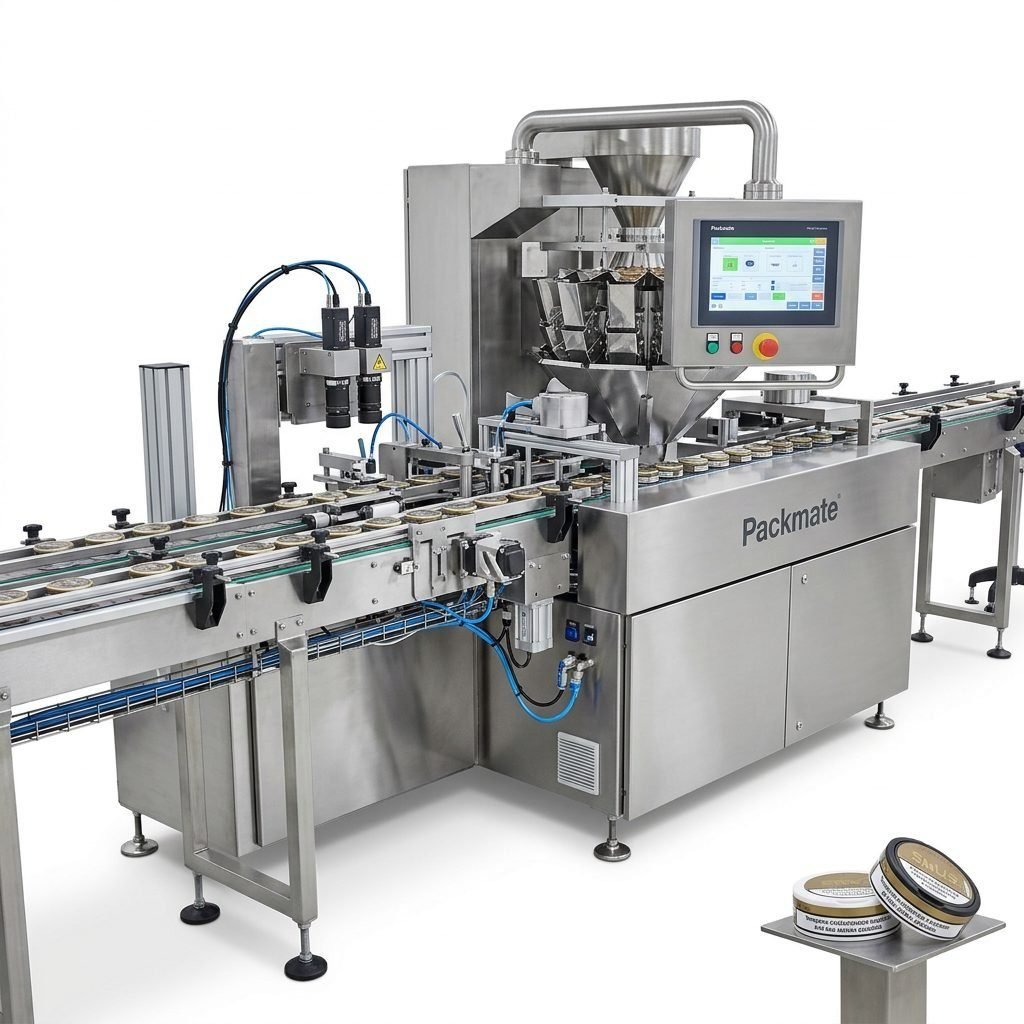
When choosing a supplier, ask for factory tours, performance data, and references. OEMs with long-term experience in snus and nicotine pouch equipment provide valuable know-how — see examples of systems at the Snus & Nicotine Packaging Machines page and full line solutions at the Filling & Packaging Lines overview.
📈 Scalability & Future-Proofing
Design for growth: select machines with modular add-on lanes, spare I/O capacity on PLCs, and PLC/HMI architectures that allow firmware updates without line downtime. Standardized change parts and recipe-driven controls enable quick SKU changeovers and shorter downtime between products.
🔁 Validation, Testing & Commissioning
A structured commissioning plan includes FAT (Factory Acceptance Testing), SAT (Site Acceptance Testing), and IQ/OQ/PQ for regulated markets. Validation should verify dosing precision, seal integrity under environmental variations, and long-run stability tests to detect drift in dosing or sealing.
✅ FAT Checklist highlights
– Endurance run for target throughput.
– 100% inspection verification and reject handling.
– Interlock and safety system tests.
– Recipe recall tests and PLC alarm validation.
📘 Regulatory Compliance & Certifications
Ensure equipment meets CE, ISO, and local regulatory requirements. For nicotine product lines, material traceability, ergonomic operator interfaces, and validated cleaning procedures are critical during audits. Suppliers with certification records and global exhibition presence demonstrate maturity — review vendor credentials on the Certificate page and corporate history on About Packmate.
📚 Case Examples & Proven Solutions
Real-world implementations reveal common patterns: small producers often scale via modular stick pack additions, while high-volume brands invest in custom multi-lane pouch lines with integrated dosing and cartoning. Explore real-world deployments and production case studies at the Case repository to see how different configurations solve throughput and product handling challenges.
Final advice: Partner with suppliers who understand nicotine pouch nuances — ask about multi-lane balancing, low-dust hoppers, and validated seal systems. Consider a turnkey partner for faster time-to-market and single-source accountability.
☎️ How to Move Forward
If you are evaluating lines, compile a spec sheet with target throughput, pouch format, target weights, acceptable tolerances, and future scalability needs. Request FAT videos, spare parts lists, and references. For comprehensive product ranges including bag & pouch equipment, see Bag & Pouch Packaging Machines and contact your supplier via their Contact Us page to schedule site visits or demonstrations.
🔎 Quick Supplier Scorecard
– Engineering experience in snus/nicotine packaging ✔️
– Onsite validation and commissioning capability ✔️
– Spare parts and training programs ✔️
– Global exhibition presence and certifications ✔️
Frequently Asked Questions
Q1: What is the typical throughput range for nicotine pouch lines?
A1: Throughput varies by format — single-lane sachet or stick pack machines may produce several hundred to a few thousand pouches per hour; multi-lane systems (4–12 lanes) can scale to tens of thousands per hour depending on pouch size and dosing speed.
Q2: How do I ensure consistent dosing across lanes?
A2: Use precision dosing mechanisms per lane, integrate lane-specific feedback from checkweighers, and implement automatic correction loops in the PLC to maintain tight tolerances.
Q3: What hygiene and safety controls are essential for nicotine handling?
A3: Implement closed material transfer where possible, designated nicotine handling areas, PPE protocols, spill containment, and machine interlocks. Regular training and documented cleaning SOPs are critical.
Q4: Can I convert a food stick pack machine for nicotine pouches?
A4: Often yes, but modifications may be required for dosing accuracy, film barrier requirements, and dust control. Validate material compatibility and sealing performance before full production.
Q5: Where can I see proven equipment and turnkey lines?
A5: Review supplier product pages such as Sachet & Stick Pack Machines and explore turnkey options under Weighing & Packaging Systems.