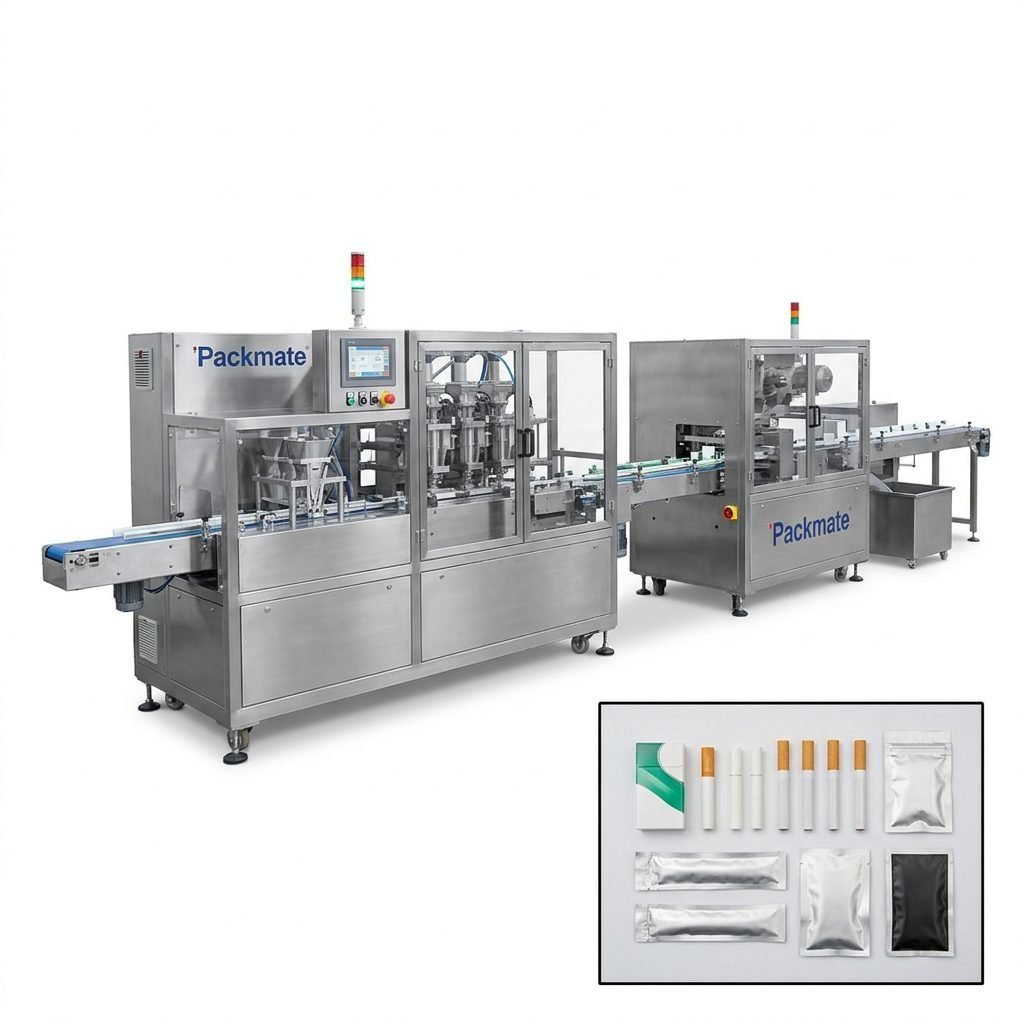
In a competitive snus and nicotine pouch market, packaging is more than containment — it’s a combination of regulatory compliance, brand presentation, machine uptime, and production economics. This guide explores custom snus packaging machine design, cost drivers, and automation choices so manufacturers can make informed investments that scale from small-batch artisanal producers to high-speed global lines.
Why Custom Snus Packaging Machines Matter
Custom machines reduce waste, control costs, and ensure product integrity. For snus and nicotine pouches, tight dose control, gentle handling, and tamper-resistant seals are essential. Off-the-shelf equipment may suffice for simple volumes, but when you need high yield, multi-lane throughput, or brand-specific pouch formats, a tailored solution is the difference between margin optimization and costly rework.
Key takeaway: Investing in a custom snus packaging line can cut per-unit costs and improve compliance for regulated nicotine products while maintaining flexibility for multiple pouch types.
Primary Machine Types for Snus & Nicotine Pouch Packaging
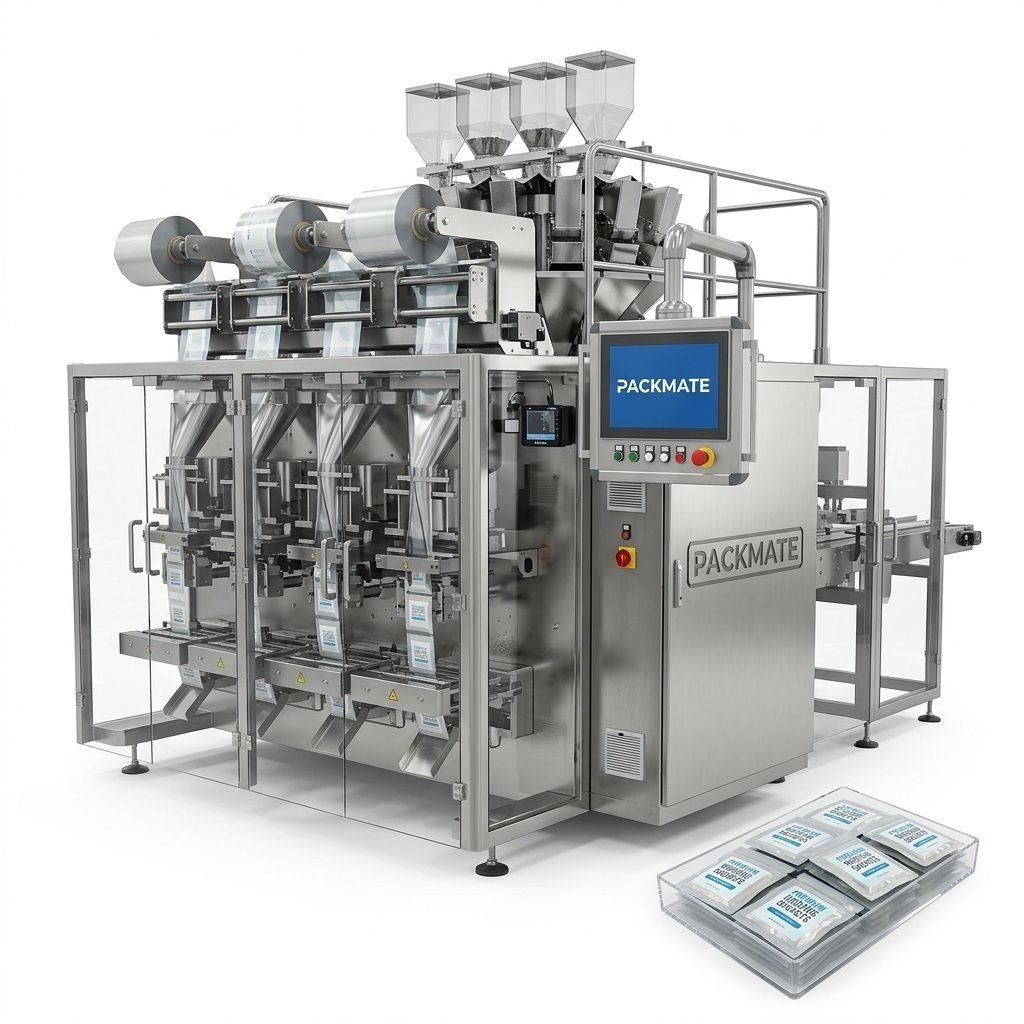
Understanding machine families helps match capability to requirement. The main types are multi-lane form-fill-seal pouch machines, stick pack systems, sachet machines, and integrated filling & packaging lines for powders, granules, and liquids. For product details and individual models, see the Snus & Nicotine Packaging Machines resource.
Multi-lane Pouch Machines
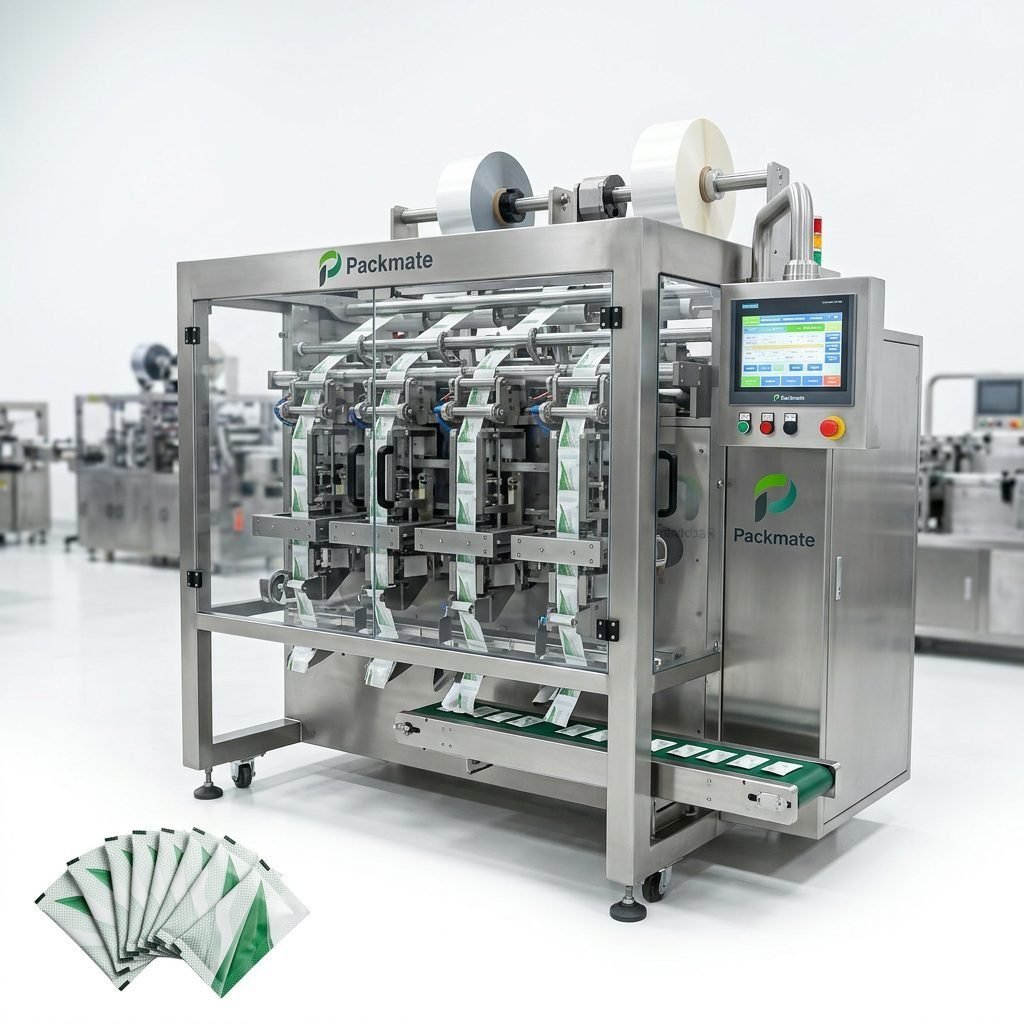
Multi-lane machines produce many small-dose pouches in parallel, dramatically increasing throughput for tiny nicotine pouches. They demand precision dosing systems, synchronized sealing stations, and accurate lane registration to avoid cross-lane variation.
Stick Pack & Sachet Machines
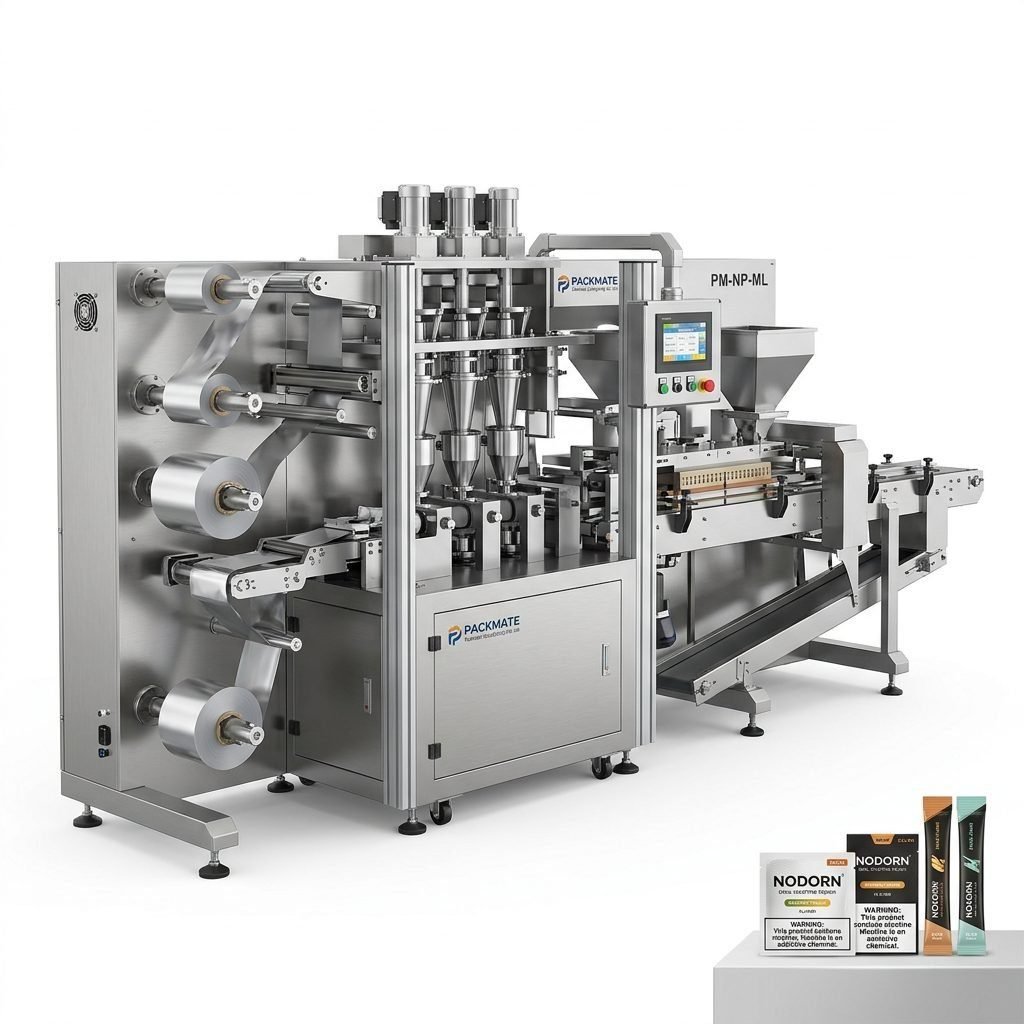
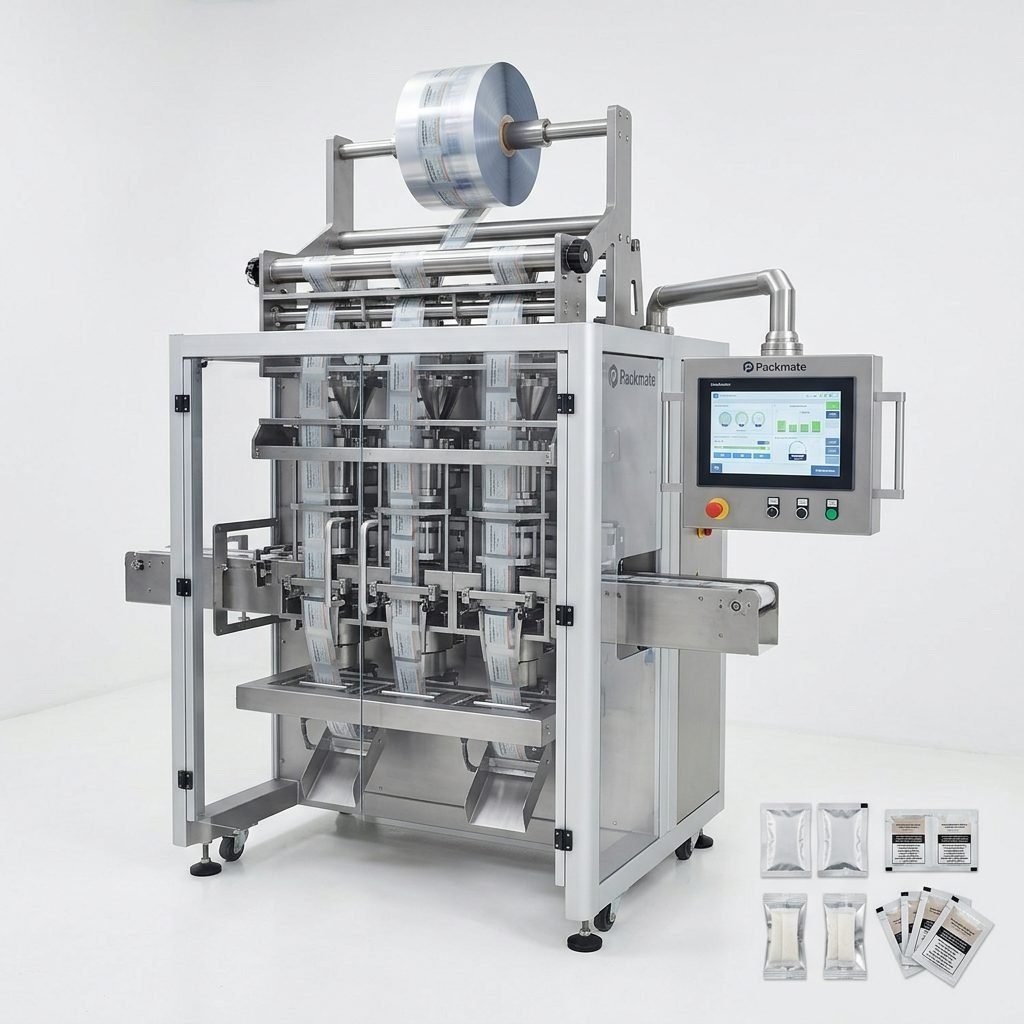
Stick packs and sachets are ideal for user convenience and portion control. These machines offer flexible length control, gusseting options, and fast changeovers for different pouch sizes. Packs are often suitable for single-dose marketing strategies.
Integrated Filling & Packaging Lines
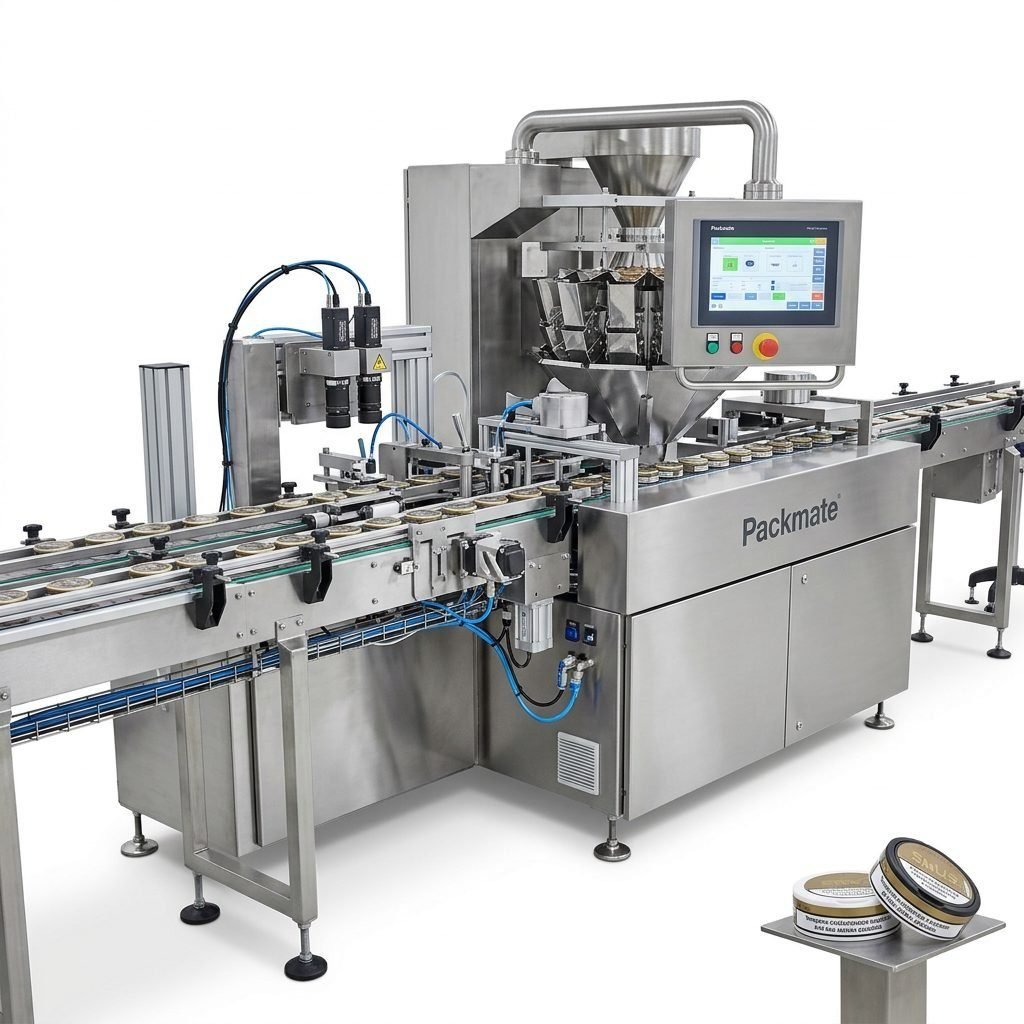
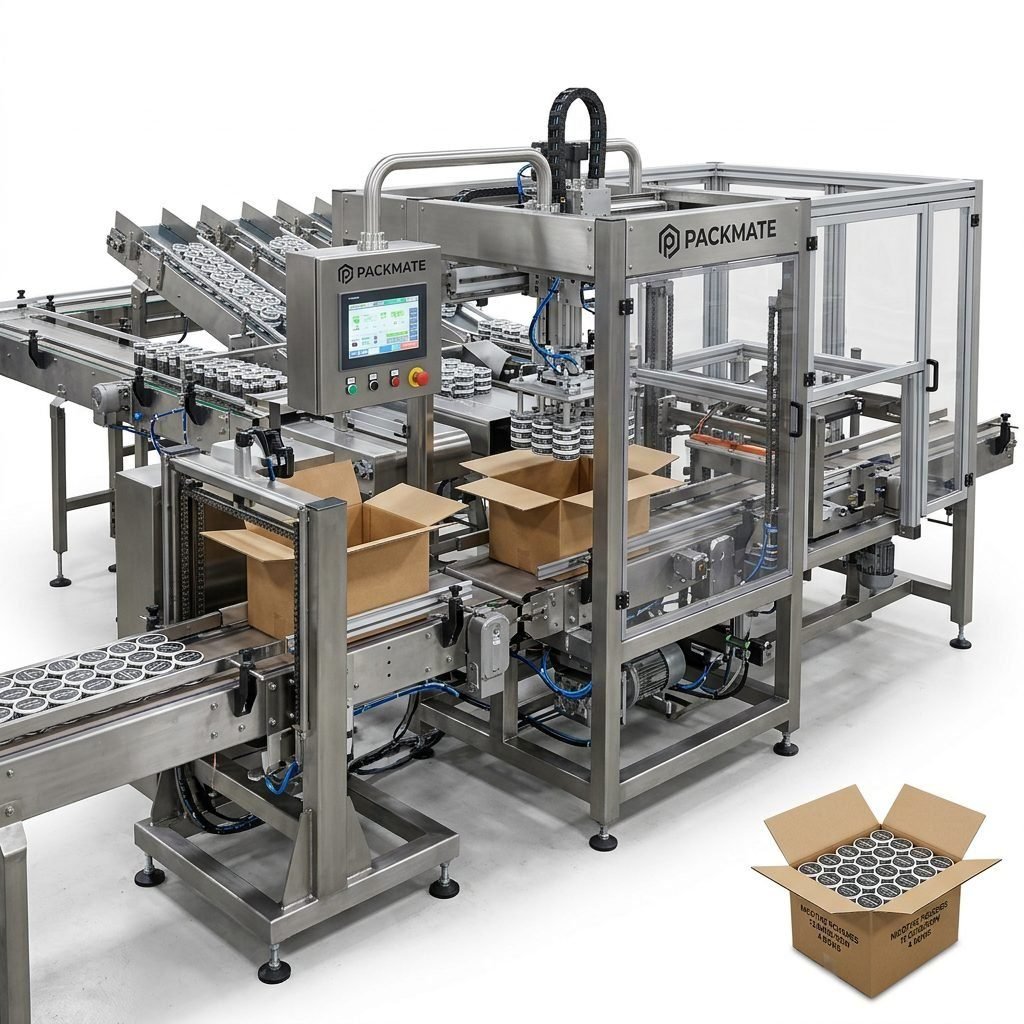
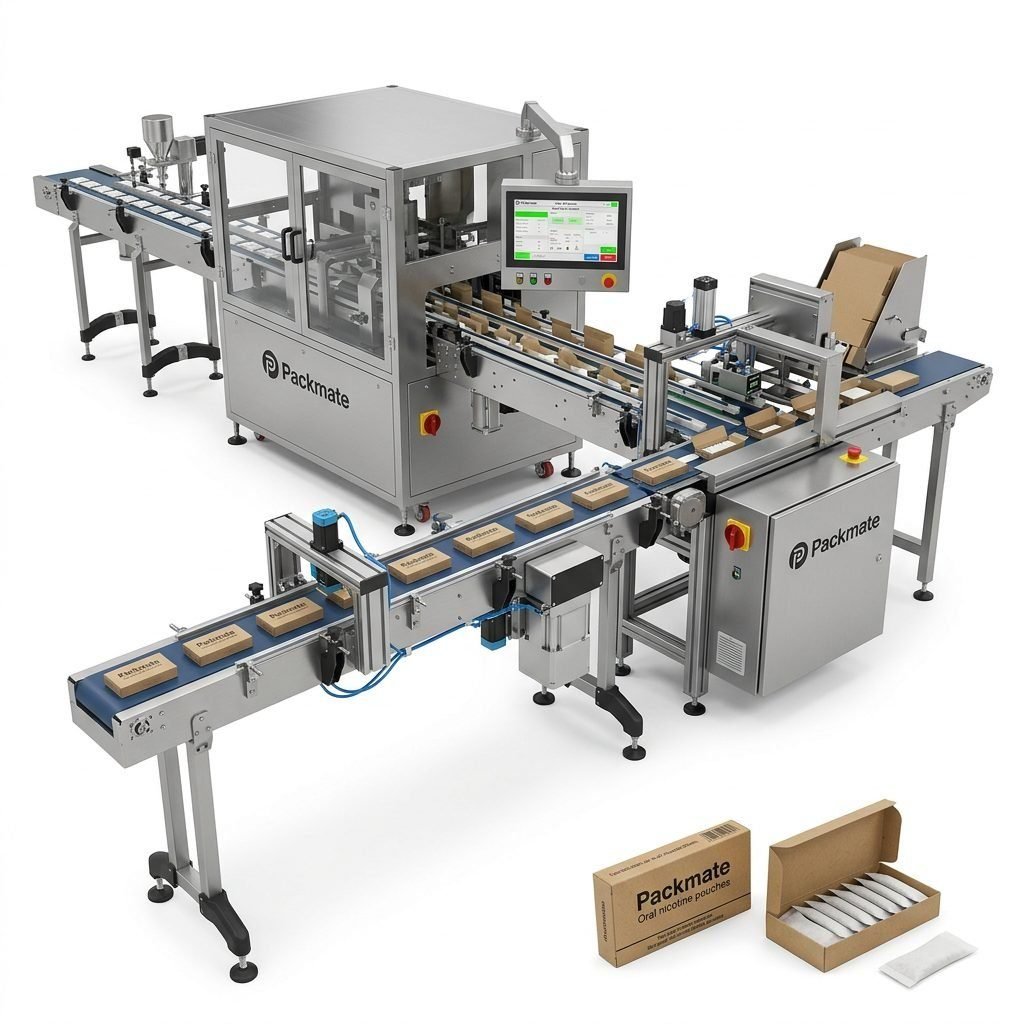
Full lines that combine weighing, dosing, pouch forming, sealing, and secondary packaging reduce manual handling and contamination risk. For an overview of complete systems, reference Filling & Packaging Lines which covers line-level equipment and automation modules.
Attention: For regulated nicotine products, choose equipment that supports validated dosing and traceability functions.
Design Considerations: What to Specify
Design details shape both upfront investment and operating cost. Critical specifications include target hourly output, pouch format, product characteristics (powder, granule, or wet-fill), dosing tolerance, changeover time, and cleaning requirements. Consider the whole process — upstream feeding, dosing accuracy, pouch sealing integrity, and downstream counting/boxing.
Throughput & Lane Configuration
A single-lane machine may handle prototyping and low volumes. Multi-lane systems (4, 8, 12 lanes and beyond) scale linearly but increase complexity in mechanical synchronization and dosing. Work with OEMs who have experience in multi-lane snus lines to avoid common pitfalls.
Dosing Systems
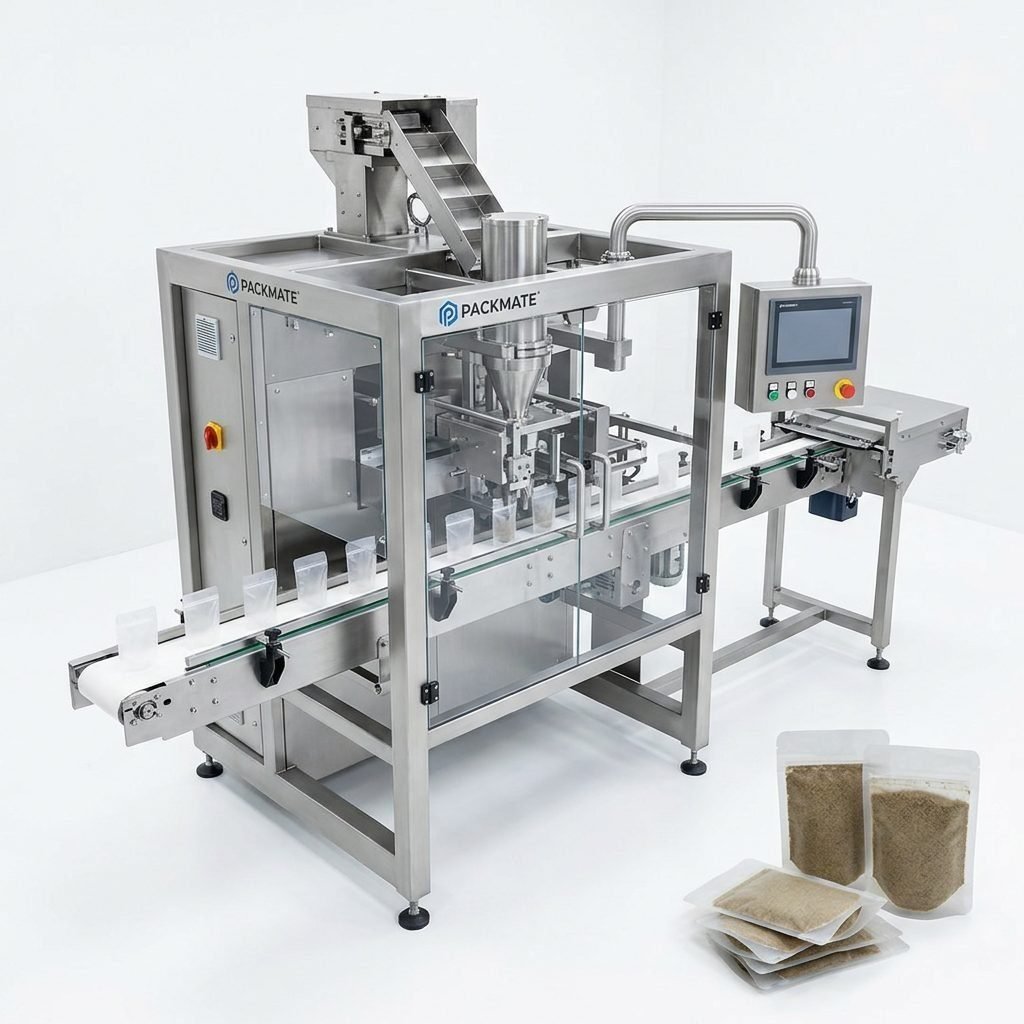
Dosing choices depend on product: auger fillers for powders, vibratory feeders for granules, and pumps for liquids. Gravimetric or check-weigh systems are often added for high-accuracy small-dose products to maintain compliance and reduce giveaway.
Materials & Film Handling
Film tension control, servo-driven film unwinders, and precise cutting mechanisms ensure consistent pouch dimensions and strong seals. Material compatibility and barrier properties are critical for nicotine stability and shelf life.
Automation Choices: Manual, Semi-Automatic, and Fully Automatic
Automation affects capital outlay, labor costs, and scalability. Decide which balance of automation and flexibility fits your business model.
Automation spectrum: Manual (low-cost, high labor) → Semi-automatic (best for medium runs) → Fully automatic (higher CAPEX, lower OPEX at scale).
Semi-Automatic Systems
Semi-automatic machines often pair an automatic pouch former with a manual loading or inspection station. They lower initial investment and are popular for test batches and small brands.
Fully Automatic Lines
Fully automatic lines integrate feeders, weighers, pouch forming, sealing, and secondary packing. They require minimal labor and are designed for high uptime and repeatability. Add vision systems for in-line QA and robotic packers for final case packing.
Cost Drivers and Budgeting the Project
Costs vary by machine complexity, automation level, number of lanes, quality of components (servo drives, PLCs, motion controllers), and optional systems like check-weighers and vision inspection. Factor in installation, FAT (Factory Acceptance Testing), validation, spare parts, and service contracts when planning total cost of ownership.
Budget note: A typical small custom snus line may start at a modest capital figure for semi-automatic systems, while multi-lane fully automatic lines scale into higher tiers — but they rapidly reduce per-unit cost at volume.
Hidden Costs to Watch
Training, spare parts inventory, integration (line controllers, enterprise systems), and ongoing calibration for dosing and weighing are often underestimated. Also budget for certification support if you sell into markets with strict regulatory requirements.
Regulatory Compliance & Quality
Nicotine products face evolving regulations. Machines should support traceability (batch IDs, printing/labeling), hygienic design for cleanability, and controlled environments if required. Choose manufacturers with CE and ISO credentials and experience in nicotine packaging.
For examples of packaging categories and additional equipment, review Bag & Pouch Packaging Machines and Auxilliary Packaging Equipment to ensure accessory compatibility with your core machine.
Integration, Testing & Commissioning
A turnkey approach covers engineering layout, mechanical erection, electrical integration, HMI setup, and on-site training. Factory Acceptance Testing (FAT) and site Acceptance Testing (SAT) reduce surprises during commissioning. Prioritize suppliers who provide documented FAT reports and remote support capability.
ℹ️ Pro tip: Ask for a video-demo of your exact pouch format running on the proposed machine model prior to purchase.
Maintenance, Spare Parts & Service
High uptime depends on preventive maintenance, quick spare part availability, and responsive technical support. Confirm lead times for critical spares and whether the manufacturer provides on-site service, remote diagnostics, or training programs.
Spares & Training
Maintain an inventory of wear parts (seals, belts, knives) and maintainers trained by the OEM to minimize downtime. Consider a maintenance contract that includes periodic calibration for dosing systems.
Selecting the Right Supplier
Choose a supplier with proven snus packaging experience, a strong manufacturing base, and a history of successful global installations. Packmate’s background in snus-specific machines and turnkey solutions can be a useful reference when evaluating vendors — see About Packmate and Case for company profile and real-world implementations.
Questions to Ask Potential OEMs
– Do you offer multi-lane designs for small-dose pouches?
– Can you provide FAT videos and references for similar installations?
– What are the lead times for critical spare parts?
– How do you validate dosing accuracy and sealing integrity?
Supplier red flag: Lack of case studies or reluctance to demonstrate machines running your specific pouch design.
Case Studies & Where to See Machines in Action
Seeing machines running real products is invaluable. Look for suppliers who exhibit at major shows and who document case studies. You can learn from documented installations and operational data in Case and Our Exhibition materials to better estimate performance and ROI.
Conclusion: Balancing Cost, Speed, and Compliance
Custom snus packaging solutions must strike the right balance between capital investment, operational efficiency, and regulatory readiness. Begin with clear production targets, prioritize dosing accuracy and hygiene design, and partner with a manufacturer experienced in snus and nicotine pouch equipment to accelerate time-to-market and reduce long-term costs.
Further Reading & Resources
Explore these resources for more details on machine types and line solutions:
- Snus & Nicotine Packaging Machines – Product Overview
- Sachet & Stick Pack Machines – Stick & Sachet Options
- Filling & Packaging Lines – Complete Line Solutions
- About Packmate – Company Profile
Common Questions
Q1: How do I estimate the right lane count for my production?
Estimate desired hourly output, calculate per-lane pouch speed, and account for expected uptime. Discuss your targets with the OEM; experienced manufacturers will model throughput and recommend lane configurations that meet both CAPEX and OPEX goals.
Q2: What level of automation is best for a growing brand?
Start with semi-automatic for flexibility and lower capital, then scale toward fully automatic multi-lane lines as volumes increase. Ensure modular design so you can add automation modules without replacing core systems.
Q3: Are multi-lane machines more difficult to maintain?
They are mechanically more complex, but reputable OEMs design multi-lane machines with accessible components and standardized spares. A proactive maintenance plan mitigates complexity and protects uptime.
Q4: How do I ensure compliance for nicotine pouch sealing and dosing?
Use validated dosing systems (gravimetric or check-weighers), document sealing process parameters, and implement traceability printing on pouches. Choose equipment with hygienic design for easy cleaning and documented quality control features.
Q5: Where can I view installed machines and get references?
Request FAT videos, contact references provided by the OEM, and attend exhibitions where manufacturers showcase live runs. For documentation and customer cases, see Case and Our Exhibition resources.