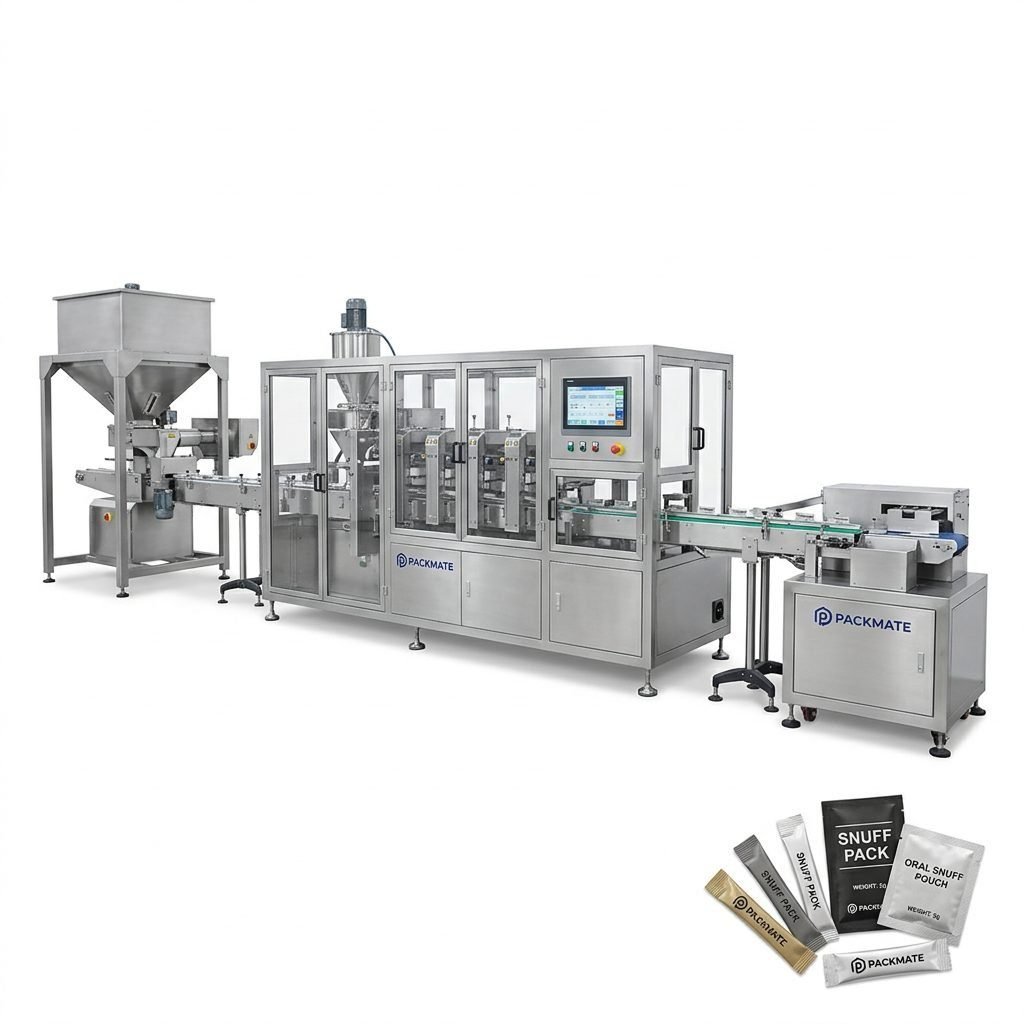
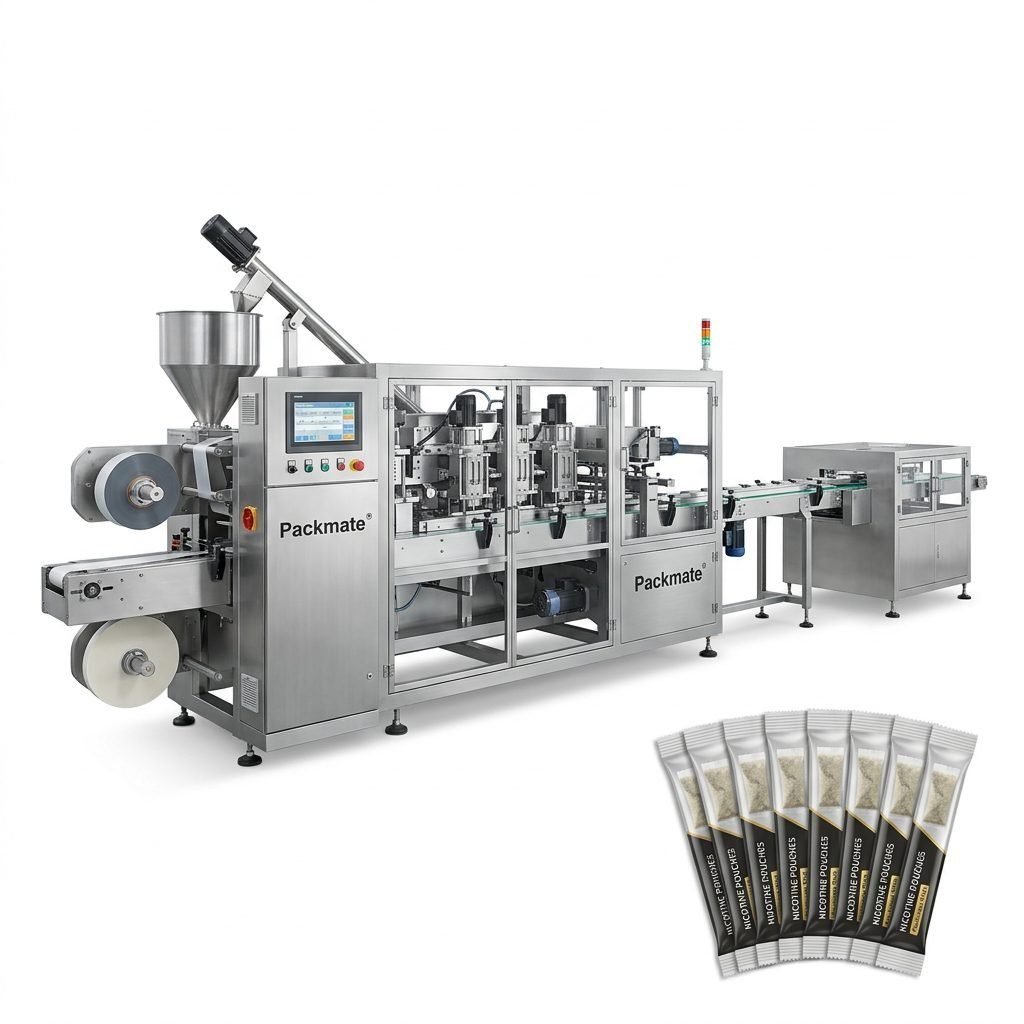
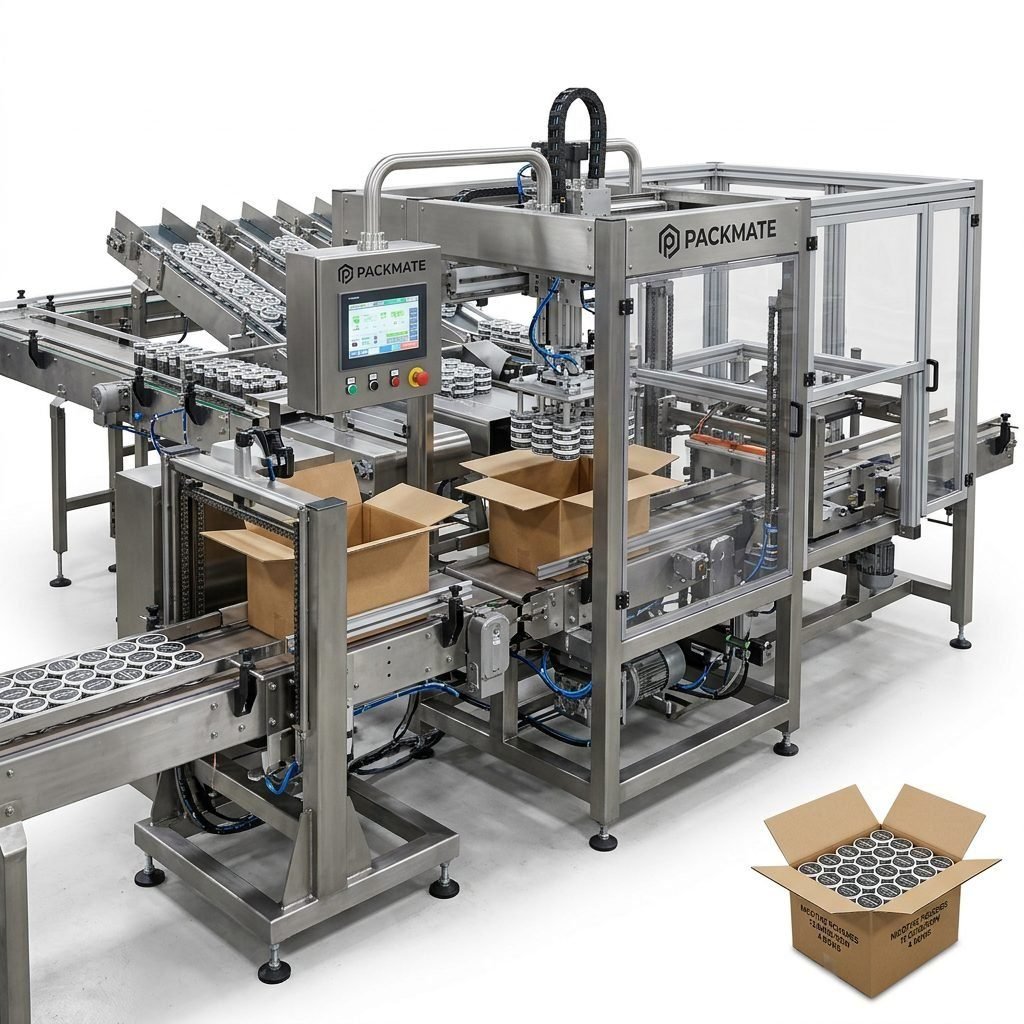
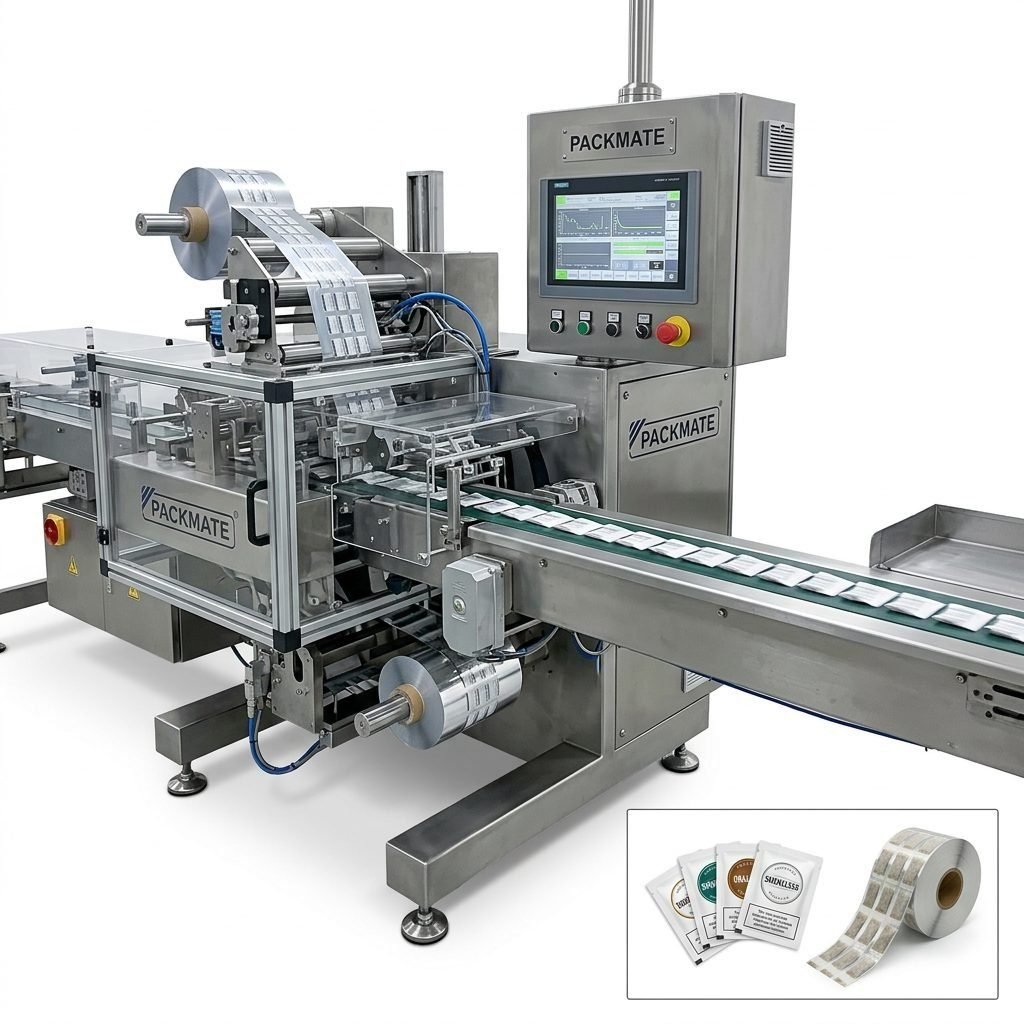
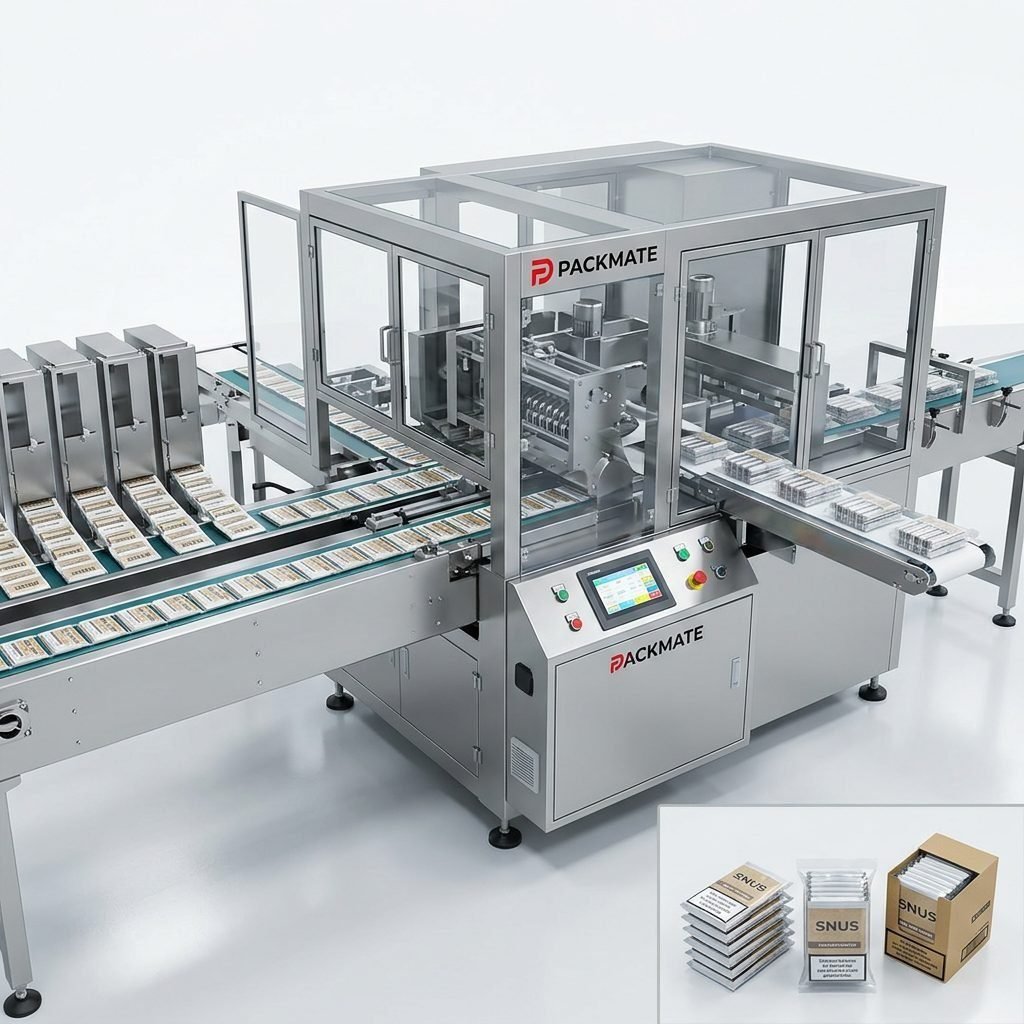
Choosing the right snus packaging machinery manufacturer in Uganda is a strategic decision that impacts product quality, production efficiency, regulatory compliance, and long‑term operational costs. Whether you are launching a new nicotine pouch brand or scaling an existing operation, this guide walks you through the practical steps, technical considerations, and vendor evaluation criteria to make a confident, commercially sound selection.
Understand Your Production Needs First
Before contacting suppliers, clearly define your product specifications and production goals. Key variables include pouch format (loose snus tins vs. sachets vs. stick packs), daily output (units per minute or per hour), dose size variability, and the raw material properties (powder, granule, moisture content).
Consider future growth: scalability matters. Investing in a modular system or a machine that supports multi‑lane configurations can save significant costs later.
Technical checklist to prepare
– Target output (e.g., 2000 pouches/hour)
– Pouch type and dimensions
– Tolerance for weight/fill variability
– Required hygiene and cleaning standards (CIP compatibility, stainless steel grade)
– Integration needs (weighing, metal detection, labelers, cartoning)
Tip: If your line will handle nicotine pouches, ensure the machine supports precise dosing and minimal cross‑contamination. Look for manufacturers experienced in nicotine pouch/snuss applications.
Evaluate Manufacturer Experience and Reputation
Experience in packaging machinery is not equal. Seek manufacturers with specific expertise in snus, nicotine pouches, or small-dose pouch packaging. Longstanding companies demonstrate engineering maturity, while newer entrants might offer innovative features but less field validation.
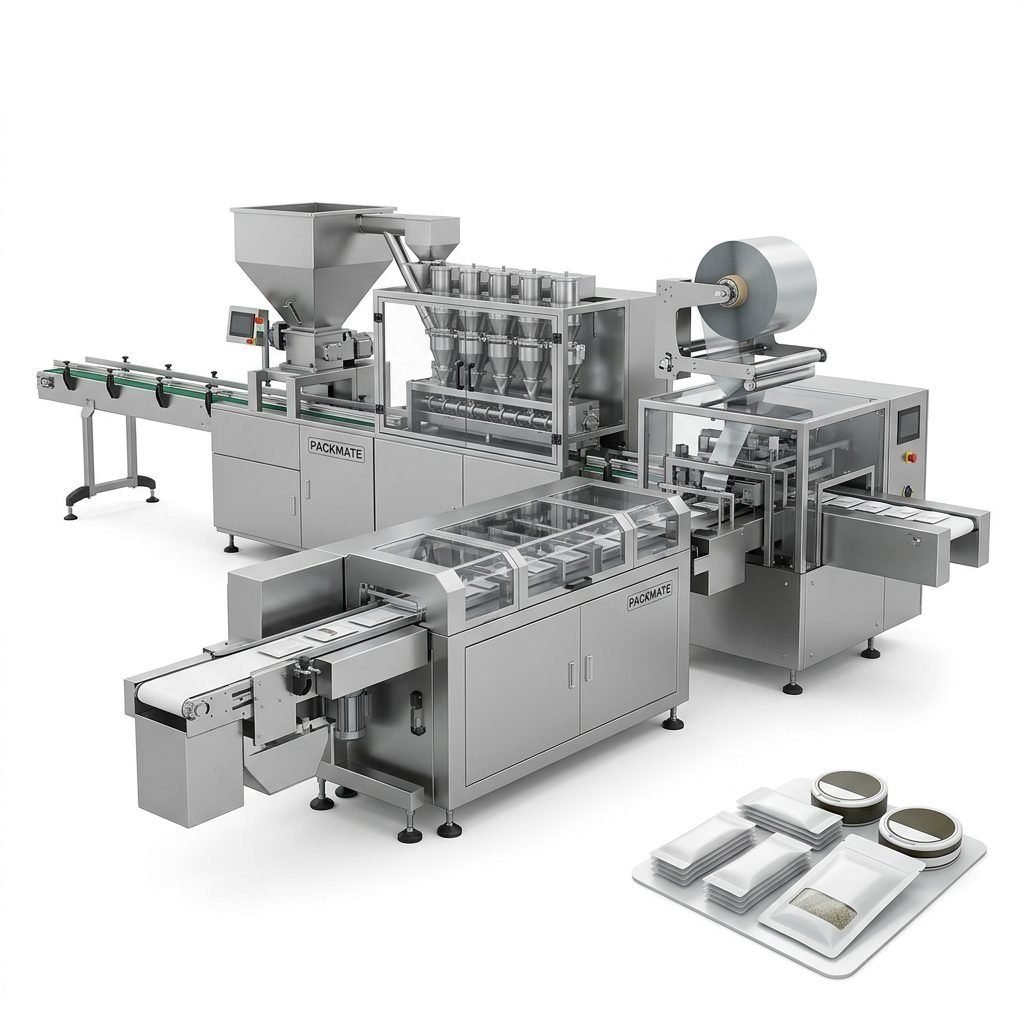
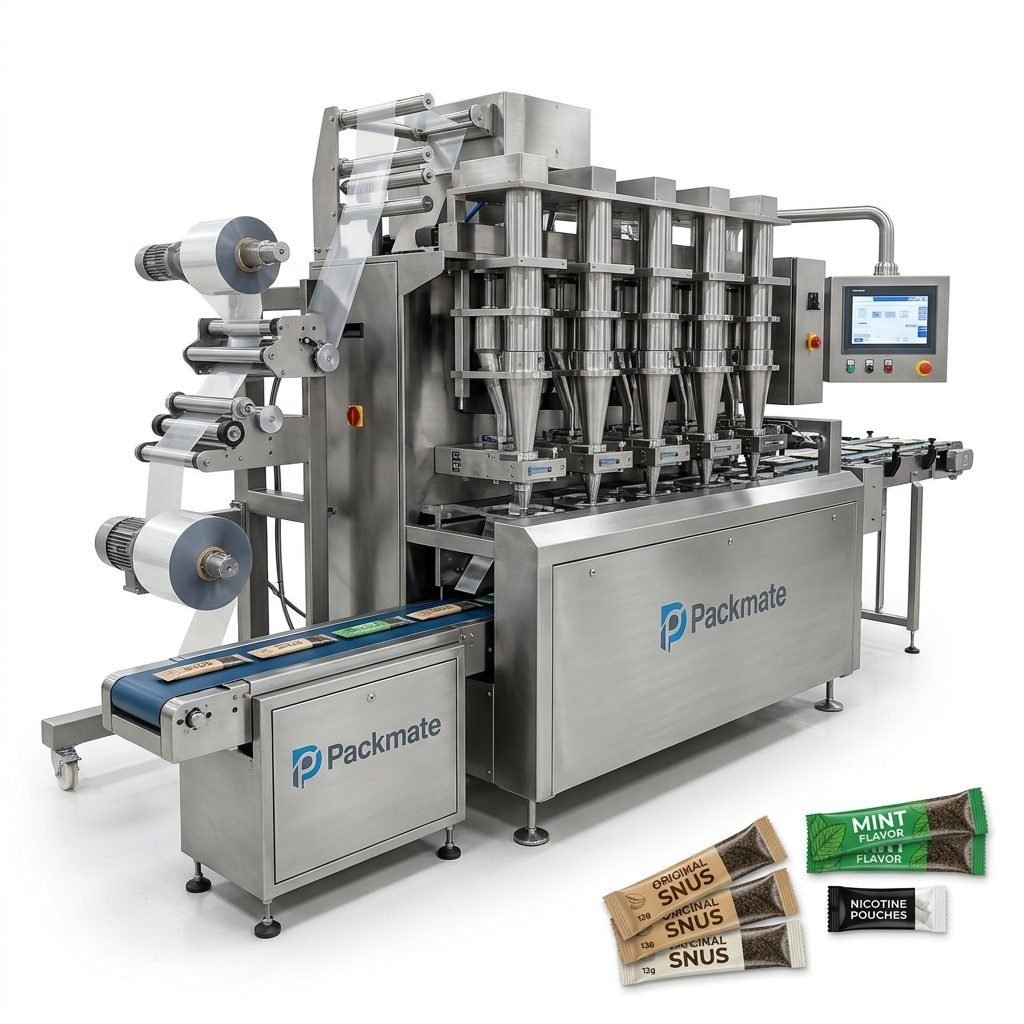
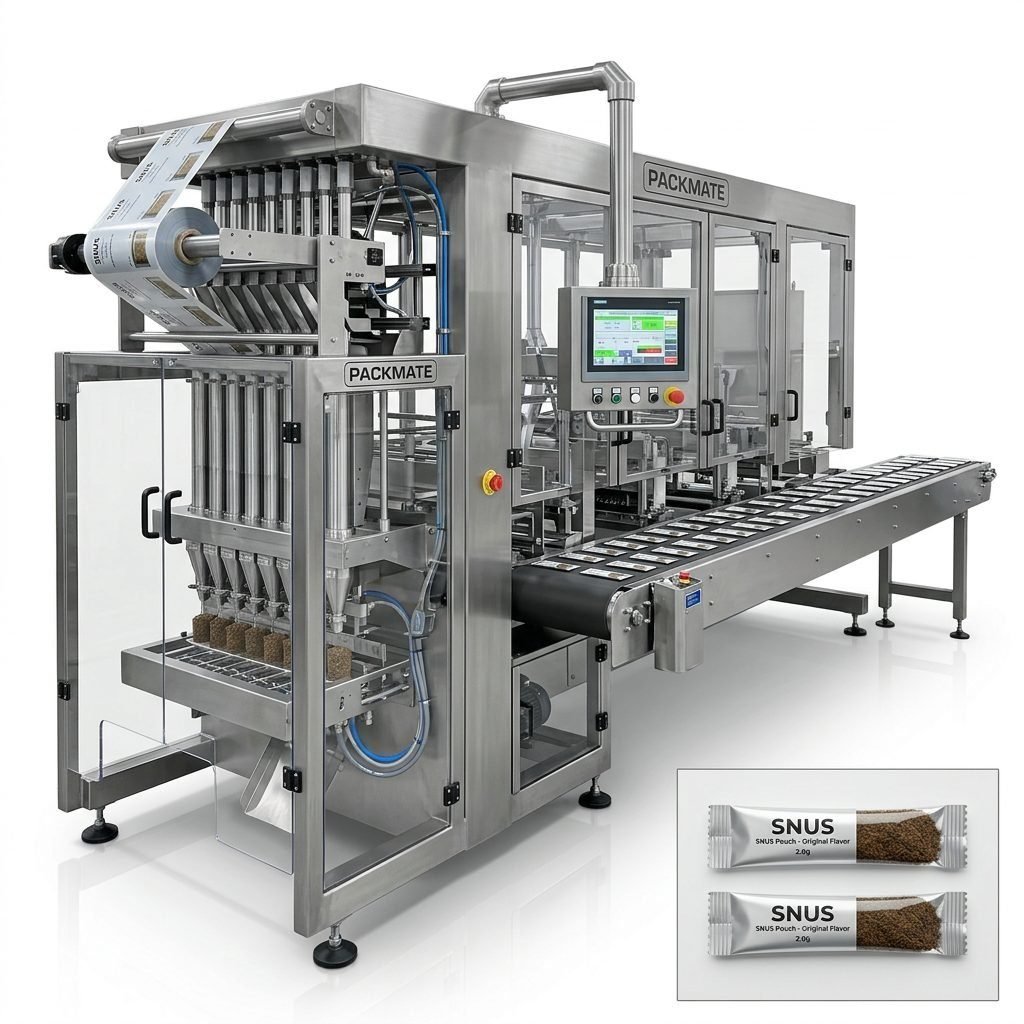
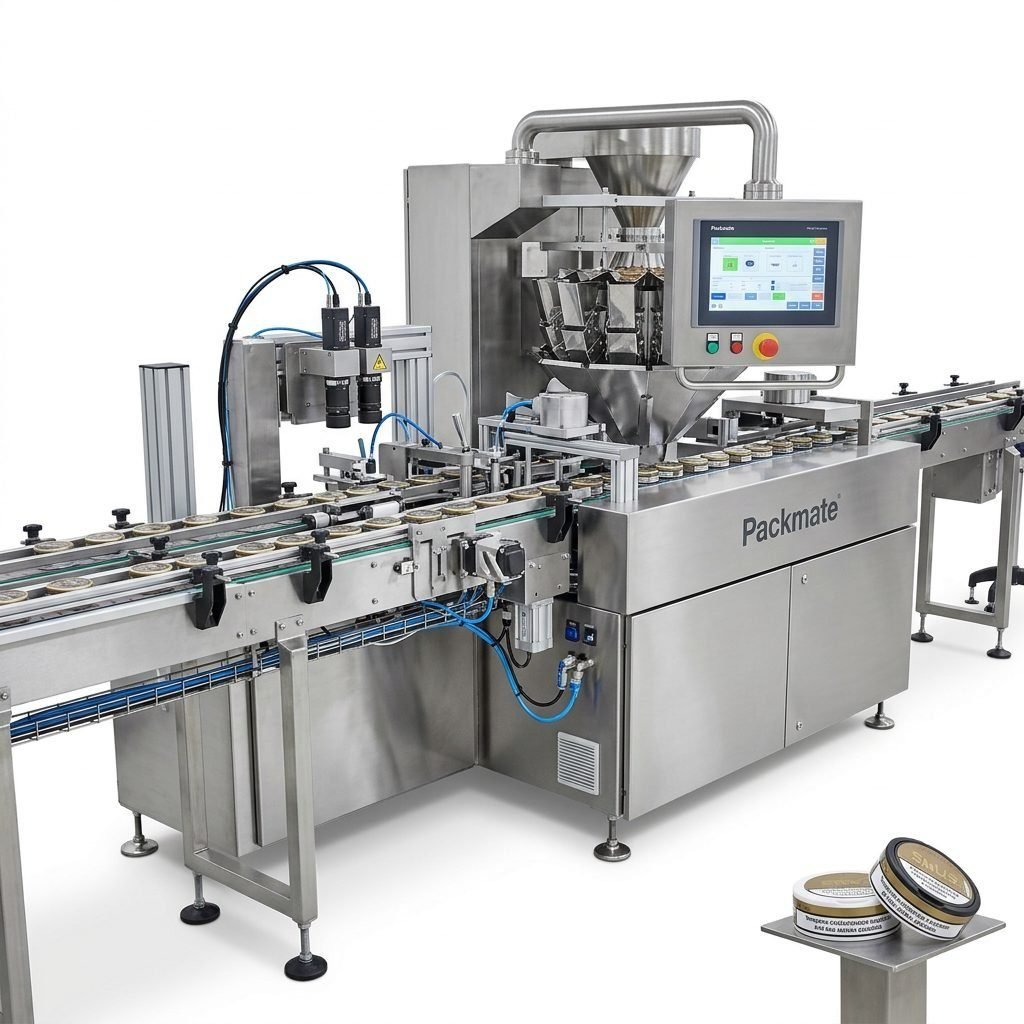
A manufacturer with a broad product portfolio and turnkey capability — including stick pack, sachet, multi‑lane pouch lines, and auxiliary equipment — can be invaluable if you need a full production solution. For example, Packmate Snus Machine provides specialized snus equipment and full packaging lines backed by 30+ years of experience.
What to look for in company credentials
– Years in industry and evolution of product lines
– Factory capabilities: CNC machining, precision assembly, quality testing
– Certifications such as CE and ISO for safety and quality compliance
– Case studies and export footprint (has the vendor supplied similar lines to global markets?)
For more detailed product categories and examples, browse manufacturer product ranges such as Snus & Nicotine Packaging Machines and Sachet & Stick Pack Machines.
Assess Equipment Performance and Flexibility
Evaluate the mechanical design, control systems, and available automation features. HMI touchscreens, servo drives, and PLC controls improve accuracy and repeatability. Ask for performance data: cycle times, changeover time, and typical availability (uptime) figures.
Key performance indicators to request: OEE estimates, mean time between failures (MTBF), mean time to repair (MTTR), and results from factory acceptance tests (FAT).
Look for machines with quick mold or tool change systems if you run multiple SKUs. Multi‑lane capability can multiply throughput without a proportional increase in footprint — a crucial advantage for small dose pouch manufacturers.
Quality Control, Testing and Compliance
Compliance to international standards like CE and ISO are baseline expectations. More important is how the manufacturer ensures quality during production: component traceability, rigorous testing protocols, and documentation support (IQ/OQ/PQ where applicable).
Check whether the vendor provides factory acceptance tests and on‑site commissioning. A thorough FAT reduces surprises at installation and helps verify performance against agreed KPIs.
Safety and operator ergonomics
Ensure guarding, emergency stops, and access panels are designed for safe maintenance. Ergonomics influence daily operating efficiency; machines that simplify cleaning and maintenance reduce downtime.
Service, Spare Parts and Training
After‑sales support is equally important as machine design. Evaluate lead times for spare parts, remote troubleshooting capabilities, and the availability of training programs for operators and maintenance personnel.
A strong supplier will offer documentation, spare parts kits, and optional service contracts. Confirm if the vendor has a local presence or partners in Africa or Uganda for faster response times.
Ask your vendor: How quickly can they ship critical spare parts? Do they provide remote diagnostics and software updates? Is there a local service partner?
Total Cost of Ownership (TCO) Analysis
Purchase price is just the beginning. Factor in installation, commissioning, operator training, spare parts inventory, expected energy consumption, and projected downtime costs. Machines that are more energy efficient or require fewer consumables can be cheaper over their lifecycle.
Request a TCO estimate comparing scenarios of different equipment options. This will help you justify investments to stakeholders and choose equipment that aligns with long‑term business goals.
Customization and Turnkey Solutions
If you require a complete production line — from feeding and weighing through to final carton packing — prefer suppliers who offer turnkey solutions. Integration experience avoids mismatches between individual machines and reduces integration costs.
Companies with large manufacturing capabilities and a variety of models can often customize solutions to your specific requirements. Explore examples and case studies for similar projects: Case.
Customization questions to ask
– Can the machine be adapted for regulatory labeling or specific consumer packaging preferences?
– What is the lead time for custom tooling or multiple SKUs?
– Are software and recipe management systems available for rapid changeovers?
Factory Visit and Demonstration
If possible, schedule a factory visit or request a live demonstration. Seeing machines running with real materials reveals much about build quality, reliability, and support culture. Pay attention to machine cleanliness, test documentation, and how engineers respond to technical questions.
If travel is not feasible, ask for a live video FAT, recorded machine trials with labeled test reports, and remote Q&A sessions with engineers.
Contract Terms, Warranties and Payment Options
Review contract terms closely: delivery timelines, acceptance criteria, warranty coverage, liability, and payment milestones. A clear FAT and site acceptance test (SAT) clause protects both parties.
Ensure warranty terms cover critical components and define response SLAs for on‑site support. Consider staged payments tied to agreed milestones (e.g., deposit, FAT completion, SAT).
Negotiation pointer: Ask for bundled pricing on spare parts and optional services — suppliers often offer discounts when the whole package is purchased.
Local Regulations and Import Considerations in Uganda
Understand import rules, duties, and regulatory requirements for nicotine products and packaging machinery in Uganda. Some machines may require certifications or local approvals. Your supplier should assist with documentation and shipping logistics.
Vendors experienced in international exports can provide proper export packing, certificates of conformity, and helpful customs documentation to streamline import clearance.
Selecting Finalist Vendors and Trial Runs
Shortlist two or three vendors based on technical fit, references, and commercial terms. Request formal proposals outlining equipment scope, delivery timeline, acceptance criteria, warranty, and training.
Where feasible, run trial fills of your actual product on candidate machines to validate dosing accuracy, pouch integrity, and overall appearance. Trials reveal hidden issues and inform final negotiation.
Useful resources and links
Explore detailed product lines and technical specifications at vendor pages such as Bag & Pouch Packaging Machines and consider complementary systems under Weighing & Packaging Systems.
Final checklist (quick): Production capacity, dosing accuracy, hygiene design, spare parts lead times, training & support, warranty & TCO.
Selecting the right snus packaging machinery manufacturer in Uganda requires a balance of technical capability, proven experience, robust after‑sales support, and sensible commercial terms. Prioritize vendors who demonstrate deep expertise in nicotine pouch packaging, provide transparent performance data, and stand behind their machines with solid service commitments.
Frequently Asked Questions (常见问题)
Q1: How do I verify a supplier’s claims about machine output and reliability?
A1: Request factory acceptance test (FAT) videos and data, ask for customer references with similar applications, and if possible arrange an on‑site visit to see machines running.
Q2: What are typical lead times for custom snus packaging lines?
A2: Lead times vary by complexity and customization, but expect 8–20 weeks for standard systems and longer for fully customized turnkey lines. Confirm timeline in your contract.
Q3: Are spare parts readily available for international buyers?
A3: Reputable manufacturers maintain spare parts programs and supply chain channels. Negotiate spare parts kits and lead times before purchase; consider stocking critical spares locally.
Q4: Can machines be adapted for different pouch types or future product lines?
A4: Many vendors offer modular designs and multi‑lane configurations to support various pouch formats and scalable throughput. Confirm changeover procedures and tooling costs.
Q5: Where can I see examples of machine models and services?
A5: Review product catalogs and company profiles such as About Packmate and the Catalog for model specifications, certificates, and exhibition demos.