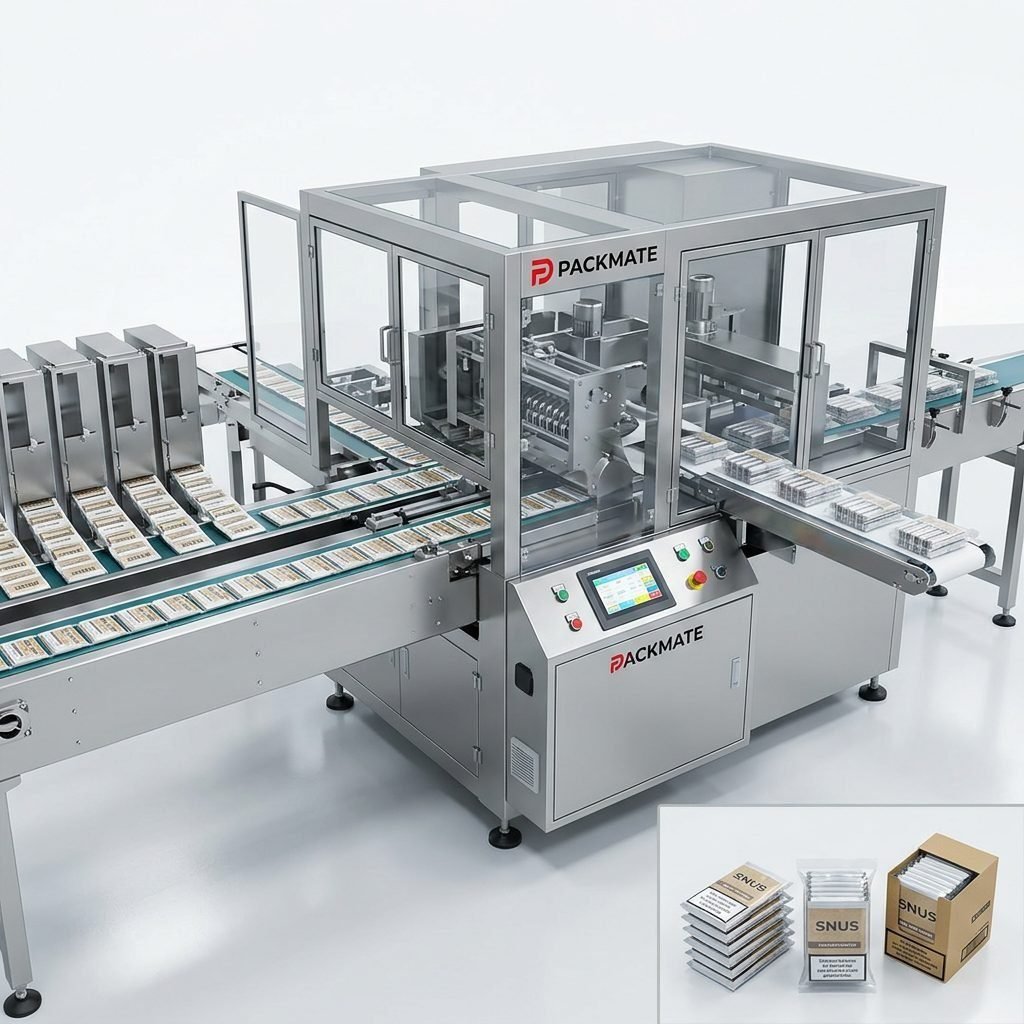
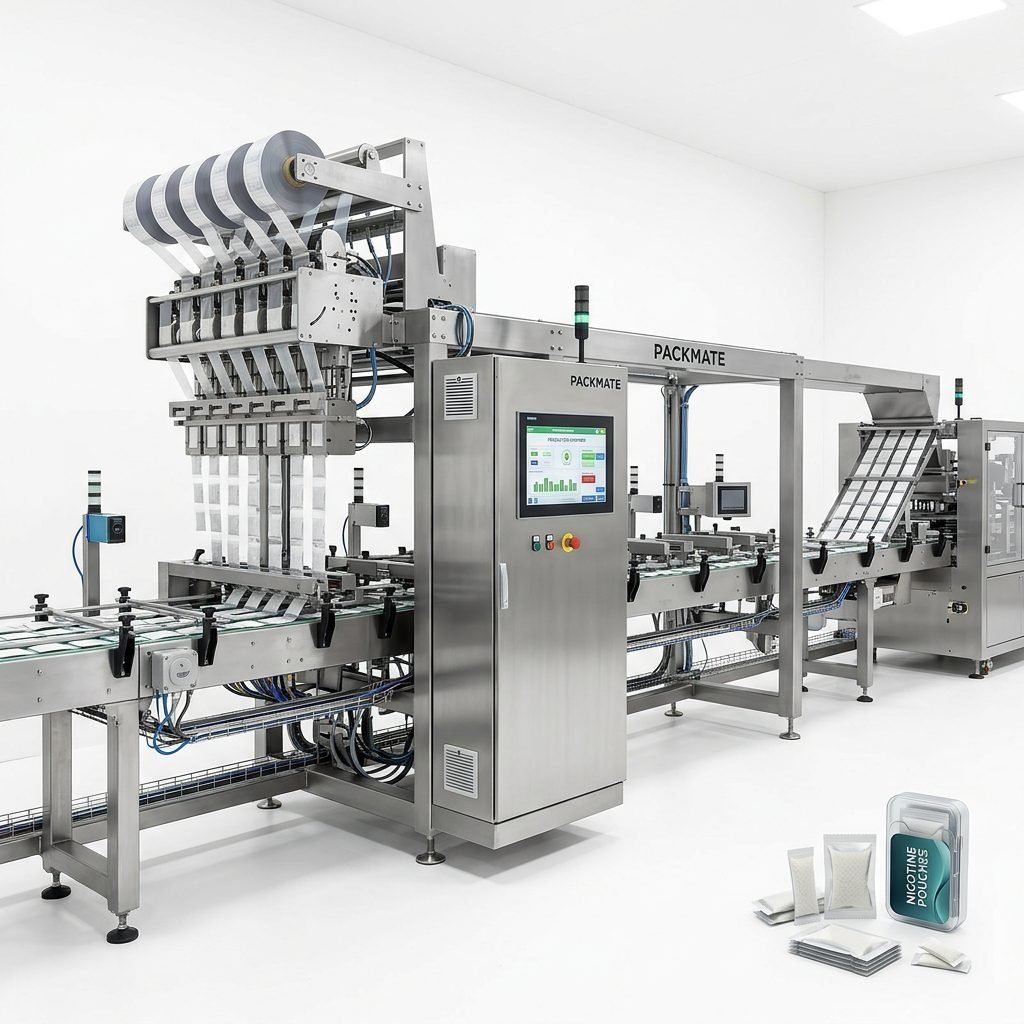
Choosing the right nicotine packaging machinery in Angola is a strategic decision that affects product quality, regulatory compliance, and long-term production costs. This guide helps manufacturers, brand owners, and packaging engineers evaluate machine types, capacity, automation, and supplier capabilities so you can match equipment to your production needs and launch or scale nicotine pouch operations with confidence.
Understand the Angola Market and Regulatory Context
Angola presents both opportunities and challenges for nicotine pouch producers. Market demand is growing, but import rules, labeling requirements, and local tax policies may vary. Before selecting equipment, confirm local regulatory standards and product registration timelines. Consider machines that support flexible label formats and batch traceability to stay compliant as rules evolve.
Key market factors to assess
⚙️ Production scale (pilot runs vs. commercial volumes).
⚙️ Desired product formats—single-dose pouches, multi-lane sticks, sachets.
⚙️ Local infrastructure (power stability, workshop space, and compressed air).
⚙️ Speed to market and spare-part logistics when sourcing overseas.
Match Machine Type to Your Product Format
Selecting the right machine depends primarily on the pouch format you want to produce. Each format requires different filling, sealing, and cutting technologies. For nicotine pouches, look for equipment engineered for small-dose, multi-lane precision.
Recommended machine classes
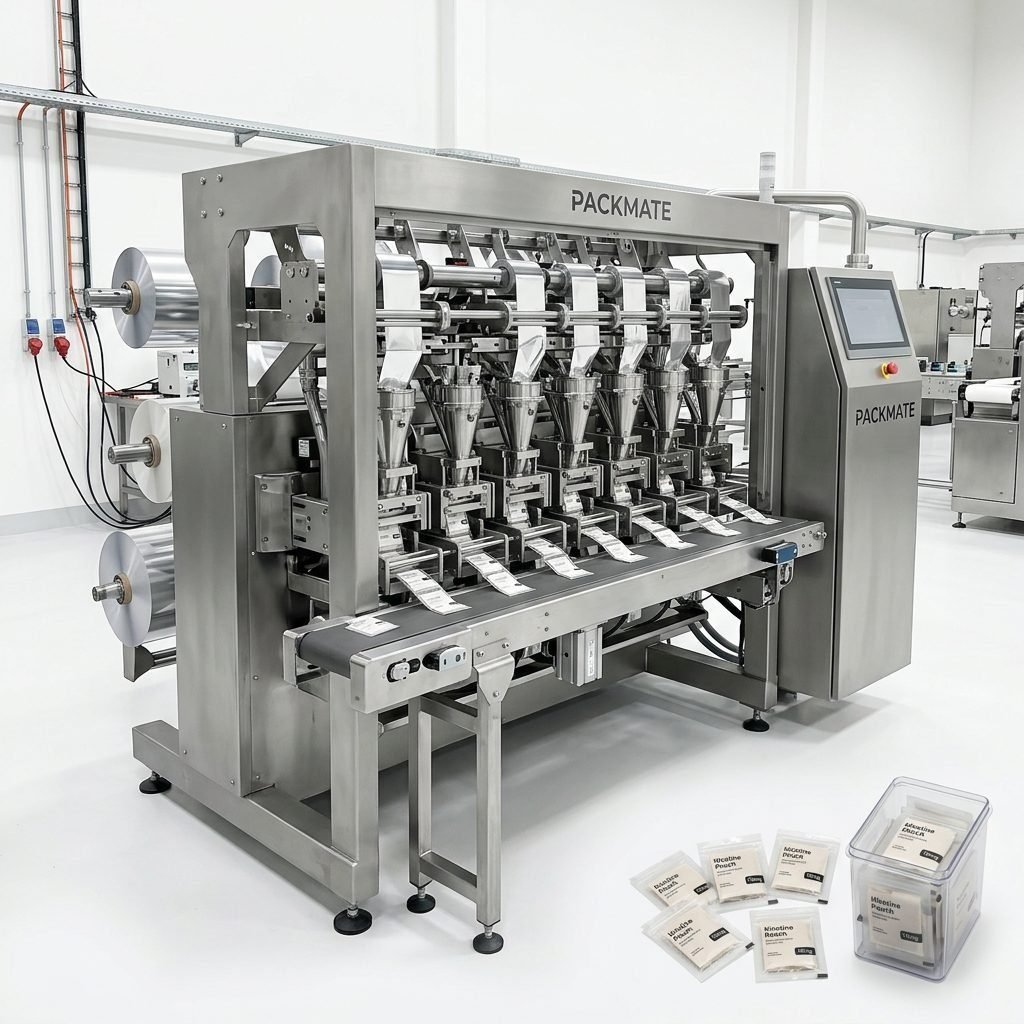
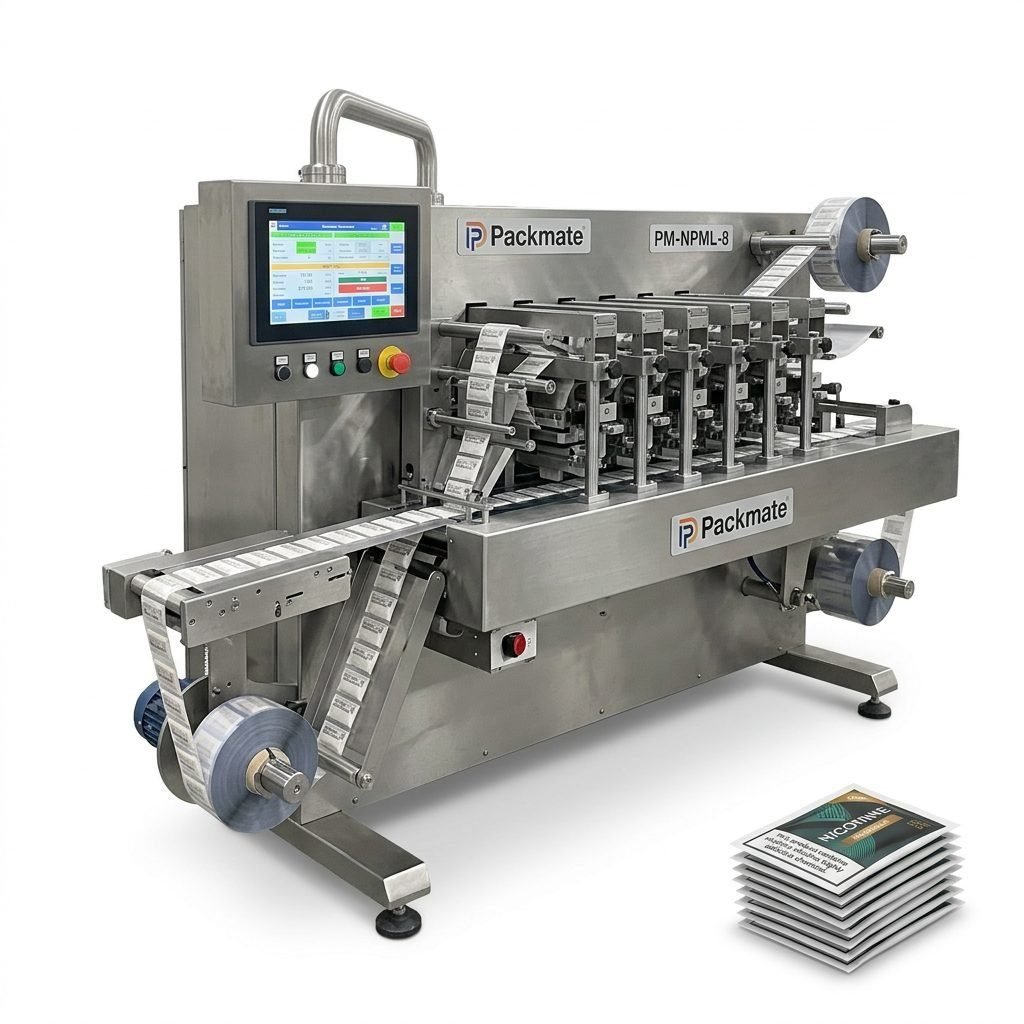
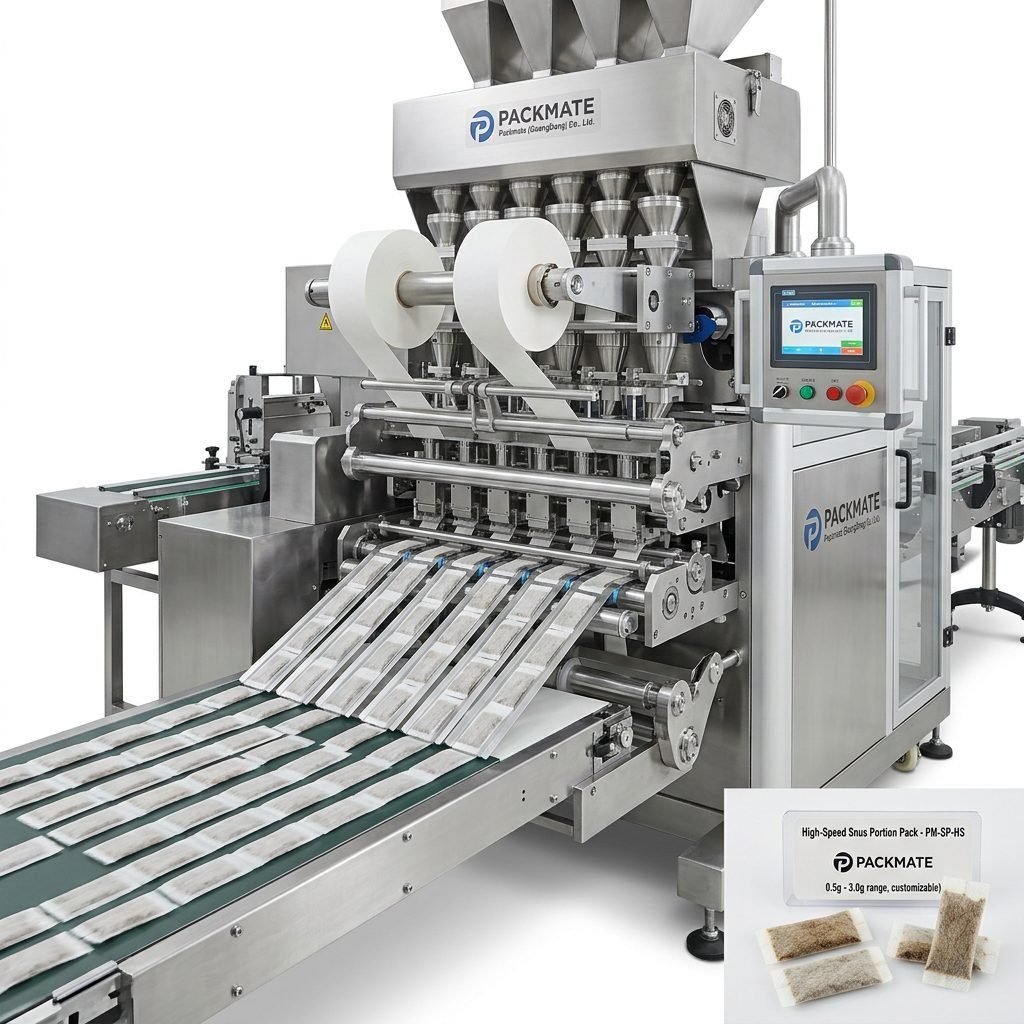
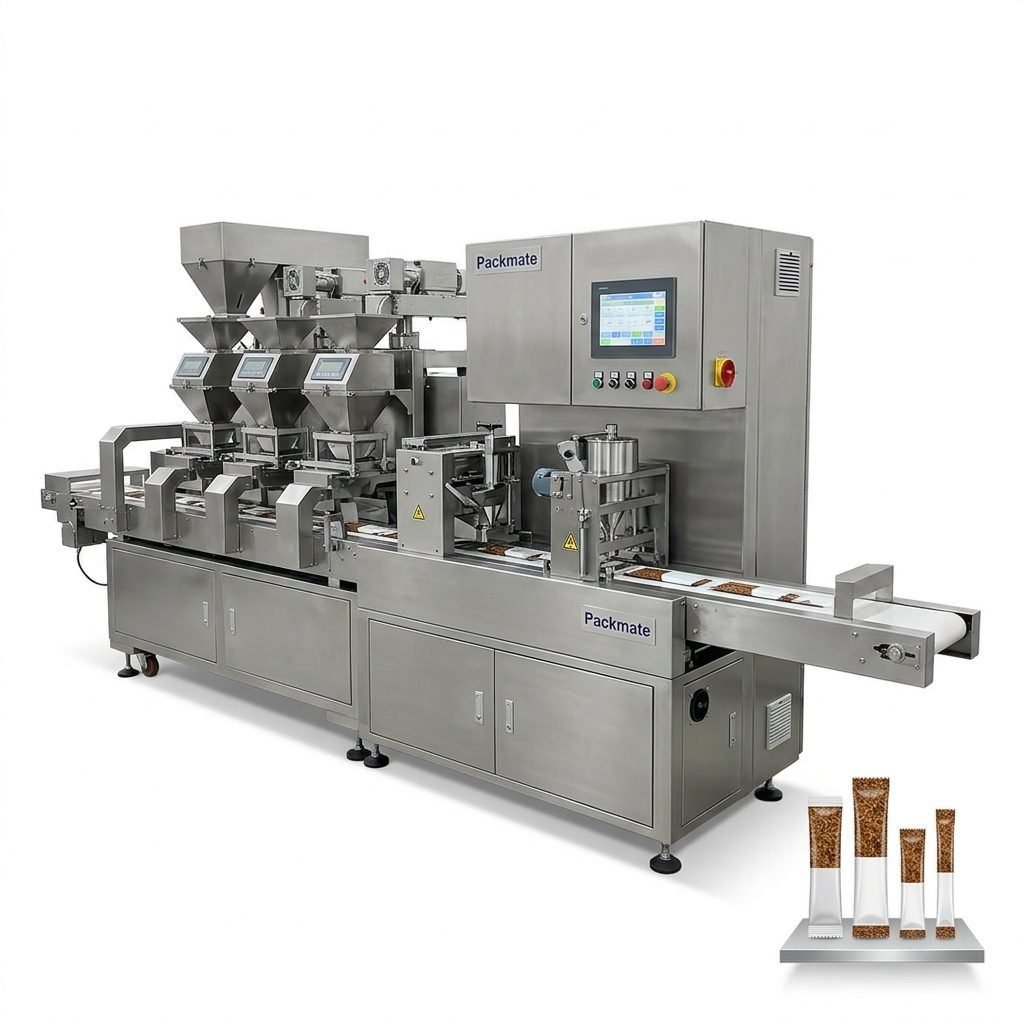
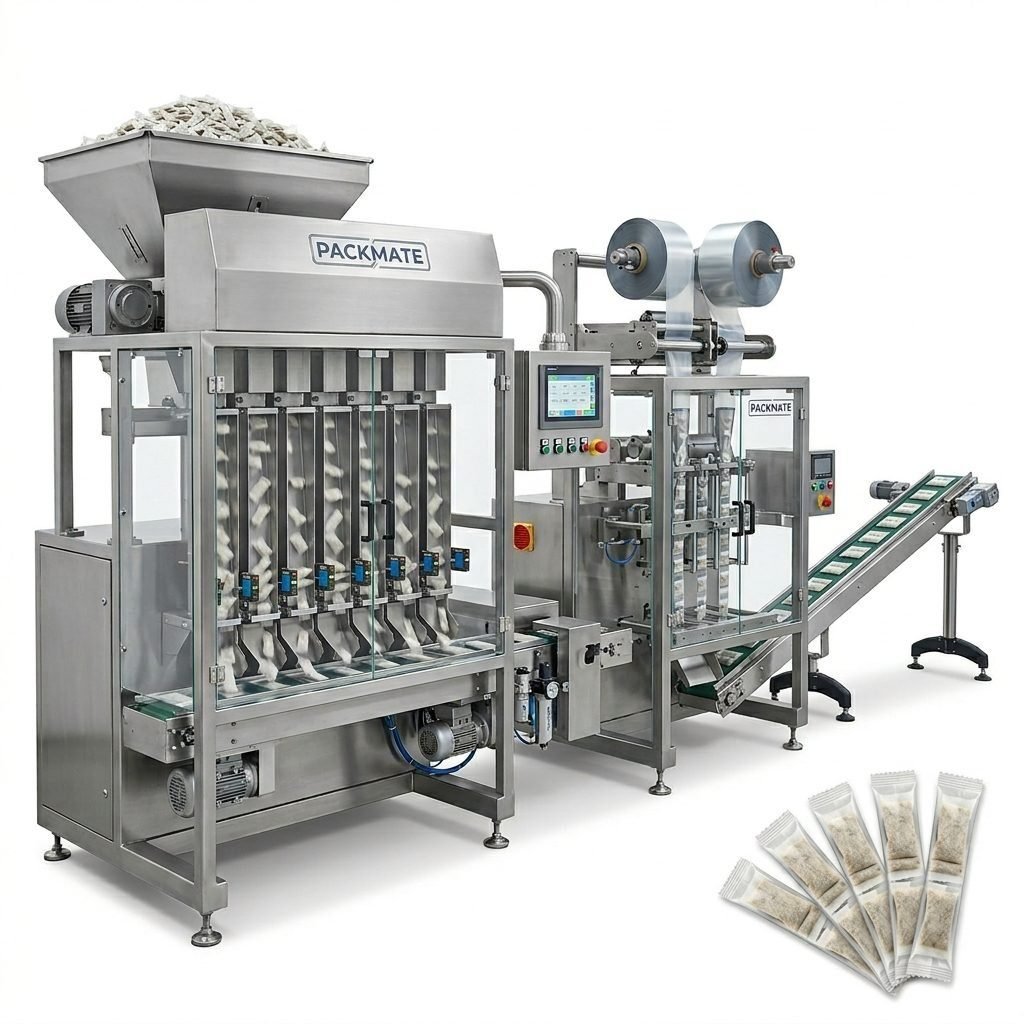
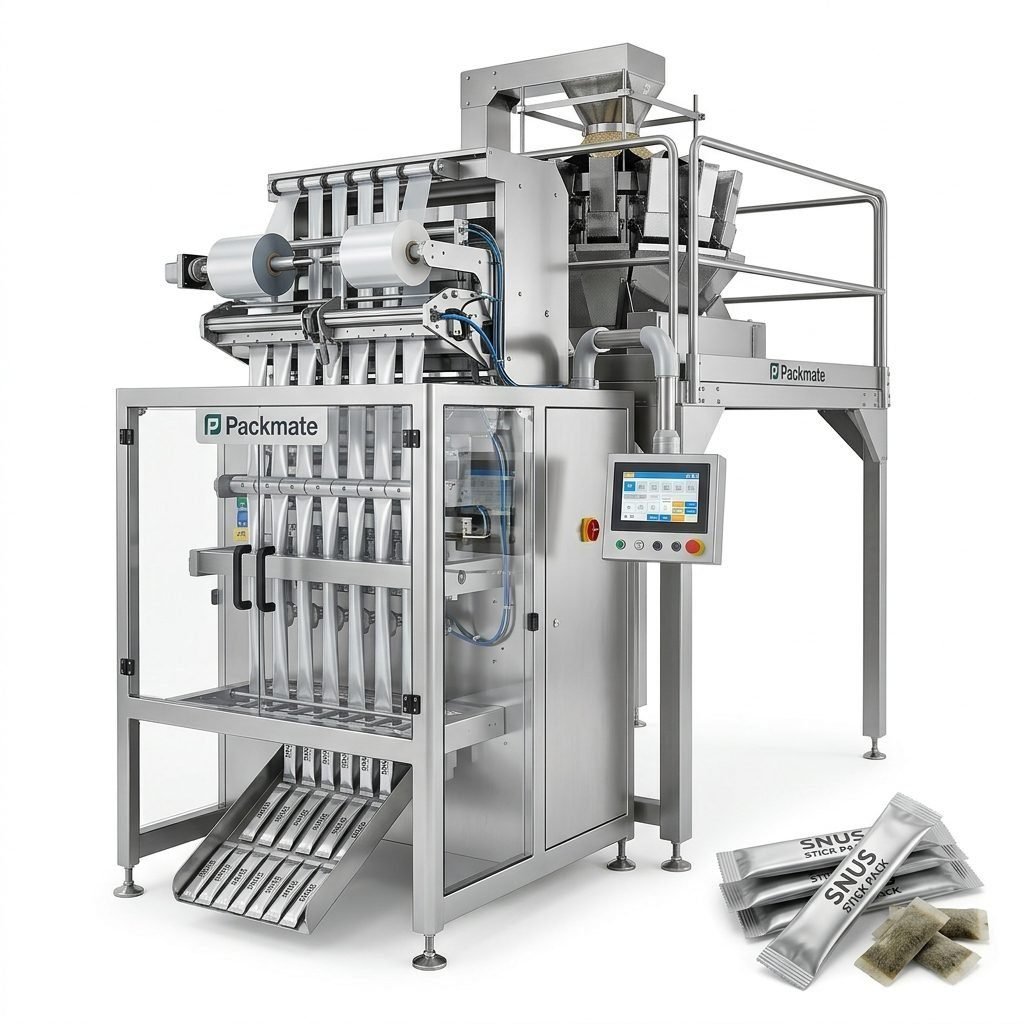
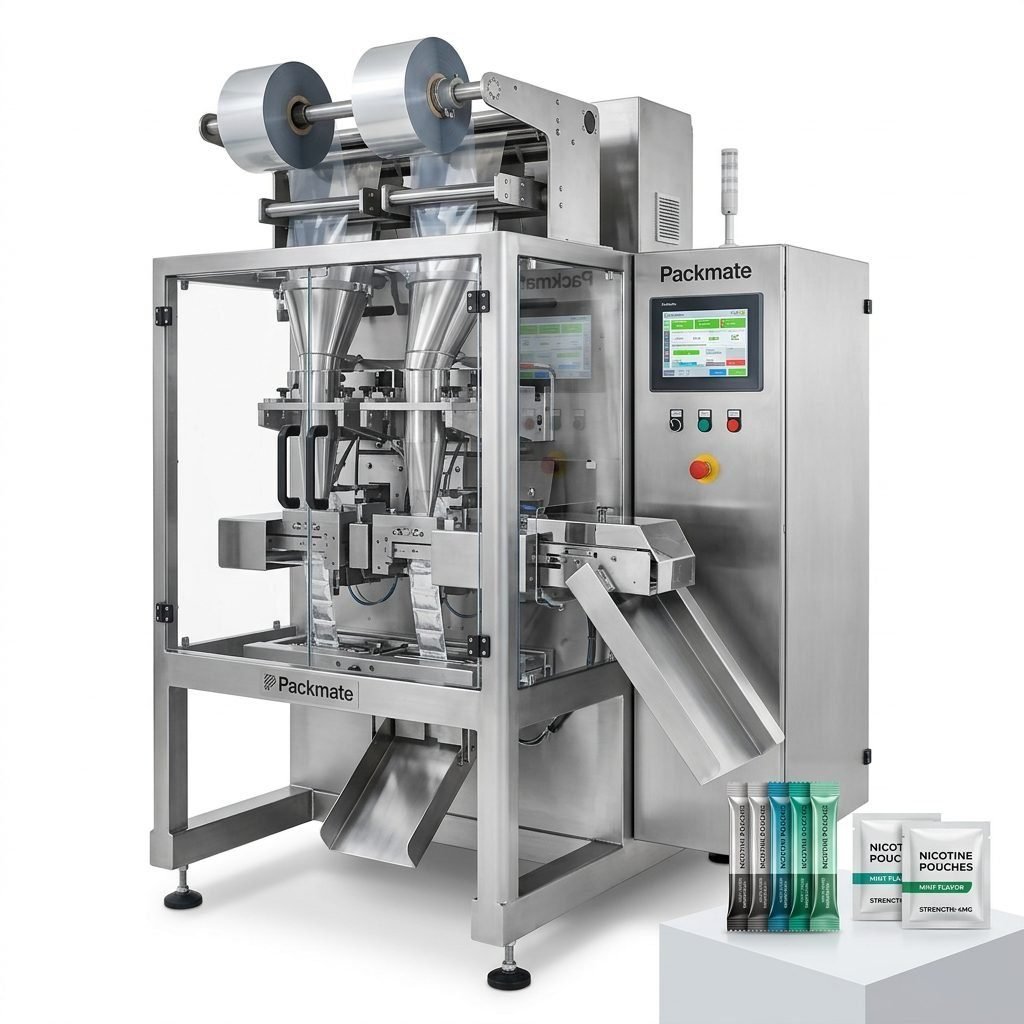
✅ Snus & Nicotine Packaging Machines — Designed specifically for nicotine pouch production with multi-lane options and high-precision fill control. See practical models and line layouts in the Snus & Nicotine Packaging Machines catalog: product page.
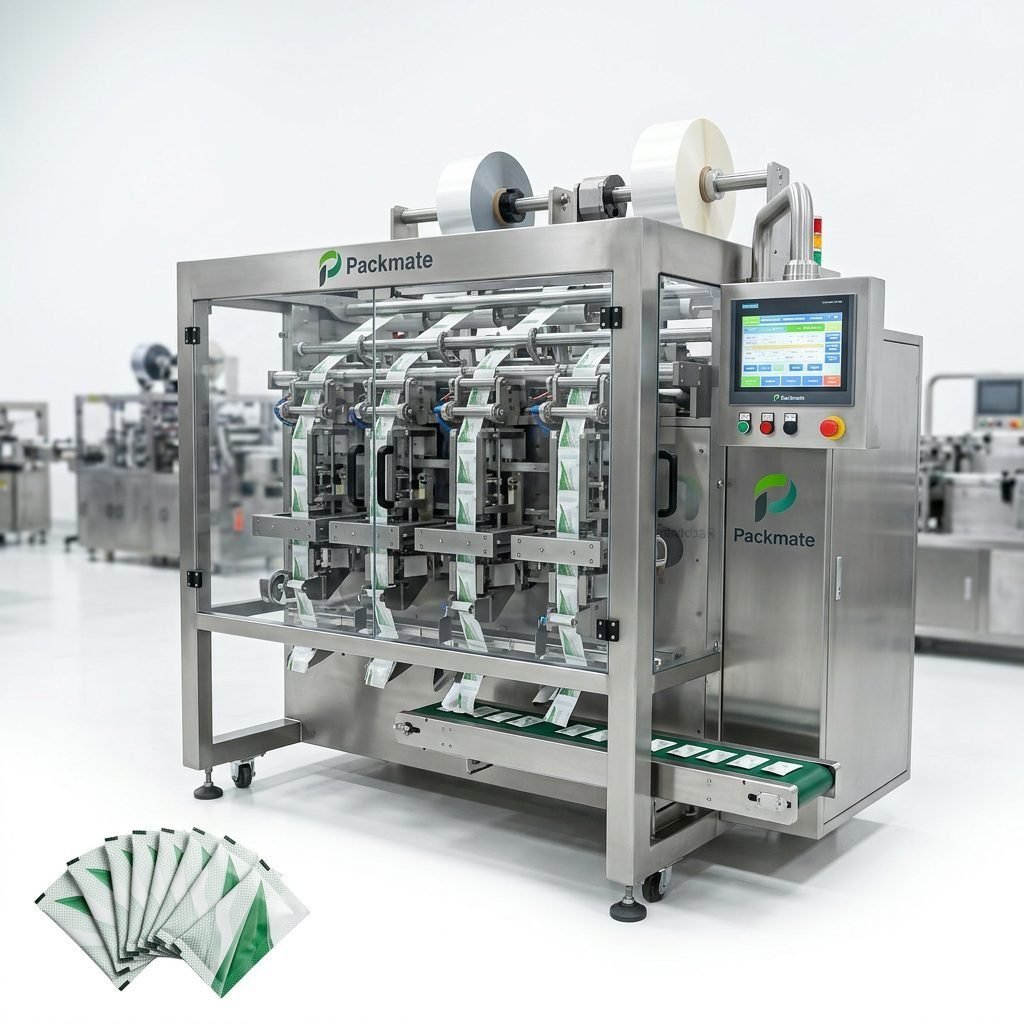
✅ Sachet & Stick Pack Machines — If your product strategy includes stick packs or sachets, these machines offer flexibility for alternate SKUs: learn more.
✅ Filling & Packaging Lines — For integrated solutions that combine dosing, conveying, and packing: filling line options.
Production Capacity and Throughput Planning
Estimate your required throughput in pouches per minute and per shift. Machines are rated for theoretical maximum speeds, but real-life throughput depends on operator skill, changeover time, and product consistency. Choose machines with modular lanes if you plan to increase capacity later.
Quick Capacity Checklist:
• Current daily volume target and 12-month forecast.
• Targeted uptime (e.g., 85% vs. 95%) and spare parts availability.
• Multi-lane vs. single-lane trade-offs: multi-lane increases throughput but can raise complexity.
Automation and Integration
Fully automated lines reduce labor costs and improve consistency. Evaluate whether you need standalone machines or a turnkey line that includes feeding systems, checkweighers, and robotic case packing. Integration with weighing systems and automation platforms streamlines compliance and QC; explore weighing & packaging systems when precision is critical.
Material Handling, Filling Precision and Product Protection
Nicotine pouches require precise dosing and gentle handling. Look for systems with accurate volumetric or auger dosing and controls for hygroscopic or powdery blends. Ensure the machine provides adequate sealing technology to protect moisture-sensitive fillings and maintain shelf life.
Important technical features
⚙️ High-resolution fill control for consistent dosage.
⚙️ Cleanable contact parts and stainless-steel construction for hygiene.
⚙️ Servo-driven components for repeatable motion and reduced maintenance.
Quality, Certifications and Supplier Credibility
Choose manufacturers with a proven track record in snus and nicotine pouch equipment. Certifications such as CE and ISO indicate compliance with international machine safety and quality standards. Learn about manufacturer history and factory capabilities to ensure reliable long-term support — for example, view About Packmate to understand their experience and manufacturing strength: About Packmate.
Why supplier history matters
• Proven multi-lane solutions reduce commissioning risk.
• Established CNC and assembly capabilities mean replacement parts are consistent.
• A manufacturer with global installations typically supports export documentation and spare-part logistics.
Supplier Due Diligence Tip: Request machine case studies or references—see global cases to verify real-world performance: Case examples.
Maintenance, Spare Parts and After-Sales Service
In Angola, timely access to spare parts and remote support can make or break uptime. Negotiate service agreements that include remote diagnostics, spare-part kits, and recommended preventive maintenance schedules. Verify whether the manufacturer offers on-site commissioning and operator training.
Service considerations
🔧 On-site commissioning and training duration.
🔧 Availability of critical spare parts and shipping lead times.
🔧 Remote support capabilities (video troubleshooting, PLC program updates).
Layout, Utilities and Installation Requirements
Before purchase, plan the factory layout, power supply, compressed air, and floor loading. Machines may require stable voltage and calibrated weighers. Confirm machine footprint and access for installation, especially for multi-lane lines that need precise alignment.
Site-prep checklist
• Clear floor space and proper foundation.
• Stable mains power and recommended UPS for control systems.
• Adequate ventilation for dust control and operator comfort.
Total Cost of Ownership and ROI Considerations
Machine cost is only part of the investment. Factor in installation, tooling, operator training, spare parts, and expected productivity gains. Higher upfront cost for a robust multi-lane machine often pays back through lower per-unit labor and higher uptime.
TCO Snapshot: Upfront equipment cost + installation + 2 years of spare parts/support – expected production savings = projected ROI timeframe.
Customization, Flexibility and Future-Proofing
Opt for modular designs that let you switch formats or add lanes. Custom tooling for specific pouch shapes should be easy to order and install. Manufacturers with a wide model range and customization experience—such as Packmate, which offers multi-lane lines and various pouch machines—can help adapt your line as your product range evolves: pouch solutions.
Practical Steps to Finalize Your Purchase
1) Define your product specs, expected throughput and budget.
2) Request detailed machine drawings and utility requirements.
3) Ask for a factory acceptance test (FAT) report or video demonstration.
4) Confirm spare-part lists and a recommended consumables kit.
5) Negotiate commissioning timelines, training, and warranty terms.
Buying from a trusted partner
Working with experienced manufacturers ensures smoother commissioning. For additional commercial and service details, consult the manufacturer’s service and contact pages: Service and Contact Us.
Final Checklist Before Signing a Contract
• Machine meets required throughput and format specs.
• Clear FAT acceptance criteria and timeline.
• Spare parts and warranty terms agreed in writing.
• Training and commissioning plan with success metrics.
• Local compliance and export documentation complete.
Need inspiration or product references? Explore product lines and machine families to identify suitable models, including Snus & Nicotine Packaging Machines and integrated Filling & Packaging Lines on the manufacturer’s product pages.
Conclusion
Selecting the right nicotine packaging machinery in Angola requires a clear understanding of product formats, throughput goals, local utilities and regulatory obligations. Prioritize precision dosing, reliable sealing, modular scalability, and after-sales support. Working with an experienced supplier who provides turnkey solutions, documentation, and strong service can significantly reduce risk and accelerate your time to market.
Common Questions
Q: How do I estimate the number of lanes needed for my target output?
A: Start with required pouches per minute, factor in realistic uptime, and divide by the machine’s per-lane capacity. Request production simulation from the supplier to validate.
Q: What certifications should I expect on nicotine packaging machinery?
A: CE and ISO certifications are standard for safety and quality. Also request FAT documentation and hygienic design details for contact parts.
Q: How long does commissioning and training typically take?
A: Depending on line complexity, commissioning and operator training can take from a few days to several weeks. Confirm timelines with the supplier and include on-site training in the contract.
Q: Can I expand capacity without replacing the entire line?
A: Many modern multi-lane machines are modular. Plan for expansion by selecting platforms that support lane additions or parallel modules.
Q: Where can I view product catalogs and detailed specs?
A: Review the manufacturer’s catalog and product pages for machine families and specifications: Catalog.