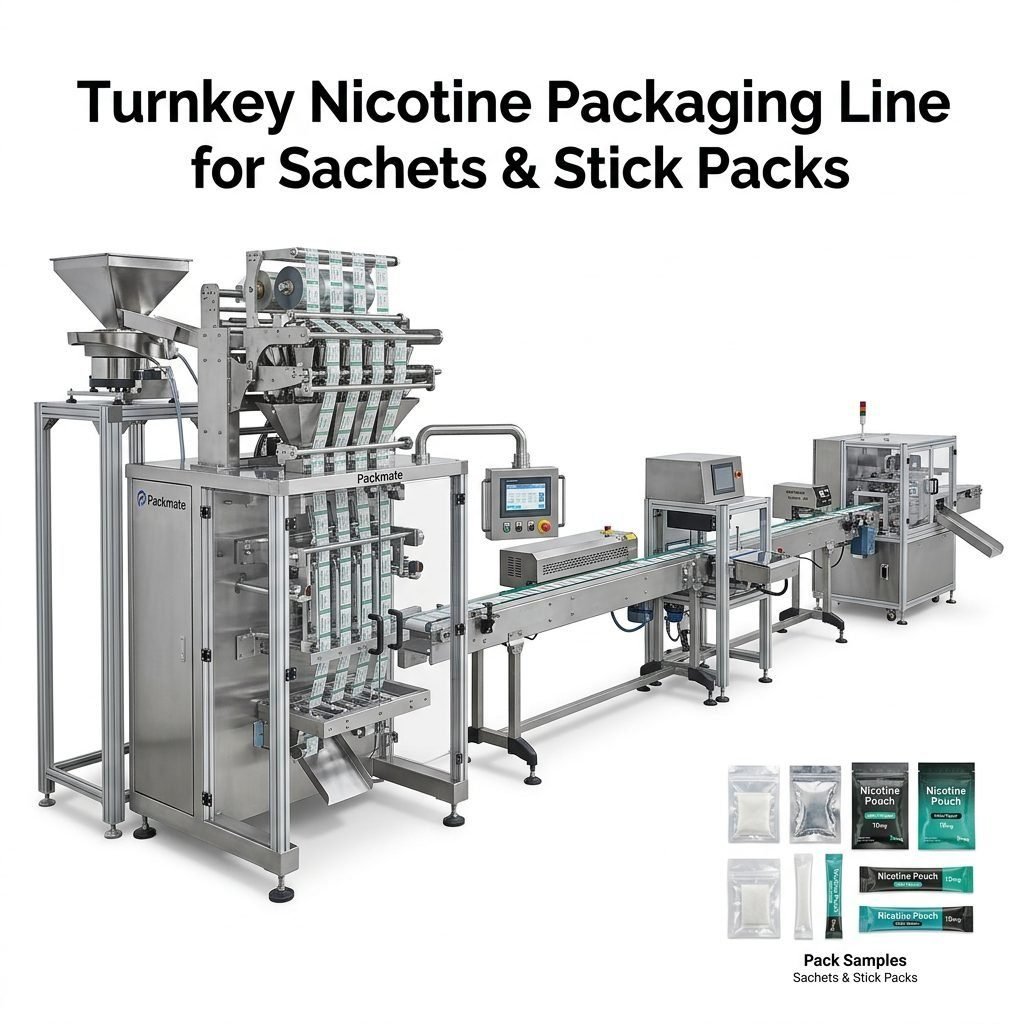
As global demand for nicotine pouches and snus grows, manufacturers require reliable, high-speed packaging solutions that integrate filling, sealing and final cartoning into one automated production line. This article walks through a complete turnkey snus packaging solution — from core machine modules to auxiliary equipment, quality controls, factory capabilities, and ROI considerations — designed for companies seeking a robust, scalable and compliant production line.
Overview: What a Turnkey Snus Packaging Line Delivers
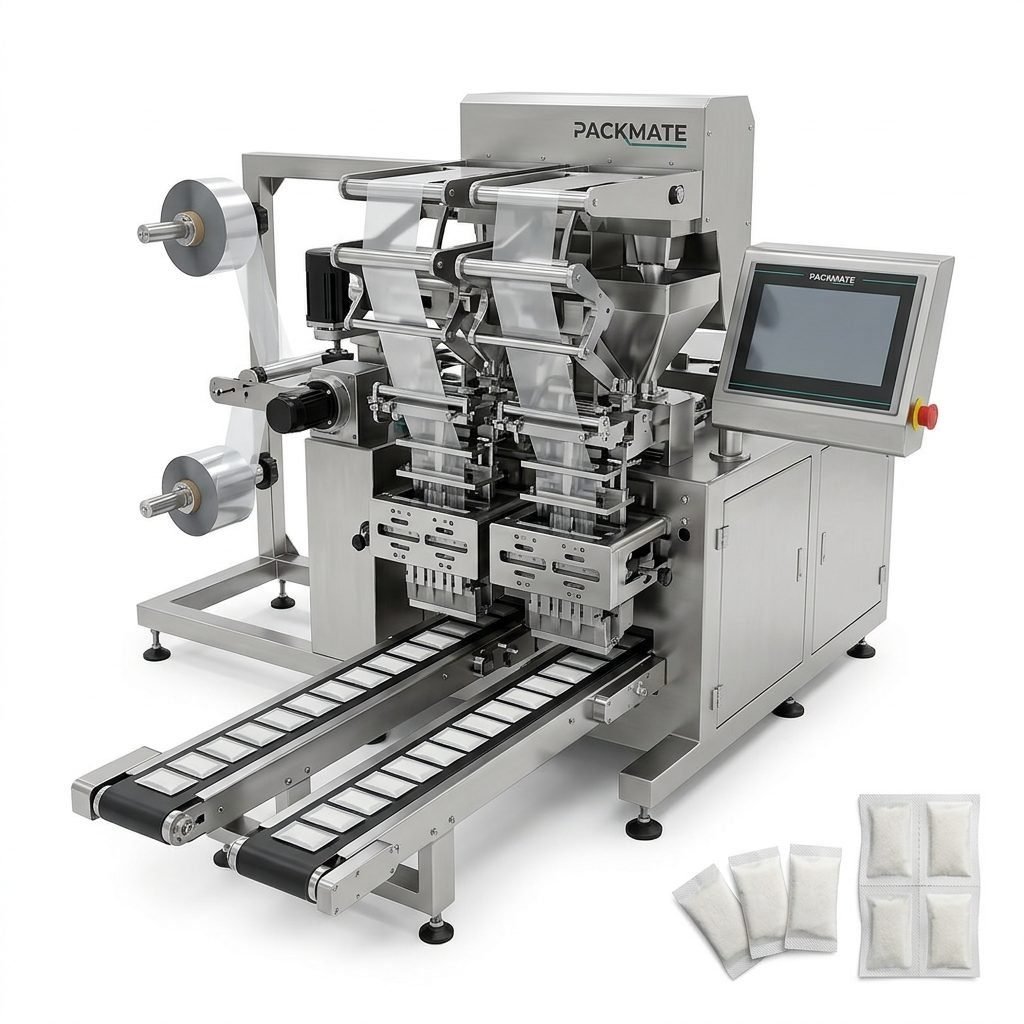
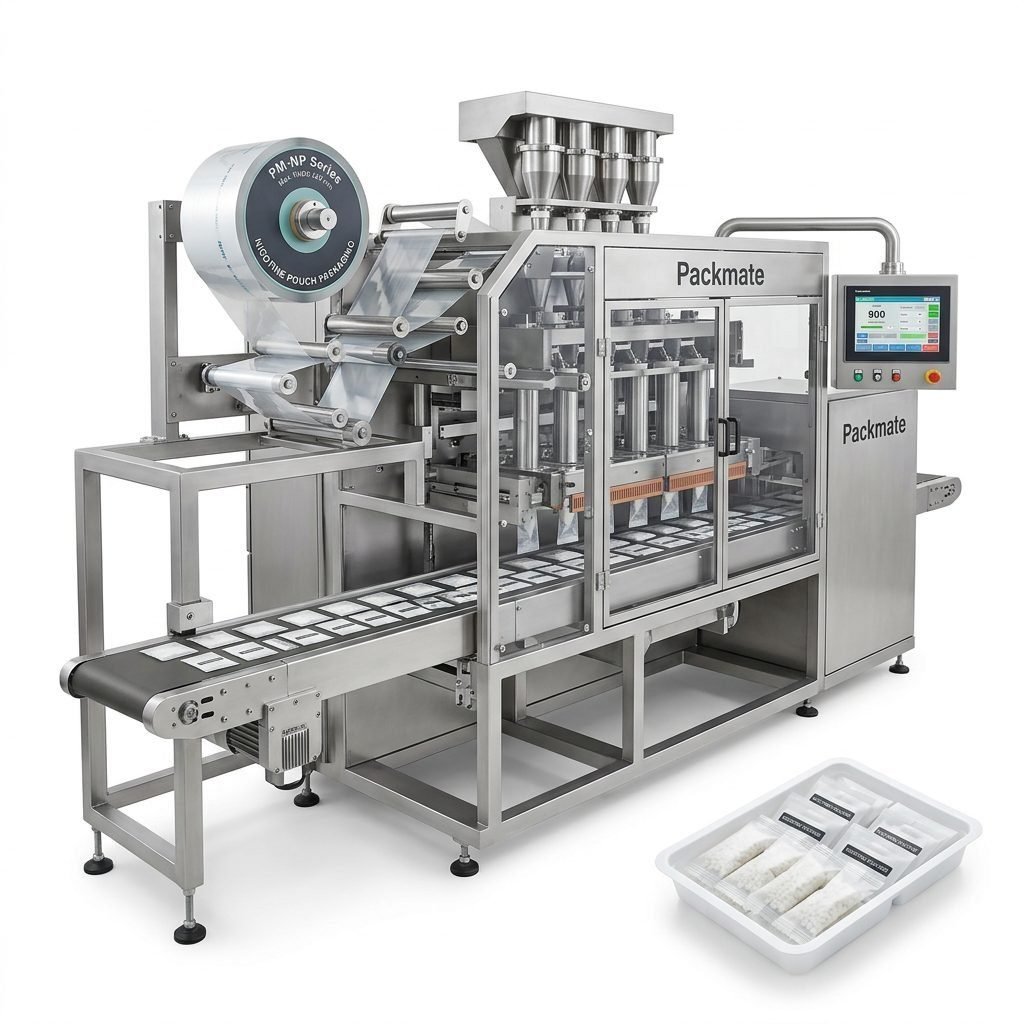
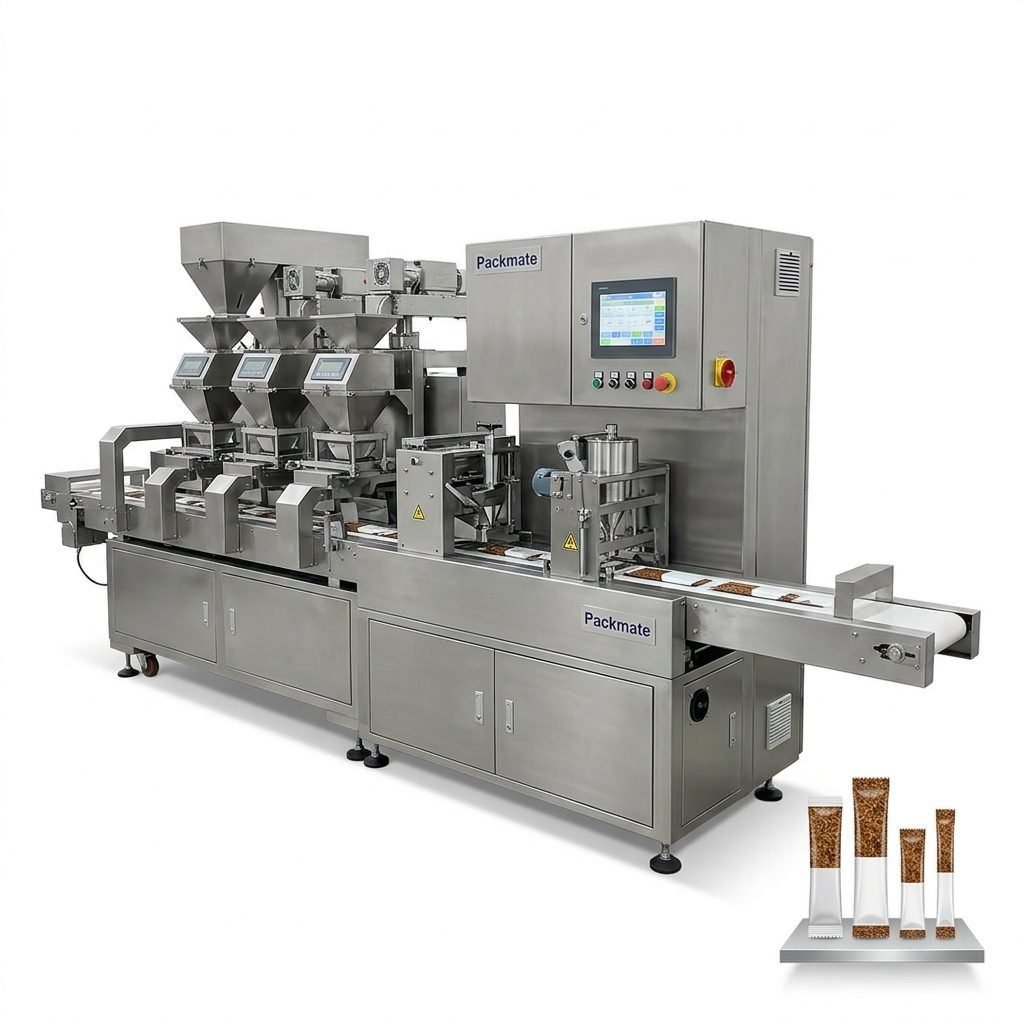
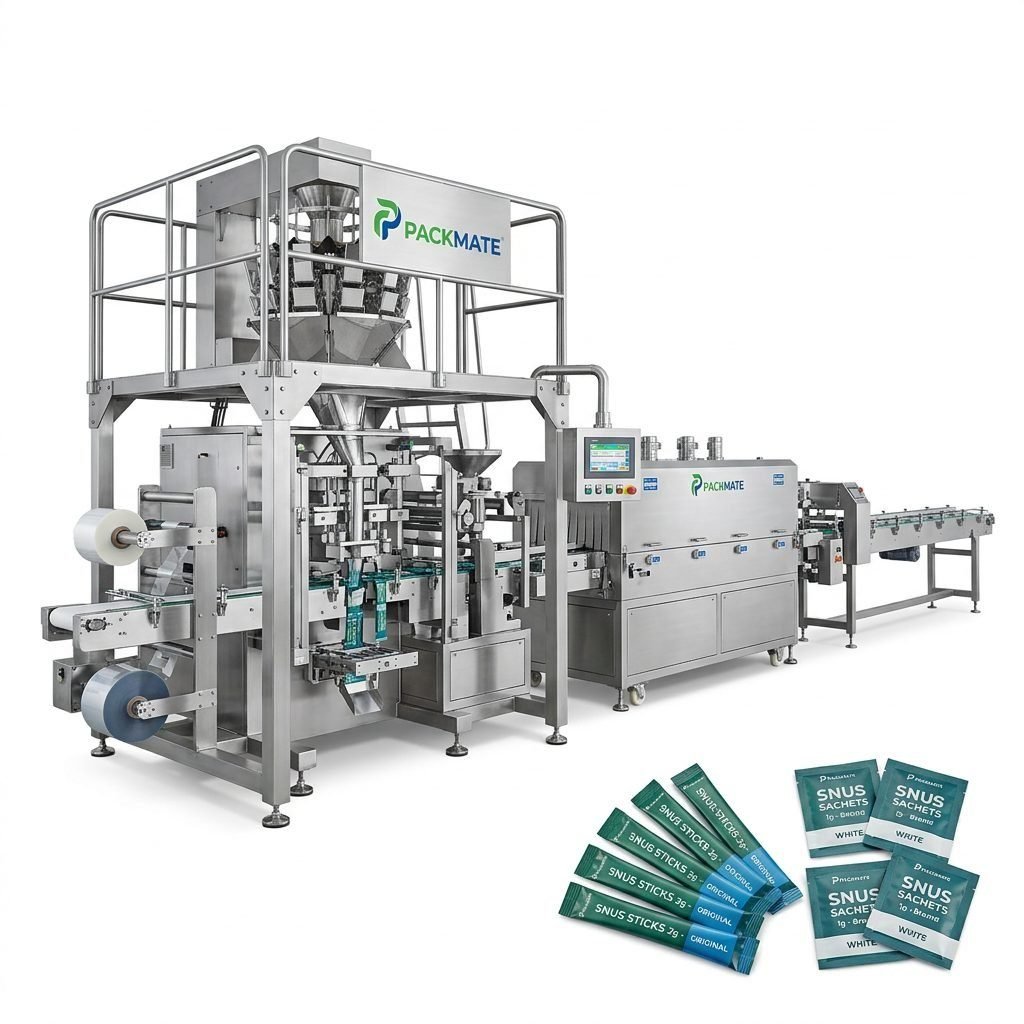
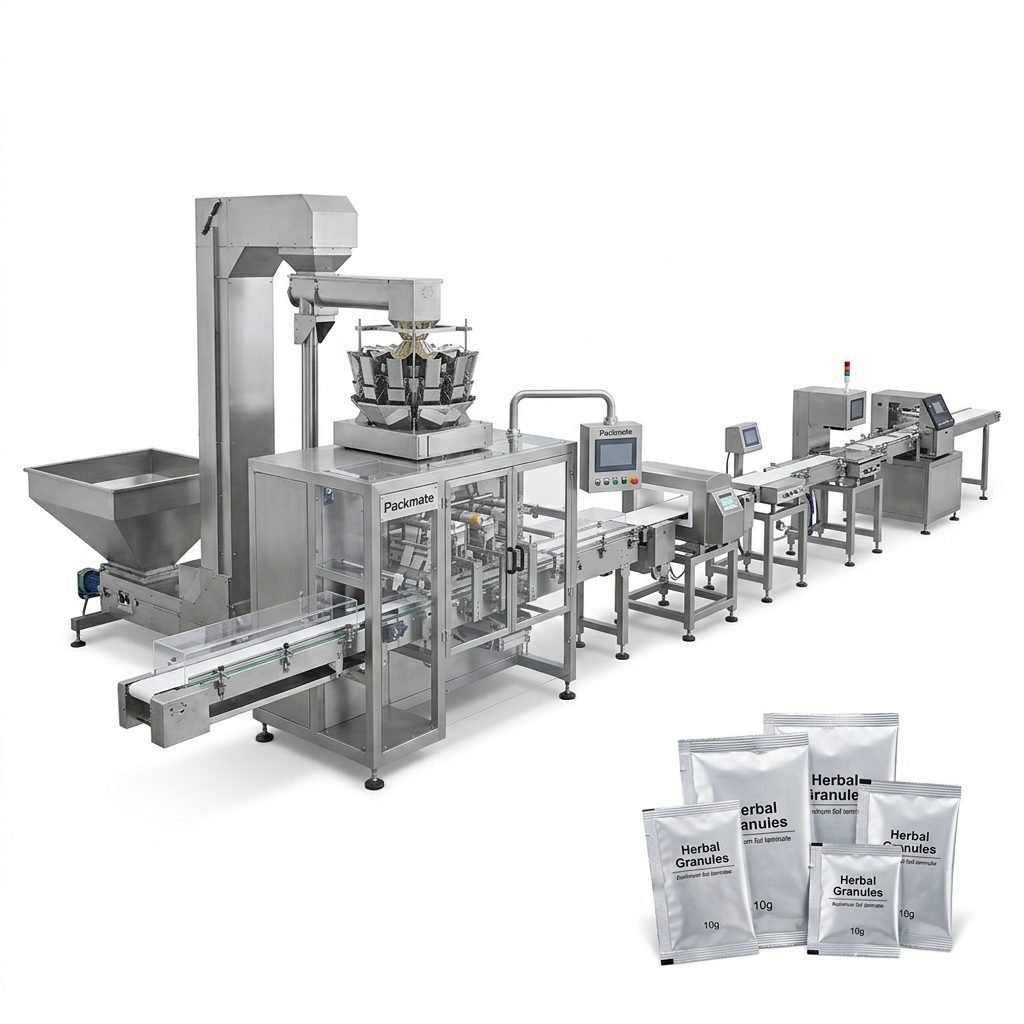
A turnkey snus packaging solution bundles multiple packaging stages into a single integrated workflow: pouch forming or pre-made pouch feeding, precise filling for micro-dose nicotine or tobacco powder, sealing (heat or ultrasonic), inspection, secondary packaging such as cartoning, and end-of-line palletizing. The goal is consistent product quality, minimal operator intervention, and a short path from raw material to packed product ready for distribution.
Key benefit:
Lower labor cost, higher throughput, consistent dosing and simple scalability for multi-lane production.
Core Modules Explained
A modern snus packaging line typically contains the following integrated modules. Each module is engineered for stability and hygiene to meet food and pharmaceutical production standards.
1. Pouch feeding and forming
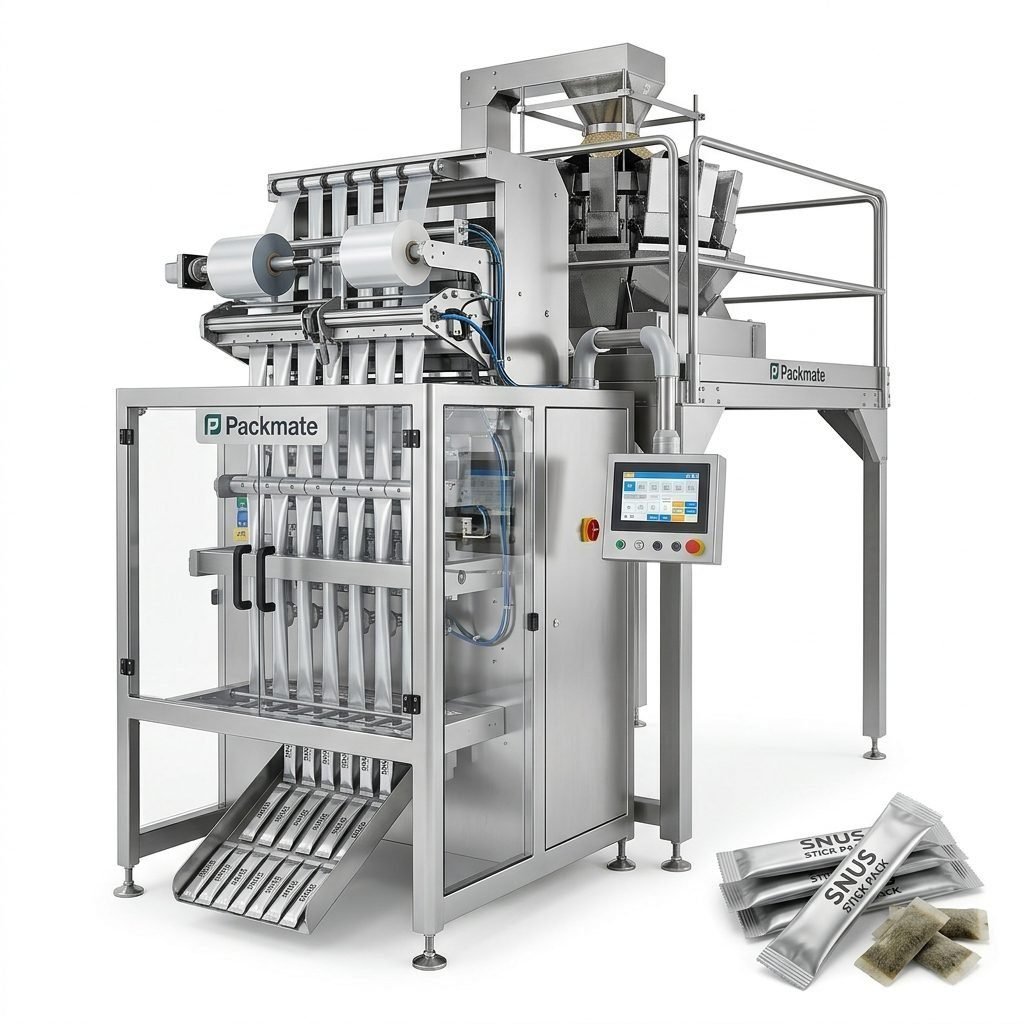
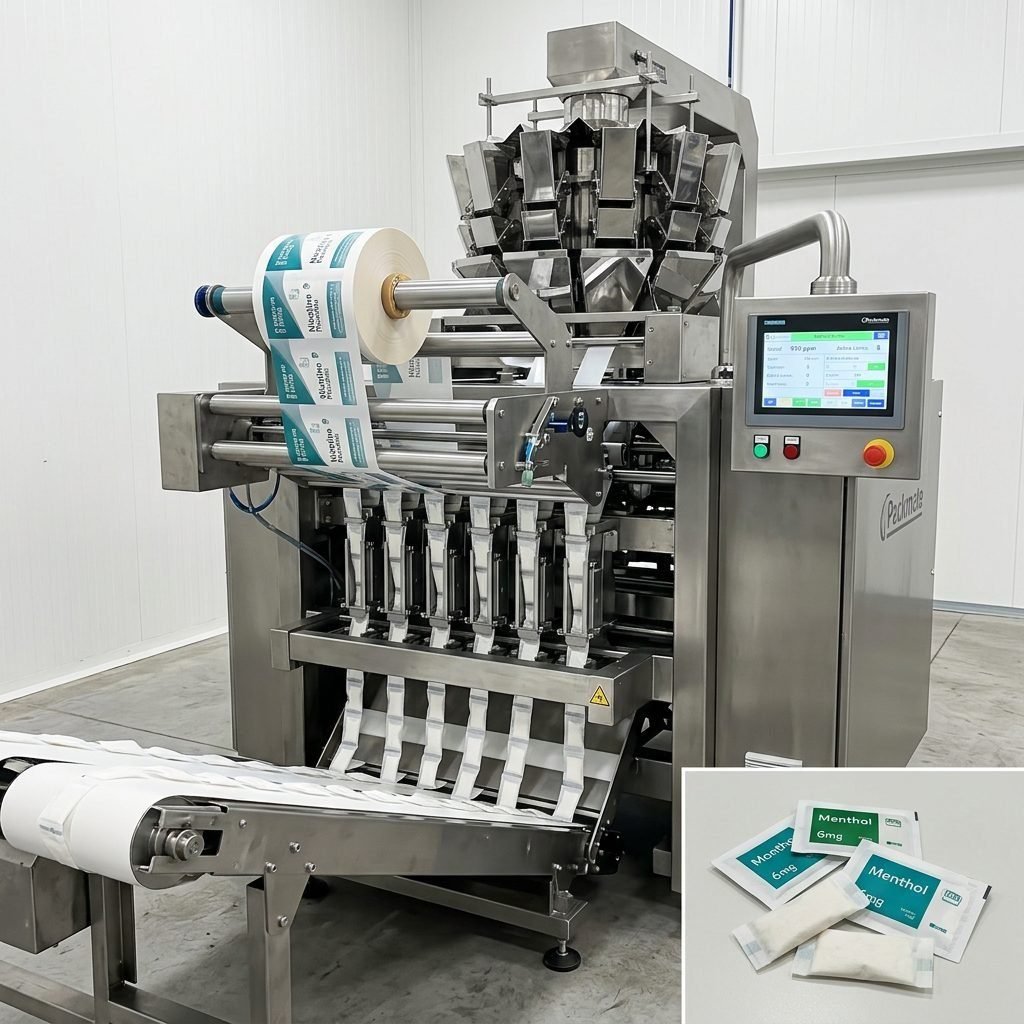
Whether using pre-made pouches, sachets or stick packs, robust feeding systems ensure continuous supply and accurate orientation. For form-fill-seal systems, the forming module shapes pouches from roll stock with precise temperature and pressure control to avoid warping or weak seals.
2. Precision filling for small-dose products
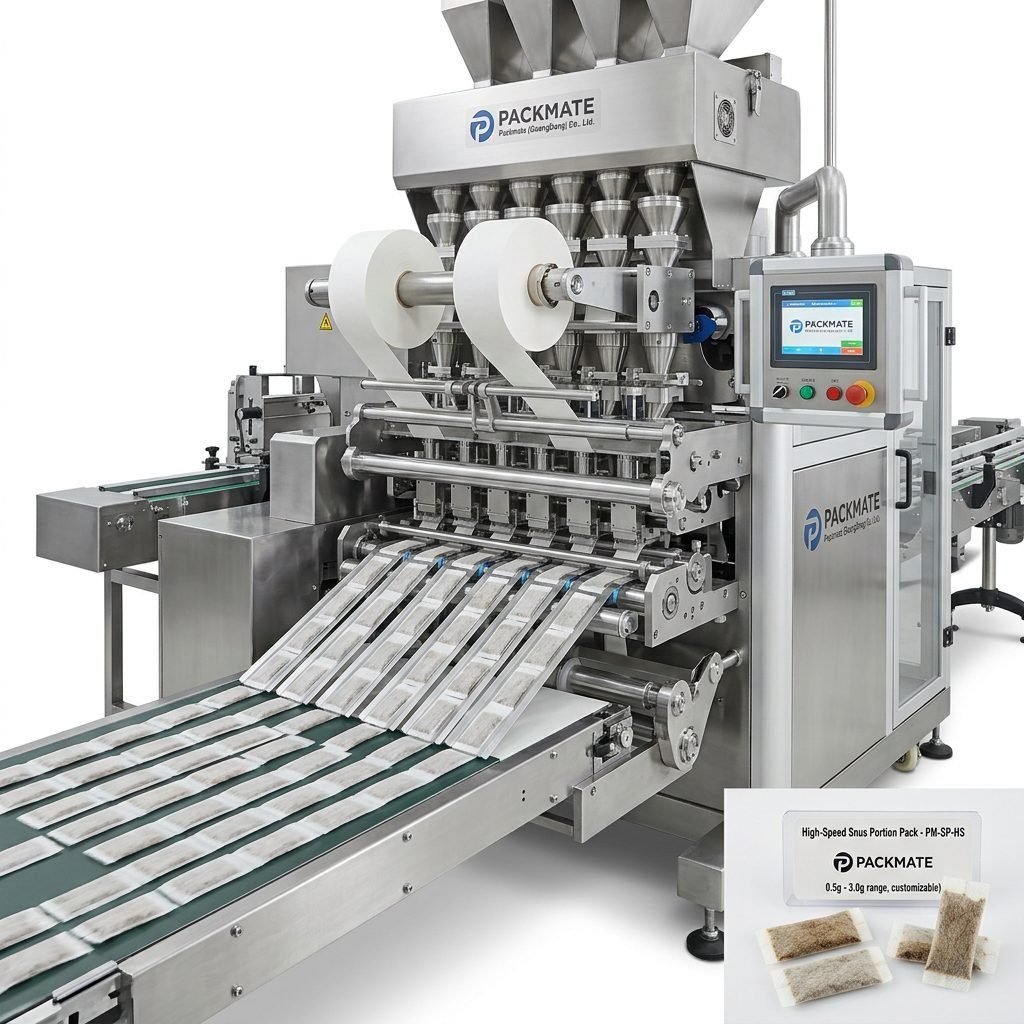
Filling systems for nicotine pouches must handle very small volumes with high accuracy and minimal cross-contamination. Options include auger fillers for powders, vibratory dosing for blends and multi-head weighers for granules. Multi-lane fillers accelerate production while maintaining per-pouch dose control.
Note
Accurate dosing is critical for regulatory compliance and brand reputation; reject-system integration reduces the risk of nonconforming packs reaching market.
3. Sealing and finishing
Heat-seal or ultrasonic technologies are selected based on pouch material. Controlled sealing cycles with precise temperature and pressure maintain product shelf life and tamper evidence. Downstream trimming and edge finishing maintain pack aesthetics.
4. Inspection and verification
Vision systems, weight checks, and leak detection ensure only conforming products proceed to secondary packaging. Inline rejections with automatic counting maintain production flow while ensuring traceability.
5. Cartoning, case packing and palletizing
Cartoners convert bulk pouches into retail-ready cartons, with options for automatic tuck or glue closure. Case packing groups cartons into transit cases and automatic palletizers prepare finished goods stacks for shipping — completing the turnkey flow.
Automation Features that Improve Throughput
Automation components reduce down-time and enhance repeatability. Typical features include PLC control with recipe management, HMI touchscreens for quick product changeovers, servo-driven motions for precision, and real-time production reporting for OEE tracking.
Icons to highlight advantages:
🔧 Fast tool-less changeover ✅ Automatic reject 📦 End-to-end traceability
Quality, Compliance and Material Handling
Snus and nicotine pouch production often sits at the intersection of food and regulated product handling. Equipment should meet CE and ISO standards, be designed for cleanability, and allow for GMP-compliant workflows. Material contact parts use food-grade stainless steel and quick-release fasteners for sanitation.
Compliance highlight:
All equipment should be validated and documented as part of commissioning — ensuring consistent audit readiness for markets in Europe and North America.
Customization & Multi-Lane Solutions
Packmate’s approach supports 1-to-8 lane systems for compact footprint multi-lane throughput. Multi-lane systems are essential for small-dose pouches to achieve high throughput without sacrificing weight accuracy. Custom tooling and recipes ensure compatibility with different pouch sizes, shapes and barrier film types.
Factory Capabilities & Manufacturing Strength
A reliable turnkey supplier must provide stable manufacturing capacity, experienced engineering and rigorous QC. With a 20,000㎡ facility, advanced CNC machining and precision assembly lines, the manufacturing partner can deliver tailored lines and handle complex integrations such as weighers, conveyors and robotic packers.
For further detail on equipment ranges and technical specifications, explore Packmate’s comprehensive portfolio:
Snus & Nicotine Packaging Machines,
Filling & Packaging Lines, and
Weighing & Packaging Systems.
Integration, Site Layout and Commissioning
Designing a turnkey line includes site layout planning, utilities specification (power, compressed air, vacuum), dust extraction for dry mixes and floor markings for safe access. Professional installers perform FAT (Factory Acceptance Test) prior to shipment and SAT (Site Acceptance Test) during onsite commissioning. Comprehensive operator training and spares provisioning reduce ramp-up time.
After-sales Service and Spare Parts
A long-term partnership is crucial. Reputable suppliers provide remote diagnostics, preventive maintenance programs and genuine spare parts. For clients across the globe, local service networks and rapid parts delivery ensure minimal downtime and sustained production performance. For more company specifics, see
About Packmate.
Real-world Case Studies and Exhibitions
Case studies reveal how multi-lane systems reduce per-unit cost while achieving regulatory accuracy. Packmate regularly demonstrates machines at international exhibitions — a chance to see live performance and ask detailed process questions. Browse recent implementations and success stories at
Case and learn about exhibition plans at
Our Exhibition.
Return on Investment and Cost Considerations
Initial capital expenditure can be offset by labor savings, reduced product giveaway through accurate dosing, and increased output. Key ROI drivers include lane count, automation level, uptime guarantee and local labor costs. A well-configured turnkey line typically pays back through higher throughput and lower variability in 18–36 months depending on volume.
Pro tip:
Select modular equipment that allows capacity expansion without full line replacement — adding lanes or a secondary cartoner can multiply output with limited capex.
Choosing the Right Supplier: Questions to Ask
When evaluating a turnkey supplier, request references, FAT/SAT records, spare parts availability, local service capability and clear warranty terms. Understand the supplier’s experience with nicotine pouch products specifically — since handling small-dose materials has unique dosing and static control challenges.
How Packmate Supports Turnkey Projects
With 30+ years of engineering experience and a 20,000㎡ manufacturing facility, Packmate provides engineering, custom design, manufacturing and global support. Their machines are CE and ISO compliant and are built to integrate with weighing systems, auxiliary feeders and downstream cartoning lines. Learn about service and certifications via the Packmate resources:
Service and
Certificate.
Next Steps: From Inquiry to Live Production
Start with a capacity and layout survey. Share product specifications, pouch materials, desired throughput and available utilities. A reliable supplier will design a line layout, propose a bill of materials, provide lead times and offer FAT schedules. Engage early on regulatory or labelling requirements to avoid rework.
For direct consultation and a tailored proposal, contact the Packmate team:
Contact Us.
Conclusion
Investing in a turnkey snus packaging line is a strategic decision that improves product consistency, reduces operating costs and accelerates time-to-market. With the right combination of multi-lane filling, precision sealing, inspection systems and automated cartoning, manufacturers can confidently scale production while maintaining quality and compliance.
Quick checklist before ordering:
product specs, throughput target, pouch material, lane count, cleanability & service plan.
Frequently Asked Questions
Q1: What is the typical lead time for a turnkey snus packaging line?
A1: Lead times vary by customization and lane count; standard multi-module lines typically require 12–20 weeks from order to delivery, plus commissioning time.
Q2: How accurate are dosing systems for small-dose nicotine pouches?
A2: Modern multi-head weighers and auger fillers can achieve very tight tolerances, often within ±0.5–1% depending on material characteristics and calibration regimes.
Q3: Can my existing factory utilities support an automated line?
A3: Most lines need stable power, compressed air, proper grounding for static control and dust extraction for powders. A site survey will confirm utility upgrades if required.
Q4: What after-sales services are typically offered?
A4: Remote diagnostics, preventive maintenance contracts, spare parts kits, operator training and on-site troubleshooting are standard offerings for long-term uptime.
Q5: How do I validate line performance before production?
A5: Factory Acceptance Testing (FAT) and Site Acceptance Testing (SAT) include trial runs with customer-supplied materials, verification of output rate, weight accuracy, seal integrity and packaging aesthetics.