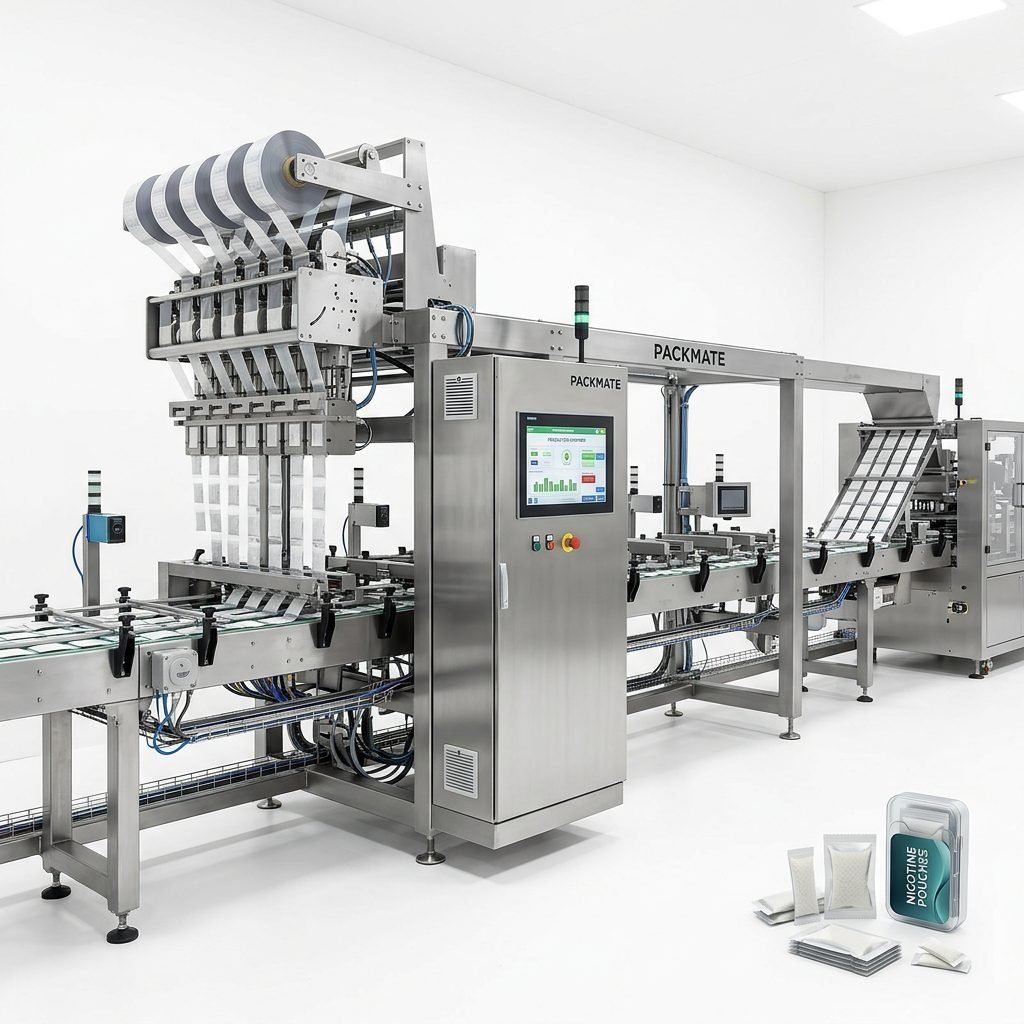
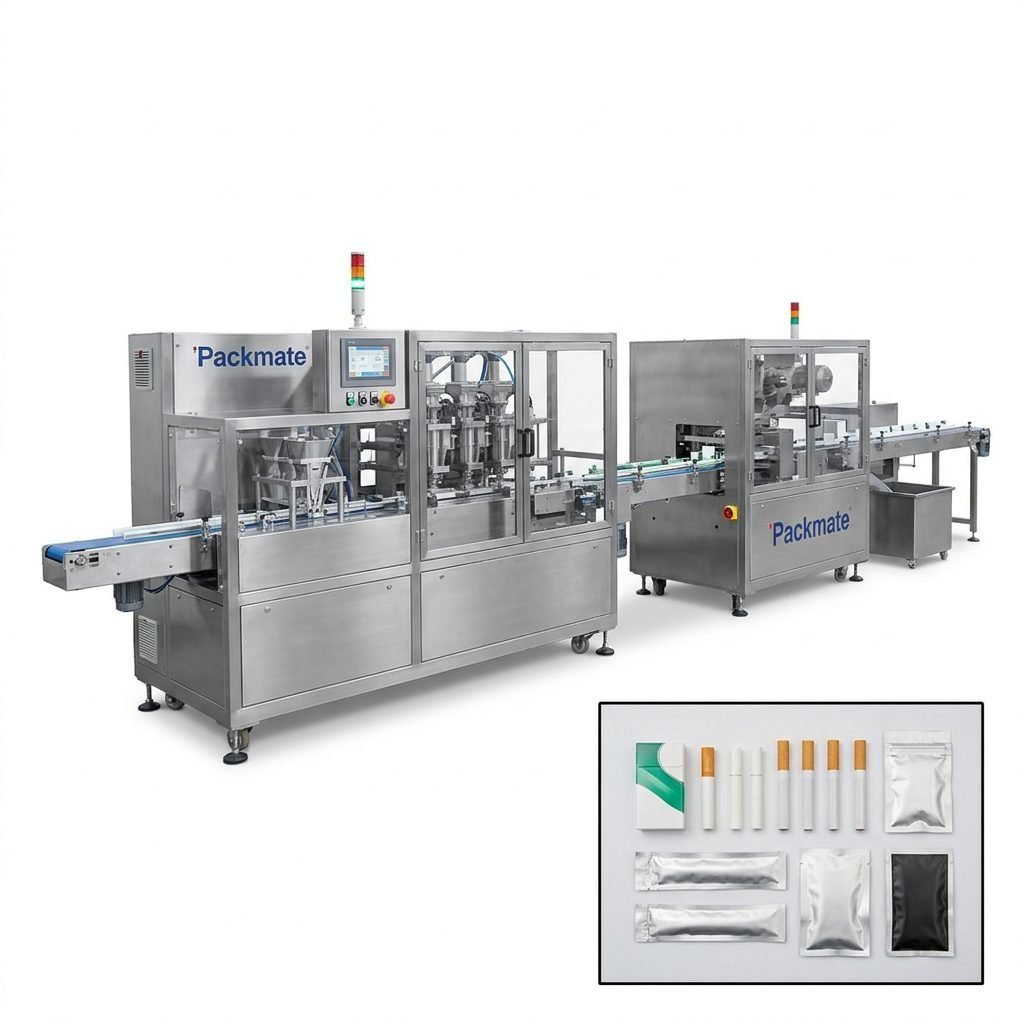
Choosing the right snus packaging machinery for the Russian market requires balancing regulatory compliance, production capacity, product format, and total cost of ownership. This practical buyer’s guide walks you through the technical factors, operational considerations, and vendor selection tips so you can confidently evaluate machines for nicotine pouches, snus sachets, and multi-lane stick packs.
Understand Russia’s Market Needs and Regulations
Russia’s market is evolving with rising demand for nicotine pouches and alternative tobacco products. Before procuring equipment, confirm local regulatory requirements (labeling, child-proofing, materials restrictions) and import rules. A machine that supports variable labeling, batch codes, and flexible pouch sizes will reduce future compliance risks.
Key compliance features to look for
🔧 Traceability support: machine-integrated batch coding and serialization modules for printing production dates and lot numbers.
📦 Material compatibility: ensure the line supports food-contact approved films and barrier laminates commonly used for nicotine pouches.
✅ Quality control: in-line detection (weight, vision) to meet strict product integrity and labeling accuracy.
Define Your Product Formats and Throughput Goals
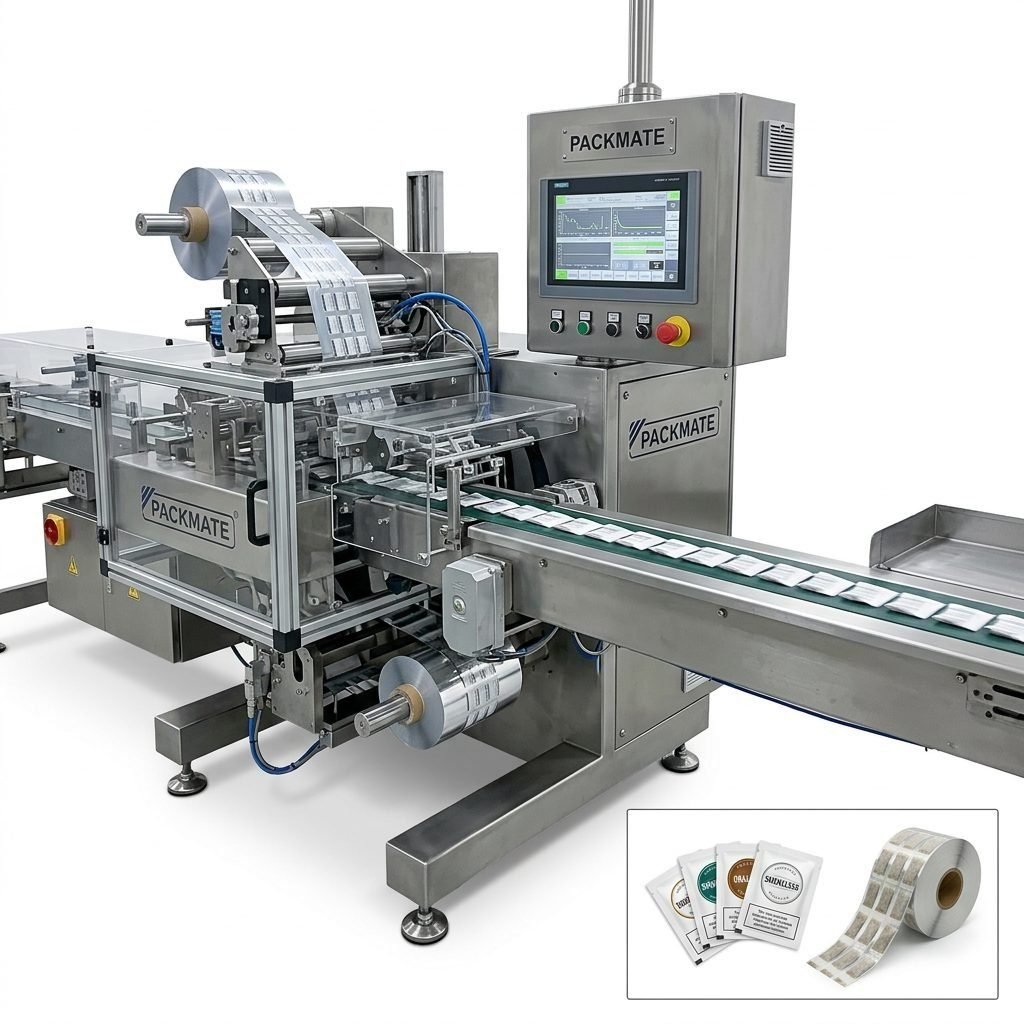
The first technical decision is the product format: loose nicotine pouches, sachets, stick packs, or multi-lane mini-pouches. Each format has equipment optimized for handling small-dose pouches vs larger sachets. Calculate realistic throughput targets (units per minute/hour) considering future growth—buying marginally above current needs gives breathing room without overspending.
Match machine type to product
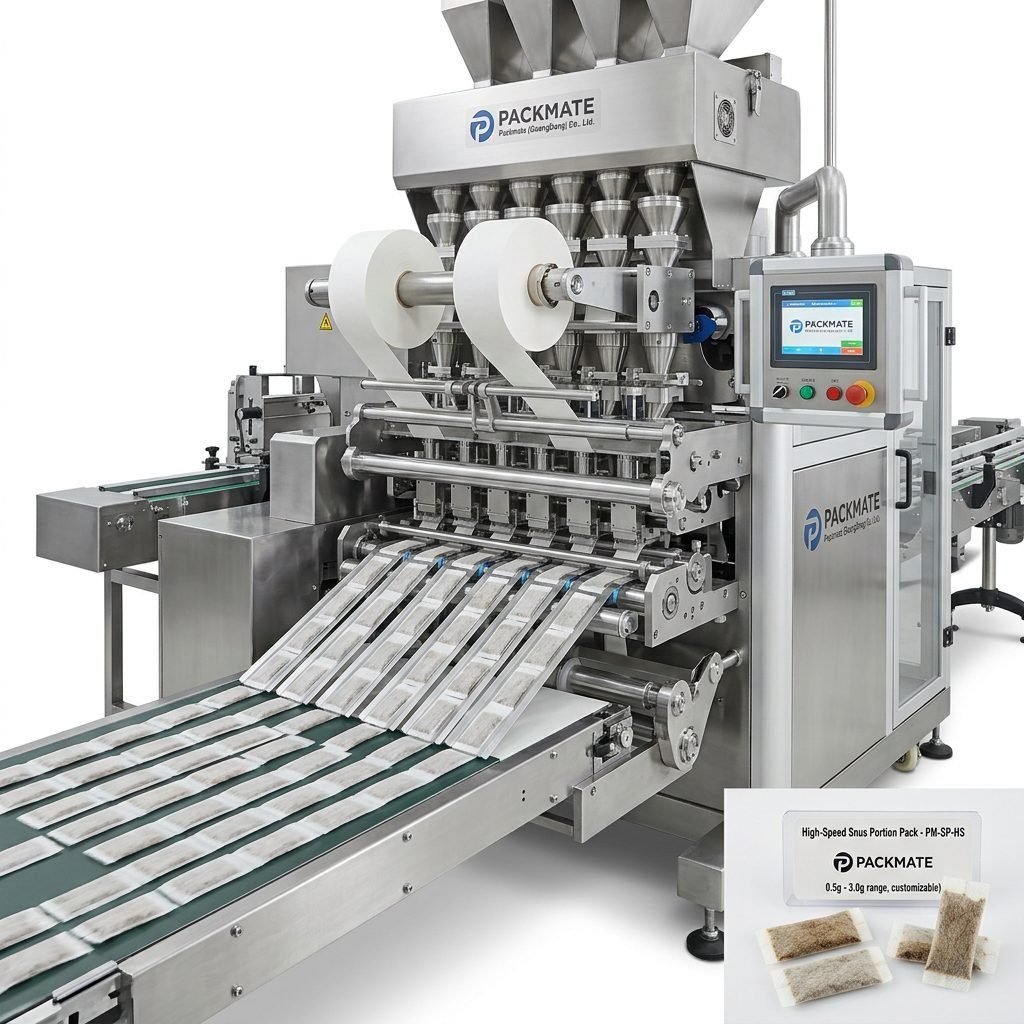
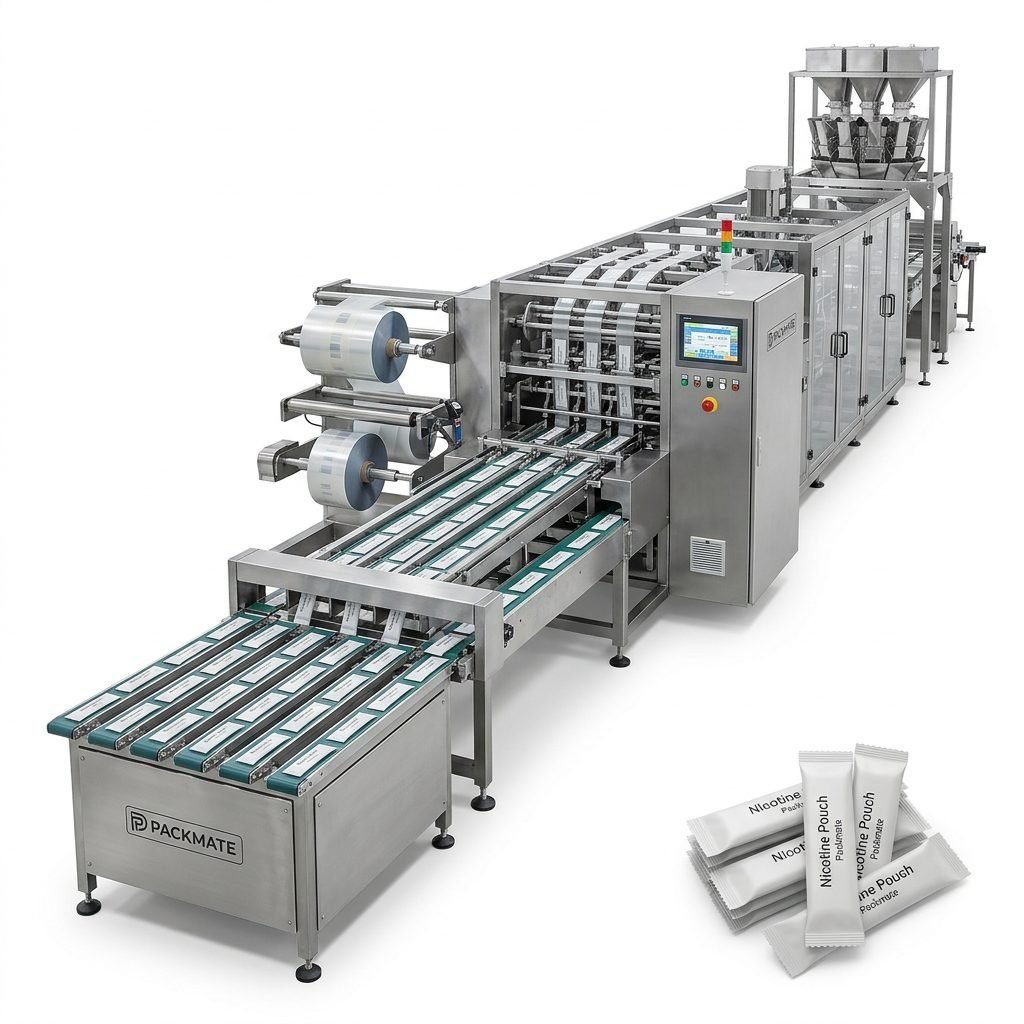
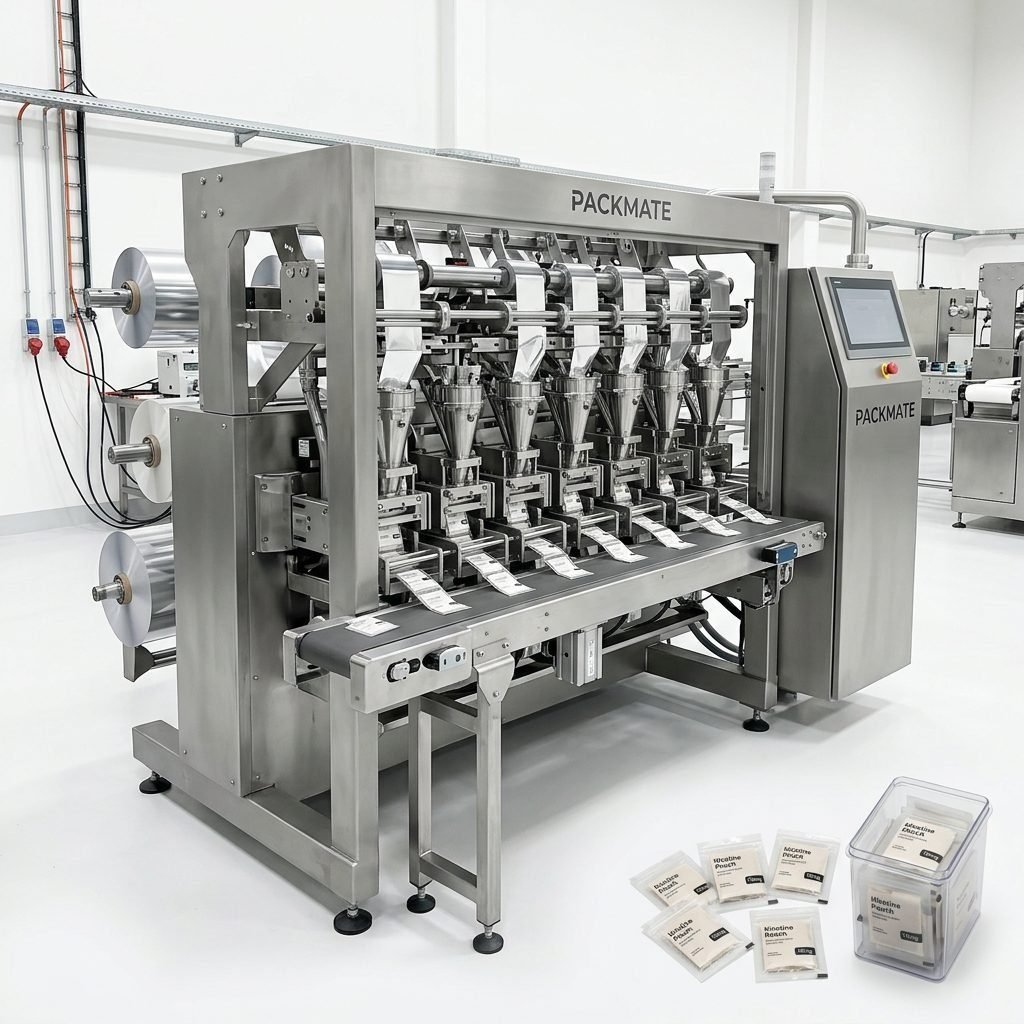
– Multi-lane systems are ideal for high-volume nicotine pouch production with small discrete doses.
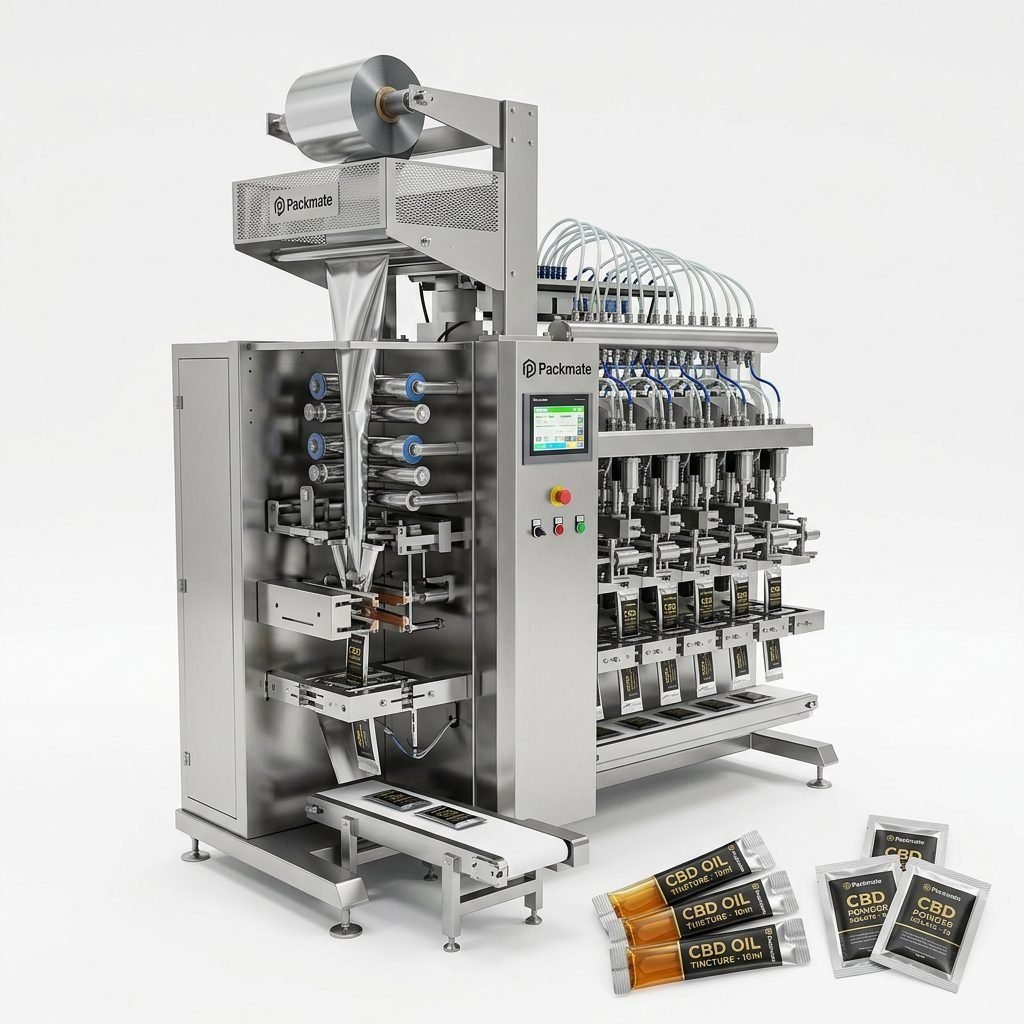
– Single-lane sachet or stick pack machines suit lower volumes and flexible SKU ranges.
– Choose a modular line if you plan to switch formats frequently.
Assess Key Machine Specifications
Focus on proven mechanical design and critical specifications: speed, accuracy, material handling, servo-control systems, and ease of maintenance. Detailed specifications reveal whether a machine can deliver stable performance for delicate small-dose pouches.
⚙️ Speed and lanes: check max cups/min per lane and multiply by lanes to estimate capacity.
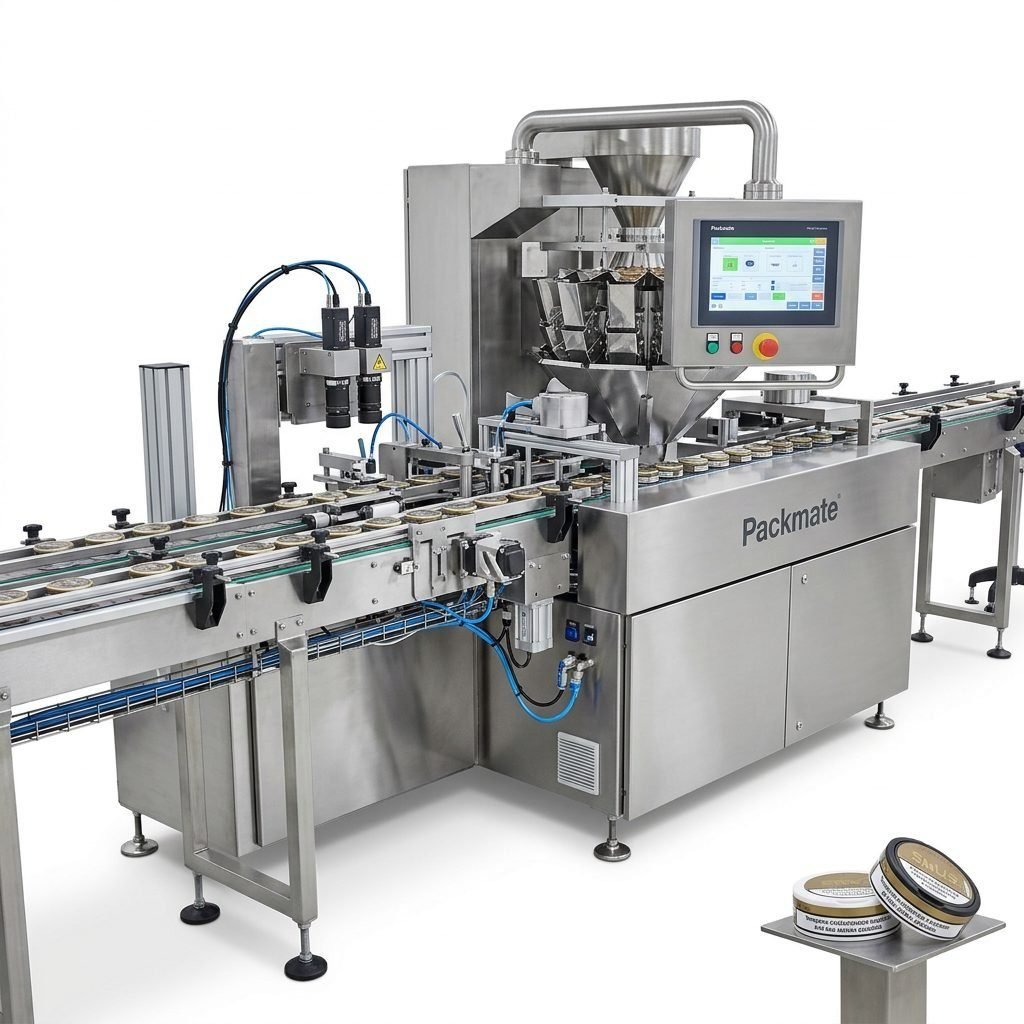
🧭 Filling accuracy: precision dosing for nicotine content consistency—look for gravimetric or high-precision volumetric systems.
🔩 Controls: modern PLC + HMI with recipe management reduces changeover time and operator errors.
Consider Integration and Turnkey Solutions
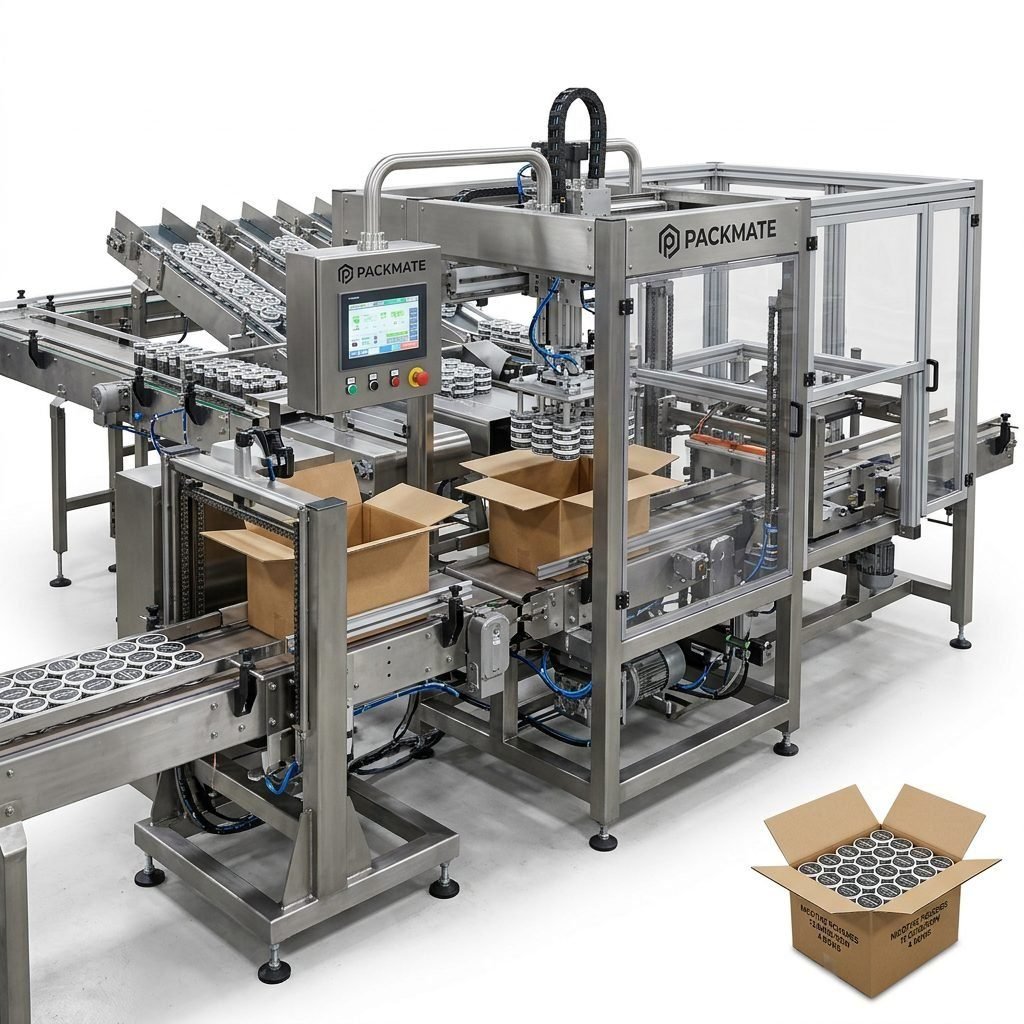
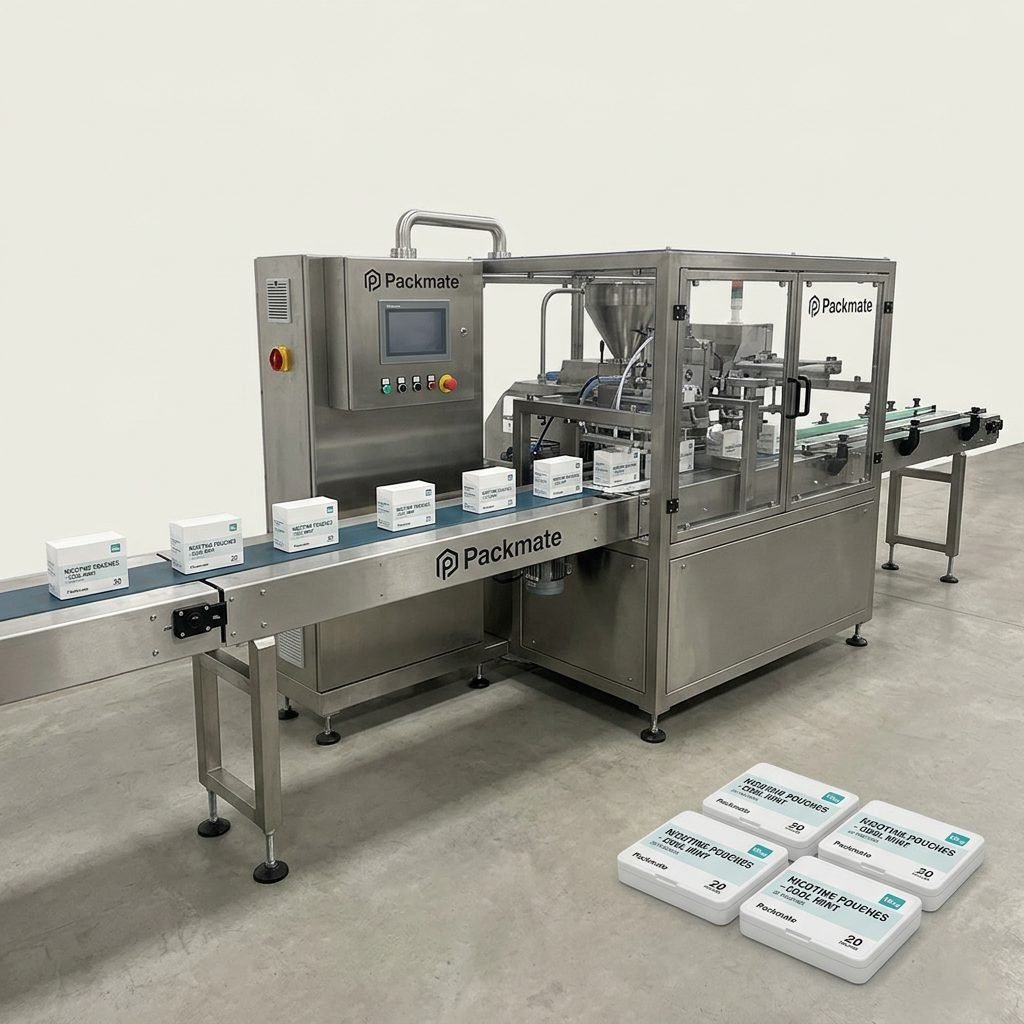
For efficient production, evaluate whether you need a standalone machine or a full automated line with upstream weighing/filling and downstream cartoning. Turnkey providers reduce integration headaches and responsibility for line balancing. Packmate offers complete solutions tailored to snus and nicotine pouch production.
Learn more about integrated options: Filling & Packaging Lines, Weighing & Packaging Systems.
Auxiliary equipment and automation touches
Consider infeed vibratory dosing, servo feeders, film unwinders with tension control, and automatic splicing. These items significantly improve uptime and reduce waste on multi-shift lines.
Evaluate Total Cost of Ownership (TCO)
Purchase price is only one component. TCO includes installation, spare parts, consumables (film, sealing jaws), energy, training, downtime risk, and maintenance. A lower upfront price may cost more long-term if spare parts are rare or service is unreliable.
💡 Spare parts availability: choose suppliers with local stocking or fast global shipping for critical parts.
🔁 Service & training: vendor-provided commissioning, operator and maintenance training reduce start-up issues.
📈 Warranty & support: clarify warranty terms, response times, and remote diagnostics capability.
Factory Capabilities and Quality Assurance
Inspect the vendor’s manufacturing footprint and quality systems. A manufacturer with advanced CNC machining, precision assembly lines, and strict QA procedures builds machines with better tolerances and long-term stability. Packmate’s 20,000㎡ factory with CNC centers and assembly lines is designed for consistent machine quality.
For product pages and model examples, explore Snus & Nicotine Packaging Machines and Sachet & Stick Pack Machines.
Certifications and global experience
International certifications (CE, ISO) and global case references demonstrate compliance and reliability in diverse markets. Ask for case studies or exhibition demos to see machines in operation before purchase.
Site Preparation and Installation Considerations
Prepare the production site: utilities (power, compressed air), floor load capacity, dust-free or climate-controlled rooms for sensitive nicotine pouch production, and operator safety zones. Ensure the vendor provides clear installation requirements and qualified engineers for commissioning.
Practical checklist
– Electrical supply and phase requirements.
– Compressed air quality and pressure.
– Waste and scrap handling plan.
– Operator training space and spare parts storage.
Run Acceptance Tests and Pilot Production
Before final acceptance, run FAT (Factory Acceptance Test) and SAT (Site Acceptance Test) with your actual product and packaging material. Pilot runs expose sealing issues, dosing inaccuracies, and format change challenges, minimizing surprises during full production ramp-up.
✅ Proof of performance: require documented metrics—run rate, yield, scrap rate—on representative products.
⚠️ Changeover testing: verify how long it takes to switch SKUs and whether adjustments are manual or automated.
Vendor Selection: What to Ask and Expect
Choose a vendor with strong references, local support capability, and transparent documentation. Ask for references in similar markets and visits to live installations when possible.
Essential questions for suppliers
1) Can you provide case studies for snus/nicotine pouch lines in climates similar to Russia?
2) What is included in the warranty and what are the SLA response times?
3) Do you offer remote diagnostics and spare parts stocking in Europe?
4) Can the machine be adapted for future product formats or lane increases?
Operational Best Practices After Purchase
After installation, implement preventive maintenance schedules, document recipes for each SKU, and maintain a critical spare parts kit. Proper training for operators and maintenance technicians dramatically improves uptime.
🔁 Scheduled maintenance: align with vendor recommendations for lubrication, belt replacement, and sensor calibration.
🧰 Spare part strategy: maintain fast-moving parts (seals, belts, cutters) on-site.
🎓 Ongoing training: periodic refresher training reduces operator errors and helps with smooth shift handovers.
Why Choose an Experienced Manufacturer
Manufacturers with decades of experience bring refined engineering, reliable supply chains, and mature quality control. Packmate Snus Machine, with over 30 years of packaging engineering and a broad model portfolio, offers tailored solutions for the snus and nicotine pouch market. See company background and certifications for added confidence: About Packmate and Certificate.
Negotiation tips
Negotiate for installation, training, spare parts discounts, and extended warranty. Also clarify delivery timelines and penalties for missed deadlines.
Final Decision Checklist
Use this quick checklist when finalizing your purchase decision to ensure nothing important is missed.
✔️ Compliance: Machine supports required labeling, batch coding, and material standards.
✔️ Capacity: Rated throughput meets current and near-term demand.
✔️ TCO: Spare parts, service, and energy use are evaluated.
✔️ Factory support: Demonstrable QA, CNC machining, and assembly capabilities.
✔️ References: Customer cases or live demo available. Review Case examples.
Contact and Next Steps
When you are ready to evaluate machines, request a detailed proposal including FAT/SAT, spare parts list, and training schedule. For direct inquiries, visit Contact Us and review product catalogs to shortlist models.
Recommended reading
Browse product groups to match format and throughput: Bag & Pouch Packaging Machines and Auxiliary Packaging Equipment.
Frequently Asked Questions (Common buyer questions)
Q1: How long does it take to install a complete snus packaging line?
A1: Typical installation and commissioning for a compact line may take 4–8 weeks on-site after delivery; full turnkey lines with custom integration can take longer depending on civil, utility work, and FAT/SAT schedules.
Q2: What spare parts should I stock locally for nicotine pouch lines?
A2: Keep consumables and wear parts: seals, belts, cutting blades, feeder parts, sensors, and critical electrical components. Discuss vendor-recommended kits and lead times.
Q3: Can one line handle multiple pouch sizes or do I need separate machines?
A3: Many modern machines are modular and support range-based adjustments for different pouch sizes; however, large format changes or extremely small doses may require additional tooling or a different machine configuration.
Q4: What certifications should a reputable manufacturer provide?
A4: CE and ISO are common for international markets. Also verify material compliance for food-contact components and ask for quality documentation and test reports.
Q5: Where can I see live demonstrations or request case references?
A5: Schedule factory visits, attend industry exhibitions, or request video demos and reference contacts from the vendor. Review exhibition information and case studies for real-world performance examples.