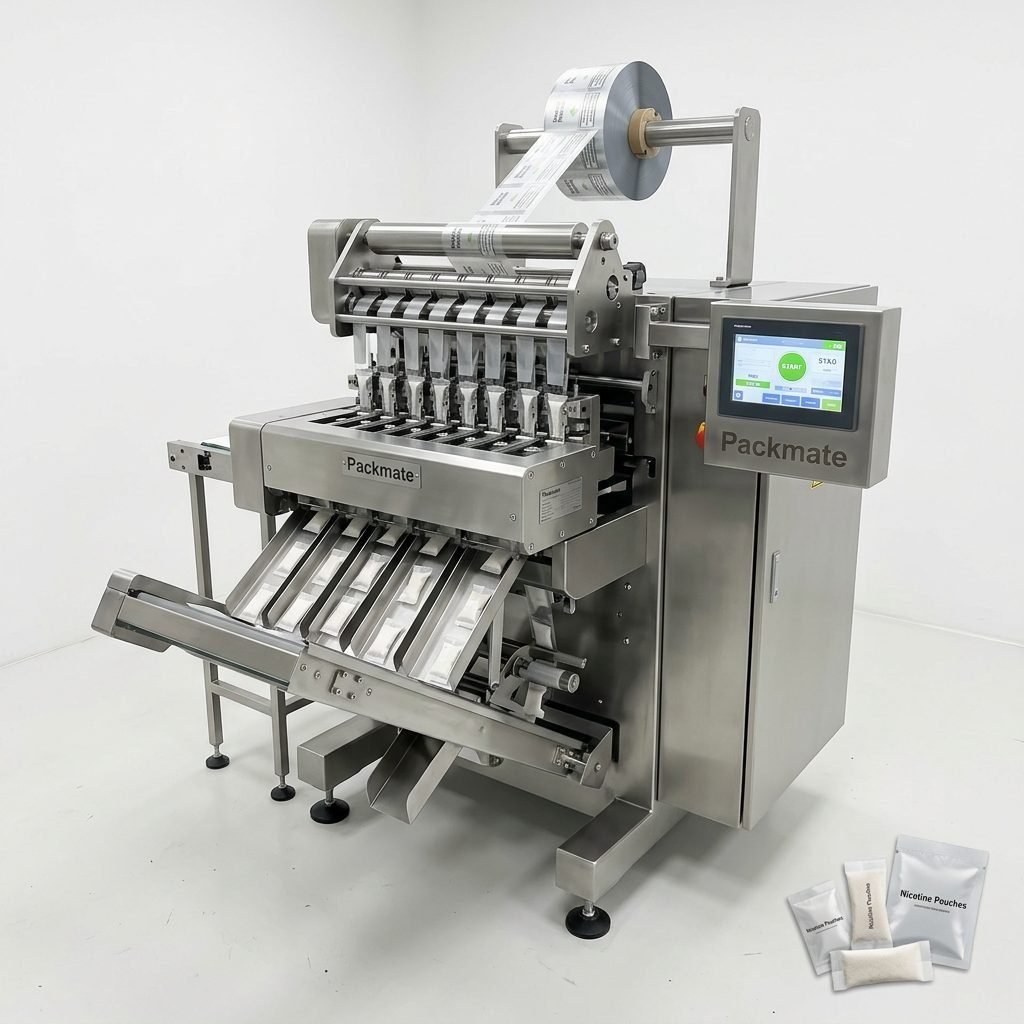
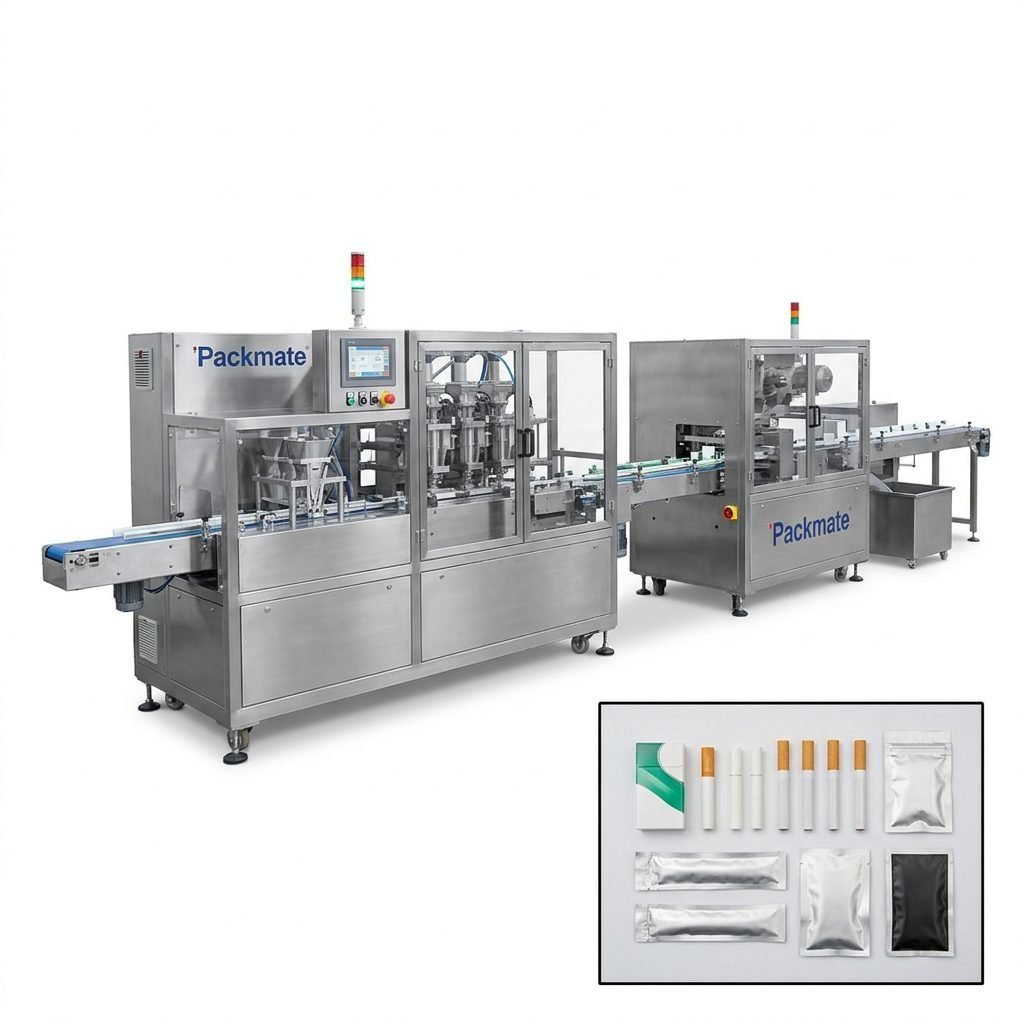
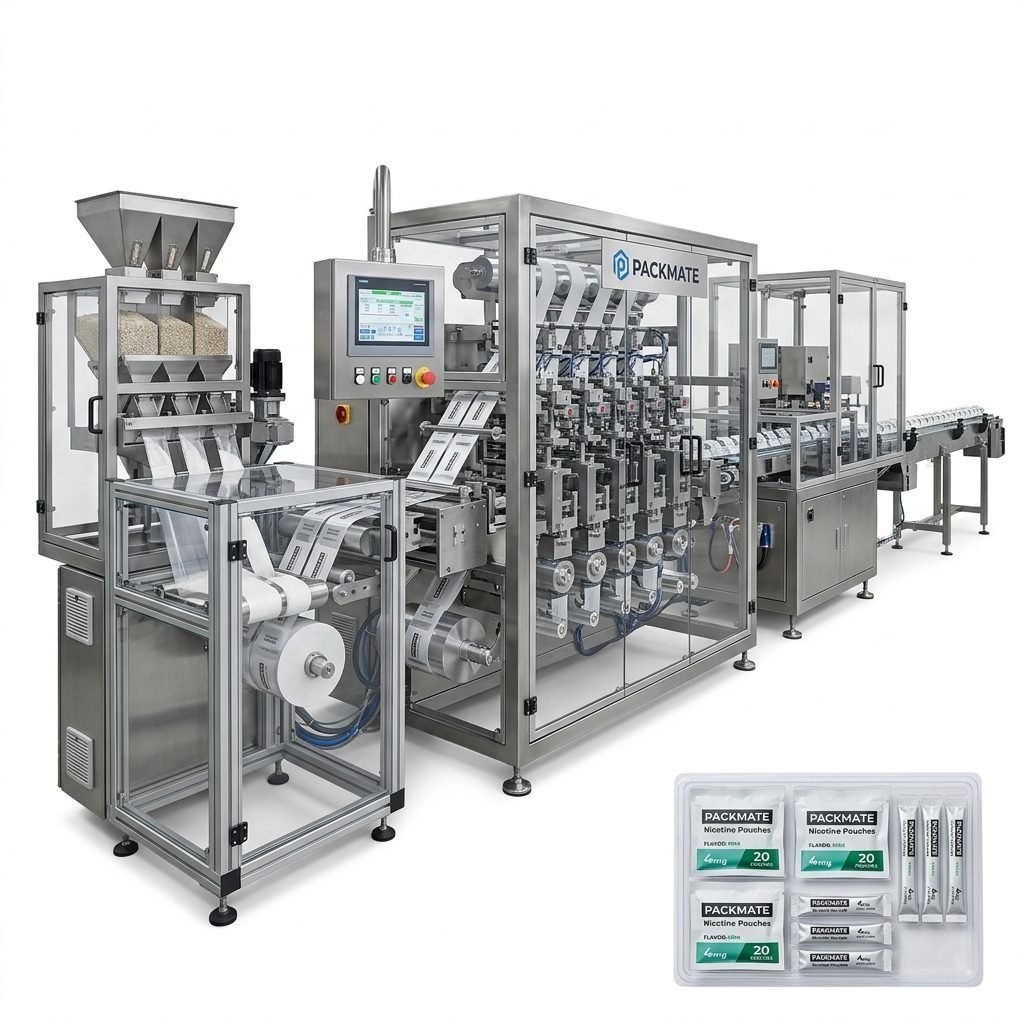
Choosing the right snus packaging machine manufacturer in Tunisia is a strategic decision that affects product quality, regulatory compliance, production efficiency, and your bottom line. This guide walks you through the critical factors to consider, practical evaluation steps, and local nuances relevant to the Tunisian market so you can confidently select a partner that supports your business growth.
Why Tunisia Needs a Specialized Approach
Tunisia’s manufacturing and distribution landscape combines North African trade dynamics, Mediterranean logistics, and a consumer base shaped by both local and European influences. Many Tunisian producers prefer suppliers who can deliver not only robust equipment but also clear documentation and service that aligns with local regulatory requirements and business culture. Key traits Tunisian buyers often value include timely communication, reliable spare parts supply, and machines that minimize operator training time.
Understand Local Habits and Business Culture
Business relationships in Tunisia often emphasize trust and long-term cooperation. A manufacturer who offers site visits, transparent lead times, and committed after-sales support will be highly regarded. When sourcing snus packaging machines, factor in seasonal logistics through Mediterranean ports, customs documentation, and potential language considerations (Arabic and French are commonly used business languages).
Define Your Production Needs First
Start by documenting your product attributes: pouch size, pouch type (stick, sachet, multi-lane snus pouches), filling medium (powder, granules, liquid), target throughput (pouches/minute), and packaging material. This data narrows the field of suitable manufacturers and prevents costly mismatches later on.
Quick checklist:
✅ pouch format and dimensions,
✅ dosage accuracy needs,
✅ desired lanes (single or multi-lane),
✅ integration with upstream/downstream equipment
Key Criteria to Evaluate a Snus Packaging Machine Manufacturer
1. Industry Experience and Track Record
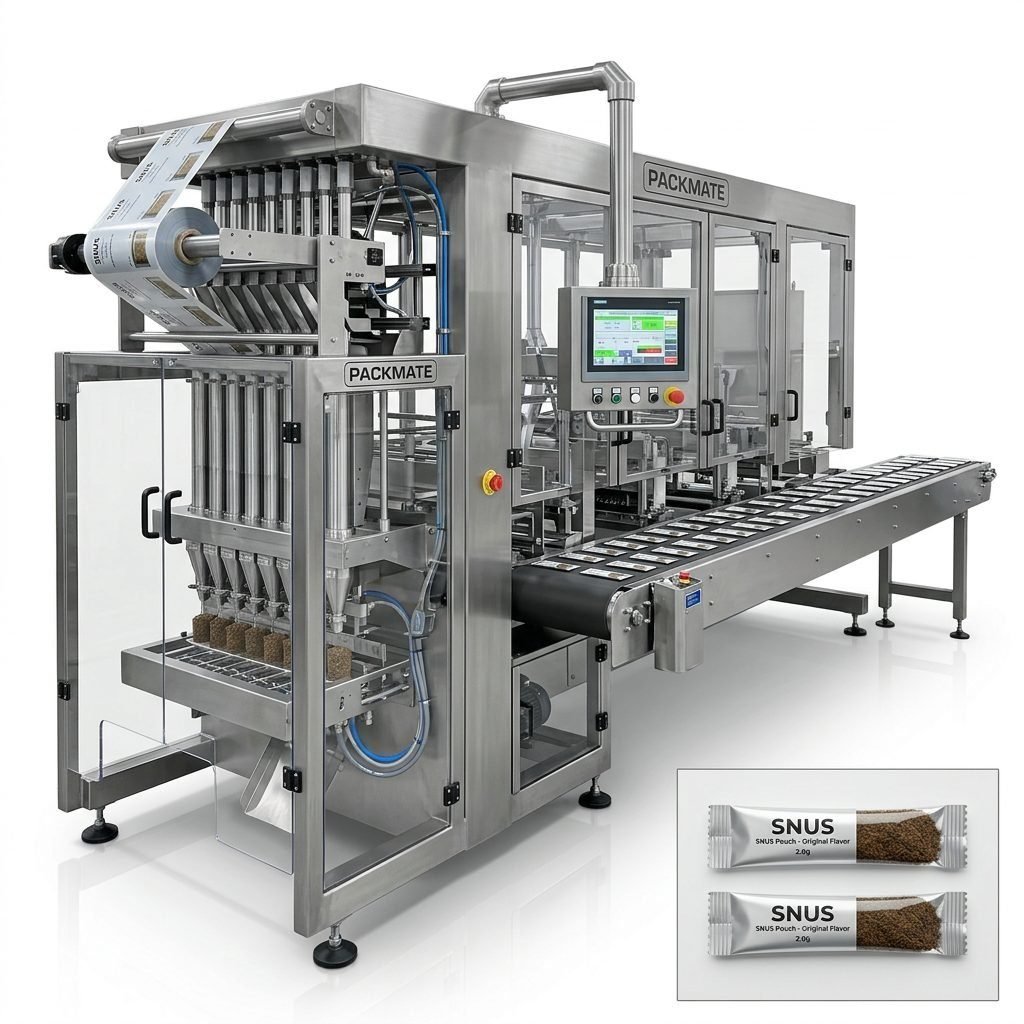
Prior experience with snus and nicotine pouch packaging is invaluable. Manufacturers with decades of engineering history demonstrate iterative improvements in precision, stability, and automation. Check for a history of multi-lane systems and small-dose pouch production—these are common requirements in the snus segment. Request case studies or references from customers in similar industries to validate performance under real production conditions.
2. Range of Machine Types and Technical Specifications
Ensure the supplier offers a range that includes stick pack, sachet, and multi-lane snus pouch machines. Technical specs to request:
⚙️ maximum output (pouches/min or pouches/hour), precision of dosing, lanes per machine, material compatibility (films, foil laminates), sealing systems, and options for modified atmosphere packaging if needed.
Note: Machines designed specifically for nicotine pouches often include features to control powder flow and ensure consistent fill weights — critical for regulatory compliance and customer satisfaction.
3. Quality, Certifications and Compliance
CE and ISO certifications are minimum indicators of compliance with international manufacturing and safety standards. For Tunisian imports, clear documentation, test reports, and machine manuals in an accessible language reduce customs friction and simplify factory acceptance tests (FAT). Ask suppliers for certificates and for details about their quality control processes.
4. Customization, Turnkey Solutions and Integration
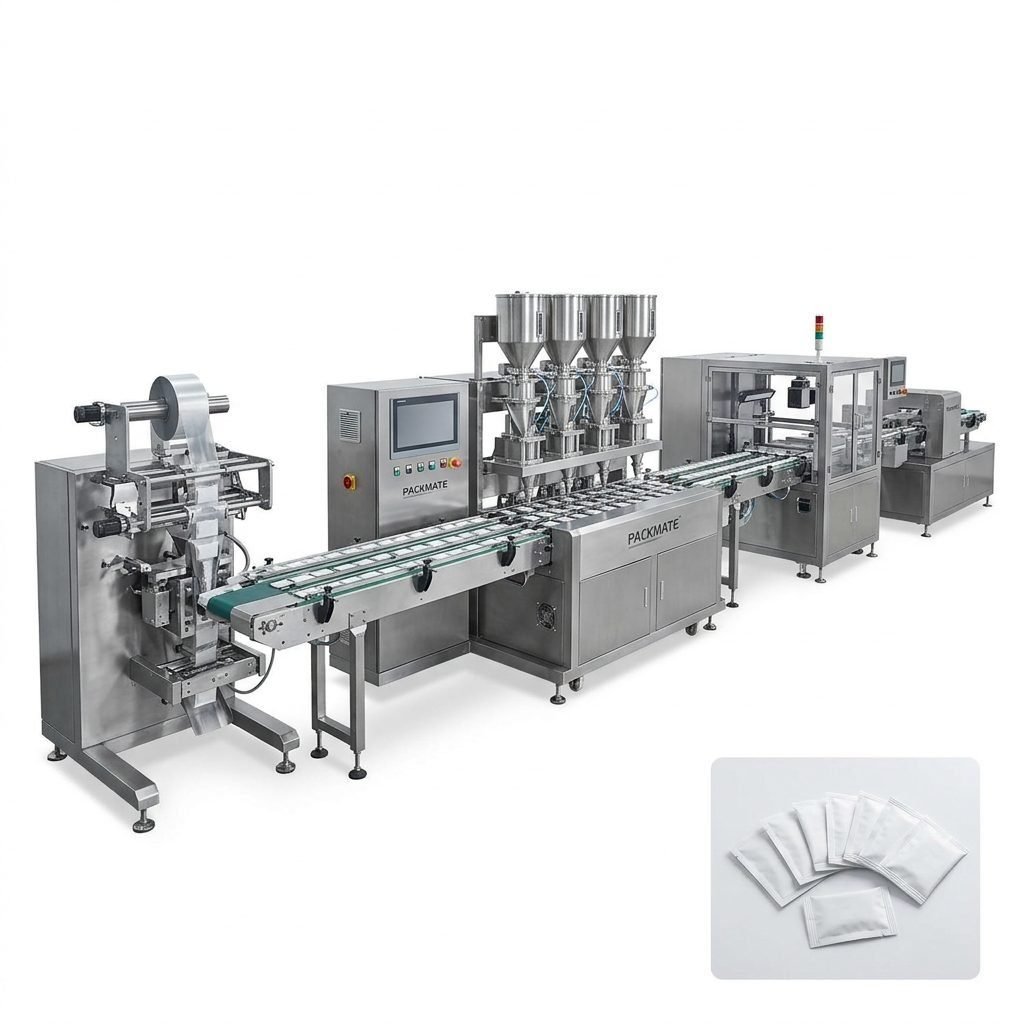
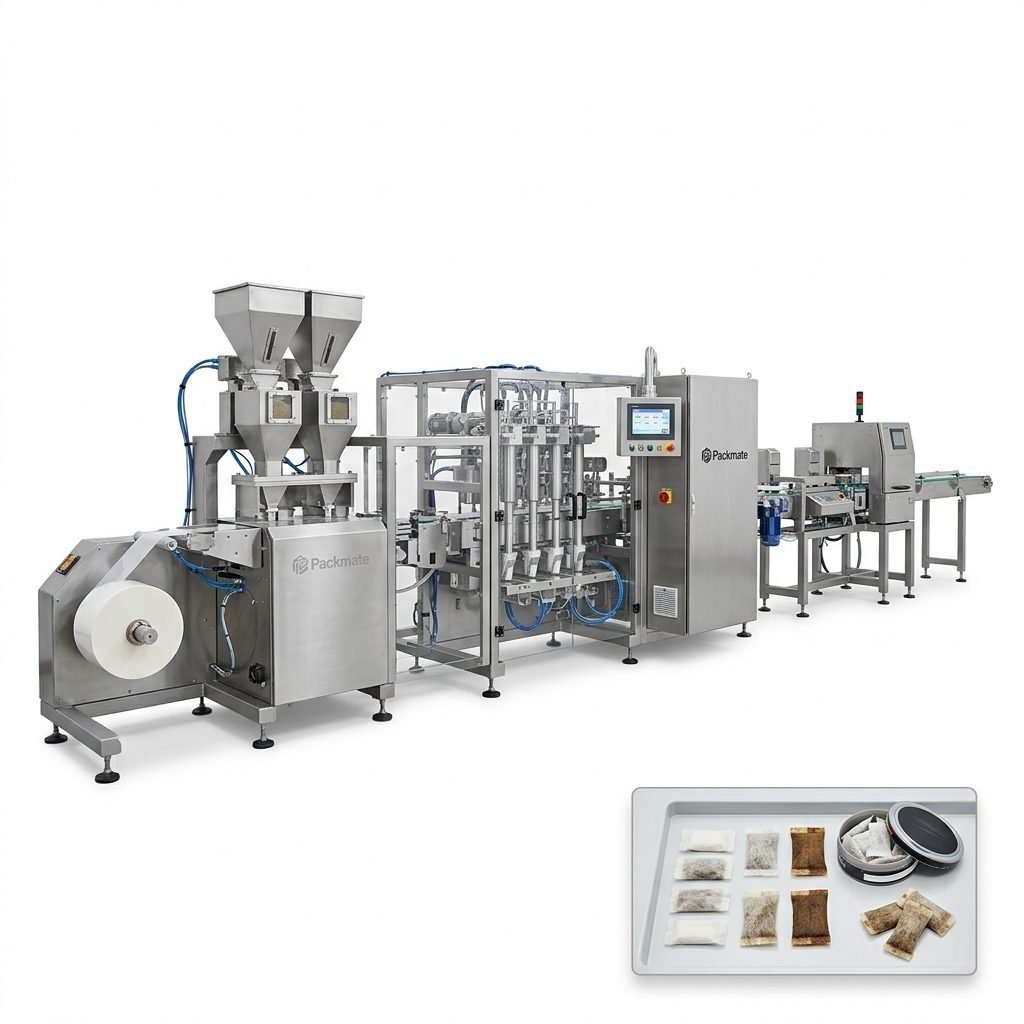
The best suppliers can deliver more than a standalone machine. They offer tailored turnkey lines that integrate filling, weighing, pouch forming, sealing, and secondary packaging systems. Customization may include multi-lane arrangements for higher throughput, dosing adaptations for unusual powders, or packaging style changes to match local market preferences.
Integrations to ask about: upstream hoppers and dosing systems, in-line metal detection, automated case packing, and connection points for factory MES/ERP systems.
5. After-Sales Service, Spare Parts, and Training
In Tunisia, rapid access to spare parts and responsive technical support saves production downtime and keeps costs predictable. Evaluate lead times for critical spare parts, availability of local agents or authorized service partners, remote diagnostic capabilities, and training programs for operators and maintenance staff.
📞 Ideally, choose a supplier that offers structured training during commissioning and guarantees remote support windows compatible with your working hours.
6. Factory Capability and Quality Assurance
A manufacturer with advanced CNC machining centers, precision assembly lines, and a documented quality testing system is more likely to deliver machines that maintain tolerances and run reliably. Ask for factory photos, an overview of production workflows, and details on acceptance tests performed before shipment.
7. Total Cost of Ownership and ROI
Price is only one dimension. Consider energy consumption, consumables, maintenance cycles, spare part costs, expected lifetime, and the operational labor required. A slightly higher initial investment in a more reliable, higher-efficiency machine often pays off through reduced downtime and lower per-unit production costs.
8. Lead Time, Logistics, and Local Documentation
Mediterranean shipping routes offer regular services to Tunisian ports, but accurate lead-time estimates are essential. Confirm packaging for international transit, customs documentation, certificates of origin, and support for any required regulatory approvals. A supplier familiar with Tunisia can proactively prepare the paperwork to avoid delays.
Tip: Ask for an itemized export pack list and a pre-shipment FAT report. This speeds up customs clearance and commissioning once the machines arrive.
Evaluating Suppliers: A Practical Step-by-Step Process
Step 1 — Technical Questionnaire
Send a detailed questionnaire covering product specs, target speed, materials, integration needs, and desired automation level. Compare answers side by side and rate suppliers by how closely they match your requirements.
Step 2 — Factory Audit and References
When possible, conduct a factory visit or request a virtual tour. Verify machining capabilities, assembly practices, and test procedures. Ask for references and, if available, request to speak directly with current customers in similar markets.
Step 3 — FAT, SAT and Acceptance Criteria
Define FAT (Factory Acceptance Test) conditions and clear SAT (Site Acceptance Test) criteria before purchase. Include test runs using your materials when feasible. Agree on metrics for acceptance: uptime, fill accuracy, sealing integrity, and cycle counts.
Step 4 — Service Level Agreement (SLA)
Negotiate response times for support requests, spare parts shipping windows, and warranty terms. Include provisions for remote diagnostics and upgrades.
How Packmate Fits the Tunisia Market
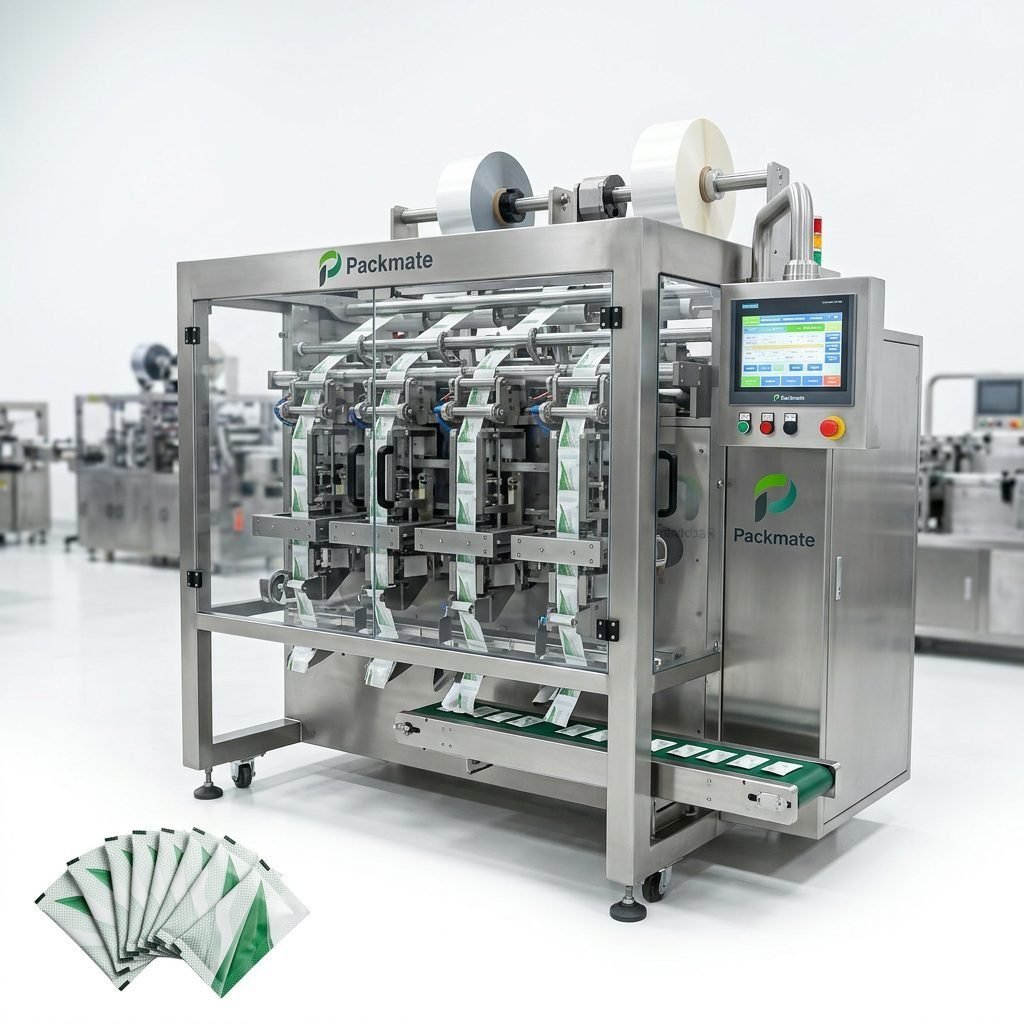
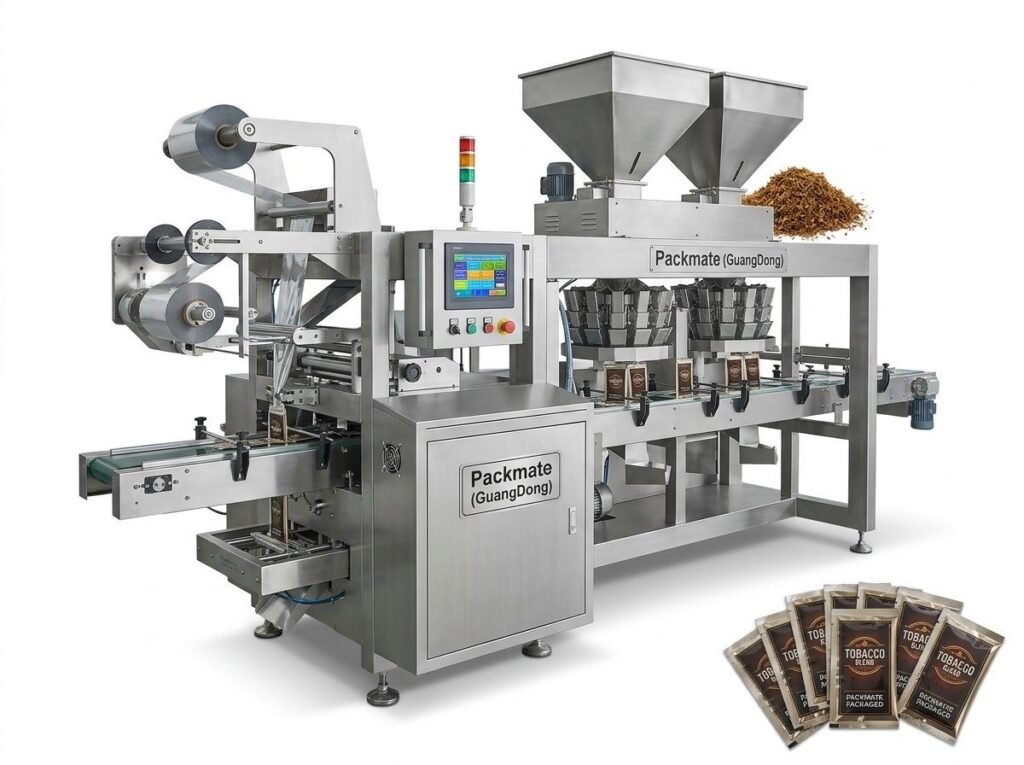
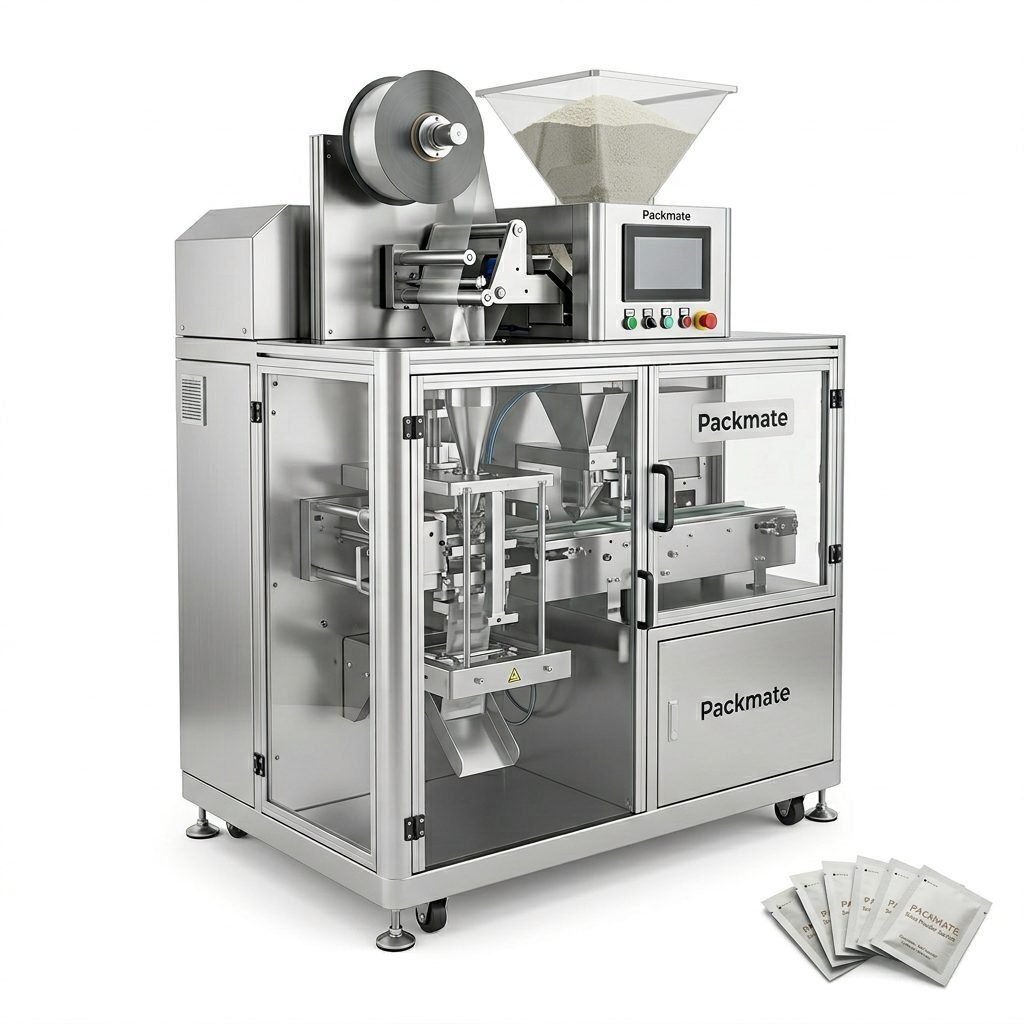
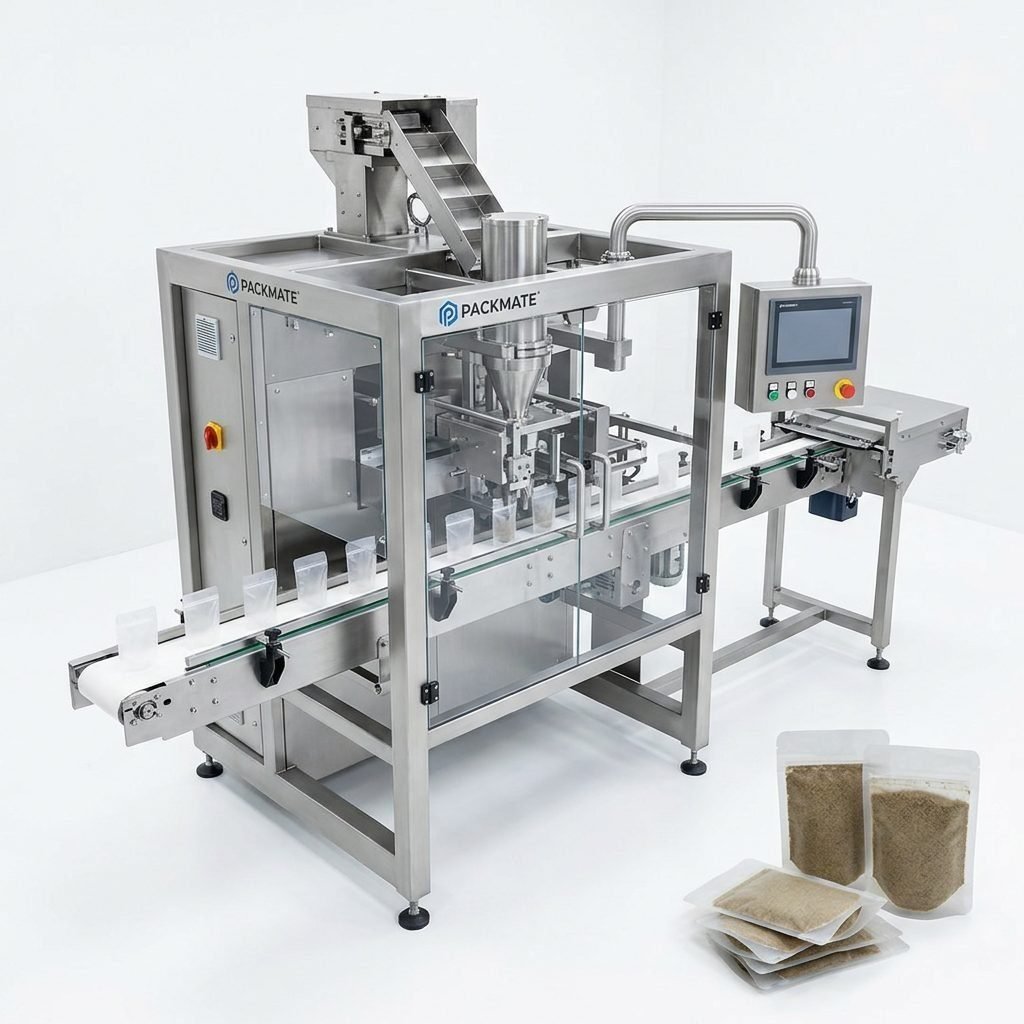
Packmate Snus Machine brings over 30 years of engineering experience and a focused product line for snus and nicotine pouch packaging. With a 20,000㎡ manufacturing facility, advanced CNC capabilities, and more than 50 machine models, Packmate offers both high-performance multi-lane systems and fully customized turnkey lines.
Explore Packmate’s product range: Snus & Nicotine Packaging Machines, Sachet & Stick Pack Machines, and comprehensive Filling & Packaging Lines.
Packmate strengths: proven multi-lane designs for small-dose pouches, CE/ISO compliance, and turnkey lines tailored to nicotine pouch production. Learn about the company profile and history at About Packmate.
Selecting a Local Partner and Planning Commissioning in Tunisia
Partnering with a local agent or distributor can streamline customs, spare parts logistics, and on-the-ground maintenance. Ensure your local partner is certified by the manufacturer and trained to perform first-line maintenance and troubleshooting.
For fast access to service and documentation, confirm contact channels and support hours. Keep a spare-parts kit for critical wear items and arrange initial training that includes both operators and maintenance staff.
Logistics and Documentation Checklist
🧾 commercial invoice, packing list, certificate of origin, CE/ISO certificates, machine manuals, FAT report, and a declared HS code suitable for smooth customs clearance.
Procurement Checklist Before Signing the Contract
– Confirm machine model and detailed technical specs.
– Agree on FAT/SAT procedures and acceptance criteria.
– Verify warranty, SLA terms, and spare parts lead times.
– Request references and case histories; review video demos or virtual machine runs.
– Confirm pricing breakdown: machine, tooling, installation, training, shipping, and customs responsibilities (Incoterms).
Want to see real projects? Browse case examples of installed lines to better understand production layouts and outcomes: Packmate Case Studies.
Final Selection Tips — Make the Decision with Confidence
– Prioritize proven snus/nicotine experience and multi-lane competence.
– Verify manufacturer capacity to customize and deliver turnkey solutions.
– Ensure clear SLA commitments and spare parts availability.
– Ask for in-depth FAT runs using your materials and accept machines only when performance metrics meet agreed thresholds.
– Consider long-term service relationships rather than one-off purchases.
When you are ready to request detailed quotations or arrange a remote demonstration and FAT with a reliable supplier, use the manufacturer’s contact channels to ensure prompt attention: Contact Packmate.
FAQs — Common Questions from Tunisian Buyers
Q1: How long is a typical lead time for a custom multi-lane snus line?
A1: Lead time depends on customization and current production schedules, but expect 12–20 weeks for complex turnkey lines; faster delivery may be possible for standard models.
Q2: What certifications should I ask for when importing into Tunisia?
A2: Ask for CE and ISO certificates, a certificate of origin, FAT reports, and full machine manuals. Clear documentation reduces customs delays.
Q3: Can machines be demonstrated remotely?
A3: Yes, many manufacturers offer live virtual demonstrations and recorded FAT sessions. Request runs using similar materials to yours for the most realistic assessment.
Q4: How do I handle spare parts and routine maintenance locally?
A4: Establish a spare-parts kit for critical items, confirm lead times for replacements, and work with a certified local partner or factory-trained technician to reduce downtime.
Q5: Where can I learn more about complete packing solutions and auxiliary equipment?
A5: Explore additional systems such as weighing, filling, and auxiliary equipment to build a fully integrated line: Weighing & Packaging Systems and Auxiliary Packaging Equipment.