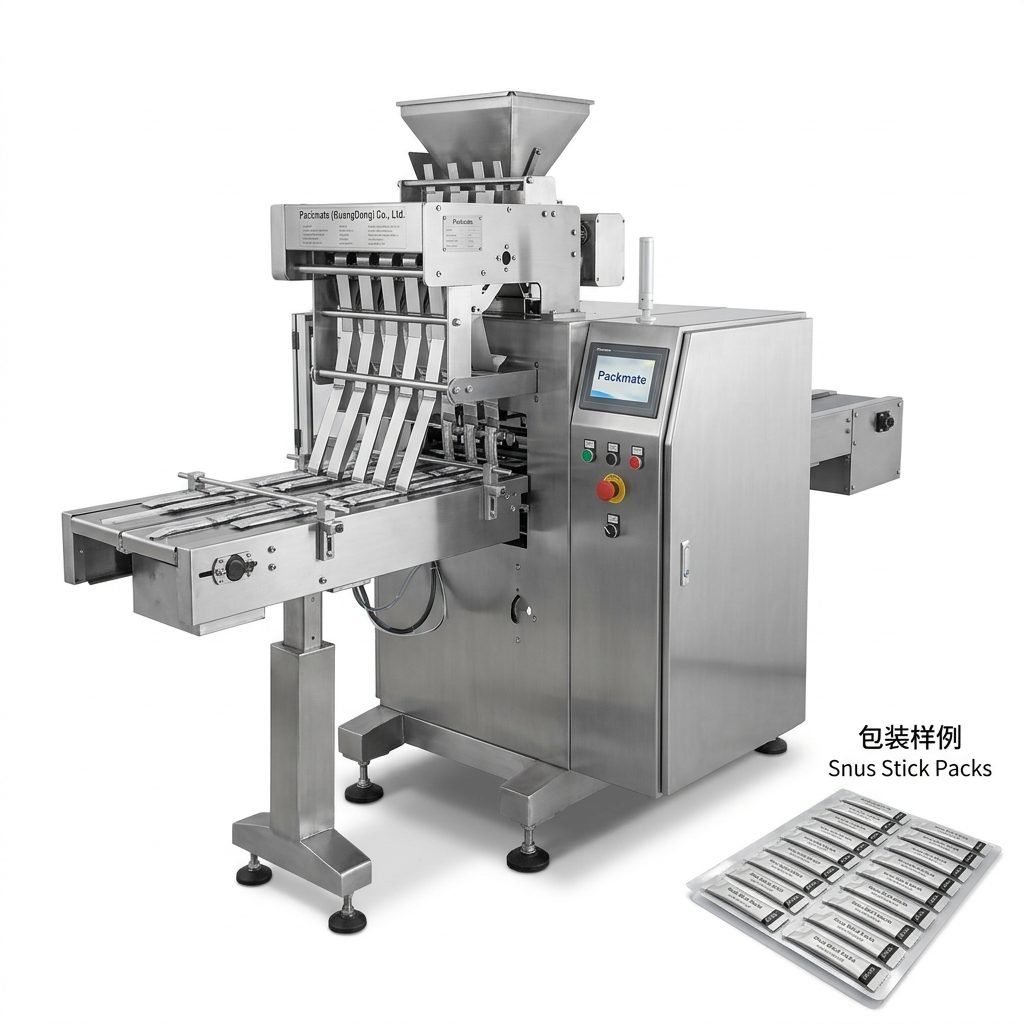
Ethiopia’s fast-growing consumer market and expanding manufacturing interest make it an attractive region for companies looking to launch or scale nicotine pouch and snus production. Choosing the right nicotine packaging machinery supplier is more than a purchase decision — it determines product quality, production stability, after-sales support, and regulatory compliance. This guide helps Ethiopian importers, factory managers, and entrepreneurs evaluate and select the best packaging machinery partner for local conditions and business goals.
Understand Ethiopia’s Market Realities and Local Customs
Before evaluating suppliers, consider local realities: Ethiopia uses 220V/50Hz power in most industrial zones, customs clearance can be time-consuming, and business relationships hinge greatly on trust and long-term partnerships. Many Ethiopian companies prefer clear communication, face-to-face meetings when possible, and reliable local support. Additionally, ensure your project aligns with local regulations — nicotine-containing products may be regulated differently than in Europe or North America, and packaging/labeling requirements often require local language support (Amharic and other regional languages).
Practical local considerations
- Power & utilities: confirm machine compatibility with 220V/50Hz and local electrical safety rules.
- Spare parts & service: prioritize suppliers with clear spare parts shipping plans and fast technical support.
- Customs & import: plan for documentation, CE/ISO certificates, and a local customs broker to speed clearance.
- Workforce training: select partners that offer on-site or remote training in English and with easy-to-follow operation manuals.
Key Criteria to Evaluate Packaging Machinery Suppliers
Choosing a supplier requires a balanced assessment across technology, manufacturing strength, compliance records, references, and commercial terms. Below are the core evaluation dimensions to focus on.
1. Product Range and Technical Fit
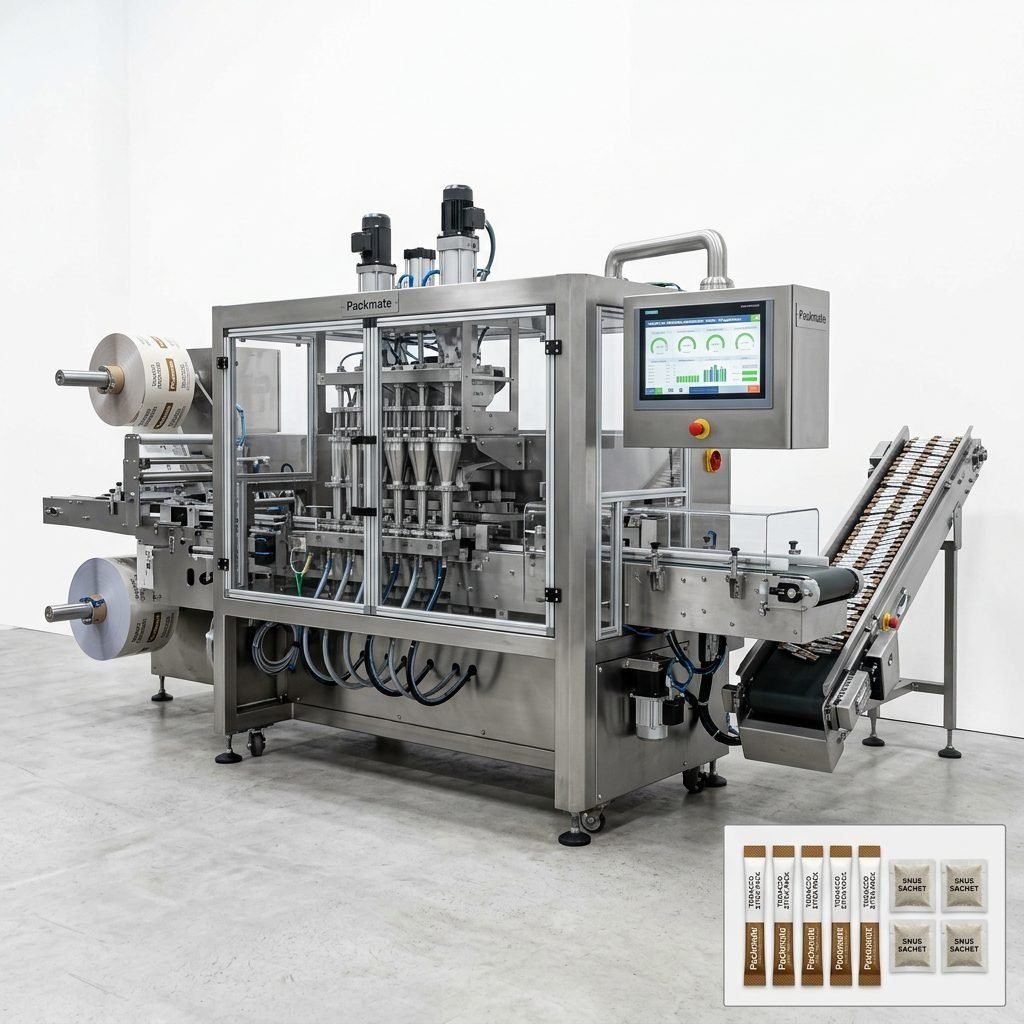
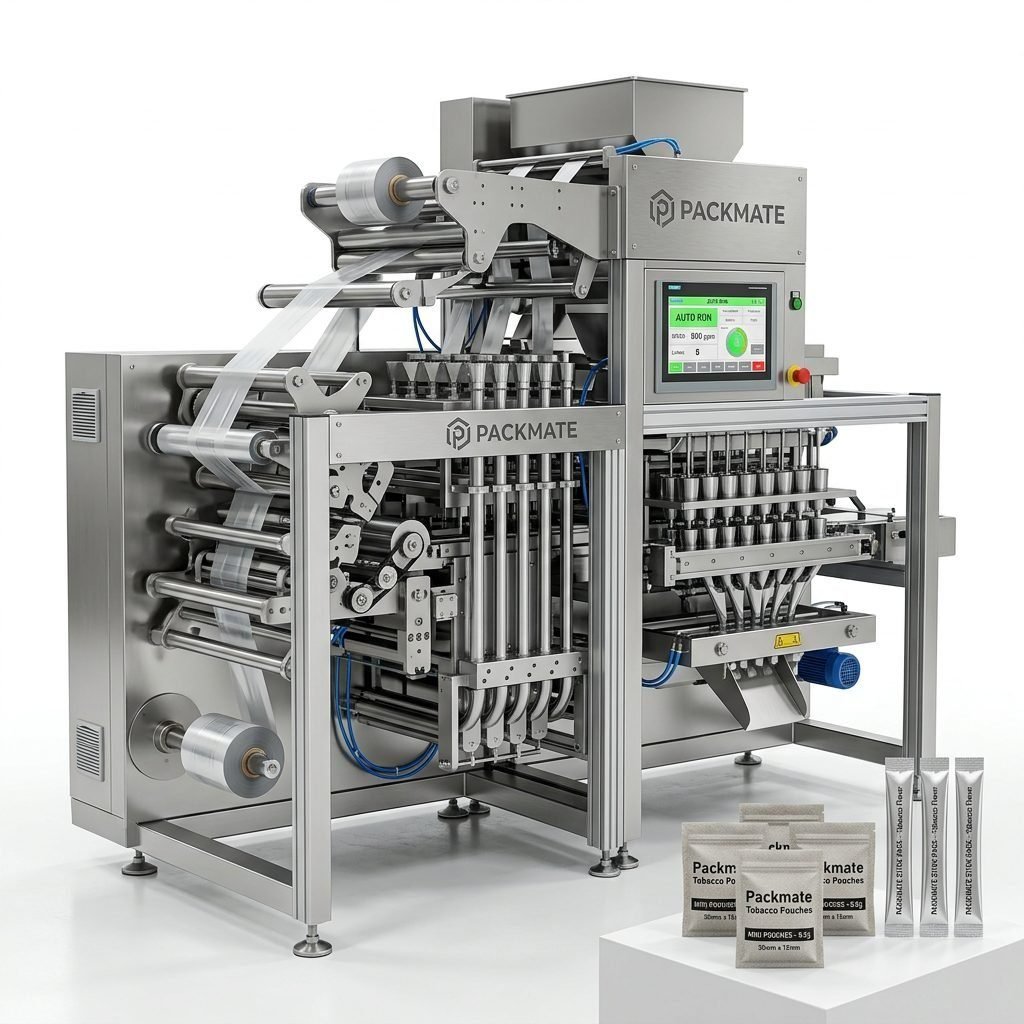
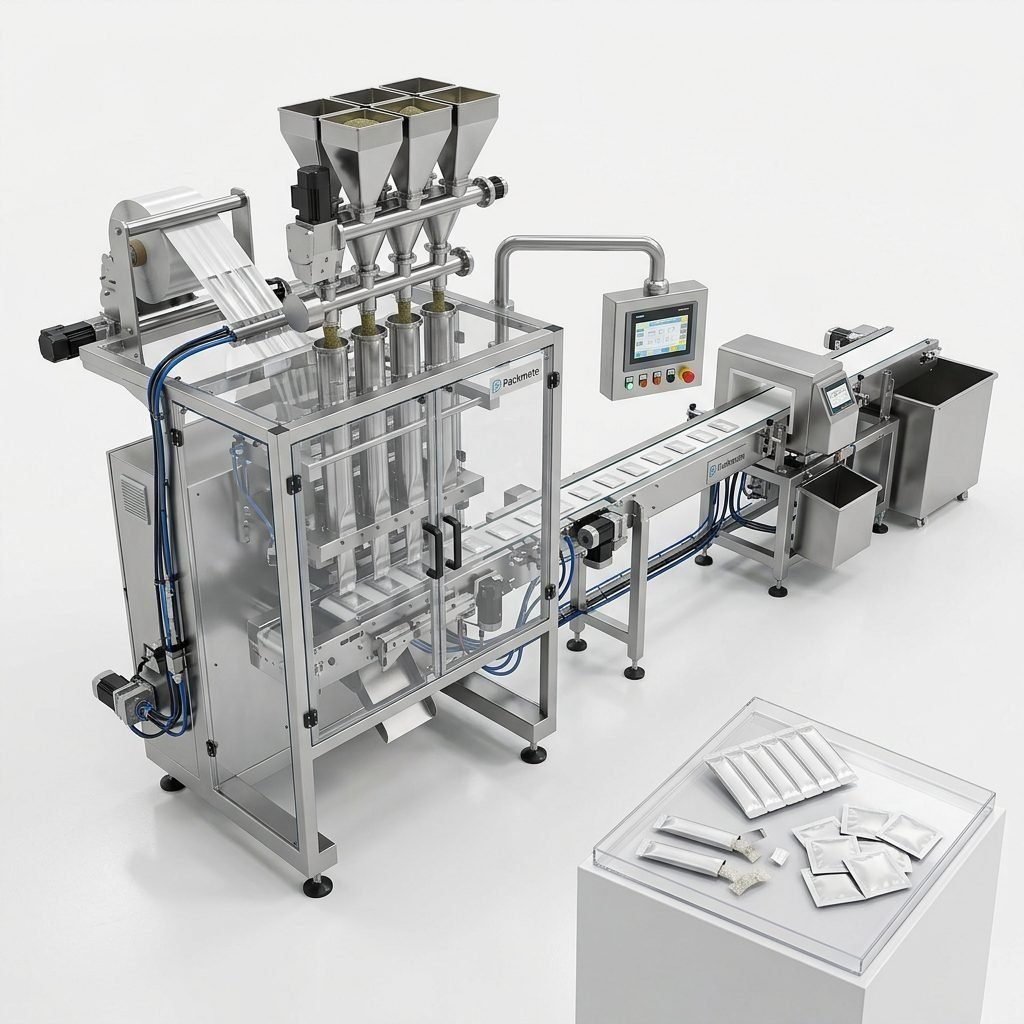
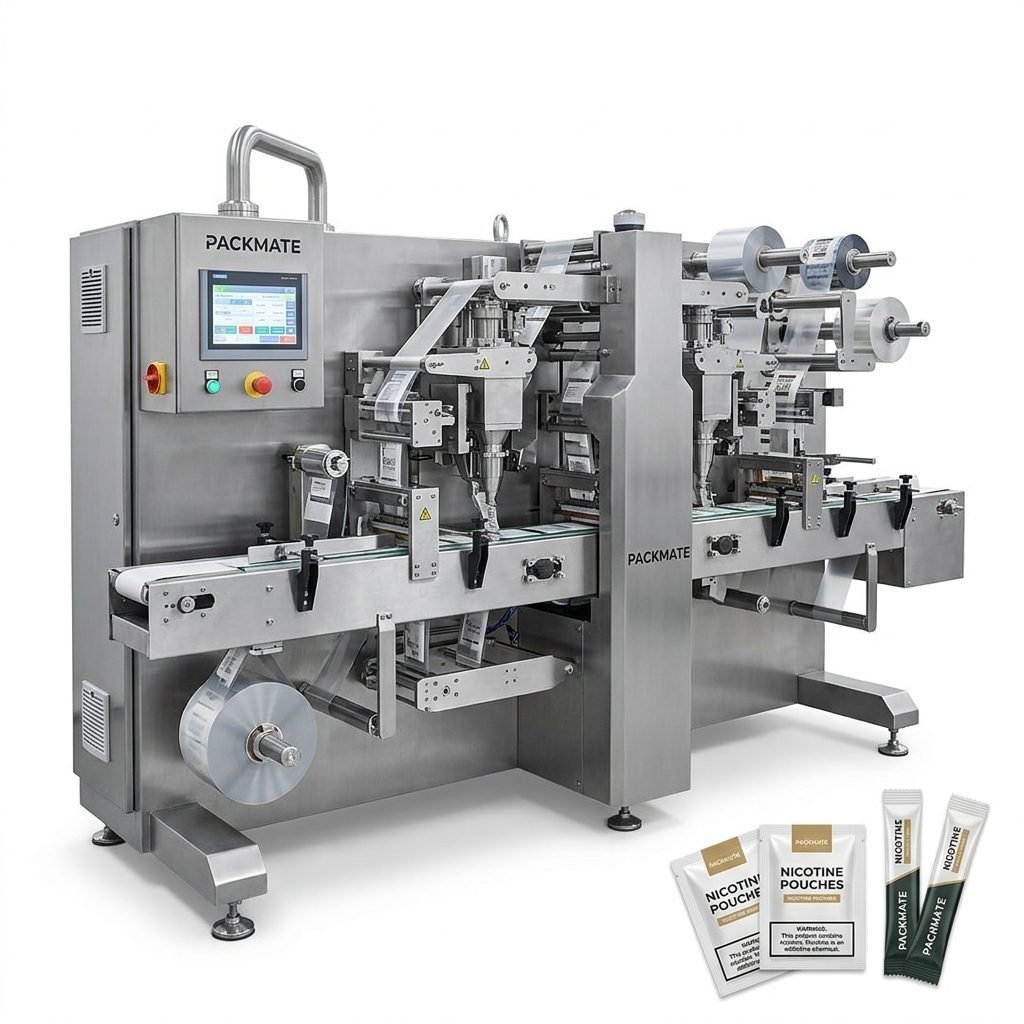
Look for suppliers who offer machines designed specifically for nicotine pouches and snus — not just generic pouch wrappers. A supplier with multi-lane systems, stick pack, and sachet lines can help you scale from small-batch R&D to mass production without changing partners. Check their available models, lane counts, and the ability to handle small-dose accuracy, pouch seal integrity, and consistent filling weights.
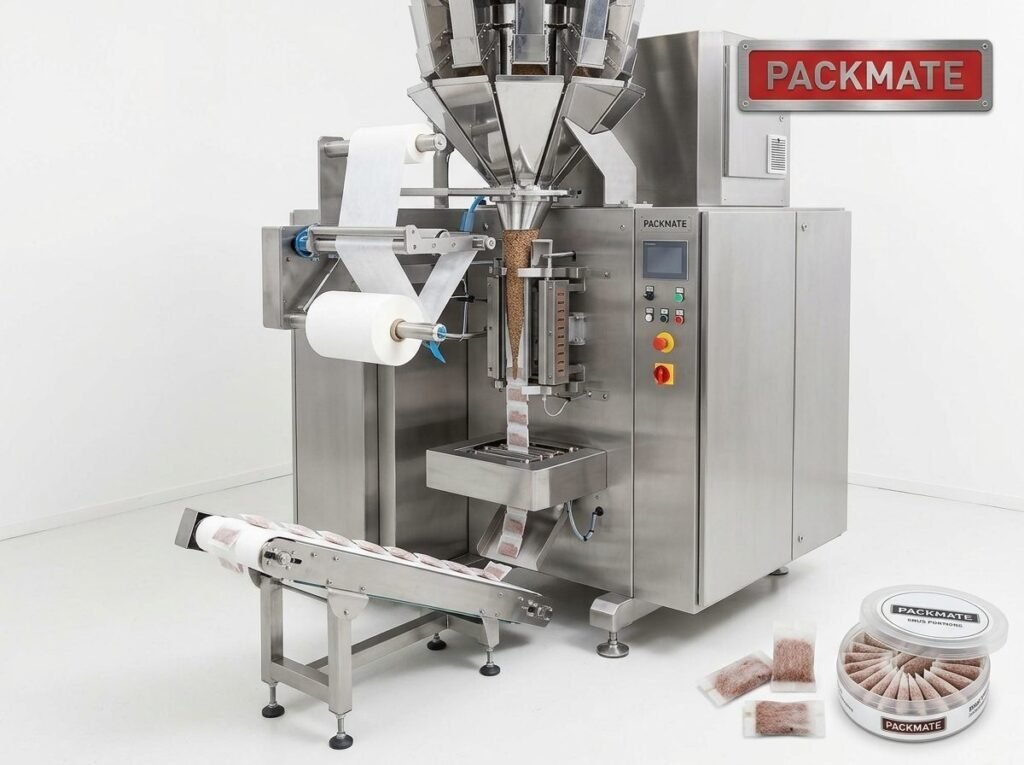
For product demos and to review technical specs, consider vendors that publish detailed product pages such as the Snus & Nicotine Packaging Machines and Sachet & Stick Pack Machines — these resources show machine capabilities and typical configurations you can request.
Tip: ask for video demos of machines running your actual formulation (powder, granule, or liquid) to verify handling and final pack appearance.
2. Factory Strength and Quality Control
Prefer suppliers with a large, modern production facility, CNC machining centers, and strict assembly lines. A manufacturing base with experience in high-precision equipment is critical for long-term stability and machine durability. Facilities that perform full testing and quality control before shipment minimize on-site surprises and rework.
- Factory size & machining capabilities (CNC, assembly lines)
- Number of models and customization options
- Quality testing procedures and acceptance protocols
- CE/ISO certification evidence
3. Compliance, Certifications and Documentation
Regulatory compliance is essential. Ask the supplier for CE, ISO or equivalent certificates, test reports, and electrical safety documentation relevant for import into Ethiopia. You will need accurate packing lists, certificates of origin, and machine manuals for customs clearance and for your own factory records.
Packmate’s public resources (for example, Certificate and About Packmate pages) can provide confidence in a supplier’s compliance posture, but always request original documentation and notarized copies when required by customs.
Commercial Terms, Lead Times and Total Cost of Ownership
The cheapest initial quote is rarely the best option. Evaluate total cost of ownership: spare parts availability, service contracts, training costs, shipping, customs duties, and expected MTBF (mean time between failures). Confirm lead times and production schedules, and get written warranty terms and clear payment milestones.
- Warranty length and scope for electrical and mechanical parts
- Spare parts lead times and local stocking options
- Training scope (operator & maintenance)
- Payment terms (L/C, wire transfer, deposit + balance on shipment)
After-Sales Support and Local Service Strategy
After-sales service often decides whether a machine becomes a long-term asset or a recurring headache. Preferred suppliers provide clear remote support (video troubleshooting, spare part identification), and can dispatch engineers or partner with local service providers for on-site repairs. For Ethiopia, where international travel and shipping can add days or weeks to repair cycles, verify the supplier’s strategy for emergency spare kits and remote diagnostics.
Critical question to ask: can the supplier send a recommended spare parts list and an emergency kit sized to your planned production volume?
Training and Documentation
Ensure operation manuals, wiring diagrams, and maintenance guides are provided in English, and request on-site training for operators and technicians. Remote commissioning via live video is a common practice and can shorten downtime during installation. If language support is needed, confirm availability of translated materials or local interpreters.
References, Case Studies and Live Demonstrations
A supplier’s track record provides practical evidence of reliability. Request customer references in similar climates or markets. Case studies that demonstrate continuous operation, multi-lane systems, or turnkey solutions are especially valuable. If the supplier attends international exhibitions or provides virtual factory tours, use those opportunities to validate machine performance.
You can also review customer examples and exhibition participation to assess credibility — see Case and Our Exhibition pages for real project highlights and proof of global cooperation.
Customization, Turnkey Solutions and Flexible Production
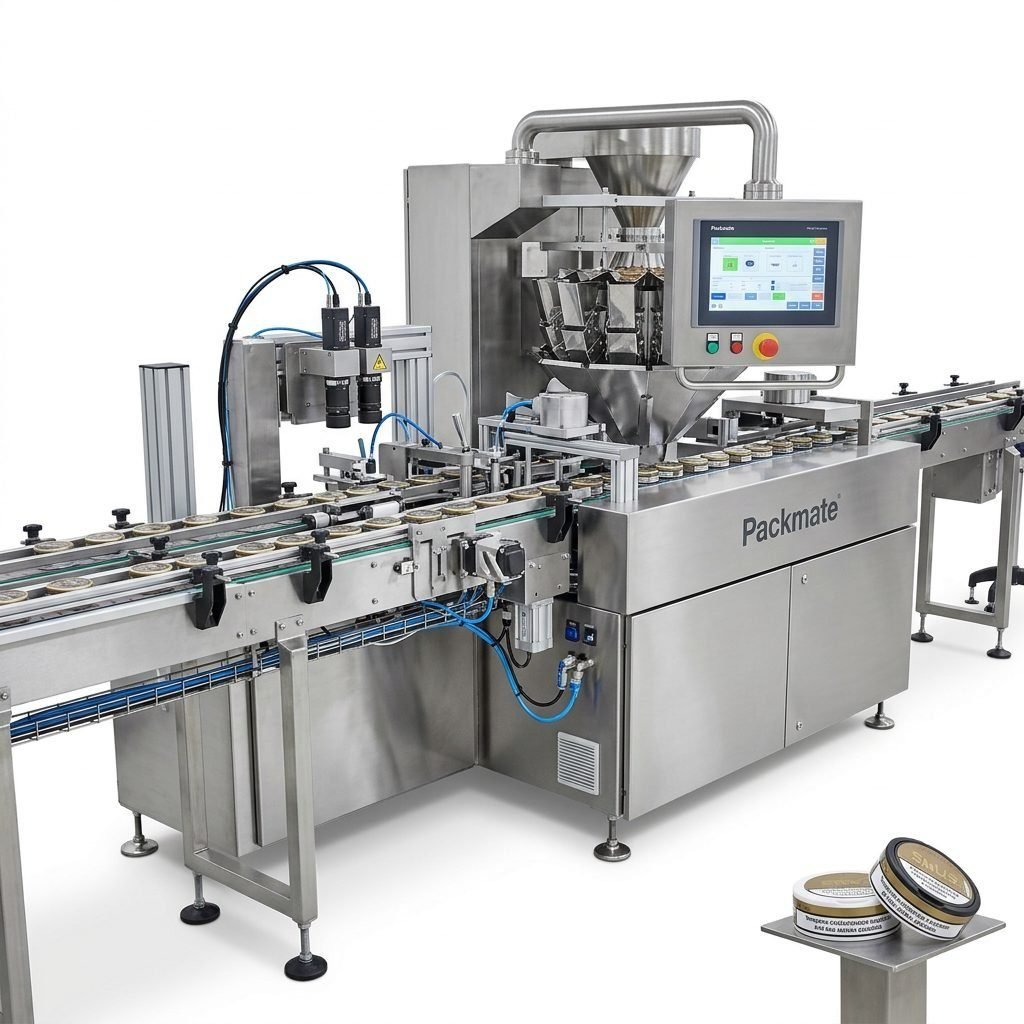
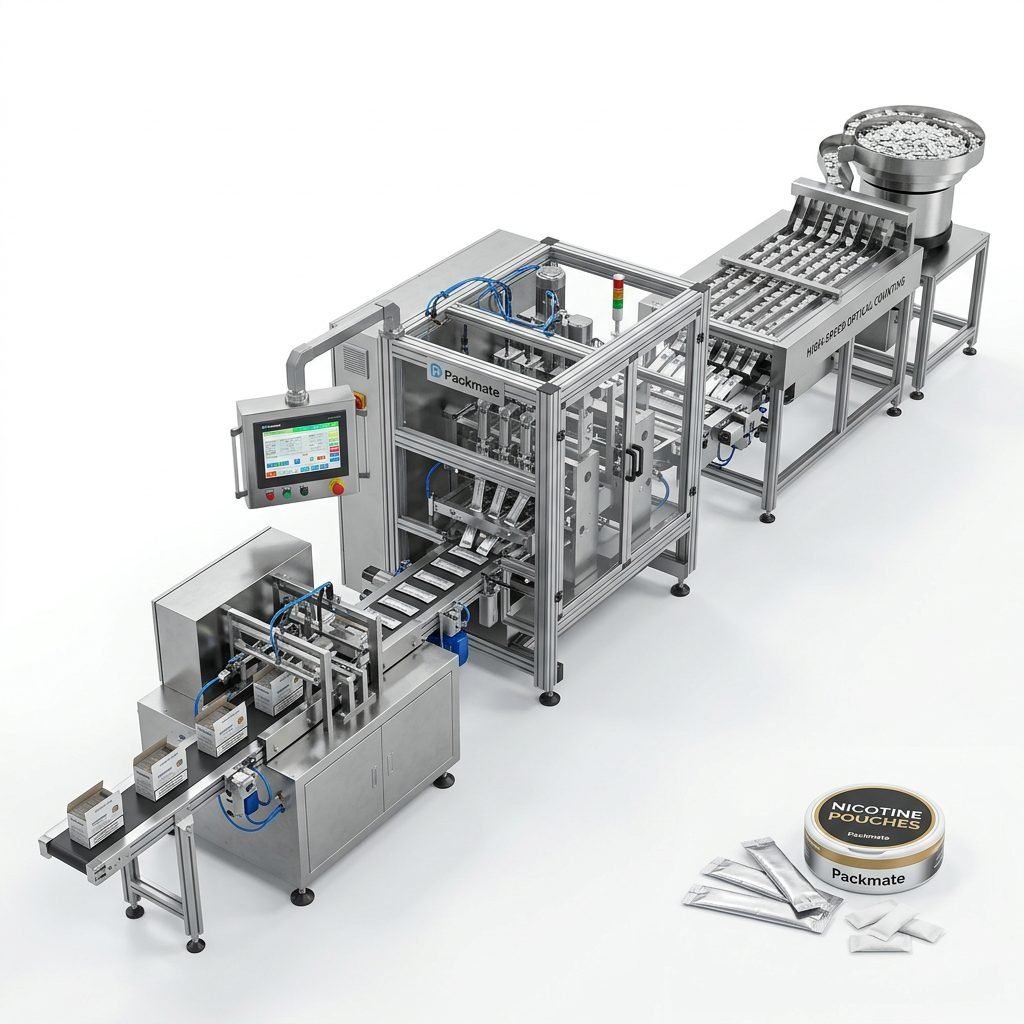
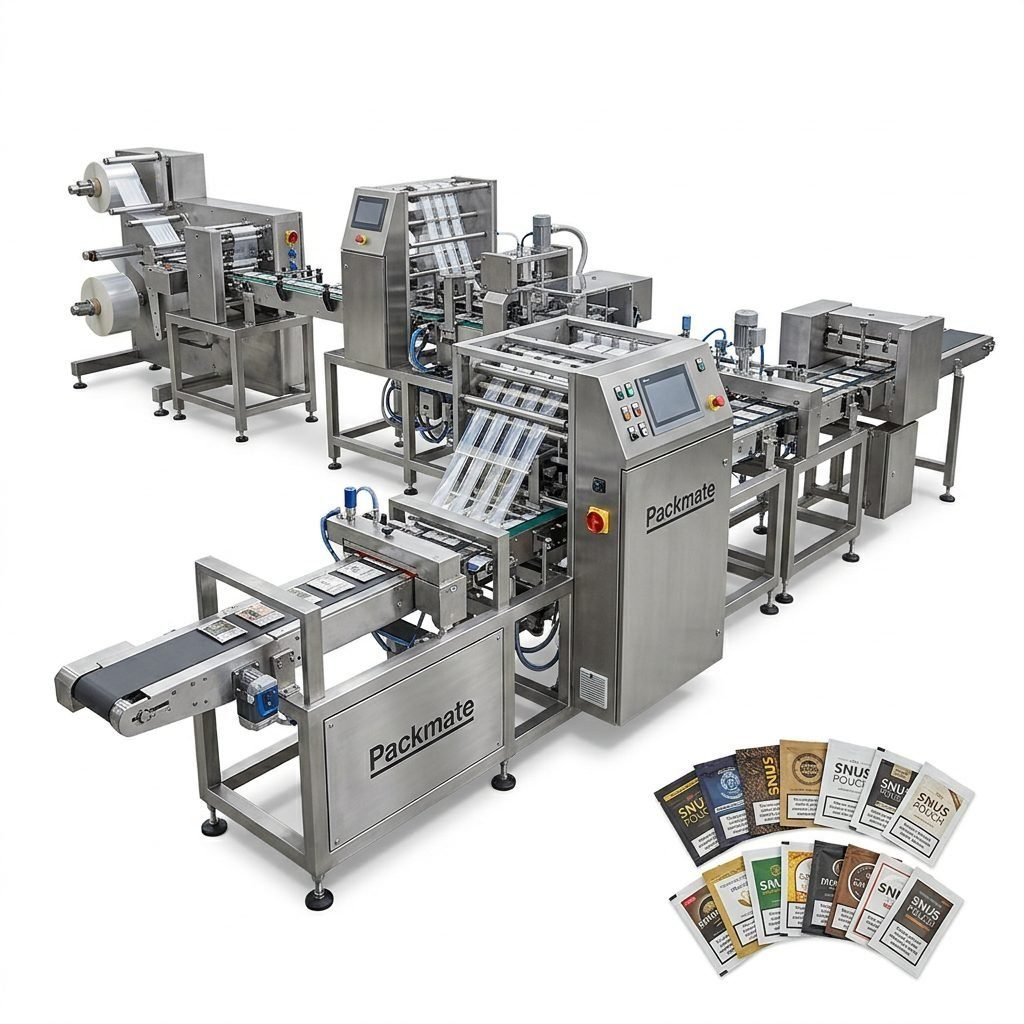
Nicotine pouch products come in a variety of sizes, formulations, and pack types. Suppliers with turnkey capabilities can integrate filling, sealing, weighing, and packing into one line — reducing integration headaches. If you plan to expand SKUs or switch formats, select a partner that supports modular upgrades and software-controlled recipe changes.
For a complete solution view, check the Filling & Packaging Lines and Weighing & Packaging Systems to understand how different modules can be combined into an efficient production line.
Technical compatibility for Ethiopian operations
Confirm the supplier can adapt machines to local environmental factors: dust control, humidity management, and segregation for hygiene. Machines that include easy-to-clean surfaces and IP-rated electrical components will perform better in many local factories.
Negotiation Tips and Contract Essentials
Negotiate clear acceptance tests (FAT/SAT), spare parts lists, warranty duration, and training obligations. Include penalty clauses for missed delivery or failure to meet performance specs. Ensure responsibilities for installation, commissioning and handover are contractually defined.
- Detailed technical specifications and acceptance criteria
- FAT video documentation and pre-shipment tests
- Warranty and spare parts response time
- Training scope, language and duration
- Shipping terms (EXW, FOB, CFR) and customs documentation
Selecting a Long-Term Partner — Not Just a Vendor
Successful production depends on partnership. Choose a supplier that demonstrates engineering depth, a willingness to support after delivery, and experience supplying similar product lines globally. Evaluate long-term costs, alignment on production goals, and the supplier’s openness to continuous improvement and customization.
If you want to learn more about a full-service supplier with a broad snus portfolio and global turnkey solutions, the Packmate pages such as About Packmate and Contact Us provide ways to evaluate the company and start discussions.
Quick decision checklist (Ethiopia-focused)
- Power compatibility and IP ratings for local conditions
- Clear spare parts plan and emergency kits
- Compliance documentation for customs
- Training and documentation in accessible language
- References from similar markets and FAT evidence
Final Recommendations
Start with a short-list of 2–3 suppliers and request FAT videos with your product, detailed spare parts lists, warranty terms, and a timeline for delivery and commissioning. Prioritize partners who can demonstrate multi-lane nicotine pouch experience, provide strong after-sales plans, and are willing to support Ethiopia-specific needs such as documentation for customs and remote commissioning.
A well-documented contract, clear testing procedures, and a supplier committed to long-term cooperation will reduce risk and accelerate your market entry.
Frequently Asked Questions
Q1: How do I confirm a machine will meet Ethiopian power and safety requirements?
Ask the supplier for electrical schematics, voltage/frequency settings (confirm 220V/50Hz), and CE or equivalent safety certificates. Request that the supplier configures or ships machines set for your local power specifications.
Q2: What is an acceptable spare parts strategy for Ethiopia?
Prefer suppliers that provide a recommended spare parts kit (belts, seals, sensors) sized to expected runtime and offer clear parts lists with part numbers. Consider stocking critical items locally to reduce downtime.
Q3: Can vendors support remote commissioning and training?
Yes — many modern suppliers offer remote commissioning, live video support, and training sessions. Ensure these are included in the contract and agree on languages and training duration.
Q4: How important are FAT/SAT tests?
Very important. Factory Acceptance Tests (FAT) confirm machine performance before shipment; Site Acceptance Tests (SAT) verify performance after installation. Always require FAT videos and acceptance criteria spelled out in the contract.
Q5: Where can I find credible suppliers and product information?
Review supplier product pages and company information, examine case studies and certificates, and contact suppliers for demos. Useful resources include Snus & Nicotine Packaging Machines, Filling & Packaging Lines, and company About Packmate pages for deeper evaluation.