Choosing the right snus packaging machine manufacturer in North America can make or break your production plans. Whether you are launching a new nicotine pouch brand or scaling up an existing line, the manufacturer you partner with will determine equipment reliability, regulatory compliance, and long-term operational costs. This guide walks you through the critical factors to evaluate, practical questions to ask, and how to verify a supplier’s claims so you can confidently choose the best partner for your business.
Why the Manufacturer Matters for Your Snus Production
A reputable manufacturer does more than deliver machines. They provide system integration, after-sales service, spare parts, and compliance documentation. With specialized products like snus and nicotine pouch packaging, you need equipment that handles small-dose, multi-lane pouch formats, precise weighing, and hygienic handling. Selecting the wrong supplier can lead to frequent downtime, inconsistent seal quality, and increased waste — all of which reduce profitability.
Key Benefits of Working with an Experienced Manufacturer
• Faster project ramp-up and commissioning.
• Machines designed specifically for nicotine pouch and snus formats.
• Access to proven production lines and case studies.
• Reliable global support and spare parts network.
• Compliance support for CE/ISO and local standards.
Checklist: What to Evaluate When Choosing a Manufacturer
✔ Experience & Track Record: Choose a manufacturer with a long history in packaging equipment and specific expertise in snus and nicotine pouch machines. Look for documented timelines, product lines, and customer references.
✔ Product Range & Flexibility: Ensure the supplier offers multiple machine models (single-lane, multi-lane, sachet, stick pack, liquid fillers) and can customize solutions for your product specs.
✔ Factory Capacity & Quality Control: A large, well-equipped factory with CNC machining centers and precision assembly lines indicates the ability to deliver consistent quality and scale production.
Detailed Technical Considerations
When evaluating machinery, focus on the following technical details: sealing method accuracy, material compatibility (foil, paper, film), pouch size range, multi-lane synchronization, dosing accuracy for powders or granules, and PLC/HMI control capabilities. Request technical drawings and machine performance data to validate manufacturer claims.
Sealing & Packaging Integrity
Good equipment ensures consistent seal strength at production speeds. Ask for data on burst tests, seal temperatures, and examples of seal profiles for your intended packaging film. Poor seals lead to product spoilage and regulatory issues.
Dosing & Fill Accuracy
For nicotine pouches, dosing precision is essential. Validate the machine’s dosing system (auger, vibratory, multi-head weigher) and request accuracy statistics like ±grams per pouch and rejection rates at high speed.
Supply Chain & Compliance: A Non-Negotiable
Regulatory compliance (CE, ISO) and documentation for machine safety and material contact are mandatory. Confirm the manufacturer provides certificates, machine manuals, and validation support. If you intend to export, verify that the supplier understands export documentation and customs requirements.
Tip: Ask for sample reports, CE/ISO certificates, and material contact certifications. Manufacturers with transparent documentation reduce your compliance risk.
Service, Spare Parts & After-Sales Support
After-sales service differentiates excellent suppliers from the rest. Confirm local or regional support, typical lead times for spare parts, remote troubleshooting capabilities, and available service contracts. Downtime can be expensive — choose a manufacturer that prioritizes fast response and preventive maintenance.
What to Ask About Support
• Are spare parts stocked regionally or shipped from the factory?
• Is remote diagnosis and software update support included?
• What training is provided at installation and during operation?
• Are there service packages or annual maintenance contracts?
Factory Visit & Acceptance Testing
Visiting the factory or requesting a virtual tour is one of the most effective ways to validate a supplier. Inspect production lines, assembly practices, test reports, and quality control stations. During FAT (Factory Acceptance Test), request running samples with your product or a close analogue to verify performance at target speeds.
What to Observe During a Factory Visit
• Clean, organized assembly areas and testing zones.
• Skilled technicians and clear QC checkpoints.
• Real-world machine runs with data logging.
• Evidence of continuous improvement and R&D activity.
Cost Evaluation: Beyond the Purchase Price
Purchase price is only part of the equation. Calculate the total cost of ownership (TCO): energy consumption, spare parts, expected MTBF (mean time between failures), consumables, and labor requirements. High-quality machines often cost more upfront but deliver lower TCO through reduced downtime and better yields.
Pro tip: Request a simple TCO model from each supplier to compare realistic long-term costs rather than competing on headline price only.
Customization & Turnkey Solutions
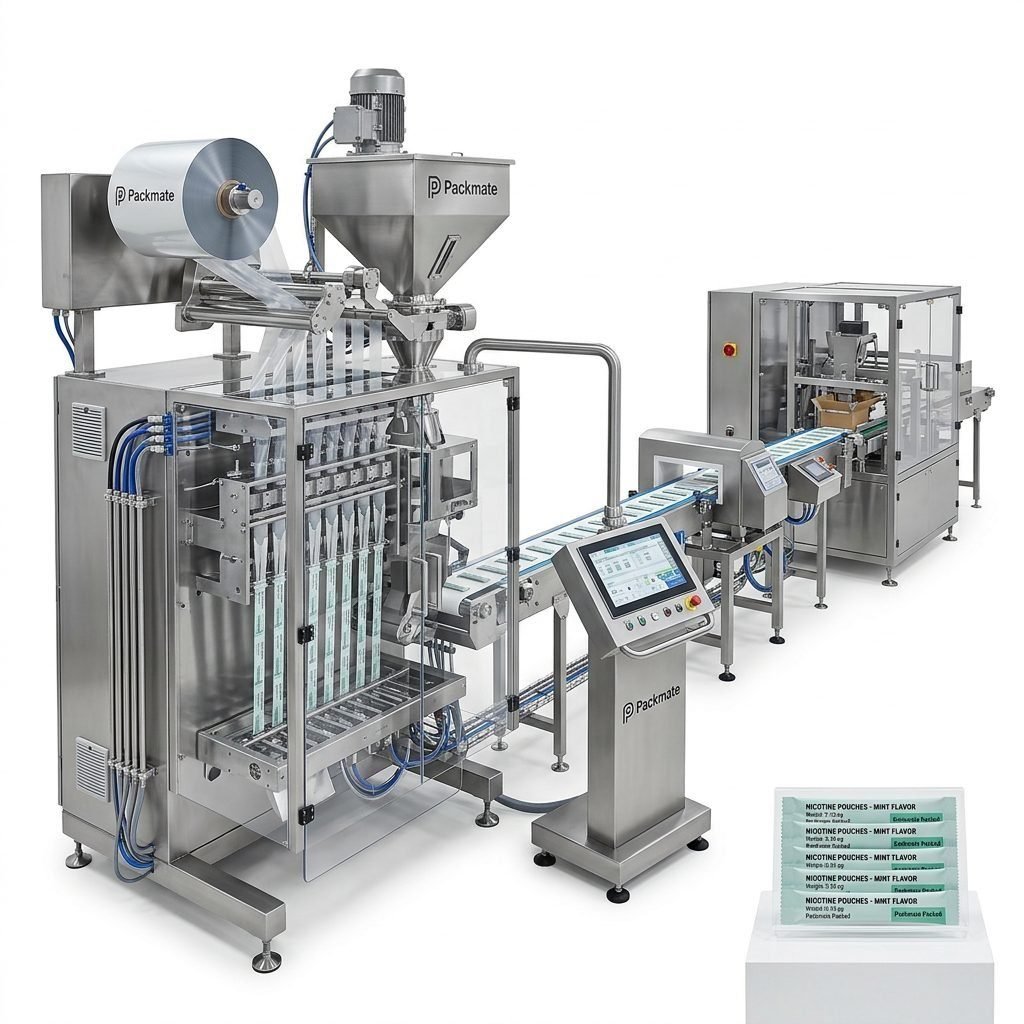
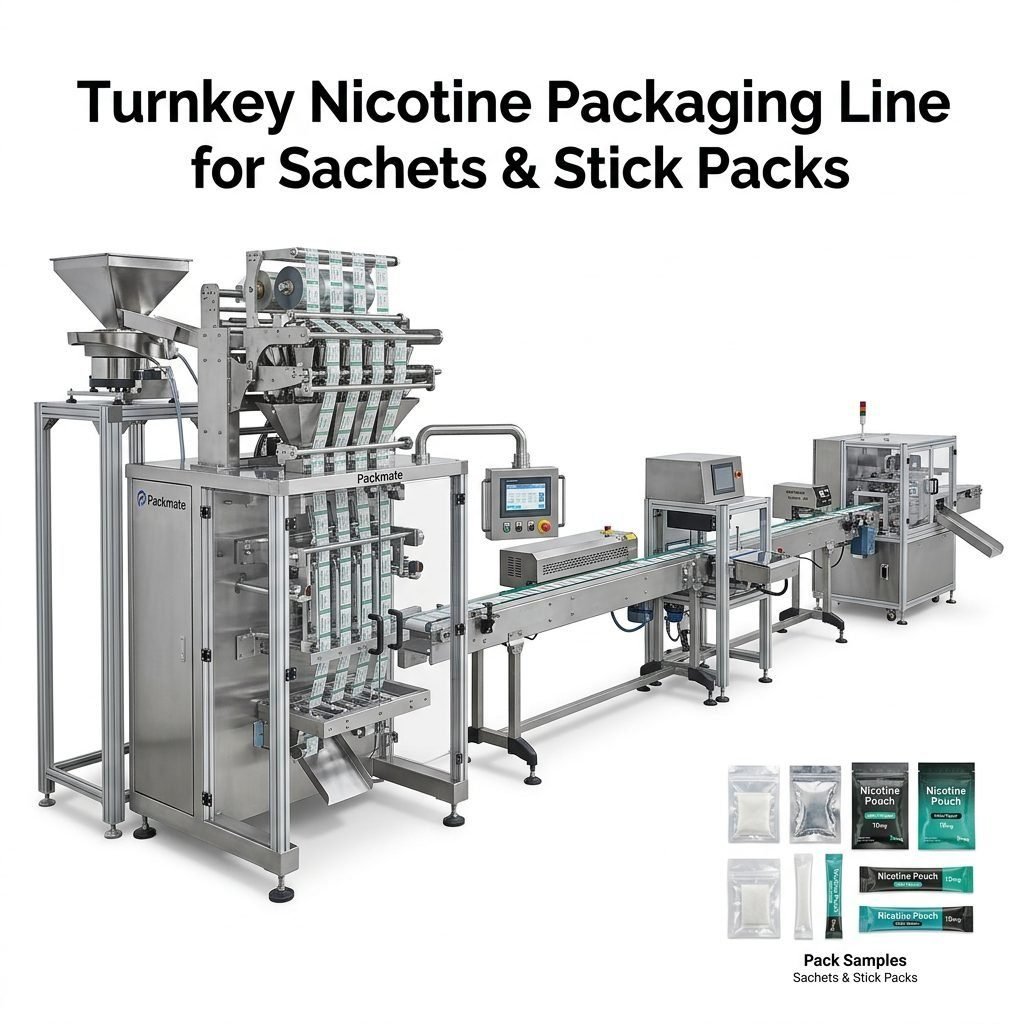
Many manufacturers can provide modular machines or fully integrated turnkey lines that include feeding systems, multi-lane pouchers, checkweighers, vision inspection, and packing conveyors. If you need a complete line, choose a supplier that offers end-to-end integration to avoid compatibility issues.
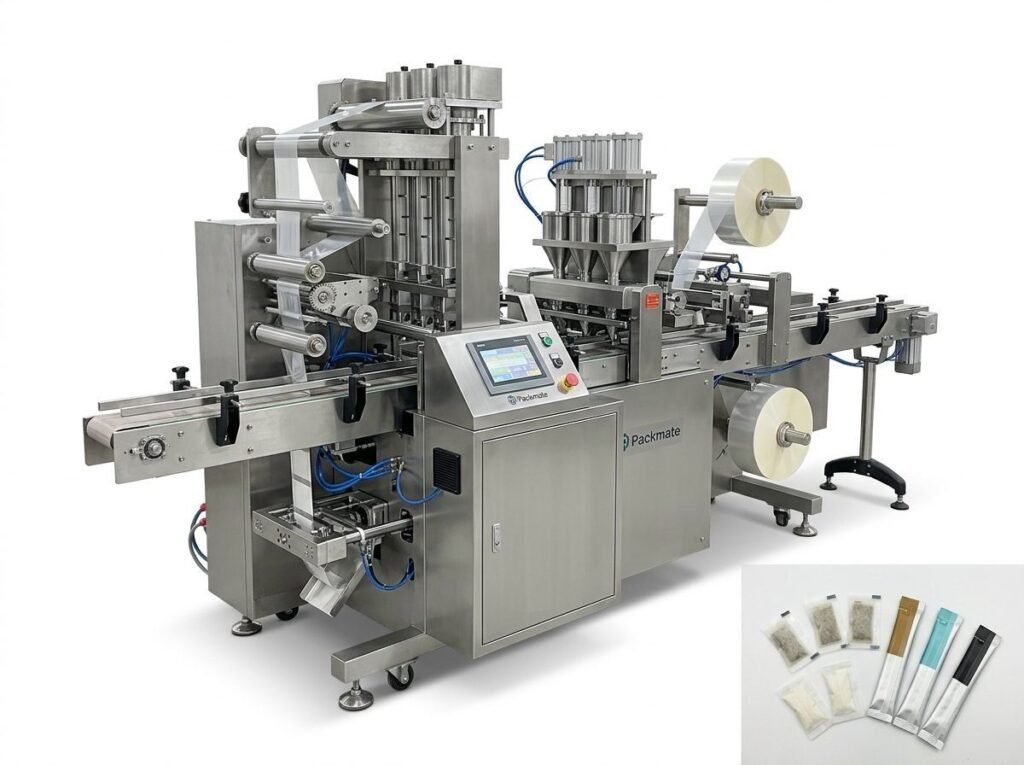
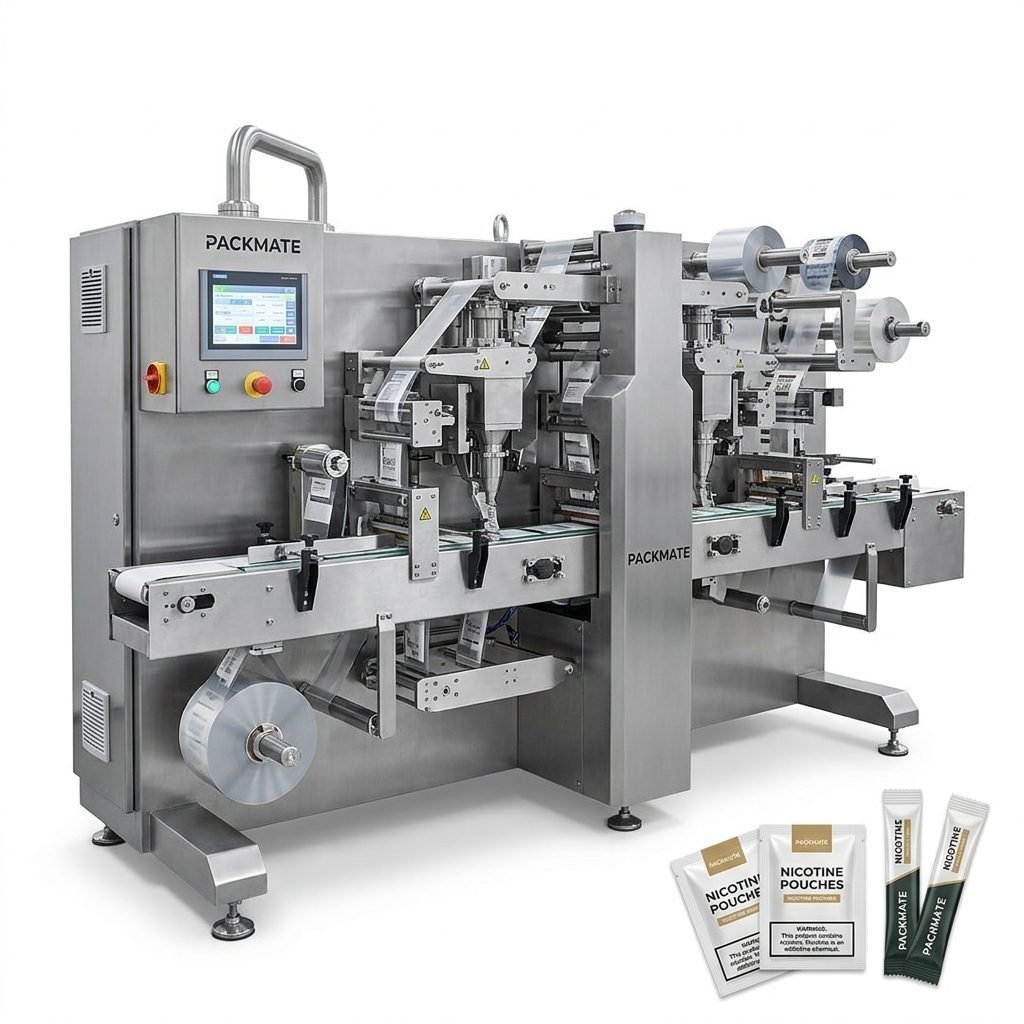
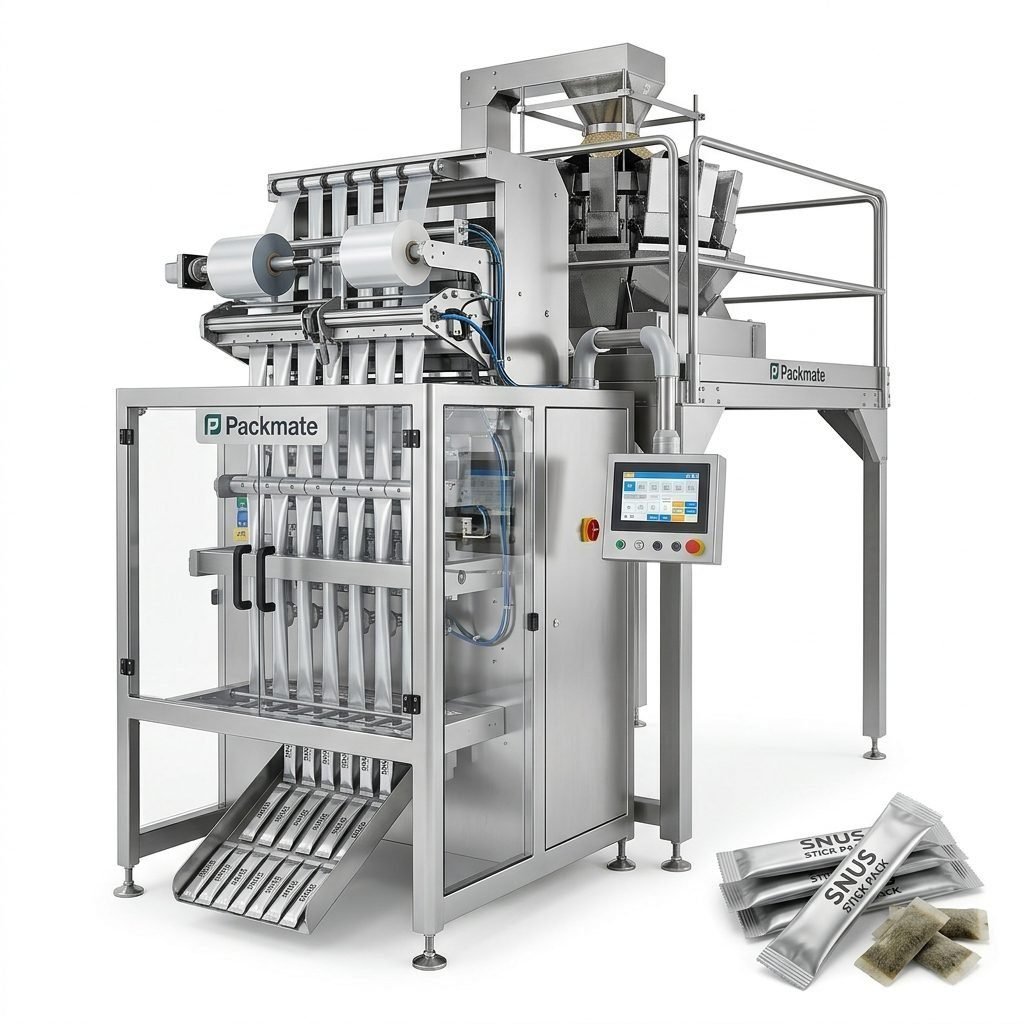
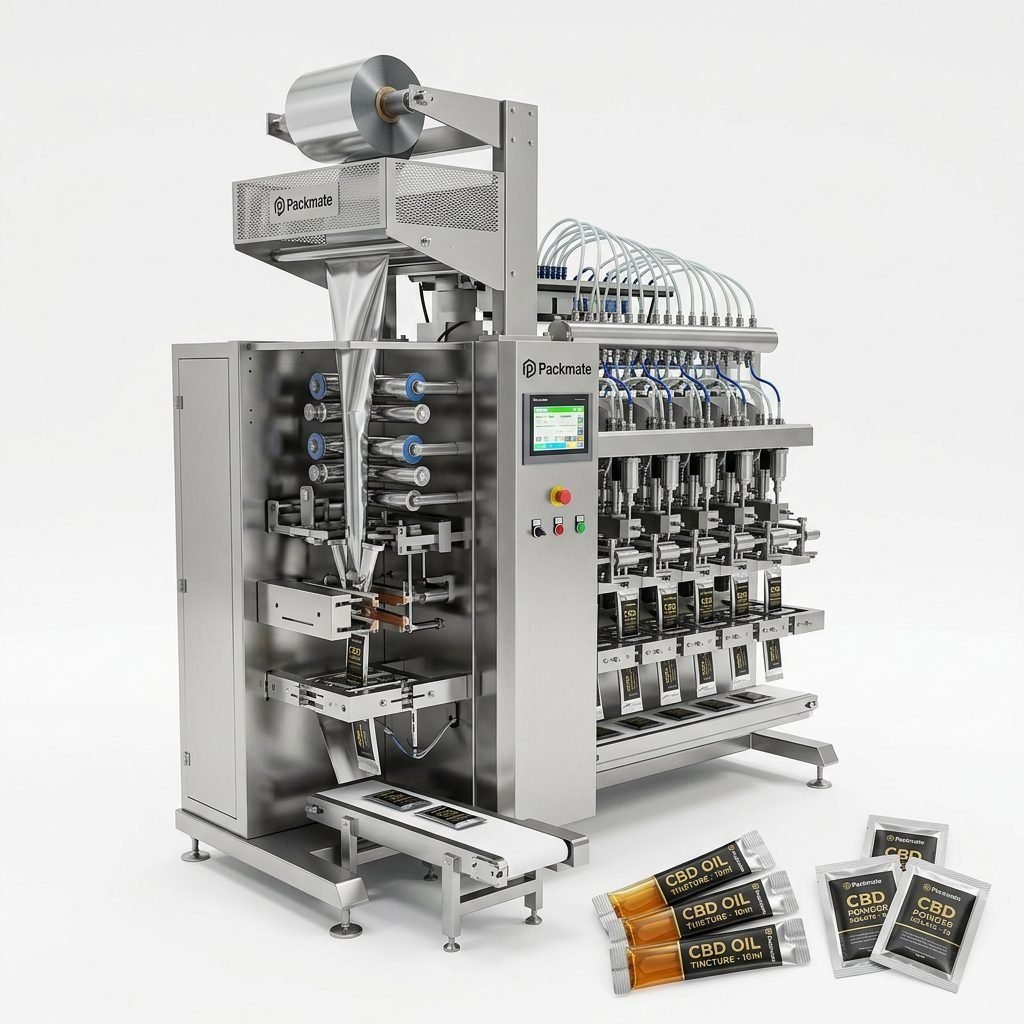
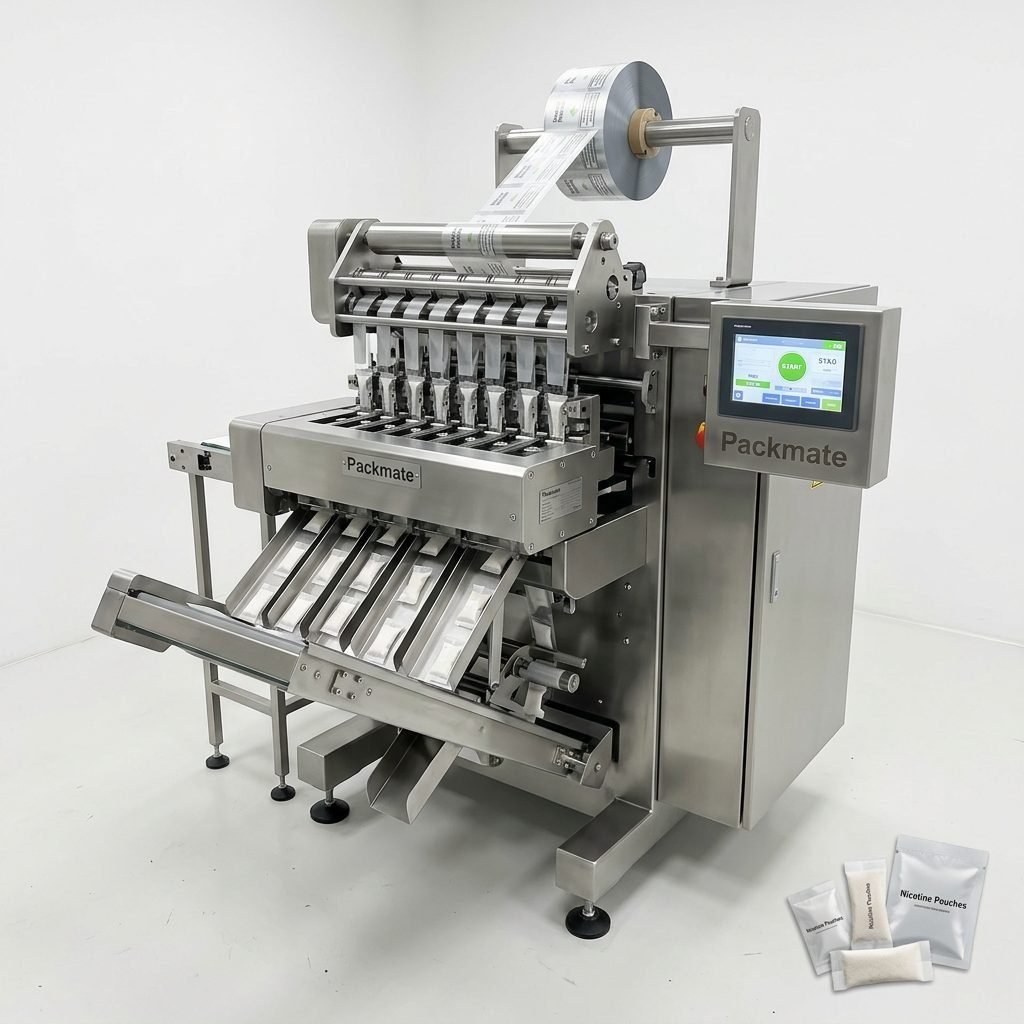
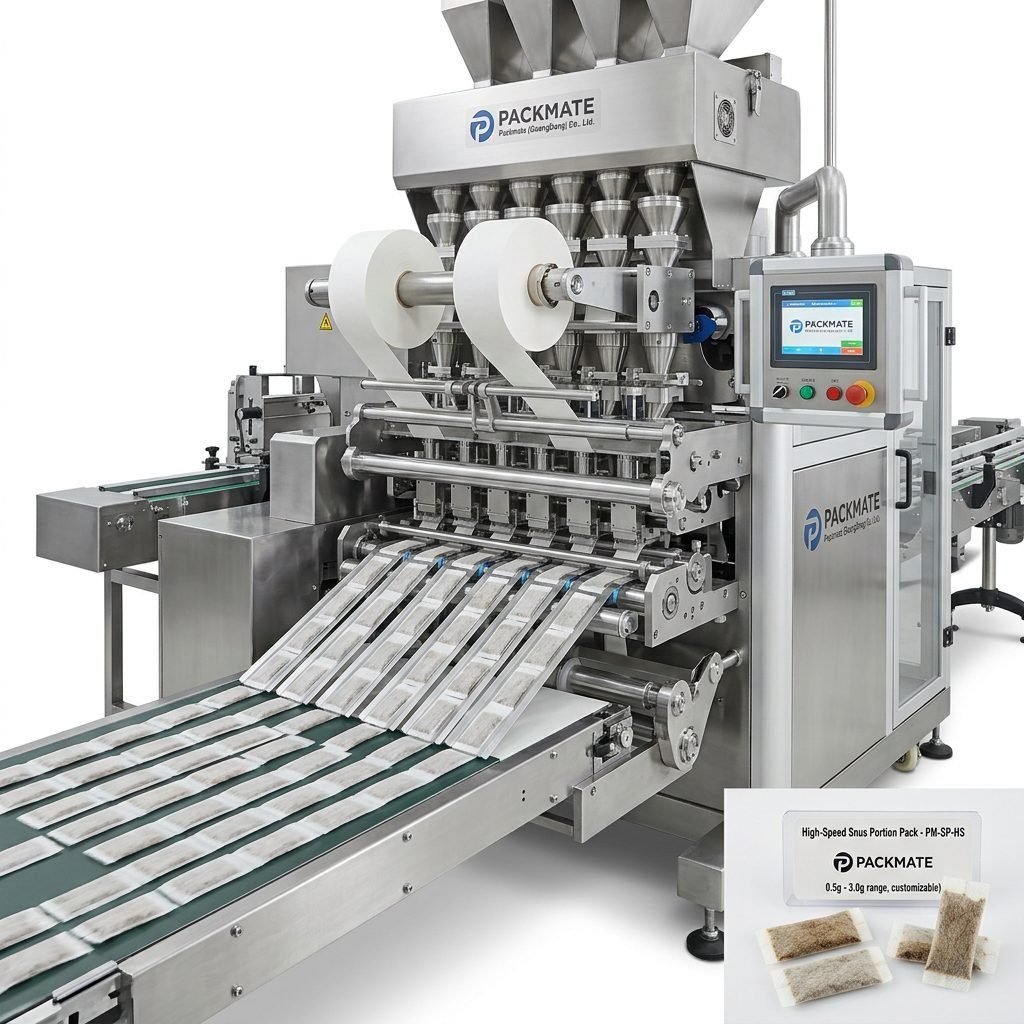
Manufacturers like Packmate specialize in snus and nicotine pouch lines and offer a wide range of machines: Snus & Nicotine Packaging Machines, Sachet & Stick Pack Machines, and full Filling & Packaging Lines to match your production needs.
Integration Considerations
Ask how the supplier will integrate weighers, feeders, and inspection systems. Confirm PLC compatibility, HMI language options, and data export capabilities for traceability and production monitoring.
References, Case Studies & Exhibitions
Review case studies and client references to see real-world performance. Companies that participate in global exhibitions and provide documented case histories demonstrate transparency and market validation. You can learn about installed projects and customer experiences through published case pages and exhibition records.
Browse Packmate’s global cooperation and case examples at Case and learn more About Our Exhibition appearances to validate their international presence.
Contract Terms, Lead Times & Warranties
Carefully review delivery timelines, warranty coverage, scope of supply, and acceptance criteria. Negotiate acceptance tests, penalty clauses for late delivery if needed, and clear definitions of what constitutes “installation complete” and “on-site commissioning.”
Warranty & Spare Parts Guarantees
Ensure the warranty covers both mechanical and electronic components, and request guaranteed spare parts availability for key wear items. A reliable supplier will provide transparent spare parts lead times and competitive pricing.
Making the Final Decision
Use a weighted decision matrix that includes experience, machine performance, TCO, support network, compliance, and references. Assign priorities to factors that matter most to your business (e.g., regulatory support, multi-lane capability, uptime) and score each candidate objectively.
Quick decision checklist: Factory capability ✔, Certifications ✔, FAT available ✔, Local support ✔, TCO analysis ✔.
Why Consider Packmate as a Potential Partner
Packmate Snus Machine brings over 30 years of experience, a 20,000㎡ manufacturing facility, and a broad portfolio of specialized snus and nicotine pouch machines. Their product offering spans multi-lane systems, sachet and stick pack machines, and complete filling and packaging lines. With advanced CNC, precision assembly, and documented global cases, they are positioned to provide reliable turnkey solutions.
Learn more about Packmate’s capabilities and company background on their About Packmate page, or reach out directly through Contact Us to discuss your project requirements.
Final Recommendations
Start with a clear specification of your product (pouch size, fill weight, materials), expected output, and regulatory requirements. Shortlist manufacturers with direct experience in snus/nicotine pouch lines, validate their claims with FAT and references, and evaluate the total cost of ownership rather than the headline price. Prioritize suppliers that offer strong after-sales support and spare parts availability.
Next steps
1) Prepare a detailed RFQ with sample materials. 2) Request FAT with your product. 3) Compare TCO across shortlisted suppliers. 4) Verify certifications and factory capabilities. 5) Negotiate clear warranty and spare parts terms.
Frequently Asked Questions
Q1: How long does it typically take to receive a snus packaging line?
A1: Lead times vary by customization and machine complexity. Standard single-line machines may ship within weeks, while full turnkey multi-lane lines often require several months. Always confirm lead time in writing and include it in the purchase agreement.
Q2: What certifications should I require?
A2: Require CE and ISO certifications as a baseline. For food-contact materials and nicotine-containing products, ensure the supplier can provide material compliance documentation and relevant test reports.
Q3: Can manufacturers provide FAT and sample runs with my product?
A3: The best manufacturers will run FATs with your product or a close analogue to demonstrate performance at target speeds and provide data logs showing dosing accuracy and rejection rates.
Q4: How do I ensure spare parts availability?
A4: Confirm stocking policies, regional warehouses, and typical shipping times for critical wear parts. Ask for a spare parts list and recommended inventory for the first 12 months.
Q5: Should I visit the factory before purchasing?
A5: Yes — a factory visit or virtual tour is highly recommended to verify build quality, assembly standards, and QC practices. It also provides insight into the supplier’s ability to meet delivery and customization requests.