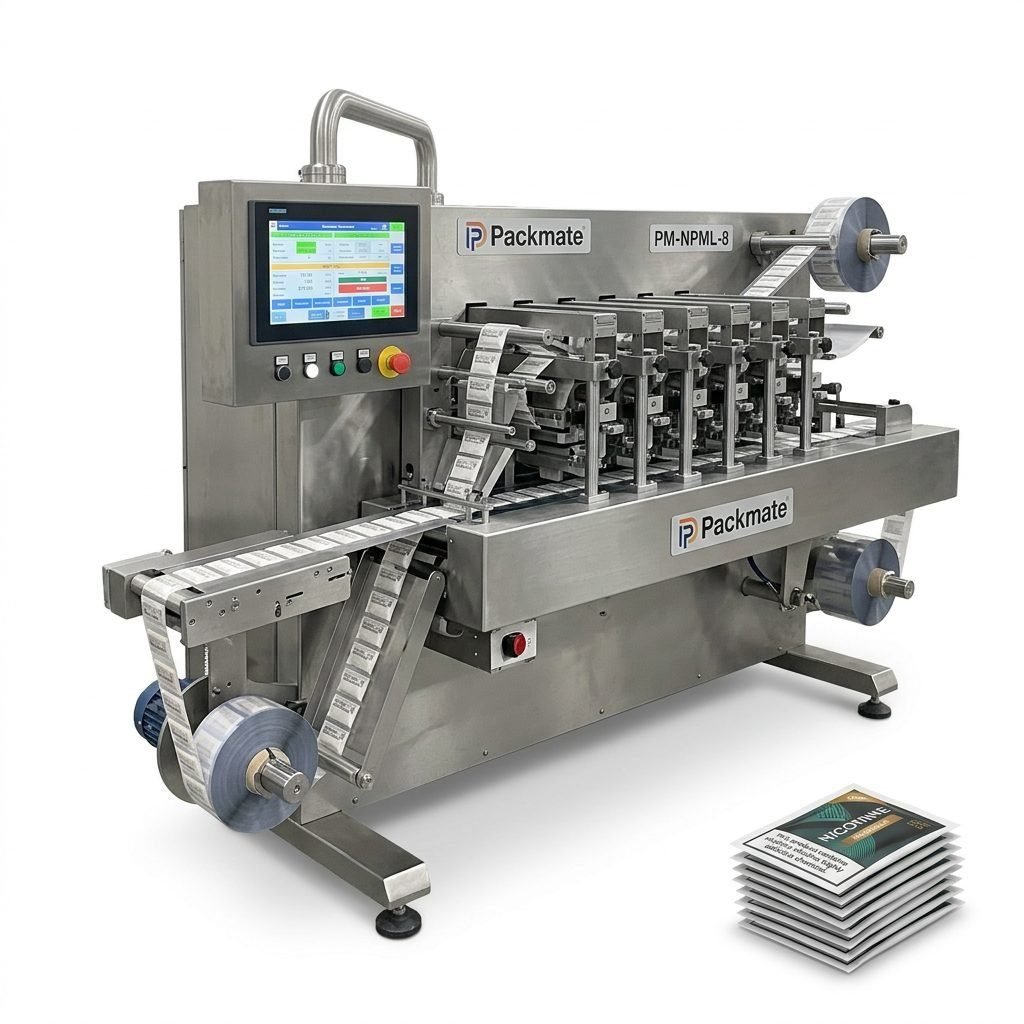
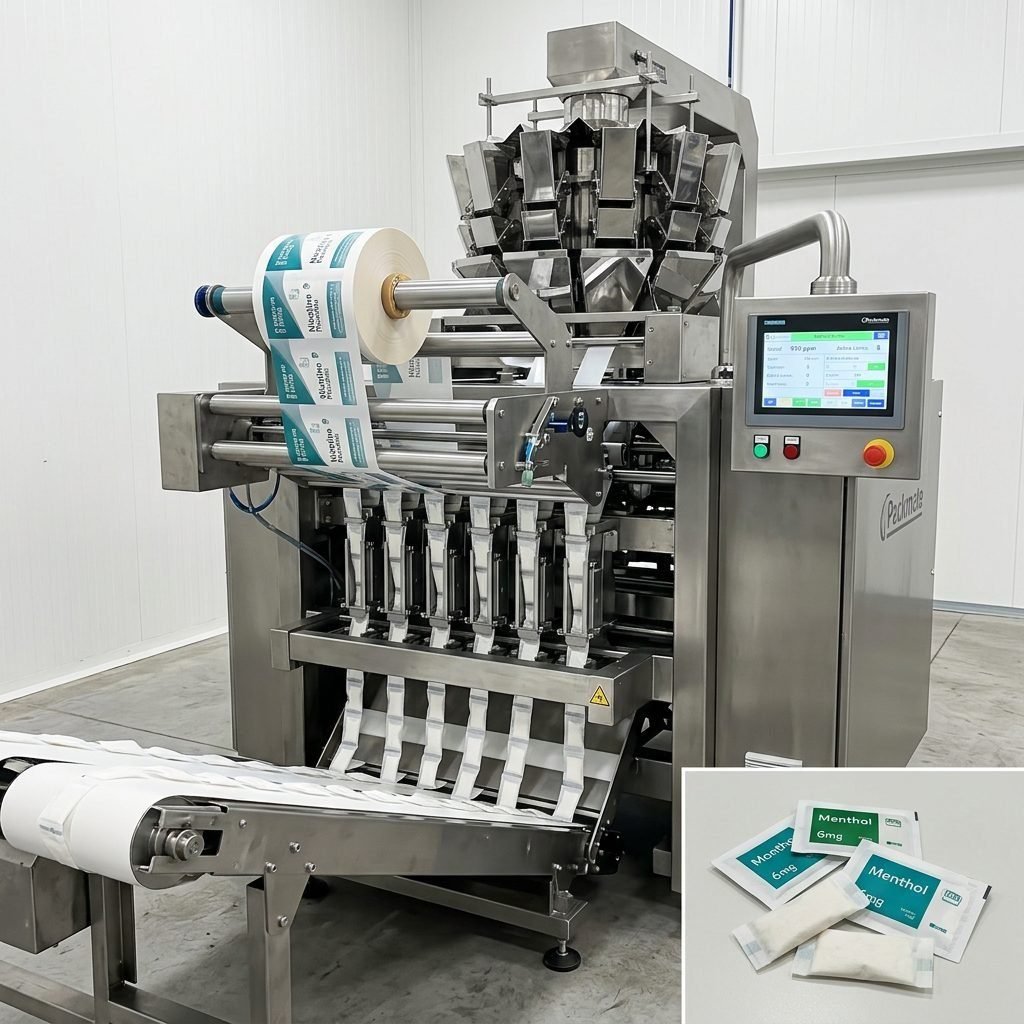
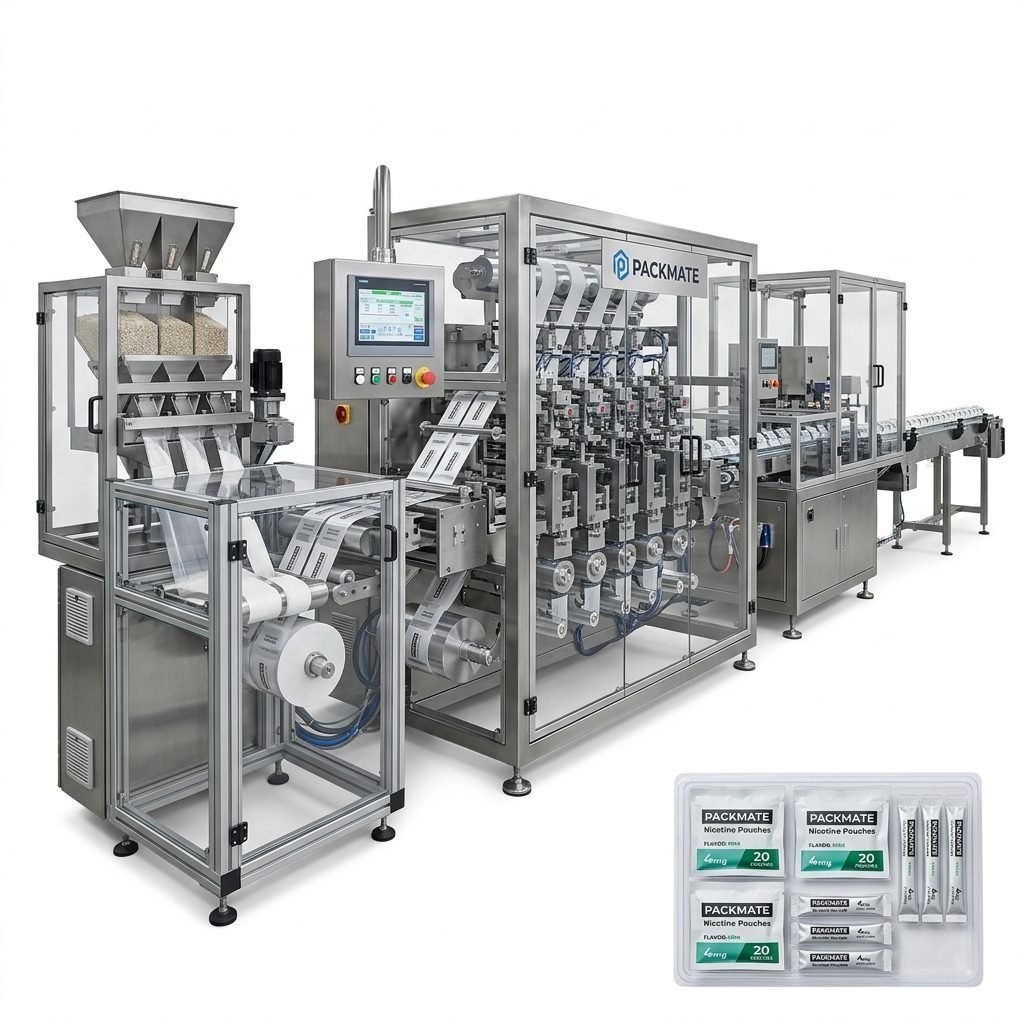
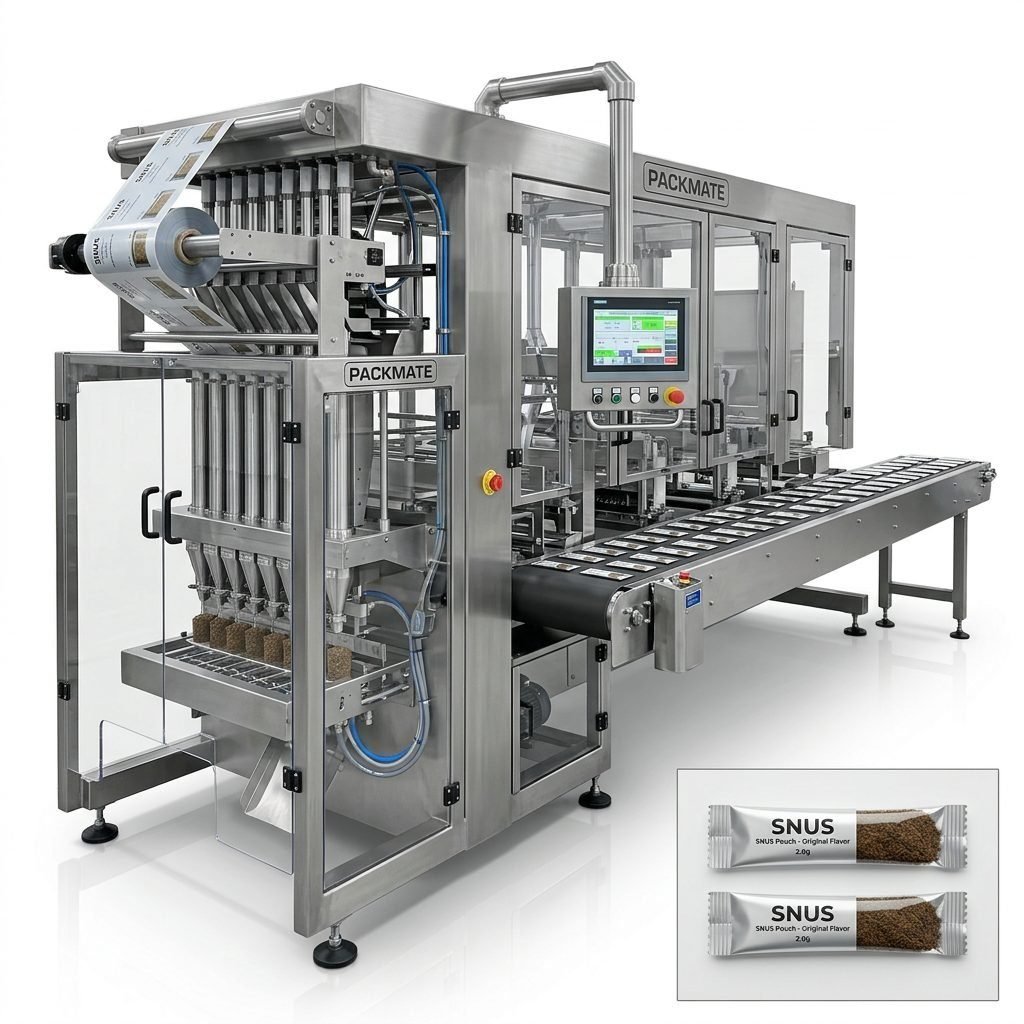
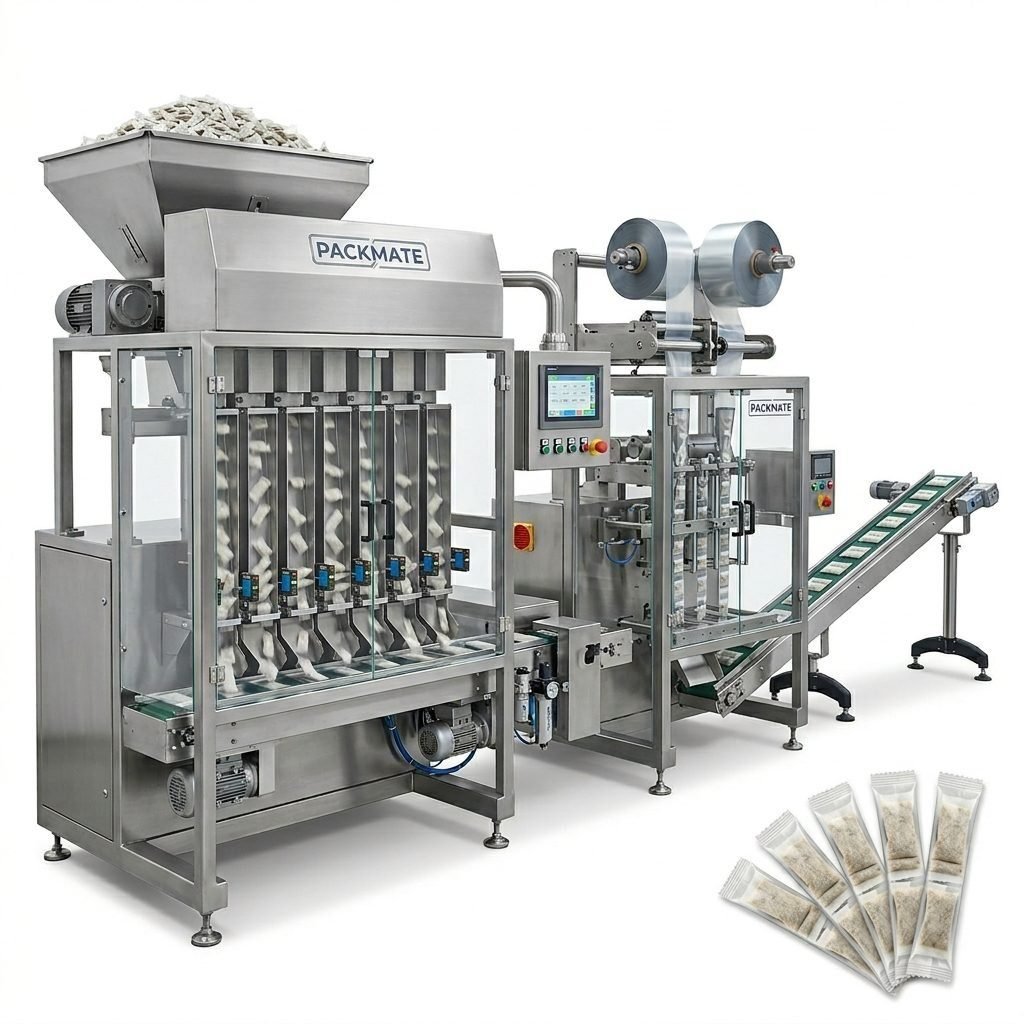
Choosing the right nicotine packaging machine in Gabon requires a clear understanding of product requirements, production goals, local regulations, and long-term service support. This buyer’s guide walks through the practical steps and technical checkpoints that packaging managers, production engineers, and procurement teams should follow to identify the best machine — from compact single-lane snus packers to high-speed multi-lane sachet systems. Read on for a structured, actionable approach that helps you evaluate equipment, vendors, and lifecycle costs with confidence.
1. Start with Product and Format Requirements
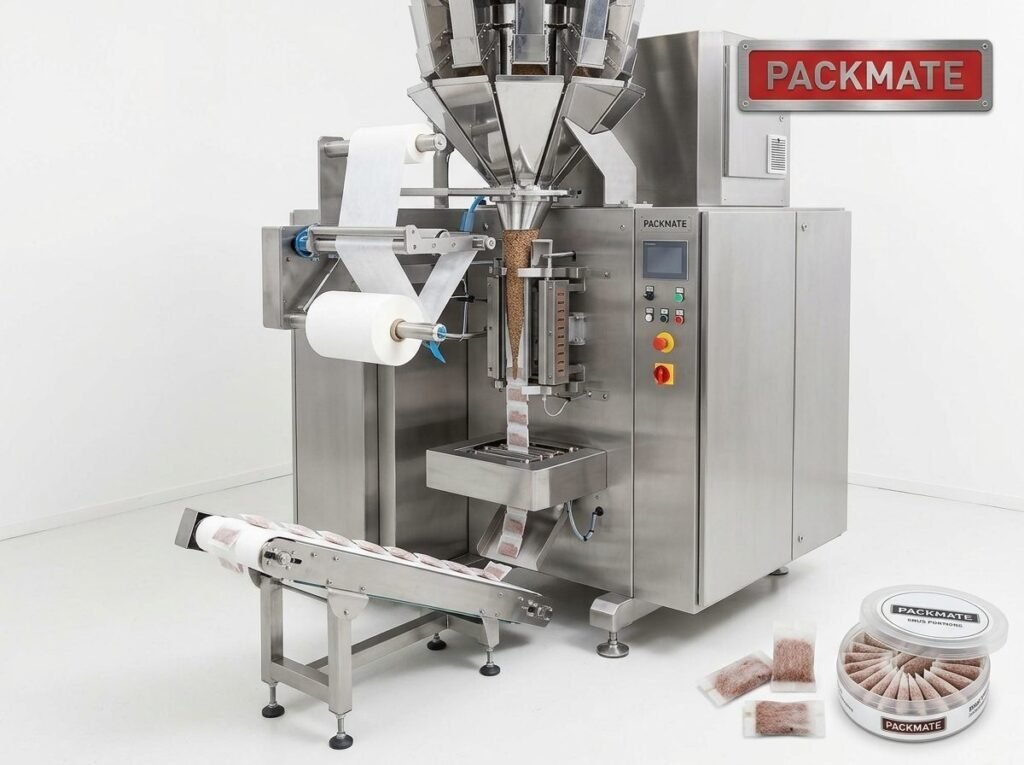
Begin by cataloging the exact product formats you plan to package: nicotine pouches (snus), stick packs, sachets, or multi-lane pouches. Key variables include pouch size, fill weight, moisture sensitivity, and whether your product is powder, granule, or liquid. For example, nicotine pouches require delicate handling and precise dosing — so prioritize machines that advertise stable dosing systems and gentle product transfer.
Tip: If you expect to run multiple formats, look for modular systems that can switch between pouch types quickly, or choose multi-lane machines for higher throughput per footprint.
2. Define Your Throughput Targets and Production Layout
Throughput determines machine class: bench-top or semi-automatic units suit pilot production and R&D, while continuous high-speed lines are needed for commercial volumes. Calculate daily and monthly targets, account for downtime, and include future growth. A machine manufacturer should validate expected output using your product spec and proposed changeover times.
- 📌 Low volume / pilot: 50–500 units/hour — compact stick or single-lane machines.
- ⚙️ Medium volume: 500–5,000 units/hour — modular multi-lane sachet systems.
- ✅ High volume: 5,000+ units/hour — integrated filling & packaging lines with multi-lane capability.
Layout considerations
Plan the factory layout for raw material input, weighing/filling, metal detection (if required), and finished goods packing. Machines with compact footprints and integrated auxiliary equipment reduce material handling and speed up installation.
3. Technical Features to Prioritize
When comparing offers, use a checklist of technical features to quickly differentiate vendors. Prioritize components that affect reliability, regulatory compliance, and product quality.
Critical features to request in quotes:
• Dosing system type and accuracy (e.g., auger, vibratory, piston) — specify target tolerance.
• Forming/sealing method and film compatibility (heat-seal, cold-seal, laminated films).
• PLC & HMI models, recipe storage capability, and remote diagnostic options.
• Changeover time, tool-free adjustments, and spare-parts list.
• Safety & compliance: CE/ISO certificates and CIP/COP options if required.
4. Material Compatibility and Consumables
Material supply is often overlooked. Confirm the preferred film types and pouch materials for each machine model and whether the vendor can recommend local or international suppliers. Machine compatibility with standard roll widths and core sizes reduces downtime and avoids costly film conversions.
If you plan to use barrier films for extended shelf life or special laminates for printing, include that in your technical discussions. Also ask about recommended spare part kits and consumable lifetimes.
5. Quality, Testing & Validation
Request performance data and testing protocols. A trustworthy manufacturer will provide test runs, sample packs, and performance guarantees for speed, weight accuracy, and seal integrity. For nicotine products, confirm that the sealing system achieves consistent hermetic seals and that your material choices pass stability tests.
Request the following documents:
• Factory acceptance test (FAT) report with product samples
• Machine inspection checklist and calibration records
• Certificates such as CE, ISO and any local regulatory compliance guidance
6. Supplier Capabilities and After-Sales Support
A machine is only as good as the support behind it. Evaluate the manufacturer’s global service network, lead times for spare parts, and installation and training packages. For Gabon, local or regional support partners reduce downtime and shipping costs.
Packmate Snus Machine, with decades of engineering experience and a 20,000㎡ facility, offers turnkey packaging lines and global cooperation cases, which can be advantageous for buyers needing integrated solutions and long-term technical support.
Questions to ask potential suppliers
- 📌 What is the typical lead time from order to shipping for my machine model?
- ⚙️ Do you provide local installation and operator training in Gabon or the region?
- 🔧 What backup parts are included with purchase, and what is the recommended spare parts inventory?
- 📞 Are remote diagnostics and software updates available?
7. Total Cost of Ownership (TCO) and ROI
Purchase price is only the beginning: include downtime, maintenance, consumables, energy consumption, and labor when estimating TCO. Faster machines with higher automation often reduce labor costs and waste — improving ROI even with a higher initial investment.
Cost components to model:
• Capital cost and financing terms
• Installation, commissioning, and validation expenses
• Energy usage (kW) at typical operating speeds
• Consumables: films, filling nozzles, seals, lubrication
• Annual maintenance hours and spare parts consumption
8. Compliance, Certification and Local Regulations
Nicotine products may be subject to specific labeling, ingredient tracking, and safety regulations in Gabon. Work with suppliers who can provide compliance documentation and guidance for international standards (CE, ISO) and help with local regulatory submissions if required.
Confirm whether machine components contacting product are food-grade and whether the vendor offers hygienic design options to simplify cleaning and compliance checks.
9. Factory Visit, FAT and SAT — How to Validate Performance
Whenever possible, schedule a factory acceptance test (FAT) to witness the machine running with your product. Request sample packs and performance videos. After shipping, schedule a site acceptance test (SAT) to validate installation and throughput under real production conditions.
FAT checklist:
• Run your SKU(s) and measure weight accuracy, seal strength, and cycle speed
• Test changeovers and recipe recall
• Verify HMI language, alarms, and remote access
• Inspect mechanical tolerances, guarding, and finishing quality
10. Choosing the Right Machine Type — Quick Match Guide
Here is a simple mapping to help you narrow choices by application and volume.
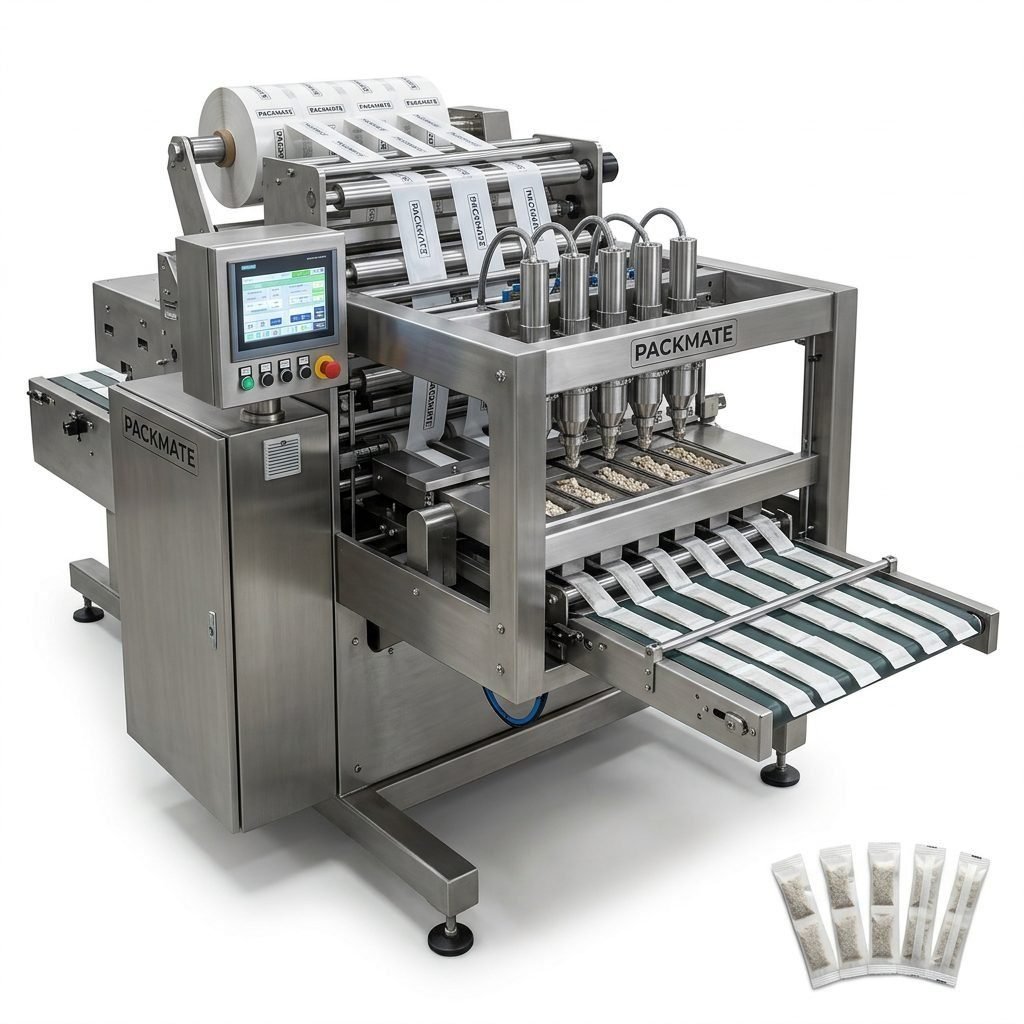
- Stick pack machines — best for single-portion stick formats and sachets at low-to-medium speed.
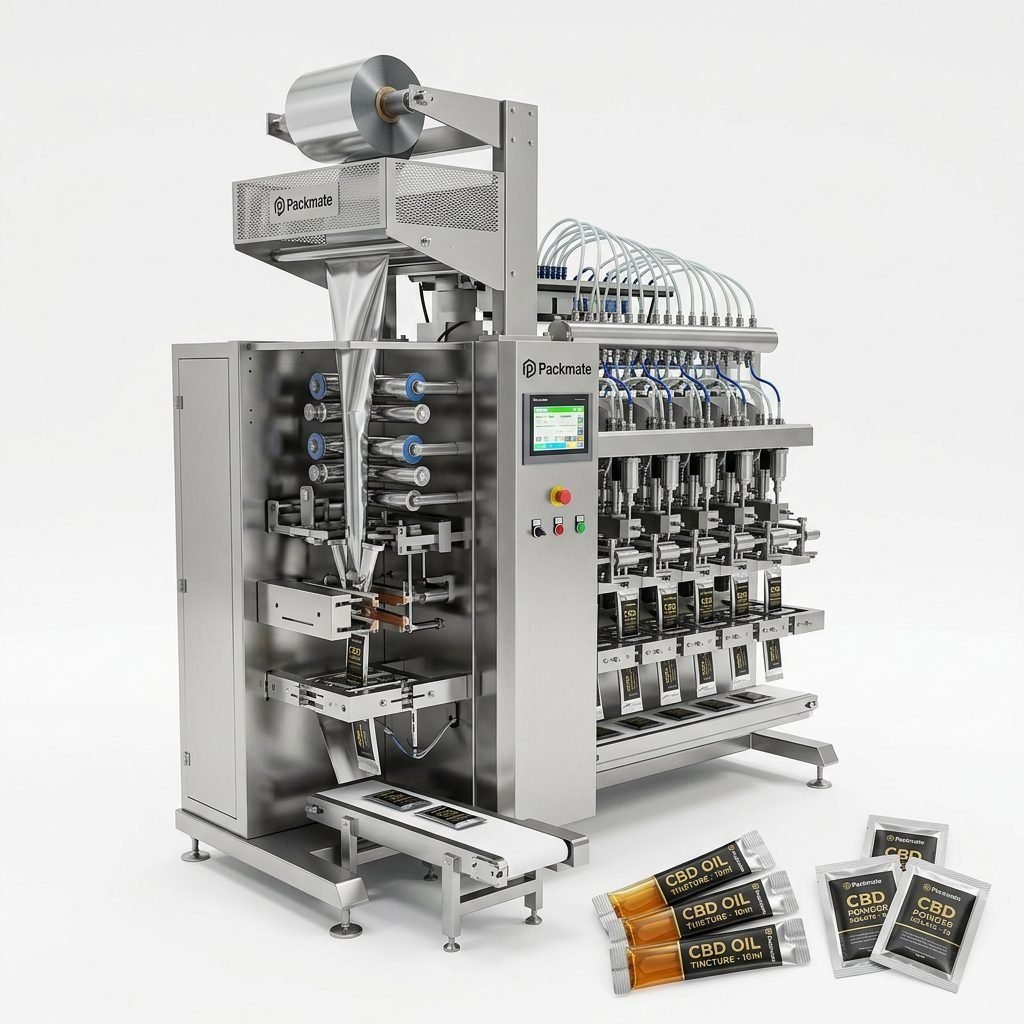
- Sachet & multi-lane machines — ideal for small-dose nicotine pouches and high lanes per minute production; see Sachet & Stick Pack Machines for models and specs.
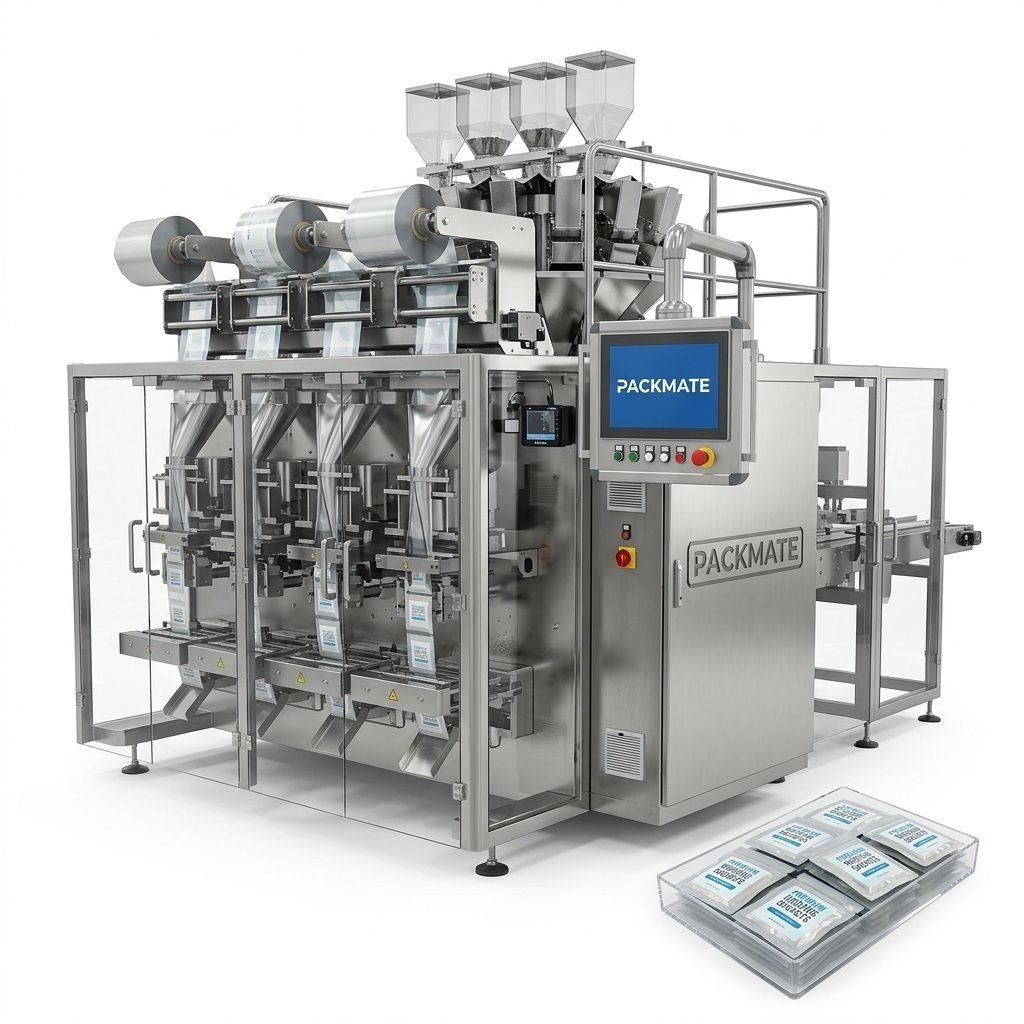
- Fully integrated filling and packaging lines — recommended when you need upstream dosing/weighing and downstream case packing in one turnkey line; explore Filling & Packaging Lines for options.
Recommended resources
For model selection and detailed specifications, review product categories such as Snus & Nicotine Packaging Machines, Sachet & Stick Pack Machines, and Filling & Packaging Lines from experienced manufacturers like Packmate.
11. Installation, Training and Spare Parts Planning
Negotiate installation, operator and maintenance training within the contract. Clarify which spares are included and the expected timeline for replenishment. If your facility is remote, maintain a higher base inventory of critical spares such as PLC modules, bearings, belts, and sealing components.
Service package components to request:
• On-site commissioning and performance validation
• Comprehensive operator and maintenance training
• Spare parts list with pricing and recommended stock levels
12. Final Selection and Contract Negotiation
Compare final quotations by aligning scope, guaranteed performance, warranty terms, and penalties for missed delivery or underperformance. Make sure contractual scope includes FAT, SAT, documentation, spare parts, and training. Ask for references and case studies — real installation examples prove capability; you can review Case studies from manufacturers to validate claims.
Conclusion
Selecting the right nicotine packaging machine in Gabon is a multi-dimensional decision: balance product format needs, throughput targets, material compatibility, supplier capabilities, and total cost of ownership. Work closely with suppliers who offer transparent testing, reliable after-sales support, and clear documentation. Choosing a partner with global experience and turnkey capabilities — including modular multi-lane systems — will reduce risk and accelerate your time-to-market.
Vendor discovery links
• Product categories: Snus & Nicotine Packaging Machines
• More machines: Bag & Pouch Packaging Machines | Weighing & Packaging Systems
• Company & contact: About Packmate | Contact Us
Frequently Asked Questions
Q1: What machine type is best for small-batch nicotine pouch production?
For small-batch production, a modular single-lane sachet or stick pack machine is often best because it minimizes capital cost and allows flexible product tests. If you expect to scale quickly, choose a machine with an easy upgrade path to multi-lane configurations.
Q2: How important is film selection and where can I source suitable films?
Film selection is crucial for seal integrity and shelf life. Work with your machine supplier to validate recommended films and ask for supplier referrals. Many manufacturers supply technical specs for compatible films and can help source them through local distributors.
Q3: What after-sales services should I require?
Insist on commissioning, operator and maintenance training, a clear spare-parts list, and options for remote diagnostics. Service agreements with defined response times for spare parts and technical support are critical for minimizing downtime.
Q4: Can I get a turnkey solution that includes upstream filling?
Yes. Many vendors offer fully integrated filling and packaging lines that include weighing, dosing and packaging modules. Evaluate turnkey offers carefully to ensure each module is optimized for your product and that the integrator provides single-point responsibility for performance.
Q5: Where can I view real case studies and certifications?
Review the manufacturer’s case studies and certificates sections online to verify field performance and compliance. For example, case examples and certificates are often available on the vendor’s website and help validate the supplier’s track record and quality systems.