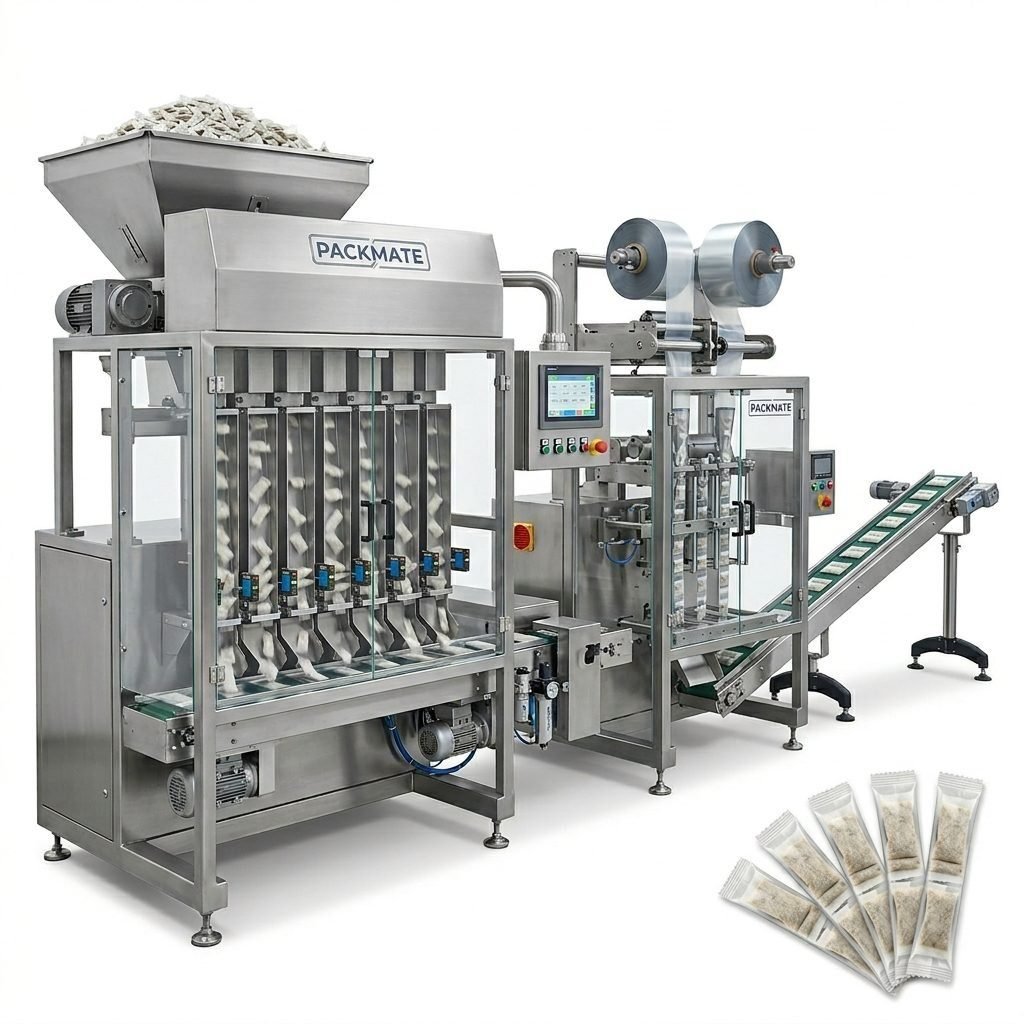
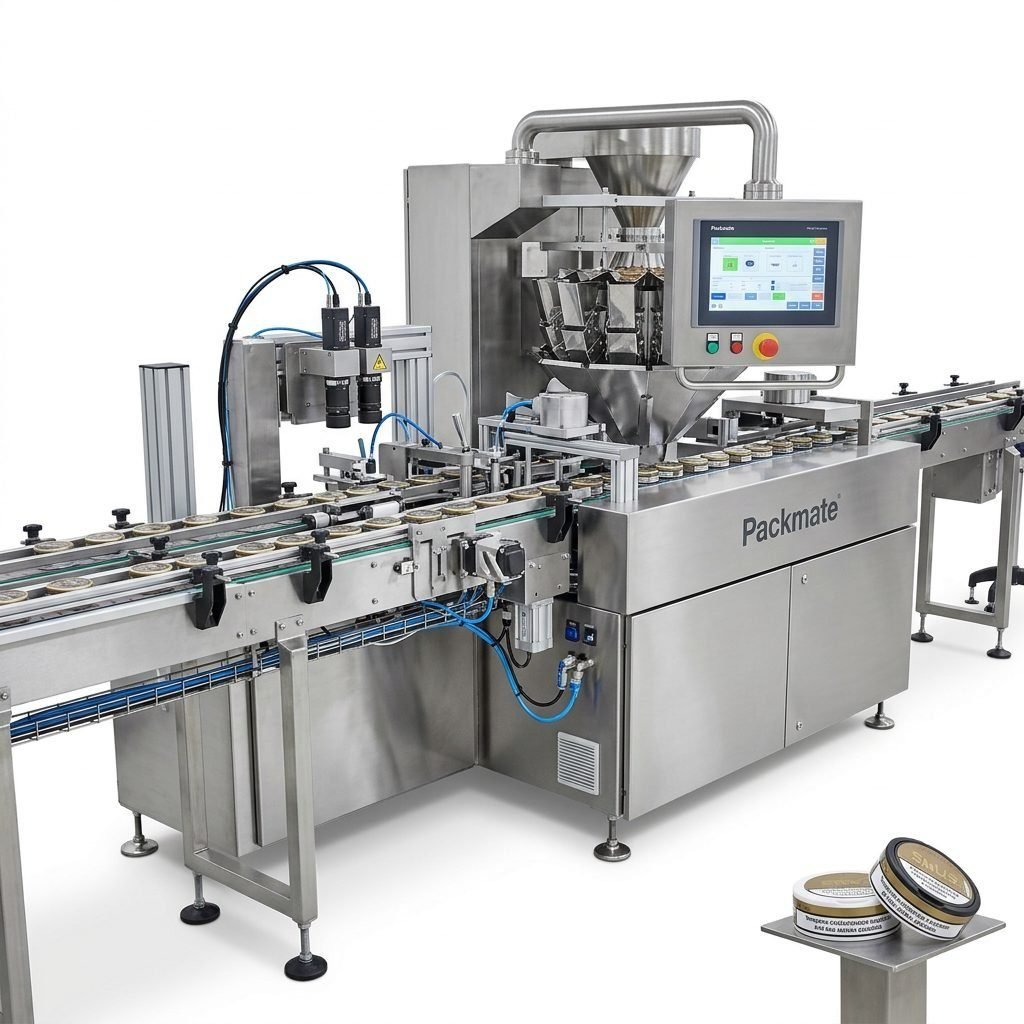
Custom Snus Packaging Machine OEM Solutions for Pouch, Can and Stick Packs are transforming how manufacturers bring nicotine pouches, snus cans and single-serve stick packs to market. In this comprehensive overview you will find practical guidance on choosing the right equipment, how OEM customization works, and what makes a packaging partner reliable — all with a focus on real-world production efficiency, regulatory compliance and scalable turnkey systems.
🔧 Why OEM Solutions Matter for Snus & Nicotine Packaging
OEM solutions are not just about branding; they are about engineering machines to meet exact product specifications, production throughput and regulatory demands. For businesses producing nicotine pouches, small-dosage snus sachets, or sealed cans, a tailored line ensures consistent portioning, hygienic handling and minimal product loss.
Manufacturers that choose OEM partnerships gain access to optimized workflows, custom tooling, and software integration that supports traceability, recipe control and multi-product changeovers. This is particularly important for the evolving snus and nicotine pouch market where product formats vary and demand rapid adaptation.
📦 Core Packaging Formats: Pouch, Can and Stick Packs
Different packaging formats require different mechanical and control solutions. Understanding the nuances of each format helps in selecting the right machine family and components.
Pouch Packaging (Multi-lane & Single-lane)
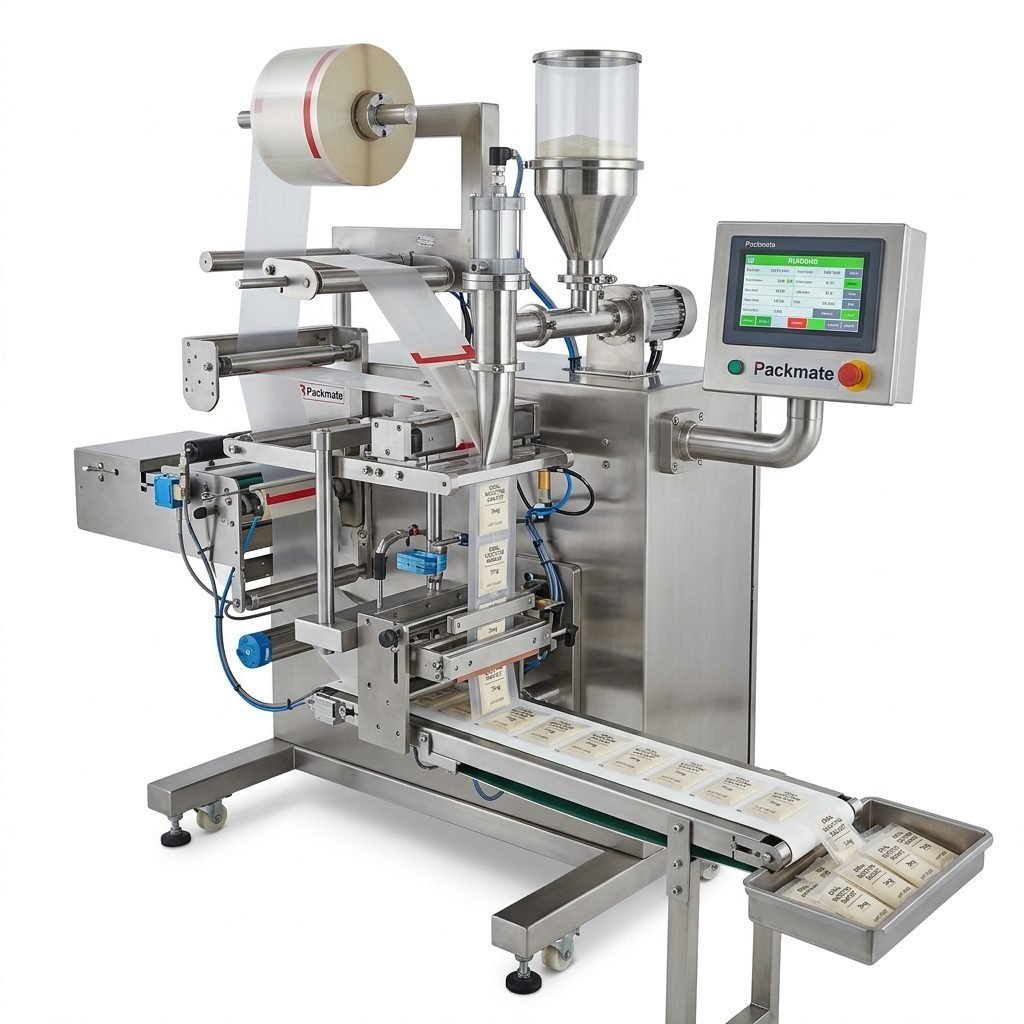
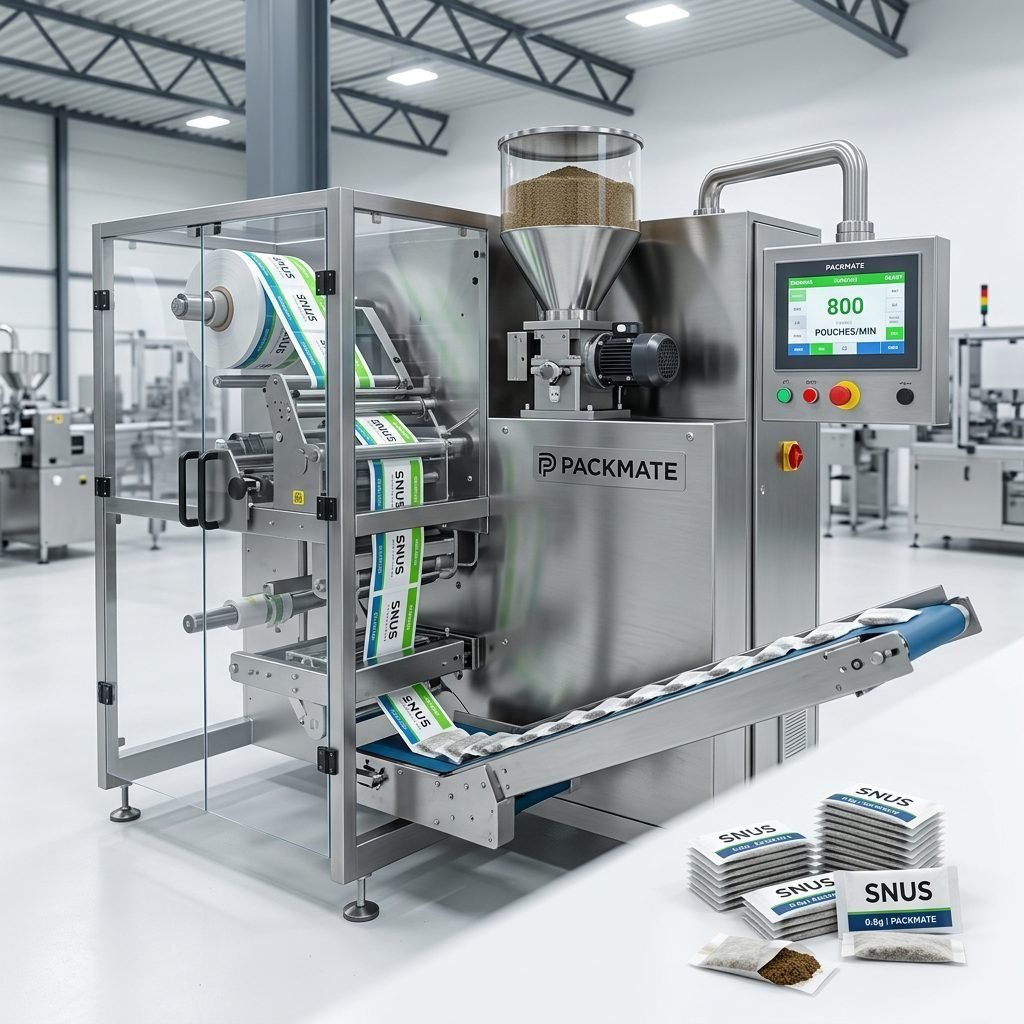
Pouch machines for nicotine and snus products often need multi-lane capacity to increase throughput without increasing footprint. Features to look for include precise dosing systems for powders or granules, synchronized multi-lane film transport, and robust sealing heads to preserve freshness and comply with tamper-evidence requirements.
Can Packaging (Rigid Containers)
Can or tin packaging requires automated filling, lid placement and sealing stations. Machines must be able to handle nest feeding of can bodies, precise fill measurement, vibration or tamping for settling product and secure lid application. Controlled atmosphere options and secondary-pack inspection can be added for quality assurance.
Stick Packs & Sachets
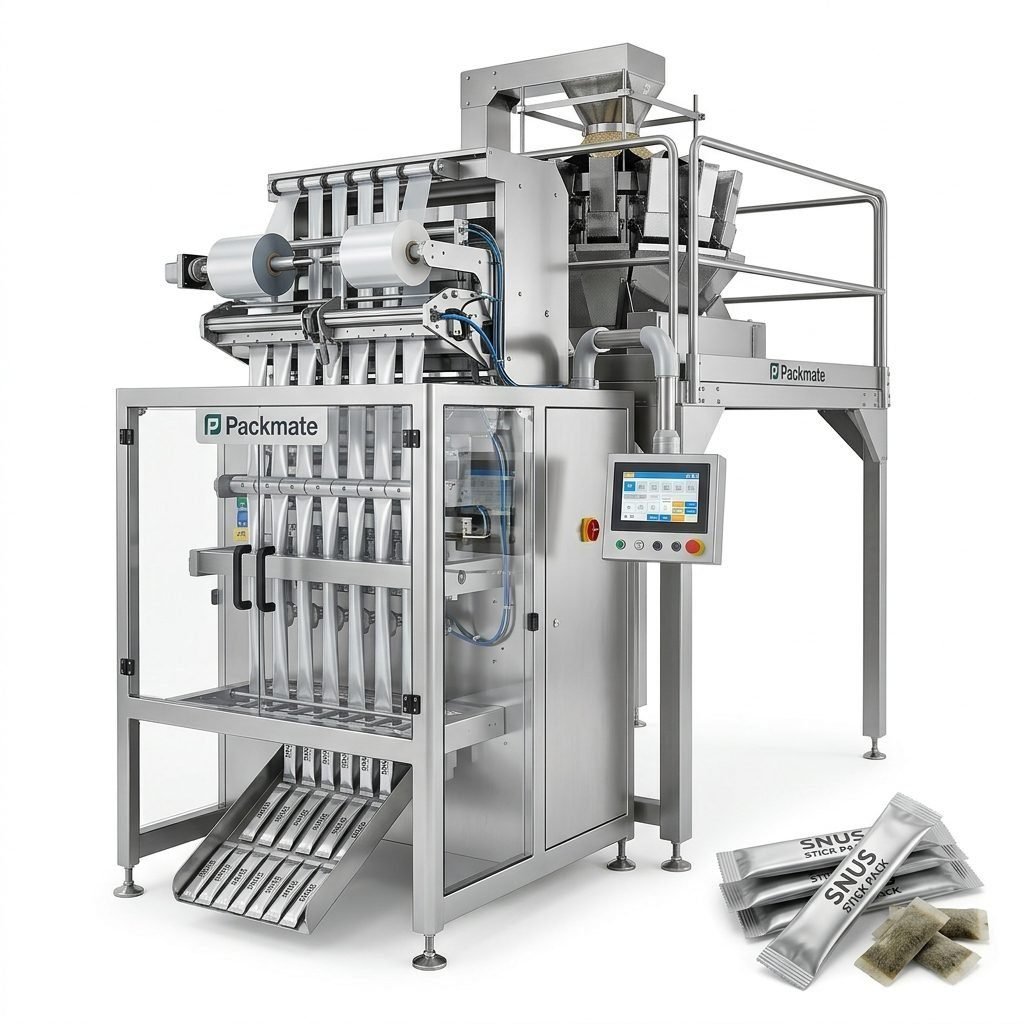
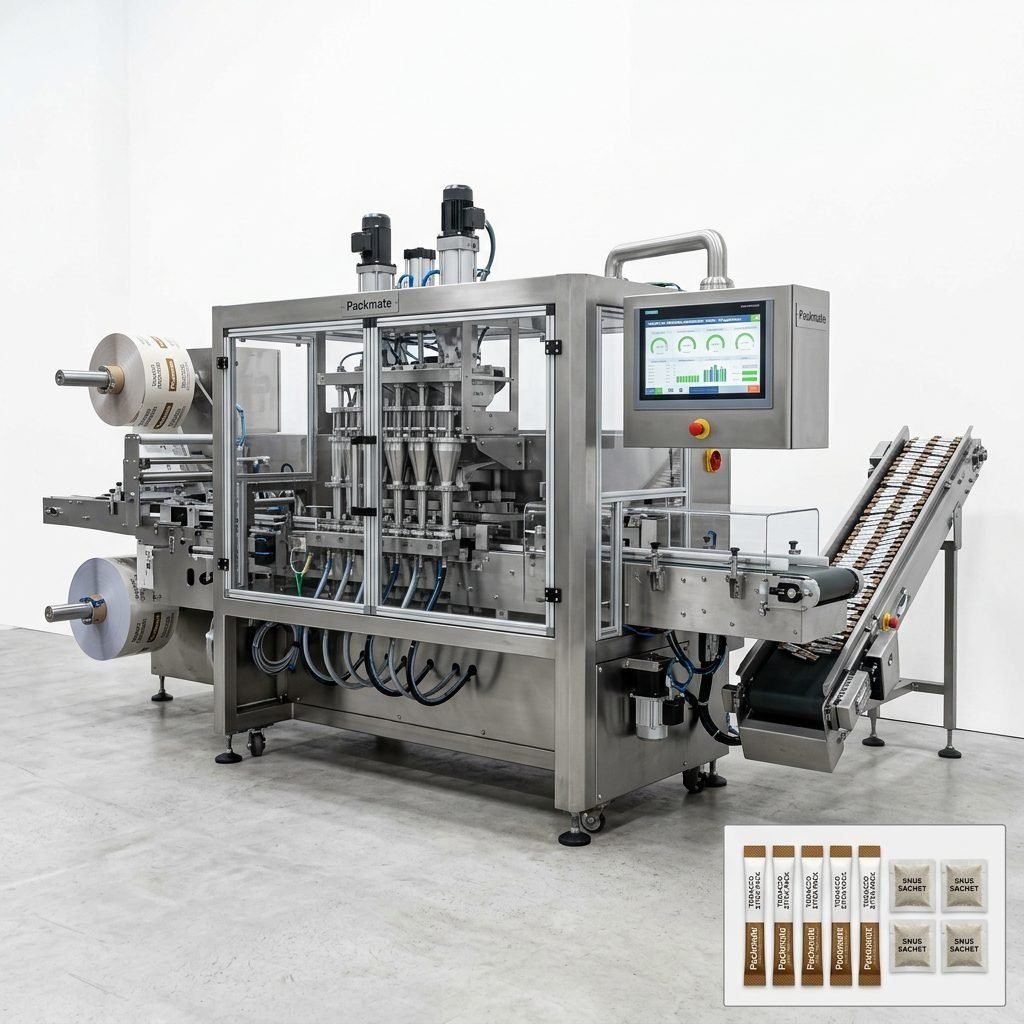
Stick pack systems and sachet machines are ideal for single-dose nicotine products. Look for high-speed servo drives, accurate forming and cross-sealing, and gentle product handling to keep sensitive formulations intact. Multi-head filling and intermittent motion designs allow for both speed and precision.
✅ Key takeaway: Choosing the correct format-specific solution reduces downtime, improves yield and accelerates compliance with labeling and packaging regulations.
⚙️ Technical Building Blocks of an OEM Snus Packaging Line
A turnkey snus packaging solution combines several precision subsystems into a coordinated production line. Each subsystem should be customizable and serviceable to match product changes over time.
🔹 Feed & indexing modules for cans, pouches or stick blanks;
🔹 Dosing and metering units for powder, granule or paste formulations;
🔹 Forming, filling and sealing assemblies;
🔹 In-line capping, lidding or end-sealing stations;
🔹 Quality inspection (vision systems, metal detection, weight checking);
🔹 In-line secondary packing: shippers, cartons and case packers;
🔹 Integrated PLC/HMI with recipe management and remote diagnostics.
🔔 Important: Standardized modular components reduce lead time for customization and simplify spare-parts management.
🏭 Factory Capacity, Quality & Certifications
A reliable OEM partner should demonstrate strong manufacturing capability. Look for a facility with advanced CNC machining centers, precision assembly lines and rigorous testing — features that ensure consistent machine tolerances and long-term stability.
Certifications such as CE and ISO indicate compliance with safety and quality standards. In addition, confirm that the manufacturer can support acceptance testing, FAT (Factory Acceptance Test) and SAT (Site Acceptance Test) procedures prior to shipment.
🔎 Quality Control, Testing and After-Sales Support
Robust quality control includes pre-delivery calibration, functional testing, and validation under production-like conditions. After-sales support should include commissioning, operator training, spare parts availability and remote troubleshooting.
Selecting a partner with global support networks and demonstrated case studies will minimize risks and shorten time-to-market for new SKUs.
📈 Scalability & Production Planning
Scalability should be built in from the start. Designs that permit lane additions, higher-speed servo options, or quick-change tooling make it easier to scale output as demand grows. Also consider production planning features such as digital recipe libraries, batch traceability and connectivity to MES/ERP systems.
📌 Pro tip: Multi-lane pouch machines deliver higher throughput per square meter and are ideal for small-dose snus products where speed and footprint matter.
🔗 Integrating Smart Features and Compliance
Modern packaging lines integrate vision inspection, barcode/QR printing, and serialization to meet modern regulatory and retail requirements. Integration of these systems at OEM stage ensures consistent performance and avoids retrofit complications.
Consider specifying options such as nitrogen flushing for cans, clean-room compatible enclosures, CIP-friendly units and GMP-compliant materials where product contact is involved.
🤝 Working with an OEM Partner: What to Expect
A transparent OEM process typically includes these phases:
1. Requirements gathering: product specs, expected throughput, site constraints;
2. Concept design & layout: line drawings, equipment selection and utilities;
3. Proposal & budget: BOM, timeline and acceptance criteria;
4. Engineering and prototyping: machine design, software recipe development;
5. FAT & validation: customer witness tests and performance verification;
6. Commissioning and training: on-site setup, process optimization and staff training;
7. Ongoing support: spare parts, upgrades and preventive maintenance.
📁 Case Studies & Real-World Examples
OEM success stories often involve adapting machines for new product forms or scaling lines to meet seasonal demand. Real cases show how a modular snus pouch line was upgraded to a multi-lane configuration to triple output without expanding factory footprint, or how a can filling line was retrofitted with automatic lid applicators and vision systems for improved quality control.
Explore examples of engineered solutions and client success at the manufacturer’s case portfolio for further insight.
Related resources: Case, Snus & Nicotine Packaging Machines, and Sachet & Stick Pack Machines.
🏷️ Customization Options and Add-Ons
Custom options frequently requested by snus and nicotine pouch producers include:
• Custom dosing heads for different particle sizes and humidity-sensitive mixes;
• Multi-lane synchronization kits for parallel pouch forming;
• Automatic can orienters and lid feeding systems;
• Touchscreen HMI with multi-language support and recipe lockout;
• Remote monitoring and tele-service for rapid troubleshooting.
💡 Note: When evaluating customization, ask for lifecycle cost analysis — the cheapest initial purchase can be the most expensive to operate without the right options.
🌍 Global Presence, Exhibitions & Verification
Reputable OEM manufacturers maintain a global exhibition schedule where you can see live demonstrations and validate machine performance. These events are excellent opportunities to meet engineers, watch real-time machine runs and discuss compliance with local regulations.
For more company background and upcoming events, check the provider’s About and Exhibition pages for verification and direct contact:
About Packmate |
Our Exhibition.
📞 Choosing a Partner: Questions to Ask
When vetting OEM partners, prioritize transparent answers and documented evidence. Key questions include:
• Can you provide FAT videos and references from existing snus/nicotine customers?
• What are lead times for custom tooling and critical spare parts?
• What warranty and service levels are included, and is remote support available?
• Are line validations and on-site training included in the package?
• What are the machine uptime guarantees and historical MTBF metrics?
📣 Final reminder: Request a full BOM and control architecture map — this simplifies future integration with your factory systems.
🔍 Additional Resources & How to Proceed
If you are evaluating machinery options, consider reviewing product families and technical datasheets to match your production goals. Useful product pages include:
Bag & Pouch Packaging Machines |
Filling & Packaging Lines |
Weighing & Packaging Systems.
📌 How to get started
Start by documenting product parameters: pouch material and thickness, desired can dimensions, target fill weights, and estimated daily output. Share these with your OEM representative to receive a tailored layout and budget estimate.
📞 Next step: Contact the provider for an initial consultation and request factory references. Use the Contact page to schedule a walk-through or virtual demo: Contact Us.
FAQ — Common Questions
Q1: How long does it take to get an OEM snus packaging line designed and delivered?
A1: Typical lead times depend on customization level; for semi-standard machines it can be 12–20 weeks, while fully bespoke lines may require 20–36 weeks including FAT.
Q2: What certifications should I expect for snus packaging equipment?
A2: Look for CE and ISO compliance as baseline. Additional documentation for electrical safety, machine guarding, and material contact certifications should be provided on request.
Q3: Can a single OEM supplier handle both pouch and can packaging on the same line?
A3: Some manufacturers offer modular systems that allow shared modules or quick-change tooling to switch between formats, but full conversion may require additional tooling and validation time.
Q4: What after-sales services are typically available?
A4: Expect commissioning, operator training, spare parts kits, preventive maintenance programs and remote diagnostics. Confirm SLA response times and spare parts lead times before purchase.
Q5: Where can I view examples and get more detailed product specs?
A5: Visit the manufacturer’s product pages and case studies to view models, datasheets and verified installations: Catalog and Case.