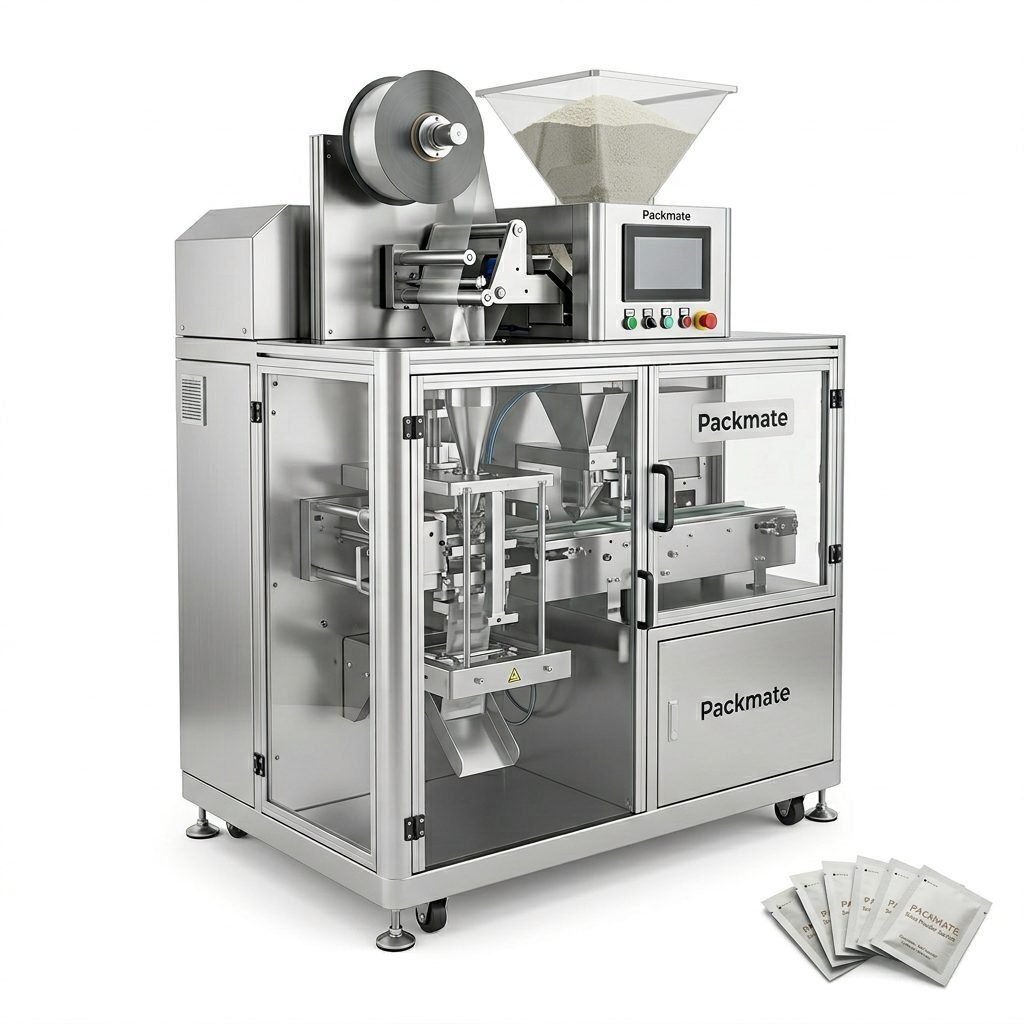
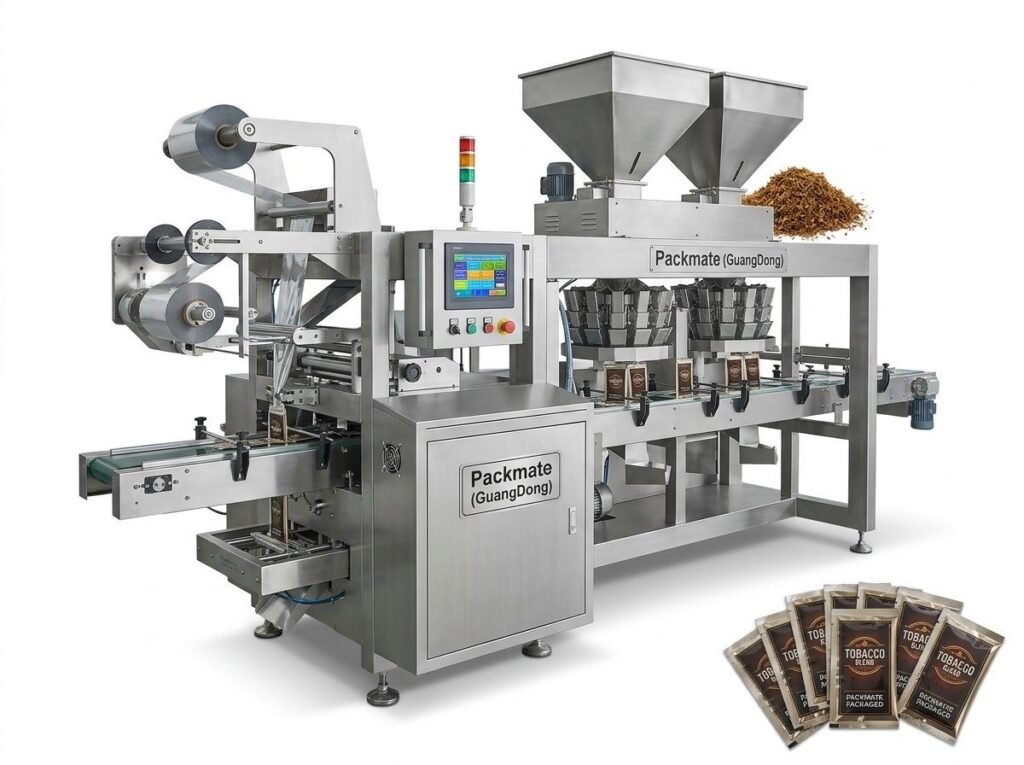
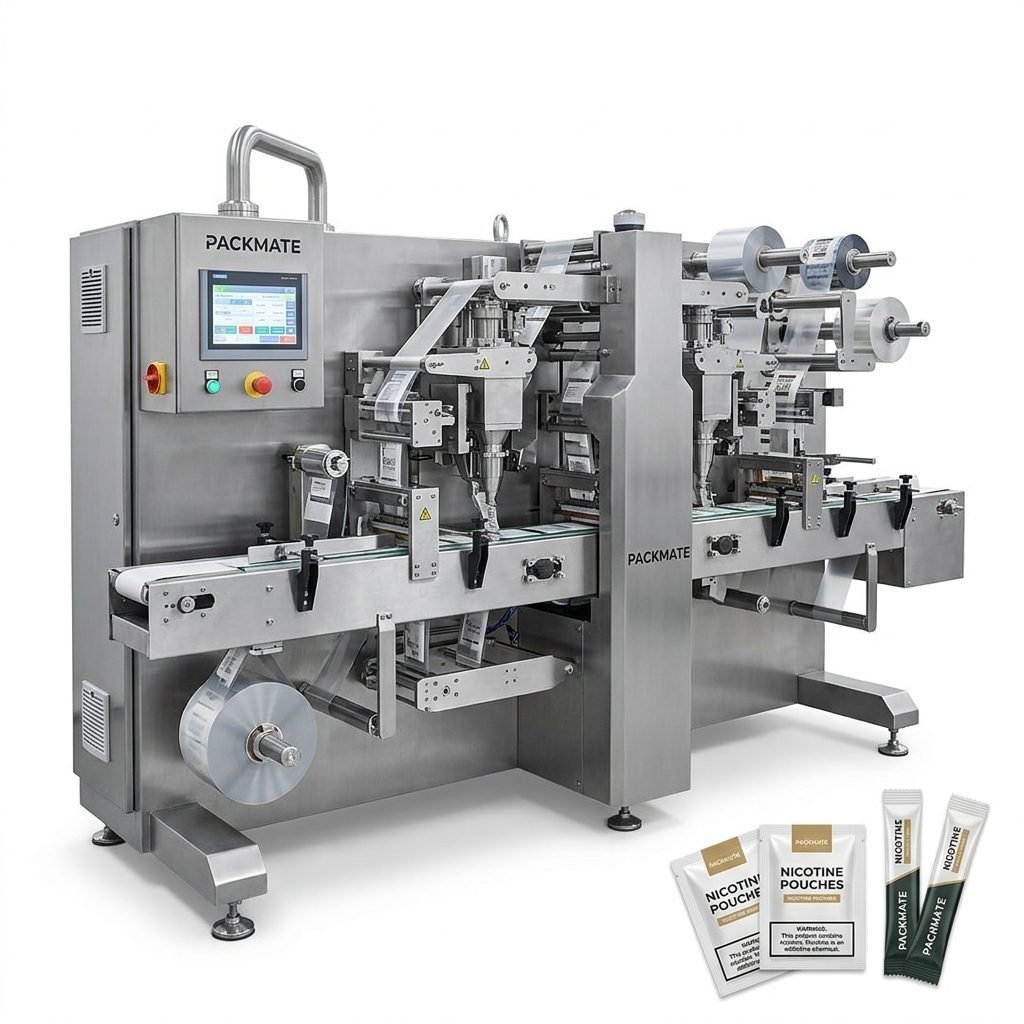
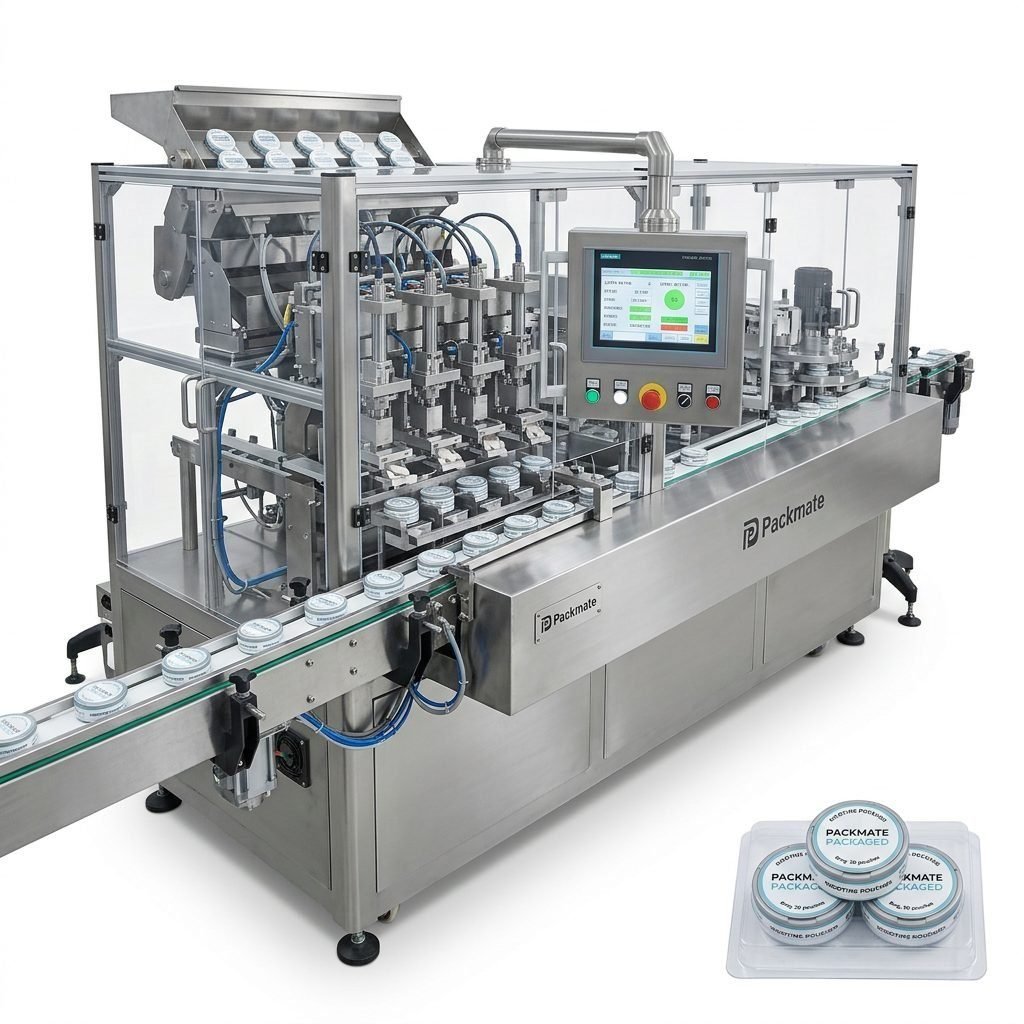
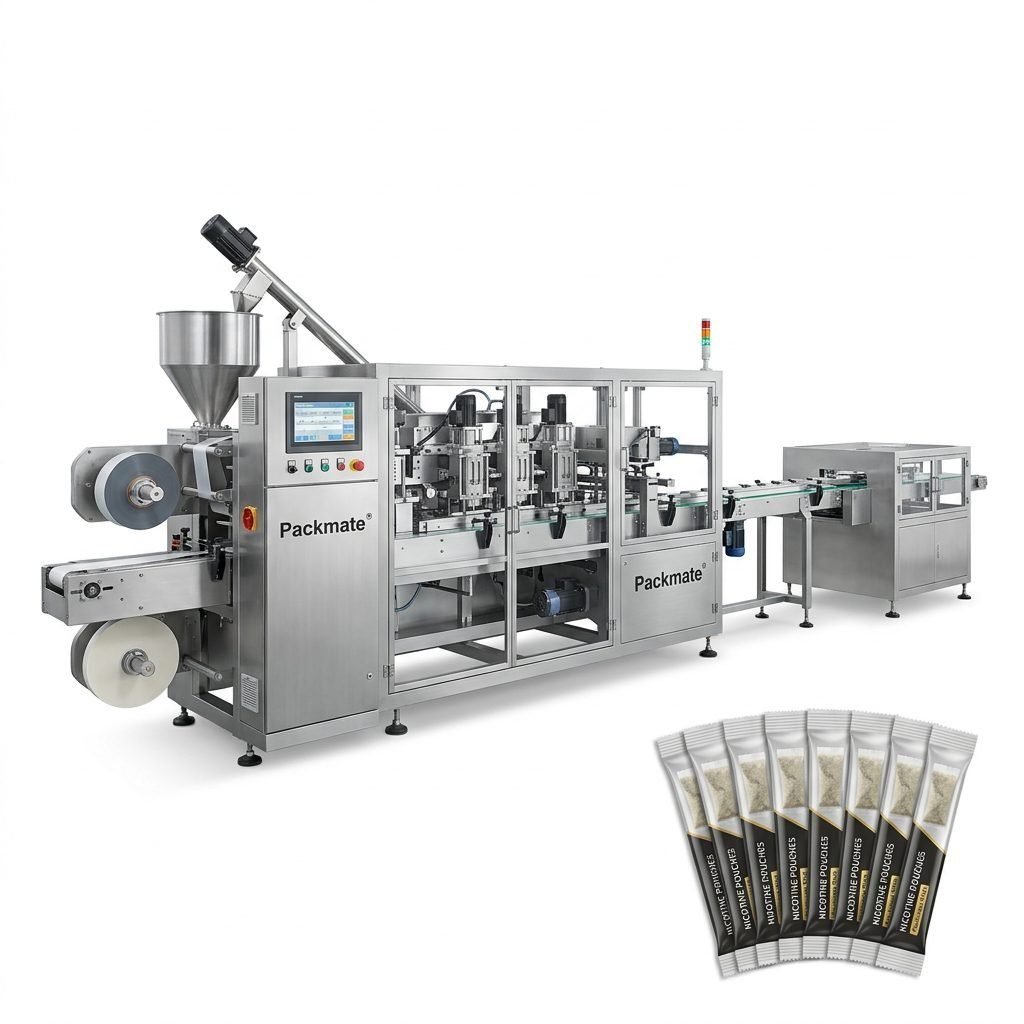
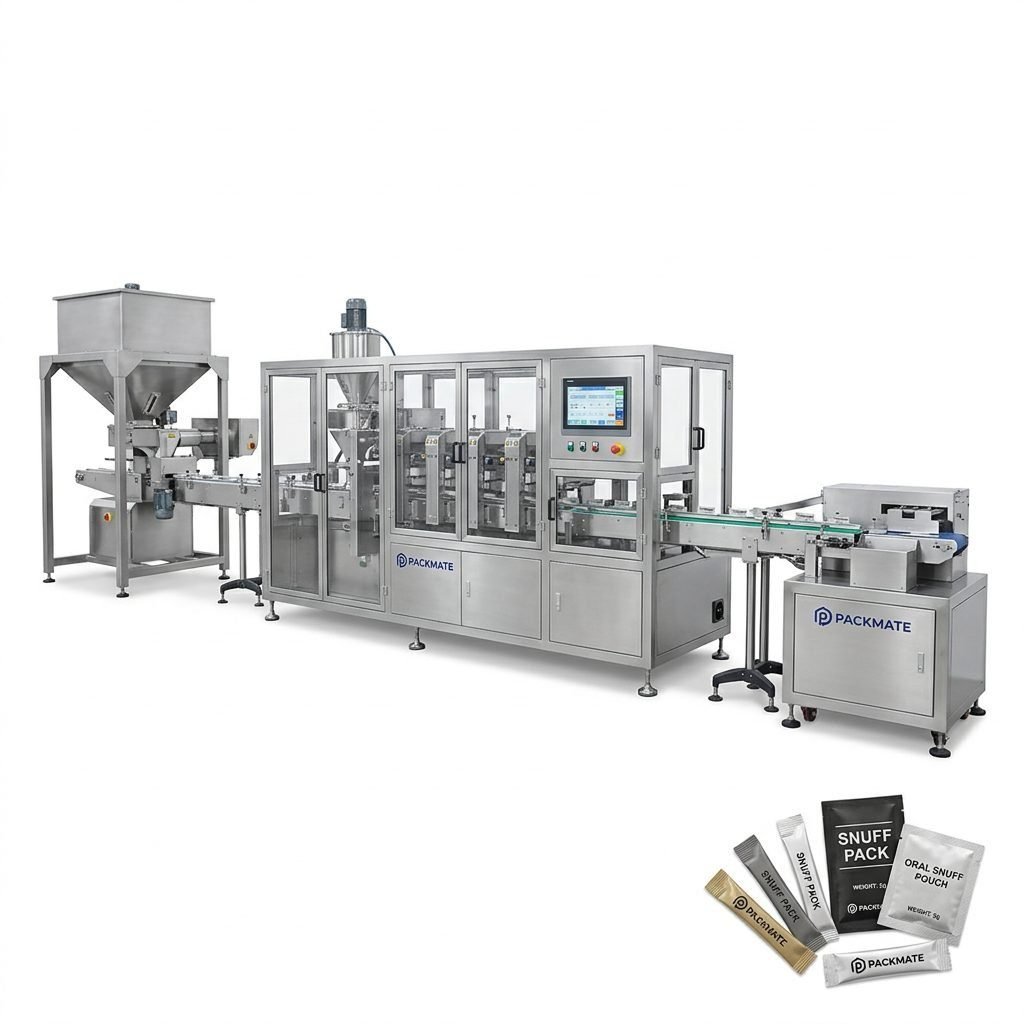
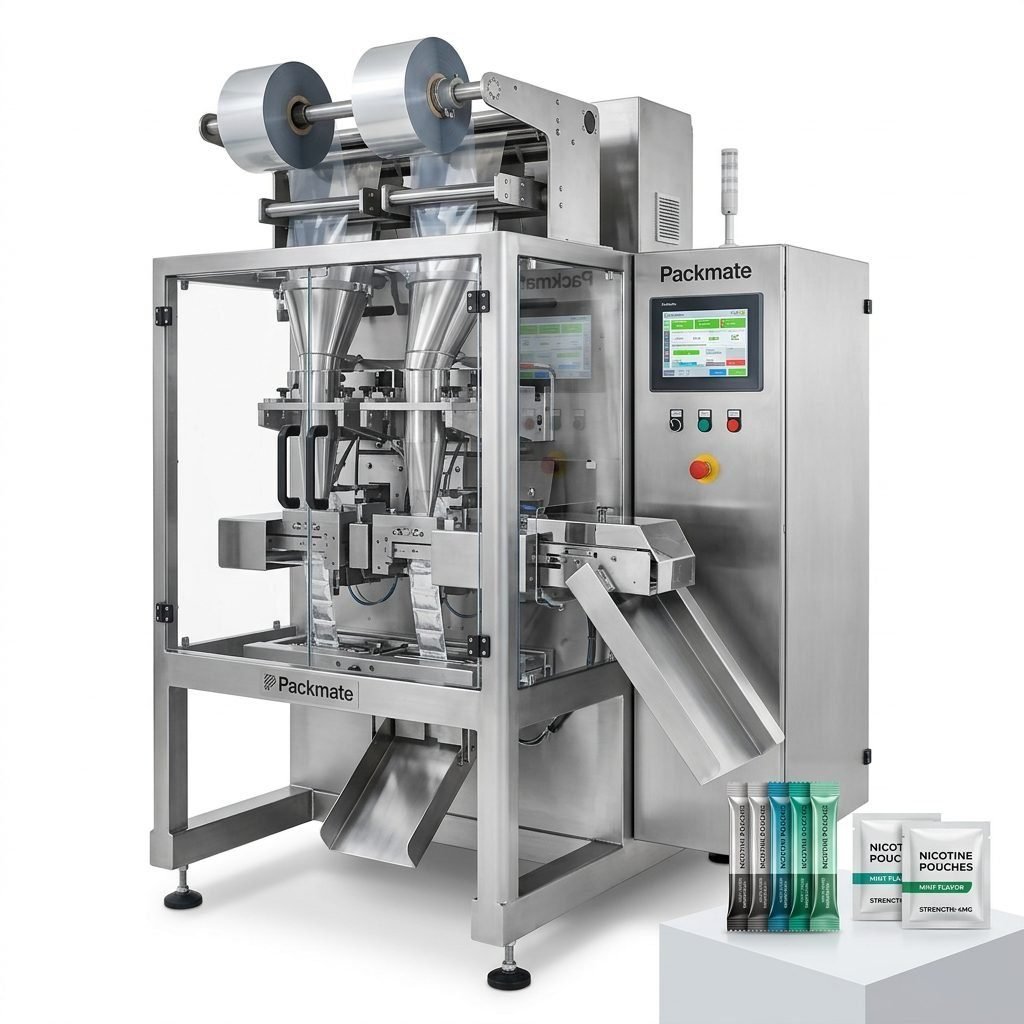
In today’s competitive snus and nicotine pouch market, manufacturers demand packaging equipment that combines high-speed throughput, precise dosing, and reliable automation. Industrial nicotine pouch machines have evolved beyond simple wrappers: they now integrate weighing, multi-lane feeding, automatic filling, sealing, and secondary packaging into cohesive lines that support high-volume, low-variance production. This article explores modern solutions for high-speed nicotine pouch production, explains critical components and configurations, and highlights how a seasoned manufacturer with deep engineering roots can deliver turnkey systems that scale with your business needs.
⚙️ Core Capabilities of High-Speed Nicotine Pouch Machines
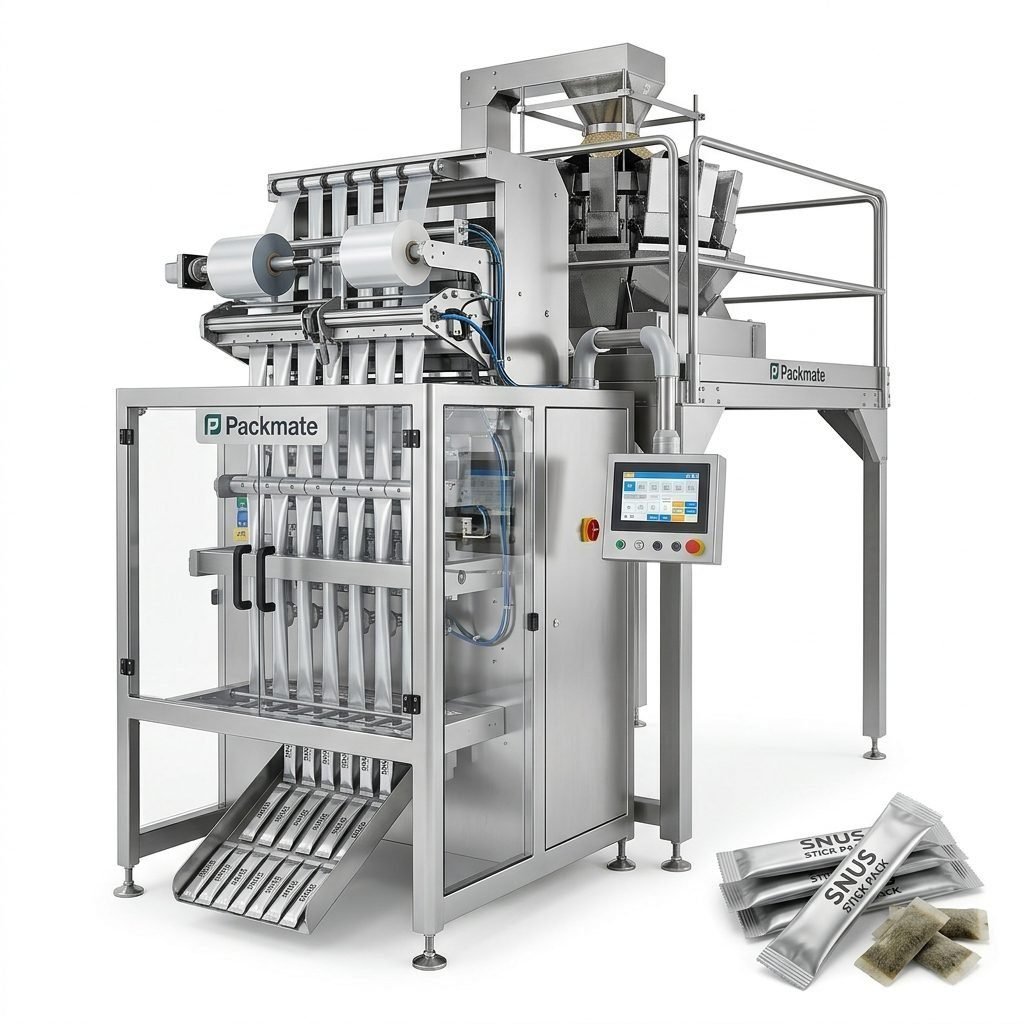
Modern production lines focus on a few key performance dimensions: speed (pouches per minute), accuracy (dose consistency), uptime (stability and maintainability), and flexibility (ability to handle different pouch formats). A robust machine combines precision dosing modules with high-speed pouch forming and sealing stations. Many systems also support multi-lane designs that multiply output without increasing machine footprint. For operators, these capabilities translate into predictable yields and lower cost-per-unit.
🔩 Precision Filling & Weighing
Precision is the backbone of compliant nicotine pouch production. Electronic weighing and vibratory feeders or auger dosing systems ensure each pouch receives the exact nicotine, filler and humectant formulation. Advanced systems incorporate feedback loops and automatic calibration to reduce drift and maintain consistent weight across thousands of cycles. When you pair precise dosing with speed-optimized pouch handling, waste and rework drop significantly.
Key benefit: Reduced product giveaways and regulatory compliance with consistent dose control across high-speed runs.
🚀 High-Speed Pouch Forming & Multi-Lane Configurations
Multi-lane machines are a hallmark of high-throughput nicotine pouch production. Instead of increasing cycle speed to dangerous mechanical limits, manufacturers add parallel lanes—4, 6 or more—on a single frame. This approach keeps individual lane dynamics gentle while scaling total line capacity. Coupled with synchronized indexing and robust servo controls, multi-lane systems deliver high yields while preserving pouch integrity and seal quality.
📦 Integrated Packaging & Secondary Processes
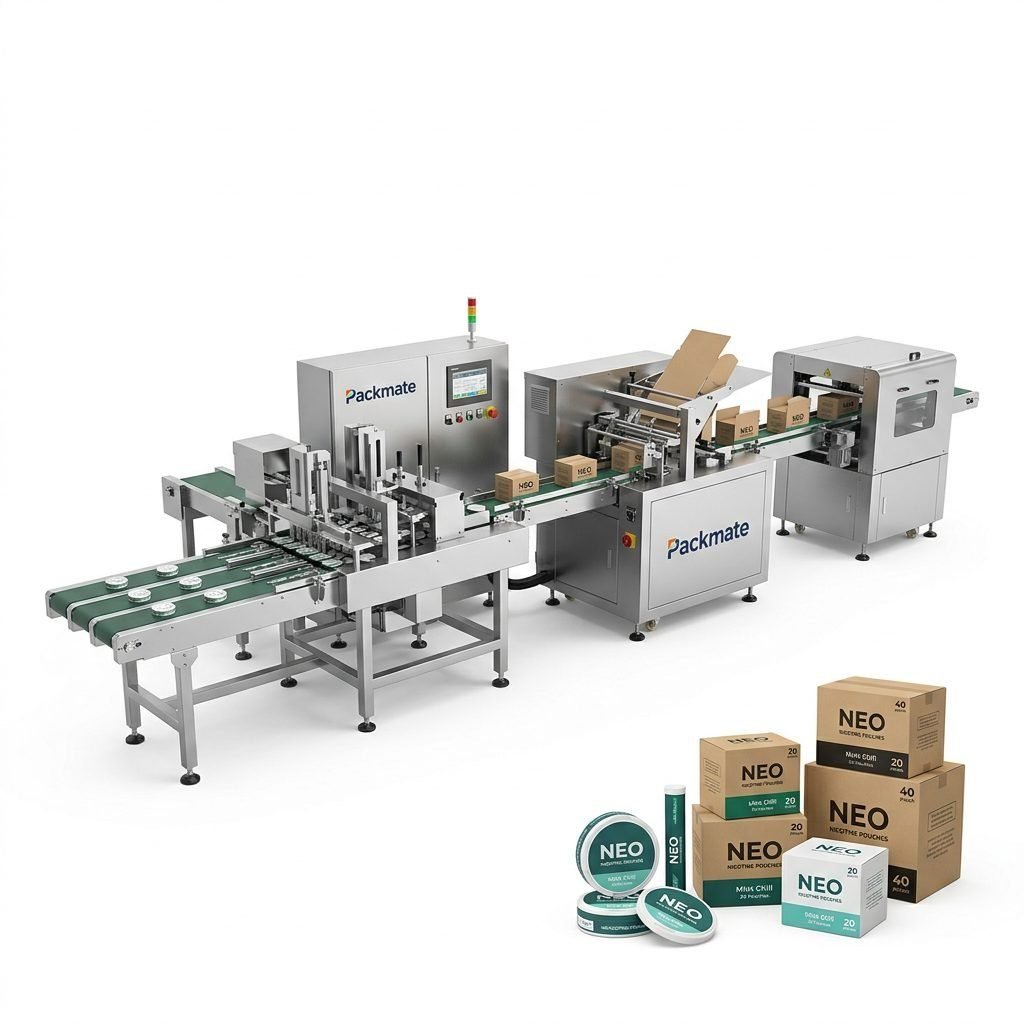
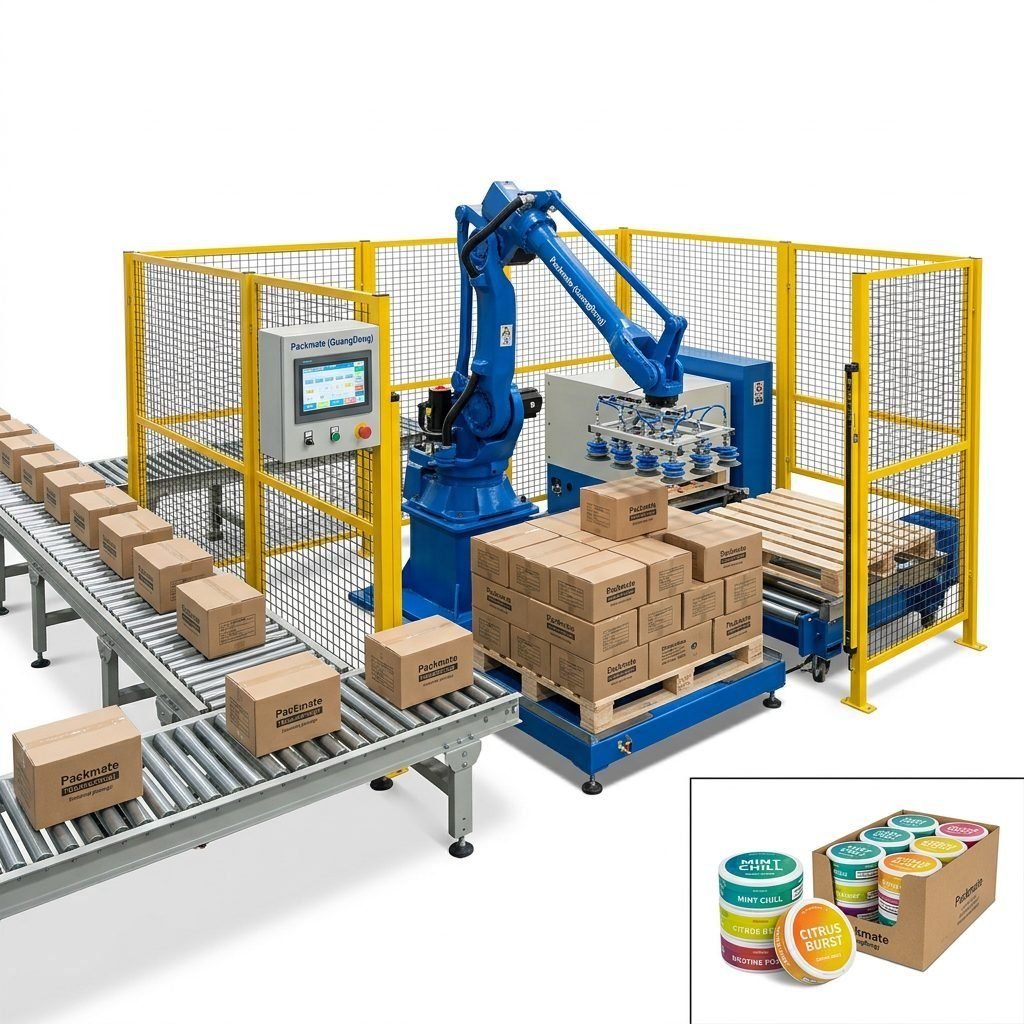
A complete production line goes beyond pouches: it includes grouping, cartoning, date coding, and sometimes blister packing or outer case packing. Integrated conveyor systems, pick-and-place modules, and automated cartoners streamline downstream operations and reduce manual handling. This reduces contamination risk and creates a continuous automated workflow from raw materials to finished, labeled cartons ready for shipment.
Tip: Selecting auxiliary equipment (weighing, metal detection, in-line checkweighers) at design stage simplifies integration and reduces commissioning time.
🔧 Design Considerations for Reliable Operation
When evaluating machines, prioritize ease of cleaning, maintenance access, spare parts availability, and operator ergonomics. Stainless-steel contact surfaces, hygienic design, and quick-change tooling minimize downtime for product changeovers. A modular design allows future upgrades—adding lanes, different dosers, or new sealing heads—without replacing the entire machine.
🧰 Maintenance & Serviceability
Built-in diagnostics, remote support capabilities, and clear documentation are essential. Reputable manufacturers provide structured service packages, training, and rapid spare-part supply. Investing in a machine backed by experienced field engineering reduces risk and keeps production lines profitable over many years.
🏭 Manufacturing Strength & Quality Assurance
A manufacturer’s factory capabilities—CNC machining, precision assembly lines, and controlled testing environments—directly influence equipment quality and lead times. Facilities that perform full assembly and rigorous testing before shipping produce machines that commission faster on-site and deliver better long-term performance. Certifications such as CE and ISO indicate compliance with international safety and quality standards.
Packmate Snus Machine has over three decades of engineering experience and a 20,000㎡ manufacturing base equipped with advanced CNC centers and precision assembly systems. Their breadth of models (50+ machine types) supports a wide range of nicotine pouch formats and production capacities, and their turnkey approach simplifies investment for new lines.
🌍 Global Deployment & Support
Global customers expect local-level support. Look for suppliers with an established export history, exhibition presence, and a track record across regions like Europe, Asia, and the Americas. On-site commissioning, operator training, and documented case studies demonstrate that a supplier has both product expertise and logistical capacity to support international projects.
Manufacturer fact: Companies with long-term R&D histories typically provide more reliable multi-lane innovations and field-tested automation solutions.
💡 Customization & Turnkey Solutions
Every product line has unique needs—different pouch shapes, nicotine concentrations, moisture content, and regulatory labeling. A good supplier will offer configurable platforms: from standalone filling modules to fully integrated filling and packaging lines that include weighing, pouch forming, sealing, cartoning, and case packing. Turnkey projects reduce integration risk and shorten time-to-market.
For detailed machine families, you can explore the company’s product pages such as Snus & Nicotine Packaging Machines and the broader Filling & Packaging Lines for combined solutions. For modular options and weighing integrations, see the Weighing & Packaging Systems page.
📈 Scalability & Future-Proofing
Scalability should be a driver in procurement decisions. Machines designed for tool-free changeovers, lane additions, and software-driven recipe management help manufacturers adapt to market demand and product line extensions. A scalable line protects capital investment by enabling phased capacity expansion as volume grows.
✅ Compliance, Safety & Documentation
Regulatory requirements for nicotine products are strict and vary by market. Machines must enable traceability, meet electrical and mechanical safety standards, and use materials compatible with product contact. Comprehensive documentation—electrical schematics, parts lists, and validation protocols—speeds regulatory approval and provides operational clarity for internal QA teams.
Safety reminder: Verify CE/ISO certifications and request test reports and FAT documentation during the procurement process.
📣 Choosing the Right Partner
Selecting a machine supplier is as much about people and process as it is about hardware. Evaluate a vendor’s case studies, after-sales network, and willingness to support custom R&D. The manufacturer’s exhibition presence and customer testimonials can provide insights into real-world performance and reliability. For corporate background and contact information, refer to the About Packmate and Contact Us pages.
📝 Final Recommendations
When planning a high-speed nicotine pouch production line:
– Prioritize dose accuracy and multi-lane scalability to meet future demand.
– Insist on hygienic design and easy maintenance to minimize downtime.
– Choose suppliers with proven global delivery, FAT procedures, and strong spare-parts support.
– Integrate peripheral equipment early—metal detection, checkweighers, and cartoners—to avoid costly retrofits.
Quick note: Visit the product catalog and case studies for real-world configurations and performance metrics.
❓ Frequently Asked Questions
Q1: What throughput can I expect from multi-lane nicotine pouch machines?
A1: Depending on lanes and pouch format, modern machines can deliver several thousand pouches per minute cumulatively; multi-lane systems multiply single-lane speed while keeping cycle forces manageable.
Q2: How do manufacturers ensure dose consistency?
A2: Through precision dosing systems (auger, vibratory feeders, micro-weighers), closed-loop controls, and automatic calibration routines that minimize drift over long runs.
Q3: Can I add downstream packaging (cartoning, case packing) later?
A3: Yes—modular designs enable phased upgrades. However, planning peripheral equipment at design stage simplifies mechanical and control integration.
Q4: What certifications should I request from the supplier?
A4: At minimum, request CE and ISO certificates, FAT documentation, and material compliance statements for product-contact parts.
Q5: Where can I find detailed product information and case studies?
A5: Explore the manufacturer’s product pages for machines and line solutions, including Snus & Nicotine Packaging Machines and their Case studies.