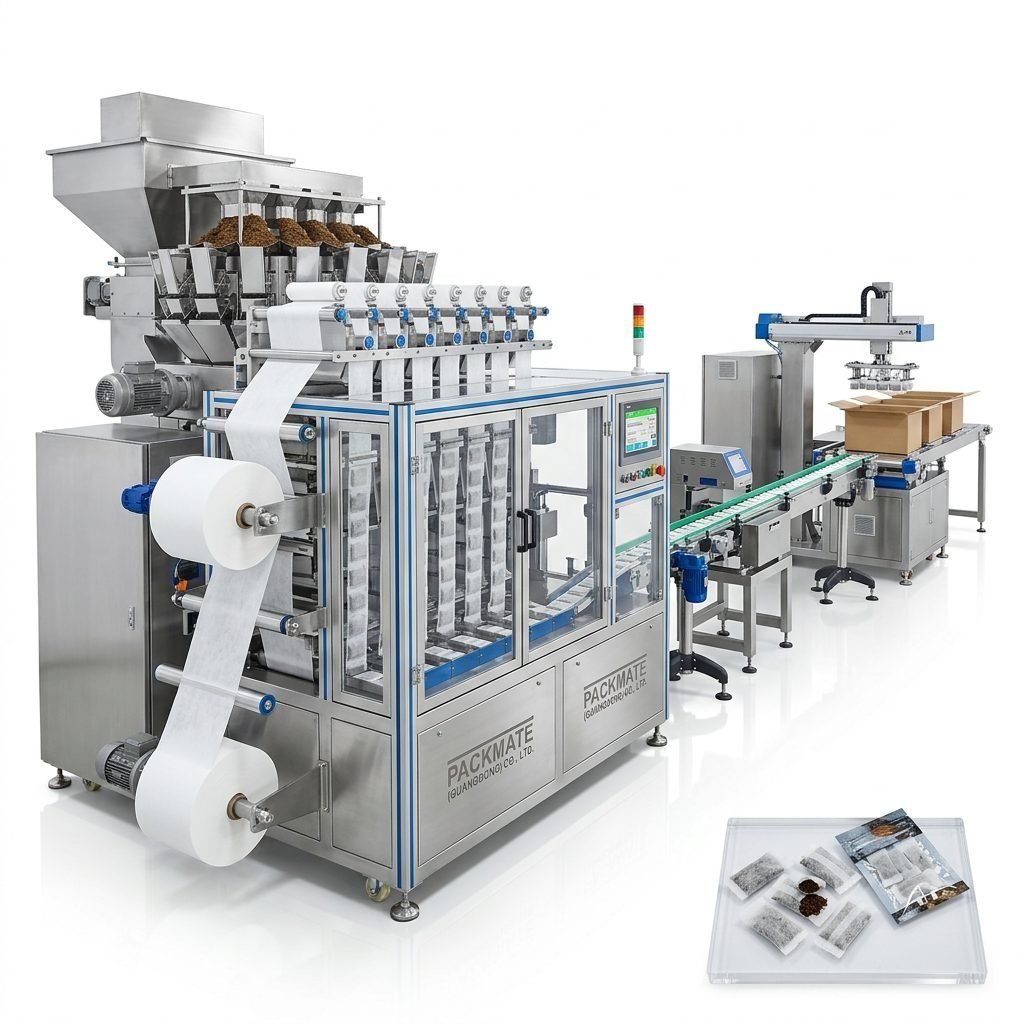
Choosing the right nicotine packaging machine supplier in India is a critical decision for any manufacturer, contract packer, or startup entering the fast-growing nicotine pouch and snus market. This guide walks you through practical, India-specific considerations and technical checkpoints to help you find a reliable partner that delivers consistent production quality, regulatory compliance, and long-term service support.
Why picking the right supplier matters
A packaging machine is not just a piece of equipment — it is the heartbeat of your production line. The right supplier ensures uptime, precise dosing, stable sealing, and the flexibility to scale. In India, where market needs range from artisanal batches to large-volume runs for export, your choice impacts product safety, regulatory acceptance, and total cost of ownership.
Local market context: India-specific considerations
India has a unique business landscape: mix of regional flavors, varying electricity and workshop conditions, and a growing appetite for nicotine alternatives. Suppliers should understand:
- Robust design for variable power supply and on-site maintenance realities
- Local spare part availability and fast service response times across major industrial hubs (Mumbai, Delhi, Gujarat, Pune, Chennai)
- Ability to support both small-batch custom formulations and multi-shift high-volume production
Top technical features to evaluate
When comparing vendors, focus on technical capabilities that directly influence quality and cost-efficiency:
🔶 Precision dosing: Consistent pouch weight or sachet fill tolerance is essential for nicotine products. Look for servo-driven dosing or high-precision weighing modules.
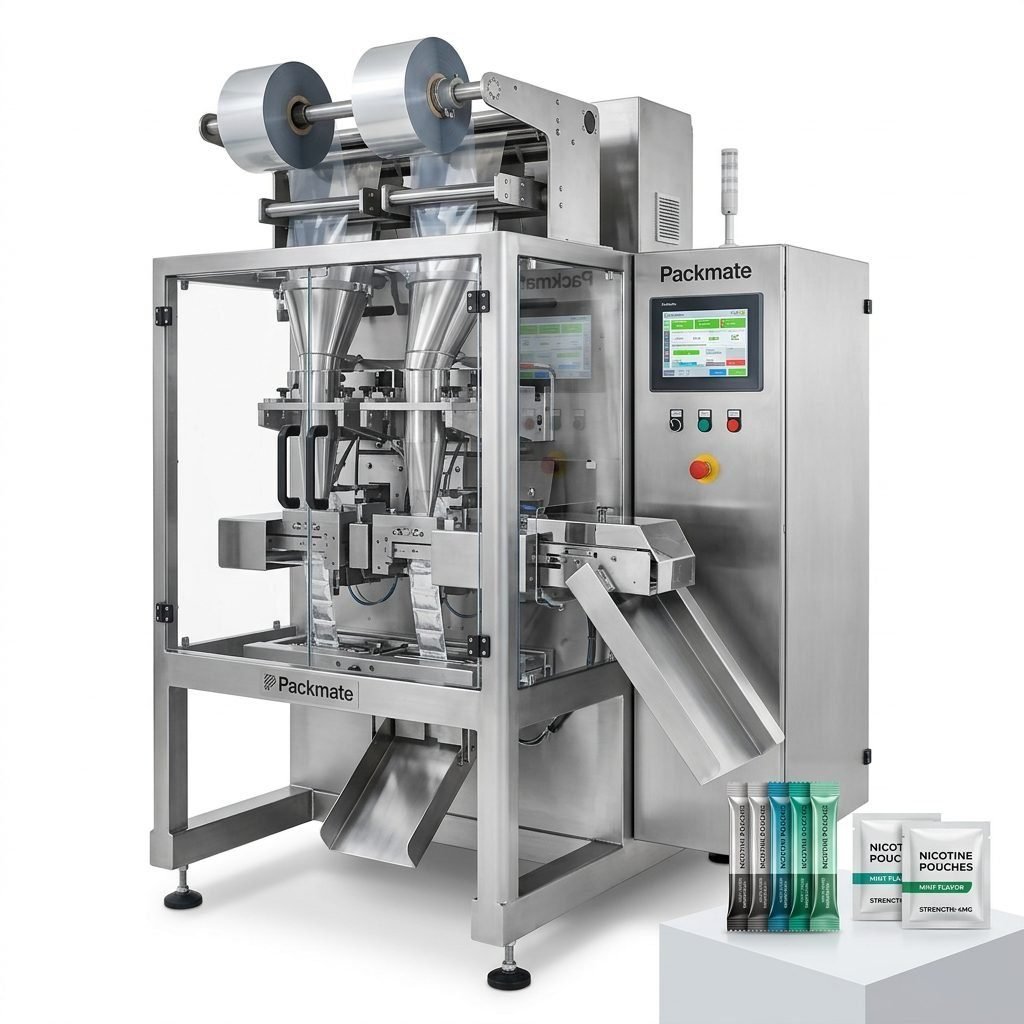
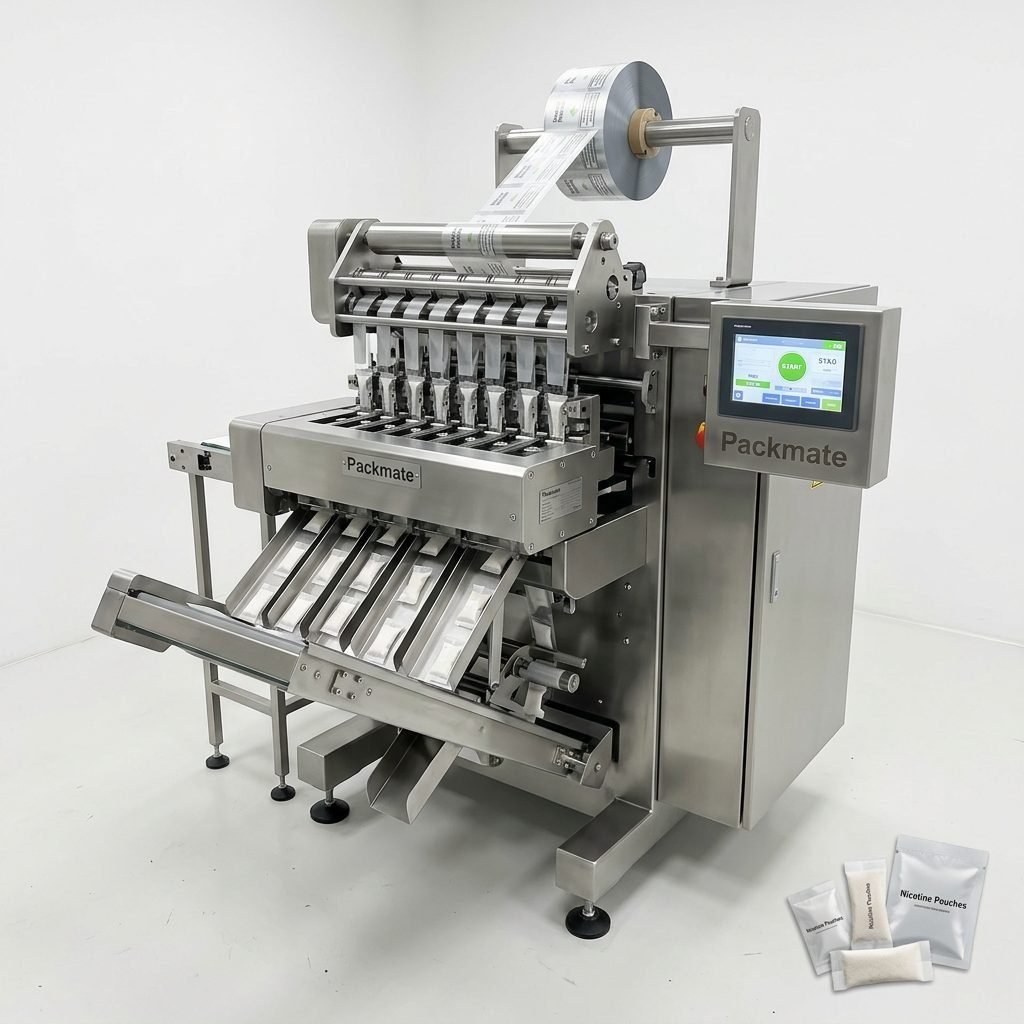
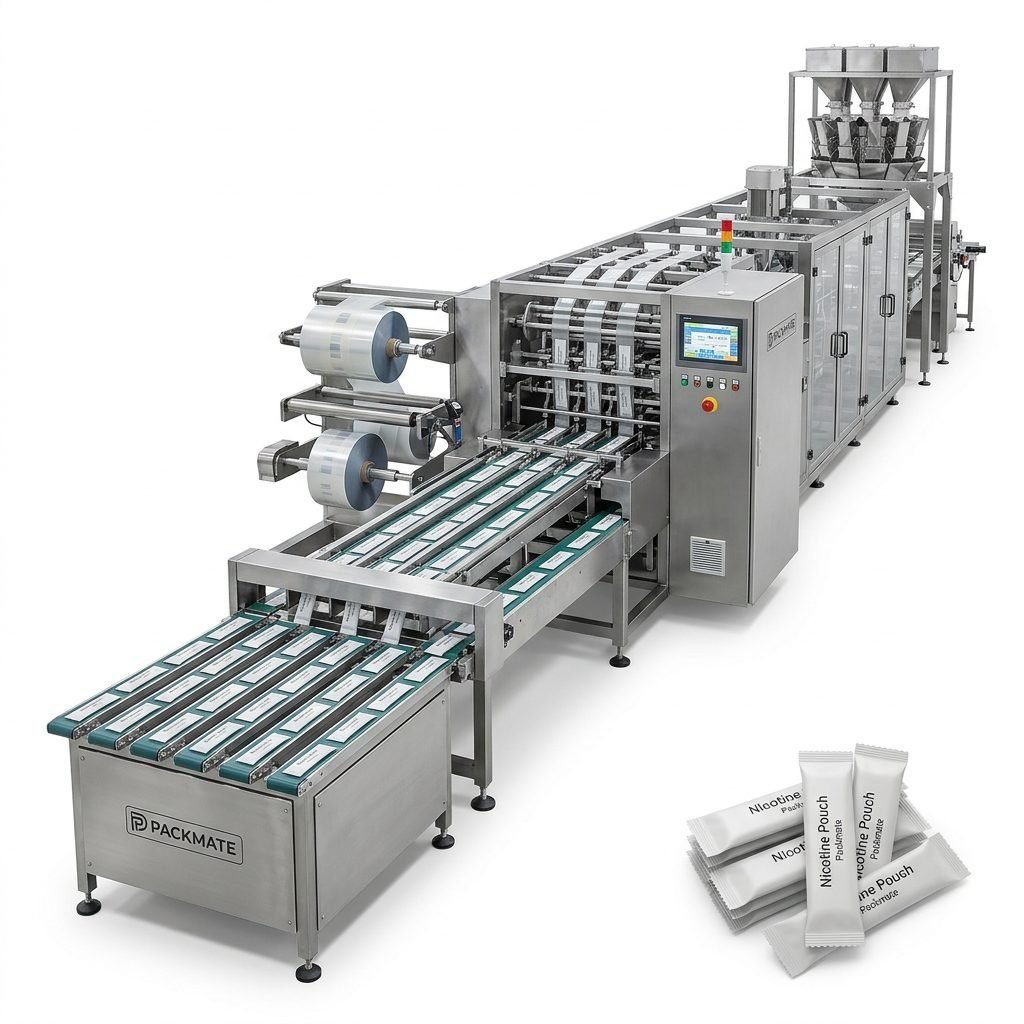
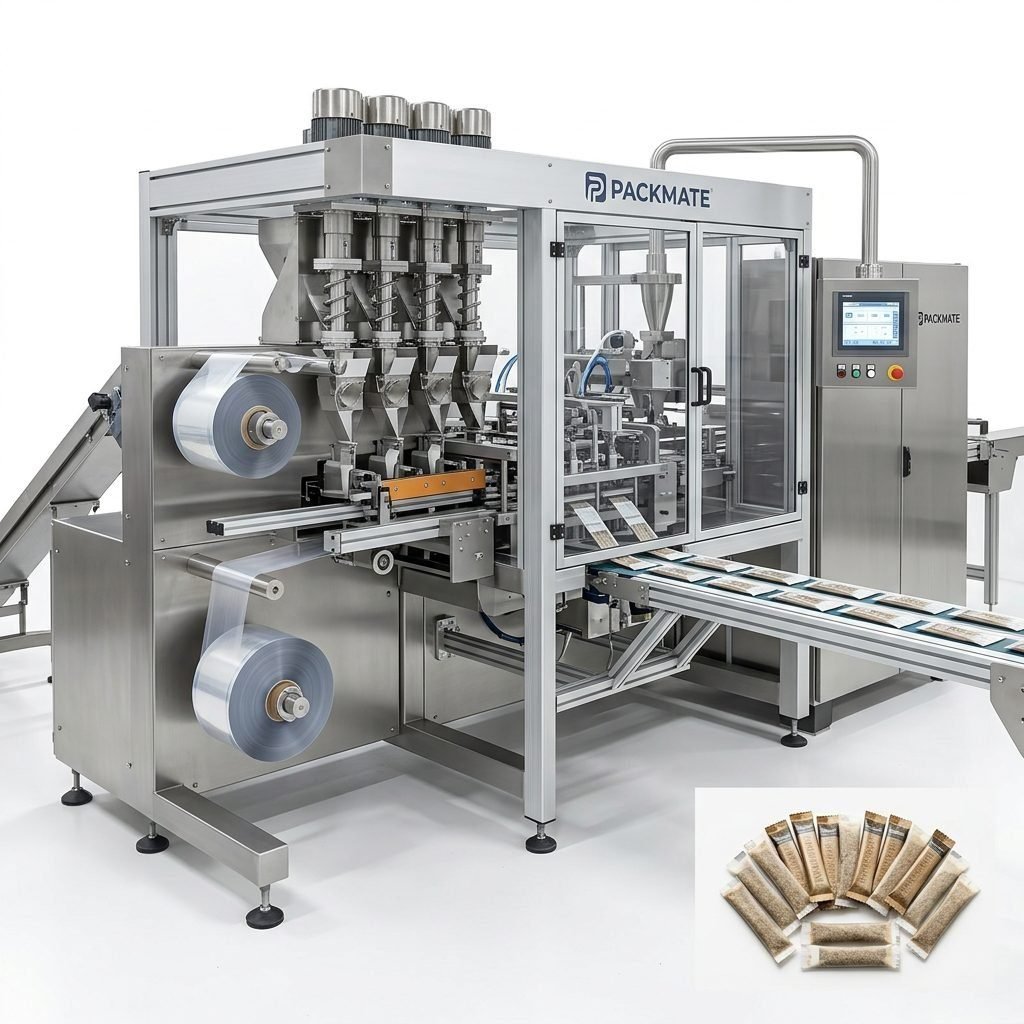
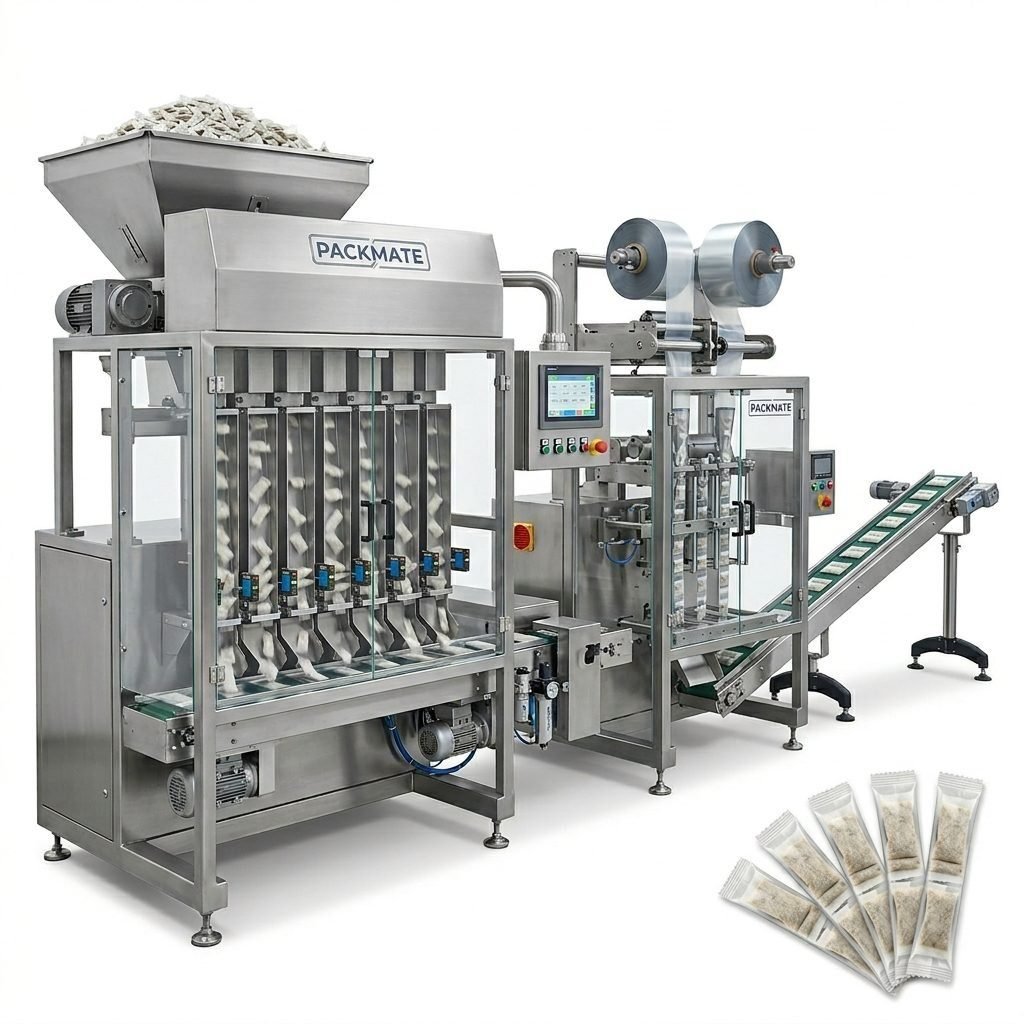
🔶 Multi-lane capability: For high throughput, multi-lane packaging systems increase output while reducing footprint and labor cost. Make sure lane synchronization and web handling are proven.
🔶 Sealing & material compatibility: Check heat-seal or ultrasonic sealing options and compatibility with barrier films used for nicotine pouches (foil, PET, PE laminates). Reliable sealing prevents leakage, moisture ingress, and shelf-life loss.
🔶 Changeover flexibility: Fast tool-free changeovers for different pouch sizes and shapes saves downtime. If you plan multiple SKUs, opt for quick-change fixtures and recipe-driven PLC controls.
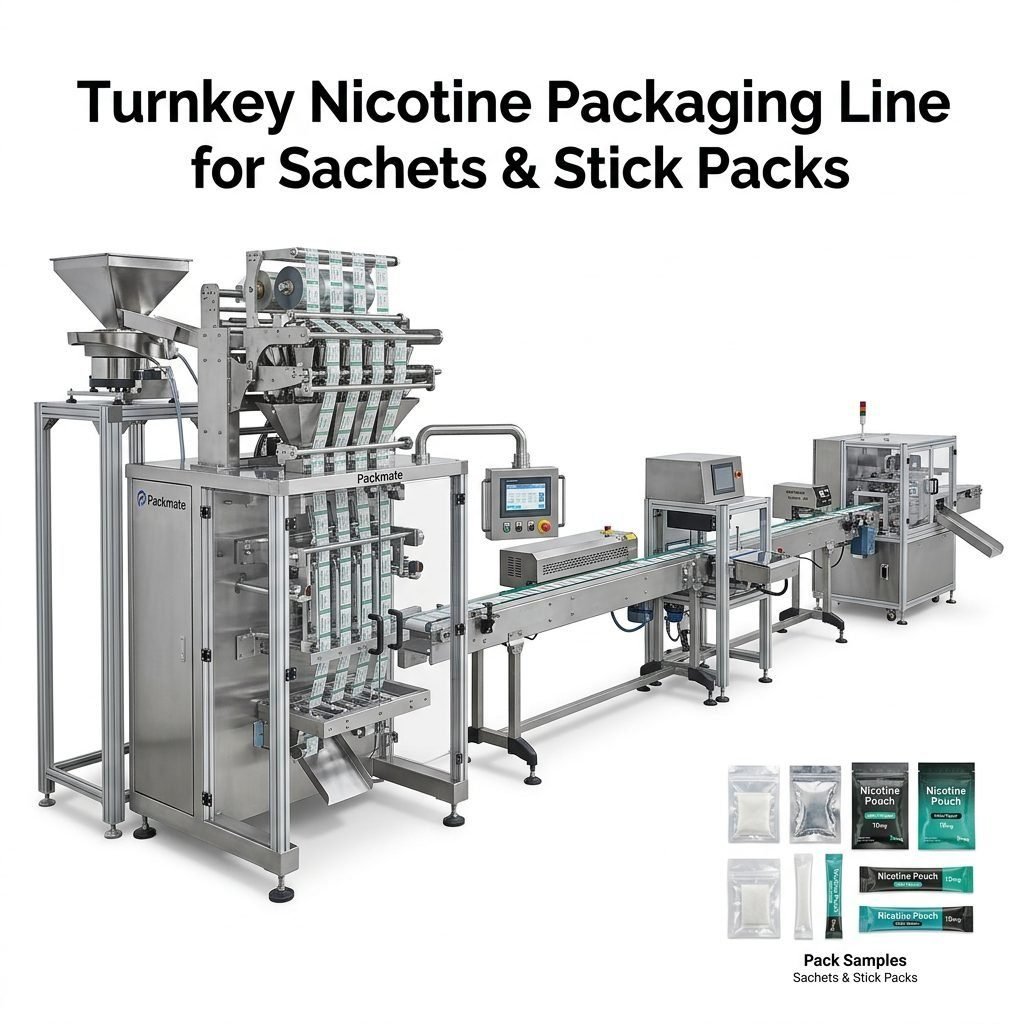
🔶 Automation & integration: Consider full line integration — fillers, weighers, metal detectors, checkweighers, and case packers. A single-source supplier can ease integration and reduce finger-pointing between vendors.
Supplier credibility and factory capabilities
Assess the supplier’s manufacturing strength and certifications. Look for documented quality systems (ISO), CE compliance for export-oriented lines, and a factory with advanced tooling and assembly processes.
✅ Factory size & equipment: A larger, well-equipped facility with CNC machining centers, precision assembly lines, and test areas means better build quality and quicker custom development.
Ask for the supplier’s production capacity, list of machine models, and assembly processes. Companies with decades of experience typically provide more robust, field-proven designs and spare parts inventories.
Example: what to expect from an established manufacturer
A mature supplier will present: 30+ years of engineering experience, a wide model range (stick packs, sachets, multi-lane snus machines), a sizable manufacturing area (e.g., 20,000 m²), CE/ISO certificates, and turnkey line offers. These indicators point to a partner capable of reliable deliveries and long-term technical support.
Quality assurance and testing
Quality control is non-negotiable for nicotine product packaging. Inspect their testing procedures — from material trials to full-speed production runs. Request Factory Acceptance Tests (FAT) and on-site Site Acceptance Tests (SAT) after installation.
Key QA checks: packaging integrity under humidity, pouch weight consistency, seal strength tests, visual defect detection, and packaging material compatibility trials.
Service, spare parts and local support in India
Post-sale support defines the machine’s real-world performance. Prioritize suppliers with a proven service network in India or fast remote support capabilities.
- Local spare parts stock or express shipping options
- Remote diagnostics and PLC program backup
- Training programs for operators and maintenance staff
- Optional field service contracts and preventive maintenance plans
Tip: Ask for a spare parts list with lead times and annual usage estimates to budget correctly.
Regulatory compliance and export readiness
Nicotine product packaging often faces regulatory scrutiny in India and destination markets. Suppliers should be able to support compliance with local and international standards (CE for machinery exported to Europe, ISO systems, and any food-contact or pharmaceutical-grade requirements if applicable).
Ensure the machine documentation includes calibration certificates, electrical schematics, risk assessments, and CE/ISO certificates if you plan to export finished product.
Total cost of ownership (TCO) and ROI
Price is only one part of the equation. Consider energy efficiency, spare parts cost, expected uptime, training needs, and service contract costs to calculate TCO. High-efficiency machines and modular designs yield better ROI over the machine lifecycle.
ROI elements to compare: initial price, expected throughput, labor hours saved, scrap rate reduction, energy consumption, and maintenance intervals.
Factory visits, references and real-case evidence
Never skip a factory audit if feasible. A vendor that welcomes visitors is often confident about quality and processes. If travel is difficult, request virtual tours, live machine demos, and customer references in India or similar markets.
Review case studies showing the supplier’s performance for nicotine pouch lines, multi-lane snus packaging, or similar product types. Confirm uptime statistics and how the supplier handled field issues.
You can explore examples of machines and cases from established manufacturers to benchmark features and reliability, such as product pages and case studies from proven suppliers.
Customization and future-proofing
Your business will evolve. Choose a supplier that offers modular upgrades, software-driven recipe libraries, and retrofit options for new pouch formats or higher speeds. Future-proofing reduces the need for costly full-machine replacements.
Customization checklist
- Support for multiple pouch sizes and sealing types
- Option to add in-line metal detection, checkweighing, or vision inspection
- Ability to integrate with your ERP/MES for traceability and batch control
- Optional fillers: powder, liquid, paste, or particulate dosing modules
Commercial terms and negotiation tips
Clarify delivery timelines, payment terms, warranty scope, spare parts package, and training commitments. Negotiate staged payments linked to FAT and SAT milestones. Ensure warranty and spare parts response times are in writing.
Consider long-term service agreements and local stocking of critical spares if you run multiple shifts or export under tight timelines.
Red flags to watch out for
Be cautious if a supplier:
- Cannot provide customer references or live demos
- Lacks clear QA documentation, certifications, or FAT procedures
- Provides vague spare parts delivery times or refuses to share a parts list
- Delivers unclear electrical or safety documentation needed for Indian compliance
⚠️ Important: If warranty terms exclude wear parts or onsite service, your operating costs may rise sharply after purchase.
Questions to ask every prospective supplier
When speaking with sales engineers, have a checklist ready:
- Can you perform a FAT with my specific pouch film and formulation?
- What spare parts are considered wear items and what are typical lifetimes?
- What service SLA do you offer in India? Are engineers available for onsite visits?
- How long is lead time for custom tooling and spare parts?
- Do you provide PLC code, HMI translations, and training documentation in English (or local language if needed)?
Making the final decision: evaluation template
Score vendors across categories: technical fit, factory capability, QA/testing, service & spare parts, commercial terms, and references. Weight the criteria according to your business priorities (e.g., uptime vs. purchase price).
A balanced approach favors a supplier with strong factory capabilities, proven nicotine pouch experience, local support options in India, and transparent post-sale policies.
Where to learn more and view trusted product lines
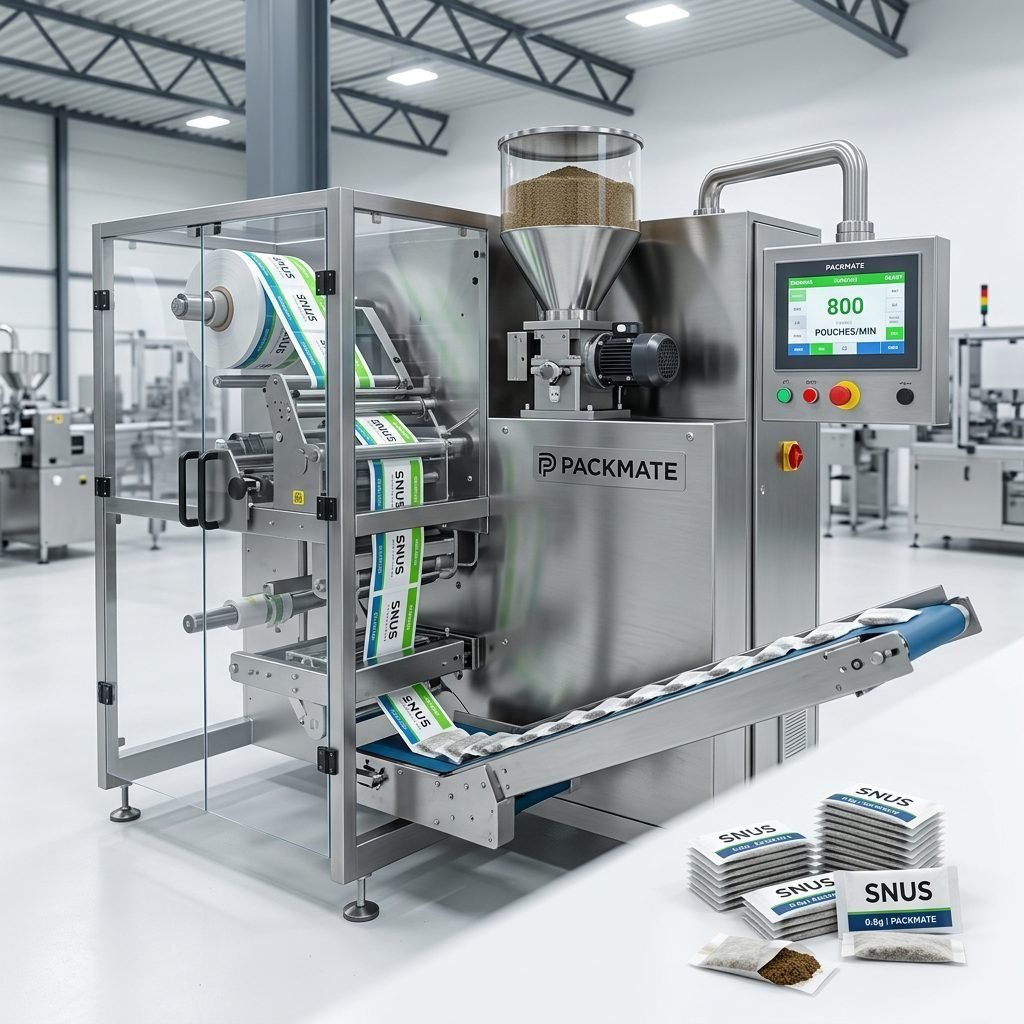
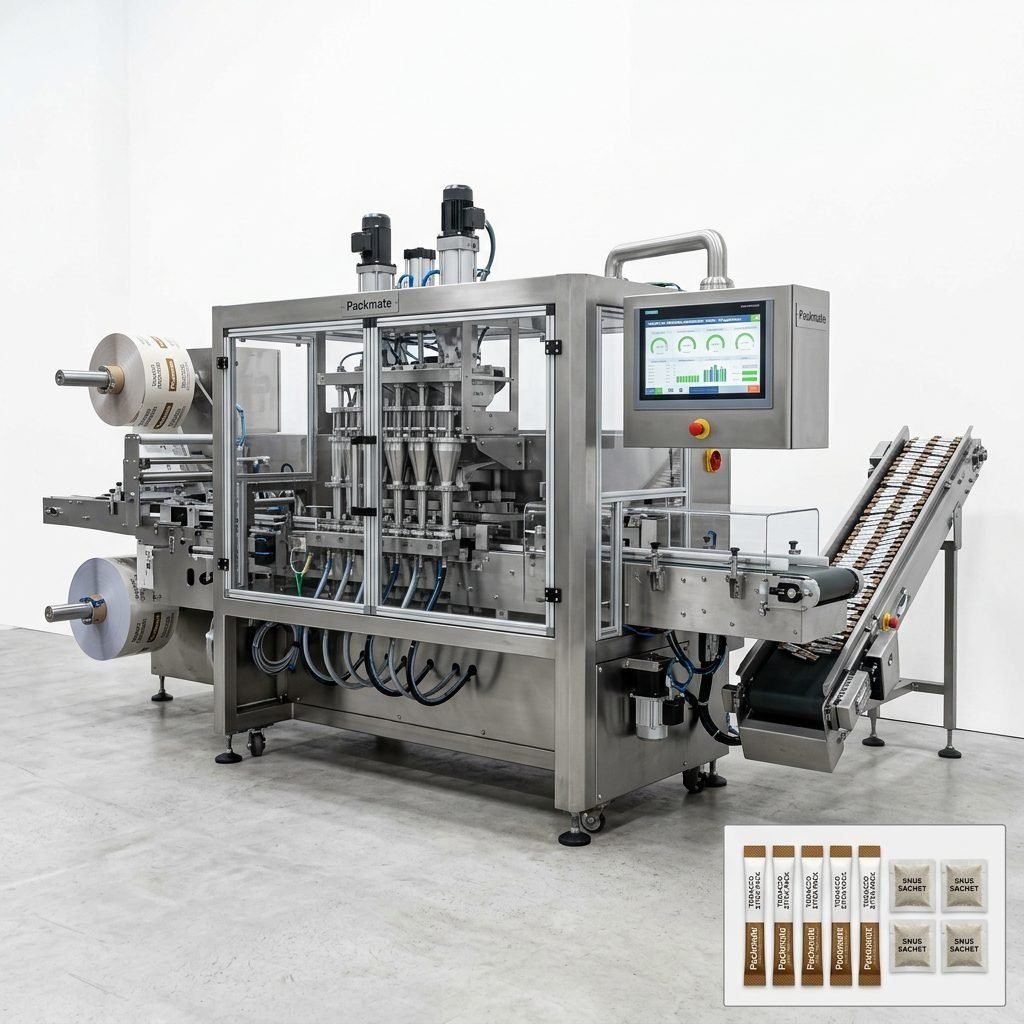
To research established machine families, look for product pages and catalogs that show multi-lane snus machines, sachet and stick pack models, and complete weighing & packaging systems. Suppliers that publish detailed spec sheets and case studies give you a better basis for comparison.
Explore product resources such as:
- Snus & Nicotine Packaging Machines
- Sachet & Stick Pack Machines
- Weighing & Packaging Systems
- Case Studies & Global Installations
- About the Manufacturer
India cultural and business nuances that affect supplier choice
In India, business relationships and after-sales trust matter enormously. Vendors who invest in local partnerships, Hindi or regional-language support, and fast on-the-ground response are often preferred. Consider suppliers who have existing clients in India or who demonstrate sensitivity to local manufacturing practices and labor skill levels.
Local installers and technicians familiar with Indian workshop conditions can reduce commissioning time, and suppliers that offer tailored operator training for Indian staff will improve machine reliability faster.
Final checklist before signing
Before you place an order, ensure these items are documented in the contract:
- Detailed machine specifications and guaranteed performance metrics
- Spare parts list, lead times, and recommended spare inventory
- Service terms, warranty coverage, and SLA for onsite visits
- FAT acceptance criteria and acceptance tests at installation
- Training scope, manuals, and post-installation support plan
Final reminder: Balance cost and capability — sometimes a slightly higher initial investment in a proven, service-backed machine reduces operational headaches and delivers better long-term value.
Next steps and how to engage suppliers
Start by requesting product brochures, FAT videos, and a quotation with clear breakdowns. Share your production targets (units per minute, SKU mix), pouch materials, and desired automation level. Invite shortlisted vendors to present a solution and demo relevant runs using your materials or close equivalents.
If you’d like to see full product families, turnkey filling and packaging lines, or auxiliary equipment that complements a snus/nicotine pouch machine, check product catalogs and contact pages for factory visits or demonstration bookings.
Helpful resources:
Bag & Pouch Packaging Machines,
Filling & Packaging Lines,
and consult Service pages for support options.
Frequently Asked Questions
Q1: How do I verify a supplier’s machine performance before purchase?
A1: Request Factory Acceptance Test (FAT) videos or attend FAT. Ask for production data with your product (pouch film, nicotine granule or powder) and verify sealing integrity, weight tolerance, and throughput during the test.
Q2: What spare parts should I stock locally in India?
A2: Stock wear items like sealing jaws, belts, sensors, servo couplings, and critical electronics. The exact list depends on model and runtime; request a recommended spare parts kit from the supplier.
Q3: Can a supplier support export compliance for my finished product?
A3: Many experienced manufacturers provide CE and ISO documentation for machinery and can assist with packaging material recommendations that meet export market regulations. Confirm documentation scope before purchase.
Q4: How important is local service presence in India?
A4: Very important for rapid spare delivery and onsite troubleshooting. Suppliers with local partners or fast remote diagnostics reduce downtime significantly.
Q5: Where can I see real-world cases and machine scopes?
A5: Review case studies and product sections for multi-lane snus and nicotine pouch machines to compare real installations and performance metrics. For detailed examples, visit the manufacturer’s case and product pages listed earlier.