Choosing the right snus packaging machine can determine the efficiency, cost-effectiveness, and regulatory compliance of your nicotine pouch or snus production. This guide breaks down machine types, key performance metrics, material and format compatibility, automation levels, and after-sales considerations so you can select the best snus packing solution for your operation.
Why the Right Snus Packaging Machine Matters
Selecting a machine is not just about speed. It impacts product quality, package integrity, waste, labor costs, and ability to scale. Modern snus and nicotine pouch lines must meet strict hygiene and safety regulations while offering flexible formats (stick packs, sachets, multi-lane pouches). Investing in the proper equipment from a reputable manufacturer can improve yields and reduce downtime.
Key considerations at a glance
⚙️ Production capacity: How many pouches per minute do you need? Consider current and future demand.
📦 Package formats: Does the machine support stick packs, sachets, or multi-lane pouches? Versatility reduces future capital expense.
🔧 Maintenance & uptime: Look for quick-change parts, easy cleaning, and local service support.
Types of Snus Packaging Machines
Machines for snus and nicotine pouches typically fall into several categories. Understanding each will help you choose a line that matches your product, capacity, and regulatory needs.
1. Stick pack machines
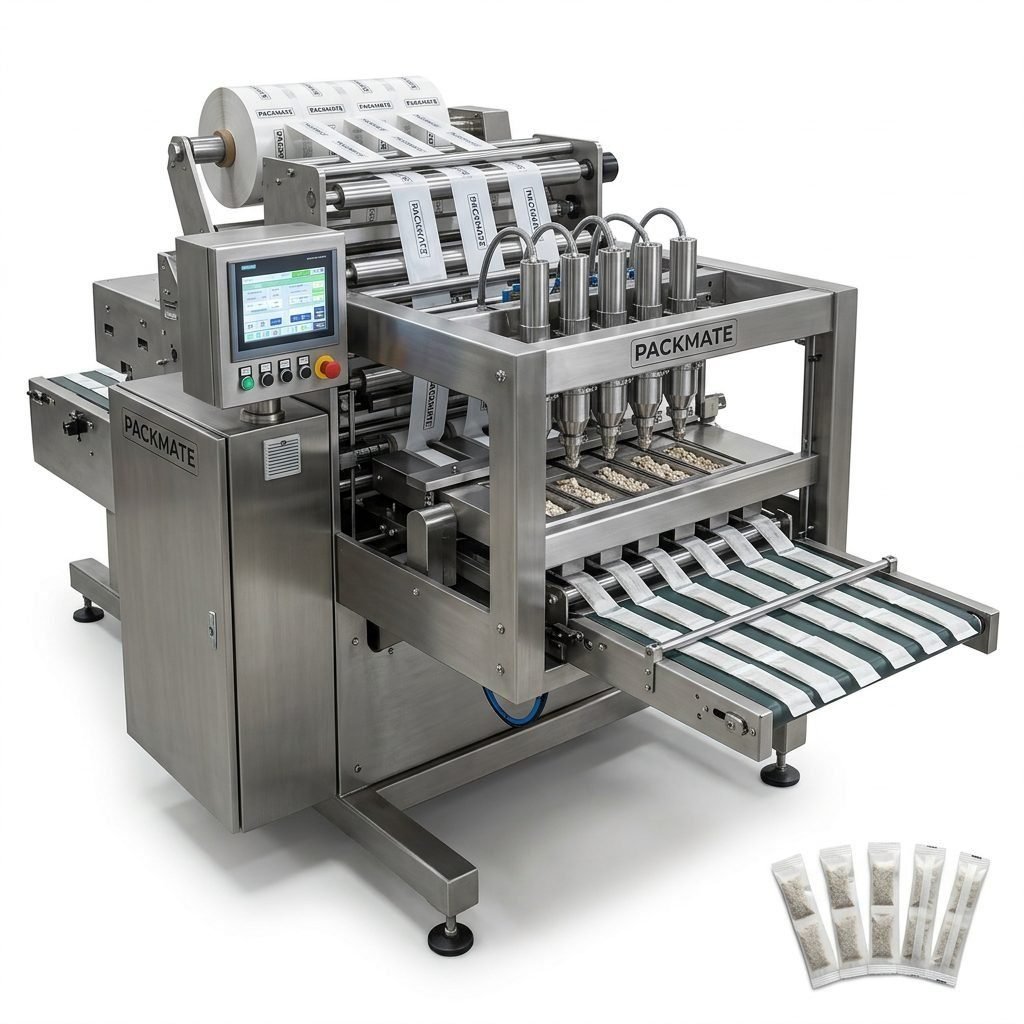
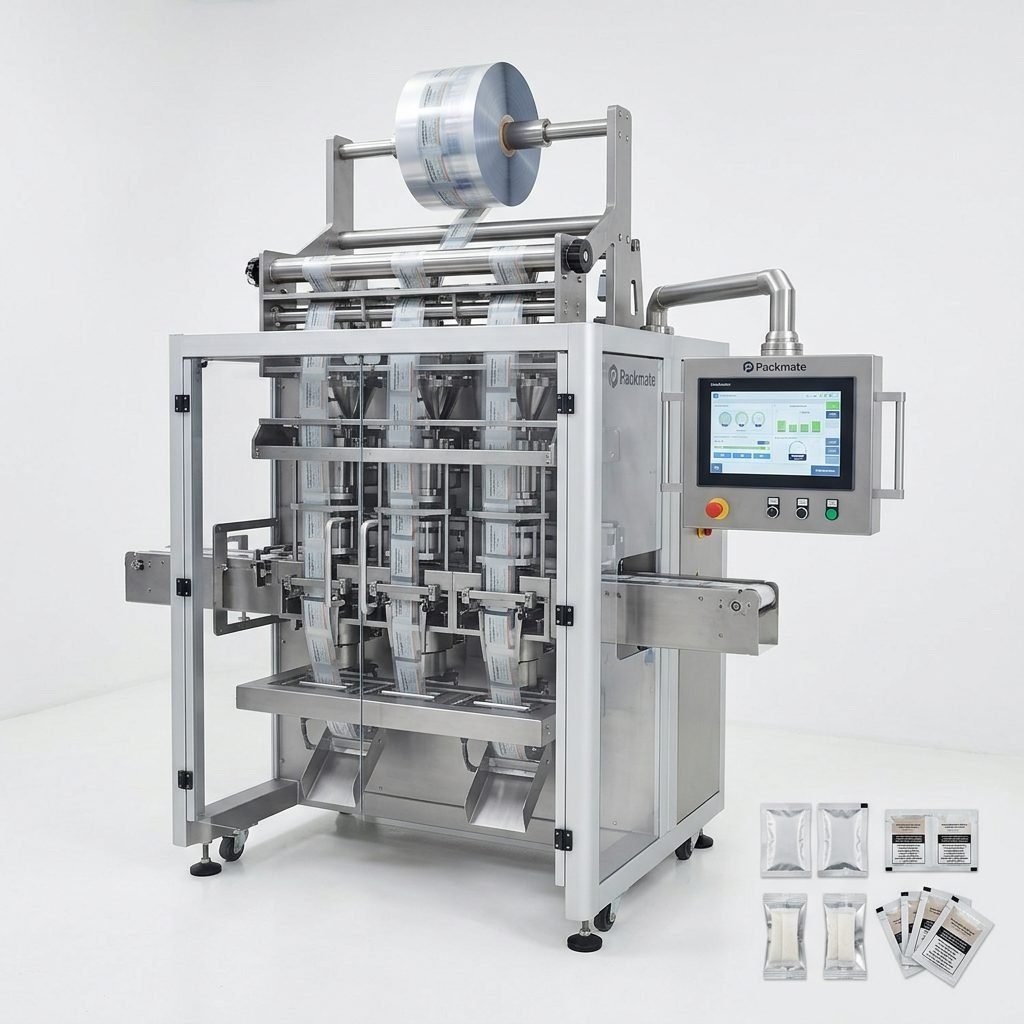
Stick pack machines form, fill, and seal narrow, single-dose packets. They are ideal for single-portion nicotine pouches and consumer convenience packs. These machines excel when high speed and minimal material use are priorities.
Advantages: high throughput, low material waste, compact footprint.
Considerations: product flowability, dosing accuracy, and sealing quality at higher speeds.
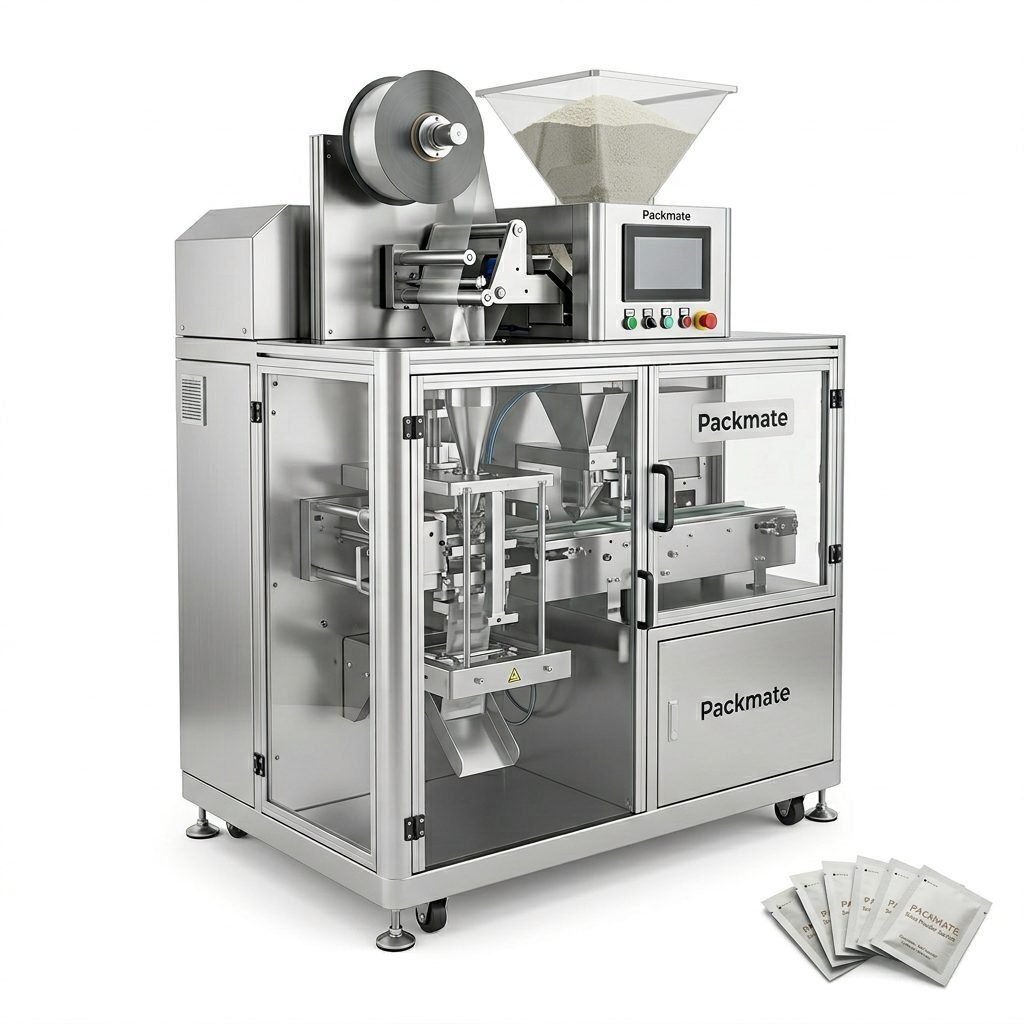
2. Sachet & stick pack multi-format machines
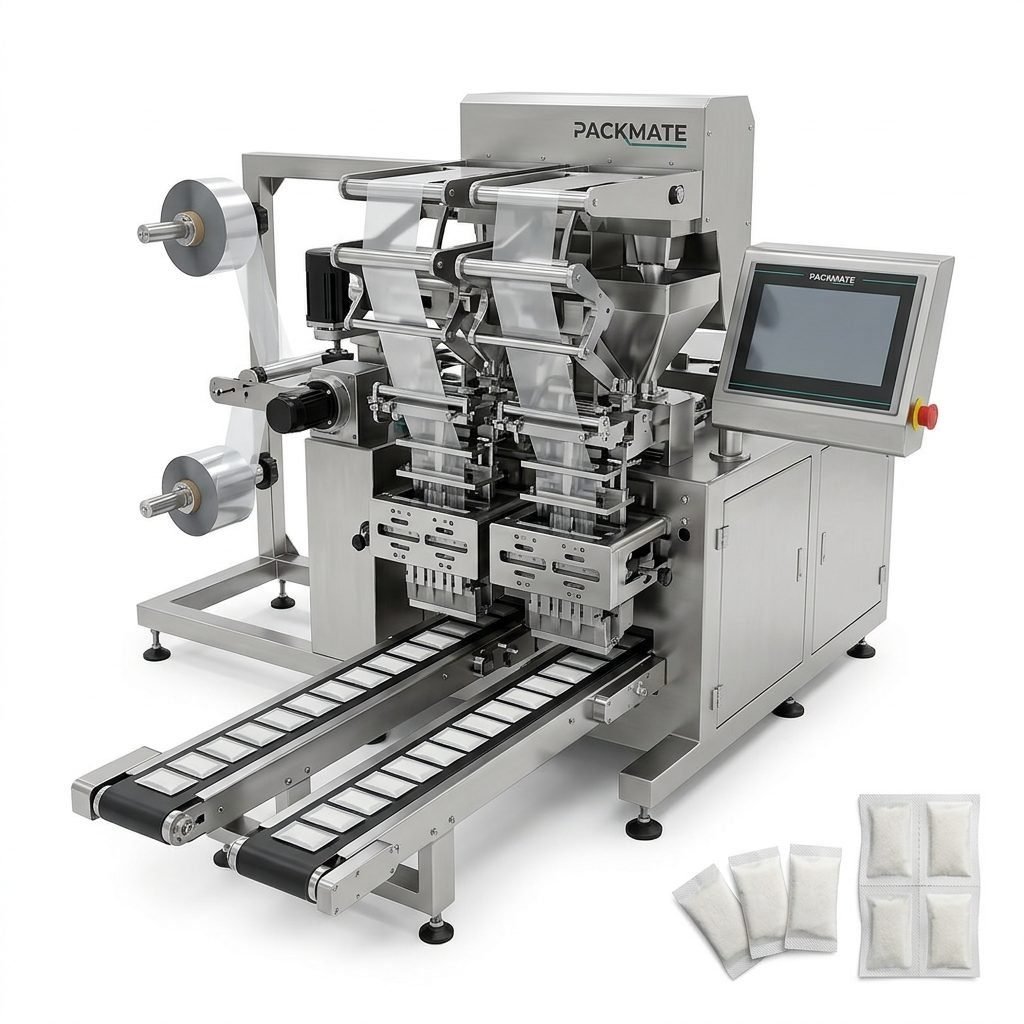
Some systems can be reconfigured between sachet and stick pack formats. This flexibility is valuable for manufacturers who produce multiple SKUs or seasonal runs. See examples of flexible solutions in the Sachet & Stick Pack Machines range.
3. Multi-lane pouch machines (for nicotine pouches/snus)
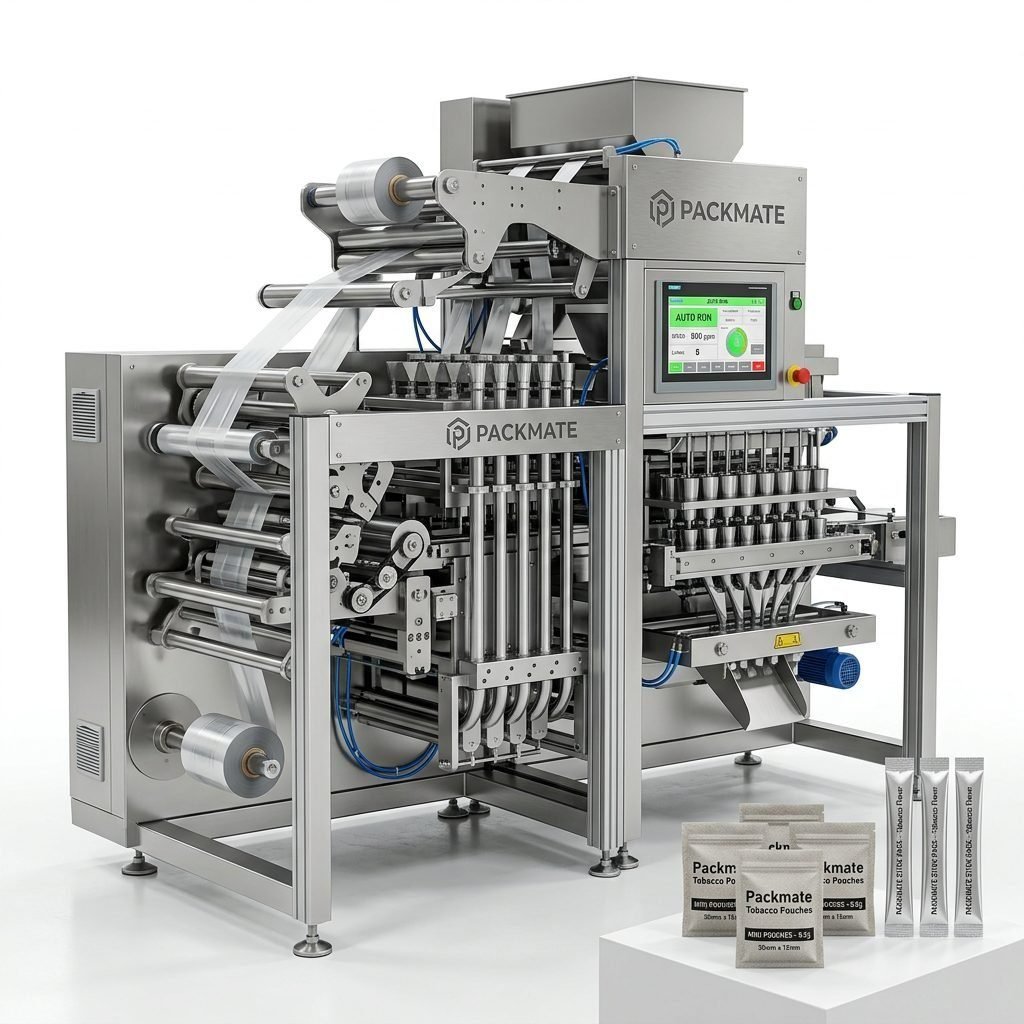
Multi-lane systems run several lanes simultaneously to multiply output without increasing web width excessively. They are engineered for small-dose pouches where precise fill weight and consistent pouch formation are critical.
Advantages: scale-up by lanes, consistent pouch quality.
Considerations: synchronization complexity, higher initial investment.
Critical Technical Specifications to Compare
When comparing suppliers and models, examine the following technical specs closely. These determine whether a machine matches your product characteristics and production targets.
- Speed (pouches/min): Maximum vs. optimal speed with your product.
- Fill accuracy: Tolerance for nicotine powder or pouch weight; critical for regulatory compliance.
- Format flexibility: Range of pouch sizes and materials supported.
- Changeover time: How fast tooling and format changes are performed.
- Material compatibility: Laminates, films, barrier properties, and printing alignment.
Automation & Integration
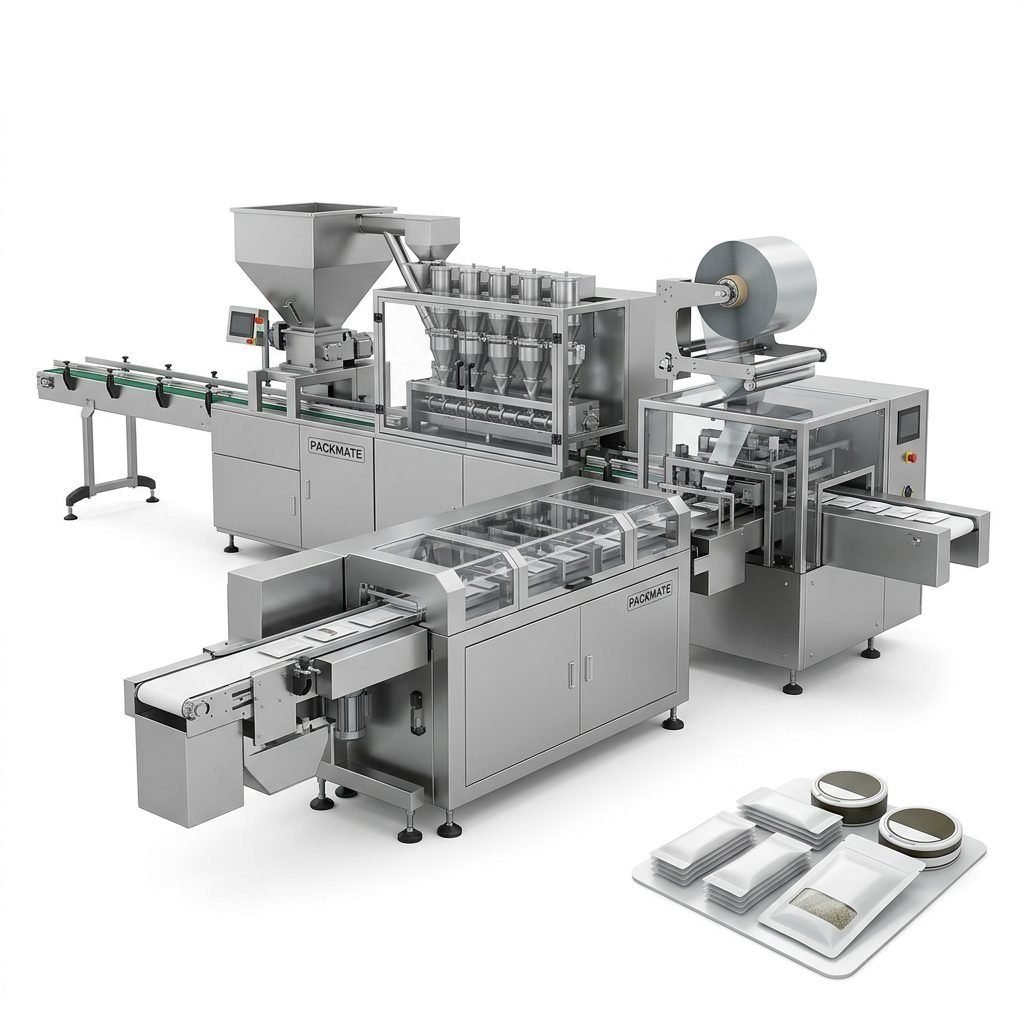
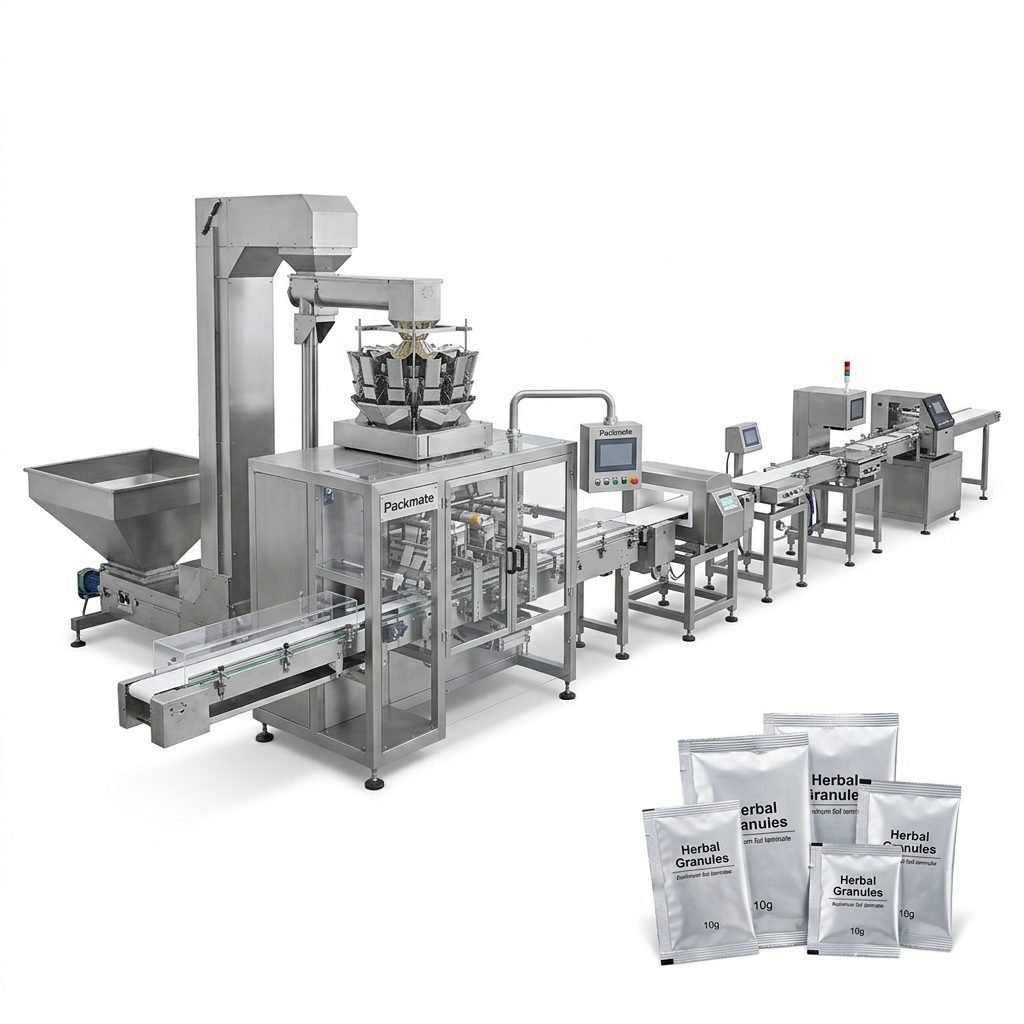
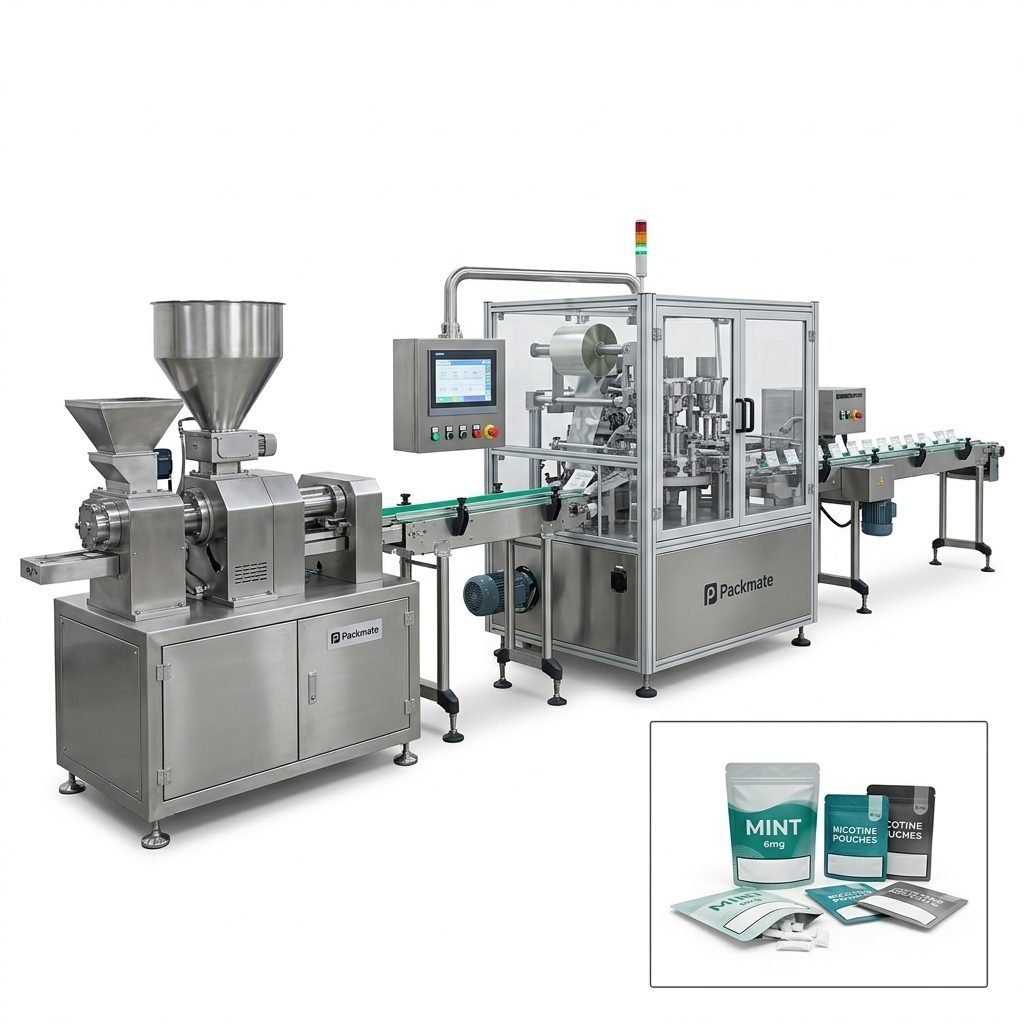
Modern lines often include integrated weighing, feeding, pouch forming, sealing, date coding, and end-of-line solutions. Fully automated feeding & packaging lines reduce manual handling and contamination risk—explore Weighing & Packaging Systems and Filling & Packaging Lines to match upstream and downstream equipment.
Material & Packaging Format Compatibility
Packaging film selection is as important as the machine. Barrier properties, sealant layers, and film stiffness can all affect machine performance. Consult with suppliers about recommended films and request test runs when possible.
📌 Tip: Insist on a factory acceptance test (FAT) using your actual materials—this validates fill accuracy and sealing at target speeds.
Quality, Safety & Compliance
Choose machines compliant with CE and ISO standards to ensure safety and acceptance in international markets. Machines must also support hygienic design features for nicotine or tobacco-adjacent products: easy-to-clean surfaces, minimal crevices, and sanitary feed systems.
After-sales support and spare parts
Rapid local support reduces costly downtime. Evaluate manufacturers on global service networks, availability of critical spares, and training programs. Packmate Snus Machine provides global turnkey solutions and ongoing technical support from a facility with advanced CNC and assembly capability.
Cost of Ownership: Not Just the Purchase Price
Total cost includes installation, commissioning, training, spare parts, consumables, energy, and maintenance. A slightly higher capital expenditure can be justified by lower operating costs, higher uptime, and reduced waste over the machine’s life.
Case Study Snapshot
A mid-sized snus producer replaced aging single-lane machines with a multi-lane snus pouch line. Output increased threefold, material waste dropped by 18%, and manual handling was reduced by 60%. They credited the gains to precise dosing, synchronized lane control, and the manufacturer’s commissioning support.
Learn more about real-world implementations in the Case examples and find machine specifications suitable for scaling operations.
Selecting the Right Supplier
When evaluating suppliers consider:
- Track record in snus/nicotine pouch machinery and turnkey solutions.
- Manufacturing capability (CNC precision, assembly lines) and test facilities.
- Certifications such as CE and ISO for global deployment.
- Ability to customize multi-lane systems and provide FAT/SAT (factory/site acceptance testing).
🔍 Evaluate factory strength: A manufacturer with a 20,000㎡ facility, advanced CNC centers, and 30+ years of experience signals stability and capability for complex customization.
Recommended actions when choosing
– Request reference customers and visit installations if possible.
– Ask for performance data on your specific product and film.
– Confirm spare part lead times and local service options.
– Verify warranty terms and remote support tools.
How Packmate Positions Its Snus Solutions
Packmate Snus Machine focuses exclusively on high-performance snus and nicotine pouch packaging lines, offering stick pack, sachet, and multi-lane systems designed for small-dose pouch production. With over 50 machine models and turnkey lines, the company supports global customers with design, commissioning, and long-term after-sales service. For machine options and product ranges, review Snus & Nicotine Packaging Machines and Bag & Pouch Packaging Machines.
Where to see machines and get support
Attend industry exhibitions to view live demos or contact the manufacturer to arrange a factory tour or FAT. Packmate regularly exhibits internationally—details are available on Our Exhibition and you can reach sales via Contact Us for tailored proposals.
Budgeting & Timeline Expectations
Lead times vary by customization, but typical delivery and commissioning for a standard multi-lane line can range from several weeks to a few months. Plan for installation, operator training, and validation runs. Early engagement with your supplier shortens timelines and improves outcome predictability.
Final Checklist Before Purchase
✅ Production capacity confirmed with margins for scale
✅ FAT with your materials and target speeds scheduled
✅ Spare parts and service plan agreed
✅ Compliance and documentation for target markets verified
Useful Resources & Links
Explore product portfolios and services to match your needs: Snus & Nicotine Packaging Machines, Sachet & Stick Pack Machines, Filling & Packaging Lines, and learn about the company at About Packmate. For direct inquiries use Contact Us.
Conclusion
Choosing the best snus packaging solution requires balancing throughput, format flexibility, material compatibility, regulatory compliance, and lifecycle costs. Prioritize suppliers with proven snus/nicotine experience, strong manufacturing capability, and robust after-sales support to ensure smooth scale-up and consistent product quality.
Common Questions
Q1: How do I determine the required machine speed?
A1: Start from your monthly production target, convert to pouches per minute considering shift patterns and uptime, then select a machine that meets optimal speed at your desired fill accuracy.
Q2: Can one line handle multiple pouch formats?
A2: Some modular machines support format changes (e.g., stick pack to sachet) with quick-change tooling; multi-lane machines can handle different pouch sizes within specified ranges—confirm with FAT.
Q3: What materials should I test before purchase?
A3: Test the exact film laminate, sealing layer, and any inserts or gussets to ensure sealing integrity and runnability at target speeds.
Q4: How important is local service?
A4: Very important. Local support reduces downtime, shortens spare part delivery, and speeds repairs—verify service coverage before purchase.
Q5: What documentation should the supplier provide?
A5: Provide CE/ISO certificates, electrical and mechanical drawings, maintenance manuals, spare parts lists, and FAT/SAT reports.