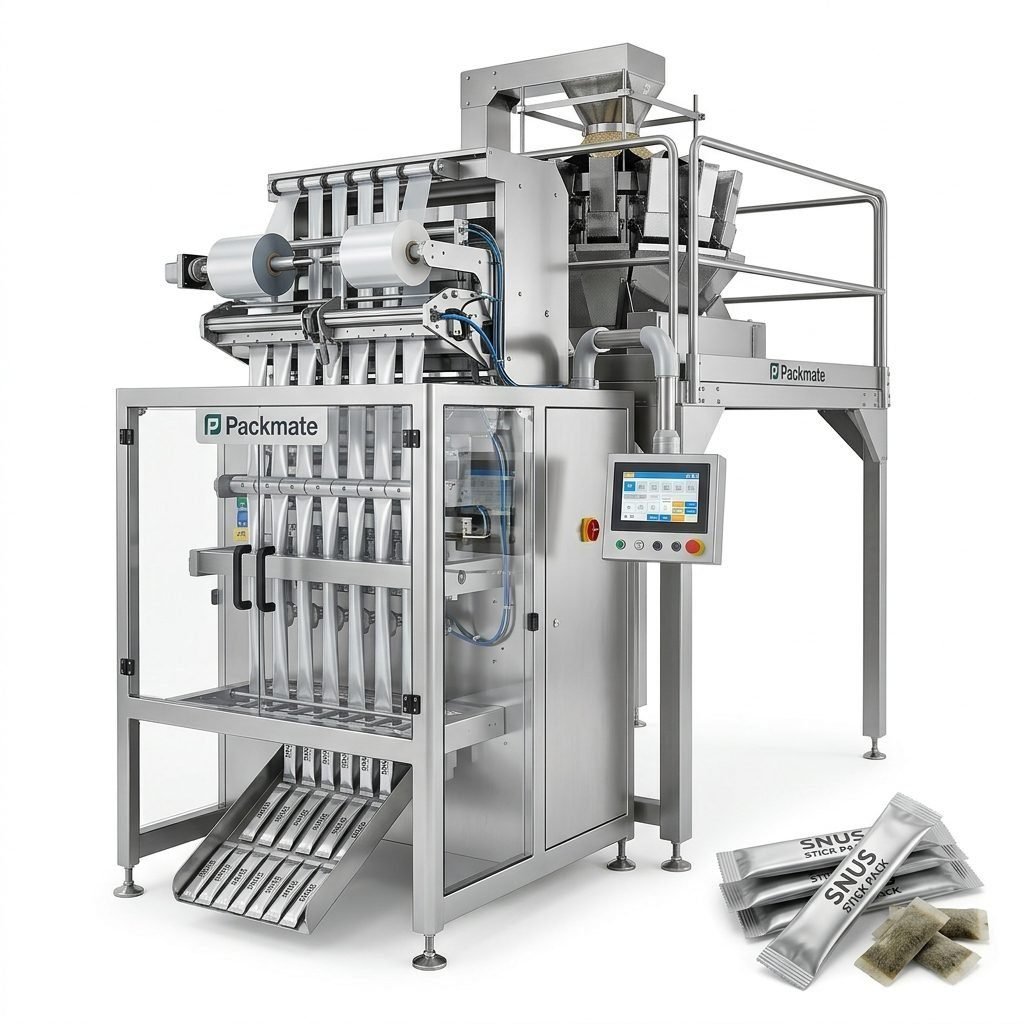
For manufacturers and packagers in the snus and nicotine pouch market, selecting the right packaging automation system is critical for balancing speed, consistency, and regulatory compliance. This complete guide explores high-speed portion packing solutions, multi-lane integration, quality controls, and turnkey line design from concept to commissioning — helping you make informed decisions for a robust production line.
⚙️ Overview: What a Snus Packaging Automation System Delivers
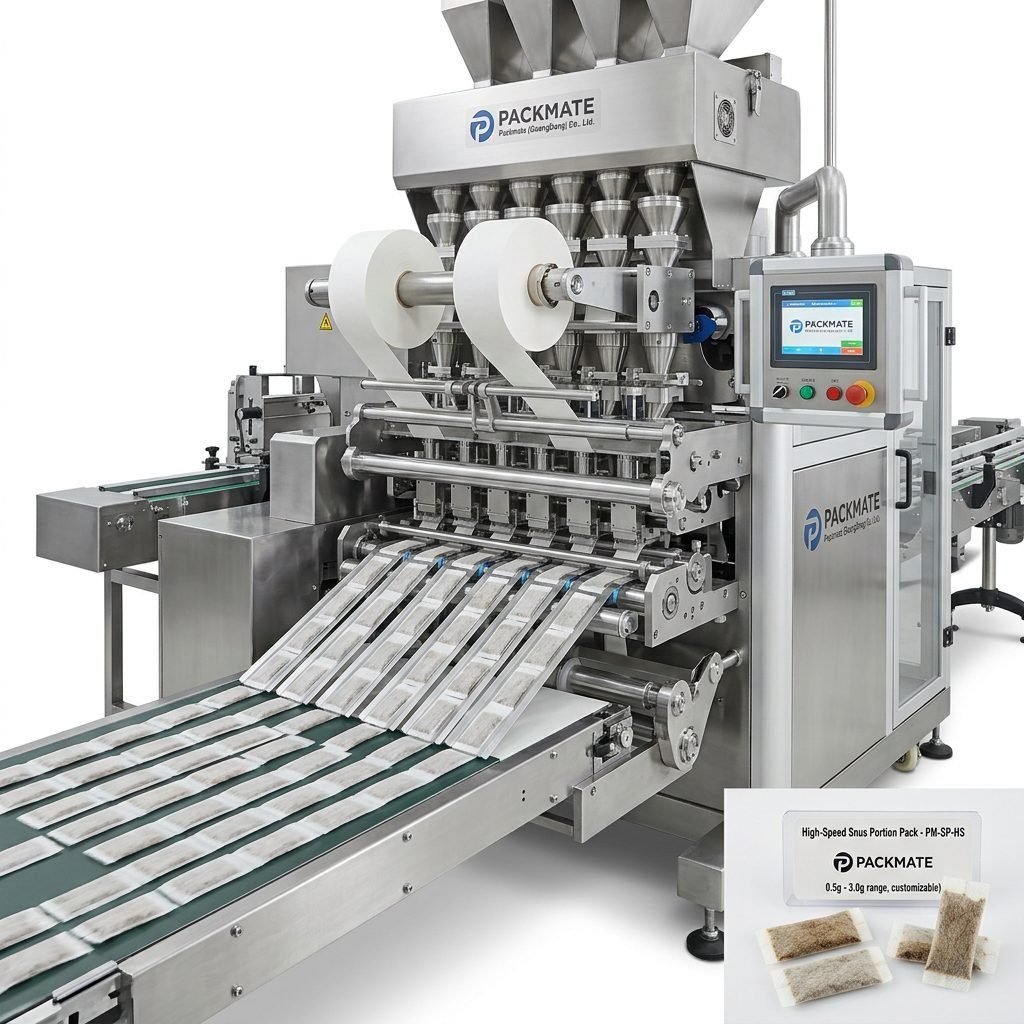
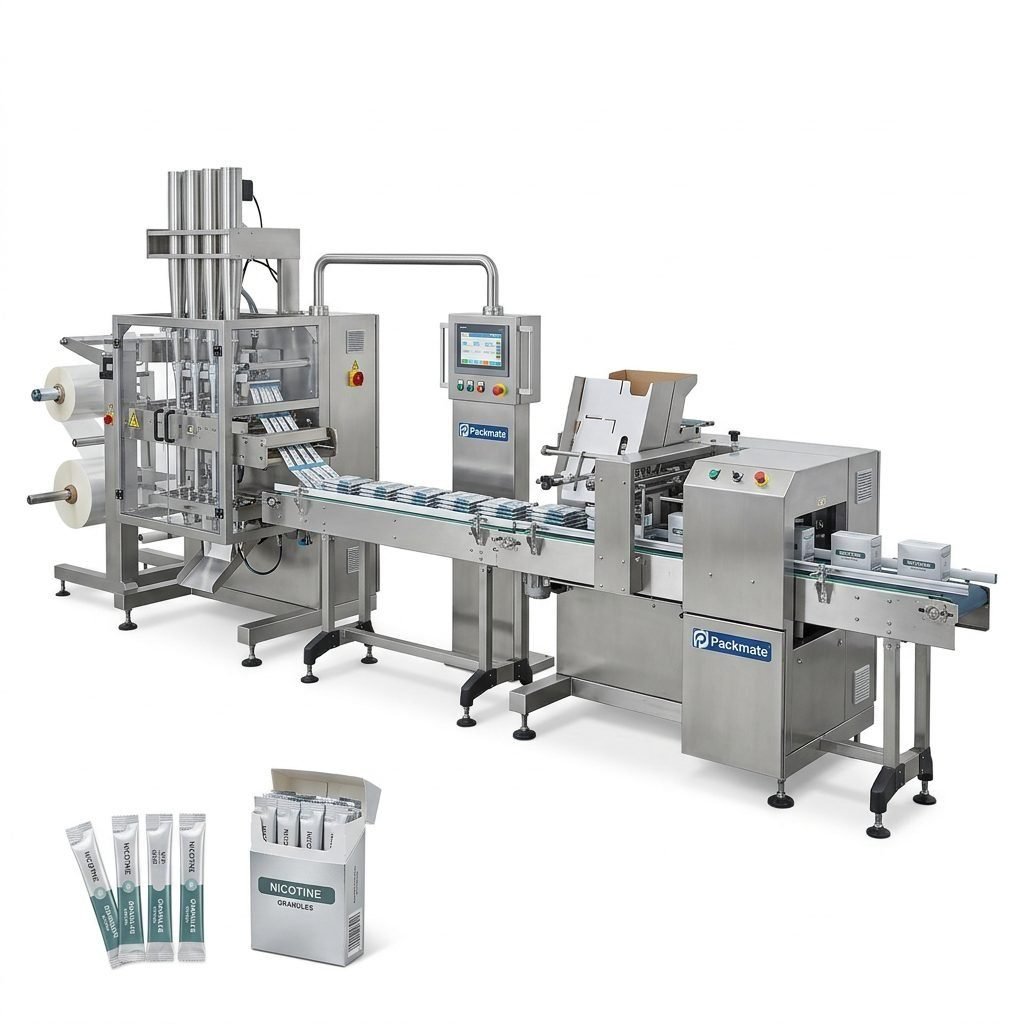
Modern snus packaging automation systems are engineered for precision filling, high-speed portioning, and reliable sealing to meet small-dose product requirements. Typical systems combine feeding, dosing, portioning, sacheting or stick pack forming, sealing, and downstream labeling or secondary packaging. A well-designed system offers:
✓ High throughput — multi-lane options to scale output without increasing footprint;
✓ Accurate dosing — for powders, granules, or liquids to ensure product consistency;
✓ Gentle handling — protecting delicate pouches and maintaining visual quality;
✓ Integrated automation — PLC control, HMI interfaces, and recipe-driven setups to reduce changeover time.
📦 Key Components of a Complete Line
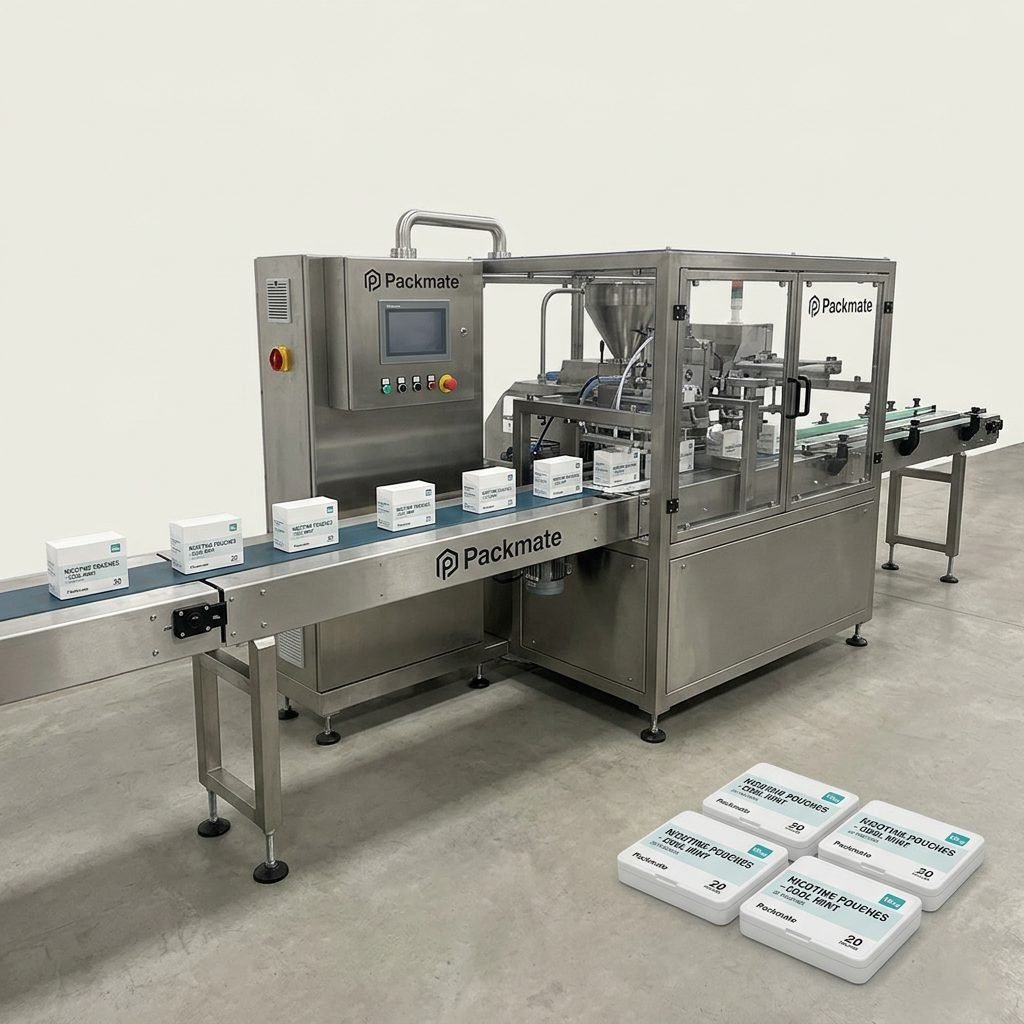
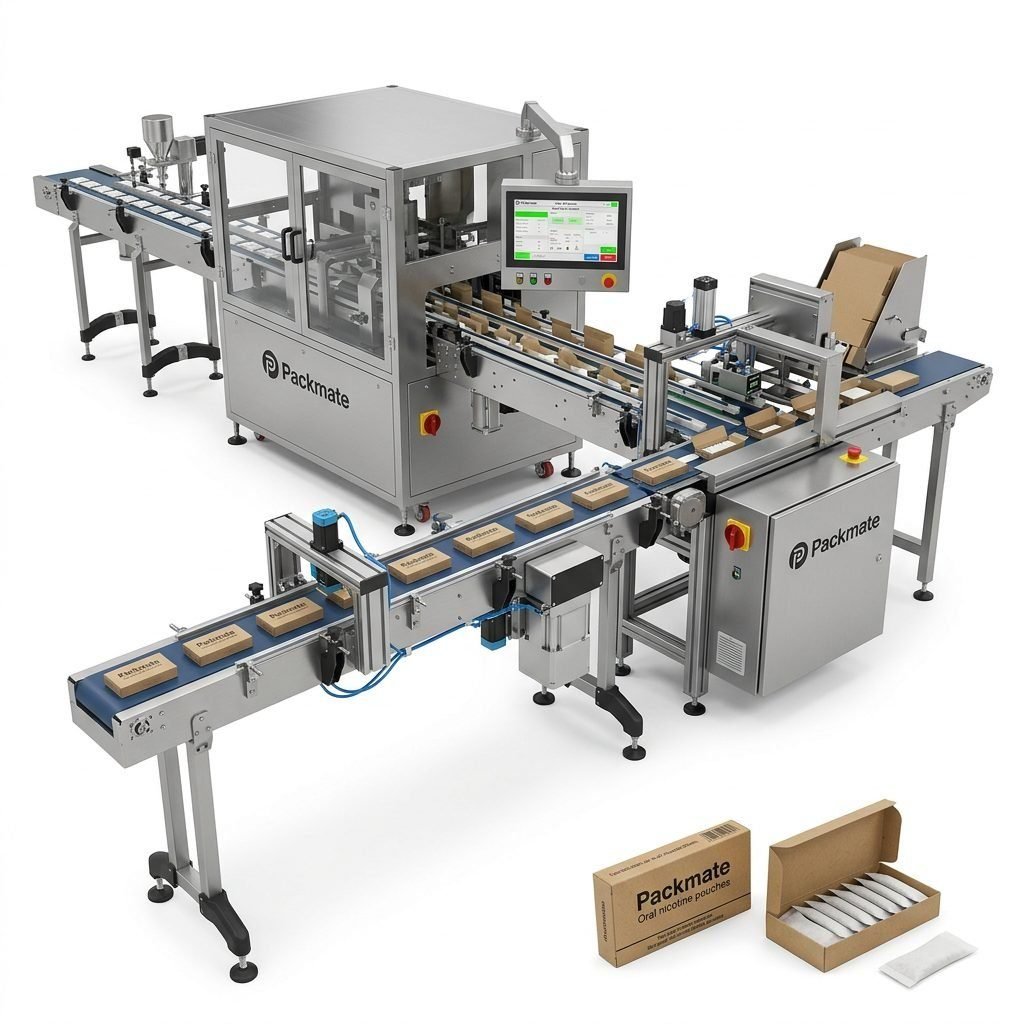
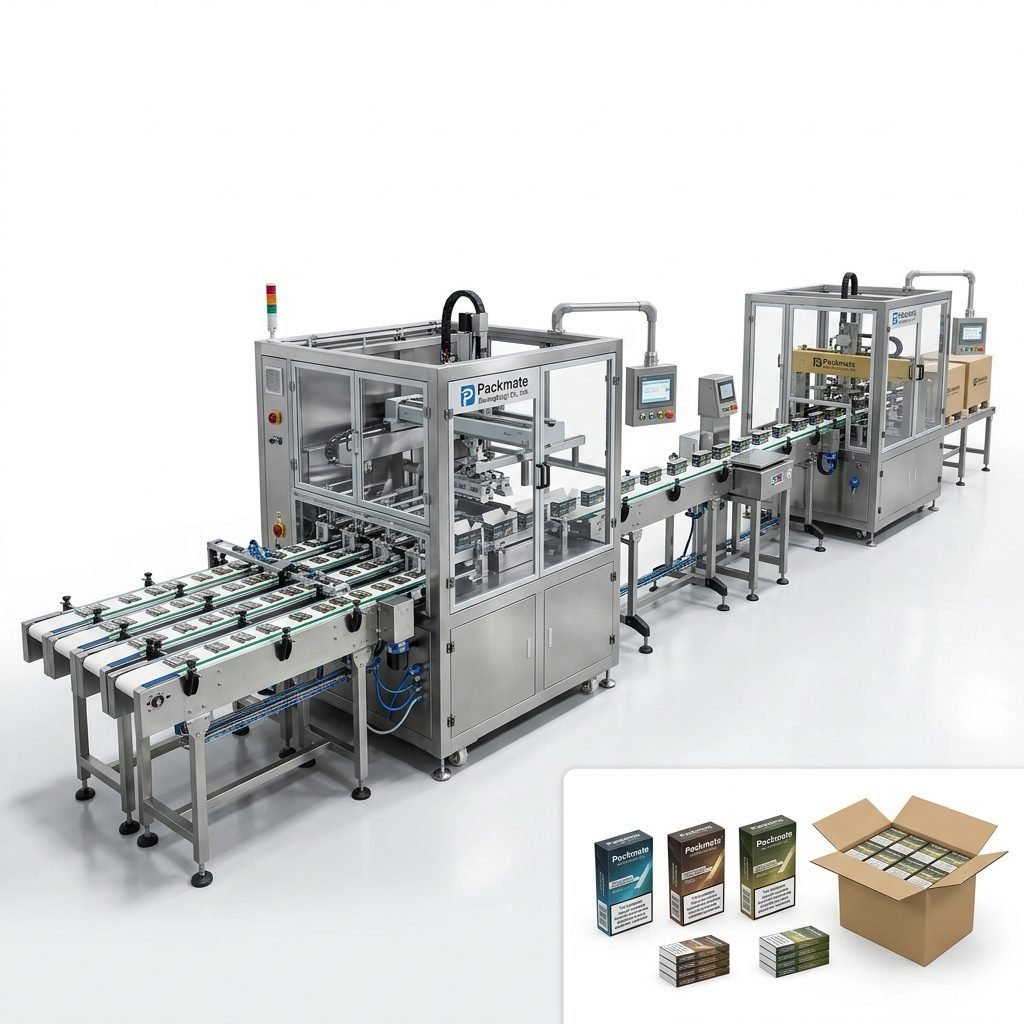
A turnkey line typically includes upstream product handling and dosing, a pouch forming and filling machine, sealing and cutting stations, transfer conveyors, and downstream packaging such as cartons or flow-wrapping. Integration with auxiliary equipment — like checkweighers, metal detectors, and automatic case packers — ensures an end-to-end solution.
🔍 Typical Line Layout (example)
1. Bulk feeding & dosing → 2. Multi-lane portioning & pouch forming → 3. Sealing & coding → 4. Vision inspection & weight control → 5. Secondary packaging and palletizing. Each stage is configurable based on product characteristics and throughput targets.
🏭 Manufacturing Strength & Reliability
With over three decades in packaging machine engineering and a 20,000㎡ production facility housing advanced CNC centers and precision assembly lines, manufacturers can deliver machines built to sustain continuous production cycles. The combination of strict quality control, standardized modules, and global certifications ensures machines meet international production standards.
💡 High-Speed Portion Packing: Design Considerations
Designing for high-speed portion packing requires balancing mechanical speed with repeatable accuracy. Key factors include:
Multi-lane architecture to increase throughput without compromising precision;
Servo-driven mechanisms for consistent metering and minimized drift;
High-precision filling modules suitable for powders, granules, or liquids with minimal cross-contamination;
Modular tooling for fast changeovers when converting between sachets, stick packs, or portion pouches.
🔧 Machine Types & When to Choose Them
Selecting the appropriate machine relies on product format, speed, and budget:
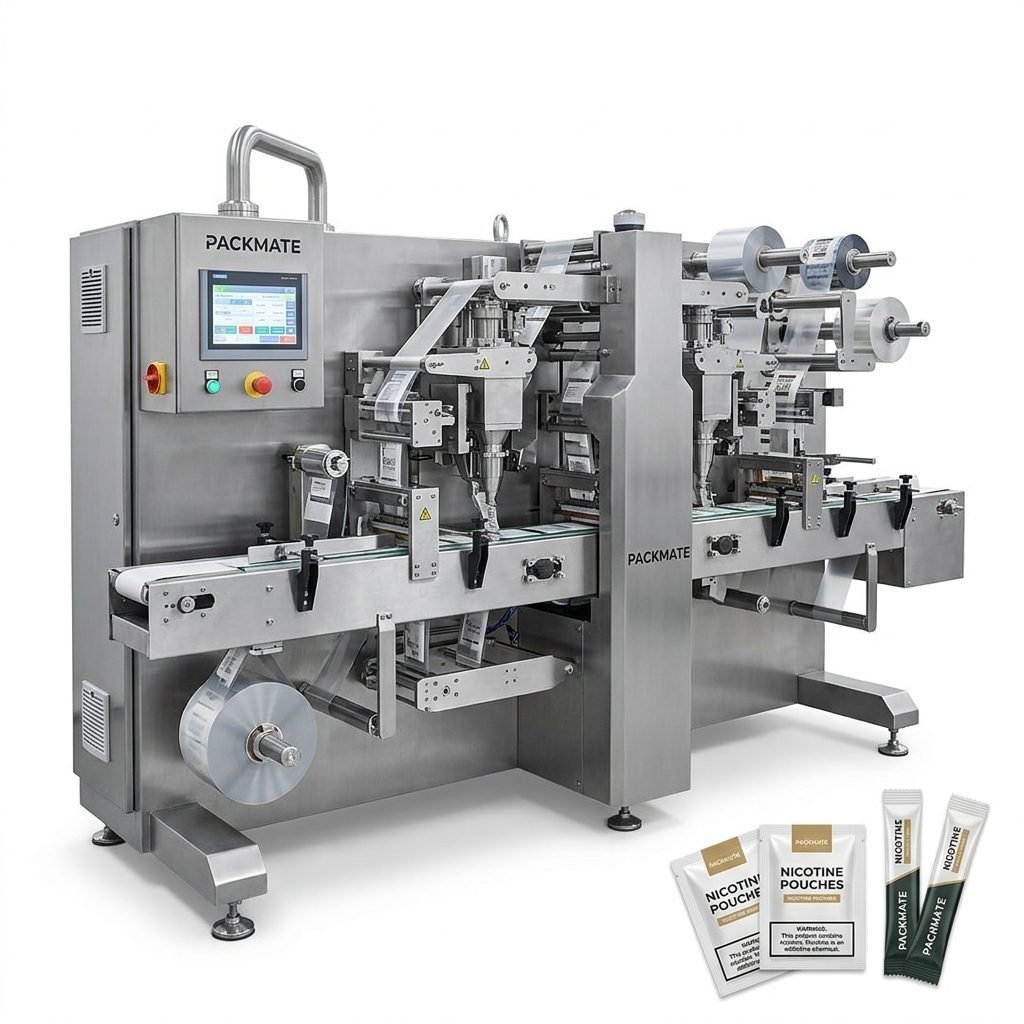
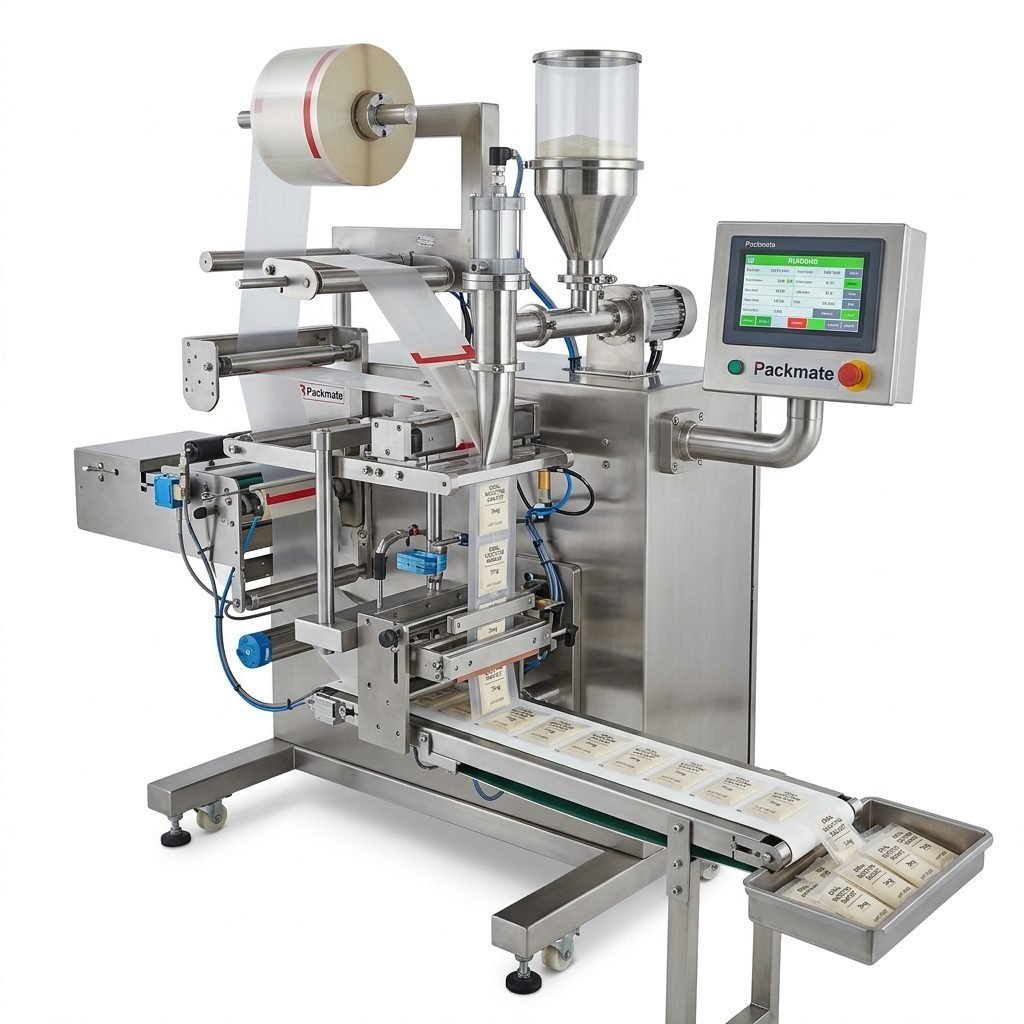
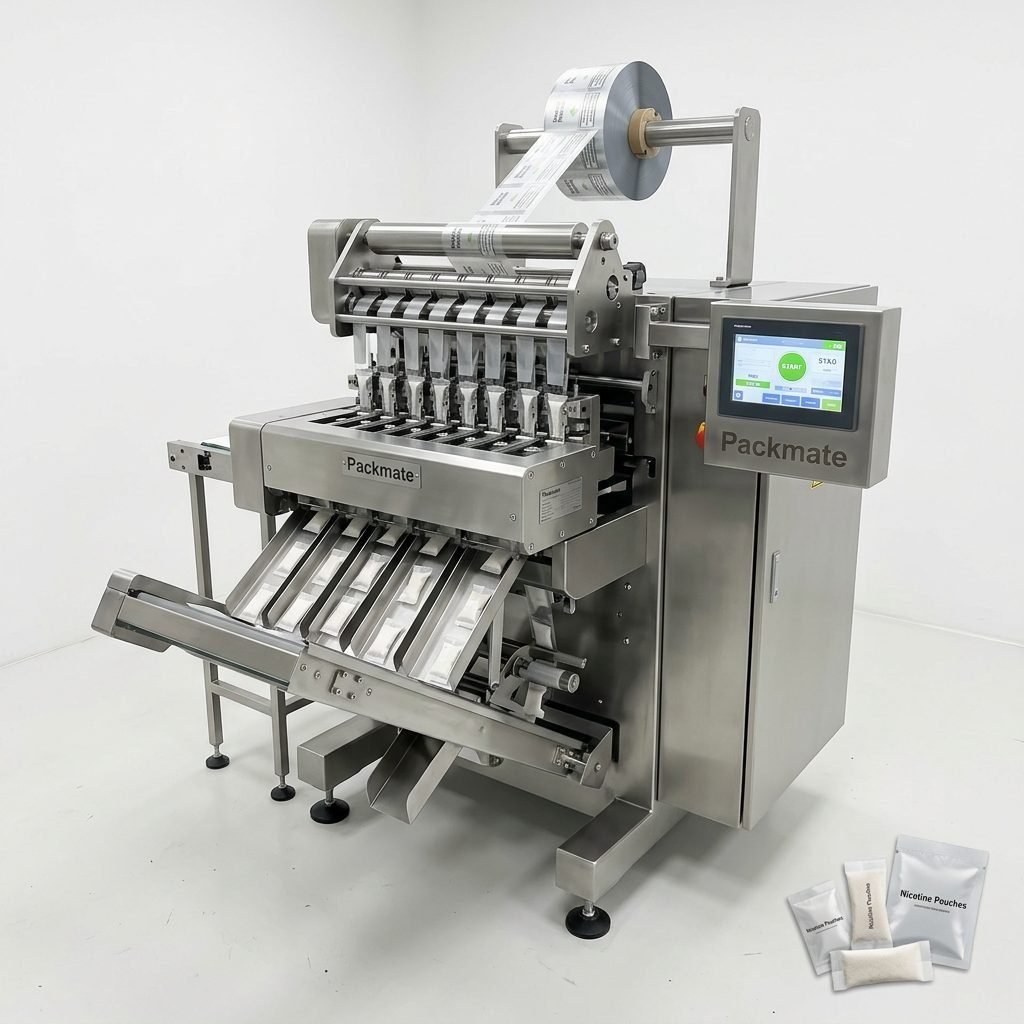
Sachet & Stick Pack Machines
Ideal for single-portion dosing and compact retail presentation. Stick pack machines excel where slim, single-dose formats are required; sachet machines offer more flexible pouch styles. See examples and models here:
Sachet & Stick Pack Machines.
Multi-Lane Snus / Nicotine Packaging Machines
For manufacturers needing high output with minimal footprint, multi-lane systems are the solution. They distribute dosing across several lanes to multiply effective output while sharing upstream and downstream equipment. Discover multi-lane options:
Snus & Nicotine Packaging Machines.
📈 Performance Snapshot
• Typical single-lane speed: up to X pouches/minute depending on pouch size
• Multi-lane multiplier: 4–12 lanes commonly used to reach industrial throughput
• Changeover time: designed to be minimized via tooling kits and recipe HMI settings
✅ Quality Control & Regulatory Compliance
Production of snus and nicotine pouches must align with strict hygiene and safety standards. Reliable systems incorporate:
Inline vision inspection for seal integrity and pouch alignment;
Checkweighing to detect dosing variances and reject out-of-spec pieces;
Traceability via batch coding and integration with MES systems for record-keeping.
🔗 Integration & Turnkey Services
A true turnkey supplier provides design, machine supply, commissioning, and after-sales service. Services may include factory acceptance tests (FAT), installation & commissioning (I&C), operator training, and spare parts support. Learn more about full line and auxiliary equipment:
Filling & Packaging Lines |
Auxiliary Packaging Equipment.
🛠 Commissioning & After-Sales Care
Fast commissioning and dependable after-sales response are essential to reduce downtime. Best-practice suppliers provide:
• Remote diagnostics and firmware updates;
• Spare parts kits and preventive maintenance schedules;
• On-site support and operator certification programs.
📌 Choosing a Supplier: Checklist
• Industry experience and reference installations
• Local service network and spare parts availability
• CE/ISO certifications and validated production protocols
• Customization capability for product-specific tooling and dosing
📚 Case Studies & Global Reach
Global customers across Europe, Asia, and the Americas rely on proven packaging lines for consistent production. Case studies often highlight multi-lane deployments, regulatory-driven retrofits, and full-line automation upgrades. Explore representative installations and customer success stories:
Case.
🌍 Exhibitions & Certifications
Attend trade shows to observe live demonstrations and validate machine performance. Reputable suppliers also display their CE and ISO certificates, offering peace of mind for international shipments and compliance. See upcoming events and credentials:
Our Exhibition |
Certificate.
💬 How to Evaluate Proposals & Quotes
When comparing offers, request detailed data on throughput, changeover time, utility consumption, and spare parts lead times. Ensure the package includes FAT, I&C, training, documentation, and a clear warranty. Consider total cost of ownership (TCO) rather than just capital cost.
📞 Next Steps: Contacting a Supplier
To start a project, prepare product samples, target output (units/hour), desired packaging format, and regulatory constraints. Share these with the supplier for a tailored line layout and budgetary quote. Reach out directly:
Contact Us |
About Packmate.
⚡ Quick Procurement Tips
• Validate performance through a FAT or live demo.
• Confirm spare part availability and lead times.
• Prioritize suppliers that offer modular upgrades for future capacity expansion.
🔎 Additional Resources
For product catalogs, technical specs, and FAQs, consult the manufacturer’s product pages and documentation:
Catalog |
FAQs |
Weighing & Packaging Systems.
📝 Conclusion
Investing in a high-speed snus packaging automation system requires careful alignment between product requirements, throughput goals, and supplier capabilities. Prioritize accuracy, modularity, serviceability, and proven multi-lane solutions to build a resilient, future-ready production line.
常见问题 (Common Questions)
Q1: What throughput can I expect from multi-lane snus machines?
Throughput depends on lane count, pouch format, and dosing method. Single-lane machines may run at modest paces, while a 6- to 12-lane system multiplies output proportionally. Discuss target units/hour with your supplier for an accurate estimate and FAT demonstration.
Q2: How long does machine commissioning typically take?
Commissioning varies by line complexity. Small, standalone machines can be commissioned within days; full turnkey lines with auxiliary equipment may require several weeks for installation, validation, and staff training. Always include FAT and detailed timelines in contracts.
Q3: Can the system handle different product types (powder/granule/liquid)?
Yes — configurable dosing modules and hygienic product paths allow handling of powders, granules, and liquids. Ensure the chosen supplier provides the appropriate metering technology (e.g., screw, auger, volumetric, or piston dosing) for your product characteristics.
Q4: What certifications should I require?
Require CE and ISO certificates as a baseline for safety and manufacturing standards. For food or pharmaceutical-adjacent products, confirm that machine materials and cleaning access meet industry hygiene and regulatory requirements.
Q5: How do I start a quote request?
Prepare product samples, desired output (units/hour), pouch format, and any regulatory constraints. Contact the supplier with these details to receive a tailored proposal and suggested line layout. Use the manufacturer’s contact page for direct communication:
Contact Us.