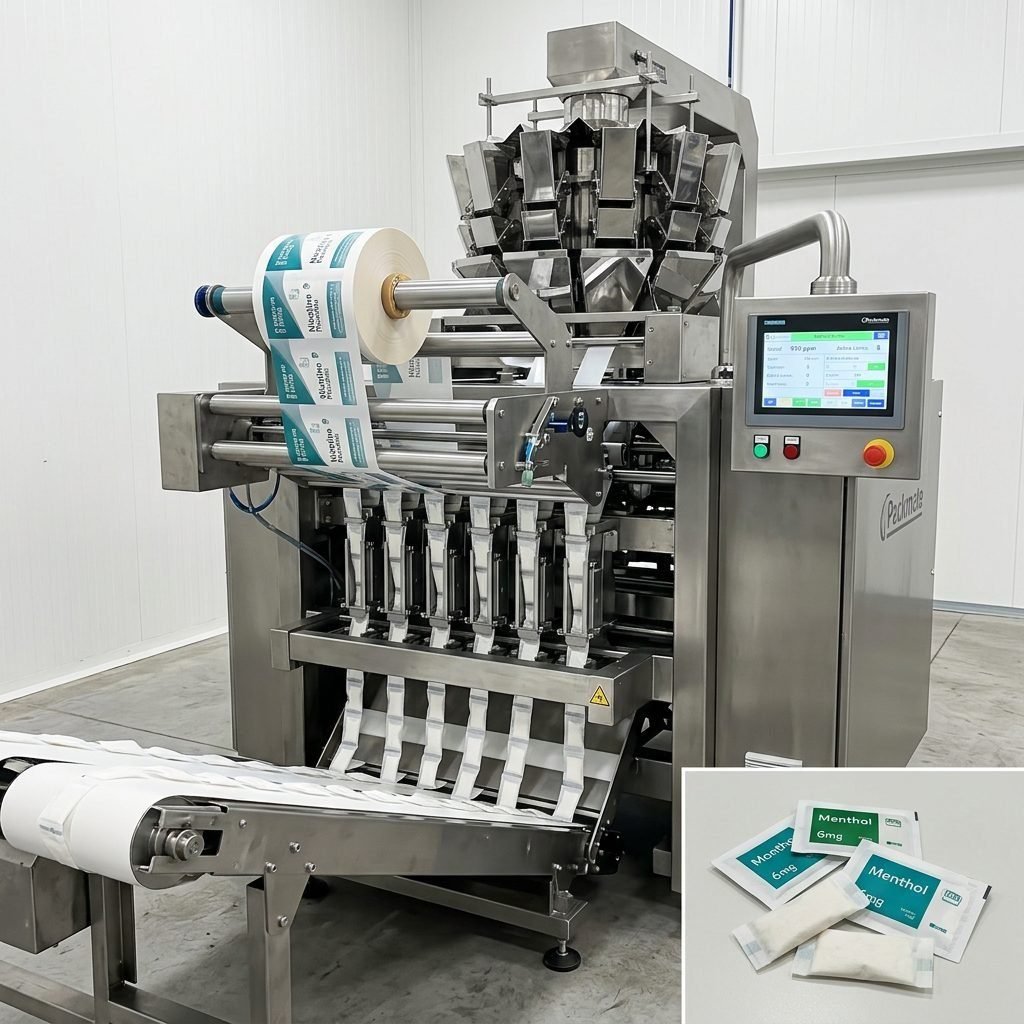
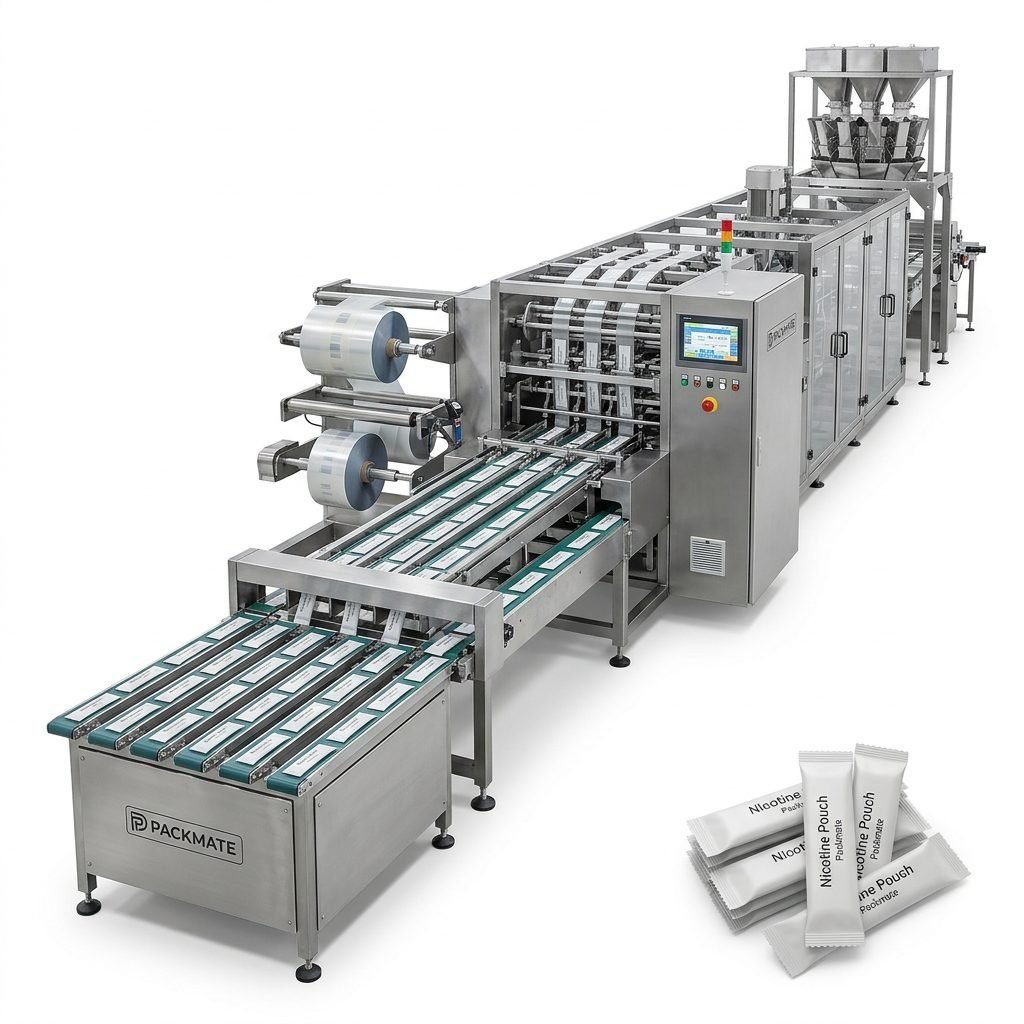
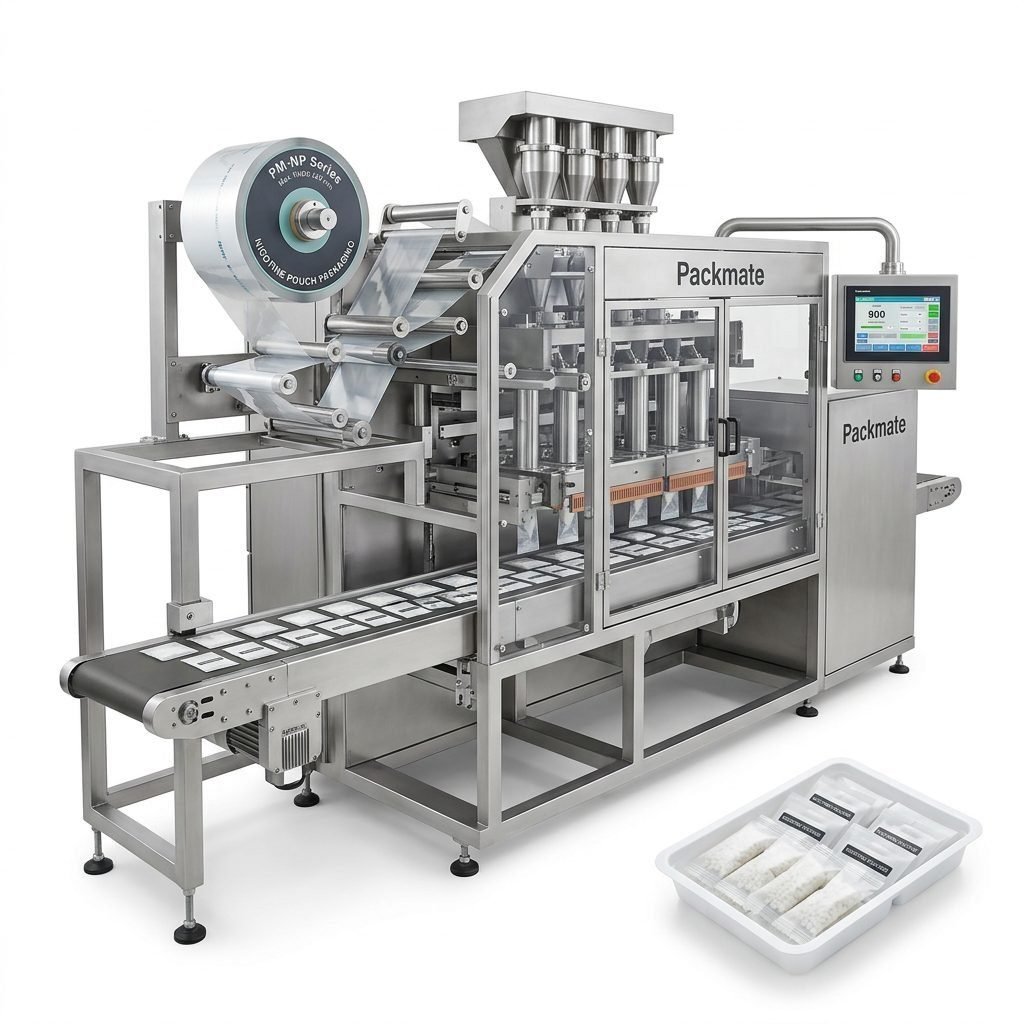
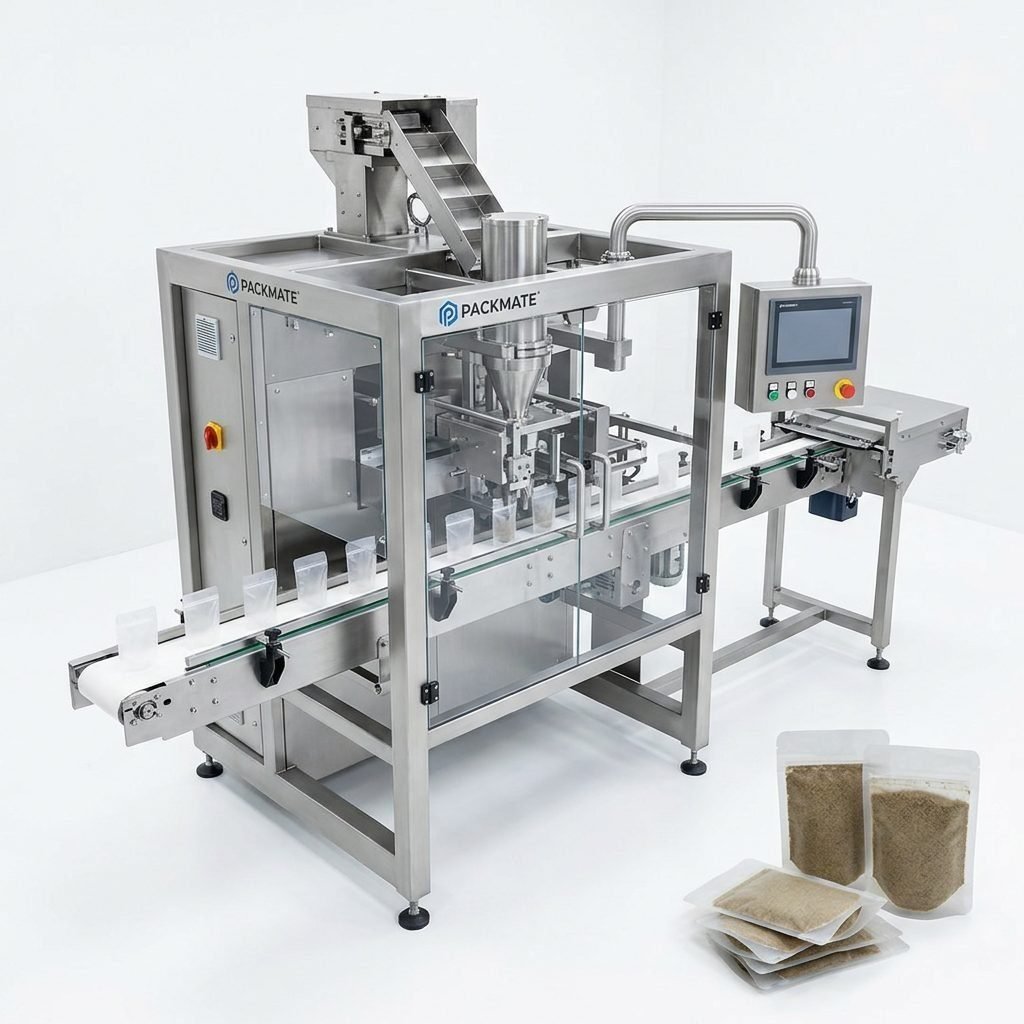
Multi-lane pouch packing machines have become a cornerstone of modern small-dose pouch production, especially in sectors like snus and nicotine pouches, tea sachets, powders and other fast-moving consumer goods. This guide explains types, working principles, typical applications, advantages, installation and purchase considerations to help engineers, production managers and procurement teams choose the right multi-lane pouch packing solution for their needs.
Types of Multi-Lane Pouch Packing Machines
Multi-lane pouch machines are designed to increase throughput by running multiple forming and sealing lanes in parallel. Typical types include:
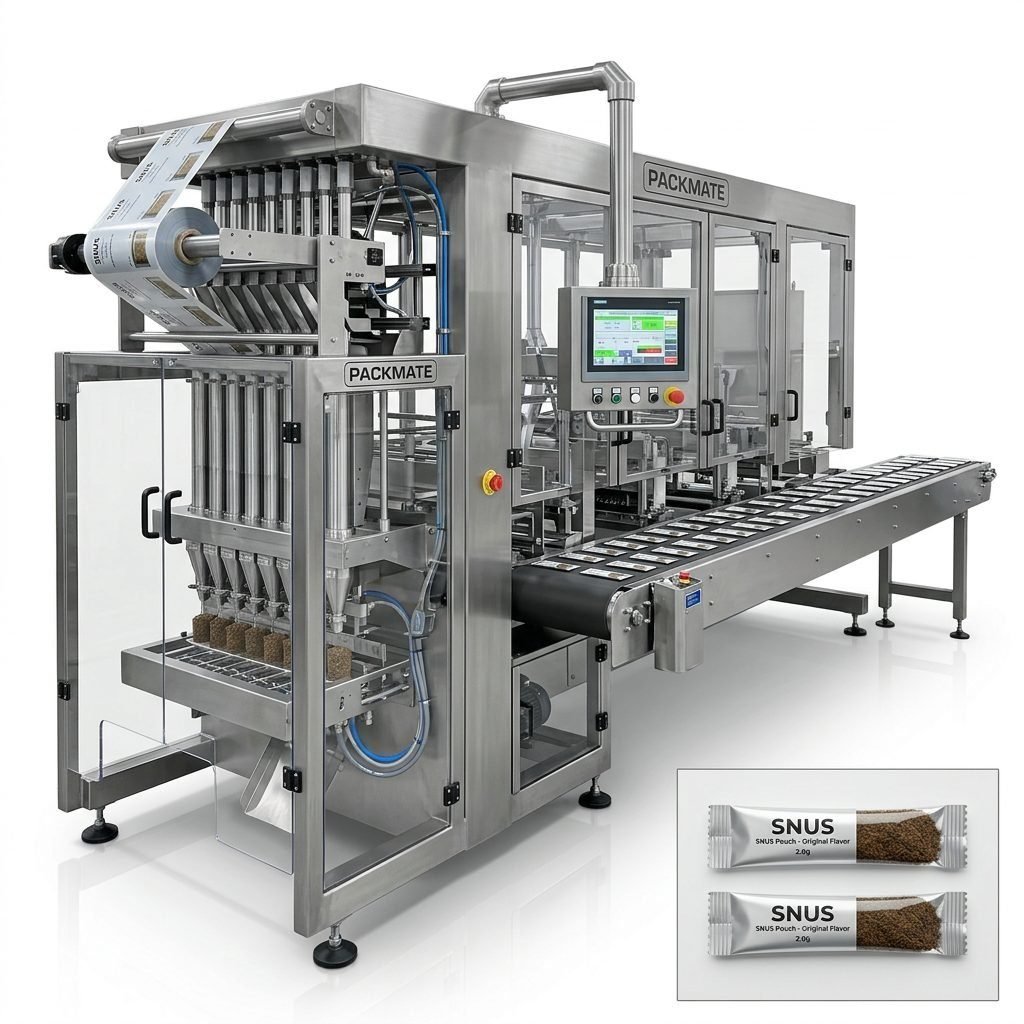
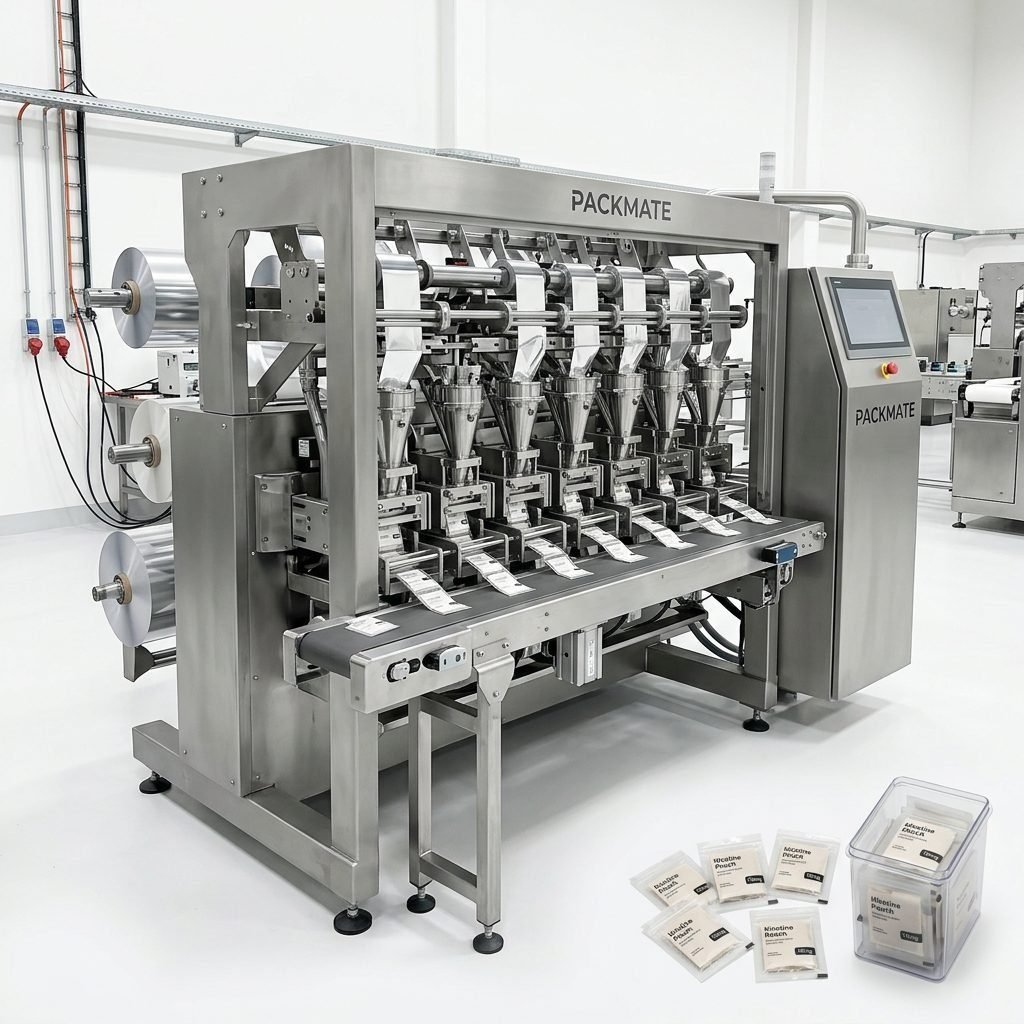
⚙️ Multi-lane vertical form-fill-seal (VFFS) — ideal for powder, granules and free-flowing products. Several vertical lanes share a centralized dosing and film unwinding system to maximize speed and consistency.
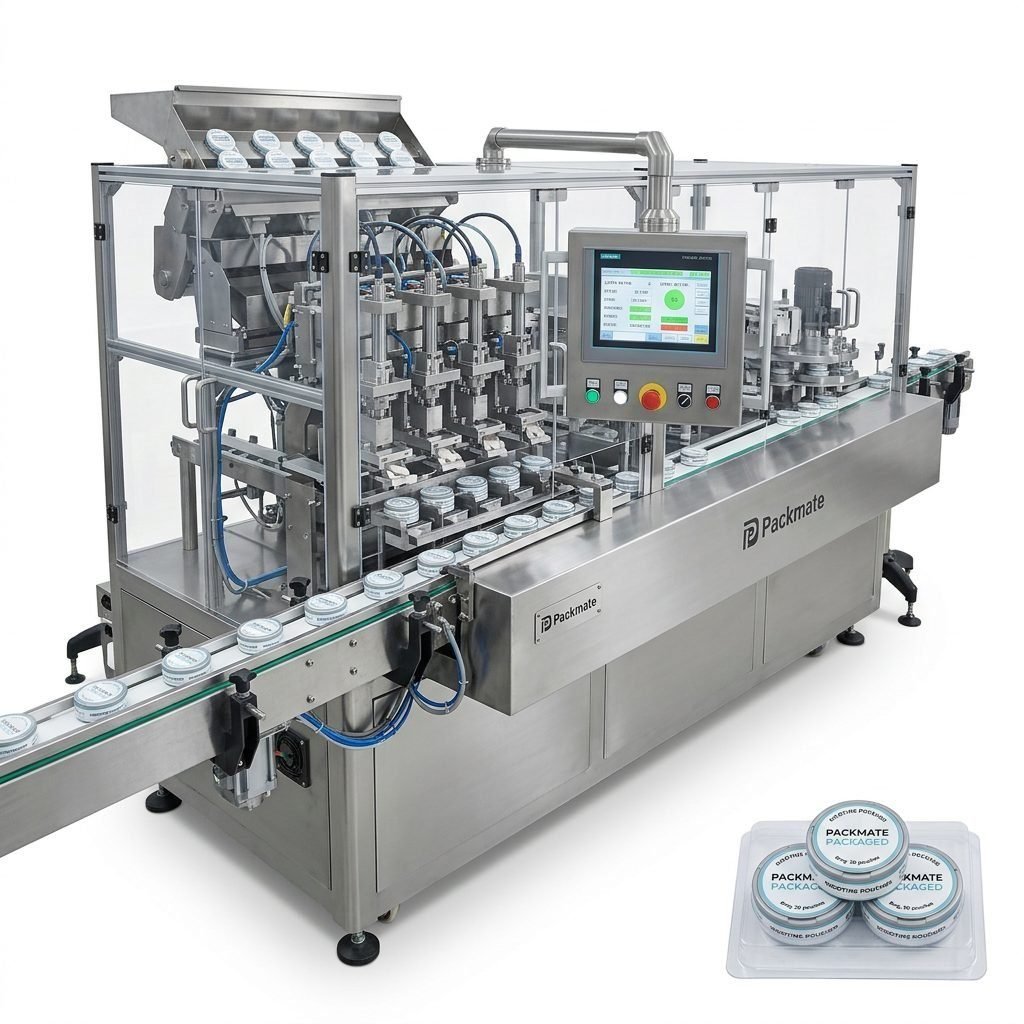
📦 Multi-lane rotary pouch machines — best for pre-made pouches or pillow/3-side-seal sachets where higher fill-accuracy and gentle handling is required, often used for nicotine pouches and premium tea sachets.
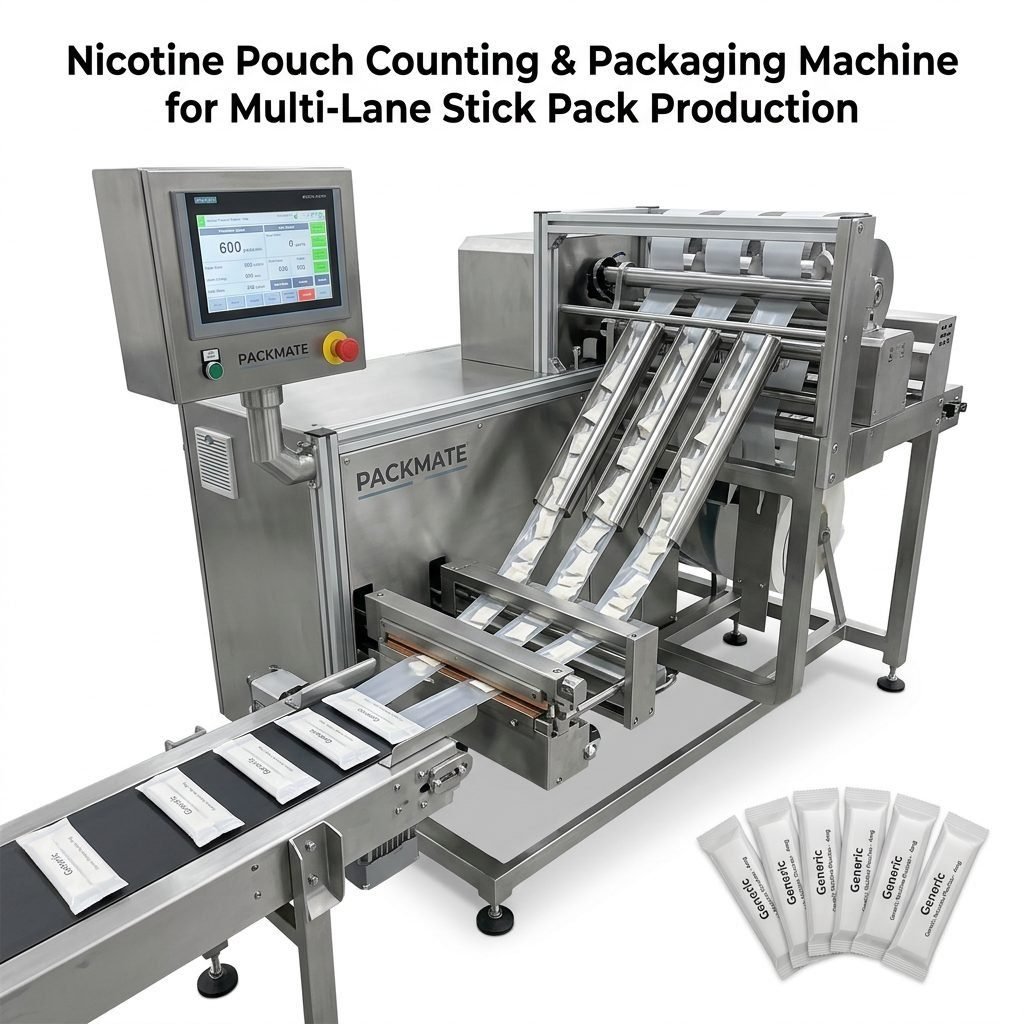
🧰 Stick pack and sachet hybrid lines — combine stick pack lanes with sachet lanes for mixed packaging operations, suitable for companies diversifying output without multiple standalone lines.
How Multi-Lane Pouch Machines Work: Core Principles
Although designs vary, the working principle follows a coordinated sequence of material feeding, forming, filling and sealing across multiple synchronized lanes:
1) Film or pre-made pouch feeding: film unwinds or pouches are indexed into lane fixtures. In many snus-focused lines, film is printed and inspected inline for traceability.
2) Forming: for VFFS types, a forming collar shapes the film into tubular pouches in each lane. For pre-made pouch systems, lane-specific grippers or mandrels position the pouch mouths.
3) Dosing & filling: accurate dosing systems (auger, vacuum, multi-head weighers) supply precise quantities to each lane. High-precision dosing is essential for small-dose products like nicotine pouches to maintain regulatory compliance and product consistency.
4) Sealing & cutting: heat or ultrasonic sealing stations close each pouch, followed by cutting and discharge. Synchronization ensures identical cycle timing across lanes to prevent jams and ensure uniform pouch appearance.
Key Components and Configuration Choices
Investing in a multi-lane pouch machine means understanding which components determine capacity, flexibility and long-term ROI:
• Film / Pouch handling system: specifies whether the line uses roll-fed film or pre-made pouches. Roll-fed designs are flexible for shape changes; pre-made pouch handling reduces film waste.
• Dosing modules: auger, volumetric, piston or multi-head weighers — choose based on product characteristics (powder, granule, liquid).
• Lane count and pitch: more lanes increase throughput but require stronger drive systems and larger footprint.
Materials, Seals and Tooling
Sealing technology (heat-seal, ultrasonic) and tooling (molds, forming collars, grippers) determine package integrity and interchange time. For products like snus, oxygen and moisture barrier films and precise seal controls are critical to product shelf life and quality.
Applications: Where Multi-Lane Pouch Machines Excel
Multi-lane pouch machines serve a wide range of industries where high throughput and small pouch formats are required:
🔍 Food & beverage — tea sachets, single-serve condiments, powdered drink mixes and single-serve seasoning sachets.
🚬 Tobacco & nicotine products — snus and nicotine pouches demand precise dosing and barrier packaging; manufacturers often prefer specialized suppliers with domain experience.
🧴 Pharmaceutical & personal care — single-dose powders, sample sachets and topical products benefit from consistent fill accuracy and hygienic design.
Advantages of Multi-Lane Systems
Choosing a multi-lane pouch packing machine can deliver compelling operational and commercial benefits:
• Higher throughput without proportional footprint increase: multiple lanes multiply output while sharing central components like control systems and feeders.
• Reduced cost per pouch: economies of scale on film usage, maintenance and labor.
• Flexibility and scalability: modular lane additions allow phased capacity expansion.
Choosing the Right Machine: Buying Tips
When evaluating suppliers and machines, consider these practical items to avoid expensive upgrades later:
1) Production targets: calculate current and near-future throughput needs. Choose lane count and dosing technology that meet peak demand with margin for growth.
2) Product characteristics: hygroscopic powders, sticky blends or fragile ingredients require dedicated dosing and gentle handling. Request machine trials or sample runs whenever possible.
3) Regulatory and sealing requirements: for nicotine pouches and pharmaceutical products, ensure the supplier complies with CE/ISO standards and can provide material validation and documentation.
4) Ease of changeover and cleaning: modular tooling and quick-change parts reduce downtime. Look for hygienic designs and accessible service points.
5) After-sales support and spare parts availability: local or regional support saves days of downtime; inspect supplier references, spare-parts policy and training offerings.
Supplier Selection: What to Ask
Ask suppliers about factory testing, sample runs, machine acceptance tests (FAT), installation and commissioning (SAT), and warranty terms. Packmate Snus Machine, for example, highlights 30+ years of experience and full turnkey capabilities across snus and nicotine pouch packaging lines — details that matter when selecting a specialized partner.
Installation, Commissioning and Plant Integration
A smooth installation process minimizes production disruption. Consider these integration tasks:
• Site utilities and layout: confirm required power, compressed air, and ceiling height. Multi-lane machines may need reinforced floors and clear access for maintenance.
• Conveying and downstream equipment: coordinating conveyors, accumulation systems and secondary packaging equipment avoids bottlenecks.
• Control and data integration: ensure PLC/SCADA compatibility for Industry 4.0 data capture, traceability and remote diagnostics.
Maintenance Best Practices
Planned maintenance ensures stable performance and longer service life:
🔧 Daily checks for film tension, seals and dosing accuracy help catch wear early.
🕒 Scheduled preventive maintenance — bearings, servo tune-ups, and sensor calibrations — reduces unscheduled stops.
📦 Keep a modest spare parts inventory for high-wear items such as sealing jaws, belts and sensors to minimize downtime.
Case & Certification: Why Industry Partners Matter
Proven case histories and international certifications add confidence. Manufacturers with CE and ISO certifications and global exhibition experience often provide better documentation, FAT/SAT procedures and long-term service networks. If you want to review sample machine portfolios, consider looking through supplier product categories such as Snus & Nicotine Packaging Machines, Bag & Pouch Packaging Machines and Filling & Packaging Lines for technical comparisons.
Real-World Example
A mid-size producer of nicotine pouches upgraded to a 6-lane rotary pouch line to achieve a threefold throughput increase while reducing labor by 40%. The selected line included multi-head weighing for consistent dosing, ultrasonic seals for clean edges and a modular discharge conveyor to integrate with existing cartoning equipment. The vendor provided FAT, onsite commissioning and operator training, allowing the customer to reach full production within two weeks of installation.
Cost Considerations and ROI
Initial capital cost depends on lane count, degree of automation, dosing accuracy and auxiliary equipment. When calculating ROI, include:
• Labor savings from automation
• Reduced material waste and better film utilization
• Increased yield and fewer rejects due to precise dosing and consistent sealing
How Packmate’s Experience Helps Buyers
Choosing a vendor with product-specific know-how shortens the learning curve. Companies like Packmate (GuangDong) Co., Ltd. emphasize decades of engineering experience, turnkey production lines and a broad product catalog. To explore detailed options and certifications, the supplier pages and case studies can be helpful resources: About Packmate and Case.
Final Checklist Before Purchase
Before you sign the order: verify FAT documentation, request a sample run with your product, confirm spare parts lead times, ask for operator and maintenance training schedules, and ensure clear warranty and service-level agreements. A transparent supplier with exhibition presence and certifications lowers procurement risk.
Frequently Asked Questions
Q1: What lane count should I choose for a new line?
A: Base the decision on current and projected demand, available floor space, and budget. Many producers start with 4–6 lanes to balance speed and complexity; larger operations might choose 8+ lanes when product mix is stable.
Q2: Can a multi-lane machine handle different pouch sizes simultaneously?
A: Most multi-lane machines are designed for uniform pouch format during a production run. Quick-change tooling reduces changeover time, but running different pouch sizes simultaneously on the same machine is generally not recommended.
Q3: How important is dosing accuracy for snus and nicotine pouches?
A: Extremely important. Small deviations can lead to regulatory non-compliance and customer complaints. Choose precision dosing systems (multi-head weighers or high-accuracy augers) and insist on pre-delivery trials with your actual product.
Q4: What after-sales services should I expect from a reputable supplier?
A: Expect FAT/SAT support, operator training, spare parts supply, preventive maintenance plans and remote diagnostics. Verify response times and availability of local technicians if your operation runs 24/7.
Q5: Where can I find more product information and technical details?
A: Manufacturer product pages and catalogs provide specifications, certifications and downloadable documentation. For a deeper dive into line types and auxiliary systems, see resources like Sachet & Stick Pack Machines and Weighing & Packaging Systems.