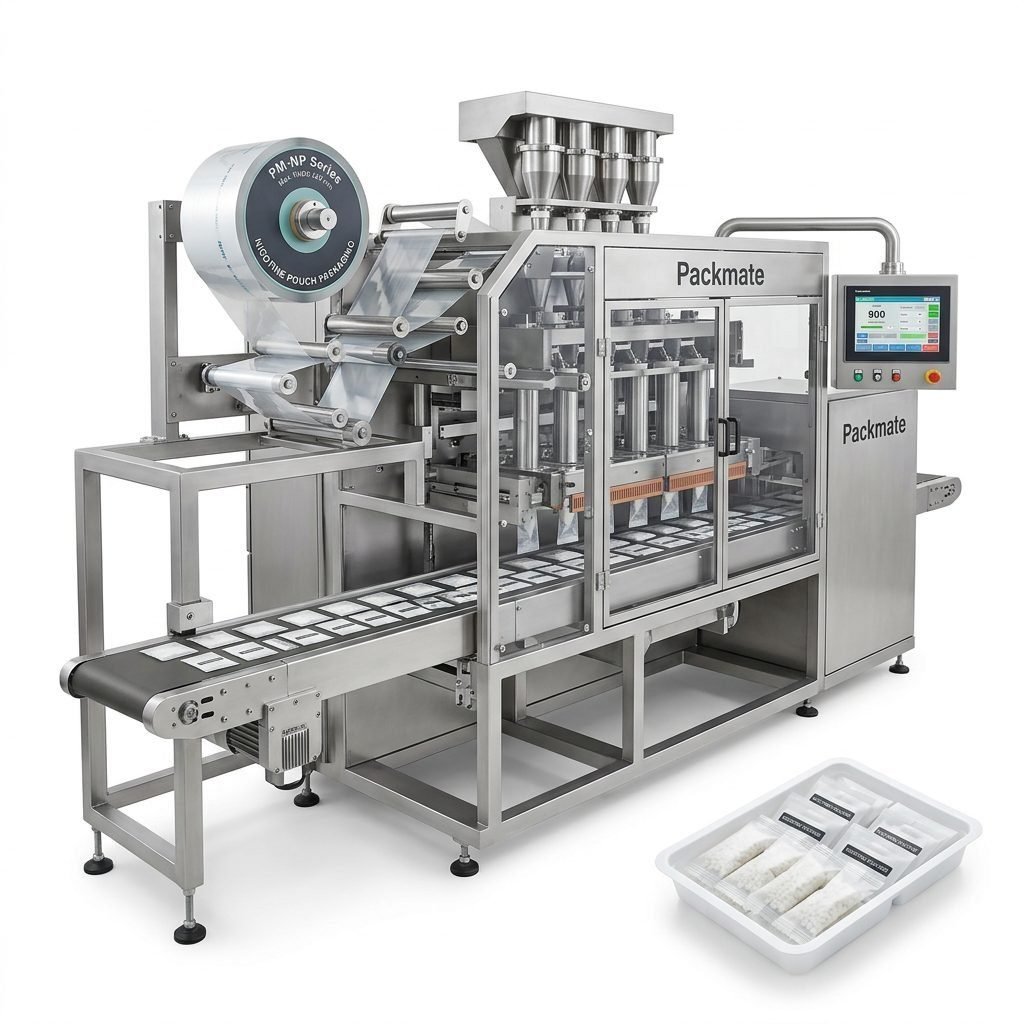
Entering the nicotine pouch market in Cameroon requires more than an attractive product concept — it requires the right packaging machinery to meet local climate conditions, language and labeling preferences, regulatory considerations, and supply-chain realities. This guide walks Cameroon-based manufacturers and importers through the key technical, operational and commercial factors to consider when choosing nicotine packaging machinery, with practical advice to help you make a reliable buying decision.
Understand the Cameroon Market Context
Cameroon is a bilingual country (French and English), with a tropical climate in many regions and frequent electrical voltage of 220V/50Hz in industrial settings. Consumers in urban centers like Douala and Yaoundé often prefer discreet, compact formats, while rural distribution can demand more robust outer packaging for transport over long distances. When selecting machinery, factor in:
⚠️ Packaging climate resilience: humidity and heat in Cameroon can affect pouch sealing and film performance — choose machines with reliable sealing control and temperature compensation.
🔧 Power & service readiness: verify machine power compatibility (220V/50Hz) and ensure you have access to trained technicians or a local service plan.
📝 Labeling & language: your machine should support variable data printing so you can print bilingual (French/English) labels, batch codes and compliance text.
Key Technical Criteria When Choosing a Nicotine Packaging Machine
Whether you plan single-lane production for boutique brands or high-speed multi-lane lines for mass output, pay attention to these technical aspects:
Production Capacity & Scalability
Define your target daily output in pouches per hour and select a machine family that meets current needs while allowing future capacity upgrades. Multi-lane systems reduce footprint and cost per pouch for high-volume runs, while modular single-lane machines offer lower upfront investment and faster changeovers for multiple SKUs.
Pouch Type & Format Flexibility
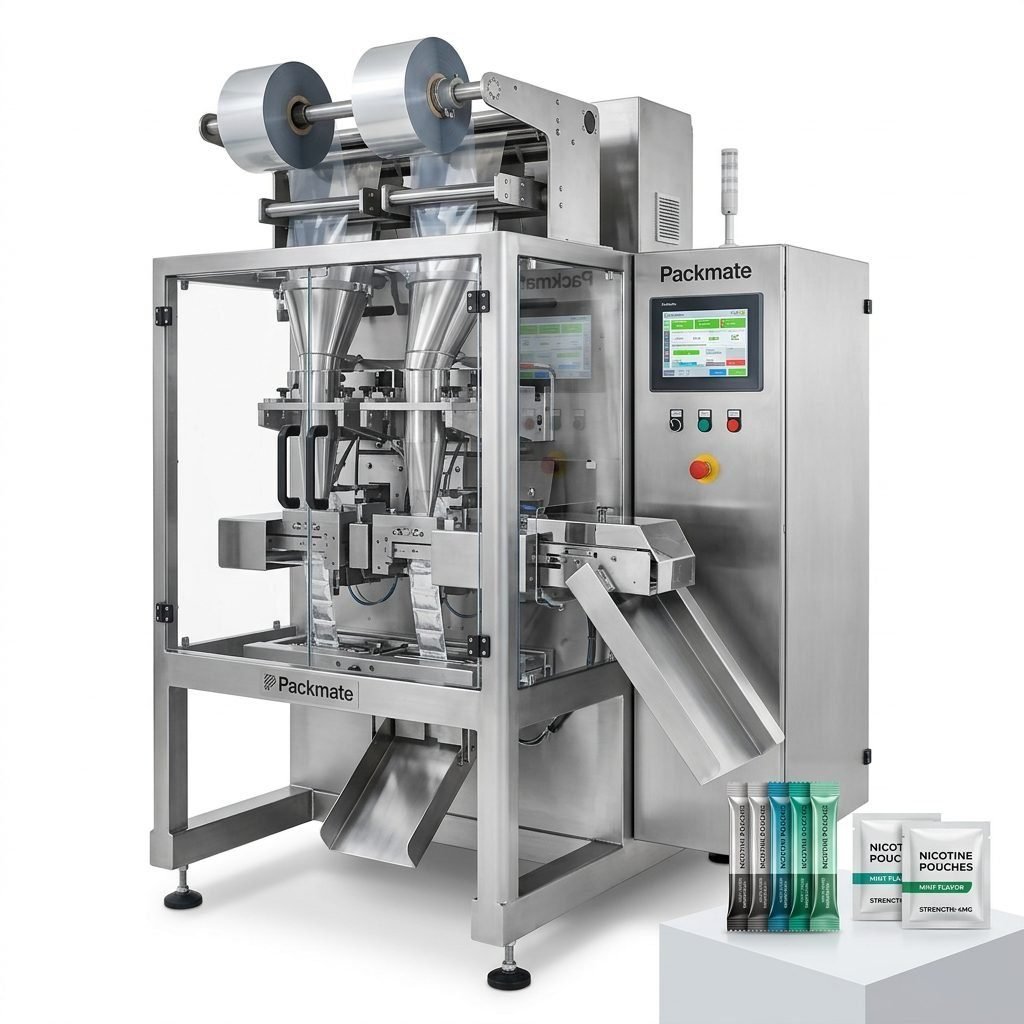
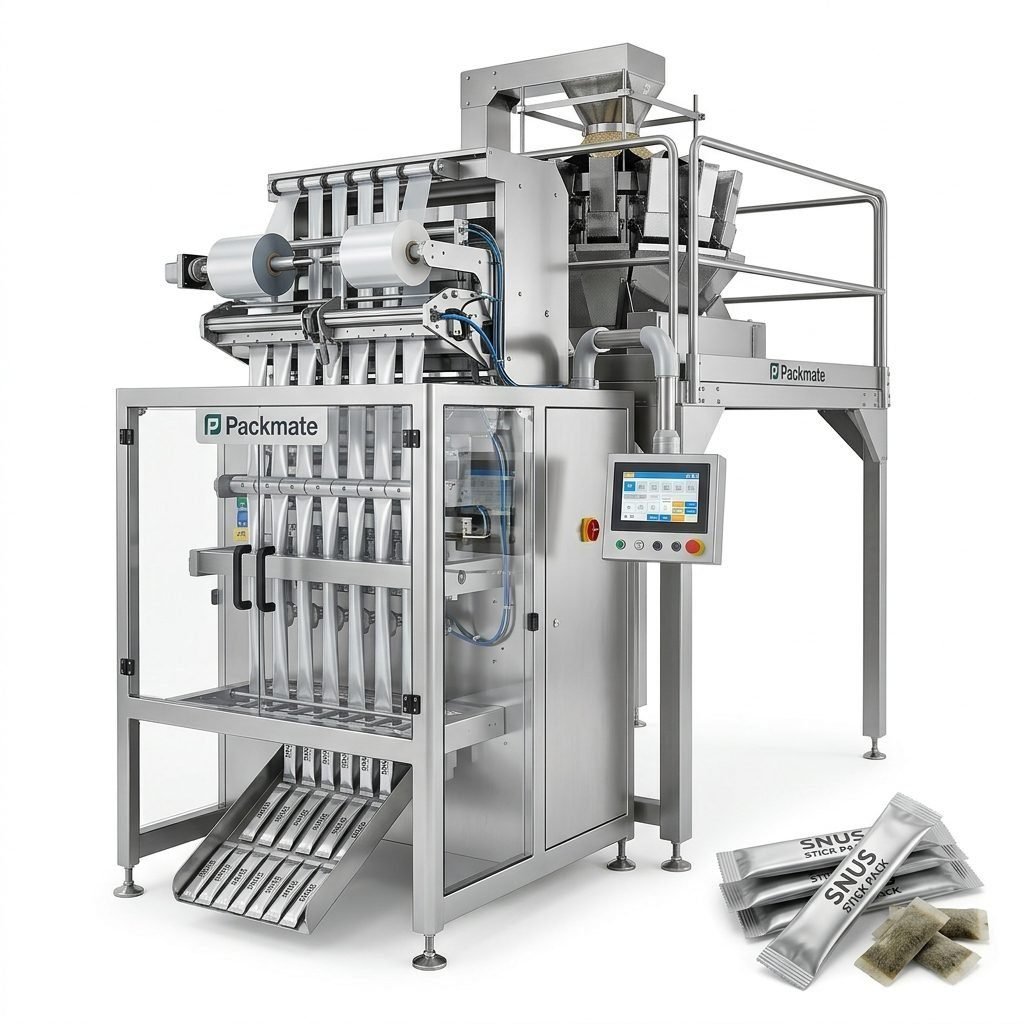
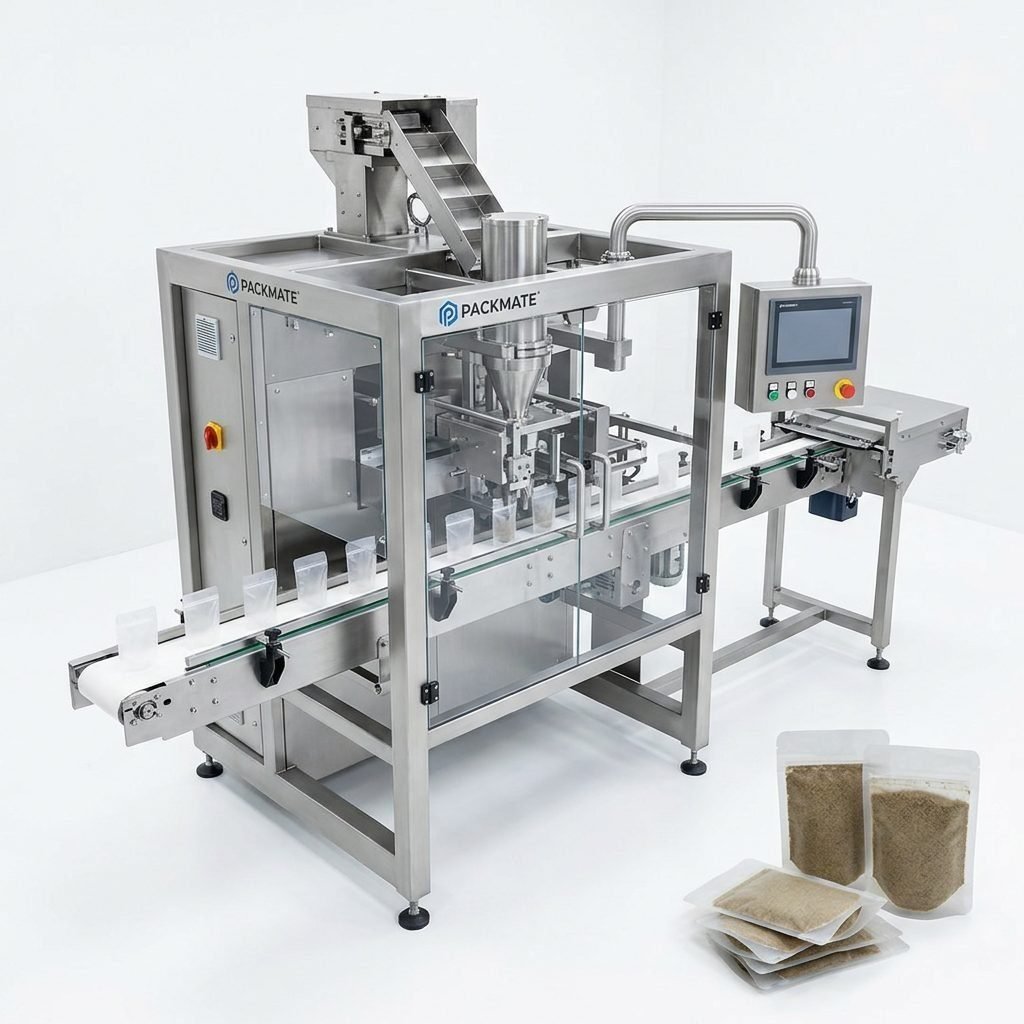
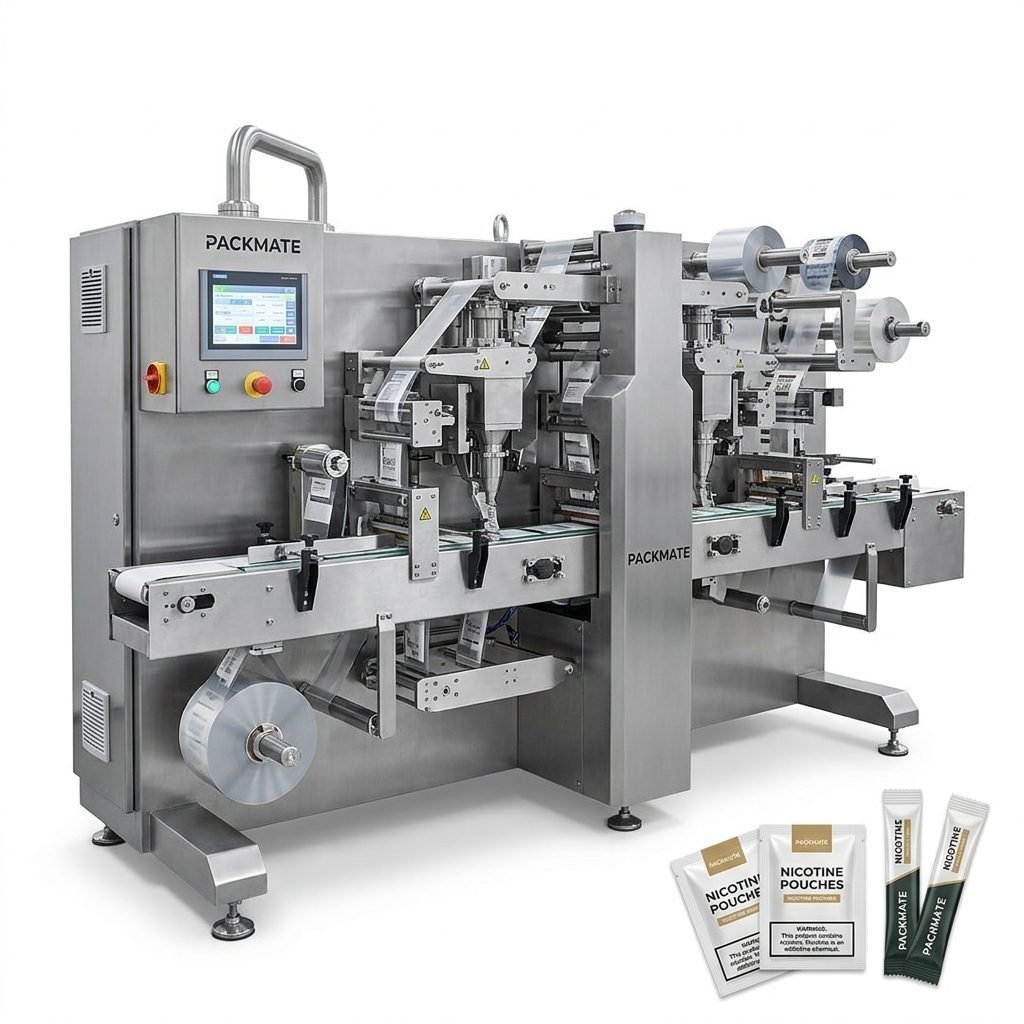
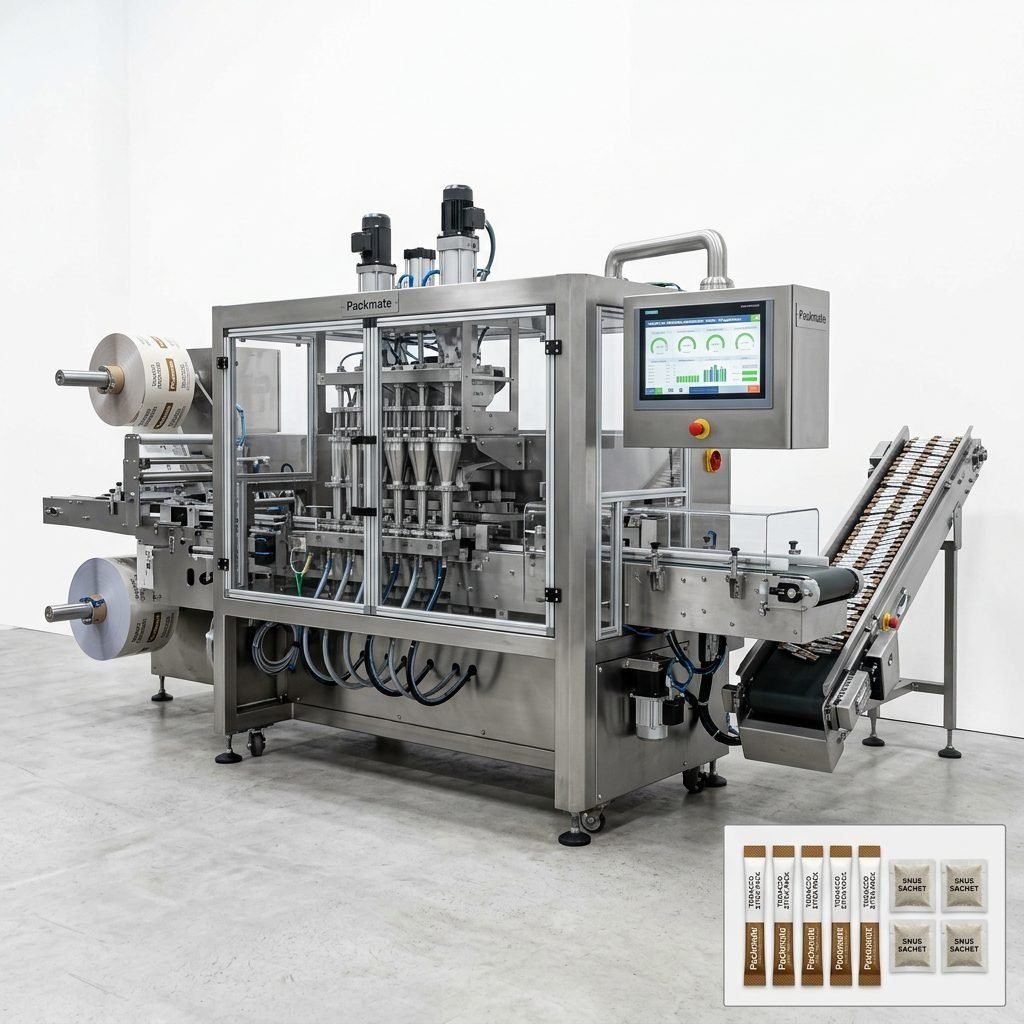
Nicotine pouches and snus packaging come in sachets, stick packs, or custom pillow/round pouch formats. Ensure the machine supports the pouch shapes, weights (micro-doses for nicotine pouches), and materials (laminated films, heat-sealable foils) you will use. Machines that support quick tooling swaps save time when launching new SKUs.
Filling Accuracy & Weighing Integration
For nicotine pouches, accurate dosing is critical. Look for integrated weighing or volumetric dosing systems with low tolerance levels. Combining the packaging machine with a robust weighing system improves consistency and reduces waste — consider exploring integrated options in professional filling lines.
Sealing Reliability & Film Compatibility
Seals must remain stable in humid tropical conditions. Choose machines with adjustable heat control, long-lasting sealing bars, and quality sensors that monitor seal integrity. Test candidate machines with your actual film and pouch material under simulated Cameroon humidity conditions.
Automation & Controls
Modern machines offer touchscreen HMI, remote diagnostics and PLC control for consistent operation and troubleshooting. Remote support capability can greatly reduce downtime for Cameroonian operations where onsite vendor presence may be limited.
Operational Considerations for Cameroon
Technical specs matter, but operational realities determine long-term success. Consider the following before purchase:
✔️ Local training & documentation: request French-language manuals and operator training in English or French to match staff language skills.
✔️ Spare parts availability: secure a spare-parts plan — small items like sealing bars, belts, and sensors should be locally stocked or supplied quickly.
✔️ Power protection: fit machines with surge protection and voltage stabilizers to handle grid fluctuations in some regions.
Compliance, Certification & Safety
Even if nicotine pouches are not yet tightly regulated in every market, best practice is to buy machines that meet international safety and quality standards. Look for CE and ISO compliance to ensure machines meet hygiene, electrical safety and mechanical protection standards. Packmate Snus Machine products carry CE and ISO certifications, which simplifies meeting import requirements and buyer confidence.
Total Cost of Ownership (TCO) and ROI
Consider purchase price, spare parts, power consumption, expected downtime, maintenance labor, and packaging material costs. A lower initial price can become more expensive over time if the machine lacks service support or consumes more consumables. Use a simple ROI model: estimate daily output, margin per pouch, and expected uptime to compare machines objectively.
Selecting the Right Supplier: What to Ask
When evaluating vendors, request clear information and evidence on:
1. Installation, commissioning and operator training timelines.
2. Local or regional service network and average spare parts delivery time to Cameroon.
3. References and case studies in similar climates or markets — ask for performance data.
4. Warranty terms and options for extended maintenance contracts.
Why Consider Packmate Snus Machine for Cameroon Operations
Packmate Snus Machine brings over 30 years of engineering experience and a large factory footprint with advanced CNC and assembly systems. Key strengths include:
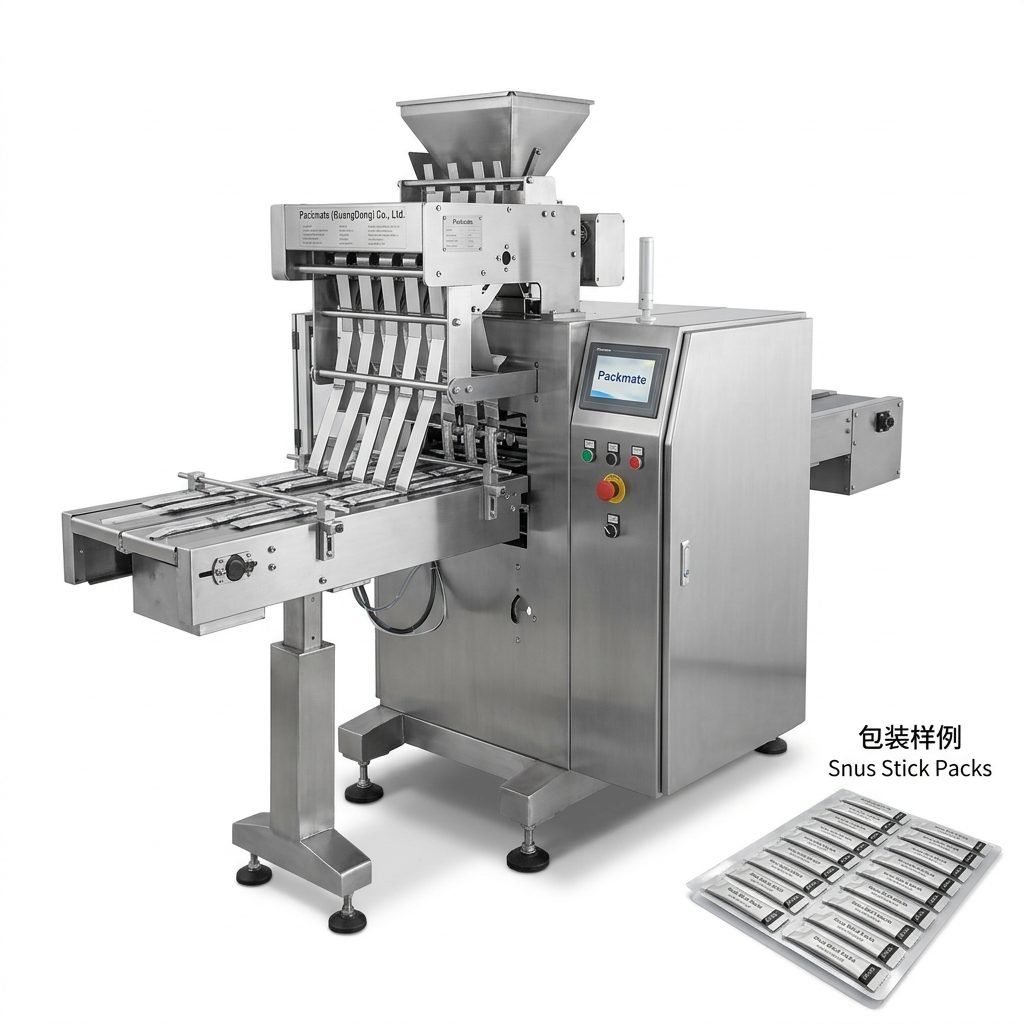
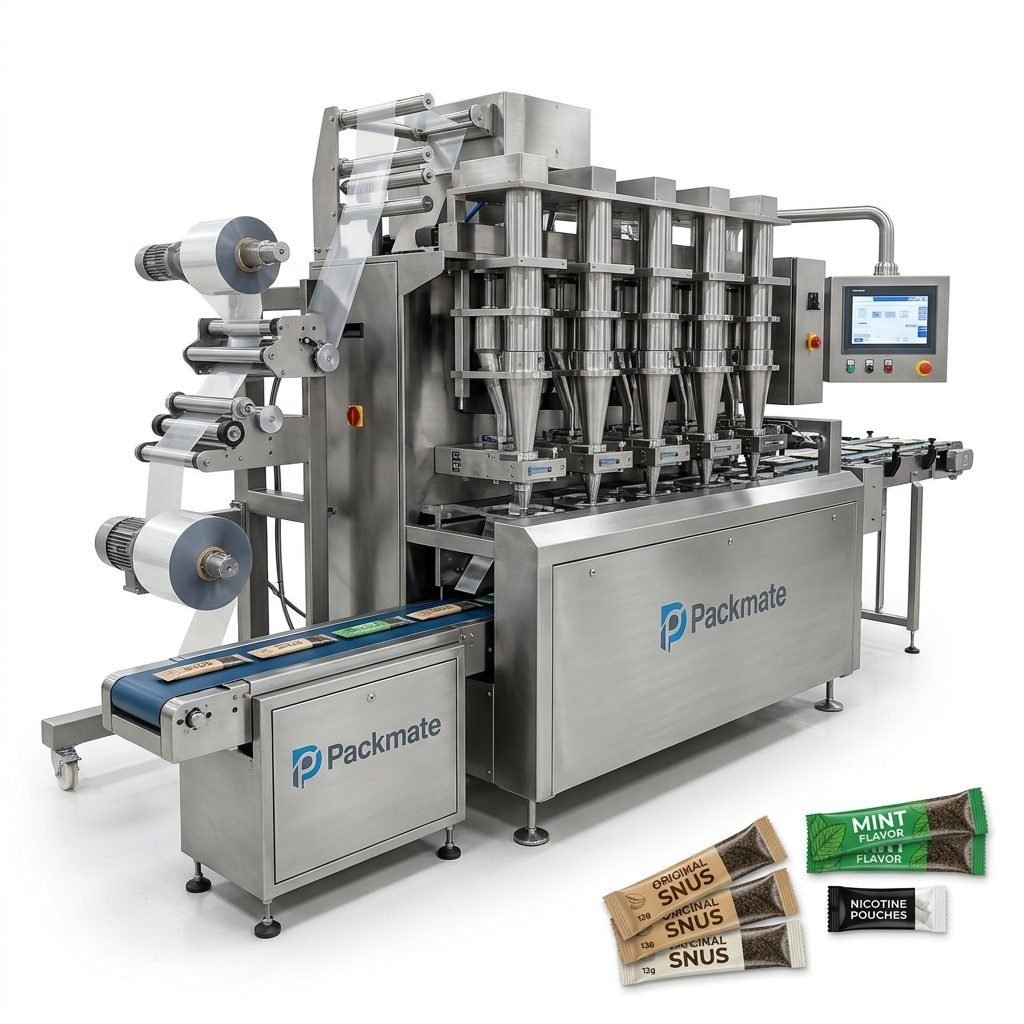
- Comprehensive machine range including multi-lane snus and nicotine packaging systems for high throughput.
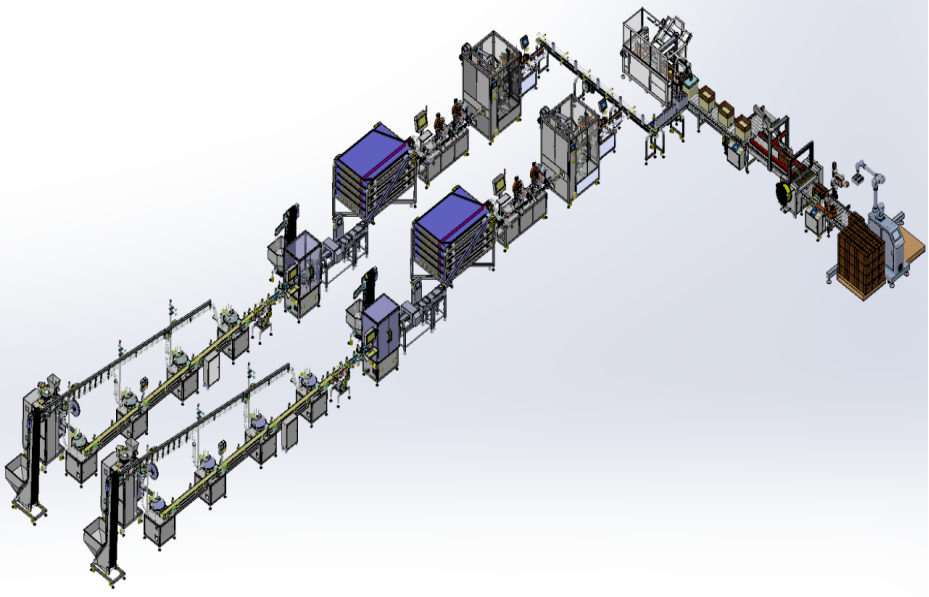
- Turnkey packaging solutions that integrate weighing, filling and pouch forming — see integrated lines for complex fills on the Filling & Packaging Lines page: Filling & Packaging Lines.
- International certifications (CE, ISO) for export readiness and regulatory compliance.
- Global cooperation cases and exhibition presence that demonstrate proven performance — explore past projects at the Case page: Case.
Practical Steps to Buy and Commission a Machine in Cameroon
Follow these practical steps to reduce risk and speed up production ramp-up:
1) Define target SKUs, pouch materials, and daily throughput. 2) Ask vendors for a site-fit assessment — confirm power, floor loading and ventilation. 3) Request a factory acceptance test (FAT) or video demonstration using your materials. 4) Negotiate spare parts and training as part of the contract. 5) Confirm shipping, customs documentation and local taxes for Cameroon imports.
Common Technology Options to Compare
– Stick pack vs sachet formats; multi-lane rotary vs intermittent motion forming; integrated checkweigher vs individual dosing; servo-driven feeders vs mechanical cams. Each choice affects speed, accuracy and maintenance needs.
Material and Supplier Trials
Always trial your actual pouch film and nicotine pouch formulations on candidate machines. Material trials reveal potential issues with friction, static, sealability and micro-dose accuracy — problems that are costly to fix post-installation.
After-Sales & Local Support
Reliable after-sales support is critical. Confirm the vendor’s response SLA for remote diagnostics and spare parts shipping time to Douala/Yaoundé. Check whether the supplier has local partners or service agents in Central/West Africa.
Useful Resources & Next Steps
Explore product pages and company resources to match machines to needs:
- Snus & Nicotine Packaging Machines — detailed machine families: Snus & Nicotine Packaging Machines
- Bag & Pouch Packaging Machines and customization options: Bag & Pouch Packaging Machines
- Service and after-sales information: Service
🔎 Tip: Request a bilingual FAT report (French/English) and video recordings of trials for training and customs documentation. This accelerates commissioning and reduces ambiguity with local authorities.
Decision Checklist Before Purchase
Use this quick checklist to ensure you’re prepared:
• Confirm machine supports your pouch format and dose accuracy requirements.
• Validate power, floor loading and environmental controls at your factory.
• Ensure spare parts & service agreements with clear SLAs for Cameroon.
• Confirm certifications (CE/ISO) and request FAT documentation.
Final Recommendations
Prioritize machines that balance accuracy, sealing reliability in humid climates and vendor support. For many Cameroon operations, a modular multi-lane snus/nicotine packaging line with integrated weighing and remote diagnostic capability offers the best mix of throughput and maintainability. To view model options and get tailored advice, contact the manufacturer directly through their contact page: Contact Us.
Need more product insight?
Browse machine categories and technical catalogs to shortlist equipment that fits your production plan: Catalog and Weighing & Packaging Systems.
Frequently Asked Questions
Q1: Is nicotine pouch packaging legal in Cameroon and what approvals are needed?
A1: Regulatory frameworks can change, and requirements differ by product classification. Consult local regulatory advisors for labeling and health claims. Buying CE/ISO-certified equipment helps ensure compliance with manufacturing and safety expectations when exporting or dealing with formal distributors.
Q2: What environmental controls should I provide for the packaging line?
A2: Maintain controlled indoor humidity and temperature where possible; use desiccant or dehumidifiers if needed. Machines with precise temperature control on sealing systems will compensate better for ambient changes.
Q3: How quickly can spare parts and technical support be arranged in Cameroon?
A3: Lead times depend on supplier stock and logistics. Negotiate spare parts kits at purchase and confirm shipping channels to Douala or Yaoundé. Suppliers with global exhibition presence and regional partners typically coordinate faster — see the exhibitions page for supplier activity: Our Exhibition.
Q4: Should I choose a local used machine or a new certified unit?
A4: Used machines can be attractive on price but may carry higher downtime risk and limited warranty. New CE/ISO-certified machines provide predictable performance, documented FATs and clearer support routes — important where consistent product quality and regulatory compliance are priorities.
Q5: How to evaluate ROI for a packaging line?
A5: Estimate daily throughput, yield (good pouches), average margin per pouch and average downtime. Include costs for film, spare parts and labor to calculate payback period. Many buyers find that multi-lane configurations offer faster ROI when volume is consistent.