Choosing the right nicotine pouch or snus packaging machinery for the Ghana market requires a clear understanding of local habits, environmental conditions, and regulatory expectations. This guide walks you through practical steps — from selecting machine types to after‑sales support — so you can invest in reliable equipment that fits Ghanaian retail patterns, production goals, and compliance needs.
Understand the Ghana Market and Regulations 🇬🇭
Before selecting a machine, research local market size, consumer preferences, and legal frameworks. In Ghana English is official and packaging labels typically use English; health warnings and ingredient disclosures should follow Ghanaian Food and Drugs Authority (FDA) rules. Always confirm import rules and any nicotine product restrictions with local authorities and your customs broker to avoid shipment delays.
Local consumption patterns and retail channels
In Ghana nicotine products are commonly sold in small kiosks, pharmacies, and urban convenience stores. Small sachets and multi‑pack pouches are popular because they suit impulse purchases and lower disposable incomes. Consider machines that can produce compact, shelf‑friendly formats and small batch runs for new flavors or limited releases.
Choose the Right Machine Type
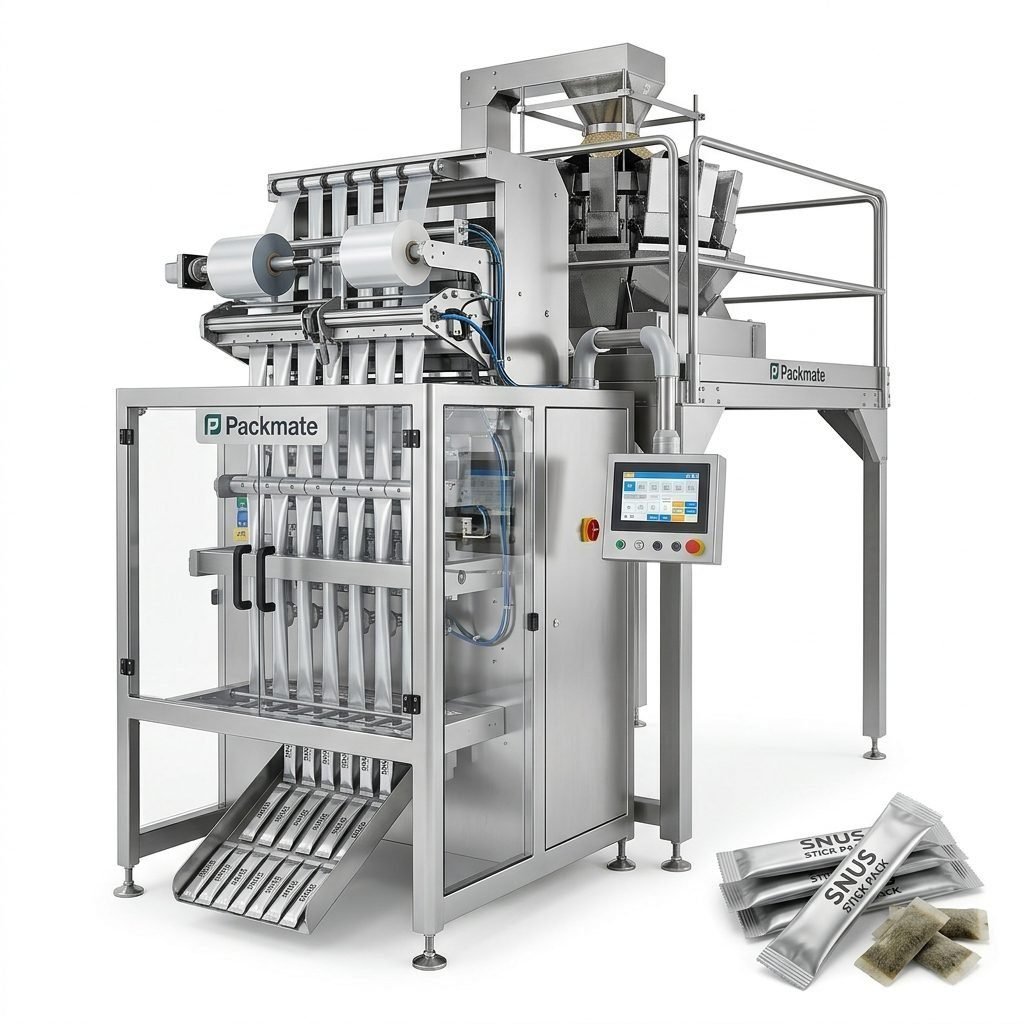
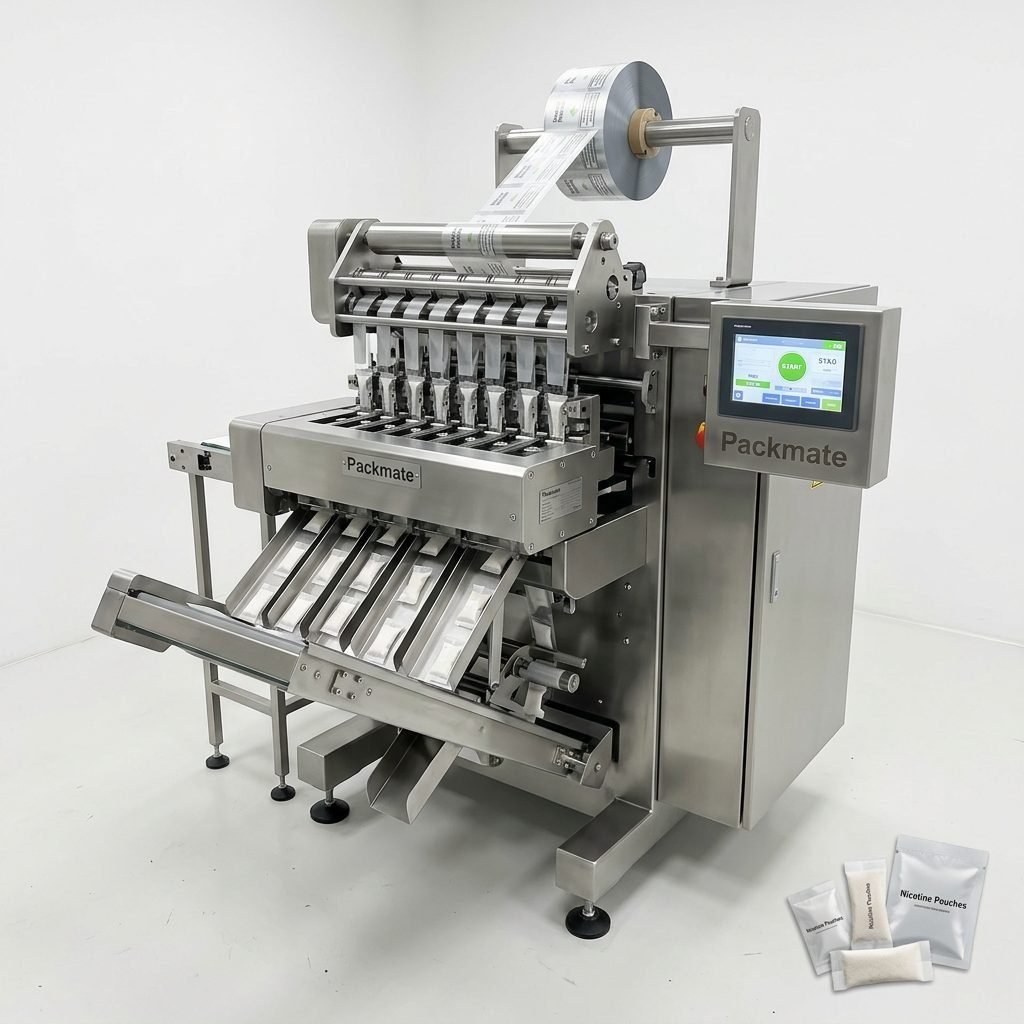
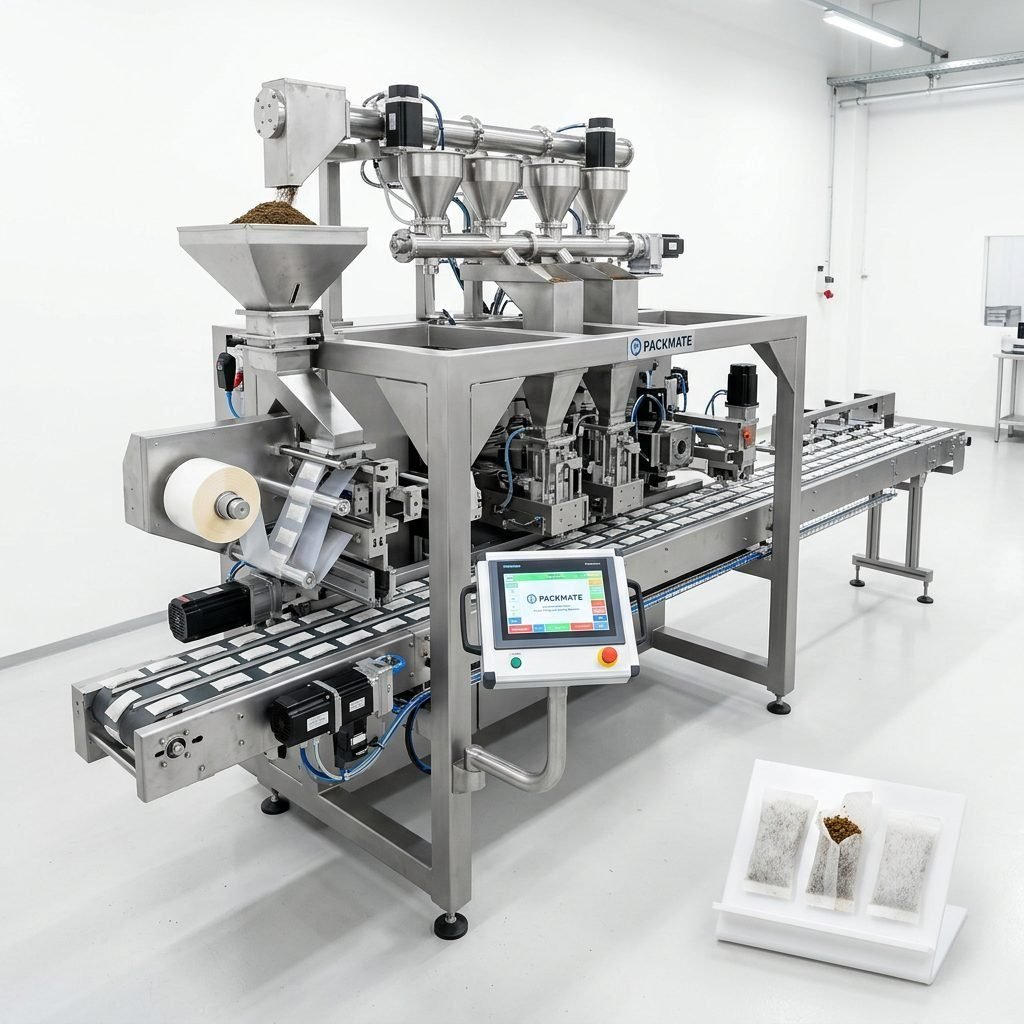
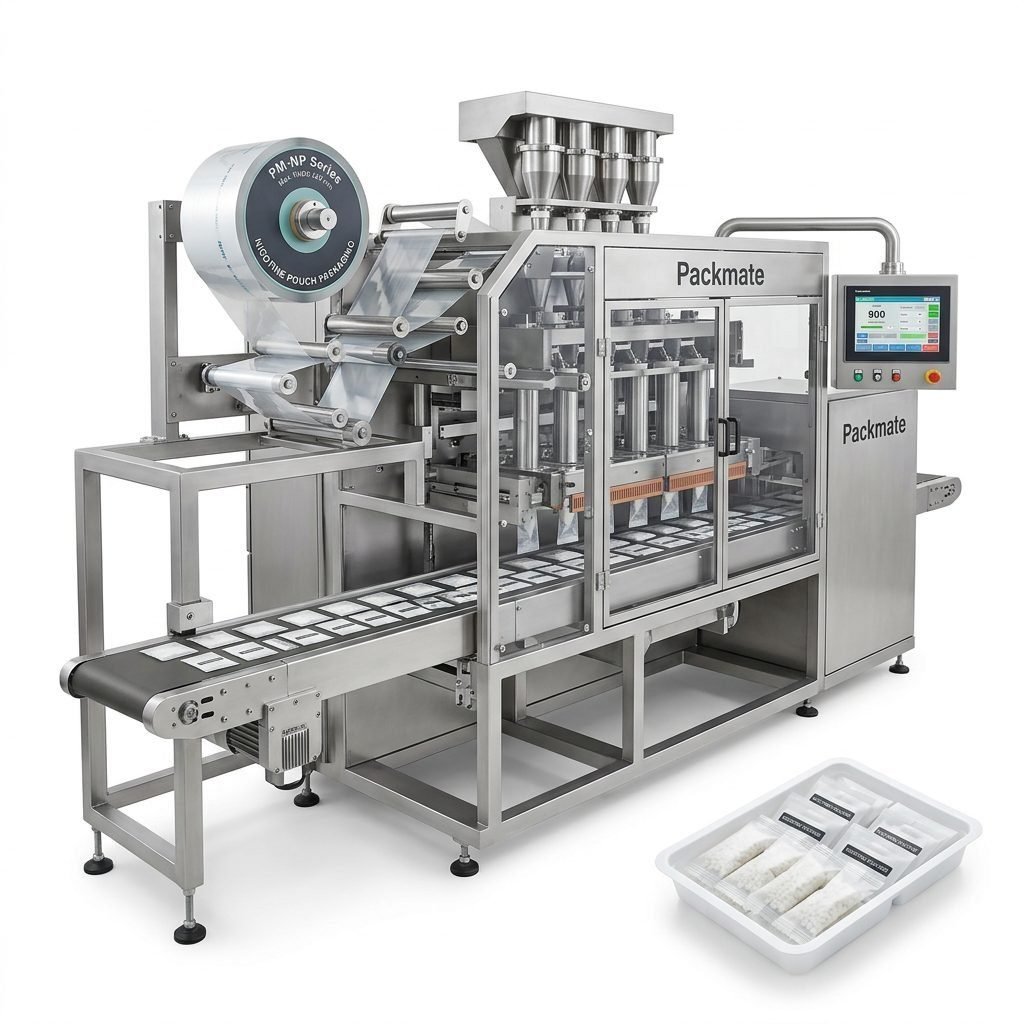
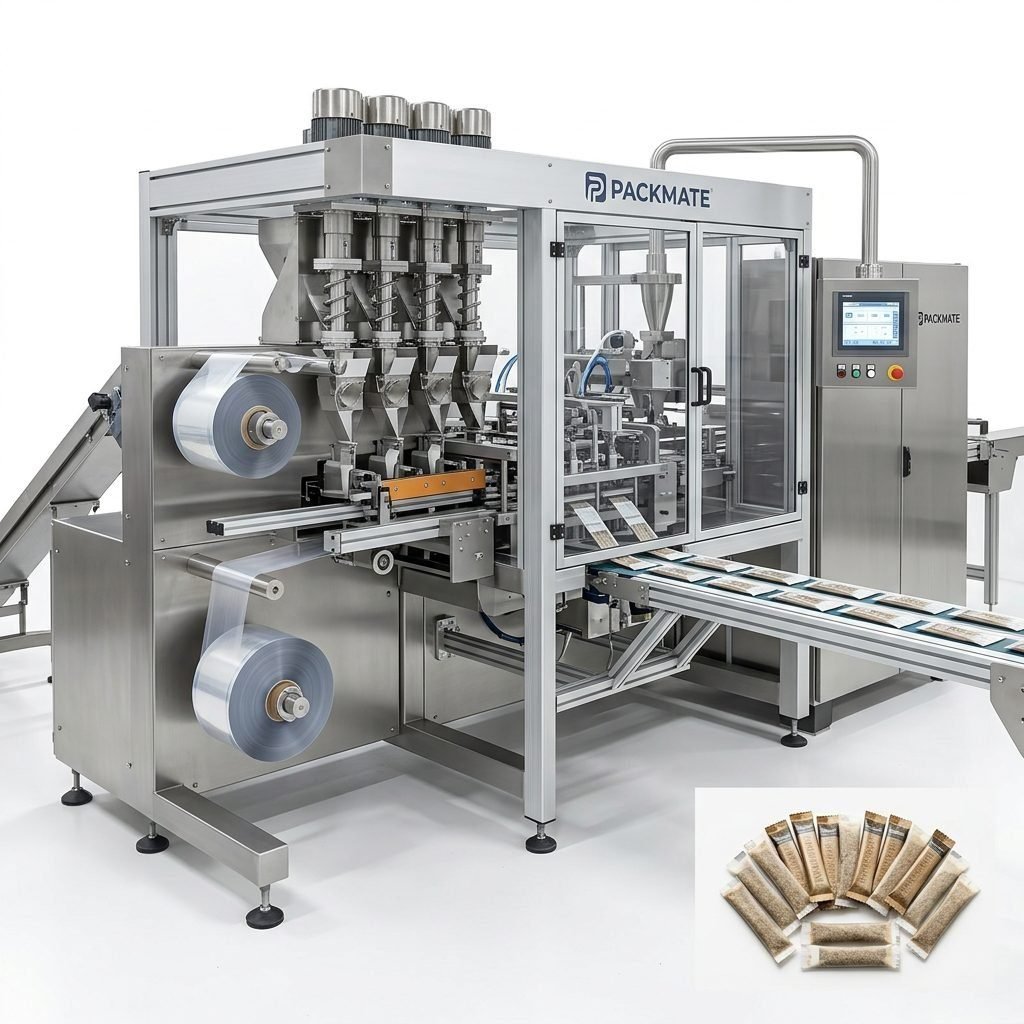
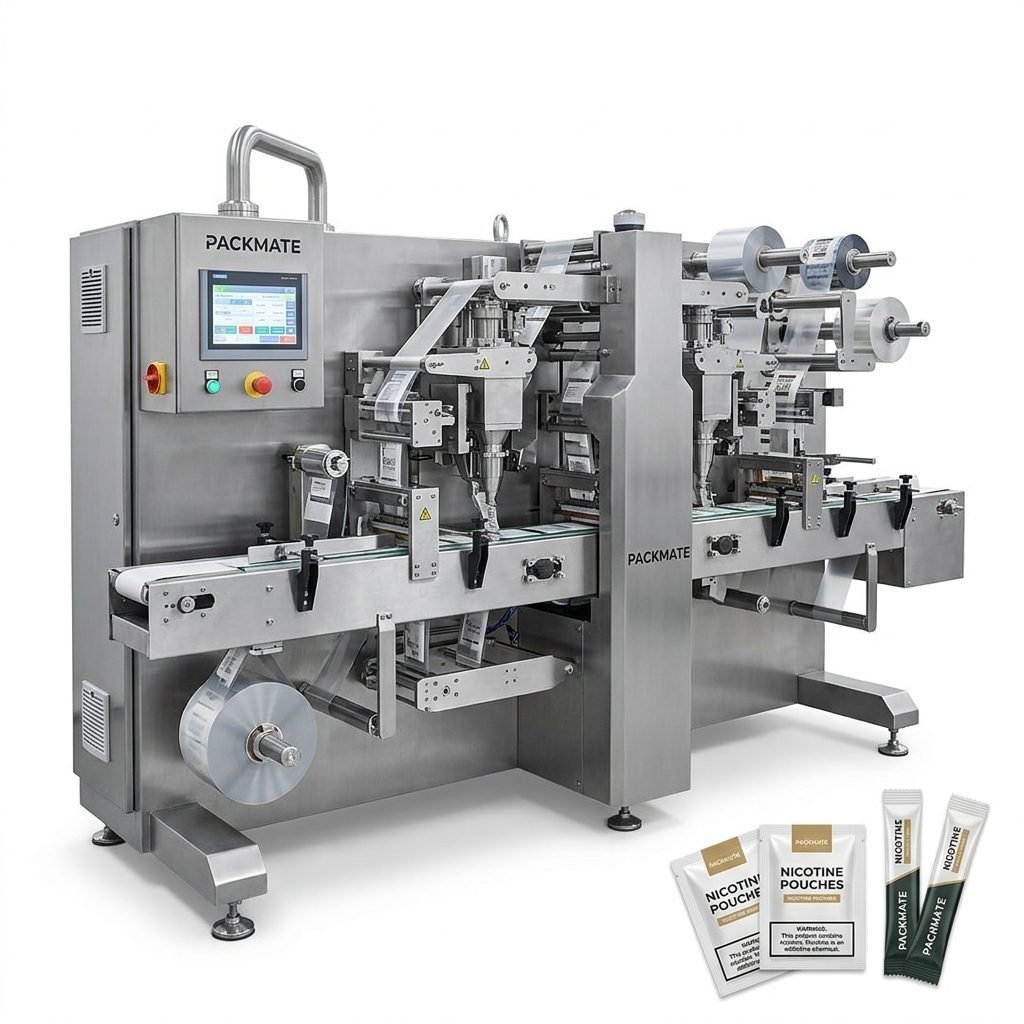
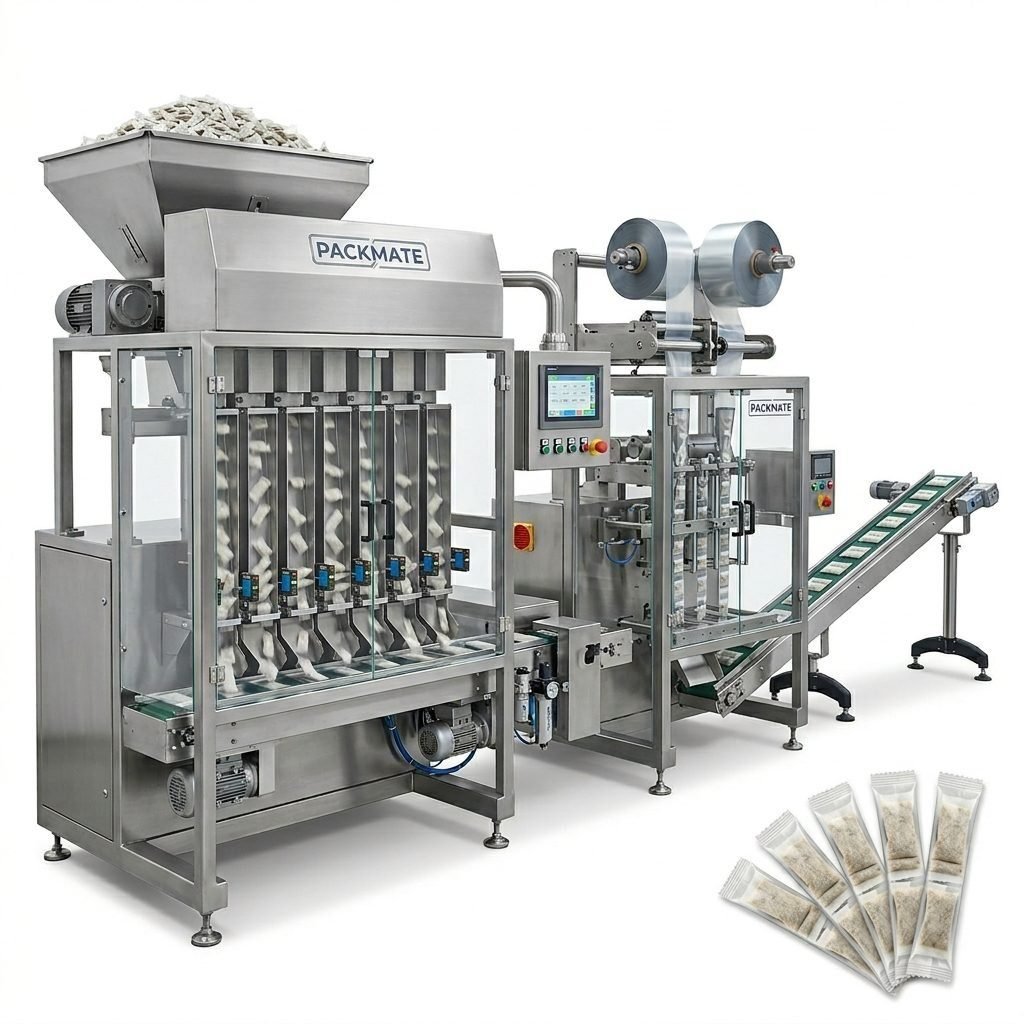
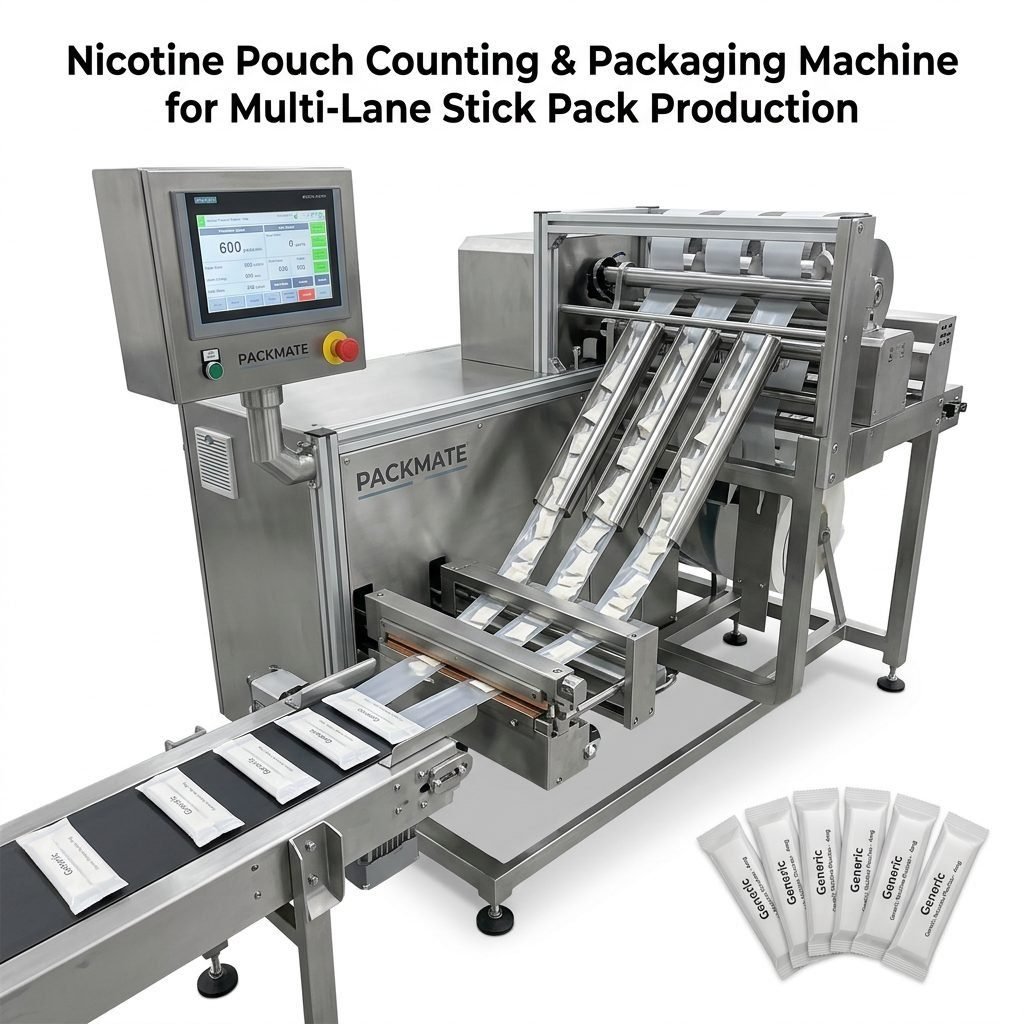
The main machine categories for nicotine pouch/snус products are stick pack, sachet, multi‑lane pouch machines, and complete filling & weighing lines. Your choice should match product form (powder, granule, wet pouch), desired speed, and packaging format.
Explore machine families and specifications:
Snus & Nicotine Packaging Machines •
Sachet & Stick Pack Machines •
Weighing & Packaging Systems
✔️ Quick tip: For Ghanaian retail, consider a multi‑lane pouch machine with flexible lane counts (2–6 lanes) so you can scale speed without replacing the entire machine. If you prioritize low initial investment, a single‑lane stick or sachet machine might be more suitable.
Production Capacity: Speed, Lanes and OEE
Estimate daily and monthly production volumes, including peak demand during festivals or promotions. Key metrics: target pieces per minute, uptime, changeover time, and overall equipment effectiveness (OEE). Multi‑lane machines increase throughput without requiring higher footprint speeds, making them ideal for medium to large operations.
Scaling strategy
Start with modular systems that allow adding lanes or auxiliary modules. This reduces capital risk while giving space to grow. Packmate’s modular design philosophy is a good example of scalable engineering for snus packaging lines.
Material Compatibility and Barrier Requirements
Nicotine pouches require films with strong barrier properties to preserve freshness and control moisture. Your chosen machine must handle laminated films, heat‑seal layers, and pre‑printed webs. Evaluate sealing temperature ranges and jaw designs to match your film structure.
Consider local climate: Ghana’s coastal and rainforest regions are humid and warm. Use films with higher moisture and oxygen barrier performance and ensure machines have reliable temperature controls and sealed feed systems to avoid film sticking and degradation.
Automation Level & Auxiliary Equipment
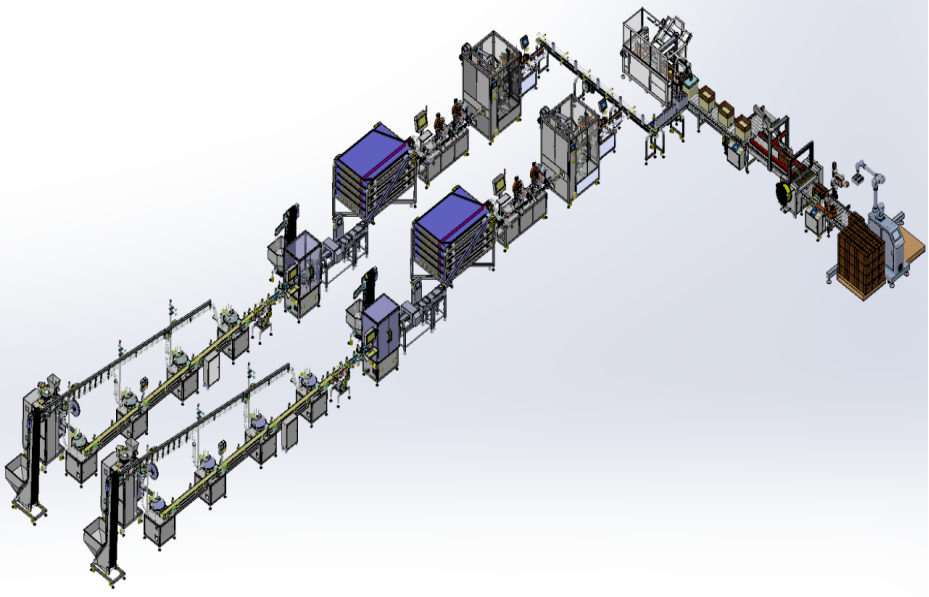
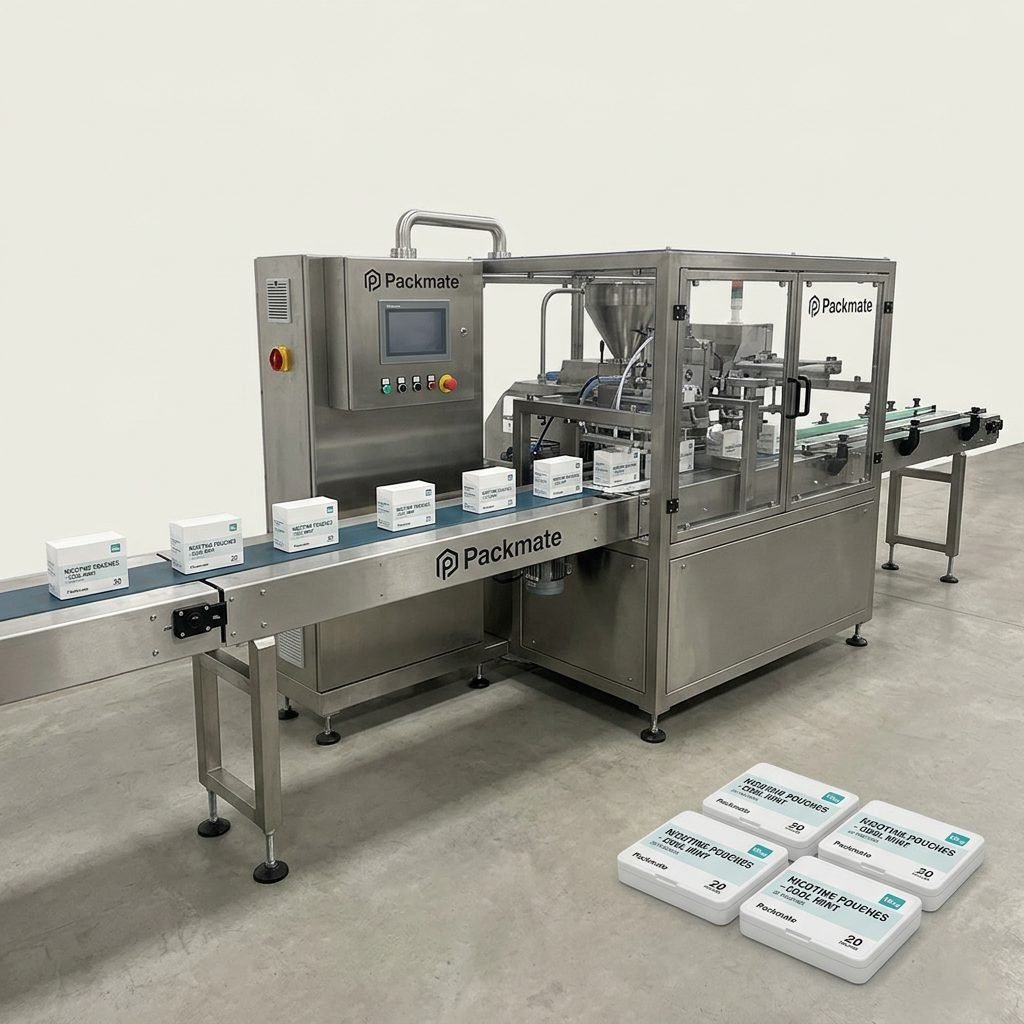
Decide how much automation you need: fully automated lines reduce labor but increase initial cost. Look for integrated solutions including feeders, conveyors, metal detectors, checkweighers, case packers, and palletizers. Auxiliary options improve throughput and quality control.
Packmate provides a variety of complementary systems such as Auxiliary Packaging Equipment and complete Filling & Packaging Lines for turnkey implementation.
🔧 Maintenance note: Choose machines with easy access to wear parts and standardized components to simplify sourcing spare parts in Ghana. A local maintenance plan reduces downtime from power fluctuations and dust ingress.
Quality, Certifications, and After‑Sales Support
Certifications such as CE and ISO indicate international manufacturing standards and safer operation. For Ghanaian buyers, prioritize vendors that provide:
- Clear warranty terms and local spare parts availability
- On‑site commissioning and operator training
- Remote support and machine diagnostics
- Documentation and machine manuals in English
Learn more about vendor history and factory strength on company pages such as About Packmate, the Case studies, and available Service offerings.
Site Conditions: Power, Humidity & Workshop Requirements
Ghana’s electrical grid can be unstable in some regions; account for voltage fluctuations by installing stabilizers, UPS backups for control systems, and clean power for PLCs. Dusty environments accelerate wear — plan for filtered air, regular cleaning cycles, and controlled storage for films and raw materials.
Workshop layout
Machine footprint, operator access and material flow should be mapped before purchase. Ensure there is enough space for loading film rolls, maintenance walkways, and packaging stages. Consider future expansion when allocating floor space.
Budgeting, Financing and TCO
Beyond purchase price, evaluate total cost of ownership (TCO): spare parts, consumables (films, jaws), energy consumption, maintenance, training, and downtime. Financing options or leasing can ease capital expenditure. Ask vendors for ROI projections based on your production plans.
📦 Checklist (short):
production target, film compatibility, machine speed, spare parts lead time, warranty terms, on‑site training
Vendor Evaluation: Questions to Ask
When requesting quotes, include technical and commercial questions such as:
- Can you supply references in West Africa or similar climates?
- What are mean time between failures (MTBF) and recommended maintenance intervals?
- Do you provide on‑site installation, training, and spare parts inventories?
- What is the lead time from order to delivery and what are shipping terms?
- Is machine control software in English and can it be remotely accessed for diagnostics?
Installation, Commissioning and Training
A proper installation includes mechanical setup, electrical integration, control calibration, trial runs with your chosen films, and operator training. Ask the supplier if they include a commissioning visit and how many days of training are provided. Remote follow‑up support is valuable for early production ramp‑up.
Case Considerations: Cultural & Seasonal Factors in Ghana
Sales patterns in Ghana can be influenced by local festivals, holidays, and market days. Plan seasonal production increases in advance and use flexible packaging formats (trial packs, variety packs) to capture shoppers during special events. Clear English labeling, local distribution partnerships, and price‑conscious packaging sizes help products gain shelf traction.
Retail presentation
Compact counter displays and small multipacks often perform well. Design packaging to be visible under warm store lighting and to withstand humid environments without film fogging or seal failure.
How Packmate Can Help
With over 30 years of engineering experience and a variety of machine models, Packmate offers tailored solutions for nicotine pouch production — from single‑lane lines to high‑speed multi‑lane systems. Learn more about the company capabilities in their About Packmate page and view real world deployments in the Case section. For questions about specific models or to request a proposal, visit Contact Us.
⚠️ Final reminder: verify all regulatory and labeling requirements in Ghana before finalizing packaging designs or importing nicotine products.
Common Questions (FAQs)
1. What machine type is best for small‑batch runs?
For small batches, single‑lane stick or sachet machines offer the lowest capital cost and quick changeovers. If you expect growth, choose modular systems that allow adding lanes later.
2. How does Ghana’s climate affect machine selection?
High humidity and heat require robust film barrier selection and machines with precise temperature control. Protect electronic components from dust and install voltage stabilization to handle grid variability.
3. What after‑sales services should I expect?
Expect commissioning, operator training, spare parts availability, remote diagnostics, and warranty coverage. Confirm component lead times and whether local service partners exist to reduce downtime.
4. Do I need special labeling for Ghana?
Labels should be in English and include ingredients, manufacturer/importer contact, net content, batch number, and any health warnings required by Ghanaian authorities. Confirm the exact labeling rules with the Ghana FDA prior to production.
5. How can I view machine demos or catalogs?
Many suppliers offer video demos, exhibitions, and detailed catalogs. See available resources like the Catalog or request a live demonstration through the Contact Us page.