Navigating the market for nicotine pouch and snus packaging equipment in the Philippines can feel overwhelming. This buyer’s guide breaks down the essential steps to choose the right nicotine packaging machine — from production requirements and machine types to regulatory considerations and after-sales support. Use this guide to compare options, evaluate suppliers, and make an informed purchase that fits your production goals and budget.
Understand Your Product and Production Targets
First, be clear about the product you will package. Nicotine pouches, snus, and small-dose sachets vary by powder or granule consistency, moisture level, pouch material, and pouch size. Accurately define:
📝 daily/monthly output goals (units per minute and total monthly throughput) — this determines single-lane versus multi-lane needs;
📝 pouch format (stick, sachet, pillow, multi-lane pouches) and typical pouch dimensions;
📝 product characteristics: powders, fine granules, or blends with humectants — this affects dosing and filling systems;
📝 desired packaging materials (laminate film, biodegradable options, cellulose, or heat-sealable paper).
Why production targets matter
Selecting a machine with insufficient capacity will constrain growth, while over-investing in an oversized solution increases capital expenditure and factory footprint. Many manufacturers, such as specialized snus machine suppliers, offer modular or multi-lane systems that scale with demand — a practical option for growing operations.
Choose the Right Machine Type
There are several common packaging machine types for nicotine pouches. Match the machine architecture to your pouch style and production needs:
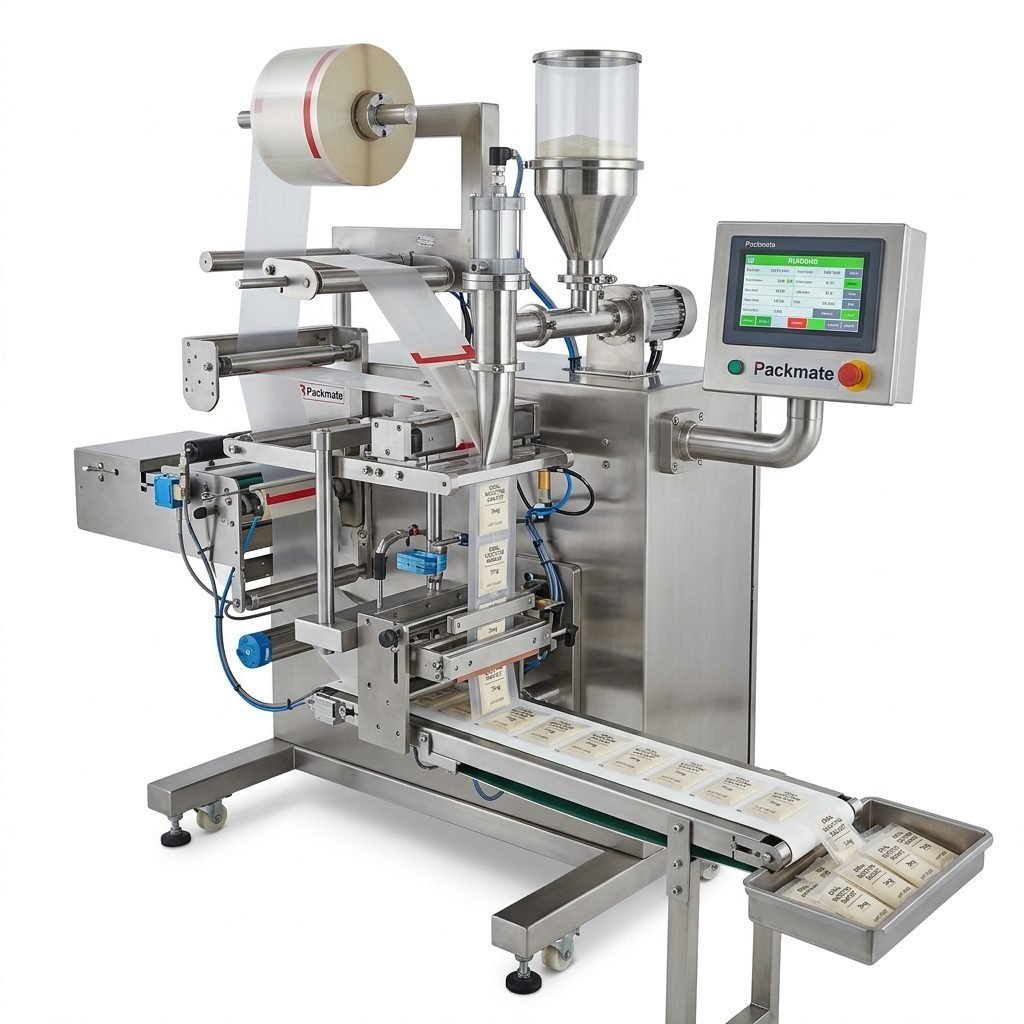
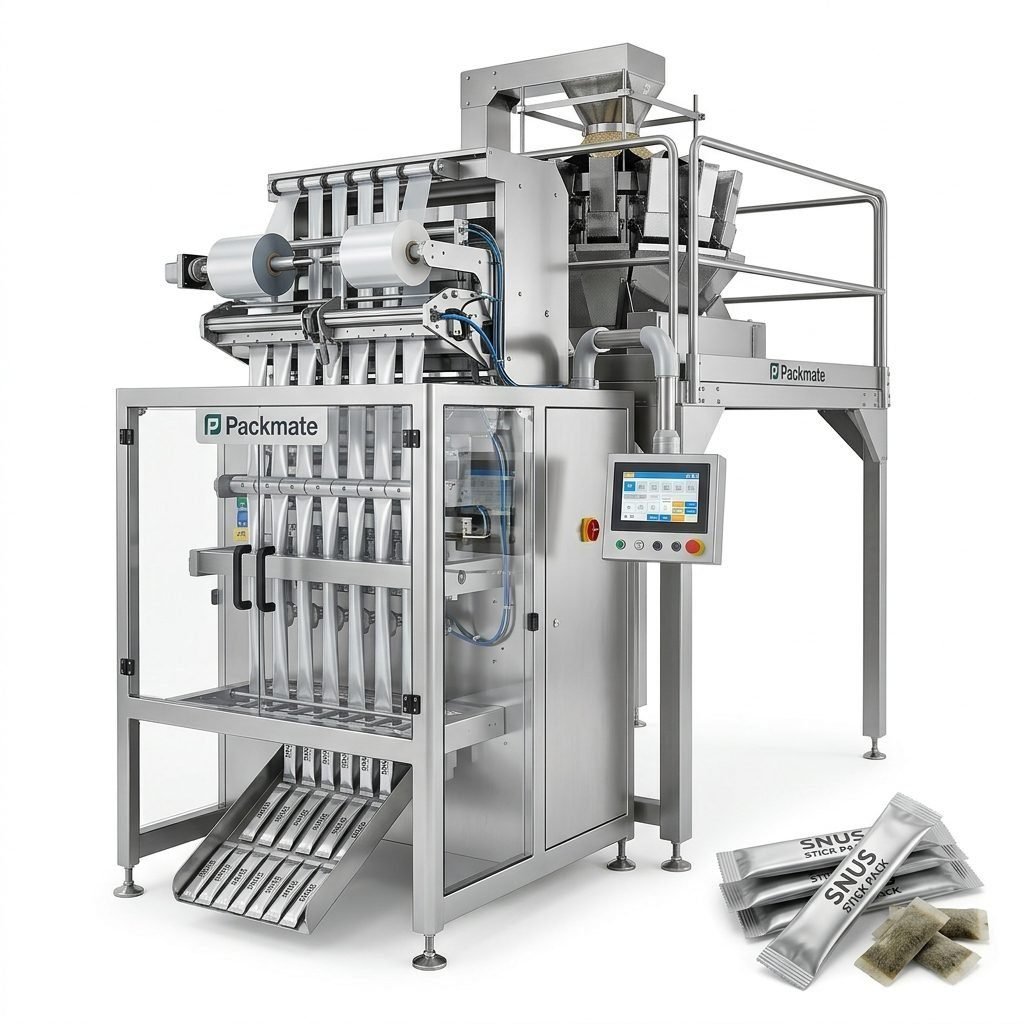
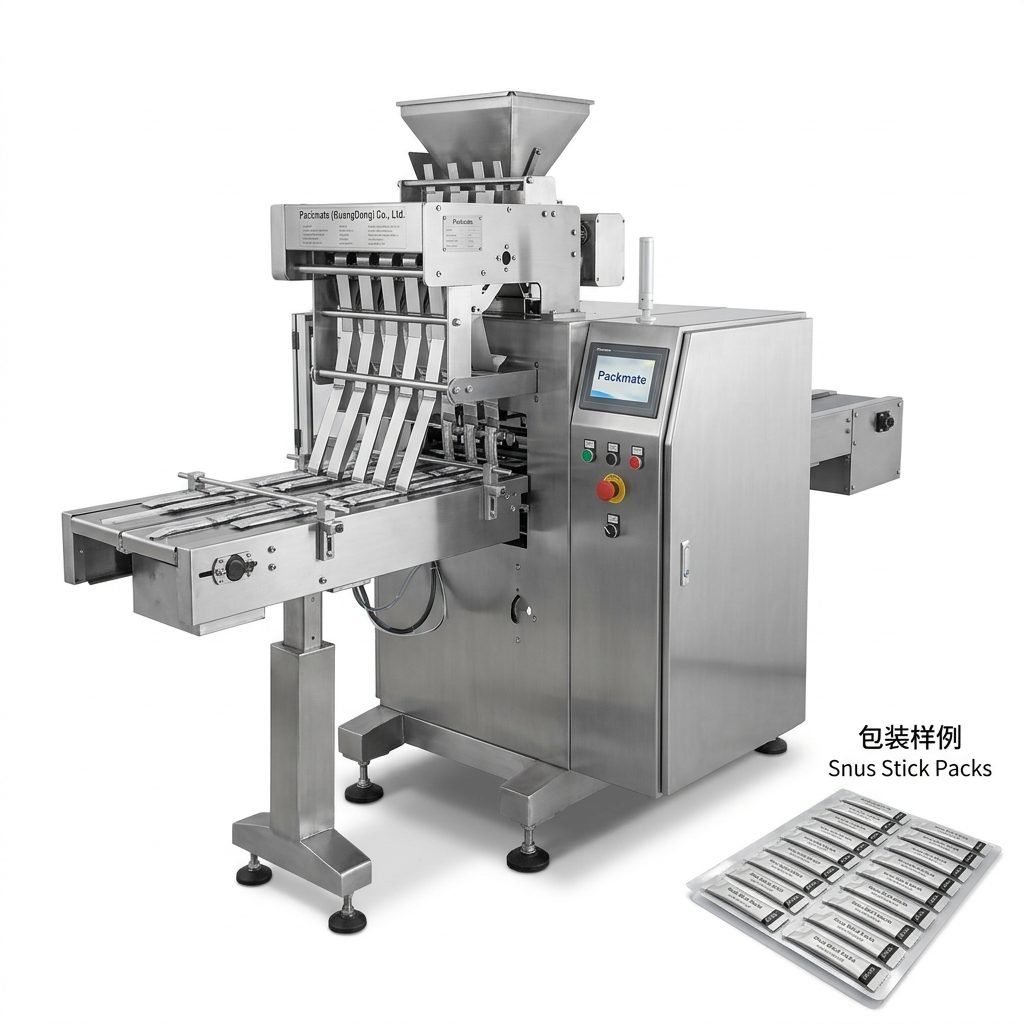
💪 Stick pack machines — ideal for single-dose narrow sachets and linear filling;
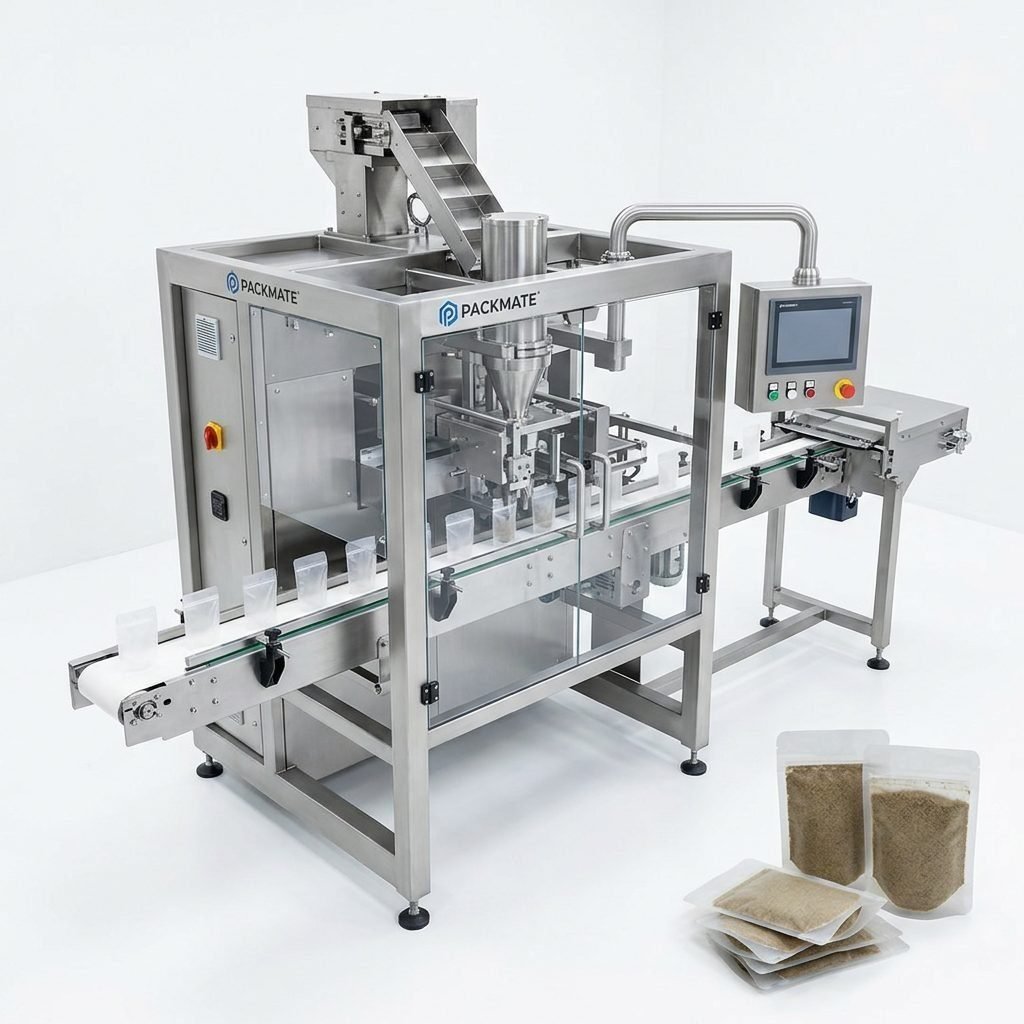
💪 Sachet and pillow pack machines — versatile for small pouches and easy sealing;
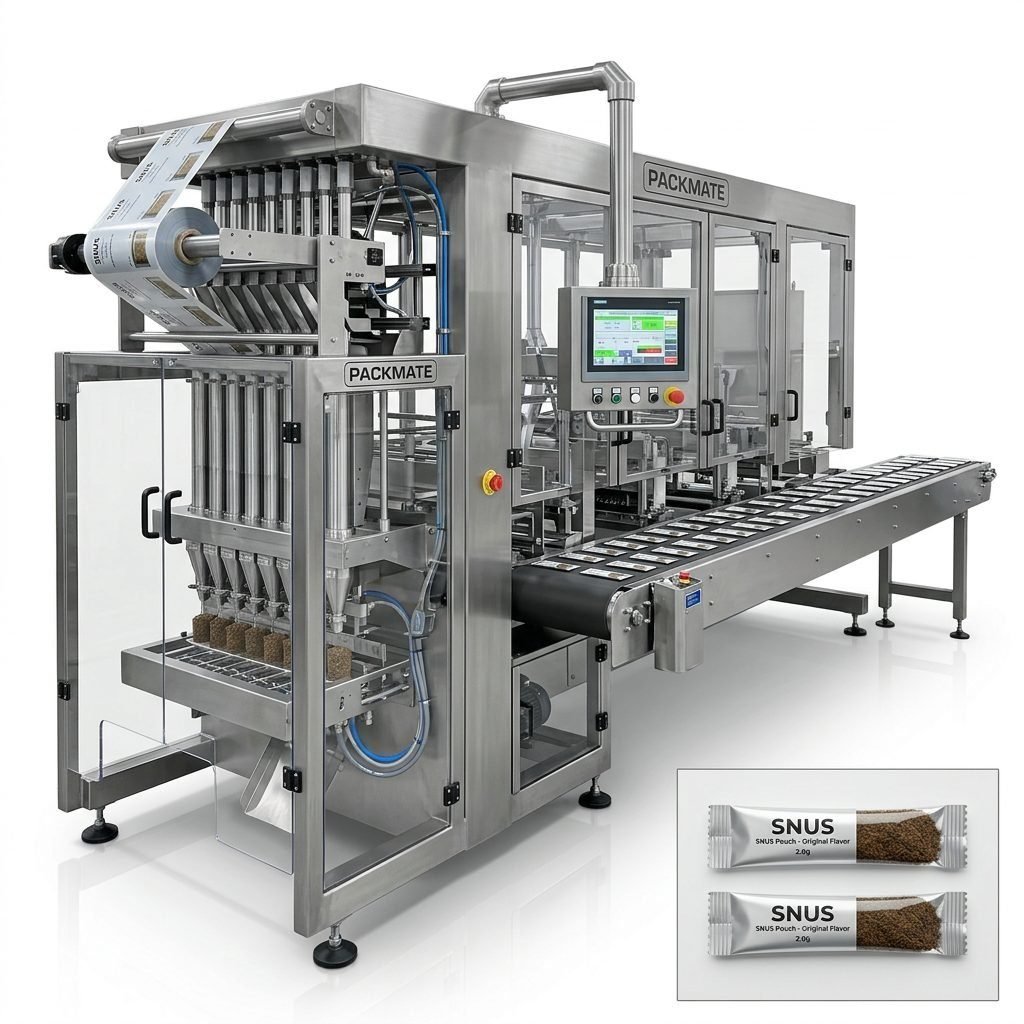
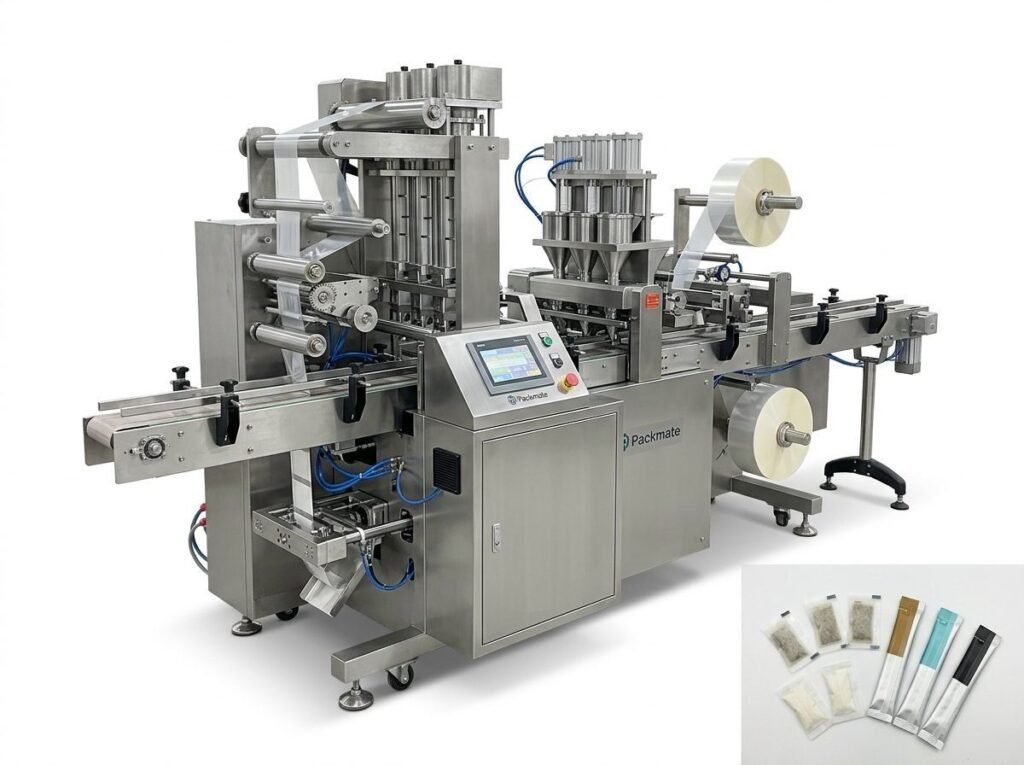
💪 Multi-lane systems — increase throughput by producing multiple pouches side-by-side; excellent for small-dose nicotine pouches;
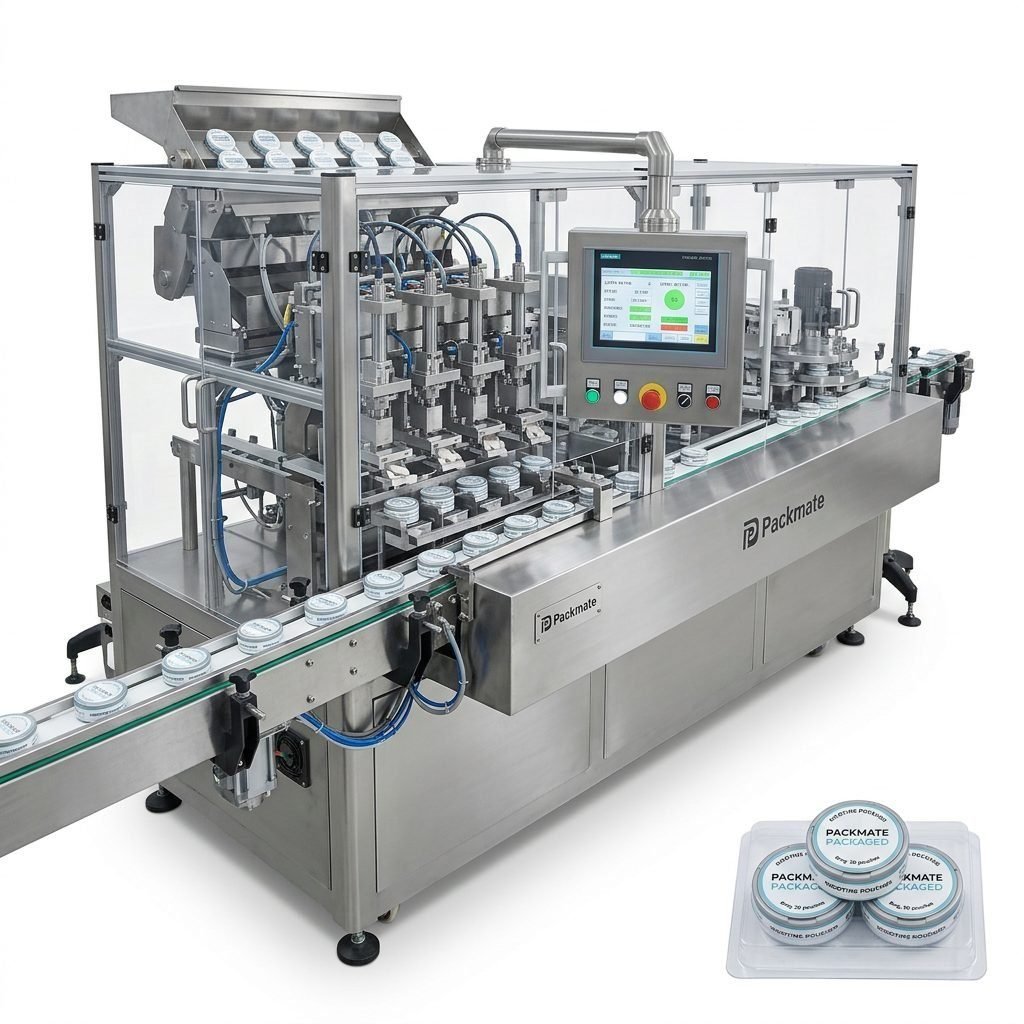
💪 Integrated filling & packaging lines — combine dosing, weighing, and pouch-making into a turnkey line for high consistency and automation.
📌 Tip: If you expect to expand capacity, prioritize modular or multi-lane machines that offer incremental upgrades rather than replacing the entire line.
Key Technical Specifications to Evaluate
When comparing models, focus on technical specs that directly influence performance and product quality:
🔧 Speed and throughput (pouches/min and lanes) — compare nominal vs. realistic throughput for your product;
🔧 Filling accuracy and dosing method — auger, vibratory, or weighing systems; choose based on powder flowability and dose tolerance;
🔧 Sealing technology and quality — temperature control, sealing width, and film compatibility;
🔧 Changeover time and tooling flexibility — how quickly the machine adapts to new pouch sizes or formulations;
🔧 PLC & HMI controls — modern interfaces reduce operator errors and speed troubleshooting;
🔧 Material contact surfaces and food/pharma-grade options — stainless steel 316 where necessary; hygienic design for easy cleaning.
Focus on dosing accuracy
Accurate dosing is crucial for nicotine pouches to meet regulatory content limits and ensure product consistency. Machines with integrated weighing systems or high-precision auger feeders are preferred for tight tolerances.
✔️ Must-have: Look for machines with digital recipe control to store settings for different products and speeds — this significantly reduces changeover errors.
Regulatory Compliance and Certifications
In the Philippines and for export markets, ensure your equipment and processes can meet regulatory expectations. Machine certifications such as CE and ISO signal adherence to safety and quality standards. Confirm the supplier can assist with documentation for audits and sanitary design if needed.
Important: If you plan to export nicotine products, verify the packaging materials and machine capabilities align with destination-country labeling and content regulations.
Evaluate Supplier Experience and After-Sales Support
A reliable supplier network is as important as the machine itself. Consider these factors:
📞 Years of industry experience — companies with decades of packaging engineering have refined designs and field-tested solutions;
📞 Local or regional service partners — faster support and spare parts availability reduce downtime;
📞 Training and commissioning — onsite or virtual training resources for operators and maintenance teams;
📞 Spare parts strategy and lead times — availability of critical components like PLC modules, sensors, and sealing jaws;
📞 Upgrade paths — ability to add modules such as automated cartoning, checkweighers, or metal detectors later.
Packmate Snus Machine, for example, emphasizes decades of engineering and turnkey solutions for snus and nicotine pouches — a supplier with comprehensive production line experience can provide tailored multi-lane systems and integrated filling solutions.
Questions to ask potential vendors
📑 Can you provide performance data using products similar to ours?
📑 Do you offer onsite installation and operator training in the Philippines?
📑 What warranty and service contracts are available, and where are spare parts stocked?
📑 Can the machine integrate with existing upstream/downstream equipment?
Layout, Footprint and Utilities
Before buying, evaluate your factory layout and utilities. Key considerations include floor space, cleanroom requirements (if any), electrical supply, compressed air, and exhaust/ventilation. Machines with compact multi-lane designs can dramatically reduce floor space for the same throughput, which is beneficial for tight Philippine factory footprints.
⚠️ Note: Always review utility specs (power phases/amps, air pressure, water requirements) with your facility engineer before finalizing purchase agreements.
Total Cost of Ownership (TCO) and ROI
Purchase price is only part of the investment. Consider TCO elements:
🎁 Initial capital cost and installation fees;
🎁 Shipping, customs, and local taxes for imported equipment;
🎁 Spare parts consumption and typical replacement intervals;
🎁 Maintenance labor and consumables (sealing films, nozzles, belts);
🎁 Energy consumption (electricity and compressed air);
🎁 Potential downtime costs — machines with robust support and remote diagnostics minimize lost production.
When estimating ROI, calculate how faster throughput, lower reject rates, and automated packaging labor savings offset the investment over 1–5 years.
Customization and Turnkey Solutions
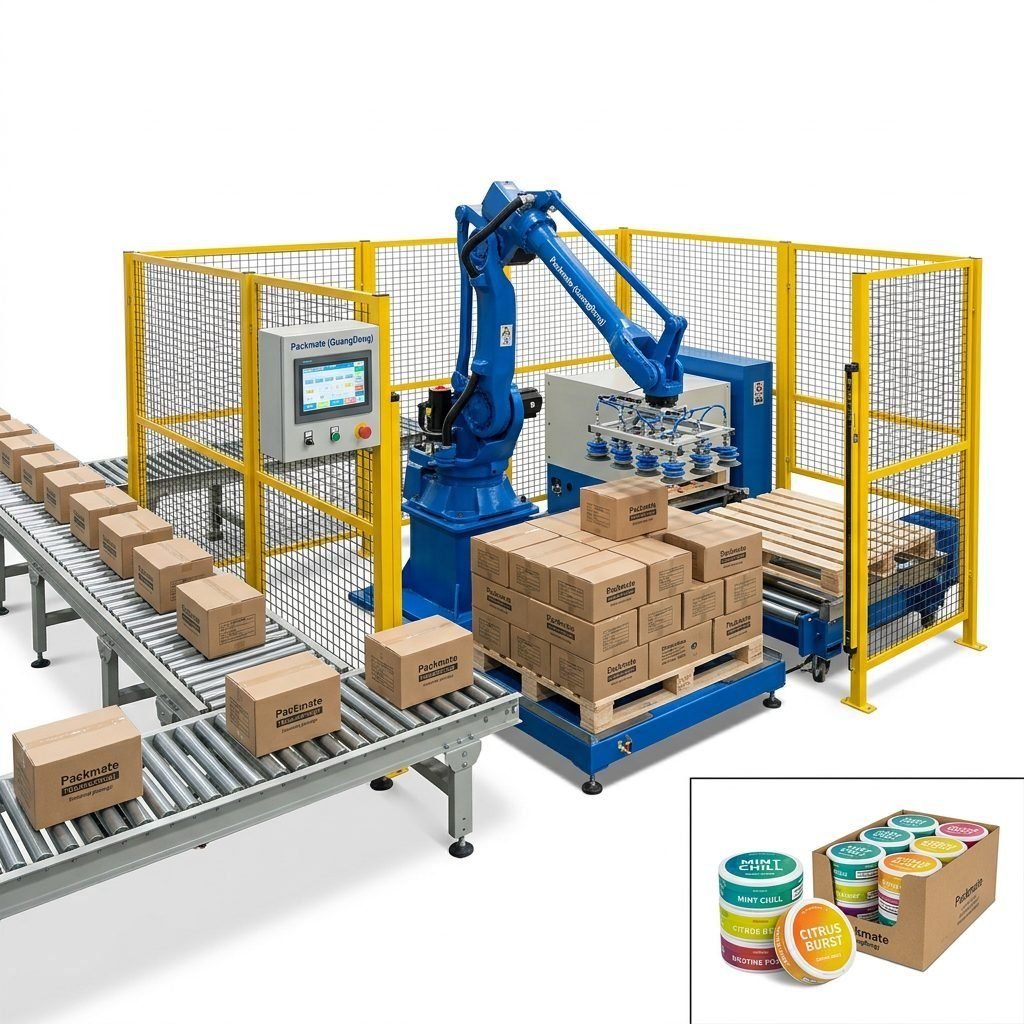
For complex nicotine pouch lines, turnkey solutions that include dosing, multi-lane pouch-making, metal detection, and cartoning provide more predictable performance. Discuss customization options:
🛠 Custom lanes and format tooling for specific pouch sizes;
🛠 Special filling systems for hygroscopic or sticky powders;
🛠 Integration with weight-checkers, labeling, and cartoning modules;
🛠 Remote monitoring features for preventive maintenance.
A well-known manufacturer in this niche can provide examples of completed cases and exhibition demos. Review case studies to understand how similar installations solved production challenges and improved yields.
Factory Acceptance Testing (FAT) and Site Acceptance Testing (SAT)
Insist on FAT before shipping and SAT after installation. FAT should validate machine speed, dose accuracy, sealing integrity, and recipe recovery with your product or a close analogue. SAT confirms integration with your utilities, conveyors, and downstream equipment.
🔎 Inspection checklist: performance curves, sample output batch, spare parts list, operator manual in English, electrical drawings, and software recipe backups.
Local Regulations and Nicotine Handling Safety
Nicotine handling requires strict safety measures due to toxicity. Ensure machine design minimizes dust, includes localized extraction if needed, and that your facility has appropriate PPE protocols, spill response, and waste handling. Suppliers experienced with nicotine pouch lines can advise on safe handling and contamination control measures.
Selecting a Supplier: Questions and Documentation
When comparing suppliers, request:
📝 Detailed technical specifications and electrical/utility schematics;
📝 References or case studies in nicotine pouch or similar industries;
📝 Certifications (CE, ISO) and compliance documents;
📝 Warranty terms, service SLAs, and spare parts availability;
📝 A timeline for delivery, installation, and commissioning.
You can explore manufacturer product pages and system categories for a clearer understanding of model options and configurations, such as specialized lines for snus & nicotine packaging machines, sachet & stick pack configurations, and integrated filling & packaging lines.
Helpful links for further research:
• Snus & Nicotine Packaging Machines
• Sachet & Stick Pack Machines
• Filling & Packaging Lines
• Case Studies
Installation, Training and Ongoing Support
A smooth start-up depends on thorough installation and training. Confirm what the supplier offers:
📚 Onsite commissioning and acceptance testing;
📚 Operator and maintenance training including preventive maintenance schedules;
📚 Remote diagnostics and software updates;
📚 Spare parts kits for critical items and recommended stocking levels.
📦 Practical advice: Negotiate initial spare parts included in the purchase to avoid long lead times and unexpected downtime early in production.
Making the Final Decision
Summarize the options by comparing production needs, technical fit, supplier experience, TCO, and support. Prioritize:
1. Machines that reliably meet your dose and speed requirements;
2. Suppliers with nicotine pouch experience and strong after-sales support;
3. Clear upgrade paths and spare parts availability;
4. Reasonable TCO and demonstrable ROI metrics.
If you need turnkey solutions or want to review tested machine models, suppliers that focus on snus and nicotine pouch packaging often showcase multi-lane and integrated lines and provide full project support from layout to commissioning.
Conclusion
Choosing the right nicotine packaging machine in the Philippines requires balancing production targets, dosing accuracy, machine flexibility, and supplier support. Prioritize machines and vendors with proven experience in snus and nicotine pouch lines, insist on FAT/SAT, and account for total cost of ownership. A well-chosen system will deliver consistent product quality, lower operational risk, and a clear path for scaling up as demand grows.
Common Questions
Q: What machine type is best for small-dose nicotine pouches?
A: Multi-lane sachet or stick pack machines with high-precision dosing (auger or weighing systems) are typically best for small-dose nicotine pouches to reach high throughput while maintaining accuracy.
Q: How do I ensure dosing accuracy?
A: Choose machines with integrated weighing or high-precision auger feeders, run FAT with your product, and implement regular calibration and in-line checkweighing to monitor performance.
Q: What support should I expect from manufacturers?
A: Expect installation and commissioning, operator training, spare parts availability, remote diagnostics, and clear warranty and service terms. Local or regional support presence is a major advantage.
Q: Are turnkey solutions worth the investment?
A: For high-volume or highly automated lines, turnkey solutions reduce integration risk and often produce faster time-to-market. They can be cost-effective when factoring in reduced engineering and commissioning time.
Q: Where can I see machine demonstrations or get more info?
A: Visit manufacturer product pages and case studies for demos and detailed specs. For example, explore Snus & Nicotine Packaging Machines, Sachet & Stick Pack Machines, and Filling & Packaging Lines on supplier websites for model comparisons and real-world cases.