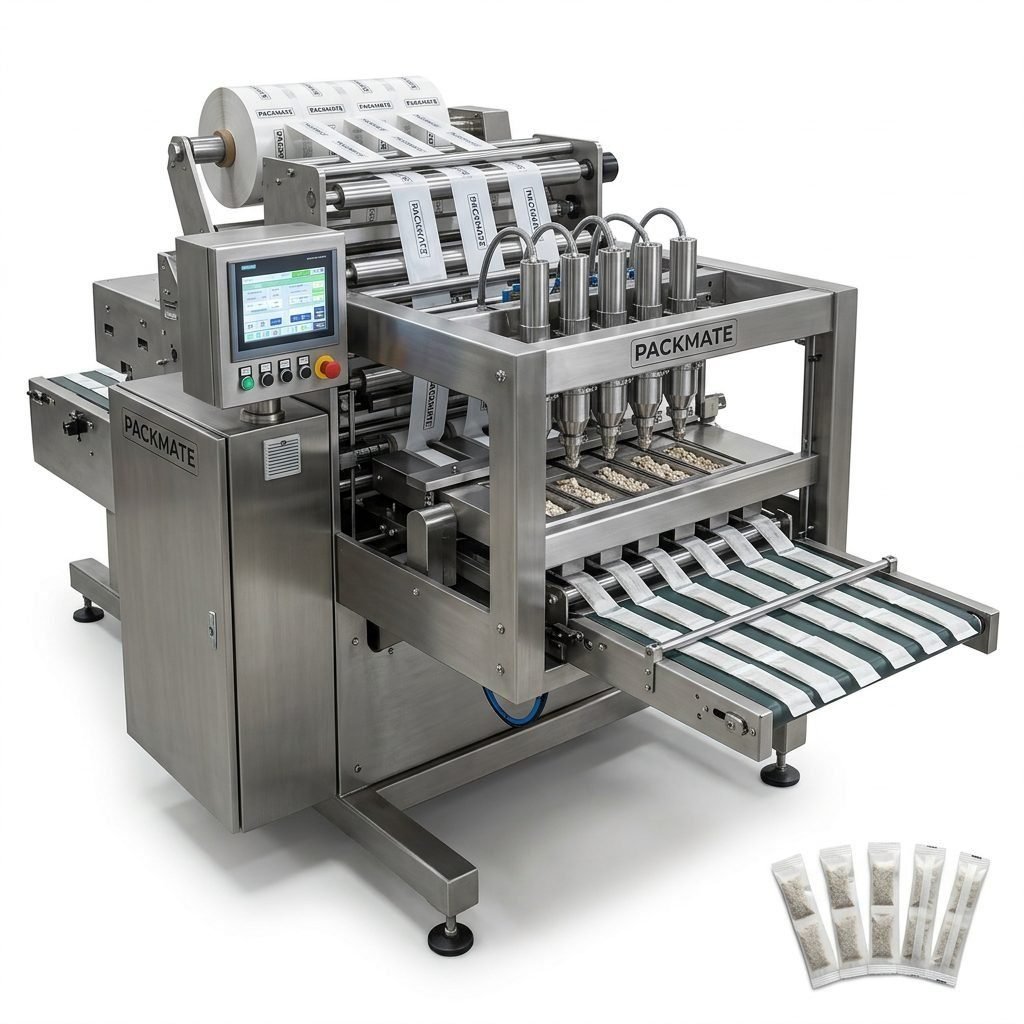
Choosing the right snus packaging machine for a production line in Brazil requires balancing local consumer preferences, technical performance, regulatory compliance, and cost-effectiveness. This guide walks Brazilian manufacturers and importers through the key considerations — from machine types and line layouts to maintenance, sanitary design, and after-sales support — so you can confidently select the best solution for your business.
🔍 Understand Local Market & Regulatory Context
Brazil’s consumer market has its own unique habits and regulatory environment. While demand for nicotine pouches and related products is growing globally, in Brazil it is essential to confirm product permissibility and labeling rules with local authorities such as ANVISA. Packaging format preferences in Brazil often favor discreet, single-dose pouches with clear Portuguese labeling and tamper-evident seals. Make sure any equipment you choose can handle Portuguese-language labels and variable data printing for batch codes and expiry dates.
⚠️ Regulatory note: Always verify local regulations and customs requirements before importing machines or starting production. Local labeling, health warnings, and import duties can affect packaging choices and machine configuration.
⚙️ Machine Types: Which One Fits Your Brazil Facility?
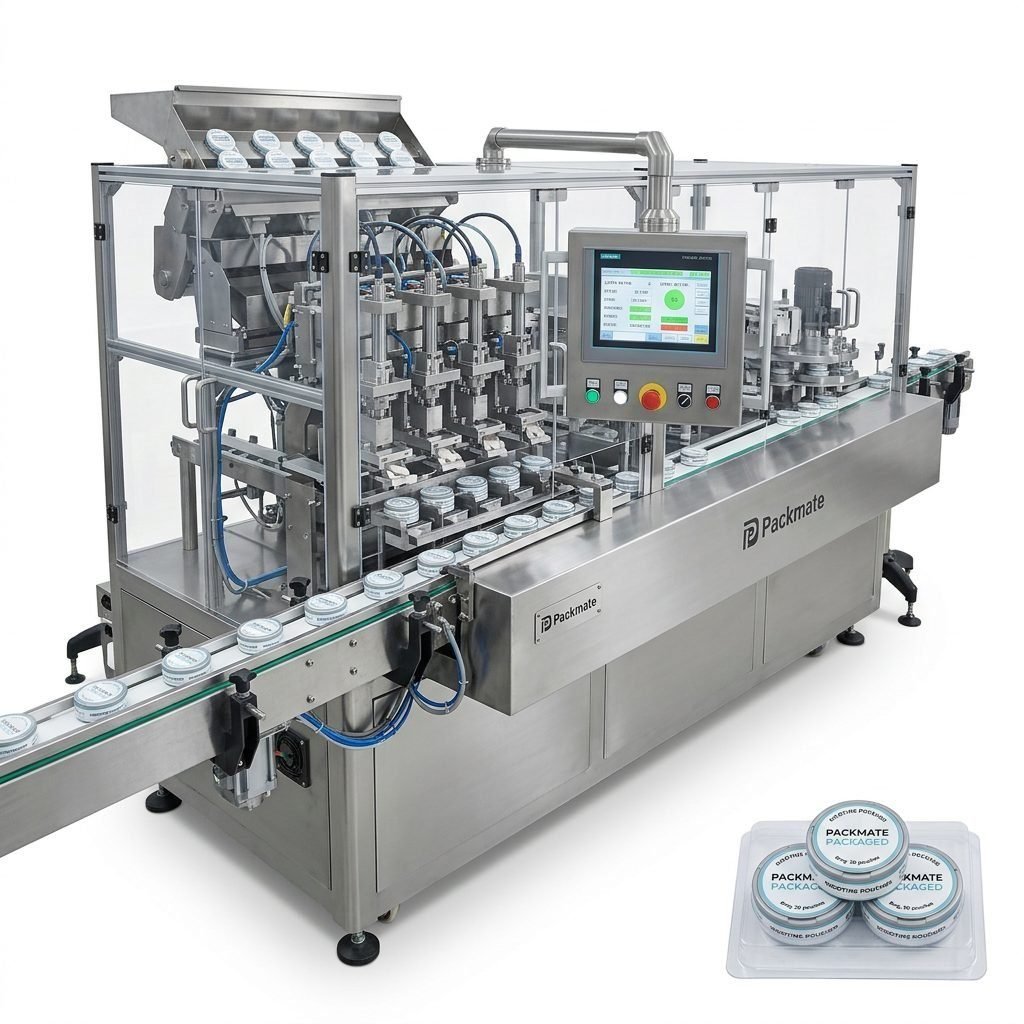
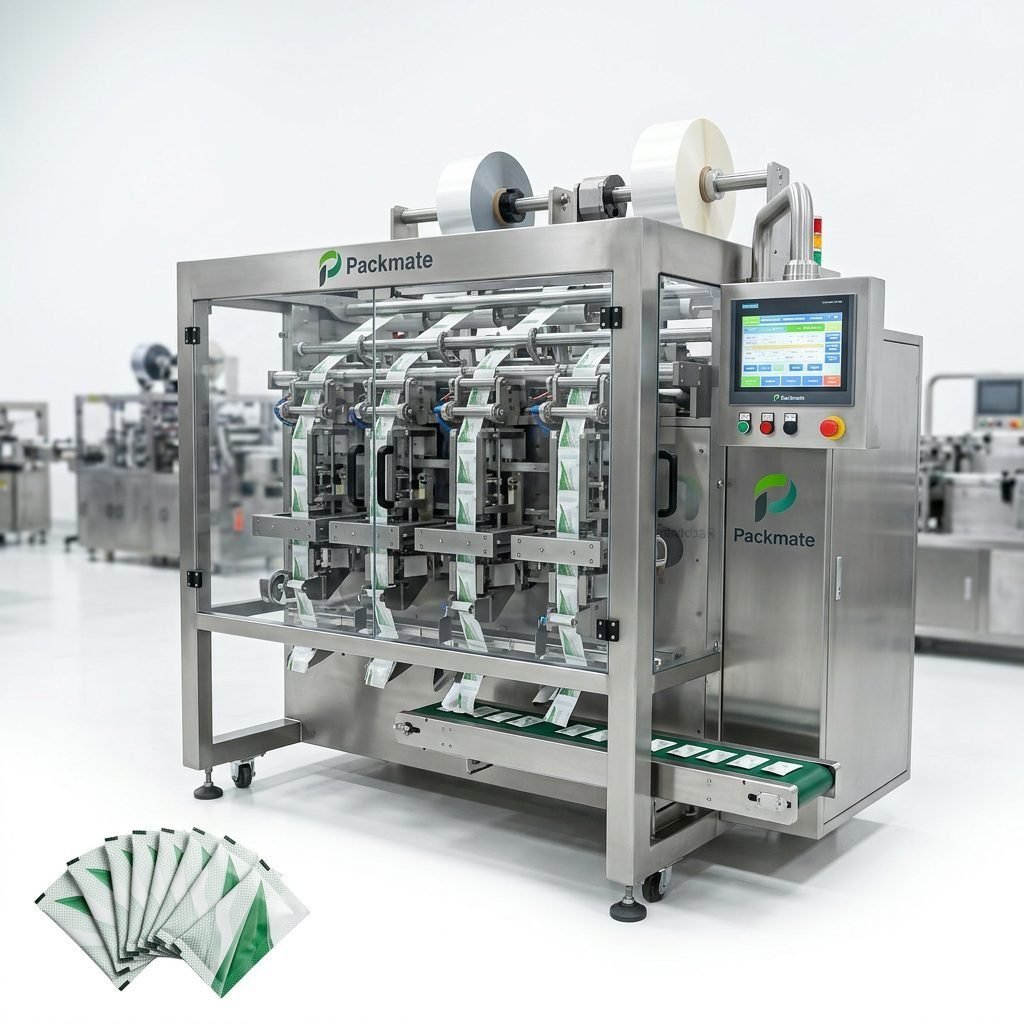
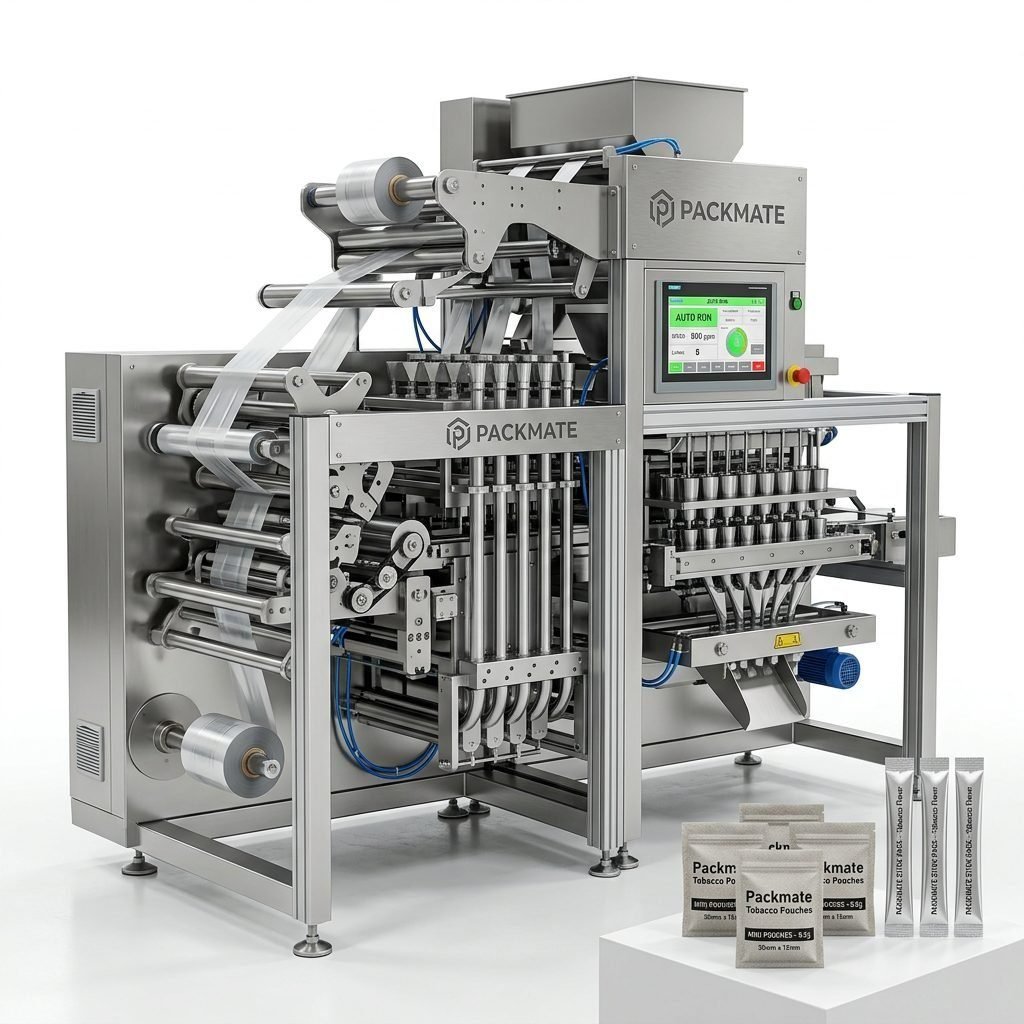
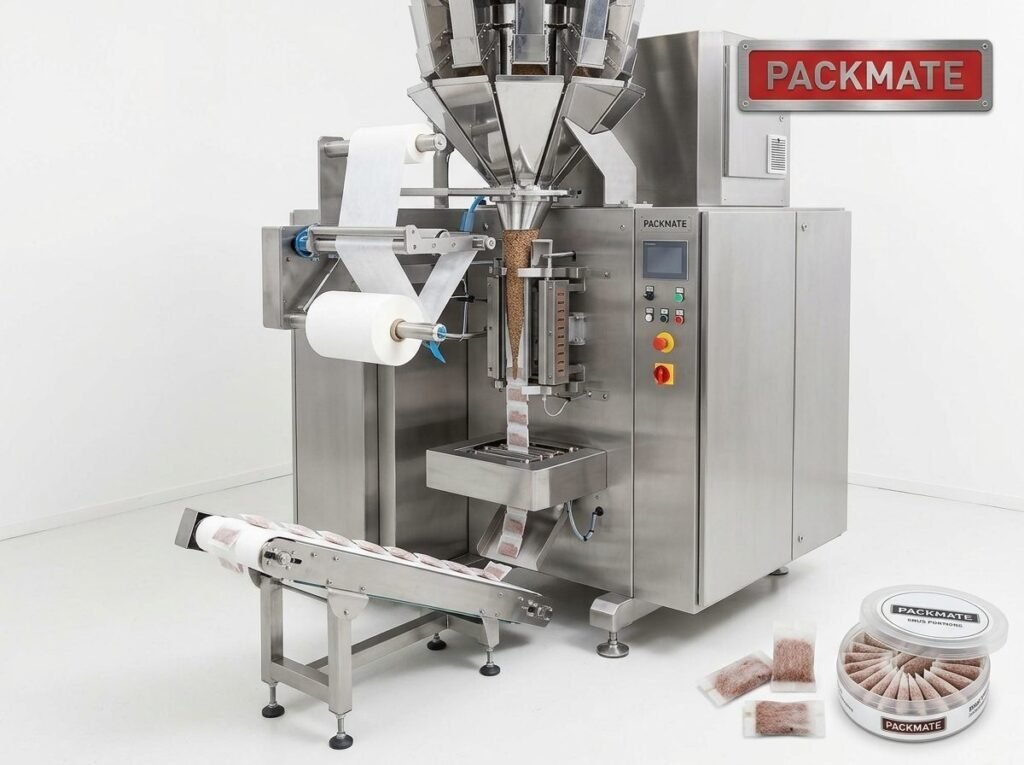
There are several machine categories to consider. Each matches different production volumes, pouch formats, and investment levels:
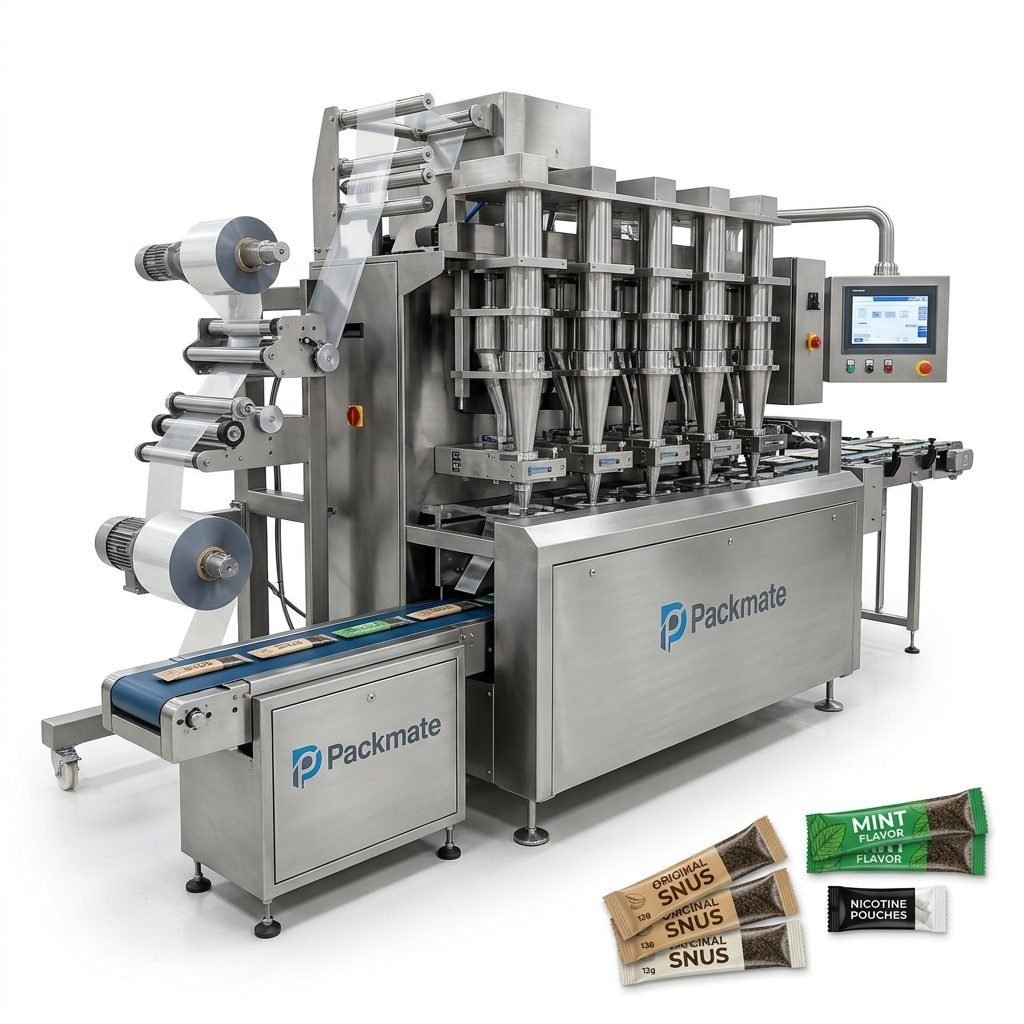
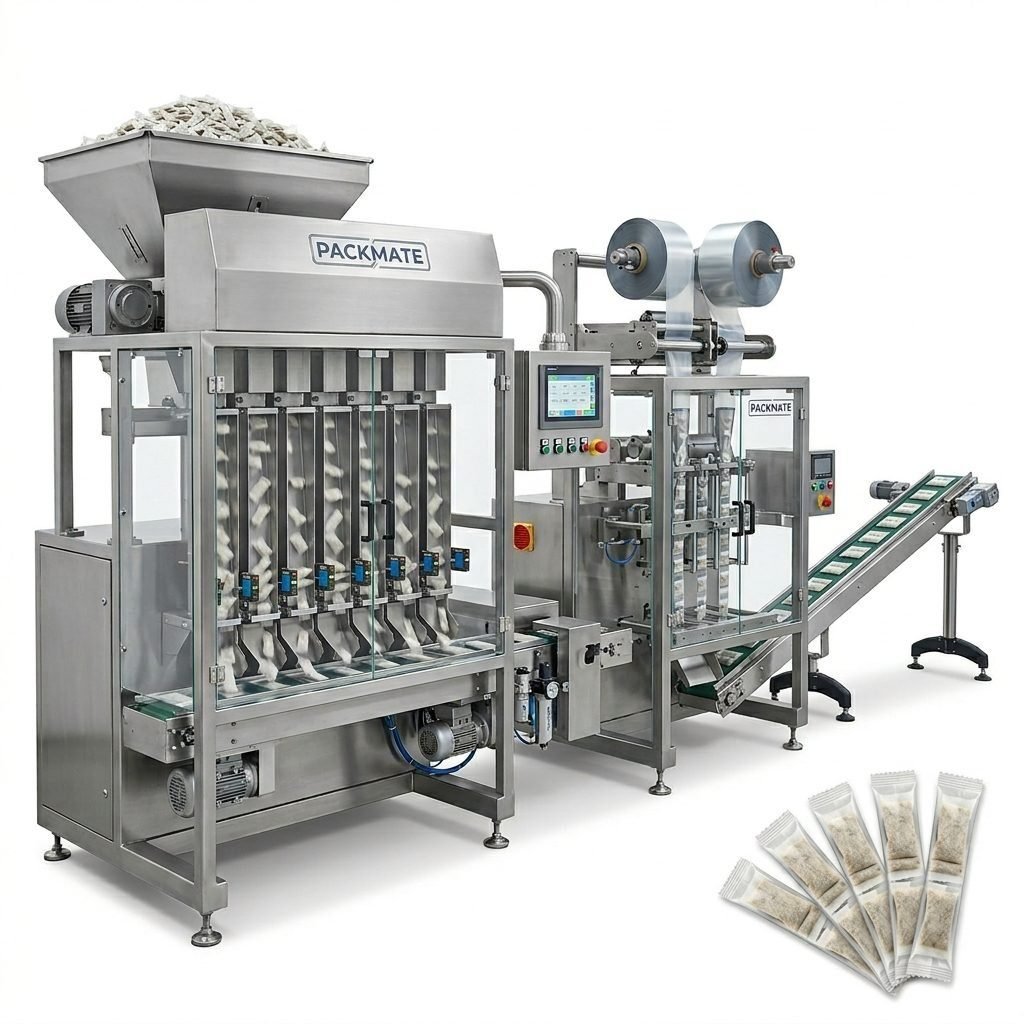
- Multi-lane snus pouch machines — for high throughput and compact floor space.
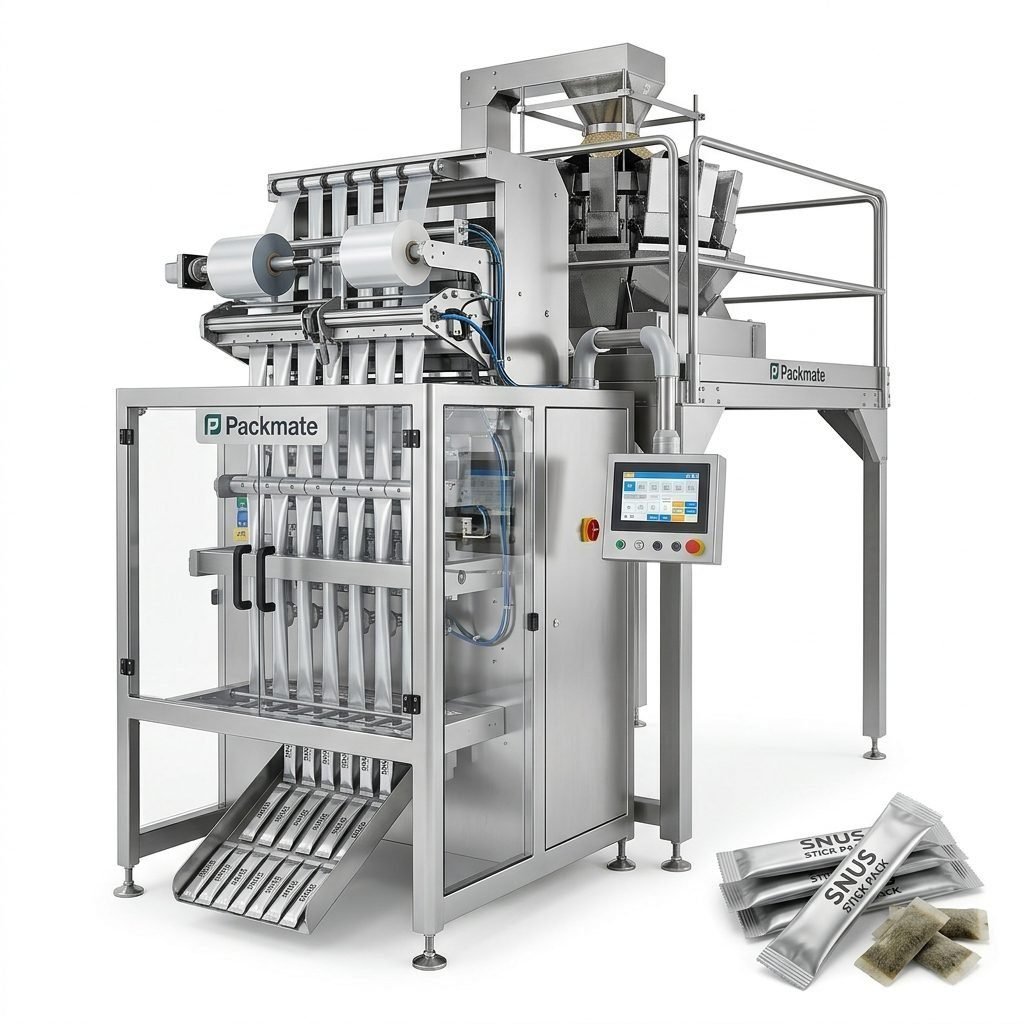
- Stick pack & sachet machines — ideal for single-dose, retail-friendly packages.
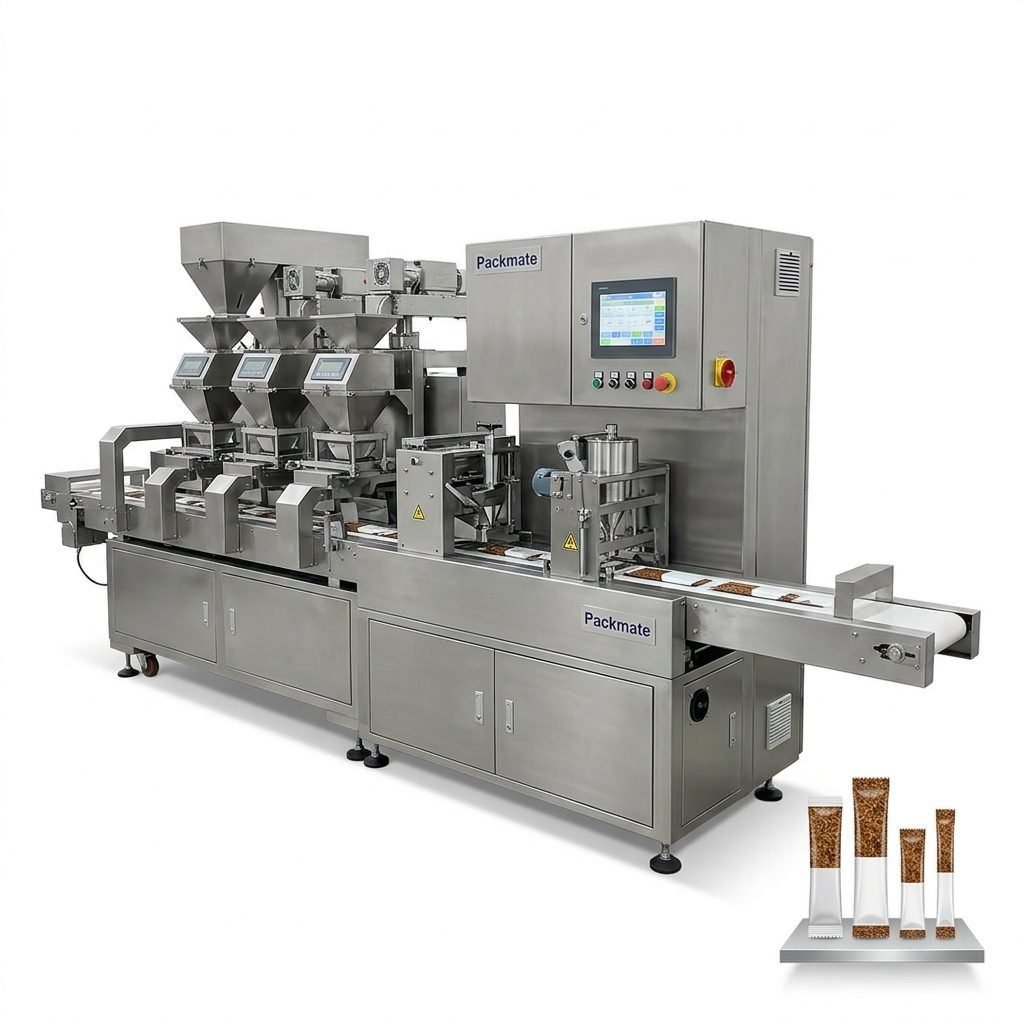
- Fully integrated weighing and filling systems — when precise dosing of powders or granular nicotine formulations is essential.
- Auxiliary equipment like sealing, labeling, and inspection systems — for quality and compliance control.
📌 Why multi-lane systems are popular in Brazil
Multi-lane machines let manufacturers scale output without a proportional increase in factory footprint — a valuable advantage in densely populated industrial zones in São Paulo or other major Brazilian hubs. They are also flexible for producing different pouch sizes across lanes, which supports product diversification for local retail channels.
📦 Key Selection Criteria: Performance, Hygiene, and Flexibility
Prioritize machines that deliver consistent performance and meet food-grade hygiene standards. Important factors include:
Throughput: Calculate required pouches per minute/hour and add a 20–30% buffer for future growth.
Changeover speed: Faster format changeover reduces downtime for product runs targeted to Brazil’s diverse retail segments.
Sanitary design: Stainless steel contact surfaces, easy-to-clean components, and IP-rated drives to handle humid regions are crucial.
Accuracy: Precise dosing mechanisms for nicotine pouches ensure compliance and consistent consumer experience.
💡 Practical Checklist Before Buying
Use this checklist to evaluate vendors and equipment:
- Proof of CE/ISO certifications and compliance documentation.
- Local spare parts availability and lead times.
- Warranty terms, technical support, and remote diagnostic capabilities.
- Reference installations in Latin America or similar climates.
- Training programs for Brazilian operators in Portuguese or with translated manuals.
🔧 After-sales & Local Support
A strong after-sales network reduces downtime. When choosing a manufacturer, confirm availability of:
✅ Local or regional technicians
✅ Remote support and PLC troubleshooting
✅ On-site commissioning and operator training
✅ Readily available spare parts and consumables
📈 Capacity Planning: Small Batch vs. Industrial Scale
Define your expected annual output and seasonal demand. Smaller artisanal brands in Brazil may prefer modular stick-pack machines for flexibility, while producers aiming for supermarket distribution and export often invest in high-speed multi-lane lines. Consider line balancing: upstream weighing and dosing must match downstream forming and sealing speeds to avoid bottlenecks.
🧭 Layout & Factory Considerations
Factory layout affects productivity. Evaluate:
- Floor load capacity and power availability.
- Humidity and temperature control for product stability.
- Clear access for installation of large machines and future expansion.
- Waste handling and dust control systems for filling operations.
🧾 Quality Control & Traceability Features
To satisfy both regulators and consumers, ensure your line can integrate inspection and track-and-trace:
– Vision inspection for missing or damaged pouches.
– Checkweighers to guarantee correct pouch weight.
– Inline coding and serialization for batch traceability.
🏭 Manufacturer Credentials: What to Ask Your Vendor
Confirm the manufacturer has deep experience in snus/nicotine pouch lines. Reliable vendors will share:
- Factory capacity and CNC capabilities for spare parts precision.
- History of turnkey projects and adaptation to different pouch formats.
- Customer references and case studies, ideally including installations in similar climates.
- Quality certificates such as CE and ISO.
Manufacturers like Packmate Snus Machine bring experience with multi-lane systems, 30+ years in packaging engineering, and a factory footprint that supports customized turnkey lines. Explore their snus solutions and equipment ranges to compare models and features: Snus & Nicotine Packaging Machines, Sachet & Stick Pack Machines, and the About Packmate page for company background.
💸 Total Cost of Ownership: Beyond Purchase Price
Consider operational costs: energy consumption, spare parts, required maintenance staff, training, and downtime risk. A slightly higher upfront cost for a reputable, energy-efficient machine often results in lower lifetime costs and greater reliability — especially important in Brazil where remote spare parts delivery may take longer.
🌎 Export & International Standards
If you plan to export products from Brazil, ensure the machine supports international labeling and packaging formats. Machines that comply with CE and ISO standards simplify meeting import requirements in target countries. For technical specifications and turnkey line examples, review Filling & Packaging Lines and related system pages.
🔎 Installation, Testing, and Acceptance
A robust FAT (Factory Acceptance Test) and SAT (Site Acceptance Test) process is essential. Require the vendor to demonstrate production runs with your formulations and packaging materials prior to shipment. Confirm the supplier provides commissioning support and operator training in language options suitable for your team.
📌 Tip: Ask for video records of FAT runs and a list of recommended consumables. A supplier with a global footprint and exhibition presence often provides stronger after-sales reassurance — see examples at Our Exhibition.
✅ Final Steps: Shortlist & Pilot Run
Shortlist manufacturers based on references, technical capability, and local support. Run a pilot using your pouch materials and formulation to validate machines under real production conditions. Confirm delivery, installation timeline, and spare-parts lead times before finalizing the purchase.
📞 Useful Links & Resources
For product catalogs and machine models, check the vendor’s product pages and case studies: Bag & Pouch Packaging Machines, Case Studies, and Contact Us for direct inquiries about deployment in Brazil.
📝 Conclusion
Selecting the best snus packaging machine in Brazil means aligning technical specifications with local market needs, regulatory compliance, and factory constraints. Prioritize sanitary design, flexibility, throughput, and reliable after-sales support. Conduct pilot runs and insist on clear FAT/SAT procedures to protect your investment and ensure a smooth ramp-up to full production.
Frequently Asked Questions
Q1: How do I know if a machine meets Brazilian hygiene and safety standards?
A1: Request documentation for CE/ISO certifications, sanitary design features (SUS-compatible stainless steel contact parts), and ask for FAT videos showing cleaning and CIP procedures. Also consult ANVISA or a local compliance advisor.
Q2: Can a multi-lane machine handle different pouch sizes for small and large markets in Brazil?
A2: Yes — many multi-lane systems are designed for lane-by-lane format variation. Verify changeover time and the vendor’s ability to produce sample pouches in each size during FAT.
Q3: What are typical lead times for spare parts shipped to Brazil?
A3: Lead times vary by supplier and part. For critical spares, choose a manufacturer with a global distribution network or stock essential parts locally to minimize downtime.
Q4: Is operator training provided in Portuguese?
A4: Reputable suppliers offer training and documentation in multiple languages. Confirm language support and on-site training availability during contract negotiation.
Q5: How do I evaluate energy consumption and maintenance costs?
A5: Ask vendors for detailed specifications on power consumption at rated speeds and for maintenance schedules with typical hourly rates for technician visits. Comparing these will help estimate total cost of ownership.