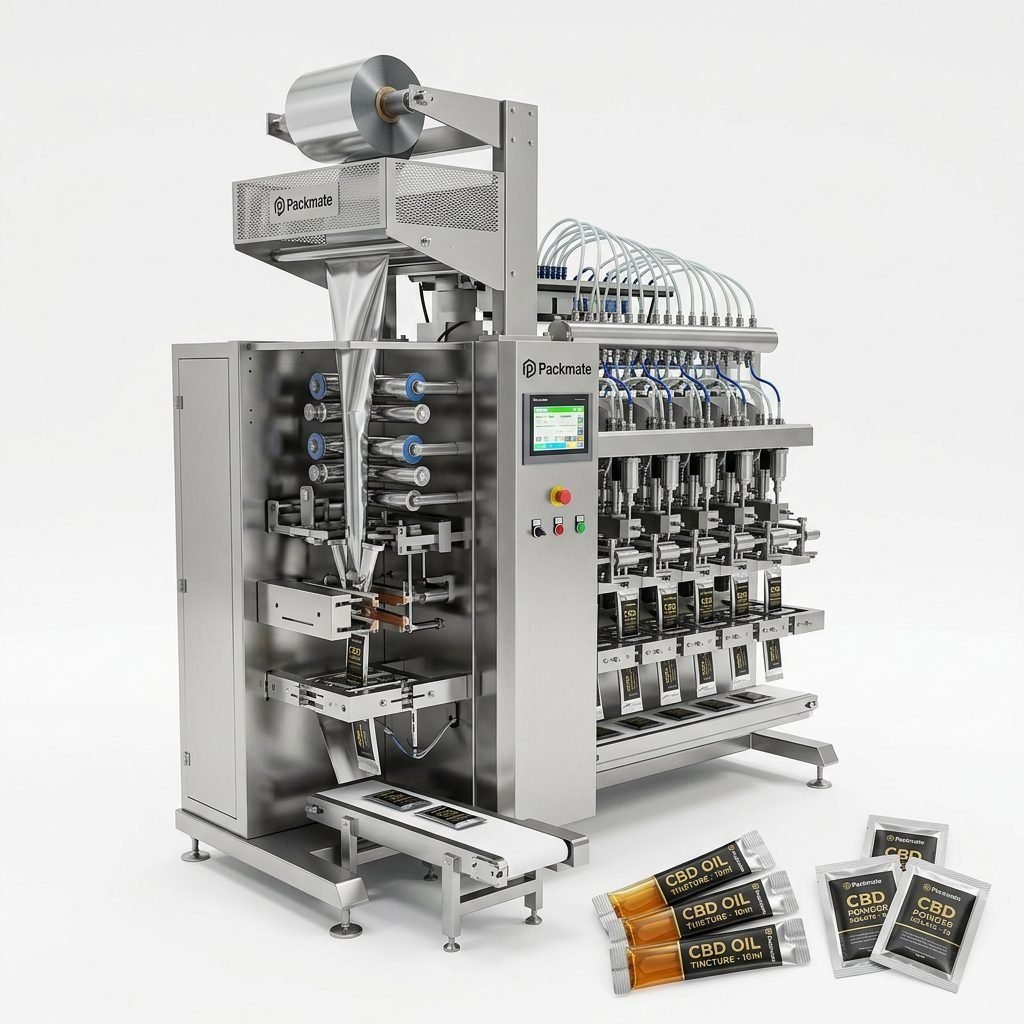
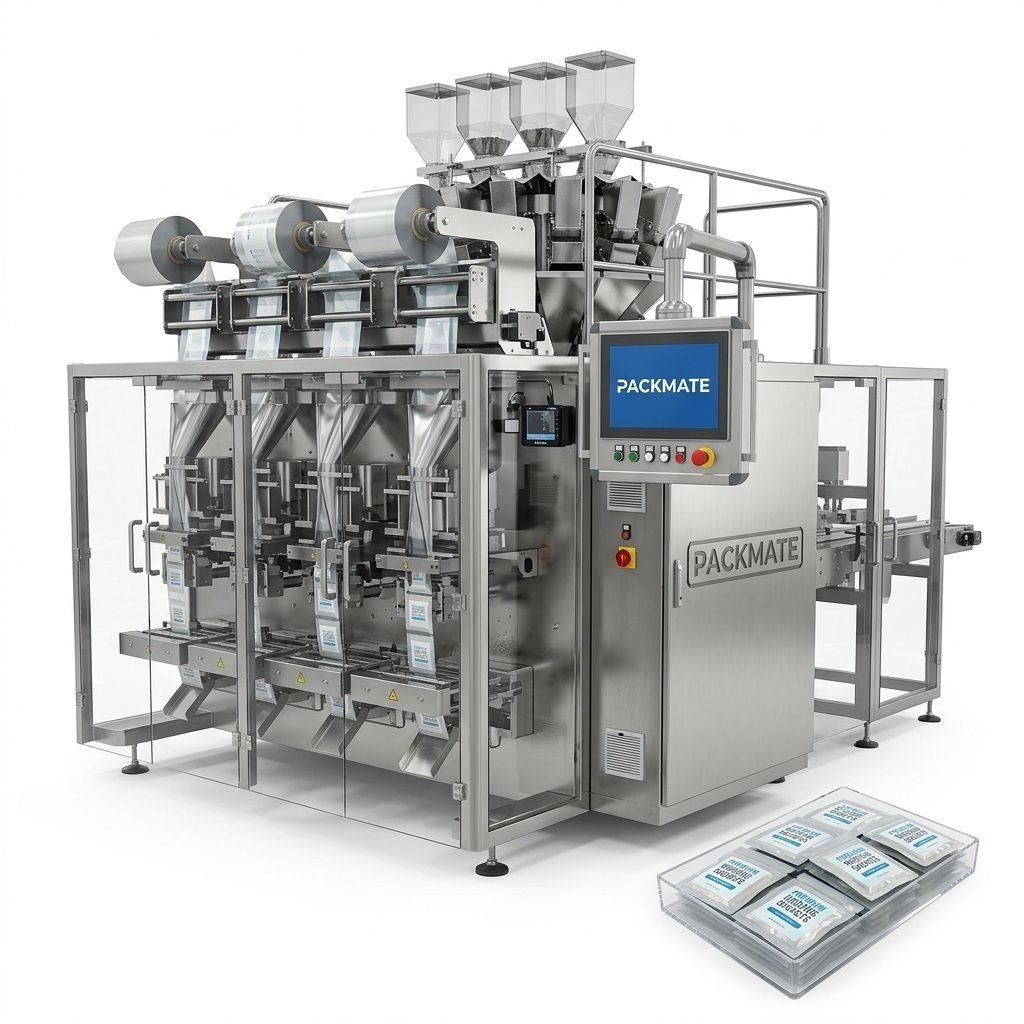
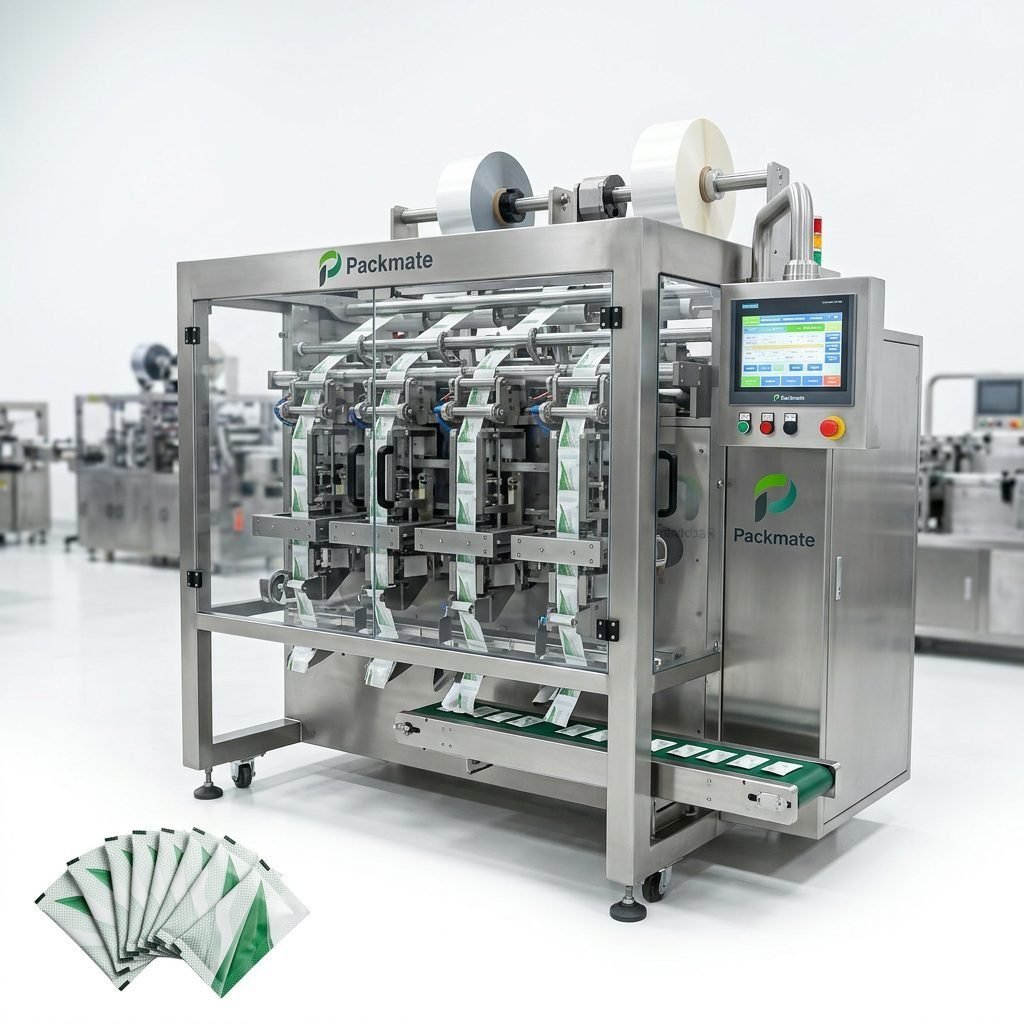
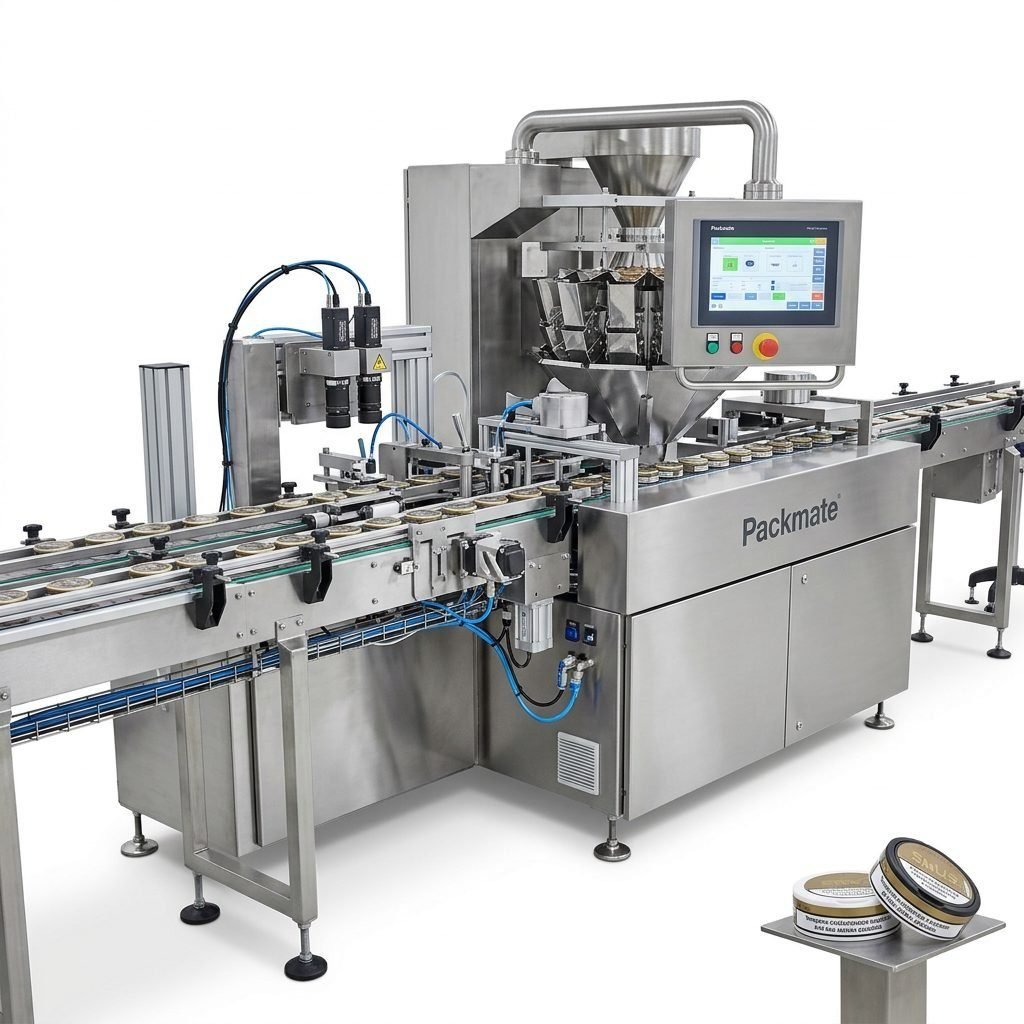
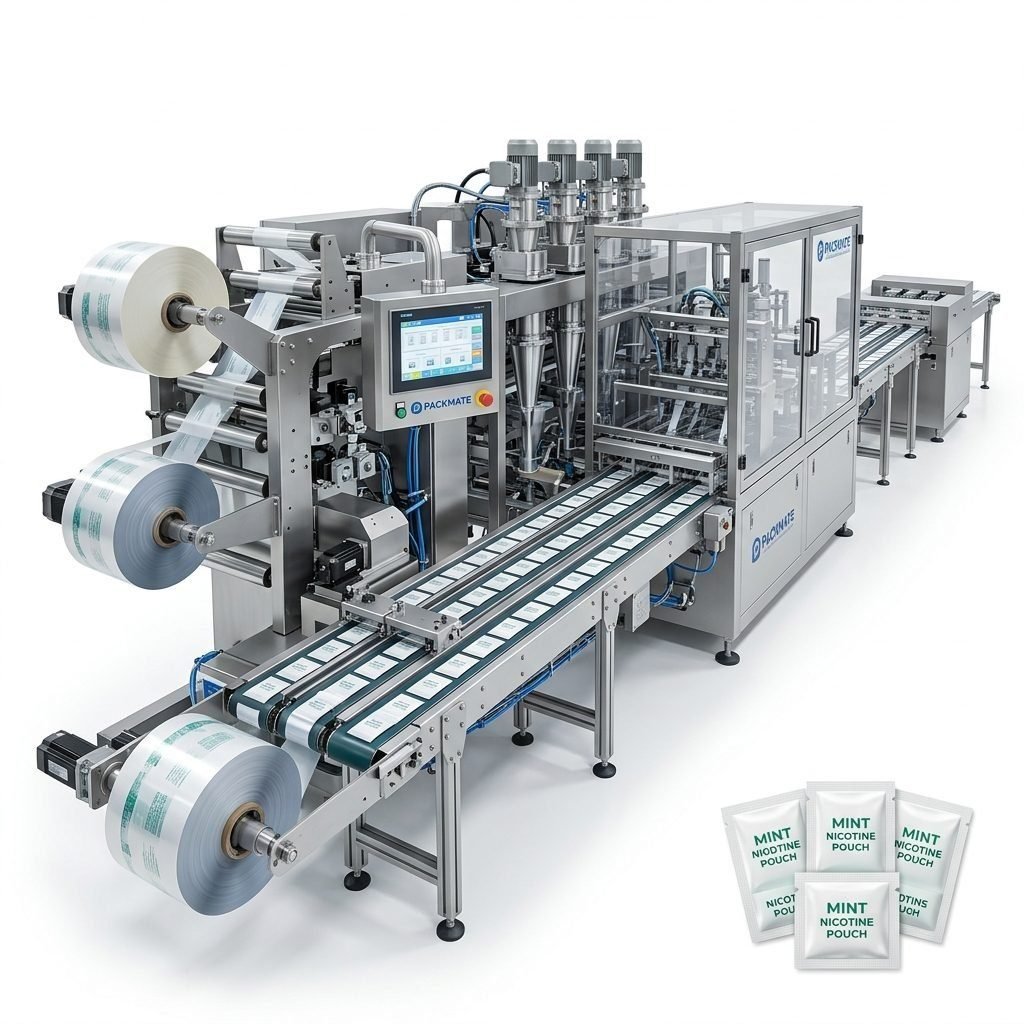
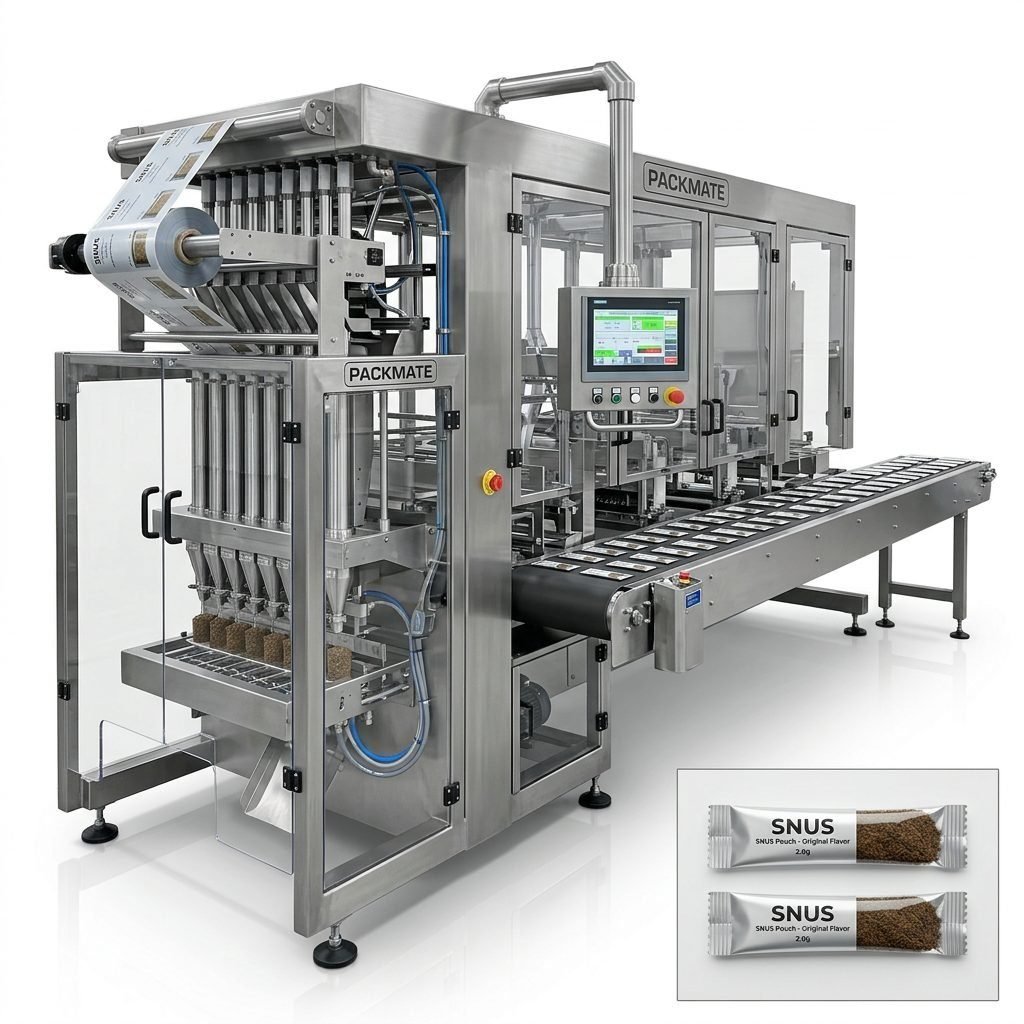
The snus production line is a specialized, high-speed packaging solution designed for nicotine pouches and similar small-dose products. This guide explains the equipment, process flow, automation strategies, and practical considerations for building and operating a reliable snus/nicotine pouch line. Whether you’re evaluating single-lane stick pack machines or advanced multi-lane systems, the following sections break down the technical and operational aspects you need to know.
Overview of Snus Production Lines
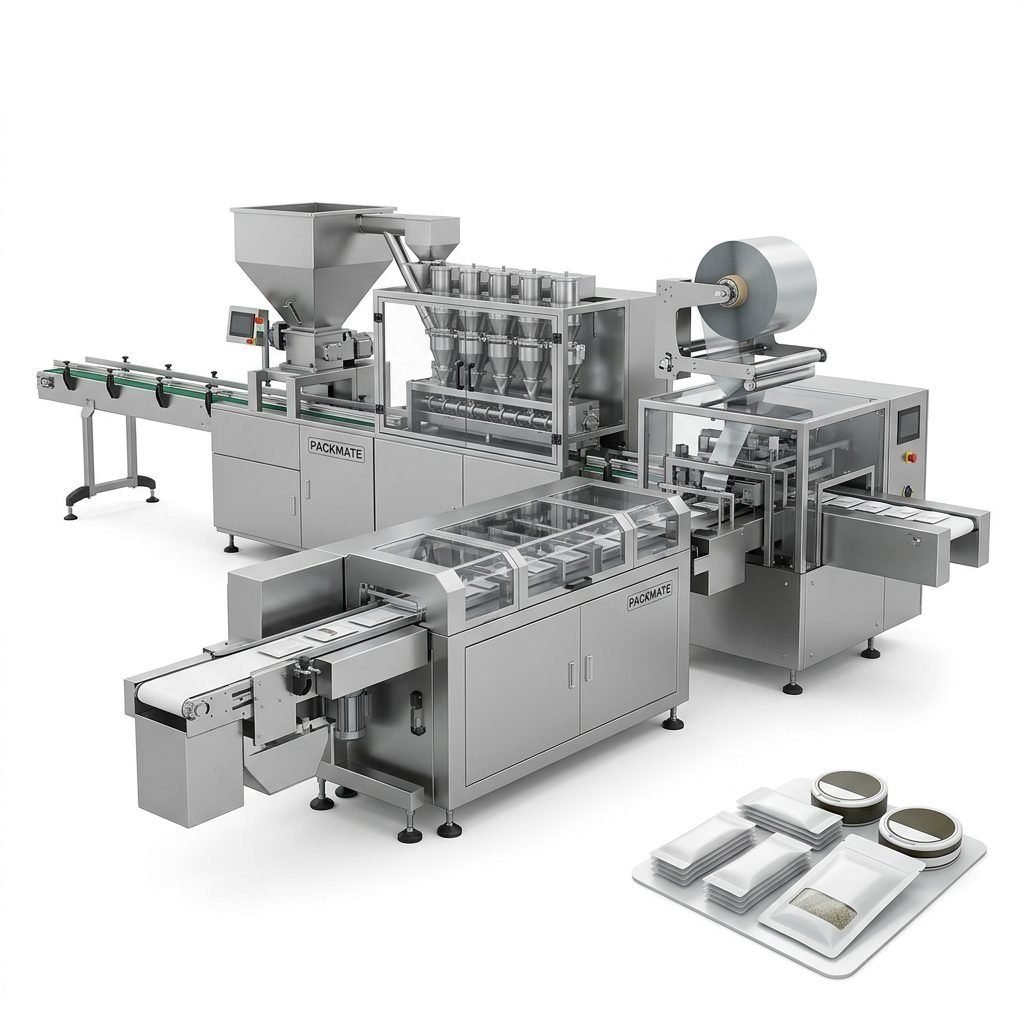
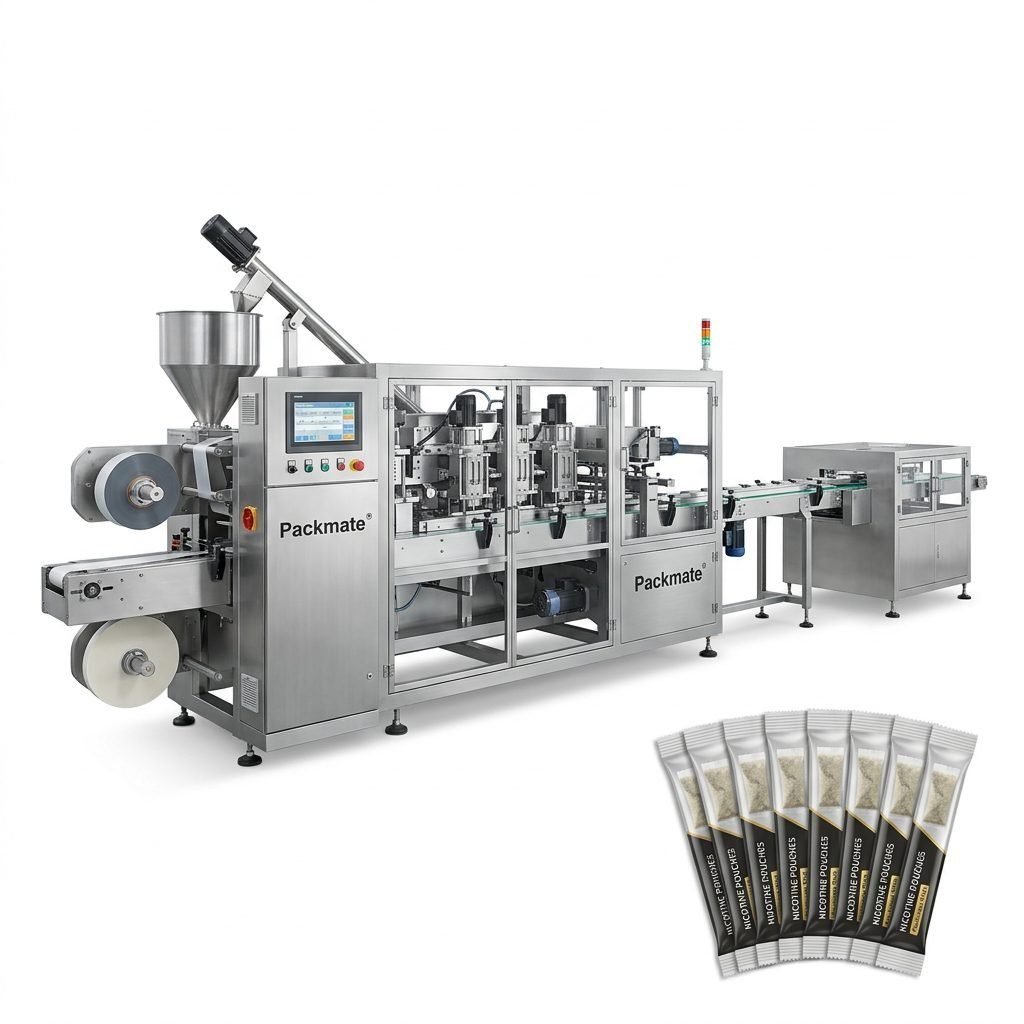
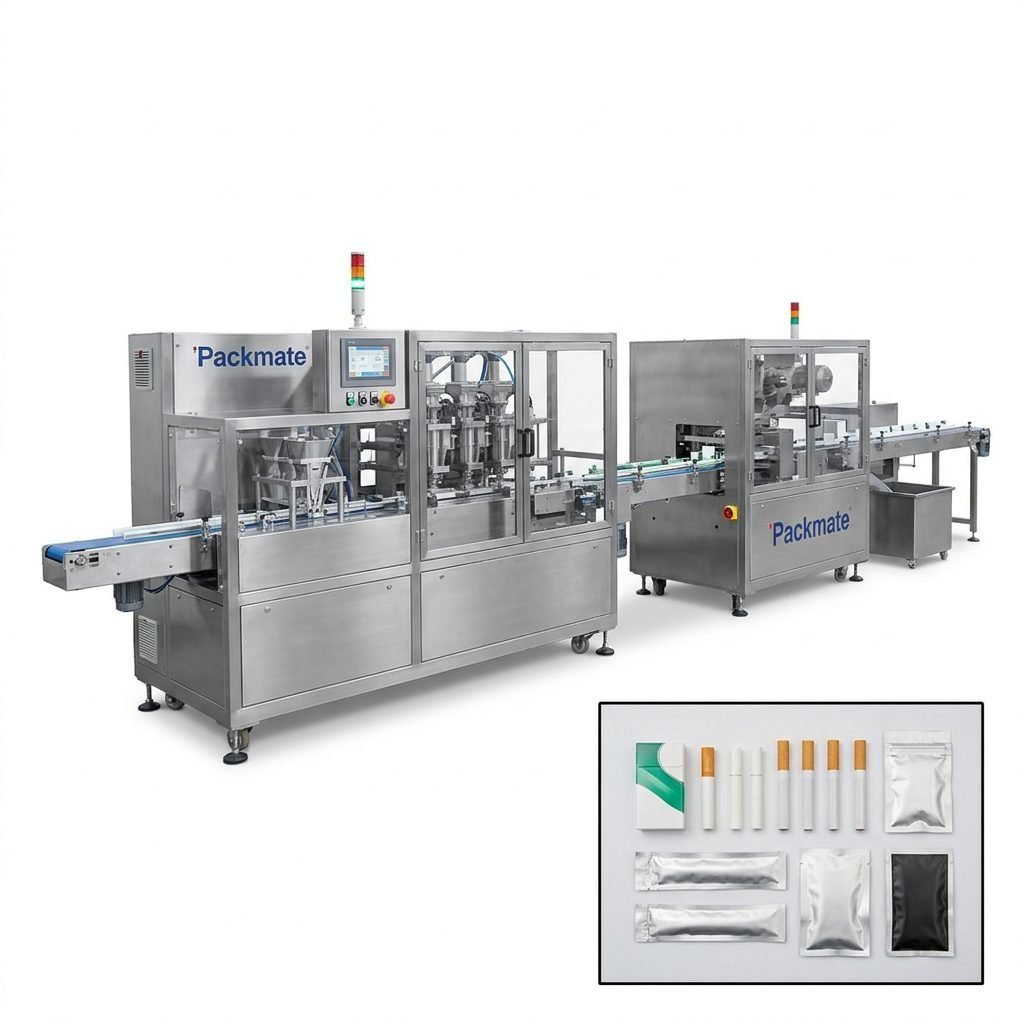
A modern snus production line integrates precision dosing, pouch forming, sealing, and end-of-line packaging. Typical configurations include modular machines for filling powders, granules, or liquids, followed by high-speed sachet or stick pack equipment. Manufacturers such as Packmate provide complete turnkey solutions and a wide range of equipment models to suit different output and product specifications. For product pages and machine types, explore Snus & Nicotine Packaging Machines and Bag & Pouch Packaging Machines.
Why specialized snus lines matter
Snus and nicotine pouches require precise portion control, dust control, reliable sealing, and regulatory compliance. A tailored production line minimizes waste, ensures consistent dosing, and reduces operator intervention. Key benefits include:
✓ Higher yield — precise dosing reduces product giveaway.
✓ Improved hygiene — enclosed filling and packaging reduce contamination.
✓ Scalability — modular equipment enables quick capacity upgrades.
Core Equipment and Technologies
The backbone of any snus packaging line consists of several core machines. Each block below highlights function, typical features, and practical notes.
⚙️ Dosing & Weighing Systems
Precise volumetric or gravimetric dosing is essential. Multi-head weighers and auger fillers are commonly used depending on product flowability. Look for fast response sensors and minimal product retention to reduce cross-contamination.
📦 Form-Fill-Seal (FFS) Machines
Sachet, stick pack, and multi-lane FFS machines provide the pouch-forming and sealing capability. High-precision temperature control and servo-driven film feeding produce consistent seals and accurate pouch dimensions.
🔗 Conveying & Buffering Systems
Gentle, sanitary conveyors with in-line buffering ensure continuous upstream and downstream flow. Accumulation zones help decouple machine cycles and improve overall uptime.
🧰 Auxiliary Equipment
Labelers, check weighers, metal detectors, and cartoning machines are integrated for a full production solution. For accessory options see related systems under Auxiliary Packaging Equipment.
Typical Process Flow: Step-by-step
The production sequence for snus pouches usually follows a clear flow to balance speed and quality. Below is a standard step-by-step outline with practical notes.
1. Raw material handling and pre-weighing — ensure humidity and particle size are controlled.
2. Feeding and dosing — use precision dispensers and vibration control to avoid bridging.
3. Pouch forming and filling — synchronize film feed with dosing for exact fill positions.
4. Sealing and cutting — temperature consistency and pressure distribution are critical.
5. Inspection and reject handling — in-line checkweighers and vision systems detect defects.
6. Secondary packaging — cartoning, boxing, and palletizing complete the line.
Tip: Use servo-driven synchronization between dosing and FFS machines to enable higher line speeds and lower material waste.
Automation, Controls, and Integration
Automation is the heart of modern snus lines. PLC systems, HMI interfaces, and industrial communication protocols integrate every machine into a single production ecosystem. Key automation considerations include:
● PLC & HMI: Centralized control with recipe management for quick changeovers.
● Servo Motors: Accurate motion control for film transport and pouch positioning.
● Vision & QA: Camera inspection for label alignment, print verification, and seal integrity.
● Data Logging: Production traceability, OEE monitoring, and batch records for regulatory compliance.
Multi-lane vs. Single-lane Systems
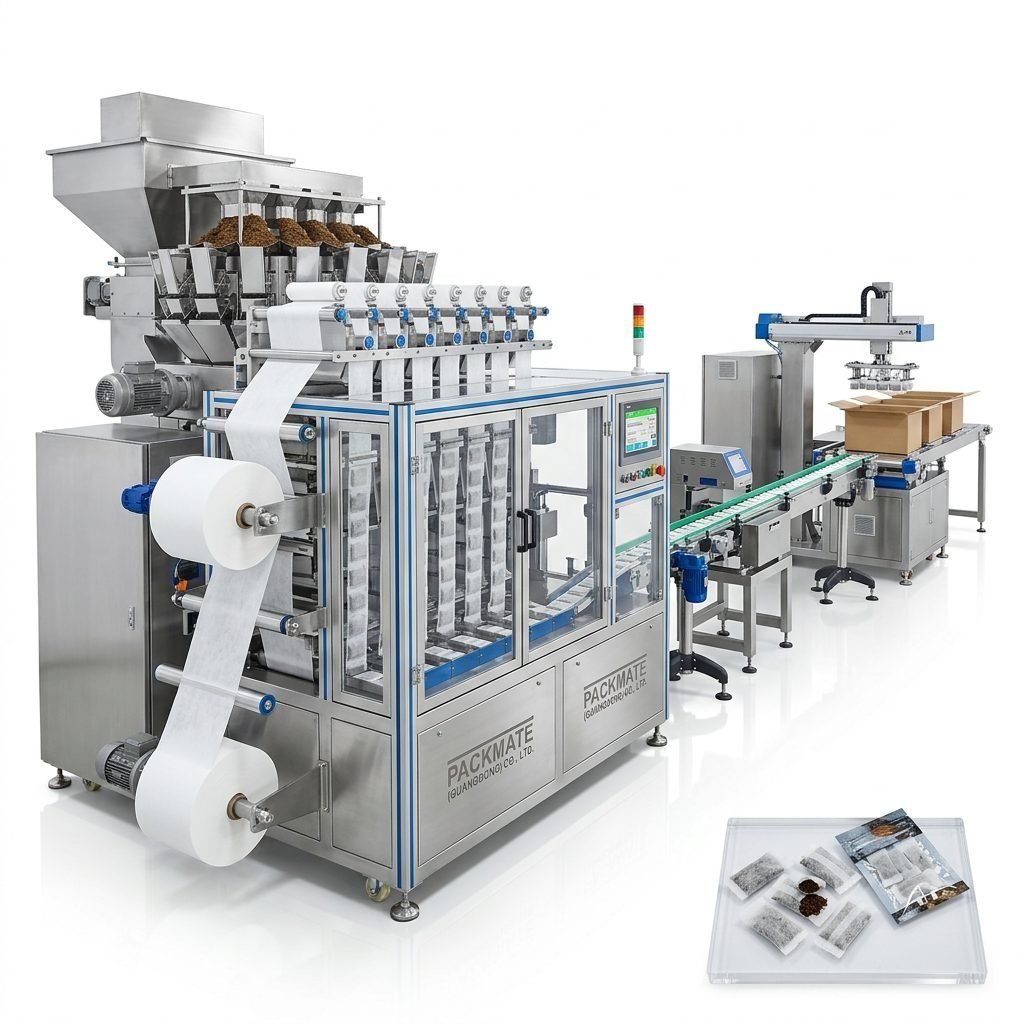
Multi-lane systems multiply output by running several lanes in parallel, ideal for high-volume nicotine pouch production. Single-lane machines are more flexible and better suited for frequent format changes. When choosing, balance product variety, floor space, and maintenance capacity.
Quality, Compliance & Certifications
Compliance with international standards ensures equipment safety and market acceptance. Reliable manufacturers provide CE and ISO certifications, documented factory testing, and traceable component sourcing. For certification details and credentials, visit Certificate.
Hygiene and GMP considerations
Snus production often requires strict hygiene controls: easy-clean designs, sanitary materials (e.g., stainless steel), and minimized dead zones where product can accumulate. Implement written cleaning protocols and validation as part of your GMP program.
Factory Capability & Turnkey Solutions
Strong manufacturing capabilities enable consistent machine quality and faster lead times. A manufacturer with advanced CNC centers, a large factory footprint, and decades of engineering experience is better positioned to deliver customized, high-performance lines. Learn more about company strengths and history at About Packmate.
Factory Snapshot: 30+ years industry experience | 20,000㎡ facility | 50+ machine models | Global turnkey projects.
Customization and Turnkey Deliveries
Turnkey solutions cover design, equipment supply, installation, commissioning, and operator training. Customization options include special dosing heads, multi-lane configurations, and tailored end-of-line packaging modules. If you require full-line integration or site-specific drawings, engage with supplier service teams early in project planning.
Installation, Training & After-sales
A robust after-sales program includes on-site commissioning, remote support, spare parts supply, and scheduled maintenance training. Consider suppliers that attend international exhibitions and provide case studies of successful installations to ensure operational reliability.
Selecting the Right Snus Line: Key Considerations
Evaluate these criteria when choosing equipment:
● Output Requirements: Target pouches per minute and planned growth.
● Product Characteristics: Powder flowability, moisture content, and particle size.
● Footprint & Utilities: Floor space, power, compressed air, and dust extraction needs.
● Compliance & Traceability: Regulatory labeling, batch records, and QA integration.
● Service & Spare Parts: Local support, spare parts inventory, and training options.
Cost of Ownership vs. Initial Cost
Assess total cost of ownership (TCO) rather than just capital expenditure. Important elements of TCO include energy consumption, consumables (films, seals), spare parts, downtime risk, and labor. Investing in high-quality machines often reduces operating costs and increases long-term reliability.
Common Integration Examples and Case Studies
Successful projects often blend multi-lane FFS machines with upstream weighers and downstream cartoners for a compact, high-throughput layout. For real-world case studies and project references, check manufacturer case pages such as Case.
Exhibitions, Demonstrations & Factory Acceptance Tests
Attend live demonstrations at major trade shows or request Factory Acceptance Tests (FAT) before shipment. FAT enables you to validate performance using your product and document acceptance criteria to avoid surprises during site commissioning. For event schedules and demos, visit the exhibitions page Our Exhibition.
Practical Checklist Before Purchase
Use this quick checklist to prepare procurement:
– Define product SKUs and production targets.
– Request machine performance data with your product specifications.
– Verify certifications and references.
– Clarify lead times, installation scope, and commissioning responsibilities.
– Agree on warranty, spare parts packages, and training plans.
Conclusion
Building an efficient snus production line requires careful selection of dosing systems, pouch-forming equipment, and automation controls. Focus on accuracy, hygienic design, and integration capabilities to achieve consistent product quality and scalable throughput. Partnering with an experienced supplier can accelerate deployment and reduce risk, especially when turnkey solutions and strong after-sales support are offered.
Frequently Asked Questions
Q1: How fast can a typical multi-lane snus line run?
Speeds vary by configuration; multi-lane lines commonly achieve thousands of pouches per minute aggregated across lanes. Final speed depends on dosing accuracy, product behavior, and downstream handling.
Q2: What certifications should I require?
Require CE and ISO compliance as a baseline, plus documented FAT records and material certificates. Ask suppliers for QA documentation and traceability for critical components.
Q3: Can existing lines be upgraded to multi-lane operation?
Upgrades are possible but depend on current mechanical layout and available floor space. Often the most efficient route is modular replacement of the FFS section with a multi-lane head and upgraded controls.
Q4: Where can I see machine demonstrations?
Manufacturers host live demos at international exhibitions and can schedule factory visits or remote demonstrations. For upcoming events, see Our Exhibition or contact your supplier directly.
Q5: How do I request a quote or consultation?
Provide product specs, target output, and preferred footprint. Reach out through the supplier contact channels or request a consultation to receive tailored proposals and site assessments.