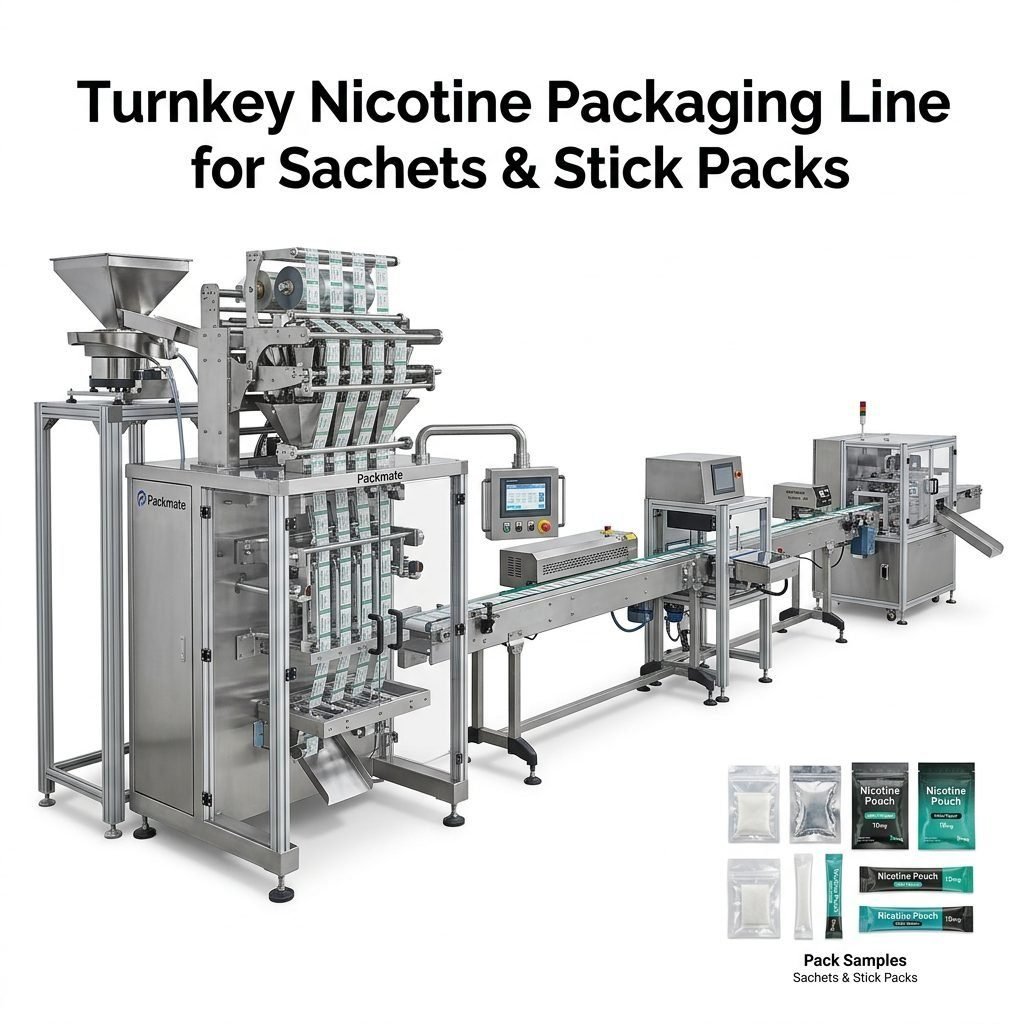
Choosing the right nicotine packaging machine for your production needs in Greece is a critical decision that affects product quality, regulatory compliance, and your bottom line. This guide walks you through the practical considerations — from machine types and technology features to supplier selection, logistics, and long-term servicing — so you can make an informed purchase that supports growth, reliability, and safe operation.
🔎 Understand the Greek Market and Regulatory Context
Greece follows EU regulations and local laws on nicotine product manufacturing and packaging. When sourcing nicotine pouch or snus packaging machines, ensure equipment supports traceability, tamper-evident packaging, and hygienic design for easy cleaning and validation. Machines with CE and ISO certification reduce compliance risk and simplify product approvals.
⚠️ Regulatory points to confirm
Check: local labeling laws, child-resistant closure requirements, nicotine content declarations, and waste & recycling obligations. Work with suppliers that understand EU and Greek standards to avoid retrofits and regulatory delays.
Suppliers with documented international experience can help you adapt packaging lines to meet local market demands.
🧩 Key Nicotine Packaging Machine Types
Understanding the main machine formats helps narrow options quickly. Each type has trade-offs in flexibility, speed, and cost.
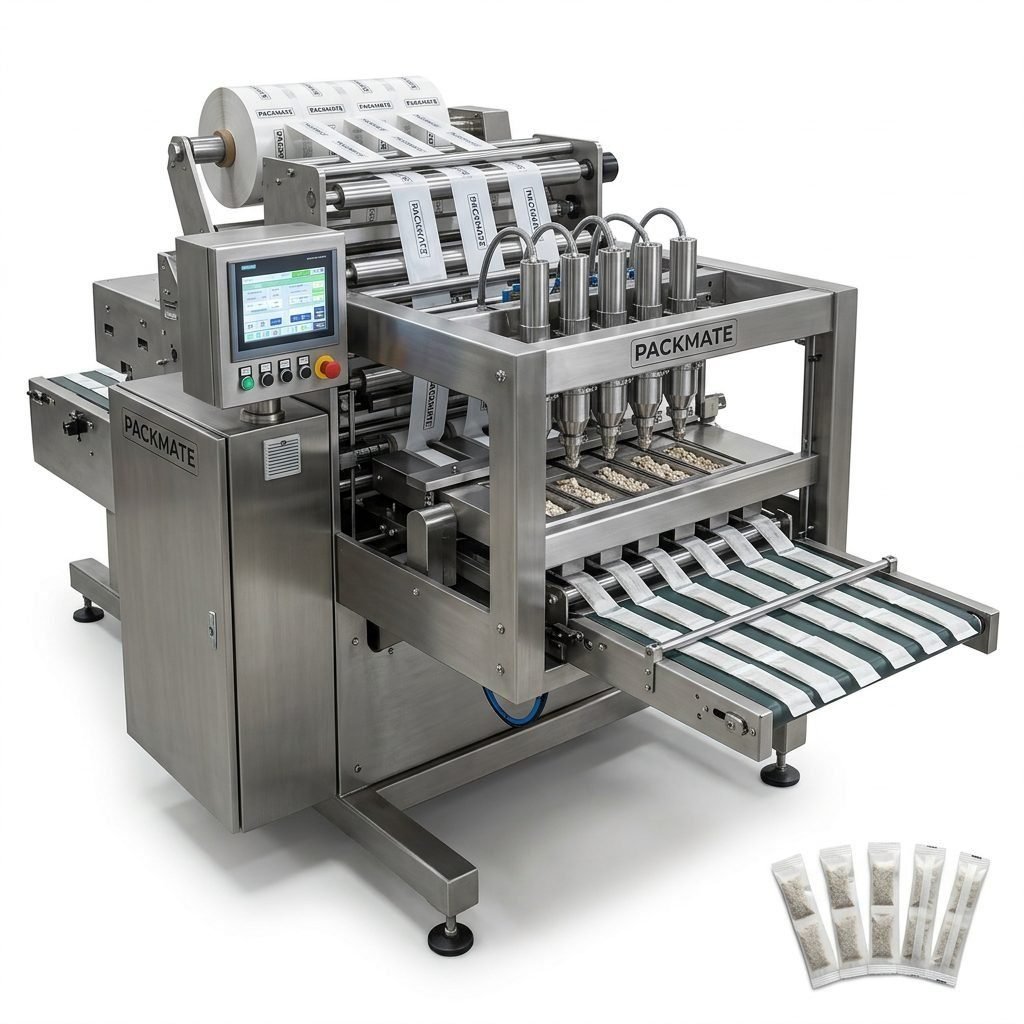
Sachets & Stick Pack Machines
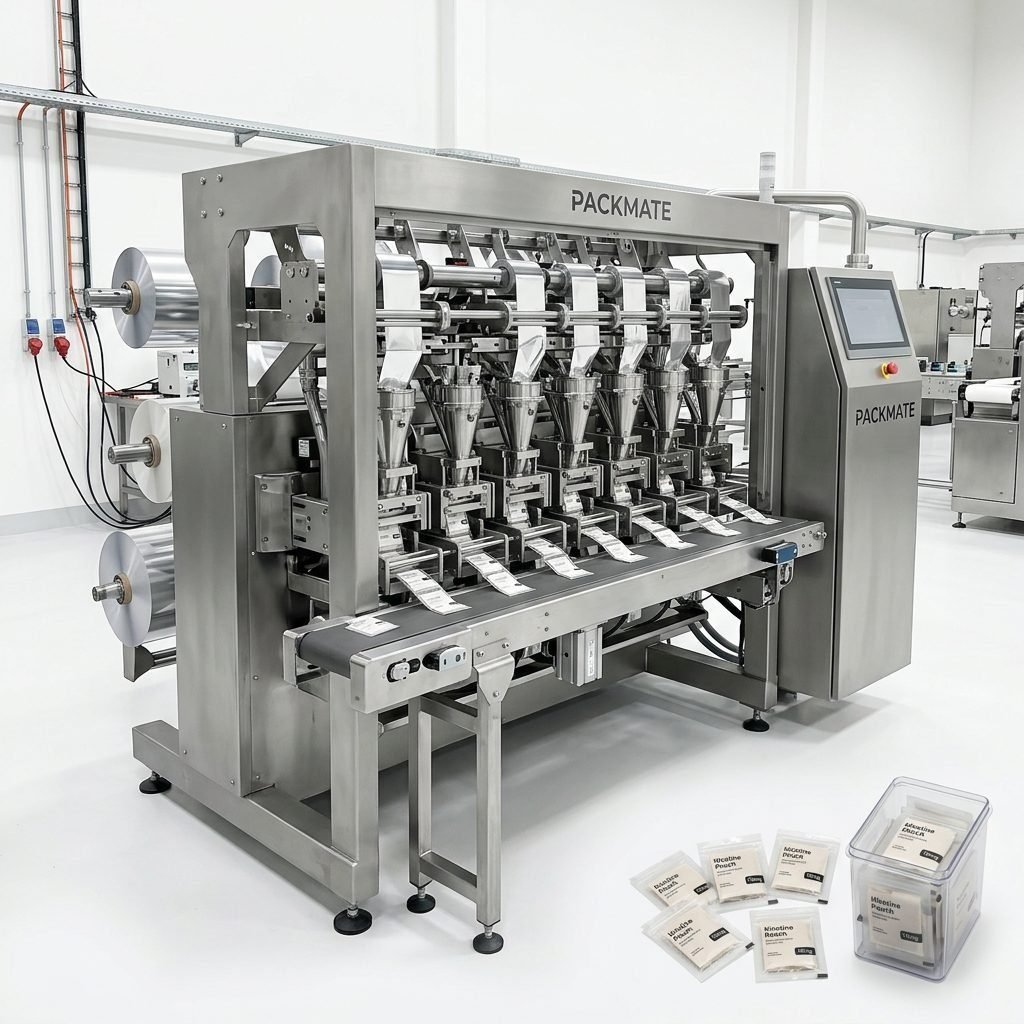
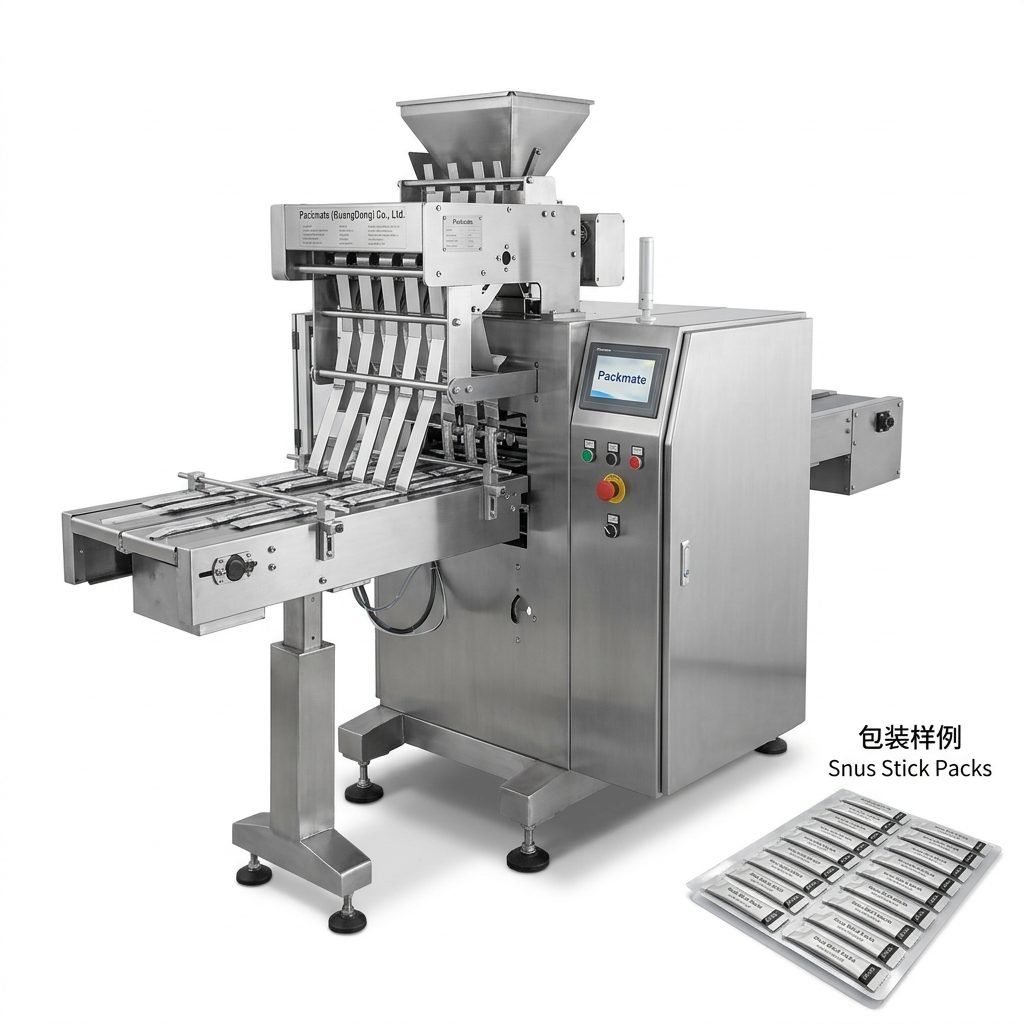
Sachet and stick pack machines are ideal for single-dose or portioned nicotine products and can produce attractive, low-waste packs. They offer high-speed output for lightweight products and are often used for trial packs and single-use units.
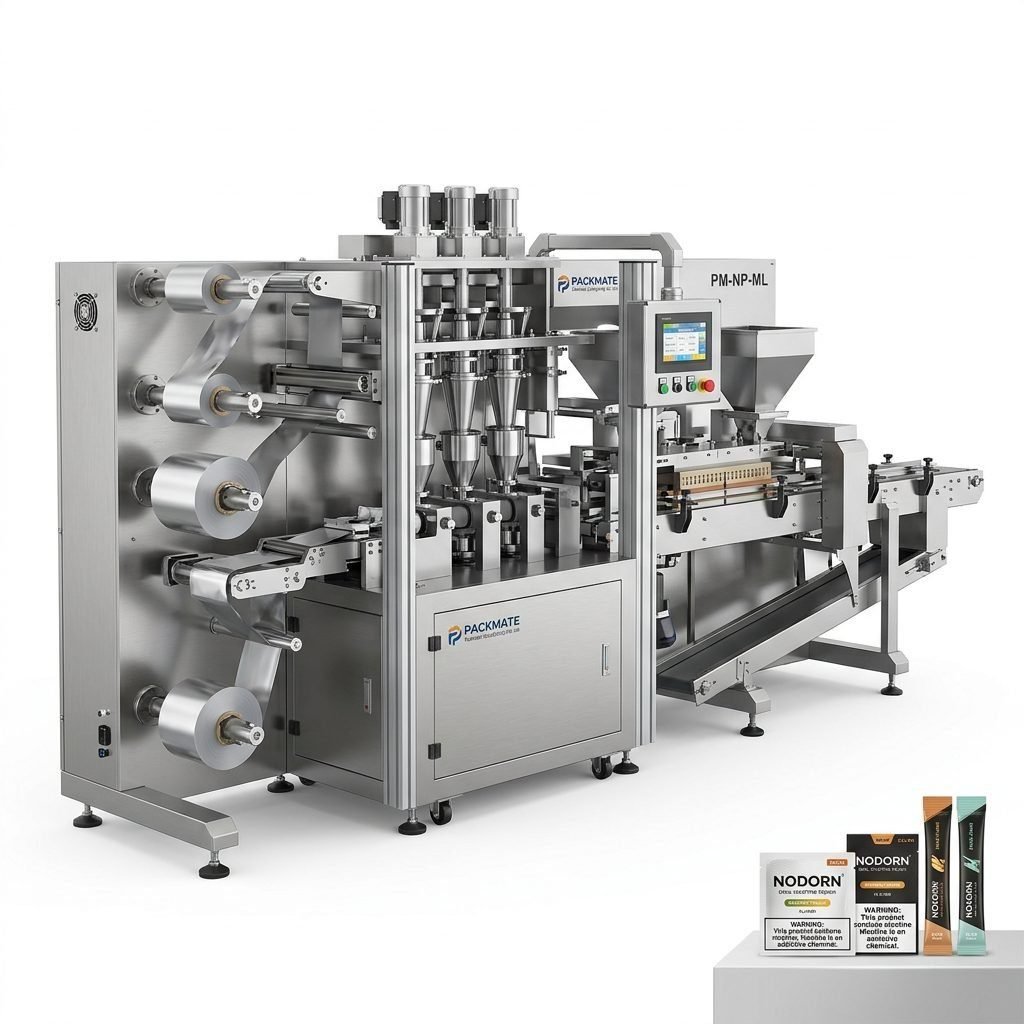
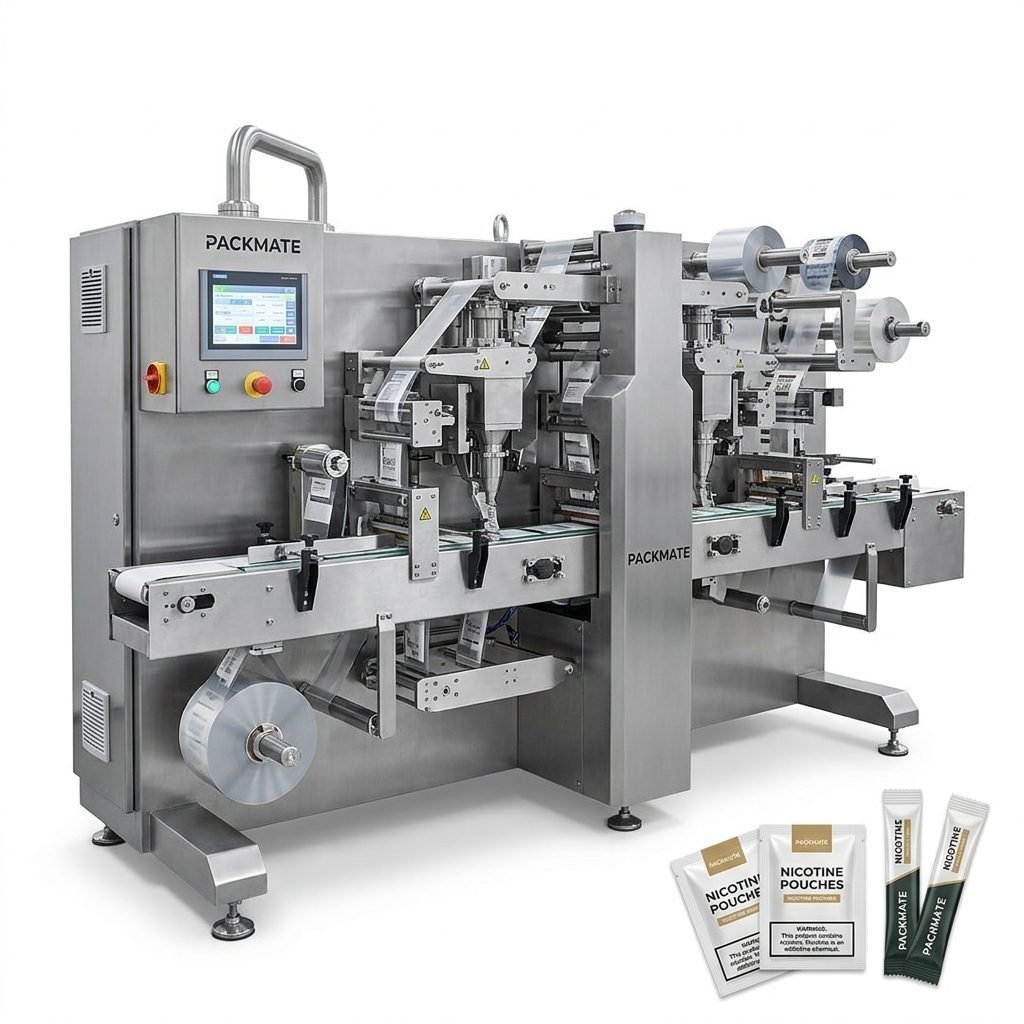
Snus / Nicotine Pouch Packaging Machines
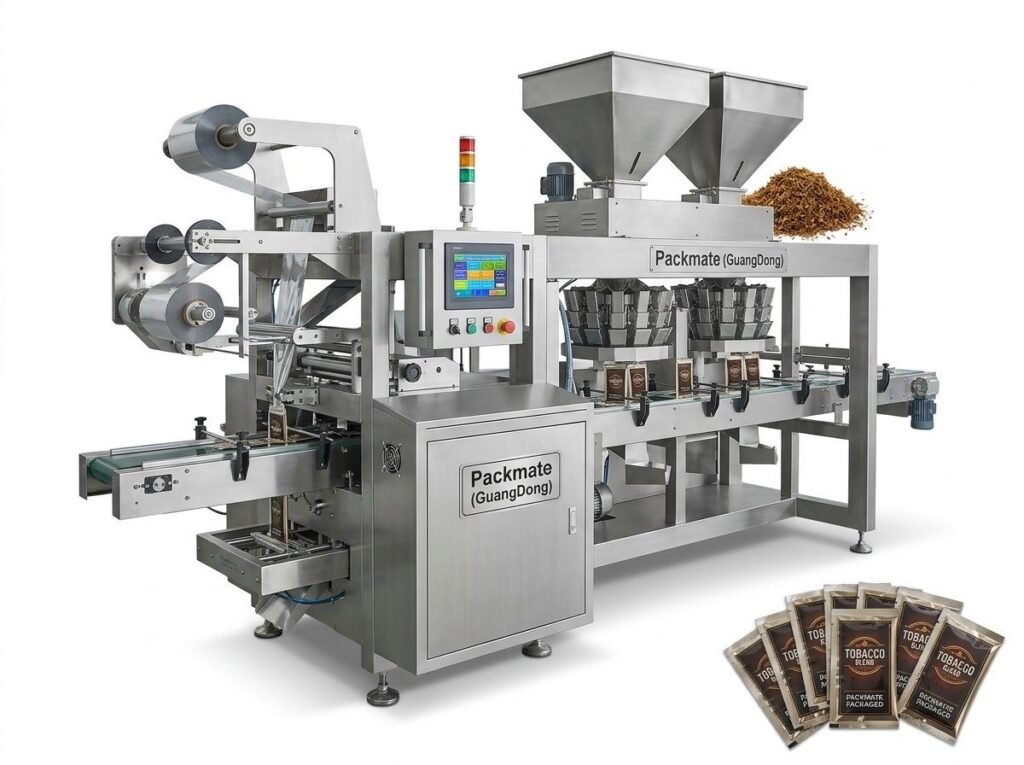
Specialized snus or nicotine pouch machines handle small-dosage pouch filling with multi-lane options for high throughput. Accuracy, gentle product handling, and hygienic design are essential for consistent pouch weight and appearance.
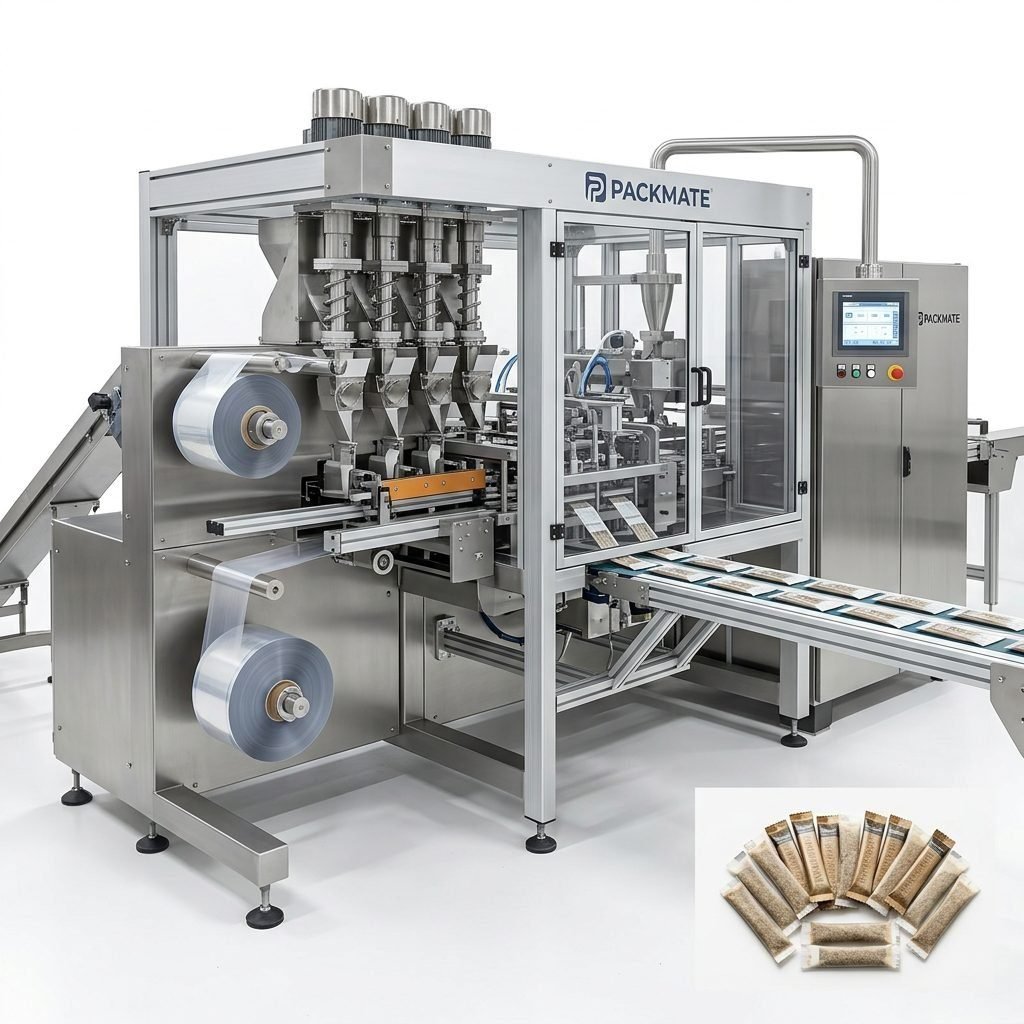
Multi-lane Systems & Horizontal Lines
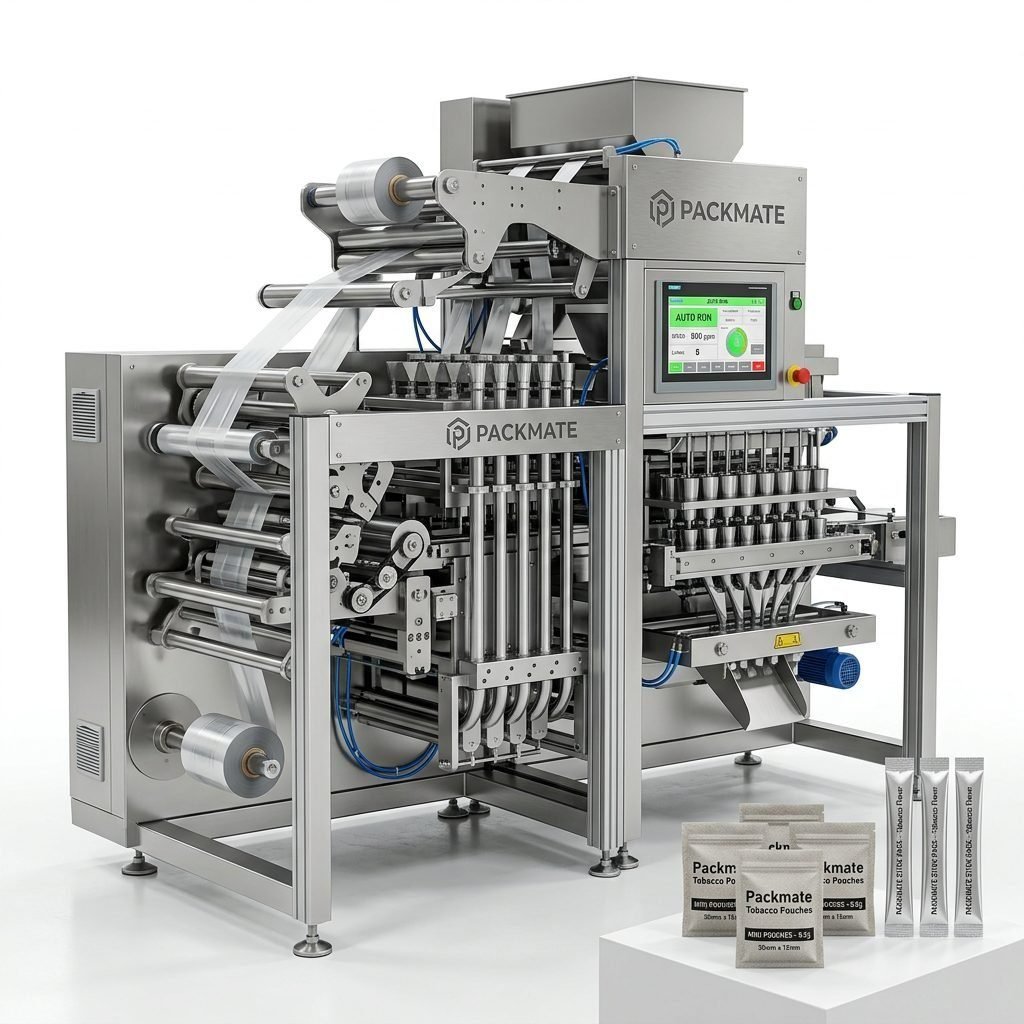
If you need very high output, multi-lane configurations multiply lanes to increase pieces/minute without increasing the footprint linearly. Ensure synchronization, equal fill distribution, and robust sealing across all lanes.
⚙️ Production Requirements: Throughput, Flexibility, and Format
Define your annual output, typical run lengths, and future growth. A machine that perfectly matches current volume but cannot scale will require replacement sooner. Conversely, over-investing in capacity raises cost and complexity.
Checklist:
- Target output (pouches/min and annual volume)
- Guaranteed uptime and maintenance intervals
- Expected SKU changes per shift or per week
- Future expansion plans (extra lanes, additional modules)
🔧 Core Technical Features to Prioritize
Not all machines are created equal. When evaluating offers, focus on features that impact accuracy, reliability, and ease of use.
Servo-driven motion
Servo control improves precision for dosing, sealing and indexing — reducing product giveaway and improving packaging consistency. For nicotine pouches, dosing accuracy is essential for regulatory compliance and customer satisfaction.
HMI and automation features
A modern touchscreen HMI with recipe management reduces changeover time and operator errors. Look for remote diagnostics, error logs, and modular I/O for future upgrades.
Weighing & metering technology
Accurate volumetric or gravimetric dosing systems are key when handling powders, granules, and small nicotine blends. Combining precise weighing with closed-loop control maintains consistent pouch weight.
📦 Material Compatibility & Pouch Formats
Decide which pouch materials you will use (mono-film, laminated foil, paper-based laminates) and whether you need transparent windows or child-resistant layers. Machine sealing jaws, temperature control, and film handling must match your substrate choices.
Material handling considerations
Tip: Ask suppliers for sample-run capabilities on your exact films and blends. Suppliers that provide on-site trials or lab testing can save months of rework.
Multi-material adaptability reduces future investment if you plan to diversify packaging formats.
🔗 Automation, Integration & Line Compatibility
Packaging rarely operates in isolation. Consider upstream and downstream equipment (filling, weighing, cartoning, labeling). Ensure PLC and network compatibility (Profinet, EtherCAT, etc.) and standardized data exchange for Industry 4.0 readiness.
Integration questions
- Can the machine accept signals from your existing scales and upstream feeders?
- Is there native support for MES / ERP connectivity?
- Does the supplier provide complete turnkey lines including weighing and feeding systems?
✅ Quality, Certifications & Manufacturing Strength
Supplier reliability matters as much as machine specs. Work with manufacturers who document quality systems, provide traceable parts, and carry CE/ISO certifications.
Packmate (GuangDong) Co., Ltd., for example, offers 30+ years of engineering experience, a 20,000㎡ factory footprint, advanced CNC machining, and over 50 machine models — demonstrating the scale and capability to deliver customized, high-precision snus and nicotine pouch solutions. Learn more about the company and capabilities here:
💸 Total Cost of Ownership & ROI
Purchase price is only part of the cost. Include installation, spare parts inventory, training, energy, consumables, maintenance, and expected downtime. Machines with better efficiency and lower giveaway often pay back faster despite a higher upfront cost.
Budgeting tips
- Ask for a 5-year cost projection including spare parts and service visits.
- Include training and ramp-up hours in the initial cost.
- Consider leasing or staged payments to preserve working capital.
🛠 Supplier Selection & After-sales Support in Greece
Local support is critical. Determine whether the supplier has a local agent, regional spare parts stock, or authorized service partners in Europe. Response time for breakdowns and availability of consumables will determine uptime.
Ask your vendor:
- Typical lead time for critical spare parts shipped to Greece.
- Remote diagnostic capabilities and training packages.
- Availability of preventive maintenance contracts and local technicians.
Installation, training & spare part planning
A detailed installation and FAT (Factory Acceptance Test) program reduces surprises. Ensure the supplier provides operator and maintenance training on-site and structured spare parts lists with suggested minimum stock levels.
🚚 Logistics, Customs & Local Considerations in Greece
Shipping big machines into Greece requires careful planning: palletization, crane lifts, customs documentation, and local delivery. Ask whether the supplier offers DDP (Delivered Duty Paid) options, or at least assists with customs paperwork to avoid delays.
🧾 Selection Matrix — Quick Decision Framework
Rate potential machines on these dimensions:
- Throughput vs. required output
- Dosing accuracy and waste/giveaway
- Hygienic design and cleanability
- Automation interfaces and future-proofing
- Warranty, spare parts lead time, and on-site service
📚 Case Examples & References
Review supplier case studies for similar nicotine pouch lines and ask for references. Packmate maintains a list of global projects and exhibition demos that illustrate real-world performance and configurations. See case examples and exhibition records:
Case studies |
Exhibition demos
📝 Final Selection Steps — Practical Checklist
Before signing a contract:
- Perform on-site trials or request FAT with your materials.
- Validate electrical and pneumatic requirements for your Greek site.
- Confirm spare parts list, lead times, and warranty terms.
- Agree on service SLA and remote support channels.
- Document acceptance criteria and commissioning plan.
🔗 Helpful Product Links
Explore relevant product categories and full-line solutions to align machine choice with your production needs:
Snus & Nicotine Packaging Machines |
Sachet & Stick Pack Machines |
Weighing & Packaging Systems |
Service & Support
📌 Conclusion
Selecting the best nicotine packaging machine for Greece requires balancing regulatory compliance, throughput, material compatibility, and after-sales support. Prioritize machines with proven dosing accuracy, servo-driven controls, hygienic design, and suppliers offering solid field support and spare parts availability. A methodical evaluation using on-site trials, FATs, and clear SLAs will reduce downtime and deliver reliable production.
Frequently Asked Questions
Q1: How do I verify machine compatibility with Greek regulations?
Work with suppliers that provide CE/ISO documentation and demonstrate experience exporting to EU markets. A supplier familiar with EU nicotine product rules can help validate labeling and packaging features during FAT.
Q2: What is the typical lead time for a custom nicotine pouch line?
Lead times vary by configuration but expect several weeks to months for custom multi-lane lines. Confirm manufacturing schedules, FAT date, and shipping timelines before finalizing orders.
Q3: Can I test my materials before purchase?
Yes — request sample-run trials, lab testing, or a FAT using your films and blends. Reputable suppliers will run trials and provide performance data for sealing, fill accuracy, and throughput.
Q4: How important is local service presence in Greece?
Very important — local or regional service partners reduce downtime. Confirm spare part lead times to Greece and whether the supplier offers remote troubleshooting and scheduled maintenance.
Q5: Where can I find more product details and catalogues? Visit the product pages and catalog resources for full specifications and model comparisons.