Welcome to the complete guide on nicotine pouch packaging machines — a practical, supplier-aware overview for manufacturers, production managers, and purchasing teams. This article breaks down machine types, core features, buying tips, regulatory considerations, and after-sales support so you can choose the best automated solution for nicotine pouches and snus. Whether you are scaling up a new product line or optimizing an existing line, the following sections will help you make an informed decision.
Why high-quality packaging matters for nicotine pouches
Nicotine pouches are a fast-growing segment in tobacco alternatives and oral nicotine products. Packaging must protect product freshness, control portion size, and deliver consistent presentation. A reliable packaging machine increases throughput, reduces waste, and maintains hygiene and regulatory compliance. Choosing the right equipment is not just about speed — it is about stability, accuracy, and long-term serviceability.
Key business drivers
- Higher production capacity without sacrificing accuracy ✓
- Repeatable pouch weight and seal integrity ✓
- Flexible formats for single-dose pouches, sachets, stick packs, and tins ✓
- Regulatory traceability and compliance (CE / ISO) ✓
Common machine types for nicotine pouch production
Manufacturers typically select from a range of packaging platforms depending on product format, production speed, and investment budget. Below are the most common systems used in the industry.
Sachet & Stick Pack Machines
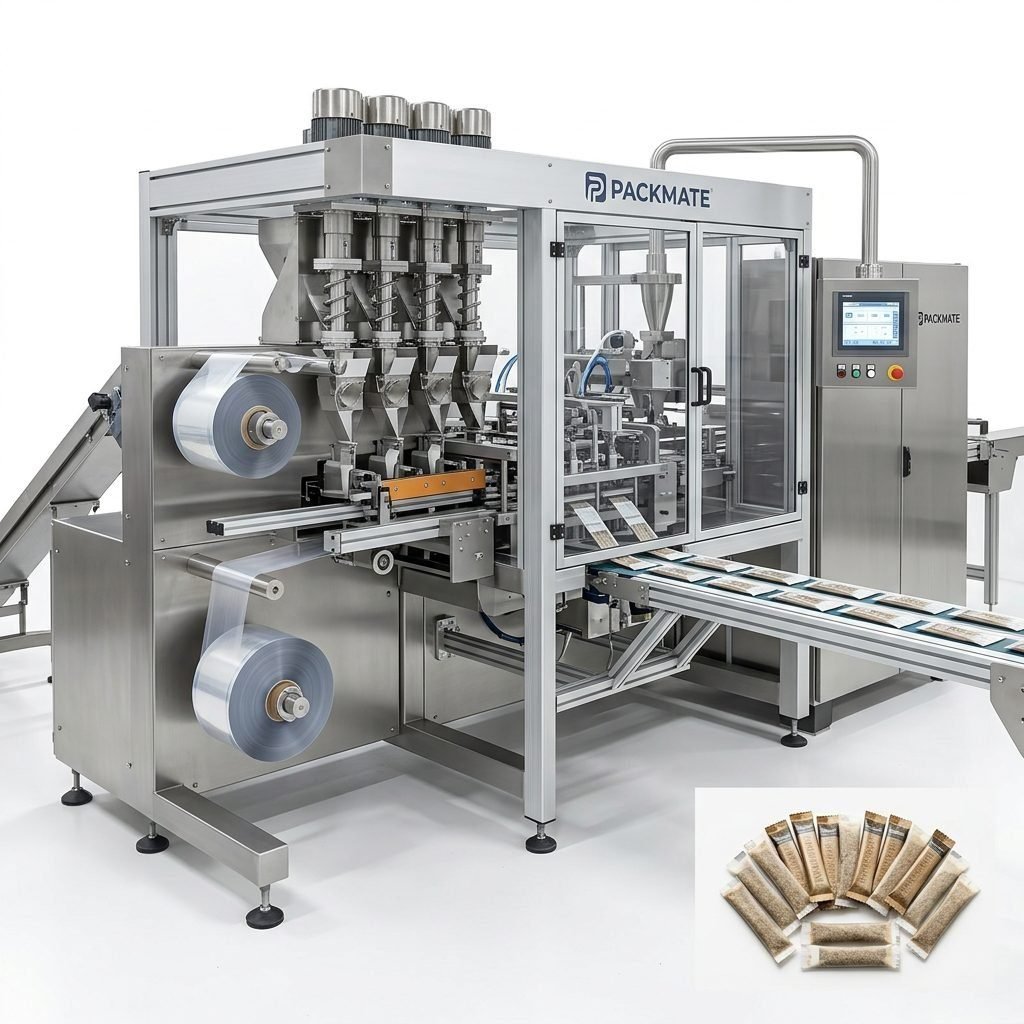
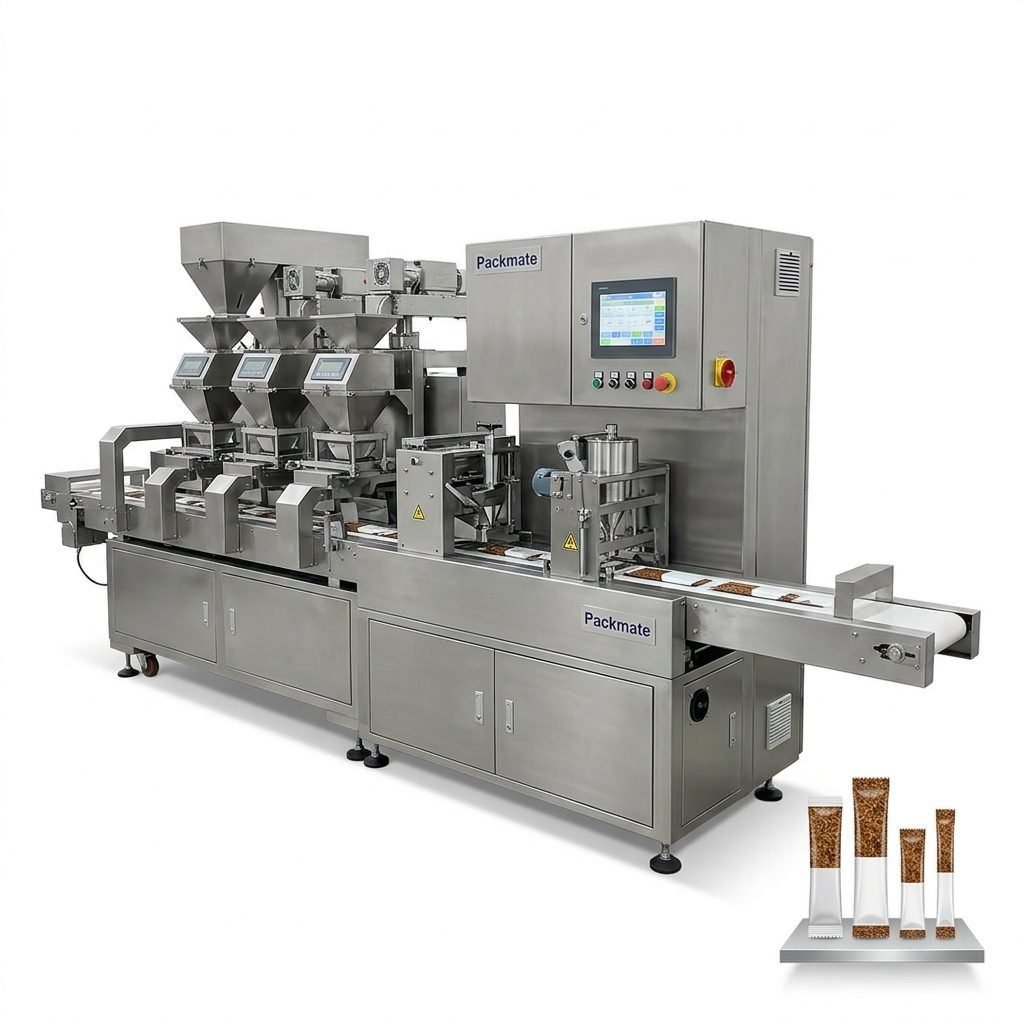
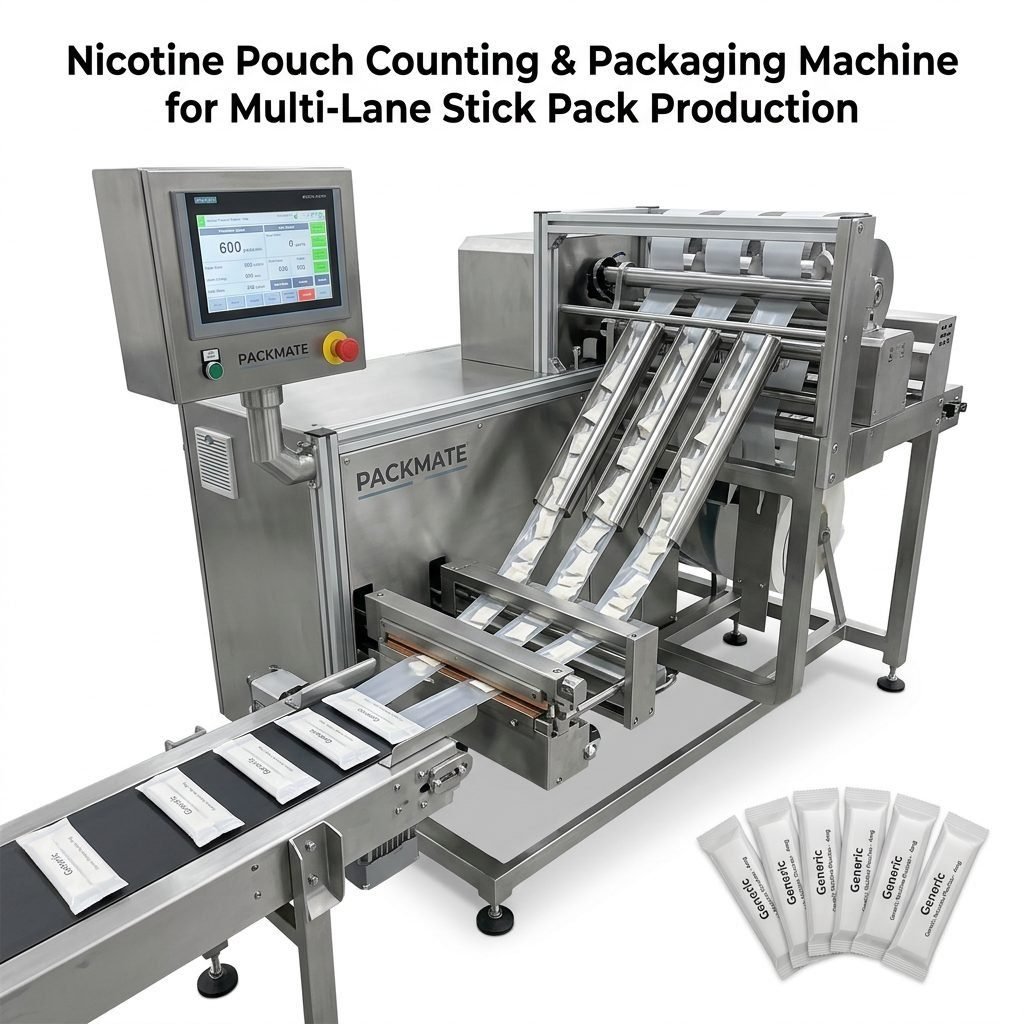
Sachet and stick pack equipment offers single-portion presentation with high-speed output. These machines are favored when consumers expect one-dose pouches delivered in compact sticks or sachets. For multi-lane high-volume production, specialized stick pack lines can multiply throughput while keeping footprint compact.
Explore modular stick and sachet platforms for nicotine pouches with proven reliability: Sachet & Stick Pack Machines.
Snus & Nicotine Pouch Packaging Machines (Multi-lane)
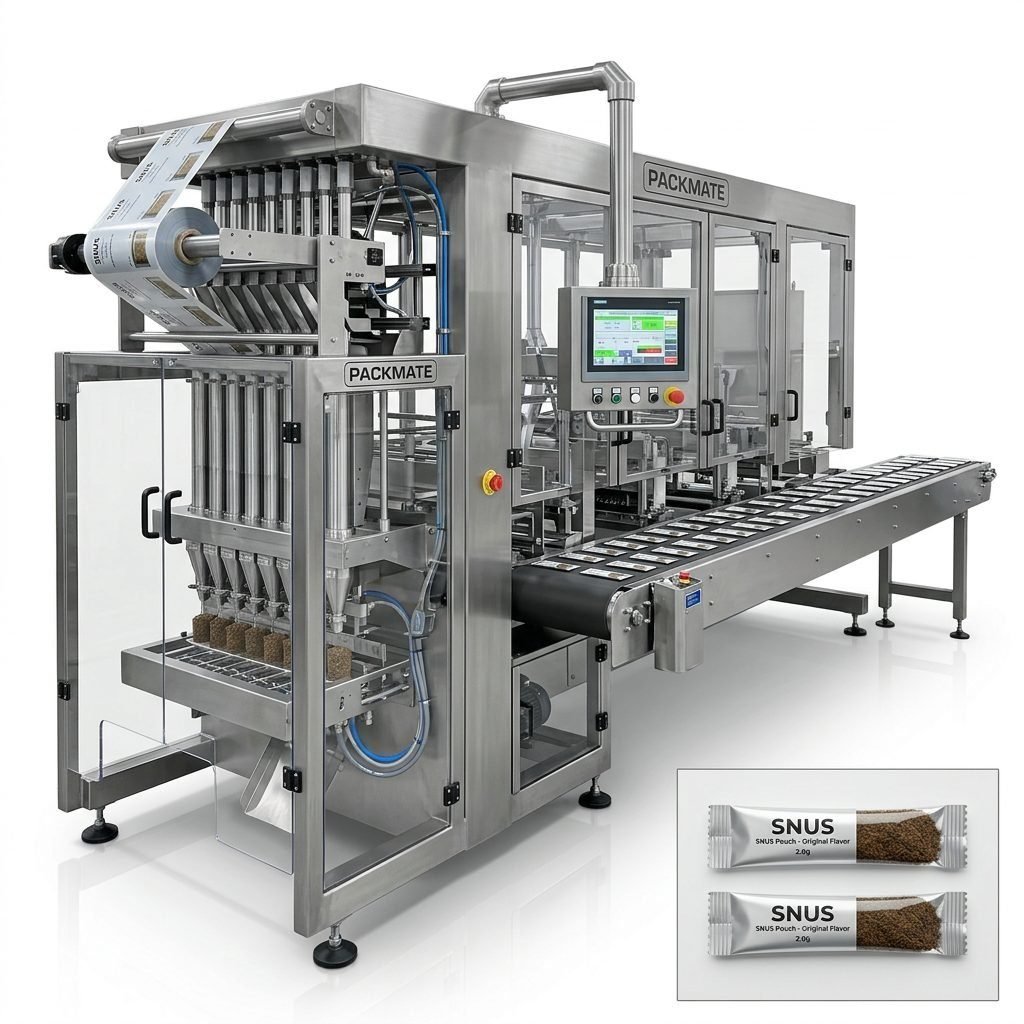
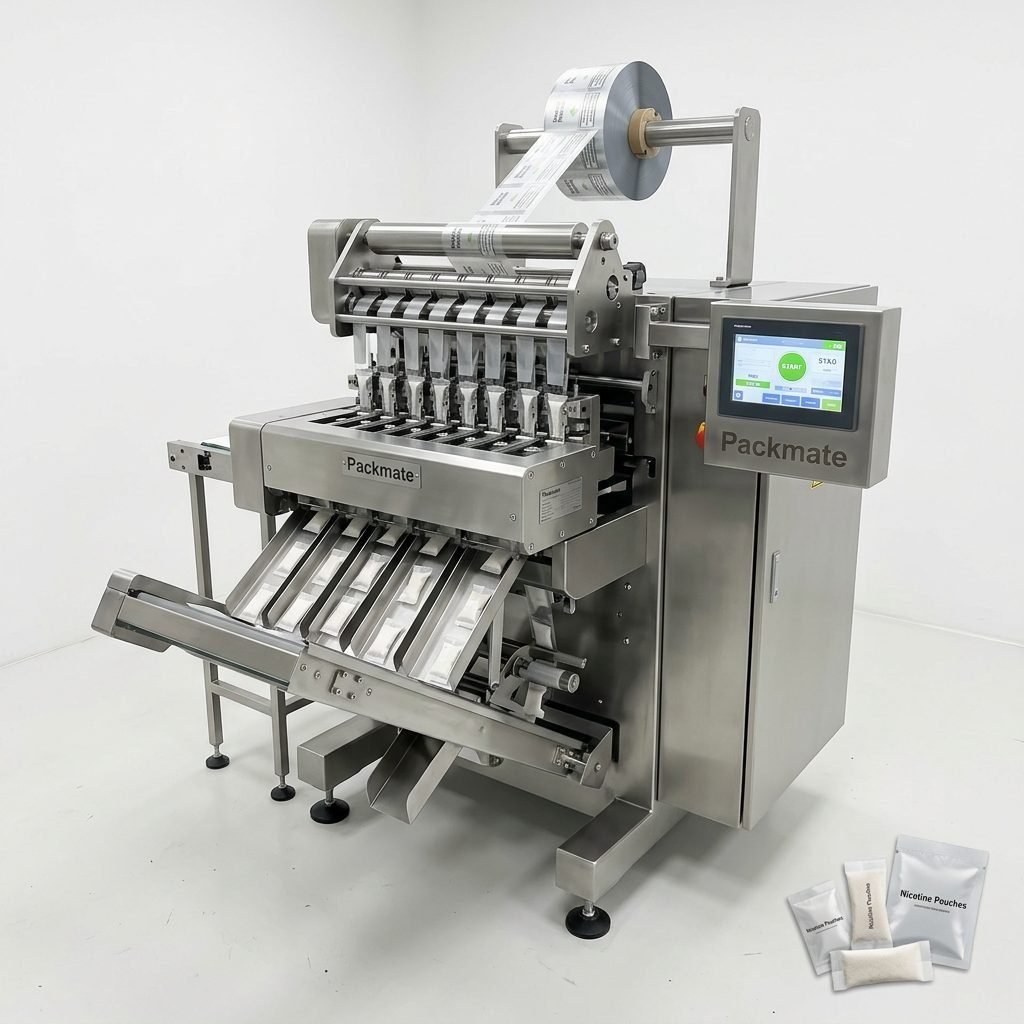
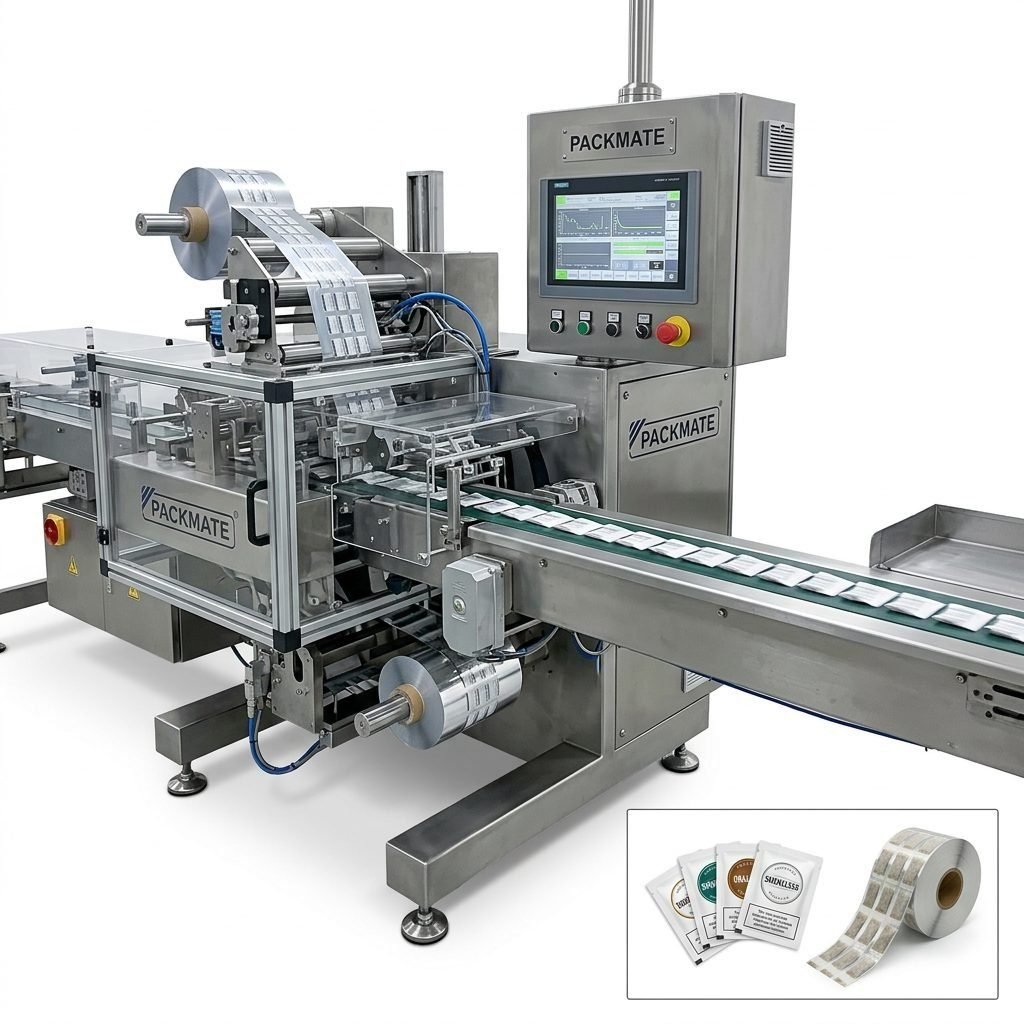
Multi-lane snus packing machines are engineered for small-dose pouches, providing synchronous filling, sealing, and cutting across several lanes. These systems are the backbone for high-capacity manufacturers who need precise dosing and consistent pouch shape across thousands of units per hour.
Key advantages include synchronized dosing, compact multi-lane integration, and reduced labor through automated feeding and downstream handling. View industry-grade configurations at Snus & Nicotine Packaging Machines.
Bag & Pouch Packaging Machines
Some nicotine pouch formats are presented in resealable stand-up pouches or flat bags for retail. Bag & pouch packaging machines handle zipper insertion, gusset formation, and vacuum or nitrogen flush for extended shelf life. These machines are ideal when consumer convenience and brand presentation are priorities.
For combined lines that convert bulk pouches into retail-ready bags, consider integrated systems: Bag & Pouch Packaging Machines.
Top machine selection checklist 🔧
Capacity: units per minute/hour that match your forecasted demand.
Accuracy: dosing tolerance and weight control.
Hygiene & Materials: GMP-compliant surfaces, FDA-approved contact parts available.
Flexibility: ability to run multiple pouch sizes without long changeovers.
Serviceability: ease of maintenance, spare parts availability, and local support.
Critical technical features to evaluate
When comparing manufacturers and models, pay attention to the engineering details that affect uptime, product quality, and TCO (total cost of ownership).
Filling systems and weighing accuracy
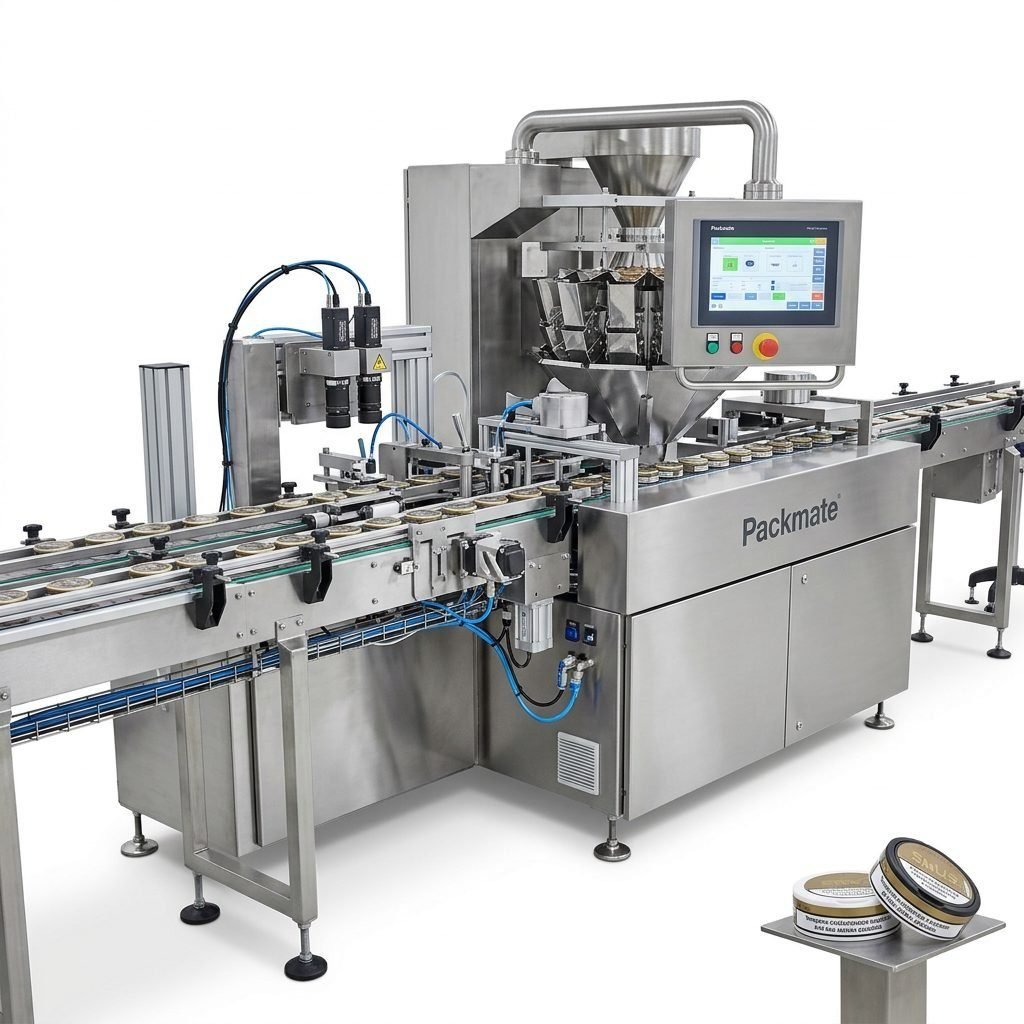
Precise dosing is essential for nicotine pouches. Choose machines with reliable volumetric or gravimetric feeders, and consider integrated weighing systems for automatic correction. Advanced weighing systems reduce giveaway and improve yield.
Sealing, cutting and pouch integrity
Sealing technology must match your film type. Heat-sealing, ultrasonic sealing, and cold-seal adhesives each have advantages depending on laminate structure. Evaluate the sealing temperature control, jaw pressure consistency, and cutter quality.
Automation, PLC, and HMI
Modern machines offer PLC control with touchscreen HMI for quick setup and diagnostics. Look for features such as recipe management, remote diagnostics capability, and clear fault reporting to minimize downtime.
Sanitary design and material traceability
Food and health-adjacent products require sanitary design: stainless steel contact parts, easy-to-disassemble areas for cleaning, and smooth surfaces to avoid contamination. Also consider systems that support batch code printing and traceability.
Reliability & standards ✔
Ensure compliance with international safety and quality standards such as CE and ISO. Manufacturers with documented testing procedures and certificates can reduce your compliance risk. For manufacturer certifications, see: Certificate.
Operational considerations: installation, commissioning, and OEE
A successful deployment goes beyond buying a machine. Plan for site layout, utilities, operator training, and preventive maintenance to maximize OEE (Overall Equipment Effectiveness).
Installation & commissioning
Choose suppliers that offer on-site commissioning and training. Proper mechanical alignment, electrical integration, and process parameter tuning during startup are essential for predictable operation.
After-sales & spare parts
Rapid access to spare parts and technical support reduces costly downtime. Look for vendors with global service networks or local partners. Packmate-style manufacturers typically provide turnkey solutions and lifetime support that simplify post-purchase operations. Learn more about service options at Service.
Buying tips and negotiation points
Purchasing packaging equipment is both technical and strategic. Here are practical tips to get the best value and lower risk.
1. Define your product specification clearly
Provide accurate pouch dimensions, target weights, film structures, and desired output. The clearer your spec, the more accurate the supplier quote and the fewer surprises during commissioning.
2. Ask for factory acceptance testing (FAT)
FAT demonstrates machine performance under controlled conditions. Request video documentation and machine run-time data, especially for multi-lane systems where synchronization is critical.
3. Factor in lifecycle cost, not just purchase price
Consider energy consumption, spare parts pricing, expected uptime, and service agreements. Machines built with high-quality components may cost more upfront but reduce operating expense over time.
Negotiation checklist 📦
– Include commissioning hours and training in the contract.
– Agree on spare-parts kits and delivery lead times.
– Clarify warranty scope and remote support availability.
– Define acceptance criteria for performance and quality.
Integration with upstream and downstream lines
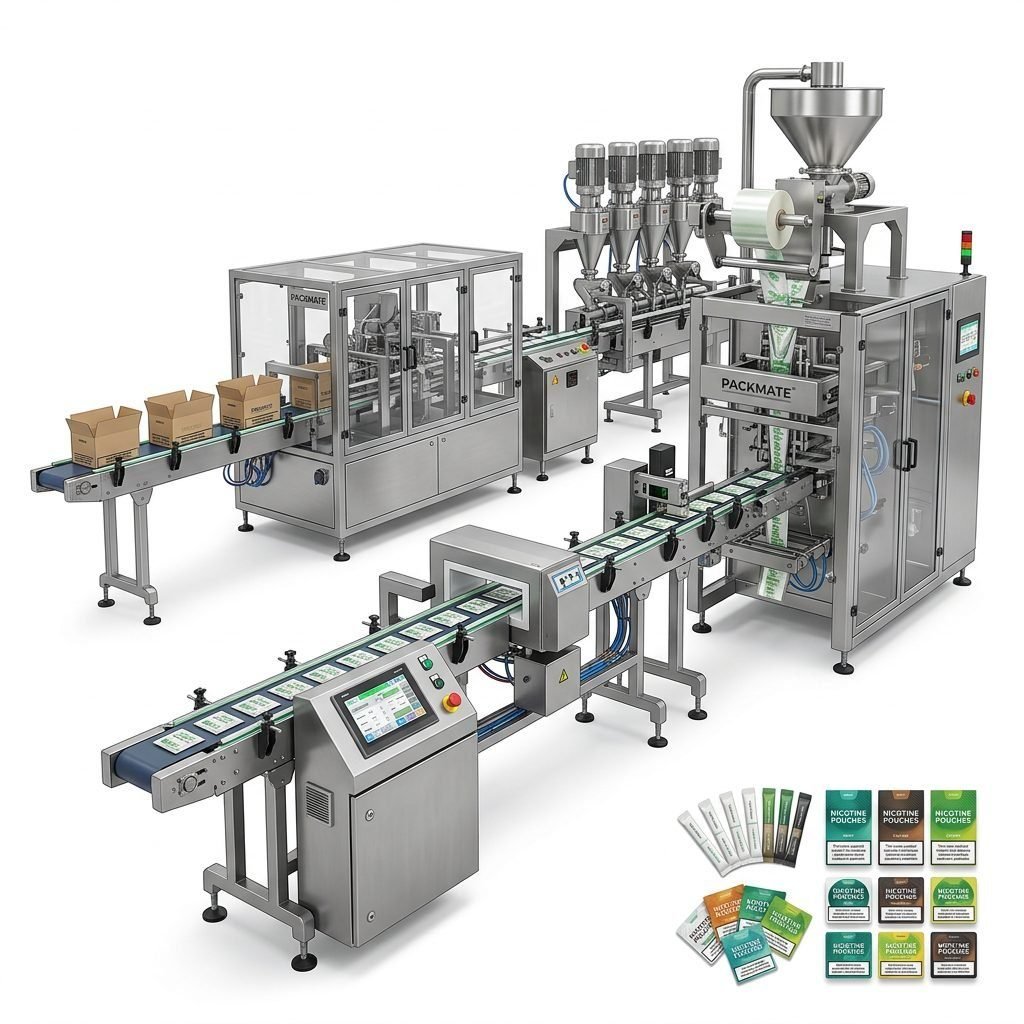
Packaging machines rarely operate in isolation. Consider upstream dosing, blending, and conditioning equipment as well as downstream cartoning, boxing, and case packing. Integrated lines require compatible controls and mechanical interfaces to maintain throughput.
For complete solutions that include weighing, filling, and downstream packaging, review combined system providers: Weighing & Packaging Systems and Filling & Packaging Lines.
Common production challenges and quick fixes
Even well-specified machines can encounter run-time issues. Below are common problems and practical mitigations.
Seal failures or inconsistent cuts
Check film compatibility, sealing temperature profiles, and jaw pressure. Replace worn seals and ensure cutter blades are sharp. Periodic preventive checks shorten troubleshooting time.
Weight drift or giveaway
Recalibrate feeders, verify dosing hopper consistency, and add an inline checkweigher to feed correction data back to the filling system.
Lane synchronization issues
Synchronize servo drives and confirm encoder feedback loops. Software-based recipe control helps ensure each lane follows identical parameters.
When to call the OEM 🛠
If mechanical wear exceeds simple part replacement, or if you face repeated software faults, involve the OEM early. Fast remote diagnostics and genuine parts reduce downtime dramatically.
Choosing a trusted supplier
Select a manufacturer with industry experience, documented cases, and strong factory capabilities. Packmate-style suppliers (20,000㎡ manufacturing facility, CNC machining, precision assembly) can scale solutions and customize lines to your needs.
For reference and case studies, review manufacturer portfolios and exhibition presence to validate claims: Case and Our Exhibition.
Questions to ask suppliers
- How many comparable installations have you delivered?
- Can you provide FAT and site commissioning reports?
- What is your spare parts lead time and local support plan?
- Do you offer turnkey line integration including filling and downstream packaging?
Useful links from manufacturers 🔗
Learn more about product lines and services: About Packmate | Catalog | Contact Us.
Final considerations before you buy
Investing in nicotine pouch packaging equipment requires balancing capacity, accuracy, and lifecycle support. Prioritize suppliers with relevant industry experience, clear acceptance tests, and regional support capability. A well-chosen machine will pay back through reduced waste, higher throughput, and consistent product quality.
Start small, scale confidently
If you are launching a new SKU, consider pilot-scale machines or modular systems that can be upgraded. This minimizes upfront risk and allows you to validate packaging formats and market feedback before full-scale investment.
Ready to evaluate options? Reach out to experienced packaging suppliers for tailored quotes, FAT scheduling, and site surveys to ensure your production objectives are met.
Common Questions
Q1: What is the typical output range for multi-lane nicotine pouch machines?
Answer: Depending on lanes and pouch size, multi-lane systems can range from a few hundred to several thousand pouches per minute in aggregate. Exact output depends on pouch dimensions, dosing method, and downstream handling.
Q2: How important is film selection for sealing and shelf life?
Answer: Film structure is critical. Laminates with proper seal layers, oxygen barriers, and reseal features (if needed) determine pouch integrity and shelf life. Test film with the chosen sealing method before finalizing the machine setup.
Q3: Do suppliers provide spare parts and on-site support globally?
Answer: Reputable suppliers offer global support or authorized partners. Confirm spare parts availability, recommended spare kits, and typical lead times before purchase, and include these terms in your contract.
Q4: Can I integrate a nicotine pouch machine with existing filling or cartoning equipment?
Answer: Yes, with proper interface specifications and control system compatibility. Many suppliers provide turnkey integration for weighing, filling, and downstream cartoning — discuss this early to align mechanical and electrical interfaces.
Q5: What certifications should I expect from the manufacturer?
Answer: Look for CE and ISO certifications as baseline quality and safety standards. Also request material certificates for contact parts and any hygiene or regulatory documentation relevant to your market.