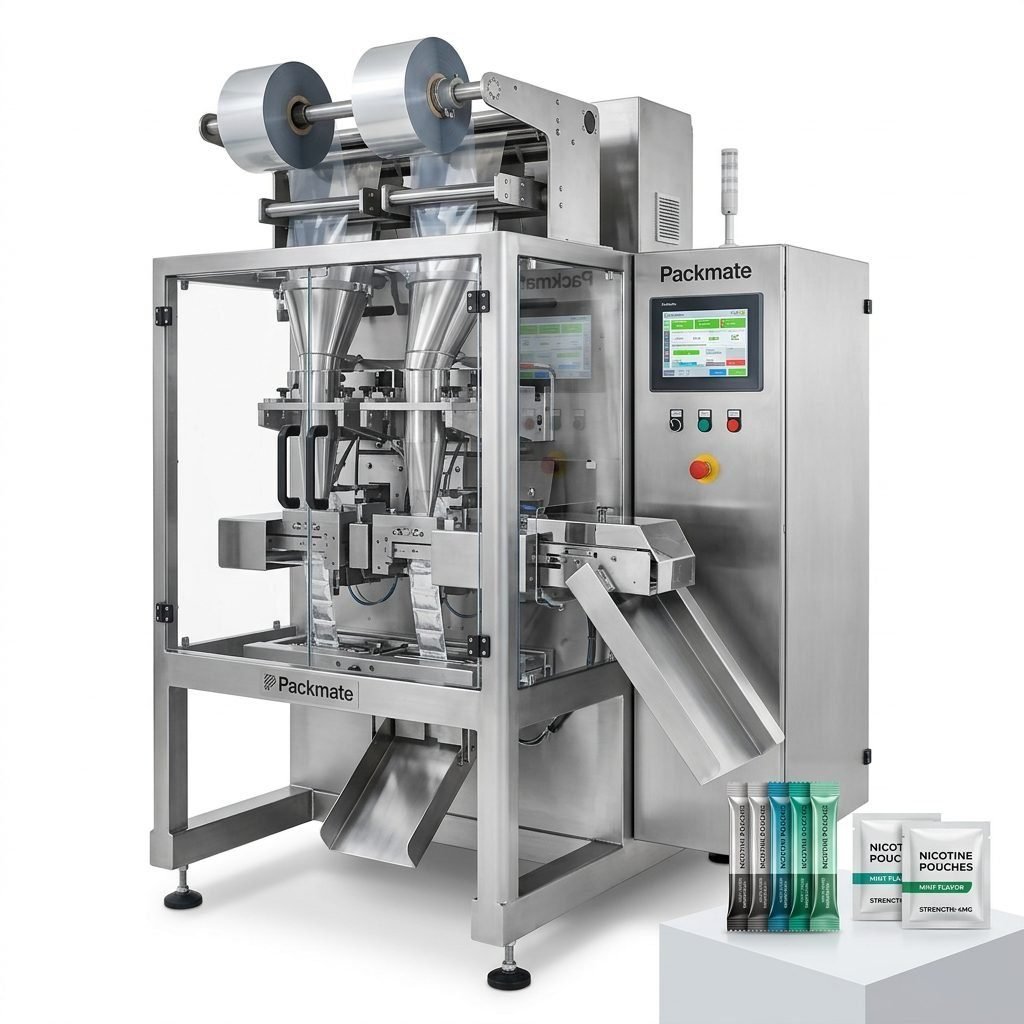
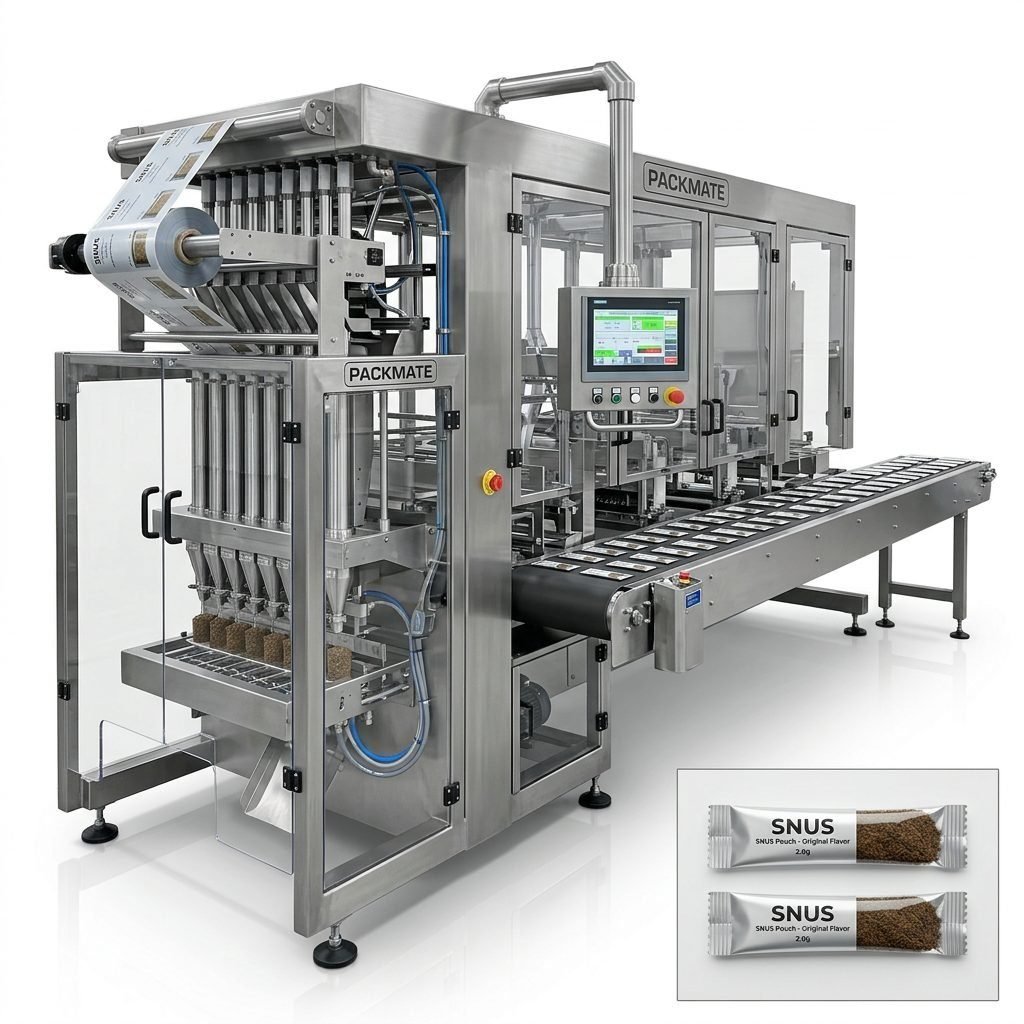
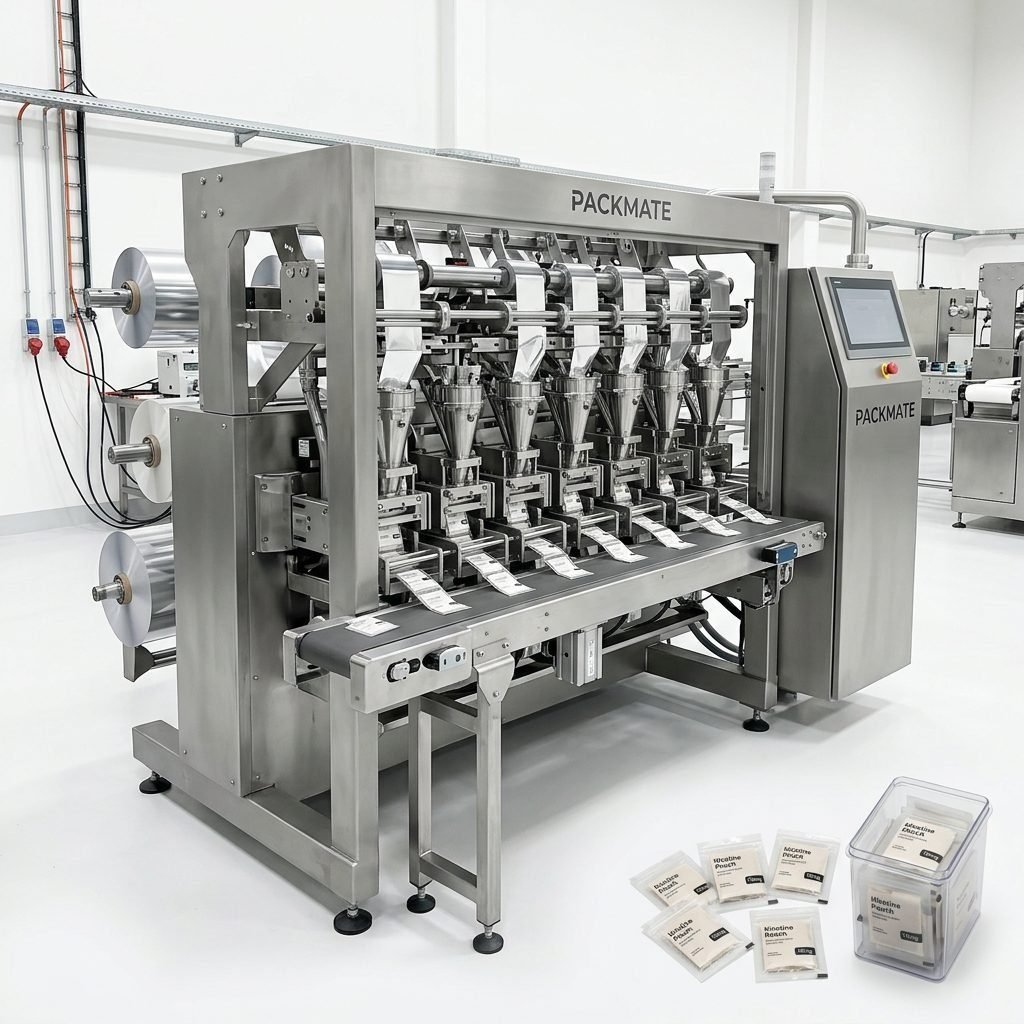
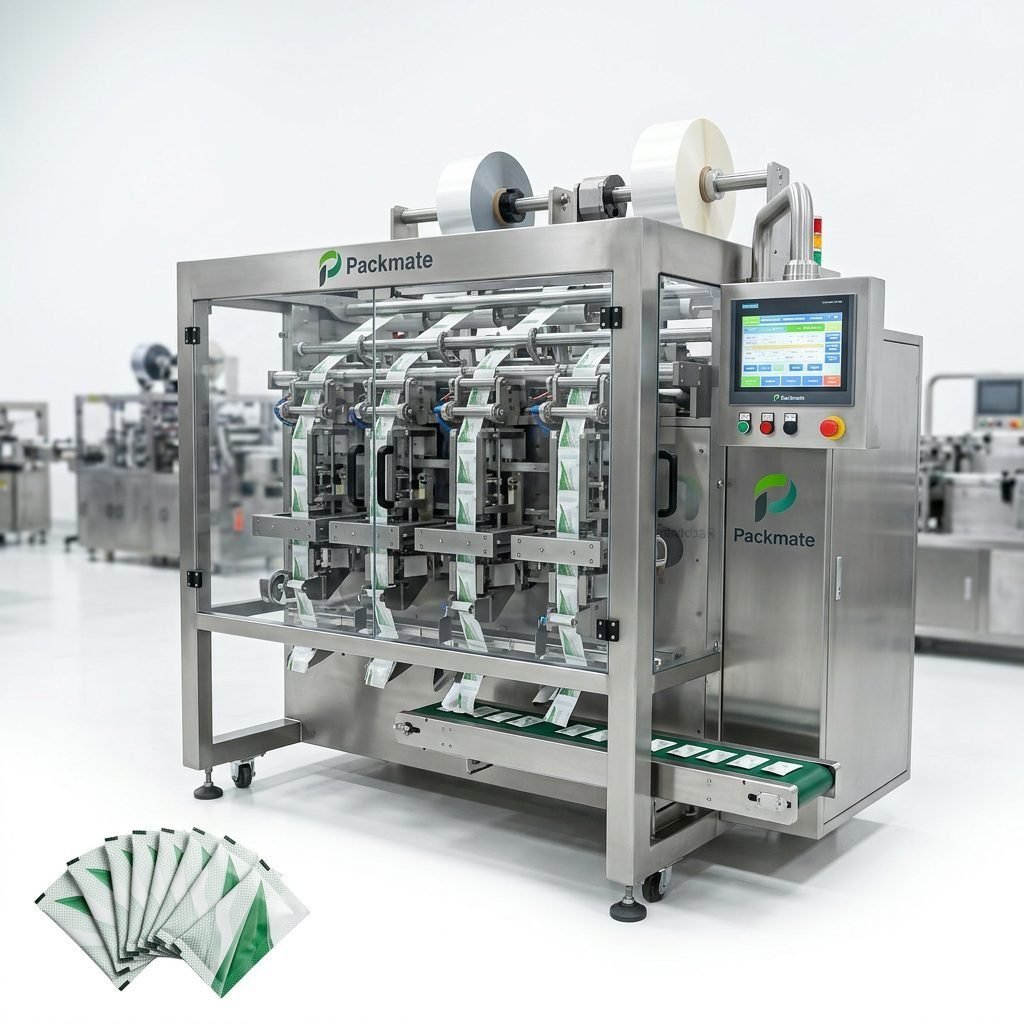
Entering the snus and nicotine pouch market in Malawi requires careful equipment selection. This guide walks you through how to choose the best snus packaging machine for your production goals, regulatory needs, and budget constraints. Whether you plan a small pilot line or a high-speed multi-lane plant, learn the practical criteria to evaluate machines, suppliers, and service so your investment delivers reliable output and fast ROI.
🔎 Understand the Malawi Market & Your Product Requirements
Before you evaluate machinery, define your product profile: tobacco or nicotine pouch weight, pouch format (round, oval, tea-bag style), moisture content, and secondary packaging (carton, display). Malawi’s market is growing but still price-sensitive — prioritize machines that balance cost with stability and low waste. Consider future product diversification (e.g., switching between powder, granular, and wet blends) to avoid costly re-investment.
Key product questions to answer
📌 Dose range: what pouch weight (mg/g) will you pack?
📌 Fill type: powder, granule, paste, or liquid?
📌 Pouch format: single-dose sachet, multi-dose stick pack, or nicotine pouch?
Answering these early narrows the machine types that fit your needs.
🏷️ Choose the Right Machine Type
Packaging machines specialize by pouch form and speed. The main classes to evaluate:
-
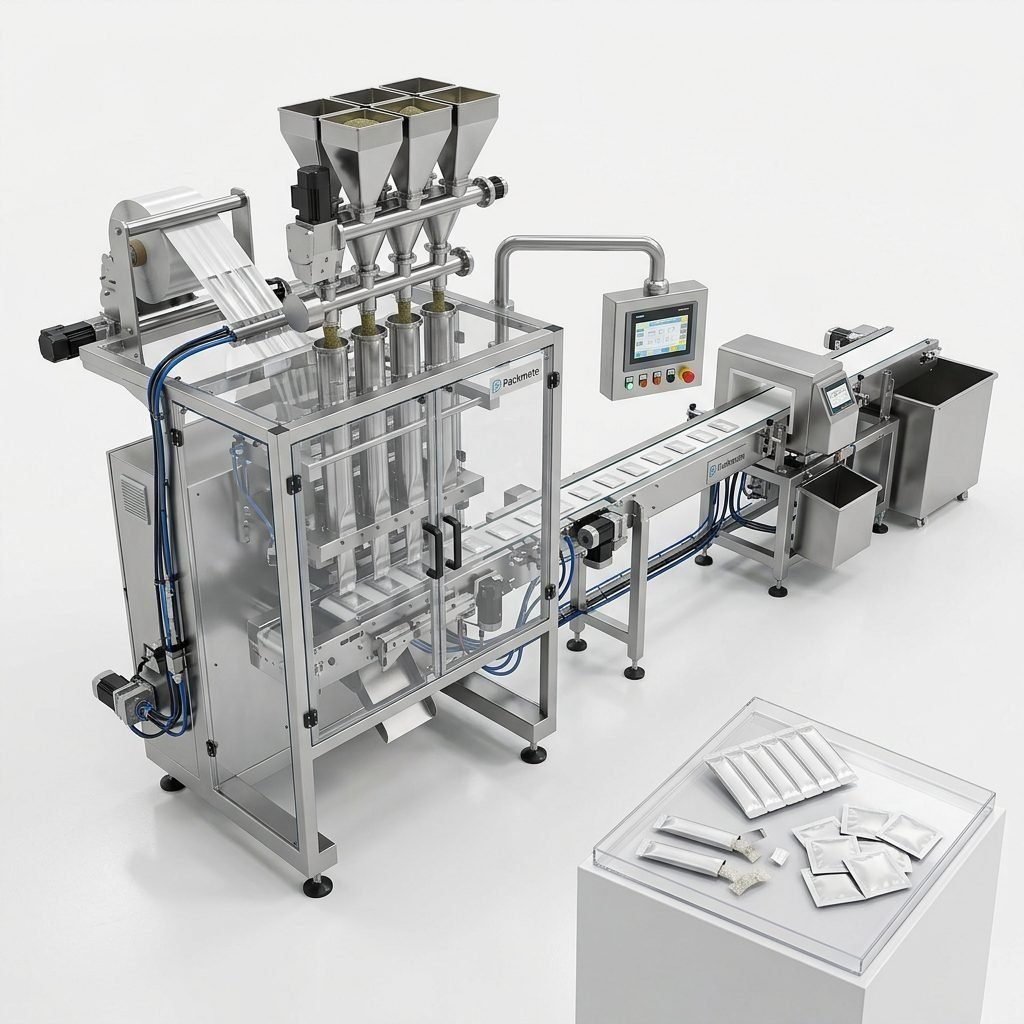
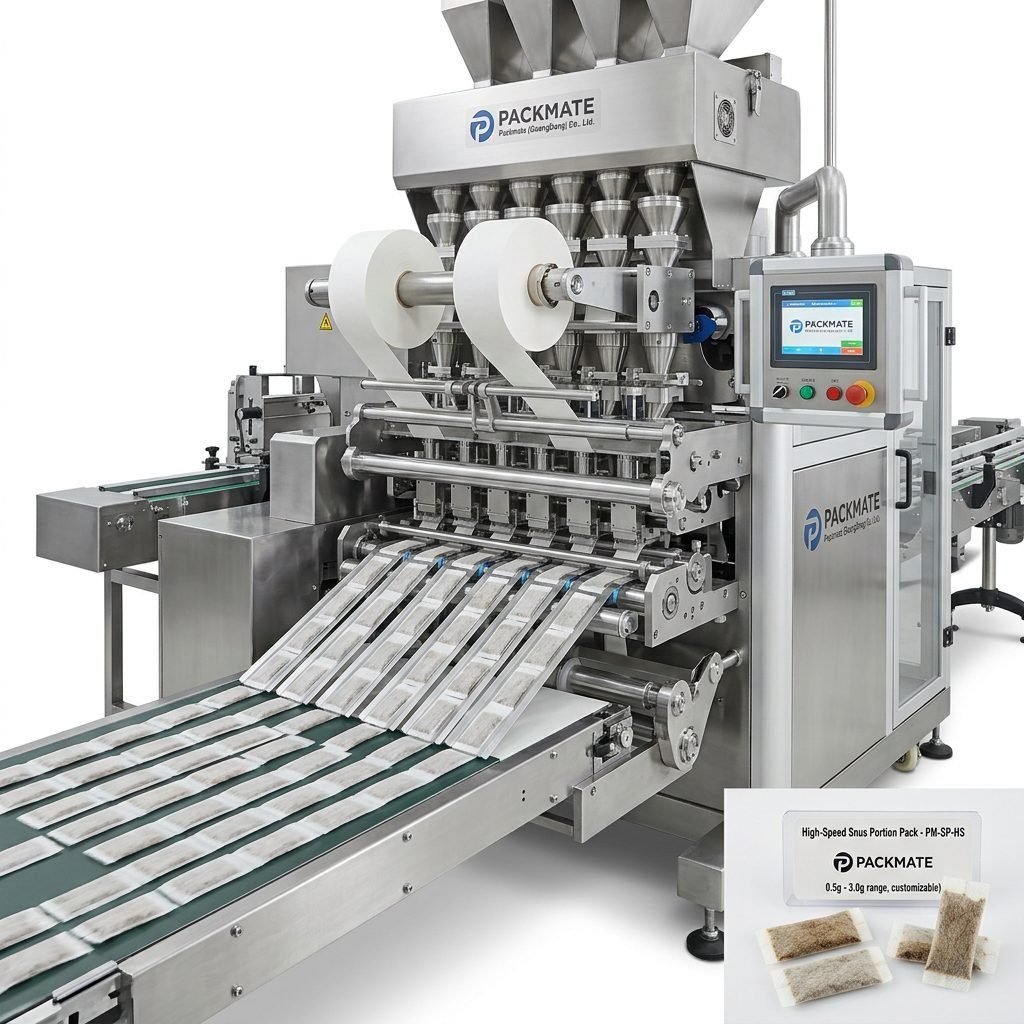
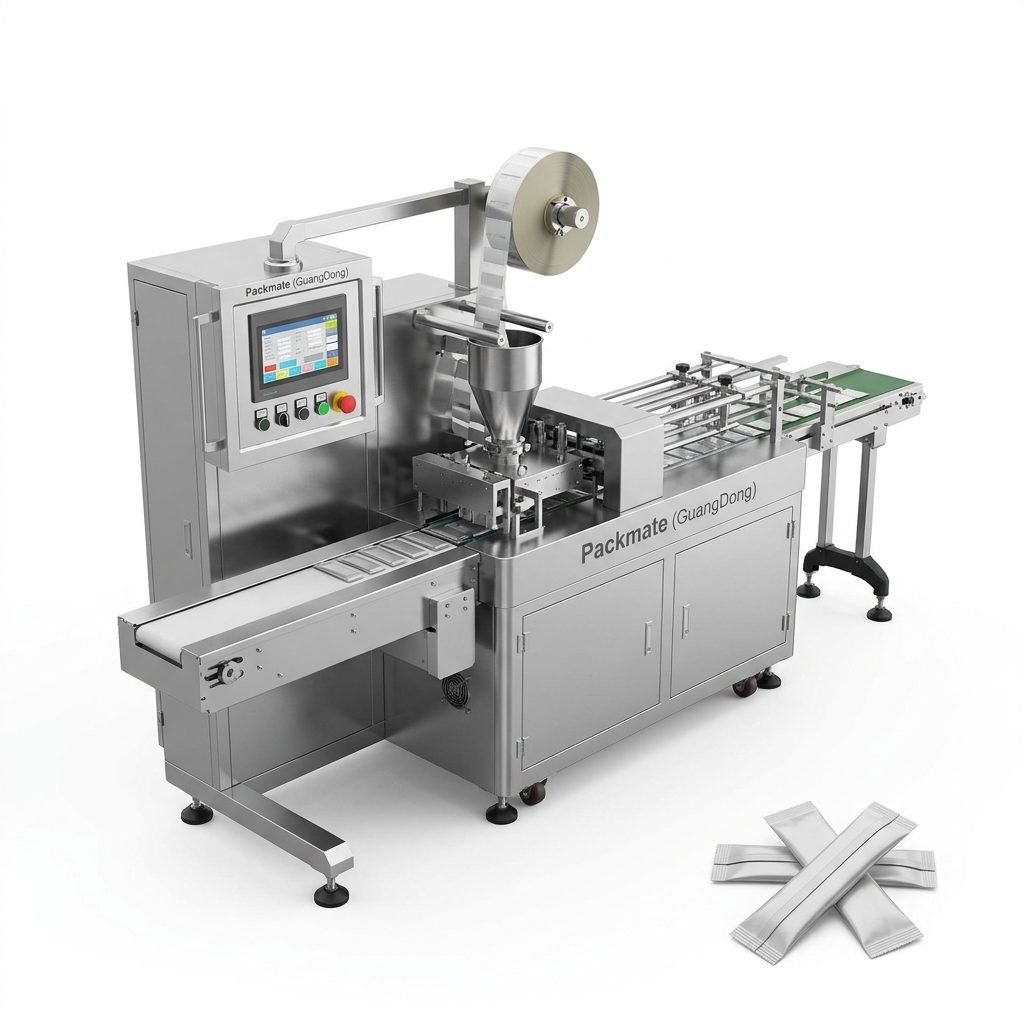
Snus & Nicotine Pouch Machines — engineered for small-dose, stable sealing and gentle handling of nicotine pouches. Ideal for modern nicotine pouch formats. (See relevant models: Snus & Nicotine Packaging Machines.)
-
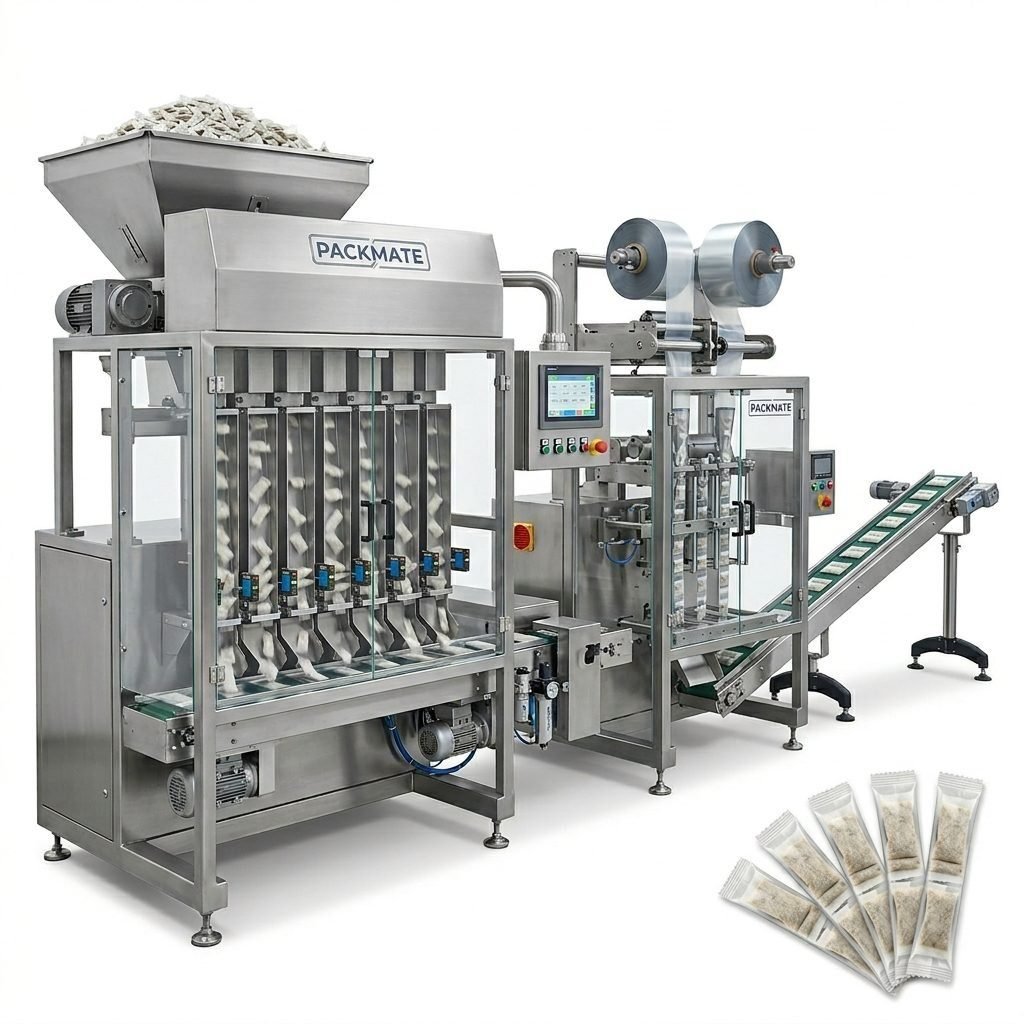
Sachet & Stick Pack Machines — flexible for single-serve stick and sachet formats; suitable where shaped stick packaging is required. (Sachet & Stick Pack Machines.)
-
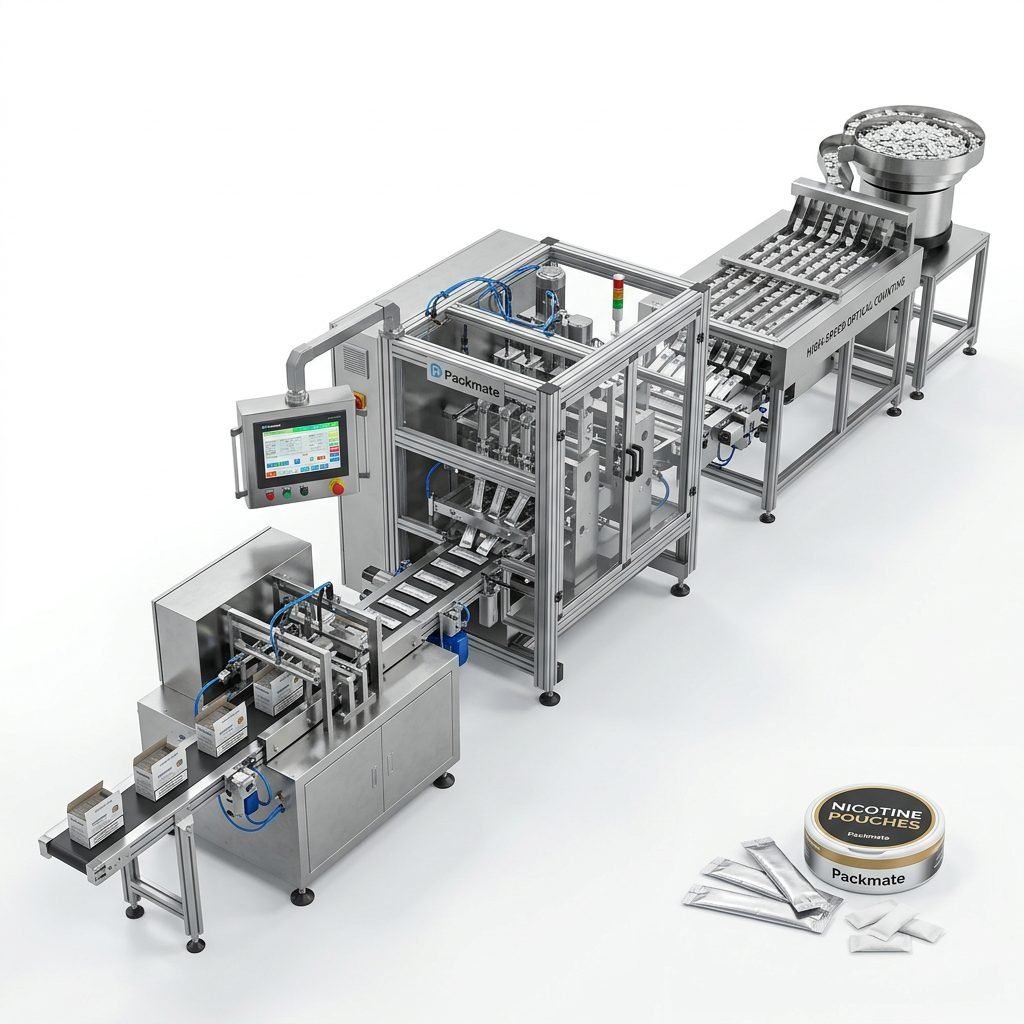
Multi-lane Systems — increase throughput with parallel lanes; ideal when scaling to commercial volumes while keeping footprint efficient.
-
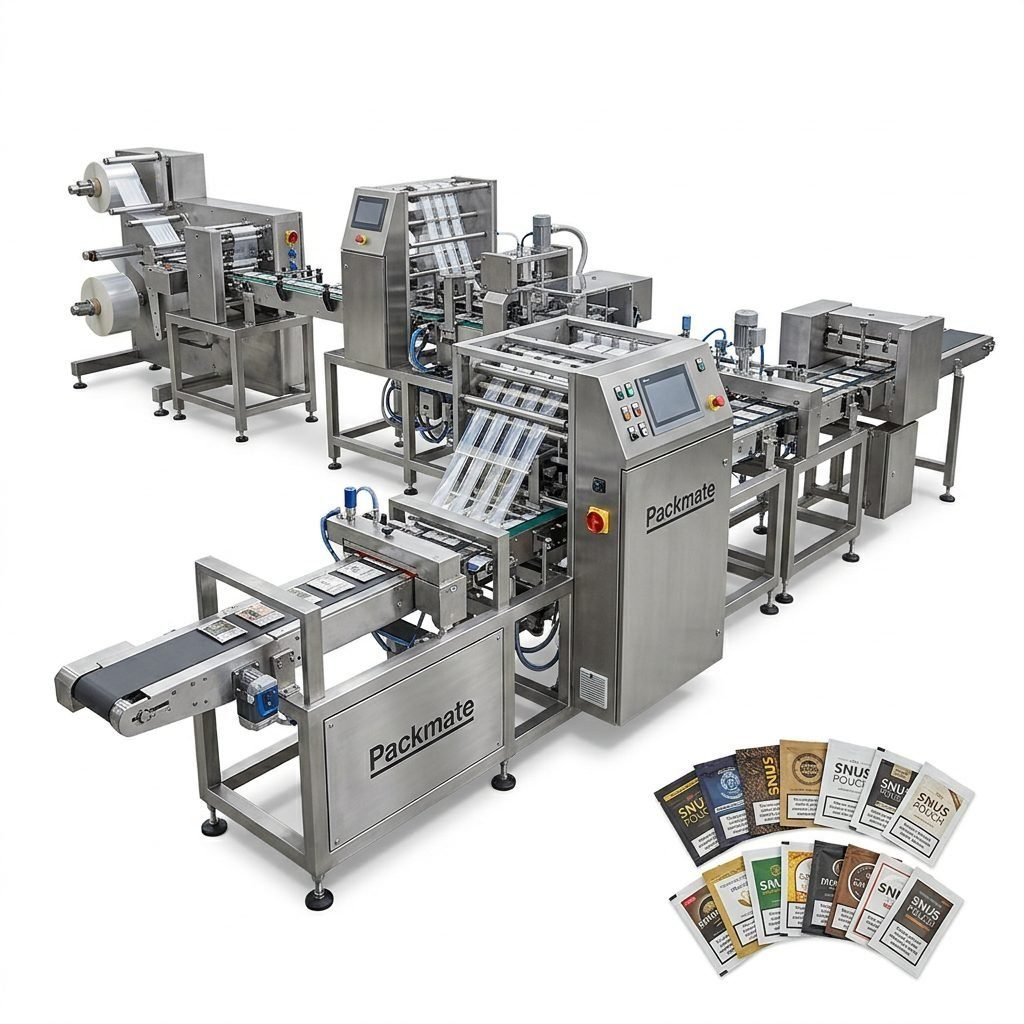
Filling & Packaging Lines — integrated solutions for automated dosing, filling, sealing, and case packing. (Filling & Packaging Lines.)
⚙️ Production Capacity, Accuracy & Speed
Capacity needs drive machine class selection. Small pilot runs can use single-lane, lower-speed machines, while commercial volumes demand multi-lane high-speed lines. However, speed without accurate dosing leads to waste — especially problematic for nicotine pouches where weight tolerance matters.
✅ Target output: set daily/shift targets (pouches/hour).
✅ Acceptable tolerance: ask for dosing accuracy (e.g., ±2-3% typical).
✅ Changeover time: important if you run multiple SKUs.
🔩 Materials, Compatibility & Hygiene
Your chosen machine must be compatible with packaging films, barrier laminates, and any inner materials like cellulose or mesh. For nicotine and food-contact products, select stainless-steel contact parts and easy-to-clean designs to meet hygiene regulations. Machines with CIP-friendly components or quick-disassembly features reduce downtime for cleaning.
Materials checklist
-
Compatible film thickness and laminate types
-
Food-grade / pharma-grade stainless steel for contact parts
-
Sealing technology that matches your film (heat, induction, ultrasonic)
🔌 Automation, Integration and Control Systems
Decide the level of automation you need: manual feeding vs. full automatic feeding, integrated checkweighers, vision inspection, and automatic rejection systems. Modern PLC and HMI controls simplify operations and reduce operator error. Ask vendors about remote monitoring and diagnostics capabilities for fast troubleshooting.
Automation features to request
📦 Automatic film tracking & tension control
⚖️ Integrated checkweigher & feedback dosing
👁️ Vision inspection for sealing and label verification
🔧 Remote access for diagnostics and software updates
📐 Footprint, Power & Facility Requirements
In Malawi, factory space and power stability can be constraints. Confirm machine footprint, weight, and power consumption (voltage, phase). If grid reliability is a concern, specify UPS or generator-compatible equipment and consider lower-voltage control systems. Multi-lane machines deliver higher throughput per square meter but may require heavier foundations and larger access doors for installation.
🛡️ Certifications, Compliance & Safety
Choose machines with international certifications (CE, ISO). These indicate adherence to electrical safety, machine guarding, and manufacturing quality. For export customers or regulated markets, certified equipment simplifies approval and reduces risk.
💼 Supplier Evaluation & After-Sales Service
Supplier selection is as important as machine specs. Vet vendors for manufacturing capability, spare parts availability, installation support, local partners or agents, and training services. Prefer manufacturers with demonstrable experience in snus/nicotine packaging and global installation references.
🔍 Ask for: factory tour photos or videos, client references, spare parts lead times, and training plans. Check the manufacturer’s track record and customers served (global cases). For a trusted supplier reference, learn more About Packmate and see real-world installations (Case Studies).
💸 Budget, Total Cost of Ownership & ROI
Initial machine price is only part of the equation. Include installation, training, spare parts, consumables (film), maintenance contracts, energy consumption, and expected uptime in your TCO model. A slightly higher-capacity, more reliable machine often reduces per-unit cost and pays back quickly through lower waste and downtime.
ROI considerations
-
Calculate per-unit cost including scrap and rework
-
Estimate uptime and availability with vendor SLAs
-
Factor in spare parts and local support costs
📦 Logistics, Shipping & Customs for Malawi
Large packaging machines may ship in crates or containers. Confirm shipping dimensions and weight with the supplier. Work with freight forwarders experienced in Malawi clearance to avoid delays. Also confirm who handles import duties, installation permits, and on-site crane or forklift needs for unloading.
🔧 Installation, Training & Spare Parts
A reliable supplier provides full installation, start-up commissioning, and operator/maintenance training. Ask for a spare parts list for the first 12 months (belts, sensors, heating elements, cutters). Negotiate a spare parts kit and local stocking options to reduce downtime in Malawi.
🧰 Maintenance & Preventive Care
Implement a preventive maintenance plan covering lubrication, alignment checks, heater calibration, and sensor cleaning. Keep a running log of production issues and part replacements — this accelerates vendor support and improves machine longevity.
✅ Decision Checklist — What to Confirm Before Purchase
• Production target (pouches/hour & per day)
• Dosing accuracy and acceptable tolerance
• Film and pouch format compatibility
• Automation and inspection features included
• Certified safety and compliance (CE/ISO)
• Installation, training, and spare parts plan
• Local service partners or remote support capability
• Total cost of ownership and ROI estimate
📘 Why Consider Packmate as a Supplier
Packmate Snus Machine has over 30 years of engineering experience and a focus on snus and nicotine pouch packaging. Their facilities include advanced CNC machining and precision assembly, offering a broad model range and turnkey solutions tailored to nicotine pouch production. For more product categories and solutions, see their offerings: Snus & Nicotine Packaging Machines, Sachet & Stick Pack Machines, and Filling & Packaging Lines.
What to request from Packmate or similar manufacturers
-
Detailed spec sheet & electrical/pneumatic requirements
-
Video of machine running with similar product
-
Installation and training plan for Malawi site
-
Warranty terms and spare parts policy
📈 Final Recommendation
Balance capacity, dosing accuracy, and supplier reliability. For Malawi operations aiming to scale, consider starting with a robust multi-lane or modular system that allows incremental expansion. Emphasize vendors who provide comprehensive after-sales service, training, and spare parts availability. Prioritize machines built for nicotine pouch specifics to reduce waste and ensure consistent product quality.
🔗 Useful links
Explore product ranges and company information: About Packmate • Snus & Nicotine Packaging Machines • Sachet & Stick Pack Machines • Case studies.
⚠️ Quick tip: Always request an on-site or virtual production trial with your actual product formula and packaging film. Real-world trials reveal sealing issues, dosing drift, and film compatibility concerns before shipment.
Frequently Asked Questions
Q1: What is the typical lead time for a snus packaging machine?
Lead times vary by model and customization. Standard models may ship in 8–12 weeks, while customized multi-lane lines often require 12–20 weeks. Confirm lead time with your supplier and include time for FAT (factory acceptance testing) and shipping.
Q2: How can I ensure dosing accuracy for nicotine pouches?
Use precision dosing systems (loss-in-weight feeders or auger fillers calibrated for powder/granule behavior), integrated checkweighers, and closed-loop feedback controls. Regular calibration and trained operators are essential.
Q3: What after-sales support should I expect?
Expect installation, commissioning, operator and maintenance training, spare parts lists, and availability of remote diagnostics. Negotiate SLAs for response times and spare parts delivery.
Q4: Are there local partners in Malawi for spare parts?
Some global manufacturers have regional partners; if not, plan to stock critical spare parts locally and use remote support for troubleshooting. Confirm with your supplier about recommended parts to keep on hand.
Q5: Can one machine handle multiple pouch formats?
Many modern machines are modular and support multiple formats with quick-change tooling, but severe format changes (e.g., stick to small round pouches) may require additional tooling or different machines. Clarify changeover scope and time with the vendor.