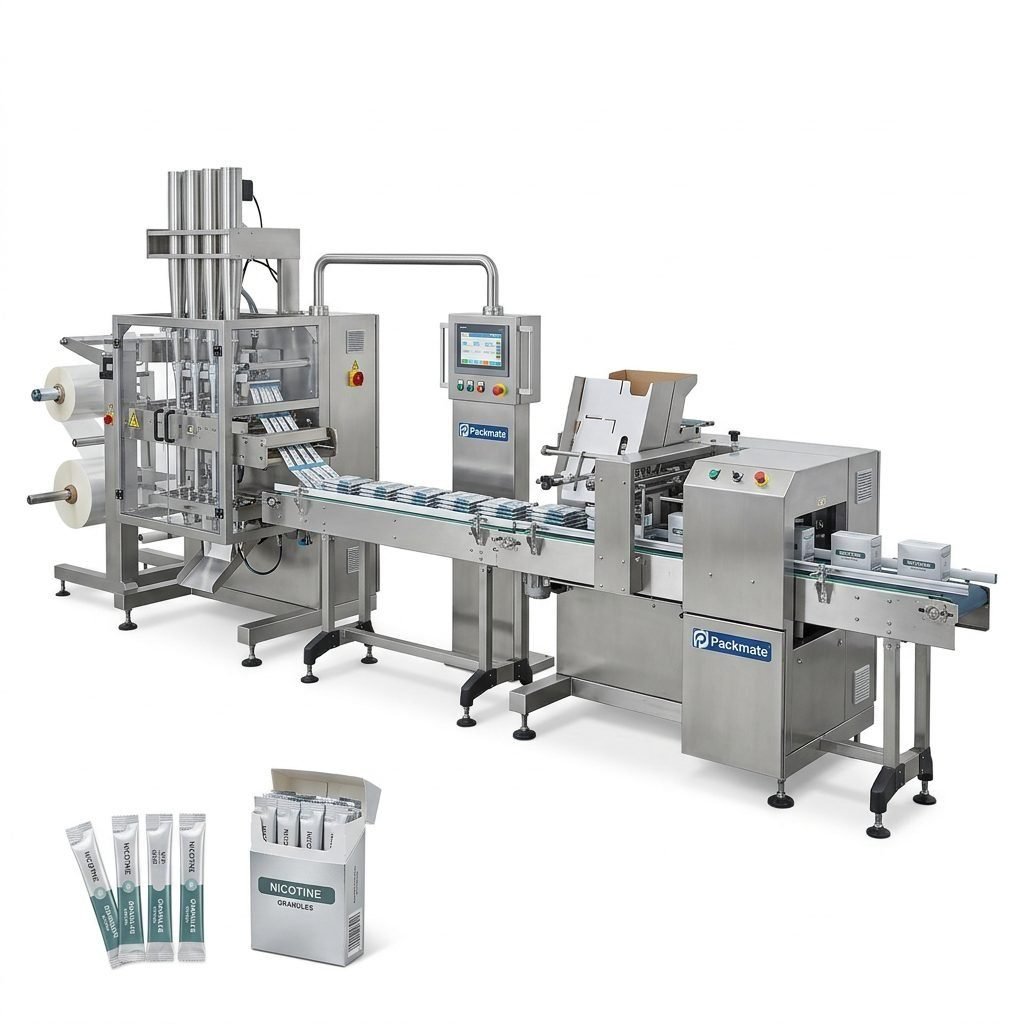
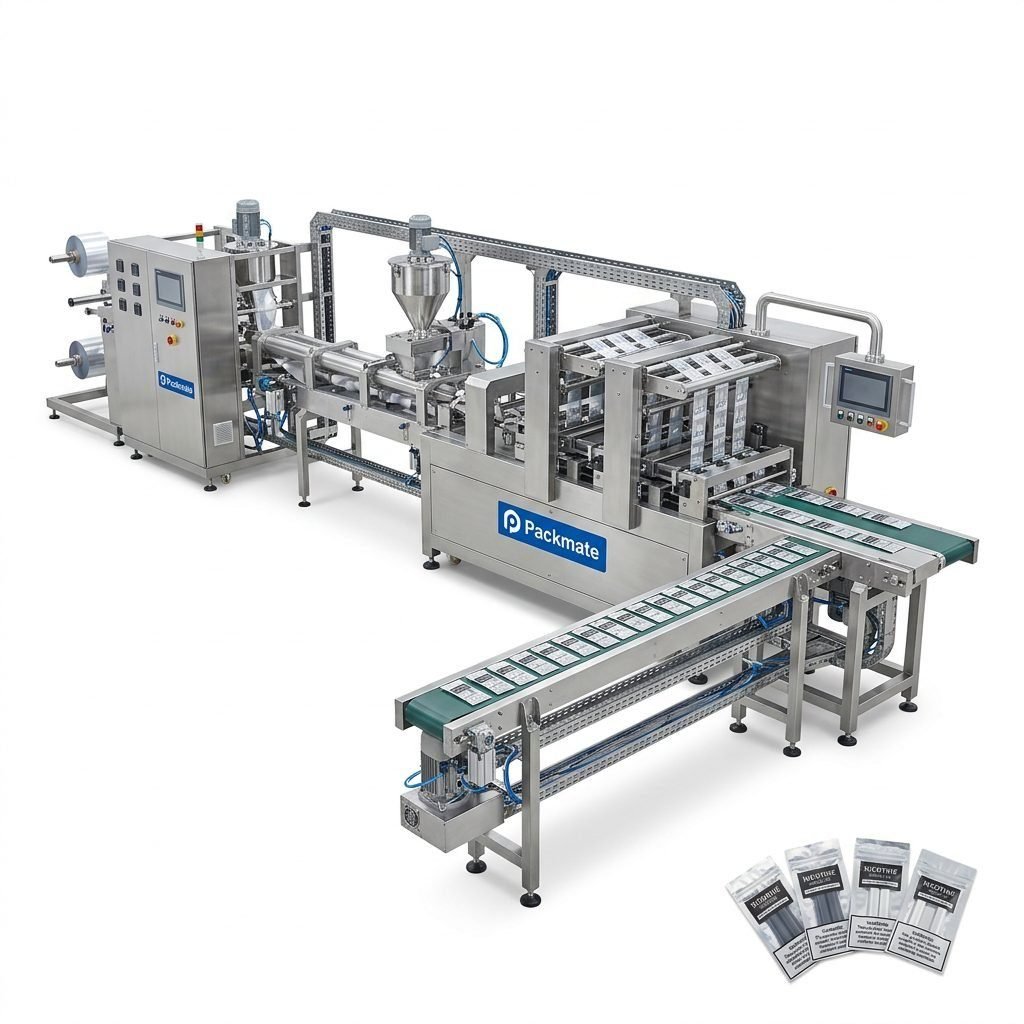
Choosing the right snus packaging machine capacity is a critical decision for any producer of nicotine pouches, snus or small-dose sachets. Capacity determines not only the throughput of your production line but also affects labor, floor space, ROI and compliance. This guide breaks down how to evaluate output and speed requirements, compares typical machine types, and gives practical formulas and checklists so you can select a machine that meets your business goals.
Understanding Capacity Metrics for Snus Packaging
Capacity is commonly expressed as pouches per minute (ppm) or packs per minute, but true production capacity should account for multiple factors: lane count, pouch weight, cycle speed, uptime, and changeover time. Two machines with the same peak speed can deliver very different daily outputs because of operational variables.
⚙️
Key metric: Effective daily throughput = (machine ppm × lanes × operating minutes per shift × shifts per day × uptime factor) – planned downtime.
Common Capacity Terms
Pouches per minute (ppm): The instantaneous speed under ideal conditions.
Lanes: Multi-lane systems multiply output by running multiple pouch channels in parallel.
Uptime: The percentage of scheduled time the machine is actively producing (accounts for maintenance and changeovers).
Assess Your Actual Production Needs
Before choosing a machine, quantify your real requirements. Consider your current sales forecasts, seasonal peaks, and 12–36 month growth plans. Use conservative estimates for uptime (e.g., 80–90%) and include allowances for changeovers when calculating required peak speed.
📈
Example calculation: If your target is 200,000 pouches/day and you operate 3 shifts of 480 minutes each (1,440 minutes), and you expect 85% uptime:
Required ppm (single lane) = 200,000 / (1,440 × 0.85) ≈ 162 ppm. Choose a multi-lane option (e.g., 4 lanes × 50 ppm = 200 ppm effective) to provide buffer.
Checklist: What to Document
– Daily target pouches
– Shift structure and planned operating minutes
– Expected uptime percentage
– Pouch format and average weight
– Packaging material speeds and machine compatibility
Machine Types and Typical Output Ranges
Different packaging technologies yield different speed profiles. Choosing the right machine is about matching format, speed and future-proof flexibility.
Stick Pack Machines
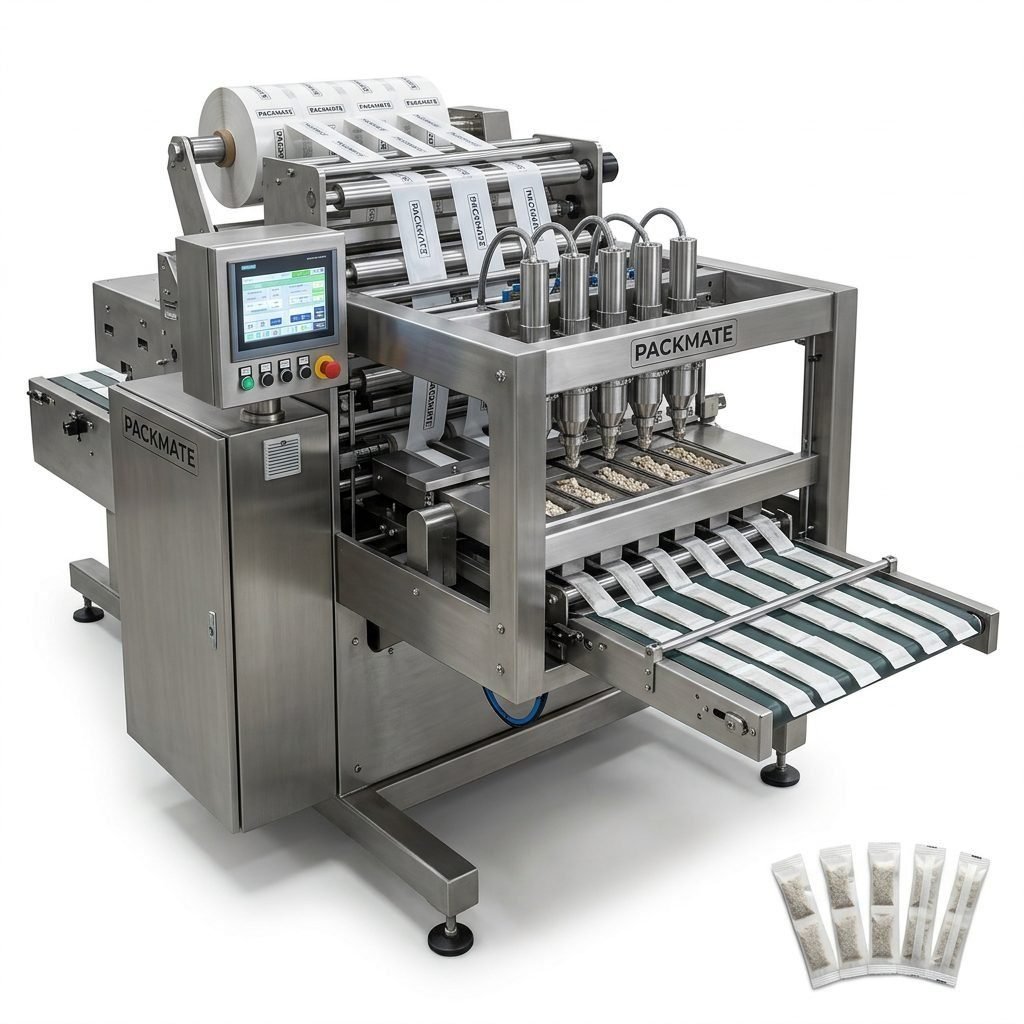
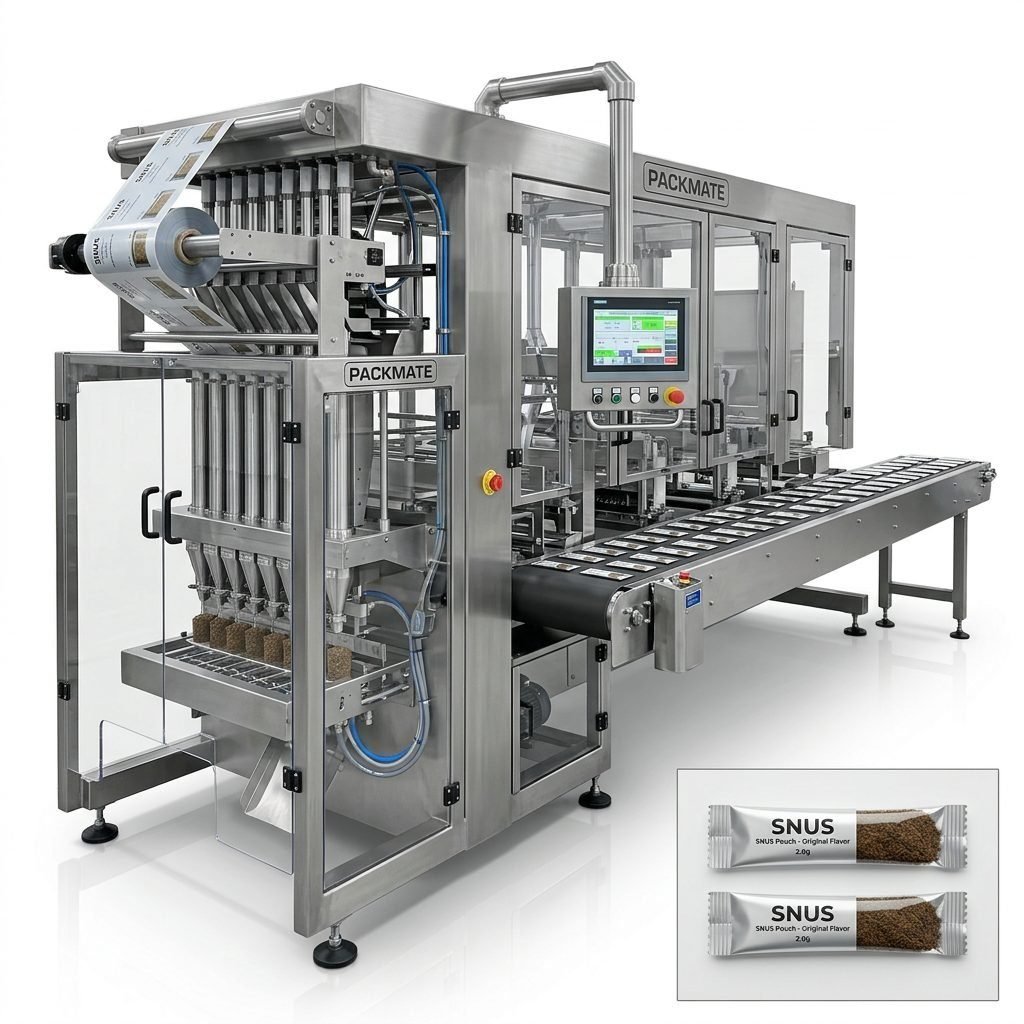
Stick packs are fast for single-dose consumer formats. Typical speeds range from 60–250 ppm per lane depending on product viscosity and filling system. Ideal for powder, granules or very fine pouches.
Sachet & Pouch Machines
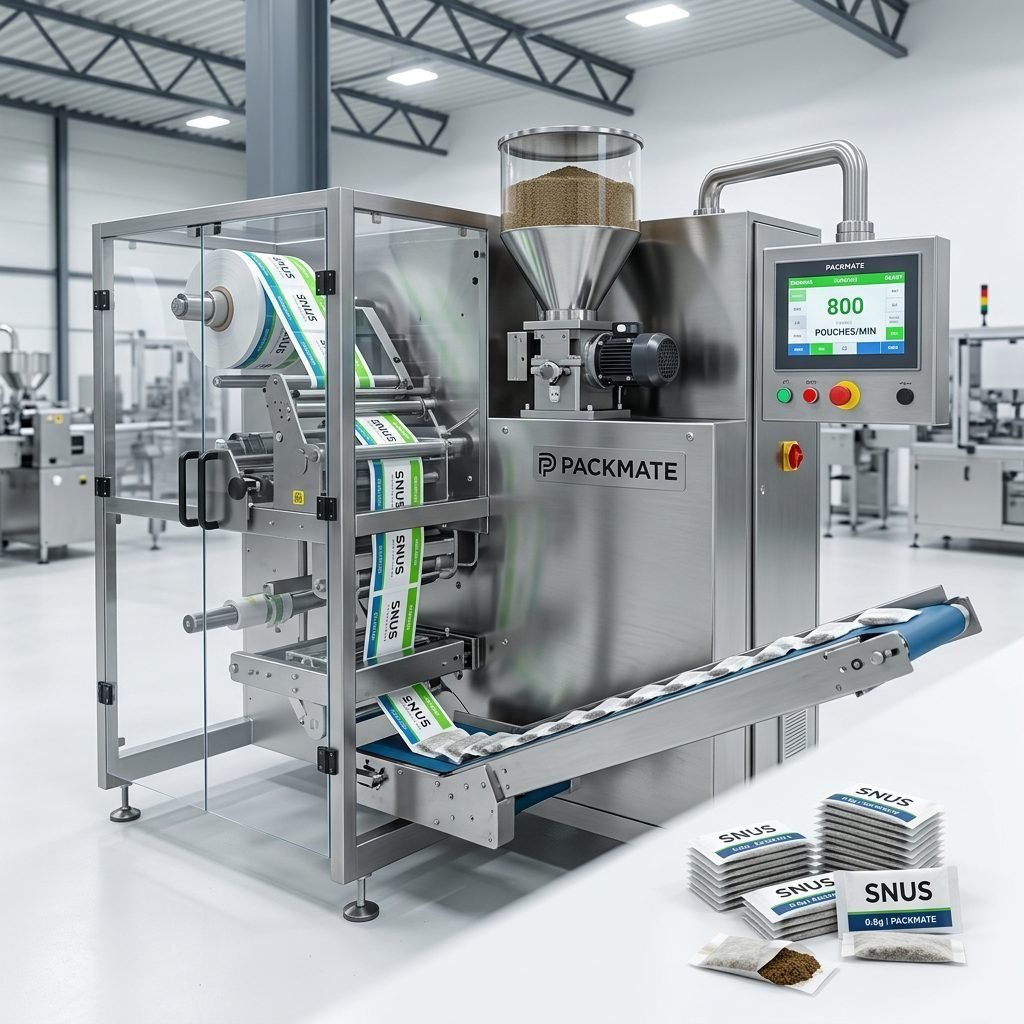
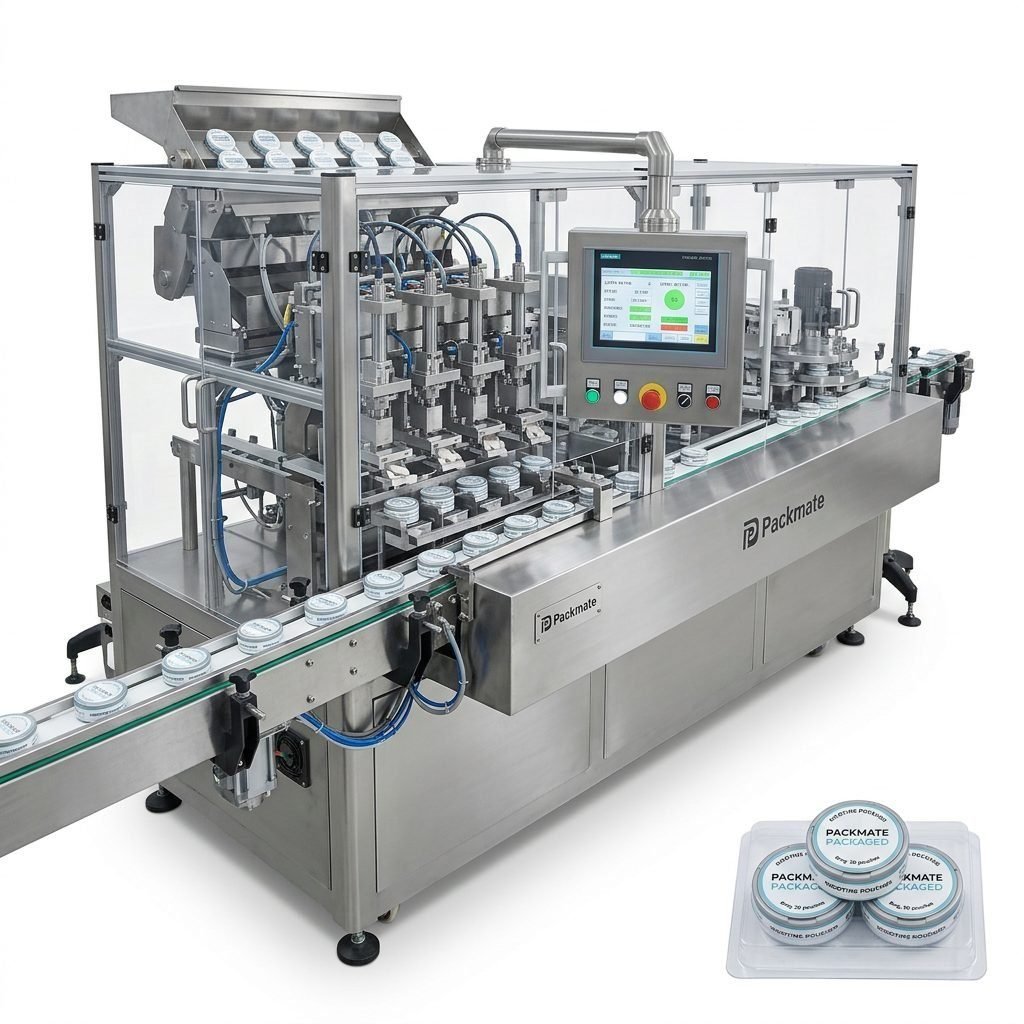
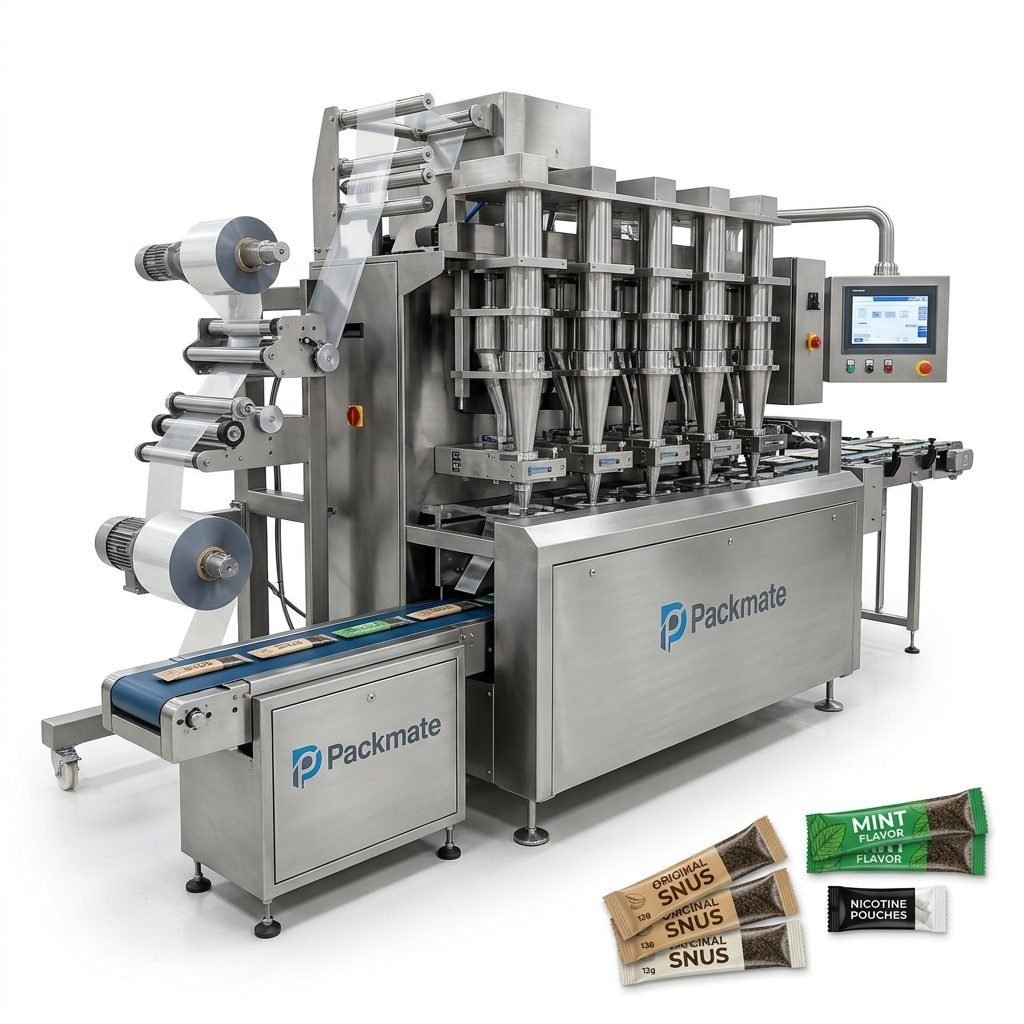
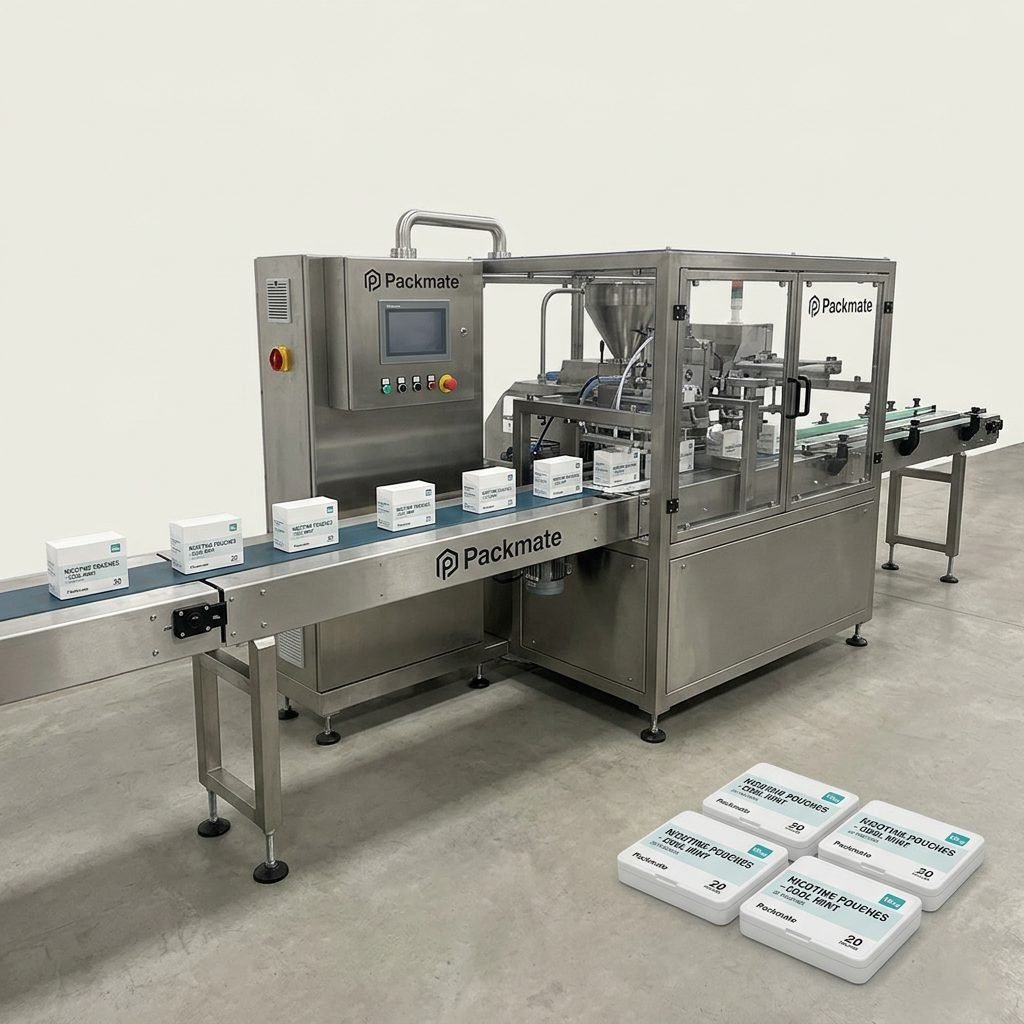
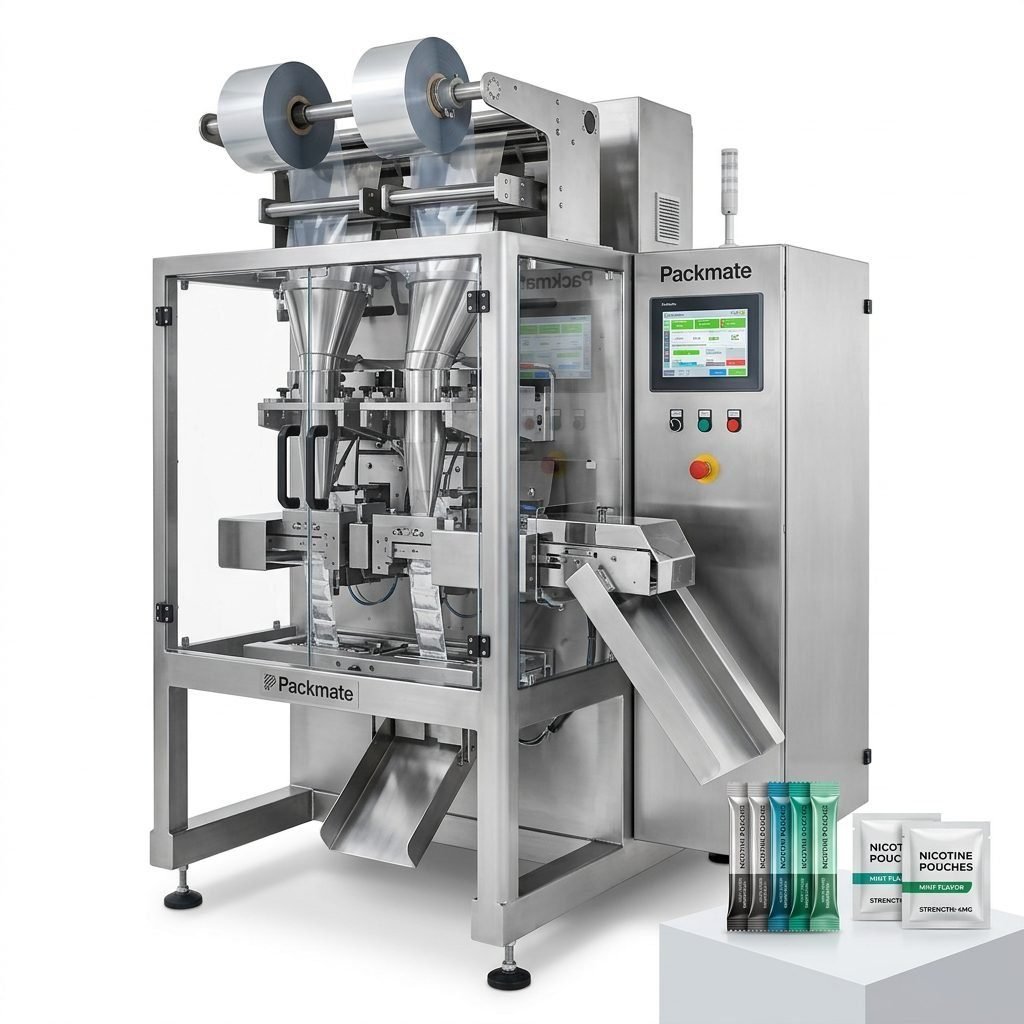
Single- or multi-lane sachet machines are widely used for nicotine pouches and snus. Multi-lane systems can multiply output: e.g., a 6-lane machine running at 40 ppm per lane yields 240 ppm total.
Multi-lane Systems
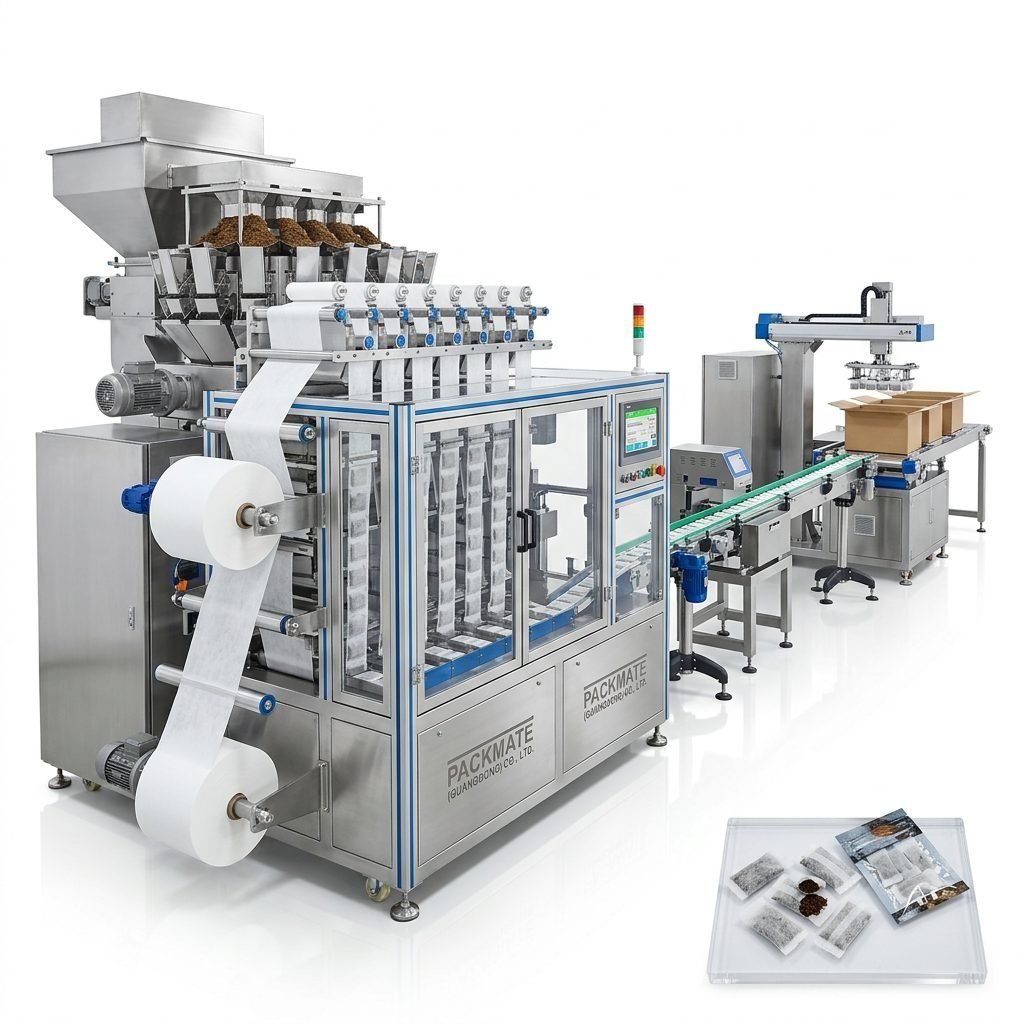
For high-volume snus producers, multi-lane machines are the most cost-effective route to scale. Look for synchronized feeding, easy changeover tooling, and modular expansion options.
Speed vs Throughput: Practical Considerations
Peak speed is useful for comparison, but effective throughput is what impacts your bottom line. Always convert machine specifications into expected daily output using realistic uptime. Consider materials handling — high-speed filling of sticky or moist nicotine pouches may require slower speeds to maintain seal integrity.
✅
Tip: Always ask vendors for a validated output test using your actual material and pouch format. Packmate offers demonstration runs and case references to validate expected performance.
Factors That Reduce Nominal Capacity
– Frequent changeovers between formats
– Material jams or inconsistent pouch material
– Complex secondary operations (feeder, labeling, cartoning)
– Preventive maintenance and unplanned downtime
How to Size Machines for Growth and Flexibility
If you expect growth, pursue modular multi-lane platforms that can be upgraded by adding lanes or auxiliary equipment. Consider machines with quick-change tooling and PLC controls that support recipe-driven changeovers to minimize downtime.
For example, a mid-sized nicotine pouch brand might start with a 4-lane sachet system and later expand to 8 lanes as demand rises. Alternatively, choose a higher-speed single-lane machine if you prioritize compact footprint and simpler changeover.
Vendor Selection: What to Ask
– Can you test my product on your machine? (Always insist on a production demo.)
– What is the validated ppm with my pouch size and formulation?
– What are lead times for spare parts and support in my region?
– Can the line integrate with upstream weighing and downstream cartoning? See examples of integrated solutions in the Weighing & Packaging Systems and Filling & Packaging Lines.
Why Manufacturer Experience Matters
Experience in snus-specific packaging is crucial due to the small pouch formats, strict dose control, and material characteristics. Packmate Snus Machine brings over 30 years of engineering experience, a wide range of models and validated installations globally. Browse their machine categories for technical options: Snus & Nicotine Packaging Machines and Sachet & Stick Pack Machines.
🧾
Factory strength matters: a well-equipped manufacturer with CNC centers and clean assembly lines reduces lead time and improves machine consistency.
Installation, Commissioning and After-sales
Proper installation and operator training significantly improve uptime and effective capacity. Ask for a complete service package that includes commissioning, spare parts kits, remote troubleshooting and documented maintenance schedules. Check vendor credentials such as CE and ISO certification to ensure compliance.
Local Support and Global Reach
If your markets are international, choose suppliers with global service networks and references. Packmate showcases cases and exhibitions where you can see machines in operation: Case and Our Exhibition.
Decision Checklist: Choose the Right Output and Speed
🔎 Evaluate these before purchasing:
- Validated ppm with your product and pouch format.
- Lanes and scalability options to meet future demand.
- Uptime history and references from similar producers.
- Integration with upstream/downstream equipment.
- Service, spare parts availability and certifications.
Conclusion
Selecting the right snus packaging machine capacity means translating business targets into validated machine specifications. Focus on effective throughput rather than peak speed alone, insist on product-specific trials, and prioritize modular multi-lane platforms if you anticipate growth. Experienced manufacturers with proven installations and strong after-sales support will help you reach production targets with minimal surprises.
FAQs
Q1: How do I convert ppm to daily output?
A: Multiply machine ppm × lanes × operating minutes × uptime factor. Example: 50 ppm × 4 lanes × 1,440 minutes × 0.85 ≈ 244,800 pouches/day.
Q2: Should I buy a higher-speed single-lane or multi-lane machine?
A: Multi-lane systems usually offer better redundancy and scalability for snus pouches; single-lane may be suitable for compact operations with simple formats.
Q3: How important is vendor testing with my material?
A: Critical. Real-world trials validate ppm, detect material handling issues, and inform changeover tooling needs. Request video or on-site demonstrations.
Q4: What uptime should I plan for?
A: Conservative planning uses 80–90% uptime. New lines may start lower until operators optimize changeovers and maintenance routines.
Q5: Where can I learn more about specific machine models and company capabilities?
A: Visit the manufacturer’s product pages for details on machine types and factory capabilities: About Packmate.