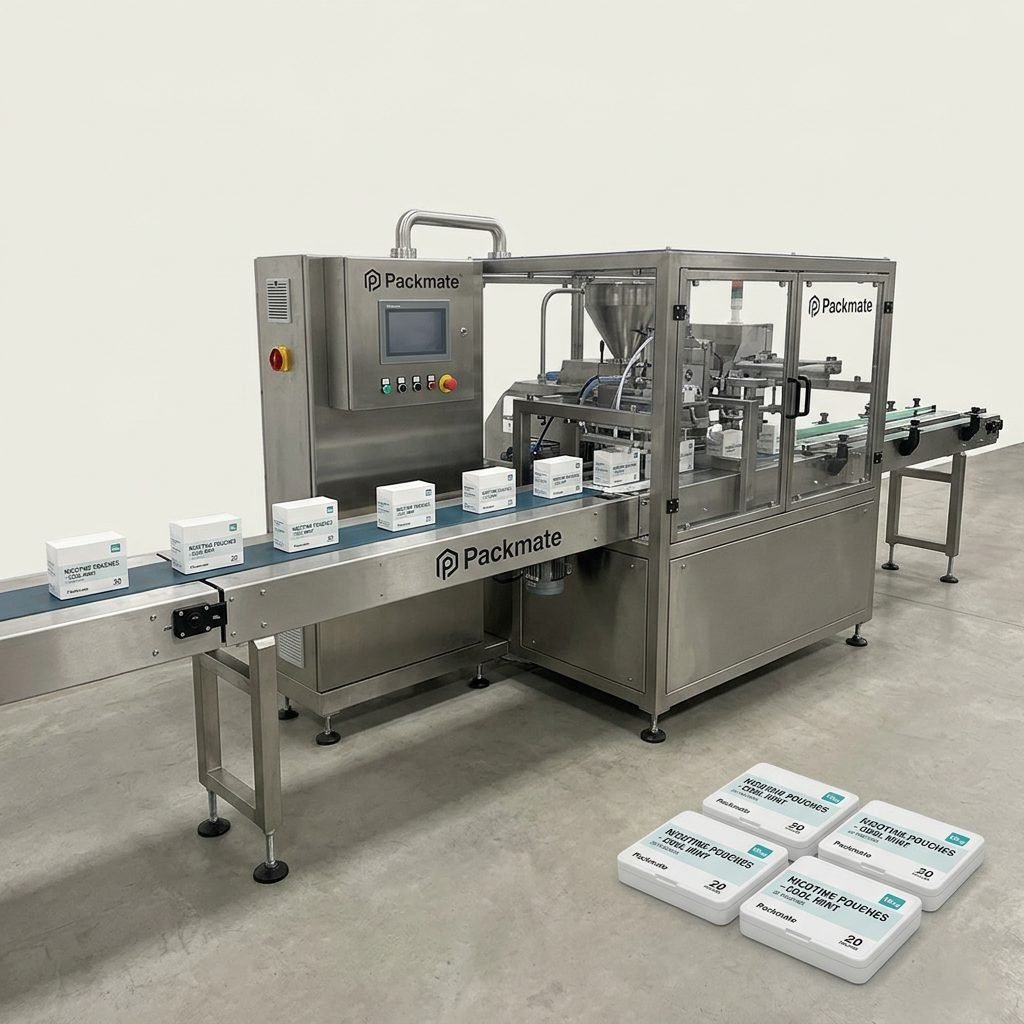
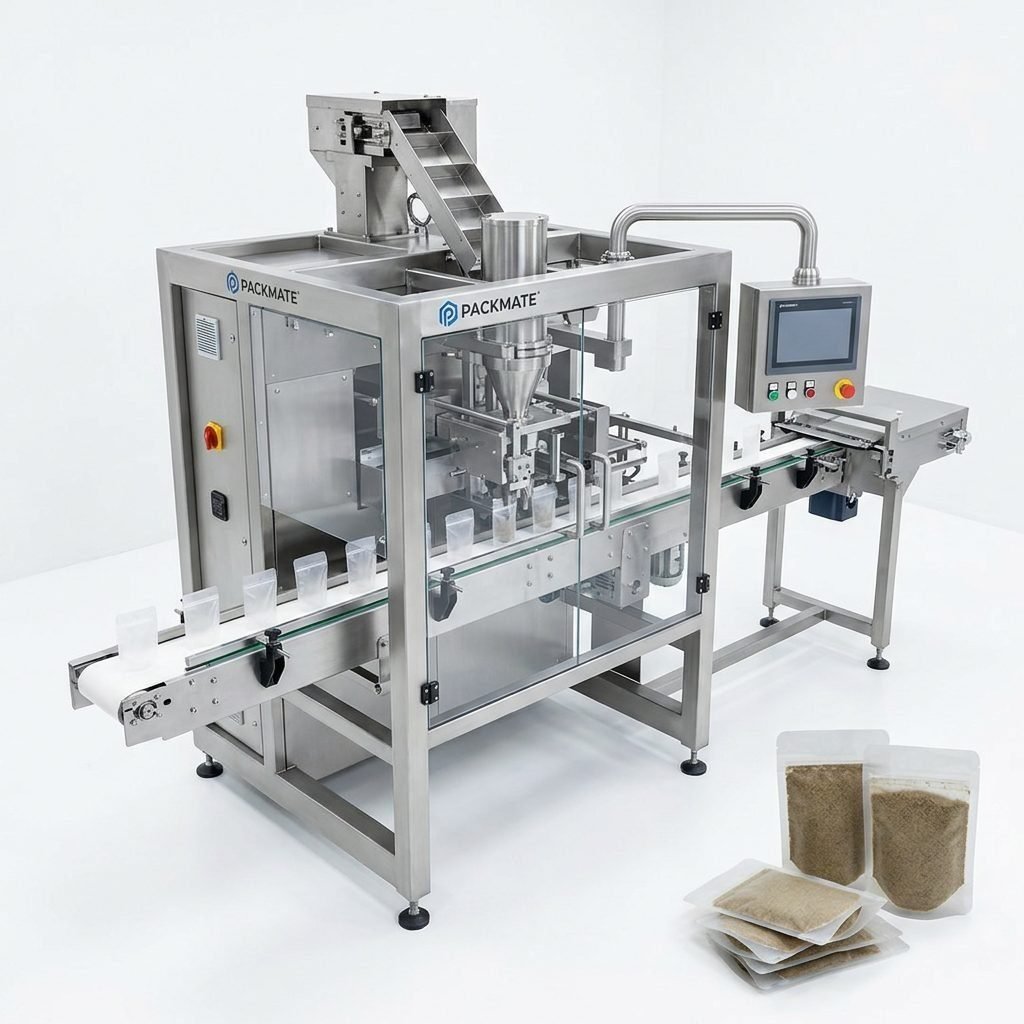
Choosing the right snus packaging machine for a factory in Turkey requires balancing local market habits, regulatory caution, production goals, and long-term service considerations. This guide walks through practical steps and technical checkpoints to help Turkish manufacturers and importers select a snus or nicotine pouch packaging solution that fits local consumer behavior, Ramadan and holiday season demand patterns, and export-ready quality standards.
Understand the Turkish Market & Local Habits
In Turkey, tobacco consumption has strong cultural and social elements. Smoking and traditional tobacco use remain common among adults, but urban consumers and younger demographics are increasingly open to alternative nicotine products such as nicotine pouches and smokeless formats. When planning a packaging line, note:
📌 Local labeling and language: Pack labeling should include Turkish language information, ingredient lists and clear consumer guidance to meet retail expectations and build trust.
🕋 Seasonal buying patterns: Consumption and retail demand may change around holidays and Ramadan — plan production flexibility for peak windows.
⚖️ Regulatory checks: Always verify current Turkish regulations on nicotine products and marketing rules; compliance is critical before choosing machine features like batch printing and serialization.
Key Technical Specifications to Evaluate
When comparing machines, focus on the specifications that determine both capacity and product quality. The most important items are:
- Production speed (pouches/minute) and how it meets seasonal demand spikes.
- Number of lanes (single to multi-lane systems) for small-dose products common in snus lines.
- Filling accuracy and dosing technology — crucial for consistent nicotine pouch weight and regulatory compliance.
- Sealing type and material compatibility — ensure compatibility with your chosen pouch films and barrier requirements.
- Integrated printing/marking and serialization features for traceability and batch control.
Important performance indicator
A machine’s overall equipment effectiveness (OEE) — combining availability, performance and quality — is a practical way to compare real-world productivity between manufacturers.
Choose the Right Machine Type for Your Product
There are several common packaging formats for snus and nicotine pouches. Match your product concept to the right machine type:
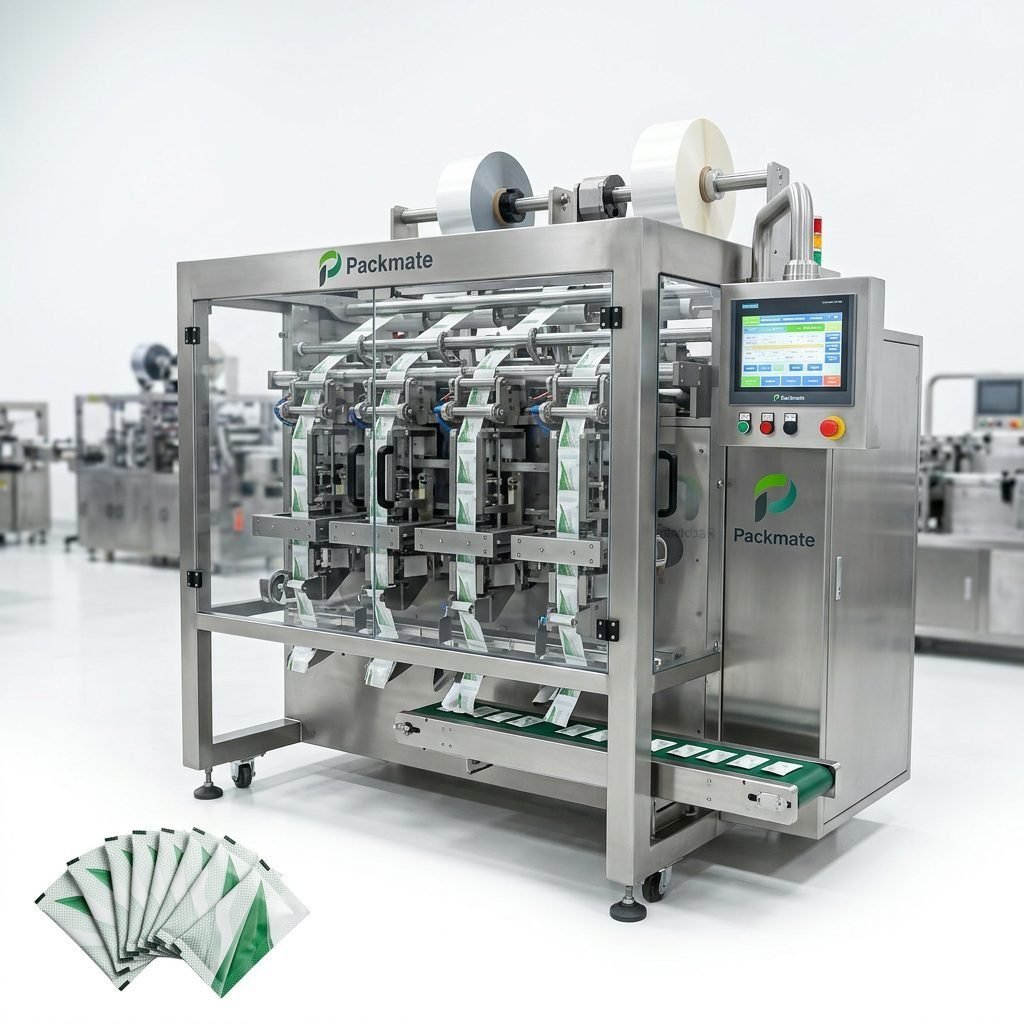
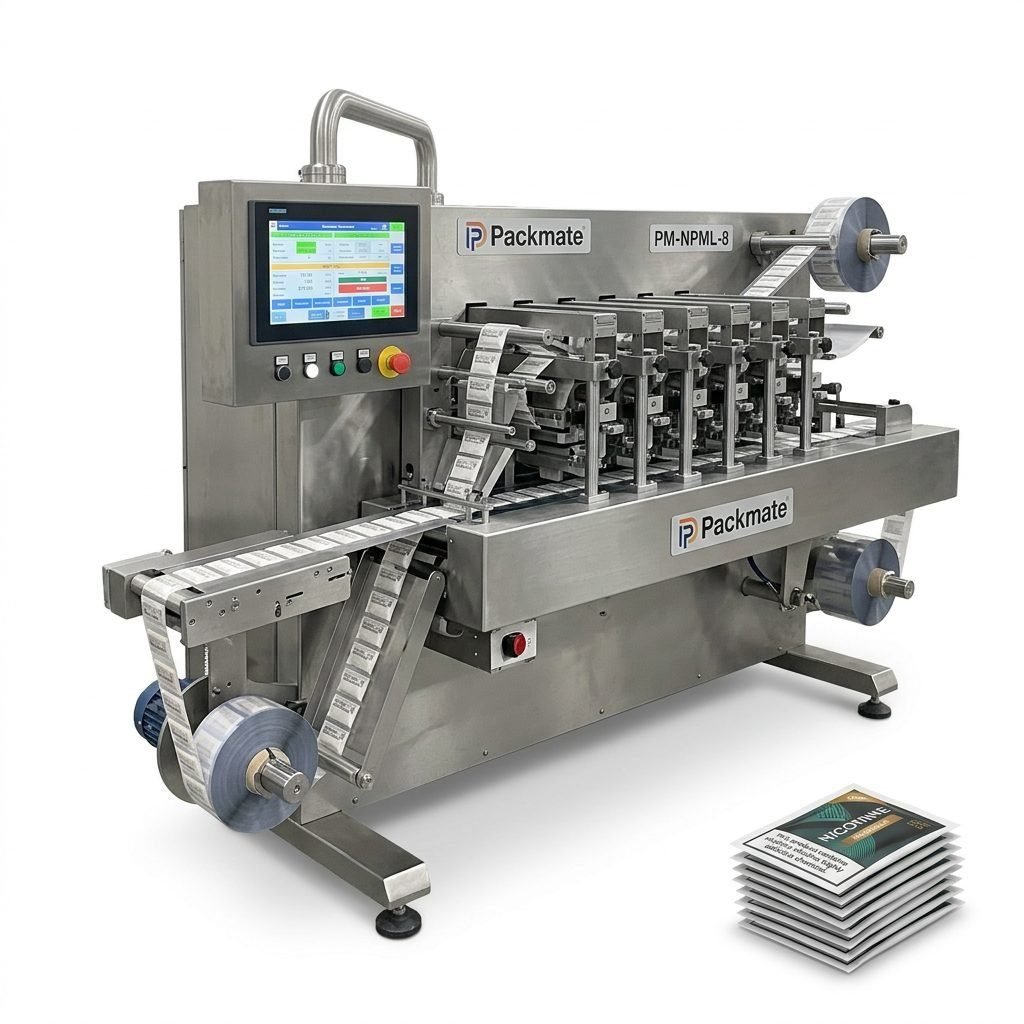
✅ Stick pack & sachet machines: Ideal for single-dose sachets and stick packs sold as individual units or multi-packs.
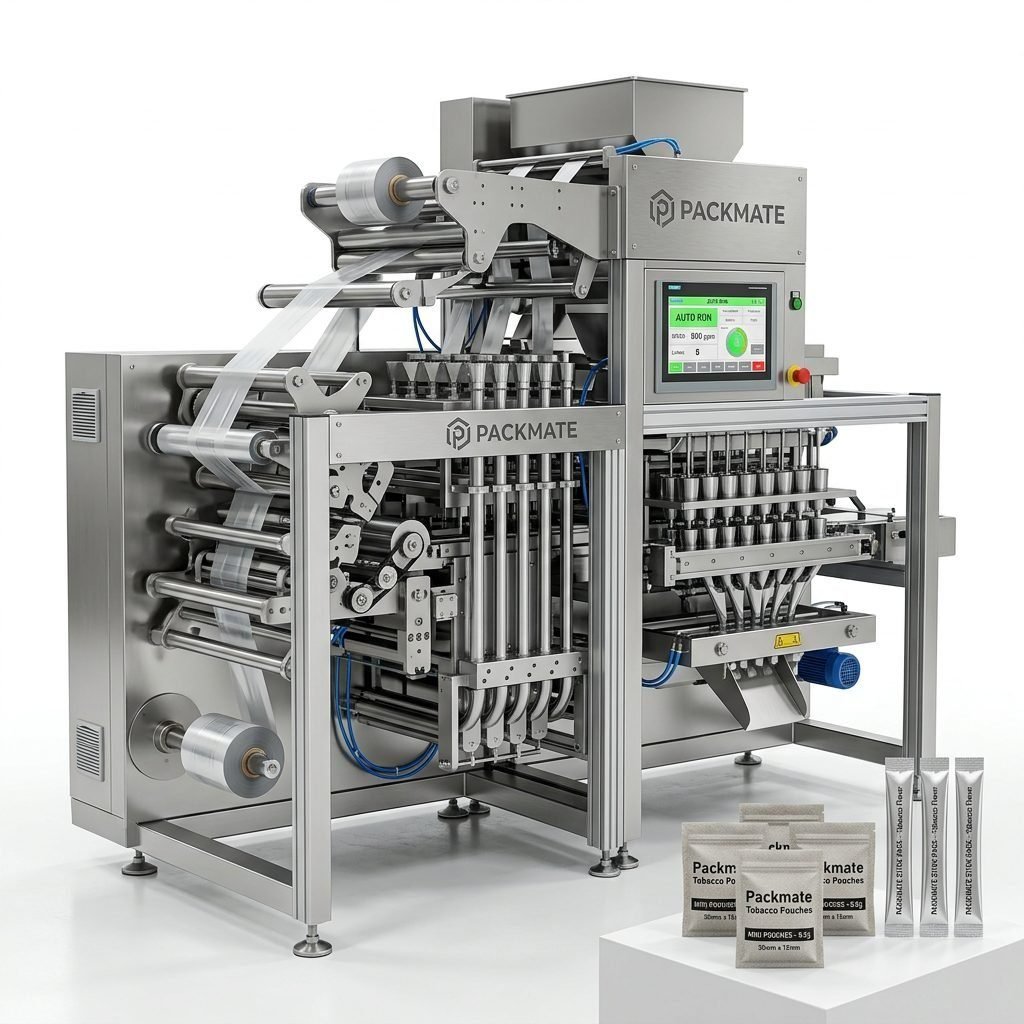
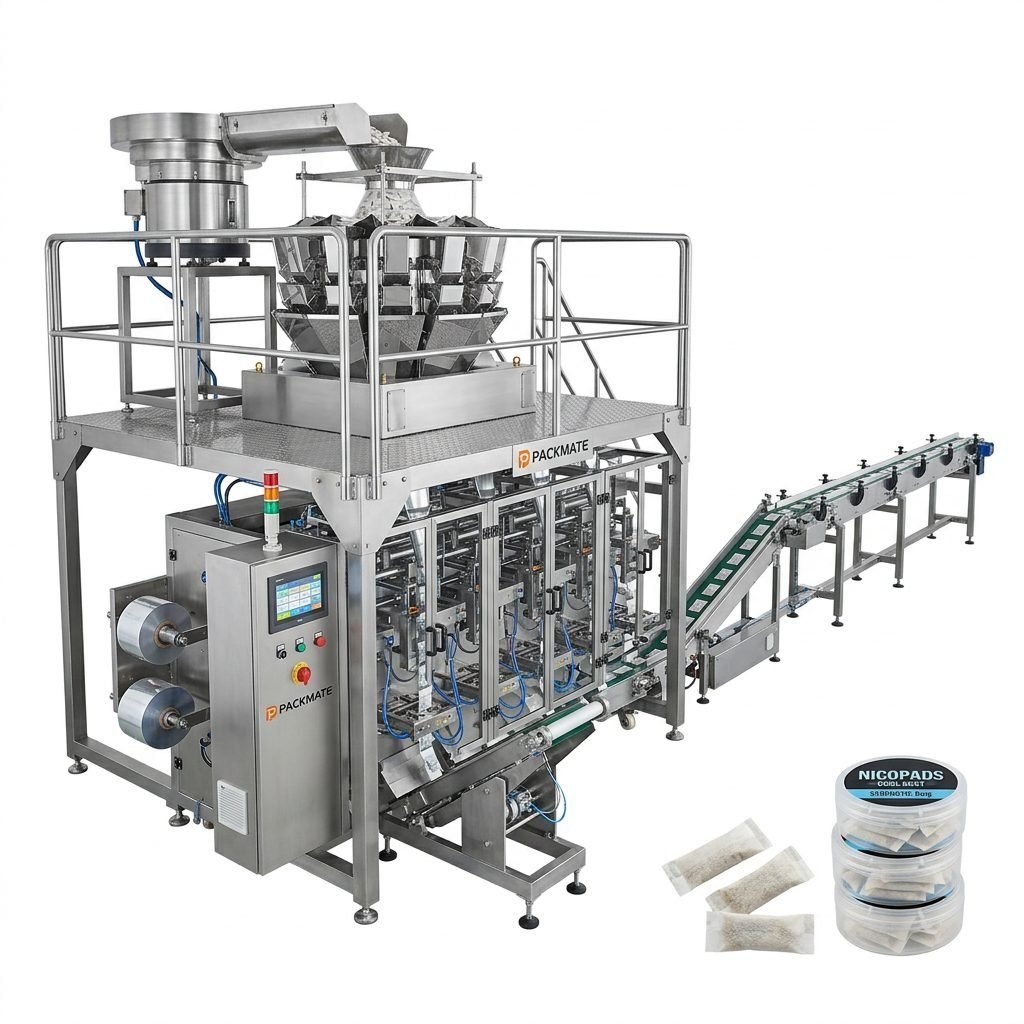
✅ Multi-lane pouch systems: Best for high-volume, small-dose pouches; multi-lane designs multiply throughput without increasing floor footprint proportionally.
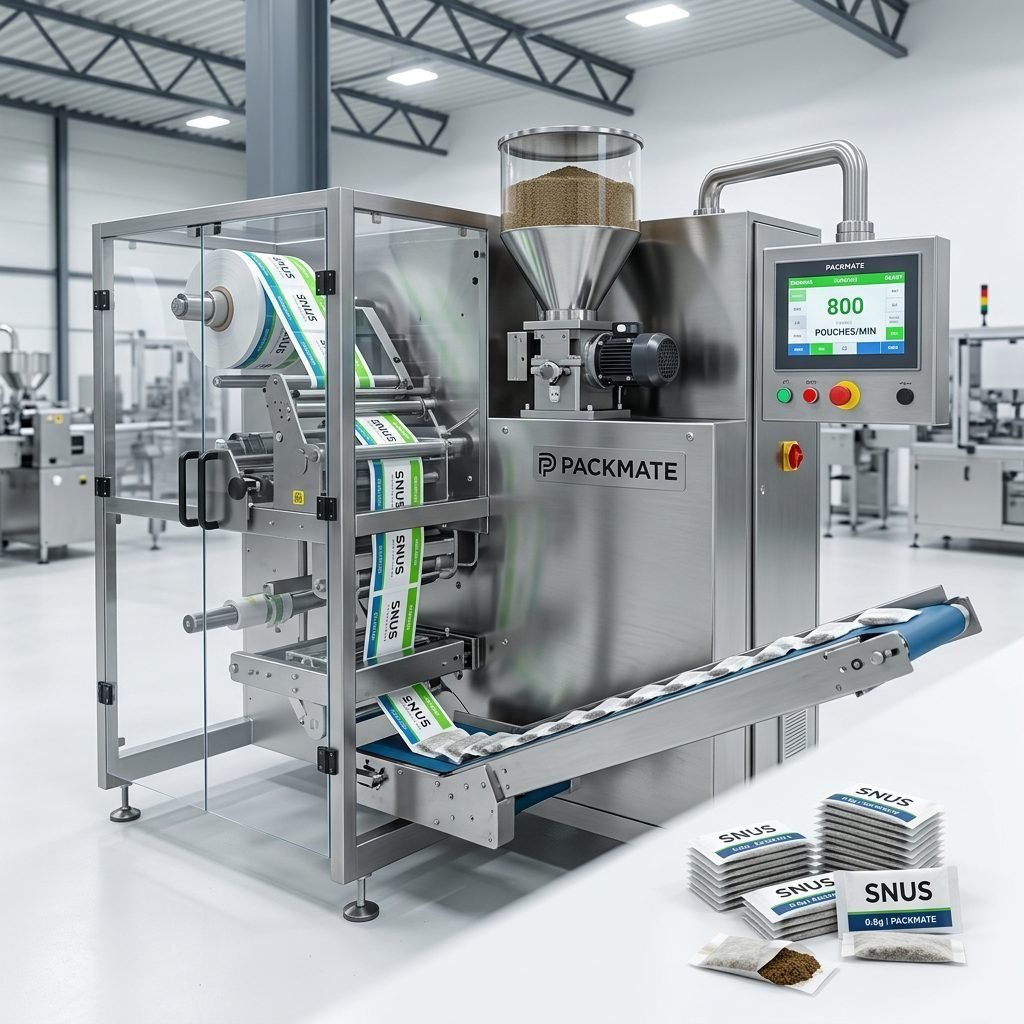
✅ Pouch & bag machines: Use for retail-ready containers, resealable bags, or composite sachets for premium positioning.
Automation, Integration and Upstream/Downstream Equipment
Full production efficiency depends on integrating the packaging machine with upstream dosing and downstream secondary packaging. Consider:
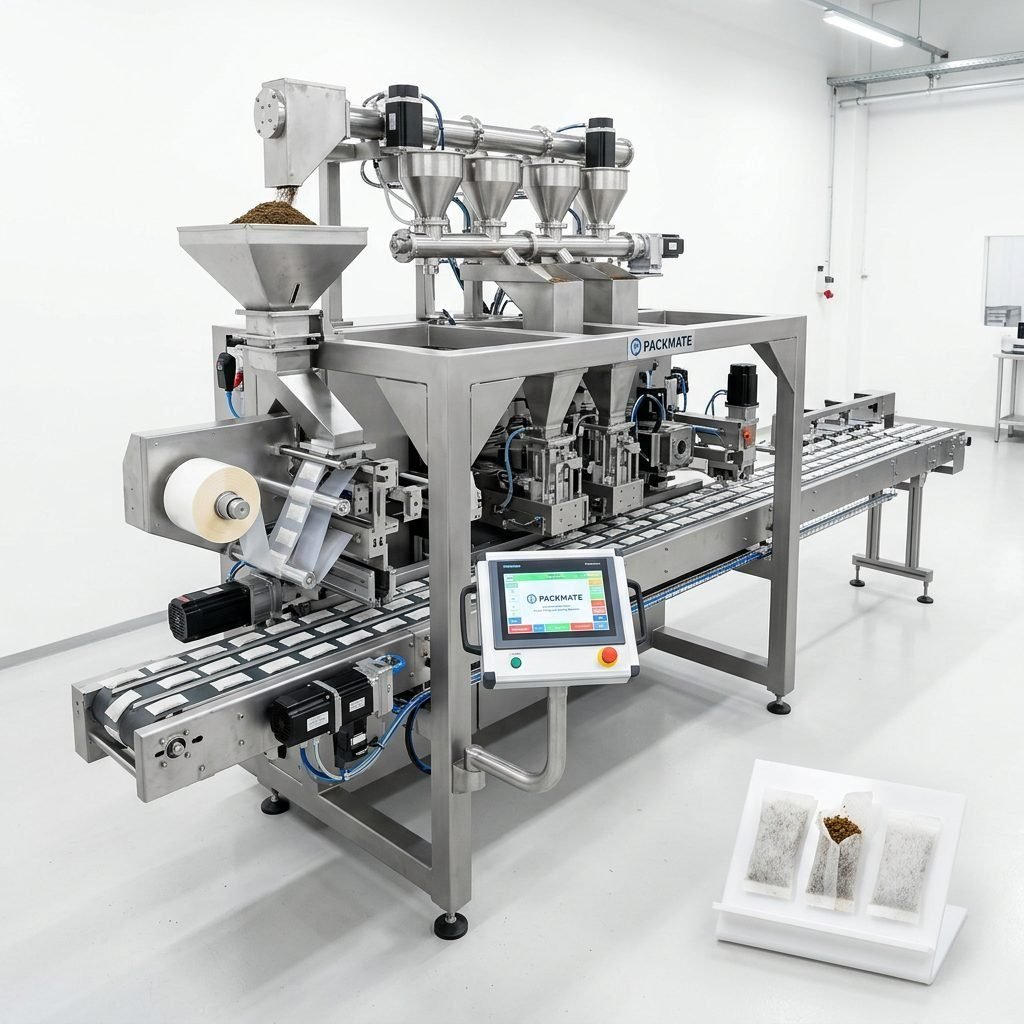
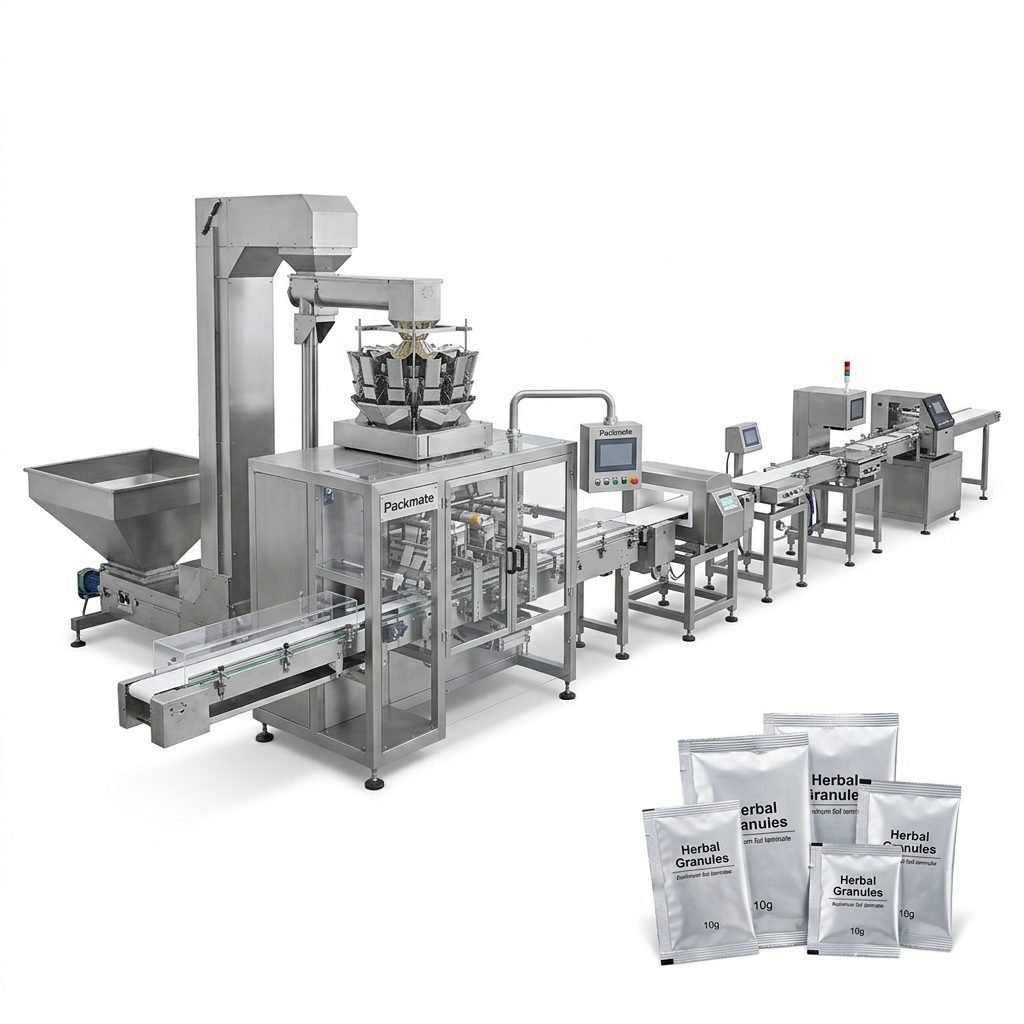
- Automated weighing systems and multi-head weighers for powders/granules to ensure precise dosing — see examples in Weighing & Packaging Systems.
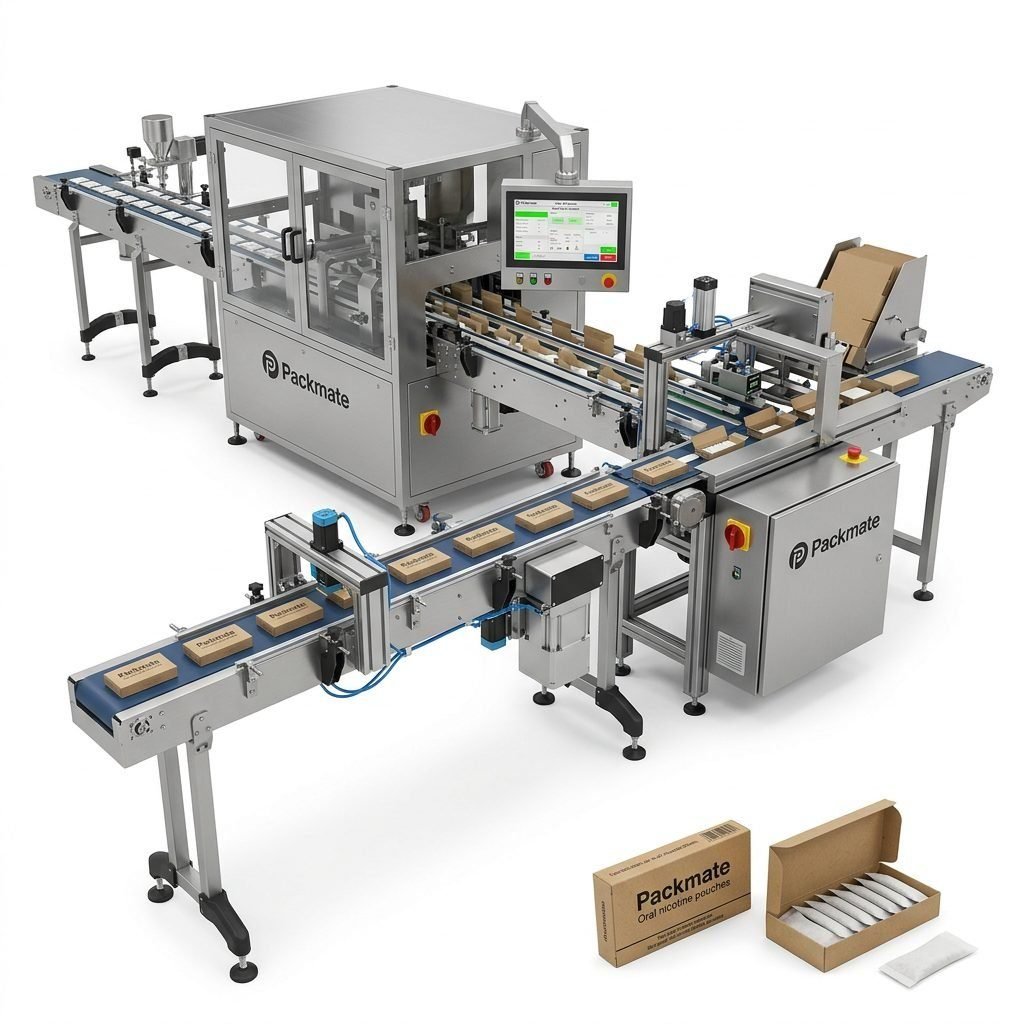
- Robotic pick-and-place or cartoning systems for automated secondary packaging to reduce manual labor and speed up packing into boxes for distribution.
- Conveying and inspection systems (metal detection, weight check) to maintain quality standards.
For tightly integrated turnkey solutions, manufacturers often source both the snus packaging machine and supporting equipment from one supplier to simplify commissioning and service.
Material Compatibility and Barrier Requirements
Nicotine pouches require strong barrier films to preserve freshness and control moisture. Confirm the machine’s ability to handle:
- Multi-layer laminates (ALu/PE, PET/PE, etc.) and heat/ultrasonic sealing settings.
- Pre-formed pouches or form-fill-seal film rolls.
- Compatibility with resealable closures and zipper attachments if your product needs repeatable access.
⚙️ Tip: Conduct trials with your actual pouch film before final purchase. Film thickness, lacquer, and adhesives all affect sealing performance.
Capacity Planning & Factory Layout in Turkey
Decide the target daily output and design a layout that allows scale-up. Multi-lane machines can produce large volumes in a compact footprint — especially useful for factories in industrial zones around Istanbul, Izmir or Bursa where space can be at a premium.
Consider local utilities (three-phase power, compressed air), floor load capacity, and access for equipment delivery. Also factor in workforce shifts: many Turkish factories operate multi-shift schedules, so ensure the equipment supports easy cleaning and quick changeovers to maximize uptime.
Space-saving strategies
Multi-lane packaging machines and stacked infeed systems can multiply output without proportional increases in floor space — an efficient choice for export-oriented Turkish producers.
Quality, Certifications and After-Sales Support
Look for suppliers with international certifications and a proven service network. Key criteria:
- CE and ISO compliance for safety and manufacturing standards.
- On-site commissioning and training to speed up ramp-up.
- Availability of spare parts and local technical support to minimize downtime.
🔧 Service matters: A manufacturer with a dedicated international service team and global exhibition presence is more likely to respond quickly to spare part needs and remote troubleshooting. Learn about Packmate’s manufacturing strength and global projects at About Packmate.
Total Cost of Ownership & Return on Investment
When evaluating quotes, ask for a transparent breakdown: base machine cost, installation, spare parts kit, training, warranty and optional automation modules. Estimate ROI by factoring:
- Per-pouch production cost (materials + labor + utilities)
- Projected sales volumes and price points in domestic and export markets
- Downtime risk and spare part lead times
If you plan to expand product SKUs, choose a machine with modular upgrades; this reduces future capital expenditures while keeping pace with market trends in Turkey and neighboring export markets.
Commissioning, Trials and Sample Production
Before final purchase, perform acceptance trials using your actual product formulation and packaging film. Key checks during factory acceptance testing (FAT) include:
- Fill accuracy and weight distribution across lanes
- Sealing integrity under different humidity conditions
- Printing and batch coding readability – essential for Turkish retail chains and export documentation
📦 Recommended: Schedule FAT with several production runs to validate reliability. If the supplier offers case studies, review similar installations for reference — see Case examples for global deployments.
Choosing a Reliable Supplier: What to Ask
When evaluating vendors, ask specific questions:
- Can you provide references from factories producing nicotine pouches or similar products?
- What are the standard lead times for spare parts and service visits to Turkey?
- Do you provide turnkey solutions including weighing, filling and secondary packaging? (If yes, request a combined solution quote for cost comparison.)
- What training do you offer for operators and maintenance staff?
If you prefer a single-vendor approach for reduced complexity, check integrated solutions like Snus & Nicotine Packaging Machines and Bag & Pouch Packaging Machines from experienced manufacturers.
Installation, Local Compliance and Exports
For equipment imported into Turkey, ensure customs and import documentation are managed correctly. Also, design product labeling and documentation for your target markets if you export — many suppliers can add multilingual printing capabilities to the line.
For Turkish factories serving EU or regional markets, ensure the machine and its outputs meet international traceability, packaging and food-contact standards where applicable.
Why Packmate (Manufacturer Profile & Capabilities)
Vendors with deep experience in snus packaging can shorten time-to-market. Packmate Snus Machine has over 30 years of engineering experience, a 20,000㎡ factory, and a range of machine models suited for nicotine pouch production. Their capabilities include multi-lane systems, advanced CNC manufacturing and global turnkey solutions. Learn more on the Packmate product pages: Snus & Nicotine Packaging Machines and Weighing & Packaging Systems.
Final Checklist Before Buying
Use this actionable checklist before signing a purchase order:
✅ Confirm production capacity and lane configuration.
✅ Request FAT with your actual product and film.
✅ Verify spare parts availability and local service response times.
✅ Ensure printing, coding and serialization options meet Turkish and export requirements.
✅ Ask for references and review relevant case studies: Case.
Next Steps: Trials, Quotes and Contact
Start with a technical discussion to outline your product format, target capacities and budget. Request a proposal that includes optional modules so you can compare modular upgrades versus full-featured models. If you want to explore full product lines and services, see Packmate’s product catalogs and service pages: Bag & Pouch Packaging Machines and Service.
Getting a quote
When requesting quotes, include your desired output per shift, pouch film specifications, target retail packaging, and any regulatory labeling requirements that must be printed on the pouch or outer packaging.
Contact and demonstrations
Arrange live demonstrations at exhibitions or factory visits to validate machine performance. For direct contact and to arrange trials, use the supplier’s contact page: Contact Us.
Summary
Selecting the best snus packaging machine for Turkey involves technical, cultural and regulatory considerations. Prioritize material compatibility, dosing accuracy, multi-lane throughput, and service responsiveness. Conduct FATs with your actual product, verify spare parts supply chains, and choose a supplier experienced in nicotine pouch solutions to ensure smooth production ramp-up and compliance.
Frequently Asked Questions
Q1: Are nicotine pouch packaging machines suitable for small Turkish startups?
Yes. Small startups can begin with single- or dual-lane machines and upgrade to multi-lane systems as volumes increase. Modular designs allow staged investments that match business growth.
Q2: What are the most common maintenance needs for these machines?
Routine maintenance includes lubrication, sealing jaw inspections, sensor cleaning, and periodic calibration of dosing units. Keep a spare parts kit for wear items and maintain a service contract for rapid response.
Q3: How do I ensure my product meets labeling and export requirements?
Work with legal and regulatory experts to define labeling requirements. Choose printing and coding modules for the packaging line that support multilingual printing and variable data printing for batch codes and expiration dates.
Q4: Can I integrate weighing and filling systems in the same supplier solution?
Yes. Many manufacturers offer combined solutions that integrate weighing, filling and packaging. Explore integrated options such as Weighing & Packaging Systems to streamline procurement and commissioning.
Q5: How important is supplier experience with snus-specific production?
Extremely important. Snus and nicotine pouches have unique dosing, sealing and shelf-life needs. Suppliers with proven snus packaging experience reduce risk and provide better technical support during scale-up.