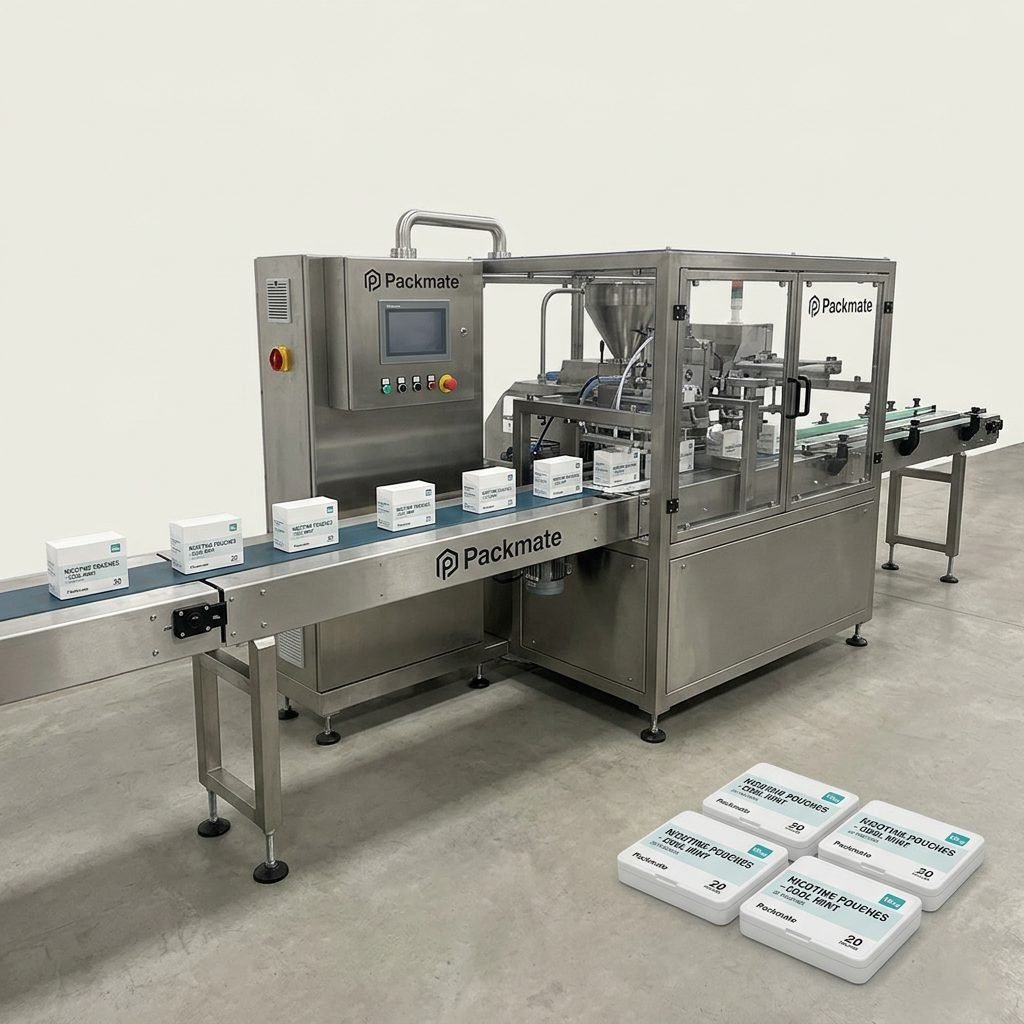
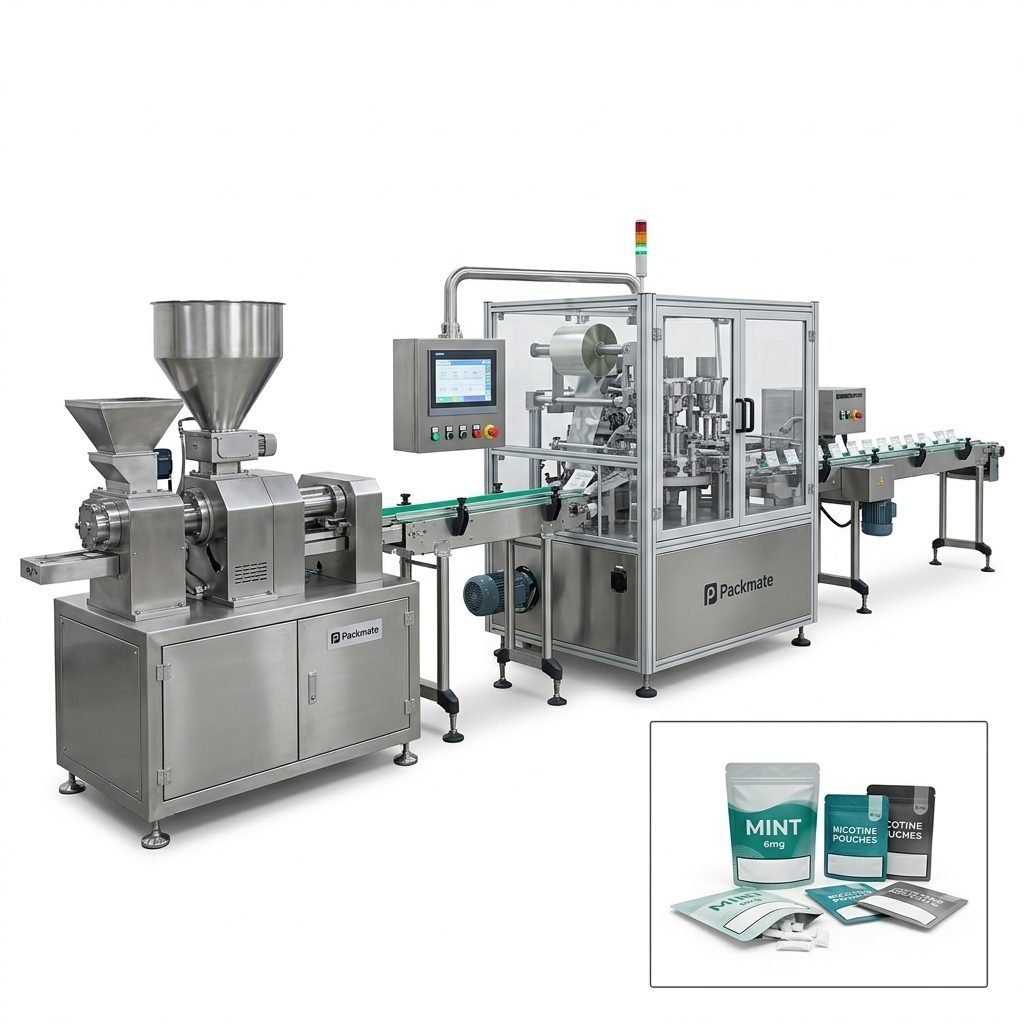
In the fast-evolving snus and nicotine pouch market, manufacturers must balance speed, consistency and regulatory compliance while keeping production costs under control. This guide explores modern snus packaging automation systems, covering high-speed machinery, multi-lane configurations, customization, quality control, and turnkey integration — all designed to help you choose or upgrade a production line that scales with your business.
Why Automation Matters for Snus Packaging
Automation is no longer optional for competitive snus manufacturers. Automated snus packaging systems deliver consistent pouch weight, accurate sealing and high throughput while minimizing human error. The benefits include faster changeovers, improved hygiene, and traceability — critical for food and nicotine products. Modern lines also enable multi-format capability to handle pouches, sachets, stick packs and sealed tins with minimal downtime.
Core Advantages
✅ Consistency: repeatable sealing and dosing across thousands of pouches per hour.
⚙️ Scalability: modular systems allow stepwise capacity upgrades and multi-lane expansion.
🔒 Compliance: CIP-friendly designs, traceable batch control and compliance-ready documentation.
High-Speed Multi-Lane Systems: What to Look For
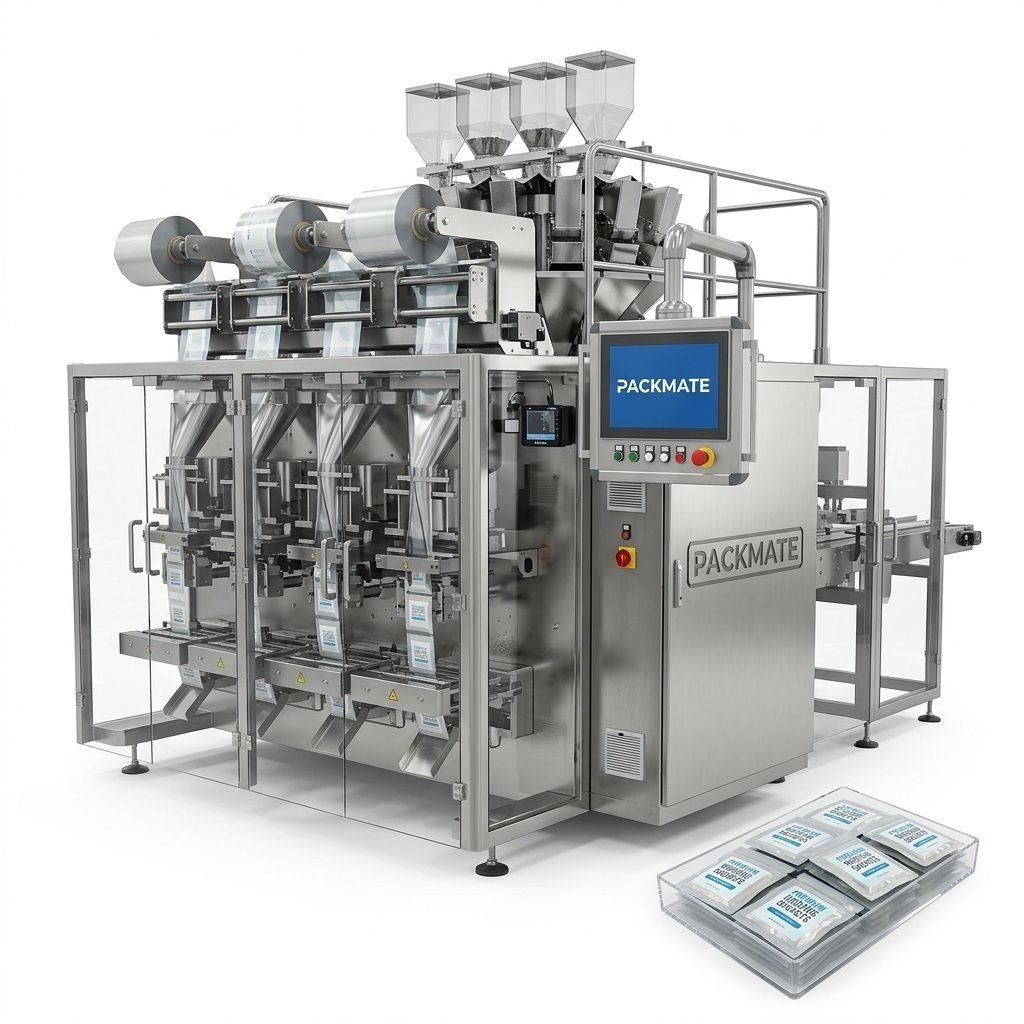
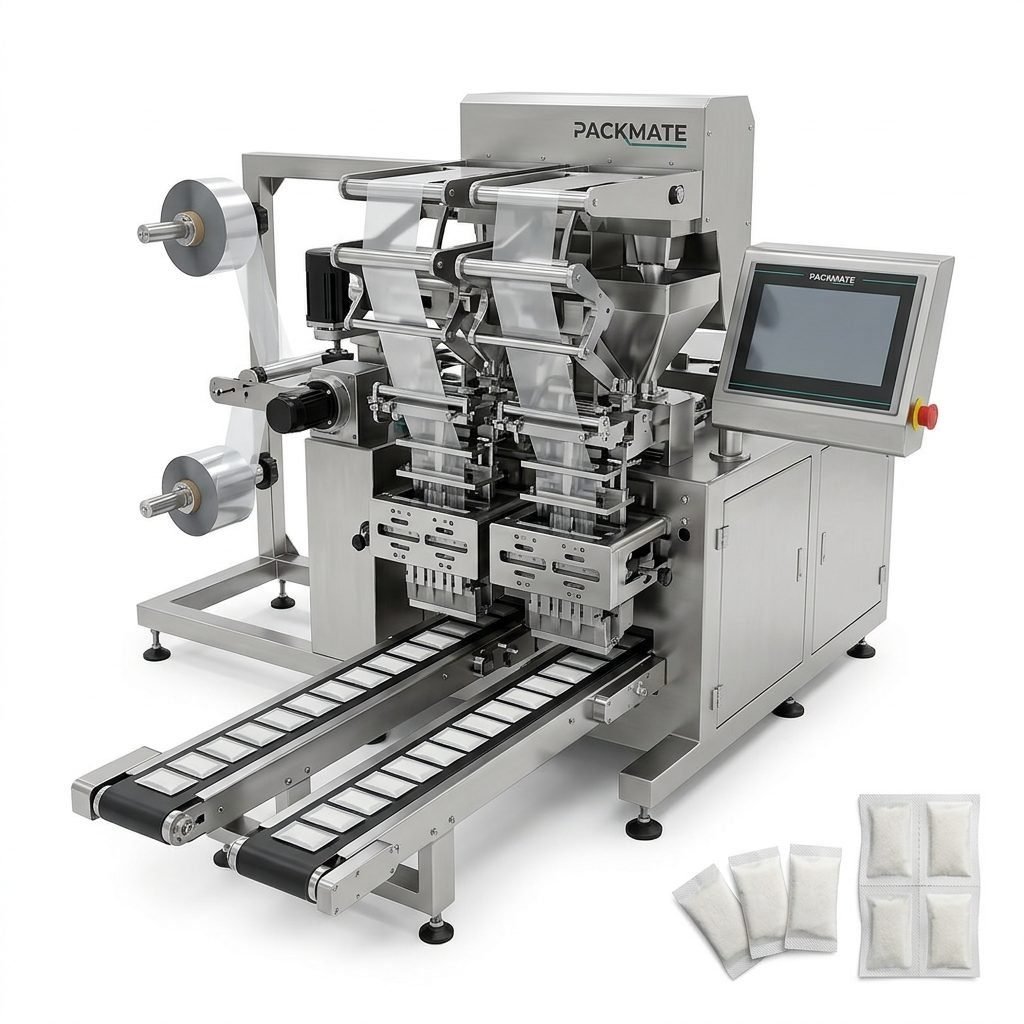
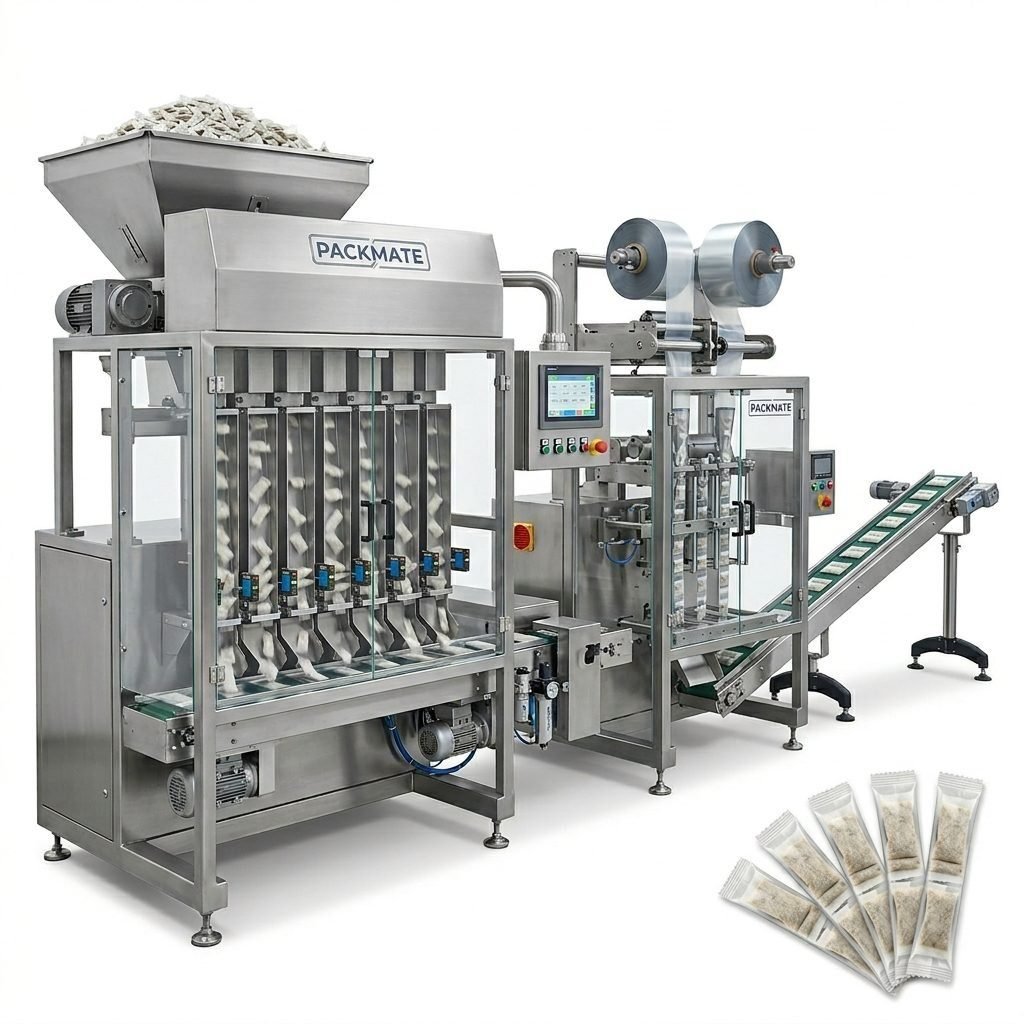
When throughput is the priority, multi-lane packaging machines are the solution. They enable simultaneous filling and sealing across multiple lanes, multiplying output without proportional increases in floor space. However, design details matter: lane synchronization, film handling, pouch forming accuracy and downtime recovery determine real-world performance.
Key Technical Criteria
Synchronized servo drives — ensure each lane operates in perfect timing for accurate pouch formation and sealing.
Precision dosing — weighers and auger fillers with tight tolerances reduce product giveaway and maintain consistent pouch weight.
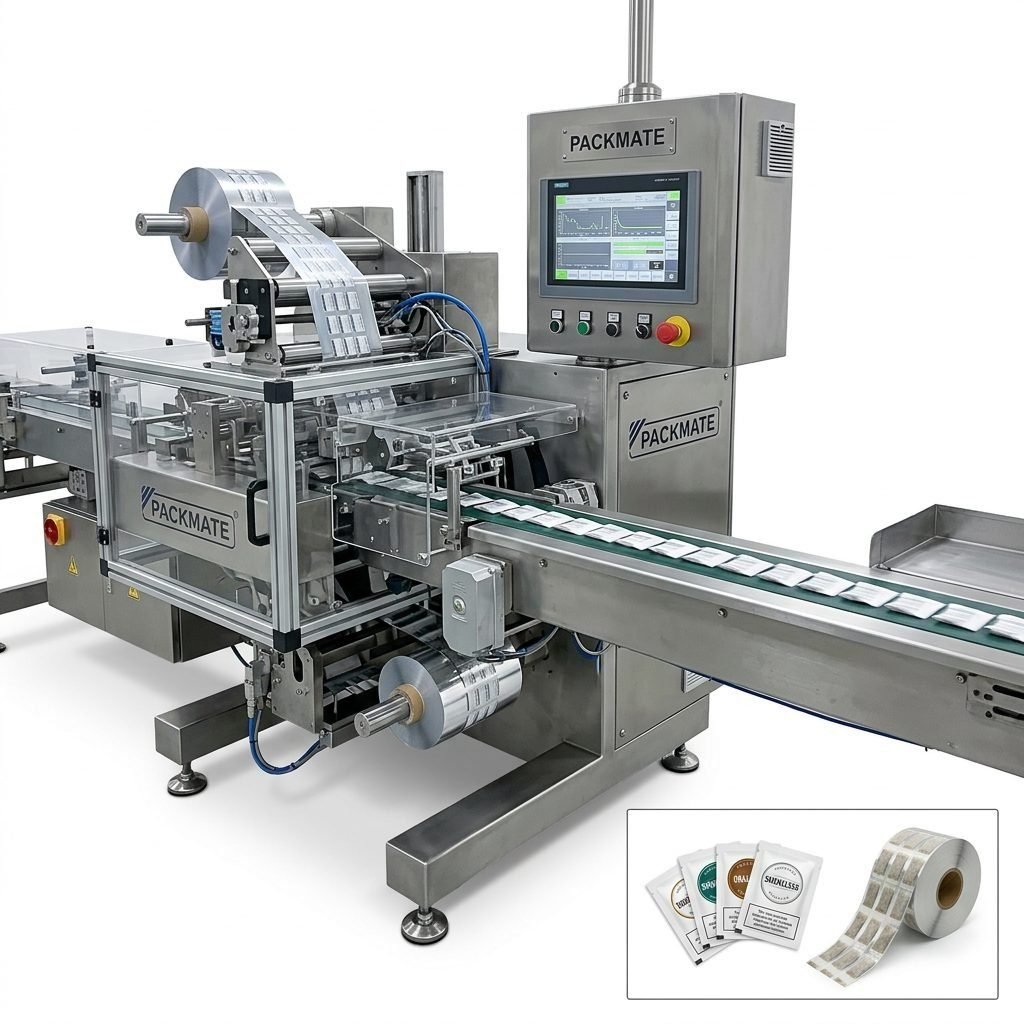
Robust film handling — accurate tracking, tension control and splice detection prevent film wrinkles, misfeeds and production stoppages.
Customization & Flexibility: Supporting Diverse Formats
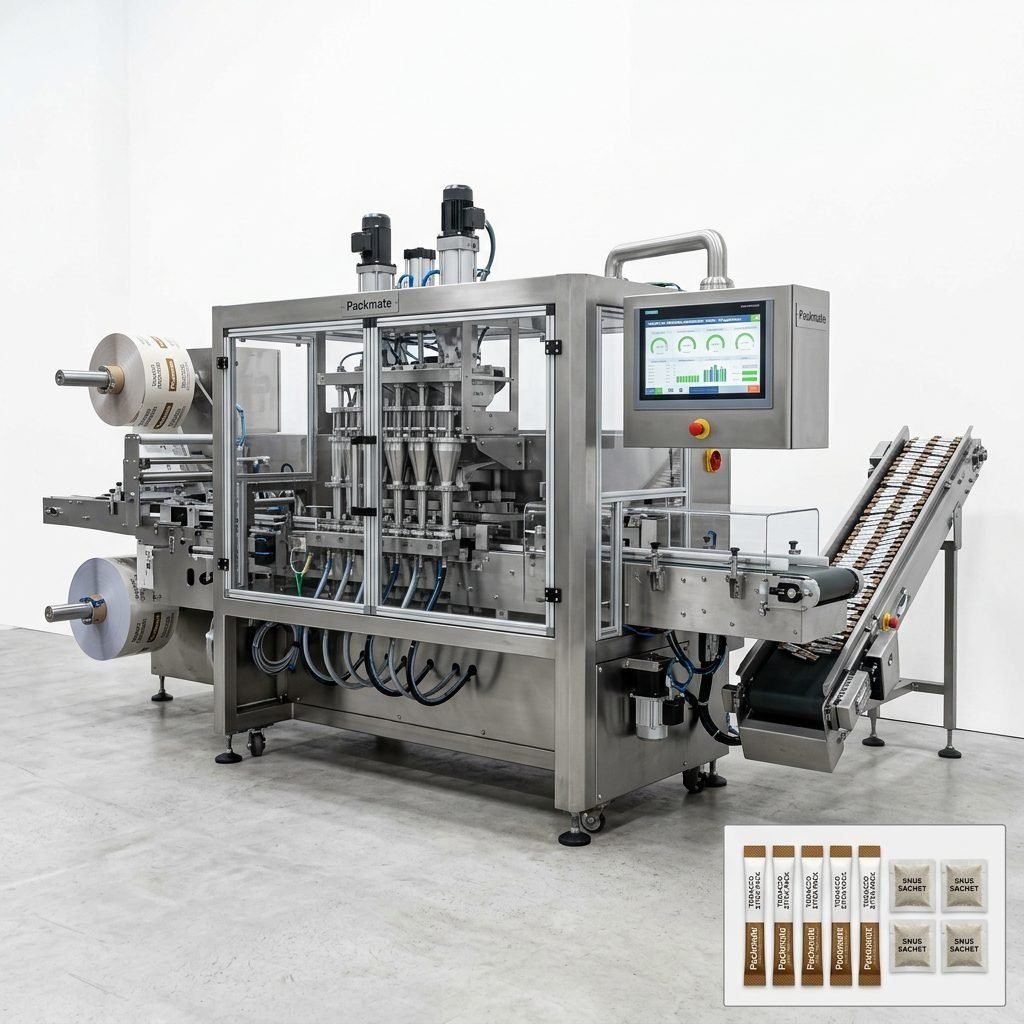
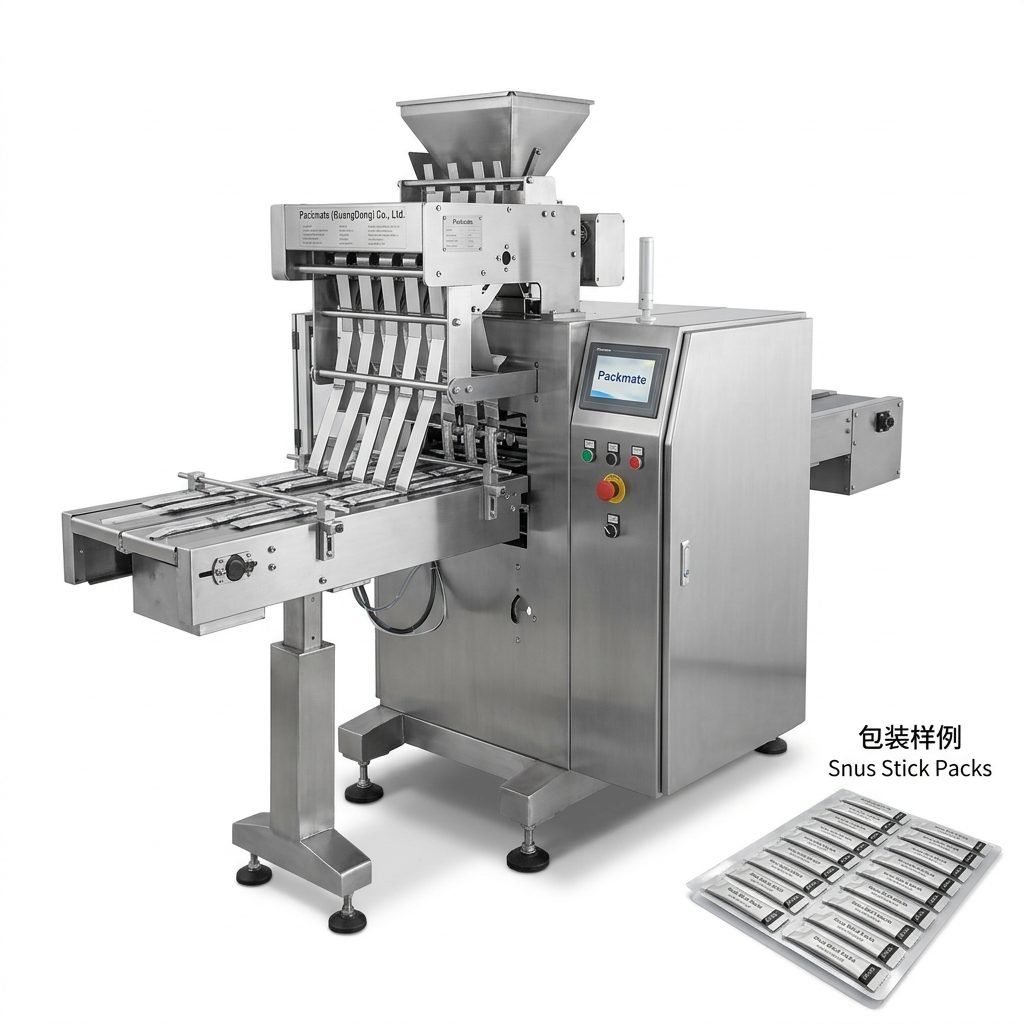
Markets and regulations vary across regions; therefore, flexibility is crucial. Look for machines that support interchangeable tooling, easy recipe management, and quick format changes. This allows production of different pouch types — flat pouches, stick packs, sachets, or pre-formed pouches — on the same base machine with minimal mechanical adjustments.
Typical Custom Options
Interchangeable forming sets — for rapid format swaps between sticks and pouches.
Integrated dosing modules — gravimetric weighers, auger fillers or vibratory systems depending on product characteristics.
Customized user interface — operator screens with multi-language support and recipe storage for consistent set-up.
Quality Control & Food-Safe Engineering
Hygiene and product safety are paramount. Machines built for snus and nicotine pouches must meet stringent cleaning and material standards. Stainless steel construction, easy-to-clean surfaces, minimized crevices and sealed electrical components reduce contamination risk and simplify maintenance.
QC Features to Prioritize
In-line metal detection and vision systems to verify seal quality, fill level and print legibility.
Hygienic casings with easy access panels and tool-free removal for faster cleaning.
Traceability modules that log batch numbers, operator IDs and production parameters for audits and recalls.
Turnkey Production Lines: Integration & Support
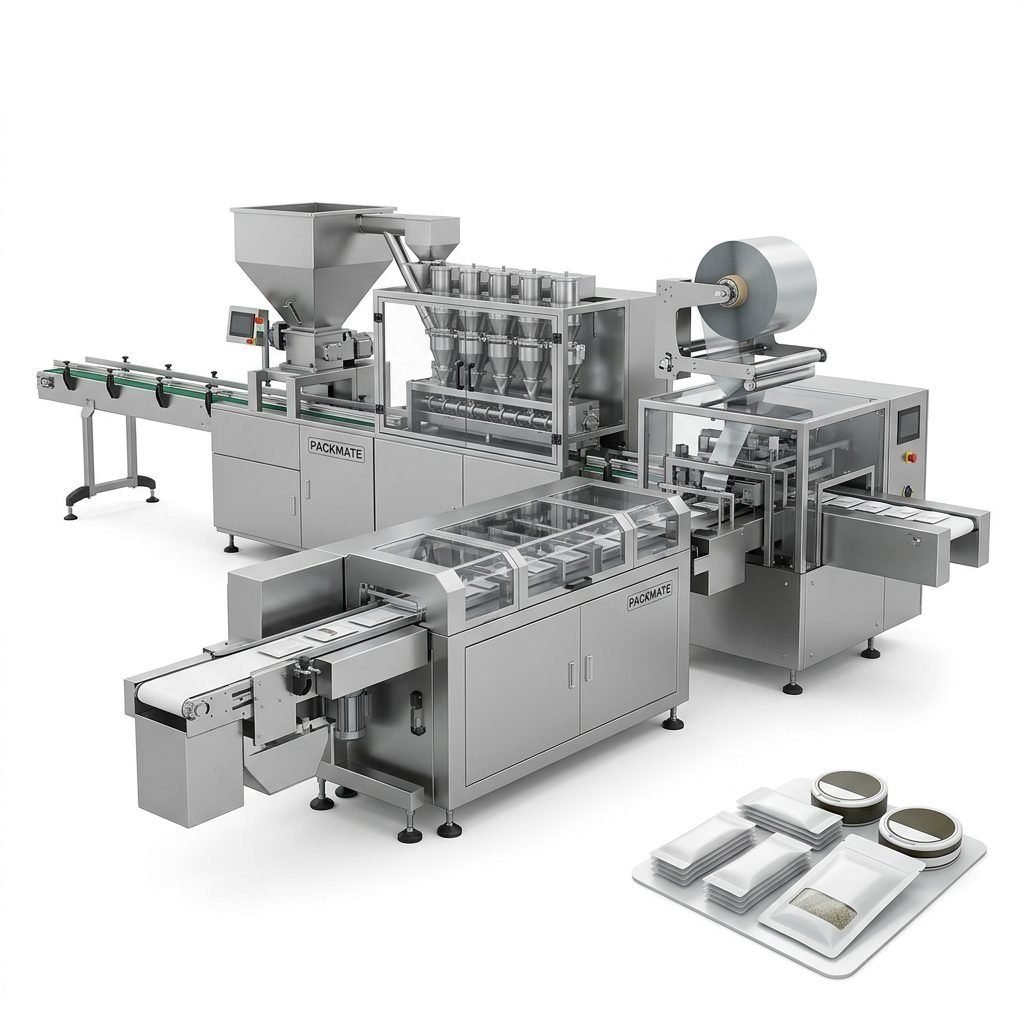
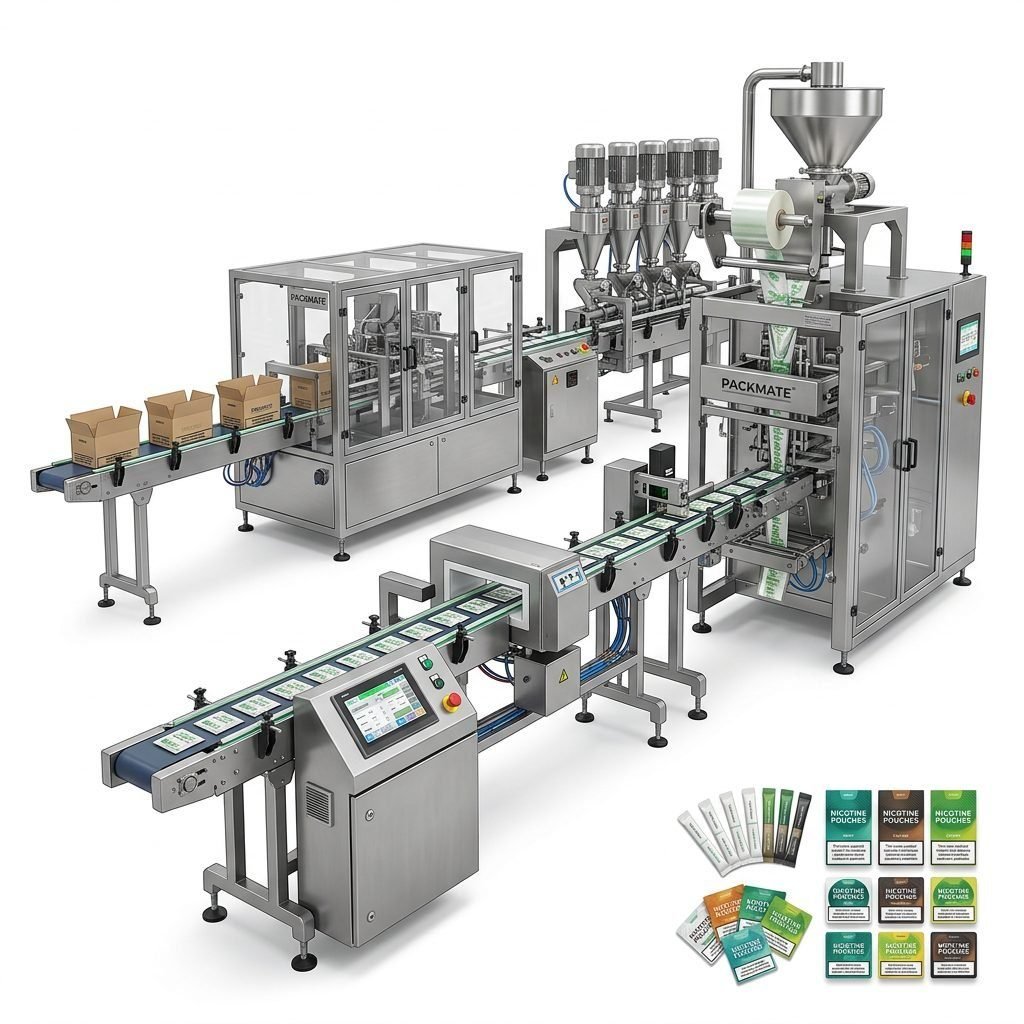
A complete snus production line integrates upstream product dosing, pouch forming, sealing, coding, and downstream cartoning and case packing. Partnering with an experienced manufacturer reduces integration risk and accelerates time-to-market. Packmate Snus Machine, for example, offers modular solutions that include filling, weighing, packaging and auxiliary equipment tailored to nicotine pouch production.
Explore product categories and system examples to match your needs:
- Snus & Nicotine Packaging Machines
- Sachet & Stick Pack Machines
- Weighing & Packaging Systems
- Filling & Packaging Lines
Installation & After-Sales
On-site commissioning and operator training shorten ramp-up time and reduce early production errors.
Spare parts kits and preventive maintenance programs help maximize uptime.
Remote support via secure connections for diagnostics and software updates improves response times.
Selecting the Right Supplier: Questions to Ask
Choosing the right equipment partner is as important as the machine specifications. Beyond performance figures, evaluate a supplier’s manufacturing capacity, certifications, field references and global support footprint. A strong partner will provide CE/ISO documentation, case studies and on-site demonstrations at trade shows or local installations.
Factory capability: do they own advanced CNC machining centers and precision assembly lines?
Proven cases: can you review similar installations or international references?
Certifications: ask for CE, ISO and test reports relevant to your market.
Cost Considerations & ROI
High initial investment in automation is offset by labor savings, reduced product giveaway, lower scrap rates, and increased throughput. To evaluate ROI, model scenarios including average running speed, expected uptime, labor substitution, material savings, and maintenance expenses. Consider also lifecycle costs: flexibility and upgrade paths influence long-term profitability.
ROI Components
Throughput gains — faster cycles and parallel lanes increase daily output.
Material efficiency — accurate dosing and film usage reduce waste.
Labor reduction — fewer operators and simplified tasks lower payroll and error risk.
Real-World Examples & Case Studies
Established suppliers present case studies showing how modular multi-lane machines improved output for nicotine pouch brands and expanded production capacity with minimal footprint increase. Reviewing case references helps validate claimed performance metrics and service quality. You can find real project references, certificates and exhibition activity on supplier pages to corroborate claims and explore machine demos.
Learn more about the company’s background and proven projects:
Implementation Checklist: From Inquiry to Production
To ensure a smooth project, follow a structured plan: define product specifications, request machine layout drawings, confirm utilities and floor loading, schedule FAT (Factory Acceptance Test), arrange commissioning and train staff. Clear milestones and acceptance criteria reduce surprises and accelerate ROI.
Start with samples: provide product samples and film materials early in the inquiry phase.
Schedule FAT: witness performance and acceptance tests before shipping.
Plan operator training: ensure smooth handover and consistent production from day one.
Contacting a Supplier & Next Steps
When ready to evaluate machines, prepare a clear RFQ that includes product specifications, target output, expected runtimes, environmental conditions and any certifications needed. Suppliers with dedicated service teams and a global footprint can support installation, spare parts supply and long-term service agreements.
For consultations, quotations or to arrange a factory visit, use the supplier contact page:
Additional Resources
To explore machine categories and supporting equipment, visit related product sections including auxiliary equipment and pouch/bag machines for downstream processing.
Final Thoughts
Investing in high-speed, reliable and customizable snus packaging equipment enables manufacturers to scale production while maintaining quality and regulatory compliance. By prioritizing modularity, hygienic construction, proven dosing technology and strong supplier support, companies can build resilient production lines that adapt to market demand and product variations.
Frequently Asked Questions
Q1: What throughput can I expect from a multi-lane snus packaging machine?
Throughput depends on lane count, pouch format and dosing method. Multi-lane systems multiply per-lane speed; common configurations deliver several thousand pouches per hour. Discuss product details with a supplier for realistic performance estimates and FAT validation.
Q2: Are these machines compliant with international standards?
Reputable manufacturers provide CE and ISO certifications and design equipment to meet food and pharmaceutical hygiene standards. Always request documentation and confirm compliance with your target market regulations.
Q3: How long does it take to install and commission a full line?
Installation timelines vary by line complexity. A single modular packaging machine may be commissioned in days, while a full turnkey line (weighing, filling, packaging, cartoning) can require several weeks including FAT, site preparation and staff training.
Q4: What support is available after purchase?
Leading suppliers offer on-site commissioning, operator training, spare parts, maintenance contracts and remote diagnostic services. Clarify SLAs and spare parts availability before signing a purchase agreement.
Q5: How can I view machine demos or company references?
Attend industry exhibitions or request a factory visit and FAT demonstration. Many suppliers also publish case studies and exhibition schedules online to arrange live or virtual demonstrations.