Choosing the right nicotine packaging machine manufacturer in Latvia requires more than price comparison — it demands a clear understanding of local regulations, product habits, machine performance and long-term service. This guide walks packaging managers, production engineers and procurement teams through practical, region-aware steps to identify a supplier who will deliver reliability, compliance and the best return on investment.
Understand the Latvian market and cultural context
Latvia sits at the crossroads of Northern Europe and the Baltics. Consumers are familiar with both Scandinavian and Central European product standards, and Russian-speaking communities remain an important segment. When selecting machinery and packaging solutions, consider:
Local regulation and EU law: Latvia follows EU directives. Historically, the sale of traditional snus has been restricted in the EU (with Sweden as an exception), so nicotine pouch production and packaging must comply with EU chemical, labeling and consumer safety regulations. Consult local legal counsel for the most current interpretation of nicotine product classification.
Language & labeling: Labels may need Latvian and English (and often Russian) to accommodate consumers and regulatory inspections. Machines that support multi-language printing and flexible label setups reduce localization headaches.
Environmental expectations: Baltic customers increasingly value recyclable packaging and lower material waste. Choose machines that minimize film scraps, use accurate dosing, and support recyclable materials.
Key manufacturer credentials to verify
When evaluating manufacturers — whether local European suppliers or reputable global OEMs — validate the following credentials:
✅ Certifications: CE and ISO are baseline requirements for safety and quality. Ask for copies of certificates and check their validity. Packmate supplies CE/ISO-compliant machines suitable for EU operations.
✅ Industry experience: Look for 10+ years of focused R&D in snus/nicotine packaging — specialized experience matters. Companies with decades of machine-building history are more likely to deliver engineered solutions.
Factory & production capability
Inspect or request detailed documentation showing the manufacturer’s factory footprint, machining centers, assembly lines and quality control processes. A 20,000㎡ facility with advanced CNC and precision assembly — like the one described in leading manufacturers’ profiles — signals capacity to handle custom projects, spare parts production and timely deliveries.
Machine portfolio and technical fit
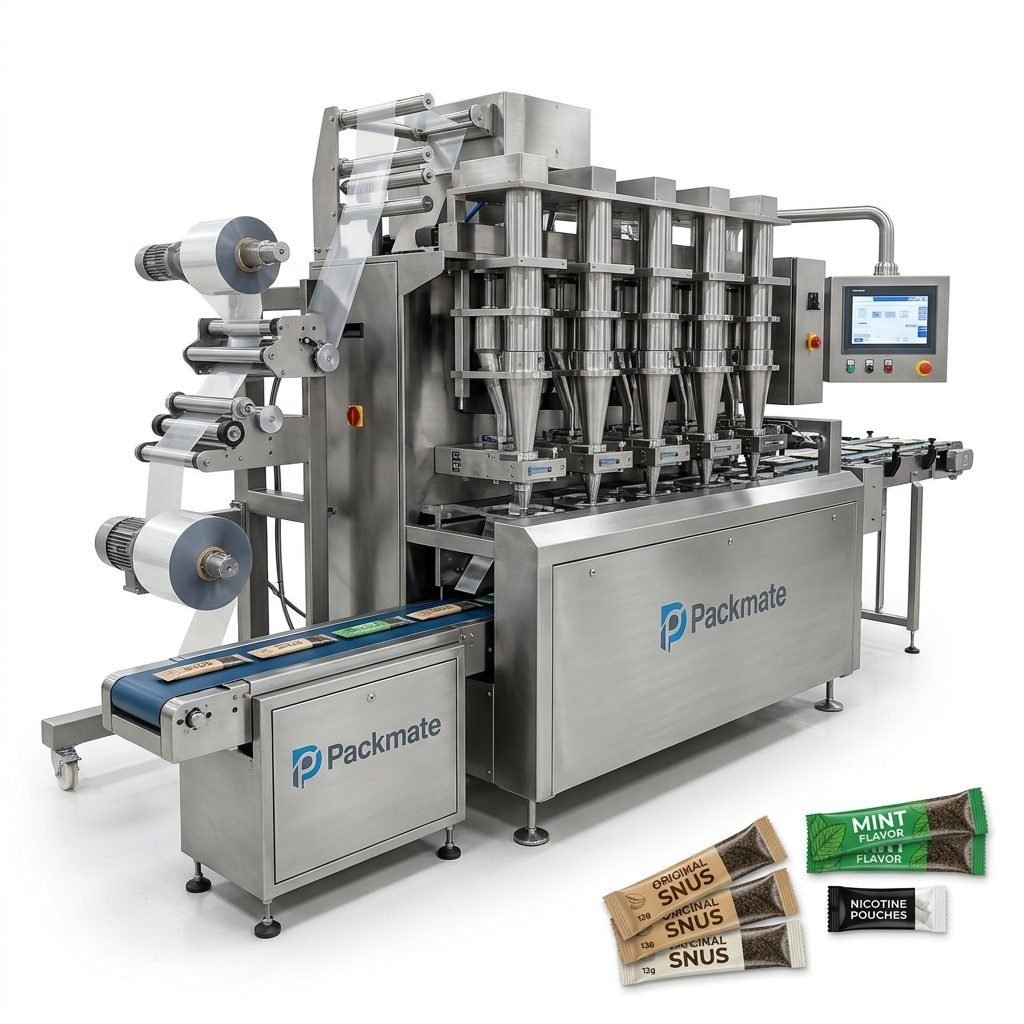
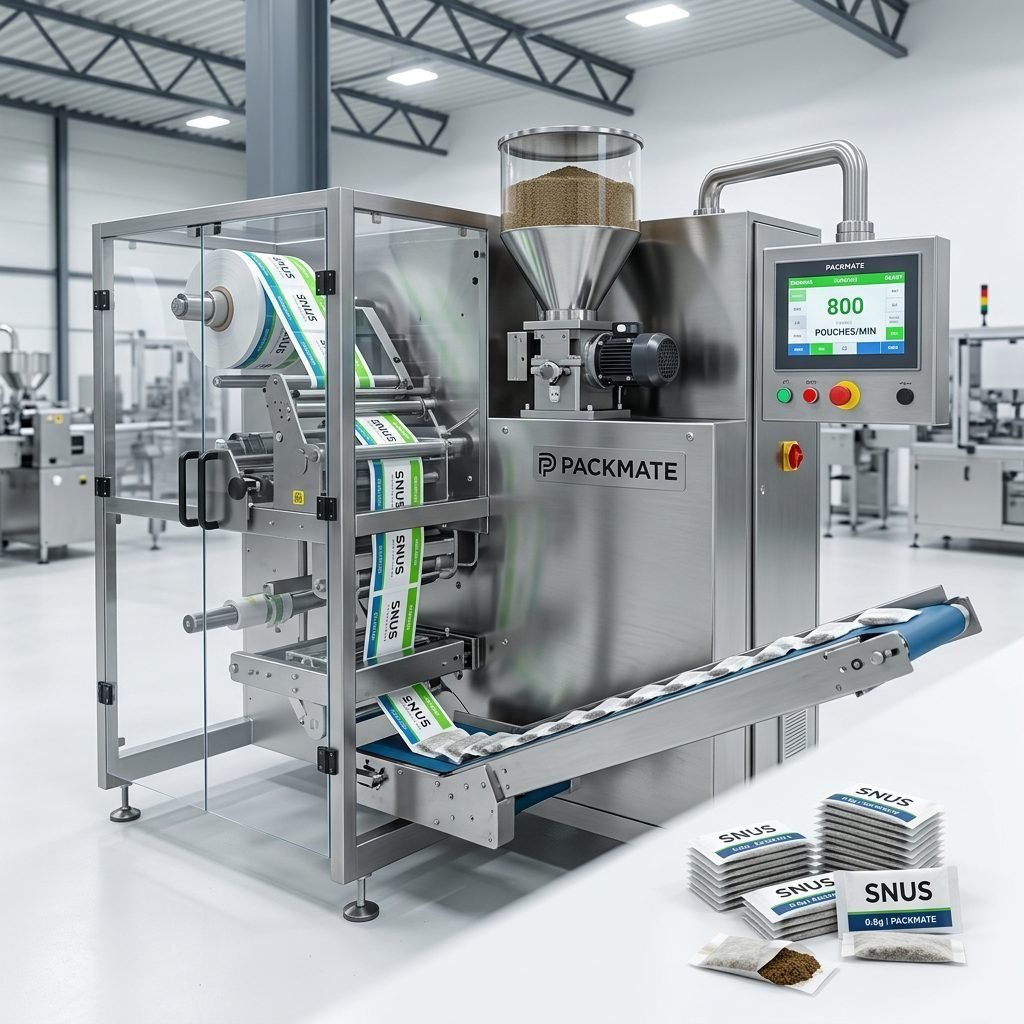
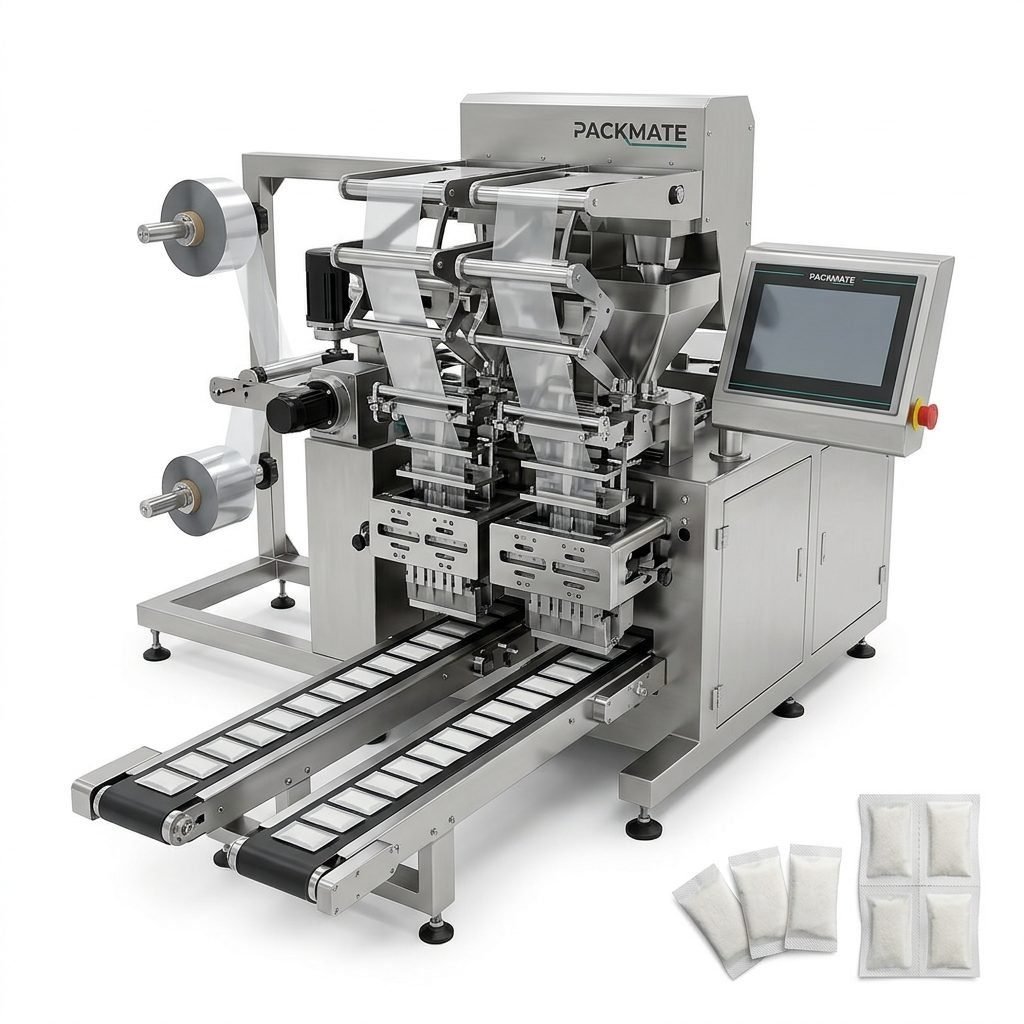
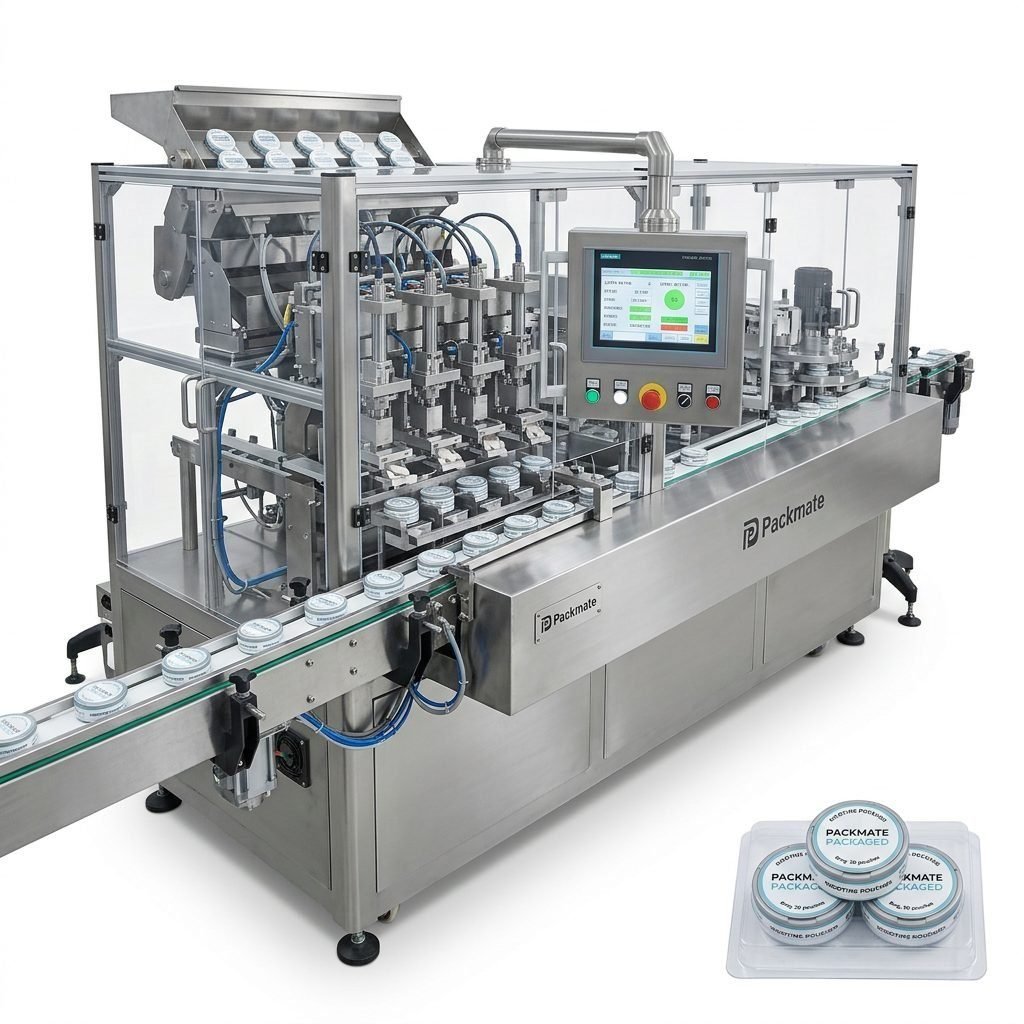
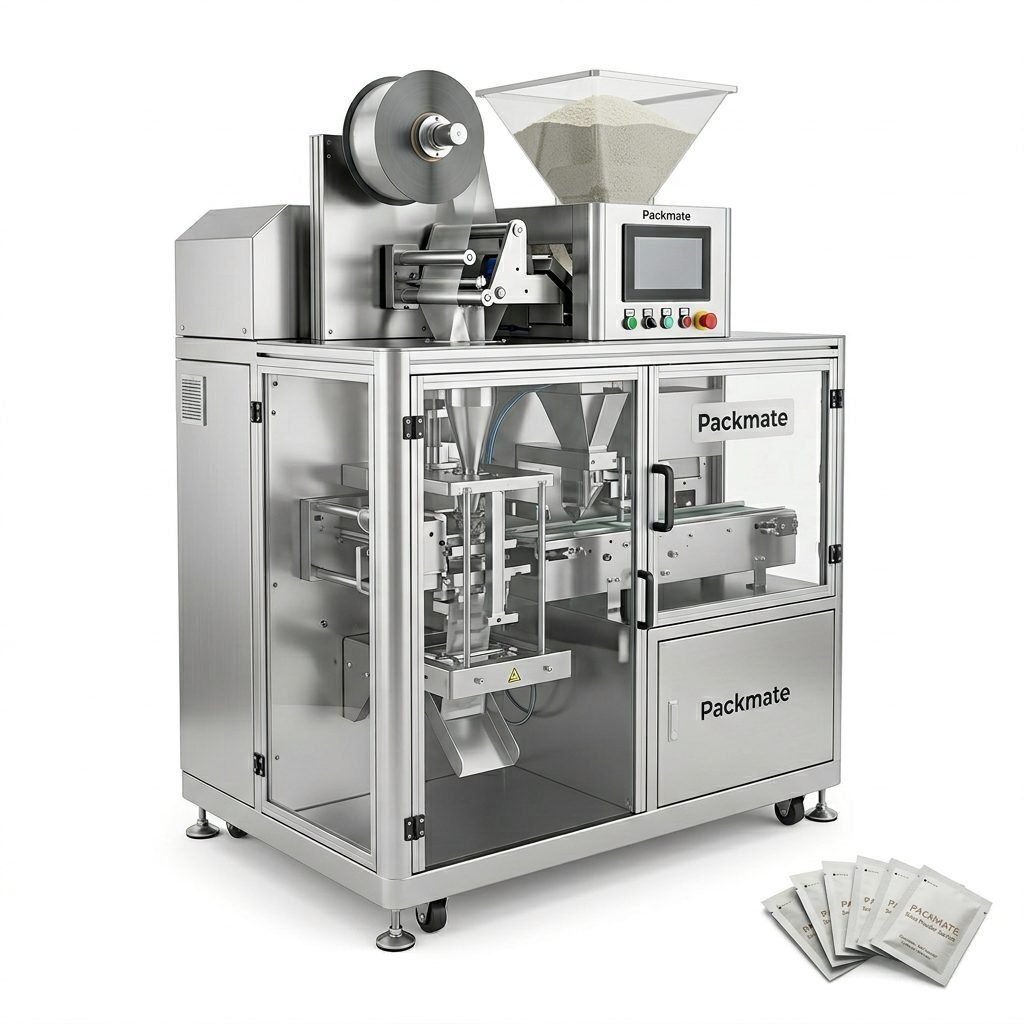
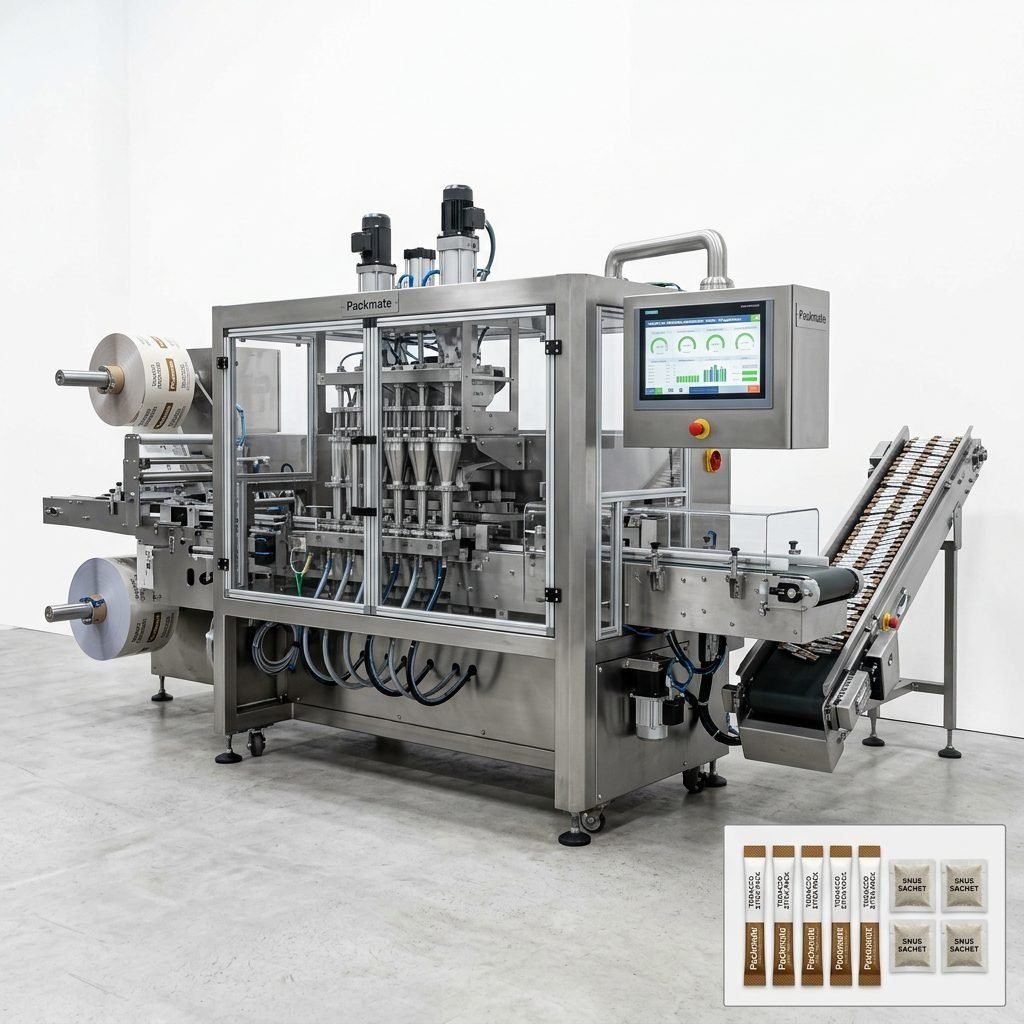
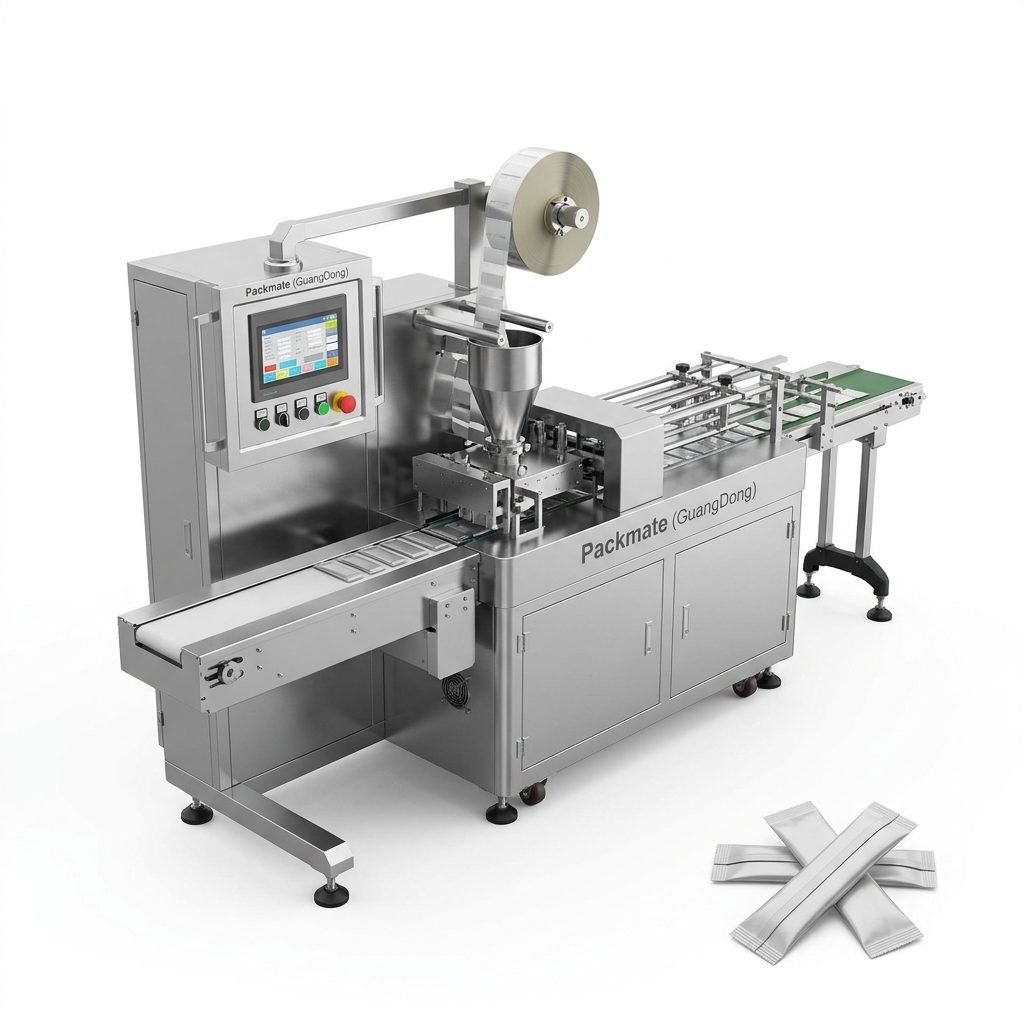
Nicotine pouch production varies: single-lane sachets, multi-lane stick packs, or high-volume multi-lane pouch lines. Confirm the supplier offers the right machine types (stick pack, sachet, multi-lane systems) and can adapt dosing, pouch size and sealing methods for your product. Explore dedicated solutions such as:
– Precision filling for low-dose nicotine: ensure weighing accuracy (mg-level control) and minimal cross-contamination.
– Multi-lane configurations to scale throughput while maintaining consistency.
– Hygienic design and easy sanitation for powder or moisture-sensitive formulations.
Technical features that make a difference
Machine specifications determine long-term performance. Prioritize:
🔧 Servo-driven motion & PLC control: smoother operation, faster changeovers and better synchronization between dosing and sealing.
🔧 Accurate dosing & weighing: essential for nicotine pouches to meet regulatory mg-dose claims and avoid product recalls.
🔧 Hygienic and dust-controlled design: powder handling components, proper sealing to avoid leakage, and easy-clean surfaces reduce contamination risks.
🔧 Tooling flexibility: quick mold change systems and modular tooling cut downtime when running multiple SKUs.
Automation & integration
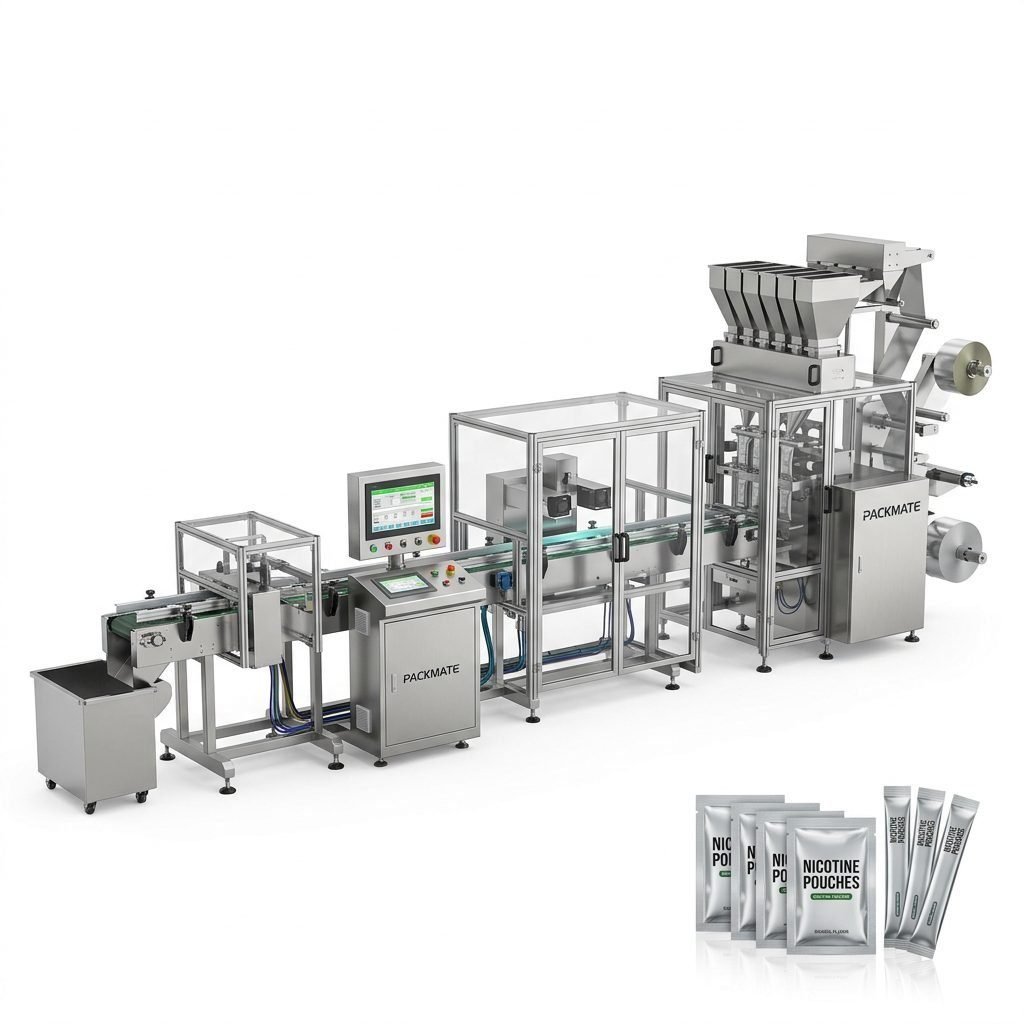
Modern nicotine packaging lines are often part of a wider production cell. Check the manufacturer’s ability to integrate weighing systems, pouch feeders, case packers and vision inspection. Manufacturers with full-line capabilities (weighing & packaging systems, filling & packaging lines, and auxiliary equipment) can provide smoother integration and fewer subcontractor disputes. See examples of integrated solutions here:
Weighing & Packaging Systems, Filling & Packaging Lines and Auxiliary Packaging Equipment.
Service, spare parts and local support in Latvia
After-sales service determines uptime. For Latvian operations, confirm:
– Spare part availability in Europe or fast shipping from the factory.
– Remote support (VPN access, HMI language options) and scheduled on-site visits.
– Local technicians or certified partners who can respond in Latvian/Russian/English. Manufacturers that exhibit at European trade shows and maintain global partners typically provide stronger support networks — see exhibition footprints and case histories for verification.
Our Exhibition and Case pages often indicate active global presence and hands-on demos.
Quality assurance, testing and acceptance
Insist on formal factory tests and acceptance criteria:
– FAT (Factory Acceptance Test) with your product and settings — require video evidence and sample packs.
– SAT (Site Acceptance Test) after installation in Latvia, plus operator training and maintenance manuals in the languages you need.
– IQ/OQ documentation if your facility requires validation records for regulatory compliance.
⚠️ Important: For nicotine products, sampling and dosing must be traceable — ensure the machine can log production batches and print lot codes or QR serialization for regulatory and recall readiness.
h3
Regulatory & environmental compliance considerations
Latvia follows EU-wide packaging and safety directives. Manufacturers should provide documentation that helps with:
– CE declarations and machine safety files.
– Material declarations for packaging films (e.g., recyclable polymer compatibility, migration certificates if in contact with nicotine pouches).
– Waste minimization features: film roll usage efficiency, scrap collection, and the ability to run thinner or recyclable films without compromising seal integrity.
Logistics, shipping and import tips for Latvia
If importing equipment from overseas, plan for customs, port handling and VAT. For Latvia, common logistics notes:
– Port of Riga and Riga Freeport are common entry points. Coordinate crane and forklift capacities at your site for installation.
– Ensure the manufacturer provides proper packing lists, certificates of origin and CE paperwork to speed customs clearance.
– Consider buying warranty extensions or spare-kits shipped with the machine to avoid downtime.
Cost analysis and ROI expectations
Evaluate total cost of ownership rather than just purchase price. Key cost drivers:
– Throughput and yield: higher-speed multi-lane machines reduce per-unit labor and packaging cost.
– Downtime risk: choose robust engineering and local service to lower lost-production costs.
– Material compatibility: machines that accept a broad range of films and pouches save retooling expense and open packaging innovation opportunities.
Questions to ask before signing a contract
Use this checklist during supplier discussions:
– Can you provide CE/ISO certificates and customer references within the EU?
– What are the lead times for spare parts and how are critical spares shipped to Latvia?
– Do you offer FAT and SAT with my product? What’s included in commissioning?
– Are operator manuals and troubleshooting guides available in English, Latvian or Russian?
– What training programs and warranty options exist for long-term maintenance?
✅ Pro tip: Ask manufacturers to demonstrate similar nicotine pouch lines via video or at exhibitions. Visiting a live demo reduces acceptance surprises — see exhibitor pages for upcoming shows.
Vendor selection roadmap (step-by-step)
1. Define product specs: pouch type, weight, target throughput and materials.
2. Shortlist vendors with relevant references and CE/ISO credentials.
3. Request technical proposals and sample runs (FAT).
4. Evaluate total cost of ownership, including spares, service and training.
5. Negotiate warranty, commissioning and acceptance criteria; schedule SAT on-site.
Why choose an experienced snus/nicotine packaging OEM?
Specialists bring design insights unique to nicotine pouches: precise dosing, moisture management and compact pouch sealing techniques. A manufacturer with decades of engineering history and a broad machine portfolio can deliver turnkey lines that combine pouch forming, dosing, sealing and secondary packing — which reduces integration risk and improves speed to market.
To explore specialized equipment options, consider reviewing product pages such as Snus & Nicotine Packaging Machines and Bag & Pouch Packaging Machines.
Final selection and next steps
After scoring vendors on technical fit, service capability and compliance, plan a phased implementation: pilot run on a single SKU, operator training, and scale-up only after performance KPIs (yield, accuracy, uptime) are met. Maintain direct communication with the manufacturer’s engineering team during installation and the first weeks of production.
📞 Need support? If you want tailored recommendations, contact the manufacturer’s sales and service team to discuss your line layout, throughput goals and compliance needs. For more corporate details, visit About Packmate or Contact Us.
Common pitfalls to avoid
– Choosing the fastest machine without ensuring dosing precision.
– Overlooking spare-part lead times and local service.
– Assuming packaging materials are compatible with high-speed sealing — test materials early.
Conclusion
Selecting the best nicotine packaging machine manufacturer in Latvia combines technical due diligence, regulatory awareness and cultural localization. Prioritize proven machine accuracy, EU-compliant documentation, strong after-sales service and the ability to run localized labeling. A specialist OEM with comprehensive product lines and global experience offers the best route to dependable production and faster market entry.
Frequently Asked Questions
Q: What certifications should I require from a nicotine pouch machine supplier in Latvia?
A: Require CE for machinery safety and ISO (9001) for quality processes. Also request material declarations and any test reports relevant to food-contact or consumer-product safety.
Q: Are nicotine pouches regulated differently in Latvia compared to Sweden?
A: Sweden has historically had specific exemptions for snus; Latvia follows EU rules closely. Nicotine pouches may be subject to chemical and consumer product regulations — seek local legal advice before commercial launch.
Q: How important is local service and spare parts availability?
A: Extremely important. Rapid access to spare parts and technicians reduces downtime — verify the supplier’s European partners or guarantees for fast spare shipments.
Q: Should I buy a single high-speed machine or multiple smaller lines?
A: It depends on SKU diversity and risk tolerance. Multi-lane high-speed lines reduce labor and footprint but increase complexity. Multiple smaller lines can offer flexibility and simpler maintenance.
Q: How do I verify a supplier’s real-world performance?
A: Request FAT video of your product run, customer references in similar markets, and, if possible, an on-site demo at a trade show or customer location.