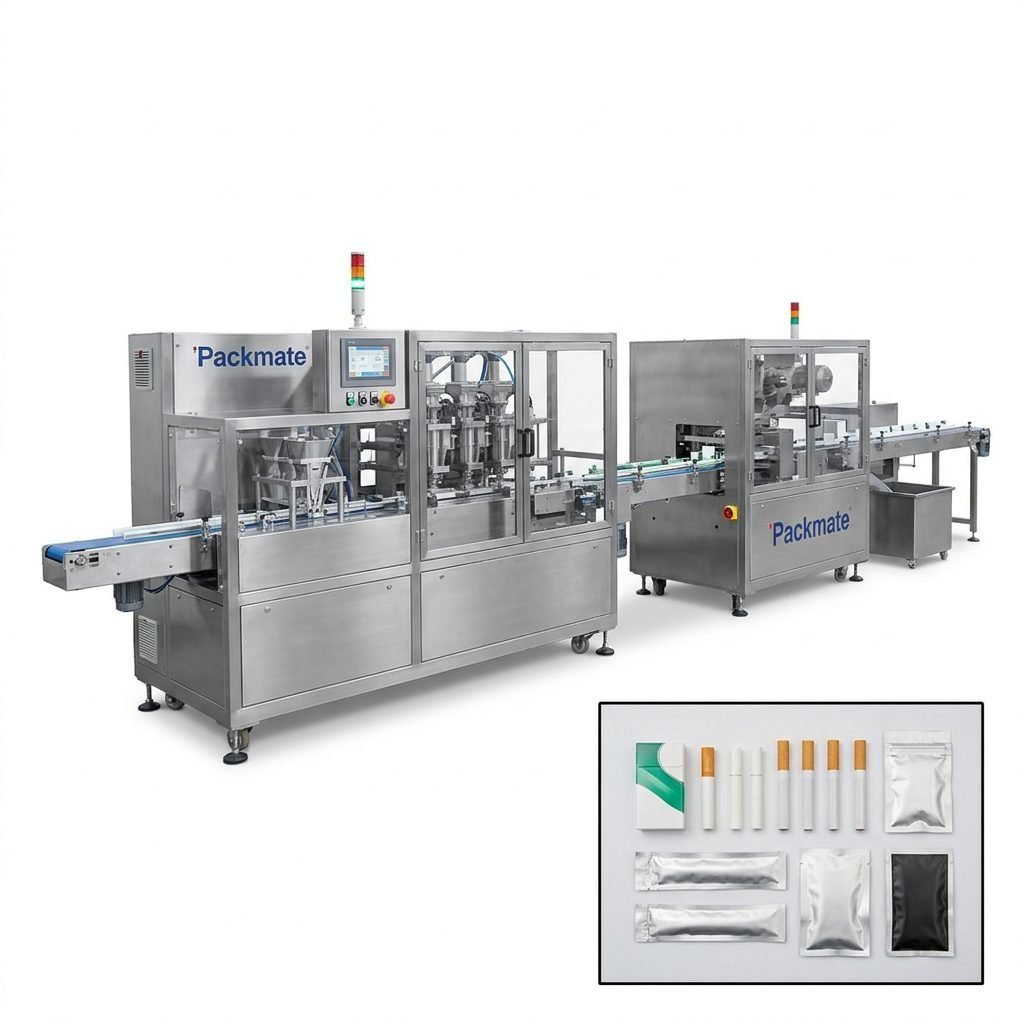
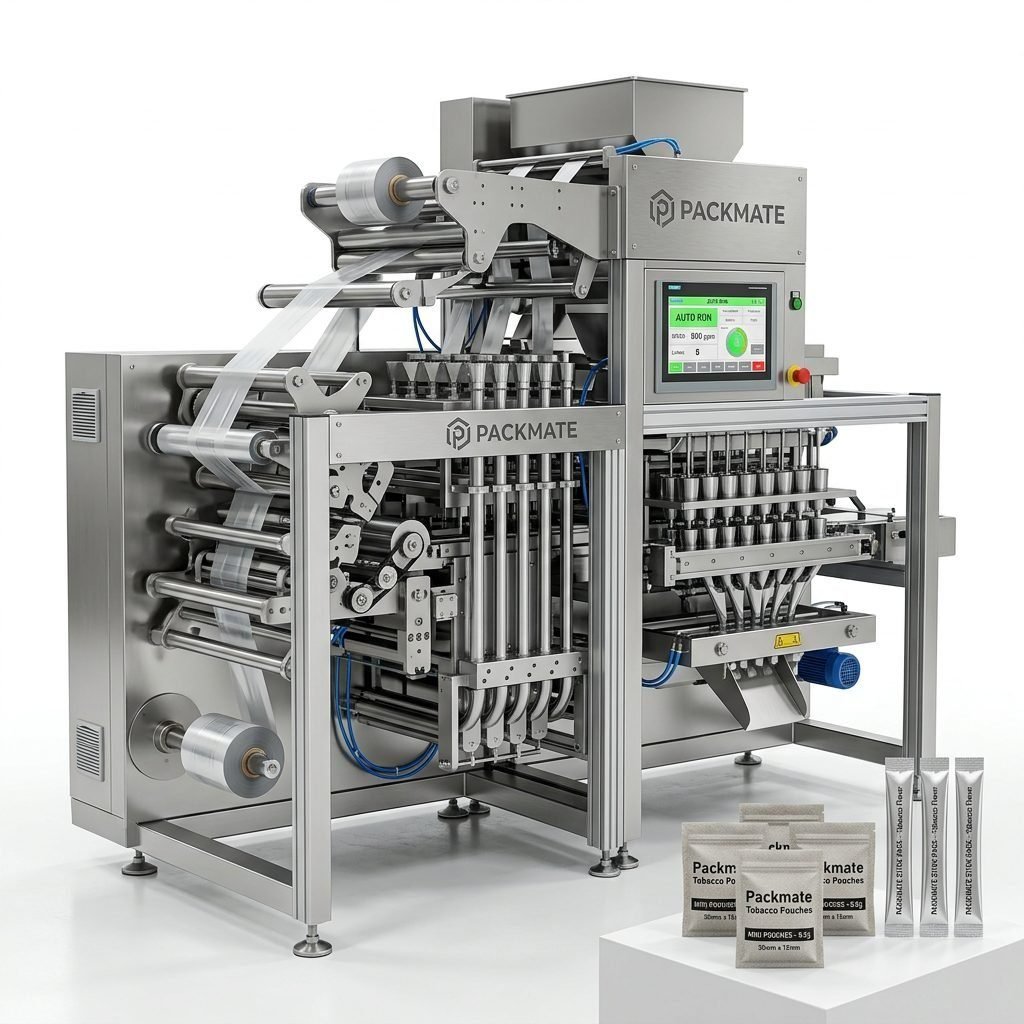
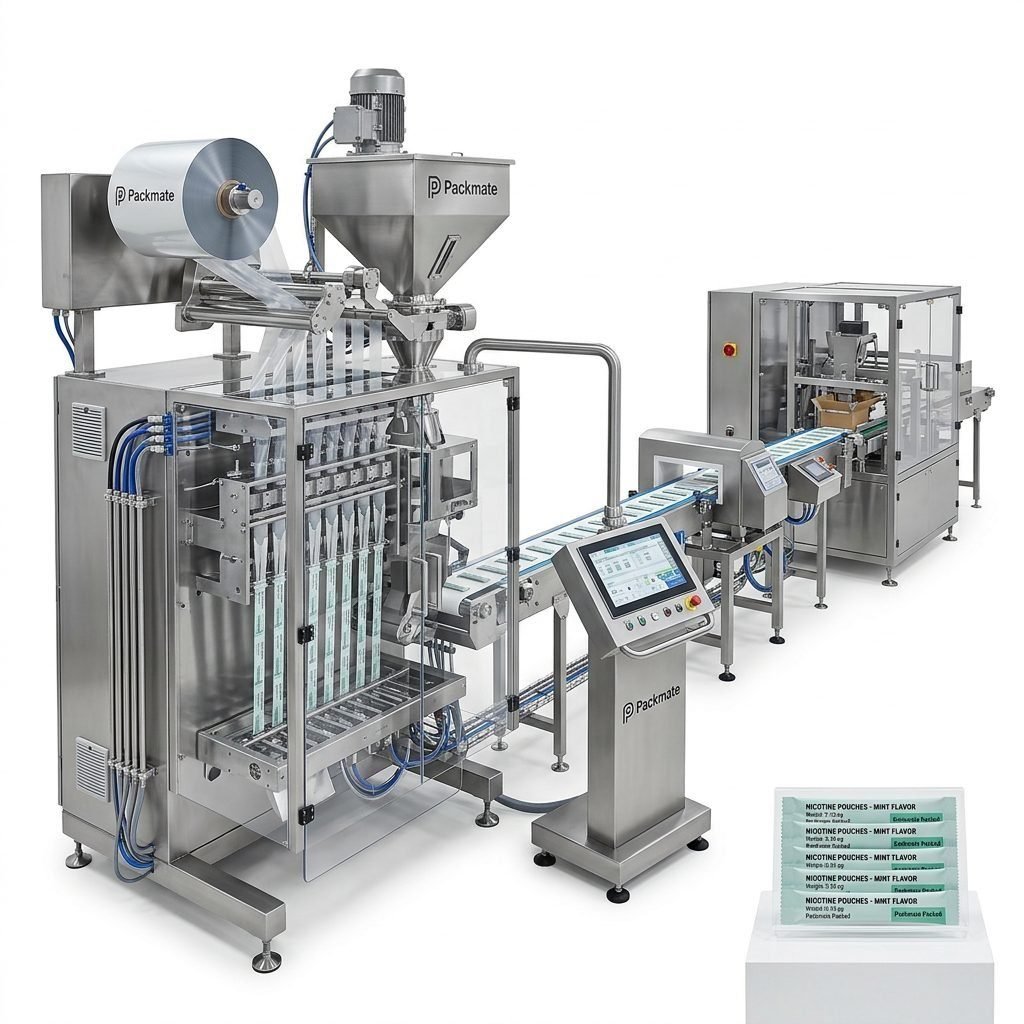
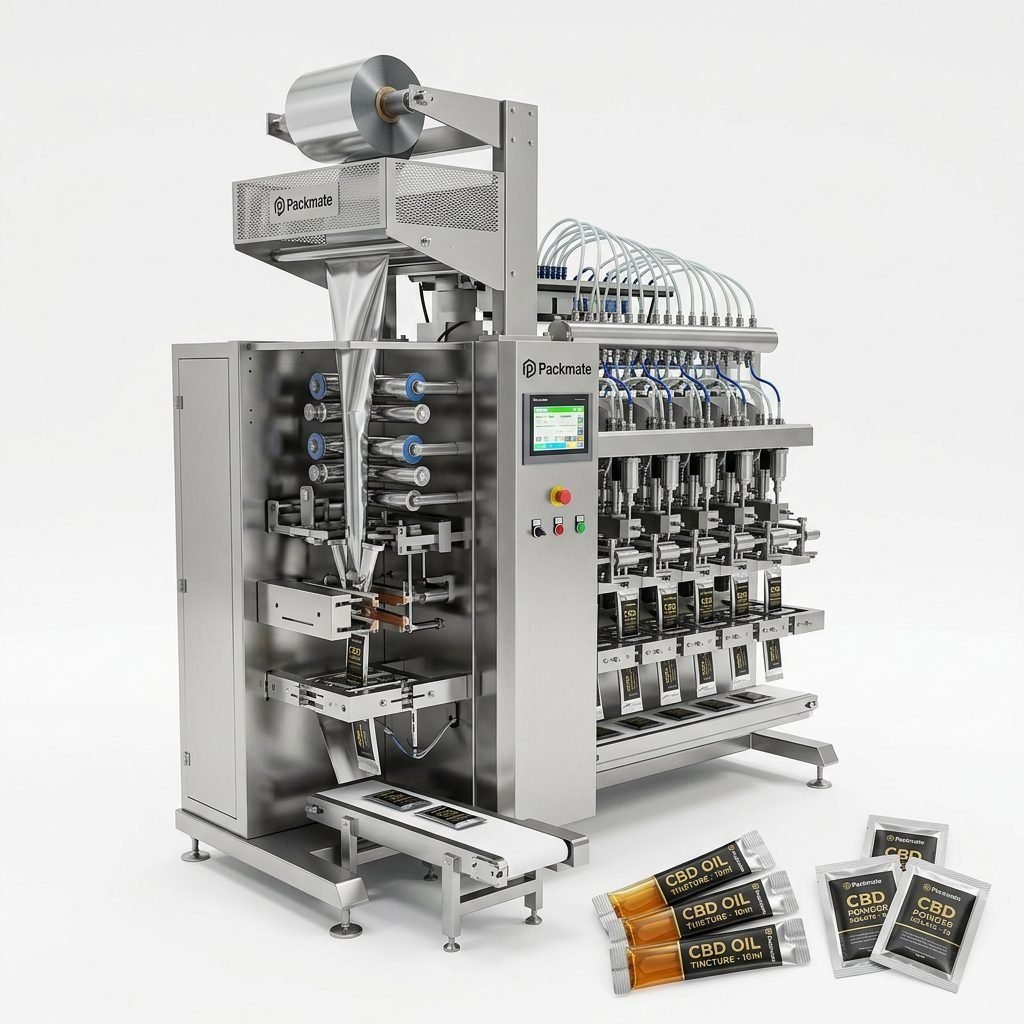
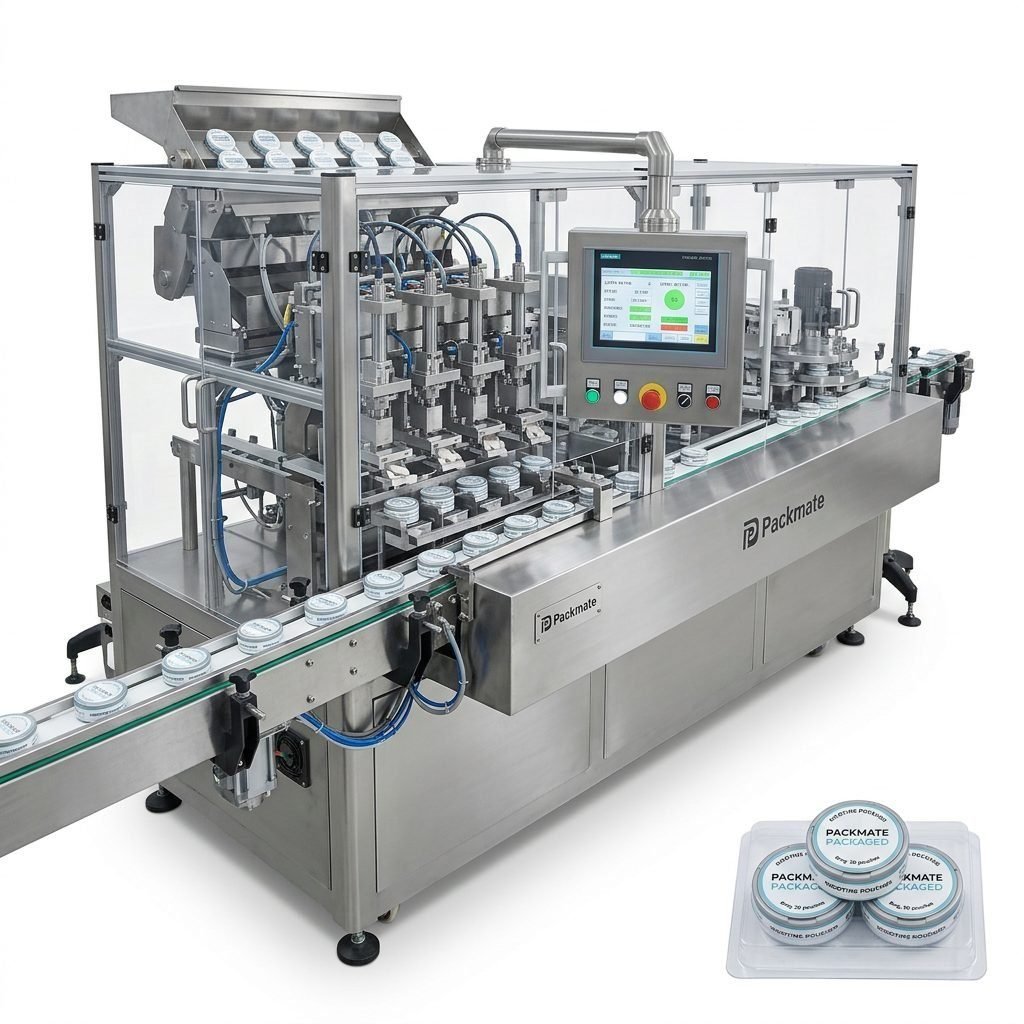
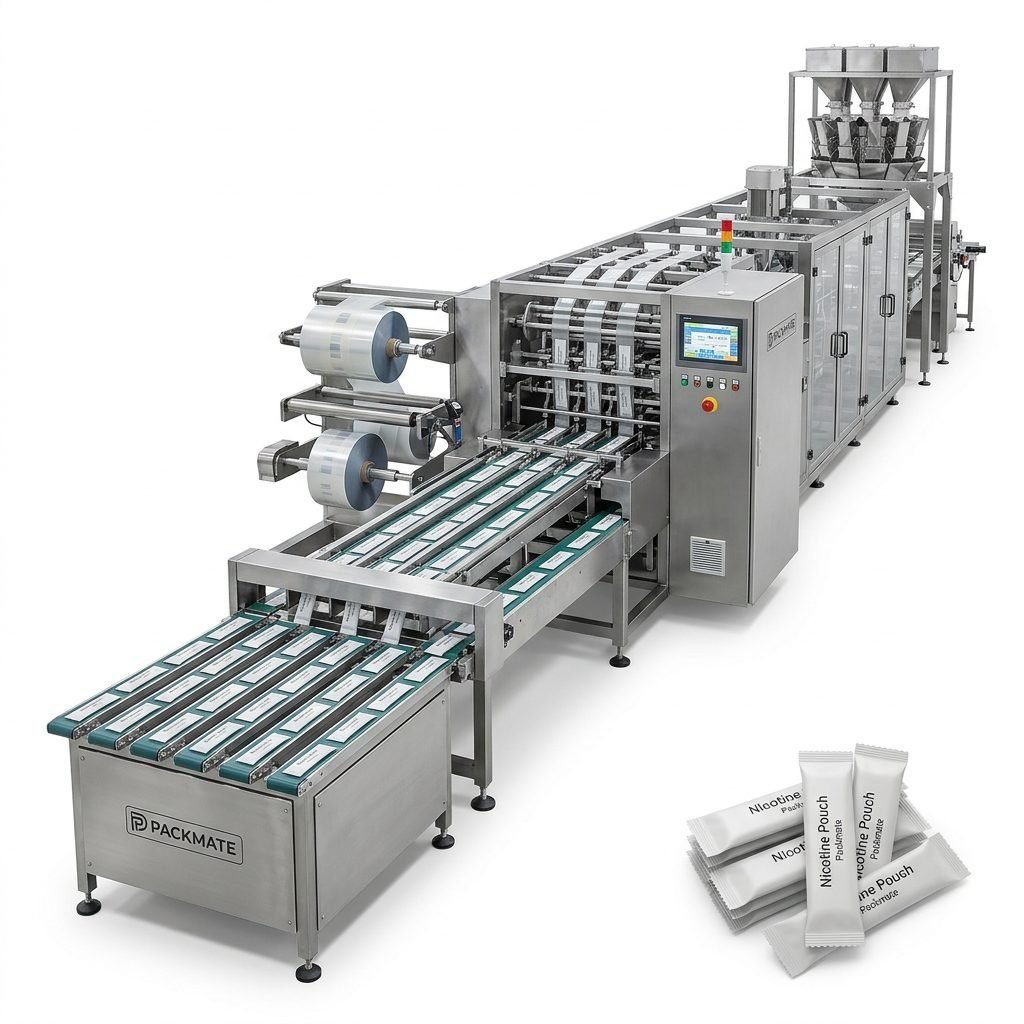
Designing, automating, and optimizing a snus factory production line requires a deep understanding of product characteristics, regulatory constraints, and modular packaging technology. This guide outlines practical steps and engineering considerations to build a high-efficiency snus and nicotine pouch manufacturing operation, from concept and layout to commissioning, quality control, and continuous improvement.
Understanding Snus & Nicotine Pouch Production Basics ⚙️
Snus and nicotine pouches are small-dose oral products that demand precision dosing, contamination control, and consistent sealing. Core process stages include raw material preparation, filling and dosing, pouch forming and sealing, secondary packaging (cartons, blister packs), and case/pallet packing. Each stage must be balanced for throughput, accuracy, and hygiene.
Key performance indicators (KPIs): throughput (pouches/min), dosing accuracy (mg variance), overall equipment effectiveness (OEE), and yield rate. Prioritize KPI targets early in design to drive equipment selection and line layout.
Selecting the Right Packaging Technology
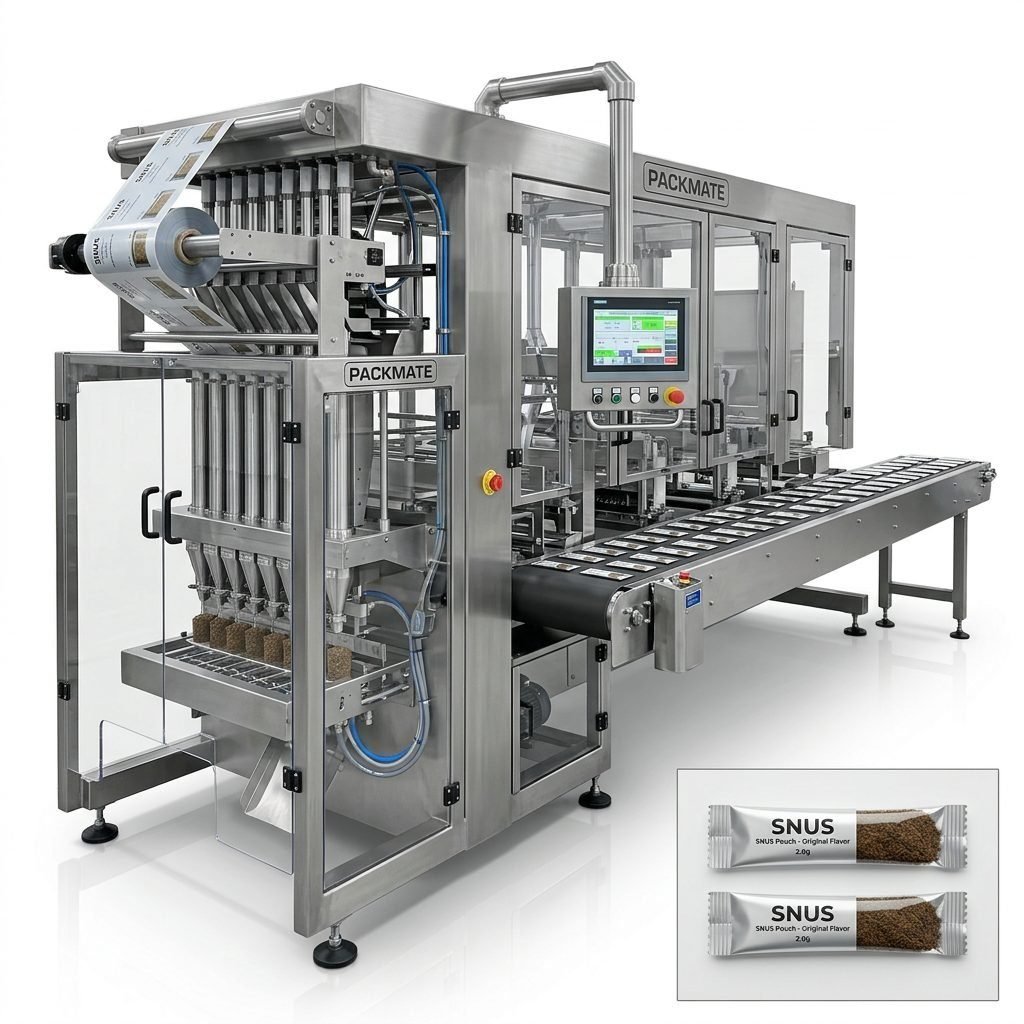
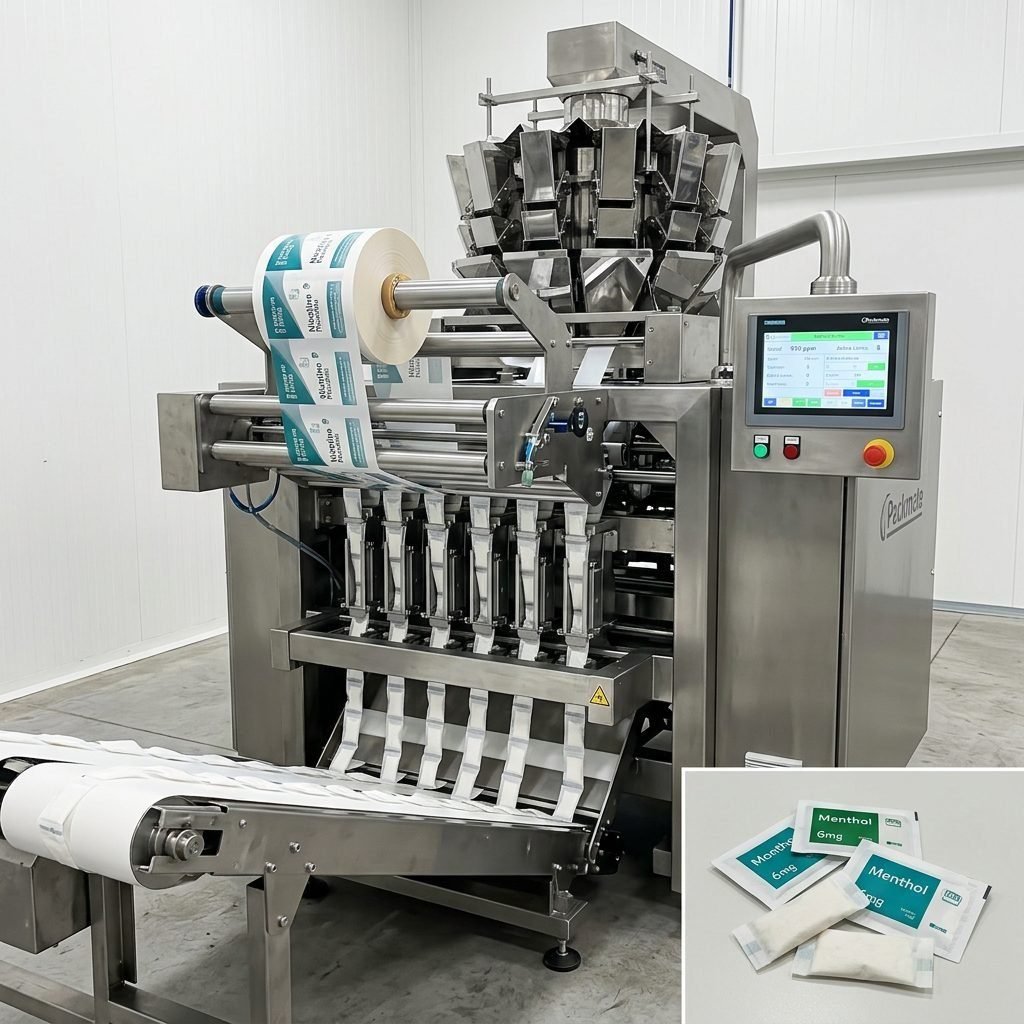
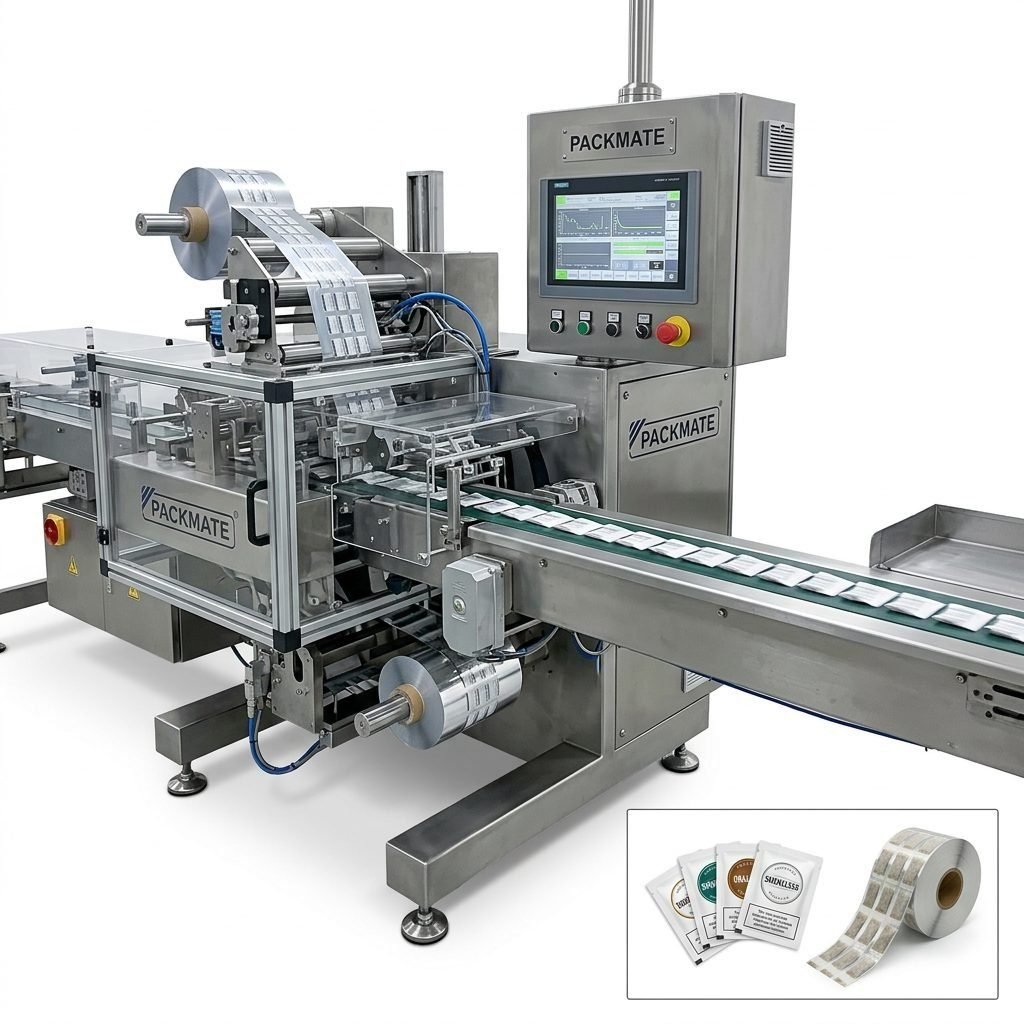
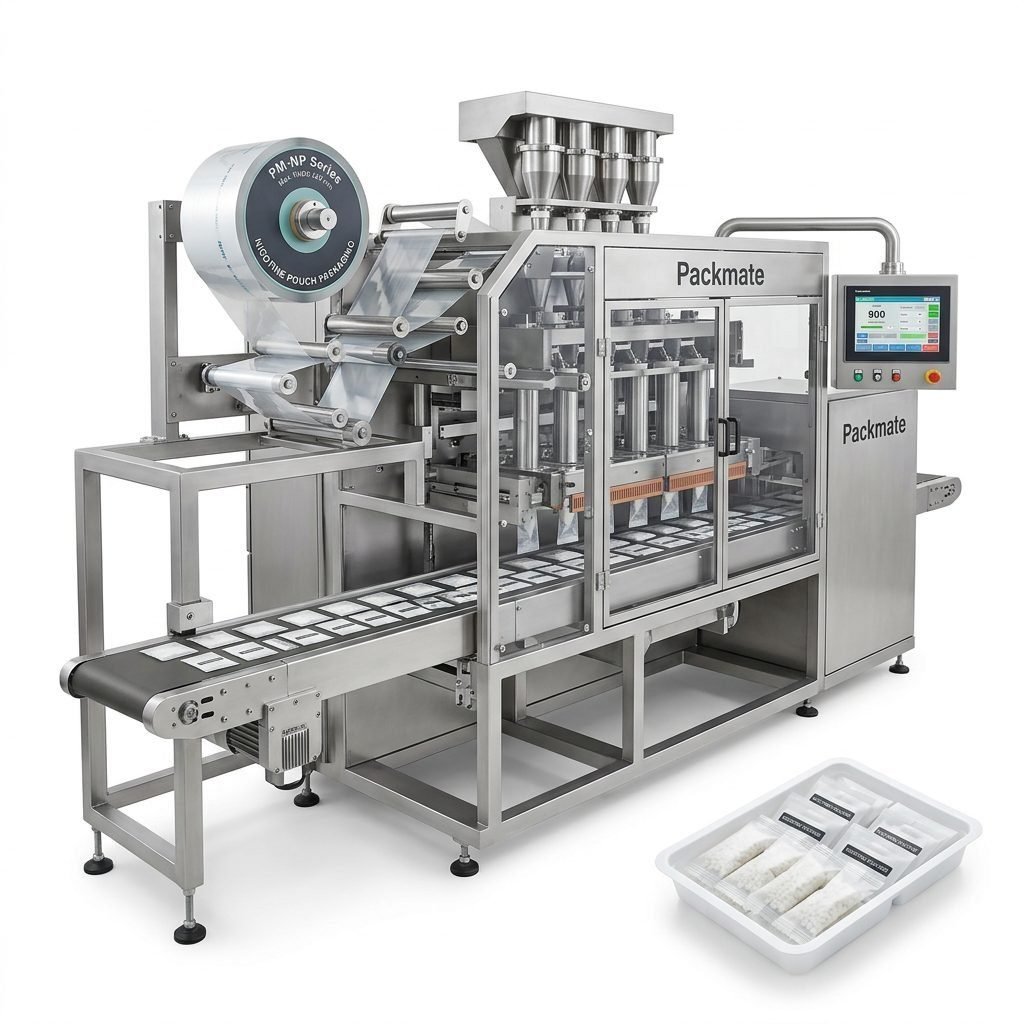
Machine choice determines product quality and flexibility. Options include stick pack systems for stick-like pouches, sachet machines for single-dose pouches, and multi-lane shuttles for high-volume nicotine pouch lines. Modular systems reduce downtime during product changeovers and allow capacity scaling.
For detailed machine options and models, review the manufacturer’s product pages such as
Snus & Nicotine Packaging Machines,
Bag & Pouch Packaging Machines, and
Sachet & Stick Pack Machines.
Layout and Flow — From Raw Material to Packing
A logical factory layout minimizes cross-contamination and material handling. Typical zones: raw material receiving and storage, formulation/blending, dosing & filling, pouch forming and sealing, secondary packaging, quality lab, and finished goods warehouse. Maintain directional flow from “dirty” to “clean” areas with appropriate air handling and personnel routes.
Tip: Consider multi-lane machines for small-dose pouches to multiply output without proportionally increasing floor space.
Automation Strategies for Efficiency
Automation improves consistency, reduces labor costs, and increases throughput. Key automation elements include automated weighing and dosing systems, servo-driven pouch forming and sealing, integrated checkweighers, vision inspection, robotic pick-and-place for secondary packaging, and PLC/HMI control with recipe management.
Use an integrated control architecture to synchronize upstream and downstream equipment, enabling smooth line speed adjustments and rapid product changeovers. Explore full-line solutions under Filling & Packaging Lines and Weighing & Packaging Systems to ensure compatibility.
Quality Control, Traceability, and Compliance
Regulatory compliance and product safety are non-negotiable. Implement in-line and end-of-line inspection for weight, seal integrity, and foreign material detection. Adopt batch traceability using barcodes or RFID at critical control points. Ensure machines meet CE/ISO standards and that documentation supports audits and regulatory filings.
Compliance highlight: Packmate’s equipment aligns with international standards—see Certificate for certifications and audit support.
Optimizing Throughput and Line Balancing
Line balancing eliminates bottlenecks by matching the capacity of upstream and downstream processes. Analyze takt time, cycle time, and availability. Increase parallel lanes, add buffer conveyors, or upgrade bottleneck machines to higher-speed models. Use data logging to identify repeat downtimes and their root causes.
Real-time dashboards and OEE tracking enable rapid decision-making. When introducing new SKUs, run pilot batches to validate throughput assumptions and adjust equipment settings before full-scale production.
Maintenance, Spare Parts and Reliability
Preventive maintenance and a robust spare parts strategy reduce unplanned stoppages. Keep critical spare parts on-site (seals, sensors, drive belts, PLC modules). Implement predictive maintenance where possible using vibration or thermal monitoring. Document maintenance procedures and train operators for daily checks.
Reliability metric: target Mean Time Between Failures (MTBF) improvements by 20% within the first year through preventive programs.
Scaling Up: From Pilot Line to Turnkey Production
Scaling from prototypes to full production requires modular design and clear milestones. Start with a pilot line to qualify recipes and processes, then expand lanes or add high-speed sealing/packaging modules. Work with turnkey suppliers to integrate utilities, conveyors, and automation to expedite validation and reduce commissioning time.
Exploration of turnkey offerings and global case studies can be found in the manufacturer’s Case and About Packmate pages to evaluate real-world transitions to high-volume production.
Packaging Materials and Sustainability Considerations
Material selection affects shelf life, machine performance, and environmental footprint. Barrier films preserve product integrity while recyclable or mono-material films can simplify end-of-life processing. Ensure film compatibility with sealing temperatures and machine sealing jaws to prevent leakage or weak seals.
Sustainability tip: evaluate reduced material thickness and mono-layer films to lower material usage without compromising shelf life.
Installation, Commissioning and Operator Training
Successful commissioning includes mechanical setup, electrical integration, safety guarding, and software recipe loading. Plan for on-site startup with supplier engineers, initial production runs, and operator training that covers basic troubleshooting and daily maintenance. Proper training shortens ramp-up times and ensures consistent product quality.
Cost, ROI and Business Considerations
Calculate total cost of ownership (TCO): equipment price, installation, spare parts, utilities, and labor. Estimate ROI using improved throughput, yield gains, and reduced labor costs. Consider modular investments to protect cash flow—start with a line that meets current demand and expand lanes as volume grows.
Business note: multi-lane machines often deliver lower per-unit costs when volumes exceed design thresholds—run sensitivity analysis for different demand scenarios.
Case Studies and Global Support
Choose suppliers with field-proven implementations and global service networks. Review documented cases and exhibitions to see machines in operation. For example, Packmate has a documented history of supporting multi-lane nicotine pouch systems and global turnkey deployments—see the manufacturer’s
Case and
Our Exhibition pages for demonstrations.
After-Sales Service and Spare Parts Logistics
Reliable after-sales service is critical. Confirm lead times for spare parts, remote support capability, and local service partners. Remote diagnostics and spare parts kits are essential to reduce Mean Time To Repair (MTTR) and maintain consistent production.
Support link: detailed service options and contact channels can be found on the Service and Contact Us pages.
Final Checklist Before Commissioning
Review: facility utilities (power, compressed air, water), material handling, safety systems, software integration, validation plans, training schedules, and spare parts inventory. Confirm that QA protocols and traceability systems are in place for regulatory reporting.
Next Steps and Where to Learn More
To explore machine specifications and system options, consult product catalogs and technical pages such as
Weighing & Packaging Systems and
Filling & Packaging Lines. For company background and capabilities, see
About Packmate.
In summary: successful snus production lines combine the right machine technology, careful layout, robust automation, stringent QC, and a strong service partner to achieve consistent, scalable, and compliant manufacturing.
Common Questions
Q1: How do I choose between single-lane and multi-lane pouch machines? A: Evaluate forecasted volumes, available floor space, and changeover complexity. Multi-lane machines maximize output per footprint but may require more complex maintenance.
Q2: What are typical lead times for a turnkey snus packaging line? A: Lead times depend on customization and capacity; basic lines may ship in a few months, while fully customized turnkey projects often require 6–12 months for engineering, manufacturing, and FAT.
Q3: How is product traceability implemented on packaging lines? A: Use batch coding, barcode labeling, and MES integration at critical control points. Many suppliers offer traceability modules that integrate with ERP systems.
Q4: What maintenance support should I expect from a packaging machine supplier? A: Expect documentation, spare parts lists, remote troubleshooting, and on-site service options. Confirm warranty terms and recommended spare parts kits before purchase.
Q5: Can I see examples of installed lines and client references? A: Yes—review case studies and exhibition demonstrations on the manufacturer’s Case and Exhibition pages to verify field performance and integration examples.