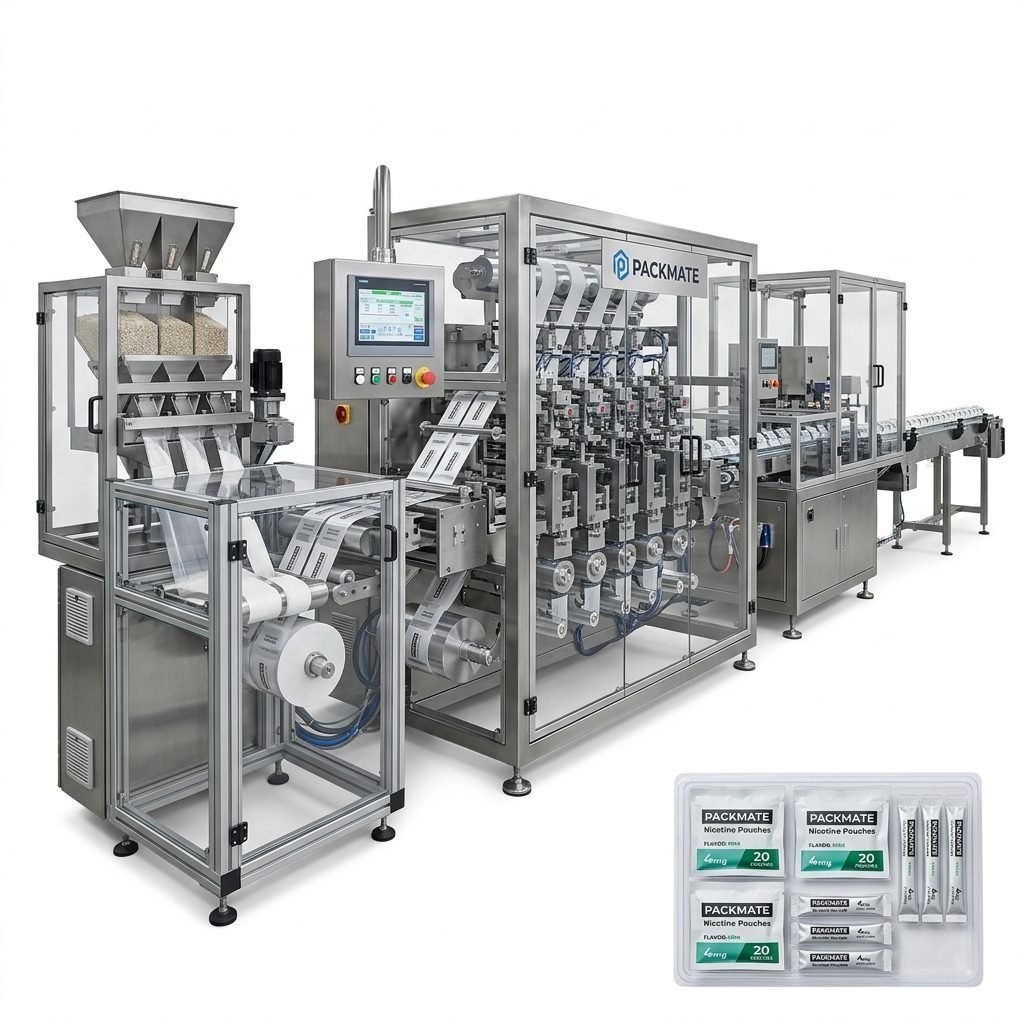
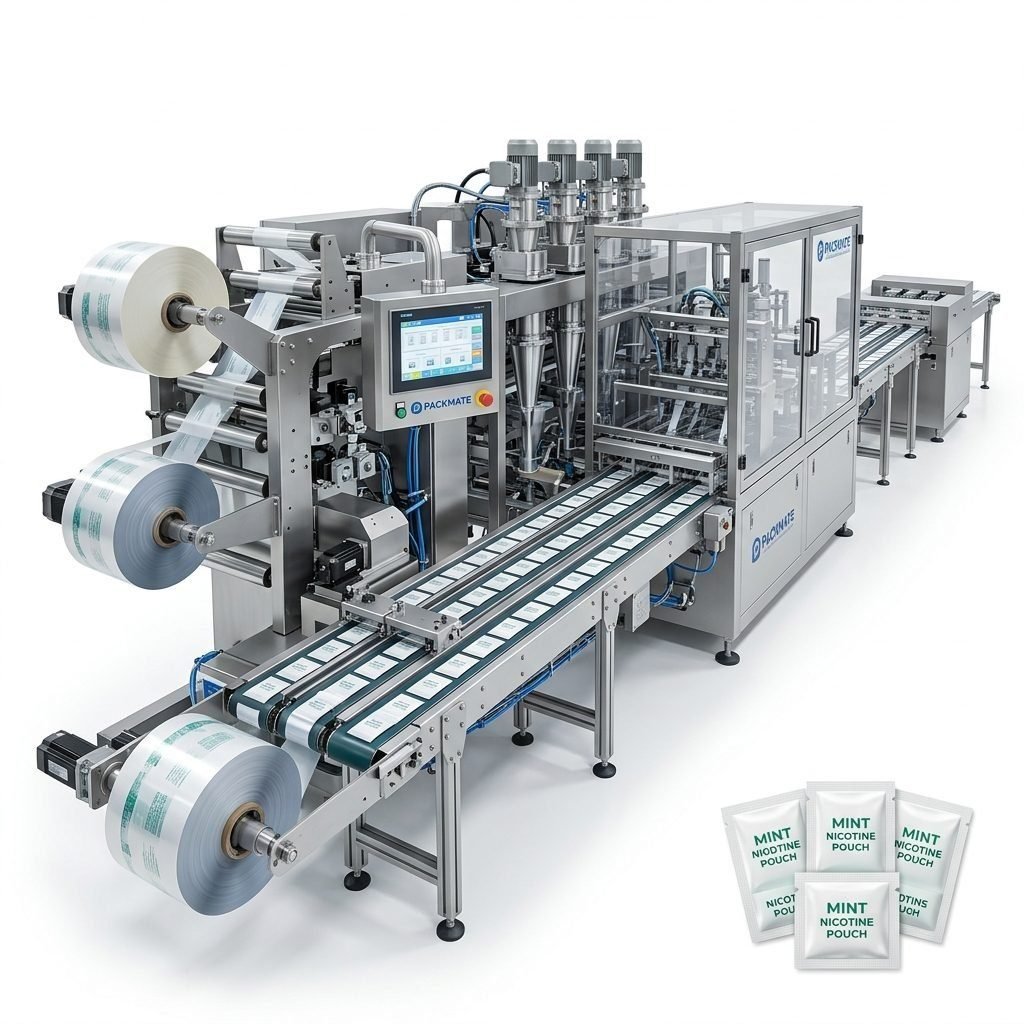
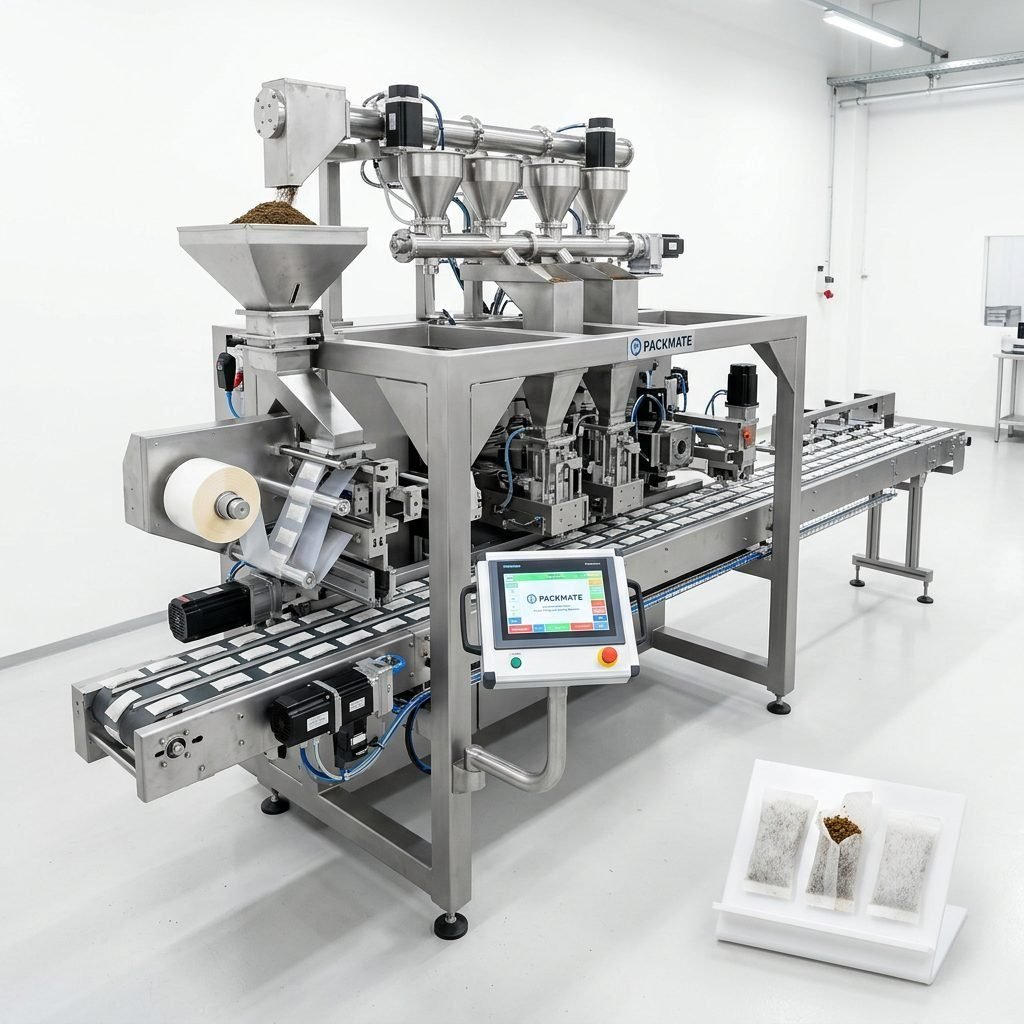
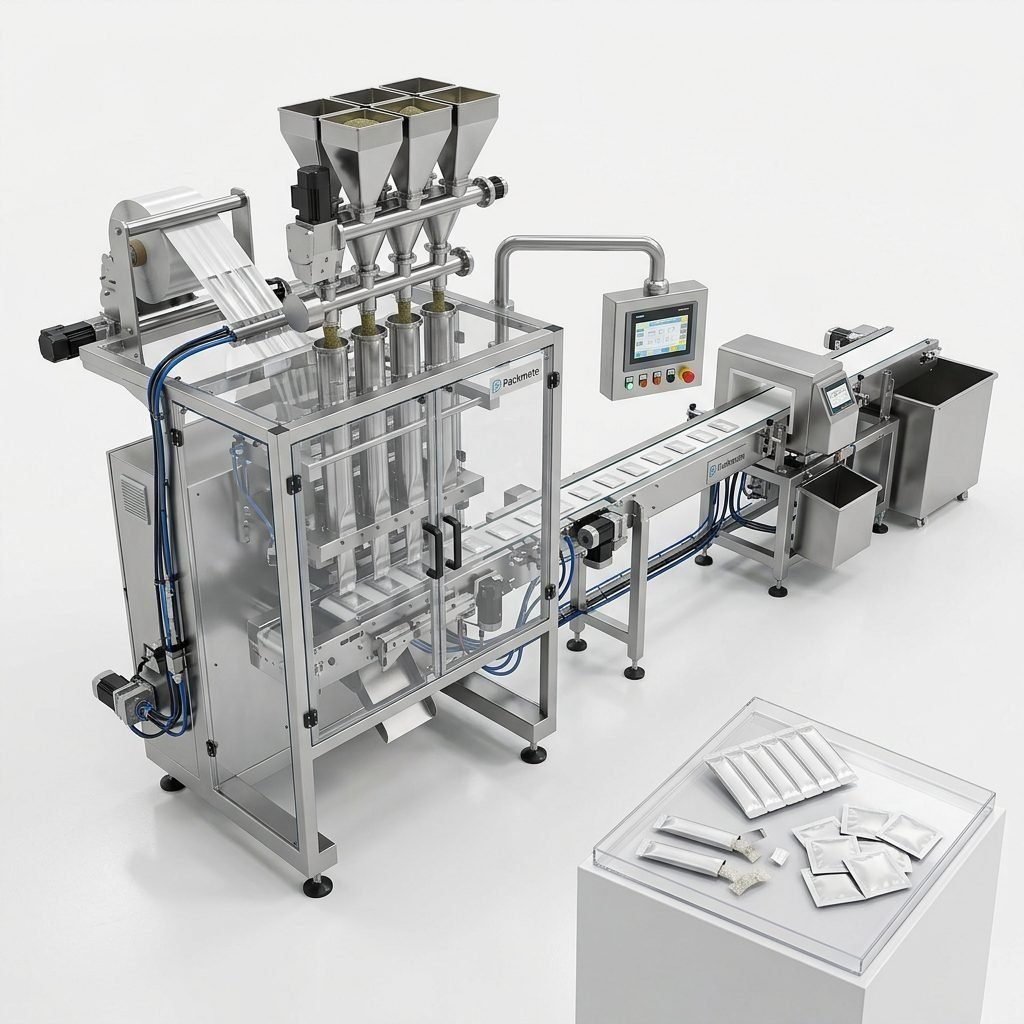
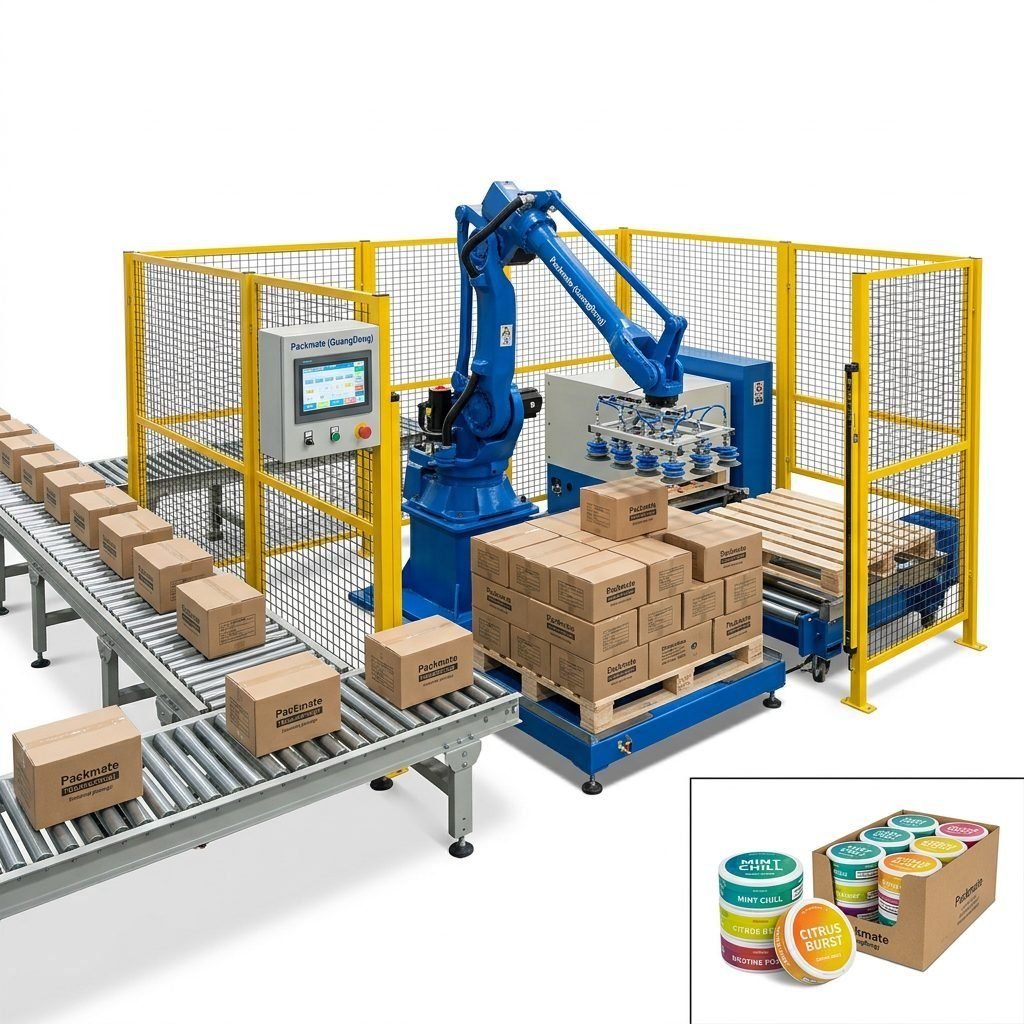
In today’s competitive snus and nicotine pouch market, efficiency and consistency are non-negotiable. Manufacturers need packaging lines that can handle high throughput without sacrificing precision, product integrity, or regulatory compliance. This article explores high output snus machine solutions that help boost production efficiency, ensure consistent pouch quality, and deliver long-term value for growing operations.
Why High Output Matters for Snus Production
High output packaging systems do more than increase the number of pouches produced per hour. They deliver predictable cycle times, reduce human error, and allow better integration with upstream and downstream equipment (weighing, feeding, and case packing). For businesses targeting international markets or larger retail chains, reliable high-speed performance is essential for meeting demand and controlling costs.
Top benefits at a glance
✔️ Increased throughput with fewer stoppages — optimized multi-lane designs and synchronized drives.
⚙️ Consistent pouch formation and dosage accuracy across lanes.
📈 Lower cost per pouch through automation and minimal waste.
🧭 Scalable production to grow with your product lines and market demand.
Key Features of High Output Snus Machines
The best high output snus machines combine mechanical robustness with smart control systems. Below are the core features that enable sustained high performance.
Multi-lane Synchronization and Precision Feeding
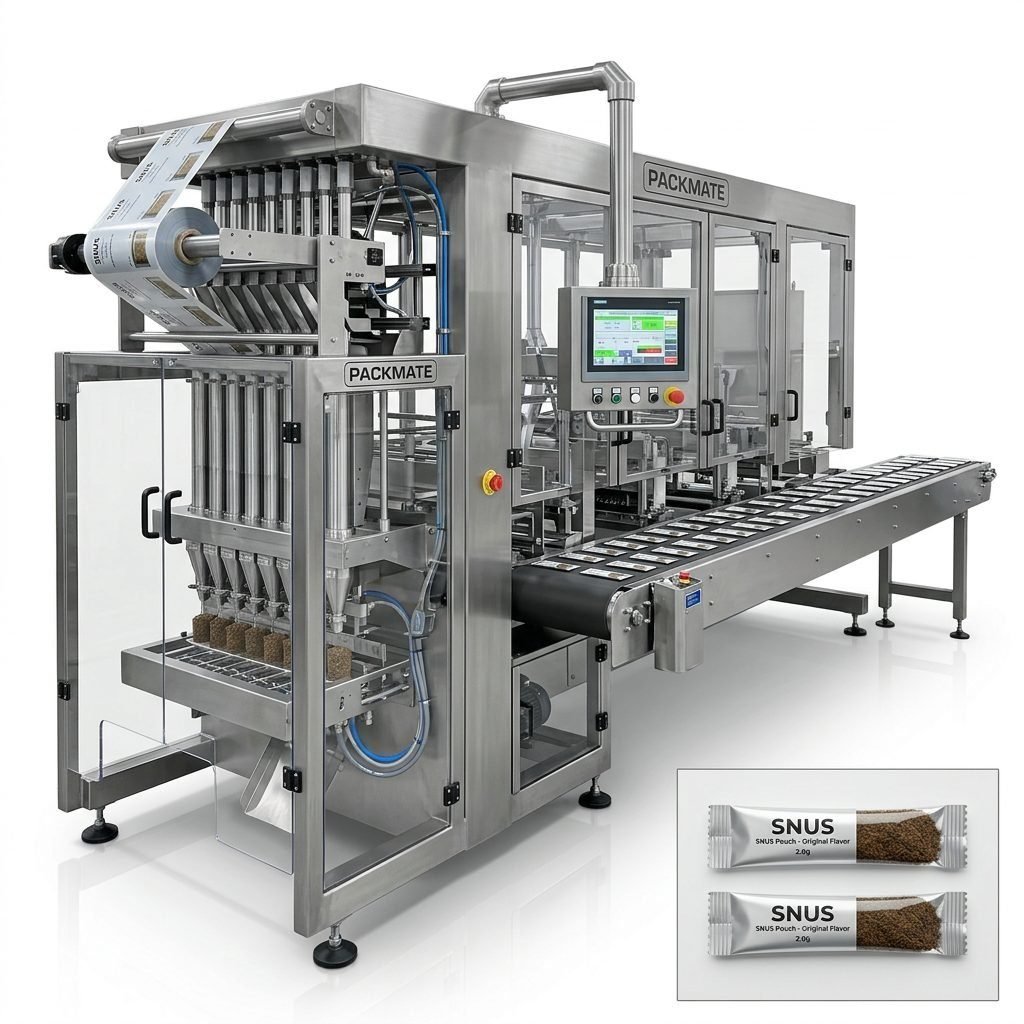
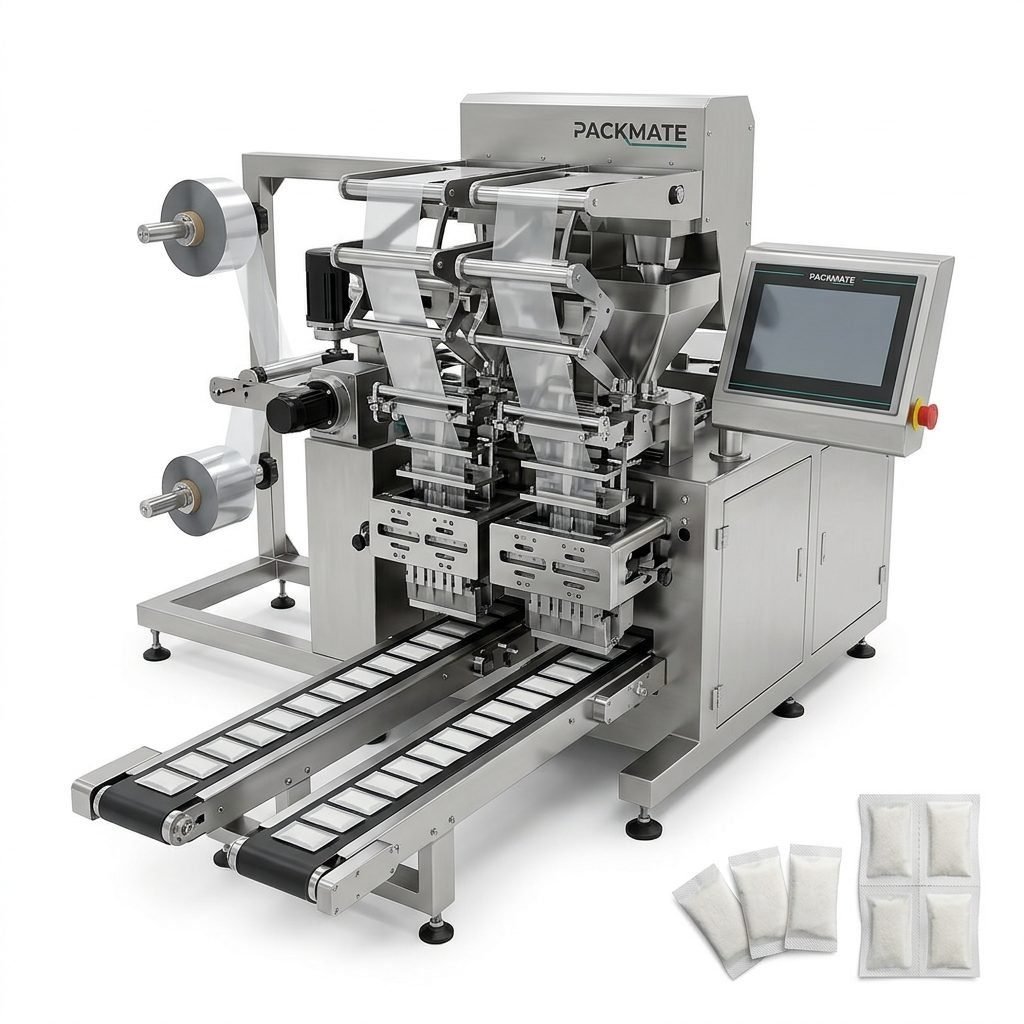
Multi-lane systems dramatically increase capacity by producing multiple pouches simultaneously. Key to their success is exact lane-to-lane synchronization and precision feeding mechanisms that ensure every pouch receives the correct dose, even at top speeds.
⚡ Performance highlight: high-output multi-lane lines can multiply hourly output with consistent weight control across all lanes, reducing rework and waste.
Advanced Servo Controls and HMI Integration
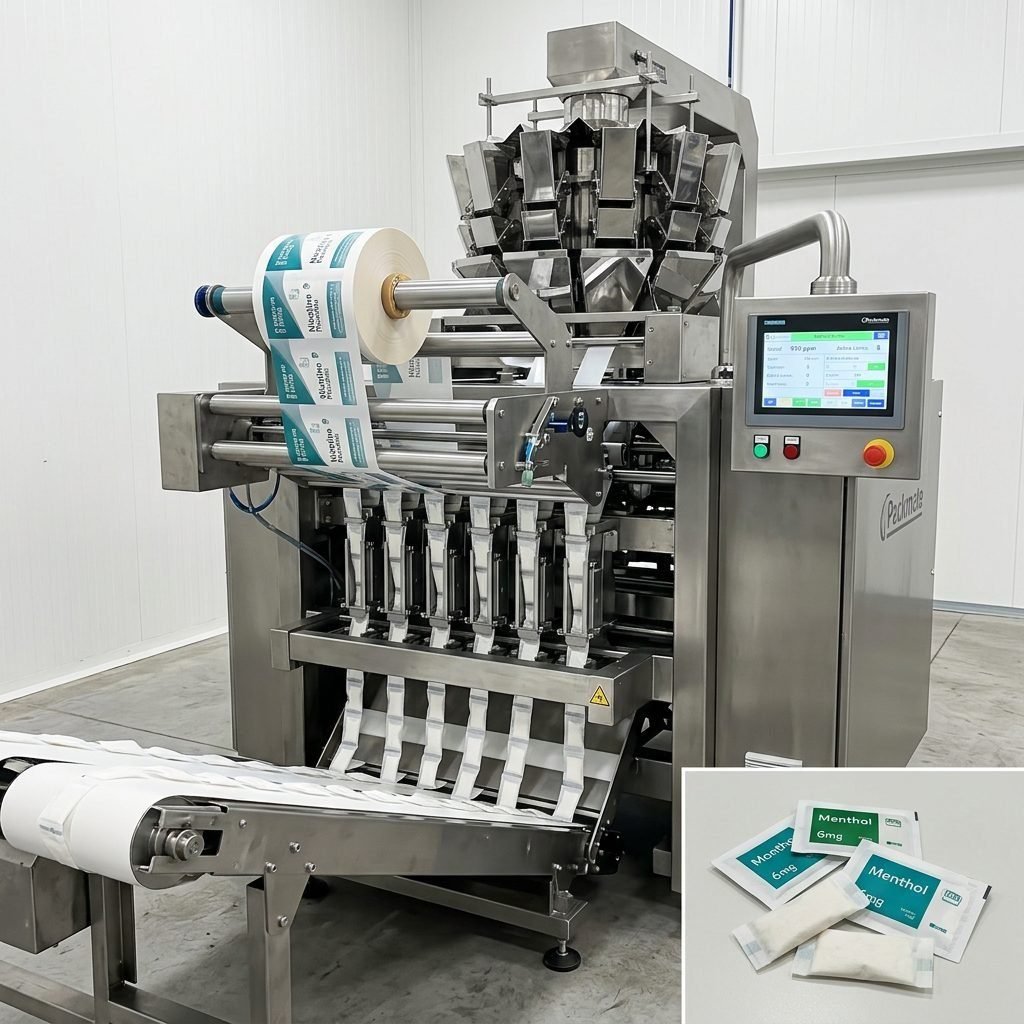
Modern servo-driven axes and intuitive HMI panels give operators precise control over speed, cut timing, and pouch sealing. The result is less mechanical adjustment time, faster product changeovers, and improved repeatability.
Robust Material Handling and Gentle Product Care
For snus and nicotine pouches — which often contain delicate blends — materials handling must be gentle yet reliable. Advanced conveyors, vibratory feeders, and anti-static systems ensure smooth transport and precise placement before sealing.
Design and Manufacturing Strength: Why It Matters
A machine’s design and the manufacturer’s production capabilities determine long-term reliability. Look for companies with a track record of engineering excellence, rigorous quality control, and modern machining facilities.
🏭 Engineering edge: manufacturers with advanced CNC centers and precision assembly lines can deliver machines with tighter tolerances and longer service life.
For an overview of specialized equipment, see the Snus & Nicotine Packaging Machines page for tailored models and configurations: Snus & Nicotine Packaging Machines.
Compliance, Certifications, and Global Support
International compliance is essential for global distribution. Machines built to CE and ISO standards help manufacturers meet legal and quality requirements while providing peace of mind for importers, distributors, and retailers.
Reliable suppliers also provide documentation, training, and spare parts logistics — all critical elements of a successful high-output deployment.
Global cooperation and exhibition presence
Seeing machines in action at exhibitions or customer case visits provides confidence in performance. Explore real-world deployments and case studies here: Case.
Selecting the Right Machine for Your Production Line
Choosing the right high-output snus machine involves evaluating capacity needs, product formats, and integration requirements. A few practical selection criteria to consider:
⚙️ Throughput target: define pouches/min or pouches/hour and include planned growth for 3–5 years.
🧩 Format flexibility: can the machine handle multiple pouch types and sizes without lengthy changeovers?
🔄 Integration: compatibility with upstream fillers, weighing systems, and downstream cartoning/boxing equipment (see Weighing & Packaging Systems).
🔧 Serviceability: spare part availability, modular design, and local or remote support options.
📝 Pro tip: request a production simulation or video of the specific model running your product. Suppliers often provide references and live demos.
Integration with Auxiliary Equipment and Turnkey Lines
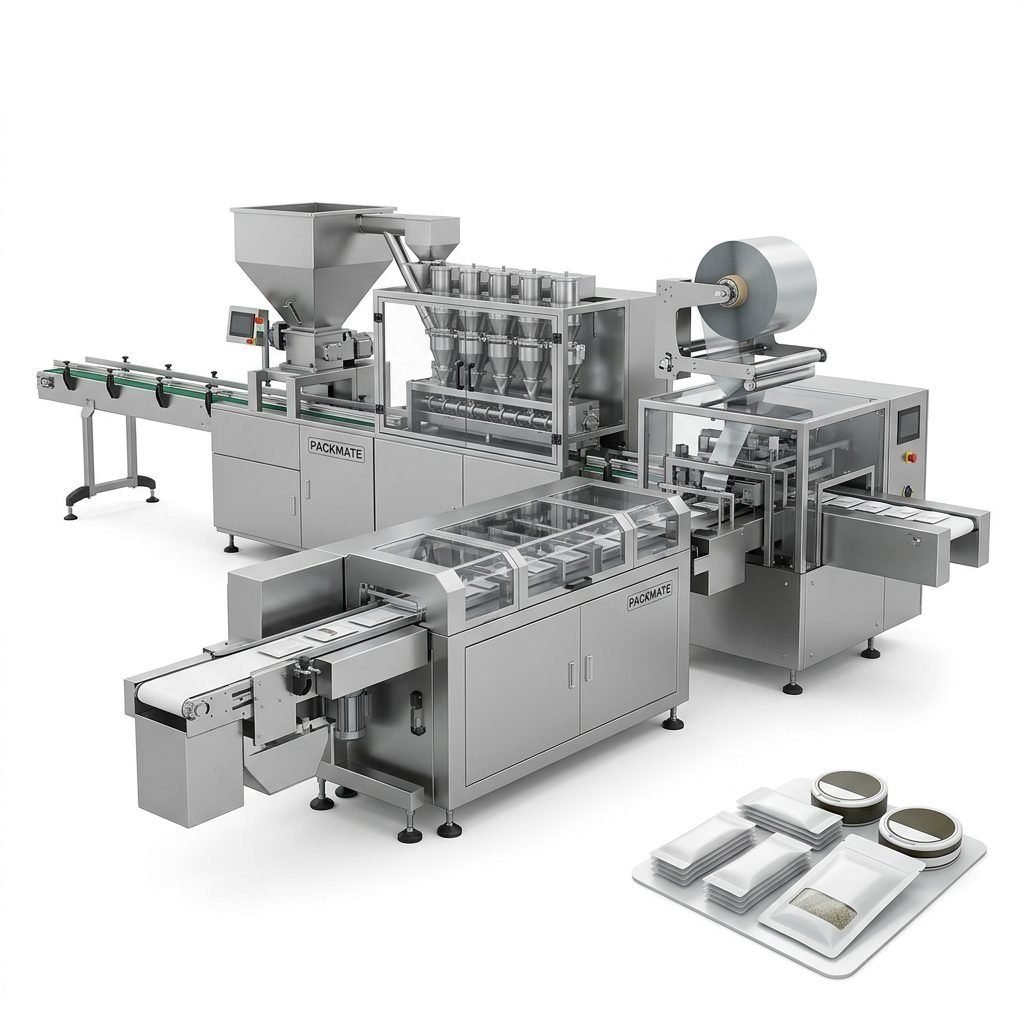
High throughput is best achieved with a holistic approach: synchronized feeders, precision weighers, and robust conveying systems. Auxiliary equipment must match the machine’s cycle time to avoid bottlenecks. Learn more about complementary systems: Auxiliary Packaging Equipment.
Common integration scenarios
– Multi-head weighers feeding dedicated hoppers for each lane.
– Rotary filling stations synchronized with pouch formation.
– In-line inspection and metal detection for product safety.
– Automatic cartoners and case packers for uninterrupted downstream flow.
Installation, Commissioning and After-sales Service
Proper installation and commissioning are essential to realize the promised output. Experienced manufacturers provide on-site setup, operator training, and performance validation.
After-sales support should include preventive maintenance schedules, remote diagnostics, and fast access to spare parts. Check the supplier’s service page and support network: Service.
Maximizing ROI: Metrics and Best Practices
ROI for high-output lines depends on machine utilization, yield, labor savings, and reduction in material waste. Track the following KPIs for a clear business case:
• Overall Equipment Effectiveness (OEE) — monitor availability, performance, and quality.
• First-pass yield — percentage of pouches meeting spec without rework.
• Downtime rate — planned and unplanned stoppages per shift.
• Cost per pouch — material, labor, energy, and maintenance apportioned per unit.
📊 Measurement tip: implement simple digital logging and alerts through the machine HMI to capture run rates, rejects, and changeover durations — data-driven improvements compound quickly.
Customization and Flexibility
Successful manufacturers often require custom tooling, unique pouch shapes, or specific dosing systems. Choose partners with modular platforms that allow rapid adaptation without major retrofits.
For a wider view of compatible solutions, explore Bag & Pouch Packaging Machines and Filling & Packaging Lines: Bag & Pouch Packaging Machines | Filling & Packaging Lines.
Real-World Deployment: What to Expect
From installation to steady-state production, expect a phased ramp-up. Initial runs focus on stability and validation, followed by incremental speed increases as processes stabilize. Key milestones include validation runs, operator sign-off, and final acceptance tests.
✅ Deployment checklist: factory acceptance test (FAT), site preparation, utility verification, operator training, and performance acceptance test (PAT).
Why work with experienced providers?
Experienced providers bring proven designs, a global service network, and the ability to tailor solutions for regulatory and market needs. Learn more about the manufacturer and company history: About Packmate.
Conclusion
Investing in high output snus machine solutions is a strategic decision that enables manufacturers to scale production, improve product consistency, and reduce unit costs. By focusing on multi-lane precision, smart controls, and integrated auxiliary systems, you can achieve reliable throughput and fast return on investment. Choose partners with strong engineering, documented case studies, and international service support to ensure sustainable growth.
Frequently Asked Questions
Q1: What production speed can I expect from a modern multi-lane snus machine?
A1: Typical high-output multi-lane machines vary by configuration, but many systems deliver several thousand pouches per hour. Final speed depends on pouch format, dosing method, and integration with feeders and weighers.
Q2: How do manufacturers ensure consistent dose and pouch weight across multiple lanes?
A2: Consistency is achieved through precision dosing systems, lane-to-lane synchronization, continuous monitoring, and closed-loop feedback from weighing systems. Regular calibration and preventative maintenance further improve consistency.
Q3: What certifications should I look for when buying snus packaging equipment?
A3: Seek machines that meet CE and ISO standards for manufacturing quality and safety. Additionally, confirm that electrical, mechanical, and hygienic design aspects comply with local regulations.
Q4: Can a high-output machine be adapted for new pouch styles in the future?
A4: Many modern machines are modular and designed for flexibility. With changeover kits and software updates, manufacturers can adapt equipment to new formats with minimal downtime.
Q5: How do I assess the total cost of ownership for a high-output packaging line?
A5: Evaluate initial purchase price, expected throughput, spare parts availability, energy consumption, service contracts, and anticipated downtime. A comprehensive TCO analysis that includes productivity gains will show the true value of the investment.