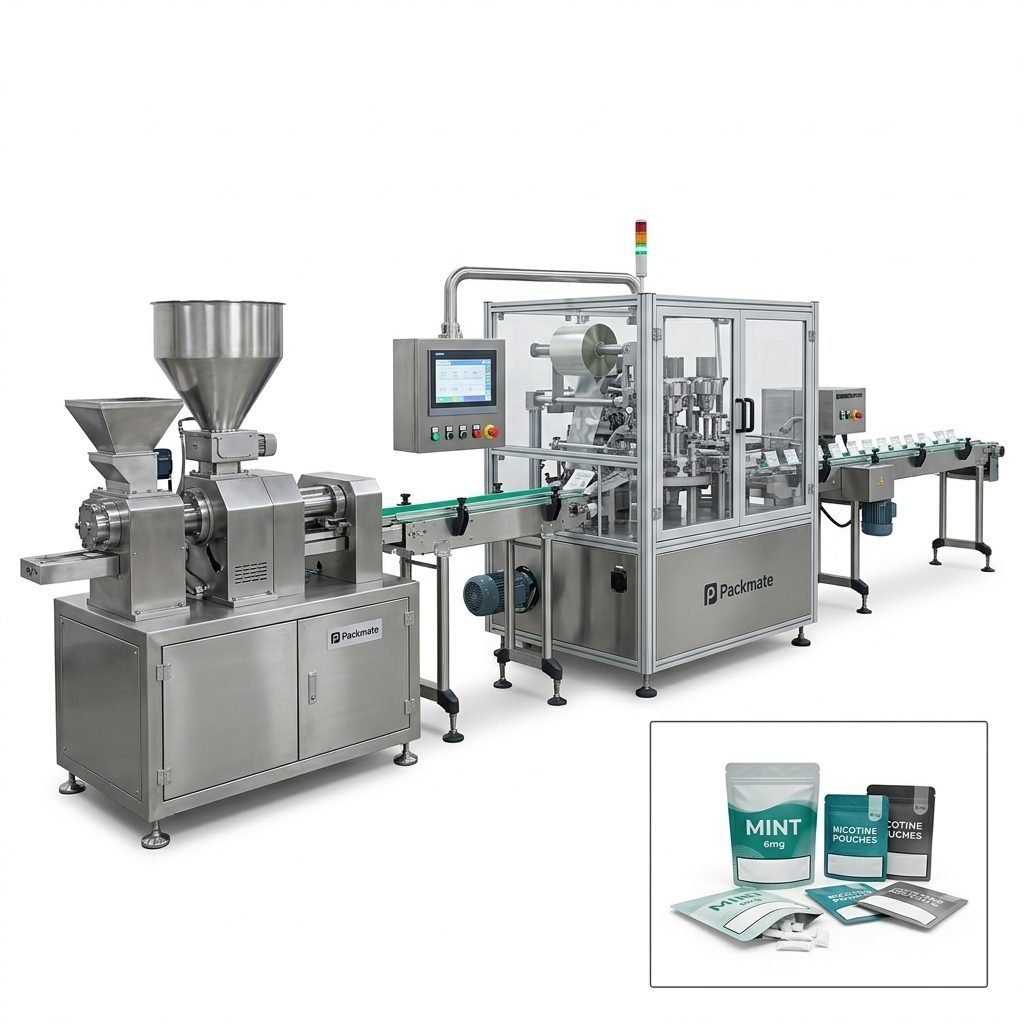
Entering the nicotine pouch manufacturing market requires careful capital planning and a realistic understanding of ongoing operational costs. This guide breaks down the typical investment needed to start a nicotine pouch production line, explains how to estimate return on investment (ROI), and highlights the most important technical and commercial factors new manufacturers must consider. Whether you are evaluating a single-lane sachet machine or a multi-lane automated line, the numbers below will help you create a practical business plan.
Production line investment — an overview
The total investment for a nicotine pouch production line varies widely depending on capacity, automation, and the degree of customization. Typical cost categories include core packaging machinery, auxiliary systems (weighers, feeders), quality control and inspection equipment, installation & commissioning, tooling & spare parts, facility upgrades, regulatory compliance and certification, raw material preparation equipment, and working capital for initial production batches.
Quick snapshot: For a compact entry-level line expect a ballpark of $120k–$250k. For high-speed multi-lane turnkey lines the investment commonly ranges from $350k to $1M+, depending on automation level and ancillary equipment.
Detailed cost breakdown
Below are the main line-item costs and practical considerations for each category. Figures are indicative — regional supplier quotes and customization will change final numbers.
1) Core packaging machinery
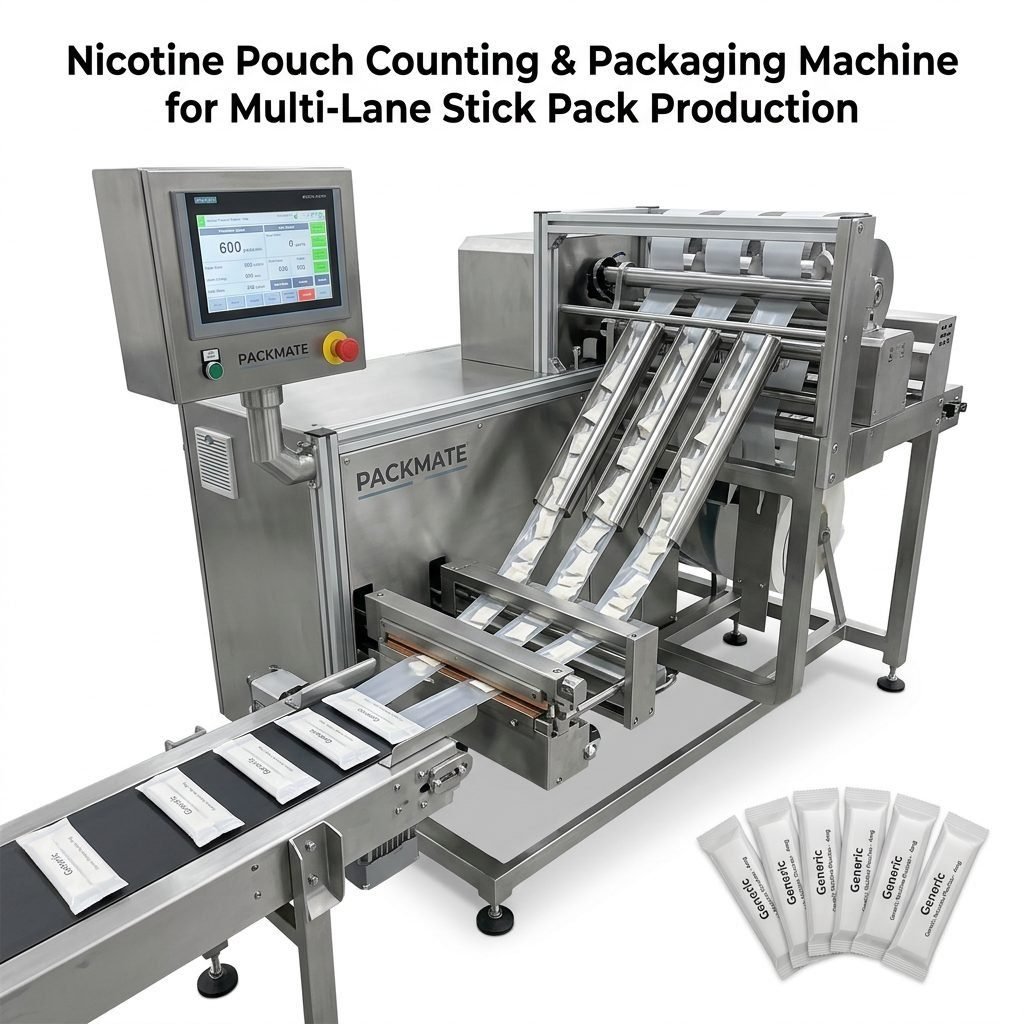
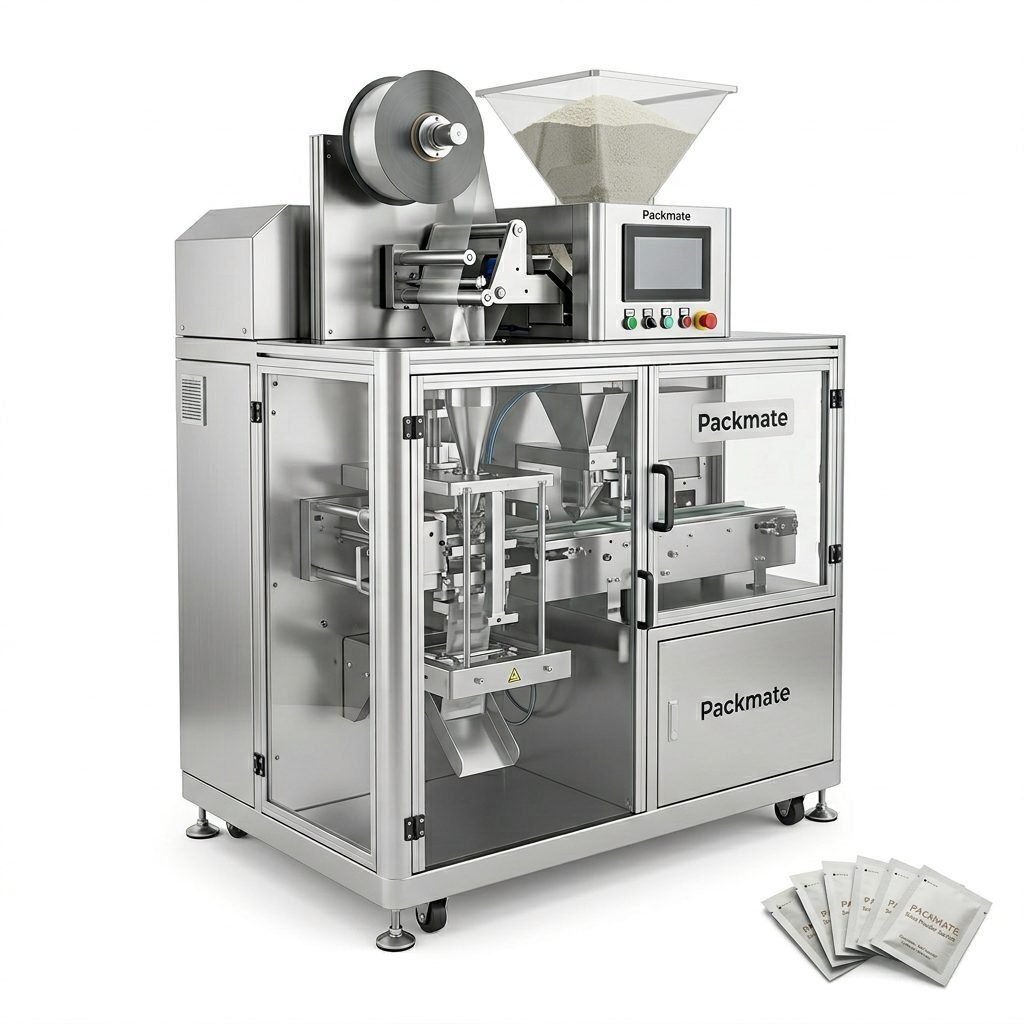
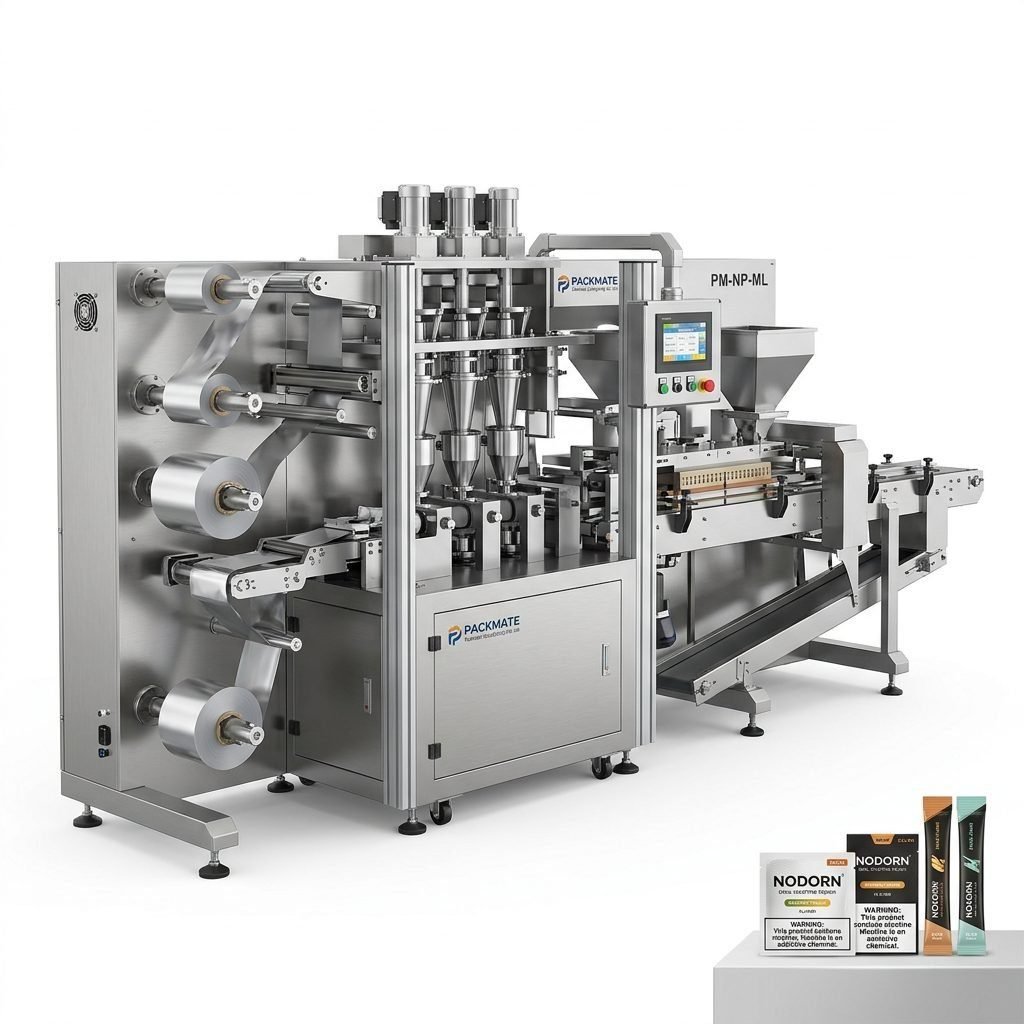
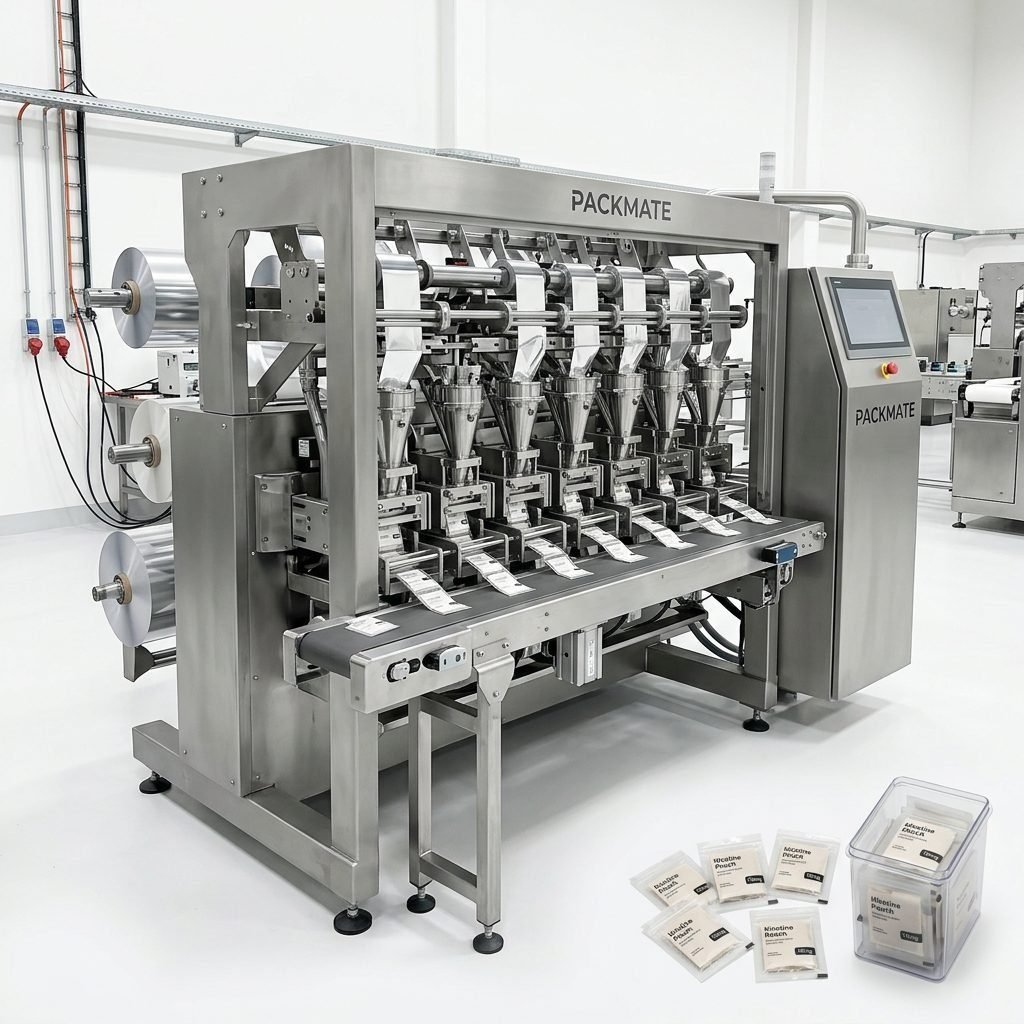
The primary machine — snus / nicotine pouch packing machine — is the largest single cost. Choices include stick pack, sachet, or multi-lane pouch machines. Factors that influence price are number of lanes, filling accuracy, speed (pouches/min per lane), servo control, and integrated features such as automatic changeover. For equipment specifications and models, see Packmate’s product range: Snus & Nicotine Packaging Machines.
2) Auxiliary equipment
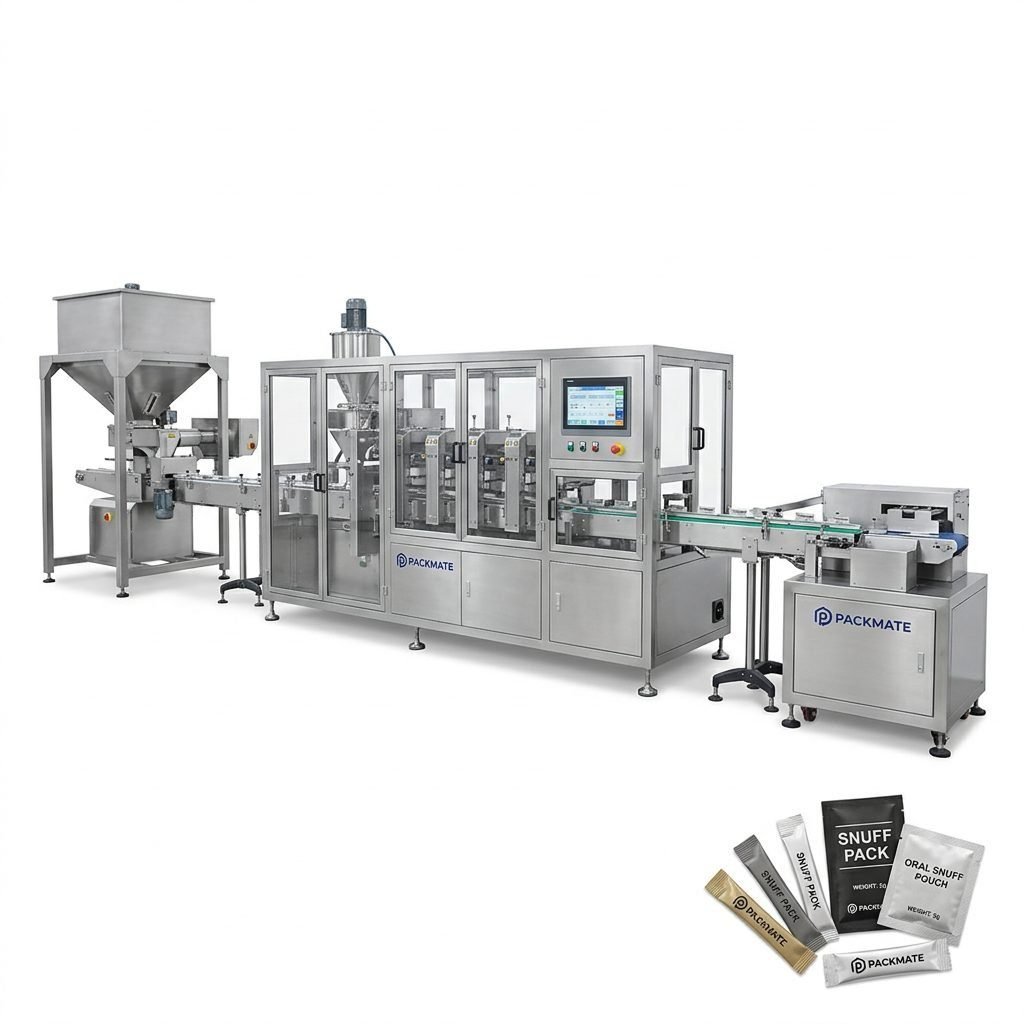
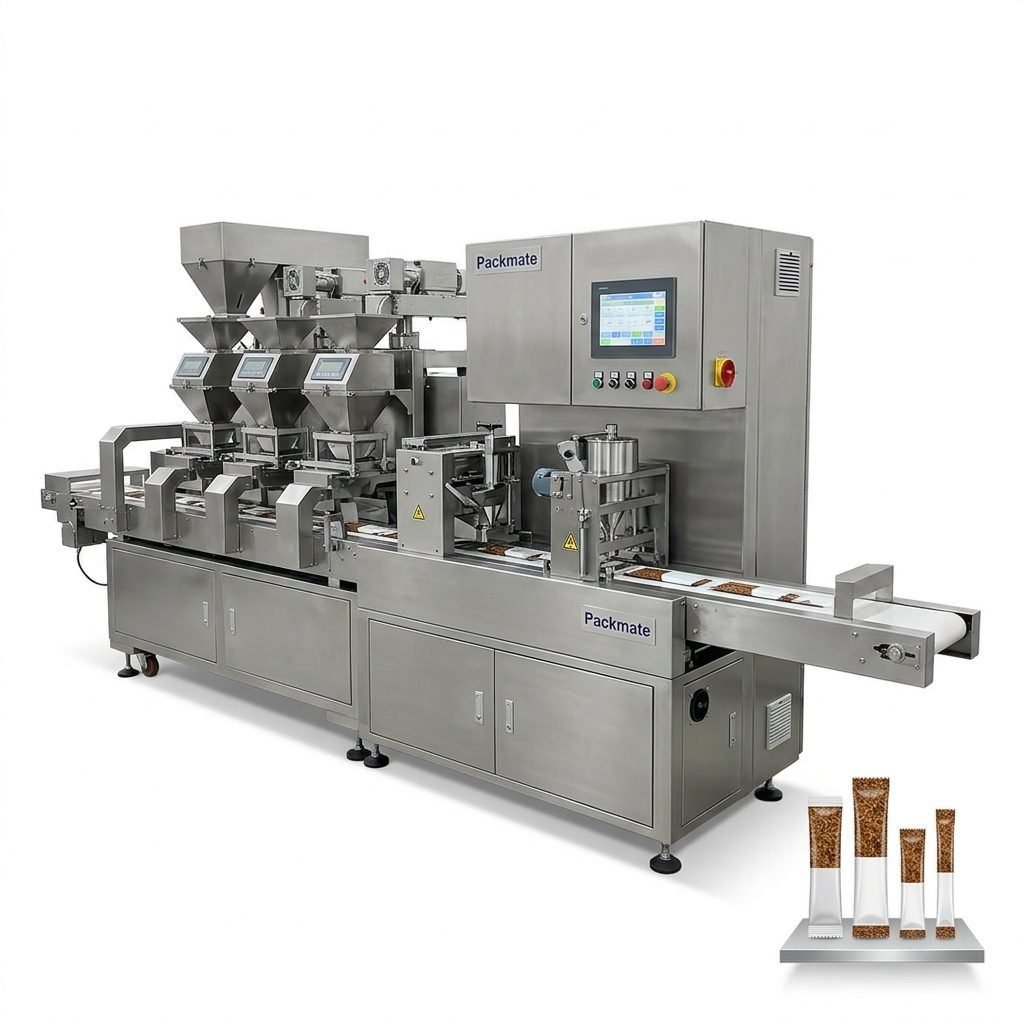
These systems include electronic weighers, powder dosing units, vibratory feeders, conveyors, metal detectors and packaging sealing systems. Auxiliary components can add 15–40% to the core machine cost, particularly when high-precision weighing and multi-head dosing are required. View common auxiliary configurations here: Weighing & Packaging Systems.
3) Filling & raw material handling
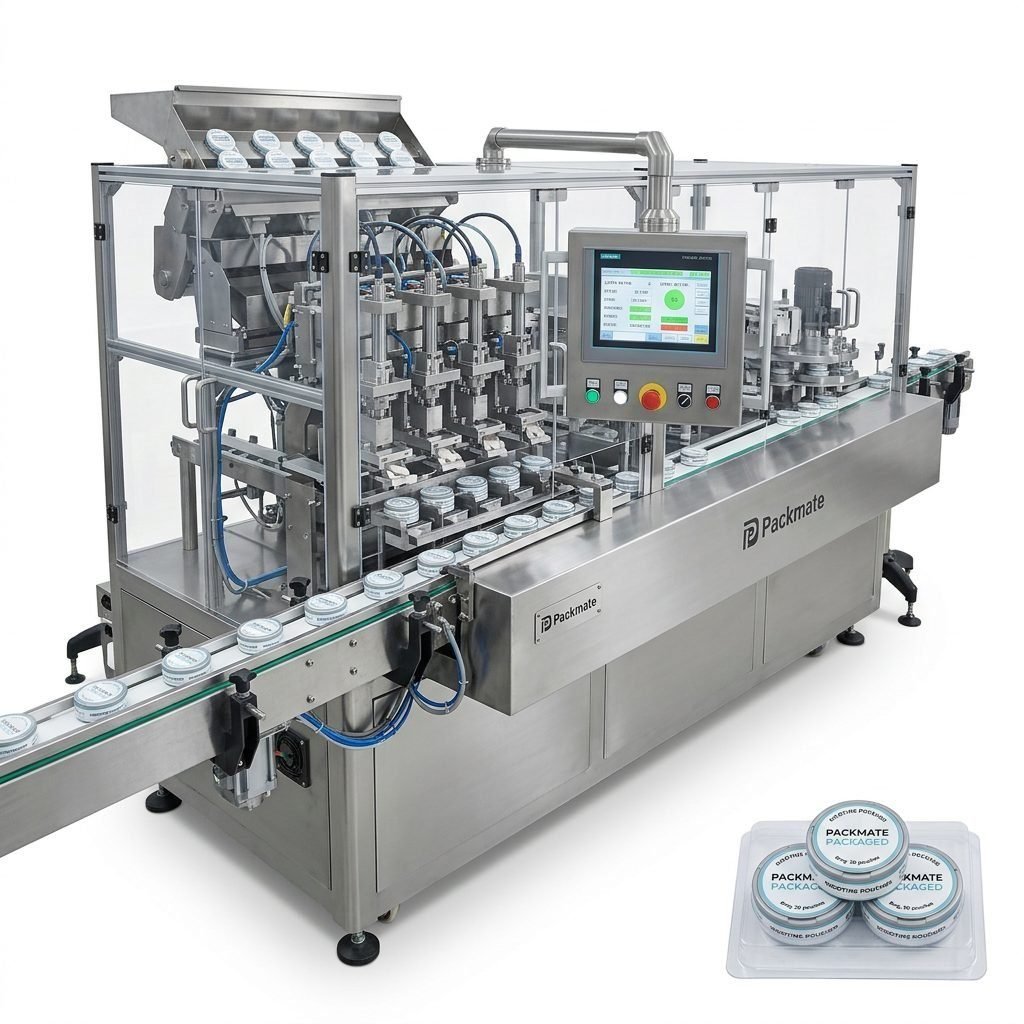
Powder handling, blending, and dosing stations are critical for nicotine pouches, where consistent fill weight and homogeneity matter. Investment here includes mixers, silos, dust collection, and hygienic conveying. For complete line options consult Filling & Packaging Lines.
Tip: Investing in accurate dosing and inline weighing improves yield and reduces rework — often paying back quickly through reduced material waste.
4) Quality control, lab & inspection
Inline vision systems, seal integrity testers, and laboratory tools for moisture and nicotine concentration testing are essential. Budget for both inline and offline QA equipment plus initial validation and routine sampling instruments.
5) Installation, commissioning & training
Supplier installation and on-site commissioning typically add 5–12% of equipment cost. Include training for operators and maintenance staff. Many manufacturers, such as Packmate, offer turnkey solutions and on-site commissioning support — check their company overview for services: About Packmate.
6) Facility upgrades and utilities
Flooring, HVAC (for humidity control), dust extraction, compressed air systems, and electrical upgrades must be budgeted. For nicotine pouch production, temperature and relative humidity control are important to maintain product stability.
7) Validation, certification & regulatory compliance
Depending on your target markets, you may need third-party testing, CE marking for equipment, ISO quality systems, and local regulations for nicotine-containing products. Build certification timelines into your project plan.
Operational costs & working capital
Recurring costs include raw materials (tobacco-free bases, nicotine salts, flavors), packaging materials (pouches, sachets, overwrap), labor, utilities, maintenance, spare parts and consumables. Initial working capital must cover raw material lead times, packaging inventory and several weeks of payroll while you scale production.
Estimating ROI — simple model
A straightforward ROI model starts with installed capacity (pouches/day), gross margin per pouch, utilization rate and total capital expenditure. Example calculation:
➤ Installed capacity: 1,000,000 pouches/month
➤ Utilization: 70% (realistic for ramp-up)
➤ Margin per pouch: $0.03 (after materials & direct labor)
➤ Monthly gross profit: 1,000,000 × 0.7 × $0.03 = $21,000
➤ If total investment = $420,000, simple payback ≈ 20 months.
Note: Add indirect costs (sales, admin, distribution) and tax to refine ROI. Faster payback needs either higher margin, higher utilization, or lower capital expenditure.
Key factors that influence costs and ROI
Considering these factors early will help you avoid surprises and optimize investment:
Production format and flexibility
Single-format high-speed lines deliver lowest unit costs for a stable SKU while flexible multi-format systems reduce changeover cost for multiple SKUs. Evaluate expected SKU mix and choose equipment that balances speed and flexibility.
Automation & OEE
Higher initial automation often reduces labor and increases uptime — improving Overall Equipment Effectiveness (OEE). Consider adding predictive maintenance tools and spare parts packages from the start.
Supply chain and packaging procurement
Packaging film, pouch materials, and nicotine precursors may have long lead times and regulatory controls. Secure qualified suppliers and consider safety stock to avoid production halts.
Local market, distribution & regulation
Market access and regulation affect labeling, product formulation and allowable claims (and in turn packaging costs). If you plan to export, build compliance and testing costs into the project timeline.
⚠️ Regulatory note: Rules on nicotine pouches vary substantially by country. Always consult local regulations before finalizing formulations and packaging.
Operational tips to reduce initial investment
New manufacturers can reduce upfront spending without sacrificing capability by considering:
- Leasing or financing core equipment to preserve working capital.
- Starting with a single or dual-lane machine and scaling up lanes later.
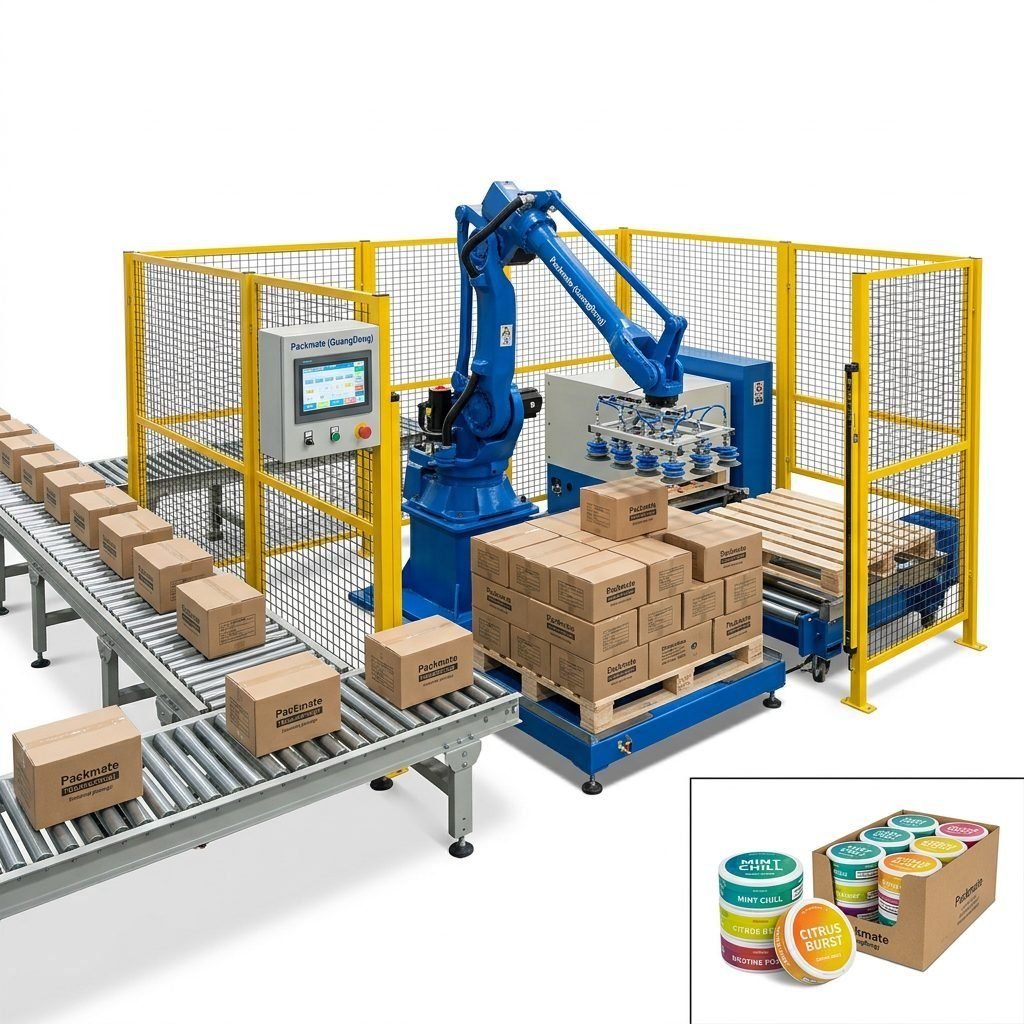
- Outsourcing non-core tasks (e.g., blistering, secondary packing) during ramp-up.
- Purchasing packaged pilot batches for market testing before full production.
Why choose a specialized supplier?
Working with a supplier that focuses on snus and nicotine pouch packaging brings real advantages: machines designed for small-dose pouches, proven multi-lane performance, and industry experience that reduces commissioning time. Explore Packmate’s solutions and case studies for real-world line configurations: Case.
Red flags during supplier evaluation
➤ Lack of field references for nicotine pouch lines.
➤ Limited spare parts availability or long lead times.
➤ Vague commissioning and training commitments.
➤ No documented performance metrics (speed, yield, accuracy).
Checklist before signing a purchase order
Use this short checklist to reduce risk:
- Factory acceptance test (FAT) with your product formula.
- Clear spare parts kit and recommended maintenance schedule.
- Warranty terms, lead times, and training scope.
- Validation and qualification support included in contract.
Where to go from here
Start with a capacity plan and a prioritized list of SKUs. Request turnkey quotes that include equipment, auxiliary systems, installation and commissioning. A detailed quote will help refine your financial model and determine whether to lease or buy. Research multiple suppliers and ask for on-site references and FAT videos to validate performance claims.
For more technical machine descriptions and model options, see Packmate’s full product catalogue and service offerings: Bag & Pouch Packaging Machines and Service.
Common questions (FAQs)
Q1: How much does a small pilot nicotine pouch line cost?
A: A compact pilot line (single- or dual-lane sachet/stick pack machine plus minimal auxiliary equipment) typically starts around $120k–$200k, depending on dosing and weighing requirements.
Q2: How long does commissioning and ramp-up usually take?
A: Expect 4–12 weeks for installation, FAT adjustments, on-site commissioning and operator training; full commercial ramp-up may take several additional months depending on regulatory approvals and market testing.
Q3: Can I upgrade lanes later to increase capacity?
A: Many manufacturers design modular multi-lane machines or upgrade kits. Discuss upgrade paths with your supplier before purchase to ensure future capacity increases are cost-effective.
Q4: What are the most common hidden costs?
A: Hidden costs often include additional validation testing, higher-than-expected packaging material rejects, export documentation, and local installation electrical/utility upgrades. Build contingency into your budget.
Q5: Where can I see real-world examples?
A: Explore supplier case studies and exhibition demonstrations to see lines in operation. Packmate regularly showcases machines at international exhibitions — check their exhibition page for upcoming shows: Our Exhibition.