Designing a nicotine pouch packaging line requires more than buying individual machines — it demands a systems approach that balances productivity, regulatory compliance, product integrity, and future scalability. This guide walks packaging engineers, plant managers, and procurement teams through practical design choices, key equipment options, layout considerations, and commissioning tips for efficient nicotine pouch production.
Understand Your Production Targets and Product Specs
Key starting questions:
What is your hourly and daily output target? What pouch formats (single-dose sachets, multi-portions, stick packs) and materials (PET/AL/PE laminate, paper-laminates) will you run? What filling accuracy and weight ranges are required?
Why these matter
Production targets and product specifications determine the number of lanes, the choice between gravimetric or auger filling, and whether to adopt multi-lane forming and sealing modules. Over- or under-sizing the line increases costs or limits growth — aim for a scalable baseline that allows incremental capacity expansion.
Core Equipment and Functional Modules
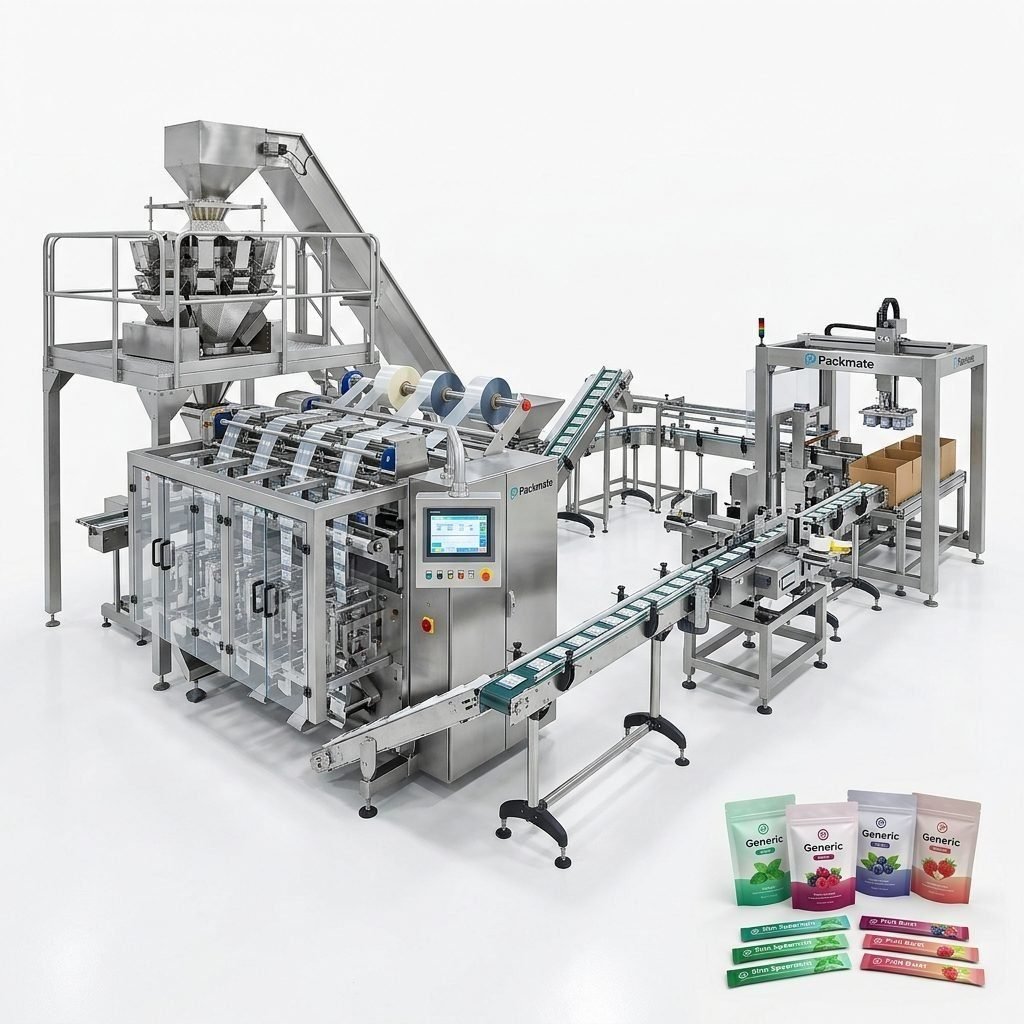
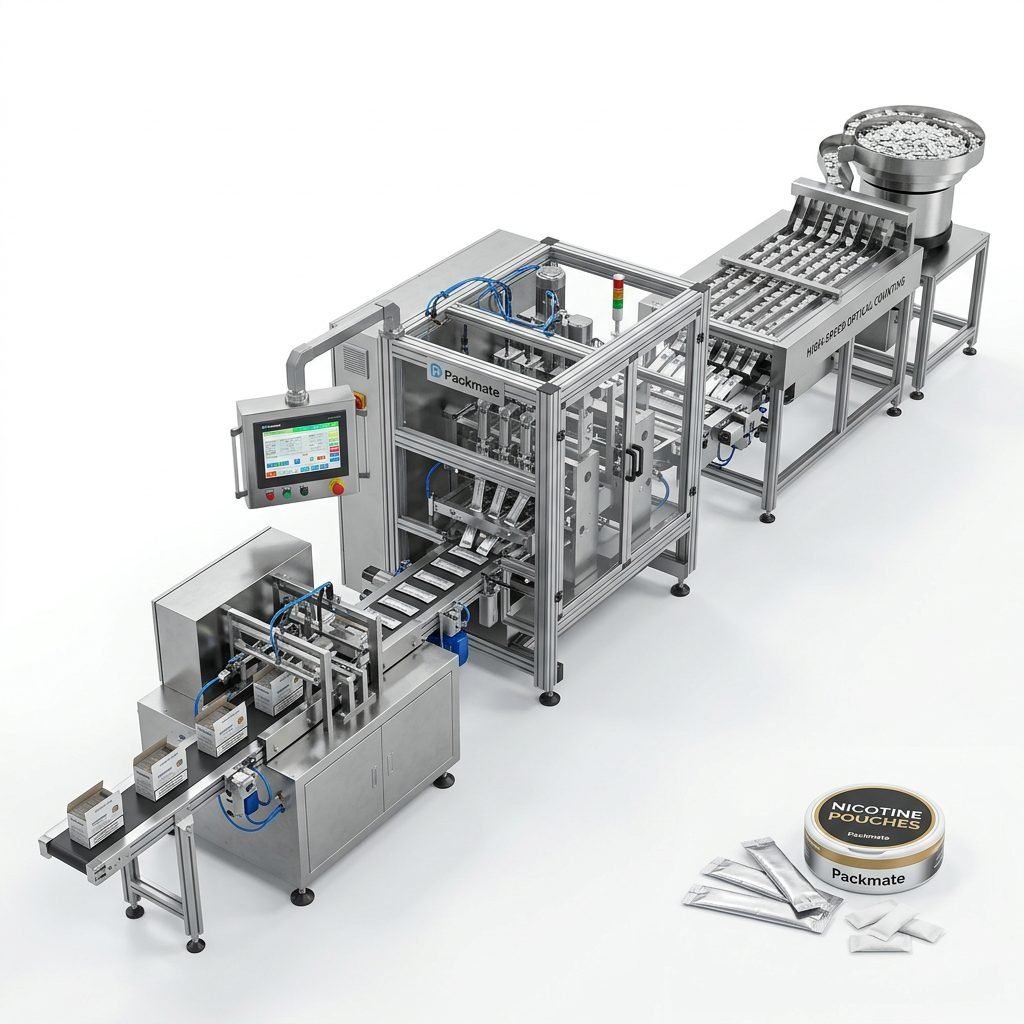
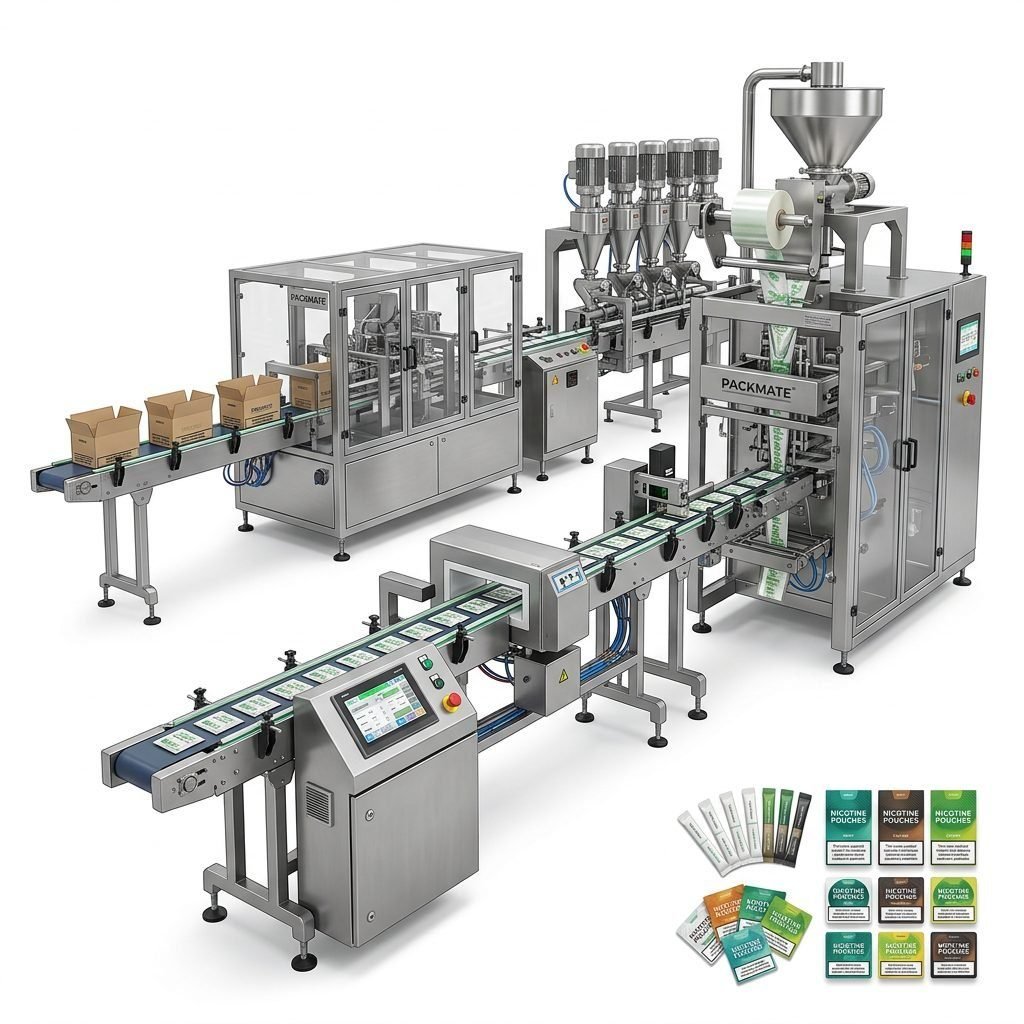
A modern nicotine pouch packaging line typically comprises a sequence of specialized machines. Below are core modules and what to look for when specifying them.
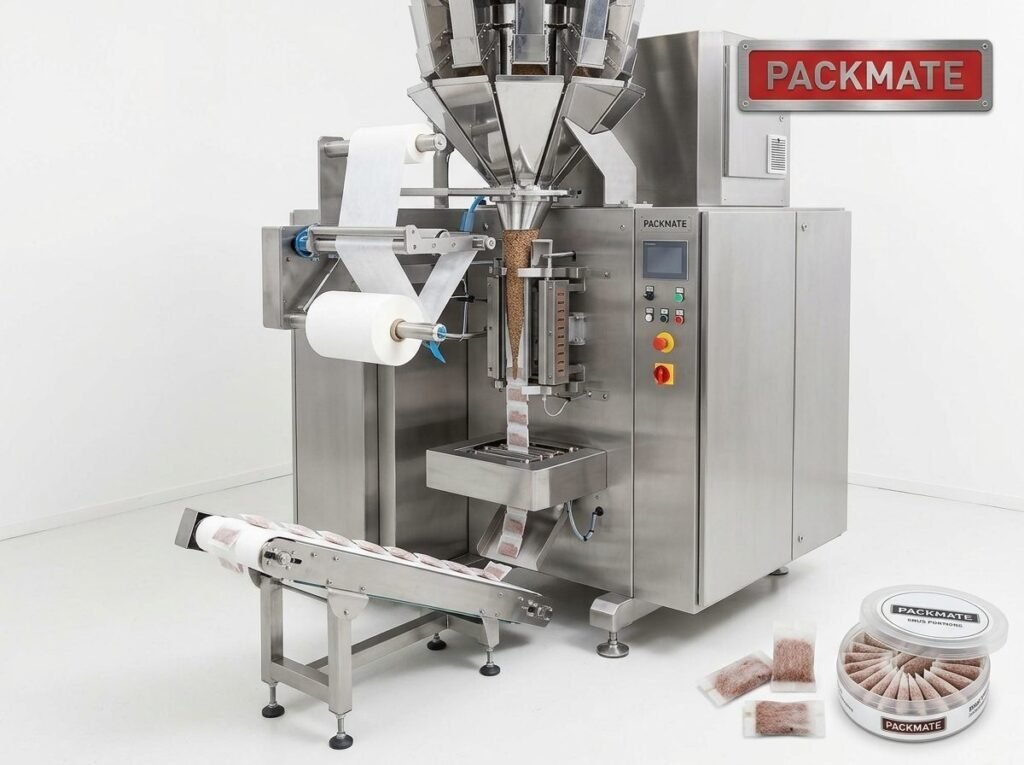
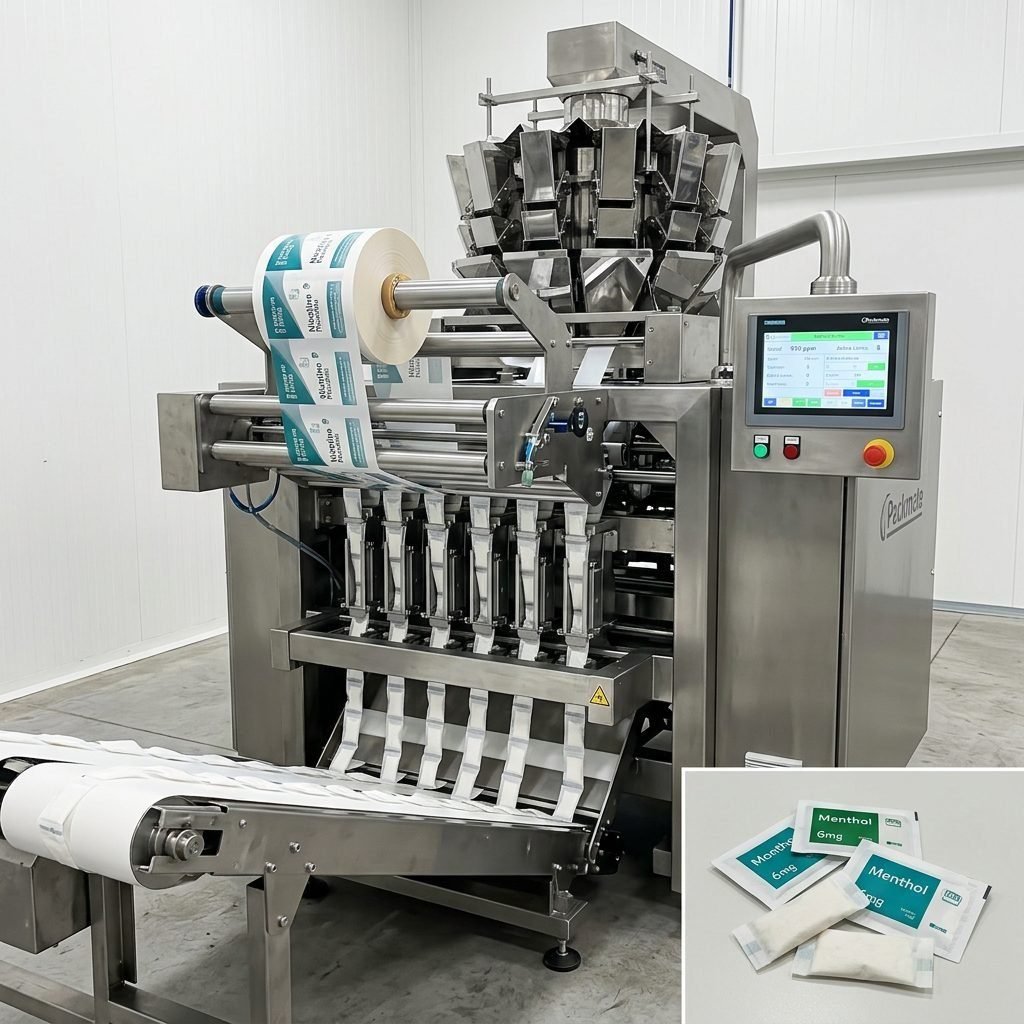
⚙️ Filling & Dosing: Choose high-precision dosing systems — gravimetric systems offer the best accuracy for variable blends, while auger fillers can be efficient for consistent powder blends. Consider product flow behavior (cohesive, free-flowing, hygroscopic).
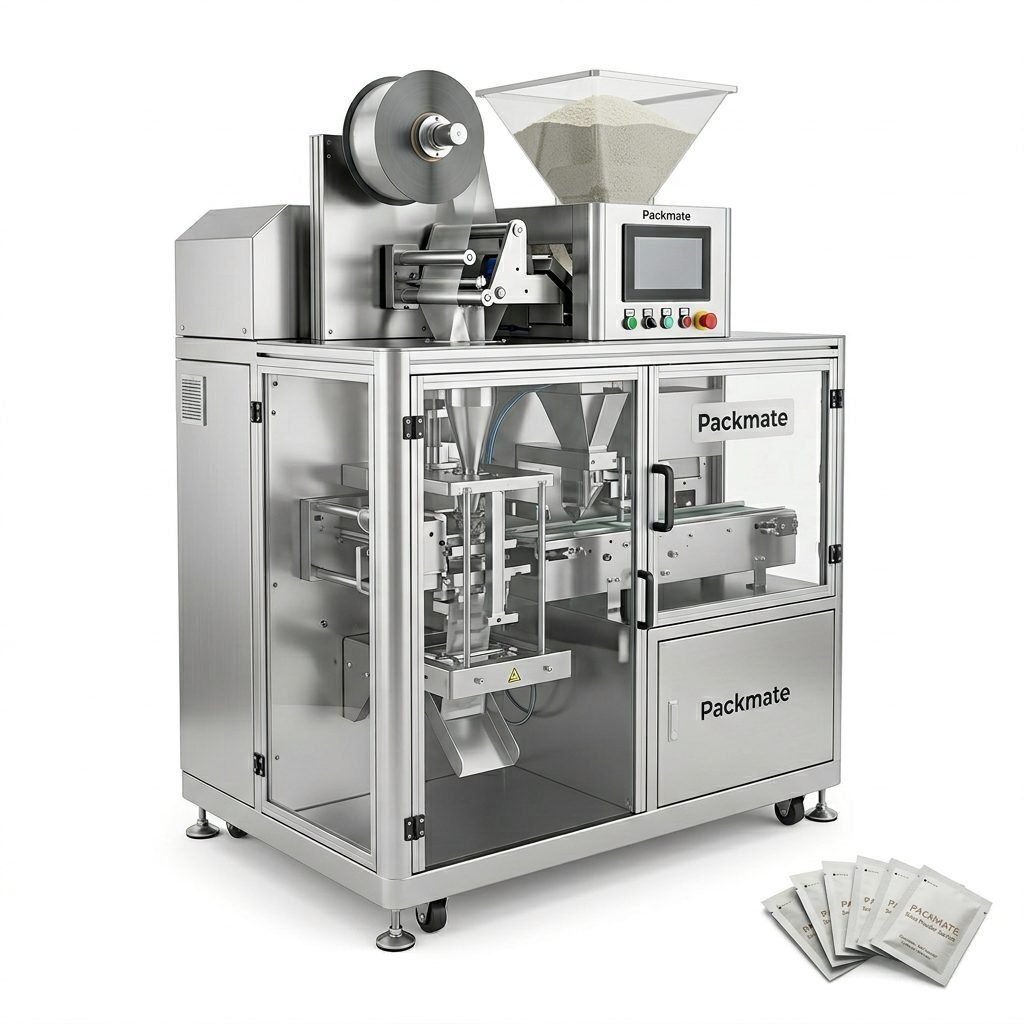
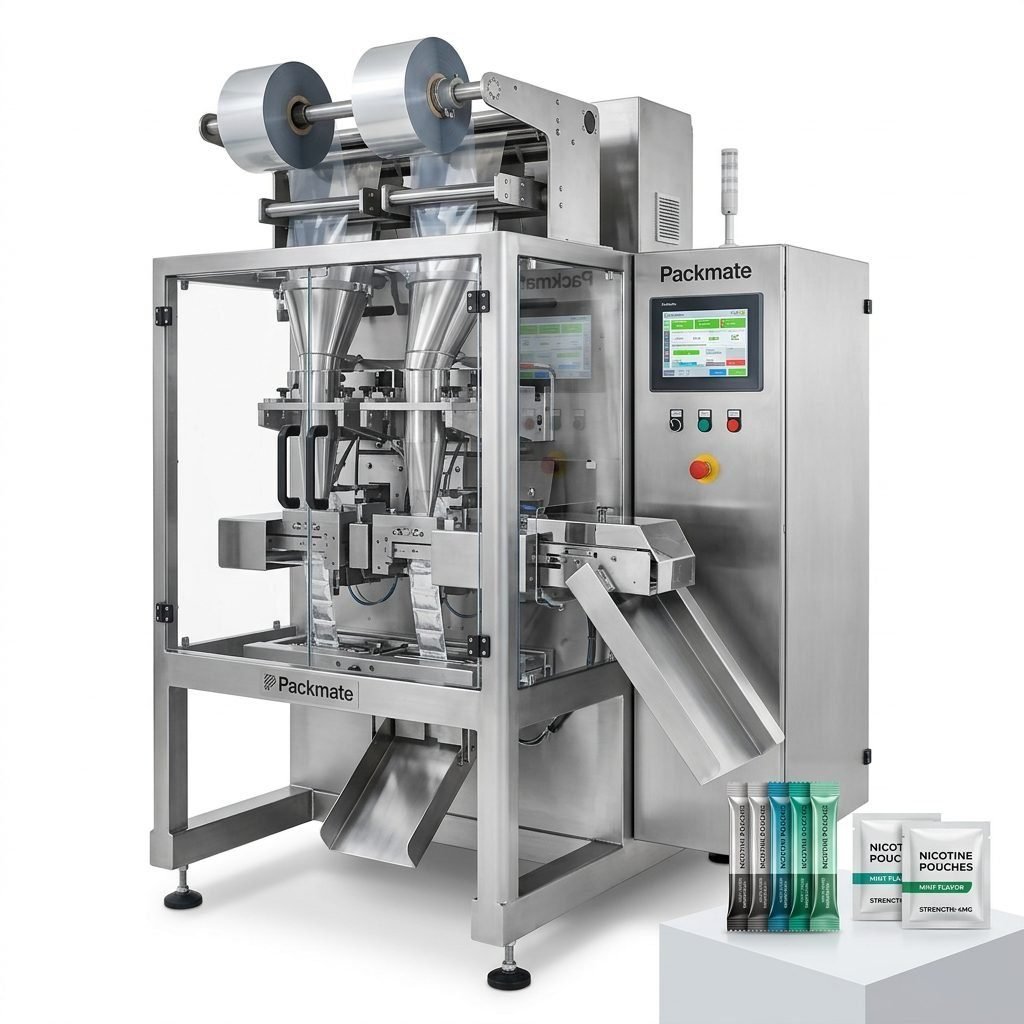
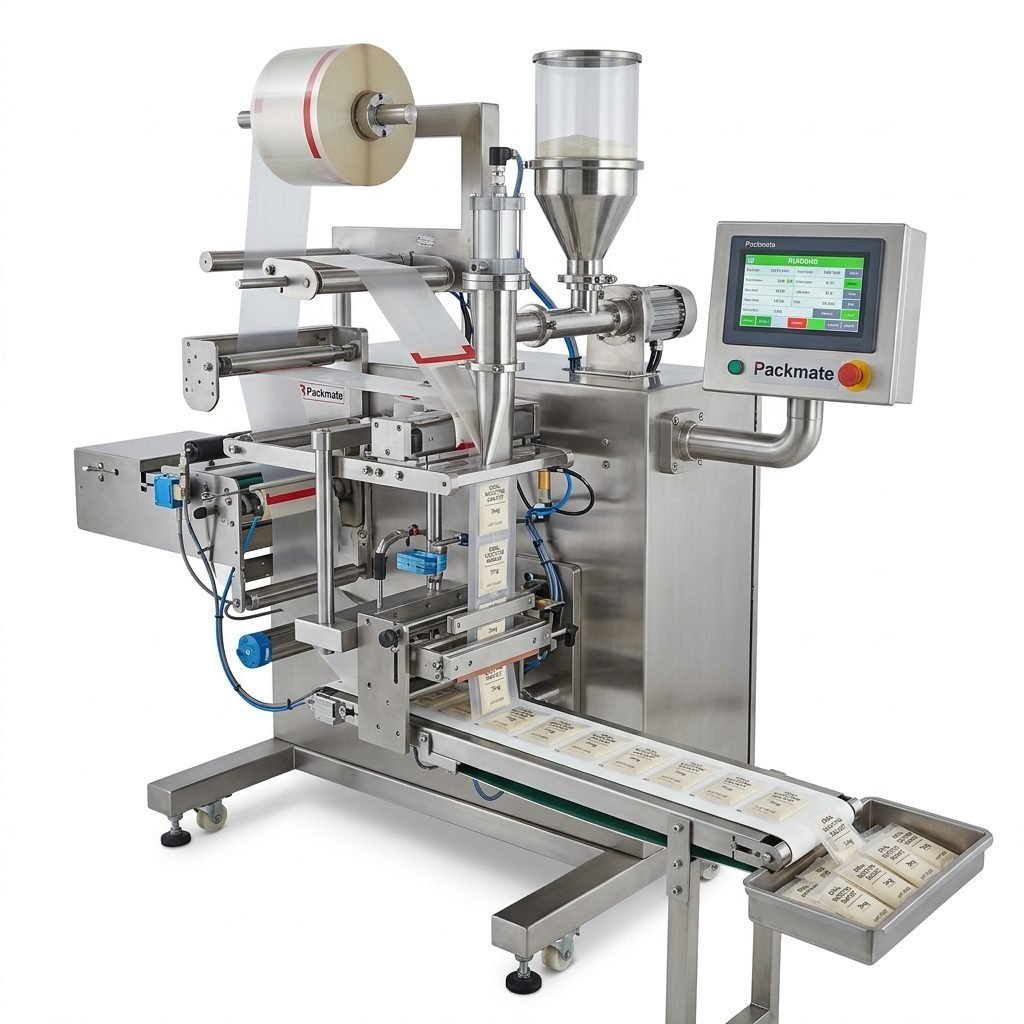
📦 Form-Fill-Seal (FFS) / Pouch Formers: Multi-lane formers increase throughput. Look for synchronized cross-sealing and servo-driven film handling for repeatable pouch dimensions.
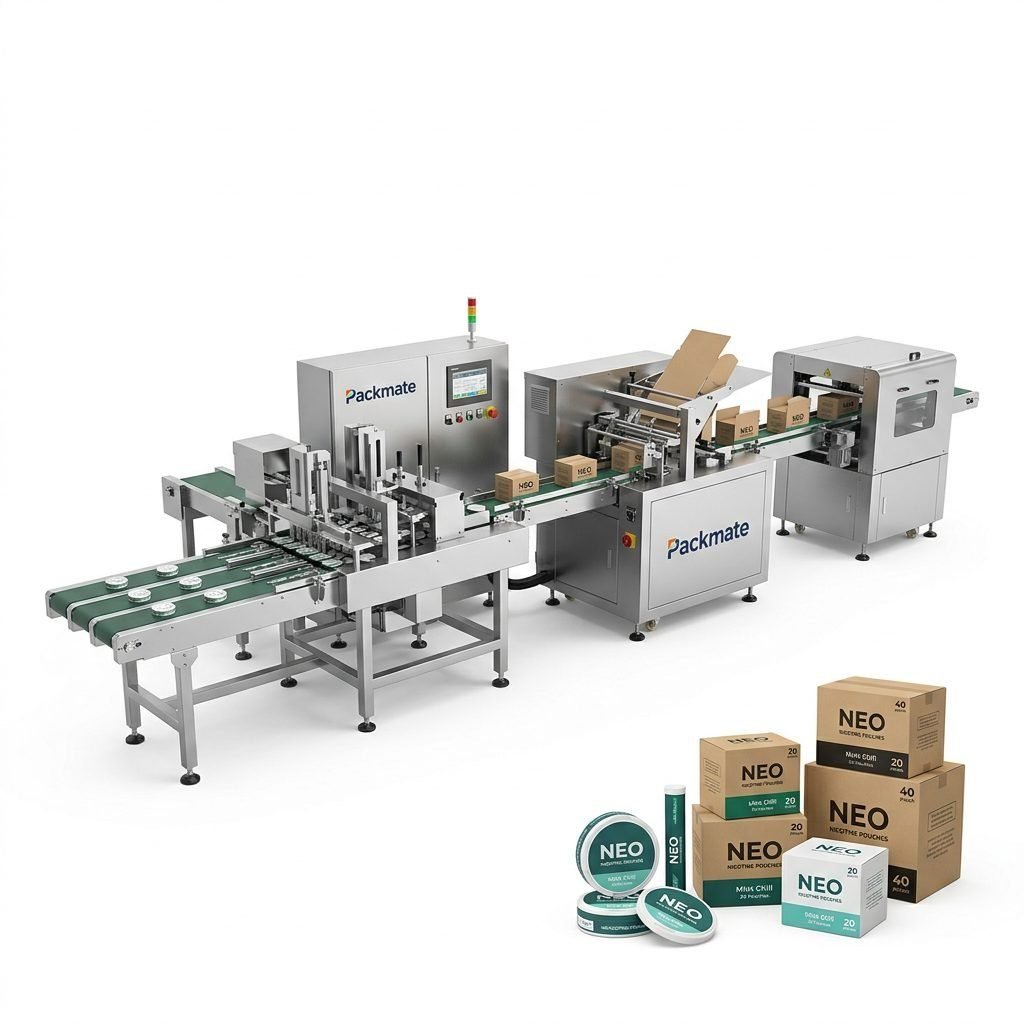
🔧 Secondary Handling & Case Packing: Conveying, counting, and automated case/carton loading complete the line. Gentle handling preserves pouch integrity.
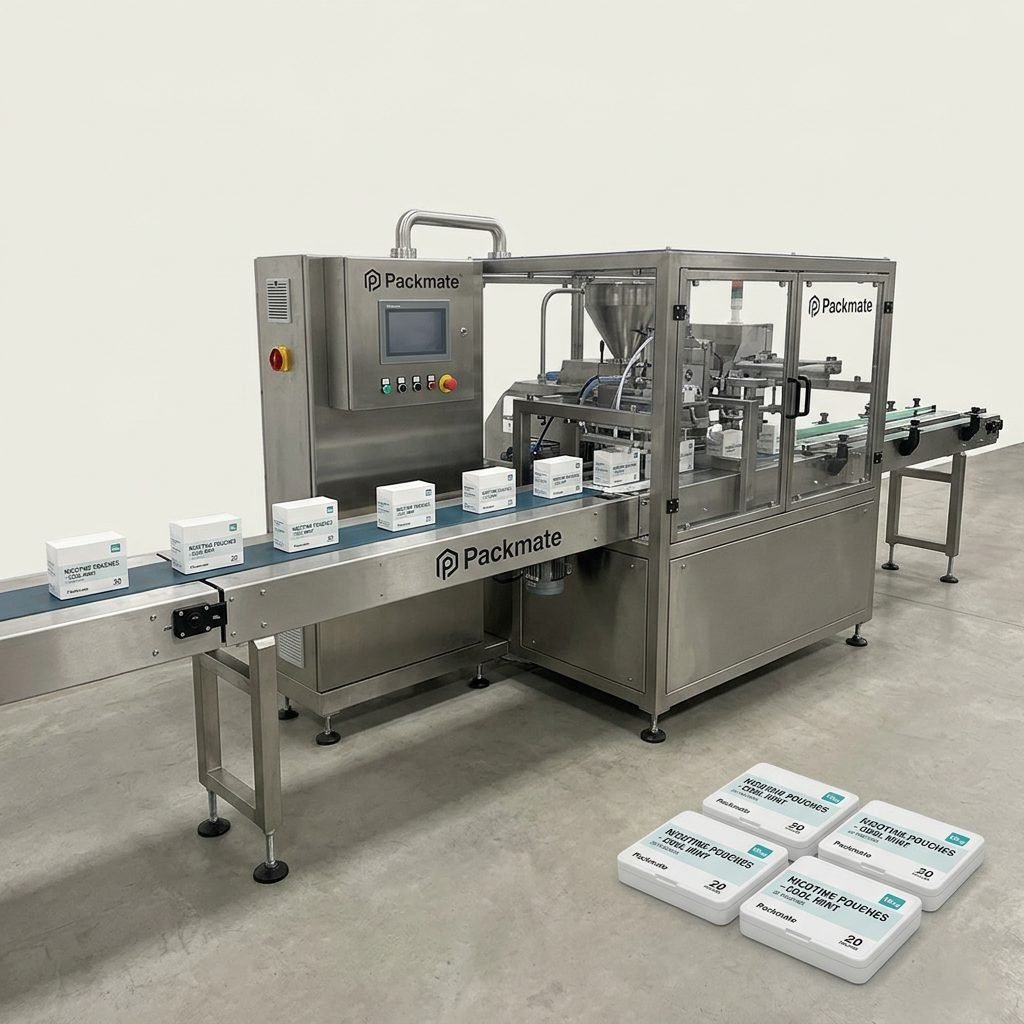
🛠️ Filling & Packaging Lines and Snus & Nicotine Packaging Machines are examples of integrated solutions that combine these modules into synchronized systems.
Selecting Automation and Controls
Servo-driven motion improves indexing precision and reduces film tension issues. Choose PLC/HMI systems with recipe management, remote diagnostics, and industry-standard communication protocols for easy integration with plant MES systems. Ensure spare parts availability and local technical support for uptime.
Layout Design: Footprint, Flow and Ergonomics
Efficient packaging line design minimizes product travel between modules, reduces manual touches, and optimizes maintenance access. Consider a linear flow for single-shift operations and U-shaped layouts for shared utilities and compact footprint.
Tip: Position maintenance aisles and operator panels on the same side of equipment to avoid crossing streams and to speed up troubleshooting.
Compliance corridors: Allow space for sample collection, quality checks, and regulatory inspections without interrupting production.
Materials & Packaging Film Selection
Film choice affects barrier performance, machinability, and sealing behavior. Multi-layer laminates with aluminum or metallized films provide oxygen and moisture barriers needed for long shelf-life nicotine pouches. Evaluate sealant layers for low-temperature sealing if heat-sensitive ingredients are present.
Sustainability considerations
Many customers pursue mono-material structures for recyclability or recyclable mono-PE pouches. Discuss trade-offs between barrier performance and recyclability during early design reviews.
Quality Assurance, Traceability and Regulatory Compliance
Nicotine pouch production is subject to strict regulations in many markets. Build QA into the line with in-line weight checks, metal detection, seal integrity testing, and serialization or batch coding for traceability. Choose CE/ISO certified equipment and documented FAT/SAT processes.
Must-have checks:
in-line weighing, seal inspection camera systems, and batch code printers to support recalls and compliance audits.
Scalability and Modular Expansion
Plan for future growth by selecting modular machines and ensuring spare space and utilities for additional lanes. Modular multi-lane fillers and formers let you add lanes as demand rises without replacing core modules.
Investment vs. ROI
Evaluate CAPEX against labor reductions, yield improvement, and reduced rejects. Higher initial automation often pays back via consistent product quality and predictable throughput.
Installation, Commissioning and Operator Training
A successful handover includes pre-shipment FAT, on-site installation, SAT, and structured operator training. Ensure the supplier provides detailed SOPs and maintenance manuals. Remote support tools and spare parts kits reduce downtime risk.
📘 Documentation: Delivery of electrical drawings, pneumatics, and HMI recipes is essential.
👥 Training: Practical sessions for troubleshooting, changeovers, and cleaning procedures minimize operator-induced downtime.
Maintenance, Reliability and Spare Parts Strategy
Implement a preventive maintenance schedule based on runtime hours. Stock critical spares (seals, belts, sensors, PLC modules) and agree on lead times with suppliers. Performance contracts and remote monitoring tools can convert unplanned downtime into scheduled interventions.
Vendor Selection and Global Support
Select vendors with proven nicotine pouch experience, documented case studies, and a global service network. Packmate is an example of a supplier with decades of experience and multiple product lines — explore their product pages for matched solutions: About Packmate and Contact Us to discuss turnkey designs or custom configurations.
Case Examples and Real-World Configurations
Typical small-scale lines use a single-lane filler with a vertical form-fill-seal module and manual case loading for daily outputs up to 20k pouches. High-capacity sites deploy multi-lane gravimetric fillers and high-speed multi-lane pouch formers to reach 100k+ pouches per shift. Review proven installations and case studies to benchmark realistic performance expectations.
For inspiration and machine options, see Bag & Pouch Packaging Machines and Sachet & Stick Pack Machines to match product format choices with proven machinery.
Practical deployment checklist
✓ Define product specs and shelf-life requirements.
✓ Select dosing tech (gravimetric vs auger) based on accuracy needs.
✓ Choose film laminates for barrier and machinability.
✓ Plan layout with utility and maintenance access.
✓ Implement QA with in-line weight and seal tests.
Return on investment and lifecycle thinking
Consider the total cost of ownership: energy, consumables, downtime, labor, and spare parts. Investing in higher-efficiency servo systems and robust controls typically delivers faster ROI through lower film waste, fewer stoppages, and higher first-pass yield.
Final considerations before purchase
Visit the supplier factory, witness FAT events, and review references from similar installations. A reputable supplier will provide engineering drawings, utility requirements, and a clear project timeline to minimize surprises during installation.
Need tailored solutions? Consult turnkey providers that combine snus machine expertise with full-line integration, automation, and aftersales service. Explore detailed product ranges and service offerings under Weighing & Packaging Systems and Case for real deployments.
Summary
Designing an efficient, compliant, and scalable nicotine pouch packaging line means aligning product requirements with the right filling technology, multi-lane forming strategies, and quality systems. Emphasize modularity, operator training, and preventive maintenance to protect uptime. Choosing experienced suppliers with proven installations and strong service networks reduces project risk and ensures predictable production performance.
Frequently Asked Questions
Q1: How do I choose between gravimetric and auger fillers?
Gravimetric fillers deliver higher accuracy and are ideal for variable blends and strict weight tolerance. Auger fillers are cost-effective for consistent powders but may require more frequent calibration for hygroscopic or cohesive materials.
Q2: What is the typical lead time for a turnkey nicotine pouch line?
Lead time varies with customization and capacity. Standard modular solutions can ship in months, while fully customized multi-lane turnkey lines may require 4–9+ months including FAT, commissioning, and validation.
Q3: What certifications should equipment have for global sales?
Look for CE and ISO certifications as a baseline. Specific markets may have additional regulatory requirements; ask suppliers for documentation and support for compliance testing and audits.
Q4: Can I retrofit an existing line to increase capacity?
Yes — retrofits such as adding lanes, upgrading fillers to servo control, or installing new film unwind and tension control systems can boost throughput. Conduct a site assessment to confirm utility and spatial constraints.