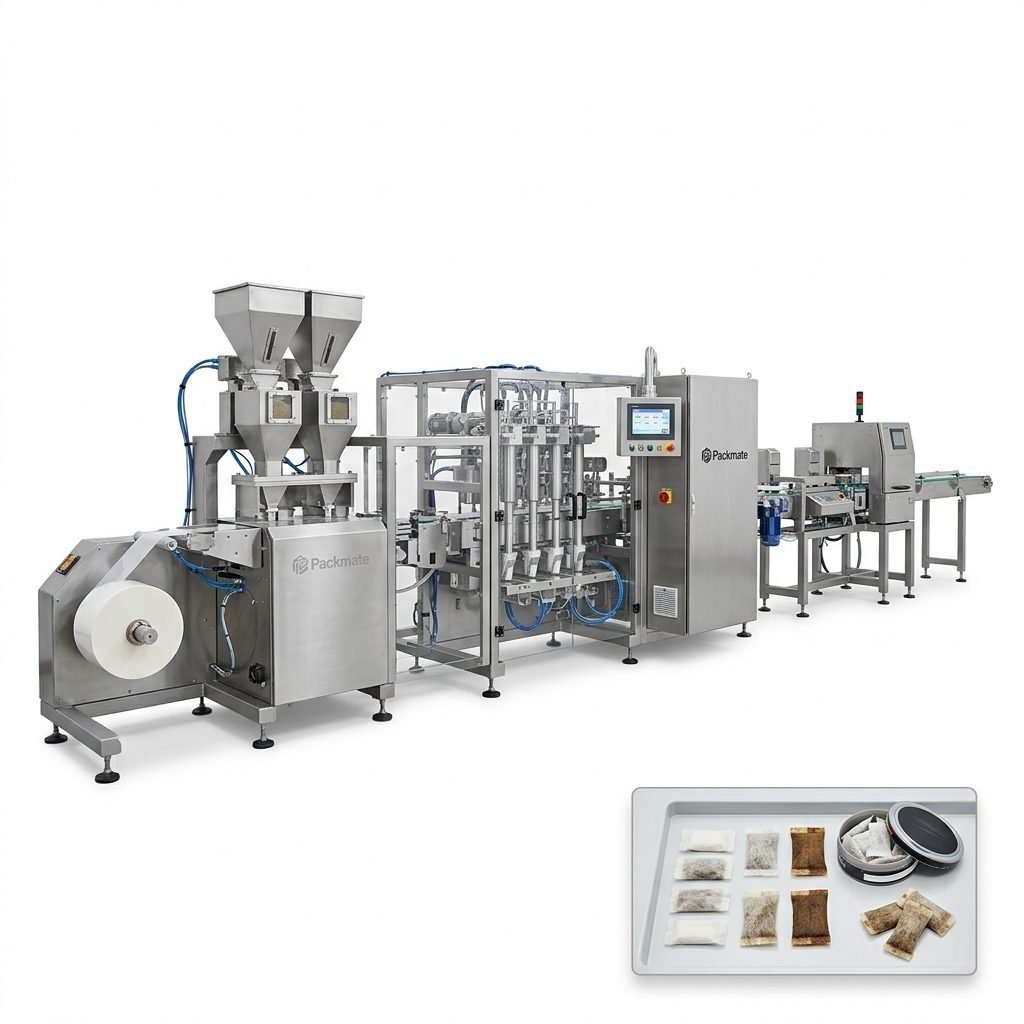
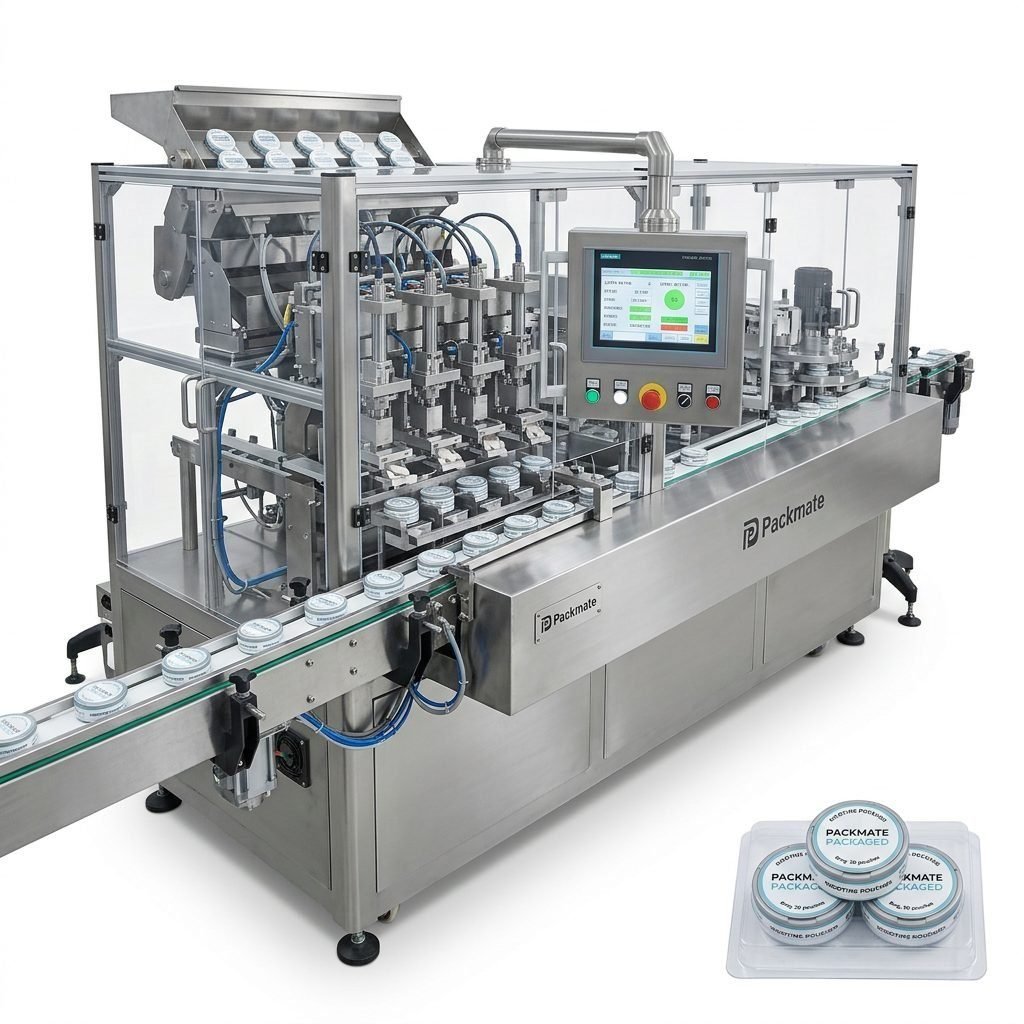
Choosing the right snus packaging machine in Luxembourg requires balancing regulatory compliance, production targets, product design, and long-term cost of ownership. This practical buyer’s guide walks you through the technical checkpoints, supplier qualifications, on-site considerations, and financing realities so you can make a confident decision for your nicotine pouch or snus production line.
🔍 Understand Regulatory and Market Context
Luxembourg’s regulatory environment and EU-wide rules affect packaging materials, labeling, and safety standards for nicotine products. Before evaluating machines, confirm your product category and required compliance. Look for machines and suppliers that deliver documentation supporting CE and ISO certifications and that can help with traceability and batch coding. A reputable supplier should be able to supply certificates and testing reports quickly.
Key regulatory checkpoints
- Material compatibility with EU food-contact standards where applicable.
- Machine guarding and safety features to meet CE requirements.
- Packaging and labeling capabilities for multilingual markets.
Tip: When discussing compliance with a vendor, request explicit examples of CE/ISO files and ask for references from European installations. Vendors experienced in nicotine pouch lines are best equipped to advise on local market requirements.
⚙️ Match Machine Type to Product Format
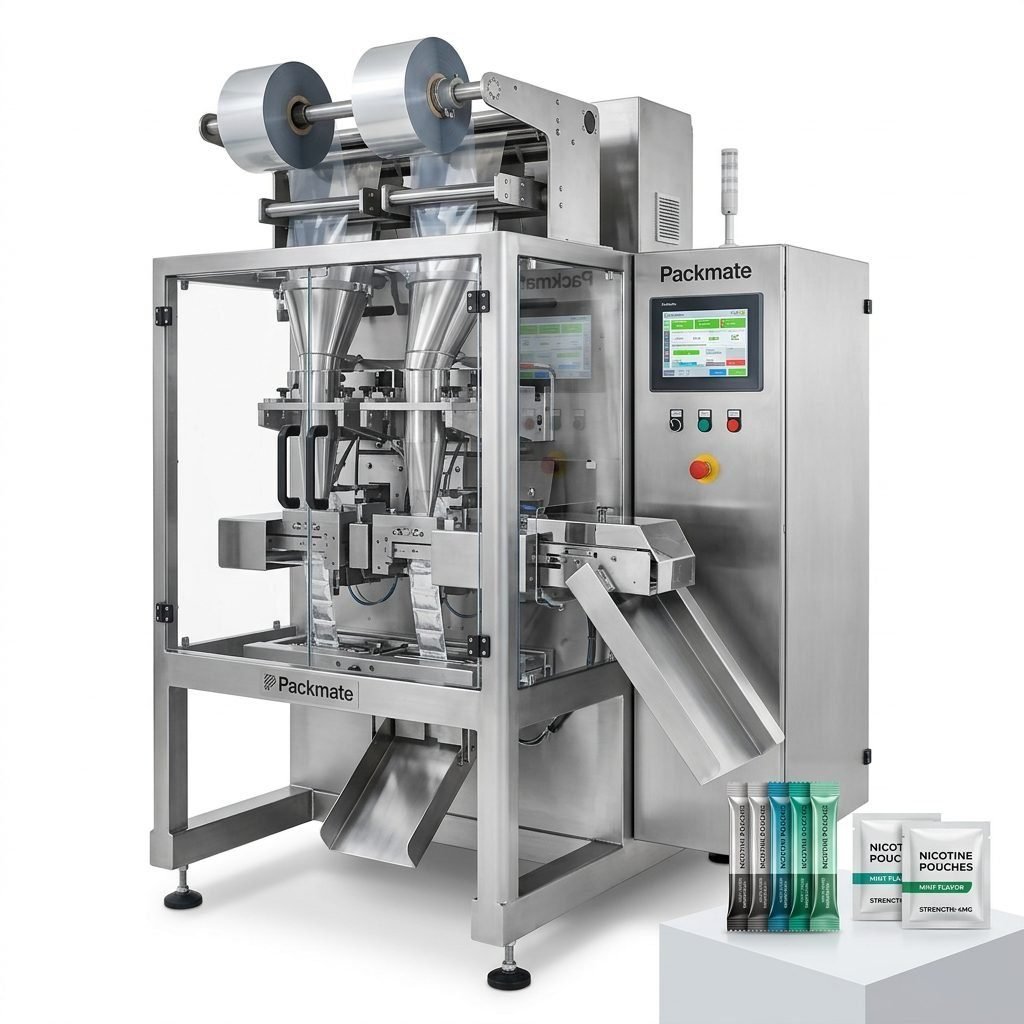
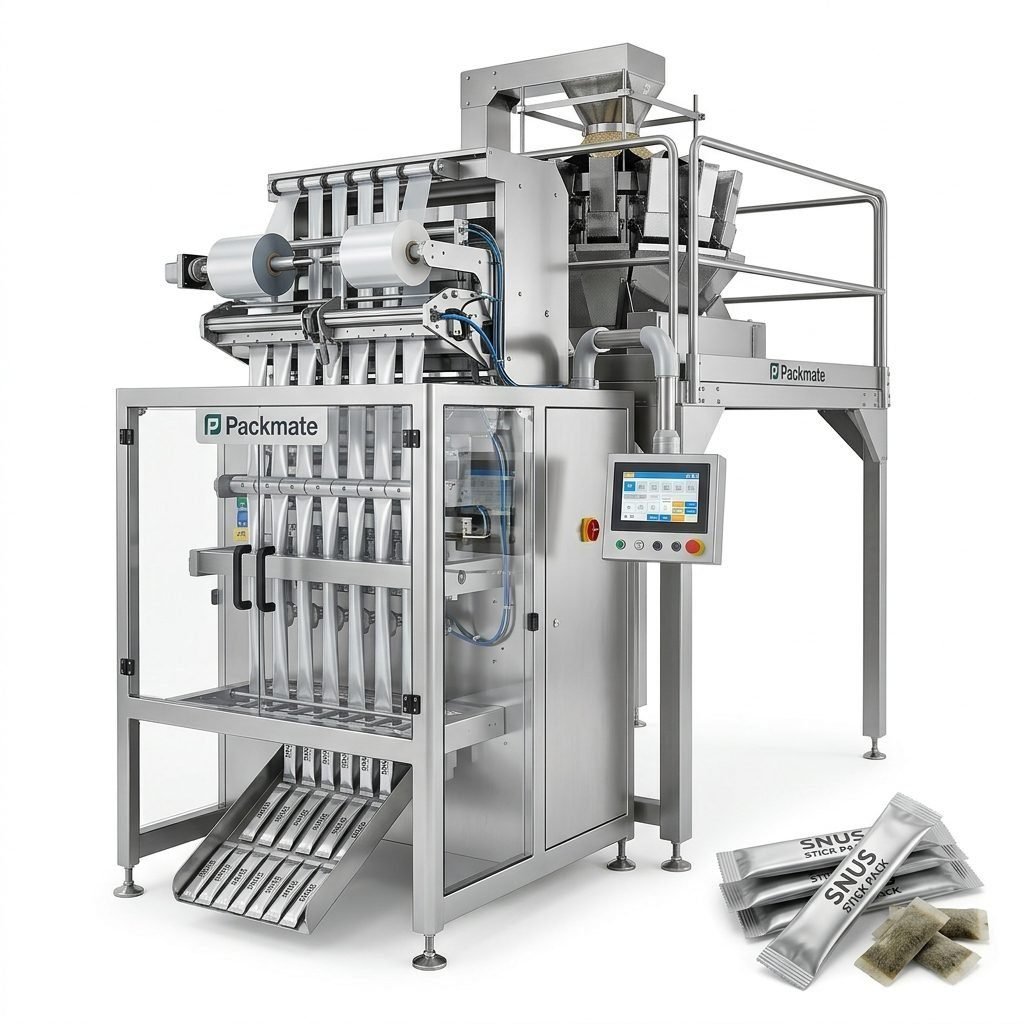
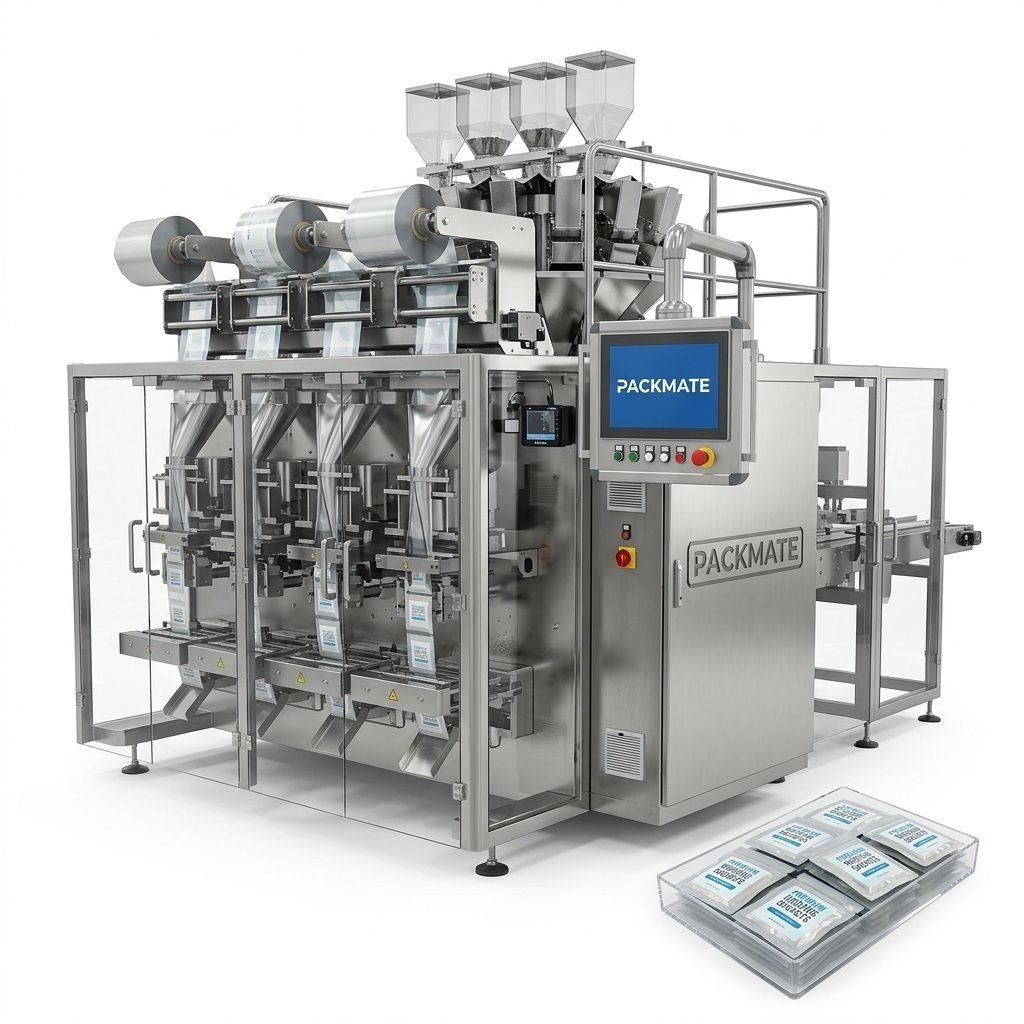
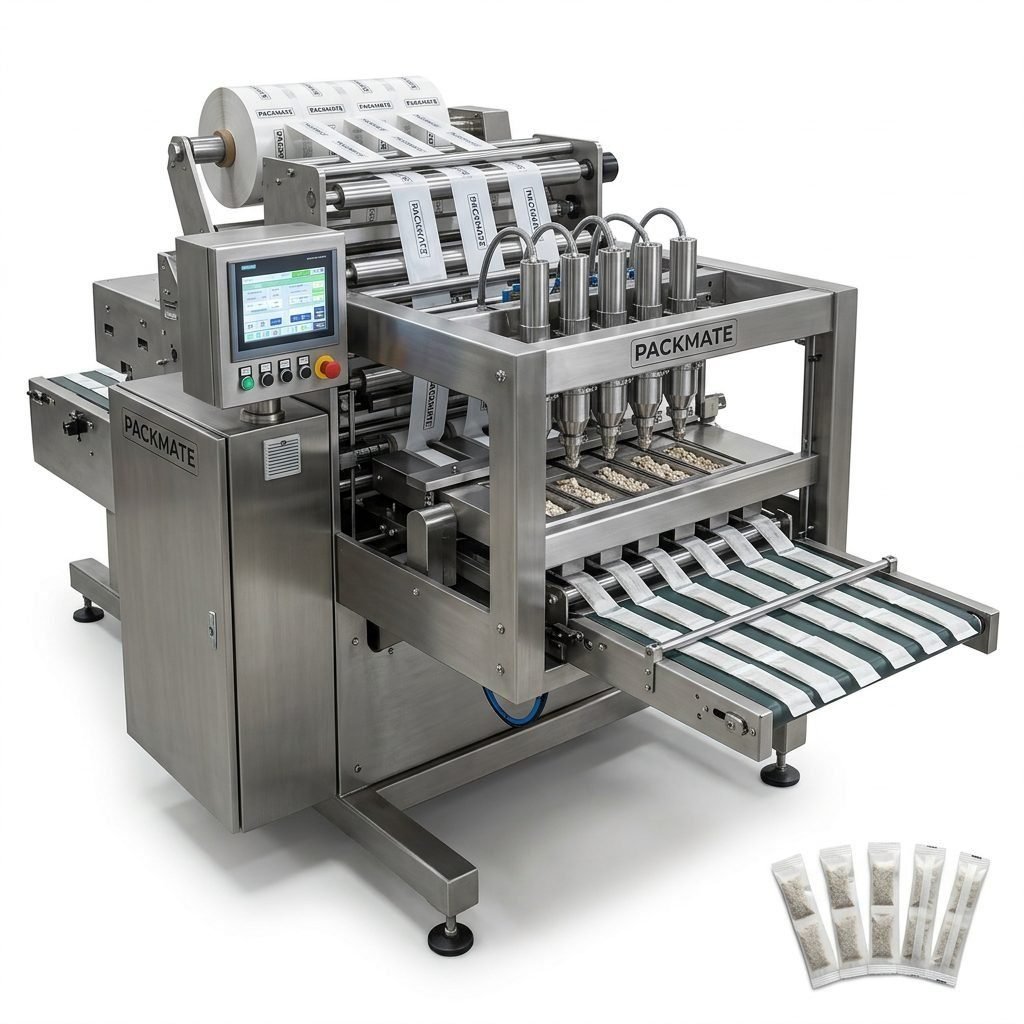
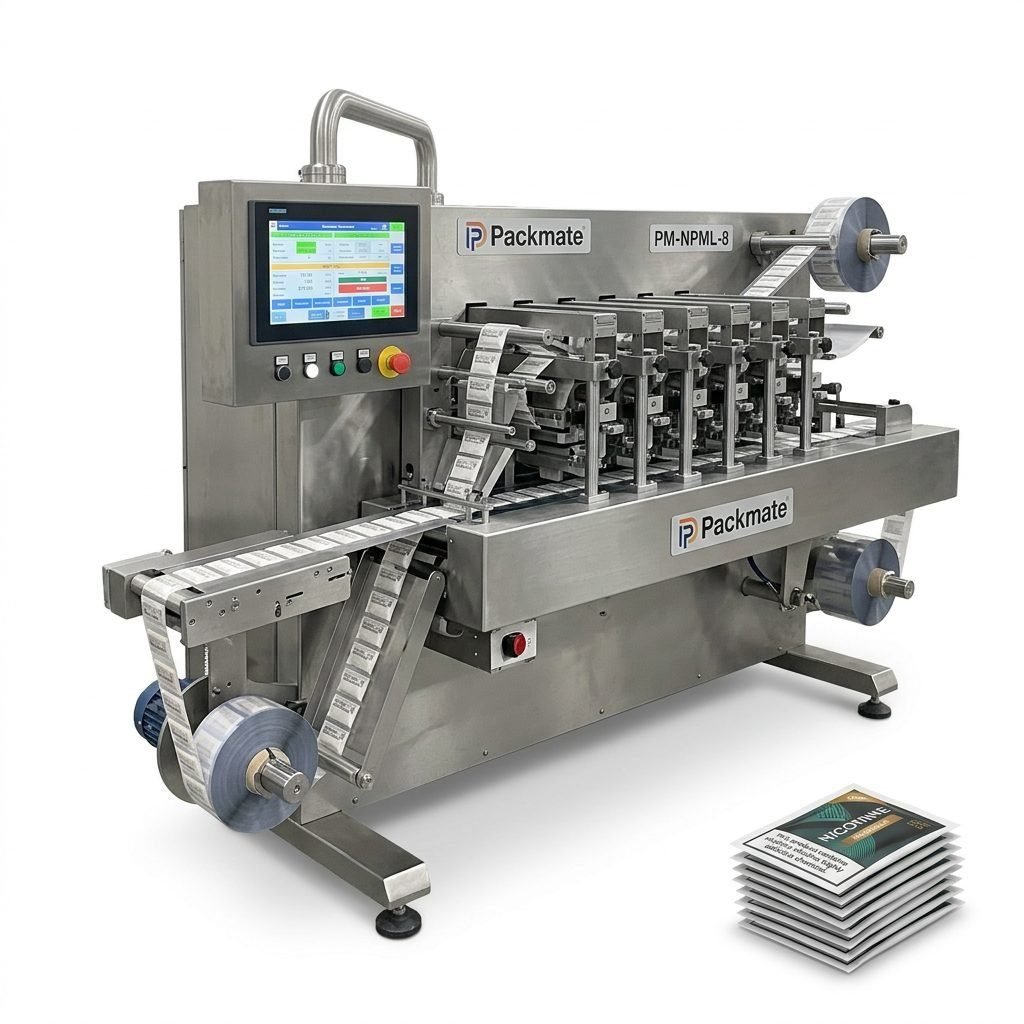
The first technical decision is the machine format. Snus and nicotine pouches are typically produced using vertical form-fill-seal systems, stick pack lines, sachet machines, or specialized multi-lane pouch lines. Each format affects throughput, flexibility, and cost.
Common machine formats
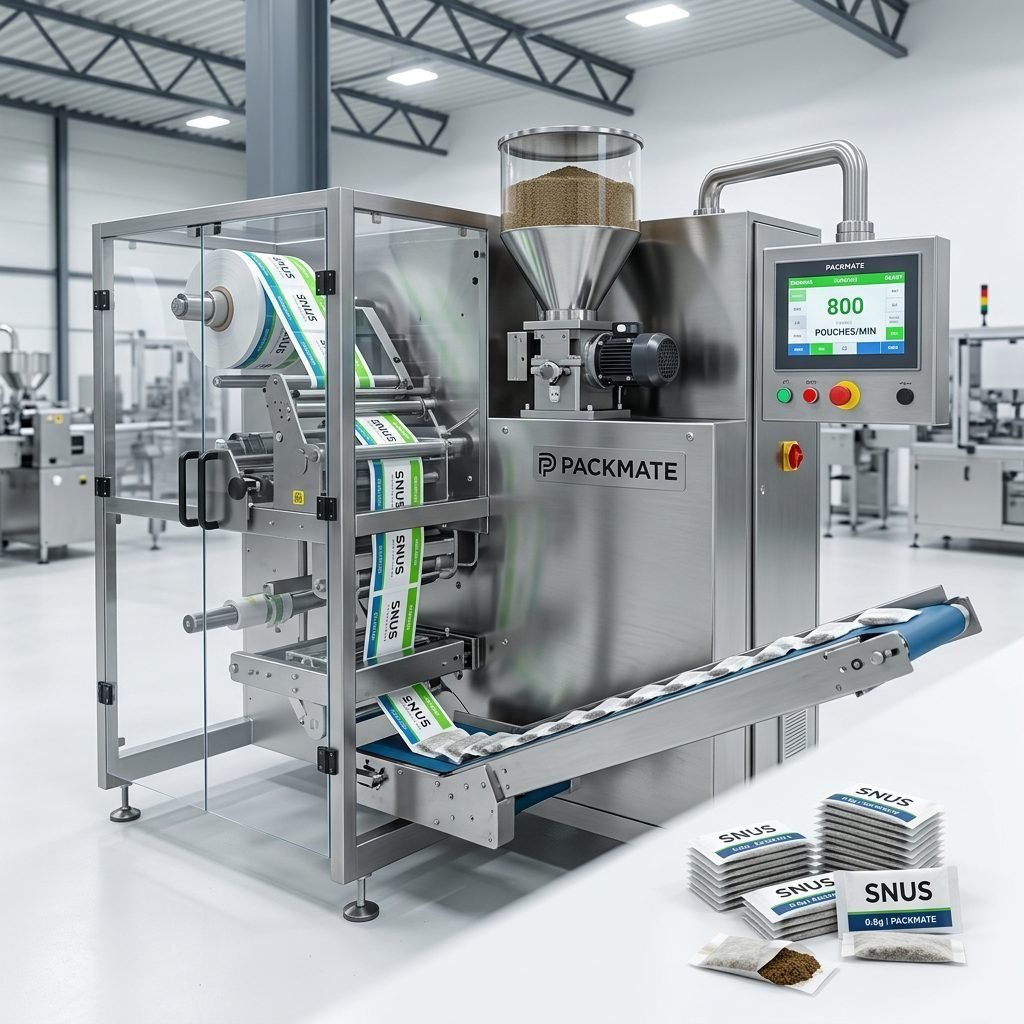
– Vertical pouch filling machines for pillow or round pouches.
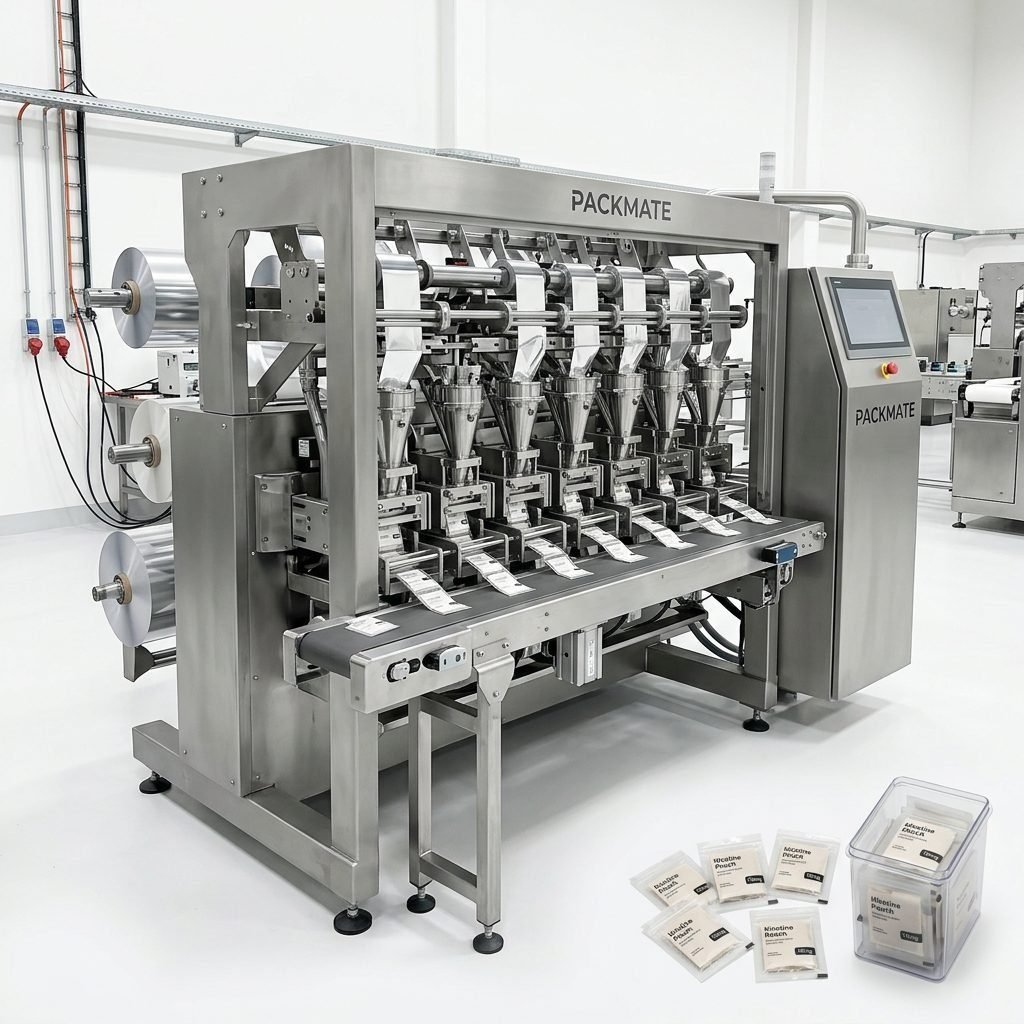
– Multi-lane systems for small-dose pouches that require high output and synchronized dosing.
– Stick pack & sachet systems for single-serve or sample distribution.
If you plan to produce multiple formats or expect product variations, prioritize modular machines or lines that can be retooled quickly. For proven equipment lines, see Packmate’s range of Snus & Nicotine Packaging Machines and Sachet & Stick Pack Machines.
📈 Capacity Planning: Throughput and Scalability
Define your target hourly and daily output, and then choose a machine that can meet that demand with headroom for growth. Throughput is affected by lane count, dosing method, and product handling. Multi-lane machines can multiply output without increasing footprint dramatically, but they demand precise synchronization and more complex maintenance.
Important: Choose a machine with 10–30% capacity margin over your peak forecast to avoid rushing upgrades within 12–24 months.
💡 Product Handling and Fill Technology
Nicotine pouch fill systems must handle delicate pouch bodies and precise fill weights. Common fill technologies include volumetric dosing, auger dosing (for powders), and multi-head weighers (for blends/granules). For consistent small-dose portions, look for verified dosing repeatability and low variation.
What to evaluate
- Weighing accuracy and statistical process control capabilities.
- Gentle pouch transfer systems to avoid damage or dusting.
- Ease of changeover between product sizes and formulations.
🔧 Maintenance, Spare Parts & OEE
Downtime is a top cost driver. Ensure the machine design prioritizes easy access, modular components, and fast-change parts. Ask suppliers about spare parts availability in Europe and average lead times. A strong OEE (Overall Equipment Effectiveness) program, combined with remote diagnostics, reduces unplanned stoppages.
Must-have questions: What is your recommended preventive maintenance schedule? Are spare parts stocked regionally? Does the machine support remote fault diagnosis?
🏭 Supplier Evaluation: Experience and Factory Capability
Evaluate suppliers on engineering experience, production scale, and references. Packmate Snus Machine, for example, has over 30 years of engineering experience and a 20,000㎡ manufacturing facility producing a wide range of packaging equipment. A vendor with proven multi-lane nicotine pouch installations is a major advantage.
Look for documented case studies, factory acceptance testing (FAT) offerings, and on-site installation and commissioning plans. Where possible, visit a working installation or request video demonstrations of machines running similar products.
Supplier capabilities you should confirm
- Number of models and customization options available.
- Precision machining capability and quality control systems.
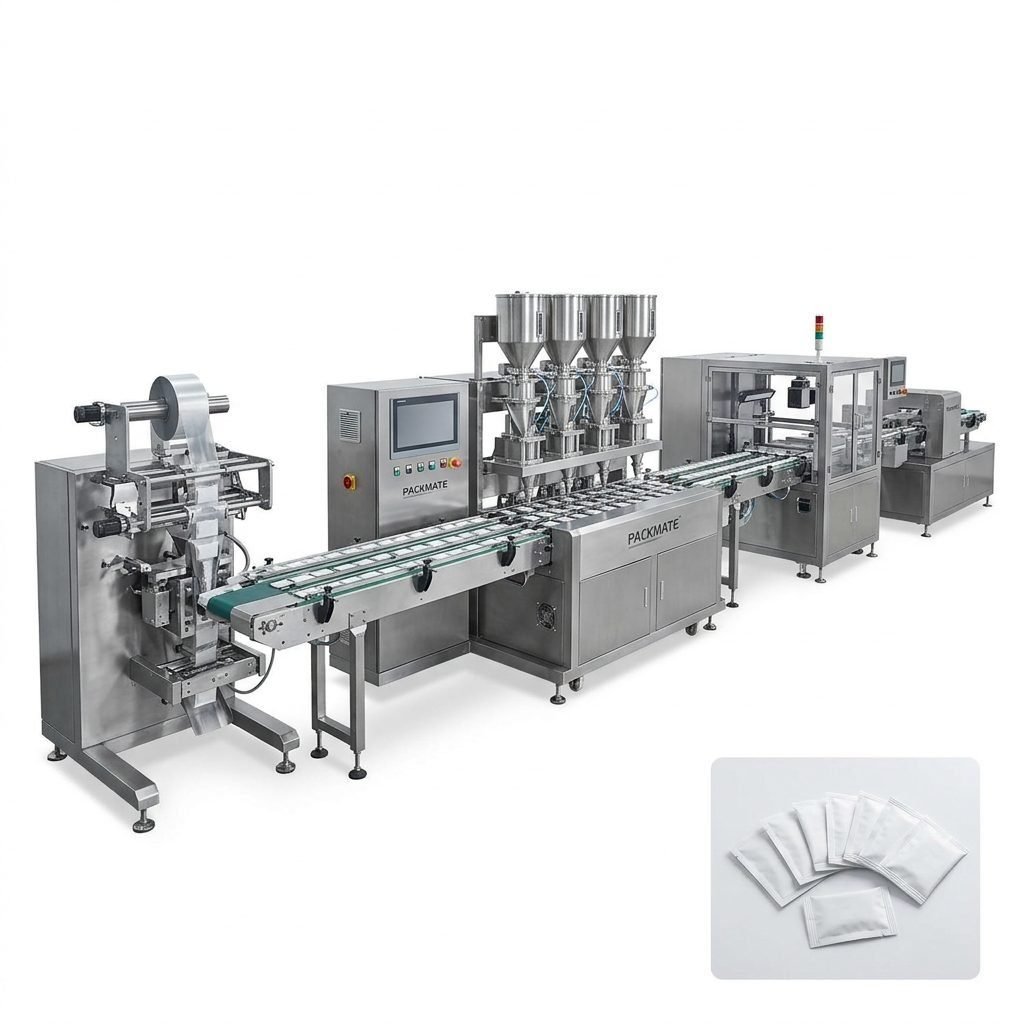
- Experience with turnkey lines, including weighing, filling, and secondary packaging. See examples under Filling & Packaging Lines.
💶 Total Cost of Ownership (TCO)
Purchase price is only one component of TCO. Evaluate energy consumption, spare parts costs, expected lifespan, required personnel training, and productivity gains. Machines with higher automation often justify higher upfront costs through reduced labor and less giveaway.
Cost checklist: initial price, installation & validation, training, spare parts kit, energy consumption, annual maintenance, and upgrade options.
🛠 Installation, Commissioning and After-Sales
A smooth installation includes factory acceptance tests, clear mechanical and electrical documentation, and on-site commissioning with customer personnel training. Confirm warranty terms and the structure of after-sales service. Prefer suppliers who offer local or regional service partners and remote support capabilities.
Packmate’s global service options and exhibition presence can provide reassurance on after-sales. Explore more on their Service and Our Exhibition pages for live demonstrations and support channels.
📦 Secondary Packaging and Line Integration
Secondary packaging — cartons, sleeving, or retail displays — is often overlooked but critical for throughput. Ensure the primary packaging machine integrates smoothly with case packers, labelers, and carton sealers. A supplier who provides full line solutions reduces integration risk and shortens commissioning time.
Integration considerations
- Synchronization interfaces (digital I/O, EtherNet/IP, ProfiNet).
- Buffering to accommodate different machine speeds.
- End-of-line quality control and traceability systems.
📑 Documentation and Training
Complete documentation is essential: mechanical drawings, electrical schematics, spare parts lists, cleaning procedures, and safety manuals. Confirm that training for operators and maintenance staff is included in the purchase and that training materials are available in your language.
Pro tip: Request recorded training sessions and a spare parts starter kit with your order to reduce early downtime risks.
📚 Case Studies and Proven Installations
Ask for case studies and references of similar installations in Europe. Visiting a live line or reviewing a video of a production run helps verify claimed speeds, product gentle handling, and finished pack quality. See real-world examples in supplier case pages to validate performance expectations: Case.
🧾 Procurement and Contract Tips
Structure contracts to include acceptance criteria, performance guarantees, penalties for missed delivery, and clearly defined service levels. Agree on FAT procedures and acceptance tests before ordering. Include spare parts lead times and pricing commitments in long-term supply agreements.
Contract checklist
- Delivery schedule and delivery condition (FCA/FOB/etc.).
- Acceptance tests and performance metrics.
- Warranty period and scope, including labor and parts.
- Terms for software updates and remote diagnostics.
✅ Final Selection Matrix
Create a weighted matrix to compare suppliers on: compliance & certifications, technical fit, throughput, TCO, service & spare parts, and references. Weight items according to your business priorities and score objectively to select the best partner.
Decision anchor: Favor suppliers who demonstrate both engineering depth and strong field support. Consider Packmate’s documented global solutions when seeking high-performance snus lines: About Packmate.
🚀 Next Steps for Buyers in Luxembourg
1) Define your product specifications and regulatory obligations. 2) Create your capacity plan and budget. 3) Request quotations with FAT and on-site commissioning included. 4) Visit or view demos of similar lines. 5) Negotiate a contract that protects uptime and provides clear support commitments.
For initial inquiries, technical brochures, or to schedule a product demo, contact the supplier directly through their Contact Us page or request detailed product literature via their Catalog.
Quick checklist before you sign
- Verified CE and ISO documentation and European references.
- FAT acceptance tests and clear performance targets.
- Spare parts availability in region and training included.
- Integration plan for secondary packaging and QC checks.
❓ Frequently Asked Questions
Q1: What certifications should I ask for when buying a snus packaging machine?
A1: Ask for CE and ISO certificates and compliance documentation related to machine safety, electrical systems, and any food-contact components. Also request traceability controls and software validation where required.
Q2: How do I estimate the right machine capacity for my business?
A2: Calculate your target finished packs per day, include peak demand and future growth. Add a 10–30% headroom margin and consider multi-lane machines if floor space is limited.
Q3: How important is local spare parts inventory and service?
A3: Extremely important. Reduced lead times for parts and rapid field service significantly lower downtime and TCO. Verify regional stocking or authorized partners in Europe.
Q4: Should I buy a turnkey line or assemble machines from multiple vendors?
A4: Turnkey lines reduce integration risk and usually shorten commissioning time. If you choose multiple vendors, ensure clear integration responsibilities and compatible interfaces.
Q5: Where can I see real-world examples and get more product information?
A5: Review supplier case studies and attend exhibitions to see machines running. Visit the supplier’s case and product pages for live examples and detailed specifications.