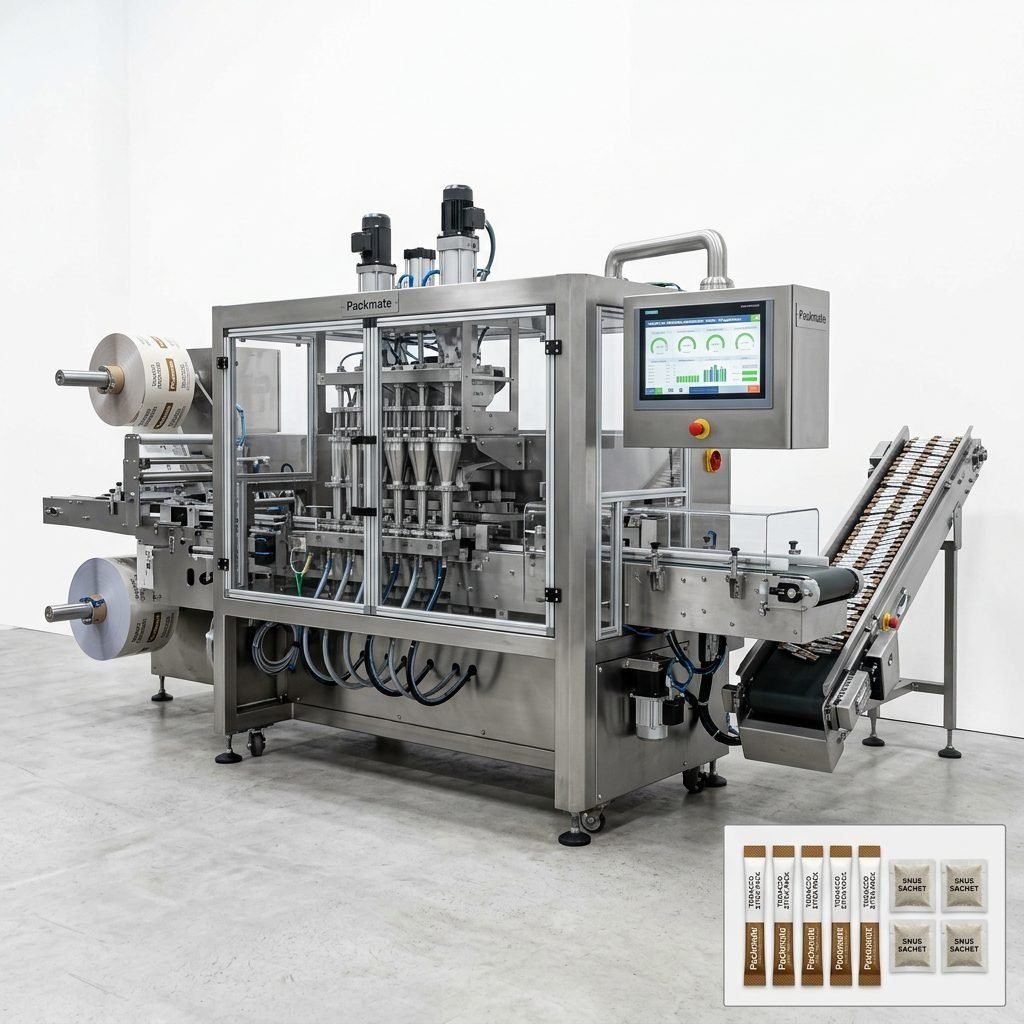
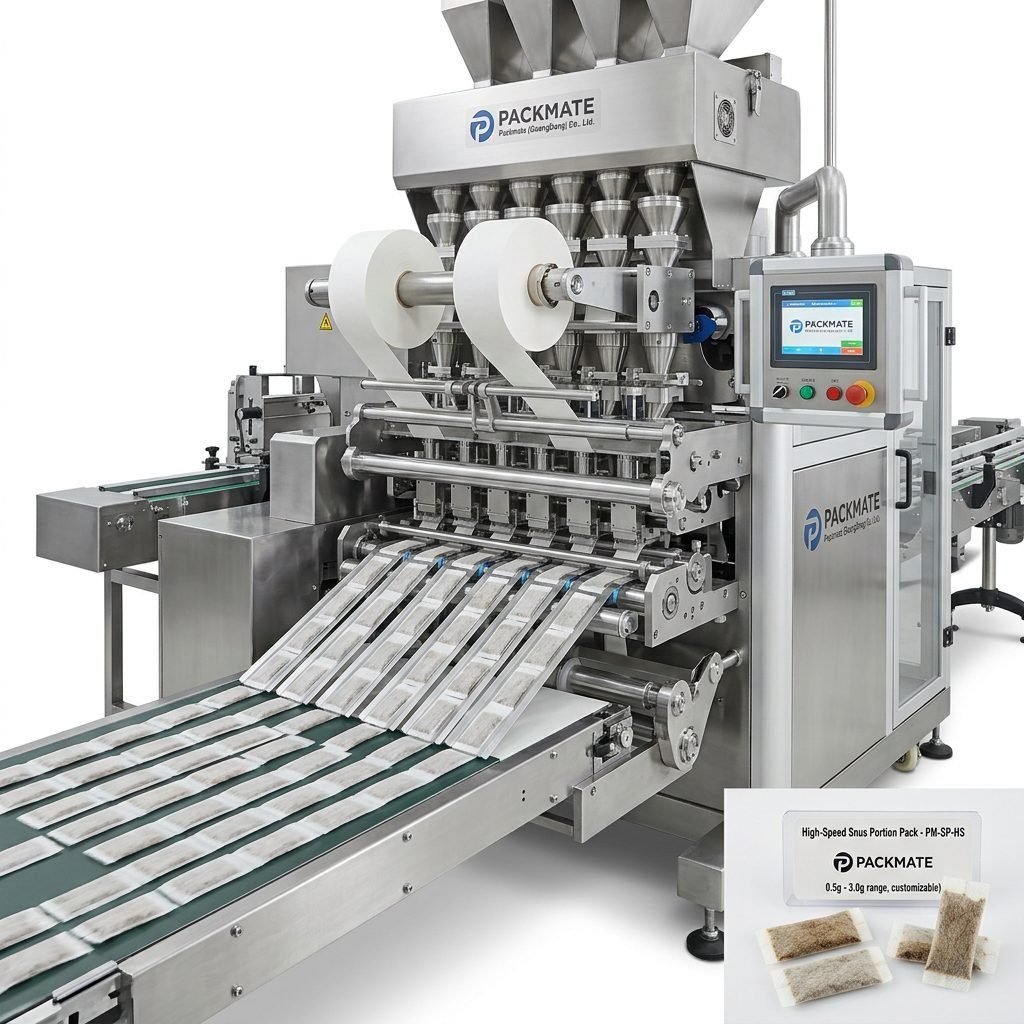
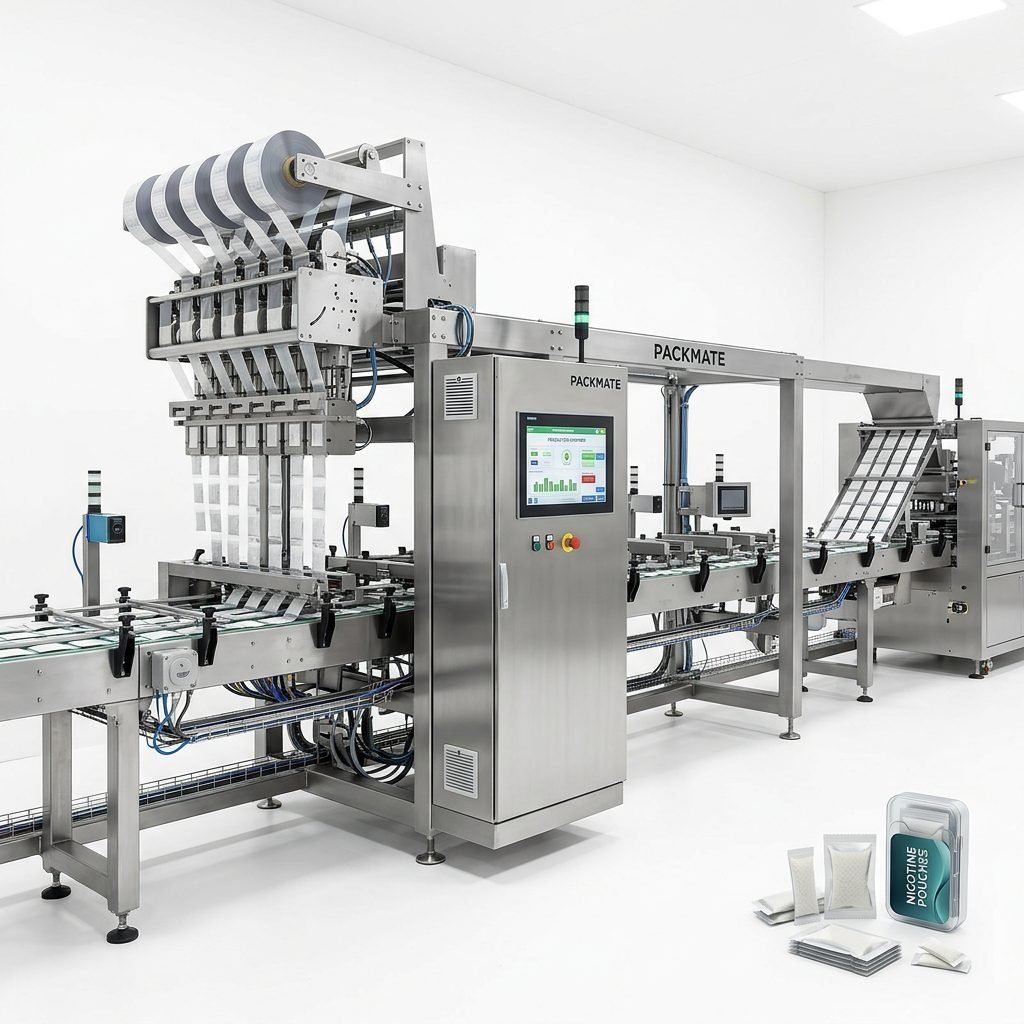
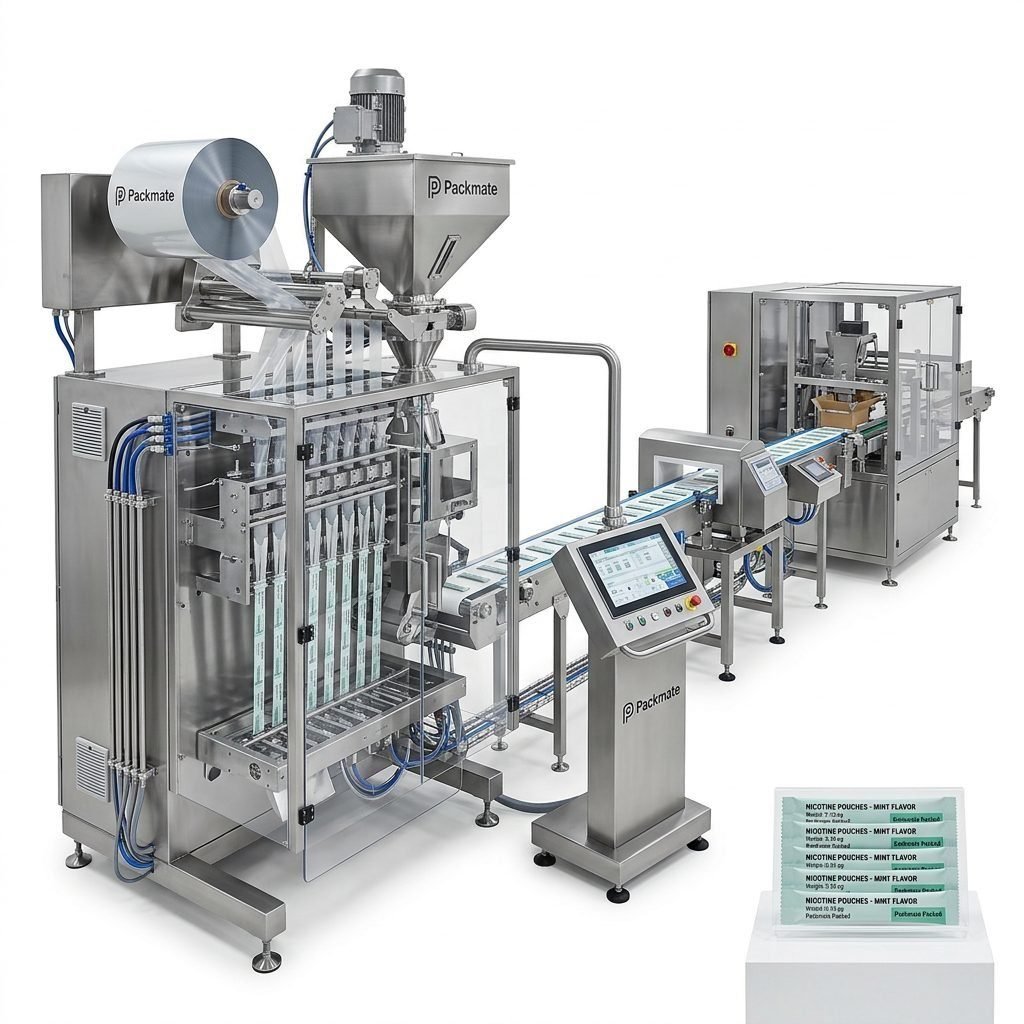
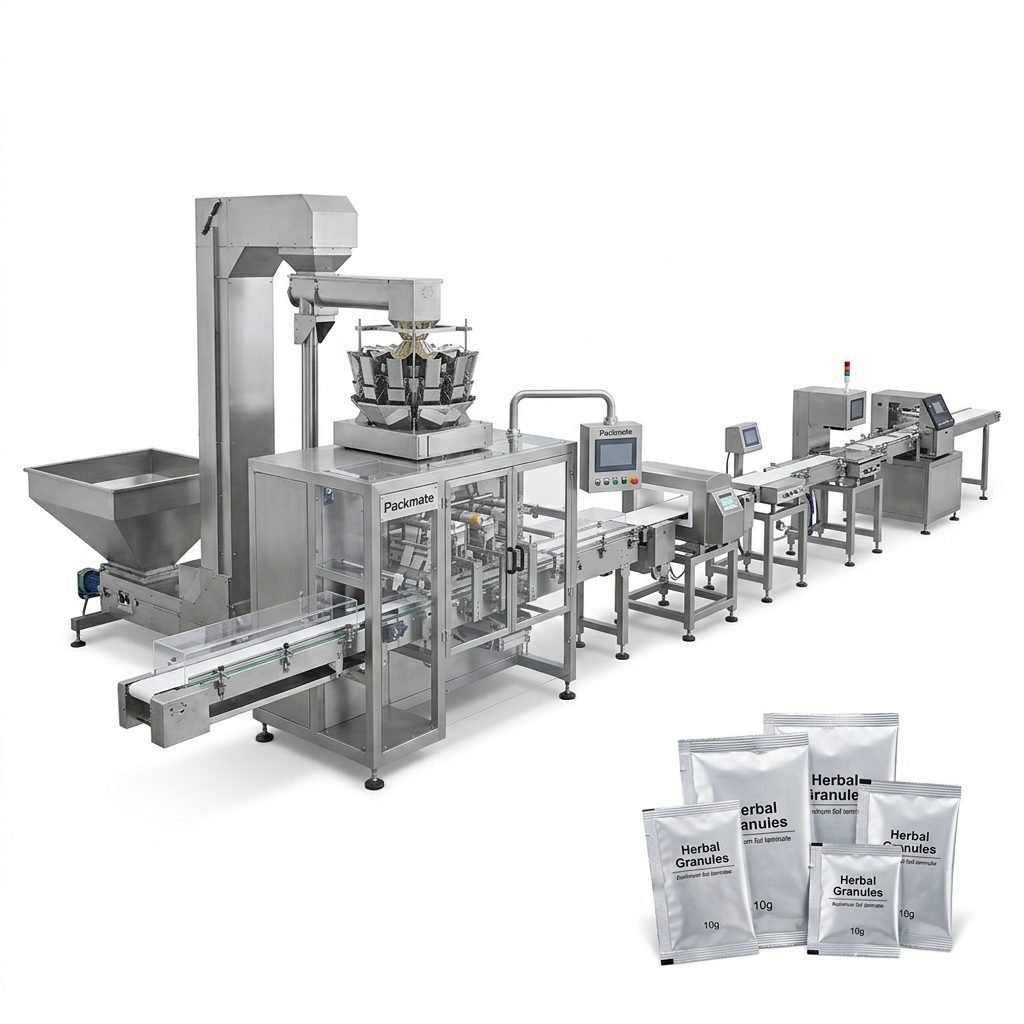
As global demand for nicotine pouches continues to grow, manufacturers are looking for packaging solutions that combine high throughput, product integrity, and flexible formats. Packmate’s engineering experience in snus and nicotine pouch systems delivers integrated production lines that help brands scale quickly while maintaining consistent quality. This article explores practical solutions for a high-efficiency nicotine pouch production line, from core machine elements to layout, automation strategies, and after-sales considerations.
Why choose modern nicotine pouch production lines?
Modern nicotine pouch production lines are engineered to meet the unique demands of small-dosage, multi-lane pouch packaging. They optimize material usage, reduce downtime, and enable rapid format changeovers. Key benefits include:
🔶 Higher throughput — Multi-lane systems increase output without proportional increases in footprint.
🔶 Better consistency — Precision dosing and advanced sealing technology ensure uniform weight and airtight packaging.
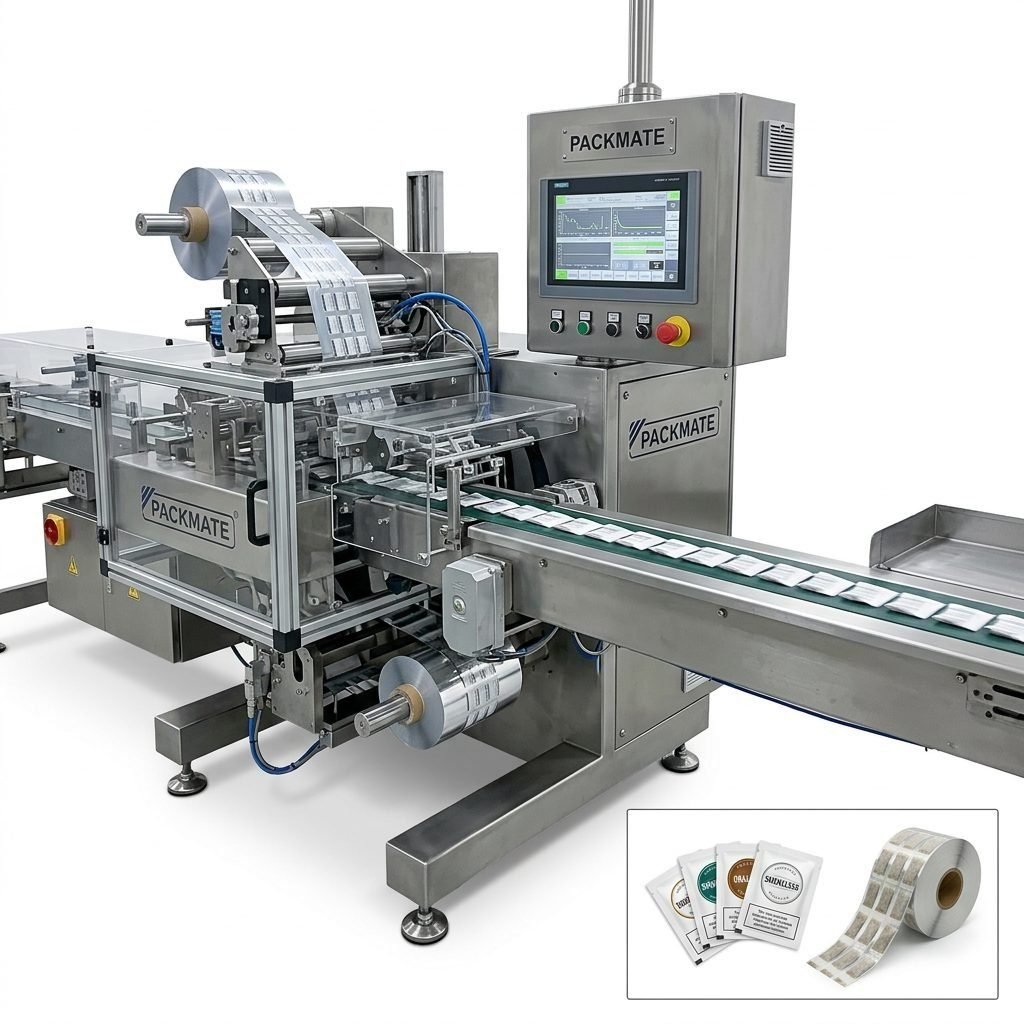
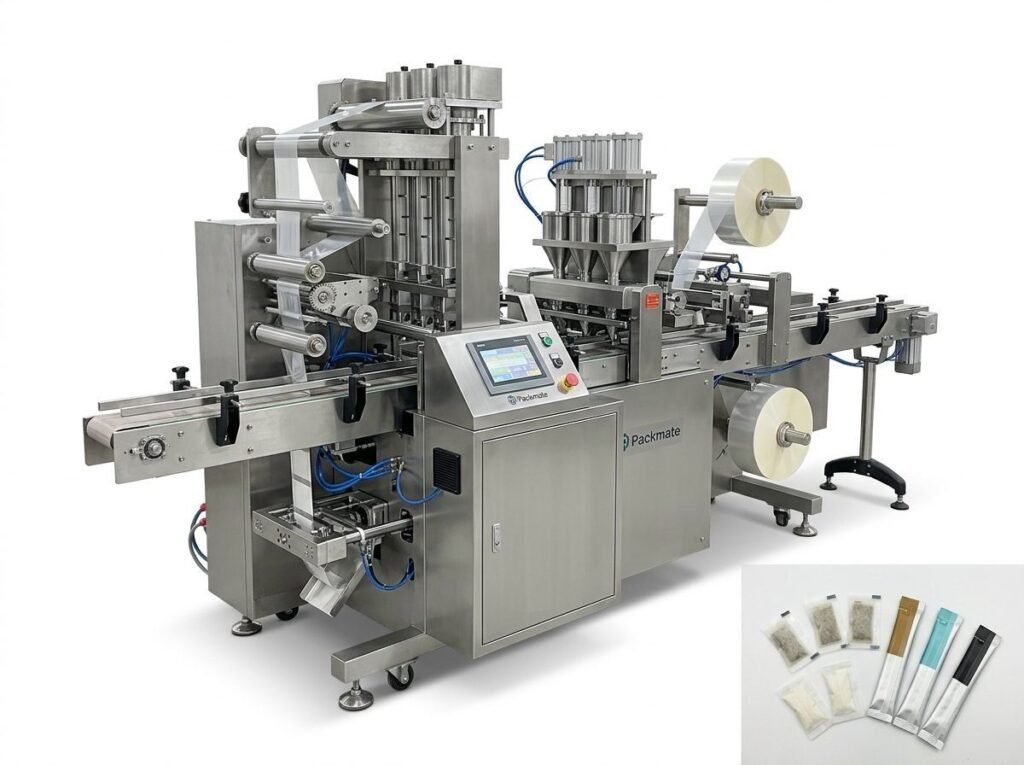
🔶 Flexible formats — Lines support stick packs, sachets, and custom pouch sizes for varied market needs.
Core components of a high-efficiency production line
A full nicotine pouch packaging line typically integrates several specialized machines. Each module plays a role in speed and reliability:
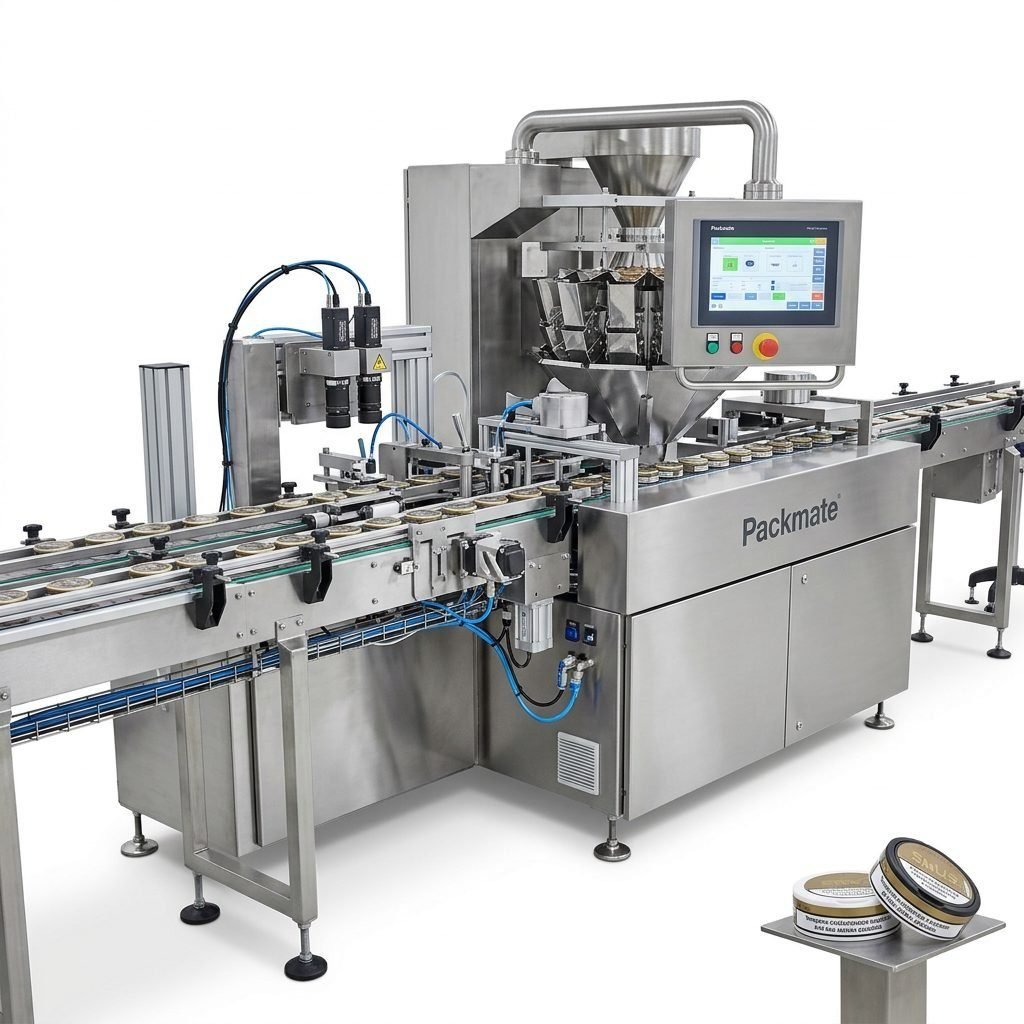
⚙️ Dosing & Feeding Systems: Precision feeders and vibratory hoppers stabilize small-dose flow for consistent pouch fill weights.
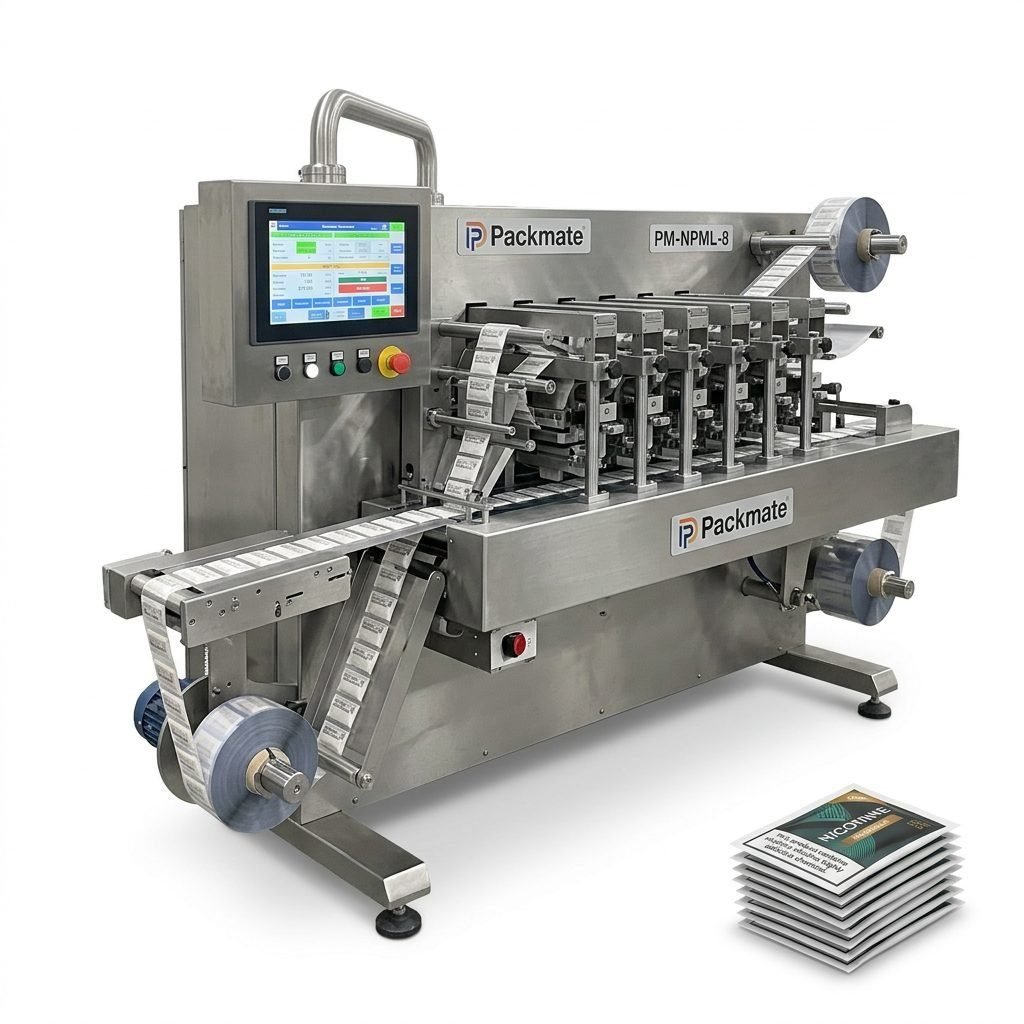
⚙️ Multi-lane Filling Machines: Multi-lane designs allow parallel filling of multiple pouch lanes, dramatically increasing hourly capacity.
⚙️ Form-Fill-Seal Units: Reliable FFS units ensure bag forming, product filling, and secure sealing in one integrated step.
⚙️ Checkweighers & Quality Inspection: Inline weighing and vision systems detect underfills, sealing defects, or foreign particles to protect brand reputation.
⚙️ Secondary Packaging: Cartoners, shrink wrappers, and case packers prepare finished pouches for distribution with minimal manual handling.
🔧 Key performance targets: For a well-designed nicotine pouch line, aim for consistent fills within ±2–3%, OEE above 70–80%, and changeover times below 20 minutes for common pouch formats.
Design strategies to maximize throughput
Achieving high throughput is not only a matter of adding lanes. It requires a holistic approach to line balance, material logistics, and automation:
🔶 Multi-lane synchronization — Ensure feed, fill, and sealing modules are synchronized to prevent bottlenecks. Precision servo motors and centralized PLC control maintain lane parity.
🔶 Modular layout — Use modular machine units so you can add capacity incrementally. Modular design reduces initial investment while enabling quick expansions.
🔶 Quick-change tooling — Standardize quick-change parts and hoppers for rapid format swaps. This reduces downtime for SKU transitions.
🔶 Predictive maintenance — Integrate sensors and IoT data to forecast part wear and schedule maintenance during planned stops, avoiding unexpected downtime.
Automation, control and integration
Effective automation and control systems ensure repeatable performance and simple operator interaction. Modern lines use:
• PLC-based control with touchscreen HMI for recipe management and alarms.
• Servo actuation for precise motion, reduced mechanical wear, and faster format changes.
• Inline data logging for traceability, SPC (statistical process control), and regulatory reporting.
Material handling & packaging materials
Material choices and handling strategies strongly affect product shelf life and sealing reliability:
🔶 Barrier films — Use high-barrier laminates to protect nicotine pouches from moisture and oxygen. Proper film tension control reduces wrinkling and seal defects.
🔶 Pre-made vs. Form-Fill-Seal — Pre-made pouches allow faster sealing but require accurate handling; FFS provides flexibility for bespoke pouch shapes and sizes.
🔶 Anti-static measures — Nicotine powders and small-format pouches are sensitive to static; grounding and ionizing bars improve handling consistency.
Quality control and regulatory compliance
Reliable QC systems protect consumers and brands. A robust nicotine pouch line includes:
🔶 Inline checkweighers — Reject underweight or overweight pouches automatically.
🔶 Vision inspection — Detect printing errors, defective seals, or missing labels.
🔶 Metal detection & foreign matter control — Protect consumers and maintain compliance with food and pharmaceutical safety standards.
Packmate machines are built to meet CE and ISO standards, ensuring safety and international regulatory alignment. Learn more about our credentials on our Certificate page.
Important: Traceability and batch control are essential in nicotine product manufacturing. Implement lot codes, date stamps, and integrated MES reporting to ensure product recalls can be handled quickly and transparently.
Custom solutions & line configurations
Every production environment is different. Common customizations for nicotine pouch lines include:
• Lane count — Choose multi-lane counts that match your target output and footprint constraints.
• Feeding architecture — Custom hoppers and dosing modules for powders, granules or moist pouch blends.
• Integration with upstream mixing or downstream cartoning equipment — Create a turnkey production line that minimizes manual handling.
If you want to explore packaging machine models suitable for nicotine pouches, visit our product overview: Snus & Nicotine Packaging Machines.
Factory capabilities and why it matters
Packmate manufactures in a 20,000㎡ facility equipped with advanced CNC centers and precision assembly lines. This capacity supports:
🔶 Faster lead times — Domestic machining and assembly reduce wait times for spare parts and custom orders.
🔶 Consistent quality — Tight tolerances and in-house testing ensure machines meet performance targets.
Discover detailed product families and auxiliary equipment on our site: Auxiliary Packaging Equipment.
Case studies & global deployments
Successful deployments across Europe, Asia, and the Americas demonstrate the flexibility of modern nicotine pouch lines. Typical outcomes reported by Packmate customers include:
• 2–4× capacity increase compared to legacy single-lane systems.
• Reduced labor costs through automation of filling, sealing and secondary packing.
Explore real-world examples in our Case section to see how tailored solutions drive measurable ROI.
Maintenance, training, and lifecycle support
A high-efficiency production line requires a support plan that includes preventive maintenance, operator training, and spare parts provisioning:
🔶 Scheduled maintenance kits — Provide recommended parts lists and intervals to maintain OEE.
🔶 Remote diagnostics — Enable faster troubleshooting with secure remote access to PLC and HMI data.
Packmate’s global service team offers commissioning, onsite training, and long-term service contracts. For service inquiries see Service.
Layout and footprint optimization
Optimizing factory layout reduces material handling time and simplifies maintenance access:
• Straight-line flow from raw material reception to finished goods minimizes cross-traffic.
• Service aisles — Ensure 800–1000 mm clearance around critical machines for safe access.
• Ergonomic operator stations — Reduce strain and speed up interventions during changeovers.
Sustainability considerations
Sustainability is increasingly important in packaging. Consider design choices that lower waste and energy consumption:
🔶 Energy-efficient drives — Replace older motors with servo technology to reduce energy draw.
🔶 Material optimization — Evaluate thinner laminates or mono-material options that maintain barrier performance while reducing landfill impact.
Tip: Early engagement between your R&D and production teams with packaging engineers saves time and reduces the number of prototype iterations when launching a new pouch format.
How to start: selecting the right supplier
Choosing a supplier is about capability, communication, and lifecycle support. Key evaluation criteria:
✔️ Technical expertise — Look for manufacturers with dedicated snus/nicotine packaging experience and proven machine families.
✔️ Manufacturing capacity — Confirm in-house machining and assembly to reduce lead times and ensure quality.
✔️ Global support — Ensure reliable after-sales service and availability of spare parts.
For an introduction to Packmate’s company, development history, and mission, see About Packmate.
Conclusion
High-efficiency nicotine pouch production lines balance precision dosing, multi-lane throughput, and robust quality control. By focusing on modular design, automation, and supplier capabilities, manufacturers can scale rapidly while protecting product integrity and regulatory compliance. Selecting a partner with deep snus and nicotine packaging experience helps shorten time to market and ensures safer, more reliable production.
Frequently Asked Questions
Q1: What throughput can I expect from a multi-lane nicotine pouch line?
Typical multi-lane configurations can multiply single-lane rates by 2–8× depending on lane count and product format. Exact throughput depends on fill method, lane synchronization, and downstream packing speed.
Q2: Do Packmate lines support different pouch formats like stick packs and sachets?
Yes. Modern lines can be configured for stick packs, sachets, and custom pouch types. Visit our product categories to see available options: Sachet & Stick Pack Machines.
Q3: How does Packmate handle installation and training?
Packmate provides commissioning, operator training, and documentation as part of the project scope. Remote support and spare parts packages are available to maintain long-term performance.
Q4: Can you integrate nicotine pouch lines with upstream filling or downstream cartoning equipment?
Absolutely. Turnkey solutions integrate weighing, filling, form-fill-seal, and secondary packaging. For examples of integrated lines, see our Filling & Packaging Lines.
Q5: Where can I see Packmate equipment in person?
Packmate showcases machines at major international exhibitions; check the schedule on our Our Exhibition page or contact our team for demonstration availability.