Choosing the right nicotine packaging machine in the Czech Republic demands more than just price comparison. You must balance regulatory compliance, production capacity, product format, and long-term support. This guide walks you through practical steps and technical considerations so you can select a machine that fits your product (snus, nicotine pouches, sachets, stick packs) and business goals.
Know the Local Regulatory Landscape ⚖️
Czech Republic manufacturers and packers must comply with EU rules on nicotine products, labeling, and consumer safety. Before purchasing, confirm the packaging machine can meet requirements for tamper-evidence, traceability, and accurate content declarations. Machines that support variable-data printing and easy integration with track-and-trace systems will reduce compliance risk.
Key compliance checkpoints
✔️ Dose accuracy and filling precision to avoid mislabeling claims.
✔️ Compatibility with approved packaging materials and barrier films.
✔️ Options for serialized printing, lot codes, and expiration dates.
✔️ CE and ISO certifications on the machine to meet European safety standards.
Tip: If you need a trusted supplier with proven compliance experience, check manufacturers with global certifications and exhibition presence — these vendors often provide machines that are easier to approve for EU markets.
Define Your Product & Packaging Formats 📦
Different nicotine products require different packaging solutions. Are you producing single-dose nicotine pouches, traditional snus, sachets, or stickpacks? Identify the formats and sizes you will produce now and within a 2–5 year horizon — flexibility is essential if you plan new SKUs.
Common machine categories
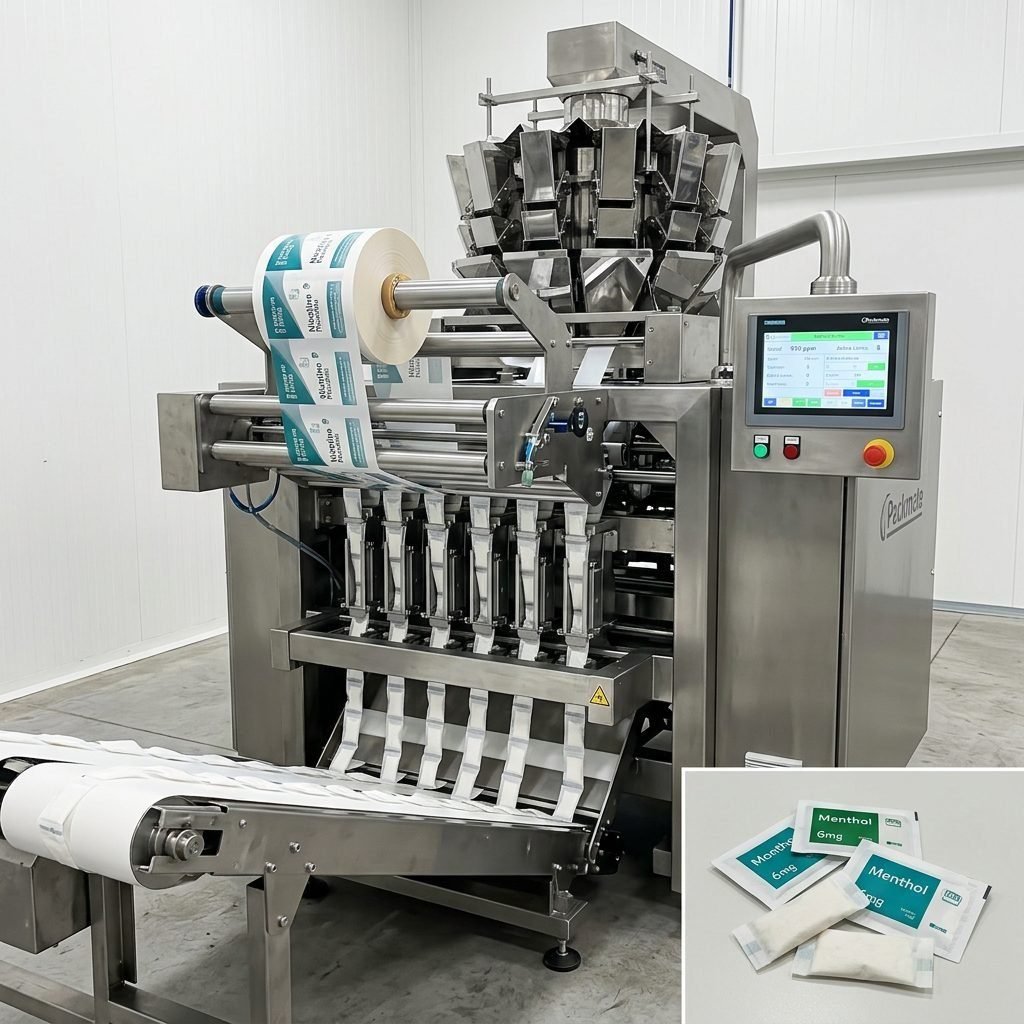
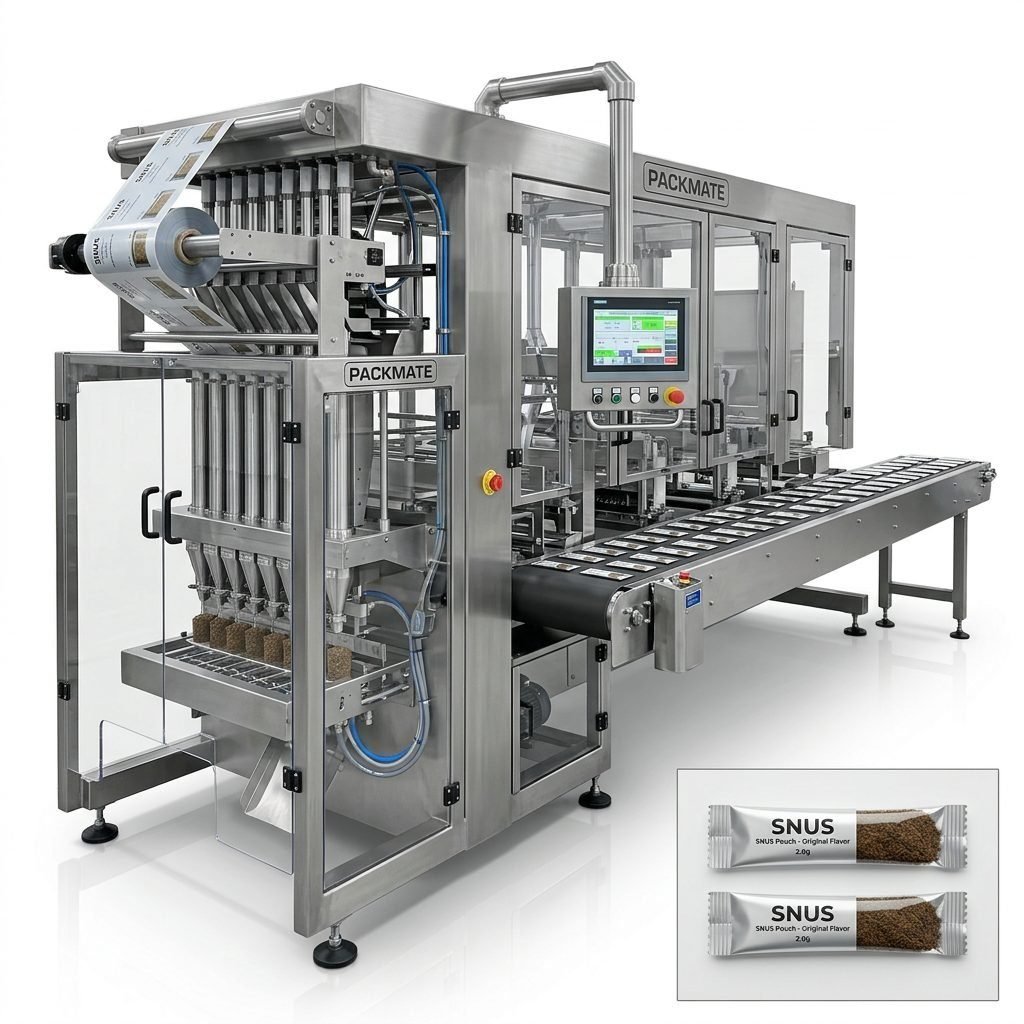
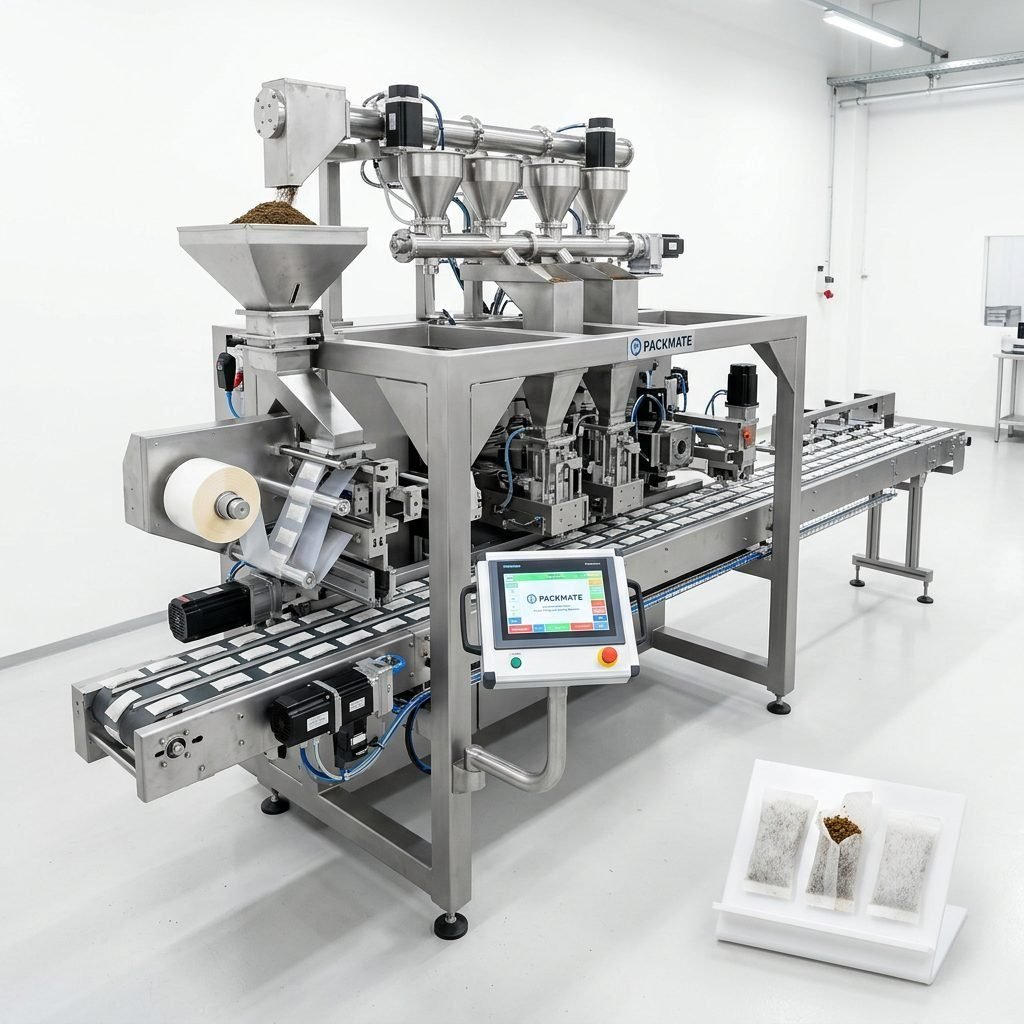
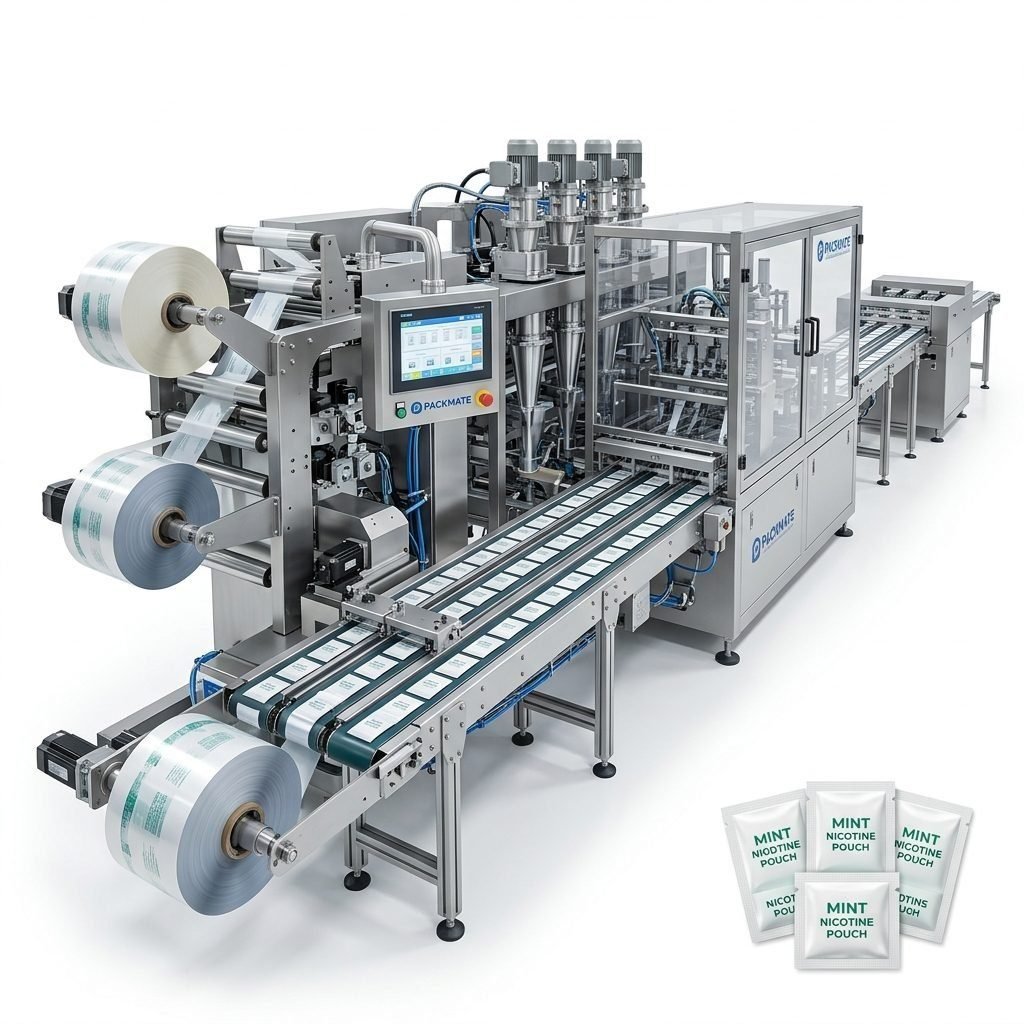
• Multi-lane snus pouch machines for high throughput small-dose pouches.
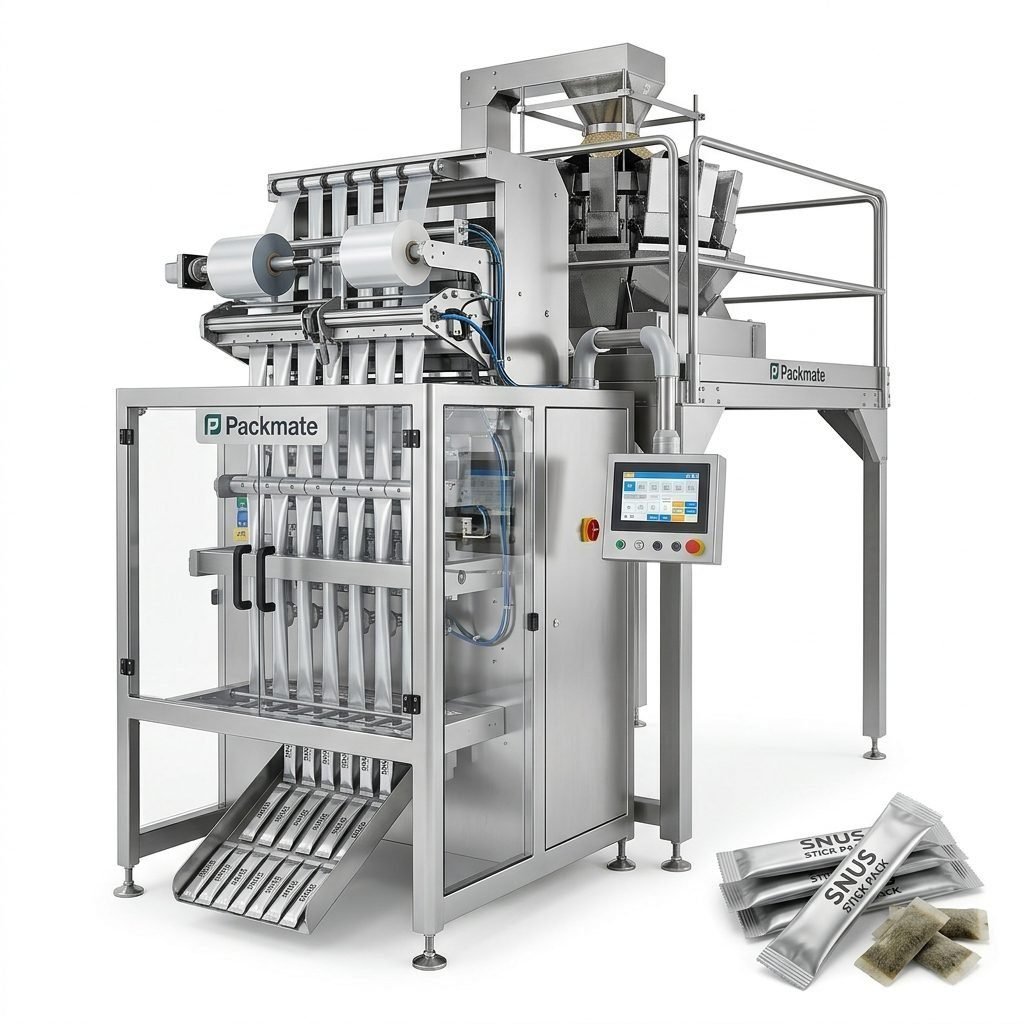
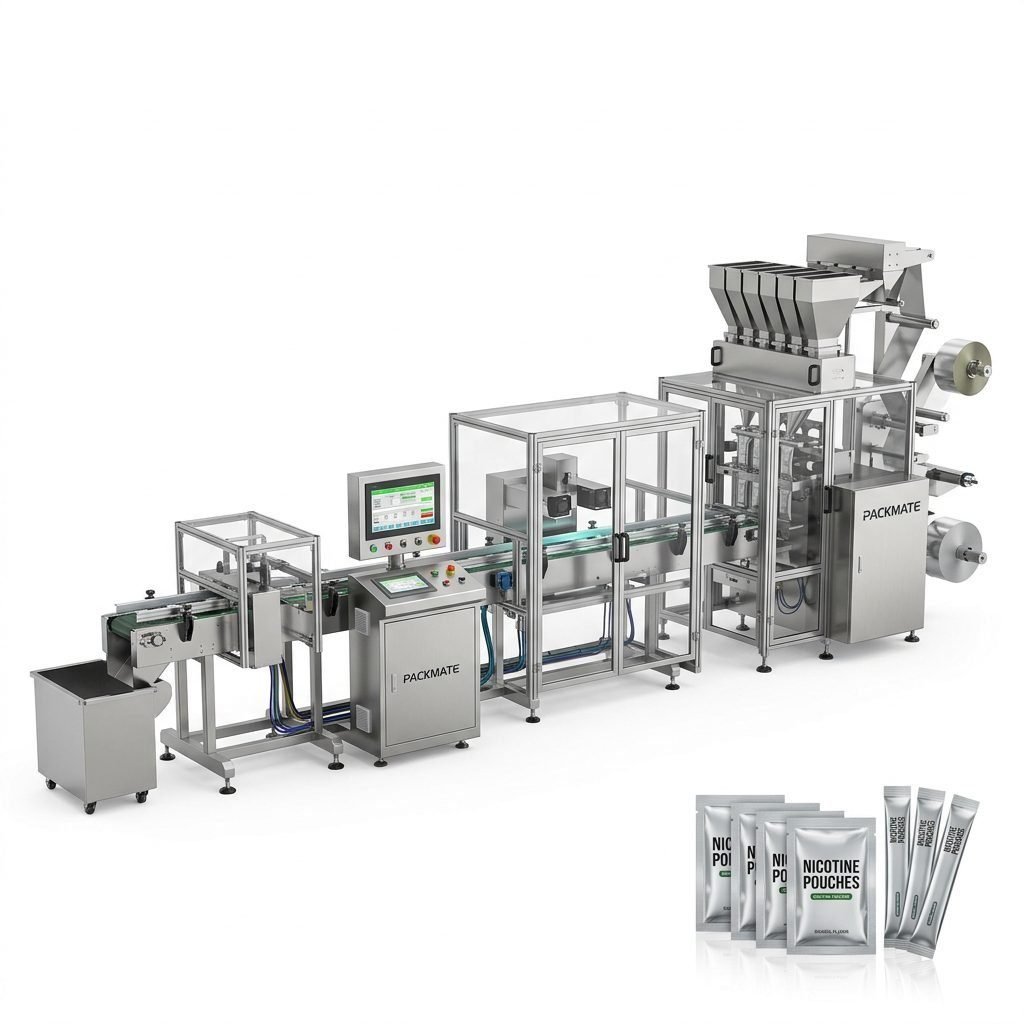
• Stick pack machines for single-serve stick-shaped sachets.
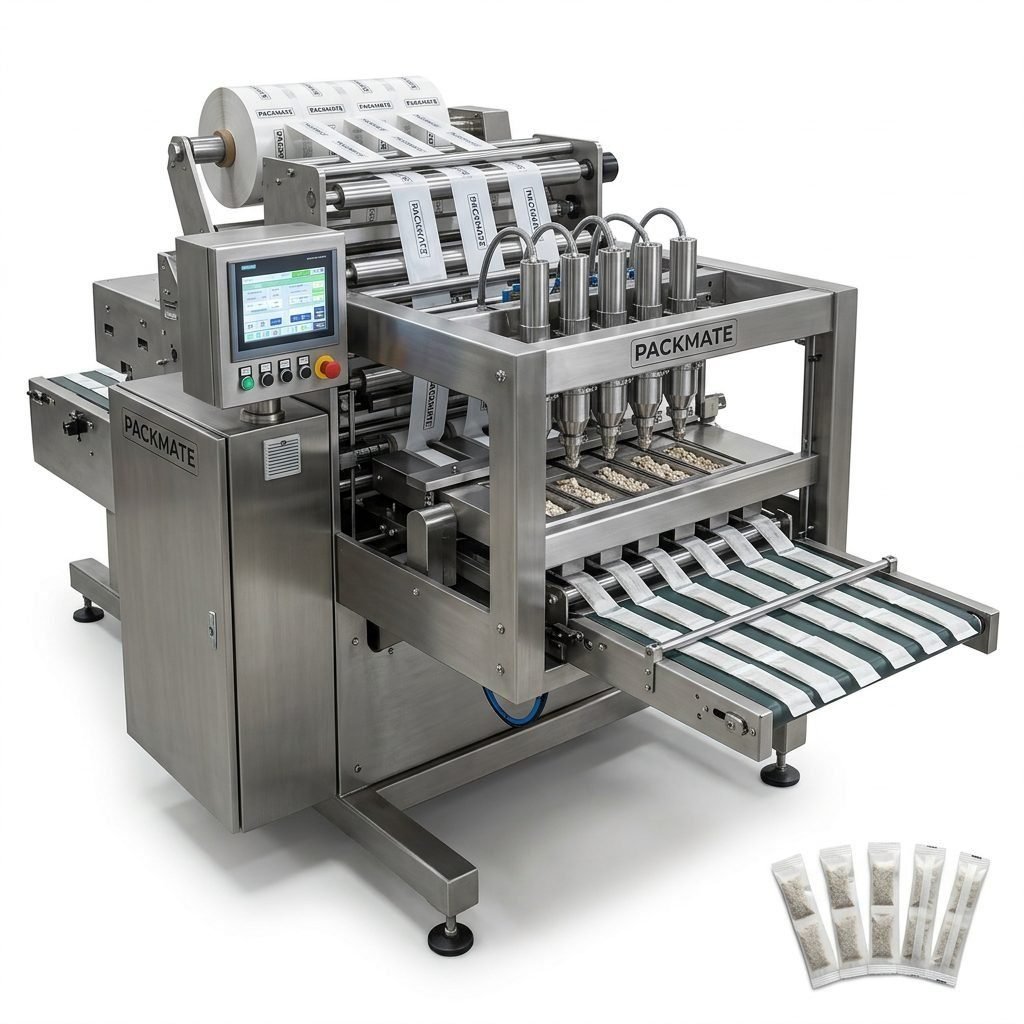
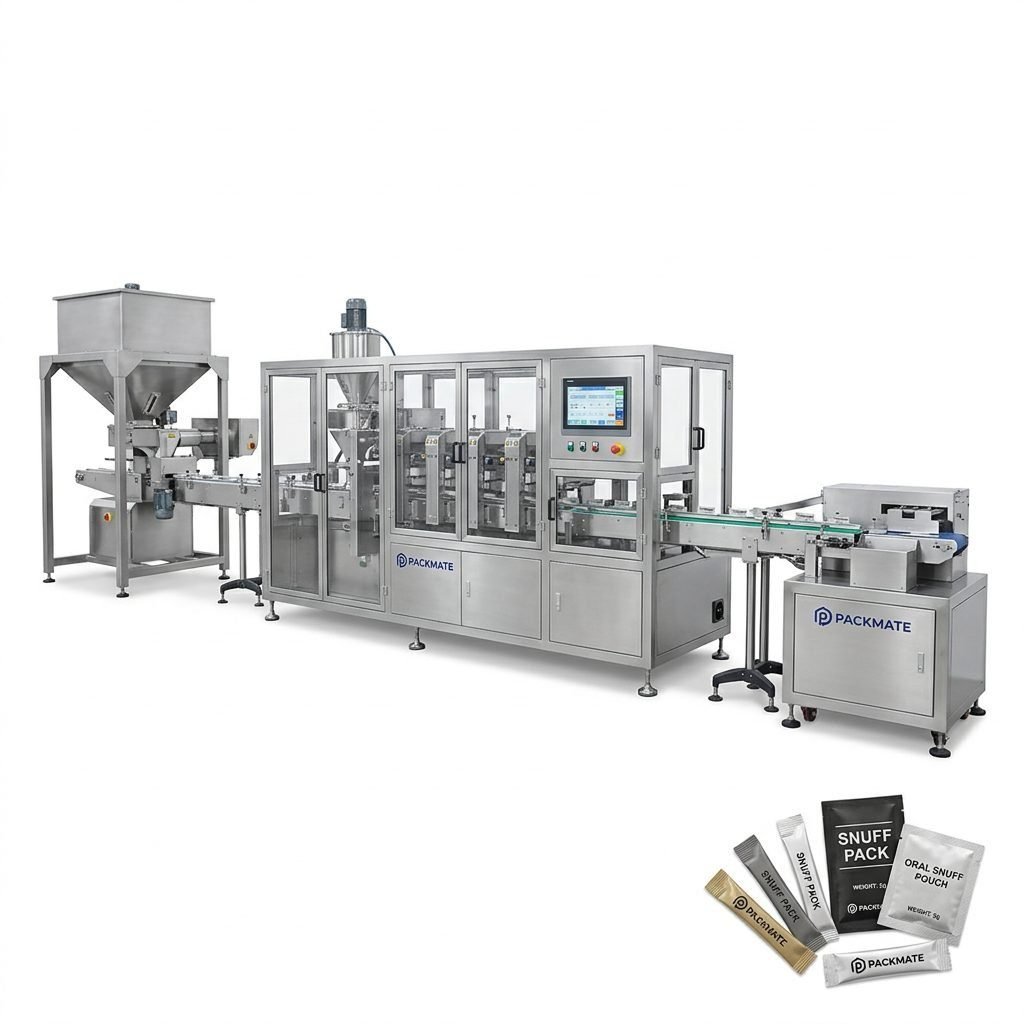
• Sachet and pillow pack machines for looser powder/granule blends.
• Form-fill-seal pouch machines for pre-made pouch or doypack formats.
Critical: Match the machine type to your primary format. A multi-lane snus line is excellent for pouches but will not be optimal for stick packs or doypacks.
Calculate Required Production Capacity & OEE 📈
Estimate your daily and monthly output targets, factoring in growth. Consider machines rated by cycles per minute, lanes, and net output per hour. Remember to calculate Overall Equipment Effectiveness (OEE): availability, performance, and quality — a higher-cost machine with better OEE often yields lower cost-per-unit.
Questions to answer
• What is your target daily pouch/pack output?
• How many SKUs will run per shift?
• Do you need multi-lane solutions to scale without adding footprints?
Automation, Integration & Industry 4.0 🤖
Decide the automation level you need: semi-automatic, fully automatic, or turnkey lines integrated with weighing, feeding, cartoning, and case packing. Machines with PLC control, HMI touchscreen interfaces, and remote diagnostics reduce downtime and simplify validation.
Important: When selecting a supplier, ask about OPC-UA, Ethernet/IP, and common integration protocols to future-proof data collection and MES connectivity.
Material Compatibility & Seal Integrity 🔬
Nicotine pouch packaging often uses multi-layer barrier films for moisture and aroma control. Ensure the machine supports the film width, thickness, and sealing profile you plan to use. For powders or liquids, pay attention to dosing accuracy and cross-contamination prevention.
Seal Check: Request a sealing performance report and, if possible, third-party leak or vacuum tests for the specific film material you intend to use.
Precision Filling & Weight Control ⚖️
Nicotine pouches require consistent dosing. Evaluate the filling system (volumetric, auger, vibrating, multi-head weighers) and ask for accuracy specifications (e.g., ±x mg). Machines with integrated weighing systems or interfaces for standalone weighers improve consistency.
Integration examples
• Inline multi-head weighers for blends and powders.
• Servo-driven augers for precise micro-doses.
• Checkweighers and feedback loops to reject out-of-spec packs.
Supplier Evaluation: What to Verify 🏭
Choosing the right manufacturer is as important as machine specs. Verify their track record, factory capabilities, certifications, and global service network. A supplier with decades of experience and a large model range can help you customize and scale.
For reference, suppliers that showcase comprehensive packaging categories — such as snus and nicotine machines, bag & pouch equipment, and full weighing & filling lines — are more likely to provide complete turnkey solutions. Explore product portfolios and case studies to evaluate real-world performance.
Useful supplier resources: Snus & Nicotine Packaging Machines, Case studies, About Packmate, Contact Us.
Factory Capability & After-sales Support 🔧
Assess the supplier’s manufacturing scale, machining equipment, and quality control. A factory with advanced CNC centers and precision assembly lines indicates reliable machine builds and spare-part availability. After-sales support is vital: ask about installation, training, spare parts lead time, and remote troubleshooting.
Red Flag: Suppliers without documented spare parts lists, no local technical partners, or no training programs can increase your long-term operating costs.
Customization & Future-proofing 🔁
Your chosen machine should be adaptable — allowing format changes, lane adjustments, and new printing modules. Ask vendors about modular options for future upgrades (additional lanes, high-speed sealing units, better dosing heads).
Checklist for customization
• Mechanical modularity for quick format changes.
• Software support for recipe management and data logging.
• Spare part kits for quick changeovers.
• Options for packaging design changes without major retrofit.
Cost of Ownership & ROI Analysis 💰
Purchase price is just the start. Total cost of ownership (TCO) includes installation, validation, training, spare parts, utilities, and maintenance. Model the expected throughput and scrap rates to calculate cost per pouch or pack. Higher initial investment can be justified by lower downtime and better yield.
Money-saving tip: Machines with quick tool-free changeovers and robust servo drives reduce changeover time and operator errors, improving your ROI.
Factory Acceptance Testing (FAT) & Site Acceptance Testing (SAT) ✅
Request FAT with your materials and SKUs — this verifies performance before shipment. Follow with SAT at installation to confirm the line meets promised speeds, accuracy, and integrations. Insist on documented test results and acceptance criteria.
Health, Safety & Environmental Concerns 🧯
Nicotine is an active substance with handling considerations. Ensure machines include safe access points, interlocks, and easy-to-clean surfaces. Also consider waste management of off-spec packs and film trim for recycling.
Visit Exhibitions & Review Case Studies 🎟️
Seeing machines live at exhibitions or reviewing real case studies provides confidence. Manufacturers that regularly attend international fairs demonstrate product maturity and customer engagement. Review documented installations for similar use cases and request references.
You can explore more product categories and case references on the supplier pages listed earlier to validate performance and find complementary equipment like weighing, auxiliary units, and complete filling lines.
Final Steps Before Purchase 📝
1) Gather specification sheets and performance curves for shortlisted machines.
2) Request a commercial proposal with clearly defined deliverables (FAT, SAT, training, warranty, spare parts).
3) Validate integration points for upstream/downstream equipment.
4) Negotiate terms for spare parts lead times and remote support SLAs.
Remember: Clear acceptance criteria and warranty commitments protect your investment and ensure rapid resolution if problems arise after commissioning.
Useful links for deeper research
• Explore machine categories: Snus & Nicotine Packaging Machines.
• Review real installations: Case.
• Learn about the manufacturer: About Packmate.
• Request direct contact and support: Contact Us.
Conclusion
Selecting the right nicotine packaging machine in the Czech Republic combines technical assessment, supplier vetting, and regulatory awareness. Prioritize machines that match your product format, ensure dosing accuracy, support traceability, and come from experienced manufacturers with strong after-sales networks. Investing time in FAT/SAT, spare parts planning, and staff training will yield smoother operations and a faster return on investment.
Common Questions (FAQs)
Q1: What certifications should I expect the machine to have?
A1: Look for CE marking and ISO-related documentation; suppliers often provide electrical safety and performance certificates that align with EU directives.
Q2: How do I validate dosing accuracy before purchase?
A2: Request FAT demonstrations using your exact formulation and packaging film — review statistical accuracy reports and ask for repeatability data.
Q3: What after-sales support matters most for nicotine packaging lines?
A3: Fast spare parts supply, remote diagnostics, installation & operator training, and a clear warranty with service response times are essential.
Q4: Can one machine handle multiple pack formats?
A4: Modular and multi-lane machines offer format flexibility, but check mechanical changeover time and available tooling to avoid hidden downtime.
Q5: Where can I see real-world examples and request quotes?
A5: Visit supplier product pages and case studies, and contact manufacturers directly via their contact pages to arrange demos and proposals.