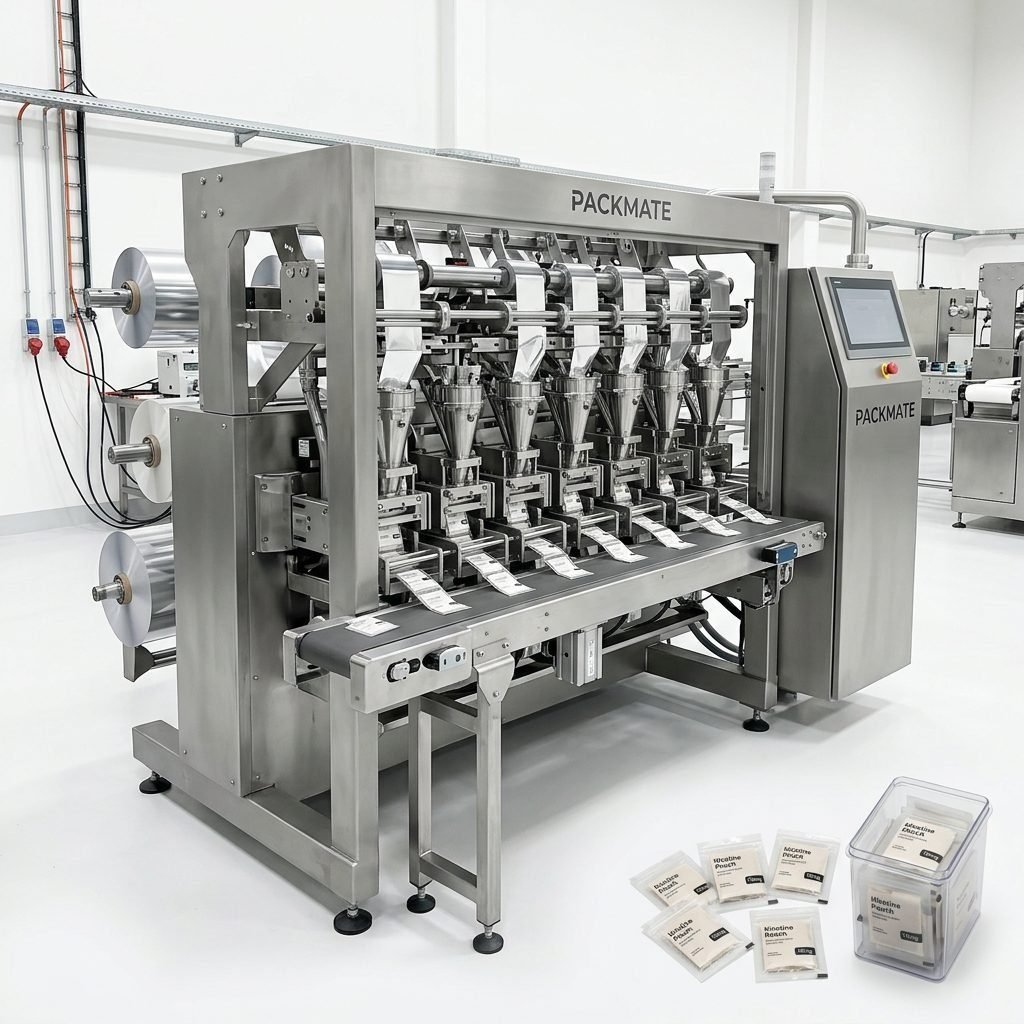
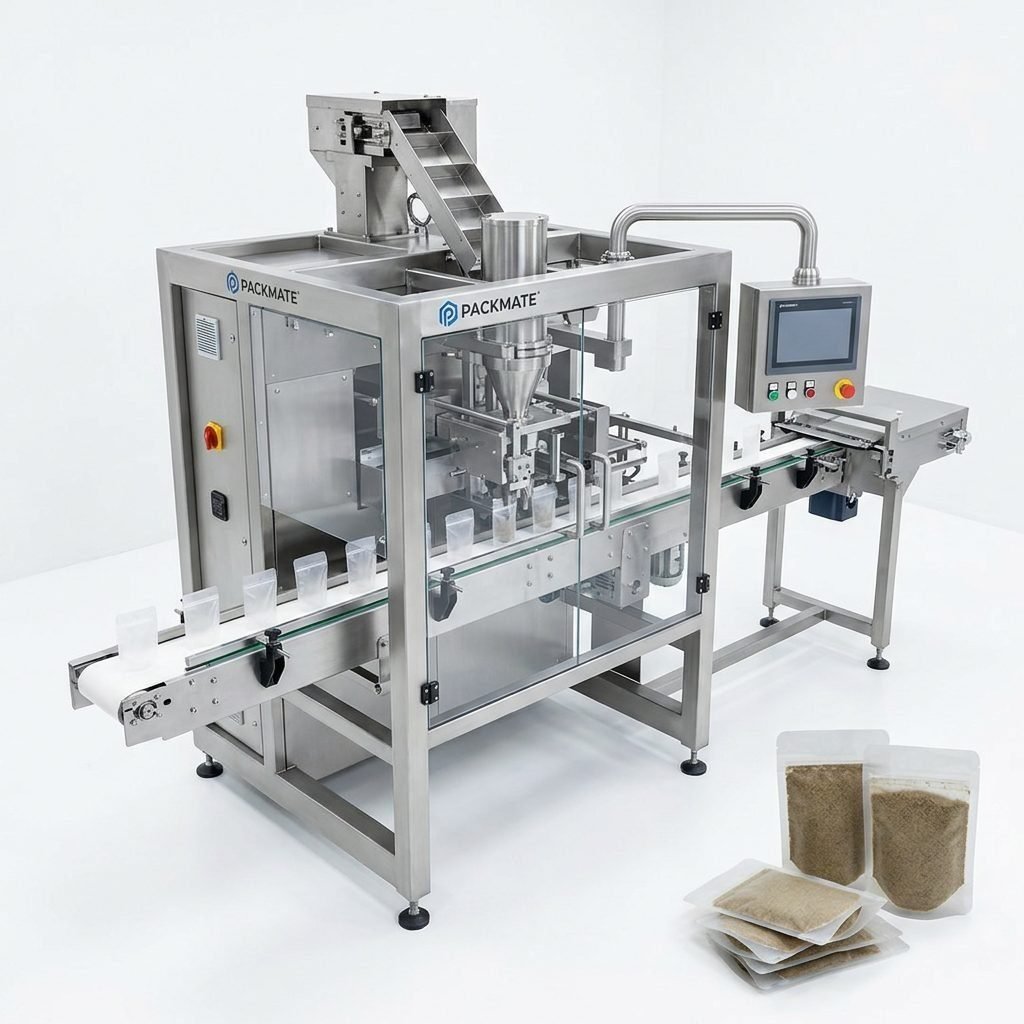
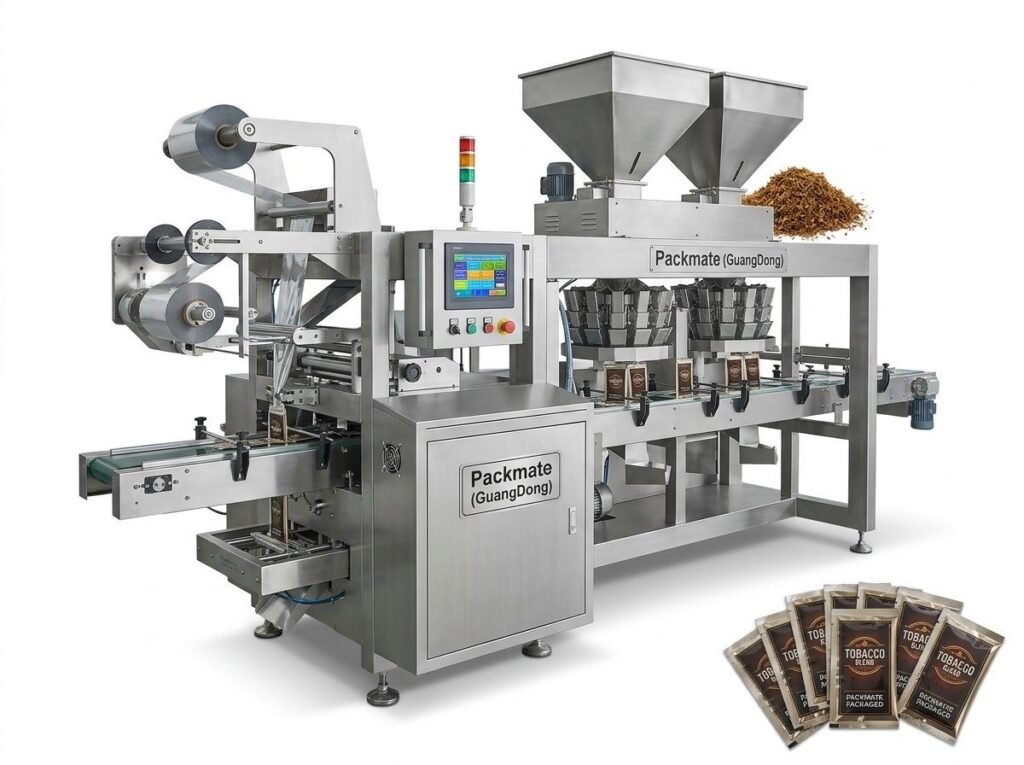
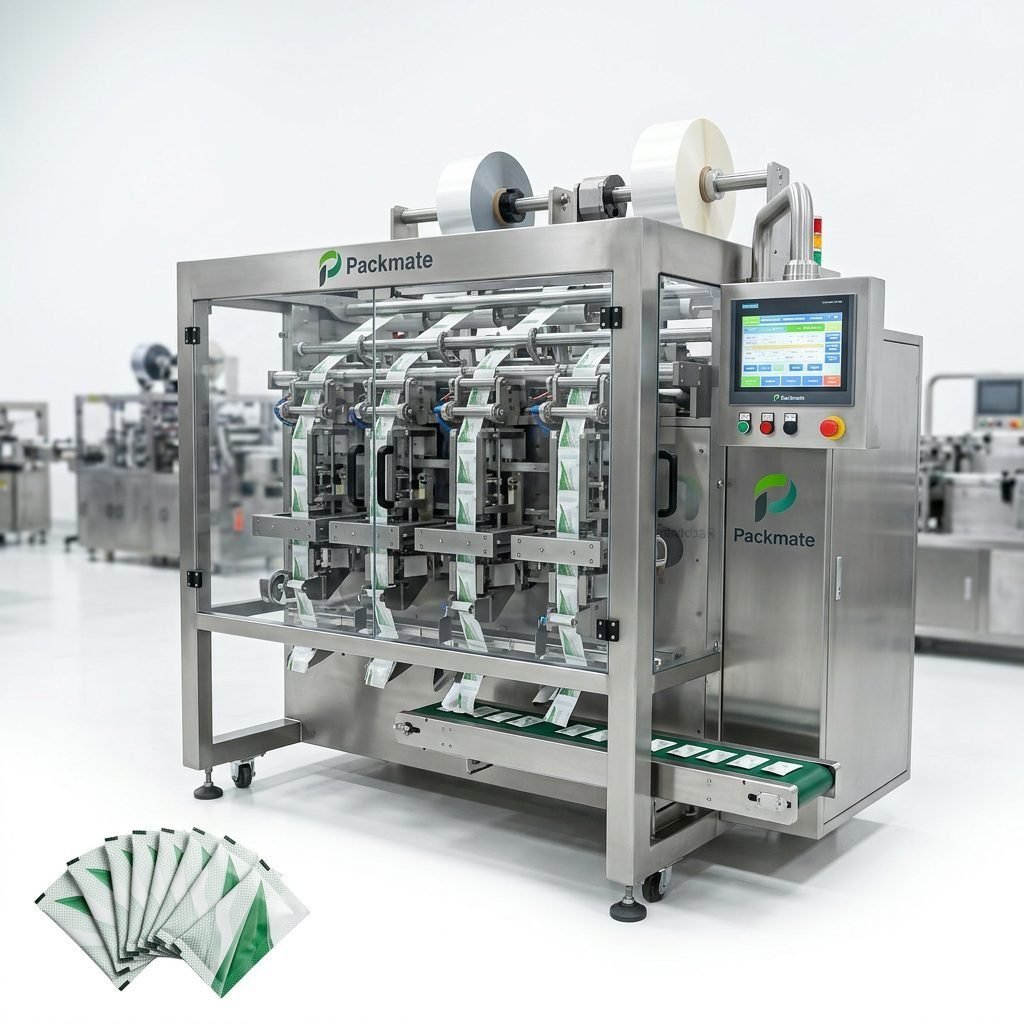
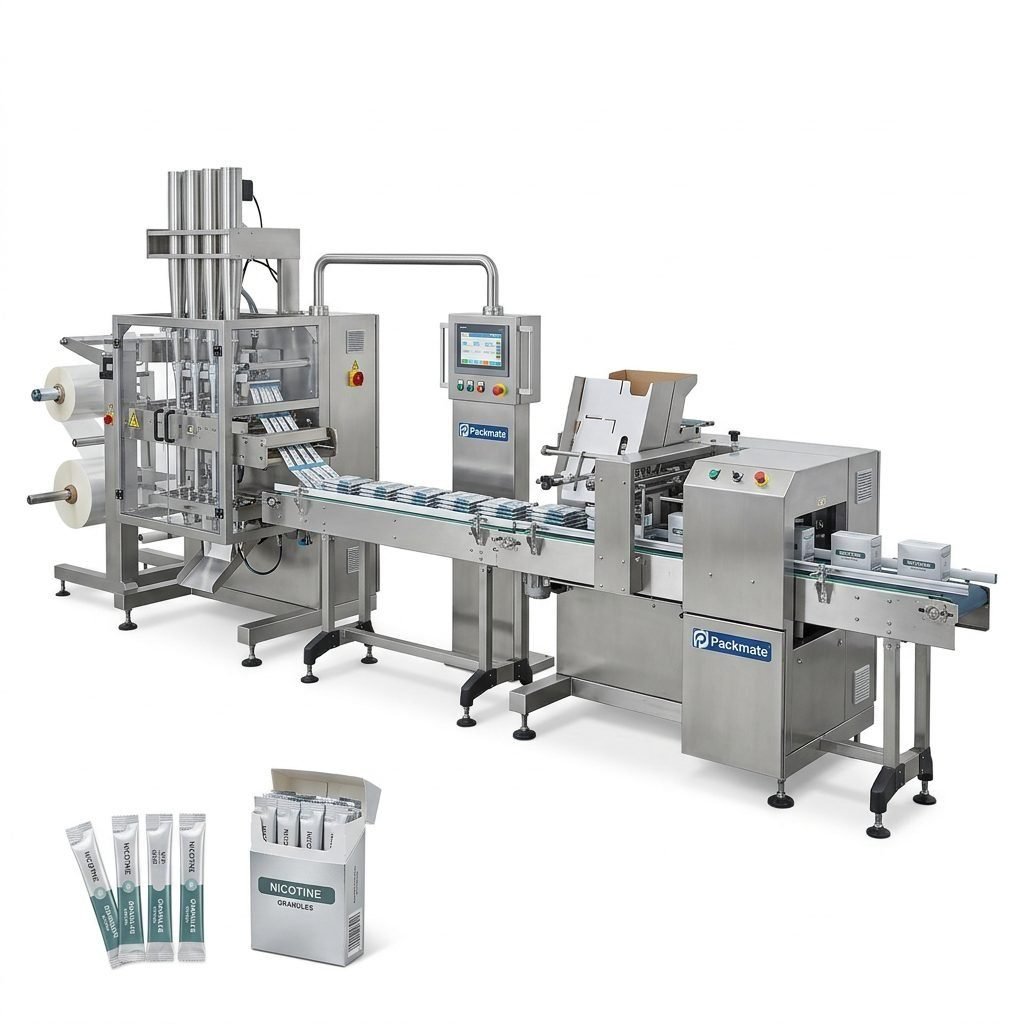
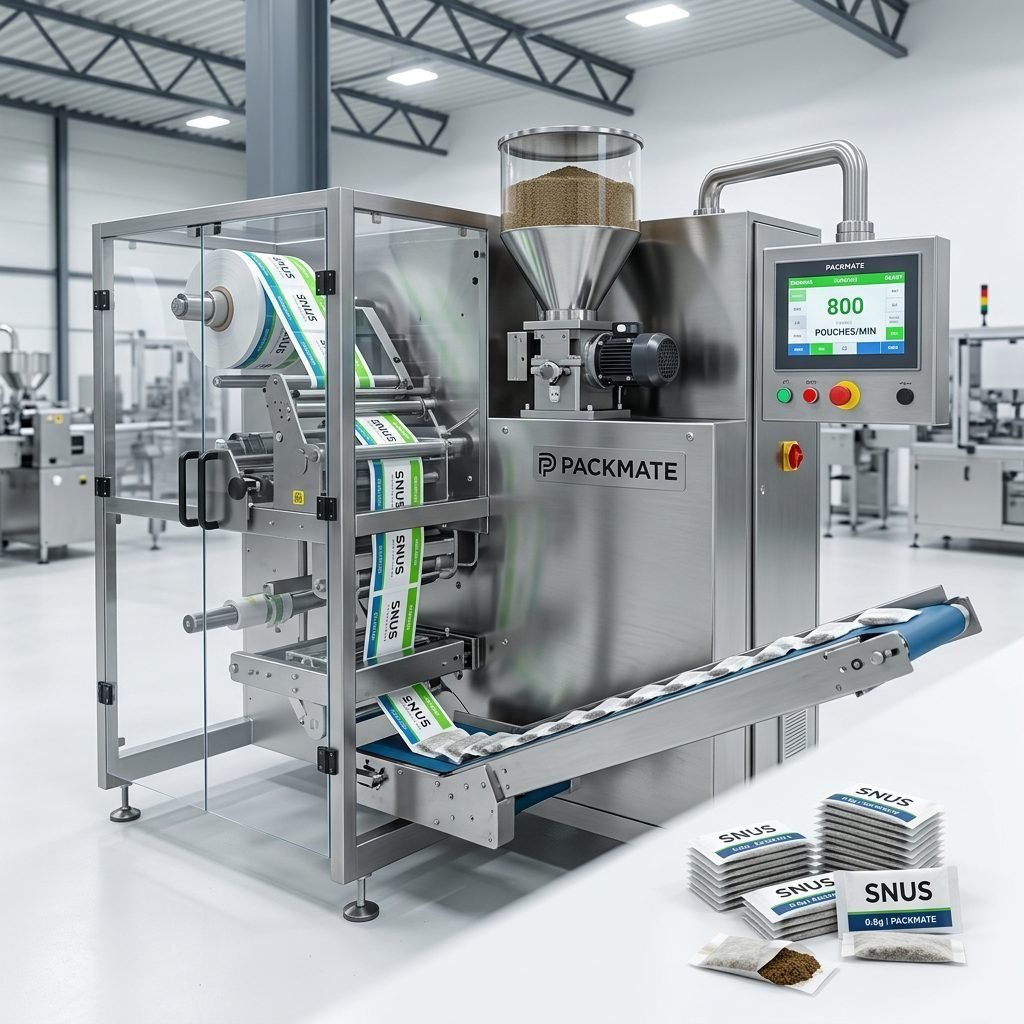
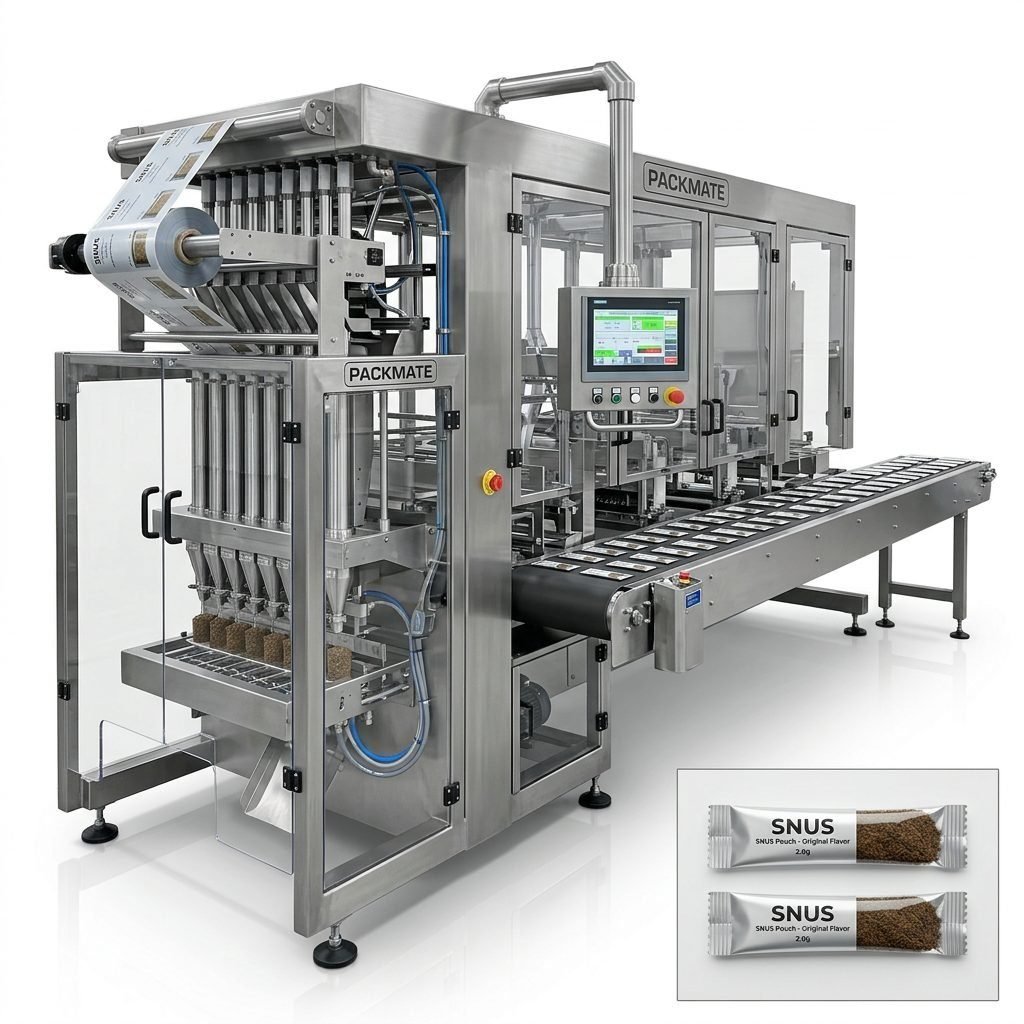
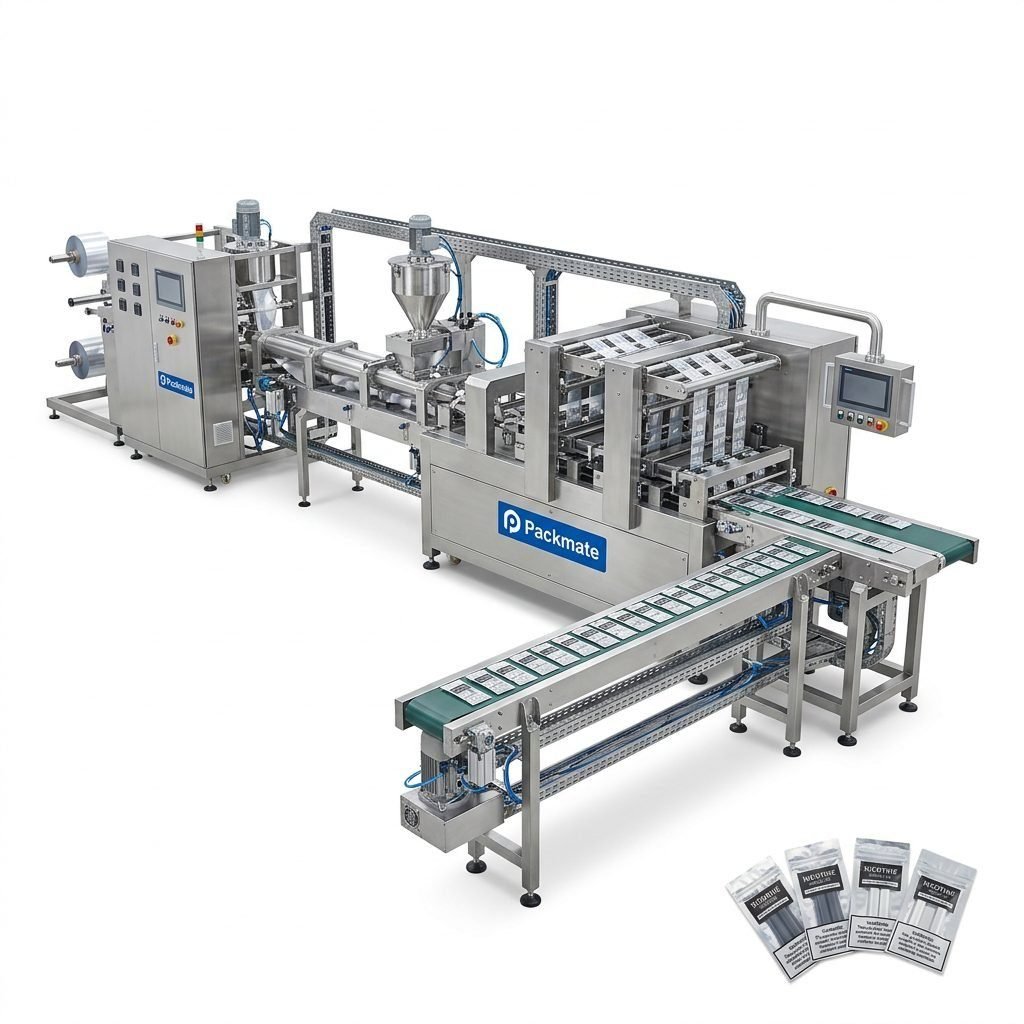
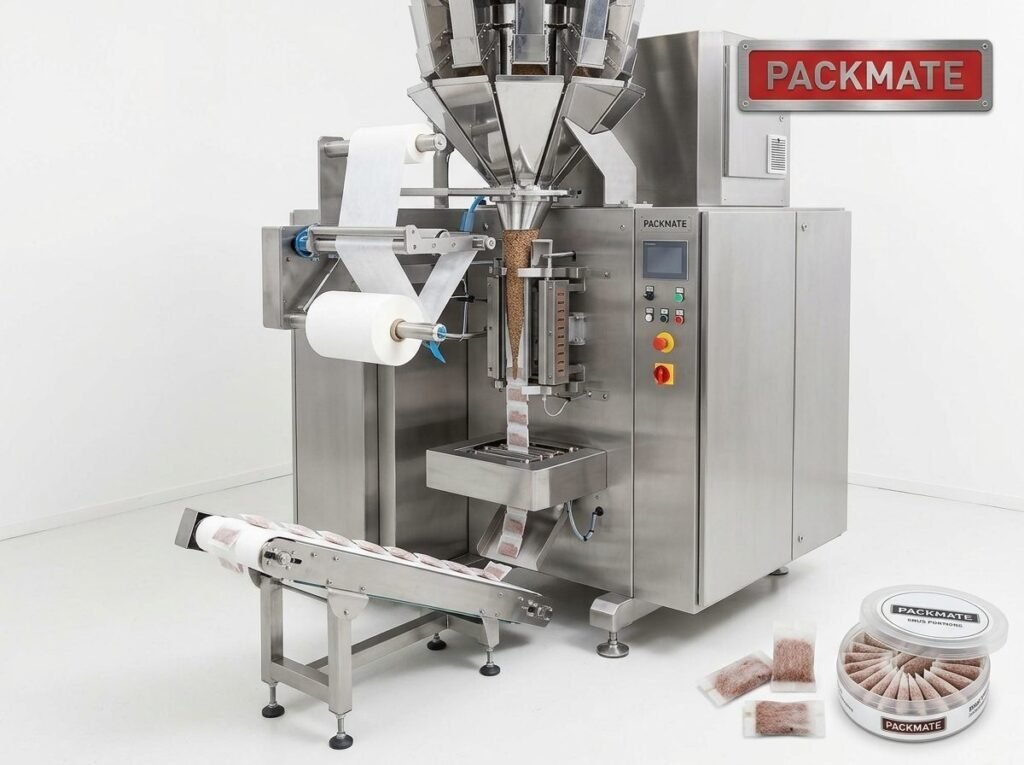
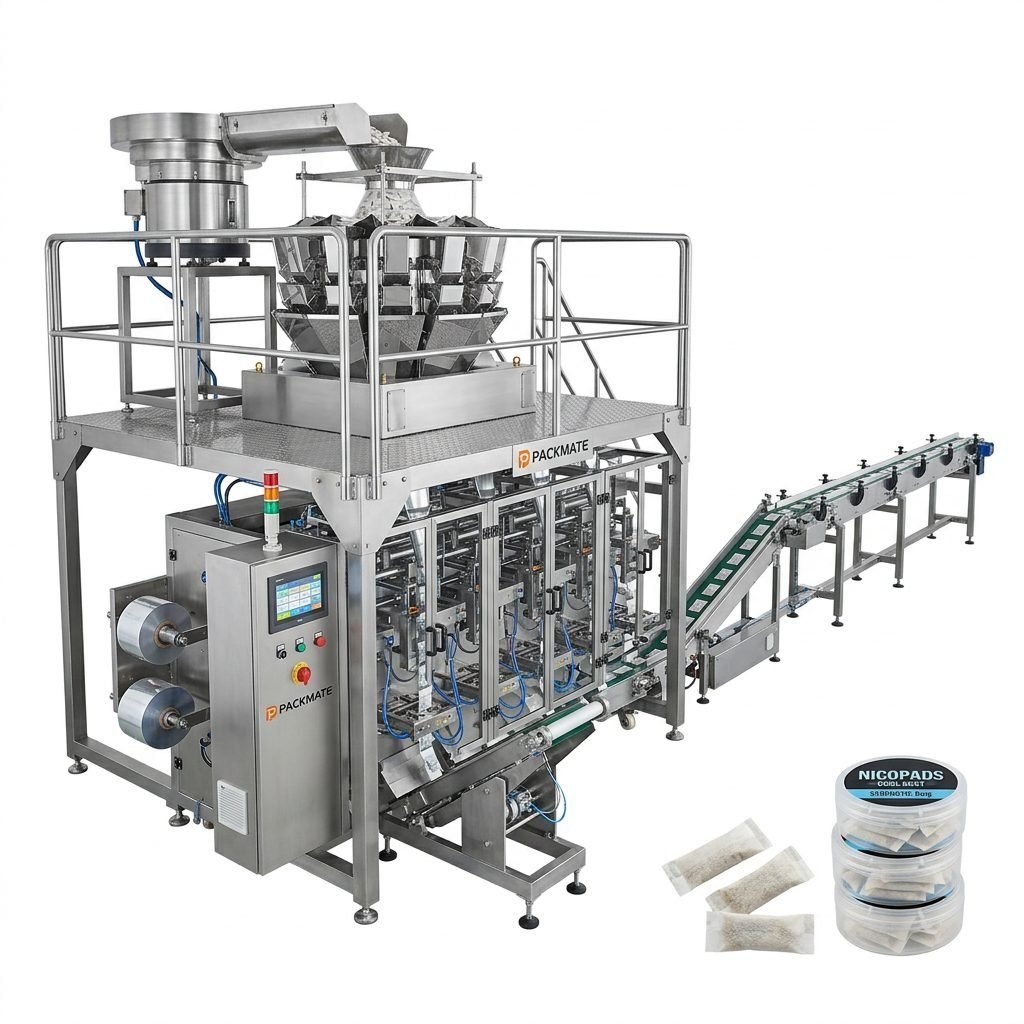
As demand for high-speed, reliable snus and nicotine pouch packaging grows worldwide, manufacturers need partners who can deliver stable production lines tailored to small-dose pouches, cans and multi-format packaging. This article explores advanced snus packaging equipment, turnkey solutions, factory strengths, and practical selection guidance to help buyers choose the right machines for pouch, can and industrial-scale production.
Overview: What Modern Snus Packaging Equipment Delivers
Today’s snus packaging equipment goes beyond simple bagging. Leading suppliers offer full production lines that combine high-speed forming, precise dosing, multi-lane synchronization and intelligent control systems. These lines are engineered to handle nicotine pouches, snus cans, sachets, stick packs and even complementary items like tea, powders and liquids with minimal changeover time.
⚙️ Key capabilities:
High-speed multi-lane pouch forming, precision weighing and filling, automated lid/closure application for cans, and integrated packaging inspection and rejection systems.
Packmate Snus Machine: Experience & Manufacturing Strength
Packmate has more than 30 years of engineering experience and a 20,000㎡ manufacturing facility equipped with advanced CNC machining centers and precision assembly lines. This industrial strength allows consistent production of high-quality, durable machines designed for long-term use in demanding production environments. The company offers over 50 machine models and custom turnkey solutions to match varied production needs.
Why factory capabilities matter
Strong in-house machining and assembly reduce lead times and ensure tighter quality control. When suppliers manage core processes—CNC fabrication, precision assembly and rigorous testing—you get machines with consistent tolerances, better component life and easier long-term service.
Product Range: From Pouches to Cans and Complete Lines
A comprehensive product lineup typically includes:
🔹 Snus & Nicotine Pouch Machines — multi-lane pouch form-fill-seal systems, tailored for small-dose nic-pouches with high accuracy dosing and fast changeovers. Learn more: Snus & Nicotine Packaging Machines
🔹 Bag & Pouch Packaging Machines — suitable for stand-up pouches, sachets, and multi-track pouch workflows. Useful for both promotional and standard retail formats: Bag & Pouch Packaging Machines
🔹 Sachet & Stick Pack Machines — for single-dose, portion-controlled packaging formats used in new snus delivery systems: Sachet & Stick Pack Machines
Integrated production lines
Modern solutions integrate upstream and downstream equipment — feeding, weighing & dosing, pouch forming, sealing, can filling, capping, labeling and automated boxing. Packmate offers tailored filling & packaging lines to create a continuous, monitored production flow: Filling & Packaging Lines.
Design Features That Improve Production Efficiency
When evaluating snus packaging equipment, focus on design details that minimize downtime and reduce per-unit cost:
✅ Multi-lane synchronization — multiply throughput with consistent cross-lane timing.
✅ Quick mold and format change — reduce changeover time for different pouch sizes or can formats.
✅ Precision dosing & weighing — critical for nicotine pouches where accuracy affects regulatory compliance and product consistency.
Regulatory Compliance and Certifications
Equipment used in nicotine/snus production must meet international safety and quality standards. Look for CE and ISO certifications, which indicate compliance with global regulations and help when exporting finished products. Packmate’s machines comply with CE and ISO standards, ensuring they meet basic safety, electromagnetic compatibility and quality management requirements: Certificate.
Factory testing & inspection
Reputable suppliers perform full factory acceptance testing (FAT), run sample products, and provide documentation of machine parameters and test reports. These processes demonstrate that the line meets promised speeds, accuracy and reliability before shipment.
Customization & Turnkey Solutions
Many manufacturers require specially sized pouches, unique sealing patterns or integrated secondary packaging. Turnkey suppliers can design and deliver complete lines, including conveyors, metal detectors, checkweighers and packaging cases. Packmate emphasizes customized engineering and long-term technical support, working with clients to design lines that match production targets and facility constraints: About Packmate.
📦 Turnkey benefits: Reduced project management burden, single-source accountability, integrated testing, and coordinated installation and commissioning.
Selecting the Right Machine: Practical Buyer Checklist
Use this checklist to compare suppliers and machines:
1) Production capacity — Can the line meet your daily/shift throughput targets?
2) Accuracy & yield — Check dosing tolerances and reject rates during FAT.
3) Changeover time — How long to switch sizes or formats?
4) Service & spare parts — Local support, parts availability and training are essential for uptime.
5) Compliance — Verify CE/ISO and any industry-specific compliance documentation.
Installation, Training and After-Sales Service
A successful packaging project depends on reliable after-sales support. Reputable manufacturers provide:
🔧 Pre-shipment FAT and commissioning support at the factory.
🔧 On-site installation, calibration and operator training at customer facilities.
🔧 Preventive maintenance plans, remote diagnostics and spare parts kits to minimize downtime.
Case Studies & Global Reach
Global deployment demonstrates a supplier’s capability to deliver across markets with varied regulatory and packaging requirements. Packmate’s international installations cover Europe, Asia and the Americas with multiple turnkey projects, showcasing multi-lane pouch lines and complete filling & packaging lines. For details about case examples and exhibition demos: Case and Our Exhibition.
Supply chain & partner ecosystems
Reliable suppliers maintain strong vendor relationships for components like PLCs, servo systems, sensors and pneumatic parts. This ecosystem supports consistent machine performance and helps with rapid replacement when needed.
Cost Considerations: CAPEX, OPEX and TCO
When evaluating equipment, consider total cost of ownership (TCO) beyond purchase price:
• CAPEX — initial machine and installation costs.
• OPEX — energy, maintenance, consumables and labor.
• Yield & waste — higher yield machines often justify higher purchase prices by reducing material loss.
Practical Tips for Machine Trials and FAT
Before final acceptance, require a formal FAT with representative samples. Bring the following to the FAT:
• Your exact pouch film or can sample (material & reel).
• Target fill weights and tolerance requirements.
• A clear acceptance checklist (speeds, rejects, sealing integrity, labeling accuracy).
How to Contact & Next Steps
If you are exploring new production lines or upgrading existing equipment, request a consultation and technical quote. For sales and technical inquiries, use the supplier’s contact portal to provide your product specs and expected output: Contact Us.
🌍 Tip: Request a site visit or virtual demo to see machine operation, controls and material handling in real conditions before purchase.
Summary: Choosing a Reliable Snus Packaging Partner
Selecting the right snus packaging equipment supplier requires evaluating engineering capability, factory strength, machine accuracy and available after-sales support. Prioritize vendors with proven multi-lane pouch solutions, turnkey experience and clear FAT procedures. A partner with global case references, CE/ISO certifications and proactive service can help you reach production targets faster and more reliably.
Further resources
Browse product categories and technical catalogs to compare machine models and configurations: Catalog · Weighing & Packaging Systems.
Frequently Asked Questions
Q1: What is the typical lead time for a complete snus pouch production line?
A1: Lead times vary with customization and capacity but typical delivery schedules range from 10 to 20 weeks for standard lines. Turnkey or highly customized systems can require additional engineering time.
Q2: Do suppliers provide on-site installation and training?
A2: Yes. Reliable suppliers include commissioning, operator training and technical documentation. Some also offer remote support and scheduled preventive maintenance services.
Q3: How do I verify machine performance before shipment?
A3: Request a Factory Acceptance Test (FAT) with your materials and target specifications. Review performance metrics including speed, yield, dosing accuracy and sealing integrity before approval.
Q4: Are spare parts and consumables readily available?
A4: Established manufacturers maintain spare parts stocks and can ship critical spares quickly. Discuss recommended spare parts kits and lead times with your supplier prior to purchase.
Q5: Where can I see machine demonstrations or documentation?
A5: Visit supplier exhibition schedules and case pages for live demos and recorded videos. For example, view Packmate’s exhibition and case pages for sample installations and show schedules: Our Exhibition · Case.