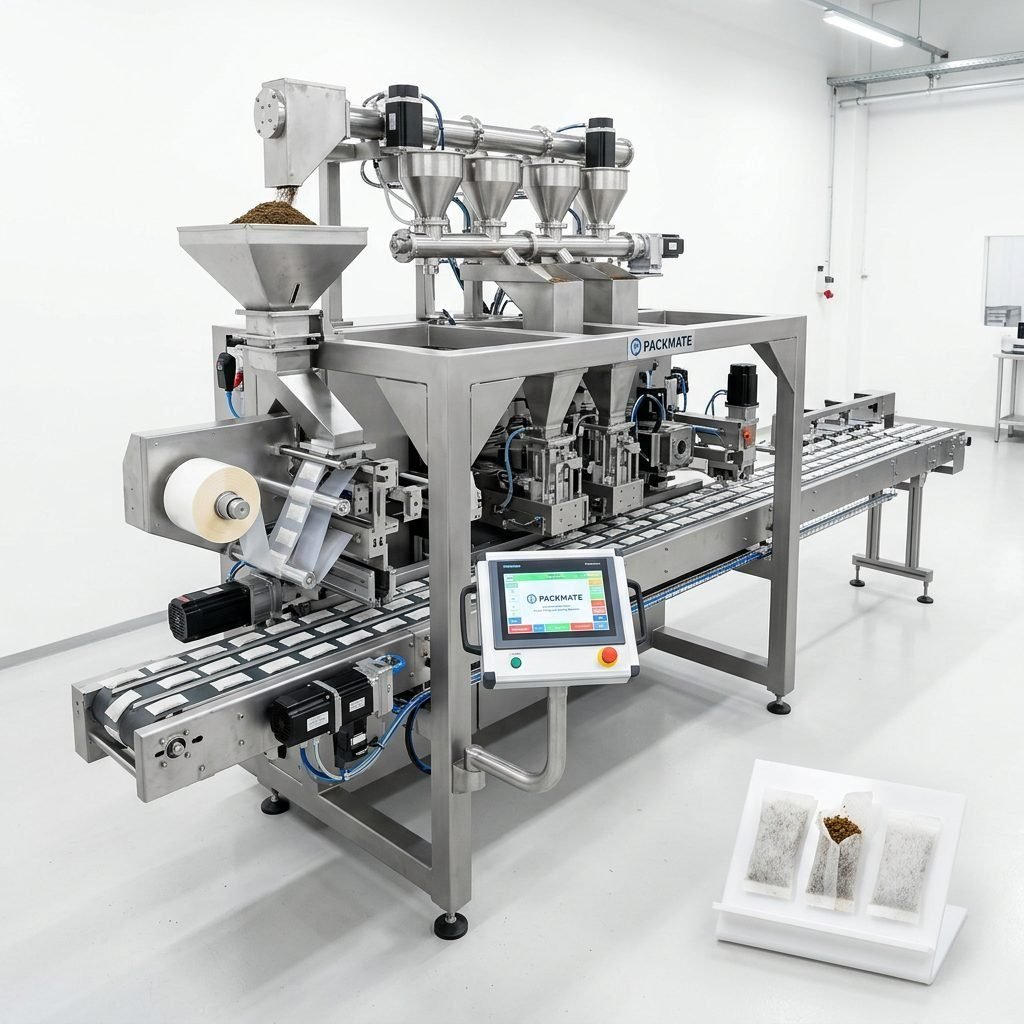
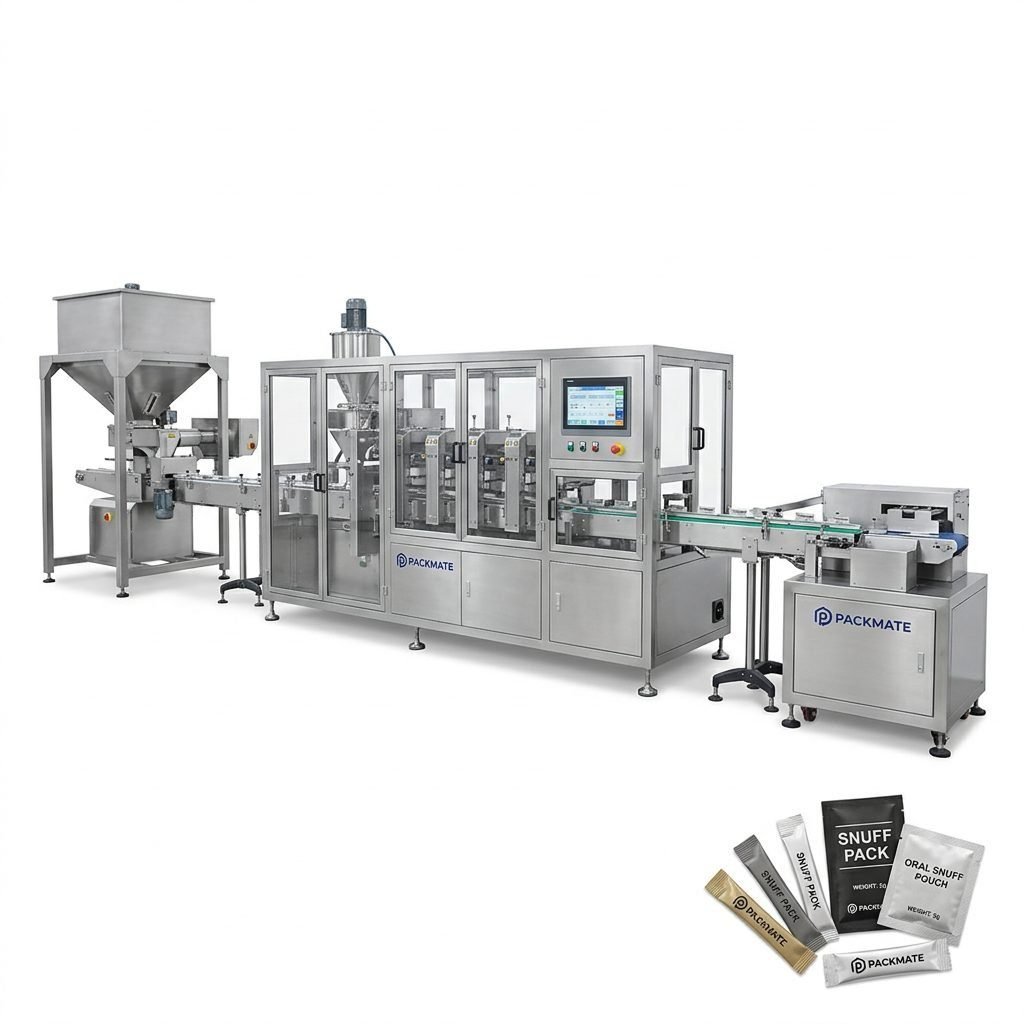
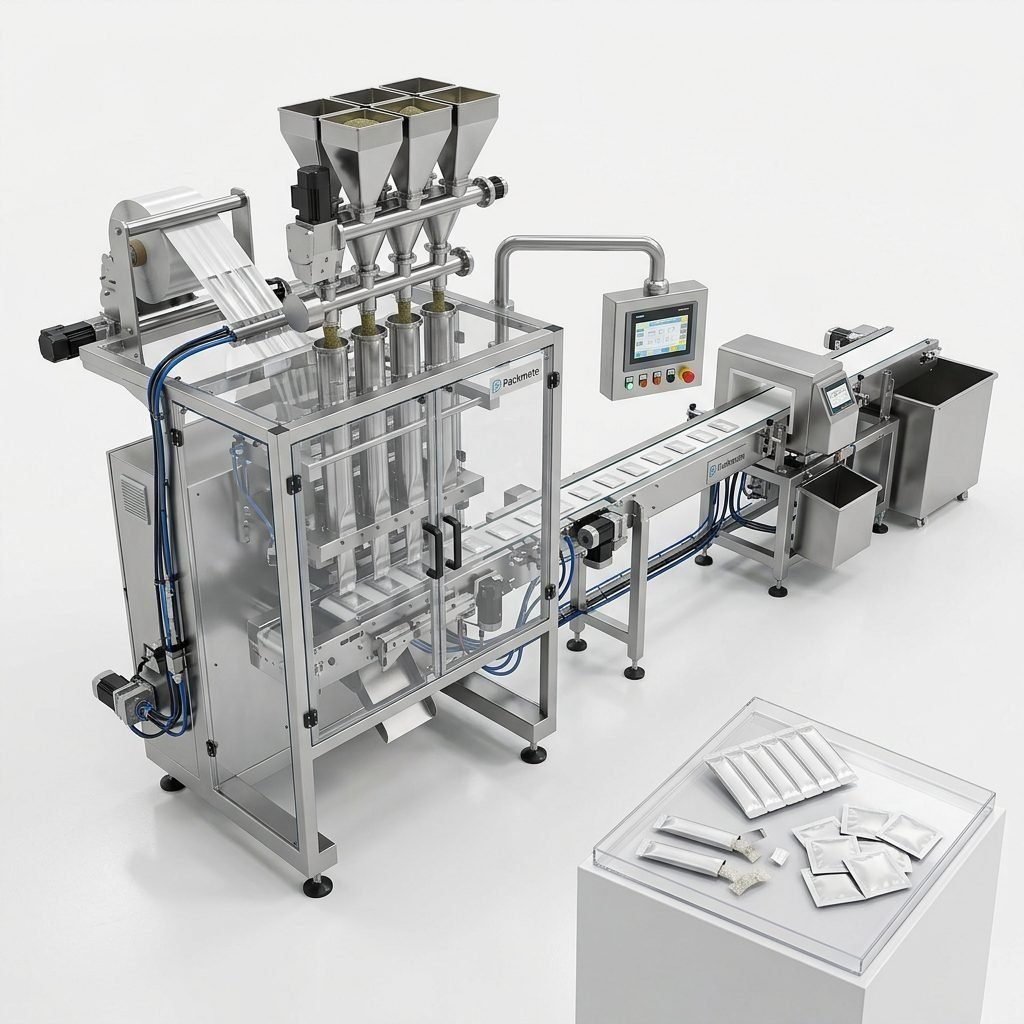
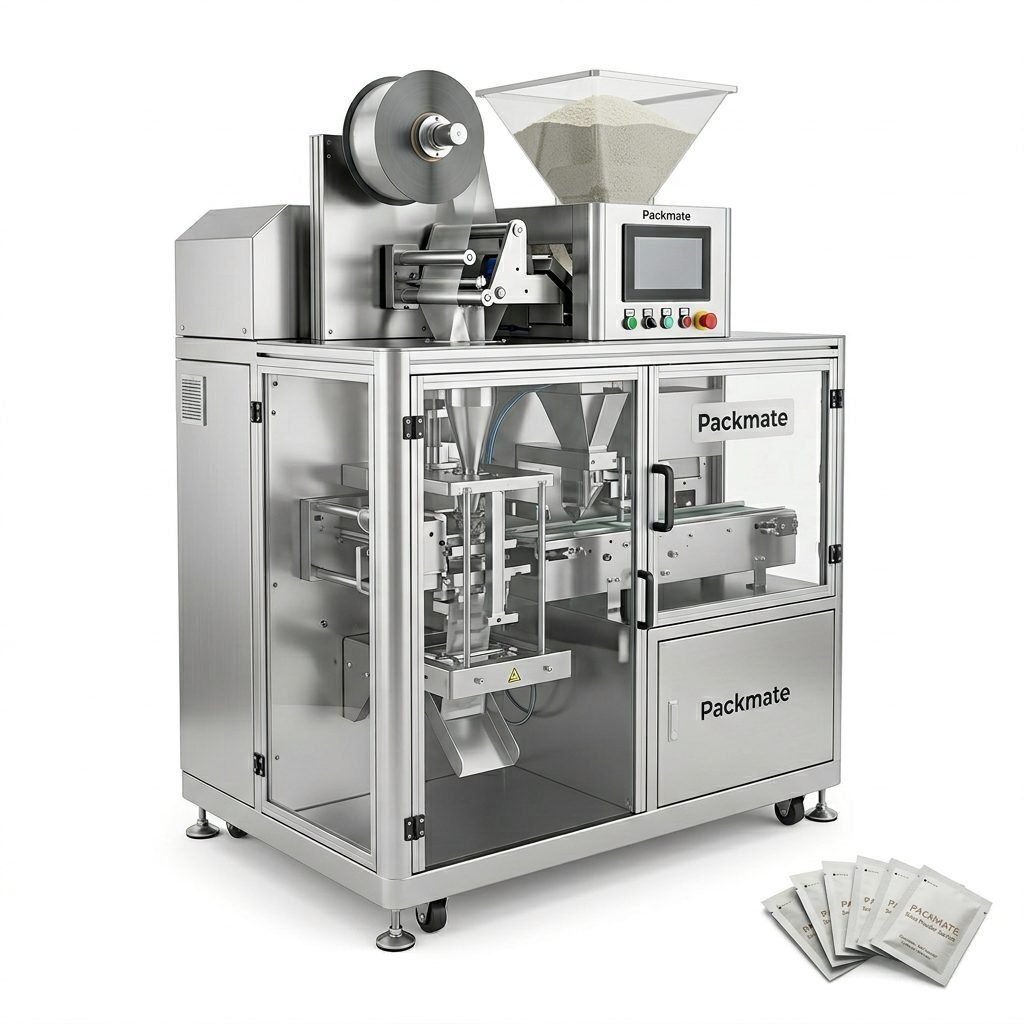
Choosing the right nicotine packaging machinery in Uzbekistan is more than a procurement decision — it’s a strategic investment that impacts production efficiency, product safety, regulatory compliance, and total cost of ownership. This guide walks production managers, procurement teams, and business owners through a practical, step-by-step approach to selecting snus and nicotine pouch packaging equipment that meets Uzbek market needs while supporting high uptime and consistent quality.
Understand Your Production Requirements First
Start by defining clear production targets: daily throughput, shift patterns, number of SKUs, pouch formats (stick pack, sachet, multi-lane pouches), and target lines for nicotine pouches, snus, or related oral products. A machine that fits a 1,000 pouch/day pilot line will differ from a 100,000 pouch/day commercial line. Prioritize requirements such as:
✓ Throughput goals — pouches per minute or per hour;
✓ Flexibility — ability to switch between pouch sizes or flavors;
✓ Integration — compatibility with existing feeders, scales, or downstream cartoners.
Map product characteristics
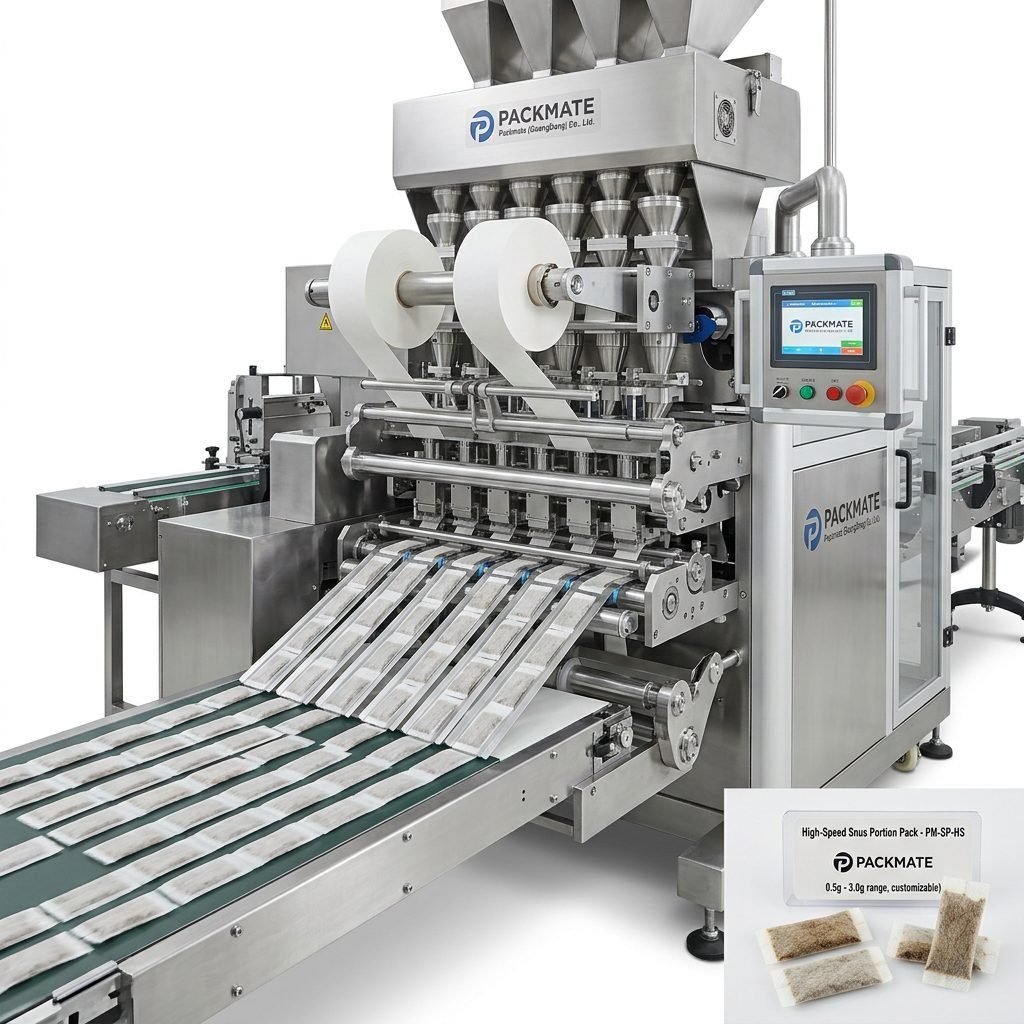
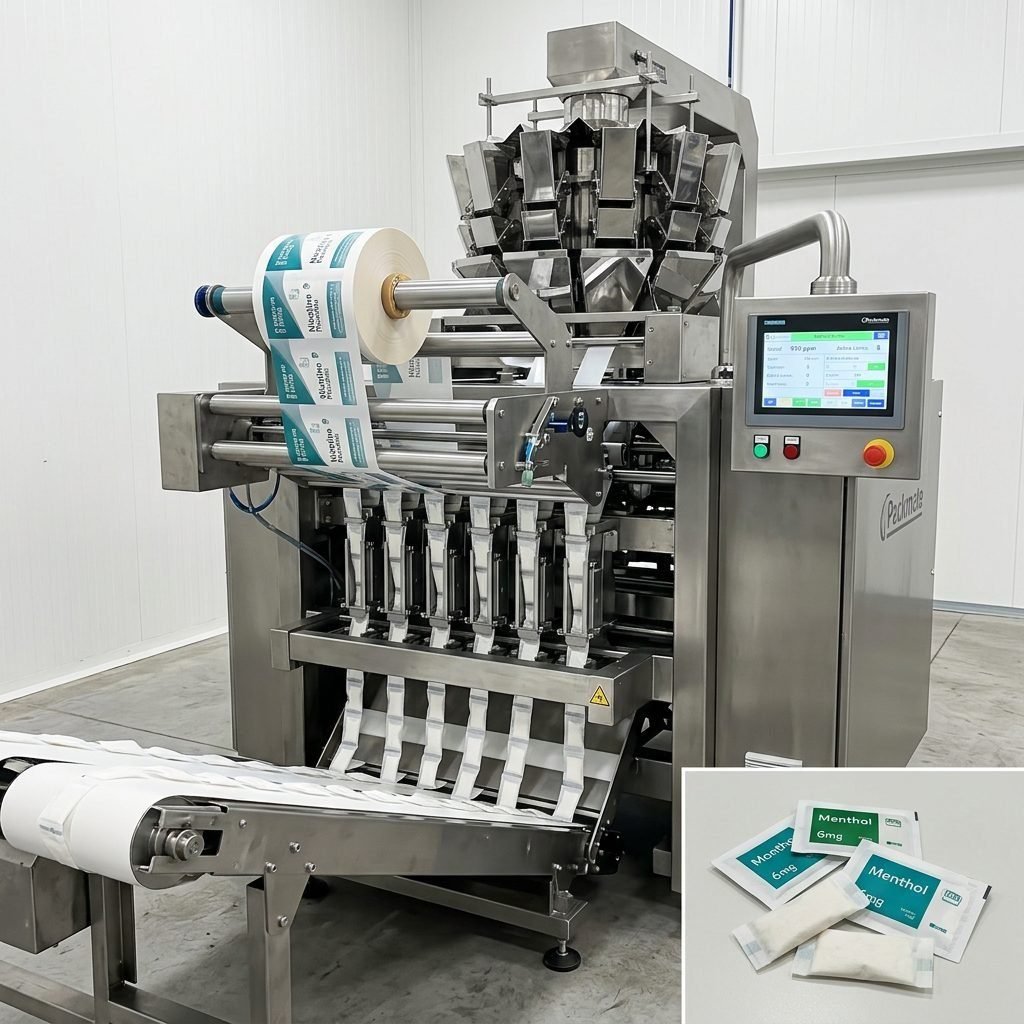
Nicotine pouches vary by moisture content, filler material, particle size, and dosing precision. Machines optimized for powders and fine granules may require specialized hoppers, agitation systems, or vacuum-assisted feeding to ensure consistent weight and seal quality. If your product is a portioned snus or micro-pouch, look for specialized portioning units and multi-lane forming capabilities.
ℹ️ Key tip: For Uzbekistan operations where workforce skill levels vary, choose machines with intuitive HMI, clear maintenance guides, and local language support if possible. A user-friendly interface reduces downtime and training costs.
Select the Right Machine Type for Nicotine Pouches
The market offers multiple packaging formats. Match format to your product and brand positioning:
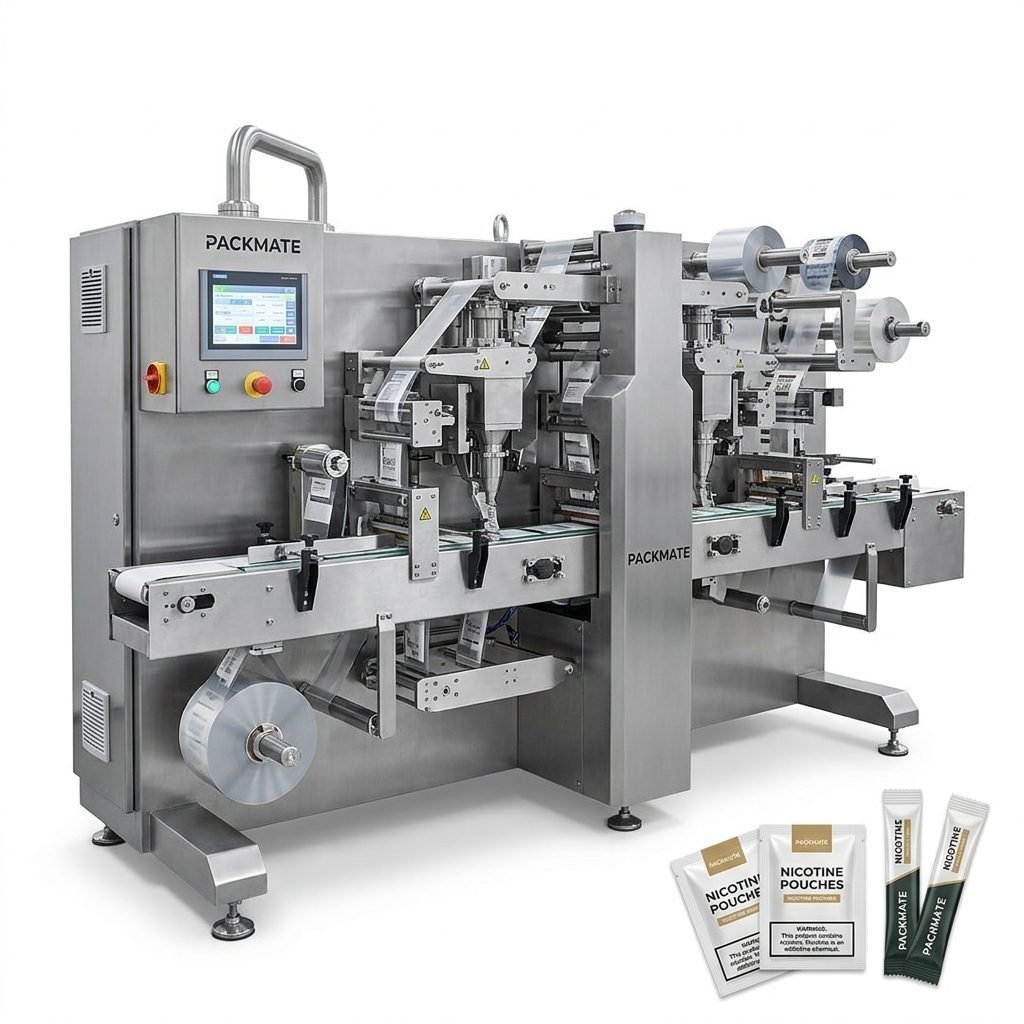
Stick pack machines — ideal for single-dose, sealed single-serve formats with high-speed output.
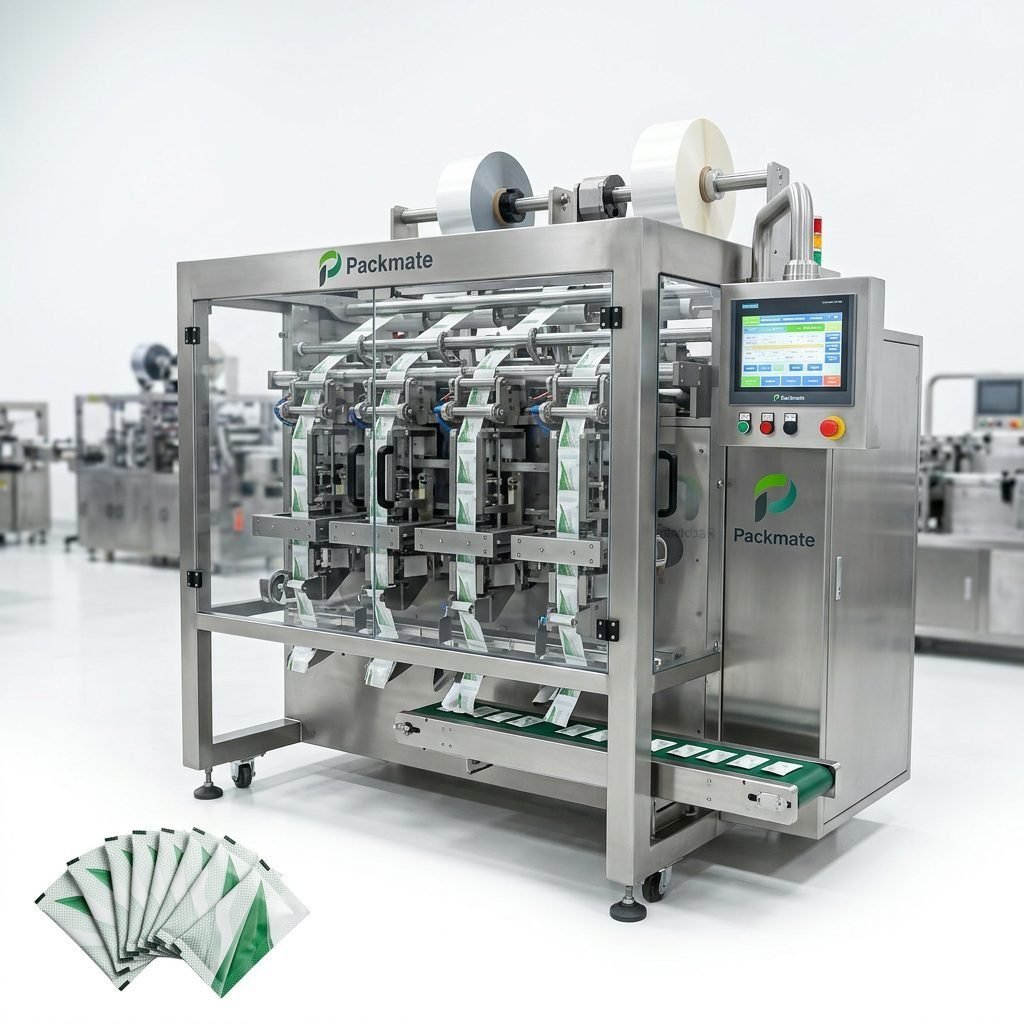
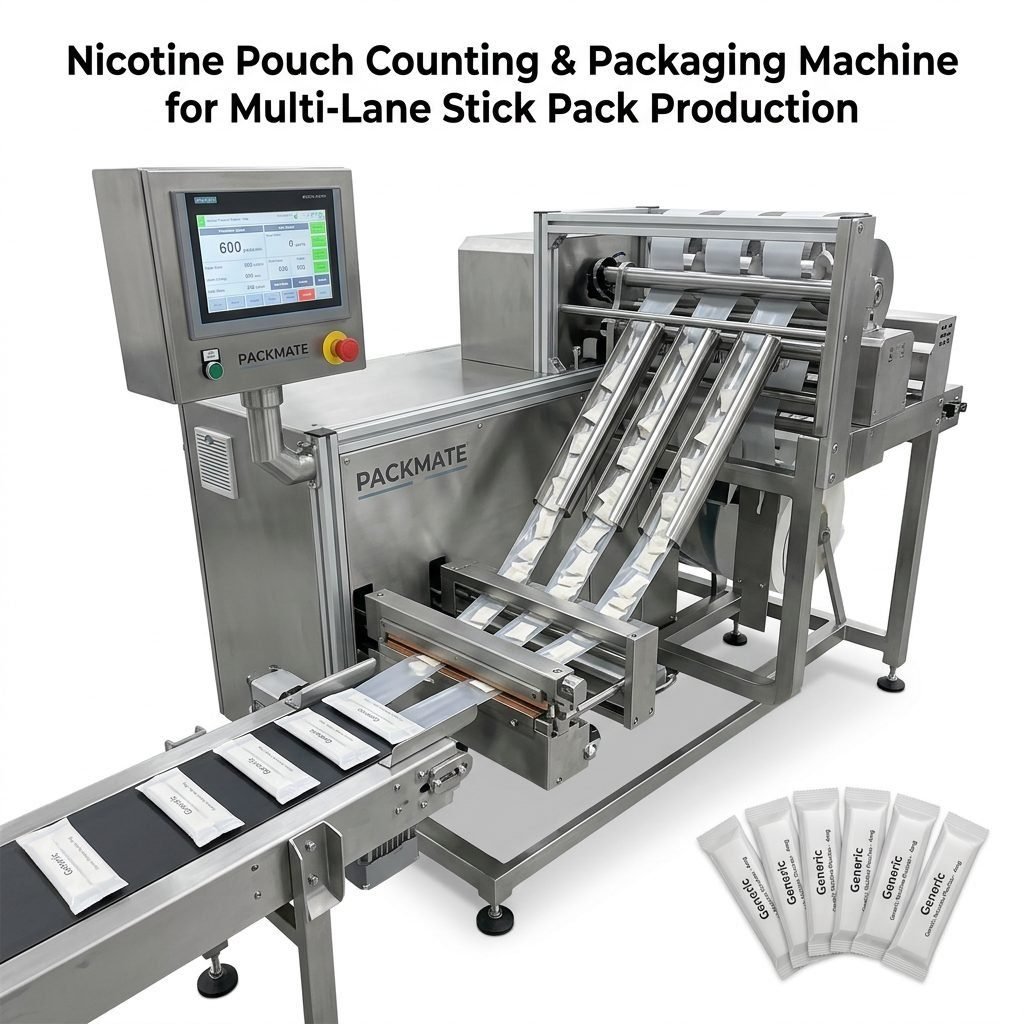
Sachet & stick pack machines — versatile for single-portion pouches and small-dose nicotine pouches. Explore multi-lane options for higher throughput.
Snus / Nicotine pouch machines — designed specifically for portioned snus and nicotine pouches with precision forming and sealing.
For detailed machine categories, review product portfolios like Snus & Nicotine Packaging Machines and Sachet & Stick Pack Machines to understand available configurations and modular add-ons.
Consider multi-lane systems
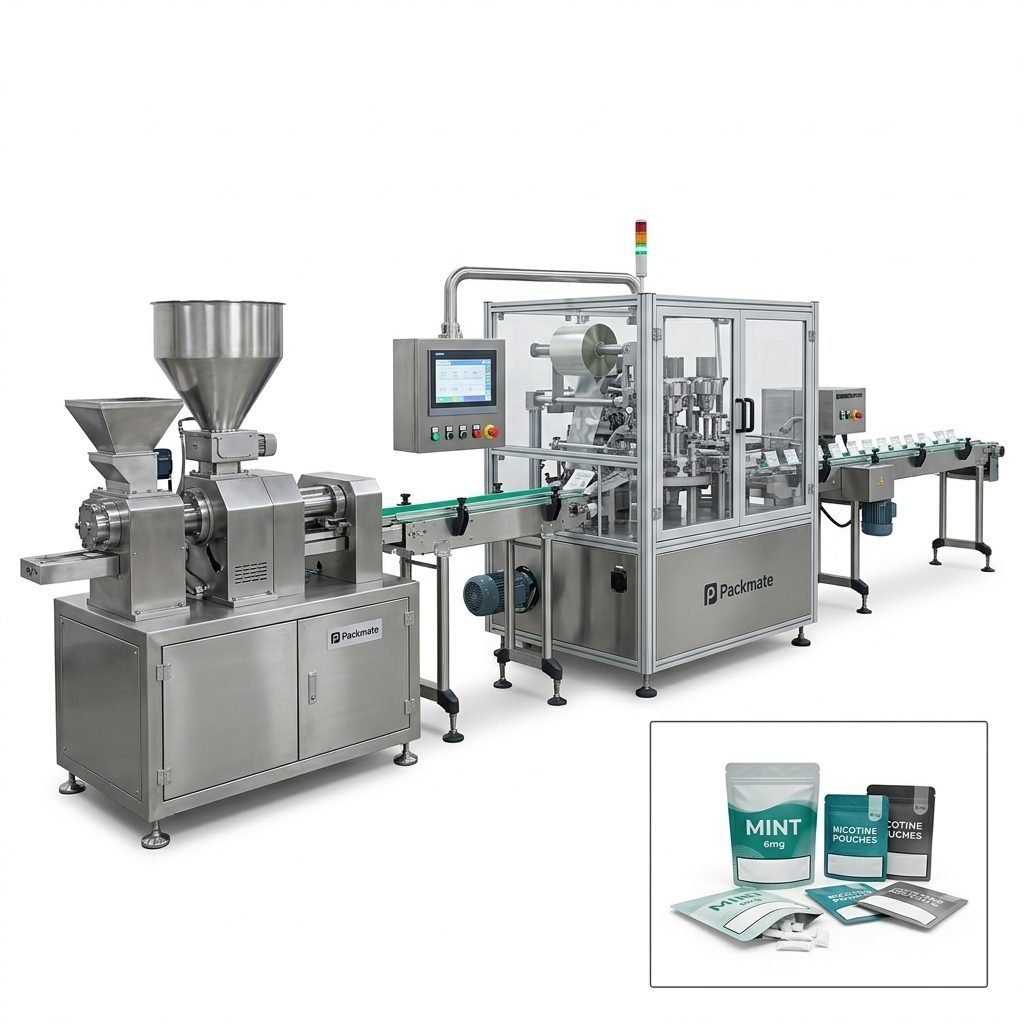
Multi-lane systems multiply throughput without a proportional footprint increase. If you plan to scale, select machines offering easy lane addition or modular conversion. Packmate’s multi-lane solutions are good examples where a single base machine can scale by adding lanes or downstream automation.
⚠️ Regulatory note: Uzbekistan’s regulatory framework for nicotine products may require specific labeling, tamper-evident seals, and traceability. Confirm machine capabilities for printing batch codes, best-before dates, and serialization if needed.
Evaluate Build Quality, Hygiene & Safety Features
Because nicotine pouches are a regulated consumable, machine hygiene and operator safety are non-negotiable. Inspect manufacturer specs for stainless steel contact parts, CIP (clean-in-place) or easy-clean designs, and sealed electrical cabinets. Safety features to prioritize:
✓ Guarding and interlocks that stop the machine when doors are opened;
✓ Dust extraction or localized ventilation when handling powders;
✓ CE/ISO compliance and documented safety testing.
Certifications & quality control
Choose suppliers with international certifications and a documented QA process. Vendors such as Packmate typically provide CE and ISO compliant equipment and factory quality records — valuable when importing equipment into Uzbekistan and demonstrating compliance to local inspectors. For more details on supplier credentials, check their Certificate and About Packmate pages.
Automation Level & Integration with Upstream/Downstream Lines
The right automation level balances capital spend with labor savings and process reliability. Fully automated turnkey lines reduce manual handling and contamination risks, while semi-automatic machines may be suitable for smaller operations. Key integration points:
• Filling & dosing systems — compatibility with your weighing or dosing equipment;
• Feeding & conveying — smooth transfer to cartoners or case packers;
• Inspection & rejection — vision systems to remove underweight or missealed pouches.
Explore complementary systems on the supplier site under Weighing & Packaging Systems and Filling & Packaging Lines to design a fully integrated production cell.
Spare Parts, After-Sales Service & Training Availability
In Uzbekistan, quick access to spare parts and responsive technical support keeps lines running. Assess suppliers on:
• Local service network or remote support options (telephone, PLC remote diagnostics);
• Spare parts lead times and availability in-region;
• Training programs for operators and maintenance staff.
✓ Pro tip: Ask for documented MTBF/MTTR figures, preventive maintenance schedules, and a recommended spares kit. A supplier offering installation, commissioning, and operator training will shorten ramp-up time.
Total Cost of Ownership (TCO) vs. Purchase Price
Purchase price is only part of the story. When evaluating machines, calculate TCO including energy consumption, spare parts, consumables, downtime risk, and operator requirements. A higher initial CAPEX may be justified by lower labor costs, fewer rejects, and superior energy efficiency over years of operation.
Request a detailed cost breakdown and ROI models from potential suppliers and compare scenarios for different utilization rates and production scales.
Factory Acceptance Testing (FAT), Site Acceptance Testing (SAT) & Commissioning
Insist on FAT with real product samples before shipment. FAT validates machine performance, PLC settings, recipe handling, and integration points. After delivery, perform SAT and oversee commissioning to confirm performance under local utilities and environmental conditions.
Suppliers with extensive export experience, proven customs documentation, and clear shipping plans reduce logistical risk when importing into Uzbekistan. Check case studies or testimonials under the Case page.
Packing, transport and local adaptation
Consider vibration-resistant packing for long transport routes, clear spare parts lists in English and Russian, and whether the supplier can adapt machines to local power standards and voltage in Uzbekistan.
How to Evaluate Suppliers: Questions to Ask
When evaluating suppliers, ask specific operational and commercial questions:
• What is the guaranteed output (pouches/min) for my SKU?
• Can you provide FAT videos, references, and performance data?
• What spare parts are critical and what are typical lead times?
• Do you offer turnkey solutions and installation services in Uzbekistan?
📌 Vendor credibility: Choose manufacturers with proven industry history, robust manufacturing capabilities, and a global footprint. Packmate highlights decades of engineering experience, a 20,000㎡ factory, and multiple production lines — factors that can indicate strong delivery and after-sales capacity.
Local Considerations for Uzbekistan
Uzbekistan has a growing manufacturing base and improving import channels. Consider:
• Import duties and clearance processes — prepare accurate HS codes and documentation;
• Local utility stability — voltage and frequency changes may require UPS or transformers;
• Workforce training — suppliers that provide onsite or remote training reduce ramp-up time.
Decision Checklist Before Purchase
Use this quick checklist to validate supplier proposals:
✓ Technical spec sheet with guaranteed outputs
✓ FAT & SAT procedures defined
✓ Spare parts list & recommended spares kit
✓ Training, commissioning & service contract options
✓ Compliance documentation (CE/ISO) and packaging for export
Conclusion: Making a Future-Ready Investment
Selecting the right nicotine packaging machinery in Uzbekistan requires a balance of technical capability, regulatory compliance, local serviceability, and long-term cost optimization. Prioritize machines that offer accurate dose control, hygienic design, easy maintenance, and scalability. Engage suppliers who can demonstrate FAT performance, provide strong after-sales support, and help plan turnkey lines if your goal is rapid scale-up.
For more detailed product options and turnkey solutions, consider reviewing machine portfolios and support resources such as Snus & Nicotine Packaging Machines, Bag & Pouch Packaging Machines, and the supplier’s Contact Us page to request tailored quotations and FAT plans.
Frequently Asked Questions
Q1: How do I determine the right throughput for my first machine?
Estimate current and projected demand for the next 3-5 years, include buffer for promotional runs, and consider seasonal peaks. Select machines that meet near-term needs but can scale via additional lanes or parallel lines.
Q2: What are typical lead times for delivery and installation?
Lead times vary by model complexity and customization. Standard machines might ship in a few months; fully customized turnkey lines may take longer. Request a project timeline including FAT, shipping, and SAT milestones.
Q3: Can machines be adapted for local utilities and languages?
Reputable suppliers offer adaptations for voltage/frequency and HMI language options. Confirm these details in the contract and request documentation in both English and Russian if needed for Uzbekistan.
Q4: What after-sales support should I expect?
Expect commissioning, operator training, spare parts lists, remote troubleshooting, and service contracts. Clarify response SLAs and whether the supplier has regional partners for faster on-site service.
Q5: How important is FAT and can it be witnessed remotely?
FAT is critical to validate performance with your product. If travel is difficult, many suppliers offer live remote FAT via video link, recorded runs, and documentation to ensure acceptance prior to shipment.