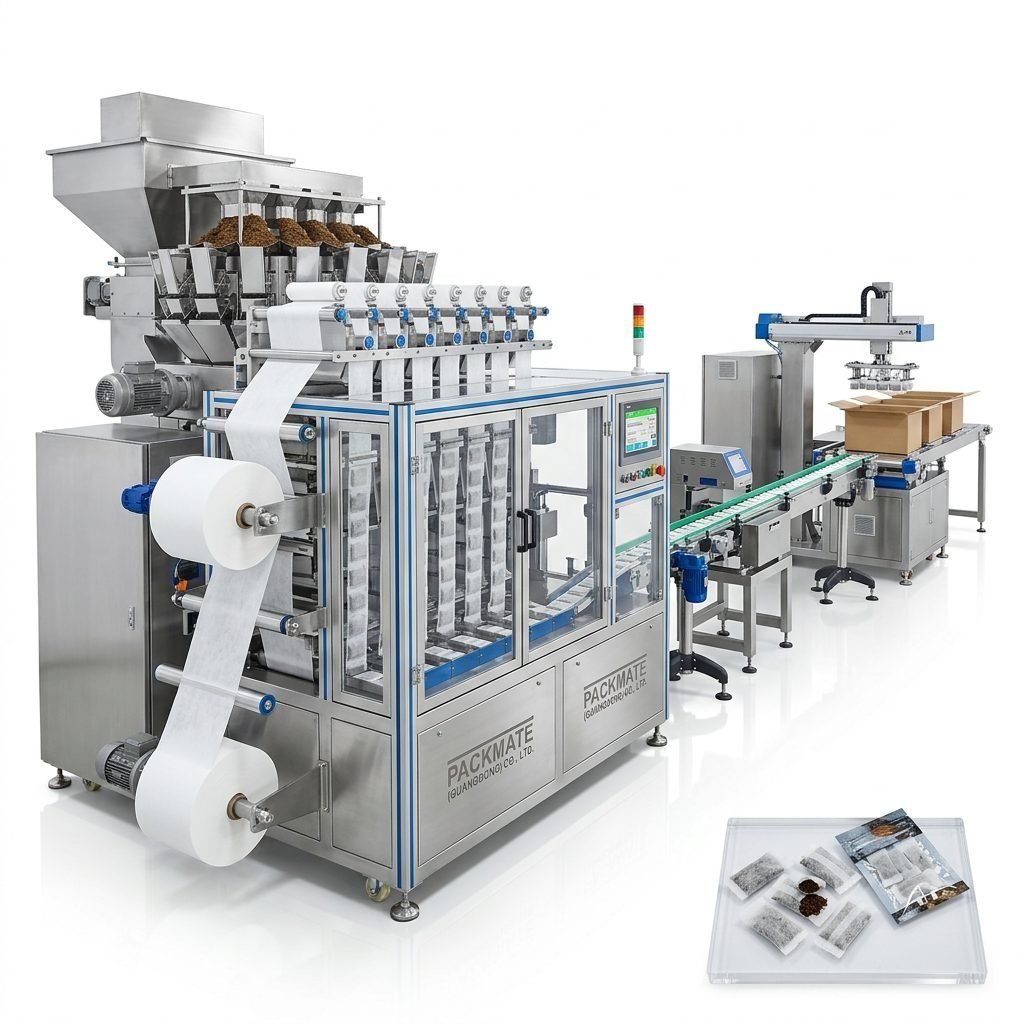
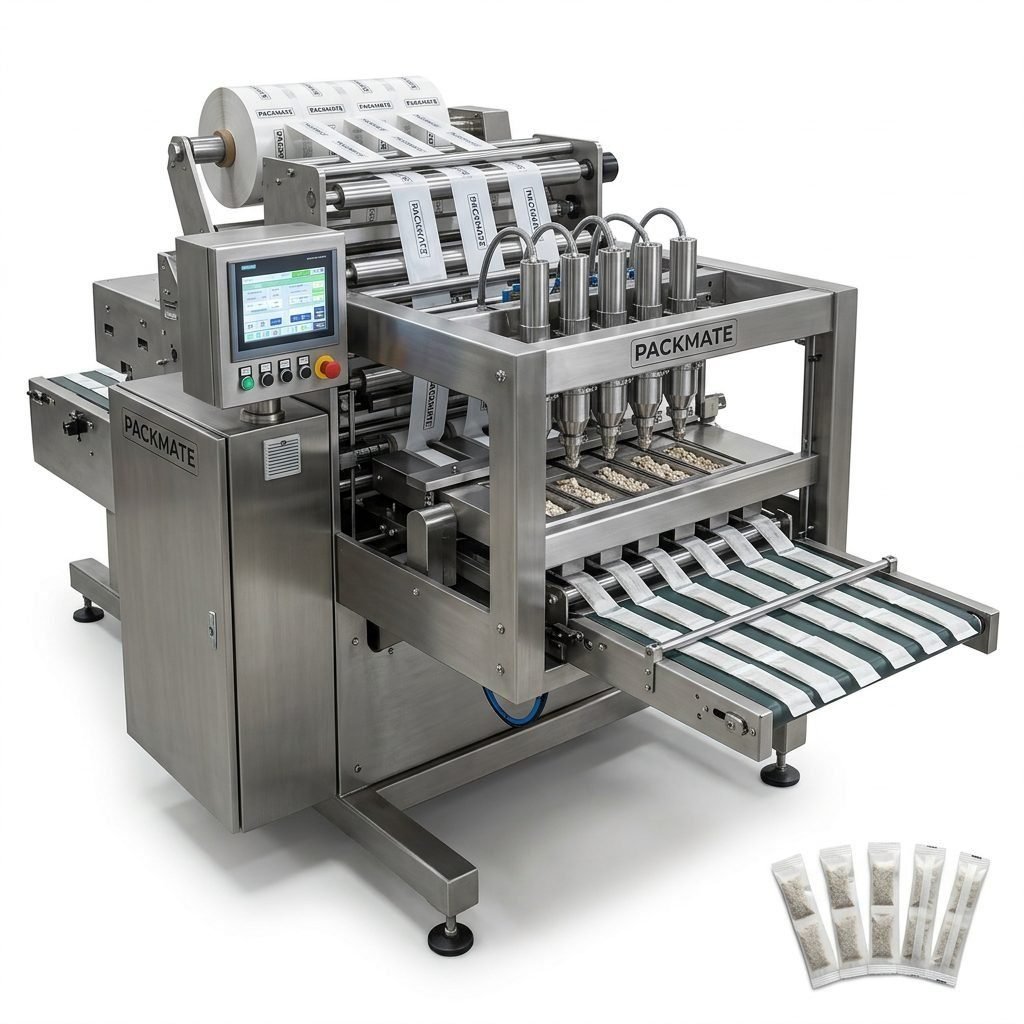
Choosing the right snus packaging machine in Syria requires a combination of technical knowledge, practical considerations, and an understanding of local market demands. This guide walks you through every step—from machine types and production capacity to quality certifications and after‑sales services—so you can make an informed purchase that boosts efficiency and reduces long‑term costs.
🔍 Understand the Syrian Market and Your Production Needs
Before selecting equipment, evaluate demand patterns, legal restrictions around nicotine products in Syria, and typical product formats (snus pouches, nicotine pouches, sachets, or stick packs). Consider whether you will supply local retailers, export to neighboring countries, or serve e‑commerce customers. These decisions shape the machine type, lane count, and packaging format you should prioritize.
⚙️ Key questions to answer
• What is your expected daily output (pouches/day)?
• Do you need single‑lane or multi‑lane production for small dose pouches?
• Which pouch material and sealing type will you use (foil, laminated film, zipper pouches)?
• What level of automation is required — manual feeding, semi‑auto, or full turnkey?
📦 Types of Snus Packaging Machines
Manufacturers offer several machine families, each suited to specific packaging styles and throughput targets.
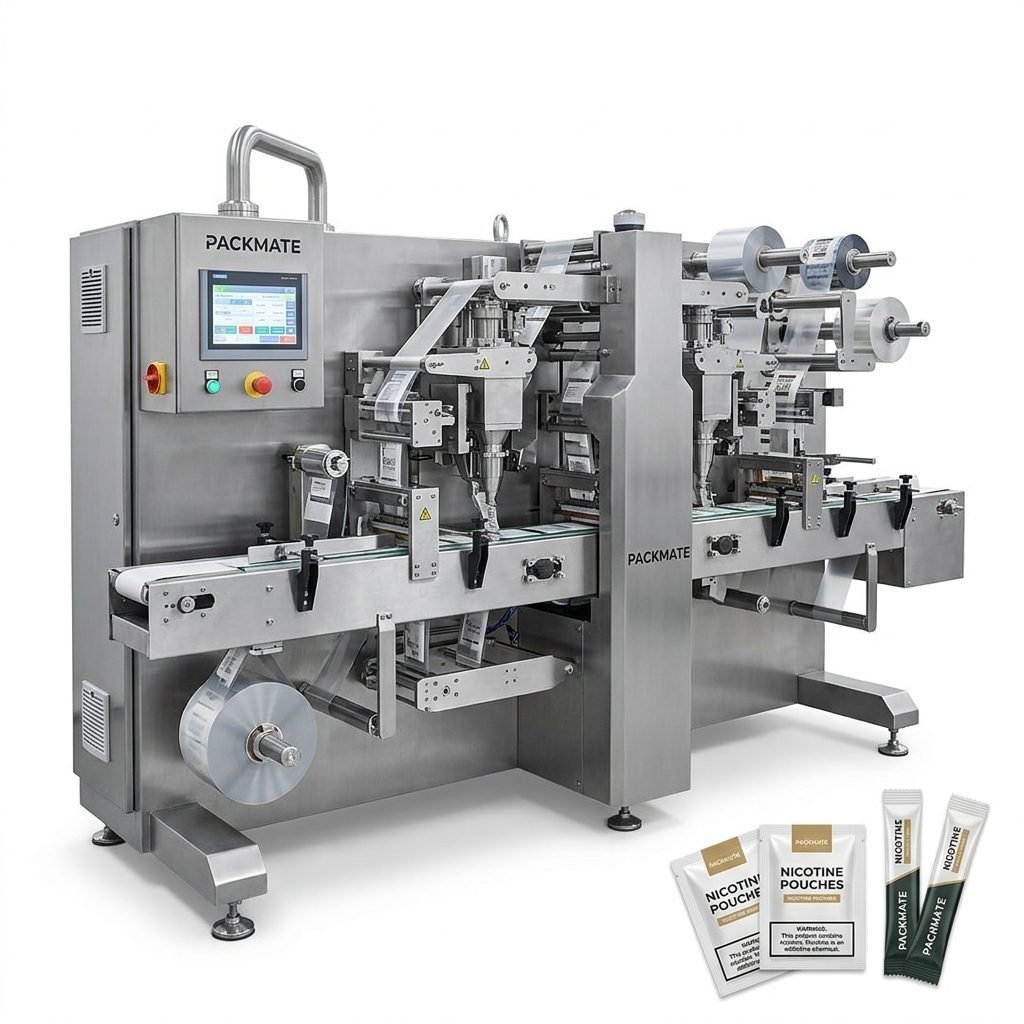
Stick Pack Machines
Stick packs are ideal for single‑serve portions and rapid dispensing. These machines are compact, cost‑effective, and suitable for lightweight powder or paste formulations.
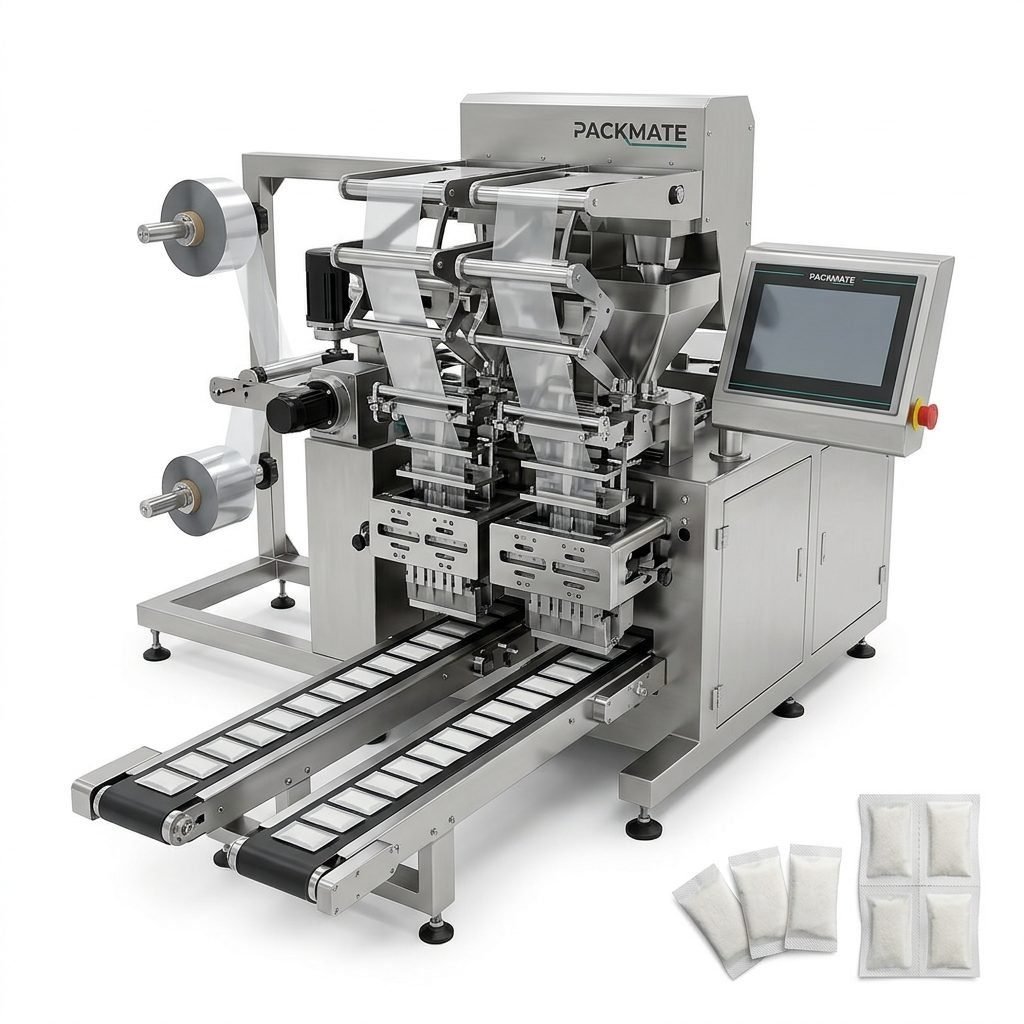
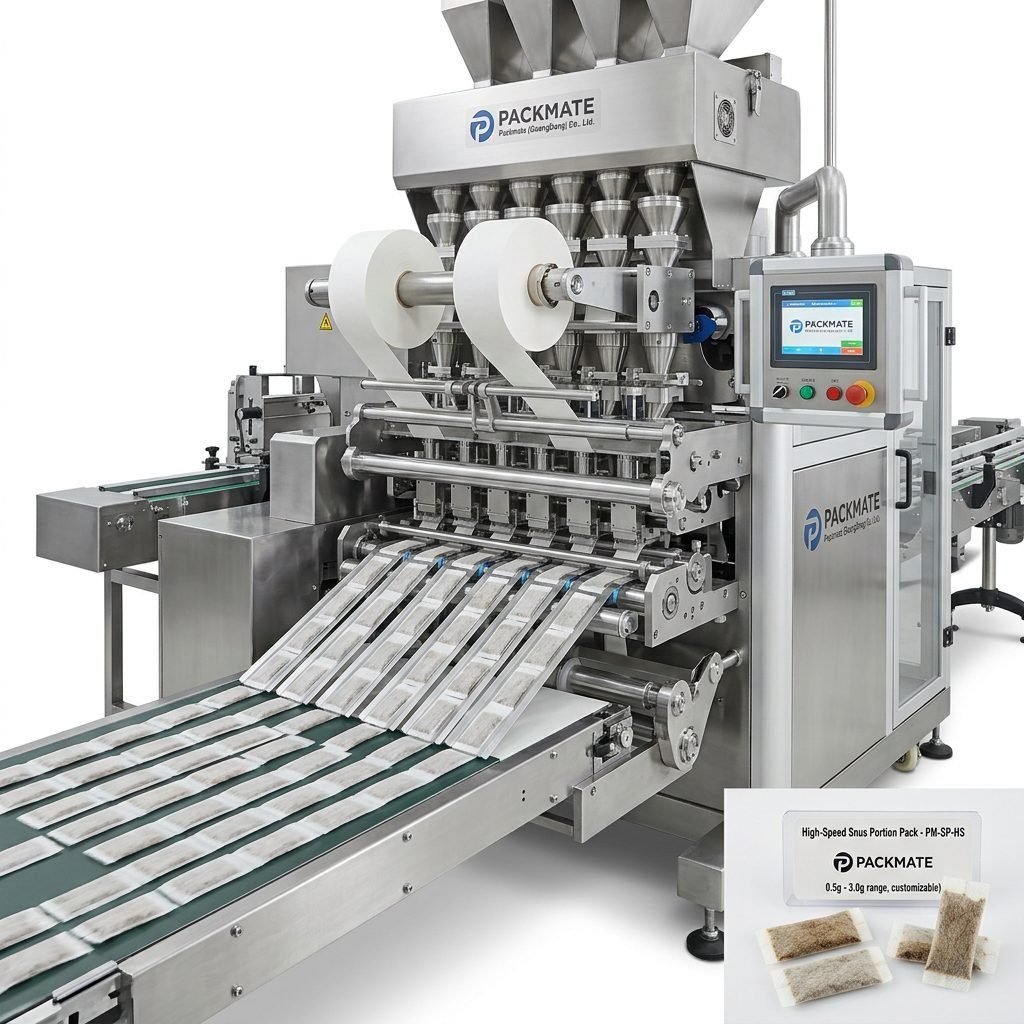
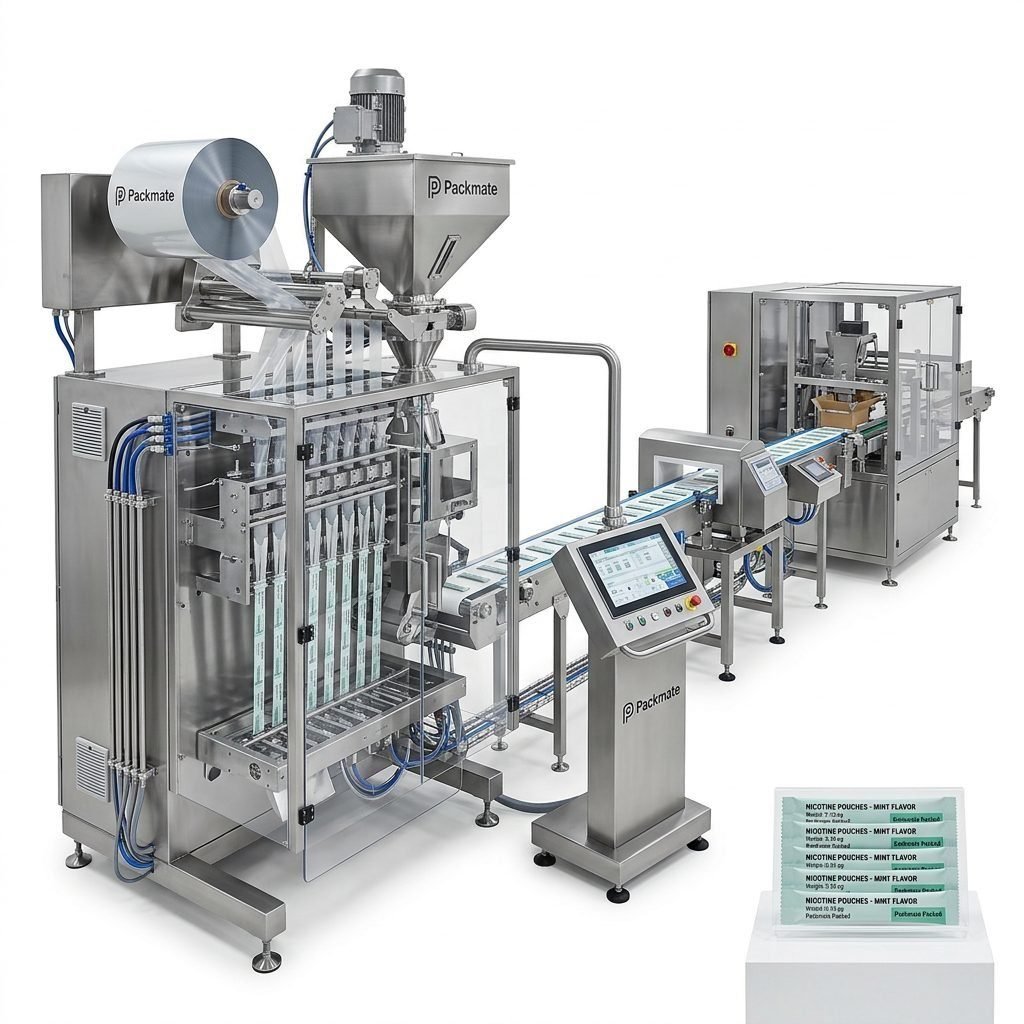
Sachet & Multi‑Lane Machines
Multi‑lane sachet systems increase yield by producing several pouches per cycle, perfect for small‑dose snus pouches and nicotine sachets. They are favored when unit costs must be lowered and production volumes scale up.
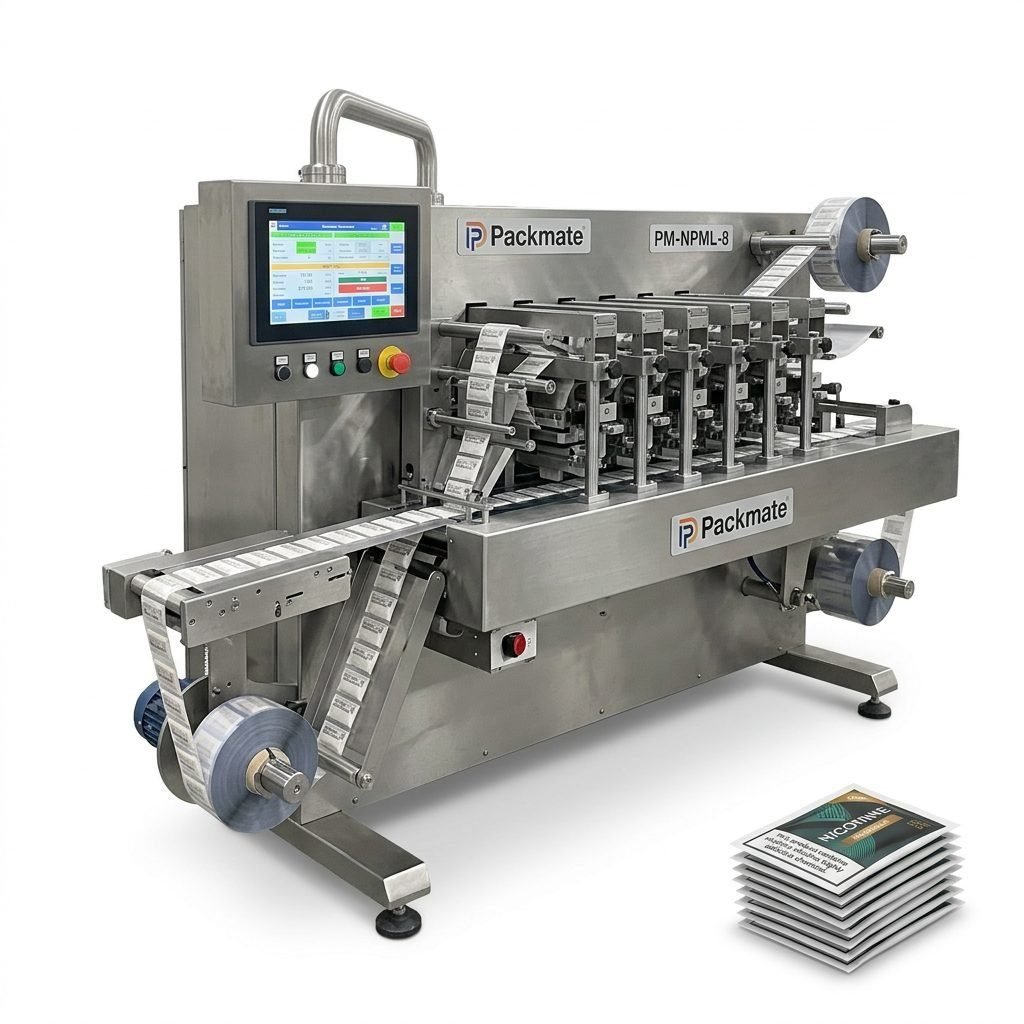
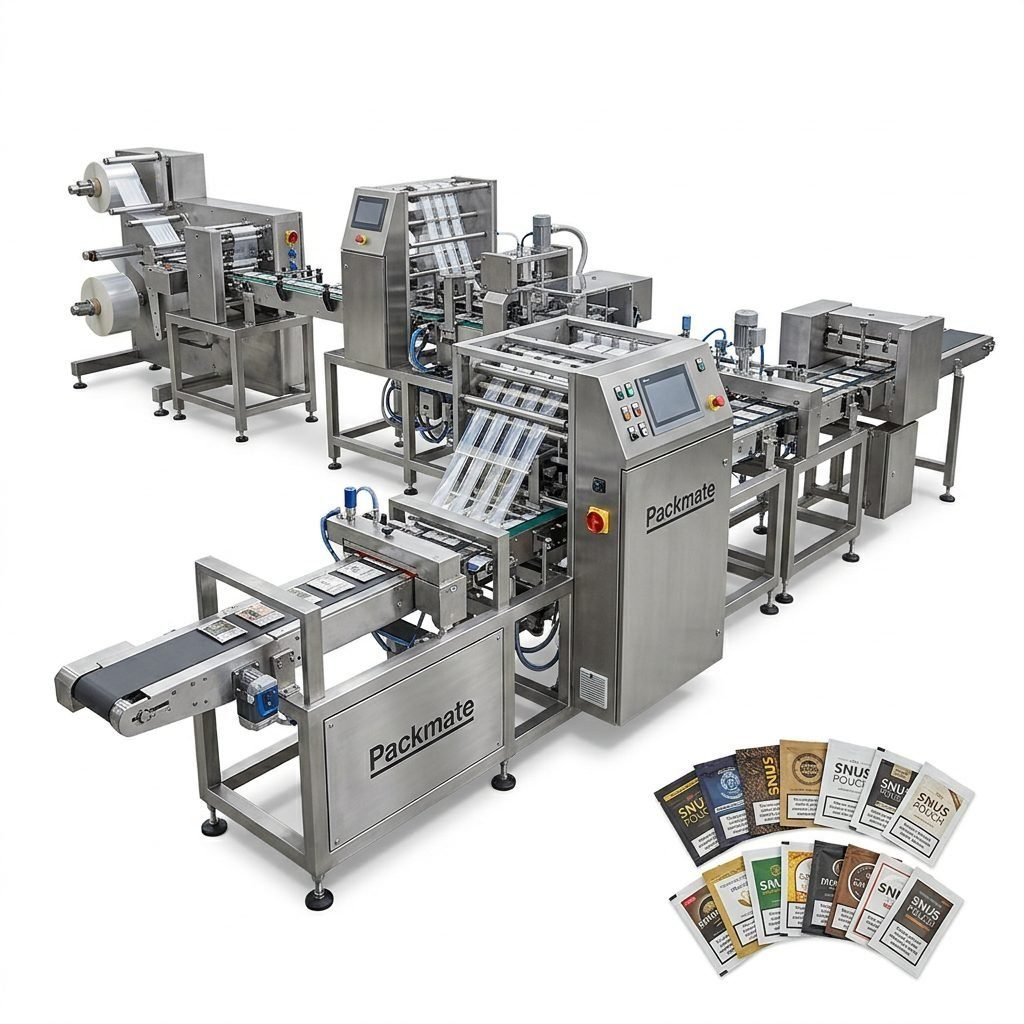
Form‑Fill‑Seal and Pouch Systems
For pouch formats such as zippered pouches or resealable packs, choose vertical or horizontal form‑fill‑seal lines with integrated weighing and filling modules.
Pro tip: If you expect growth within 12–24 months, invest in modular machines that support lane expansion or add‑on fillers to avoid a full line replacement later.
📈 Production Capacity and Throughput Considerations
Match machine speed to realistic production schedules. A machine rated for 120 pouches/minute may look attractive, but real throughput depends on upstream feeding, product handling, and operator skill. Include setup and maintenance windows when calculating monthly capacity.
Consider production redundancy: two medium‑speed machines can provide greater uptime security than a single high‑speed machine if one unit requires maintenance.
🧩 Technical Specs to Inspect
When evaluating machine offers, request detailed specifications and verify the following:
• Material compatibility (powder, granule, paste) and dust control features.
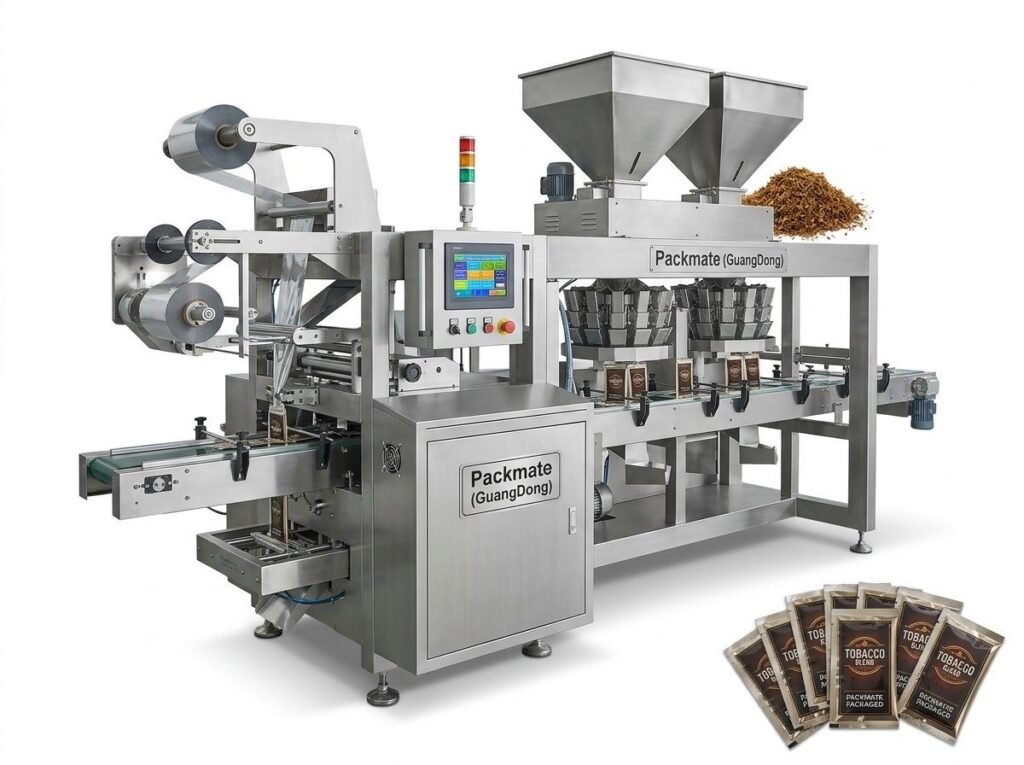
• Filling accuracy and weighing options — critical for nicotine dose control.
• Film width and reel capacity, seal temperature control, and servo‑driven motion for consistent pouch formation.
• Ease of changeover between formats and tools available for quick die changes.
• PLC and HMI features — multi‑language support and remote diagnostics are valuable.
Important: For nicotine products, filling accuracy is not optional. Choose precision weighing systems or multi‑head weighers to ensure consistent dose control.
🛡️ Certifications, Compliance, and Build Quality
Ensure the machine is manufactured to international standards. Certifications such as CE and ISO indicate adherence to safety and quality protocols. Look for stainless steel contact parts, sanitary design for easy cleaning, and robust electrical components from reputable suppliers.
Ask for factory quality control reports, FAT (Factory Acceptance Test) documentation, and videos of the machine running with your product if possible.
🔧 Supplier Selection: What to Ask Your Vendor
A reliable supplier minimizes risk. Here are questions that separate experienced manufacturers from less proven ones:
• Can you provide references or case studies in the snus/nicotine sector?
• What is your factory lead time and what spares are stocked for common wear items?
• Do you offer on‑site commissioning, operator training, and remote technical support?
• What warranty terms and spare parts packages are included?
• Are customization options available to meet local regulatory labeling or pouch format requirements?
Consider vendors with global experience and exhibition presence—companies that demonstrate product lines at shows and publish customer case studies are often more dependable. (For example, review manufacturer portfolios such as Snus & Nicotine Packaging Machines and Sachet & Stick Pack Machines to compare solutions.)
💰 Price vs Total Cost of Ownership (TCO)
The lowest purchase price may lead to higher ongoing costs. Evaluate:
• Energy consumption and air requirements.
• Spare parts availability and unit costs.
• Ease of maintenance and mean time between failures (MTBF).
• Software updates and remote support capabilities.
ROI checklist: Calculate payback considering reduced labor, improved yield, and less product waste. A slightly higher upfront cost may be justified by faster payback through superior reliability.
🔩 Installation, Training, and After‑Sales Support
Installation and training are where many projects succeed or fail. Confirm whether the supplier provides:
• On‑site commissioning and calibration.
• Operator and maintenance staff training with documentation in your language.
• Remote troubleshooting and spare parts logistics to Syria or nearest ports.
• Annual maintenance contracts and optional refurbishing services.
🧭 Customization and Future‑Proofing
Choose a supplier that offers flexible configurations: lane expansion kits, alternative filling heads, and modular conveyors. If you plan to diversify into other products (tea bags, powdered nutraceuticals), modular equipment saves capital and speeds up product changeovers.
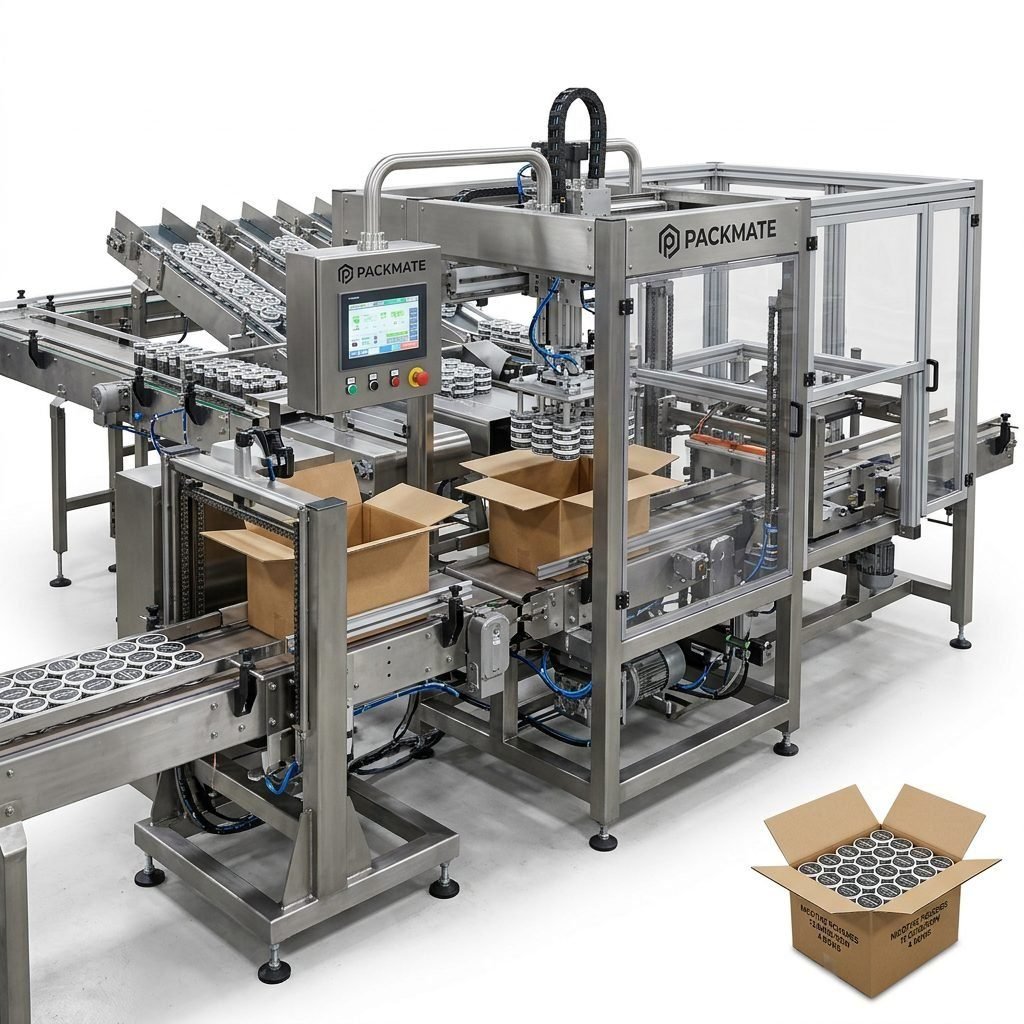
Suppliers with a wide portfolio—covering everything from weighing systems to auxiliary equipment—can provide more integrated solutions. Explore related product lines such as Weighing & Packaging Systems and Auxiliary Packaging Equipment to design a full production line.
📝 Pre‑Purchase Checklist (Printable)
✅ Production target (units/day) and peak hour demand.
✅ Product formats and compatible materials.
✅ Required certifications (CE/ISO) and sanitary standards.
✅ Spare parts lead times and warranty coverage.
✅ On‑site commissioning, training, and remote support terms.
✅ Total cost of ownership estimate including energy and maintenance.
📚 Why Choose an Experienced Manufacturer
Experience reduces risk. A manufacturer with decades in packaging equipment can offer refined mechanical design, tested multi‑lane systems, and reliable service networks. Companies that publish factory tours, case studies, and exhibition schedules demonstrate transparency and commitment to continuous improvement—attributes that matter for long‑term partnerships. Learn more about proven suppliers and company background on their About Packmate page.
📞 Next Steps: Supplier Contact and Site Assessment
Contact shortlisted vendors for a site assessment and sample trials. Provide product samples, desired production schedule, and pouch formats. A trustworthy supplier will run FAT videos, share performance metrics, and propose a tailored line. When ready, request a formal quote, including shipping to Syria, customs considerations, and installation costs. For direct contact and service inquiries, use the supplier contact page such as Contact Us.
✅ Quick Recap
Focus on production needs, dosing accuracy, modularity, and after‑sales support. Prioritize vendors with relevant snus/nicotine pouch experience and full line offerings to ensure uptime and future scalability.
Recommended reading: Explore similar production lines and product categories in the Bag & Pouch Packaging Machines and Filling & Packaging Lines sections to understand integrated solutions.
Frequently Asked Questions
Q1: How do I determine the right lane count for a multi‑lane snus machine?
A1: Base it on your peak hourly demand and product cycle time. Consider future growth and select a modular design that allows adding lanes.
Q2: What certifications should I require for machines used with nicotine products?
A2: Request CE and ISO certificates, hygienic stainless‑steel contact parts, and documentation of FAT tests. Compliance with regional regulations for nicotine products is essential.
Q3: Is remote support available for commissioning in Syria?
A3: Many experienced manufacturers provide remote diagnostics, virtual commissioning assistance, and on‑site engineers when required. Confirm remote support SLAs before purchase.
Q4: Can I test my product before buying a machine?
A4: Reputable suppliers run FATs and sample trials. Share your pouch material and a product sample to validate dosing, sealing, and pouch formation.
Q5: How do I arrange spare parts and maintenance after installation?
A5: Negotiate spare parts kits and lead times in the contract. Consider annual maintenance agreements and confirm local logistics options for spare shipments.