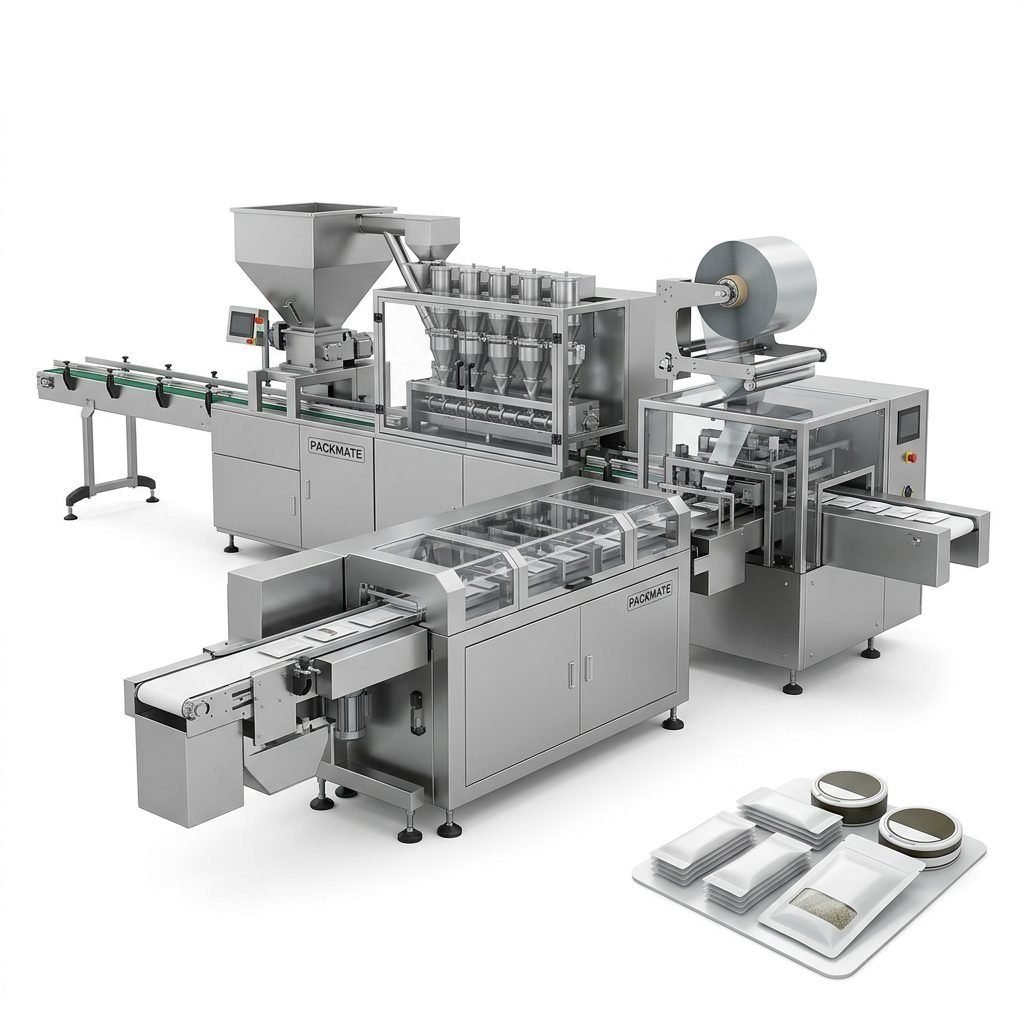
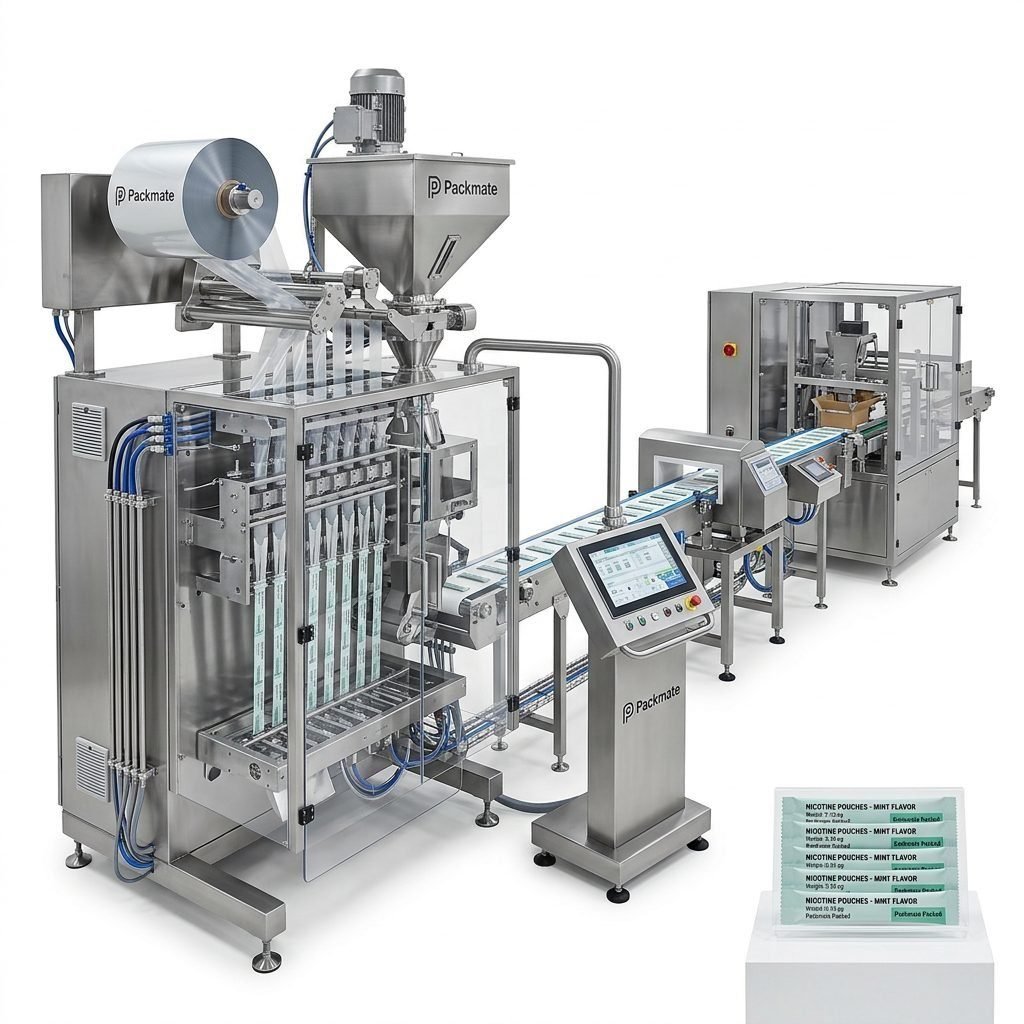
Choosing the right nicotine packaging machinery in Samoa requires a careful balance of regulatory knowledge, production planning, equipment capabilities, and after-sales support. This guide walks you through the essential considerations—from understanding local market constraints to matching machine specifications with your product format—so you can make an informed decision that protects quality, speeds up production, and maximizes return on investment.
Understand Samoa’s Market & Regulatory Landscape
Before evaluating machines, clarify the local regulatory requirements for nicotine products in Samoa. Packaging labelling, child-resistant features, and material safety might affect machine choice. Engage with local regulatory advisors or import authorities to confirm labelling size, required tamper-evidence, and any health warning placement rules.
Key considerations:
🔍 Compliance first: Ensure the machine can produce compliant labels and integrate tamper-evident seals if required.
📦 Packaging format flexibility: Can the line handle different pouch sizes, sachets, or stick packs?
⚖️ Import rules & duties: Factor shipping lead time and importation costs into your procurement plan.
Assess Your Production Needs
A clear production profile helps narrow machine options. Define your current and projected annual output, number of SKUs, pouch formats, and working shifts. Typical questions to answer:
– What is your required throughput (units per minute / hour)?
– Are you running single-lane or multi-lane production?
– Do you need integrated weighing, dosing, or nitrogen flushing for shelf-life control?
– How many distinct pouch sizes or stick pack lengths will you produce?
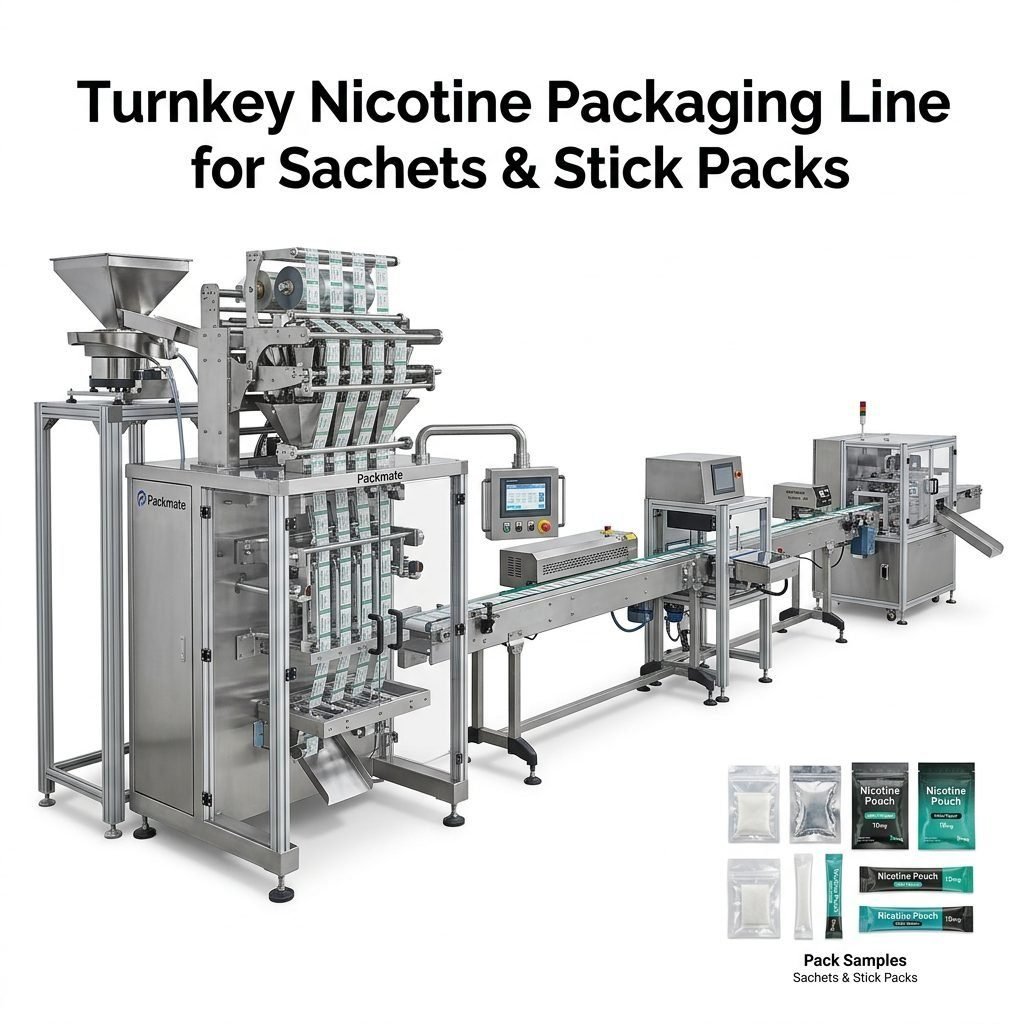
✅ Throughput matters: A 4-lane system from a specialist like Packmate can multiply output while saving footprint.
Choose the Right Machine Type
Different nicotine product forms demand different packaging technologies. Understand the pros and cons of common machine types:
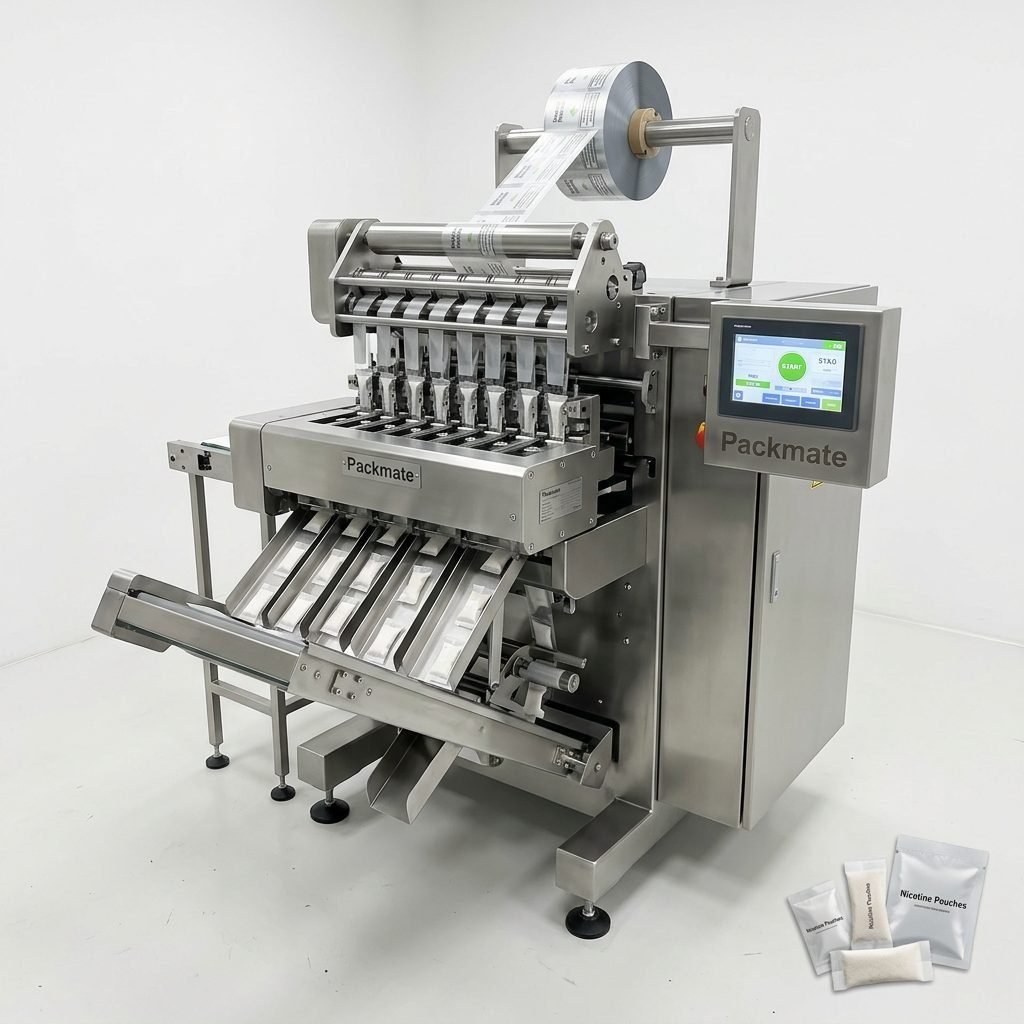
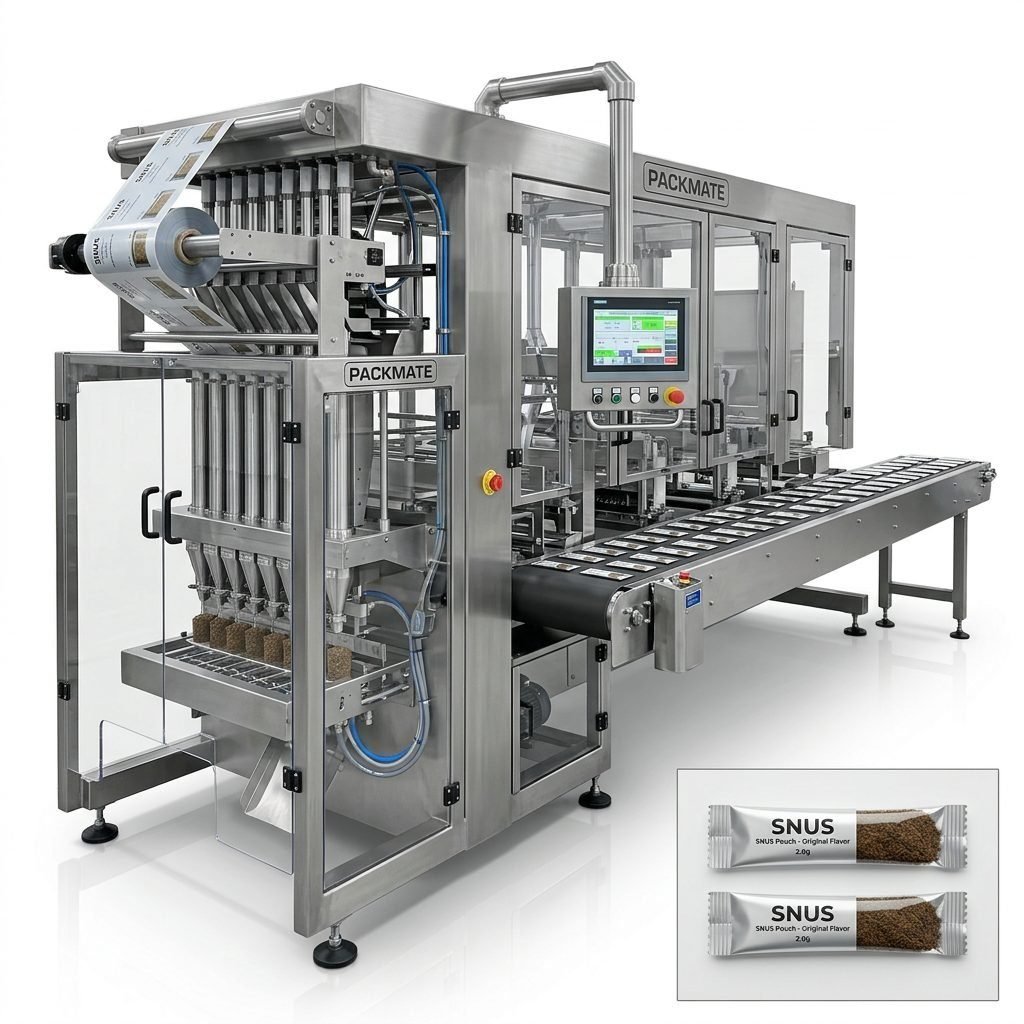
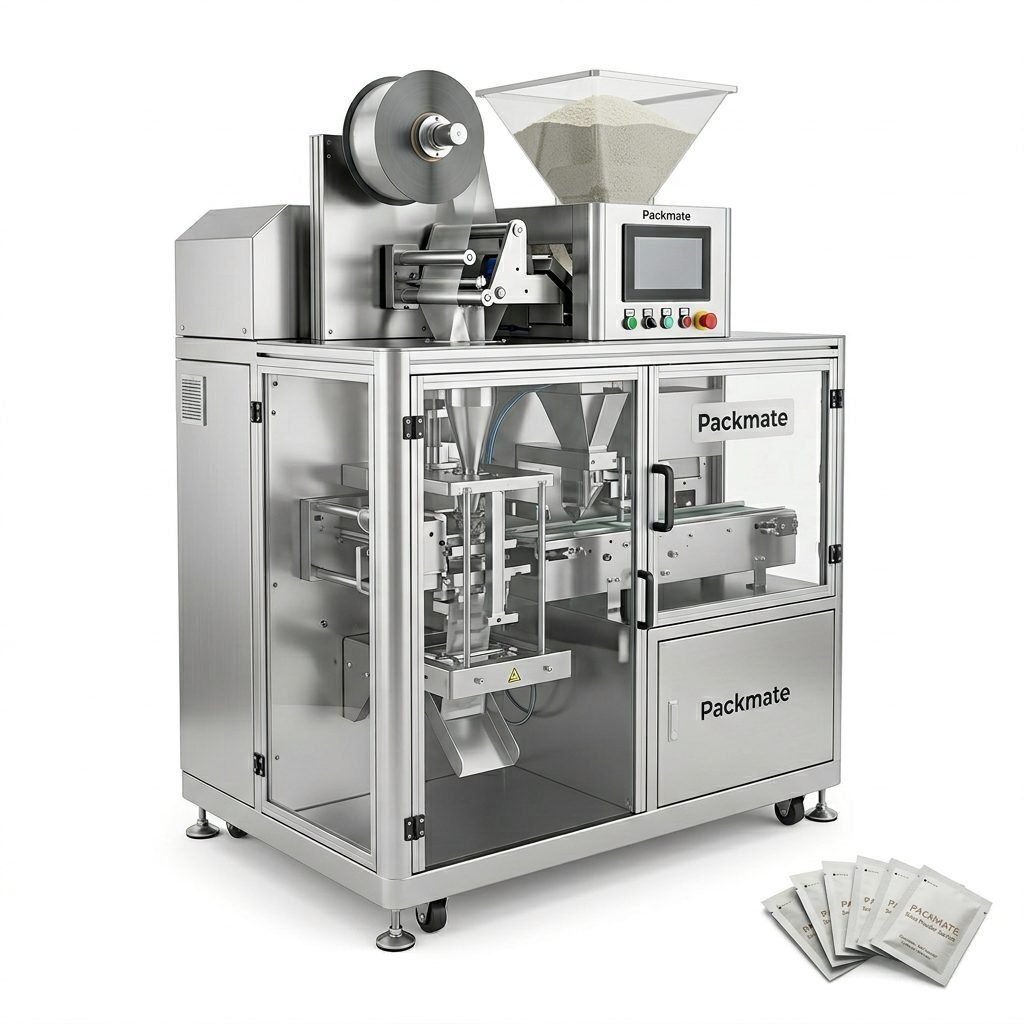
Sachet & Stick Pack Machines
Sachet and stick pack formats are popular for single-dose nicotine pouches and samples. They offer fast speeds and compact layout. If your products include precise powder or granular fills, select machines with accurate dosing and gentle product handling.
Explore specialized options: Sachet & Stick Pack Machines
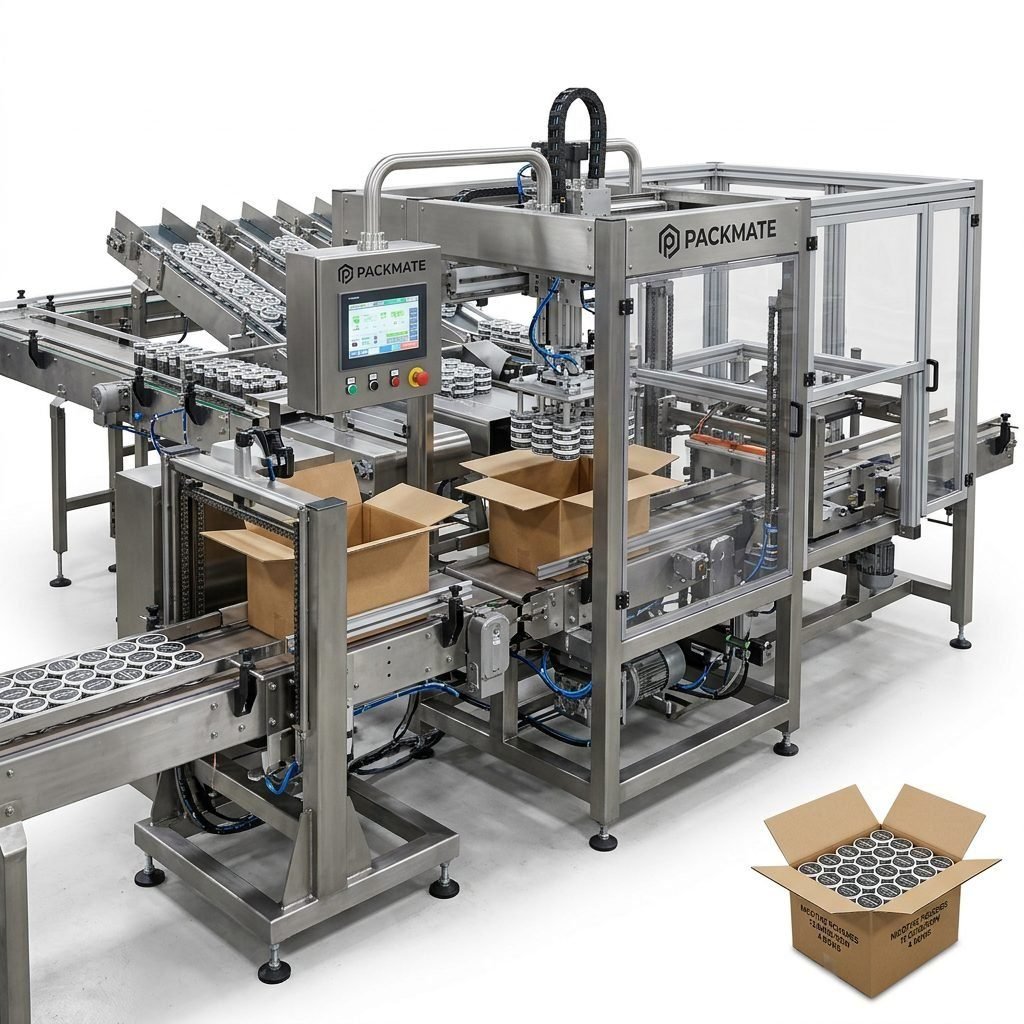
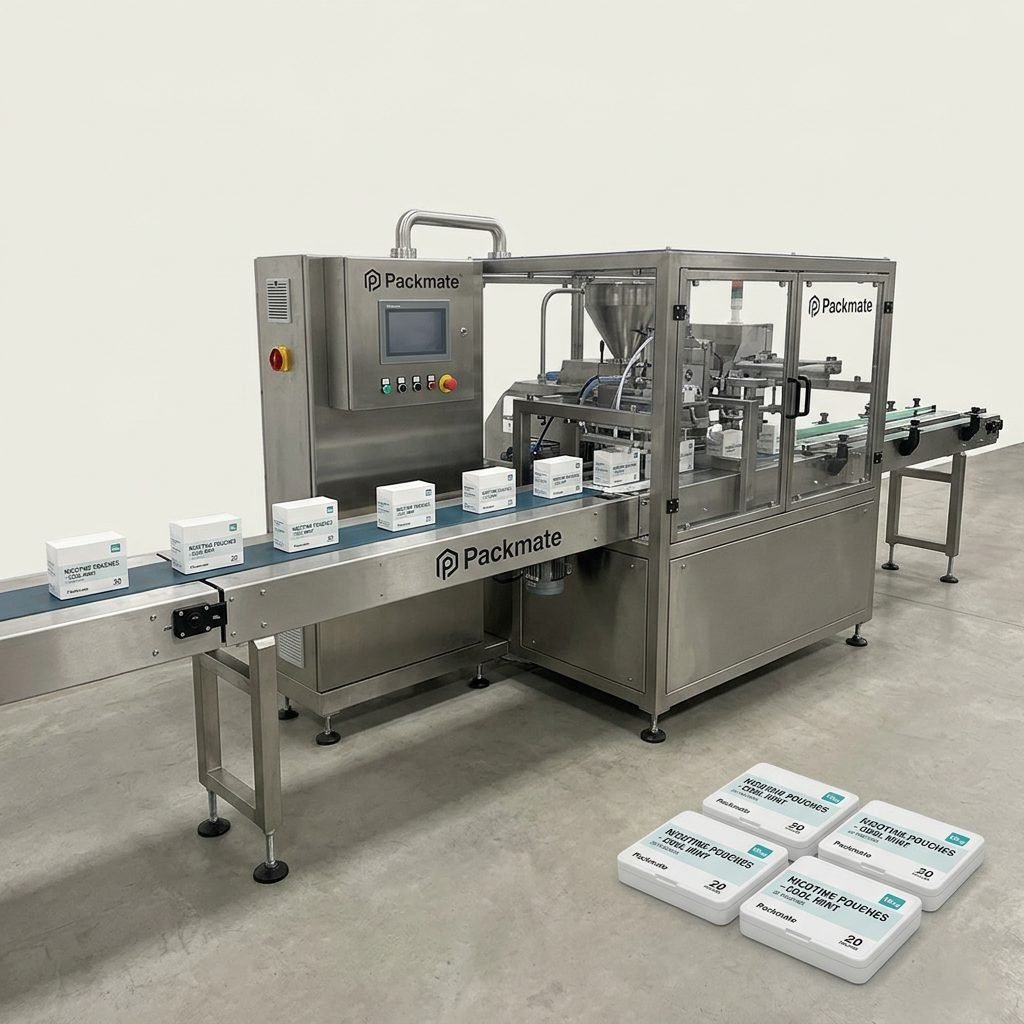
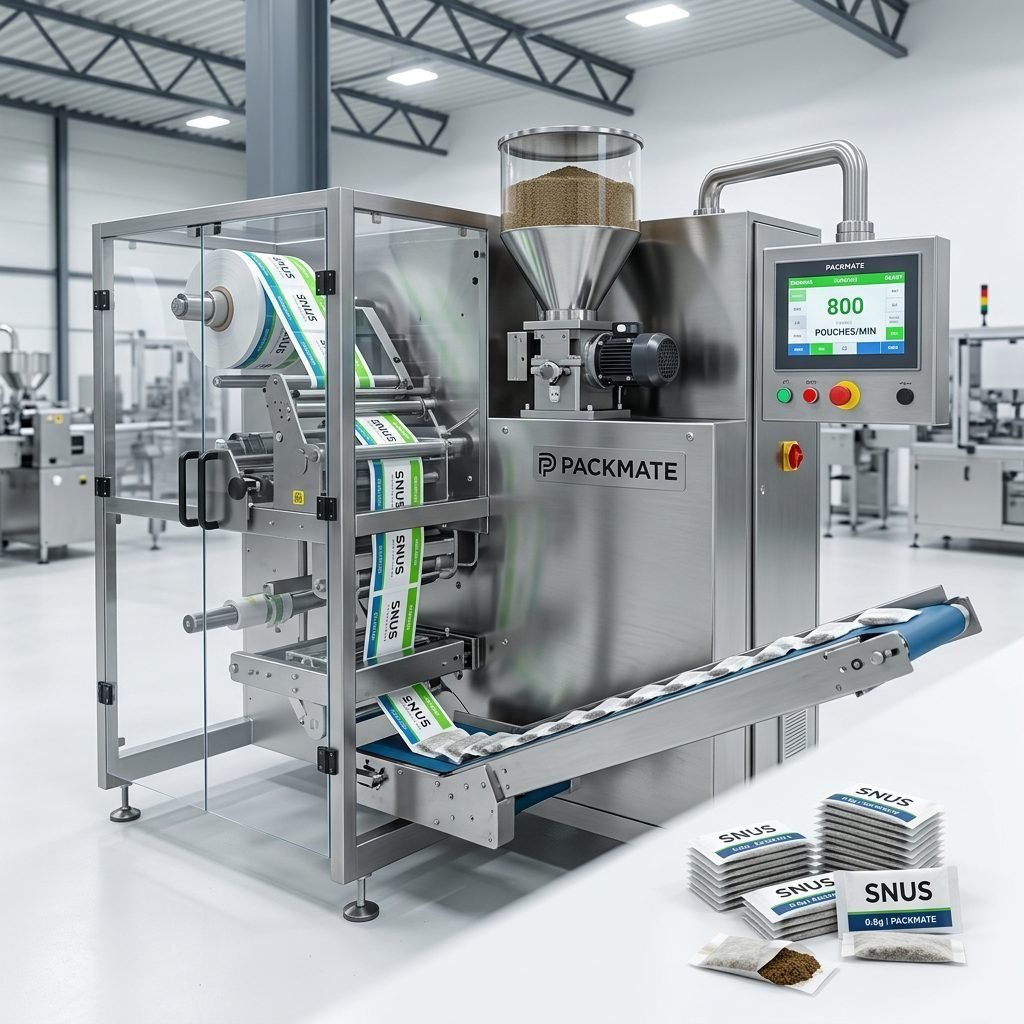
Snus & Nicotine Pouch Packaging Machines
For traditional nicotine pouches (snus-like formats), choose machines explicitly designed for pouch forming and pouch sealing. These systems deliver precise portioning and consistent pouch quality, and they can often be configured for multi-lane production to boost capacity.
Learn more: Snus & Nicotine Packaging Machines
Multi-Lane vs Single-Lane Systems
Multi-lane systems dramatically increase throughput without a proportional increase in footprint—ideal for scaling production in limited factory space. However, multi-lane systems require higher initial investment and more complex calibration.
Key Technical Specifications to Compare
When evaluating suppliers, focus on capabilities that directly affect product quality and efficiency:
⚙️ Filling accuracy: Look for filling systems with minimal variance (± small %), important for nicotine dosing control.
⏱️ Speed & lanes: Evaluate both the machine’s top speed and its stable continuous speed at your desired quality rate.
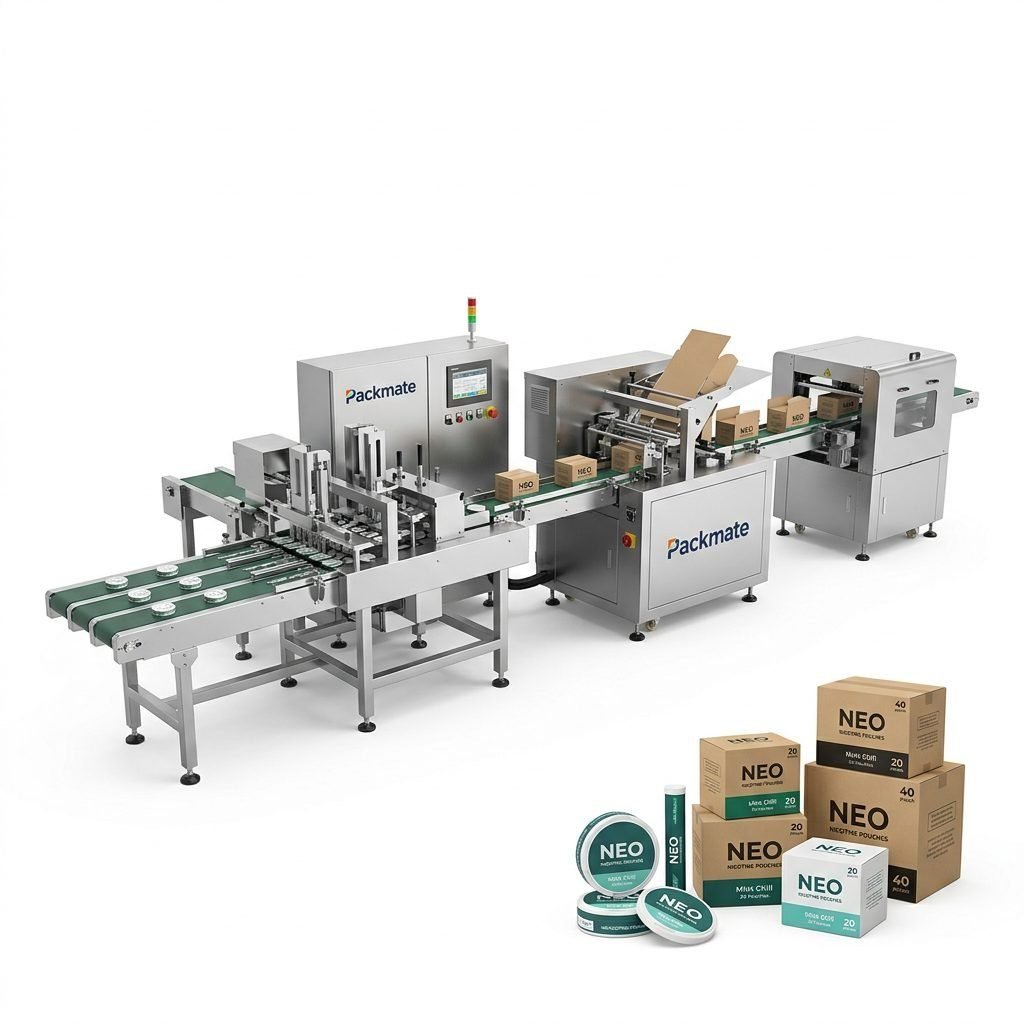
🔌 Integration capability: Can the machine connect with sealing, secondary packaging, cartoning, or QA vision systems?
🧾 Material compatibility: Confirm compatibility with your chosen film, foil, or laminate structure for barrier and printing needs.
🔧 Changeover time: Fast, tool-less changeovers reduce downtime for frequent SKU changes.
Automation, Control & QA Features
Modern lines feature PLC/HMI control, recipe management, and automatic fault detection. For nicotine pouches, reliable in-line quality inspection is essential to avoid dosing errors and sealing defects.
Recommended QA options:
- Vision inspection for seal integrity and label correctness
- Checkweighers for pouch weight verification
- Metal detection or foreign object detection where necessary
- Traceability and batch coding printers
Supplier Criteria: Why Manufacturer Experience Matters
Selecting a manufacturer with proven experience in snus and nicotine solutions reduces technical risk. Packmate Snus Machine has a track record of over 30 years in packaging engineering, a large factory footprint, and global turnkey experience—attributes that matter for complex nicotine packaging lines.
Useful supplier checks:
📁 Portfolio: Examine case studies and machine galleries to verify real-world deployments.
🛠️ R&D & customization: Can the supplier develop custom tooling for unique pouch shapes or multi-lane synchronization?
🌍 Global service network: Check availability of spare parts and field service, especially for remote locations like Samoa.
For manufacturer information and credentials, see the company profile: About Packmate, and review real projects under Case.
Cost, ROI & Total Cost of Ownership
Initial purchase price is only part of the story. Consider installation, operator training, consumables, spare parts, energy use, and expected uptime. A higher-spec machine with better reliability may deliver lower cost per pouch over its lifetime.
📊 Calculate break-even: Estimate units per day, gross margin per unit, and machine depreciation to forecast ROI.
🔄 Spare parts availability: Faster parts delivery minimizes downtime—confirm lead times to Samoa.
Installation, Training & After-Sales Service
Reliable after-sales service is critical. Ensure the supplier offers commissioning support, onsite or remote training, and clear spare-part lists. For Packmate clients, service options and documentation are part of the turnkey offering.
Contact & service link: Contact Us
Practical Checklist for Selection
Use this checklist when evaluating proposals from suppliers:
- Documented throughput guarantees for your SKU mix
- List of included spare parts and optional extras
- Warranty terms and scope (electrical/mechanical)
- Reference customers and site visit availability
- Installation lead time and recommended layout drawings
- Ability to adapt to future SKU or format changes
Real-World Considerations for Samoa
Samoa’s location impacts shipping time, customs clearance, and service visits. Work with a supplier experienced in international logistics and remote commissioning. Also, plan for power compatibility and local spare-part stocking to reduce downtime risk.
Why a Turnkey Supplier Can Save Time
A turnkey supplier integrates dosing, forming, sealing, and secondary packaging into one tested line—reducing integration time and commissioning complexity. If you’re expanding capacity quickly, a packaged solution from a seasoned manufacturer will help you go from order to production faster.
Relevant product families: Filling & Packaging Lines and Weighing & Packaging Systems.
Making the Final Decision
Summarize your production goals, regulatory needs, budget, and service expectations. Ask suppliers for a clear project timeline, a list of deliverables, and acceptance criteria. Where possible, arrange a trial run with your actual product—this is the best way to validate filling accuracy and pouch appearance.
Quick Comparison Table (Conceptual)
• Stick Pack: compact, ideal for single-dose samples, very fast per-lane speed.
• Sachet: flexible pouch shapes, good for powder and granular fills.
• Multi-lane Snus Pouch Machine: best for large-scale nicotine pouch production with minimal footprint.
Next Steps: Engaging with Suppliers
Request detailed proposals including a floor plan, electrical and pneumatic requirements, and a timeline for delivery and commissioning. If you are evaluating Packmate solutions, review the Bag & Pouch Packaging Machines and Auxiliary Packaging Equipment categories to assemble a complete production line.
Final Recommendations
– Prioritize compliance and QA features above raw speed.
– Choose a manufacturer with nicotine experience and global references.
– Factor logistics and spare-part lead times into your decision.
– Consider multi-lane systems if scaling quickly and floor space is limited.
– Secure clear warranty and service commitments before signing.
Frequently Asked Questions (FAQs)
Q1: How do I know whether to buy a single-lane or multi-lane system?
A1: Assess your current throughput needs and future growth. Multi-lane systems reduce footprint per unit output but cost more up-front. If you expect rapid growth, multi-lane is often the best long-term choice.
Q2: What is the expected lead time for delivery to Samoa?
A2: Lead times vary by machine complexity and spare-part shipments. Confirm with the supplier—turnkey systems typically require longer lead times for testing and integration. Work with suppliers who provide clear shipping and installation schedules.
Q3: How important is after-sales support for nicotine packaging machines?
A3: Extremely important. Fast troubleshooting, spare parts availability, and remote support reduce downtime and protect product quality. Choose suppliers with proven global service capabilities.
Q4: Can I integrate weighing and vision inspection into my packaging line?
A4: Yes. Most modern systems support modular integration of checkweighers, metal detectors, and vision systems. Confirm compatibility and data interfaces during planning.
Q5: Where can I see real examples of deployed lines and get more technical details?
A5: Review supplier case studies, product pages, and request references. For example, explore documented projects and product specs on the manufacturer’s case and product pages: Case and Catalog.