Choosing the right nicotine packaging machinery in Rwanda requires a clear understanding of local market habits, regulatory expectations, and production goals. This practical buyer’s guide walks you through machine types, technical specifications, material compatibility, automation levels, after-sales support, and Rwanda-specific considerations so you can make an informed investment that delivers consistent product quality, compliance, and a fast return on investment.
Know Rwanda: Market Traits & Regulatory Landscape
Rwanda’s retail landscape is centered on Kigali and several urban townships where convenience stores, kiosks, and modern supermarkets coexist. Consumers often prefer small, single-use formats that are easy to carry and discreet. When evaluating packaging machinery, factor in the need for flexible formats and small-batch capabilities.
Regulatory compliance is crucial. Engage early with the Rwanda Food and Drugs Authority and understand East African Community (EAC) labeling and import rules. Machines that help ensure accurate ingredient declarations, batch traceability, and tamper-evident seals will simplify approvals and build trust with distributors and regulators.
Which Machine Type Fits Your Product?
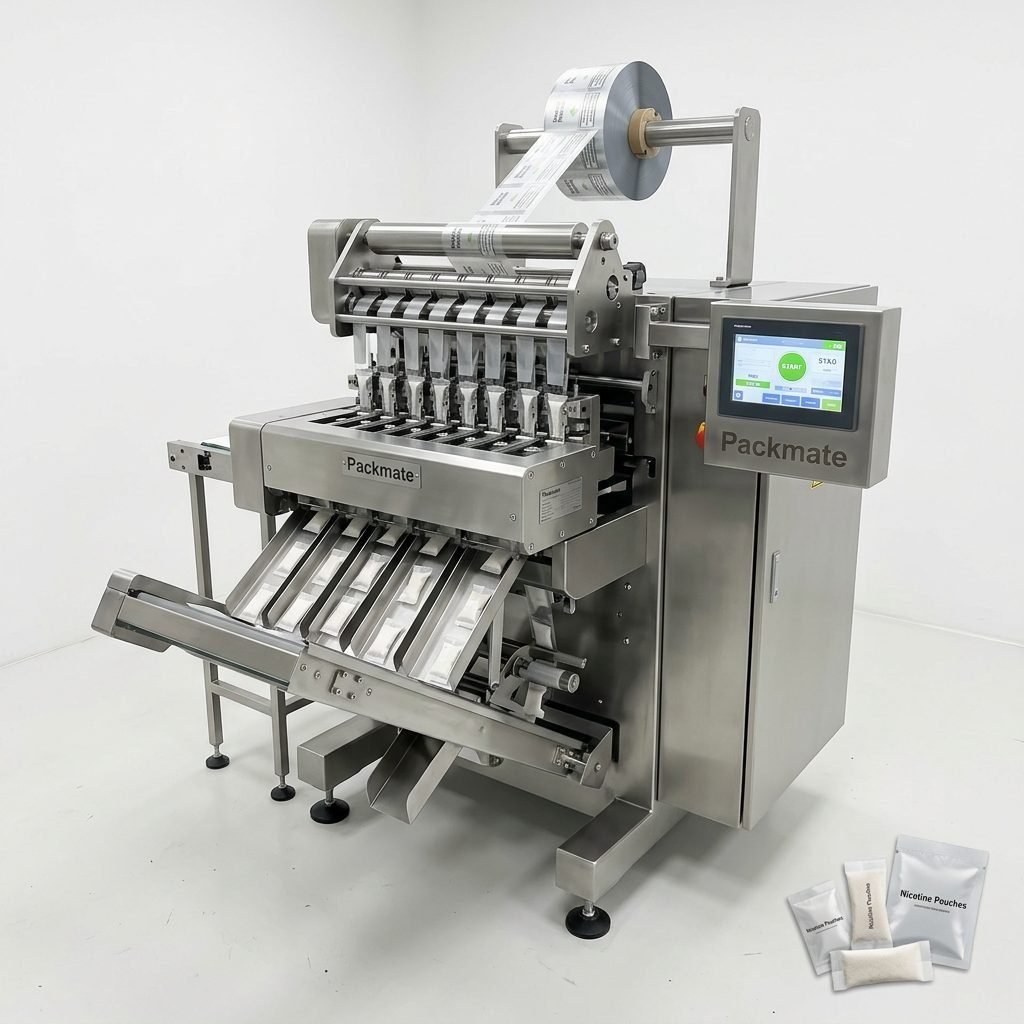
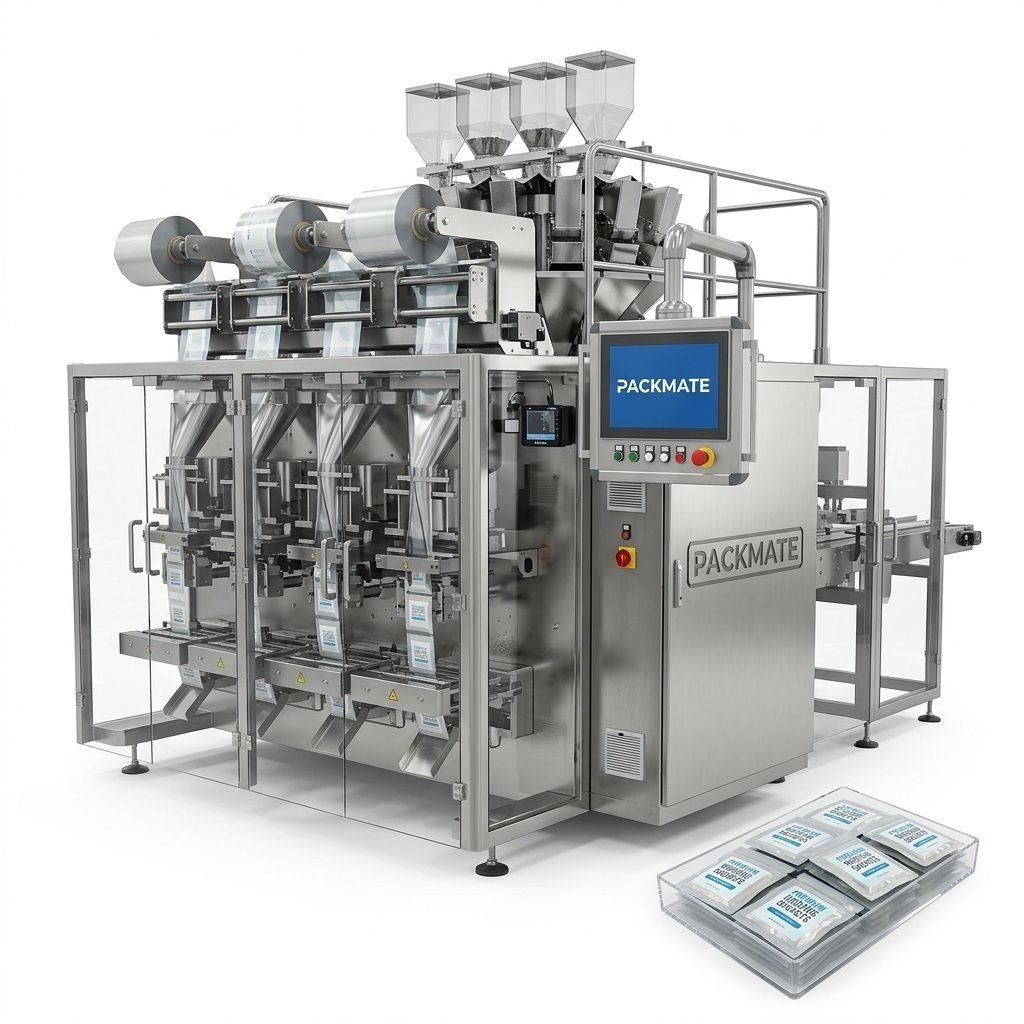
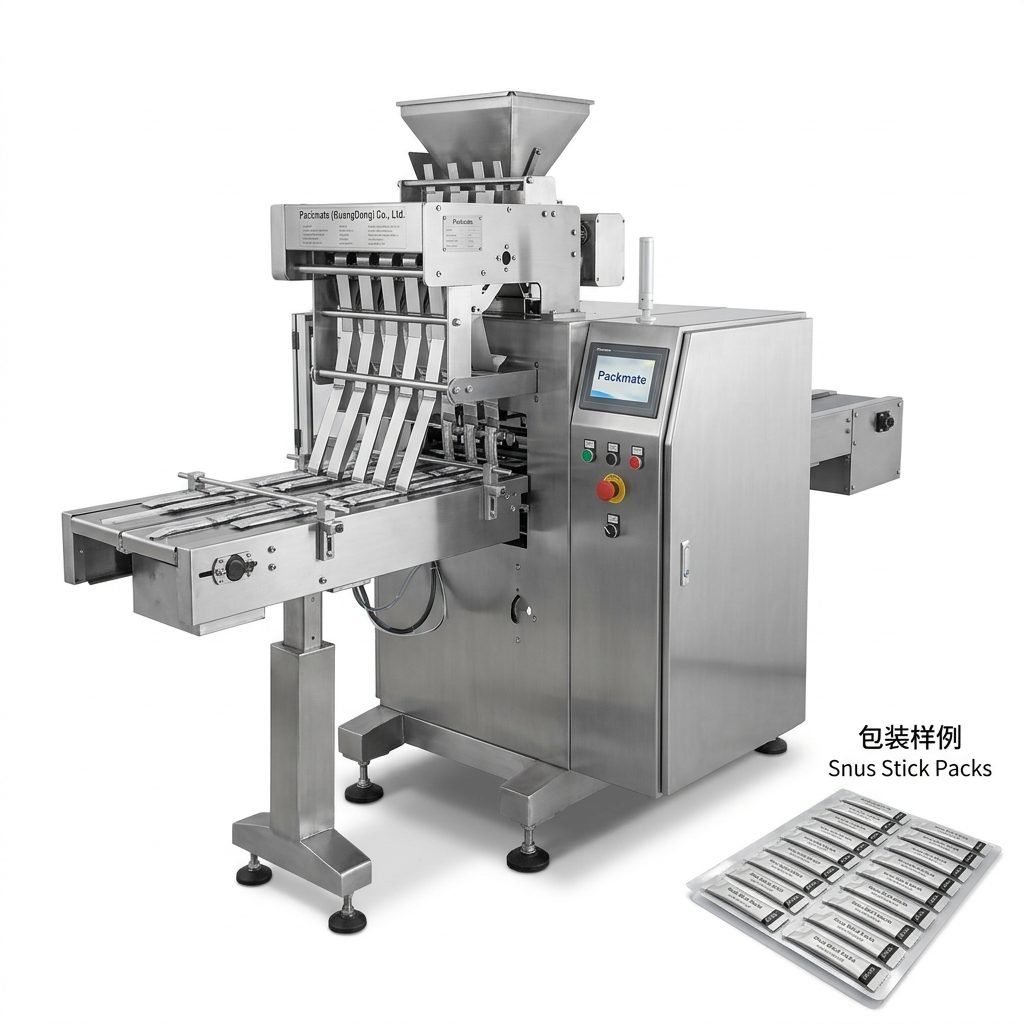
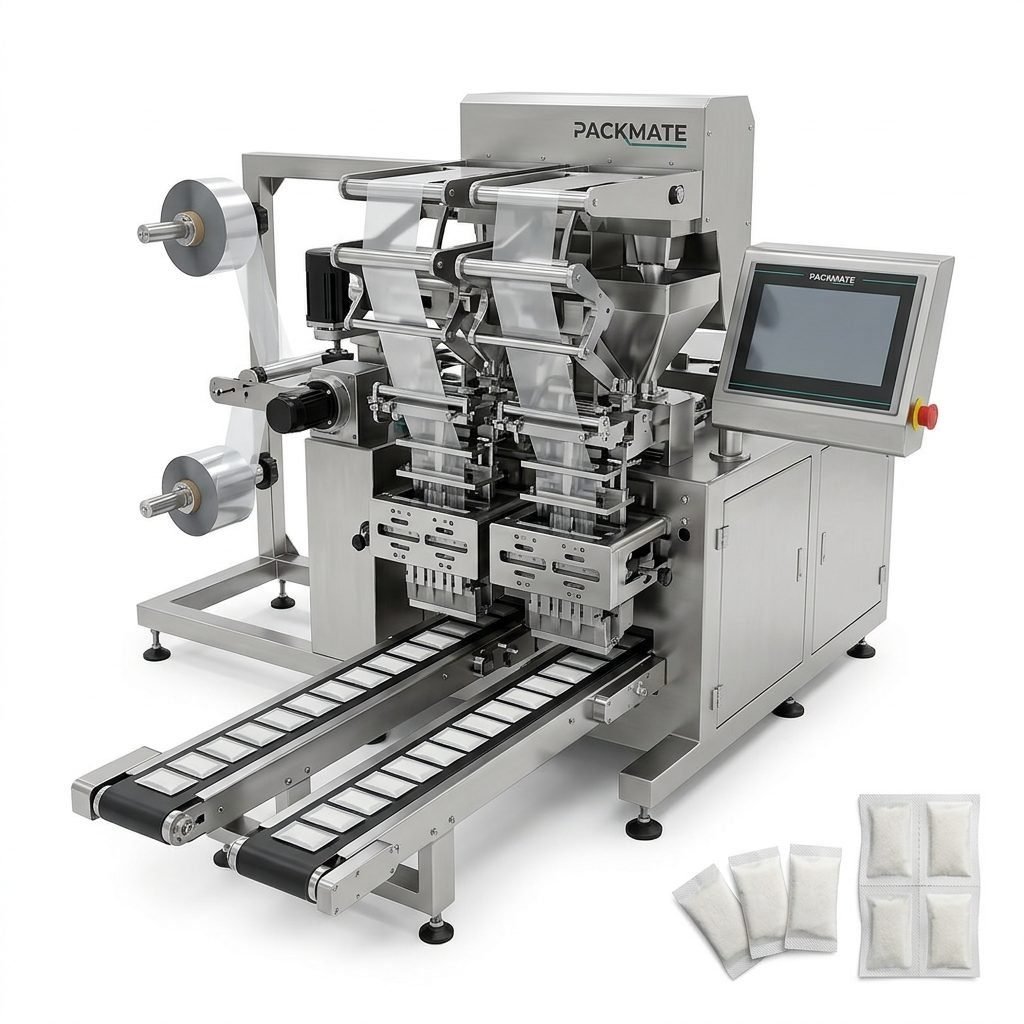
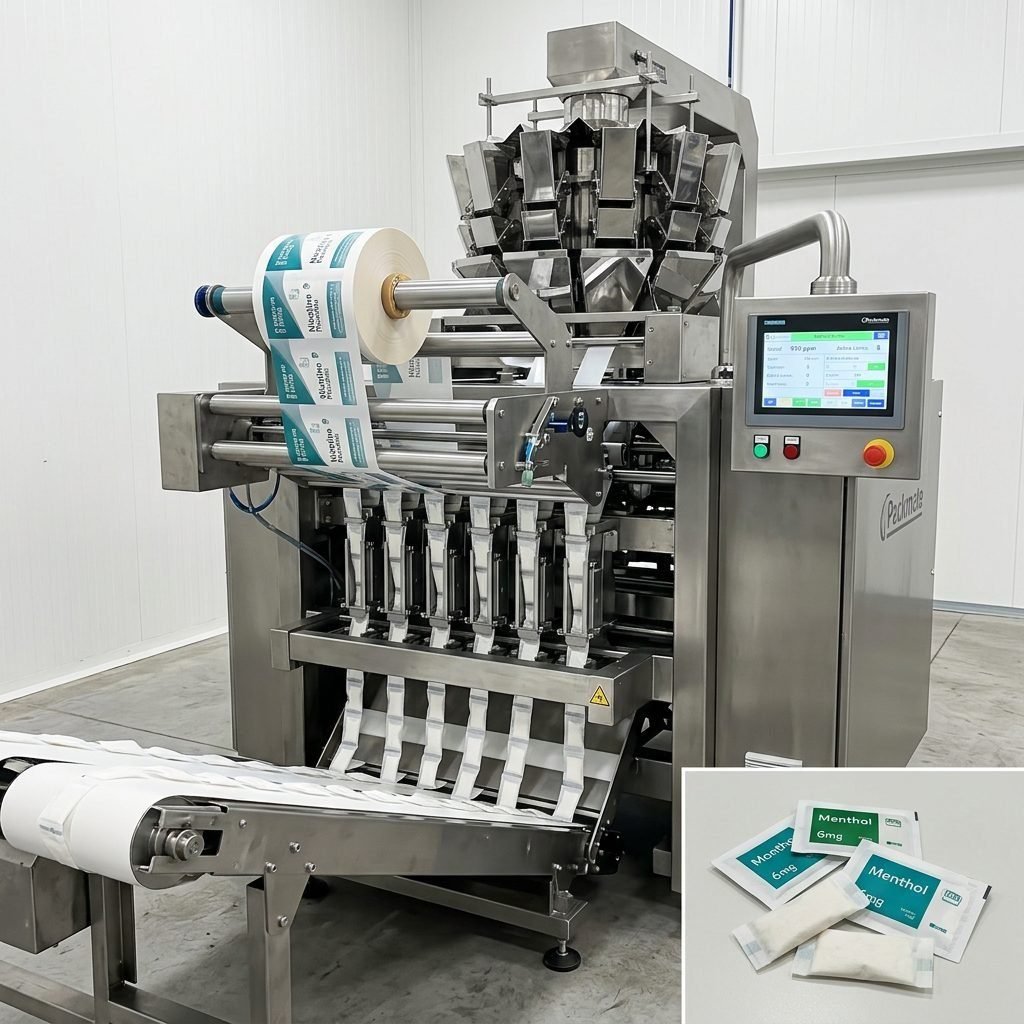
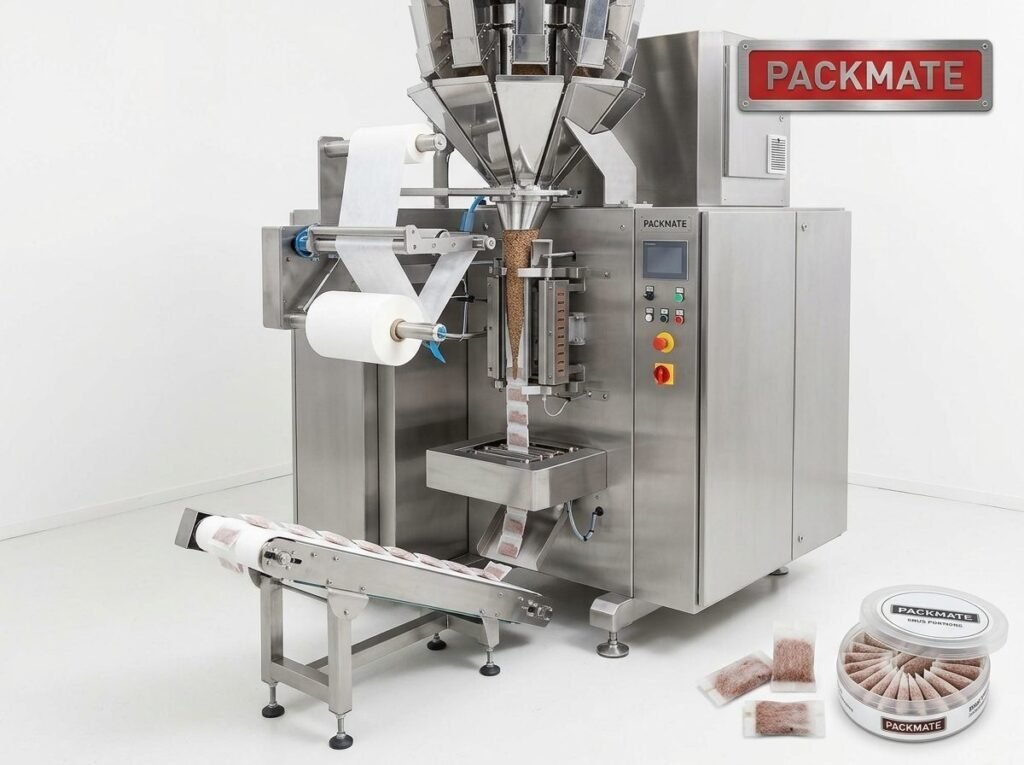
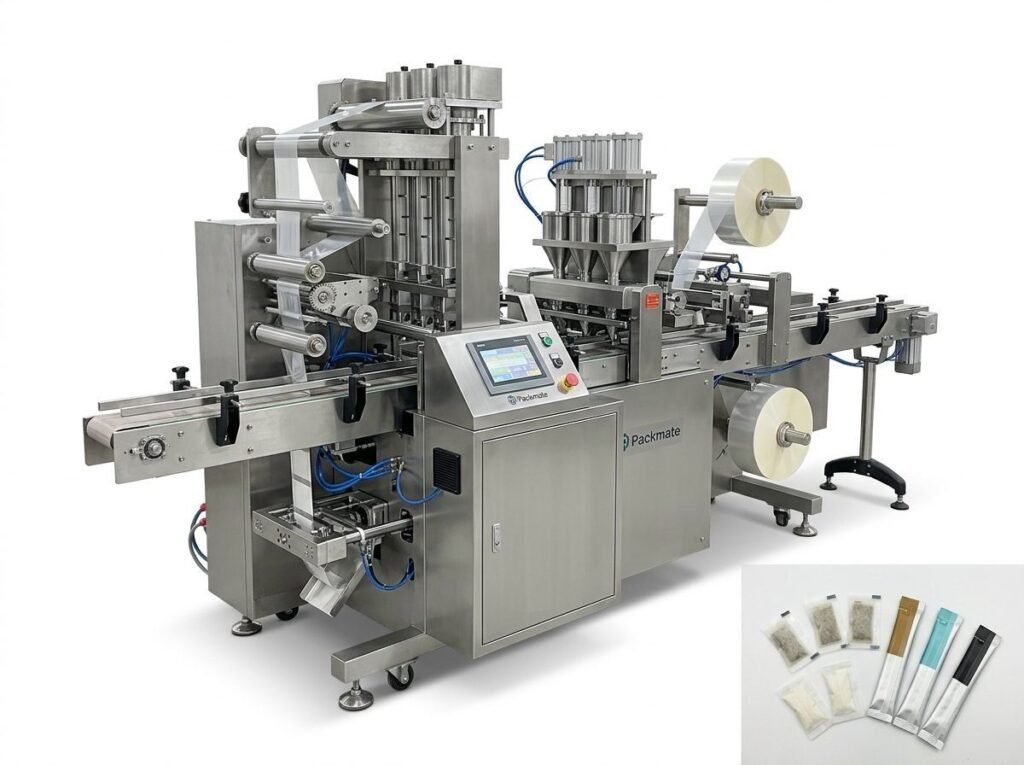
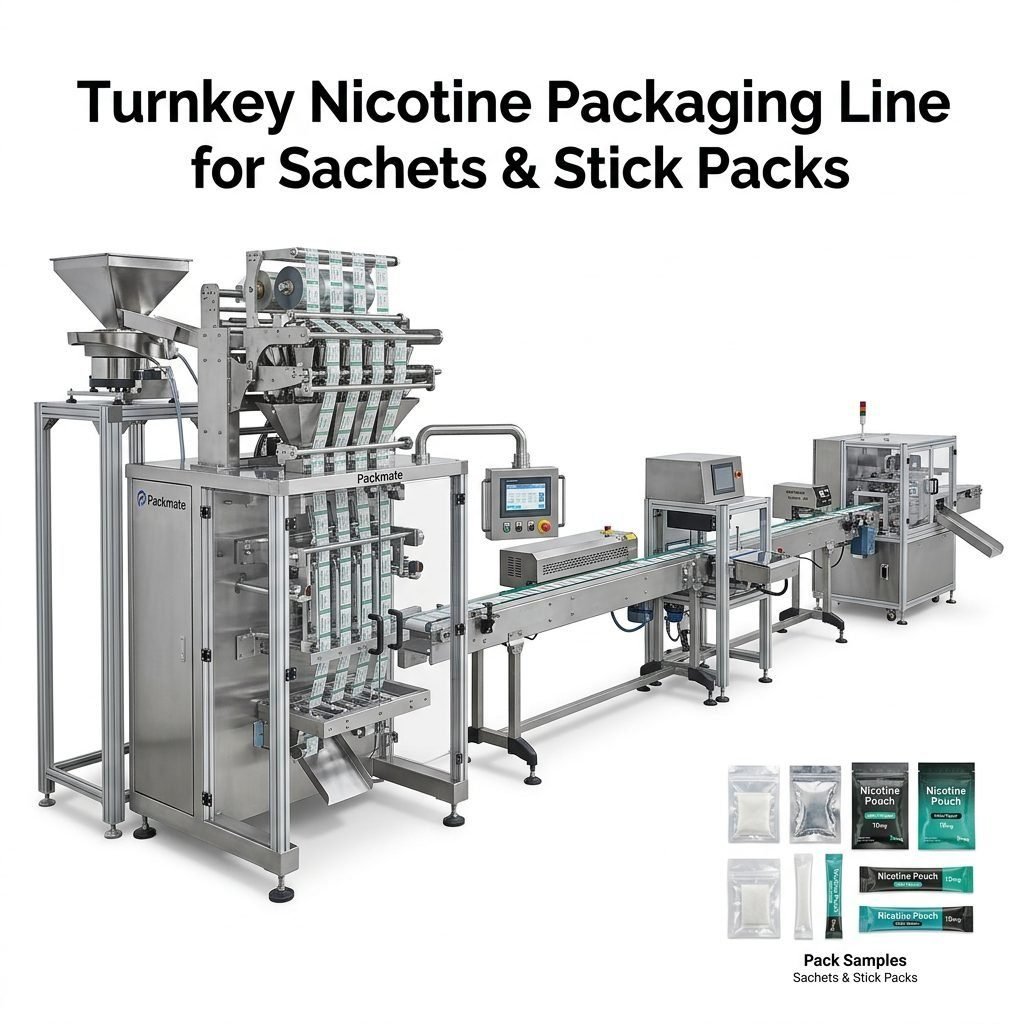
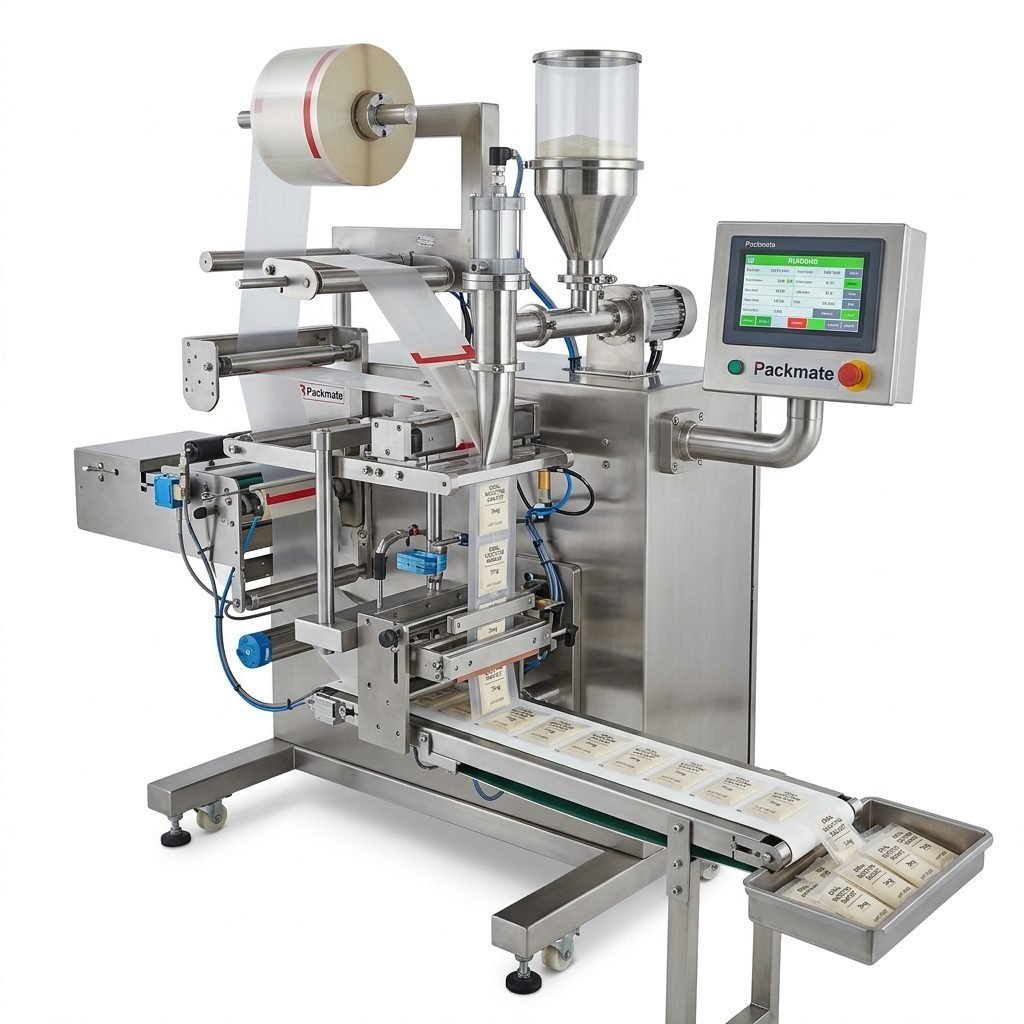
Nicotine pouch formats vary. Typical packaging lines include: multi-lane snus pouch machines for small-dose pouches, stick pack and sachet machines for single-use formats, and bag/pouch systems for retail multipacks. Your choice should match product texture (powder, granules, or wet pouch), desired output, and pouch style.
Explore proven machine families like those designed for snus and nicotine pouches and stick/sachet formats — these are optimized for accuracy and gentle handling. For reference, manufacturers often list modular lines such as Snus & Nicotine Packaging Machines and Sachet & Stick Pack Machines.
Production Speed & Multi-Lane Options
Decide on target capacity: starter lines might produce several thousand pouches per hour, while multi-lane systems can multiply output for larger volumes. Multi-lane machines offer strong space-to-output ratios — critical where floor area is limited. Choose a lane configuration that balances current demand and future growth.
Filling Accuracy & Weighing Systems
Accurate dosing minimizes product giveaway and ensures regulatory compliance. High-precision auger fillers, vibrating feeders, and integrated weighing modules are common. Consider integrating dedicated weighing systems for automatic calibration and real-time verification — see Weighing & Packaging Systems for examples of integrated solutions.
Material Compatibility & Packaging Formats
Film selections and seal types directly affect shelf life and user experience. High-barrier laminated films and heat-sealable pouches help protect nicotine pouches from moisture and oxygen. If you plan printed single-dose pouches, confirm the machine’s registration accuracy for multi-color printing and cut-to-size precision.
For small-format retail in Rwanda, consider:
📌 Single-dose pouches — popular for convenience and discretion; require precise micro-dosing and gentle transfer systems.
📌 Small retail multipacks — for supermarket distribution; use bagging or multipack pouchers.
📌 Tamper-evident sachets — increase consumer confidence and simplify compliance checks.
Automation Level & Line Integration
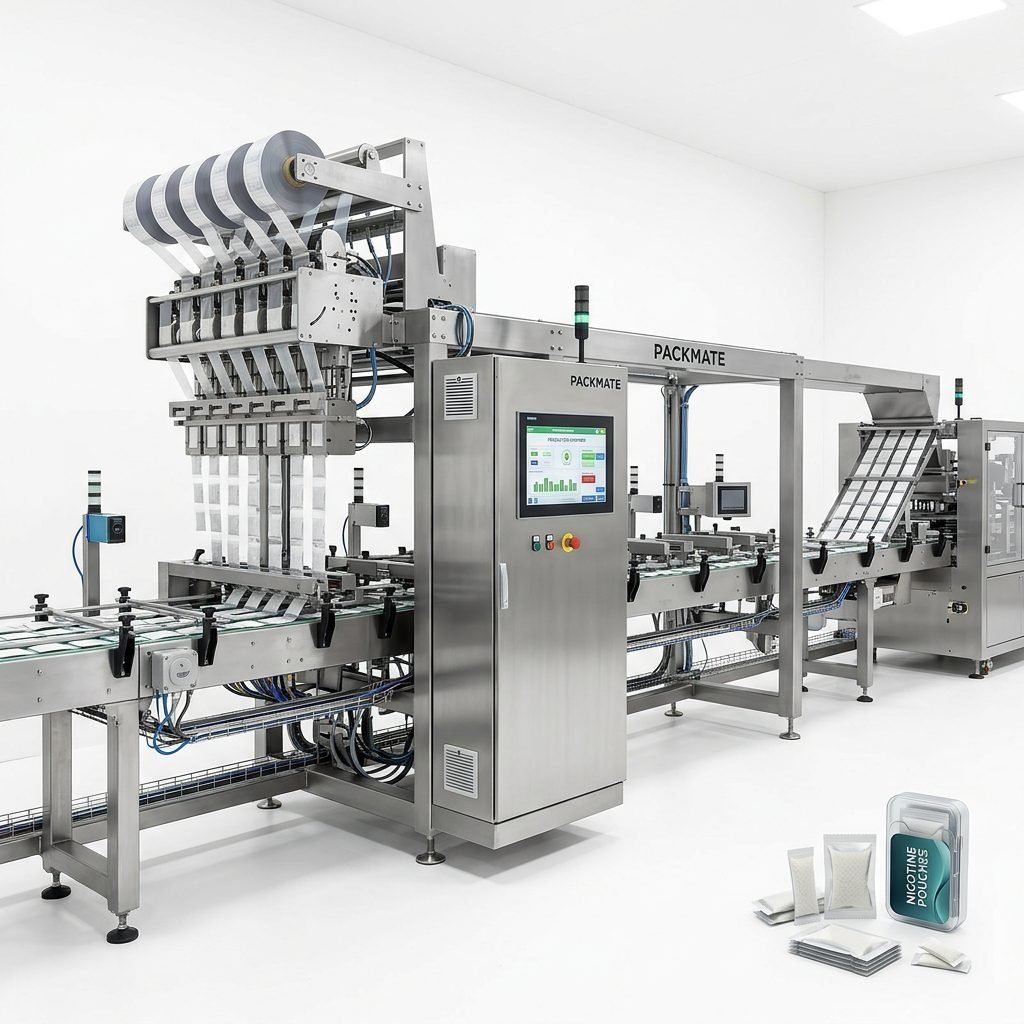
Packaging lines range from semi-automatic units to fully automated turnkey systems. Fully integrated lines include film unwinding, filling, sealing, coding/printing, batch verification, and final case packing. For Rwanda, semi-automatic systems may be suitable for startups, while established producers should consider automated multi-lane lines to reduce labor dependency and improve consistency.
Auxiliary equipment such as metal detectors, checkweighers, and carton erectors help meet export standards and retailer requirements. Review options on auxiliary units to create a complete line matched to your throughput targets.
Quality, Certification & After-sales Support
Prioritize manufacturers with international certifications (CE, ISO) and documented case histories. Machines built in factories with precision CNC machining, structured assembly, and strict testing reduce downtime and improve longevity. Packmate’s factory facts — such as a 20,000㎡ facility and 30+ years of engineering — exemplify factors to weigh when choosing a partner.
After-sales support matters most in distant markets. Confirm local spare parts availability, remote diagnostics, and technician training. Look for suppliers offering installation, commissioning, and tailored operator training plans — explore Service and About Packmate pages to evaluate support offerings.
Installation, Utilities & Local Considerations in Rwanda
Practical site planning avoids surprises. Confirm:
⚙️ Power requirements — most industrial machines use 230V/400V three-phase power; ensure stable supply or arrange for voltage stabilization.
🚚 Access & logistics — Kigali has reliable transport hubs, but plan for customs clearance and local transport for bulky components.
👷 Technician training — choose suppliers who provide on-site commissioning and operator manuals in English (and Kinyarwanda if needed).
Costing, ROI & Financing
Balance upfront capital expenditure with operating costs. Consider:
– Machine price vs. expected throughput and product margin.
– Energy consumption and maintenance costs.
– Spare parts lead times and import duties.
If you plan to scale quickly, a slightly higher CAPEX for an expandable multi-lane line often yields a faster ROI. Suppliers may offer financing, leasing, or phased delivery, and turnkey manufacturers can provide a complete costing model for comparison. For integrated production lines, review turnkey line examples such as Filling & Packaging Lines.
Practical Tips When Evaluating Suppliers
📌 Ask for machine references and performance data from similar installations in Africa.
📌 Request factory acceptance test (FAT) videos and a clear spare parts list.
📌 Check certificates and warranty terms; review case studies or client lists — see Case and Certificate pages for examples.
A Practical Pre-purchase Checklist
Use these checkpoints before signing a purchase order:
✅ Target output (pouches/min & daily capacity) — ensure the machine meets both current and near-term volumes.
✅ Product compatibility — test runs with your actual product formulation to verify feed and fill behaviour.
✅ Validation documentation — FAT reports, IQ/OQ (installation and operation qualification) where applicable.
✅ Lead time & spare parts strategy — local stock levels or guaranteed shipment times.
✅ Training & technical support — defined scope of on-site commissioning and follow-up support.
Quick reminder: Always run a pilot production or accept a FAT prior to full payment. This reduces the risk of mismatched expectations and ensures the chosen machines integrate seamlessly with your packaging materials.
Local Sales Channels & Cultural Notes for Rwanda
In Rwanda, strong relationships with distributors and retail chains are important. Packaging that respects local preferences — discreet, portable, and well-labeled in English and Kinyarwanda — will perform better. Small retail outlets often prefer compact cases and low-order quantities, so packaging equipment that can produce both small retail sachets and multipacks gives you flexibility when negotiating shelf space.
How to Start: A Practical Roadmap
1. Define product formats, target volumes, and shelf-life requirements.
2. Shortlist suppliers with proven nicotine/snuspouch experience and international certifications. Review their case studies and FAT reports. Useful links: Snus & Nicotine Packaging Machines.
3. Request pilot runs with your formula, review sample packaging, and verify sealing and registration accuracy.
4. Plan site works for utilities, staff training, and spare parts logistics. Confirm customs and import documentation early.
5. Start with a phased ramp-up: validate quality and make incremental automation investments as volume grows.
📌 If you want to see suppliers and live demos, look for relevant trade shows — many manufacturers showcase lines at international exhibitions. Check exhibition listings for demonstration schedules: Our Exhibition.
Final Steps & Contact
After narrowing your choices, request a detailed quotation with lead time, installation scope, warranty, and training plan. Verify references and, where possible, visit a working line or request a virtual factory acceptance test. For more information about turnkey lines and product modules, review manufacturer product categories such as Bag & Pouch Packaging Machines and auxiliary options.
When you are ready, contact the supplier’s commercial or technical team to request tailored proposals and schedule FATs: Contact Us.
Common FAQs
Q: How do I ensure my nicotine pouches meet Rwanda’s regulatory requirements?
A: Engage with the Rwanda Food and Drugs Authority early, ensure accurate labeling, batch traceability, and use packaging that preserves product stability. Choose machines that support proper coding and batch ID printing for traceability.
Q: What is the ideal machine type for a start-up in Kigali producing small volumes?
A: Start-ups often adopt semi-automatic or low-capacity multi-lane machines with flexible changeover for multiple pouch sizes. These provide low entry costs while allowing growth to higher-speed lines.
Q: How important is after-sales support from the manufacturer?
A: Extremely important. Good after-sales support reduces downtime and speeds up problem resolution. Prefer suppliers who offer remote diagnostics, on-site commissioning, and accessible spare parts lists.
Q: Can packaging machinery be customized for unique pouch designs or local languages?
A: Yes. Many manufacturers provide customization for print registration, pouch shape, and coding. Confirm customization lead time and sample approvals during contract negotiations.
Q: Where can I review real-world examples and certifications of reputable manufacturers?
A: Review case studies and certificates on supplier websites. Useful resources: Case, Certificate, and product pages that describe machine families.