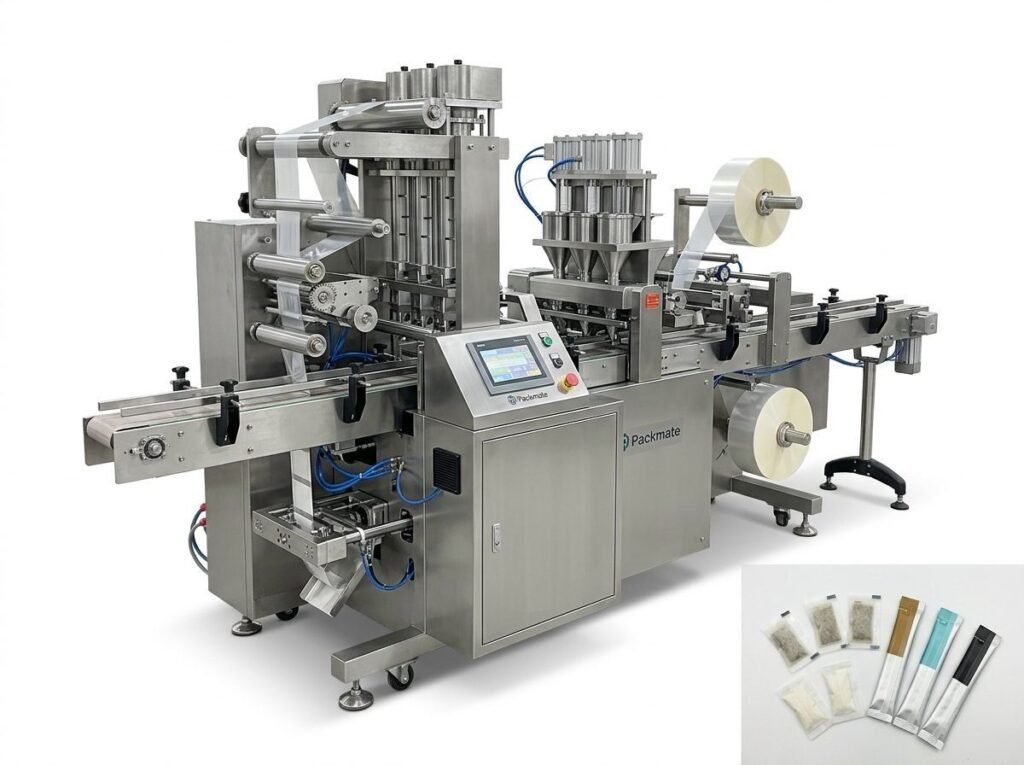
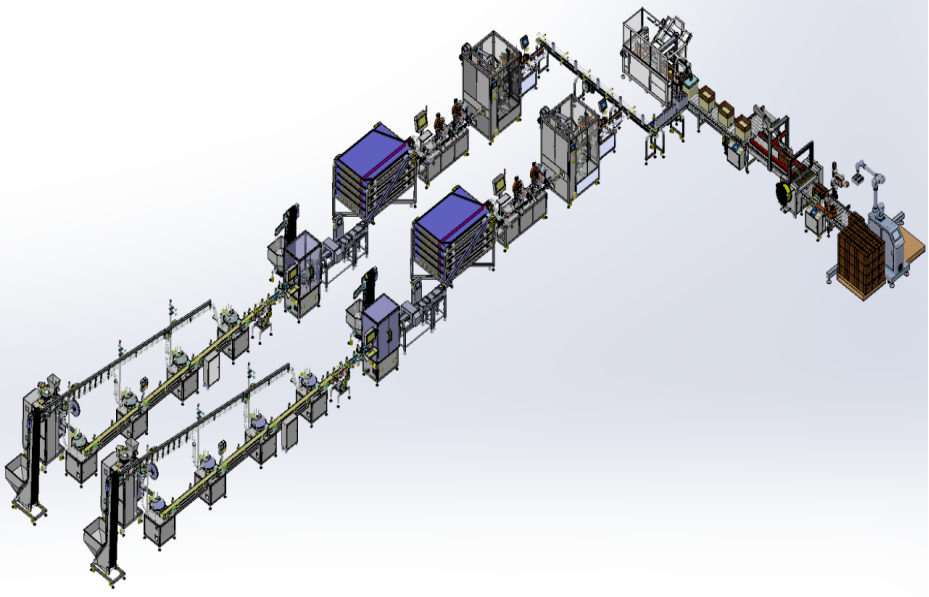
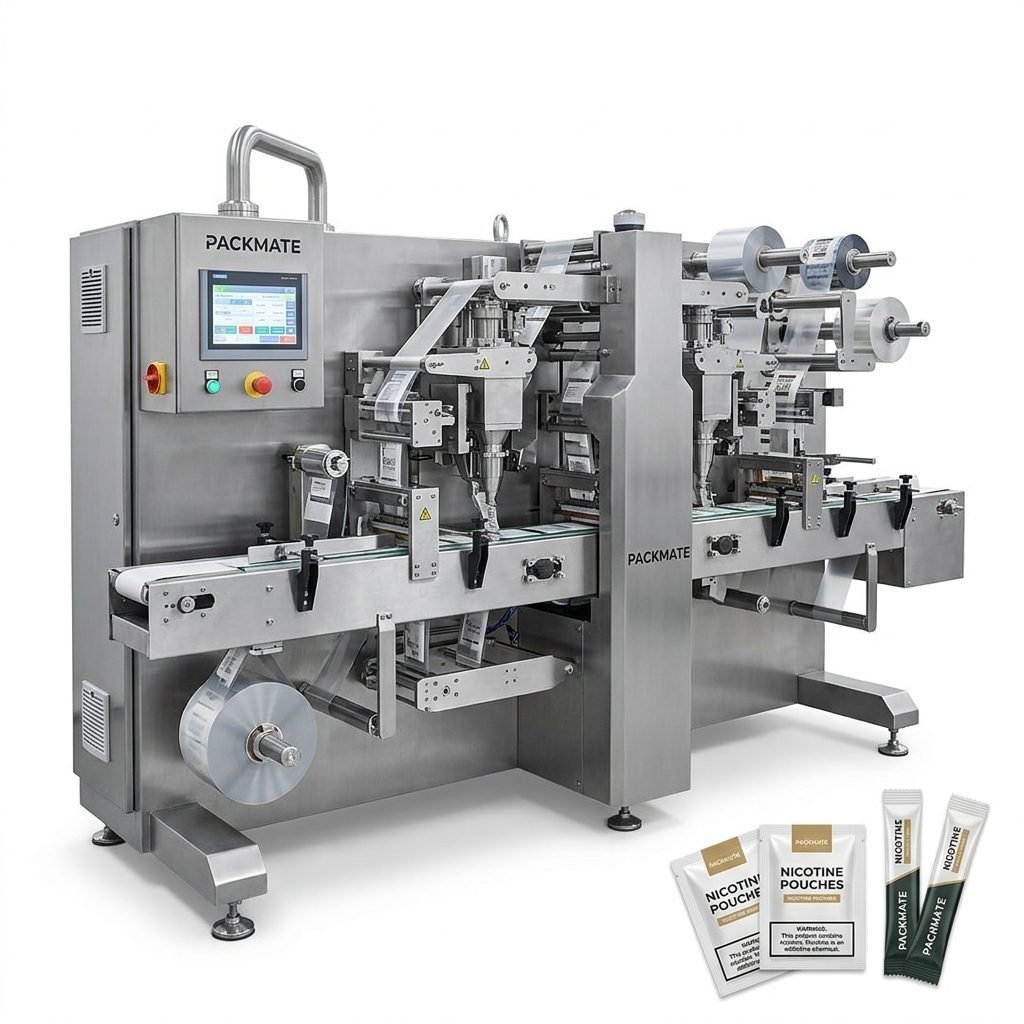
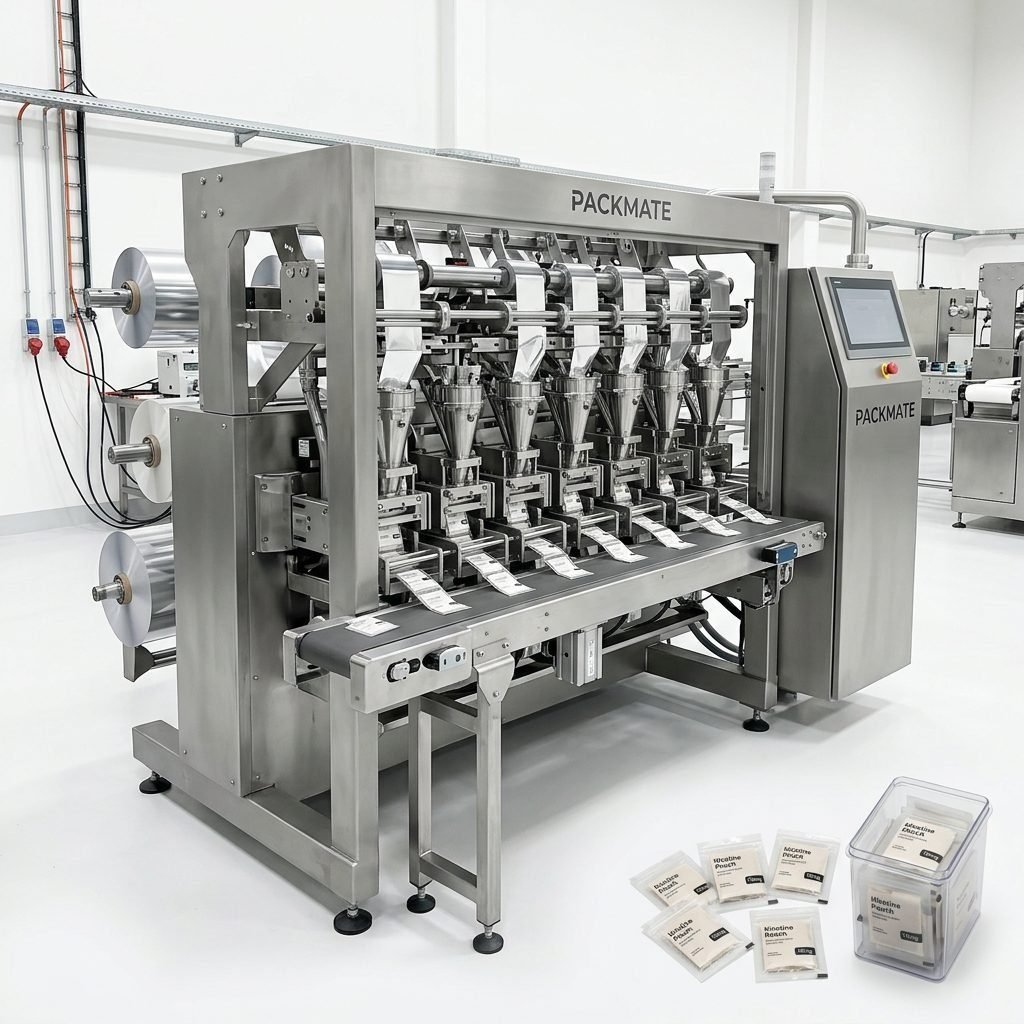
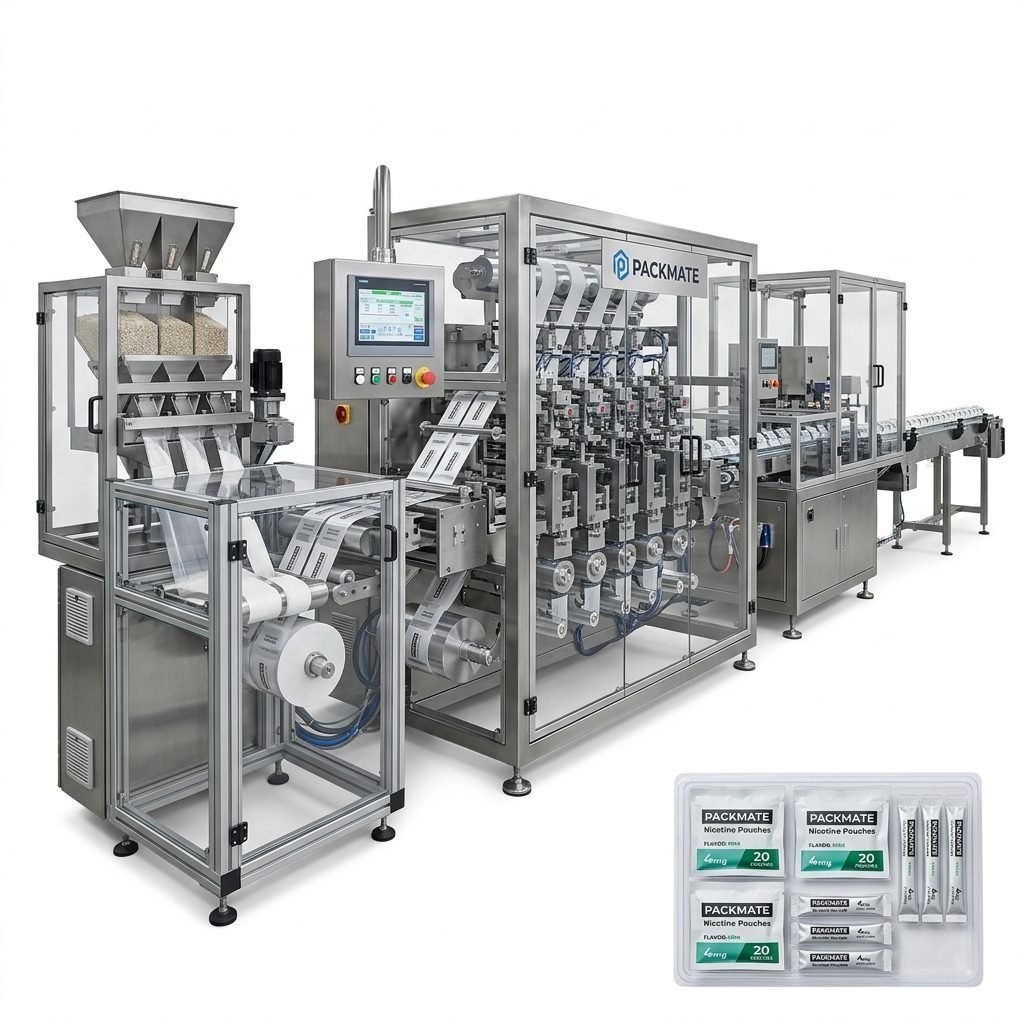
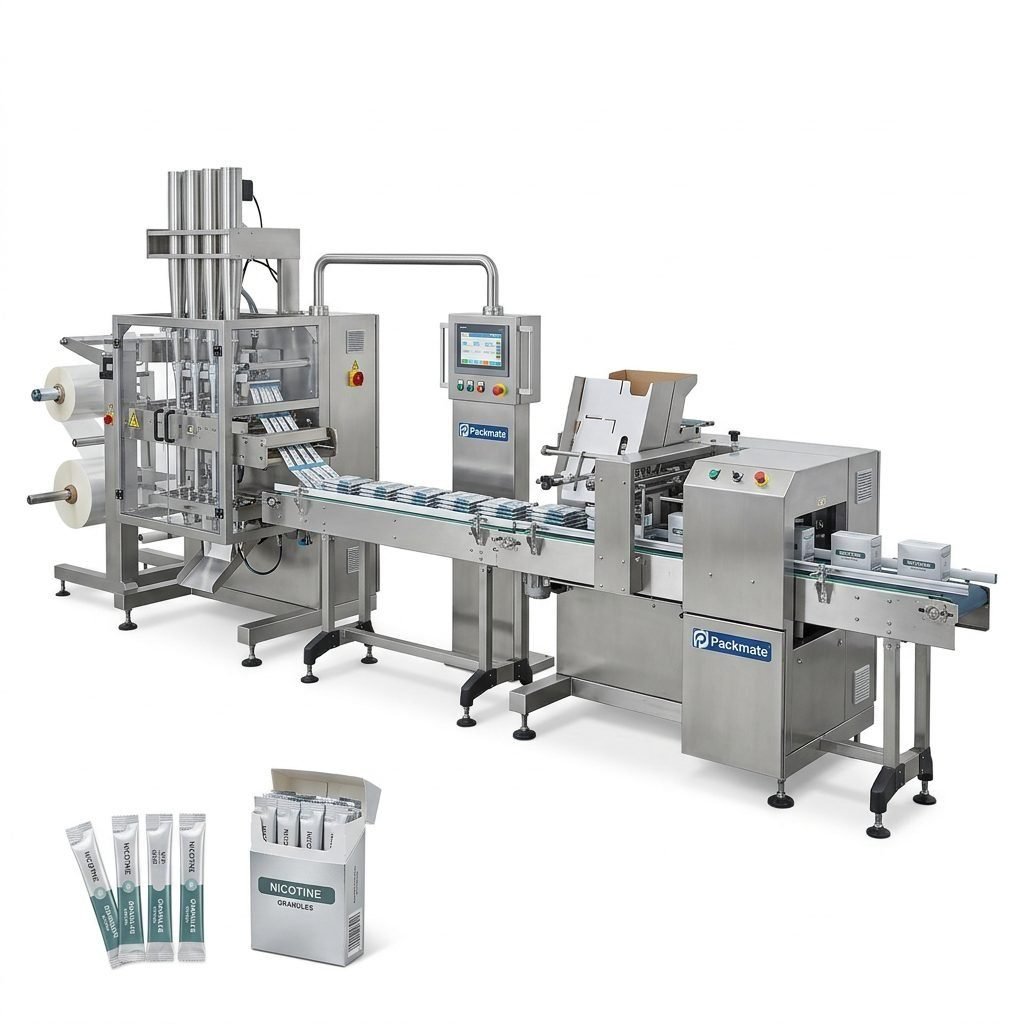
Snus packing equipment has evolved from semi-manual assemblies into fully automated production lines that deliver consistent dosing, clean sealing, and high-speed packaging. Modern systems integrate precise feeders, multi-lane forming stations, and intelligent control to meet the strict demands of nicotine pouch and snus manufacturers. This guide explains the core machine types, production workflows, customization options, and practical advice for selecting and operating automatic snus filling, sealing, and packaging machines.
Overview: What “Snus Packing Equipment” Means Today
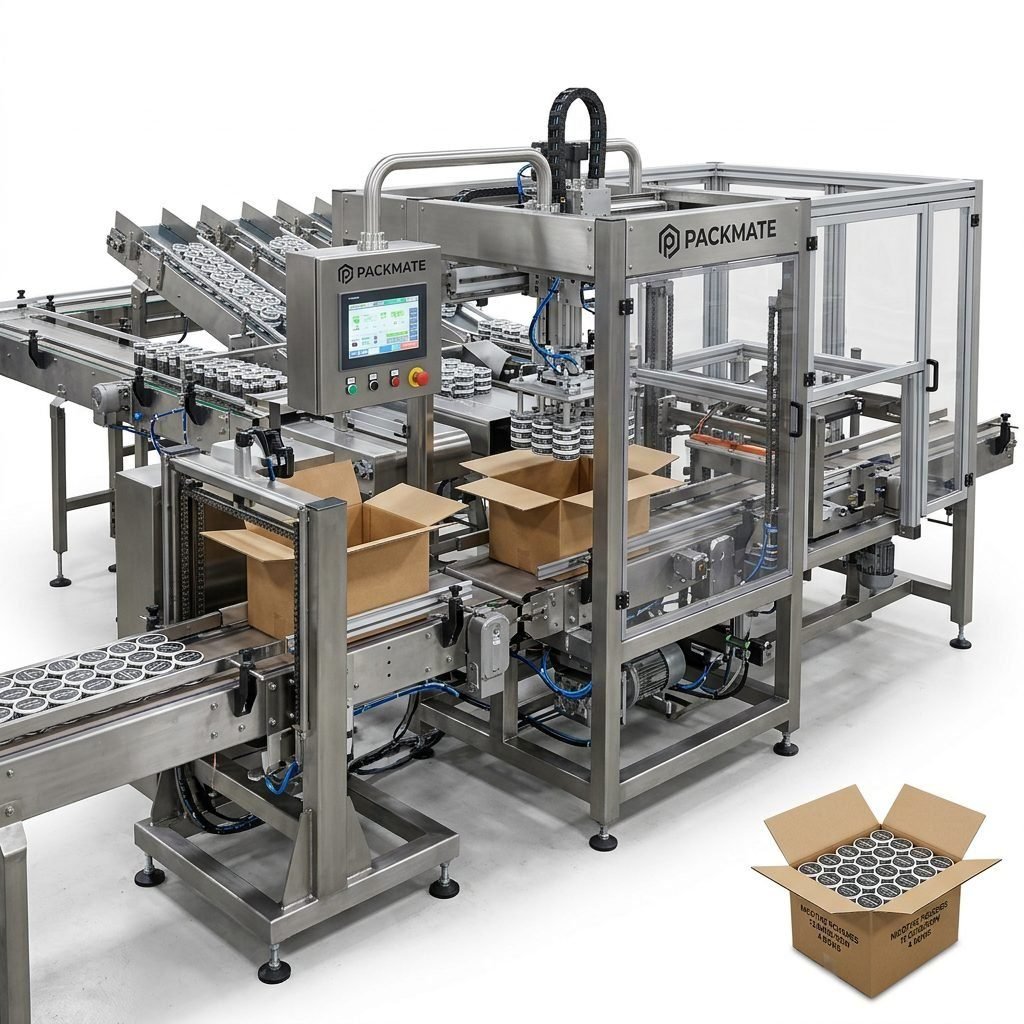
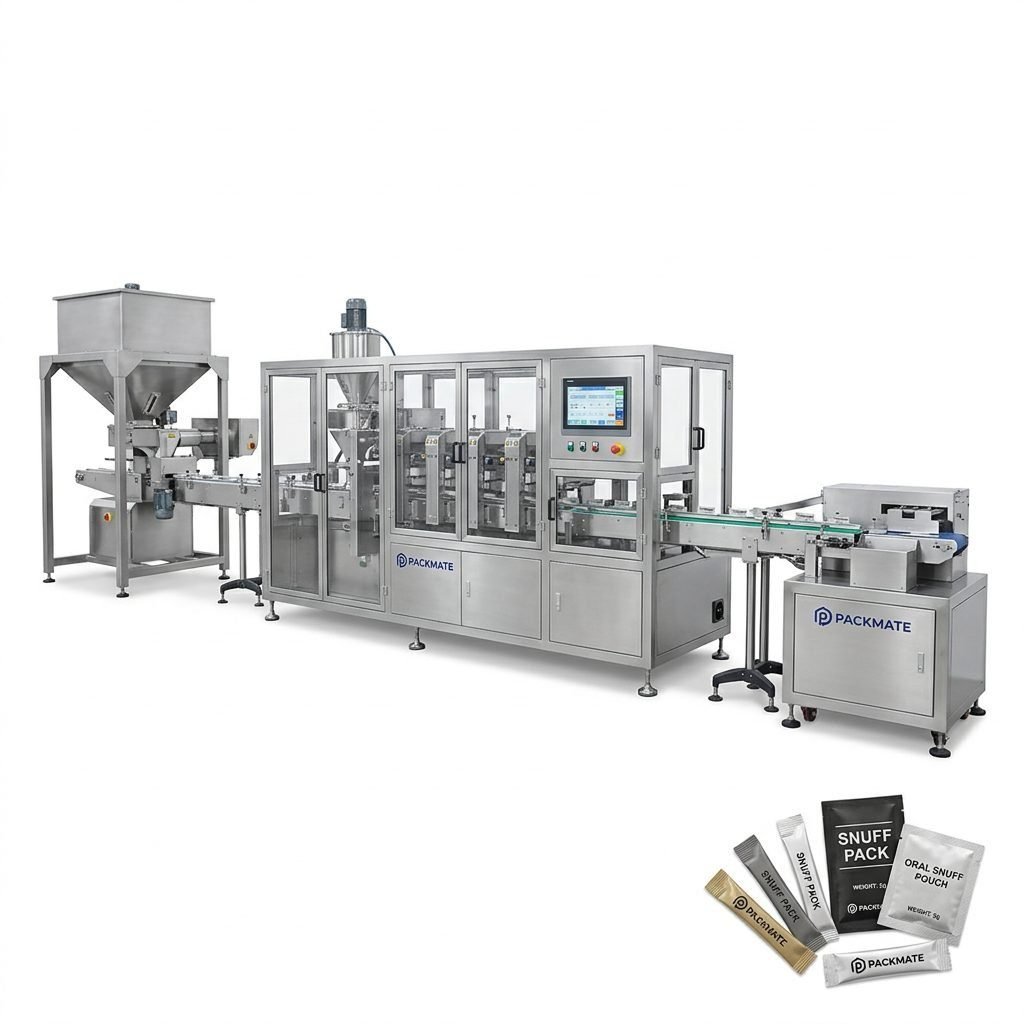
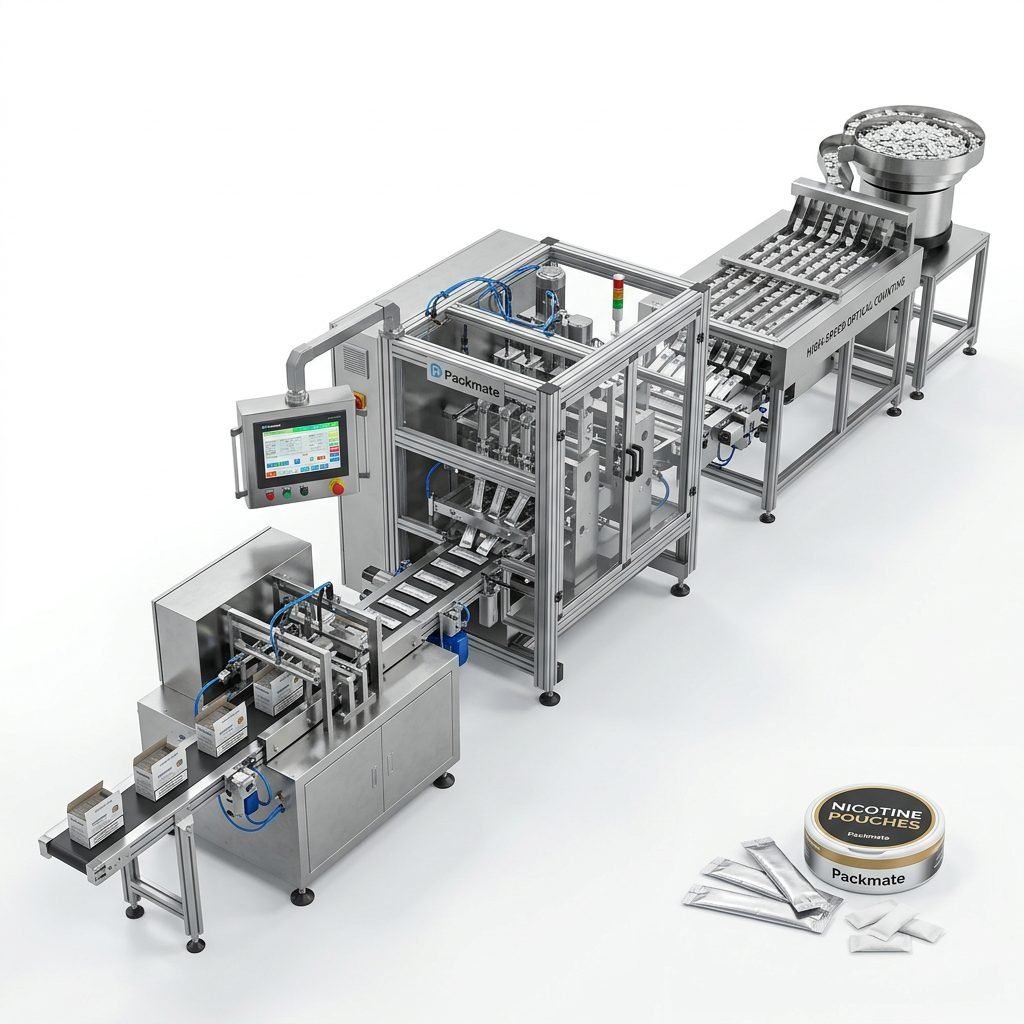
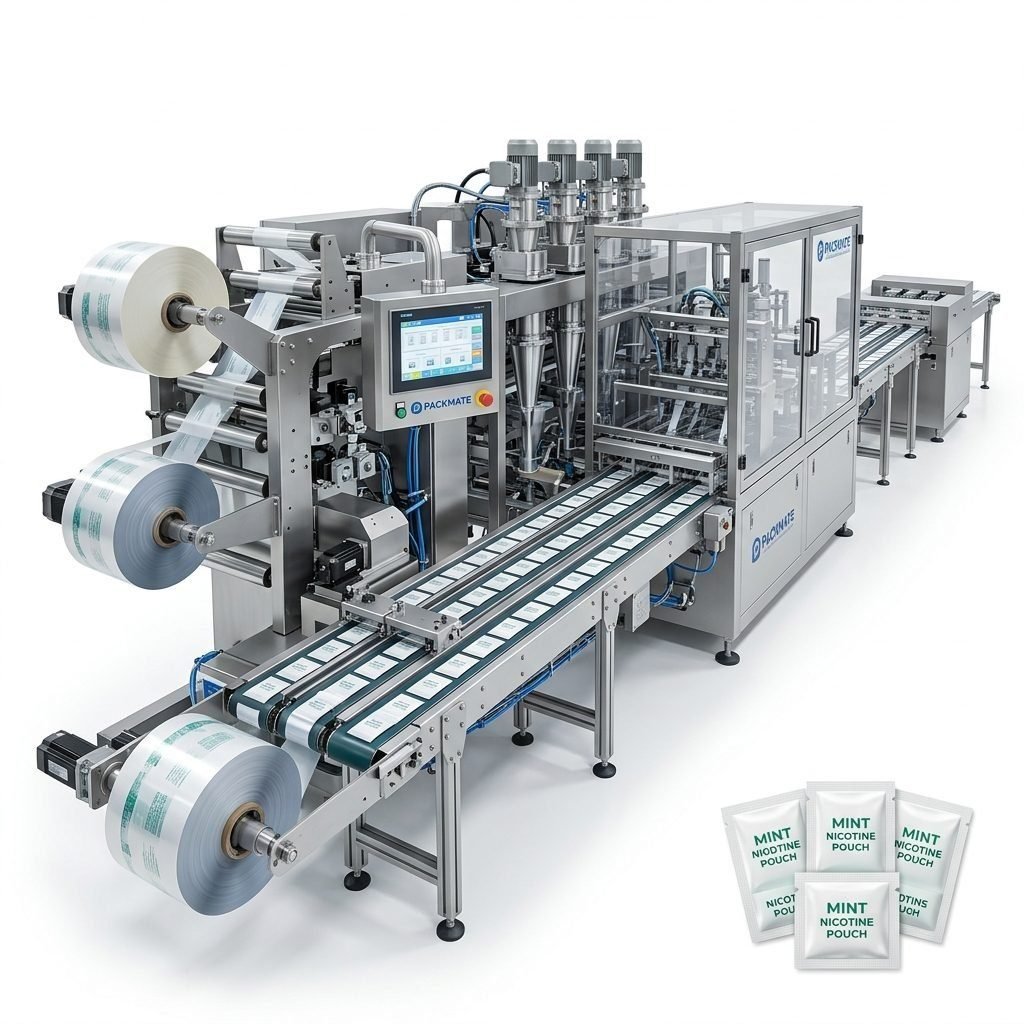
Snus packing equipment refers to specialized packaging machines designed for small-dose pouch products such as nicotine pouches, snus, herbal pouches, and similar sachets. These machines combine multiple functions: accurate filling, pouch forming or premade pouch handling, hermetic sealing, cutting, and sometimes secondary packaging (cartoning, flow wrapping, or case packing). The goal is to achieve stable output, minimal product waste, and compliance with hygienic and regulatory standards.
Key Machine Categories
The typical portfolio includes several distinct machine types. Manufacturers often combine these into a full production line tailored to your product:
⚙️ Snus & Nicotine Packaging Machines — These systems focus specifically on small-dose pouches, delivering extremely precise dosing and often supporting multi-lane output for high throughput. See product examples: Snus & Nicotine Packaging Machines.
📦 Sachet & Stick Pack Machines — Ideal when product formats include sticks or single-dose sachets. They can operate with powder, granular or liquid fillings. Related machines: Sachet & Stick Pack Machines.
🔧 Filling & Packaging Lines — Complete solutions integrating packaging with feeding and weighing subsystems: Filling & Packaging Lines.
Core Components and Technologies
High-performance snus lines rely on a handful of core subsystems. Understanding these will help you evaluate suppliers and plan production.
• Dosing & Weighing — precision feeders, vibrating hoppers, or multi-head weighers ensure each pouch contains the correct amount. For integrated weighing modules, manufacturers often refer to Weighing & Packaging Systems.
• Forming & Pouch Handling — machines may form pouches from roll stock or accept premade pouches; forming systems must control web tension and registration accurately to avoid misfeeds.
• Sealing & Cutting — heat-seal units, ultrasonic sealing options, and precision cutting tools deliver clean edges and airtight closures to preserve product integrity.
• Control & HMI — PLC control, recipe storage, servo motors, and touch-screen HMIs allow quick changeovers and reproducible settings across shifts.
Packmate Snus Machine: Manufacturing Strengths
✅ 30+ years of engineering experience and a modern 20,000㎡ facility.
✅ 50+ machine models and the capacity to supply customized turnkey packaging lines for snus, nicotine pouches, tea, powder, and liquids.
✅ Advanced CNC machining centers and precision assembly lines to guarantee repeatable quality and long equipment life.
Typical Production Workflow
A standard snus production line follows these sequential steps. Each step must be synchronized to prevent bottlenecks:
1) Raw material preparation and feeding — uniform particle size and moisture control reduce dosing variation.
2) Dosing and metering — precision feeders or multi-head weighers portion the correct dose into each pouch.
3) Pouch forming or premade pouch conveyor — registration and positioning are critical before filling.
4) Filling — gentle filling avoids dust/particle loss and ensures consistent pouch shape.
5) Sealing, cooling, and cutting — proper sealing parameters maintain product shelf life and appearance.
Automation & Multi-Lane Advantages
Multi-lane systems dramatically increase capacity without expanding floor space. A 4- or 8-lane forming station can multiply output while a single PLC coordinates dosing across all channels. Automation reduces labor, improves hygiene, and enables 24/7 operation with predictable yields.
Customization & Turnkey Solutions
Manufacturers like Packmate provide complete solutions including auxiliary equipment such as feeders, conveyors, checkweighers, and case packers. If you need a tailored layout, consider these factors when requesting a quote: target throughput, pouch style (stick, sachet, round pouch), product flow characteristics, and downstream packaging requirements (cartoning, shrink wrap, case packing). For portfolio details and options, check Bag & Pouch Packaging Machines and Auxiliary Packaging Equipment.
Quality Assurance, Testing & Certifications
Reliable suppliers provide CE and ISO certifications and run rigorous pre-delivery testing. Acceptance tests replicate production conditions and validate dosing accuracy, seal integrity, and cycle speed. Always request factory acceptance test records and ask about spare parts lead times. For manufacturer credentials see Certificate.
Operation, Maintenance, and After-Sales
Routine maintenance of snus equipment includes cleaning, seal bar inspection, lubrication, and periodic calibration of weighing modules. Choose vendors offering training, spare parts supply, and remote diagnostic support. Packmate emphasizes long-term technical assistance and global spare parts distribution for minimal downtime. Learn more about their services at Service.
📈 Performance Indicators to request from suppliers:
• Average ppm (pouches per minute) under production load
• Dosing tolerance and checkweigher rejection rate
• Mean time between failures (MTBF) and recommended spare parts list
• Data logging and batch traceability features for regulatory compliance
Regulatory and Market Considerations
Snus and nicotine pouch producers must navigate local regulations regarding product labeling, ingredient disclosure, and manufacturing hygiene. Machine vendors can assist with documentation and batch traceability systems to support regulatory audits. If you’re exporting across regions, ensure your line design can adapt to different pouch sizes, languages on packages, and labeling layouts.
Selecting the Right Supplier
When evaluating suppliers, prioritize experience in snus and small-dose products, the ability to supply turnkey solutions, and a strong after-sales network. Packmate’s journey from a workshop in 1993 to a dedicated manufacturer highlights the value of engineers with domain-specific know-how. For company background review: About Packmate and their project history at Case.
Practical Tips for Integration
• Conduct a detailed layout study to minimize product travel and contamination risk.
• Standardize upstream material preparation to reduce dosing variation.
• Ensure spare parts availability and on-site training during start-up.
• Verify software compatibility for future upgrades or factory MES connections.
Exhibitions & Customer Engagement
Seeing machines running live is invaluable. Check upcoming events and demonstrations to observe cycle speeds, noise levels, and accessibility for maintenance. Packmate regularly presents at international shows—see their event calendar: Our Exhibition.
Common Applications Beyond Snus
While designed for nicotine pouches, these machines are versatile. They handle tea sachets, herbal pouches, powdered supplements, sugar sachets, detergent samples, and small liquid doses with appropriate filling modules. This flexibility increases return on investment when product lines change seasonally or when introducing new SKUs.
Contact & Next Steps
To plan a production line assessment, request a specification sheet, or arrange a factory visit, reach out to the manufacturer’s sales engineers to discuss capacity, product samples, and timeline. Contact details and inquiry channels can be found at Contact Us.
Final Recommendations
Investing in automatic snus filling, sealing, and packaging machines is a long-term decision that should prioritize precision, hygiene, and supplier reliability. Choose multi-lane designs for volume scaling, demand transparent performance metrics, and require full commissioning and operator training. Partner with suppliers that provide robust service, spare parts, and continuous improvement support.
Frequently Asked Questions
Q1: What throughput can I expect from a multi-lane snus machine?
A1: Throughput depends on lane count, pouch style, and product flow. Typical multi-lane machines reach several thousand pouches per minute cumulatively. Ask suppliers for validated test data under production conditions.
Q2: Can the same line handle powder and liquid nicotine pouches?
A2: Mixing powder and liquid on the same line requires modular filling heads and sanitary design changes. Many vendors offer interchangeable modules, but verify cleaning protocols and cross-contamination safeguards.
Q3: What regulatory documentation should a machine supplier provide?
A3: Request CE/ISO certificates, FAT reports, material declarations, and traceability features for batches. Suppliers often provide commissioning certificates and operator training records as part of a turnkey package.
Q4: How long is the lead time for a custom snus packaging line?
A4: Lead times vary by configuration and customization level. Standard models may ship faster, while fully customized turnkey lines often require several months for engineering, manufacturing, and factory acceptance testing.
Q5: Where can I see real-world installations or request references?
A5: Reputable suppliers share case studies and client references. Visit the manufacturer’s case studies page or schedule a factory demo to see machines in operation: Case.