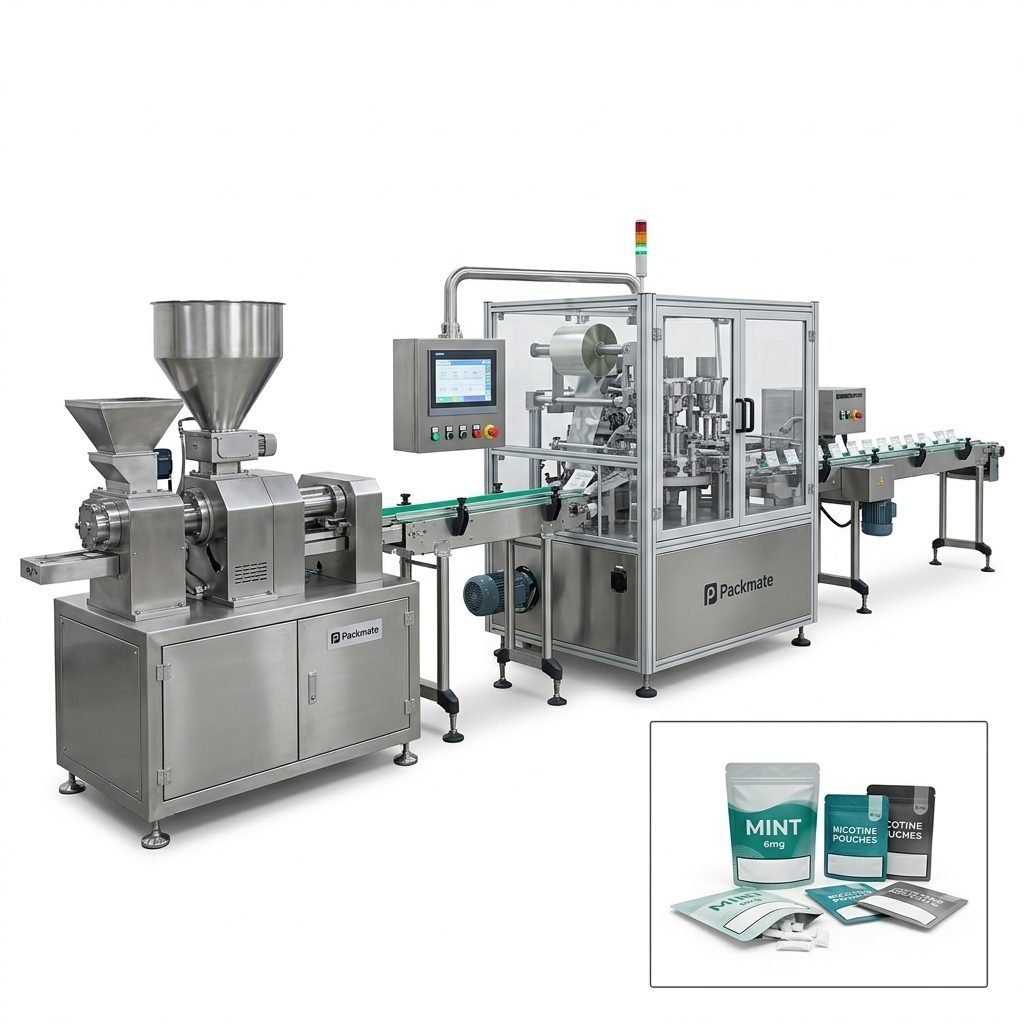
Choosing the right nicotine packaging machinery for a production line in Armenia requires careful planning that blends technical performance with local market realities. Whether you are launching a new nicotine pouch brand or expanding capacity for snus and similar products, the right equipment determines product quality, regulatory compliance, and long-term profitability. This guide walks you through practical selection criteria, local considerations in Armenia, and supplier evaluation tips to help you make a confident investment decision.
Understand Local Market & Regulatory Context in Armenia
Armenia has its own consumer habits and regulatory framework. Russian language labeling remains common alongside Armenian script, and many consumers value convenient single-dose formats and discrete packaging. As Armenia is a member of the Eurasian Economic Union (EAEU), some packaging and labeling rules align with broader regional norms — this affects warning labels, product classification, and import requirements. Before selecting machinery, confirm whether nicotine pouches are classified and regulated as tobacco products or nicotine-containing consumer goods in Armenia to ensure your equipment supports compliant production.
Key local considerations
🔎 Language & Labeling: Plan for multi-language printing and flexible label application for Armenian and Russian texts.
⚖️ Regulatory Testing: Prepare for chemical and packaging tests required by local authorities or import partners.
🧾 Consumer Format Preferences: Snack-sized pouches, stick packs, and small sachets are well-received in urban centers like Yerevan.
Define Your Production Requirements First
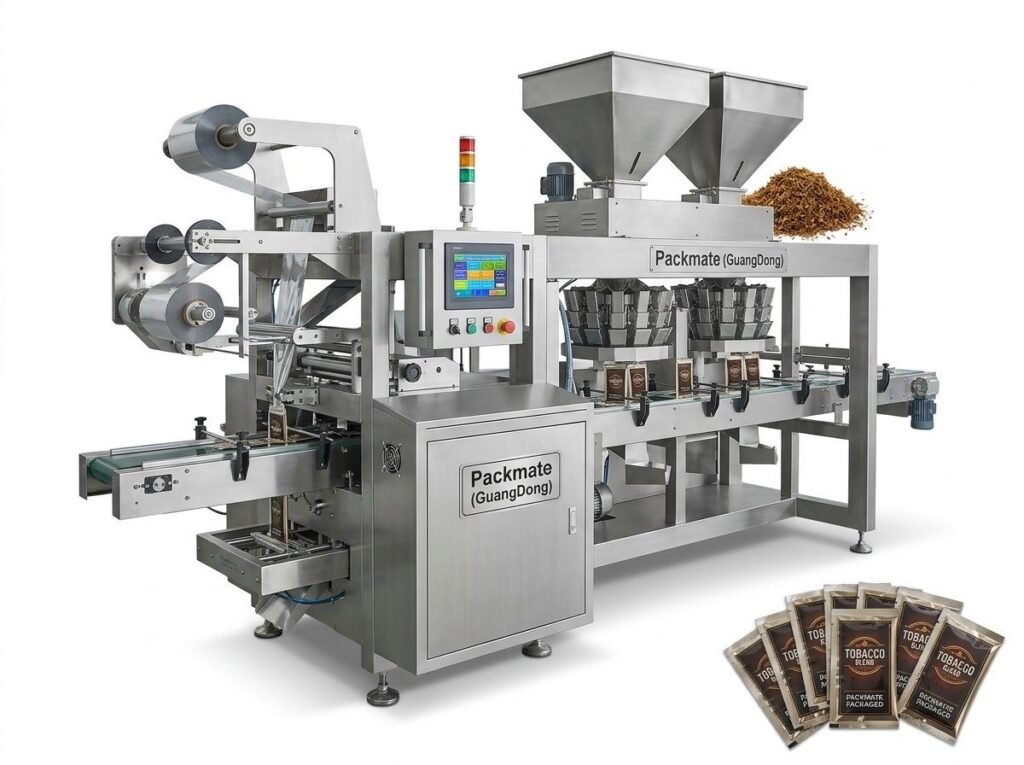
Start with operational targets — daily throughput, shifts per day, SKU variety, and desired automation level. Machines vary widely: from single-lane, low-capacity units to high-speed multi-lane lines that produce thousands of pouches per minute. Be clear on your product types: nicotine pouches, snus pouches, sachets, stick packs, or can filling — each requires different filling, sealing, and downstream handling equipment.
Quick checklist: production capacity, pouch format, dosing accuracy, multi-lane capability, integration with upstream weighers, and downstream labeling/case packing.
Technical Criteria: What to Look for in Machinery
Evaluate machines against technical performance metrics, durability, and compliance. Key technical criteria include:
Speed and Throughput
Choose equipment that meets current needs but allows headroom for growth. High-speed multi-lane lines are excellent for scaling, while single-lane machines are cost-effective for pilot production.
Dosing Accuracy & Fill Consistency
For nicotine pouches, dosing precision is critical for compliance and customer safety. Look for proven weighing and dosing systems and consider integrated solutions from vendors that offer synchronized weighing and pouch forming equipment. See recommended lines like Weighing & Packaging Systems for integration options.
Material Compatibility
Confirm the machine’s compatibility with your chosen pouch materials (non-woven, cellulose-based, PE/PA laminates) and any desiccants or sealing films you plan to use.
Hygiene, Cleaning and Maintenance
Choose machines with easy access for cleaning, stainless-steel contact parts, and hygienic design if you aim for food-grade standards. Regular maintenance intervals and availability of spare parts are decisive for uptime.
Packaging Formats & Their Machinery
Match your target formats with specialized machines. Below are common options and when to pick them.
Pouches & Snus Packing Machines
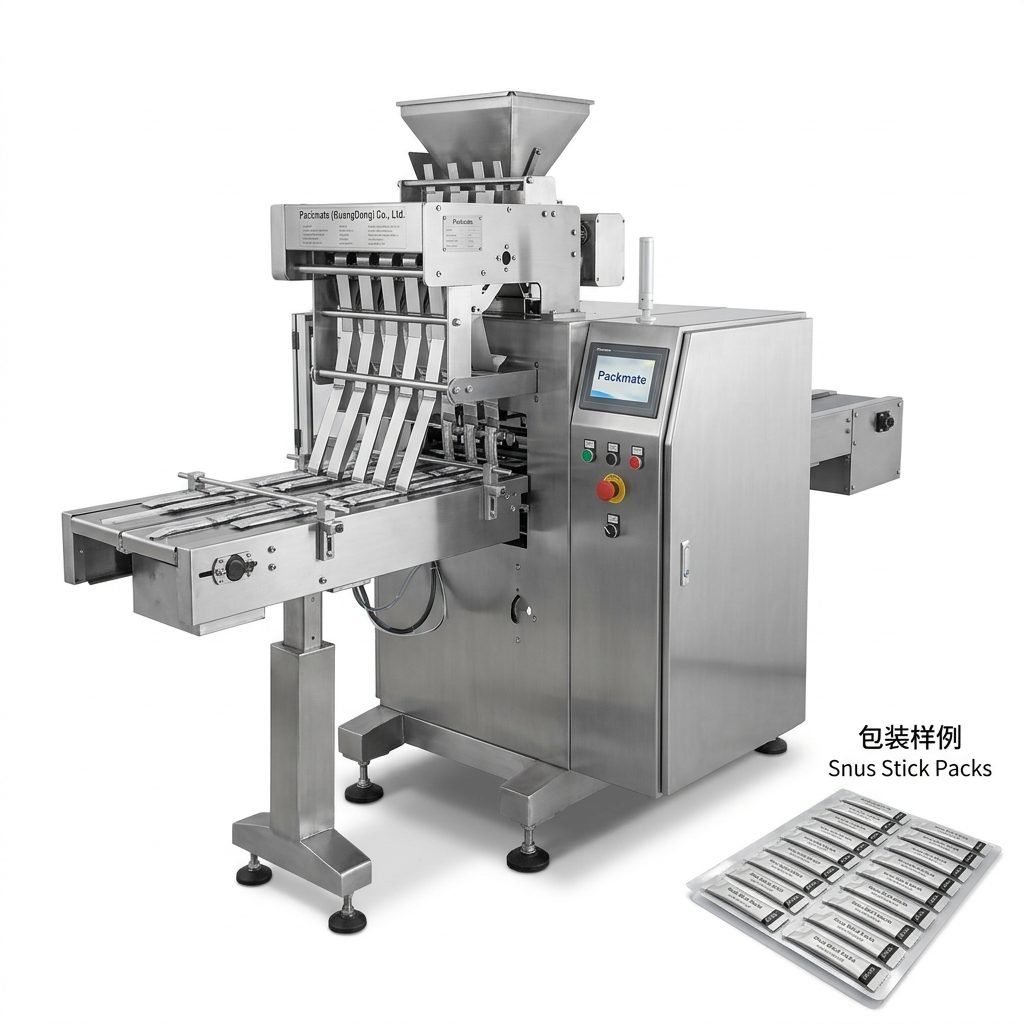
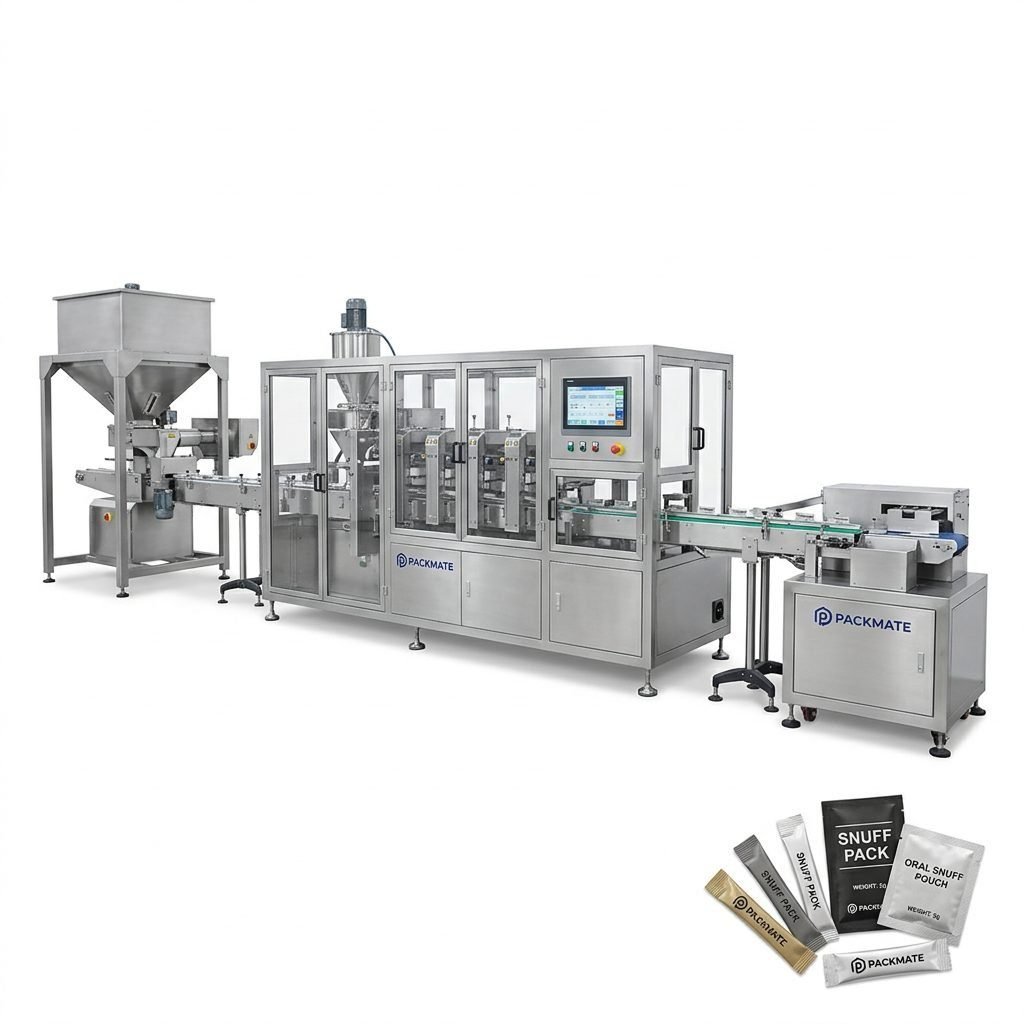
For nicotine pouches and snus, dedicated pouch forming and sealing machines provide precise dosing and consistent pouch shape. Consider the Snus & Nicotine Packaging Machines range for machines tailored to small-dose pouch production and multi-lane output.
Sachet & Stick Pack Machines
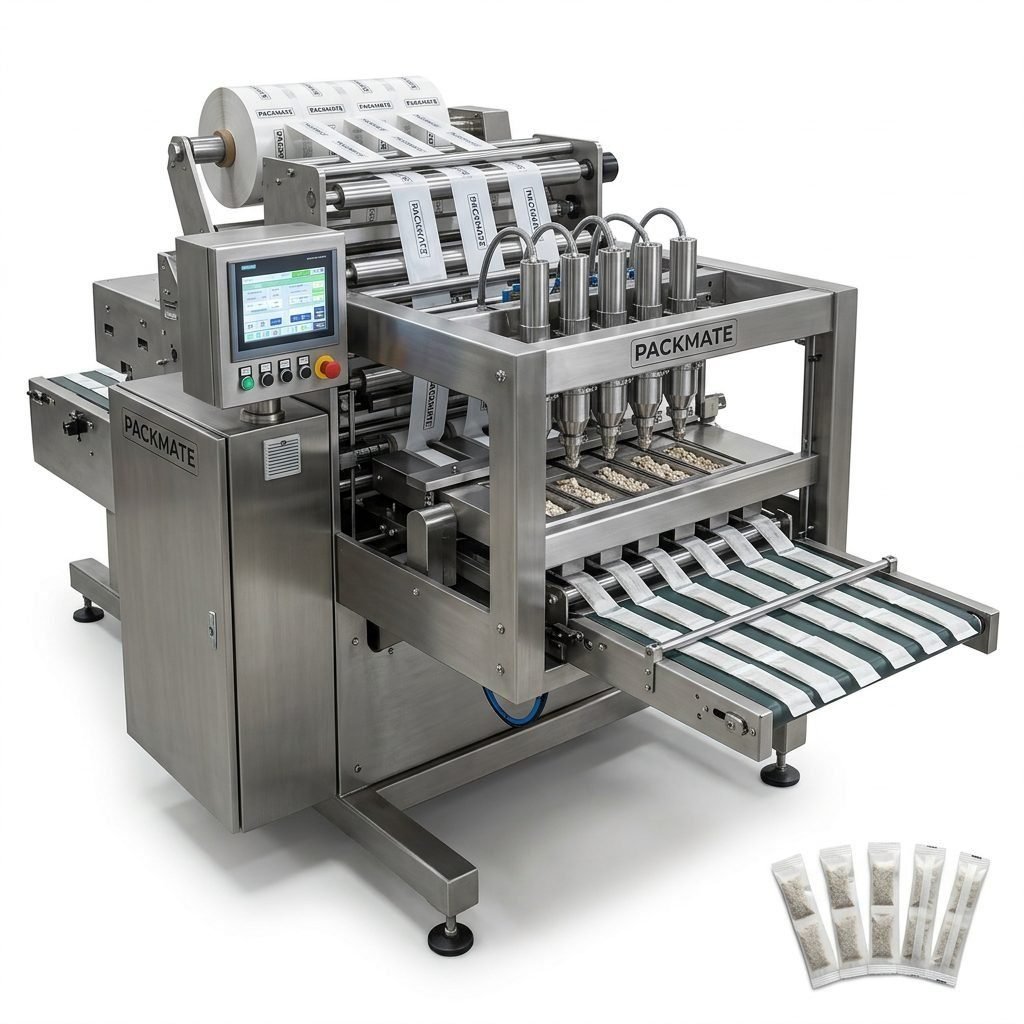
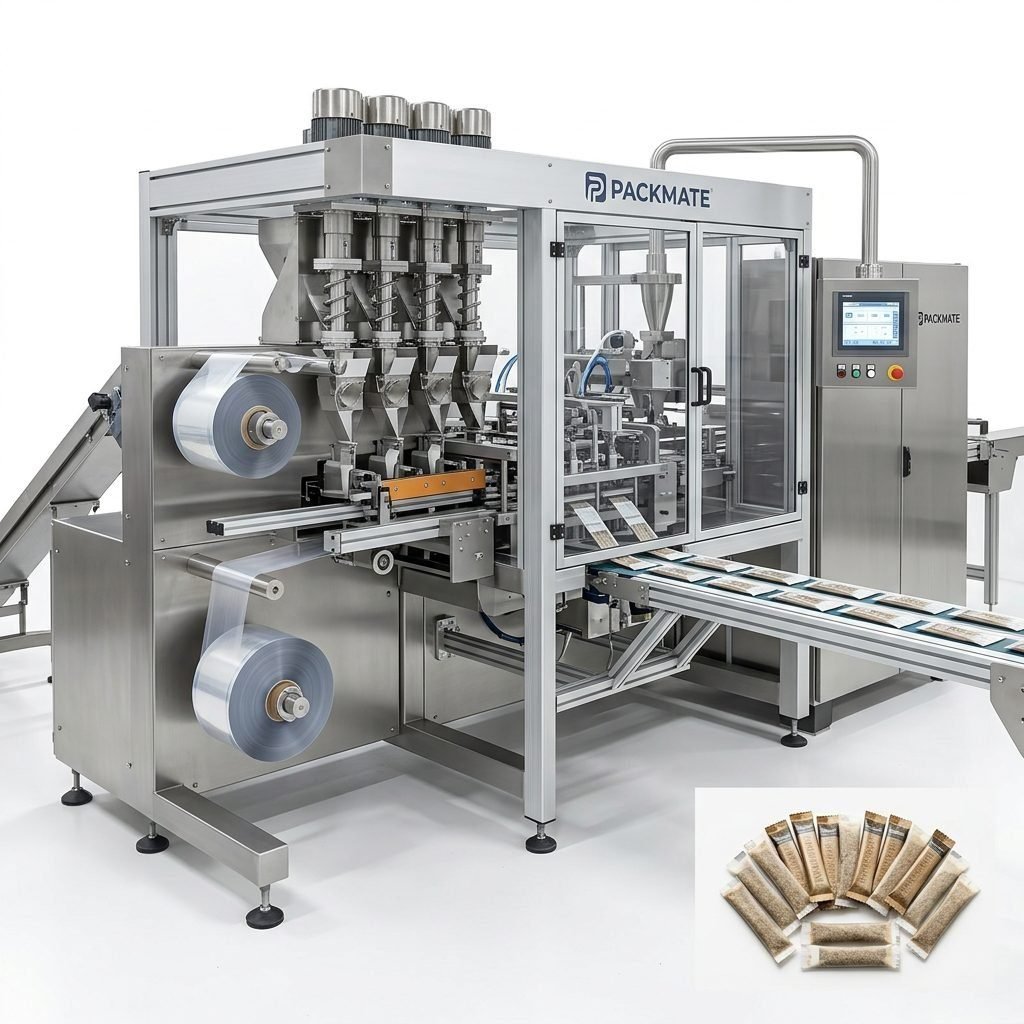
Stick packs offer convenience and an attractive retail presentation. Sachet and stick pack machines are ideal if you plan single-dose sticks, and they integrate well with automated cartoning systems. Explore options under Sachet & Stick Pack Machines.
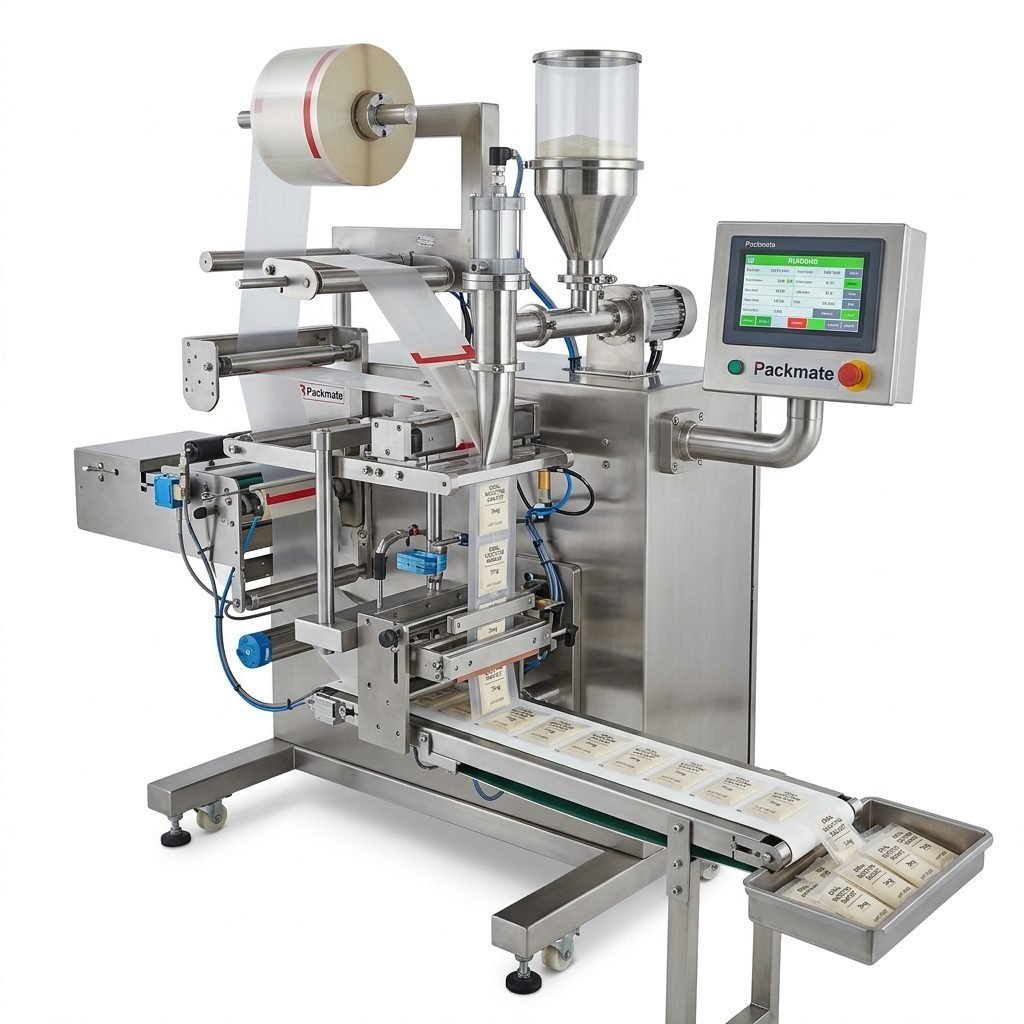
Bag & Pouch Machines for Secondary Packaging
If your plan includes secondary bags or zipped pouches, ensure compatibility with Bag & Pouch Packaging Machines for rework or multi-unit packaging.
Automation & Line Integration
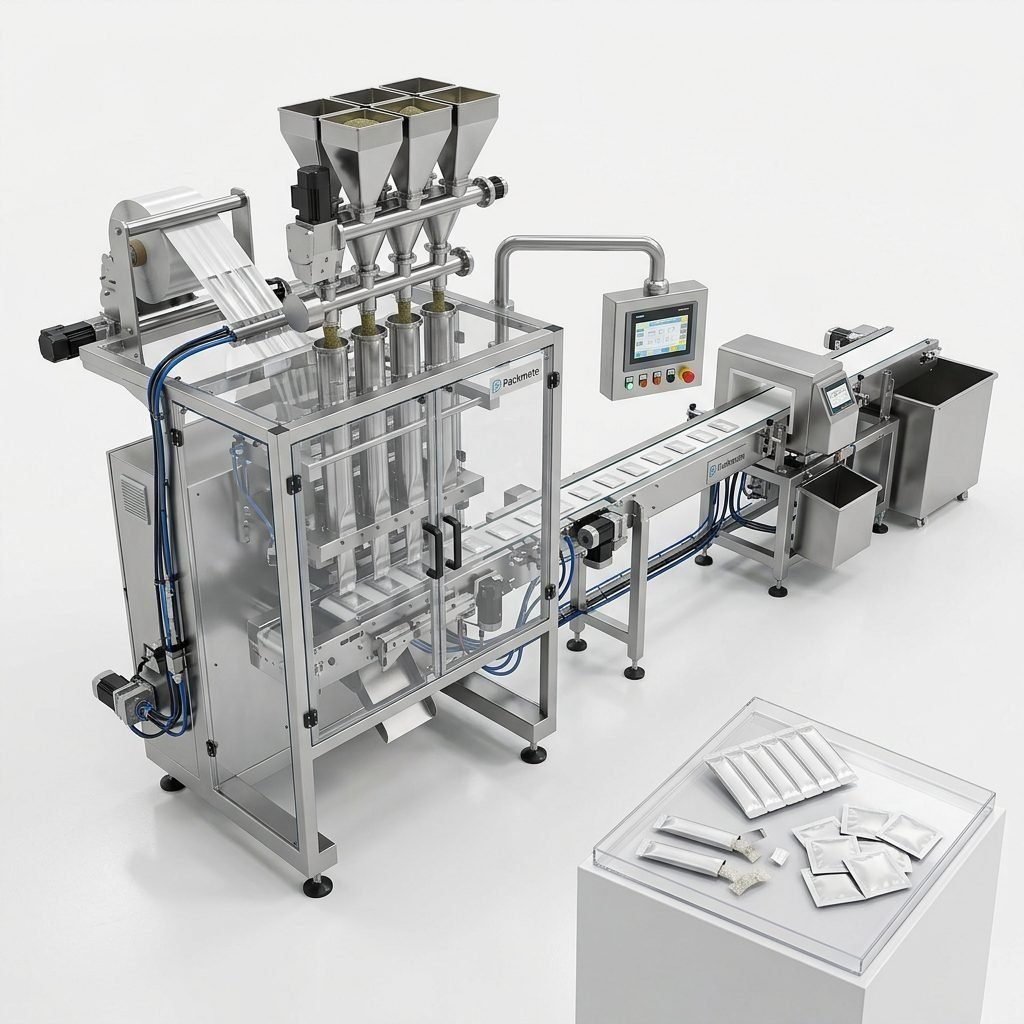
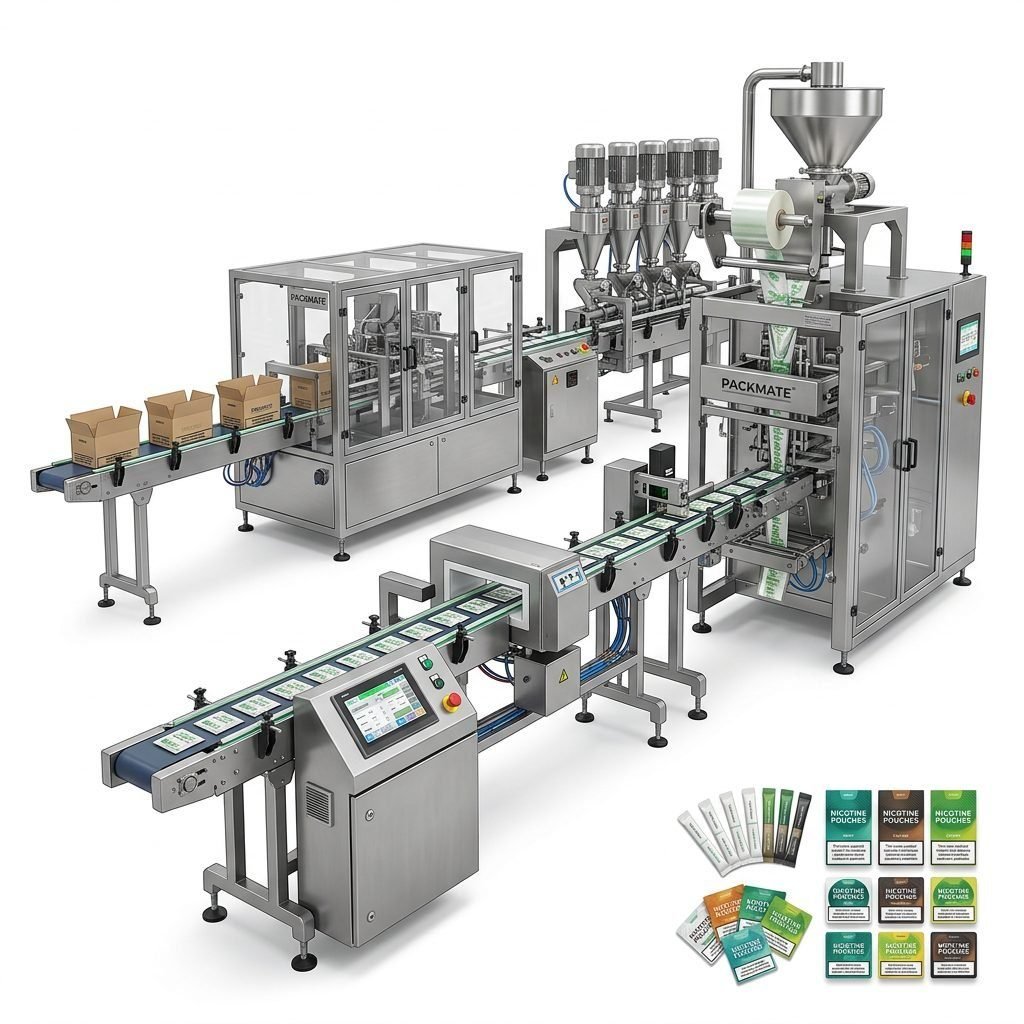
Consider turnkey lines that integrate filling, weighing, pouch forming, sealing, labeling, and case packing. Integrated lines reduce manual handling errors and speed up production ramp-up. Vendors offering complete Filling & Packaging Lines or modular systems make future upgrades easier.
✅ Tip: Ask suppliers for a line diagram showing infeed, weighing/filling, pouch forming, sealing, and downstream packaging to verify integration points and footprint.
Selecting a Supplier: What Matters
Selecting a reliable manufacturer is as important as the machine model. Evaluate suppliers on experience, factory capabilities, quality systems, and global service. Look for manufacturers with proven nicotine pouch lines and references in similar markets.
Experience & Track Record
A vendor with decades of packaging engineering experience and dedicated snus/nicotine solutions demonstrates deep domain expertise. Learn about the supplier’s Company Story, factory capacity, and machine models.
Certifications & Compliance
CE and ISO certifications show adherence to international quality and safety standards. Verify certificates and ask for compliance documentation relevant to Armenia or the EAEU.
After-sales Support & Spare Parts
Local technical support or a reliable remote support plan minimizes downtime. Confirm spare parts lead times and whether the supplier offers training, commissioning, and local partner support.
Factory Acceptance & Case References
Schedule FAT (Factory Acceptance Test) and request live case studies or videos of similar lines. Real-world case examples help validate claims. See Case examples to evaluate performance histories.
Site & Utility Requirements in Armenia
Plan the production site carefully. Packaging machines need stable power, compressed air, appropriate floor loading capacity, ventilation, and controlled humidity for specific films. Check local electrical standards and ensure backup solutions if power interruptions are common.
Cost Considerations: CapEx vs OpEx
Compare purchase price with total cost of ownership. Consider installation, validation, operator training, spare parts, maintenance contracts, and packaging consumables. A slightly higher initial investment in a reliable multi-lane line can yield much lower per-unit costs and better uptime.
⚖️ ROI checklist: expected units/day, labor savings from automation, scrap reduction via better dosing, and maintenance costs.
Trial Runs, Validation & Quality Control
Prioritize suppliers who provide FAT, commissioning, and pilot production support. Define acceptance criteria — weight tolerances, seal integrity, visual appearance — and perform sample runs under realistic conditions. Use in-line QC tools like vision inspection and weight checks to maintain consistency.
Local Partnerships & Logistics in Armenia
Consider logistics for importing machines, installation assistance, and local partners that can supply consumables and spare parts. If you plan to export from Armenia, ensure the line can adapt to multiple labeling requirements and languages.
Recommended Machine Types & Resources
For companies producing nicotine pouches in Armenia, three machine categories are often recommended:
🔧 High-precision multi-lane snus/nicotine pouch lines for scalable production — check Snus & Nicotine Packaging Machines.
📦 Sachet & stick pack lines for single-dose sticks and promotional packs — see Sachet & Stick Pack Machines.
⚙️ Integrated weighing and packaging systems for precise dosing and high-throughput — review Weighing & Packaging Systems.
Supplier Due Diligence: Questions to Ask
When speaking with manufacturers, ask:
🛠️ How many snus/nicotine pouch lines have you delivered and where?
🧰 What is your spare parts lead time for Armenia?
📄 Can you demonstrate CE/ISO certificates and relevant test reports?
🧪 Do you support FAT, SAT, and pilot production runs?
🤝 What training and after-sales services are included?
Why Choose an Experienced Manufacturer
Manufacturers with decades of experience in snus and nicotine machinery bring refined designs, reliable control systems, and established spare parts networks. Learn about the manufacturer’s Company Profile and Mission & Vision to confirm long-term support capacity. Visiting a vendor’s facility or attending an exhibition where they show live demos can be invaluable — check Our Exhibition pages for upcoming events and demonstrations.
📌 Must-have contract clauses: warranty terms, spare parts availability, commissioning support, performance guarantees (speed and fill accuracy), and training commitments.
Practical Steps to Buying & Deploying in Armenia
1. Define product formats, capacity targets, and regulatory requirements.
2. Shortlist manufacturers with snus/nicotine expertise and request datasheets.
3. Visit factory or request video demos and case references. (See Case for real examples.)
4. Run FAT and pilot production; validate processes and consumables.
5. Plan site utilities, local permits, and staff training.
6. Commission, test, and begin phased ramp-up while monitoring QC metrics closely.
Useful Links & Resources
For more information on machine types and full-line solutions, review the manufacturer’s product categories and support pages:
– Snus & Nicotine Packaging Machines
– Sachet & Stick Pack Machines
– Weighing & Packaging Systems
– About Packmate
Final Recommendations
In Armenia’s evolving nicotine market, prioritize machines that offer dosing accuracy, hygienic design, and flexible language/labeling capabilities. Invest in proven multi-lane systems if you expect growth, and secure solid after-sales agreements for spare parts and technical training. A reliable supplier with a history of snus/nicotine solutions and a clear service plan will significantly reduce operational risk and speed time-to-market.
Next steps
Reach out to experienced manufacturers for quotations, request machine demonstrations, and align technical specifications with Armenian regulatory guidance. When evaluating proposals, balance upfront cost with long-term reliability, local support, and consumables availability.
Frequently Asked Questions
Q: What paperwork is usually required to import packaging machines into Armenia?
A: Typically you will need commercial invoices, packing lists, certificates of origin, and any technical certifications (CE/ISO). Customs brokers in Armenia can advise on exact documentation and EAEU-related requirements.
Q: How important is multi-language labeling for the Armenian market?
A: Very important — Armenian script is required for many local retail channels and Russian remains widely used. Machines that support flexible label printing or interchangeable label stations save time and help maintain compliance.
Q: Can I start with a single-lane machine and upgrade later?
A: Yes. Many suppliers offer modular solutions that allow you to start small and add multi-lane modules or supplementary equipment like can fillers and cartoners as demand grows.
Q: What after-sales support should I expect?
A: Look for commissioning, operator training, spare parts kits, remote troubleshooting, and optional on-site service visits. Confirm lead times for critical parts and availability of service partners in the region.
Q: Where can I see examples of installed lines and talk to references?
A: Ask suppliers for case studies and customer references; many maintain video libraries and showcase machines at exhibitions. Review the Case and Our Exhibition pages for demonstrations and real-world projects.