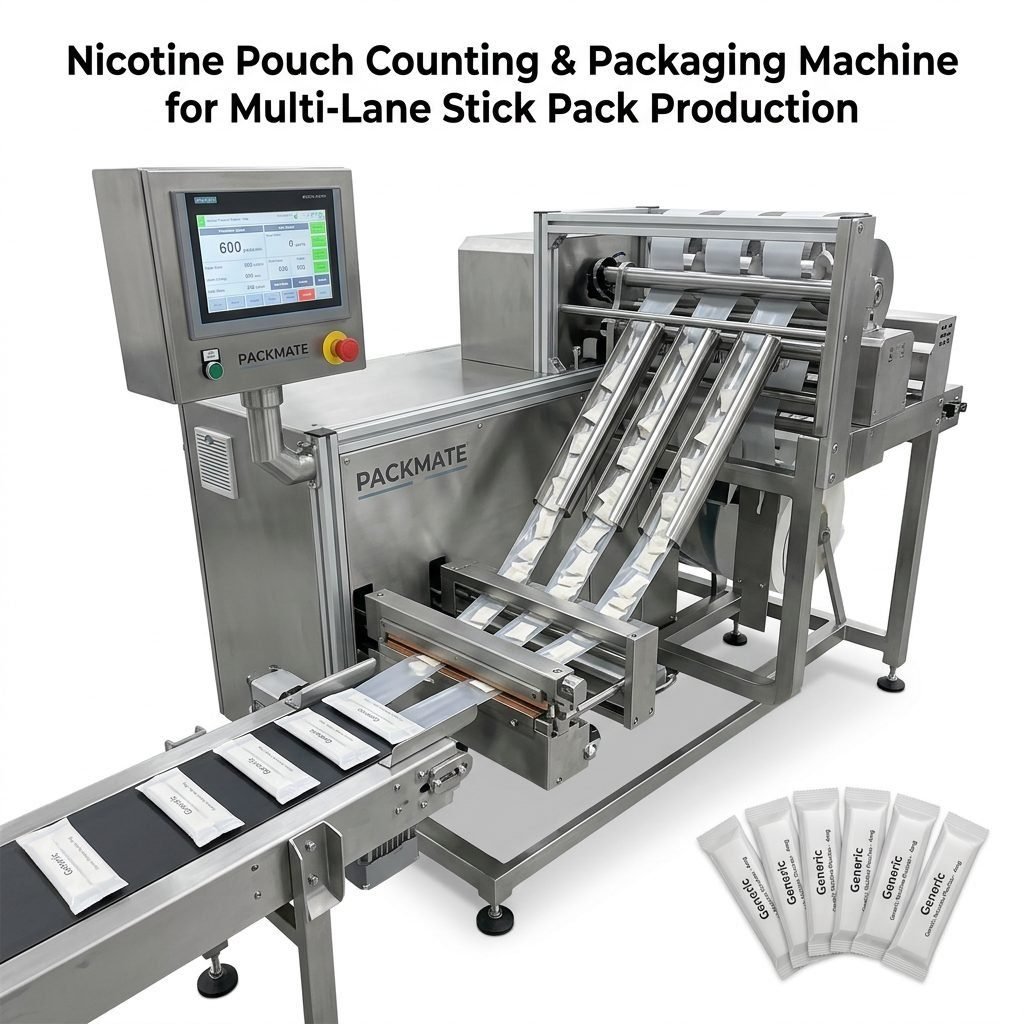
Choosing the right snus packaging machine manufacturer for your business in Ecuador is a strategic decision that affects product quality, regulatory compliance, production efficiency, and long-term costs. This guide walks you through practical, industry-proven factors to evaluate suppliers, what machine features will matter for nicotine pouch and snus production, and how to ensure a smooth procurement, installation, and after-sales process. Whether you are a startup entering the nicotine pouch market or an established company scaling production, the right partner will help you achieve consistent output, reduce downtime, and protect your brand reputation.
Understand Your Production Needs First
Before evaluating manufacturers, define your product and production goals. Key questions to answer:
- What pouch formats will you produce (stick pack, sachet, multi-lane pouches)?
- What is your target output per minute/hour/day?
- Will you handle powder, granules, liquid fillings, or multi-component sachets?
- Do you need primary packaging only, or a fully integrated filling and packaging line?
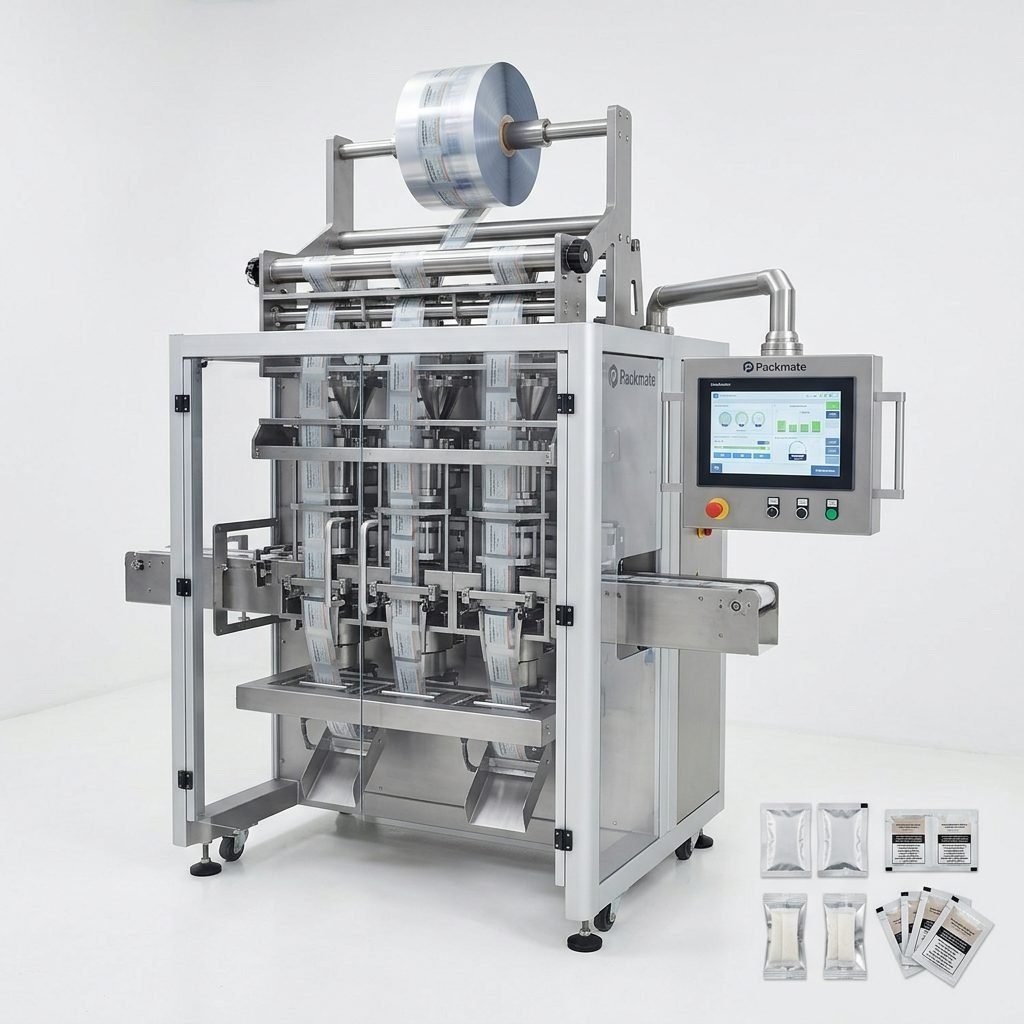
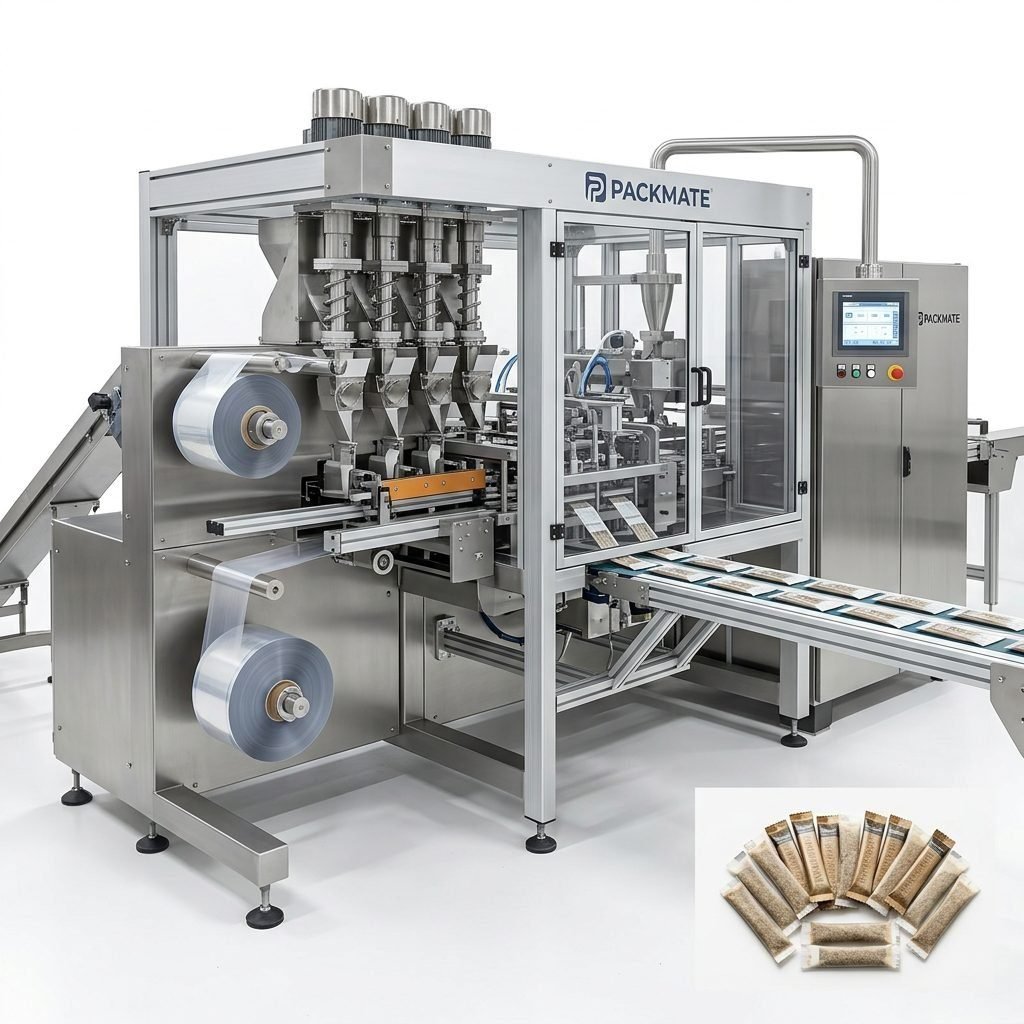
If you need multi-lane, high-speed pouch production for nicotine pouches or snus, prioritize manufacturers with specialized multi-lane systems and long experience in small-dose packaging lines.
Why Manufacturer Credentials and Factory Strength Matter
A supplier’s certifications, factory capacity, and engineering pedigree determine whether machines will meet international safety and quality standards and whether deliveries can match your timeline.
Certification & Compliance
Look for CE, ISO, and other relevant certifications. Compliance shows a commitment to safety and global regulatory requirements. Certified equipment simplifies import and local approval in many jurisdictions.
Manufacturing Capacity & Precision
A modern manufacturing facility with advanced CNC machining centers and precision assembly lines reduces the risk of mechanical inconsistencies. Facilities that publish factory size and machine model ranges demonstrate scale and specialization.
Ask for factory photos, production capacity (e.g., number of machines/month), and references from customers in similar markets.
Machine Types & Technical Features to Prioritize
Different machine types serve different goals. Make sure the manufacturer offers models and options that match both your product and production plan.
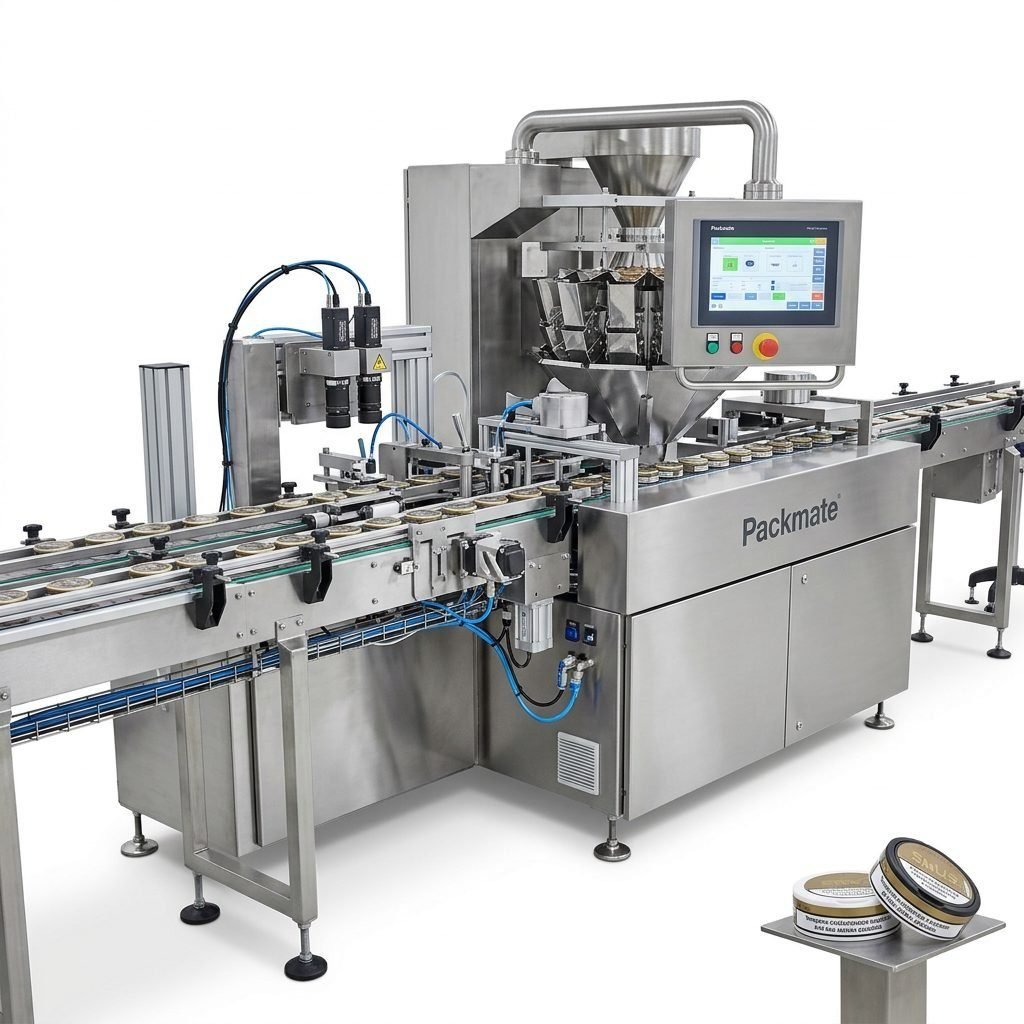
Snus / Nicotine Pouch Packaging Machines
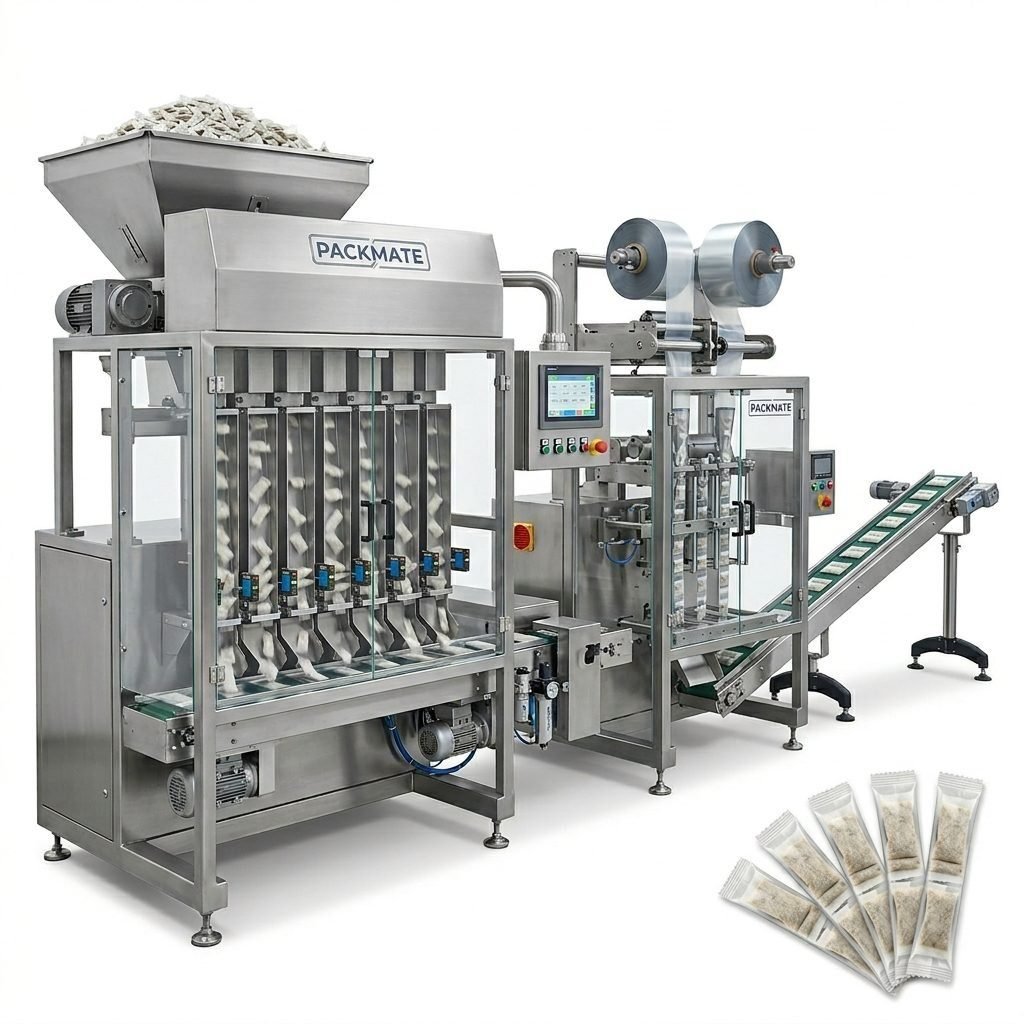
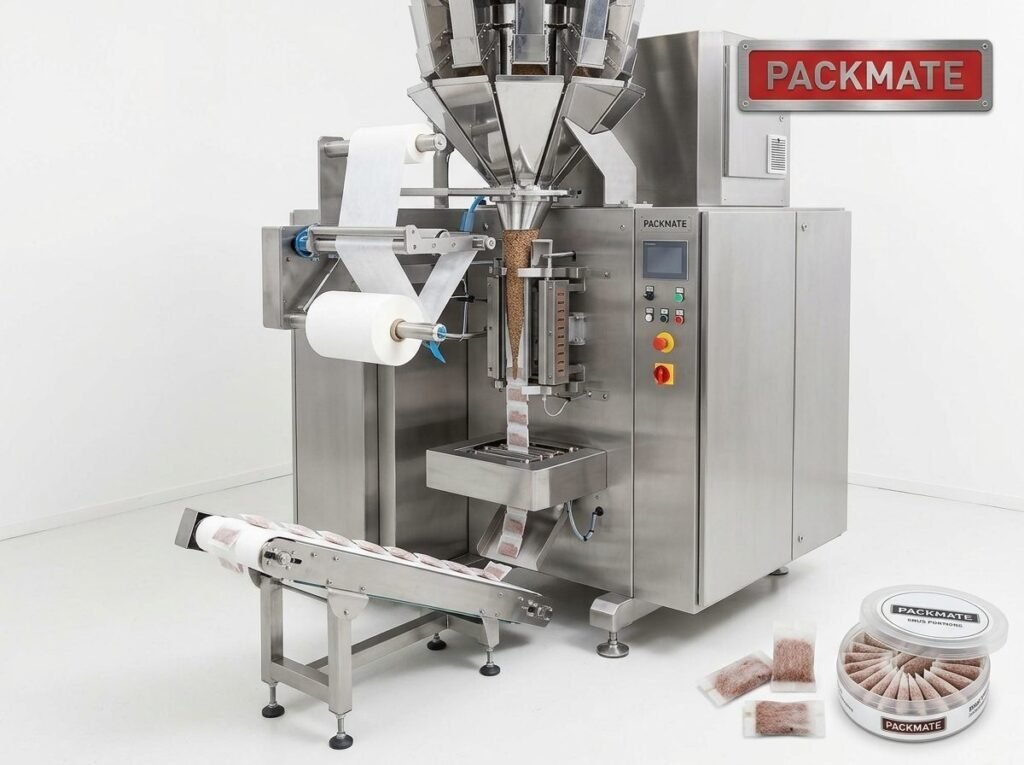
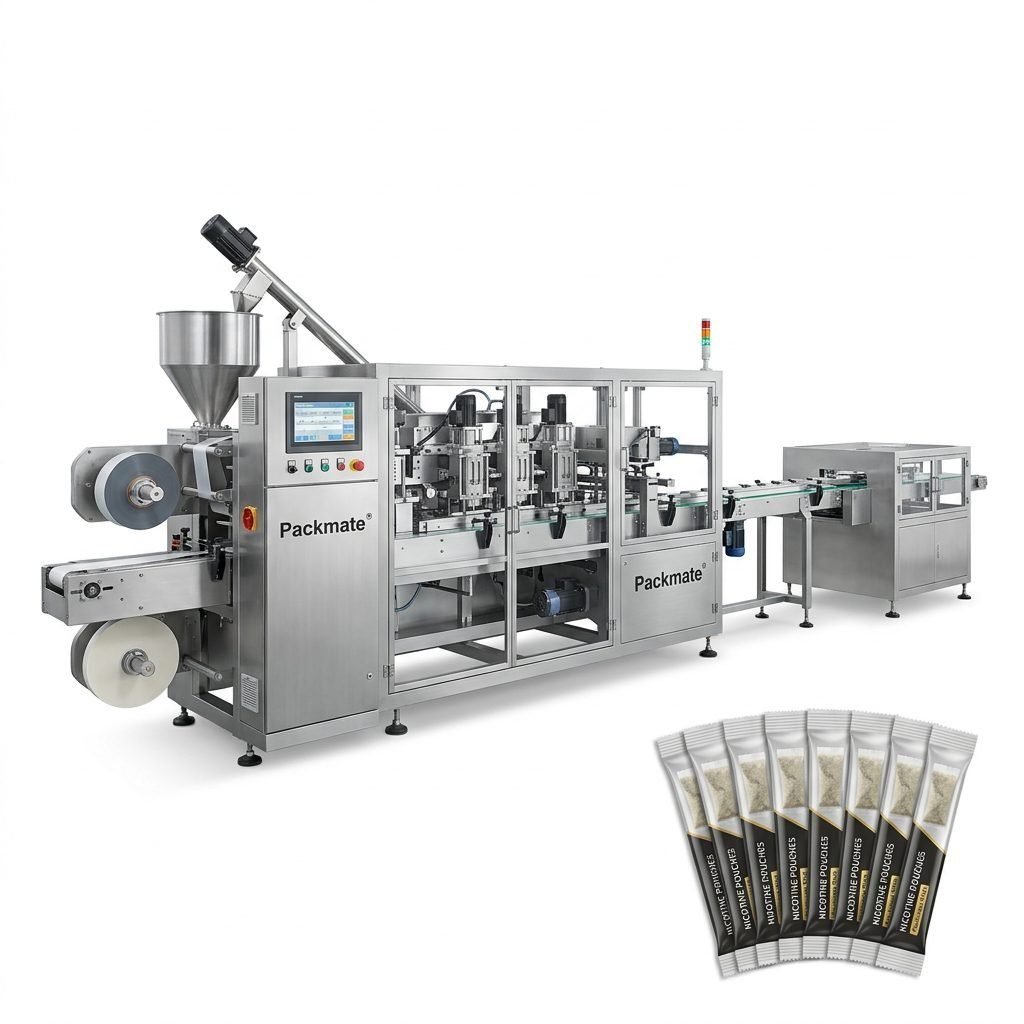
For nicotine pouches and snus, look for machines that provide accurate dosing, gentle handling, and clean sealing. Multi-lane systems can greatly increase throughput while maintaining portion consistency.
See examples of proven systems: Snus & Nicotine Packaging Machines.
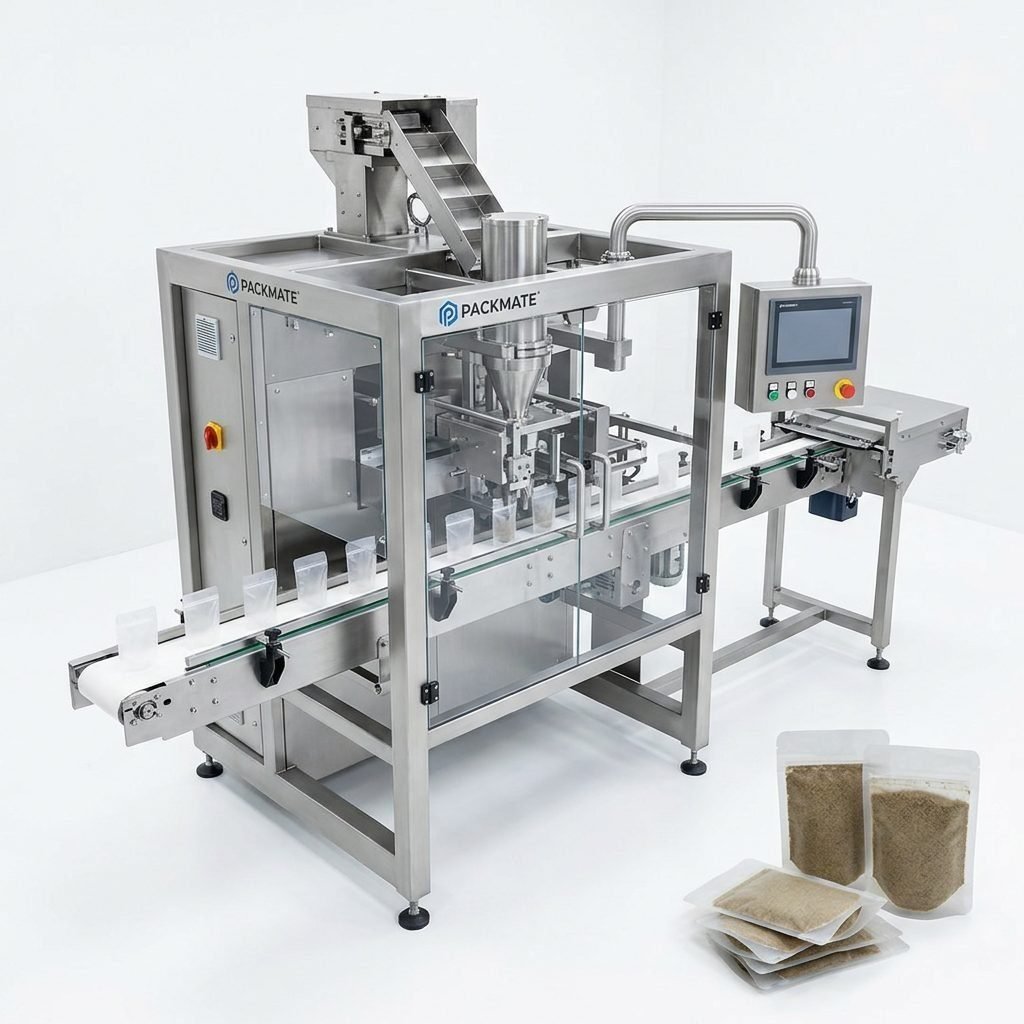
Stick Pack, Sachet & Multi-Lane Options
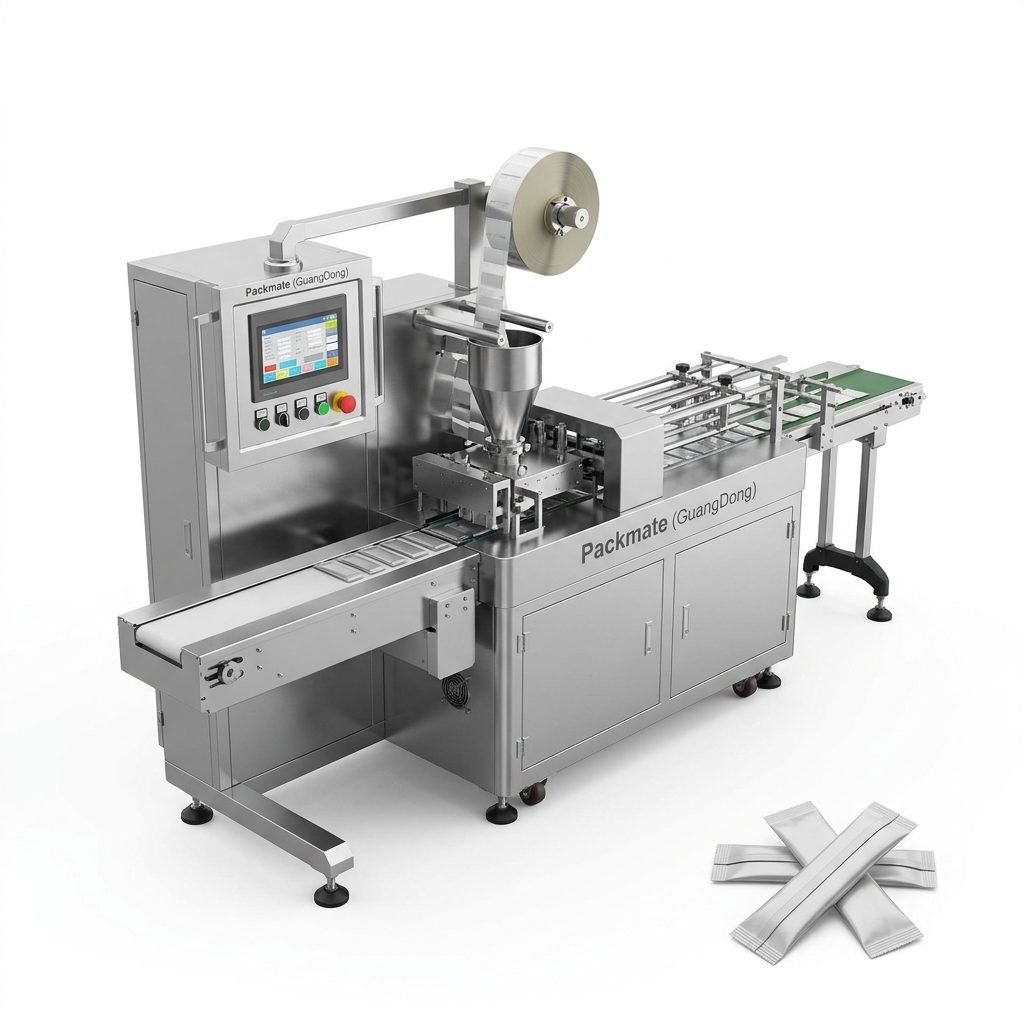
Stick pack and sachet machines are common for single-dose nicotine pouches. If you require high-speed multi-lane formats, confirm the manufacturer’s experience with small-dose, high-precision pouch filling.
Explore models: Sachet & Stick Pack Machines.
Filling & Weighing Systems
Accuracy in dosing is critical—overfill increases costs, underfill risks compliance. Integrated weighing and dosing systems can be supplied as part of a turnkey solution. Consider manufacturers that offer both packaging machines and weighing/feeding solutions.
Learn more: Weighing & Packaging Systems.
- High-precision dose control and stable feeding systems
- Servo-driven components for speed and repeatability
- Hygienic design for easy cleaning and maintenance
- Simple HMI and PLC control with recipe storage
Customization & Turnkey Solutions
Packaging needs evolve—select a partner that offers flexible machine configurations and turnkey solutions that integrate filling, weighing, filling lines, and packaging in one workflow. Manufacturers that provide customization can adapt the machine to your pouch dimensions, film materials, and auxiliary equipment.
Check supplier case histories to see whether they have implemented end-to-end lines for clients with similar product profiles. A practical resource is the manufacturer’s case page: Case.
After-Sales Support & Spare Parts
After-sales service is often the deciding factor between a good purchase and a costly mistake. Confirm the following:
- Local or regional support network to speed repairs and maintenance
- Availability of critical spare parts and consumables
- Training programs for operators and maintenance teams
- Remote support options and diagnostic tools
Avoid suppliers that cannot confirm spare parts lead times or provide clear service agreements—downtime can be more costly than the machine itself.
Total Cost of Ownership & ROI
Purchase price is only one component of cost. Evaluate long-term operating costs including energy consumption, spare parts, maintenance, and line efficiency. Ask suppliers for real-world efficiency data and sample ROI calculations based on your expected capacity.
Key financial metrics
Look for estimated payback period, expected uptime percentage, and the supplier’s record for mean time between failures (MTBF). A reliable manufacturer will provide data from existing installations and client references.
Logistics, Lead Time & Installation
Understand lead times for manufacturing, testing, shipping, and customs clearance to Ecuador. A detailed timeline ensures you can plan production ramp-up without surprises. Confirm whether the supplier offers:
- On-site installation and commissioning
- Operator training sessions during commissioning
- Spare parts kits shipped with the first machine
Schedule a Factory Acceptance Test (FAT) so you can witness machine performance and ensure specifications are met before shipment.
References, Demonstrations & Exhibitions
Attend live demonstrations or visit exhibitions where the manufacturer participates. Seeing machines run with real materials reduces risk. Good manufacturers regularly attend global shows and maintain up-to-date exhibition records: Our Exhibition.
Request references from similar customers and, if possible, speak directly with operators who run the lines day-to-day.
Documentation & Training Materials
Comprehensive manuals, maintenance guides, electrical and pneumatic diagrams, and training videos are essential. Verify the language and format of documentation and confirm whether updates are provided with software/firmware upgrades.
For a deeper look into company history and credentials, review the supplier profile: About Packmate.
Making the Final Decision — A Practical Checklist
Use this checklist when comparing manufacturers:
- Certifications: CE, ISO and evidence of quality control
- Factory capability: machining, assembly, and throughput
- Range of machines and suitability for your product
- Turnkey solutions availability and customization support
- After-sales support, spare parts, and response time
- References, FAT, and live demonstrations
- Clear commercial terms: warranty, payment, and delivery schedule
When possible, select a supplier offering turnkey lines and documented case studies to minimize integration risks and accelerate time to market.
How to Engage a Manufacturer — Step-by-Step
1) Prepare a detailed RFQ with product specs, target output, and desired timeline. 2) Request technical proposals and machine datasheets. 3) Arrange FAT and material trials. 4) Negotiate terms including warranty, spare parts, and commissioning. 5) Plan installation timeline and operator training. 6) Keep open communication for continuous improvement after commissioning.
Communications & Contracts
Ensure contracts clearly cover acceptance criteria, penalty clauses for late delivery (if necessary), warranty coverage, and agreed response times for service calls.
Final Considerations for Businesses in Ecuador
For Ecuador-based businesses, consider import duties, local homologation, and the availability of regional technical support. A manufacturer that has global clients and offers documented export experience will simplify customs and regulatory hurdles. If you need direct engagement with the supplier, use their contact channels to request quotations and documentation: Contact Us.
Case Study Snapshot
Manufacturers with decades of engineering experience often share case studies demonstrating successful installations in multiple regions. Review these cases to understand real-world machine performance, uptime statistics, and the supplier’s ability to deliver on promises. Visit the case page for examples and performance metrics: Case.
Choose a manufacturer with proven snus/nicotine pouch experience, strong factory capacity, clear after-sales support, and turnkey options to reduce integration risk and accelerate your time-to-market.
Frequently Asked Questions
Q1: How long is the typical lead time for a custom snus packaging line?
A1: Lead times vary by customization level and factory workload, but typical delivery windows range from 12 to 20 weeks for custom turnkey lines. Confirm lead times at RFQ stage and factor in FAT time and shipping to Ecuador.
Q2: What ongoing costs should I expect beyond the machine purchase price?
A2: Budget for spare parts, consumables (seals, belts), preventive maintenance, energy costs, and periodic calibration. Training and occasional remote or on-site support should also be included in your operational budget.
Q3: Can manufacturers provide material compatibility testing for my snus pouch film?
A3: Reputable manufacturers perform material trials during FAT and will test your films for sealing performance, cut quality, and pouch integrity. Provide samples early to validate machine settings.
Q4: How important is local technical support in Ecuador?
A4: Very important—local or regional partners reduce downtime by providing faster spare parts and service. If local support is limited, ensure the manufacturer offers strong remote diagnostics, spare kits, and rapid shipping options.
Q5: Where can I find more technical resources and product catalogs?
A5: Consult the supplier’s product pages and catalog resources for detailed machine specifications and options. Example resources include product pages for bag & pouch machines and auxiliary equipment. For official documentation and service information, check the company catalog or service pages.