Choosing the right nicotine packaging machine in Syria requires careful planning, regulatory awareness, and a clear understanding of production goals. This guide walks you through everything from machine types and technical specifications to local support, installation, and long-term costs. Whether you’re sourcing single-lane sachet machines or high-speed multi-lane snus packaging lines, these practical steps will help you make a confident investment decision.
Understand Your Product and Production Targets
The first step is to define what you will pack. Nicotine pouches and snus come in varied formats: loose pouches, pre-measured sachets, stick packs, or multi-dose cans. Your choice determines the type of machine you need. Consider:
📌 Product format: sachet, stick pack, pouch, can, or multi-lane pillow packs. Each format has specific filling and sealing requirements.
📌 Production capacity: calculate target output per shift and per month. Machines are rated by pieces/minute or pouches/minute — match machine speed with your demand.
📌 Product characteristics: powder, granule, paste, or moist pouches require different feeding, dosing, and sealing modules. Hygienic design is crucial for products containing nicotine.
Choose the Right Machine Type
Machine categories commonly used in nicotine packaging:
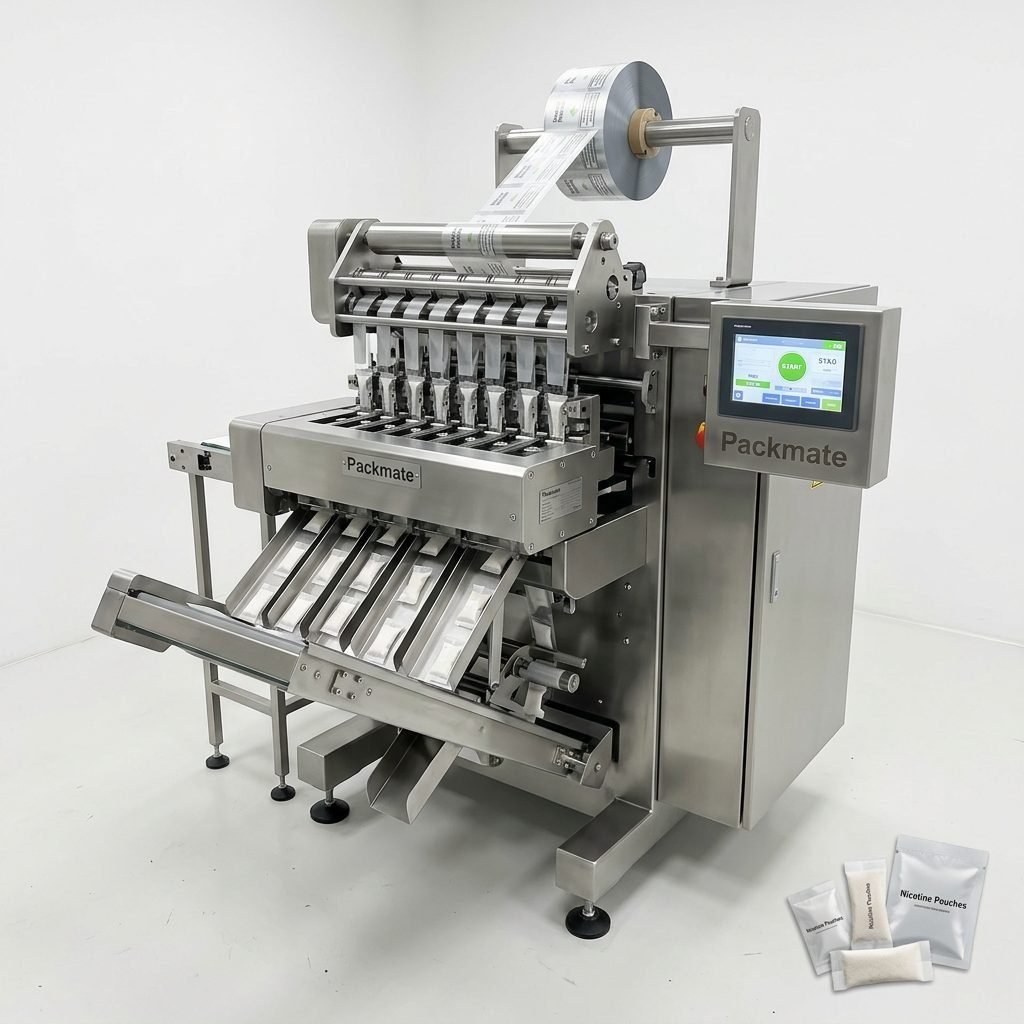
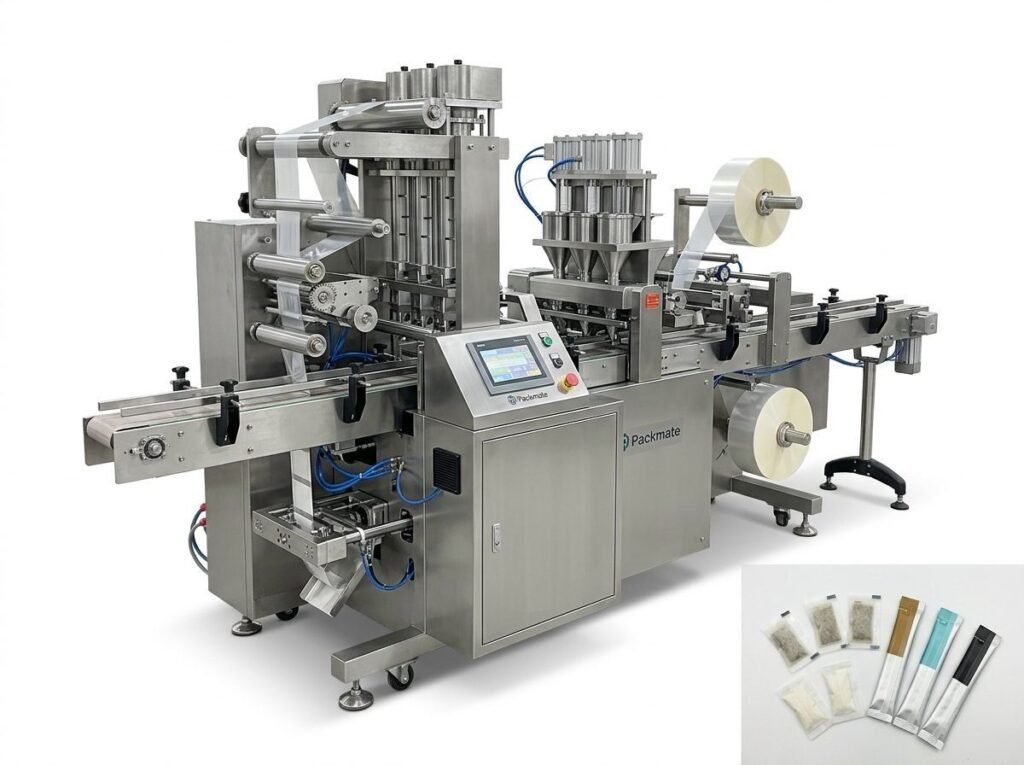
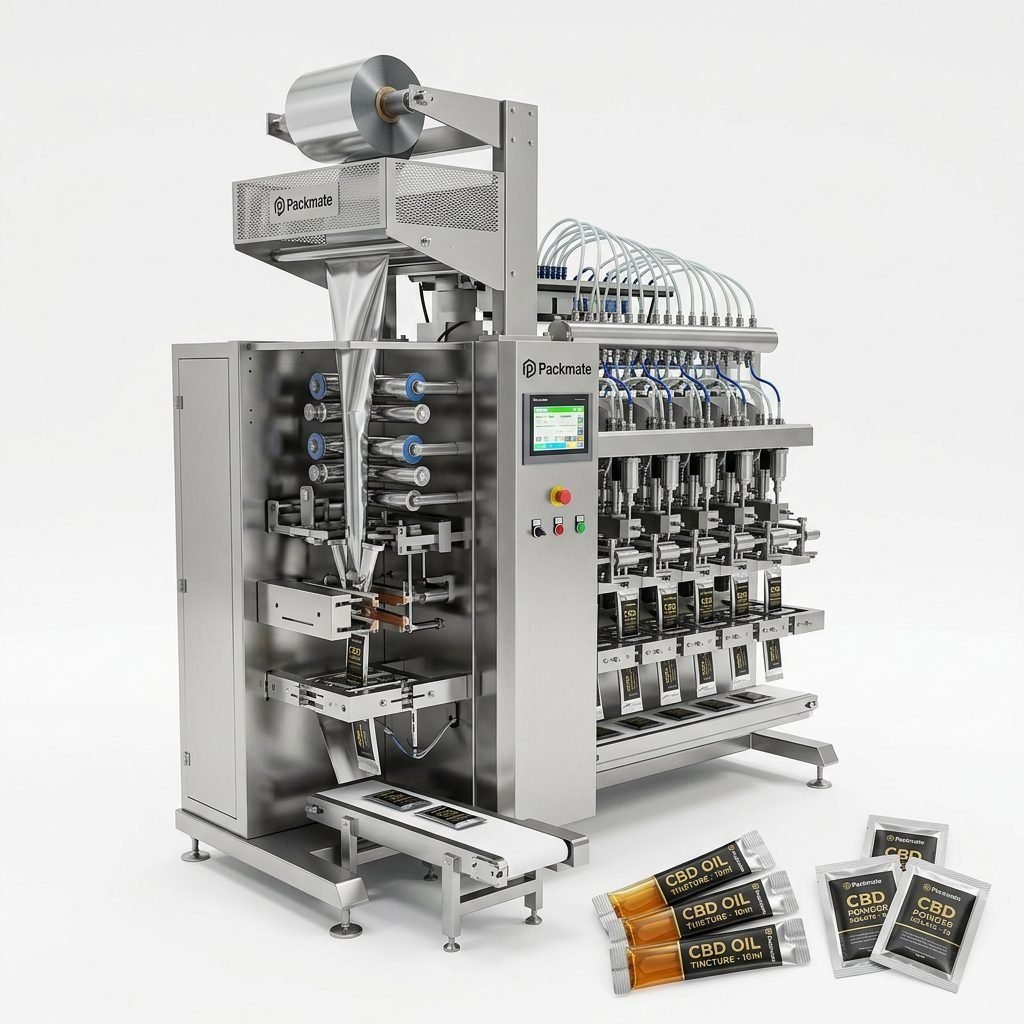
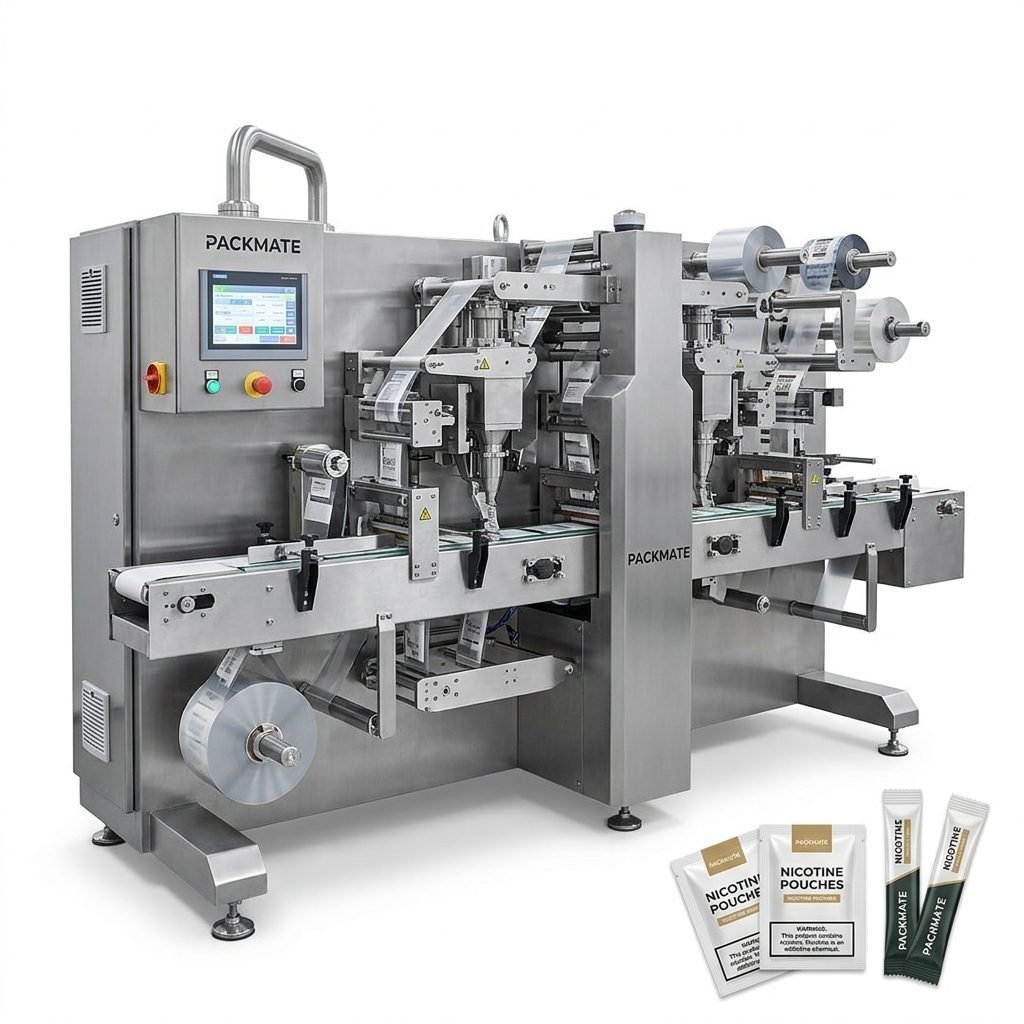
Sachet & Stick Pack Machines — ideal for single-dose units and high-speed operations. These are compact and cost-effective for sachet-style nicotine pouches. For examples and technical specifications, check Sachet & Stick Pack Machines.
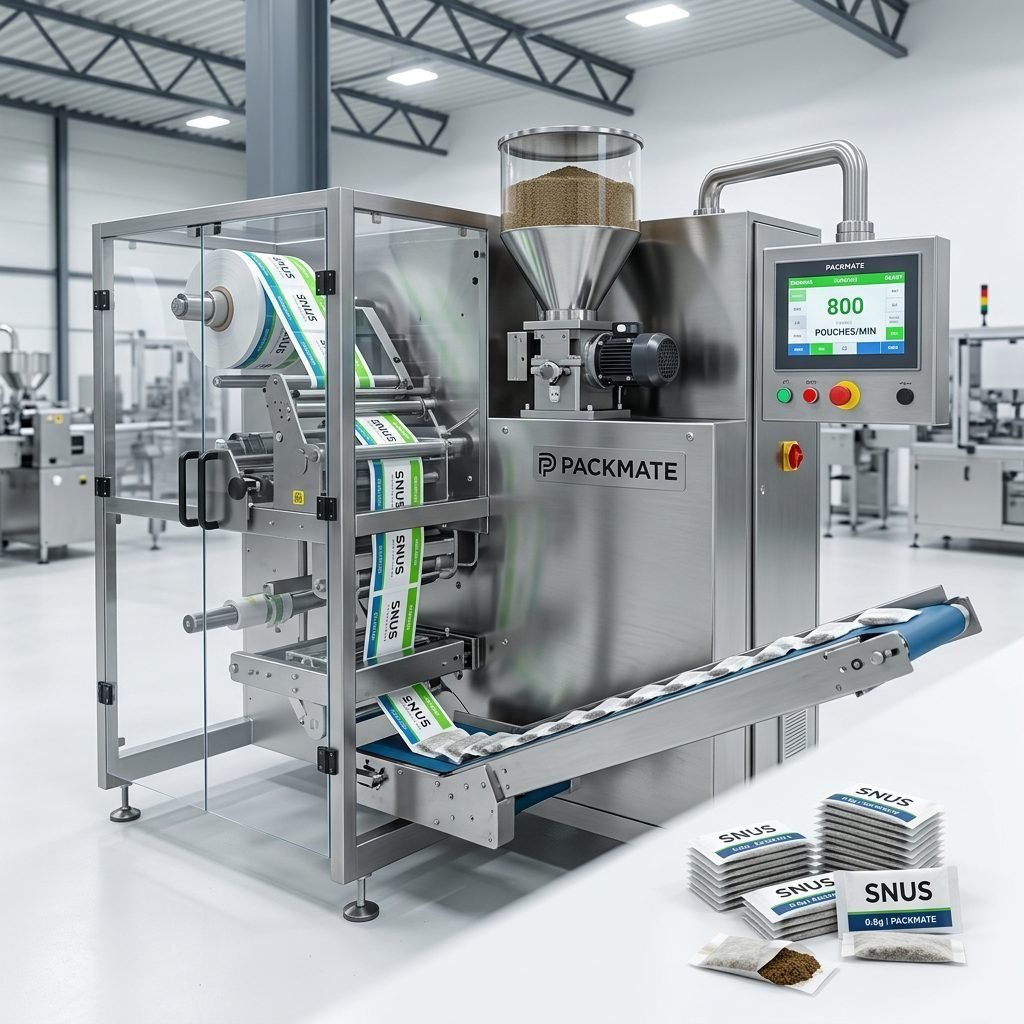
Snus & Nicotine Packaging Machines — specialized for small-dose pouches and snus formats. Multi-lane systems offer high throughput for small pouches; these are typically more complex but highly efficient. See Snus & Nicotine Packaging Machines.
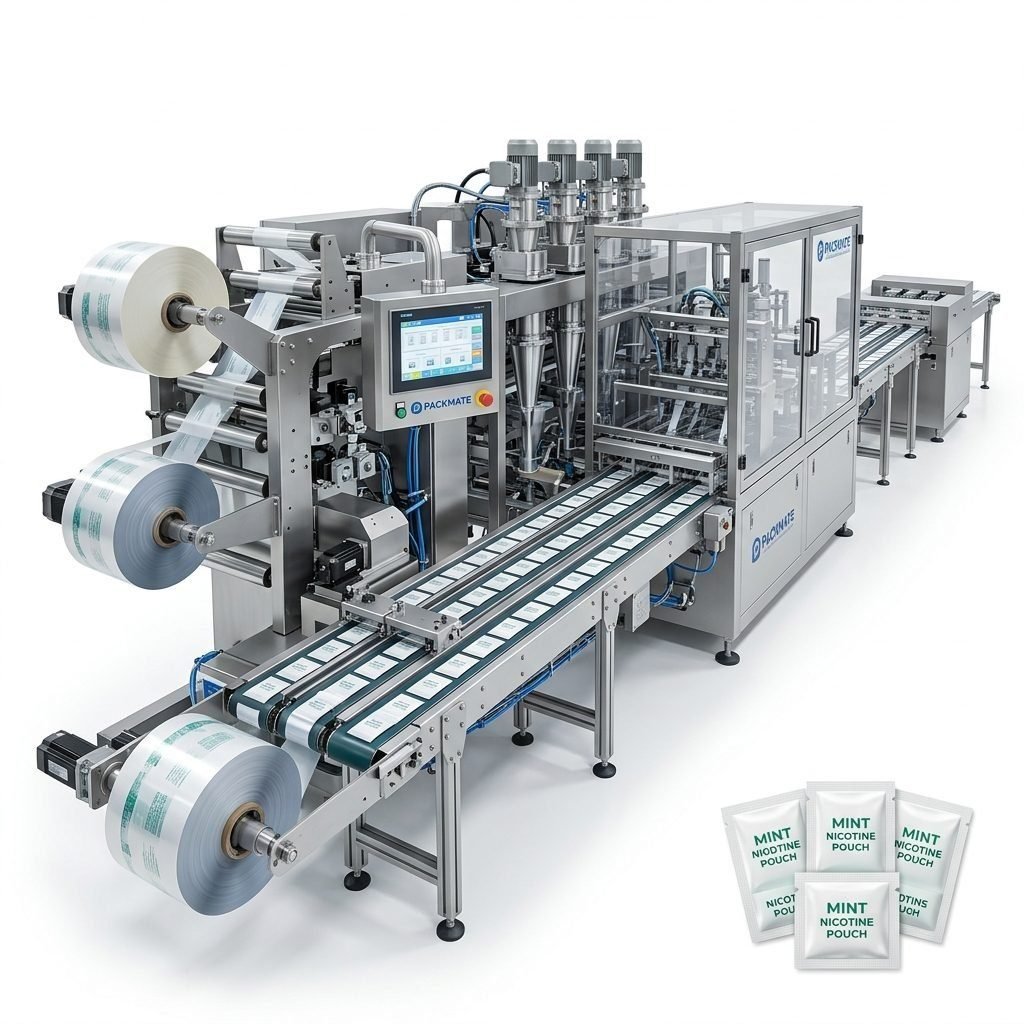
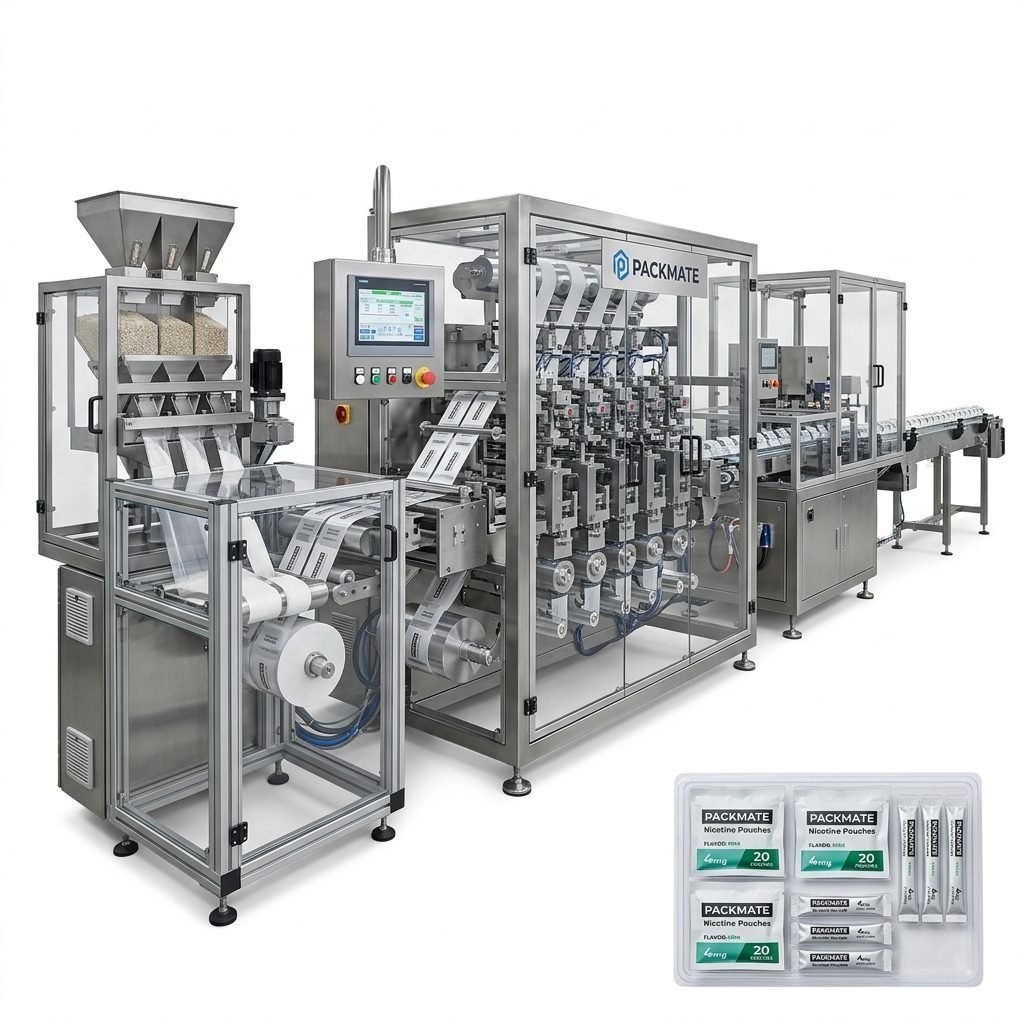
Filling & Packaging Lines — full production lines that integrate filling, dosing, sealing, and secondary packaging (cartoning, case packing). Ideal if you want a turnkey solution from raw material to packed case. Learn more at Filling & Packaging Lines.
Key considerations by machine type
– Precision dosing systems for consistent nicotine content per pouch.
– Material compatibility: stainless steel contact parts, easy-to-clean surfaces, and enclosed dosing for dust control.
– Speed vs. accuracy trade-offs: higher speed machines may need more frequent calibration.
Technical Specifications to Evaluate
When comparing machines, pay attention to these technical details:
⚙️ Mechanical precision and tolerances: look for servo-driven components for repeatability and lower maintenance.
🔁 Production flexibility: quick changeover features, modular toolsets, and recipe-based controls allow switching between formats with minimal downtime.
Other specs:
– Electrical requirements and compatibility with local power supply.
– Compressed air consumption and filtration needs.
– Physical footprint and access for maintenance.
– Integration with weighing systems and metal detection (see Weighing & Packaging Systems).
Regulatory and Compliance Factors in Syria
Regulations for nicotine products vary by market. Ensure your line can support compliance needs:
✅ Traceability: incorporate batch coding or serialization equipment for tracking production batches.
✅ Food-grade construction: machines with sanitary design reduce contamination risk.
✅ Certifications: request CE or ISO certificates to ensure equipment meets international safety standards (many manufacturers, like Packmate, provide such documentation — see Certificate).
Sourcing: Local Distributor vs. Direct Manufacturer
You can buy through a local distributor or directly from the manufacturer. Each option has pros and cons:
– Local distributors offer faster parts and on-site support but may carry limited models.
– Direct purchase from a manufacturer (especially one with global presence and customization capabilities) can yield better pricing and access to full product ranges and turnkey solutions.
If you want to explore manufacturer options and case studies, visit About Packmate and Case for real-world examples of turnkey installations.
Questions to ask suppliers
📌 Lead time: how long to manufacture, test, ship, and install?
📌 Spare parts: availability and local stocking options.
📌 After-sales support: training, remote diagnostics, and maintenance contracts.
Installation, Training and After-Sales Service
A well-executed installation and thorough operator training are essential for uptime. Consider:
🧰 On-site commissioning: ensure the supplier provides skilled technicians for start-up and performance verification.
📚 Operator training: certified training programs reduce human error and extend machine life.
Ask about remote support capabilities, spare parts shipping times to Syria, and whether the supplier has local partners for faster service responses.
Layout, Utilities and Plant Requirements
Before purchasing, prepare a detailed plant layout including:
– Machine footprint, service aisles, and access for maintenance.
– Power points (voltage, phases), air lines (pressure and quality), and waste management.
– Environmental controls if your product requires humidity or temperature stability.
Budgeting: CapEx and OpEx Considerations
Total cost of ownership goes beyond the purchase price. Factor in:
– Installation and commissioning costs.
– Spare parts and wear items.
– Energy consumption and consumables (films, adhesives).
– Planned maintenance and potential downtime costs.
⚖️ Return on investment: model scenarios showing break-even points based on production volumes, scrap rates, and labor savings from automation.
Selecting a Trusted Manufacturer
Work with manufacturers that have proven experience in nicotine pouch and snus packaging. Key indicators of a reliable partner:
– Demonstrated industry experience and a broad machine portfolio. Packmate, for example, offers specialized snus packaging lines and multi-lane solutions with decades of engineering experience (see Snus & Nicotine Packaging Machines and Bag & Pouch Packaging Machines).
– Strong factory capabilities: CNC machining, precision assembly, and quality control in a sizeable manufacturing facility.
– International certifications and exhibition presence that validate the company’s market reputation.
Request references and machine demos
Ask for case studies, performance videos, and customer references. If possible, attend a live machine demonstration or visit the manufacturer’s production facility for hands-on evaluation. See Our Exhibition and Case pages for examples.
Customizations and Future-Proofing
Plan for growth: choose modular systems that allow additional lanes, upgraded dosing modules, or integration with upstream and downstream equipment. Consider compatibility with automated secondary packaging lines and data capture systems for Industry 4.0 readiness.
Shipping, Import and Local Installation in Syria
Coordinate shipping logistics and customs clearance early to avoid delays. Verify:
– Packaging standards for export and insurance.
– Customs duties and clearance processes in Syria.
– Local vendor for installation support or a supplier-provided commissioning team.
Planned timeline checklist
– Manufacturing lead time and factory testing.
– Sea/air freight and customs clearance schedule.
– On-site installation and performance acceptance testing.
Final Evaluation Checklist Before Purchase
✅ Product compatibility: confirmed by samples and test runs.
✅ Performance guarantee: acceptance criteria and penalties for underperformance.
✅ Support & spares plan: rapid-response strategy for critical components.
Useful Resources and Next Steps
To continue your evaluation, review product pages and request quotes with sample testing from reputable manufacturers. Helpful links:
– Snus & Nicotine Packaging Machines: https://www.snusmachinery.com/products/snus-nicotine-packaging-machines/
– Sachet & Stick Pack Machines: https://www.snusmachinery.com/products/sachet-stick-pack-machines/
– Filling & Packaging Lines: https://www.snusmachinery.com/products/filling-packaging-lines/
– About Packmate: https://www.snusmachinery.com/about-us/
Conclusion
Selecting the right nicotine packaging machine in Syria is a strategic decision that depends on product format, production targets, regulatory compliance, and long-term support. Prioritize suppliers with proven experience in snus and nicotine pouch machinery, clear after-sales support, and the ability to provide testing and customization. Careful planning upfront will secure better uptime, lower total cost of ownership, and consistent product quality.
Common Questions
Q1: What machine type is best for low-volume nicotine pouch production?
A1: For low volumes, single-lane sachet or stick pack machines are cost-effective and flexible. They require smaller footprints and lower initial investment while maintaining precision dosing.
Q2: How do I ensure regulatory compliance for nicotine products?
A2: Choose machines with sanitary design, batch coding capability, and partner with suppliers who provide certification documentation (CE/ISO). Implement traceability systems and keep records of production batches.
Q3: What is the lead time for custom multi-lane snus packaging lines?
A3: Lead times vary by complexity but typically range from several weeks to a few months. Discuss timelines with suppliers early and include testing and commissioning in the schedule.
Q4: Are spare parts and service available locally in Syria?
A4: Availability depends on your supplier and local distributor networks. Request a spares plan and check if the manufacturer has regional partners or offers fast international shipping for genuine parts.
Q5: Can I upgrade a machine later as production grows?
A5: Many modern machines are modular and allow upgrades such as additional lanes, improved dosing modules, and automation of downstream processes. Confirm upgrade paths with your supplier before purchase.