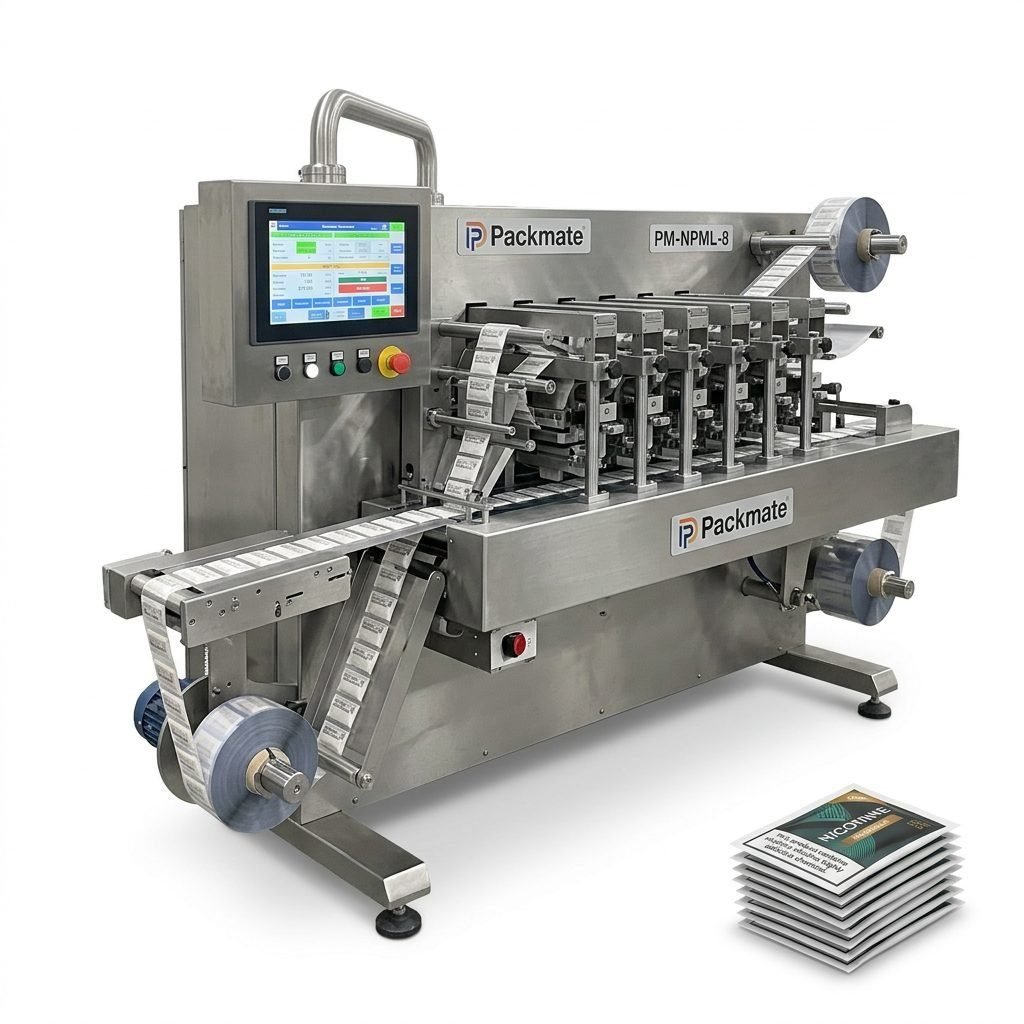
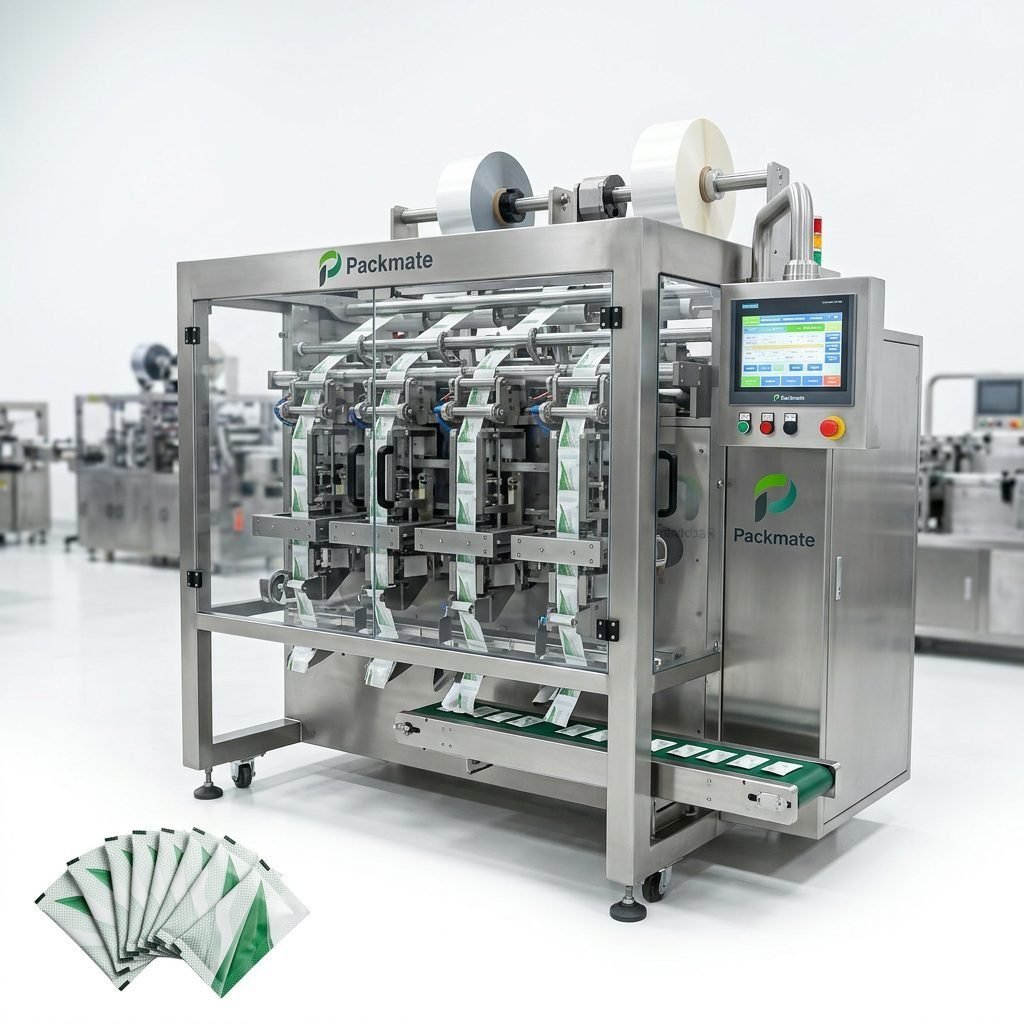
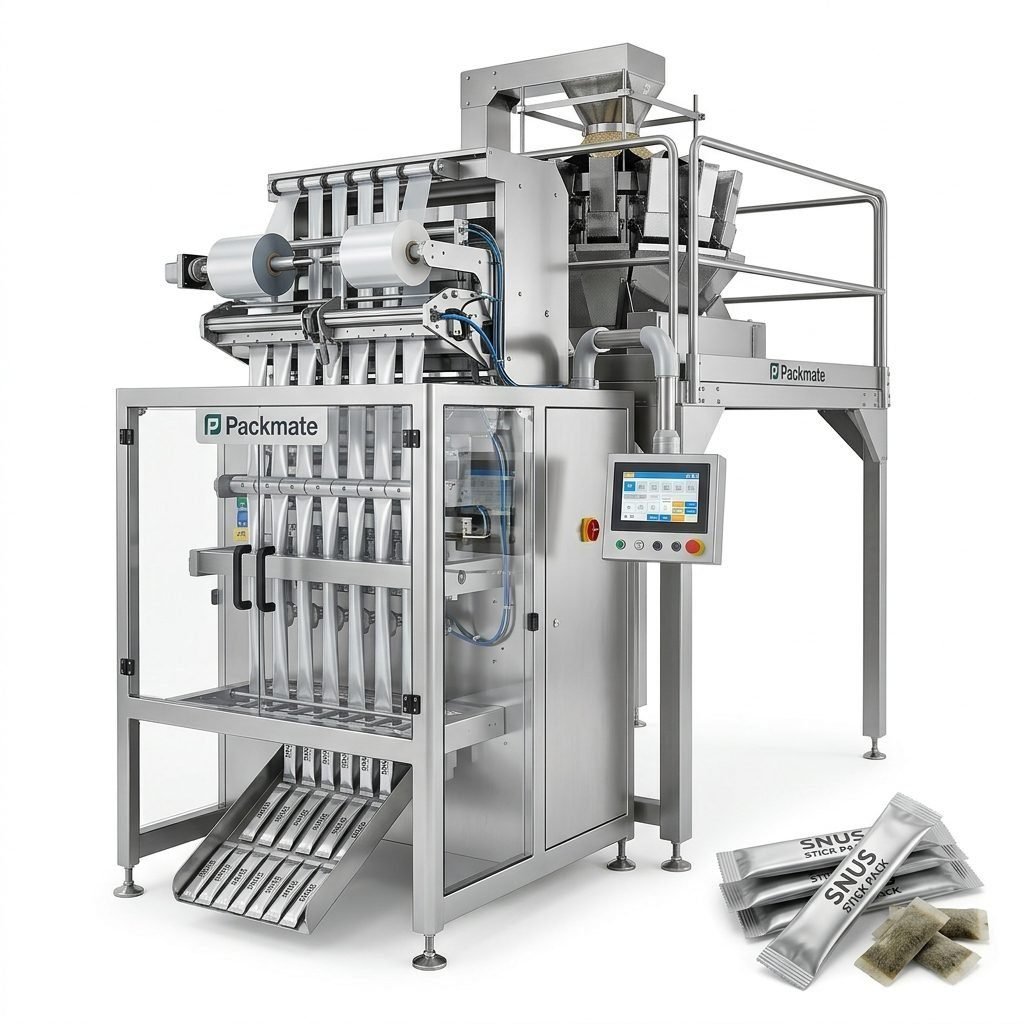
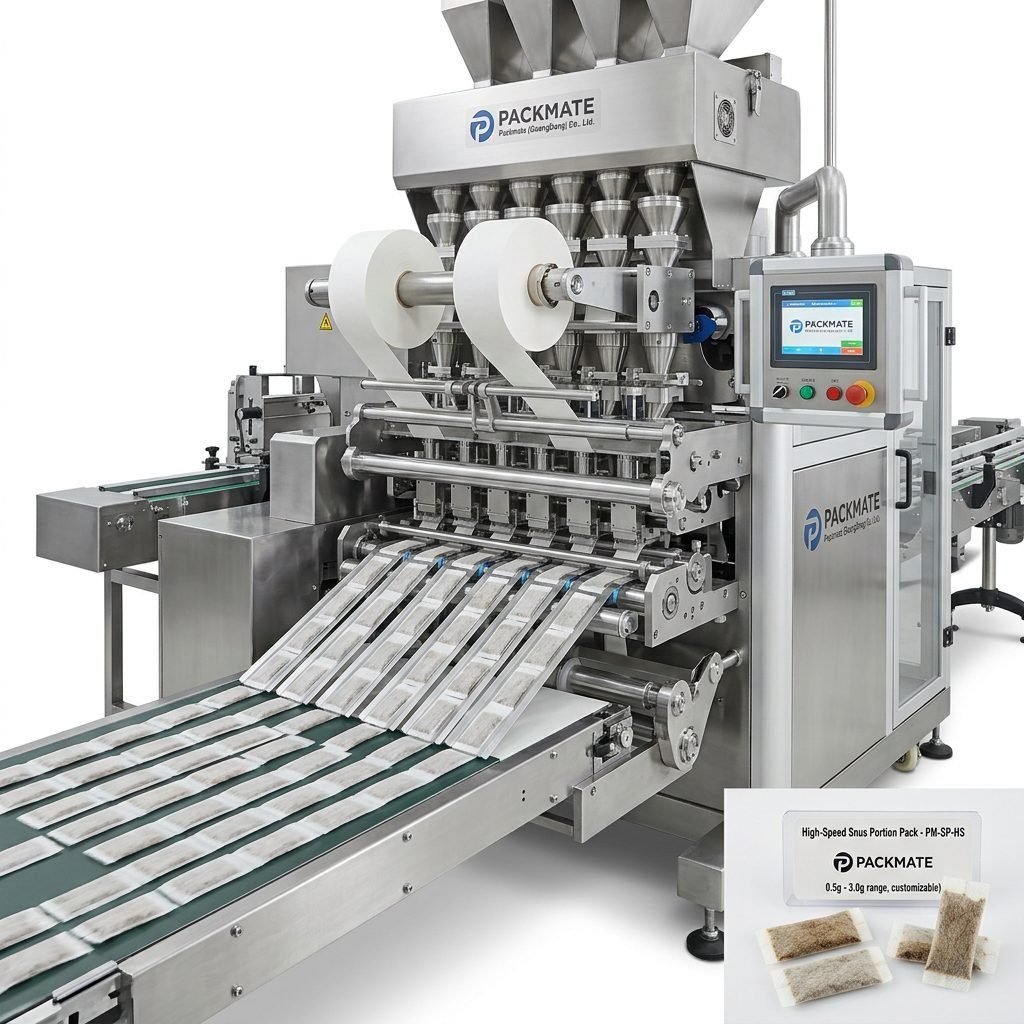
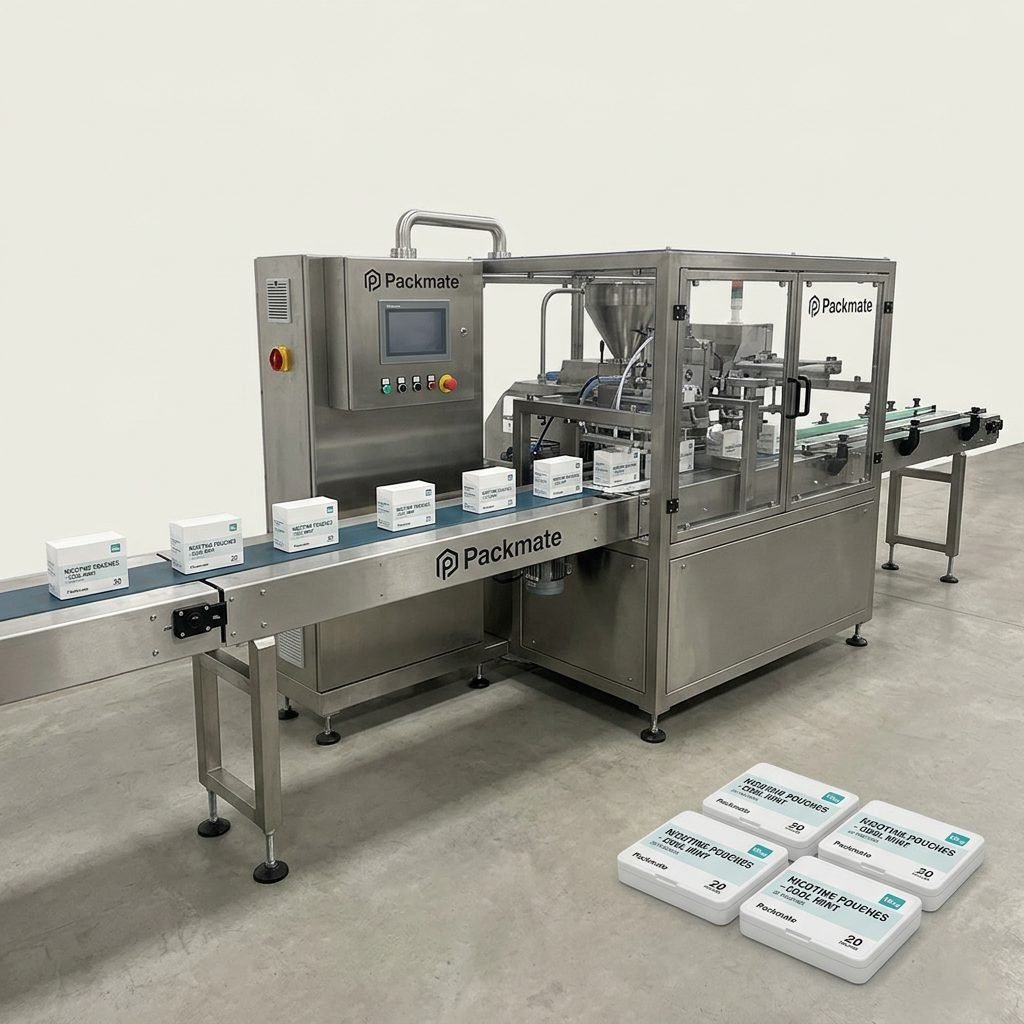
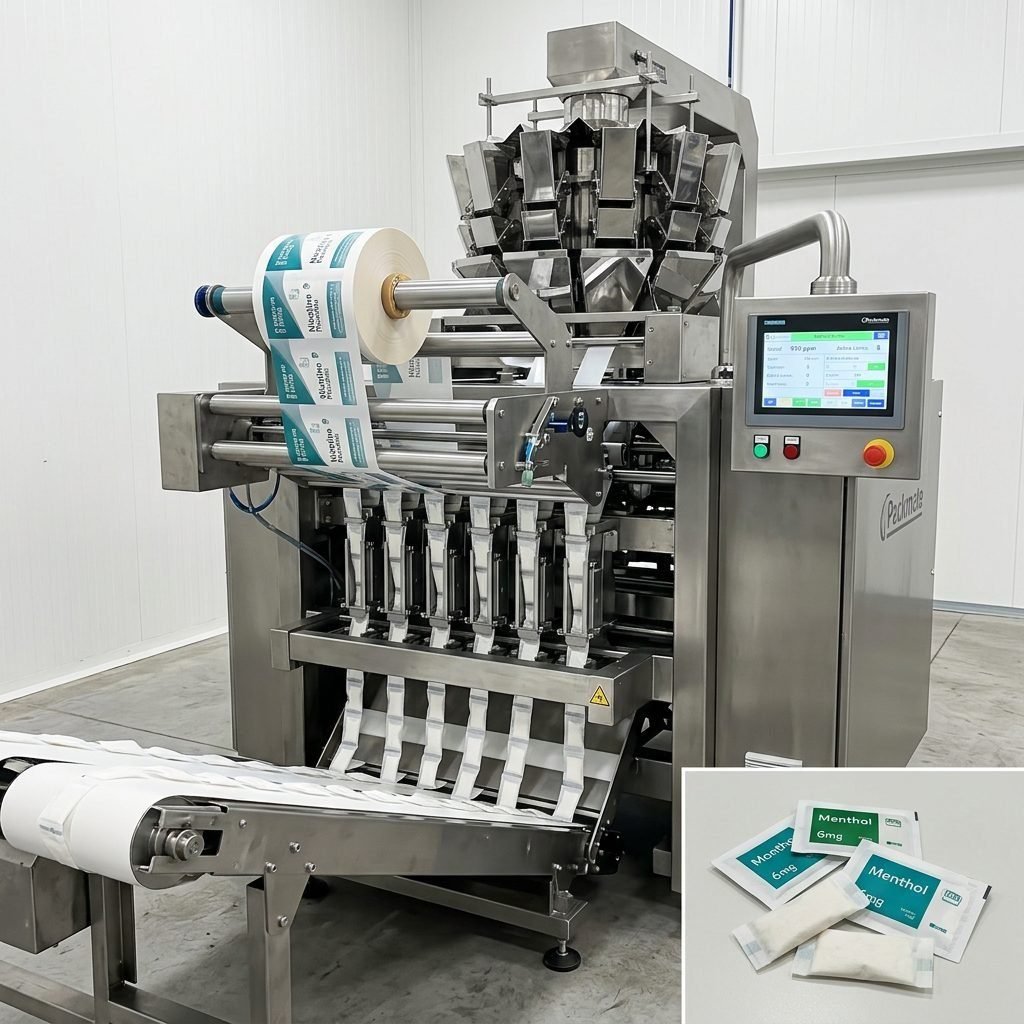
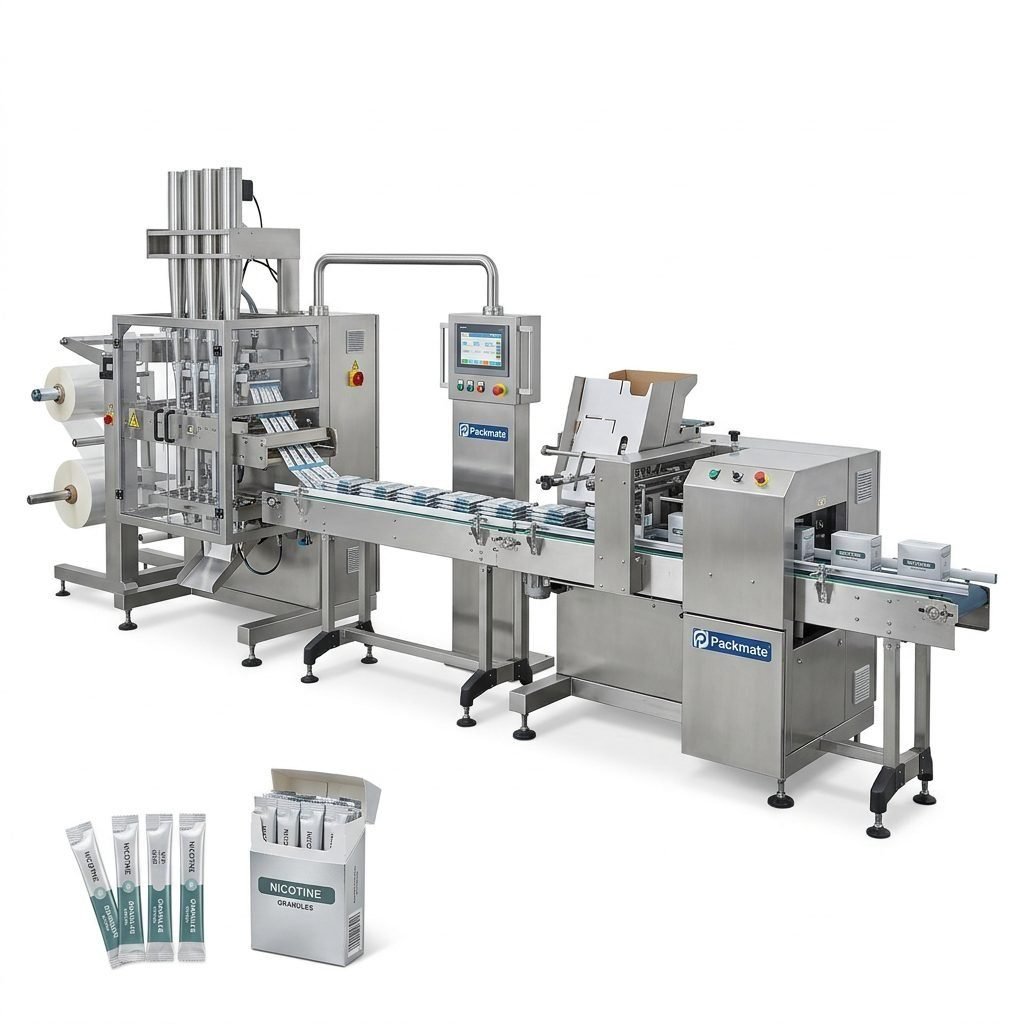
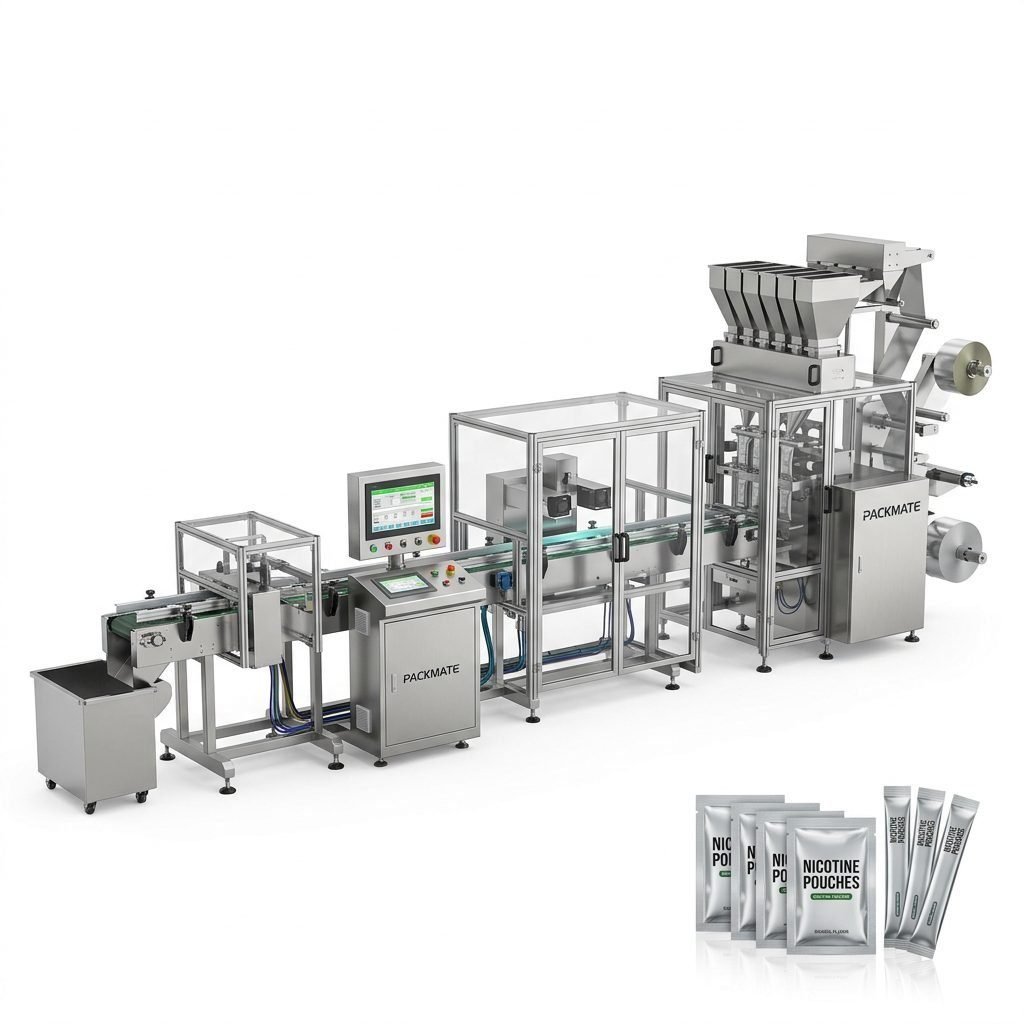
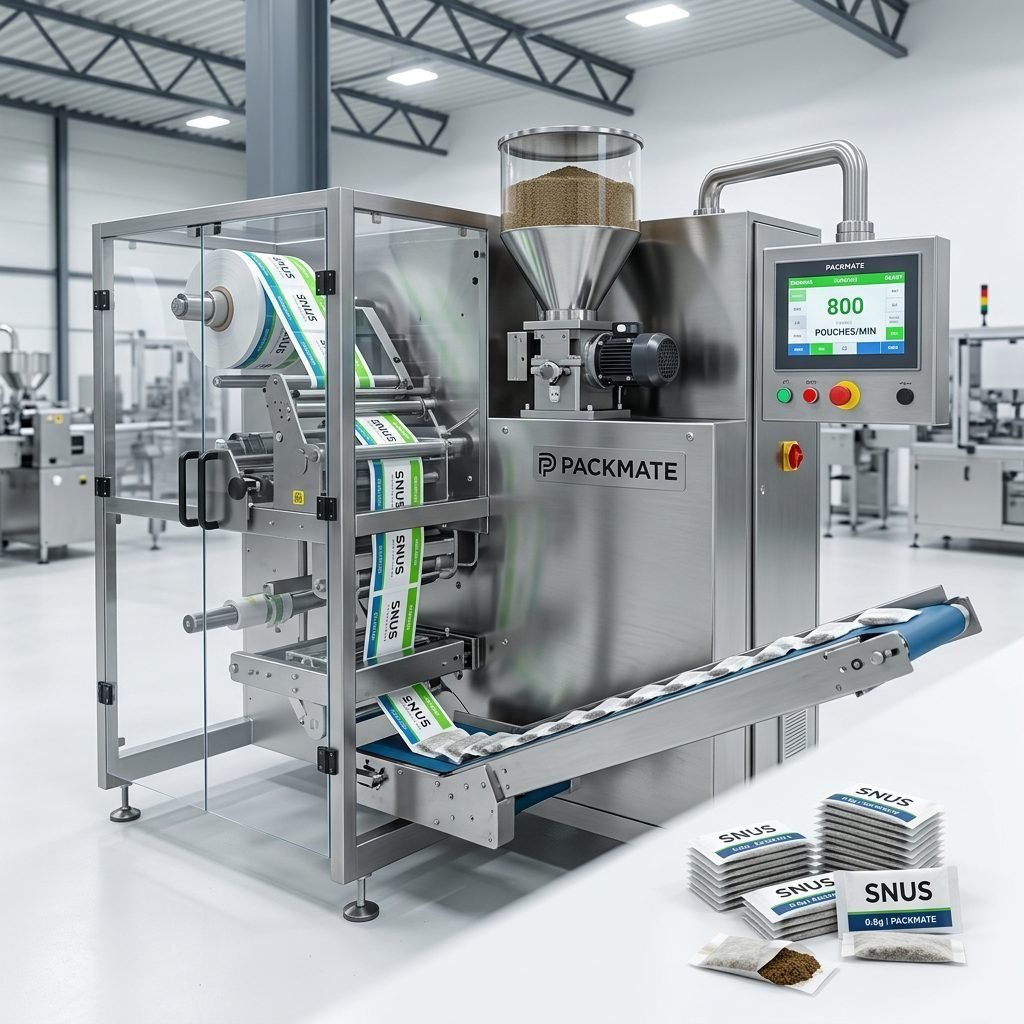
Choosing the right automatic snus packaging machine for factory use is a pivotal decision for manufacturers who want to scale production efficiently while maintaining product quality and regulatory compliance. This guide walks production managers, engineers, and procurement teams through the key technical, operational, and commercial considerations when selecting a snus or nicotine pouch packaging solution that fits long-term factory needs.
Why Automated Snus Packaging Matters for Factories
Automation in snus packaging delivers several tangible benefits: consistent pouch weight and seal quality, drastically higher throughput than manual lines, reduced labor costs, and better hygiene and traceability — all critical for nicotine pouch production. Modern automated lines also support multiple pack formats (stick packs, sachets, multi-lane pouches) and integrate upstream and downstream equipment seamlessly, creating a true turnkey solution for high-volume factories.
Key Benefits at a Glance
✓ Increased throughput — automated lines can run continuous, high-speed production with multi-lane options.
✓ Consistent quality — precise dosing and sealed packaging reduce rejects.
✓ Regulatory readiness — equipment built to CE/ISO standards helps with compliance and market entry.
Top Technical Considerations When Choosing a Machine
Not all snus packing machines are created equal. Evaluate machines against the following technical criteria to ensure long-term fit for factory operations.
1. Production Capacity & Throughput
Estimate target output (pouches per minute/hour) and account for future growth. Machines are available in single-lane and multi-lane configurations — multi-lane systems multiply production while keeping floor footprint competitive. For factories anticipating growth, choose modular multi-lane platforms to increase lanes without replacing core equipment.
2. Pack Formats & Flexibility
Determine which formats are essential: stick packs, sachets, round or flat pouches, and small-dose nicotine pouches. Machines that support quick format changeovers and can handle different materials (laminates, barrier films, biodegradable films) will save downtime and future-proof production.
3. Dosing Accuracy & Weighing System
For nicotine pouches, dosing accuracy is critical for regulatory compliance and consumer safety. Look for integration with high-precision weighing systems or auger/volumetric fillers tuned for micro-dosing. Closed-loop feedback and automatic calibration are valuable features to maintain consistent fill weights.
4. Materials, Sealing & Hygiene
Machine surfaces and contact parts should be stainless steel with food/pharma-grade finishes. Sealing quality affects product shelf life — verify temperature control systems, seal bar design, and compatibility with your chosen film types. Ease of cleaning and rapid sanitation cycles reduce cross-contamination risk and speed up product changes.
Operational & Integration Factors
Beyond the machine itself, consider how the line will operate within your factory environment, including material handling, automation level, and OEE (Overall Equipment Effectiveness).
5. Turnkey vs. Standalone Machines
Decide whether you need a complete turnkey packaging line (including feeders, metal detectors, cartoners, case packers) or a standalone packaging unit. Turnkey solutions simplify commissioning and vendor management, while standalone machines may fit factories that already have supporting equipment.
6. Automation, Controls & HMI
Modern PLC controls, intuitive HMIs, and recipe management improve uptime and reduce operator training time. Remote diagnostics and IoT-ready controls enable predictive maintenance and faster troubleshooting.
7. Spare Parts & Service Network
Fast access to spare parts and local service is vital. Evaluate vendor guarantees, local stocking, and on-site service capabilities. Long-term partnerships with suppliers who offer training and spare part kits reduce downtime risk.
Operational checklist
⚙️ Ensure clear spare parts supply and preventive maintenance plans.
📦 Plan material handling: film reels, pouch collection and case packing.
🔒 Confirm quality control points: weight checks, seal inspection, metal detection.
Compliance, Safety & Certifications
For nicotine-containing products, regulatory expectations vary by market but typically demand stringent labeling, traceability, and machine safety standards. Choose machines certified to CE and ISO standards to reduce hurdles for international distribution and to ensure operator safety.
Why Certifications Matter
Certification demonstrates that electrical, mechanical and safety systems meet international best practices. This also helps when seeking investment, insurance, or entering regulated markets.
Cost, ROI & Total Cost of Ownership
Purchase price is only part of the equation. Calculate Total Cost of Ownership (TCO) including installation, training, spare parts, utilities, predicted downtime, and consumables. High-efficiency multi-lane machines often deliver better ROI through reduced per-unit labor and higher throughput.
TCO quick factors
• Energy consumption and utility costs.
• Downtime costs: spare parts lead time and mean time to repair.
• Labor savings versus manual or semi-automated lines.
Selecting a Manufacturer: What to Look For
Choose a supplier with deep domain expertise in snus and nicotine pouch packaging. A strong partner will provide not only machines but also production line design, validation support, and long-term service.
Manufacturer Capabilities
Look for manufacturers with: extensive engineering experience, a wide range of machine models, in-house CNC and assembly capabilities, and a history of supplying global turnkey solutions. These strengths are often reflected in reliable equipment and shorter lead times.
For example, PACKMATE Snus Machine is a manufacturer with over 30 years of engineering background, a 20,000㎡ factory, and a portfolio of multi-lane snus packaging lines. They offer a range of machines for nicotine pouch production and can deliver turnkey solutions tailored to factory needs. To explore specific product lines, visit Snus & Nicotine Packaging Machines, Bag & Pouch Packaging Machines and Sachet & Stick Pack Machines.
Installation, Commissioning & Training
A successful installation includes pre-commissioning checks, FAT (Factory Acceptance Testing), SAT (Site Acceptance Testing), and operator training. Confirm the supplier’s support for on-site commissioning, spare parts kits at handover, and operator/maintenance training programs to ensure a smooth ramp-up.
Services to Request from Suppliers
Ask for documented service-level agreements (SLAs), remote diagnostics access, spare part lead time guarantees, and optional annual maintenance contracts. These services lower operational risk and improve machine longevity.
Practical Tips for Factory Integration
- 📌 Plan for film and material supply chain: ensure reliable suppliers for barrier films.
- 📌 Layout planning: map the flow from bulk ingredient storage to finished goods palletizing.
- 📌 Environmental controls: maintain clean room or controlled environment where required for nicotine pouch production.
Case Studies & Proof Points
Review supplier case studies to validate claims. Real-world examples show how other factories achieved throughput increases, reduced scrap, and simplified compliance. For documented examples, check supplier case pages and exhibition demos to witness operational performance and speak with references.
You can explore Packmate’s demonstrated projects and exhibitions for more insights: Case and Our Exhibition.
Questions to Ask During Vendor Visits
When visiting suppliers or trade shows, ask to see live demos, request sample packs from your formulation, and evaluate changeover times. Confirm energy consumption data, spare part lists, and the availability of local service engineers.
Key vendor evaluation checklist
✔ Demonstrated experience in snus/nicotine pouch equipment.
✔ CE/ISO certifications and factory inspection access.
✔ Clear spare parts and service plan.
Final Buying Tips
– Prioritize machines that match your volume requirements but offer modular expansion.
– Insist on FAT with your product on the machine before shipment to verify sealing, dosing and overall performance.
– Negotiate spare parts packages and training as part of the contract to avoid surprise costs during ramp-up.
Useful Resources
Explore product categories and company information to compare models and services: Snus & Nicotine Packaging Machines, Bag & Pouch Packaging Machines, and review real-world cases on the Case page. For company background and certifications, see About Packmate and Certificate.
Summary
Selecting the right automatic snus packaging machine for a factory involves balancing throughput, flexibility, compliance, and total cost of ownership. Choose a manufacturer with proven snus expertise, strong engineering capacity, and robust service offerings to ensure smooth integration and long-term production stability. With careful evaluation and the right partner, automated snus packaging lines can deliver predictable quality, improved efficiency, and rapid ROI.
Frequently Asked Questions
Q1: How do I determine the right production capacity?
A1: Estimate current demand, add a growth buffer (typically 20–50%), and consider multi-lane options or modular expansions to accommodate future increases without full line replacement.
Q2: Are multi-lane machines worth the investment?
A2: Yes — for medium to high-volume factories, multi-lane systems deliver higher throughput per square meter and often lower per-unit operating costs than multiple single-lane machines.
Q3: What certifications should I require?
A3: CE and ISO are baseline certifications. Also ensure electrical safety and machine directive compliance relevant to your market; for food/pharma lines, follow GMP recommendations for equipment hygiene.
Q4: How important is after-sales service?
A4: Extremely important. Fast spare part supply, remote diagnostics, and trained service engineers reduce downtime and protect your production schedule.
Q5: Can suppliers run FAT with our product?
A5: Reputable suppliers will perform FAT using your materials and formula. Require this as part of the contract to validate performance prior to shipment.